Tag: million

  • Feds to Columbia: ‘You want $400 million in contracts back? Do this (or else)’

    Feds to Columbia: ‘You want $400 million in contracts back? Do this (or else)’

    Last week, the Department of Health and Human Services, the Department of Education, and the U.S. General Services Administration announced the immediate cancellation of $400 million in federal contracts with Columbia University. 

    The announcement corresponded with ongoing Title VI investigations alleging an anti-Semitic hostile environment at Columbia. Last night, the agencies sent a follow-up letter sidestepping important procedures and including demands that will seriously erode free speech and academic freedom on campus. 

    There is significant evidence to suggest that Columbia failed to respond effectively to unlawful conduct directed against Jewish students based on their Jewish identity and that this has resulted in Title VI violations. Indeed, Columbia responded to the agencies’ March 7 announcement about canceling contracts by stating it is “committed to working with the federal government to address their legitimate concerns.” [Emphasis added].

    However, the departments’ demands in last night’s letter to Columbia go too far. The letter announces steps the school must take “that we regard as a precondition for formal negotiations regarding Columbia University’s continued financial relationship with the United States Government.” While these include some policy steps that Columbia should already have taken, the letter goes far beyond what is appropriate for the government to mandate and will chill campus discourse.

    Our nation’s colleges need to protect free expression and comply with anti-discrimination laws, but too often … they enact overbroad or vague policies that do not track the Supreme Court’s definition for discriminatory peer harassment.

    For instance, the letter demands that Columbia “Formalize, adopt and promulgate a definition of anti-Semitism.” It cites President Trump’s 2019 executive order on anti-Semitism — which orders the government to consider the International Holocaust Remembrance Alliance’s definition and examples of anti-Semitism for civil rights enforcement — hinting strongly that Columbia should adopt that definition. 

    While the IHRA definition was originally crafted to study incidents of anti-Semitism in Europe, its primary author has repeatedly stated that it was never intended to be used for anti-discrimination enforcement because it risks chilling speech on the Israeli-Palestinian conflict on campus. The examples of anti-Semitism cited by IHRA include criticisms of Israeli policy that can, depending on the situation, be political speech protected by our First Amendment. 

    Other demands may be of even greater concern. The government’s demand that an academic department be put under “academic receivership” is a clear intrusion on academic freedom, and its deadline of March 20 for a “full plan” to do so is likely impossible to meet. And there is no basis to believe that the federal government has the power to demand that Columbia eliminate its University Judicial Board or to mandate specific punishments (“expulsion or multi-year suspension”) be given to student demonstrators.

    The demands in the letter pose a problem, but so is the process the government is using to issue those demands. This is not the normal procedure for revocation of federal financial assistance for violations of Title VI. Instead, the government appears to rely on authority under Federal Acquisition Regulations (FAR) to cancel contracts based on “termination for convenience of the government” clauses that exist in most federal contracts. As a Biden-era document states: “the Government has a lot of latitude to terminate contracts for convenience and the Federal Acquisition Regulations do not require a lot from the Government when terminating contracts for convenience.” 

    Federal anti-discrimination law has been one of the most frequently cited justifications for campus censorship throughout FIRE’s history. Our nation’s colleges need to protect free expression and comply with anti-discrimination laws, but too often — and sometimes at the federal government’s behest — they enact overbroad or vague policies that do not track the Supreme Court’s definition for discriminatory peer harassment. As a result, their policies and actions end up targeting speech protected by the First Amendment. This has long been a problem in the Title IX context relating to sex discrimination, and has more recently become a problem in the Title VI context as well.

    One important protection that colleges have against improper pressure from the federal government to censor students and faculty is the process federal civil rights law provides for colleges accused of failing to address unlawful discrimination. Civil rights investigations should not be handled through ad hoc directives from the government. Existing procedures, which include an attempt at a voluntary resolution followed by either an administrative hearing with the opportunity for the institution to defend itself or a trial in federal court, are intended to reduce the risk of error, individual biases, and overreach. 

    None of those safeguards are in evidence in the Columbia process, which increases the likelihood of abuse. Title VI processes are in place for a reason, and those procedures, when followed in good faith, are more likely to generate just outcomes for colleges, students, and faculty. 

    Earlier this week, the Department of Education announced it was launching Title VI anti-Semitism investigations into 60 colleges and universities across the country. Any of those institutions that have contracts with the federal government would reasonably expect to be treated similarly to Columbia and risk losing federal government contracts unless they enact policies similar to those outlined in last night’s letter. 

    The threat to both free speech and academic freedom are clear, and last night’s letter is a blueprint to supercharge campus censorship.

    Source link

  • Dismantling Ed Dept. Will Harm More Than 26 Million Kids — and America’s Future – The 74

    Dismantling Ed Dept. Will Harm More Than 26 Million Kids — and America’s Future – The 74


    Get stories like this delivered straight to your inbox. Sign up for The 74 Newsletter

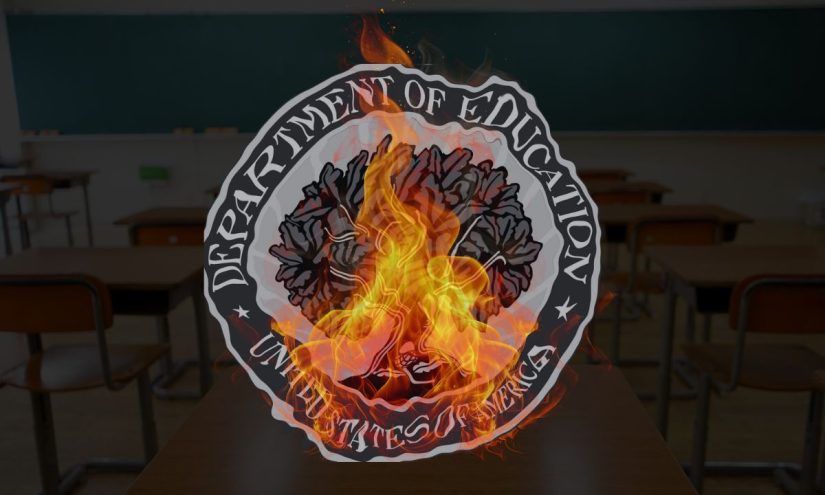
    The layoffs of half of the employees of the U.S. Department of Education clearly demonstrate the Trump administration’s follow-through on one of Project 2025’s mandates, which intends to eliminate the resources, protections and opportunities that millions of children and families across this nation rely on.

    It is evident that the White House will not stop until it wipes out the most basic protections and supports for the American people, including the youngest children. The first step was the attempt to defund Head Start and Early Head Start, impacting 800,000 young children across the nation. This order was halted by a federal judge in Washington, thanks to the lawsuits filed by Democracy Forward and attorneys general from 23 states. 

    The mass layoffs will severely hamper the department’s ability to execute on its core responsibilities. This move is a direct assault on millions of students, teachers and families. It is clearly a precursor to dismantling the department without congressional consent, which would have an even more devastating impact. The department serves and protects the most vulnerable children and young adults, ensuring that they have equal access to education. This includes:

    • 26 million students from low-income backgrounds — more than half of all K-12 students — who rely on the department for reasonable class sizes; school meals; tutoring; afterschool and summer programs; school supplies such as laptops and books; parent engagement programs; and, in some cases, transportation
    • 9.8 million students enrolled in rural schools
    • 7.4. million students with disabilities
    • 5 million English learners
    • 1.1 million students experiencing homelessness
    • 87 million college students who receive Pell Grants and student loans 

    The department was created in 1980 with a single, crucial purpose: to ensure equal access to education and to promote educational excellence throughout the nation. Its creation followed decades of systemic inequities that left children in disadvantaged communities without the same learning opportunities as their more privileged peers. The department’s work has been a critical safeguard against discrimination in schools, whether on the basis of race, disability, gender or income. 

    Without the federal government’s intervention and oversight, the more than 13 million children who live in poverty would be even more vulnerable to systemic inequities. The department ensures that federal dollars are distributed to those students most in need, ensuring that underserved children have the same opportunities for success as their wealthier peers. Without the federal oversight and the department’s support, these students will fall even further behind, and the national achievement gap will grow wider.

    The federal government is the only entity that can ensure a baseline level of educational equity across the entire nation. The department holds states accountable for ensuring that all children, regardless of where they live or what their socioeconomic status may be, receive a quality education. If this accountability is removed, the children most at risk — those in underfunded schools, children of color, children with disabilities, English learners and those experiencing homelessness — will be the first to suffer. These children would be denied the critical services and protections they need to succeed in school and in life.

    Moreover, the president’s plan to turn education policy over to the states would completely dismantle the federal safety net that ensures that the most vulnerable children are not left behind. Each of the 50 states has different priorities, resources and political climates. While some might be able to provide excellent educational opportunities, others will leave children behind, particularly in rural or economically disadvantaged areas. Inequities between states could widen to an intolerable degree, and the resulting lack of uniform educational standards would only further disadvantage the children who need the most help.

    To be clear, the department cannot be dissolved at the whim of a sitting president. Under the Constitution, only an act of Congress can create or dismantle a federal agency. The president does not have the unilateral power to eliminate an entire federal institution that serves the educational needs of millions of children across this country. Attempting to do so would not only undermine the law, but also inflict tremendous harm to the very foundation of America’s educational system.

    The idea that dismantling the department could somehow improve that system is not only misguided, but dangerously naïve.

    It’s vital that we, as a nation, recognize the long-term damage this action would cause. The attempt to dismantle the Department of Education is not just an attack on a government agency — it is an attack on the future of America’s children.

    To parents across the country: This policy is not only unconstitutional — it is a grave threat to your children’s future. Whether your child is in a classroom in New York, Los Angeles or a small town in the Midwest, the U.S. Department of Education has worked to ensure that their educational opportunities are protected, funded and regulated. A president who seeks to eliminate this essential agency is jeopardizing the future of every single student in America.

    This is why we must all rise up and make our voices heard. We must demand that our leaders stop this dangerous plan in its tracks, that they fix what isn’t working and that they use this opportunity to reimagine public education and invest in a more effective, equitable system that gives all children the opportunity to succeed.


    Get stories like these delivered straight to your inbox. Sign up for The 74 Newsletter

    Source link

  • One Million Behind Bars Now Have Access to Academic Research Through JSTOR

    One Million Behind Bars Now Have Access to Academic Research Through JSTOR

    In a significant development for educational access in correctional facilities, the JSTOR Access in Prison (JAIP) program has reached a remarkable milestone, now serving over one million incarcerated learners across the United States. This achievement represents a doubling of the program’s reach in just over a year.

    The program, which provides incarcerated individuals with access to scholarly materials including academic journals, books, and research papers, crossed this threshold in December 2024. Two pivotal agreements helped fuel this expansion: a new partnership with the Federal Bureau of Prisons that introduced JSTOR to two federal facilities, and an expansion of an existing arrangement with the Arizona Department of Corrections, Rehabilitation, and Reentry (ADCRR).

    The ADCRR agreement is particularly noteworthy as it evolved from initially serving approximately 3,000 people enrolled in higher education programs to now reaching nearly 40,000 individuals in Arizona’s prison system, regardless of their educational enrollment status.

    “People in prisons use JSTOR the same way as people on the outside,” said Stacy Burnett, senior manager for the Access in Prison program. She explained that while many users pursue structured educational goals like degrees and certificates, others engage in self-directed learning, highlighting the diverse educational needs being met.

    The impact of this access extends far beyond traditional education. Users have reported that JSTOR has helped them build community connections, save money on research-related expenses, and gain new perspectives on their circumstances. In one remarkable case, research conducted through JSTOR led an incarcerated individual to request a health screening that ultimately saved that individual’s life.

    Some users have even leveraged their research to draft legislation supporting prison reentry programs, with one such proposal currently under consideration in North Carolina’s legislature.

    These success stories underscore the program’s value in developing academic research and analytical skills that can serve as important bridges to life after incarceration. “It’s a valuable reentry tool for civic engagement. It gets people to think more deeply,” Burnett explained.

    Since 2019, the program has seen dramatic growth, supported by grants from the Mellon Foundation and the Ascendium Education Group. Today, more than 95% of U.S. state and federal prison facilities provide access to JSTOR, with the program active in 24 countries worldwide.

    Building on this momentum, the JSTOR Access in Prison program has secured $800,000 in new funding commitments to support expansion into U.S. jails, which typically operate at local rather than state or federal levels.

    Despite the impressive one million user milestone, Burnett emphasizes that this represents just half of the incarcerated population in the United States and only 10% of those incarcerated globally. ITHAKA, JSTOR’s parent organization, has stated its ambition to eventually make educational resources available to all incarcerated individuals worldwide.

    As the program continues to grow, supporters add that it’s a powerful example of how access to educational resources can transform lives, even within the constraints of incarceration.

    Source link

  • Columbia University Faces $400 Million Federal Funding Cut in the Wake of Antisemitism Concerns

    Columbia University Faces $400 Million Federal Funding Cut in the Wake of Antisemitism Concerns

    Dr. Katrina ArmstrongColumbia University is grappling with significant financial challenges after the Federal Task Force to Combat Antisemitism announced $400 million in cuts to federal funding, a development that Interim University President Dr. Katrina Armstrong says will “touch nearly every corner of the University.”

    The task force described the cuts as a consequence of Columbia’s “continued inaction in the face of persistent harassment of Jewish students” and warned that this represents only the “first round of action,” with “additional cancellations” to follow.

    This announcement comes just four days after the task force revealed it would consider stop work orders for $51.4 million in contracts between Columbia and the federal government and conduct a “comprehensive review” of more than $5 billion in federal grant commitments to the institution.

    In her communication to the Columbia community, Armstrong acknowledged that the cuts would have an immediate impact on research and critical university functions, affecting “students, faculty, staff, research, and patient care.” Federal funding constituted approximately $1.3 billion of Columbia’s annual operating revenue in the 2024 fiscal year.

    “There is no question that the cancellation of these funds will immediately impact research and other critical functions of the University,” Armstrong wrote in en email to the campus community, while emphasizing that Columbia’s mission as “a great research university does not waver.”

    The situation at Columbia highlights the increasing tensions between academic institutions and the Trump administration, particularly regarding how universities respond to claims of antisemitism on campus. Since October 2023, Columbia has been at the center of pro-Palestinian student protests, drawing federal scrutiny, especially from the Trump administration.

    President Trump recently stated on Truth Social that “All Federal Funding will STOP for any College, School, or University that allows illegal protests.”

    Armstrong, who assumed her interim position following former University President Minouche Shafik’s resignation in August 2024, described Columbia as needing a “reset” from the “chaos of encampments and protests.” She emphasized that the university “needed to acknowledge and repair the damage to our Jewish students.”

    Armstrong affirmed the university’s commitment to working with the federal government on addressing antisemitism concerns, stating: “Columbia can, and will, continue to take serious action toward combatting antisemitism on our campus. This is our number one priority.”

    Armstrong, however, did not outline specific plans for how Columbia would adapt to the significant loss of federal funding, instead focusing on the university’s broader mission and values.

    “Antisemitism, violence, discrimination, harassment, and other behaviors that violate our values or disrupt teaching, learning, or research are antithetical to our mission,” Armstrong noted. “We must continue to work to address any instances of these unacceptable behaviors on our campus. We must work every day to do better.”

    The situation at Columbia raises important questions for higher education institutions nationwide about balancing free speech, campus safety, and federal compliance in the age of the Trump presidency. As universities increasingly face scrutiny over their handling of contentious social and political issues, the consequences—both financial and reputational—can be severe.

    Armstrong called unity within the Columbia community to maintain the university’s standing and continue its contributions to society.

    “A unified Columbia, one that remains focused on our mission and our values, will succeed in making the uncommonly valuable contributions to society that have distinguished this great university from its peers over the last 270 years,” she said. 

    Source link

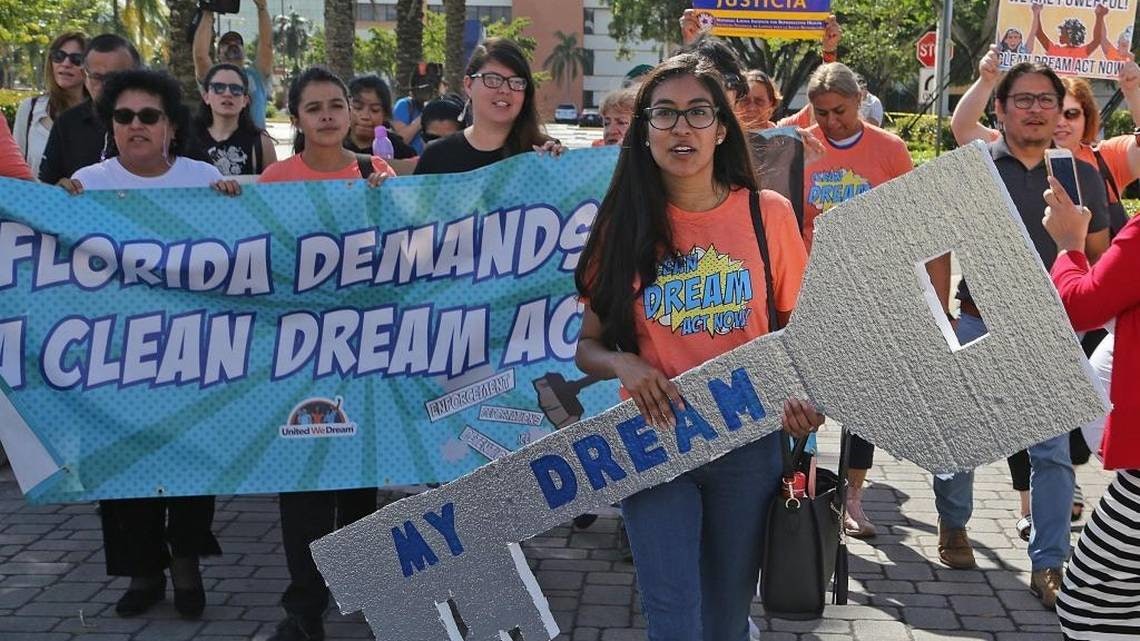
  • Florida Dreamer Tuition Policy Reversal Threatens $25 Million Economic Impact

    Florida Dreamer Tuition Policy Reversal Threatens $25 Million Economic Impact

    Education advocates and immigration policy experts are warning of significant economic, and workforce impacts following Florida’s decision to rescind in-state tuition waivers for undocumented students who graduated from Florida high schools. The policy change, signed into law by Governor Ron DeSantis, marks a significant shift in the state’s approach to higher education access for Dreamers.

    The decision is expected to cost Florida institutions approximately $25 million in tuition and fees, according to TheDream.US, a national organization supporting higher education access for Dreamers. The organization’s President and CEO, Gaby Pacheco, a long-time Miami resident, said that the impact extends beyond immediate financial consequences, potentially affecting Florida’s future workforce development and economic growth.

    “Our state is turning its back and hindering the potential of students who have succeeded throughout their K-12 education,” says Pacheco, noting that many affected students arrived in the United States at an average age of six years old. The organization has already helped more than 600 Florida-based Dreamers graduate college, with many now working as nurses, teachers, engineers, and entrepreneurs within the state.

    The Presidents’ Alliance on Higher Education and Immigration, through its Director of Policy and Strategy Diego Sánchez, points to concerning workforce implications. With Florida facing shortages in healthcare, teaching, and STEM fields, the policy change could exacerbate existing gaps in critical sectors. Sánchez, himself a former undocumented student in Florida, argues that the state risks losing bilingual, skilled professionals to other regions with more inclusive education policies.

    The impact of this policy shift could be particularly significant given Florida’s traditional role as a hub for educational and economic opportunity. Critics argue that the change contradicts the state’s historical position as a beacon of dynamism and opportunity, potentially deterring talented students from pursuing higher education in Florida.

    Advocates point out that many affected students are deeply integrated into Florida communities, having completed their entire K-12 education in the state’s public schools. The new policy, they argue, creates barriers for these students to continue their education and contribute to the state’s economy, potentially forcing them to either abandon their educational pursuits or seek opportunities in other states with more favorable policies.

    As this policy takes effect, educational institutions and advocacy groups are working to assess the full scope of its impact on Florida’s educational landscape and future workforce development. The change represents a significant shift in Florida’s approach to higher education access and raises questions about the state’s long-term economic and workforce strategy.

    Source link

  • Brown faces $46 million budget deficit

    Brown faces $46 million budget deficit

    Brown University, one of the nation’s wealthiest institutions, is facing a $46 million structural deficit, prompting efforts to limit growth in hiring and doctoral programs.

    “Without changes to the way Brown operates, the structural deficit is expected to continue to deepen significantly, including a deficit next year that would grow to more than $90 million, with steady increases in subsequent years. Although the current deficit of $46 million is only 3% of Brown’s total operating budget, increases in the deficit over time are not sustainable,” Provost Francis J. Doyle III and Executive Vice President for Finance and Administration Sarah Latham announced in a letter to the community on Dec. 17.

    Officials noted a range of factors driving the deficit, including flat undergraduate tuition revenue growth, increased financial aid, inflation and rising salaries and benefits.

    Brown announced a four-pronged plan to “constrain the deficit.”

    First, the institution will “hold faculty headcount growth to 1%” and limit the growth of staff members “not fully funded externally by grants and gifts” at zero percent, according to the letter from administrators. In addition, Brown will reduce admissions targets for Ph.D. programs, which have grown rapidly in recent years. The university also plans to “hold growth in unrestricted operating expenses to 3%.” Finally, the letter noted the university will work to “continue to grow master’s [program] revenue, ultimately doubling the number of residential master’s students and increasing online learners to 2,000 in five years.”

    While officials did not announce job cuts as they grapple with the yawning budget deficit, the message noted Brown will review vacancies “to determine if they will be refilled.”

    Brown is among the richest universities in the U.S. with an endowment valued at $7.2 billion. Last year, a study of endowments put Brown just beyond the top 25 wealthiest institutions.

    Source link