
Tag: Minneapolis

  • Child Care Aid Could Run Out by Jan. 31 Due to Trump Funding Freeze, Colorado Officials Say – The 74

    Child Care Aid Could Run Out by Jan. 31 Due to Trump Funding Freeze, Colorado Officials Say – The 74


    Get stories like this delivered straight to your inbox. Sign up for The 74 Newsletter

    Colorado officials say money that helps 18,000 low-income families pay for child care could run out by Jan. 31 if federal officials don’t lift the freeze they’ve imposed on funding for several safety net programs in five Democrat-led states.

    If that happens, some children could go without care and some parents would have to stay home from work. State lawmakers could cover such a funding gap temporarily, though Colorado is facing a significant budget crunch.

    The Trump administration announced the freeze on $10 billion in child care and social services funding for Colorado, California, Illinois, Minnesota, and New York in a press release Monday.

    In letters sent to the two Colorado agencies that run the affected programs, federal officials said they have “reason to believe that the State of Colorado is illicitly providing” benefits funded with federal dollars to “illegal aliens.”

    The letters didn’t cite evidence for that claim and a spokesperson for the U.S. Department of Health and Human Services didn’t respond to questions from Chalkbeat about why federal officials are concerned about fraud in Colorado.

    Spokespeople from both state departments said by email on Tuesday they’re not aware of any federal fraud investigations focused on the programs affected by the funding freeze.

    The five-state funding freeze follows a federal crackdown in Minnesota after a right-wing YouTuber posted a video in late December alleging that Minneapolis child care centers run by Somali residents get federal funds but serve no children. It’s not clear why the other four states have gotten the same treatment as Minnesota, but all have Democratic governors who have clashed with President Donald Trump.

    In a New Year’s Eve social media post, Trump called Colorado Gov. Jared Polis “the Scumbag Governor” and said Polis and another Colorado official should “rot in hell” for mistreating Tina Peters, a Trump supporter and former Mesa County clerk who’s serving a nine-year prison sentence for orchestrating a plot to breach election systems.

    The federal freeze will affect three main funding streams in Colorado that together bring in about $317 million a year. They include $138 million for the Colorado Department of Early Childhood for child care subsidies for low-income families and a few other programs.

    The subsidy program, known as the Colorado Child Care Assistance program, helps cover the cost of care for more than 27,000 children so parents can work or take classes. It’s mostly funded by the federal government with smaller contributions from states and counties.

    The other two frozen funding streams go to the Colorado Department of Human Services and pay for Temporary Assistance for Needy Families, or TANF, and other programs.

    In the letter to the Colorado Department of Early Childhood, federal officials outlined new fiscal requirements the state will have to follow before the funding freeze is lifted. They include attendance documentation — without names or other personal identifiers — for children in the child care subsidy program.

    A state fact sheet issued in response to the funding freeze said funding for the child care subsidy program would be depleted by Jan. 31. It also outlined several measures already in place to prevent fraud or waste, including state audits, monthly case reviews by county officials, and efforts to recover funds if improper payments are made.

    The state said it is exploring “all options, including legal avenues” to keep the frozen funding flowing.

    Six Democratic state lawmakers, most in leadership positions, released a statement Tuesday afternoon calling the funding freeze a callous move that will make life more expensive for working families.

    “We stand ready to work with Governor Polis and partners in our federal delegation to resist this lawless effort to freeze funding, and we sincerely hope that our Republican colleagues will put politics aside, get serious about making life in Colorado more affordable, and put families first,” the statement said in part.

    The statement was from Speaker of the House Julie McCluskie; Senate President James Coleman; House Majority Leader Monica Duran; Senate Majority Leader Robert Rodriguez; Rep. Emily Sirota; and Sen. Judy Amabile.

    Chalkbeat is a nonprofit news site covering educational change in public schools.


    Did you use this article in your work?

    We’d love to hear how The 74’s reporting is helping educators, researchers, and policymakers. Tell us how

    Source link

  • A Place Where Kids With the Toughest Behaviors Are Welcome and Can Heal – The 74

    A Place Where Kids With the Toughest Behaviors Are Welcome and Can Heal – The 74


    Get stories like this delivered straight to your inbox. Sign up for The 74 Newsletter

    Ann’s three young boys had been through a lot already. Her marriage to their father was marked by violence, and a divorce was followed by multiple violations of a protective order, she said. While their father sat in prison in North Dakota, she moved the family to the Twin Cities.

    But while the move gave them distance, it didn’t solve their problems, said Ann, who asked to be identified by her middle name to protect her children’s privacy. Her sons, especially the two youngest, suffered mental health issues including PTSD, ADHD and anxiety. Her middle son was diagnosed with disruptive mood dysregulation disorder, characterized by angry and sometimes violent outbursts.

    “I had 13 police calls within a nine-month period to my house,” Ann said. When a police officer handed her a domestic violence information card, she knew things had to change.

    Ann’s middle son had been enrolled in public school in a suburb of St. Paul, but after being removed from his mainstream classroom due to his behaviors, he wasn’t receiving the support he needed academically or emotionally.

    A social worker told her about Catholic Charities Children’s Day Treatment, located in Minneapolis Public Schools’ Wilder Complex and offering intensive supports to children in grades K-8 struggling with mental illness. Despite her nerves, Ann scheduled a visit. In one of her first interactions, an intake person said, “‘Because you’re here looking for help, you’re more advanced than most adults,’” Ann recalled. “I knew at that moment we were in the right place.”

    A trauma-informed approach for kids

    Jessica Dreischmeier, Catholic Charities Children’s Day Treatment Program director, said that her program is a good match for children like Ann’s sons. Staff not only understand the impact that early childhood trauma can have on mental health, but the program’s trauma-informed approach helps them make progress with kids deemed unfixable by other schools.

    “I would say a majority of the youth that come here for treatment have experienced some type of trauma,” Dreischmeier said. “We know that those symptoms can manifest themselves in a number of ways, including depression, aggression, anxiety, ADHD — and we have deep experience working with those kinds of kids.”

    With the right approach, she said, most kids can recover from mental illness.

    “One day might be hard, but over time we get there with pretty much everybody — which is awesome.”

    A long and loyal legacy

    Catholic Charities Children’s Day Treatment was founded in 1968 as an extension of St. Joseph’s Home for Children, founded in 1869 as a residential shelter for orphans. The day treatment program was created to provide an alternative option for children at St. Joseph’s who needed extra mental health support.

    St. Joseph’s Home closed in 2020, but the day treatment program continued. Enrollment is capped at 40 students who work with 17 full-time staff members. Students come from around the metro area but enroll in Minneapolis Public Schools through a partnership with the district. Mental health services are billed through health insurance.

    Many staff members have worked at the center for decades. Karen Johnson, a mental health practitioner who has been employed by the program for 24 years, said she feels a deep connection to the children in her care.

    “I should have retired five years ago,” Johnson said. “Each time I have that thought, another kid comes through the door, and  I’m like, ‘Now I have to stay until they finish the program.’ Then another kid comes.”

    A focus on parent connection and long-term success for kids

    According to the Minnesota Department of Human Services, there are 37 licensed mental health day treatment programs for children in the state. Still, Dreischmeier said that Catholic Charities’ program remains in high demand.

    “The need for mental health services for youth and children in Minnesota has been going up for a while,” she said, “but especially after Covid, it’s particularly evident.”

    A typical day for students includes two three-hour blocks – one for academics and the other for mental health therapy and treatment.

    Mental health support is delivered in individual and group settings with a focus on parent and guardian involvement, Dreischmeier said. Families are taught how to build strong connections with their child and to reinforce strategies they’re practicing at school.

    The kids work on setting goals for their life beyond the program. While students’ individual goals look different, the overall aim is a return to home life and a less restrictive school setting. “We’re hoping our intervention helps kids stay in their home and with their family and not have an out-of-home placement,” Dreischmeier said.

    ‘We’re not going to leave anybody behind.’

    For parents like Ann, the transition to day treatment often comes amid deep distrust of past educational settings. Families arrive feeling guarded, Dreischmeier said. They wonder: “‘Are you going to perceive my child as a problem?’ ‘Will you only see them for the behaviors they are having when they are having a hard time, or will you see my whole child?’”

    The kids often wonder the same thing, Johnson said. “A lot of these kids come here with no hope. They think, ‘People say I’m bad so I’m never going to be nothing.’ I try to change that narrative.”

    Dreischmeier said that her staff remains undaunted even by the students’ most challenging behaviors.

    “If something is hard, we’re going to all come together and work on it and talk about it,” she said. We’re going to move forward all together. We’re not going to leave anybody behind.”

    Academically, the aim is not just to keep students on track, but to move them ahead. In traditional school settings with larger class sizes and fewer supports, children with serious mental health issues are often separated from their peers and fall behind.

    Dreischmeier said things are run differently at Children’s Day Treatment, where the ratio of adults to students is much higher – often three adults to every six or seven students. “Students are really able to focus in and learn,” she said.

    On average, students participate in the program for a year to a year and a half, Dreischmeier said. Most then move back to their local community school. Some are recommended for further services, including residential and outpatient mental health programs.

    Surprised by hope

    After two years at Children’s Day Treatment, Ann’s middle son graduated  last year. Though he struggled in the beginning, she said, he eventually settled in and found success.

    “His graduation was the most incredible thing,” Ann recalled. “Staff said he’d emerged as a leader. We did not know that about my son. To hear his peers get up and give their testimonies about him – there was not a dry eye in the room.”

    Today, he’s enrolled at a school in her home district – something she never thought possible – where he continues to receive special education support. Ann’s youngest son enrolled at Children’s Day Treatment in the fall. She’s optimistic: “I’m just grateful for people like them who want to help children like mine.”

    This article first appeared on MinnPost and is republished here under a Creative Commons Attribution-NoDerivatives 4.0 International License.


    Did you use this article in your work?

    We’d love to hear how The 74’s reporting is helping educators, researchers, and policymakers. Tell us how
    Source link

  • Minneapolis School Board Signals Potential School Closures – The 74

    Minneapolis School Board Signals Potential School Closures – The 74


    Get stories like this delivered straight to your inbox. Sign up for The 74 Newsletter

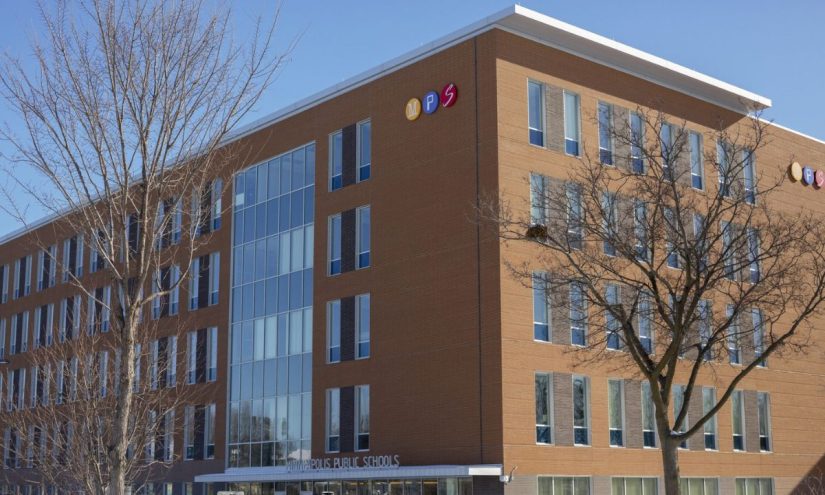
    The Minneapolis school board has formally asked Superintendent Dr. Lisa Sayles-Adams for information that could lead to school closures. They passed a resolution to the effect at a recent meeting.

    The board first drafted the directive —which asks for an initial report to the board by April 2026 — at two day-long meetings in June and August. The planning follows years of discussion about closing schools in a district with 29,000 students but the capacity for 42,000 and thus a bevy of half-empty schools.

    Even as enrollment declines at a school building, the fixed expenses for building staff — like principals, secretaries, nurses, librarians, culinary workers, custodians and social workers — stay the same or go up. With so many buildings below capacity, a big portion of each Minneapolis student’s funding has to go toward covering these fixed building-level costs, draining money away from instruction and extracurricular activities.

    The board resolution comprises topics for district administrators to investigate, including efficient use of current buildings, potential changes to magnet programs, and ways to increase enrollment in the district.

    Years-long discussion about the financial burden of operating small enrollment schools

    The process for downsizing the district’s footprint has been long and circuitous.

    In October 2022, the district prepared a comprehensive financial assessment forecasting that without significant cost cutting, the district would end up draining its reserves, while expenses would exceed revenues by the end of fiscal year 2026. The district has avoided that fate by cutting services and raising class sizes, but it is still unable to balance its budget without relying on reserves and other one-time funds.

    The 2022 memo did not prescribe closing schools, but it did present an analysis showing enrollment growth alone could not overcome the district’s structural inefficiencies resulting from operating many schools with small enrollments. At the time of the analysis, Anoka-Hennepin was operating 37 school buildings while enrolling about 37,000 students. Minneapolis was operating 61 buildings while enrolling about 29,000 students. Minneapolis had about half as many students per building as Anoka-Hennepin.

    The board first publicly discussed reducing the number of schools in March 2023, when then-board Chair Sharon El-Amin asked Rochelle Cox, the then-interim superintendent, to develop a draft plan for “school transformation.” Neither Cox nor the board took action.

    Two months before current Superintendent Dr. Lisa Sayles-Adams started at the district in early 2024, the School Board passed a “transformation resolution” that directed the district to do an accounting of physical space but stopped short of calling for a timeline on school closures.

    Sayle-Adams promised to tackle “right-sizing” the district after passing a budget in June 2024, because, she said, the community asked her to address the issue.

    Low enrollment schools require more funding per student for building-level staff

    The district is contending with rising costs and operating a significant number of small buildings, as well as buildings operating below capacity. Given the rising fixed costs of operating these buildings, that leaves less money for everything else, from class size reduction to teacher pay and programs commonly found in most school districts like world languages, art, music and athletics.

    Across the district, as building-level enrollment has declined, students have lost access to services like academic support if they’re struggling; staff to address student behavior; and community liaisons to help parents connect with schools. Small elementary schools have difficulty funding full-time positions for electives like art, music and gym, while hiring part-time staff for these positions is challenging. Some elementary students have gone without these electives, or only have music or art for part of the school year.

    Enrollment declines at middle and high schools have meant fewer elective options, like world languages, dance, theater and orchestra, as well as extracurriculars. Students also lose access to advanced coursework — like AP or IB classes — when there are too few students in the school who want to enroll. Many of the district’s high schools are now sharing athletic teams because individual schools lack enough students and funding to support a robust athletics program.

    The decline in services drives some families to schools outside the district that have the services and programs they desire, compounding the enrollment declines.

    Declines in enrollment mitigated by new-to-country students

    Minneapolis Public Schools lost about 15% of its enrollment in the wake of the COVID-19 pandemic, due to a combination of factors including implementing a controversial plan redrawing school boundaries, and keeping its schools closed longer during the pandemic than any other Minnesota district, which was followed in March 2022 by a three week educator strike.

    The district has enjoyed a small enrollment increase both last year and this year. Although the district does not track the immigration status of students, the increase has been attributed almost entirely to students newly arrived to the United States from Central America. Since the 2021-22 school year, English learner students have increased from 17% of the district’s students to 23% in the 2024-25 school year, according to Minnesota Department of Education data.

    This year, the district expects to spend at least $17 million more on English learner services than it receives in funding from state and federal sources. Although the Legislature increased state aid for English learners during the 2023 legislative session, the district’s funding is insufficient to cover the cost of providing the intensive services needed by students with the lowest levels of English proficiency.

    Many of the newcomer students are also unhoused, which has led to growing costs for the district to transport students from shelters outside district boundaries, as required under the federal McKinney-Vento law. The state has started to pay the cost of this transportation under a law passed in 2023.

    It is not clear whether changes to federal immigration policy will impact the district’s ability to continue to rely on newcomers to stabilize or grow enrollment in the future.

    Future enrollment expected to decline, limiting district’s funding

    Hazel Reinhardt, a demographer hired by the district, says enrollment is likely to continue to decline in the coming years because of lower birth rates, fewer families choosing to raise children in the city, and the state’s favorable laws around charter schools and open enrollment, allowing parents to send their children to St. Paul or suburban schools.

    Reinhardt told the board in June that once parents leave for charter and private schools or open enrollment options, “precious few” districts are able to bring them back.

    Most of the district’s funding is based on enrollment, so declining enrollment has created a ballooning fiscal crisis. Growing costs for both labor and services have outpaced increases in state and local funding.

    The district continues to cut services, increase class sizes and pull from its dwindling reserve funds to balance its annual budget. The district is expected to use $25 million from its reserves this school year after using $85 million from reserves last school year.

    The district’s enrollment woes and related financial distress are not unique to Minneapolis, with similar challenges facing large urban districts like Oakland, San Francisco, Denver, Seattle and Portland. Denver and Oakland have closed a small number of schools in recent years, but not enough to stabilize district finances. And school boards in Seattle and San Francisco have walked away from closure plans after significant public pressure, leaving both districts with growing budget deficits.

    Minnesota Reformer is part of States Newsroom, a nonprofit news network supported by grants and a coalition of donors as a 501c(3) public charity. Minnesota Reformer maintains editorial independence. Contact Editor J. Patrick Coolican for questions: [email protected].


    Did you use this article in your work?

    We’d love to hear how The 74’s reporting is helping educators, researchers, and policymakers. Tell us how

    Source link

  • 2 dead, 17 injured in Minneapolis school shooting

    2 dead, 17 injured in Minneapolis school shooting

    This audio is auto-generated. Please let us know if you have feedback.

    Two children — ages 8 and 10 — are dead and 17 other people injured at a Minneapolis Catholic school after an active shooter opened fire Wednesday morning. Fourteen of the 17 injured are children, two of whom are currently in critical condition, according to the Minneapolis Police Department.

    The tragedy took place during the first week of classes for Annunciation School, a private pre-K-8 Catholic school with a little over 390 students, according to the National Center for Education Statistics. It occurred while dozens of children were attending religious mass at Annunciation Church, said Minneapolis Police Chief Brian O’Hara during a Wednesday press briefing.

    During the event, the shooter barricaded some doors to the church from the outside to keep students from leaving as he shot at children and churchgoers from outside the building, through the windows. O’Hara said a smoke bomb was found at the scene.

    That kind of “frontal assault” style attack at a school is “relatively rare” according to David Riedman, a school shooting expert who manages the K-12 School Shooting Database. A similar style of attack was seen at the Virginia Tech shooting in 2007, he said.

    “Most school shootings are insider attacks (current students) who commit a surprise attack when they are already inside the building,” said Riedman in a Wednesday analysis sent via email.

    It is unknown whether the shooter — who was in his early 20s and appears to have died by suicide during the attack — was a former employee or student of the school, said O’Hara.

    “Don’t just say this is about thoughts and prayers right now. These kids were literally praying.” said Minneapolis Mayor Jacob Frey during the Wednesday press event. “They should be able to go to school or church in peace without the fear or risk of violence, and their parents should have the same kind of assurance.”

    The Annunciation Church shooting is the 146th at a K-12 school so far in 2025, according to Riedman’s count.

    “These school shootings happen in all sizes of communities and in rural, suburban, and urban areas,” he said.

    School shootings reached all-time highs three years in a row between the 2021-22 to 2023-24 school years, according to Riedman’s K-12 School Shooting Database, which tracks anytime a gun is brandished with intent or when a bullet hits school property. The 2024-25 school year then saw a 22.5% decrease in school shootings compared to the prior school year.

    There were 254 total school shooting incidents in 2024-25, compared to the nearly 330 school shooting incidents in each of the school years between 2021-22 and 2023-24.

    Source link