Tag: Minnesota

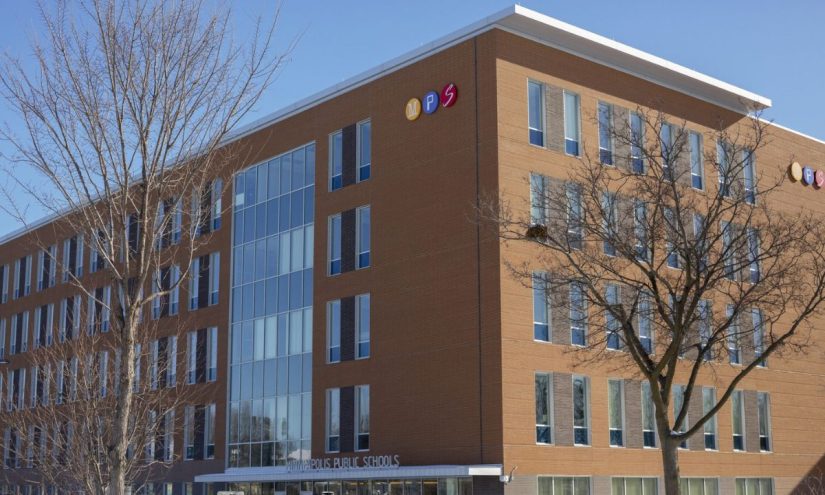
  • Minneapolis School Board Signals Potential School Closures – The 74

    Minneapolis School Board Signals Potential School Closures – The 74


    Get stories like this delivered straight to your inbox. Sign up for The 74 Newsletter

    The Minneapolis school board has formally asked Superintendent Dr. Lisa Sayles-Adams for information that could lead to school closures. They passed a resolution to the effect at a recent meeting.

    The board first drafted the directive —which asks for an initial report to the board by April 2026 — at two day-long meetings in June and August. The planning follows years of discussion about closing schools in a district with 29,000 students but the capacity for 42,000 and thus a bevy of half-empty schools.

    Even as enrollment declines at a school building, the fixed expenses for building staff — like principals, secretaries, nurses, librarians, culinary workers, custodians and social workers — stay the same or go up. With so many buildings below capacity, a big portion of each Minneapolis student’s funding has to go toward covering these fixed building-level costs, draining money away from instruction and extracurricular activities.

    The board resolution comprises topics for district administrators to investigate, including efficient use of current buildings, potential changes to magnet programs, and ways to increase enrollment in the district.

    Years-long discussion about the financial burden of operating small enrollment schools

    The process for downsizing the district’s footprint has been long and circuitous.

    In October 2022, the district prepared a comprehensive financial assessment forecasting that without significant cost cutting, the district would end up draining its reserves, while expenses would exceed revenues by the end of fiscal year 2026. The district has avoided that fate by cutting services and raising class sizes, but it is still unable to balance its budget without relying on reserves and other one-time funds.

    The 2022 memo did not prescribe closing schools, but it did present an analysis showing enrollment growth alone could not overcome the district’s structural inefficiencies resulting from operating many schools with small enrollments. At the time of the analysis, Anoka-Hennepin was operating 37 school buildings while enrolling about 37,000 students. Minneapolis was operating 61 buildings while enrolling about 29,000 students. Minneapolis had about half as many students per building as Anoka-Hennepin.

    The board first publicly discussed reducing the number of schools in March 2023, when then-board Chair Sharon El-Amin asked Rochelle Cox, the then-interim superintendent, to develop a draft plan for “school transformation.” Neither Cox nor the board took action.

    Two months before current Superintendent Dr. Lisa Sayles-Adams started at the district in early 2024, the School Board passed a “transformation resolution” that directed the district to do an accounting of physical space but stopped short of calling for a timeline on school closures.

    Sayle-Adams promised to tackle “right-sizing” the district after passing a budget in June 2024, because, she said, the community asked her to address the issue.

    Low enrollment schools require more funding per student for building-level staff

    The district is contending with rising costs and operating a significant number of small buildings, as well as buildings operating below capacity. Given the rising fixed costs of operating these buildings, that leaves less money for everything else, from class size reduction to teacher pay and programs commonly found in most school districts like world languages, art, music and athletics.

    Across the district, as building-level enrollment has declined, students have lost access to services like academic support if they’re struggling; staff to address student behavior; and community liaisons to help parents connect with schools. Small elementary schools have difficulty funding full-time positions for electives like art, music and gym, while hiring part-time staff for these positions is challenging. Some elementary students have gone without these electives, or only have music or art for part of the school year.

    Enrollment declines at middle and high schools have meant fewer elective options, like world languages, dance, theater and orchestra, as well as extracurriculars. Students also lose access to advanced coursework — like AP or IB classes — when there are too few students in the school who want to enroll. Many of the district’s high schools are now sharing athletic teams because individual schools lack enough students and funding to support a robust athletics program.

    The decline in services drives some families to schools outside the district that have the services and programs they desire, compounding the enrollment declines.

    Declines in enrollment mitigated by new-to-country students

    Minneapolis Public Schools lost about 15% of its enrollment in the wake of the COVID-19 pandemic, due to a combination of factors including implementing a controversial plan redrawing school boundaries, and keeping its schools closed longer during the pandemic than any other Minnesota district, which was followed in March 2022 by a three week educator strike.

    The district has enjoyed a small enrollment increase both last year and this year. Although the district does not track the immigration status of students, the increase has been attributed almost entirely to students newly arrived to the United States from Central America. Since the 2021-22 school year, English learner students have increased from 17% of the district’s students to 23% in the 2024-25 school year, according to Minnesota Department of Education data.

    This year, the district expects to spend at least $17 million more on English learner services than it receives in funding from state and federal sources. Although the Legislature increased state aid for English learners during the 2023 legislative session, the district’s funding is insufficient to cover the cost of providing the intensive services needed by students with the lowest levels of English proficiency.

    Many of the newcomer students are also unhoused, which has led to growing costs for the district to transport students from shelters outside district boundaries, as required under the federal McKinney-Vento law. The state has started to pay the cost of this transportation under a law passed in 2023.

    It is not clear whether changes to federal immigration policy will impact the district’s ability to continue to rely on newcomers to stabilize or grow enrollment in the future.

    Future enrollment expected to decline, limiting district’s funding

    Hazel Reinhardt, a demographer hired by the district, says enrollment is likely to continue to decline in the coming years because of lower birth rates, fewer families choosing to raise children in the city, and the state’s favorable laws around charter schools and open enrollment, allowing parents to send their children to St. Paul or suburban schools.

    Reinhardt told the board in June that once parents leave for charter and private schools or open enrollment options, “precious few” districts are able to bring them back.

    Most of the district’s funding is based on enrollment, so declining enrollment has created a ballooning fiscal crisis. Growing costs for both labor and services have outpaced increases in state and local funding.

    The district continues to cut services, increase class sizes and pull from its dwindling reserve funds to balance its annual budget. The district is expected to use $25 million from its reserves this school year after using $85 million from reserves last school year.

    The district’s enrollment woes and related financial distress are not unique to Minneapolis, with similar challenges facing large urban districts like Oakland, San Francisco, Denver, Seattle and Portland. Denver and Oakland have closed a small number of schools in recent years, but not enough to stabilize district finances. And school boards in Seattle and San Francisco have walked away from closure plans after significant public pressure, leaving both districts with growing budget deficits.

    Minnesota Reformer is part of States Newsroom, a nonprofit news network supported by grants and a coalition of donors as a 501c(3) public charity. Minnesota Reformer maintains editorial independence. Contact Editor J. Patrick Coolican for questions: [email protected].


    Did you use this article in your work?

    We’d love to hear how The 74’s reporting is helping educators, researchers, and policymakers. Tell us how

    Source link

  • Judge strikes down Minnesota dual enrollment program’s ban on faith statements

    Judge strikes down Minnesota dual enrollment program’s ban on faith statements

    This audio is auto-generated. Please let us know if you have feedback.

     Dive Brief:

    • A federal judge on Friday struck down a Minnesota law prohibiting colleges that require high school students to sign statements of faith from participating in a state dual enrollment program.
    • The University of Northwestern and Crown College, two conservative Christian institutions in Minnesota, sued the state in 2023 over the law which rendered them ineligible to participate in the Postsecondary Enrollment Options program. Both colleges require on-campus students to sign religious conduct agreements.
    • Siding with the colleges, U.S. District Judge Nancy Brasel ruled that Minnesota’s law infringed on their constitutional rights by making them choose between participating in the PSEO program and practicing their religion.

    Dive Insight:

    Since 1985, Minnesota’s PSEO program has allowed local high school students to earn college credit for nonsectarian coursework at participating colleges. The program is free for eligible students and reimburses colleges with fixed payments per credit hour.

    But a 2023 law, passed by the state’s Democrat-controlled Legislature, prohibited colleges from participating in the program if they require faith statements or make admission decisions based on “race, creed, ethnicity, disability, gender, or sexual orientation or religious beliefs or affiliations.”

    The University of Northwestern requires students and employees to sign a pledge to abstain from “same sex romantic intimacy.” And Crown’s student conduct policy does not allow involvement or promotion of “any sexual behavior outside the marriage of one man and one woman.”

    Both institutions, joined by three parents of high school students, sued the state the same day Democratic Gov. Tim Walz signed the legislation into law.

    The Minnesota Department of Education filed counterclaims, arguing that Crown and the University of Northwestern’s admissions policies for the PSEO program are unconstitutional.

    Early on in the case, Brasel blocked the state from enforcing the new law, allowing the colleges to continue enrolling PSEO students and earning state funds from the program while the case proceeded. Between the 2017-18 and 2022-23 academic year, the University of Northwestern received over $33.2 million from the program, and Crown received roughly $5.8 million.

    In her Friday ruling, Brasel sided with the colleges.

    “If the Schools’ eligibility to participate in PSEO is conditioned on not using faith statements as an admissions requirement, their free exercise in maintaining a campus community of like‐minded believers is burdened,” said Brasel, a Trump appointee. Families also lose their right to free exercise of religion if they can’t use the public benefit at “a school of their choice of like‐minded believers,” she said.

    The judge further wrote that if the state elects to fund private education, officials cannot disqualify private schools solely because they’re religious.

    Brasel also dismissed the state’s counterclaims Friday.

    The Minnesota Department of Education did not immediately respond to a request for comment Monday.

    The leaders of Crown and the University of Northwestern — Andrew Denton and Corbin Hoornbeek, respectively — celebrated the verdict Saturday.

    “This legislation has given us yet another opportunity to affirm our mission; we remain committed to equipping our students to grow intellectually and spiritually to serve effectively in their professions and give God-honoring leadership in the home, church, community, and world,” Hoornbeek said in a statement.

    The same day, Denton thanked the legislators who originally opposed the ban and said Crown was grateful for the law’s reversal.

    “The court made clear that Minnesota cannot single out high school students who want to attend a faith-centered institution,” he said. 

    Source link

  • Minnesota Alters Financial Aid Program Formula

    Minnesota Alters Financial Aid Program Formula

    Minnesota lawmakers managed last month not only to close a $239 million deficit in the state’s largest financial aid grant program, but also to increase its funding by $44.5 million over the next two years. But they did so by changing the funding formula, meaning some students may still find themselves with less aid for college, The Minnesota Star Tribune reported Tuesday.

    The Minnesota State Grant program helps middle- and low-income students enrolled at in-state technical schools, colleges or universities pay for educational expenses, such as housing and tuition. While not every student’s financial aid award will decrease this year, many are still waiting to find out how the changes to the formula will change their award.

    The amount each student receives is tied to their family size and income, and during the 2025–26 academic year grant values are expected to range from $100 to $17,717. Last year, average grants awards were cut by anywhere from $175 to $730 to offset the program’s then-$40 million deficit.

    According to The Star Tribune, changes to the formula include:

    • Students can receive the grant for four years of full-time attendance, down from the previous six-year cap.
    • Students who are dependents are responsible for paying an increased total cost of college.
    • There is an earlier application deadline.
    • Students will receive less money for living and miscellaneous expenses, such as room, board and transportation.
    • There is a reduced maximum amount awarded for tuition and fees to match the University of Minnesota’s Twin Cities’s rates, plus a 2 percent reduction for each of the next two years, regardless of how much tuition increases there. If a student attends a school that costs less, they are awarded the average cost of tuition and fees at that institution.

    Republican state senator Zach Duckworth said some of the changes are temporary. “I don’t think anybody was entirely happy with the end results, but the fact that we were able to increase some funding [to the State Grant overall] for students and families was a good thing,” he told The Star Tribune.

    The changes come as Congress is also weighing President Donald Trump’s proposal to cut TRIO, federal work-study and other federal programs that support college students.

    Source link

  • DOJ Sues Minnesota Over In-State Tuition for Noncitizens

    DOJ Sues Minnesota Over In-State Tuition for Noncitizens

    The U.S. Department of Justice sued Minnesota lawmakers Wednesday over the state’s policy allowing in-state tuition benefits for undocumented students.

    The lawsuit names Gov. Tim Walz, Attorney General Keith Ellison and the state’s Office of Higher Education as defendants. It claims Minnesota is violating federal law and discriminating against U.S. citizens by permitting noncitizens who grew up in the state to pay in-state tuition rates. Under the Minnesota Dream Act, signed into law in 2013, undocumented students have to meet various criteria to qualify, including spending three years at and graduating from a Minnesota high school.

    The suit also takes issue with the state’s North Star Promise Program, a free college program launched last year for Minnesotans who meet certain requirements, including undocumented students who live in the state.

    The lawsuit comes after the Justice Department successfully sued Texas over the same issue earlier in June. Texas swiftly sided with the federal government, and within hours, its two-decade-old law allowing in-state tuition for undocumented students became moot. The DOJ also sued Kentucky politicians over its in-state tuition policy last week. The lawsuits cite President Donald Trump’s May executive order that called for a crackdown on cities and states with laws that benefit undocumented immigrants, including those that offer in-state tuition benefits.

    “No state can be allowed to treat Americans like second-class citizens in their own country by offering financial benefits to illegal aliens,” Attorney General Pamela Bondi said in a news release. “The Department of Justice just won on this exact issue in Texas, and we look forward to taking this fight to Minnesota in order to protect the rights of American citizens first.”

    Source link

  • Minnesota college leaders eye tuition hikes as costs rise and state funding flatlines

    Minnesota college leaders eye tuition hikes as costs rise and state funding flatlines

    This audio is auto-generated. Please let us know if you have feedback.

    Dive Brief:

    • Minnesota’s public colleges could institute substantial tuition spikes in the next academic year, after state officials have so far failed to meet funding requests. 
    • College officials’ latest projections estimate students could see price increases ranging from 4% to 9.9% to offset budget gaps, according to a presentation at a Minnesota State system board of trustees meeting this week. Most colleges and universities are modeling an increase of 8%. 
    • Those proposed increases come as analysis from the Minneapolis Federal Reserve showed enrollment in public Minnesota colleges increased substantially in the 2024-25 academic year — up 12% at two-year institutions and 4% at four-year institutions.

    Dive Insight:

    Leaders at public institutions in Minnesota are having to grapple with state funding that will likely remain flat while inflation continues lifting costs for college operations. 

    Minnesota State Board of Trustees, which oversees 33 institutions, requested $465 million in new funding in the state budget covering fiscal 2026 and 2027. 

    But so far, state executive and House budget proposals include no funding increases for the system, said Bill Maki, vice chancellor of finance and facilities for the Minnesota State system, during Tuesday’s presentation. He noted that the state Senate offered additional funding but only a fraction of what was asked for — $100 million.

    The muted proposals from the state — which is facing its own fiscal shortfalls — would leave colleges on their own in filling budget gaps created by increasing costs and financial needs, such as maintenance backlogs. 

    Modest tuition increases would still leave substantial structural deficits, Maki noted. A system-wide tuition increase of 3.5% would still leave a $65.1 million budget shortfall in fiscal 2026. Even a 9% tuition hike would mean a $23.8 million gap. 

    Regardless of what level of tuition increase may be approved by the board, every one of our colleges and universities is going to have to implement budget reallocations and reductions in order to cover inflationary costs,” Maki said. 

    Complicating things, as the chancellor pointed out, is that institutions have to set tuition rates before they fully know their costs for the year. 

    To date, the Minnesota State system has remained relatively strong financially. The system’s operating revenues increased in fiscal years 2024 and 2023, according to its latest financial statement. It ended fiscal 2024 with total revenues of $2.3 billion and a surplus of $108.9 million. 

    Helping the system’s finances is the support it has received from the state. In 2024-25, tuition accounted for about 30% of the Minnesota State system’s revenue, compared to 42% made up by state appropriations. 

    And the state’s public colleges have beaten the nationwide trend of declining enrollment, reporting student growth in recent years.

    Minnesota’s enrollment growth brought the state just short of its pre-pandemic levels in 2019, according to the Minneapolis Fed’s analysis. 

    The state’s enrollment upticks in 2024 and 2023 also break a decade of decline in Minnesota and many of its neighboring states.

    In explaining the state’s enrollment growth, the Fed’s analysis pointed in part to Minnesota’s recently implemented North Star Promise. The program offers free tuition to students whose families make under $80,000 — a boon to enrollment and educational access but not necessarily to colleges’ coffers.

    Source link