Free speech in Europe is under debate at the moment, and for good reason. For anyone who is concerned about the preservation of free expression on a global scale, the restrictions on speech — including online speech — in countries like the United Kingdom and Germany in recent years have been alarming.
I’ve long written about international threats to free expression at FIRE — including in our newsletter, the Free Speech Dispatch — to help Americans better understand the broader state of speech, and how our First Amendment fits into the global stage. The current spotlight on speech restrictions abroad should once again remind us of the value of protecting our rights here at home.
Policing the ‘limits’ of Germany’s speech
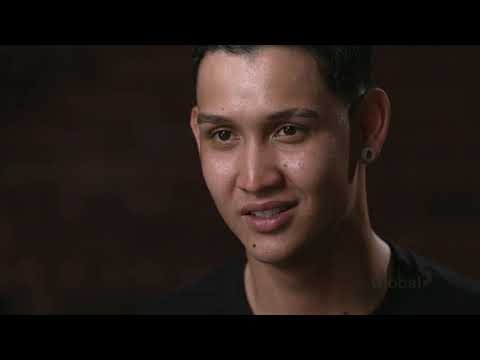
A CBS 60 Minutes segment that aired over the weekend is particularly disturbing, both because of the extent to which Germany polices speech and the casual disregard the prosecutors interviewed showed toward freedom of expression.
One of the prosecutors, when asked how targets respond to raids — sometimes conducted pre-dawn — of their homes and electronics, said that they are surprised to discover that they have committed a crime. “You have free speech as well, ” Dr. Matthäus Fink said, “but it also has its limits.”
Indeed it does, online and off. Just look at how German police and prosecutors have responded to speech that has the potential to offend in recent years.
A 64-year-old man is facing charges not just for alleged antisemitic posts, but also for calling a German politician a “professional idiot.” An American writer living in Germany may be sentenced to years in prison for satirically using a swastika to criticize the country’s COVID policies. Berlin police literally cut off the power to a pro-Palestinian conference because of “the potential for hate speech.” Then they shut down a pro-Palestinian protest because they couldn’t be sure if Irish protesters were saying something hateful in a foreign language — better censored than sorry. And what of the arrests of people who share, even unknowingly, a fake quote, because “the accused bears the risk of spreading a false quote without checking it”? Or of the man whose home was raided at dawn for tweeting at a local politician, “You are such a penis”?
And it’s not only Germany that targets insults of politicians. Just yesterday, news broke that a musician from the band Placebo has been charged with defamation for “contempt of the institutions” after calling Italian Prime Minister Giorgia Meloni a “piece of shit, fascist, racist” during a 2023 music festival.
Free speech is under threat in Europe, whether it’s online speech, blasphemy, or public protests.
In case you thought arrests over insults were a fluke, the prosecutors featured by 60 Minutes are here to assure you: That’s the intention, not a byproduct. When interviewer Sharyn Alfonsi asked, “Is it a crime to insult somebody in public?,” all three confirmed it was, with Fink suggesting punishment for online insult could be even more severe “because in internet, it stays there.” Reposts, too, can be criminal.
Fink went on to defend prosecutorial action against the man who called a politician a “penis,” suggesting this and similar crass language has “nothing to do with … political discussions or a contribution to a discussion.” The notion that prosecutors should use the power of the state to shape the civility of political discourse should alarm anyone concerned about the state of expression in Germany and online.
Vance criticizes European leaders’ speech policing
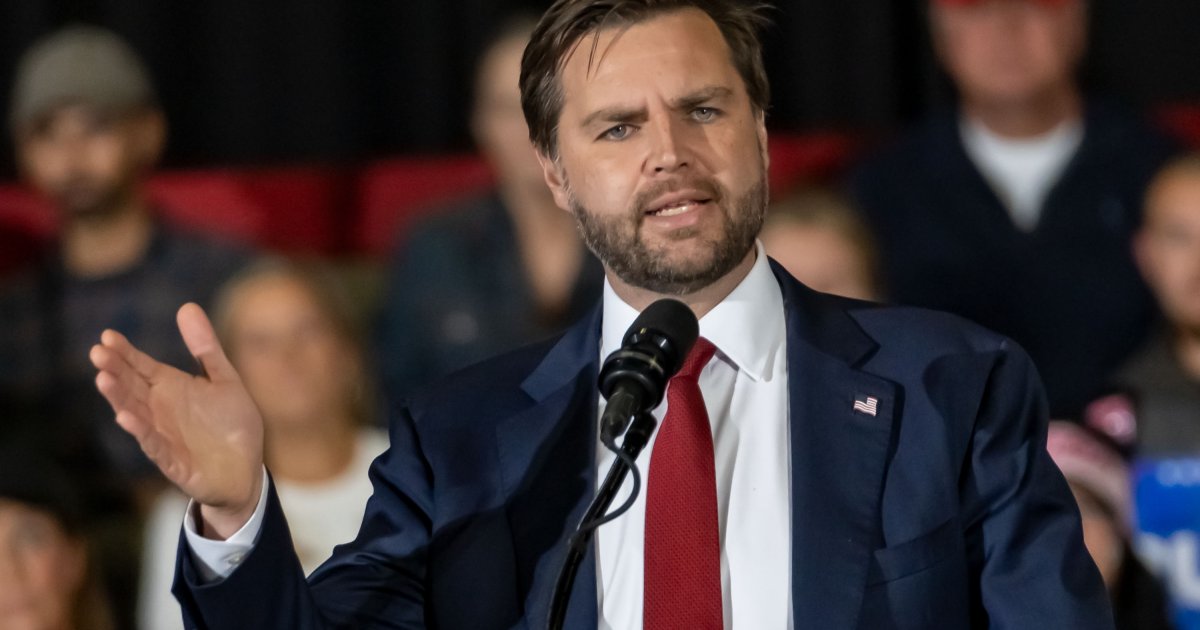
Last week, Vice President JD Vance gave a much-discussed speech about “shared values” at the Munich Security Conference. In it, Vance took European leadership to task over censorship of conservative and religious speech, particularly in the UK. “Free speech, I fear, is in retreat,” Vance said.
The speech prompted pushback from European officials who objected to Vance’s diagnosis. Business Secretary Jonathan Reynolds, for example, said in response to Vance’s discussion of religious speech, “let’s be clear, we don’t have blasphemy laws in the UK.”
That isn’t so clear at all.
In just the past few months alone, the UK managed to have multiple blasphemy controversies. (Not to mention the UK’s many other recent free speech woes covered in FIRE’s Free Speech Dispatch, which are too numerous to discuss in full here.)
In November, the Advertising Standards Authority banned comedian Fern Brady from using an advertisement for her stand-up tour that depicted Brady as the Virgin Mary because it could cause “serious offence” to Christians. Then Member of Parliament Tahir Ali called on Prime Minister Keir Starmer to create “measures to prohibit the desecration of all religious texts and the prophets of the Abrahamic religions” — also known as a blasphemy law.
And early this month, Greater Manchester Police arrested a man “on suspicion of a racially aggravated public order offence” for publicly burning a Quran. An assistant chief constable said police “made a swift arrest at the time and recognise the right people have for freedom of expression, but when this crosses into intimidation to cause harm or distress we will always look to take action when it is reported to us.”
Harm? Distress? These concepts are vast enough to fit the entirety of Big Ben. It is, as writer Kenan Malik puts it, “a form of blasphemy restriction but in secular garb.”
Labour Deputy Prime Minister Angela Rayner is also establishing a council to create an official government definition of Islamophobia. Depending on the council’s ultimate definition, and whether and how it is used by government agencies to respond to Islamophobia, it could implicate UK citizens’ ability to speak freely about important religious issues. (As FIRE has written repeatedly in the context of the International Holocaust Remembrance Alliance’s definition of anti-Semitism in the U.S., codification of these definitions into official policy can risk punishment or chilling of protected speech about political and religious matters.)
Outside of the UK, Europe’s restrictions on blasphemy are growing — and show no signs of stopping. Indeed, the Manchester man arrested for burning a Quran did so in response to the Jan. 29 assassination in Sweden of Iraqi refugee Salwan Momika, known for his well-publicized and controversial public Quran burnings. Just after Momika’s killing, a Swedish court found Salwan Najem, another Iraqi refugee who burned Qurans with Momika, guilty of incitement against an ethnic group. Momika faced similar charges, which were only dropped upon his death.
The United Nations Human Rights Council encourages these kinds of prosecutions, passing a 2023 resolution advising countries to “address, prevent and prosecute acts and advocacy of religious hatred.” Denmark did so, enacting a law criminalizing desecration of holy texts later that year.
Vance’s support of speech abroad is undermined by Trump admin’s early censorship efforts
Free speech is under threat in Europe, whether it’s online speech, blasphemy, or public protests. But it simply isn’t possible to square Vance’s criticism of European censorship with the recent actions of the administration in which he serves.
In his speech, Vance said “there is a new sheriff in town” and “under Donald Trump’s leadership, we may disagree with your views, but we will fight to defend your right to offer them in the public square.” Vance also objected to “shutting down media.”
Has Vance checked in on what the sheriff is doing?
The president is directly targeting people for their speech, which frustrates the United States’ ability to credibly — and rightfully — advocate for free speech on the world stage. Take, for example, the White House’s decision last week to indefinitely bar the Associated Press from spaces including the Oval Office and Air Force One over its failure to adopt the government-preferred term “Gulf of America.” Press Secretary Karoline Leavitt confirmed that the White House was punishing what it deems misinformation, saying that “if we feel that there are lies being pushed by outlets in this room, we are going to hold those lies accountable.” In his speech, Vance criticized the Biden administration for “threaten[ing] and bull[ying]” private companies into censoring “so-called misinformation.”
Vance, however, is aware of the AP decision — and supports it. In response to journalist Mehdi Hasan’s post asking Vance if he’d seen the ban, he wrote yesterday afternoon: “Yes dummy. I think there’s a difference between not giving a reporter a seat in the WH press briefing room and jailing people for dissenting views. The latter is a threat to free speech, the former is not. Hope that helps!”
That’s rationalizing censorship.
He’s right that banning a journalist from press events isn’t the same as imprisoning them. Obviously some punishments are worse than others, but any punishment based on a journalist’s viewpoint is a free speech violation. As my colleague Aaron Terr explained last week, explicitly barring a news outlet on the basis of viewpoint — and its failure to adopt the state’s preferred terminology — is a serious threat to free speech, one Americans should oppose regardless of who is in the Oval Office.
Vance also said in Munich, “Speaking up and expressing opinions isn’t election interference.” He’s right. There is perhaps no one who needs to hear that message more than President Donald Trump, who praised Vance’s speech but is nevertheless suing Iowa pollster J. Ann Selzer for her polling in the 2024 election — calling it “election interference.” (FIRE represents Selzer.)
FIRE’s defense of pollster J. Ann Selzer against Donald Trump’s lawsuit is First Amendment 101
News
A polling miss isn’t ‘consumer fraud’ or ‘election interference’ — it’s just a prediction and is protected by the First Amendment.
Read More
Another member of the Trump administration, Elon Musk, separately called this weekend for journalists at 60 Minutes to receive “a long prison sentence” for “deliberate deception to interfere with the last election,” referring to the journalists’ editing of an interview with then-Vice President Kamala Harris, not the segment on Germany’s online speech policing. Instead, hours later, he shared a clip of that segment with the caption, “Thank the Lord that America has freedom of speech!”
Elected officials should press their colleagues around the world to stand by the values of free expression. Vance’s articulation of those rights is necessary. But being effective requires credibility. That’s why FIRE believes our commitment to nonpartisanship, and our dedication to defending the right to speak regardless of preference or popularity, is our most important value.
If we undermine these freedoms at home, it’s harder to advocate them abroad to an already skeptical body politic.