Tag: MIT

  • MIT rejects Trump’s preferential funding offer

    MIT rejects Trump’s preferential funding offer

    MIT president Saly Kornbluth said the agreement went against freedom of expression and the university’s independence, and that it was “fundamentally” inconsistent with MIT’s “core belief that scientific funding should be based on scientific merit alone”. 

    Last week, the Trump administration sent a compact to nine US colleges laying out sweeping demands including capping international enrolments, banning the use of race or sex in hiring and freezing tuition for five years. In return, schools that signed on would receive competitive advantages from the government.  

    In a letter to US education secretary Linda McMahon, Kornbluth said: “We must hear facts and opinions we don’t like – and engage respectfully with those whom we disagree.” 

    Under the terms of the compact, signatories must abolish university units that “punish” or “belittle” conservative ideas, and all college employees “must abstain in their official capacity from actions or speech related to politics”.  

    If adopted by the institutions, it would set a 15% cap on international undergraduate students including a 5% limit for any given country. It also stipulates that universities must hand over international student information, including discipline records, upon the request of the government.  

    MIT is the first of the nine institutions to officially respond to the administration before the October 20 deadline. Stakeholders said the White House is likely aiming to expand the compact if institutions engage.  

    The day after it was sent, the University of Texas swiftly announced it was “honoured” to be a part of Trump’s proposal, though the remaining institutions were notably quiet on the agreement, which has received strong pushback from faculty leadership and administrators. 

    Faculty senates at the University of Virginia and the University of Arizona voted to oppose the compact with overwhelming majorities, while Dartmouth College president said in a statement she was “deeply committed” to the university’s values and would always defend its “fierce independence”.  

    In Tennessee, academic and workers unions have called on Vanderbilt University to reject what they called “Trump’s Fascist Compact”, with a petition from Graduate Workers United garnering almost 1,000 signatures as of October 8.  

    Elsewhere, California governor Gavin Newsom quickly responded saying: “California universities that bend to the will of Donald Trump and sign this insane ‘compact’ will lose billions in state funding – IMMEDIATELY.”

    “California will not bankroll schools that sign away academic freedom,” he wrote on October 2, sending a clear sign to the University of Southern California (USC), the only Californian college to receive the proposal so far.  

    Alongside MIT, the compact demands were thrust upon: Vanderbilt University, Dartmouth College, the University of Pennsylvania, the University of Southern California, the University of Texas, the University of Arizona, Brown University and the University of Virginia. 

    California universities that bend to the will of Donald Trump and sign this insane ‘compact’ will lose billions in state funding – IMMEDIATELY

    Gavin Newsom, Governor of California

    While it remains unclear how the recipients were chosen, stakeholders have noted that the list includes high prestige universities as well as public flagships, likely to generate maximum sectoral and media impact.  

    “The compact forces all nine institutions to reveal their positions; it sets the narrative for media reporting and public discussion of the points in the compact; and starts a public sorting of university responses to these policy priorities,” Boston College professor Chris Glass told The PIE News. 

    Whether MIT’s response emboldens the universities to reject the proposal remains to be seen, but even without the signatures, “the compact creates lasting ripples, as universities, accreditors, and state officials recalibrate for future policy fights,” said Glass.  

    The compact’s international student cap is yet another clear sign of Trump’s anti-immigration stance, though experts have noted that none of the nine universities have undergraduate international student populations that exceed the 15% limit.  

    While U Penn and USC are both close to the threshold with international undergraduate populations around the 14% mark, the universities of Virginia, Arizona and Texas at Austin all enrol less than 6% international undergraduates, according to analysis by Soka University of America professor Ryan Allen. 

    As such, Glass speculated the cap was intended to signal to universities beyond the nine, especially those above the 15% threshold, that they may face future scrutiny. 

    “Just by introducing the cap, the administration sets the terms of debate and sends a strong message – to its base, to all universities in the US, and to prospective international students,” he said.

    As per Allen’s analysis, just 14 of the top 114 US universities have undergraduate international populations that exceed the proposed limit.

    If it is implemented, the impact of the cap by itself might not be significant, “but this is part of an overall message that the US does not want international students … It’s tough to grapple with in the classroom because our students are feeling that message,” said Allen. 

    Typically, international students make up a larger proportion of postgraduate than undergraduate enrolments, though universities rarely disaggregate the two in overall student counts.  

    And yet: “Undergrad admissions are much more contentious and political than grad school. So, the idea that international students are somehow taking seats from Americans is much more salient in that space,” said Allen.  

    Source link

  • MIT becomes first college to reject Trump’s higher education compact

    MIT becomes first college to reject Trump’s higher education compact

    This audio is auto-generated. Please let us know if you have feedback.

    The Massachusetts Institute of Technology on Friday rejected the Trump administration’s proposed compact that offers priority for federal research funding in exchange for making sweeping policy changes. 

    MIT is the first institution to formally reject the compact, which the administration sent to nine research universities on Oct. 1. 

    The nine-page compact’s wide-ranging terms include freezing tuition for five years, capping international student enrollment to 15% of the institution’s undergraduate student body, and changing or eliminating units on campus that “purposefully punish, belittle, and even spark violence against conservative ideas.” 

    MIT already meets or exceeds many of the proposed standards in the compact, university President Sally Kornbluth said in a Friday message to U.S. Education Secretary Linda McMahon. However, the compact includes other principles that would restrict the university’s free expression and independence, Kornbluth said. 

    And fundamentally,” Kornbluth added, “the premise of the document is inconsistent with our core belief that scientific funding should be based on scientific merit alone.”

    The White House did not immediately respond to a request for comment on Friday. 

    Kornbluth’s letter to the Trump administration

    In her message, which she shared publicly, Kornbluth pointed to several MIT policies that she said were already in step with the compact. For instance, the proposed agreement dictates that colleges mandate standardized testing for applicants, and MIT reinstated its SAT and ACT requirement in 2022 after pausing it due to the coronavirus pandemic. 

    Similarly, Kornbluth noted that MIT limits international enrollment to about 10% of its undergraduate population — below the Trump administration’s proposed cap of 15%. 

    The compact also focuses on affordability, including through a standard that would require colleges with large endowments to not charge tuition to students enrolled in “hard science programs,” with exceptions for those from well-off families. 

    Kornbluth shared MIT’s own affordability initiatives, including not charging tuition to incoming undergraduate students from families earning under $200,000. She noted that 94% of undergraduate degrees awarded at MIT are in science, technology, engineering and mathematics fields. 

    But the MIT president opposed other compact provisions over concerns that they would restrict free expression at the university — which she underscored as a core MIT value.  

    “We must hear facts and opinions we don’t like — and engage respectfully with those with whom we disagree,” Kornbluth wrote.

    The compact’s terms have raised alarms from free speech advocates since becoming public. 

    Tyler Coward, lead counsel for government affairs at the Foundation for Individual Rights and Expression, said that the compact contains troubling language, pointing to the provision to eliminate departments that “belittle” or “spark violence” against conservative beliefs. 

    “Let’s be clear: Speech that offends or criticizes political views is not violence,” Coward wrote in an Oct. 2 statement. “Conflating words with violence undermines both free speech and efforts to combat real threats.”

    Widespread opposition to the compact

    The eight other colleges that received the compact are Brown University, Dartmouth College, the University of Arizona, the University of Pennsylvania, the University of Southern California, the University of Texas at Austin, the University of Virginia and Vanderbilt University. 

    The compact has drawn widespread opposition from employee groups and students. 

    Faculty senates at two institutions — the University of Arizona and UVA — have voted to oppose the agreement. It has also drawn campus protests and petitions to urge administrators to reject the proposal. 

    Democratic state lawmakers have likewise pushed colleges to reject the agreement. 

    In California, Gov. Gavin Newsom threatened to pull state funding from colleges that sign the deal. A pair of Pennsylvania lawmakers took a similar tack by moving to bar state-funded colleges from signing onto the compact. And in Virginia, leaders of the Democrat-controlled state Senate threatened funding consequences if UVA agreed to the compact. 

    “This is not a partnership,” the Virginia lawmakers said in an Oct. 7 letter to UVA leadership. “It is, as other university leaders have aptly described, political extortion.”

    Source link

  • MIT Rejects Proposed Federal Compact

    MIT Rejects Proposed Federal Compact

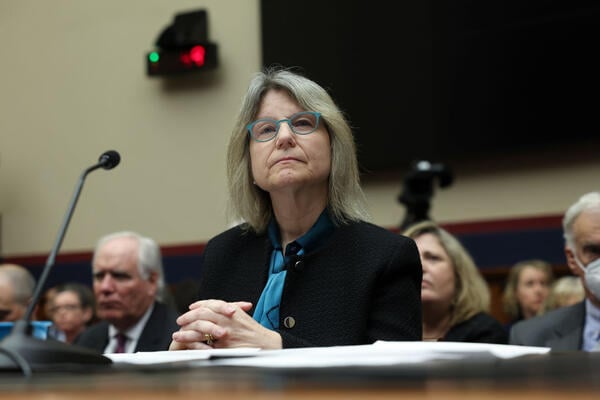
    Photo by Kevin Dietsch/Getty Images

    Massachusetts Institute of Technology has rejected the Trump administration’s proposal to sign on to the “Compact for Academic Excellence in Higher Education,” which would mandate sweeping changes across campus in exchange for preferential treatment on federal funding.

    MIT is the first of the nine universities invited to join the compact to publicly reject the proposal that has ignited fierce pushback from other higher ed leaders, faculty and experts who see the document as a way to strip institutions of their autonomy. The Trump administration also asked Brown University, Dartmouth College, the University of Arizona, the University of Pennsylvania, the University of Southern California, University of Texas at Austin, the University of Virginia and Vanderbilt University to sign. Most have provided vague statements saying that they are reviewing the compact, though Texas officials have expressed some enthusiasm about the offer.

    MIT President Sally Kornbluth announced the move in a Friday morning letter to the campus community, which included a copy of her response to Education Secretary Linda McMahon.

    Kornbluth highlighted in the response to McMahon a number of areas emphasized by the White House in the compact, such as focusing on merit, keeping costs low for students and protecting free expression. 

    “These values and other MIT practices meet or exceed many standards outlined in the document you sent. We freely choose these values because they’re right, and we live by them because they support our mission—work of immense value to the prosperity, competitiveness, health and security of the United States. And of course, MIT abides by the law,” Kornbluth wrote.

    She also noted that MIT disagreed with a number of the demands in the letter, arguing that it “would restrict freedom of expression and our independence as an institution” and that “the premise of the document is inconsistent” with MIT’s belief that funding should be based on merit.

    “In our view, America’s leadership in science and innovation depends on independent thinking and open competition for excellence,” Kornbluth wrote. “In that free marketplace of ideas, the people of MIT gladly compete with the very best, without preferences. Therefore, with respect, we cannot support the proposed approach to addressing the issues facing higher education.”

    This is a breaking news article and will be updated.

    Source link