Tag: Moral

  • Moral Capital and Locus of Control

    Moral Capital and Locus of Control

    Moral capital has become a contested currency in American public life. It is deployed by political elites to justify austerity, by campus executives to rationalize managerial authority, and by think tanks to discipline the working class. Yet moral capital also rises from below—from students building mutual-aid networks, from adjuncts organizing for fair wages, from communities confronting the harms universities have helped produce. In an era defined by climate peril, surveillance capitalism, and proliferating wars, the stakes of who controls moral capital—and who gets to exercise real agency—have never been higher.

    At the center of this struggle lies a fraught psychological and sociological concept: locus of control. Higher education constantly toggles between narratives of internal control (grit, resilience, personal responsibility) and external control (the market, political pressures, funding cycles). Powerful actors encourage an internal locus of control when it shifts blame downward, and an external locus of control when it shields institutional failure. Students, staff, and faculty live suspended in this contradiction, expected to absorb the consequences of decisions made far above them.

    Quality of Life as Moral Imperative

    Quality of Life—once peripheral to higher education policy—is now a defining moral issue. Students and workers contend with unstable housing, food insecurity, unsafe campuses, inaccessible mental health care, and relentless economic pressures. For many, these burdens are compounded by existential crises: climate anxiety, global conflicts, democratic backsliding, and precarity amplified by technological surveillance.

    Institutions often portray these crises as personal challenges requiring self-management. But Quality of Life is not an individual moral failure; it is a metric of collective conditions. When a university community’s quality of life declines, it signals a profound imbalance between agency and structure—a distorted locus of control.

    The Industry’s Manufactured Moral Capital

    Universities have long crafted narratives that elevate their own moral standing while displacing responsibility onto individuals. The “grateful striver” student, the “self-sacrificing” adjunct, the “visionary” president—these tropes protect managerial systems from scrutiny and allow elites to accumulate moral capital even as Quality of Life deteriorates for everyone else.

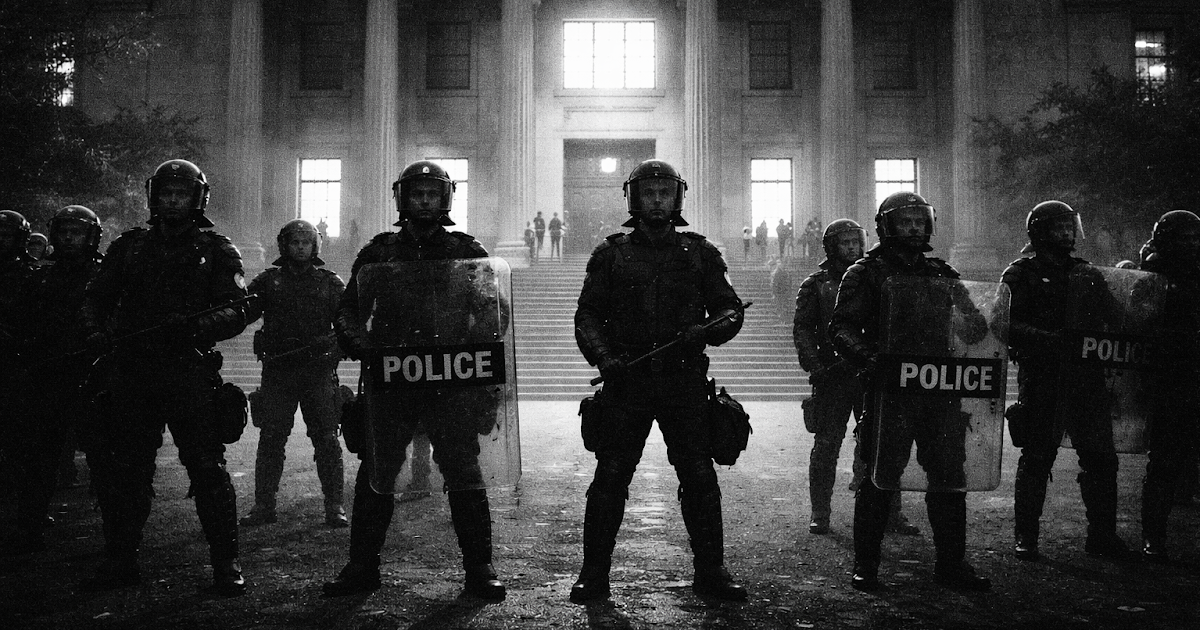
    This manufactured moral authority collapses under existential pressures. As campuses confront heatwaves, flooding, militarized policing, housing crises, widening wars, and state-sanctioned surveillance, it becomes impossible to sustain the fiction that individuals can simply “grit” their way to stability.

    Reclaiming Moral Capital 

    Moral capital is not owned by institutions. It can be reimagined, reclaimed, and reoriented. Four longstanding modes of internal discipline—temperance, celibacy, critical thinking, and solidarity—take on new urgency when placed in the context of planetary and political crisis.

    Temperance

    Temperance, stripped of its historical misuse, becomes a strategy of mindful refusal in the face of consumption-based exploitation. It includes rejecting burnout culture, resisting technological tools that monitor student behavior, and refusing to internalize blame for systemic failures. In an era of climate breakdown, temperance also signifies ecological responsibility—a modest but meaningful form of internal control aligned with global survival rather than institutional convenience.

    Celibacy

    Broadly interpreted, celibacy represents intentional self-limitation that protects one’s emotional and cognitive bandwidth. Amid surveillance-driven social media, algorithmic manipulation, and institutions that increasingly commodify student identity, celibacy can be a form of psychological sovereignty. It creates space for reflection in a world designed to keep people reactive, distracted, and easily governed.

    Critical Thinking

    Critical thinking remains the academy’s most subversive tradition—especially when deployed against the university itself. It helps students analyze the interplay between personal agency and systemic constraint. It equips them to understand climate injustice, militarism, and the geopolitics of knowledge production. And it exposes the ways mass surveillance—from learning analytics to campus police technologies—erodes autonomy and shifts the locus of control away from individuals and communities toward powerful institutions.

    Solidarity

    Solidarity transforms private moral commitments into collective action. It breaks the isolation manufactured by surveillance systems, precarity, and competitive academic cultures. Solidarity has historically been the source of the most effective nonviolent strategies—from civil rights sit-ins to anti-war mobilizations to student debt strikes. Today, as geopolitical conflicts escalate and authoritarian tendencies rise, the power of organized nonviolence becomes an existential necessity. It is one of the few tools capable of confronting militarized policing, resisting state repression, and challenging the corporate infrastructures that profit from crisis.

    Nonviolent Strategies in an Era of Global Threat

    Nonviolent action remains a potent form of moral capital—and one of the most effective forms of collective agency. Research across conflicts shows that sustained, mass-based nonviolent movements often outperform violent struggles, especially against highly resourced opponents. For universities, which increasingly collaborate with defense contractors, data brokers, and state surveillance agencies, nonviolent resistance has become both a safeguard and a moral compass.

    Sit-ins, teach-ins, encampments, divestment campaigns, and labor actions reassert external locus of control as something communities can influence—not by force, but by moral clarity, strategic discipline, and the refusal to comply with harmful systems.

    Mass Surveillance as a Threat to Moral Agency

    Mass surveillance is now woven into the fabric of academic life. Learning management systems track student behavior down to the minute. Proctoring software uses biometrics to police exams. Campus police drones and public-private security networks feed data into law enforcement databases. Administrative dashboards quantify student “risk” and worker “efficiency” in ways that reshape institutional priorities.

    This surveillance apparatus corrodes moral capital by reducing human judgment to automated metrics. It also distorts locus of control: individuals are told to take responsibility while being monitored and managed by opaque systems far beyond their influence.

    Reclaiming agency requires dismantling or limiting these systems, demanding transparency, and reasserting human dignity in spaces now governed by algorithms.

    Toward a More Honest Locus of Control

    Moral capital and locus of control are not academic abstractions. They are lived realities shaped by climate disruption, war, inequality, and surveillance. Higher education must stop using moral narratives to deflect responsibility and instead cultivate practices that reinforce real agency: temperance, celibacy, critical thinking, solidarity, and the disciplined power of nonviolent resistance.

    In a world marked by existential threats, reclaiming moral capital from below is not simply an intellectual exercise—it is a condition for survival, and a pathway to collective liberation.

    Sources

    Frantz Fanon, The Wretched of the Earth

    Erica Chenoweth & Maria Stephan, Why Civil Resistance Works

    Shoshana Zuboff, The Age of Surveillance Capitalism

    Naomi Klein, This Changes Everything

    Paulo Freire, Pedagogy of the Oppressed

    Astra Taylor, Democracy May Not Exist, but We’ll Miss It When It’s Gone

    Source link

  • Higher Education Inquirer : Divestment from Predatory Education Stocks: A Moral Imperative

    Higher Education Inquirer : Divestment from Predatory Education Stocks: A Moral Imperative

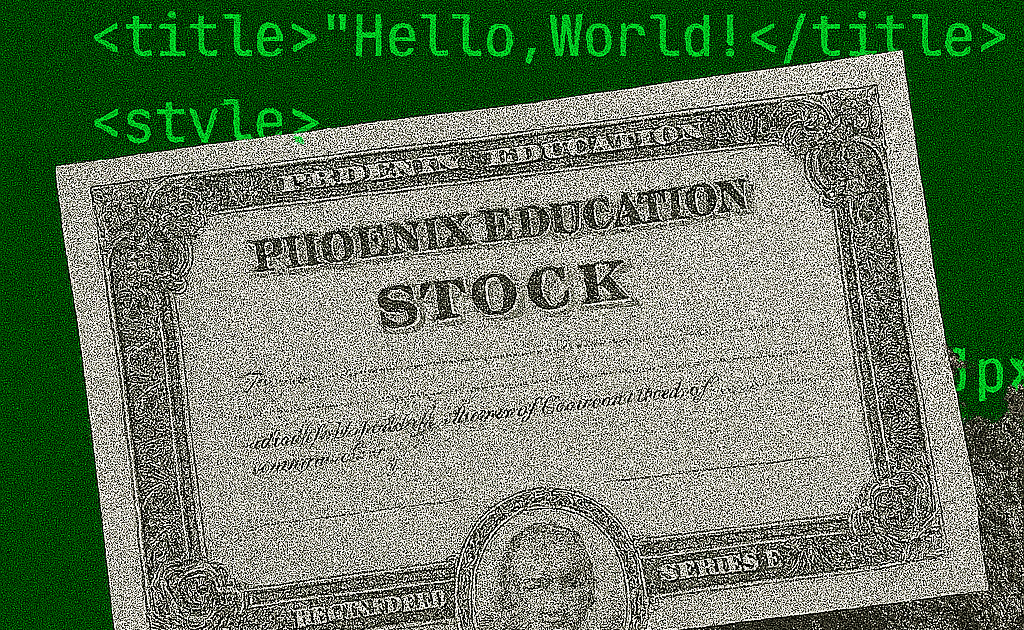
    Calls for divestment from exploitative industries have long been part of movements for social and economic justice—whether opposing apartheid, fossil fuels, or private prisons. Today, another sector demands moral scrutiny: the network of for-profit education corporations and student loan servicers that have turned higher learning into a site of mass indebtedness and despair. From predatory colleges to the companies that profit from collecting on student debt, the system functions as a pipeline of extraction. For those who believe education should serve the public good, the issue is not merely financial—it is moral.

    The Human Cost of Predatory Education

    For decades, for-profit college chains such as Corinthian Colleges, ITT Tech, the University of Phoenix, DeVry, and Capella targeted low-income students, veterans, single parents, and people of color with high-pressure marketing and promises of career advancement. These institutions, funded primarily through federal student aid, often charged premium tuition for substandard programs that left graduates worse off than when they began.

    When Corinthian and ITT Tech collapsed, they left hundreds of thousands of students with worthless credits and mountains of debt. But the collapse did not end the exploitation—it simply shifted it. The business model has re-emerged in online form through education technology and “online program management” (OPM) firms such as 2U, Coursera, and Academic Partnerships. These firms, in partnership with elite universities like Harvard, Yale, and USC, replicate the same dynamics of inflated costs, opaque contracts, and limited accountability.

    The Servicing of Debt as a Business Model

    Beyond the schools themselves, student loan servicers and collectors—Maximus, Sallie Mae, and Navient among them—have built immense profits from managing and pursuing student debt. Sallie Mae, once a government-sponsored enterprise, was privatized in the 2000s and evolved into a powerful lender and loan securitizer. Navient, its spinoff, became notorious for deceptive practices and aggressive collections that trapped borrowers in cycles of delinquency.

    Maximus, a major federal contractor, now services defaulted student loans on behalf of the U.S. Department of Education. These companies profit directly from the misery of borrowers—many of whom are victims of predatory schools or structural inequality. Their incentive is not to liberate students from debt, but to sustain and expand it.

    The Role of Institutional Investors

    The complicity of institutional investors cannot be ignored. Pension funds, endowments, and major asset managers have consistently financed both for-profit colleges and loan servicers, even after repeated scandals and lawsuits. Public sector pension funds—ironically funded by educators—have held stock in Navient, Maximus, and large for-profit college operators. Endowments that pride themselves on ethical or ESG investing have too often overlooked education profiteering.

    Investment firms like BlackRock, Vanguard, and State Street collectively hold billions of dollars in these companies, stabilizing an industry that thrives on the financial vulnerability of students. To profit from predatory education is to participate, however indirectly, in the commodification of aspiration.

    Divestment as a Moral and Educational Act

    Divesting from predatory education companies and loan servicers is not just an act of conscience—it is an educational statement in itself. It affirms that learning should be a vehicle for liberation, not a mechanism of debt servitude. When universities, pension boards, and faith-based investors divest from corporations like Maximus, Navient, and 2U, they are reclaiming education’s moral purpose.

    The divestment movement offers a broader civic lesson: that profit and progress are not synonymous, and that investment must align with justice. Faith communities, student debt activists, and labor unions have made similar stands before—against apartheid, tobacco, and fossil fuels. The same principle applies here. An enterprise that depends on deception, coercion, and financial harm has no place in a socially responsible portfolio.

    A Call to Action

    Transparency is essential. Pension boards, university endowments, and foundations must disclose their holdings in for-profit education and student loan servicing companies. Independent investigations should assess the human consequences of these investments, particularly their disproportionate impact on women, veterans, and people of color.

    The next step is moral divestment. Educational institutions, public pension systems, and religious organizations should commit to withdrawing investments from predatory education stocks and debt servicers. Funds should be redirected to debt relief, community college programs, and initiatives that restore trust in education as a public good.

    The corporate education complex—spanning recruitment, instruction, lending, and collection—has monetized both hope and hardship. The time has come to sever public and institutional complicity in this cycle. Education should empower, not impoverish. Divestment is not merely symbolic—it is a declaration of values, a demand for accountability, and a reaffirmation of education’s original promise: to serve humanity rather than exploit it.


    Sources:

    • U.S. Department of Education, Borrower Defense to Repayment Reports

    • Senate HELP Committee, For Profit Higher Education: The Failure to Safeguard the Federal Investment and Ensure Student Success (2012)

    • Consumer Financial Protection Bureau (CFPB) enforcement actions against Navient and Sallie Mae

    • The Century Foundation, Online Program Managers and the Public Interest

    • Student Borrower Protection Center, Profiting from Pain: The Financialization of the Student Debt Crisis

    • Higher Education Inquirer archives

    Source link

  • Moral resources for Americans who know we’ve been betrayed (William Barber & Jonathan Wilson-Hartgrove)

    Moral resources for Americans who know we’ve been betrayed (William Barber & Jonathan Wilson-Hartgrove)

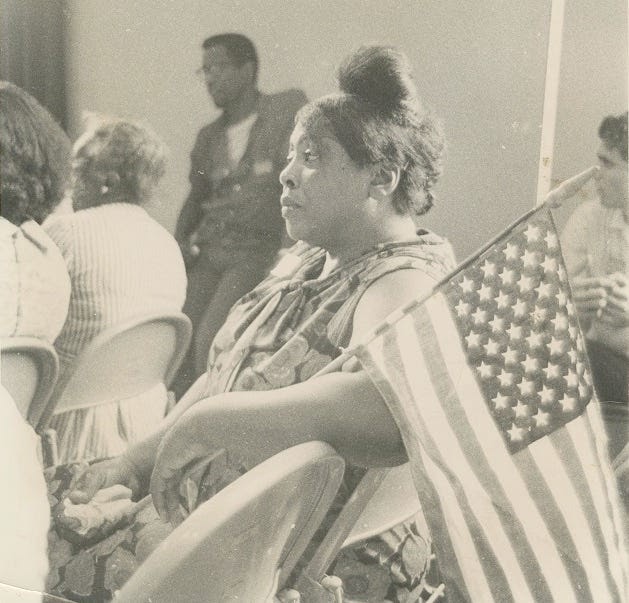
    Civil Rights Movement and Wayside Theatre photographs, Student Nonviolent Coordinating Committee (SNCC).

    On America’s 249th anniversary of declaring freedom from tyranny, a would-be king will celebrate Independence Day by signing a budget bill that Americans oppose 2 to 1.

    This Big Ugly Bill that was passed by Republicans in Congress this week will make the largest cuts to healthcare and nutrition assistance in our nation’s history to pay for tax cuts for people who do not need them and an assault on our communities by masked men who are disappearing our neighbors to concentration camps. The dystopian scene is enough to make any true believer in liberty and equality question whether they can celebrate Independence Day at all. But it would be a betrayal of our moral inheritance to not remember the true champions of American freedom on this day. Indeed, to forget them would mean losing the moral resources we need to revive American democracy.

    As bad as things are, we cannot forget that others faced worse with less resources than we have. We are not the first Americans to face a power-drunk minority in public office, determined to hold onto power at any cost. This was the everyday reality of Black Americans in the Mississippi Delta for nearly a century after the Klan and white conservatives carried out the Mississippi Plan in the 1870s, erasing the gains of Reconstruction and enshrining white supremacy in law.

    When Ms. Fannie Lou Hamer decided to join the freedom movement in Sunflower County, Mississippi, she knew two things: the majority of people in Sunflower County despised the policies of Senator James O. Eastland and Eastland’s party had the votes to get whatever they wanted written into law. The day she dared attempt to register to vote, Ms. Hamer lost her home. When she attended a training to learn how to build a movement that could vote, she was thrown into the Winona Jail and nearly beaten to death. Still, Ms. Hamer did not bow.

    Instead, she leaned into the gospel blues tradition that had grown out of the Delta, spreading the good news that God is on the side of those who do not look away from this world’s troubles but trust that a force more powerful than tyrants is on the side of the oppressed and can make a way out of no way to redeem the soul of America. “This little light of mine, I’m gonna let it shine,” she sang, and a generation of college student volunteers came to sing with her during Freedom Summer. Their mission was to register voters and teach the promises of democracy to Mississippi’s Black children in Freedom Schools.

    On July 4, 1964, Ms. Hamer hosted a picnic for Black and white volunteers who’d dedicated their summer to nonviolently facing down fascism on American soil. They celebrated the promise that all are created equal even as they faced death for living as if it were true. Those same young people who were at Hamer’s July 4th picnic went on to launch the Mississippi Freedom Democratic Party and take their challenge all the way to the Democratic National Convention in Atlantic City that August. “I question America,” Ms. Hamer said in her testimony that aired on the national news during coverage of the convention. “Is this America, the land of the free and the home of the brave where we have to sleep with our telephones off of the hooks because our lives be threatened daily because we want to live as decent human beings, in America?”

    Hamer and the MFDP didn’t win the seats they demanded at the 1964 convention, but Atlantic City would be the last convention to seat an all-white delegation from Mississippi. Just a year later, as part of the War on Poverty, Congress passed the Medicare and Medicaid Act, expanding access to healthcare to elderly and low-income Americans – an expansion that Trump is rolling back half a century later in an immoral betrayal of the very people he promised to champion in his fake populist appeal to poor and working people.

    There’s nothing un-American about questioning a fascism that defies the will of the people to terrorize American communities and assert total control. It has been the moral responsibility of moral leaders from Frederick Douglass, who asked, “what to the slave is the 4th of July?” to those who are asking today how Americans are supposed to celebrate when their elected leaders sell them out to billionaires and send masked men to assault their communities. Ms. Hamer is a vivid reminder of the moral wisdom that grows out of the Mississippi Delta. It teaches us that those who question America when we allow fascists to rule are not un-American. They are, in fact, the people who have helped America become more of what she claims to be.

    So this 4th of July, may we all gather with Fannie Lou Hamer and the moral fusion family closest to us – both the living and the dead – to recommit ourselves to a government of the people, by the people, and for the people. Yes, America’s fascists have the power today. They will throw a party at our House and desecrate the memory of so many who’ve worked to push us toward a more perfect union. But they will not own our Independence Day. As long as we remember the moral tradition that allowed Fannie Lou Hamer to host a July 4th picnic while she battled the fascism of Jim Crow, we have access to the moral resources we need to reconstruct American democracy today.

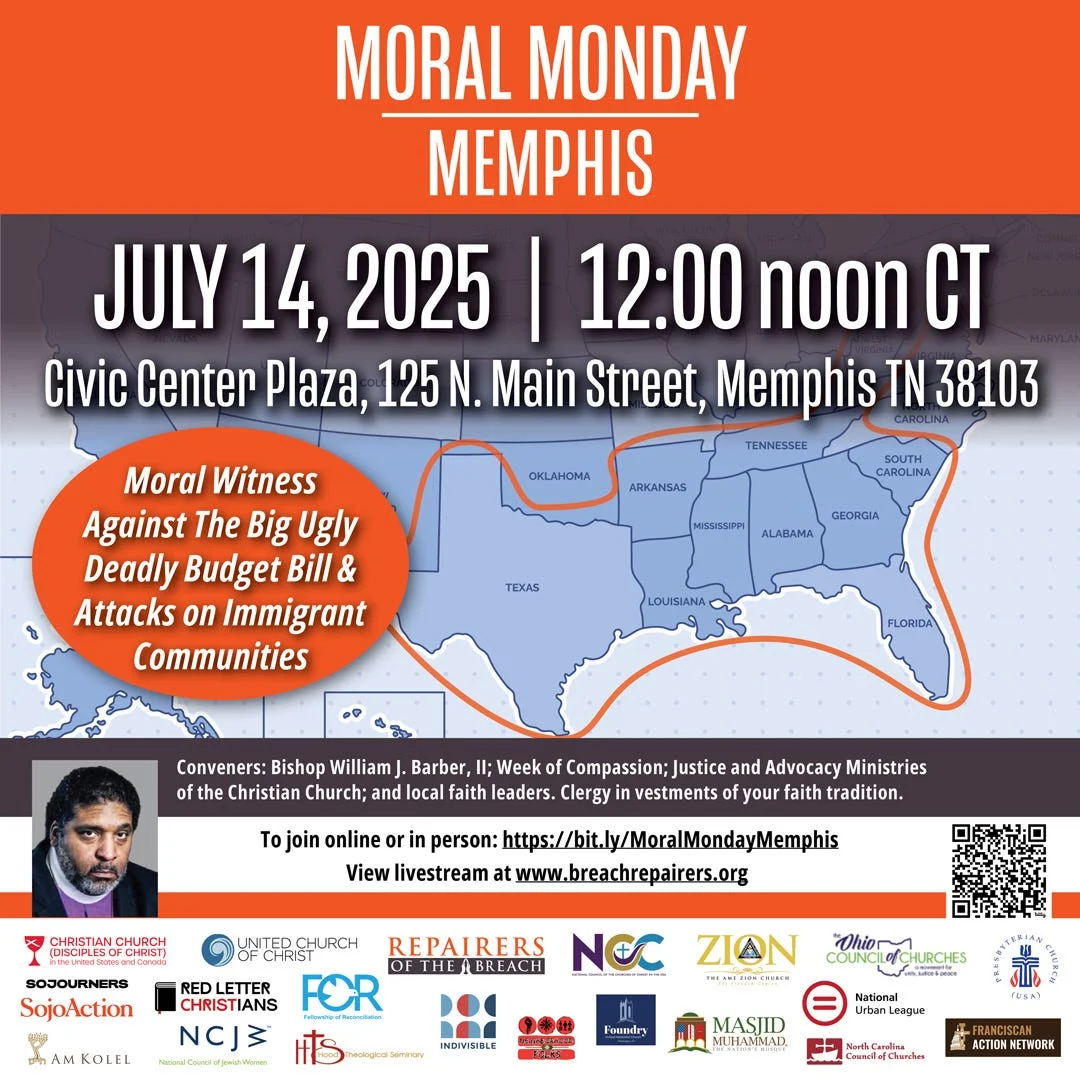
    This is why today, as all American’s celebrate our nation’s declaration of liberty and equality, we are announcing that the Moral Monday campaign we’ve been organizing in Washington, DC, to challenge the policy violence of this Big Ugly Bill is going to the Delta July 14th for Moral Monday in Memphis. As we rally moral witnesses in the city of Graceland and the Delta blues – the place where Dr. King insisted in 1968 that the movement “begins and ends” – delegations of moral leaders and directly impacted people will visit Congressional offices across the South to tell the stories of the people who will be harmed by the Big, Ugly, and Deadly bill that Donald Trump is signing today.

    Yes, this bill will kill. But we are determined to organize a resurrection of people from every race, religion, and region of this country who know that, when we come together in the power of our best moral traditions, we can reconstruct American democracy and become the nation we’ve never yet been.

    Today’s neo-fascists have passed their Big Ugly Bill, but they have also sparked a new Freedom Summer. We will organize those this bill harms. We will mobilize a new coalition of Americans who see beyond the narrow divisions of left and right. We will lean into the wisdom of Ms. Hamer and Delta’s freedom struggle, and we will build a moral fusion movement to save America from this madness.

    Source link

  • Applying the Moral Intensity Framework: Ethical Decision-Making for University Reopening During COVID-19

    Applying the Moral Intensity Framework: Ethical Decision-Making for University Reopening During COVID-19

    by Scott McCoy, Jesse Pietz and Joseph H Wilck

    Overview

    In late 2020, universities faced a moral and operational crisis: Should they reopen for in-person learning amid a global pandemic? This decision held profound ethical implications, touching on public health, education, and institutional survival. Using the Moral Intensity Framework (MIF), a multidimensional ethical decision-making model, researchers analysed the reopening choices of 62 US universities to evaluate the ethical considerations and outcomes. Here’s how MIF provides critical insights into this complex scenario.

    Why the Moral Intensity Framework matters

    The Moral Intensity Framework helps assess ethical decisions based on six dimensions:

    1. Magnitude of Consequences: The severity of potential outcomes.
    2. Social Consensus: Agreement on the morality of the decision.
    3. Probability of Effect: Likelihood of outcomes occurring.
    4. Temporal Immediacy: Time between the decision and its consequences.
    5. Proximity: Emotional or social closeness to those affected.
    6. Concentration of Effect: Impact on specific groups versus broader populations.

    This framework offers a structured approach to evaluate ethical trade-offs, especially in high-stakes, uncertain scenarios like the COVID-19 pandemic.

    Universities’ dilemma: in-person -v- remote learning

    The reopening debate boiled down to two primary considerations:

    1. Educational and Financial Pressures: Universities needed to deliver on their educational mission while addressing steep revenue losses from tuition, housing, and auxiliary services. Remote learning threatened educational quality and the financial viability of institutions, especially those with limited endowments.
    2. Public Health Risks: Reopening campuses risked COVID-19 outbreaks, jeopardising the health of students, staff, and surrounding communities. Universities also faced backlash for potential spread to vulnerable populations.

    Critical Findings Through the Moral Intensity Lens

    Magnitude of Consequences

    Reopening for in-person learning presented stark risks: potential illness or death among students, staff, and the community. However, keeping campuses closed threatened jobs, reduced education quality, and caused financial strain. The scale of harm from reopening was considered higher, particularly in densely populated campus settings.

    Social Consensus

    Public opinion and government policies influence decisions. States with stringent public health mandates leaned toward remote learning, while those with lenient regulations often pursued in-person or hybrid models. Administrators balanced community sentiment with institutional needs, highlighting the importance of localized consensus.

    Temporal Immediacy

    Health risks from in-person learning manifested quickly, while financial and educational setbacks from remote learning had longer timelines. This immediacy added ethical weight to public health considerations in reopening decisions.

    Probability of Effect

    The uncertainty surrounding COVID-19 transmission and mitigation complicated ethical judgments. Universities needed more data on the effectiveness of safety protocols, making probability assessments challenging.

    Proximity and Concentration of Effect

    Campus communities are close-knit, amplifying the emotional weight of decisions. Both reopening and remaining remote affected broad populations similarly, lessening these dimensions’ influence.

    Ethical Outcomes and Practical Mitigation Strategies

    Many universities implemented extensive safety measures to align reopening decisions with ethical standards:

    • Testing and Tracing: Pre-arrival testing, on-campus surveillance, and contact tracing reduced outbreak risks.
    • Modified Learning Environments: Hybrid and remote options ensured flexibility, accommodating vulnerable populations.
    • Health Protocols: Social distancing, mask mandates, and enhanced cleaning protocols were widely adopted.

    Despite risks, universities that reopened often avoided large-scale outbreaks, demonstrating the effectiveness of these measures.

    Lessons for Crisis Management

    The COVID-19 reopening experience offers valuable lessons for future crises:

    1. Use Multidimensional Ethical Frameworks: Applying tools like MIF provides structure to navigate complex moral dilemmas.
    2. Prioritize Stakeholder Engagement: Balancing diverse perspectives helps bridge gaps between perceived and actual risks.
    3. Adapt Quickly: Flexibility in implementing mitigation strategies can mitigate harm while achieving core objectives.
    4. Build Resilience: Strengthening financial reserves and digital infrastructure can reduce future vulnerabilities.

    Global Implications

    While this analysis focused on U.S. universities, the findings have worldwide relevance. Institutions globally grappled with similar decisions, balancing public health and education amid diverse cultural and political contexts. The Moral Intensity Framework offers a universal lens to evaluate ethical challenges in higher education and beyond.

    Conclusion

    The reopening decisions of universities during COVID-19 exemplify the intricate balance of ethical, financial, and operational considerations in crisis management. The Moral Intensity Framework provided a robust tool for understanding these complexities, highlighting the need for structured ethical decision-making in future global challenges.

    This blog is based on an article published in Policy Reviews in Higher Education (online 20 September 2024) https://www.tandfonline.com/doi/full/10.1080/23322969.2024.2404864.

    Scott McCoy is the Vice Dean for Faculty & Academic Affairs and the Richard S. Reynolds, Jr. Professor of Business at William & Mary’s Raymond A. Mason School of Business.  His research interests include human computer interaction, social media, online advertising, and teaching assessment.

    Jesse Pietz is a faculty lead for the OMSBA program at William & Mary’s Raymond A. Mason School of Business.  He has been teaching analytics, operations research, and management since 2013.  His most recent faculty position prior to William & Mary was at the U.S. Air Force Academy in Colorado Springs, Colorado. 

    Joseph Wilck is Associate Professor of the Practice and Business Analytics Capstone Director
    Kenneth W. Freeman College of Management, Bucknell University He has been teaching analytics, operations research, data science, and engineering since 2006. His research is in the area of applied optimization and analytics.

    Author: SRHE News Blog

    An international learned society, concerned with supporting research and researchers into Higher Education

    Source link