Tag: Myth

  • “The Myth of Political Correctness,” 30 Years Later

    “The Myth of Political Correctness,” 30 Years Later

    On Oct. 24, 1995, Duke University Press published my first book, The Myth of Political Correctness: The Conservative Attack on Higher Education. Looking back 30 years at my book, it can be dispiriting to see how everything today seems the same, only worse. “Political correctness” has been replaced by “woke” as the smear of the moment, but otherwise almost every word of my book could be republished today, with a thousand new examples to buttress every point.

    Sometimes the title of the book confused people who mix up a “myth” with a “lie.” As I noted 10 years ago, “When I called political correctness a ‘myth,’ I was never denying the fact that some leftists are intolerant jerks, and sometimes their appalling calls for censorship are successful. My point was that even though political correctness exists, the ‘myth’ about it was the story that leftists controlled college campuses, imposing their evil whims like a ‘new McCarthyism’ or ‘China during the Cultural Revolution.’ In reality, then and now, the far greater threat to freedom on campus came from those on the right seeking to suppress opposing views.”

    I had been inspired to write the book by Dinesh D’Souza; I reviewed his best-selling 1991 book, Illiberal Education, for my column in the Daily Illini at the University of Illinois at Urbana-Champaign. If D’Souza, a recent college graduate, could publish such a terrible book full of misinformation, then surely I could write a better book. So I did.

    But the publishing market was much more interested in the endless parade of conservatives bemoaning the “PC police” and “tenured radicals” than a refutation of these flawed arguments. My book, which I started to write as a graduate student in the Committee on Social Thought at the University of Chicago (home to Saul Bellow, Allan Bloom and Edward Shils), was rejected by more than 50 publishers before I was able to persuade Stanley Fish (whom I had encountered as the editor of Democratic Culture, the newsletter of Gerald Graff and Gregory Jay’s Teachers for a Democratic Culture) to publish it at Duke. My editor (and now also an Inside Higher Ed columnist) was Rachel Toor, who helped to make some sense of my ideas.

    In the end, my book failed to shift the debate about academic freedom—not because it was wrong or the facts were refuted, but because it was ignored. From my perspective, I was correct about everything and nobody learned anything from me. And I’ve been writing essentially the same thesis, over and over again, in a second book and essays and hundreds of blog posts.

    Looking back at my first book, I think its claims have been proven largely correct over the past three decades (but I might be biased). At the core of the book were the chapters on the “Myth of PC” (examining how many of the leading anecdotes about repression often weren’t accurate) and “Conservative Correctness” (showing the many examples of repression from the right that were ignored by the media and campus critics of PC).

    The remaining chapters also still seem on target: “The Cult of Western Culture” (why multiculturalism isn’t taking over colleges and silencing traditional works, and Shakespeare isn’t being banned); “The Myth of Speech Codes” (colleges have always had speech codes, often worse ones using the arbitrary authority of a dean, and what we need are codes that protect free speech); “The Myth of Sexual Correctness” (sexual assault is a serious problem, and feminists often face suppression); and “The Myth of Reverse Discrimination” (white men are not the victims of campus oppression and the “fairy tale of equal opportunity” is false)

    Michael Hobbes did an excellent episode of You’re Wrong About in 2021 on political correctness that featured some of the ideas from my book. My position, then and now, is more nuanced than Hobbes’s view of PC as a pure right-wing moral panic. The panic was there, but so were real cases of repression—on both the left and the right.

    The cartoonish right-wing belief that colleges had become Maoist institutions of oppression against conservatives prompted too many on the left (and the center) to counter that everything was fine on campus. In truth, free expression has been in serious danger, both against conservatives who were sometimes censored and against leftists who also faced repression. As bad as things seemed in 1995, the repression is far worse today and clearly aimed at the left—and yet the delusions about the PC police on campus are more widespread than ever.

    Even in the face of the worst campus repression in American history, many conservatives continue to recite the old, tired myth of political correctness and leftist control of higher education—a myth repeated so often for so long has become a truth in the minds of many.

    The worst strategic mistake progressives made in the past three decades was to abandon the cause of free speech. Too many leftists believed in the myth of political correctness; they heard the complaints about free speech and accepted the right-wing argument that only conservatives were being silenced and concluded that free speech was a right-wing plot. They imagined that tenured radicals controlled colleges because everybody said so, and so they clung to the delusion that they could support censorship and it wouldn’t be used against them.

    When conservatives demanded free speech on campus, the left should have vigorously agreed and established strong protections for free expression on campus. Instead, they let the right win a propaganda war by pretending to be battling for free speech against the social justice warriors. And they lost the opportunity to make free speech a core principle established in higher education.

    The war on political correctness succeeded because the enemies it targeted were weak, disorganized leftists who were not, in fact, plotting to destroy conservatives. By contrast, today the right wants to demolish higher education like it’s the East Wing of the White House, and it is willing to use its vast power to do that.

    As bad as the skepticism on the left about free speech was, the right’s abandonment of free speech is much worse, both in the degree of rejection and in the impact it has on campuses. It didn’t matter if a leftist argued against free speech because they had essentially no power, on campus or off, to impose their ideas. They had no legislators joining their demands and no donors threatening to turn off the campus money spigot.

    Critics of PC had many advantages on their side: Enormous money poured into building organizations and ideas that built the myth of PC, funding groups like the Federalist Society and the National Association of Scholars, and paying individual authors such as Bloom and D’Souza to write and publicize their books. A new media ecosystem of talk radio and the internet spread the myth of PC. And the war on PC recruited principled liberals and even progressives who objected to the excesses of the left.

    It will be difficult for progressives to build anything similar. Wealthy donors tend to fund conservative groups, or prefer to put their names on fancy campus buildings. Universities are anxious to create free speech centers, but usually only the kind that conservatives support.

    Few conservatives are willing to speak out against the Trump regime. And many centrists and liberals who have spent a generation obsessing about the PC police find it difficult to suddenly turn around and recognize the repression from the right that they’ve been ignoring for decades. A letter condemning the Trump administration’s compact signed by principled conservatives such as Robert George and Keith Whittington is a good start toward building an ideological coalition against right-wing censorship that matches what the right did against the “PC police.”

    Today, we face the worst attack on academic freedom in American history, one that combines the overwhelming external power of state and federal governments, used for the first time to target free speech, and the internal power of a campus bureaucracy devoted to suppressing controversy.

    Unlike political correctness—which often relied upon exaggerated accounts of dubious examples with marginal injustices—there are so many clear-cut cases of terrible repression and extreme violations of due process and academic freedom that it’s difficult for anyone to keep track of them all. The litigation strategy developed by the right of suing every censor is an important step. Telling and retelling the stories of campus censorship today is critical. So is organizing events, on and off campus, about the repression happening today, and challenging those on the right who defend their side’s censorship.

    It’s not easy to find solutions when faced with this extraordinary censorship, with unprecedented dismissals and restrictions on speech. But the right-wing attack on political correctness, now over three decades old, offers liberals and progressives a guidebook for how to do it. Quote their words. Demand their reforms. Agree with them and confront their hypocrisy when they reject every free speech policy they’ve been demanding for the past three decades.

    The myth of political correctness is still alive 30 years later, invoked to deny and justify the repression from the right. Understanding how the culture wars brought us to this point of authoritarianism is essential to leading us toward the goals of academic freedom and free expression on campus.
    John K. Wilson was a 2019–20 fellow with the University of California National Center for Free Speech and Civic Engagement and is the author of eight books, including Patriotic Correctness: Academic Freedom and Its Enemies (Routledge, 2008), and his forthcoming book The Attack on Academia. He can be reached at [email protected], or letters to the editor can be sent to [email protected].

    Source link

  • The Transfer Credit Myth: How Everything We Know About Excess Credits May Be Wrong

    The Transfer Credit Myth: How Everything We Know About Excess Credits May Be Wrong

    The Transfer Credit Myth: How Everything We Know About Excess Credits May Be Wrong

    quintina.barne…

    Thu, 09/04/2025 – 03:00 AM

    Part One: Through the lens of records and registration.

    Byline(s)

    Source link

  • The Myth of Antisemitism at Harvard

    The Myth of Antisemitism at Harvard

    As rumors swirl that Harvard University will soon capitulate to the Trump administration and pay a $500 million fine, it’s important to speak out against university officials who bow down to authoritarianism. I’ve argued for why Columbia and Brown were wrong to settle, how their agreements endanger academic freedom, and why these agreements leave universities more vulnerable to future attacks by the Trump regime.

    But it is also important to reiterate the fact that the reasons cited by the Trump administration for why Harvard must pay this money are lies. The Trump administration’s assertion that Harvard has committed antisemitic discrimination against Jews is a series of falsehoods fabricated by an antisemitic president and his obedient bureaucrats who seek to punish their perceived political enemies on fraudulent grounds.

    On June 30, 2025, the Trump administration’s Joint Task Force to Combat Anti-Semitism issued the finding that “Harvard University is in violent violation of Title VI.” No one knows what a “violent” violation is, since this bizarre term has never been used before, but the result was inevitable. Since Harvard had already been punished for imagined antisemitism far more harshly than any college in American history, with billions of dollars in grants cut off without due process, the finding of guilt was an inevitable ex post facto determination.

    Still, it’s important to examine this absurd finding of antisemitism at Harvard in depth, because it sets a standard that all colleges will be expected to obey, and because it requires the worst attacks on free speech ever ordered by the federal government.

    Most of the government’s report comes not from any investigation of its own, but from Harvard’s own self-examination of antisemitism on campus. The Trump administration’s Notice of Violation against Harvard is almost comical for its lack of evidence of any wrongdoing committed by Harvard.

    The Trump administration concluded, “We find that these and other actions contributed to a hostile environment for Jewish and Israeli students at Harvard,” citing a large number of cases of people engaged in peaceful expression, including several silent “study-in” protests at Harvard libraries. Incredibly, Harvard’s unjustifiable repression of silent, nondisruptive protests, which included banning dozens of students and faculty from the library, was used by the government as evidence that Harvard has done too little to protect Jewish students.

    When carrying a piece of paper into a library is punished by Harvard, it’s a travesty. When Harvard punishes its students and faculty for carrying a piece of paper into a library and this is cited by the government as insufficiently repressive of free speech, it’s a disaster.

    This also shows why Harvard may be willing to cut a deal with the government, despite the humiliation required to bow down before Trump: The repression demanded by the Trump regime is precisely what the Harvard administration has inflicted upon its students and faculty and wants to expand. Censorship is not an unfortunate side effect of any deal with Trump; it may be Harvard’s goal to use this agreement to provide an excuse for crushing dissent even more than it already has.

    The other primary evidence against Harvard cited by the Trump administration was a 2024 Harvard survey of 2,295 students, faculty and staff that found 61 percent of Jewish respondents felt there were academic or professional repercussions for expressing their political beliefs, and 15 percent of Jewish respondents said they did not feel physically safe on campus. But the Notice of Violation completely omits the fact that the same survey found that a much higher proportion of Muslims feared professional repercussions (92 percent) and feared for their physical safety (47 percent).

    The surveys indicate that Islamophobia at Harvard is a far worse problem than antisemitism. Yet Harvard hasn’t taken any significant actions against Islamophobia, and Harvard hasn’t adopted a new definition of Islamophobia to prohibit double standards in criticizing Muslim nations. And the Trump administration has done nothing despite the far greater fears expressed by Muslims at Harvard.

    Is there antisemitism at Harvard? Sure, there’s antisemitism everywhere, just as there is racism, sexism, Islamophobia, homophobia, transphobia and every other form of bigotry. But we don’t hold universities responsible for banning these ideas under threat of massive government retaliation. In fact, we demand exactly the opposite: Colleges must protect hateful ideas and refuse to censor them.

    Far from being “deliberately indifferent” to antisemitism as the Notice of Violation claims, Harvard has bent over backward to suppress free speech, ban protests, denounce its own students and faculty, and punish people without due process, all in the name of censoring criticism of Israel. It’s difficult to name an American college that has done more to suppress free speech in the name of fighting “antisemitism” than Harvard, but no amount of repression will ever satisfy the Trump regime.

    I don’t want people to think that Harvard as an institution is free from antisemitism. Harvard has indeed engaged in antisemitism and deserves condemnation for doing so. In April, Harvard administrators banned Jews from holding a Passover seder, by far the most clear-cut example of institutional antisemitism at Harvard. Banning Jews from conducting a religious ceremony on campus is clearly antisemitic. But in this case, Harvard’s antisemitism was directed at Jews critical of Israel, so naturally the Trump administration completely ignores it.

    Even though it’s wrong for Harvard to try to suppress Jewish religious activities for political reasons, this isolated example of antisemitic repression would not justify a government investigation, let alone a finding of a “violent violation.” Private colleges should have wide discretion to make bad decisions, even those that violate their own standards of free expression and the religious rights of their students, without being subjected to government penalties.

    Likewise, the anti-Palestinian bias evident in Harvard’s repression of pro-Palestinian protests on campus is also a clear double standard and violation of Title VI’s rules protecting students based on national origin. But moral criticism, not government control, is the best way to fix the problem.

    I’ve argued that the repressive demands made against Harvard by the Trump regime are a blueprint for the obedience all colleges will be required to observe. The same is true of the fake “antisemitism” finding against Harvard, which provides a model for what future Title VI “investigations” will be. The government will make a list of every protest and controversial view expressed on a campus, quote a few right-wing students looking for a Columbia-style payday about how they are trembling in fear at hearing ideas they don’t like, and conclude that the university failed to do enough to protect the sensitive feelings of conservative students against the horrors of being criticized.

    Although this charade of antidiscrimination law has begun with the Trump administration pretending to care about antisemitism, it won’t be long before men start complaining about the hostile environment caused by feminists, white guys express their fear of anyone uttering the word “diversity” and, of course, all the straight people and devout Christians who are oppressed by the gays. If this kind of ridiculous evidence of “harassment” is accepted against a university for allowing free speech, then it can be equally applied by the Trump administration to any college that permits students and faculty to criticize right-wing dogmas about race, gender or sexuality.

    If Harvard submits to the Trump administration, it will be endangering its own finances, abandoning the values of academic freedom and betraying its students and faculty. But even worse, Harvard’s obedience will give the Trump administration license to pursue every college, for every implausible reason, until they submit.

    Source link

  • Rebelling together against the myth of the lone creative genius: how arts-based pedagogies enhanced community learning

    Rebelling together against the myth of the lone creative genius: how arts-based pedagogies enhanced community learning

    by Katherine Friend and Aisling Walters

    When we write about creativity, we often refer to the work of geniuses; [distancing] ordinary members of society from the act of creativity by reinforcing a perception that they could never be creative themselves (Dymoke, 2020: 80).

    Digital story by Kate Shpota

    The state of creativity

    The damage wrought by the stereotype of a creative as an isolated genius seems likely to increase within the current context of the UK school system, where an overloaded curriculum and assessment driven pedagogies dominate. The 2023 State of Creativity report notes that creativity has been ‘all but expunged from the school curriculum in England’.  Educators across schools and departments in HEIs are attempting to resist the current educational practice which promotes students as consumers and centres our students as active producers in their own learning. Yet, as education policy from primary through to higher education continues not only to cut its emphasis on the humanities and creativity,  but also eliminate arts and humanities departments altogether, higher education runs a profound risk of further alienating students from the benefits of creative thinking and artistic practice.

    Our undergraduates, being educationalists, use sociological and psychological lenses to understand the social and cultural landscape affecting both classroom learning and community education more broadly. Nevertheless, despite education being at the intersection of many academic disciplines (Sociology, English, Philosophy, History to name a few), students are often reluctant to incorporate alternative approaches into their learning and even less so into their assessments.

    Fear and discomfort

    As educators, we ask students to embrace discomfort when learning different theoretical approaches or understanding alternative viewpoints. But often, we do not ask them to embrace discomfort in operating outside of the neoliberal HE system, a ‘results driven quantification [which] directs learning’ (Kulz, 2017 p. 55). Within this context, learning focuses on the product (the assessable outcome), rather than the process (the learning journey). Thus, it is unsurprising that our undergraduates initially baulked at the idea of an assessment that incorporated a creative element, preferring essays and multiple-choice exams instead. Hunter & Frawley (2023) define arts-based pedagogy (ABP) as a process by which students can observe and reflect on an art form to link different disciplines, thus encouraging students to lean into uncomfortable subject matter and explore their place within in the wider world. To build more dynamic and critically analytical students, we had to simultaneously encourage an ABP approach so they would understand their academic and theoretical course content more fully while scaffolding their learning through a series of creative activities designed to engage students with different forms of learning and reflection. By incorporating cultural visits, mentorship, and creative assessments into the module, art enhanced subject teaching while encouraging students to think more deeply about their own practice (Fleming, 2012). Yet, incorporating practice was not enough, we were faced with the question: how do educationalists ask students to engage with their vulnerabilities around creative practice (the belief and the engrained fear that they cannot do art or are not good at art) and lead them to an understanding that vulnerability itself can be beneficial?

    Perhaps, the most basic answer came by asking ourselves, are we, as academics, scared of implementing creative pedagogies because we are scared of showing our own vulnerabilities? What if we as educators fail at a task and our students see? What would happen if we became vulnerable alongside our students? Jordan (2010) argues that when vulnerability is met with criticism, we disengage as a self-preservation tactic. For Brown, acknowledging our insecurities offers a means of understanding ourselves, developing shame resilience and acting authentically. In our session, our vulnerability as lecturers was tested when engaging with textile art, specifically a battle with crochet. Our students saw educators who were not secure or competent in a task. This resulted in a small amount of mockery, but also empathy and offers of support. By stepping out of our comfort zone and embracing a pedagogy of discomfort (Boler 1999), we encouraged our students to challenge themselves. Romney and Holland (2023) refer to this as a ‘paradox of vulnerability’: by overcoming our own reluctance to be vulnerable with our learners we create connections and a sense of trust. We should add that the session explored women’s textile art as activism and the outcome, a piece of textile art, symbolically woven together by students and staff—all female.

    Collective textile piece

    Importance of community and connection

    Once we examined theoretical and personal aspects of discomfort and vulnerability, to support and enhance our focus on creative practice, we drew on local cultural partnerships. The incorporation of cultural visits, mentorship from resident artists, and creative exercises enriched our subject teaching while simultaneously encouraging students to think more deeply about their own practice (Fleming, 2012). It also built an alliance between social scientists and colleagues in arts and humanities disciplines, capitalising on their expertise and years of honing ABP. Nottingham is a city where the legend of Robin Hood, outlaws, and rebellion intersect with vibrant cultural community. But many of our students do not engage with cultural spaces, leading to double disconnect, first from their own creative practice and second from the cultural sector altogether. Our students expressed their disconnect from the cultural heart of Nottingham was due to the spaces being ‘not for them’ or a worry that they would not ‘understand’ the art. By exploring the city centre as a group, walking from one site to another, we broke down barriers around these prohibited spaces.

    Engagement with Nottingham by Alisha Begum

    Once inside the Nottingham Contemporary, the resident artists told their own stories of fear, worries of judgement, and expressed anxieties of creative practice, thus setting our students free from the myth of the genius artist – untouchable by self-doubt. This realisation allowed our students to relax and engage worry-free into the creative tasks.

    By joining in with these activities, lecturers and students learned alongside each other, tackling our insecurities regarding our creative abilities together as a learning community. Perhaps community was the most important outcome in the project as connection was central. Exposure to the cultural sites created a feeling of connection with the cultural heart of the city. Students also, perhaps more importantly, reported that they became more connected to an understanding of themselves as creatives, becoming more autonomous and engaged in their own learning.

    Digital storytelling: Identity Crisis by Shahnaz Begum

    Perhaps it is most appropriate to end this post with the voice of one of our year-two students—the transcript from a podcast created as part of her larger portfolio. She asserts:

    Art in education is a goldmine of untouched opportunities [and can be] used to foster students’ holistic development, stimulate creative thinking and engagement with social justice. … and to my fellow Artivists, embrace creativity one canvas at a time.

    Katherine Friend is an Associate Professor of Higher Education at Nottingham Trent University. Her work focuses on three themes: the underrepresented student experience on university campuses, the importance of undergraduate engagement in the cultural sector, and reconciling international and academic identities. Threading all three themes together are discussions of one’s ‘place’ and/or ‘space’ in HE and how social and cultural hierarchies contribute to identity, representation, and belonging.

    Aisling Walters is a Senior Lecturer in Secondary Education at Nottingham Trent University whose research focuses on the development of writer identity in trainee English teachers, preservice teachers’ experiences of prescriptive schemes of learning, arts-based pedagogies, and students as writers. 

    Author: SRHE News Blog

    An international learned society, concerned with supporting research and researchers into Higher Education

    Source link

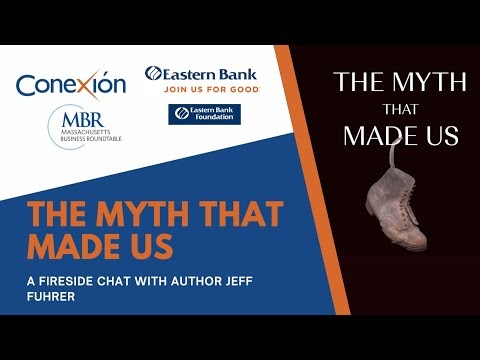
  • The Myth That Made Us (Jeff Fuhrer)

    The Myth That Made Us (Jeff Fuhrer)

    From MIT Press: 

    The Myth That Made Us exposes how false narratives—of a
    supposedly post-racist nation, of the self-made man, of the primacy of
    profit- and shareholder value-maximizing for businesses, and of minimal
    government interference—have been used to excuse gross inequities and to
    shape and sustain the US economic system that delivers them. Jeff Fuhrer argues that systemic racism continues to produce vastly disparate
    outcomes and that our brand of capitalism favors doing little to reduce
    disparities. Evidence from other developed capitalist economies shows
    it doesn’t have to be that way. We broke this (mean-spirited) economy.
    We can fix it.” 

    “Rather than merely laying blame at the feet of both conservatives and
    liberals for aiding and abetting an unjust system, Fuhrer charts a way
    forward. He supplements evidence from data with insights from community
    voices and outlines a system that provides more equal opportunity to
    accumulate both human and financial capital. His key areas of focus
    include universal access to high-quality early childhood education; more
    effective use of our community college system as a pathway to stable
    employment; restructuring key aspects of the low-wage workplace;
    providing affordable housing and transit links; supporting people of
    color by serving as mentors, coaches, and allies; and implementing Baby
    Bonds and Reparations programs to address the accumulated loss of wealth
    among Black people due to the legacy of enslavement and institutional
    discrimination. Fuhrer emphasizes embracing humility, research-based
    approaches, and community involvement as ways to improve economic
    opportunity.”

    Source link