Tag: national

  • The value of having a National Learning Framework incorporating school, college and higher education

    The value of having a National Learning Framework incorporating school, college and higher education

    By Michelle Morgan, Dean of Students at the University of East London.

    In the UK, we have a well-established education system across different levels of learning including primary, secondary, further and higher education. For each level, there is a comprehensive structure that is regulated and monitored alongside extensive information. However, at present, they generally function in isolation. 

    The Government’s recent Curriculum and Assessment Review has asked for suggestions to improve the curriculum and assessment system for the 16-19 year study group. This group includes a range of qualifications including GCSEs, A-levels, BTECs, T Levels and apprenticeships. The main purpose of the Review is to

    ensure that the curriculum balances ambition, relevance, flexibility and inclusivity for all children and young people.

    However, as part of this review, could it also look at how the different levels of study build on one another? Could the sectors come together and use their extensive knowledge for their level and type of study, to create an integrated road map across secondary, further and higher education where skills, knowledge, competencies and attributes (and how they translate into employability skills) are clearly articulated? We could call this a National Learning Framework. It could align with the learning gain programme led by the Office for Students (OfS).

    The benefits of a National Learning Framework

    There would be a number of benefits to adopting this approach:

    • It would provide a clear resource for all stakeholders, including students and staff in educational organisations, policymakers, Government bodies, Regulators and Quality Standard bodies (such as Ofsted, the Office for Students and QAA) and business and industry. It would also help manage the general public perception of higher education. 
    • This approach would join up the regulatory bodies responsible for the different sectors. It would help create a collaborative, consistent learning and teaching approach, by setting and explaining the aims and objectives of the various types of education providers.
    • It would explain and articulate the differences in learning, teaching and assessment approaches across the array of secondary and further education qualifications that are available and used as progression qualifications into higher education.  For example, A-Levels are mainly taught in schools and assessed by end-of-year exams. ‘Other’ qualifications such as BTEC, Access and Other Level 3 qualifications taught in college have more diverse assessments.
    • It would help universities more effectively bridge the learning and experience transition into higher education across all entry qualifications.  We know students from the ‘Other’ qualification groups are often from disadvantaged backgrounds, which can affect retention, progression and success at university as research highlights (see also this NEON report).  Students with other qualifications are more likely to withdraw than those with A-Levels. However, as this recent report Prior learning experience, study expectations of A-Level and BTEC students on entry to university highlights, it is not the BTEC qualification per se that is the problem but the transition support into university study that needs improvement.
    • It would also address assumptions about how learning occurs at each level of study. For example, because young people use media technology to live and socialise, it is assumed the same is the case with learning. Accessing teaching and learning material, especially in schools, remains largely traditional: the main sources of information are course textbooks and handwritten notes, although since the Covid-19 Pandemic, the use of coursework submission and basic virtual learning environments (VLEs) is on the increase.
    • If we clearly communicate to students the learning that occurs throughout each level of their study, and what skills, knowledge, competencies and attributes they should obtain as a result, this can help with their confidence levels and their employability opportunities as they can better articulate what they have achieved.

    What could an integrated learning approach across all levels of study via a National Learning  Framework look like?

    The  Employability Skills Pyramid created for levels 4 to 7 in higher education with colleagues in a previous university where I worked could be extended to include Levels 2/3 and apprenticeships to create a National Learning Framework. The language used to construct the knowledge, skills and attribute grids used by course leaders purposely integrated the QAA statements for degrees (see accompanying document Appendix 1) .

    By adding Levels 2 and 3, including apprenticeship qualifications and articulating the differences between each qualification, the education sector could understand what is achieved within and between different levels of study and qualifications (see Figure 1).

    Key stakeholders could come together from across all levels of study to map out and agree on the language to adopt for consistency across the various levels and qualifications.

    Integrated National Learning Framework across Secondary, Further and Higher Education

    Alongside the National Learning Framework, a common transition approach drawing on the same definitions across all levels of study would be valuable. Students and staff could gain the understanding required to foster successful transitions between phases.  An example is provided below.

    Supporting transitions across the National Learning Framework using similar terminology

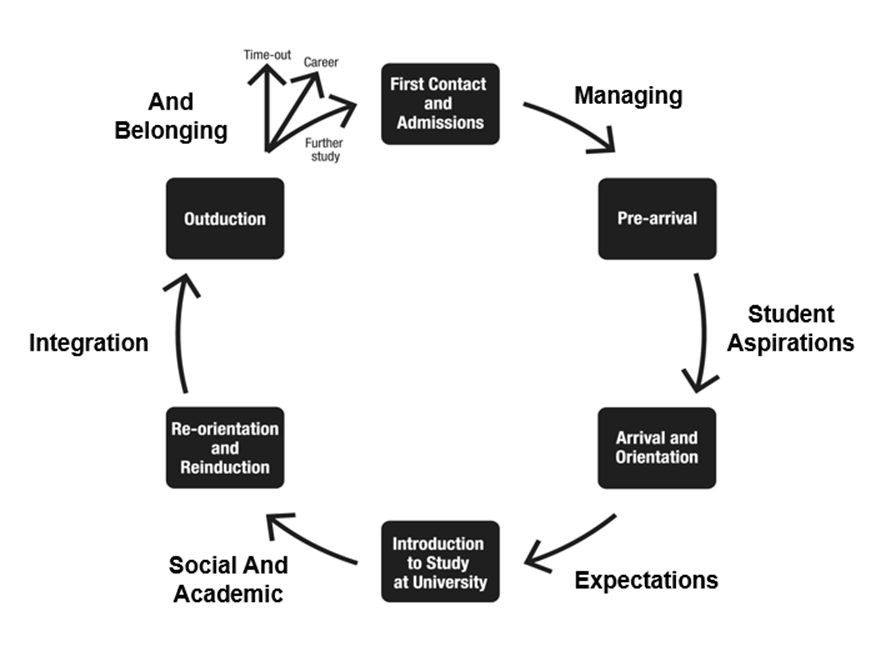
    The Student Experience Transitions (SET) Model was designed to support courses of various lengths and make the different stages of a course clearer. It was originally designed for higher education but the principles are the same across all levels of study (see Figure 2). Students need to progress through each stage which has general rules of engagement. The definitions of each stage and the mapping of each stage by length of course are in the accompanying document in Appendix 2.

    Figure 2: The Student Experience Transitions Model. Source: Morgan 2012

    The benefits for students are consistency and understanding what is expected for their course. At each key transition stage, students would understand what is expected by reflecting on what they have previously learnt, how the coming year builds on what they already know and what they will achieve at the end.

    Taking the opportunity to integrate

    The Curriculum Review provides a real opportunity to join up each level of study and provide clarity for all stakeholders. Importantly, a National Learning Framework could provide and help with the Government’s aims of balancing ambition, relevance, flexibility and inclusivity for all learners regardless of level of study.

    Appendices

    Source link

  • One day after FIRE lawsuit, Congress passes changes to filming permits in national parks

    One day after FIRE lawsuit, Congress passes changes to filming permits in national parks

    On Wednesday, FIRE and the National Press Photographers Association filed lawsuit challenging the arbitrary and unconstitutional laws that require Americans to apply for a permit and pay costly fees before exercising their right to film in national parks. The very next day, the U.S. Senate passed a bill addressing these same issues. The bill now goes to President Biden, who is expected to sign it in a huge victory for filmmakers — and for the First Amendment.

    Currently, filmmakers must obtain a permit and pay a fee if they intend to later profit from their footage in national parks, even if they are using the same handheld camera or phone that a tourist would use. Permits are routinely denied for arbitrary and unpredictable reasons, making it difficult for people like documentary filmmakers, press photographers, and wedding videographers to earn a living. Under the EXPLORE Act, that changes. 


    WATCH VIDEO

    The EXPLORE Act, championed in the Senate by West Virginia Democrat Joe Manchin and Wyoming Republican John Barrasso, does several things to fix the constitutional problems with the permit scheme that FIRE is challenging. First, so long as the filming takes place where the public is allowed, doesn’t impact other visitors or damage parks resources, and involves five or fewer people, no permit is required. Second, no permit is required simply because the filmmaker intends to make a profit. Third, no permit is needed to film activities that are already allowed in the park. And fourth, the EXPLORE Act makes clear that when the National Park Service has already approved an event like a wedding to take place in a national park, no additional permit is needed to film or photograph the special occasion.

    After filing, FIRE and NPPA took the story to the media and to Capitol Hill. FIRE looks forward to seeing this bill become law.

    Source link

  • LAWSUIT: Videographers sue to overturn National Parks Service arbitrary permit scheme

    LAWSUIT: Videographers sue to overturn National Parks Service arbitrary permit scheme

    JACKSON HOLE, Wy. Dec. 18, 2024 — Picture three people standing next to each other in Yellowstone National Park. One’s an ordinary tourist, one’s a news reporter, and the third’s a documentary filmmaker. They’re all filming Old Faithful, using the exact same iPhone, and without disturbing anyone around them.

    Under federal law, the tourist and the reporter are doing nothing wrong. But the documentarian could face heavy fines — even jail time.

    That’s why the Foundation for Individual Rights and Expression today filed a lawsuit on behalf of nature and sports photographers and filmmakers Alexander Rienzie and Connor Burkesmith. FIRE’s suit aims to overturn the National Park Service’s onerous, arbitrary, and unconstitutional permit-and-fee scheme that charges Americans for the right to film in public spaces.

    “The national parks belong to the American public,” said FIRE Chief Counsel Bob Corn-Revere. “If you have a right to be there, you have a right to film there. The federal government can’t tax Americans to exercise their constitutional rights.”

    Joining FIRE’s lawsuit as co-counsel and co-plaintiffs is the National Press Photographers Association, which represents thousands of visual journalists, including Alex and Connor. Although the NPS exempts filming for “news-gathering” from its permit scheme, the NPPA has for years argued that the law imposes an unfair burden on photographers and filmographers, who can’t always know ahead of time who they plan to sell their work to, or even if they plan to sell it at all.

    “For decades, the National Press Photographers Association has been working to support the rights of visual journalists and other photographers to document the beauty of our natural resources and the people who visit and care for them in our national parks,” said NPPA President Carey Wagner. “It is unfortunate that the actions and policies of the National Park Service have never fully respected the First Amendment rights of photographers, and it’s even more disappointing that it has become necessary to take the Park Service to court in order to resolve our members’ concerns. NPPA is enormously grateful to FIRE for taking on this case on behalf of all photographers.”

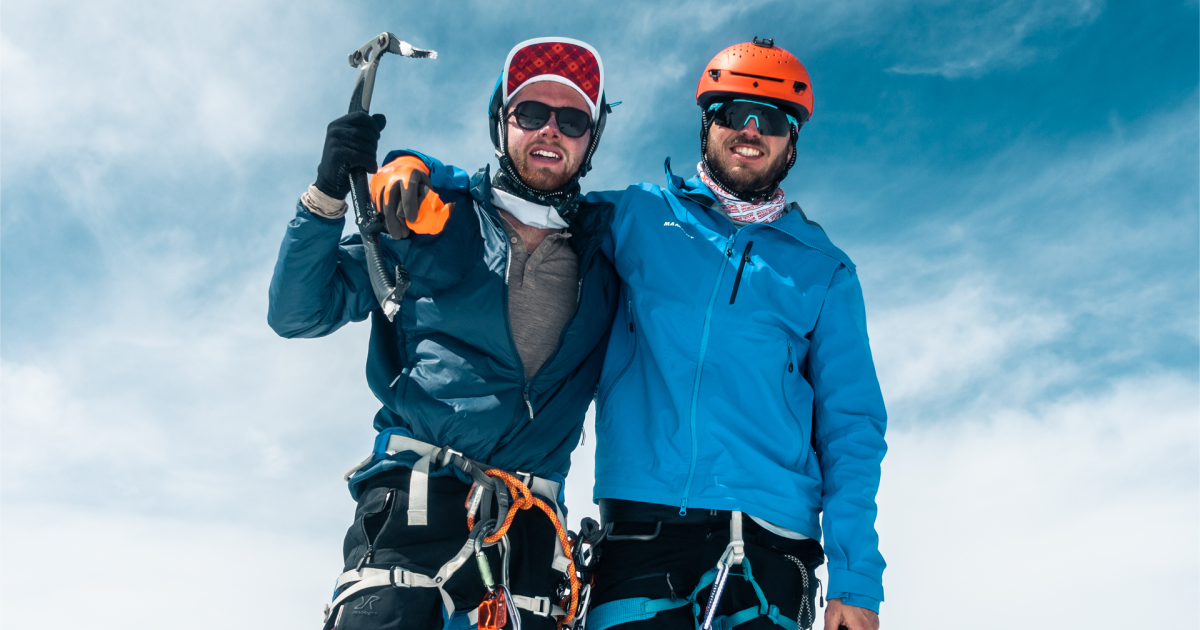
    Alex and Connor wanted to film in Grand Teton National Park in September to document an attempt by an athlete to break the record for the fastest climb up the Grand Teton. They planned to have only two or three people, using small handheld cameras and tripods, on the 16-mile route for the shoot. In fact, to keep up with the fast pace of the speedrun, they would carry less gear than the typical climber going up the mountain.


    But under current law, whether a filmmaker needs a permit to film in a national park doesn’t depend on the amount of gear they bring or how disruptive filming might be. The only thing that matters is whether their purpose is “commercial.” The rule could apply to filming a big blockbuster movie near the Grand Canyon (where the scale of the project might justify a permit requirement), but also to a small-time YouTuber who posts a video of their jog through the National Mall.

    “Congress wanted to keep big Hollywood productions from taking over the parks and keeping others from enjoying their natural beauty,” said FIRE attorney Daniel Ortner. “But the current law wasn’t written for a world where anyone with a smartphone has a film studio in their pocket.”

    Alex and Connor knew they might use the footage to produce a documentary film, so they filed for a permit and explained how small their impact would be. But NPS employees have wide and unquestioned discretion under the law to deny permits. NPS denied the permit on the grounds that it could turn the speedrun into a “competitive event”— and pocketed the non-refundable $325 application fee.

    “Independent filmmakers don’t have the resources of the big production companies,” said Connor. “It’s a gut punch every time we throw down hundreds of dollars, only to be denied permits for reasons that are vague, arbitrary, and unfair. As someone who needs to film outdoor sports where they happen, it’s a threat to my livelihood.”

    COURTESY PHOTOS OF ALEX AND CONNOR FOR MEDIA USE

    Alex and Connor were forced to choose between risking prosecution, or letting a potentially historic event go undocumented. For dedicated documentarians like themselves, it was an easy choice: They filmed without the permit in September.

    “In the entire time we were up there, we didn’t get in the way of anyone else’s enjoyment of Grand Teton,” said Alex. “To us, the Grand is a very special mountain that we’ve spent countless hours exploring.”

    An NPS spokesperson later announced they had determined that Alex and Connor’s actions didn’t meet all the criteria for charges—but if their work had been featured “in a commercial or a catalog or something like that,” it would be “less of a gray area.” Far from settling the issue, the NPS statement effectively signaled that Alex and Connor could still face charges if they ever sell or use their footage.

    FIRE and the NPPA are seeking an injunction in the United States District Court for the District of Wyoming to prevent that outcome, and to put a permanent end to a system where individual park employees can deny Americans their First Amendment rights on a whim.

    “I chose this line of work because I love the national parks,” said Connor. “Photographers and videographers are the best advocates the parks have; the more people see and understand their unique value, the stronger their desire to protect them. It’s time for the Park Service to stop throwing up roadblocks and work with us, not against us.”


    The Foundation for Individual Rights and Expression (FIRE) is a nonpartisan, nonprofit organization dedicated to defending and sustaining the individual rights of all Americans to free speech and free thought — the most essential qualities of liberty. FIRE educates Americans about the importance of these inalienable rights, promotes a culture of respect for these rights, and provides the means to preserve them.

    CONTACT:

    Alex Griswold, Communications Campaign Manager, FIRE: 215-717-3473; [email protected]

    Source link

  • National Student Ombudsman legislation passed, leader announced

    National Student Ombudsman legislation passed, leader announced

    The new independent National Student Ombudsman will be led by Sarah Bendall (L), pictured with Jason Clare, in an image posted to social media on November 29, 2024. Picture: Facebook

    A highly experienced lawyer has been appointed to lead the anticipated university watchdog and complaints function, after the legislation passed in the last sitting week of parliament.

    Please login below to view content or subscribe now.

    Membership Login

    Source link

  • Let’s Learn About Telehealth (Sessions from the National Telehealth Conference)

    Let’s Learn About Telehealth (Sessions from the National Telehealth Conference)

    In May, I was pleased to see the Health Resources and Services Administration (HRSA) offer a virtual Telehealth Conference. I am always on the lookout for good professional development opportunities, so I signed up. 

    My schedule had a conflict on that day and I was unable to attend, BUT they posted videos of the sessions online. I was so excited and I could not wait to block time on my schedule, grab some lunch, and listen to the sessions.

    You can listen to the sessions as well!

    Here is a list of the sessions and the video links:

    Leaders from the U.S. Department of Health and Human Services will discuss priorities and highlight key efforts across the Department to expand access to telehealth services.

    Providers and experts will discuss telehealth’s key role in access to behavioral health services as well as the integration of behavioral and physical health services, especially for those in underserved communities.

    This session will discuss ongoing efforts to facilitate access to inter-state telehealth services through HRSA’s Licensure Portability Grant Program.  Through this program, HRSA provides support to the Federation of State Medical Boards and the Association of State and Provincial Psychology Boards.  Participants will learn about current options to address licensure portability reform and have an opportunity to provide feedback.

    This session will discuss key policy and infrastructure issues at the state and federal level needed to ensure continued access to telehealth beyond the COVID-19 public health emergency.

    This session will discuss key considerations for integrating telehealth in various medical settings.  Participants will learn of current models and provide input on ways to address challenges and barriers.

    This session will provide an overview of Federal efforts and resources to improve access to broadband, which is a key component to the delivery of telehealth services as well as other social determinants of health.

    This session will discuss current efforts to assist providers in using telehealth and considerations for training the workforce for tomorrow. Issues to be discussed will include provider-to-provider mentoring, developing telehealth curriculum for providers and addressing burnout.

    This session will provide participants with an opportunity to learn more about the HRSA supported Telehealth Resource Centers including their work and expertise in assisting providers with implementing telehealth services.

    This session will discuss leveraging telehealth technology in addressing and treating COVID-19.

    Experts will discuss the key telehealth issues and priorities identified by their stakeholders and how those telehealth issues may evolve beyond the pandemic.

    Check out the sessions. Which session was your favorite?

    ***

    Check out my book – Retaining College Students Using Technology: A Guidebook for Student Affairs and Academic Affairs Professionals.

    Remember to order copies for your team as well!


    Thanks for visiting! 


    Sincerely,


    Dr. Jennifer T. Edwards
    Professor of Communication

    Executive Director of the Texas Social Media Research Institute & Rural Communication Institute

    Source link

  • National Women’s History Month: Past and Present Higher Ed HR Trailblazers – CUPA-HR

    National Women’s History Month: Past and Present Higher Ed HR Trailblazers – CUPA-HR

    by CUPA-HR | March 2, 2022

    National Women’s History Month celebrates the contributions and achievements women have made throughout U.S. history. CUPA-HR is fortunate to have had many smart and dedicated women serve on its national, regional and chapter boards and on various committees. In addition to providing leadership at work, they have volunteered their time and shared their know-how — lighting the way for other women in the field.

    To celebrate the month, we’re spotlighting some of the many leaders who have transformed higher ed HR and CUPA-HR. Sure to inspire, these articles and podcast episodes offer unique perspectives of higher ed HR, career journeys, struggles, successes and everything in between.

    Looking Back to Move Forward

    Blazing a Trail: Women Who Paved the Way in Higher Ed HR, from a 2014 issue of Higher Ed HR Magazine, features five CUPA-HR leaders who began their higher ed HR careers in a very different era — when HR was still “personnel,” men dominated the profession and the nature of the work was strictly focused on policies and procedures. These women rose to leadership positions, not only in their departments, but across their institutions. Read about their challenges, their regrets, their successes and a few war stories to boot.

    More Stories That Inspire

    CUPA-HR Conversations: Higher Ed HR Turns 75 Podcast features higher ed HR leaders and past CUPA-HR national board chairs who have left their mark on both the association and the profession.

    • In Episode 2: Growing Through Change, Allison Vaillancourt reflects on some professional advice she received from a CUPA-HR peer that changed her entire approach to HR and helped advance her career and secure several leadership positions.
    • Lynn Bynum shares how CUPA-HR helped her make the transition from the corporate world to higher ed HR, and Lauren Turner offers insights into how HR can become a recognized leader within the institution and help others become better leaders in Episode 4: Model Behavior.
    • Jane Federowicz reflects on her unexpected path to HR, starting out as her institution’s accountant and ending up being asked to create an HR department, in Episode 6: When Opportunity Knocks.
    • In Episode 7: Lifelong Learning, Barbara Carroll dives into some experiences she never thought she would have as an HR leader, including serving on CUPA-HR’s Public Policy Committee and providing a higher ed perspective to a room full of senators and congressional representatives, and Linda Lulli discusses the importance of being a lifelong learner in the HR profession and how to be adaptable and resilient.

    Time-Out With Tammi & Tyler is a podcast that explores how higher ed HR careers evolve by interviewing professionals at the top of their HR game, sharing advice they would give professionals climbing the higher ed HR ladder.

    • In Episode 1, Donna Popovich offers advice for early-career professionals.
    • Sheraine Gilliam walks through her story of persistence, networking and how to turn negative situations into opportunities for growth in Episode 3.
    • In Episode 5, Clarity White describes how her Wildfire program experience helped advance her HR career.

    Related resources:

    21-Day Challenge: Focus on Women (First two weeks of the challenge)


    Source link

  • National College Players Association Files Charges Seeking Employee Status for Student-Athletes – CUPA-HR

    National College Players Association Files Charges Seeking Employee Status for Student-Athletes – CUPA-HR

    by CUPA-HR | February 17, 2022

    On February 8, the National College Players Association (NCPA), an advocacy association for college athletes, filed unfair labor practice charges with the National Labor Relations Board (NLRB) against the University of Southern California, the University of California, Los Angeles (UCLA), the Pac-12 Conference and the National Collegiate Athletic Association (NCAA).

    The charges allege that the employers have violated the National Labor Relations Act (NLRA) by “repeatedly misclassifying employees as ‘student-athlete’ nonemployees” and “by maintaining unlawful rules and policies in its handbook, including restricting communications with third parties.” The charges mark the launch of the NCPA’s #JforJustice campaign and aim “to affirm college athlete employee status for every [Football Bowl Subdivision (FBS)] football player and Division I basketball player at every public and private university in the nation,” per an NCPA statement.

    This is the latest development regarding issues surrounding employment status of student-athletes since NLRB General Counsel Abruzzo issued a memorandum last September stating her position that student-athletes are employees under the NLRA and are therefore afforded all statutory protections as prescribed under the law. In that memo, Abruzzo stated that it was her intent to “educate the public, especially Players at Academic Institutions, colleges and universities, athletic conferences and the NCAA” about her position in future appropriate cases.

    The NCPA charges potentially provide Abruzzo with a case she can present to the NLRB to consider granting collective bargaining rights to college athletes. In 2015, the last time the NLRB considered the issue, it declined to assert jurisdiction over Northwestern football players, as doing so “would not promote labor stability [because the] board does not have jurisdiction over state-run colleges and universities” that make up the majority of the FBS. The NCPA charge seeks to overcome this jurisdictional obstacle by including the privately-held Pac-12 and NCAA as joint employers of UCLA’s athletes — a theory of liability Abruzzo said she would consider applying in appropriate circumstances.

    Now that the charges have been filed, an NLRB regional director will review the case and determine whether formal action should be taken and presented to an administrative law judge, which would preside over a trial and issue a decision that could ultimately be taken up by the five-member board.

    CUPA-HR will be paying close attention to this case and provide members updates as it progresses.


    Source link

  • Student loans: what counts as expenditure in national accounts

    Student loans: what counts as expenditure in national accounts

    Economic & Fiscal Outlook, Office for Budgetary Responsibility (March 2021), adapted from Tables 3.14 & 3.26

    I have constructed the table above from forecasts for Total Managed Expenditure and Financial Transactions taken from the Office for Budgetary Responsibility’s latest publication (it accompanied Wednesday’s Budget).

    It shows how newly issued student loans are now split into two components for the purposes of presentation in the National Accounts. The portion of loans that are expected to be repaid are classed as “financial transactions”, while the portion expected to be written off is recorded as capital expenditure. The latter scores in “public sector investment”, which was adopted as a new fiscal target prior to the pandemic (net investment cannot exceed 3% of national income), though the rules are currently under review.

    We can see that student loan outlay is expected to reach £20billion in the year to March 2021, rising to £23.6billion in five years’ time.
    The majority of new outlay is now expected to be written off and that share rises over the forecast period.
    By 2025/26 repayments on all existing loans are projected to re000000000000000ach nearly £5billion per year. (This figure has improved since the sale programme for post-2012 loans was abandoned, since the treasury now gets the receipts that would have gone to private purchasers).

    As mentioned in recent posts on here, the Department for Education only currently has an allocation of £4billion to cover the capital transfer / grant element of new loans and so it has to be granted large additional budgetary supplements each year. This situation has dragged on as the planned spending review has been postponed. We can now expect developments in the Autumn.


    Source link