Tag: Nationwide

  • School Specialty and College Football Playoff Foundation Celebrate Impact Across Schools Nationwide

    School Specialty and College Football Playoff Foundation Celebrate Impact Across Schools Nationwide

    New media center at North Dade Middle School marks milestone in initiative revitalizing learning environments to benefit the entire learning community

    GREENVILLE, WI– November 21, 2025 – School Specialty and the College Football Playoff (CFP) Foundation today announced the completion of a media center makeover at North Dade Middle School, marking the 100th learning space transformed in collaboration with the Extra Yard Makeover initiative. As a part of their nationwide effort to enhance learning environments for students and educators alike, the two organizations have now invested over $5 million into reinvigorating classrooms across the country.

    Miami will host the 2026 College Football Playoff National Championship in January, and as part of its legacy work in the community, the CFP Foundation has committed to delivering more than 30 Extra Yard Makeovers alongside School Specialty to revitalize innovation spaces across schools in Miami-Dade, Broward and Palm Beach counties. With this latest round of makeovers, the CFP Foundation will have helped enrich learning environments in every Miami-Dade middle school.

    “Changing our middle school libraries into modern learning spaces has had a tremendous impact on engagement and learning outcomes,” said Dr. Jose L. Dotres, Superintendent of Miami-Dade County Public Schools. “In addition to renovation, the transformation is an investment in our teachers, our students and our future. These new innovative spaces support hands-on learning for students of today and tomorrow, so they can develop greater curiosity for learning and lifelong skills.”

    These makeovers transform static spaces into flourishing learning environments, providing upgrades like flexible furniture, technology, supplies and even fresh paint or murals. Each school receives the School Specialty proprietary Projects by Design experience, which includes comprehensive consultations to determine the type of space that best supports students, educators and the broader school community. Past rooms made over include STEM labs, broadcast classrooms, libraries, media centers, makerspace rooms, teachers lounges, wellness spaces, sensory rooms, multi-purpose rooms, an esports room and a mariachi room.

    “The transformation of our media center is truly invaluable to our students and staff,” said Nicole Fama, Executive Director at Phalen Leadership Academies, which received a makeover in 2024. “We are profoundly grateful to the College Football Playoff Foundation and School Specialty for this investment. Before the media center, we lacked a space that truly fostered community. Now, everything happens here—from senior breakfasts and college athlete signing days to family game nights and teacher appreciation events. It has become the heart of our community, a space we didn’t realize we needed until it was here.”

    These makeovers serve to benefit both students and teachers, allowing schools to improve their offerings, inspire innovation and modern learning, and directly counter some of the top issues in education today.

    “Addressing teacher burnout and maximizing student engagement starts with the physical environment,” said Jeremy Westbrooks, Director of Strategic Account Development at School Specialty. “The physical classroom is an educator’s primary tool, and by modernizing these spaces, the CFP Foundation and School Specialty are delivering a critical resource that empowers teachers to stay focused on their students’ growth and long-term success.”

    “We’re proud to work alongside School Specialty to bring these meaningful makeover projects to life,” said Britton Banowsky, Executive Director College Football Playoff Foundation. “Their expertise in the design of the spaces and incredible generosity make it possible for us to turn vision into impact for teachers and students.”

    In addition to the CFP Foundation and School Specialty, these makeovers have been supported over the years by Bowl Games, Conference partners, Sponsors and host committees of each College Football Playoff National Championship. To date, makeovers have taken place in 18 states across 58 counties.

    To learn more about the College Playoff Foundation’s Extra Yard Makeover initiative, click here.

    To learn more about School Specialty, click here.

    About School Specialty, LLC 

    With a 60-year legacy, School Specialty is a leading provider of comprehensive learning environment solutions for the infant-K12 education marketplace in the U.S. and Canada. This includes essential classroom supplies, furniture and design services, educational technology, sensory spaces featuring Snoezelen, science curriculum, learning resources, professional development, and more. School Specialty believes every student can flourish in an environment where they are engaged and inspired to learn and grow. In support of this vision to transform more than classrooms, the company applies its unmatched team of education strategists and designs, manufactures, and distributes a broad assortment of name-brand and proprietary products. For more information, go to SchoolSpecialty.com.

    About the College Football Playoff Foundation

    The College Football Playoff (CFP) Foundation is the 501(c)3 non-profit organization serving as the community engagement arm of the College Football Playoff and works in partnership with institutions of higher education, sports organizations, corporations and non-profits to support educators and improve student outcomes. The purpose of the CFP Foundation lies in supporting PK-12 education by elevating the teaching profession. The CFP Foundation inspires and empowers educators by focusing its work in four areas: recognition, resources, recruitment and retention, and professional development. To learn more, visit cfp-foundation.org and follow Extra Yard for Teachers (@CFPExtraYard) on social media.

    Media Contact
    Jon Kannenberg
    [email protected]

    eSchool News Staff
    Latest posts by eSchool News Staff (see all)

    Source link

  • Schools and colleges nationwide face Trump investigations

    Schools and colleges nationwide face Trump investigations

    The Trump administration moved quickly after taking office to open dozens of investigations into schools and universities nationwide. Most of those announced publicly mark a dramatic shift in priorities from previous administrations.

    The Education Department and other agencies are looking into allegations of antisemitism and racial discrimination against white students at dozens of colleges. The agency also has begun investigating policies that protect transgender athletes and, in some cases, targeted entire state departments of education as part of that work.

    Related: Become a lifelong learner. Subscribe to our free weekly newsletter featuring the most important stories in education. 

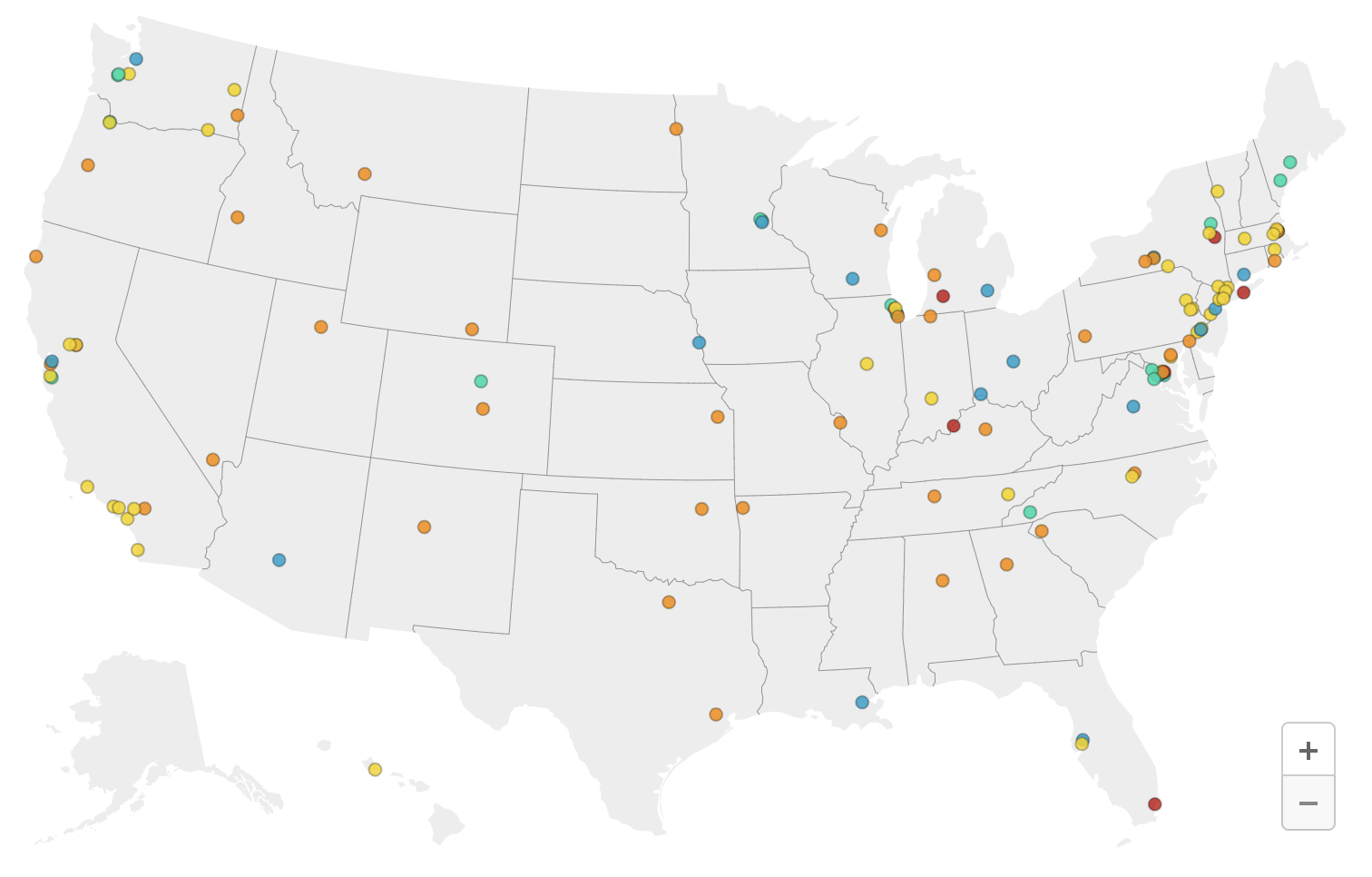
    Here’s a look at investigations the Trump administration has announced. This map and list will be updated. Know of an investigation we missed? Tell us: [email protected]

    Although the majority of investigations that have been opened are in states considered to be liberal, almost every state in the country has at least one entity under scrutiny. And many institutions face more than one investigation.

    Related: Tracking Trump: His actions to dismantle the Education Department, and more

    To date, colleges and universities have received the most attention from the administration, with more than 60 targeted over alleged incidents of antisemitism and another 45 under scrutiny over their work with a program that aims to increase diversity among Ph.D. candidates. Most of the K-12 investigations involve transgender policies, including those about access to sports and locker rooms. 

    Contact investigations editor Sarah Butrymowicz at [email protected] or on Signal: @sbutry.04

    This story about Trump investigations was produced by The Hechinger Report, a nonprofit, independent news organization focused on inequality and innovation in education. Sign up for the Hechinger newsletter.

    The Hechinger Report provides in-depth, fact-based, unbiased reporting on education that is free to all readers. But that doesn’t mean it’s free to produce. Our work keeps educators and the public informed about pressing issues at schools and on campuses throughout the country. We tell the whole story, even when the details are inconvenient. Help us keep doing that.

    Join us today.

    Source link

  • How it Could Impact Schools Nationwide – The 74

    How it Could Impact Schools Nationwide – The 74


    Get stories like this delivered straight to your inbox. Sign up for The 74 Newsletter

    This story was originally reported by Nadra Nittle of The 19th.

    “A direct assault on the Texas public education system.”

    That’s how social justice groups like the Texas Freedom Network are describing the passage of a bill that would create a $1 billion school voucher program in the state. The Texas House passed Senate Bill 2 early Thursday, with support from Gov. Greg Abbott, who has championed school vouchers. These taxpayer-funded subsidies divert money away from public schools, allowing families to use them to cover their children’s tuition at private or religious schools.

    “This is part of a coordinated strategy to dismantle public education statewide and nationally, since Donald Trump literally called Republicans and told them that they had to vote yes on this voucher scheme,” said Emily Witt, spokesperson for the Texas Freedom Network, a grassroots organization of religious and community leaders. “Republicans have done a very coordinated job of framing this as something that it’s not. It’s certainly not ‘choice.’ It’s going to really devastate a lot of public schools and rural communities here in Texas.”

    The voucher bill’s passage has been characterized as a win for both Abbott and Trump. Abbott tried unsuccessfully to get voucher legislation passed in 2023. Trump, in January, issued an executive order directing the education secretary to explore ways to route federal funding to states and families interested in school choice initiatives, which give students the option to attend their preferred public, private, charter or religious school. Critics of vouchers, a controversial way to facilitate school choice, worry that they take away valuable resources from public schools. They also argue that private schools may exclude students with disabilities or who are LGBTQ+ or have LGBTQ+ parents. Students from low-income or rural areas may also struggle to access private school, as may those from certain ethnic groups or religious backgrounds. The voucher program does not guarantee students admission to private schools.

    The approval of a voucher program in the nation’s second most populous state could create a ripple effect across the United States, where the voucher movement has gained momentum in recent years in places like Arizona, Arkansas, Florida and Wisconsin — often with the help of billionaire backers. The Texas bill next goes to the state Senate, where lawmakers in each chamber are expected to work out the disparities in their voucher plans such as how much money participants should get and which participants should be prioritized.

    “It is absurd for Gov. Abbott and his pro-voucher allies to claim that a diversion of $1 billion in tax funds to private schools over the next budget cycle will not hurt our underfunded public schools, where the vast majority of our students will remain,” Ovidia Molina, president of education labor organization the Texas State Teachers Association, said in a statement. “That voucher drain will increase to $3 billion by 2028 and more than $4 billion by 2030 if this voucher bill becomes law, the Legislative Budget Board projects.”

    Texas Gov. Greg Abbott sits before President Donald Trump arrives to speak at an education event and executive order signing in the East Room of the White House in Washington, Thursday, March 20, 2025. (Ben Curtis/AP Photo)

    In Texas, most students attend public schools, with an estimated 6 percent enrolled in private schools. Rural communities overwhelmingly attend public schools because of the dearth of private schools in such areas. Accordingly, voters in the country have typically opposed school vouchers, perceived as vehicles to help families in cities send their kids to private school. Even with the school voucher program, experts do not expect private schools to be inundated with new students from public schools.

    “Most kids are still going to have to be served by public schools,” Witt said. “We do know that in other states where vouchers have passed, that most of the kids using those vouchers already were in private schools.”

    While vouchers have been promoted as a way to help low-income families choose a quality education for their children, the subsidies often aren’t large enough to cover the tuition and fees associated with a private school education. The school voucher program the Texas House just approved is generous, as it will give families who qualify up to about $10,000 per child. The average K-12 private school tuition in Texas is over $11,000, with tuition for schools that specialize in special education topping $19,000 and elite institutions reaching as high as $40,000. Parents would need to make up the difference for tuition costs that vouchers don’t cover, a move critics of the subsidies say is out of reach for disadvantaged families.

    “So it’s still going to benefit mostly wealthy families,” Witt said. “Let’s say that it does cover the cost of tuition. It’s not going to cover extracurriculars. It’s not going to cover transportation. Private schools are not required to offer free transportation to and from school like public schools are, and they also don’t have to accept every child.”

    Religious institutions, she said, could turn away students who don’t belong to the faith affiliated with the school. A private school could accept a student with a disability only to discharge them later if the school doesn’t have the resources to educate that child or is no longer interested in doing so.

    “They could essentially reject a child that they feel just doesn’t meet the culture of their school,” Witt continued. “That could be because a child comes from a low-income family. It could be because they’re not White. It could be because they’re LGBTQ or their parents are LGBTQ or not married.”

    Private schools also don’t have to use standardized tests, like the State of Texas Assessments of Academic Readiness (STAAR), used in public schools to track student progress. The GOP-run Texas House, she said, rejected an amendment that would have required private schools to use standardized testing to measure student outcomes just as public schools do.

    “I don’t know how we’ll see if this program works and how it benefits kids, especially kids with disabilities,” she said.

    House Republicans tabled 44 amendments to the legislation, including one that would have led to a referendum on school vouchers in November, effectively blocking voters from deciding the issue.

    The bill is an additional blow as public schools slash programs and raise class sizes under a budget crunch, Molina said in her statement.

    “Texas already spends more than $5,000 less per student than the national average, ranking Texas 46th among the states and the District of Columbia,” she said. “The school finance bill also approved by the House will not come close to ending the state’s financial neglect of public education. The House’s $395 increase in the basic allotment, which hasn’t been increased in six years, will provide only a third of what is needed to cover districts’ losses from inflation alone.”

    Supporters of the voucher program may not be happy with it a year from now, Witt predicts. In 2022, Arizona passed its universal school voucher program. It covers expenses related to private school tuition, homeschooling and related academic needs, but now the program faces a backlash as the costs associated with it have led to questions about oversight and funding for public schools.

    “Republicans have sold people a lie,” Witt said. “They’ve said repeatedly that it won’t harm public schools, and there’s just no way that it won’t. And I do think that’s their goal. I genuinely think that their goal is to eliminate public education, and this is the first step there. A year from now, people are going to see that the neighborhood schools in their communities are shuttering or having to cut resources for students, and they’re going to be really upset. And I think that there’s going to be hell to pay at the ballot box.”


    Get stories like these delivered straight to your inbox. Sign up for The 74 Newsletter

    Source link

  • ShareWell Offers Free Mental Health Support to University Students Nationwide

    ShareWell Offers Free Mental Health Support to University Students Nationwide

    ShareWell—the first peer-to-peer mental health support platform—is now offering free, unlimited memberships to all university students across the U.S.

    With 70% of college students reporting mental health challenges, ShareWell aims to fill critical gaps in care by providing live, virtual peer-led support groups on topics like anxiety, depression, academic pressure, and life transitions. Students can join as many sessions as they want—completely free—by signing up with their university email at www.sharewellnow.com.

    It’s a simple way to access community support during what can be some of the most overwhelming years of life.

    Source link

  • Federal Judge Blocks NCAA Name, Image and Likeness Policy for Recruits Nationwide – CUPA-HR

    Federal Judge Blocks NCAA Name, Image and Likeness Policy for Recruits Nationwide – CUPA-HR

    by CUPA-HR | February 27, 2024

    On February 23, a federal judge with the District Court for the Eastern District of Tennessee issued a preliminary injunction barring the NCAA from enforcing its rules prohibiting name, image and likeness compensation for recruits. The injunction applies nationwide.

    The policy in question prohibited student-athletes from negotiating and signing NIL contracts prior to enrolling at a college or university. This meant NIL compensation could not be used to “induce” a recruit to a specific school. This policy stood in contrast to the NCAA’s policy for student-athletes already enrolled at a college or university, who, as of 2021, have been allowed to seek NIL compensation.

    In his decision, U.S. District Judge Clifton Corker explained, “The NCAA’s prohibition likely violates federal antitrust law and harms student-athletes.” He clarified, “Without the give and take of a free market, student-athletes simply have no knowledge of their true NIL value. It is this suppression of negotiating leverage and the consequential lack of knowledge that harms student-athletes.” He further argued that the NCAA “fails to show how the timing of when a student-athlete enters such an agreement would destroy the goal of preserving amateurism,” thereby not establishing rationale for treating recruits differently than enrolled student-athletes.

    The lawsuit was filed by the attorneys general of Tennessee and Virginia after the NCAA investigated the University of Tennessee for potential violations of the policy. The NCAA will likely appeal the case to the 6th U.S. Circuit Court of Appeals overseeing Tennessee, Kentucky, Ohio and Michigan, but in the meantime, reports indicate the organization is already considering potential policy changes.

    This case is only one of the lawsuits targeting the NCAA and its policies towards student-athletes. Several lawsuits are currently pending before various federal courts, alleging the NCAA in its current form violates federal antitrust law. Additionally, the National Labor Relations Board recently ruled that the Dartmouth men’s basketball team are employees of the university, allowing them to organize and schedule a union representation election for early March. The NLRB has also issued a complaint against the University of Southern California, the PAC-12 Conference and the NCAA, alleging the three have misclassified USC’s football and men’s and women’s basketball players as student-athletes rather than employees and that the three organizations are joint employers of the athletes.

    CUPA-HR will continue to monitor for and keep members apprised of any updates on these cases.


    Source link