Tag: needed

  • I didn’t think I needed the help or advice, but a new literacy teaching coach from afar gave me the self-confidence I lacked

    I didn’t think I needed the help or advice, but a new literacy teaching coach from afar gave me the self-confidence I lacked

    by Thomas MacCash, The Hechinger Report
    November 24, 2025

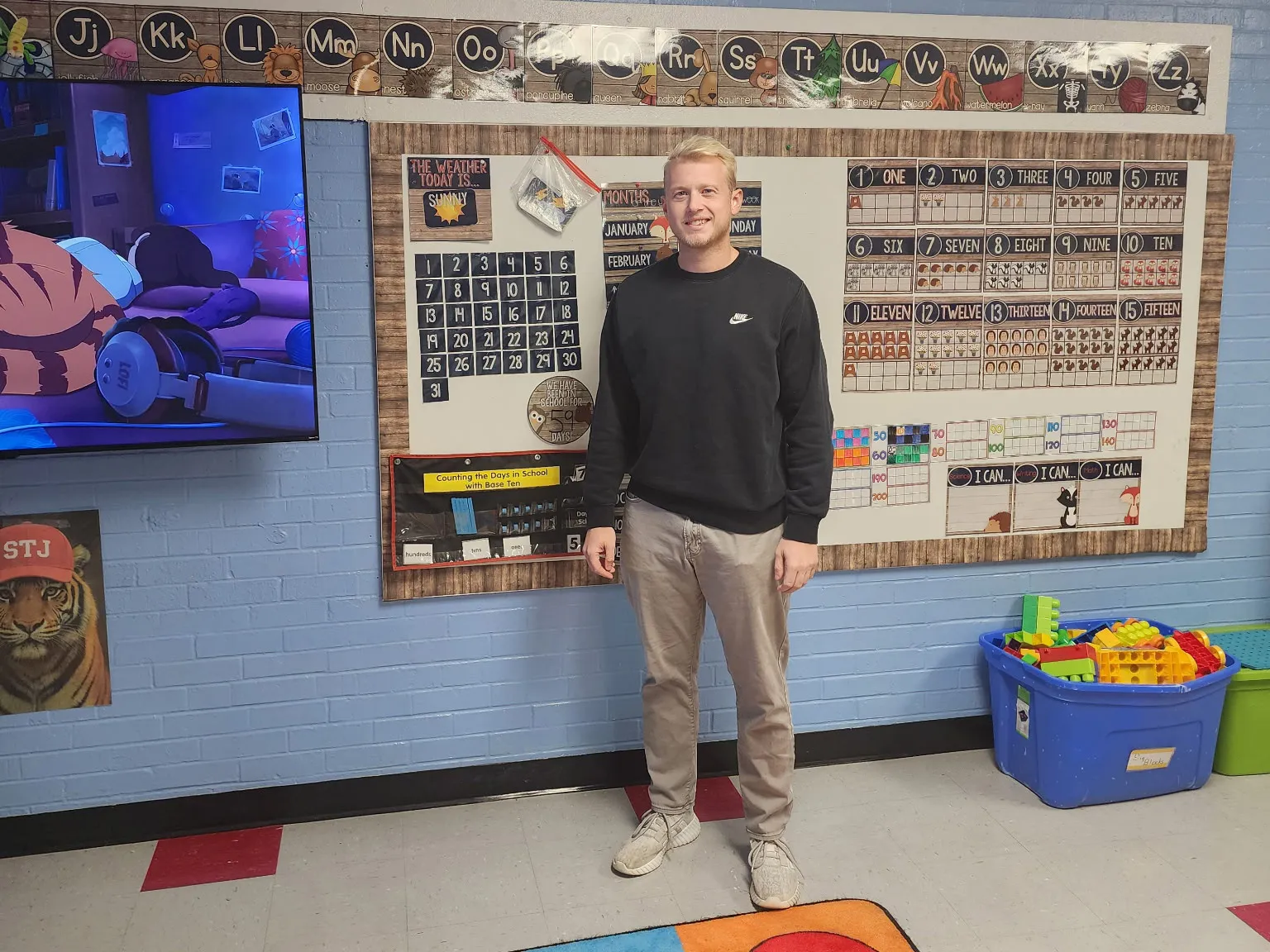
    I was the only guy in my education classes at Missouri State University, and until this year I was the only male out of nearly 100 teachers in my school. My approach to teaching is very different, and more often than not was met with a raised brow rather than a listening ear.  

    I teach kindergarten, and there are so few men in early childhood education that visitors to my classroom tend to treat me like a unicorn. They put me in a box of how I am “supposed” to be as a male in education without knowing the details of my approach to teaching.  

    As a result, I’d grown skeptical about receiving outside help. When someone new came into my classroom to provide unsolicited “support,” my immediate thought was always, “OK, great, what are they going to cook up? What are they trying to sell me?” I’d previously had former high school administrators come into my classroom to offer support, but they didn’t have experience with the curriculum I used or with kindergarten. The guidance was well-intentioned, but not relevant. 

    Related: A lot goes on in classrooms from kindergarten to high school. Keep up with our free weekly newsletter on K-12 education.  

    My entire view of getting help and support changed when Ashley Broadnax, a literacy coach from New Orleans, nearly 700 miles away, came into my class in St. James, Missouri, population 3,900. Ashley works for The New Teacher Project, or TNTP, a nonprofit aiming to increase students’ economic and social mobility. Once a month for a full academic year, she came in to help us transition to a “science of reading” approach, as part of a special pilot program, the Rural Schools Early Literacy Collaborative. 

    I never thought I would love having a literacy coach and their feedback, but I now believe it is something that can work for many teachers. I hope that as Missouri and other states transition to new ways of teaching reading, more coaches will be available for others who could use the support. The state says that over 15,000 teachers may get trained in the science of reading to help build our knowledge of how children learn to read and what type of instruction is most effective.  

    Ashley had used the curriculum herself and was on hand to provide timely support. This was the first time I received relevant feedback from a former teacher who had firsthand experience with the lessons I was leading.  

    It completely changed my approach and my students’ learning. Although I come from a family of teachers — my mom, grandma and brother all taught — I had started teaching two weeks out of college, and I wasn’t familiar with the new reading curriculum and didn’t have a lot of self-confidence. 

    When Ashley came in for the very first visit, I knew working with her was going to be different. Even though she had never been to St. James, she was sensitive to the rural context where I’ve spent all my life. We’re 90 minutes southwest of St. Louis and a little over an hour southeast of Jefferson City, the state capital. In St. James, you may see a person on a horse riding past a Tesla a few times a year. I’ve seen this world of extremes play out in school open houses and in the learning gaps that exist in my kindergarten classroom.  

    Ashley had researched our community and was open to learning more about our nuances and teaching styles. She was also the first coach I’d met who actually had taught kindergarten, so she knew what worked and what didn’t. As a young teacher with a significant number of students with special needs, I really appreciated this.  

    Related: How coaches for teachers could improve reading instruction, close early academic gaps 

    Ashley provided me with a pathway to follow the new curriculum while also maintaining my unique approach to teaching. Everything came from a place of ensuring that teachers have what they need to be successful, rather than an “I know better than you do” attitude. She would let me know “I loved how you did this” and she’d ask, “Can you extend it in this way?” or tell me, “This was great, here’s how you can structure it a bit further.” 

    Not everything she did to help was profound. But her little tips added up. For example, the curriculum we used came with 10 workbooks for each student as well as stacks of literature, and I needed help integrating it into my lessons.  

    I soon noticed a shift in my ability to teach. I was learning specific ways to help students who were on the cusp of catching on, along with those who weren’t getting it at all.  

    Throughout the course of the year, we saw how our students were more quickly achieving proficiency in English language arts. In my school, according to the Missouri Department of Elementary and Secondary Education, the percentage of kindergartners reading on grade level went from 82 percent in the fall to 98 percent in the spring; the percentage of first graders on grade level went from 41 percent to 84 percent.  

    There were similar gains across the other schools in my county participating in the pilot program; one school had all of its kindergarten and first grade students demonstrate growth on reading assessments. Those students, on average, made gains that were more than double typical annual growth, TNTP found. 

    I attribute a great deal of this progress to the support from Ashley and her peers. I know I am a better educator and teacher for my students. Her support has made a change for the better in my grade and classroom. 

    Thomas MacCash is a kindergarten teacher at Lucy Wortham James Elementary in St. James, Missouri.  

    Contact the opinion editor at [email protected].  

    This story about literacy teaching coaches was produced by The Hechinger Report, a nonprofit, independent news organization focused on inequality and innovation in education. Sign up for Hechinger’s weekly newsletter.

    This <a target=”_blank” href=”https://hechingerreport.org/teacher-voice-im-a-new-male-kindergarten-teacher-in-rural-missouri-extra-support-made-a-huge-difference-to-my-class/”>article</a> first appeared on <a target=”_blank” href=”https://hechingerreport.org”>The Hechinger Report</a> and is republished here under a <a target=”_blank” href=”https://creativecommons.org/licenses/by-nc-nd/4.0/”>Creative Commons Attribution-NonCommercial-NoDerivatives 4.0 International License</a>.<img src=”https://i0.wp.com/hechingerreport.org/wp-content/uploads/2018/06/cropped-favicon.jpg?fit=150%2C150&amp;ssl=1″ style=”width:1em;height:1em;margin-left:10px;”>

    <img id=”republication-tracker-tool-source” src=”https://hechingerreport.org/?republication-pixel=true&post=113481&amp;ga4=G-03KPHXDF3H” style=”width:1px;height:1px;”><script> PARSELY = { autotrack: false, onload: function() { PARSELY.beacon.trackPageView({ url: “https://hechingerreport.org/teacher-voice-im-a-new-male-kindergarten-teacher-in-rural-missouri-extra-support-made-a-huge-difference-to-my-class/”, urlref: window.location.href }); } } </script> <script id=”parsely-cfg” src=”//cdn.parsely.com/keys/hechingerreport.org/p.js”></script>

    Source link

  • Student protection is needed in all higher-level learning

    Student protection is needed in all higher-level learning

    With the government’s white paper having a clear policy ambition and focus on higher technical (level 4 and 5) courses, and a pledge to simplify the regulatory framework for higher-level study, gaps in regulatory oversight are still exposing an increasing number of students to risk.

    The Office of the Independent Adjudicator has today published public interest case summaries, where we have named the two providers concerned, in order to highlight the impact of differing regulatory systems leaving gaps for individual students.

    The recent closure of Applied Business Academy (ABA), as detailed in my previous Wonkhe article, shows an ongoing vulnerability where students cannot seek an independent review of their awarding organisation’s actions. This is the case if they are studying for HE qualifications awarded by an Ofqual-regulated awarding organisations as these, unlike universities, are not required to be OIA members.

    While Ofqual regulates the quality and standards of qualifications, it does not oversee student protection, welfare or institutional accountability in the same way the OfS does for registered providers, even where the provider is only validating courses.

    In our experience this regulatory fragmentation leaves students vulnerable. All HE students should be afforded the same protection and recourse as well as the ability to complain about both their delivery and awarding organisation whoever their awarding body is.

    Highlighting the consequences

    In the case of ABA, when the Department for Education instructed the Student Loans Company to suspend tuition fee payments to ABA there were over 2,000 students enrolled on the Diploma in Education and Training (DET) awarded by City and Guilds or the Organisation for Tourism and Hospitality Management.  ABA also ran courses through partnerships with two universities which were not subject to any regulatory concern.

    Since ABA was registered with the OfS, all eligible students could access public student loan funding including those on the DET course. However, when ABA collapsed their route for complaint and level of redress and support was unclear and very different. The DET students lacked the institutional safety net of an OfS-regulated validator. Despite receiving positive feedback and assurance from ABA during their studies, students were told at the time of the closure that there was insufficient evidence to meet qualification requirements, leaving them with no qualification and a debt they would have to repay.

    By contrast, those on courses validated by or franchised from the University of Buckingham or Leeds Trinity University were offered a range of protections and mitigations including, various supported transfer options to localised provision with matched timetabling, transferring to the universities or identified alternative providers. They also benefitted from reimbursements for travel costs to alternative premises or were provided with free transport. Students could also access a record of achievement to support other transfer or exit, webinars and dedicated phone lines with individualised welfare support and guidance sessions. The OIA, to date, has received no complaints from students on these courses.

    Equal funding, unequal accountability?

    We have also today published a case summary about Brit College which was OfS-registered and only ran courses which were awarded by Ofqual-regulated awarding organisations, prior to its existing higher education courses being de-designated.

    Although it has not closed, it has stated on its website that where the OIA has awarded compensation or refunds, “Brit College is currently unable to meet these awards due to financial constraints” and has yet to pay our recommended compensation to any impacted student.

    The students we have received complaints from had completed all the work that had been set, and they had not been given any indication by the college during their studies that the work was not sufficient or was not at the required standard. Nine months after completing the course the college told students that they would need to undertake substantial further work. As Brit College remains open but has refused to pay compensation, it has been formally found in non-compliance with our recommendations.

    In both cases, since the awarding organisations are not within OIA membership we are unable to review any complaints from students about their acts and/or omissions in the time prior to de-designation, as we would if their courses were awarded by universities.

    When the system fails

    The fall out is not just administrative; it is deeply personal. Students are often shocked and distressed to be denied compensation, especially when we have found in their favour. They often feel confused about the lack of protection available to them and, having chosen to study at an OfS-registered provider, feel they have been misled.

    This is compounded when they hear about students at the same provider studying for different qualifications where expectations of the validators are student focused. The qualifications studied via Ofqual-regulated awarding organisations are often gateways to teaching or a technical profession. When a provider fails and there is no one to turn to, they not only lose their tuition fees and time spent studying, but also their career trajectory, and often they cannot afford to take out further loans to start again.

    In the words of one student impacted:

    I completed the DET course as required, maintaining 100% attendance, submitting all coursework and observations on time, and consistently communicating with ABA. In addition to the course fees, I spent money on travel to attend the course, further increasing the financial burden. Despite fulfilling all my responsibilities, I’ve been left without a qualification and have been unable to get a resolution for nearly two years…

    What makes this even more distressing is that I have already started repaying the loan to Student Finance from my personal income – for a course that did not result in a qualification. This feels incredibly unfair and adds to the emotional and financial pressure I am under. I am paying for something I did not receive through no fault of my own.

    Fixing the fault lines

    This is not an isolated incident – it’s a symptom of a sector under strain. With the government’s targets directly referring to higher technical qualifications, backed by the development of the Lifelong Learning Entitlement to give “equal access to student finance for higher level study,” it should now take action to ensure equal access to student protection.

    Without this, students on higher technical and other level 4/5 courses will continue to have less access to individual remedies and redress than their counterparts studying for an award from a university.

    We note that back in 2020 the DfE expected “all awarding bodies and providers which own an approved Higher Technical Qualification to join the [OIA] scheme” – yet five years on this expectation remains unmet. We have since worked with Ofqual who have confirmed that awarding organisations being in membership of the OIA Scheme is compatible with Ofqual regulation (this was also a recommendation in our recent joint report with SUMS on managing the impact of higher education provider closure).

    Without OIA membership, students unable to complain to the OIA about their awarding organisations will not have access to independent remedies and redress, unlike those studying for university-awarded qualifications.

    Most importantly, in our experience, this is not made clear to, or understood by, students when they embark on their higher education journey.

    We reiterate that this is a student protection gap that urgently needs resolving for students who deserve that same protection. All students – regardless of their awarding organisation – should have access to the same safeguards and redress. That means all awarding organisations in receipt of public money joining the OIA scheme and making student protection, and the obligation to put things right for students, a non-negotiable part of higher education policy.

    Source link

  • What’s Working and Where Further Reform Is Needed

    What’s Working and Where Further Reform Is Needed

    As part of National Transfer Student Week, hundreds of college campuses are hosting public celebrations to uplift their transfer student communities, including many in our home state of California. While these celebrations are important to increase visibility and a sense of belonging, transfer students warrant our attention and support year-round. The data demonstrate why: While 80 percent of community college students nationally aspire to earn a bachelor’s degree, just 17 percent of community college students in California reach that finish line within six years. Moreover, sizable inequities by race and ethnicity, income, and age point to the need for drastic change.

    As former transfer students from the California Community Colleges who have worked in various capacities to improve transfer, including working directly with students through admissions, partnering with higher education system leaders to implement statewide legislation like Assembly Bill 928 and educating lawmakers and system leaders on the gaps that persist as policy fellows with the Campaign for College Opportunity, we know these challenges firsthand. Reflecting on our own transfer journeys and professional experience, we have identified three priorities that must be addressed to improve transfer student outcomes.

    1. Align and streamline transfer pathways to create flexibility for learners.

    When we began our community college journeys, we had no idea where the road might lead us: to a California State University, a University of California or a private nonprofit institution. Like many first-time students, we explored our options and built contingency plans. Yet California’s transfer pathways are not designed to provide such flexibility. Eligibility requirements vary across systems, with CSU and UC maintaining their own preferred pathways.

    Adding complexity, individual campuses and academic programs also impose local requirements, as documented in a recent study of five public institutions in California. This means that the same community college class can be treated differently by every campus, even in the same system, and may not end up applying to the intended major. As Just Equations further documented, the campus- and major-specific requirements are especially complicated for math.

    To avoid wasting time and credits, transfer students must commit early to a specific path. Making sense of these requirements, however, falls largely on students. One resource that helped us navigate course transfer in California is ASSIST.org. Nancy was able to use this tool to decide that the flexibility afforded by the general education transfer curriculum recognized by all CSU and UC campuses would be the best path for her. Meanwhile, both Brianna and Carlos relied on the tool to understand which math classes to take for their intended majors. Brianna discovered that the business calculus class she planned to take at American River College would work at her target CSU campus but would disqualify her from every UC campus.

    Unfortunately, while tools exist, students must independently seek them out and interpret complex rules. This adds unnecessary stress and risk of error. While we each ultimately succeeded in transferring and graduating, too many students are thrown off course. California should cut through this confusion by better aligning curricular requirements across the CSU and UC, and across campuses in the same system, so students have breathing room.

    1. Expand access to accurate and timely advising.

    While students in specialized programs often receive consistent advising, all community college students would benefit from personalized, ongoing support. Advising was pivotal for each of us, but only after we made the effort to seek it out and build relationships.

    For Nancy, proactively meeting with a transfer counselor every semester at El Camino College ensured that her general education plan and major requirements stayed on track. Brianna initially struggled to connect with advisers, but after joining her college’s track team, she began working with a consistent counselor who understood her long-term goals and helped her recognize that her coursework qualified her for several associate degrees.

    Through EOPS and athletics, Carlos met with his counselors multiple times each semester to monitor his progress on his plan to transfer to UCLA for economics. Despite his persistence, he was not informed of the calculus prerequisites until a year into his studies, which delayed his graduation from Porterville College. This gap was not the result of inaction on his part but of advising structures that are too underresourced to keep up with the ever-changing terrain of major requirements and hidden prerequisites.

    Together, our experiences highlight both the promise and pitfalls of advising. Consistent guidance turned potential setbacks into opportunities, but these outcomes depended on resources and relationships that are not universally accessible. California can and must do better by guaranteeing timely, accurate advising from the start. That means staffing campuses with sufficient transfer counselors, ensuring continuity with the same adviser, embedding transfer-specific advising across programs, as well as transfer receiving institutions investing more into their future students before the application process begins.

    1. Invest in transfer success and building transfer-receptive cultures.

    Admission to a four-year institution is only the beginning of the transfer journey. Just like first-year students, transfer students need resources and communities to thrive at an entirely new school and system. For Nancy and Carlos, UCLA’s Transfer Summer Program provided an early introduction to key campus resources and a strong peer community. That foundation smoothed their transition and reinforced their sense of belonging. With one in three UC undergraduates entering as transfer students, investing systemwide in transfer-specific programming is essential. Summer bridge programs, structured mentorship and visible campus traditions can ensure transfer students feel valued from the first day they enter campus.

    By contrast, Brianna entered Pomona College as one of just 20 transfer students. While living with fellow transfer students helped build community, formal support was limited. She stepped up as a student leader, serving as the first transfer community residential adviser and partnering with university leaders to design and implement transfer-specific programming.

    These stories illustrate both the power of institutionalizing support services and of recognizing the inherent assets that transfer students bring to the table, because building a transfer-receptive culture must begin with valuing transfer students and treating them as integral contributors to the intellectual and social life of their campuses.

    Looking Ahead

    Our transfer success stories were possible because of our persistence in seeking tools like ASSIST.org, the guidance of dedicated advisers and the support of peer communities that helped us navigate through an unduly complex and high-stakes process. But no student’s success should depend on luck—our higher education systems need to make sure they are student-ready. California has made important progress through reforms like common course numbering, the Associate Degree for Transfer and Cal-GETC. Now it is time to build on that momentum by aligning and streamlining pathways, expanding access to accurate advising and degree planning tools, and investing in transfer-receptive campuses. 

    Brianna Huynh is a former policy fellow at the Campaign for College Opportunity. She is completing her M.S. in mathematics at California State Polytechnic University Pomona, and holds an A.S.T. in mathematics from American River College and a B.S. in mathematics from Pomona College. 

    Nancy Ohia is a current policy fellow at the Campaign for College Opportunity. After graduating from UCLA as a transfer student, Nancy earned her M.P.P. from USC. 

    Carlos Rodriguez is a current policy fellow at the Campaign for College Opportunity. He earned his A.S. in business management from Porterville College and is a current transfer student at UCLA majoring in economics. 

    Source link

  • “New Collaborations Needed” as U.S. Cuts Global Health Funds

    “New Collaborations Needed” as U.S. Cuts Global Health Funds

    Universities focused on global health will have to collaborate more with each other and with industry and philanthropic organizations in the face of the Trump administration’s multibillion-dollar aid cuts, according to academic leaders from around the world.

    Funding covering projects tackling conditions such as AIDS, tuberculosis and Ebola has been upended since Donald Trump returned to power in January, and speakers at Times Higher Education’s World Academic Summit said that it would be impossible to replace the lost dollars overnight.

    Mosa Moshabela, vice chancellor of the University of Cape Town, said that his institution had been one of the largest recipients of National Institutes of Health funding outside the U.S., supporting projects in areas such as HIV and tuberculosis prevention, and that his institution had been “impacted a lot” by the White House’s decisions.

    “We realize the danger of having placed all our eggs in one basket, pretty much,” said Moshabela, himself a leading public health researcher.

    “We know that, in terms of scale of funding, we’re not necessarily going to have one source that can replace the amount [we received] from the NIH, but by spreading our partnerships we can still achieve similar results—and we are strengthening our partnerships in the Middle East, in Asia, across the globe, and also looking at new donors that are coming through.”

    Moshabela said that Cape Town was also putting pressure on the South African government to increase research spending, highlighting that it currently spent only 0.6 percent of gross domestic product in this area, despite a long-standing target for the outlay to reach a minimum of 1.5 percent.

    “Even between universities, we are adopting the principle of cooperation over competition,” Moshabela continued.

    “For a long time, we were competing for the same sources of funding, but now what we’re trying to do as a strategy is to cooperate more rather than compete over sources of funding.”

    Vivek Goel, vice chancellor of Canada’s University of Waterloo, agreed that it would take time to fill the funding gap left by U.S. cuts.

    “I don’t think it’s realistic to expect that overnight we are going to fill those gaps,” he said. “I think we became very reliant on a certain model … I think in collaboration between governments, philanthropy, industry and our institutions we can come up with new ways of working that can replace that work [on global health, but] not necessarily all of that funding.”

    Goel, another public health researcher, highlighted that it was not just U.S. funding that was being lost, pointing to research that was funded by Canadian sources or philanthropic organizations but that depended on clinics or infrastructure operated by the United States Agency for International Development. Researchers may also lose access to Centers for Disease Control data, he warned.

    Drawing down funding for global health research in the future will require a change of mindset, Moshabela argued, such as focusing on solutions with wider commercial benefit to attract the support of pharmaceutical companies and working to develop broader ecosystems and not just clinical interventions to win funding from philanthropists.

    Deborah McNamara, president of RCSI University of Medicine and Health Sciences, said that Western universities should approach the funding challenges “with humility.”

    “Our partners in the Global South have been doing more with less for a very, very long time,” she noted.

    “I think we’ve all observed over time waste in development funding, and in the surgical arena certainly we often discover [that] at hospitals that we work with they have large amounts of donated equipment that perhaps can’t be maintained, can’t be run, [and] isn’t operational.

    “By listening more we can reduce the waste that happens and direct [funding] more effectively.”

    Source link

  • Special educators are in short supply at all levels. A cohesive fix is needed, experts say.

    Special educators are in short supply at all levels. A cohesive fix is needed, experts say.

    This audio is auto-generated. Please let us know if you have feedback.

    ALEXANDRIA, Va. — To address chronic shortages of special educators and disability experts, leaders in the field are looking at best practices across early childhood, K-12 and postsecondary to focus on the similar challenges all three levels face in attracting, preparing and retaining special education professionals. 

    The cohesive approach to filling shortages of early interventionists, teachers, administrators, paraprofessionals and specialized instructional support personnel — as well as trying to reverse a decline in teacher education enrollment —  reflects a shared mission to support students with disabilities at all age levels, speakers said July 14 at a legislative summit hosted by the Council for Exceptional Children and the Council of Administrators of Special Education. 

    “Schools are facing a significant shortage of qualified special education teachers — a challenge that directly affects the support and outcomes for students with disabilities,” said Kevin Rubenstein, president of CASE.

    Rubenstein added that finding enough teachers to fill staff vacancies “feels like trying to spot a unicorn,” because it’s “rare but magical.”

    At the start of the 2024-25 school year, 74% of both elementary and middle schools reported difficulty filling special education teacher vacancies with fully certified teachers, according to federal data. Early childhood education is also facing challenges in recruiting and retaining early interventionists.

    At the higher education level, enrollment in teacher preparation programs has plummeted by 45% in one decade, according to CASE.

    Supporting special educators

    Developing a comprehensive special educator pipeline can better support teacher prep activities so future educators can eventually help boost outcomes for students at all levels, speakers said.

    According to Amanda Schwartz, associate project director of the Maryland Early EdCorp Apprenticeship Program at the University of Maryland, some solutions to recruiting and retaining early interventionists include: boosting salaries, reducing teacher-student ratios, and training on high standards for early intervention services. 

    Recruiting and retaining qualified early interventionists is critical to children’s development, Schwartz said. “We want our teachers to have all this content in order to be able to deliver appropriate practice in classrooms,” she said. 

    David Krantz, executive director of special education at Michigan’s Saginaw Intermediate School District, said it’s helpful to have robust data that can pinpoint where there are staffing struggles. 

    Krantz then pointed to specific ways districts can attract and retain paraprofessionals who support special educators in the classroom. For starters, he said, paraprofessionals need to know their work matters.

    “If people don’t feel valued in their service, they’re going to leave,” Krantz said.

    The Michigan Association of Administrators of Special Education started a paraeducator learning series in January to provide professional development and other support to paraprofessionals. About 350 paraprofessionals have participated so far, Krantz said.

    In the higher education field, Kyena Cornelius, an education professor at the University of Florida, put it bluntly: “Our supply pipeline is broken.” 

    While alternative pathways to the teaching profession have grown, those programs often don’t provide the depth of training into teaching pedagogy or disability-specific knowledge needed, she said. The alternative pathways, Cornelius added, were never meant to replace traditional teacher preparation programs

    She highlighted CEC’s professional standards for special educators as a blueprint for the knowledge and skills teachers need so they are ready to serve students with disabilities and stay in the profession. 

    “We need to think about how we can not only attract and retain but how we can comprehensively prepare teachers in an affordable way, how we can make it attractable and get them the skills,” Cornelius said.

    Source link

  • College parents speak out in new survey: Weekly updates, mental health info and more access needed

    College parents speak out in new survey: Weekly updates, mental health info and more access needed

    As colleges nationwide double down on enrollment, retention, and student success strategies, one key voice is becoming harder to ignore: the family. According to the 2025 Current Families Report released by CampusESP, families want more updates, more access, and more say in the college journey, and they’re increasingly dissatisfied when they don’t get it. In addition, when parents do receive the information they need to support their student, research shows significant gains in student yield and retention.

    The survey, conducted across 81 colleges and universities and with more than 32,000 parents and supporters of current students, is the most comprehensive look at family engagement to date. And the findings are impossible to miss.

    Mental health, money, and mentorship

    Nearly half of all parents talk to their student daily, with the number jumping to over 60% for low-income and first-generation households. These families aren’t just chatting about weekend plans — they’re offering support on mental health (53%), academic advice (57%), and student life (69%).

    “Parents aren’t bystanders — they’re active advisors,” says the report. “And they need the right tools to guide their students.”

    Communication expectations are high

    A staggering 77% of families want to hear from their student’s college weekly or more, up 12% in just four years. While email is still the go-to channel, the demand for text messaging is surging, especially among Black, Hispanic, low-income, and first-gen families.

    However, a gap remains: 48% of families prefer text, but only 28% of colleges offer it.

    Trust wavers without transparency

    Families are becoming more skeptical about the return on their tuition investment. Only 59% say college is worth the cost — a sharp drop from 77% the year before. Their #1 request? More info on career services and job placement, which ironically ranked lowest in satisfaction.

    Families want in, but feel left out

    Even when they receive a high number of communications from their student’s college, families still feel sidelined. Just 46% are satisfied with their opportunities to get involved on campus, down from 63% last year. And only 30% feel they have good ways to connect with other families.

    Yet the desire is there: 38% want to be more involved, and 22% say they’re more likely to donate to their student’s college than their own alma mater.

    Financial aid frustration runs deep

    Navigating costs is a pain point. 59% say it’s hard to pay for college, and only 25% found financial aid information easy to understand.

    And with confusion comes attempts at self-education. Nearly half of families rely on their student’s login to access key financial records—posing serious data privacy concerns.

    The report confirms what many enrollment leaders have long suspected: families aren’t just part of the support system — they are the support system. The challenge for institutions? Reaching them with the right information, in the right format, at the right time.

    “Family engagement isn’t optional — it’s a strategic advantage,” the report concludes.

    Download the full 2025 Current Families Report from CampusESP to explore the findings and access actionable strategies for turning family influence into institutional success.

    Source link

  • What’s needed to strengthen career and college pathway commitments?

    What’s needed to strengthen career and college pathway commitments?

    This audio is auto-generated. Please let us know if you have feedback.

    WASHINGTON — The momentum for providing all students access to meaningful career and college pathways is growing, but hurdles such as funding, teacher training, reluctance to change and other factors stand in the way, said speakers at the National Pathways Summit on Thursday.

    Experiential learning about careers is what students, families and educators want. Industry leaders also want to employ workers with job skills and essential abilities like problem solving, collaboration and resilience, the speakers told the 300 summit attendees

    And these skills and abilities are not just desirable, but critical to the health of the economy, said Stanley Litow, chair of the National Pathways Initiative, a bipartisan federation of students and leaders from education, business, government, politics and advocacy organizations that promote promising K-12 and higher education career and college preparation programs.  

    “From the business community standpoint, there is an enormous amount of pressure in the labor market around the skills area,” said Litow, a former deputy schools chancellor for New York City Public Schools and former president of the IBM Foundation. He is currently a professor at Columbia University’s School of International and Public Affairs.

    Litow said that by 2030, over 70% of the new jobs created will require some form of postsecondary education, which includes credentials, apprenticeships, two-year and four-year degrees, and other continuing learning programs. 

    But to make career and college preparation successful for students and industries, the education and business communities need to partner to align their needs, Litow said. “We have to break down the barriers, we have to collaborate, we have to work together.”

    Successes and challenges

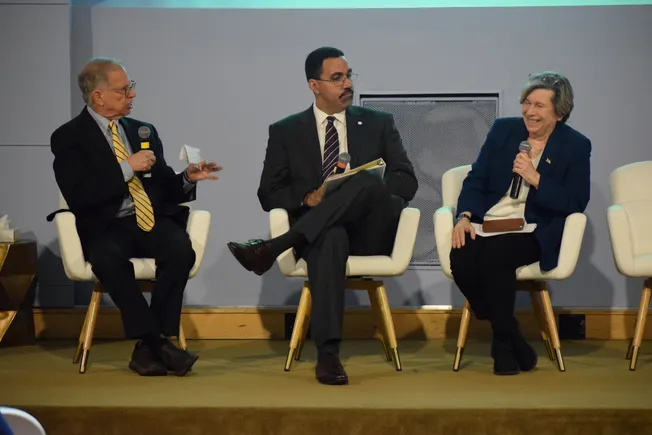
    Randi Weingarten, president of the American Federation of Teachers, and John B. King, Jr., chancellor of the State University of New York and a former U.S. education secretary, both noted that there’s a high level of agreement across the country that workforce preparation in K-12 and higher education is important. 

    They also pointed to several successful programs that are helping students gain the skills necessary for their chosen occupation. King, for example, highlighted the Real Life Rosies program at Mohawk Valley Community College in Utica, New York — a 12-week pre-apprenticeship program that helps women gain advanced manufacturing skills.

    But Weingarten and King also noted obstacles that are stunting students’ access to skill-based learning.

    For one, K-12 school systems “are really terrible at change,” Weingarten said, adding that they “only change when an accountability system changes. And so the problem is we have a really outdated accountability system.”

    Weingarten also said that school systems tend to be risk-averse. “People get blamed” if an initiative isn’t 100% successful, she said. That’s why school accountability systems need to be revised, “to give people permission to do something different.”

    King said one obstacle is that there’s a culture challenge. Some people think that a liberal arts education and career readiness preparation programs are in conflict with each other, he said. “Sometimes people react against talk of careers, because it seems that it is making education just about the job,” he said.

    King also said leaders from all industry sectors need to voice support for education and prioritize learning as an investment, as well as work on solutions to barriers. “We need the business community nudging people on both sides of the aisle to stand up for education and stand up for this vision we’ve been talking about today,” he said.

    Three people are seated at a table on a stage.

    Reo Pruiett, Rashid Ferrod Davis and Don Haddad speak about the P-TECH approach to connecting K-12 students with college and career experiences during a panel at the National Pathways Summit at Gallaudet University in Washington, D.C., on May 8, 2025.

    Permission granted by National Pathways Initiative


    Two diplomas by high school graduation

    Several speakers during another panel discussion highlighted one approach that is helping high school students graduate with both high school and associate degree diplomas while also gaining career skills and connections to potential employers through mentorships, paid internships, and other on-the-job experiences.

    The P-TECH 9-14 school model was created by IBM to encourage public-private partnerships to give high school students specific workplace skills while they earn both diplomas. The first P-TECH school was launched in New York City in 2011.

    Reo Pruiett, chief programs and engagement officer at Communities Foundation of Texas, focuses on improving K-12 and higher education outcomes. She calls the P-TECH approach “game changing.”

    She said the program has helped students gain upward economic mobility and has “demystified” the college experience for students while they are still being supported as high schoolers.

    “I think that’s one thing about P-TECH; It allows us to make sure our students are prepared to dream and not to just settle,” she said.

    Source link

  • Teachers need support to understand what’s needed in the UCAS personal statement

    Teachers need support to understand what’s needed in the UCAS personal statement

    Our recent paper found substantial misalignment between state-school teachers and university admissions staff on what makes a high-quality UCAS personal statement.

    In our study, 409 state school teachers were presented with ten paragraphs from UCAS personal statements and asked to select between two pieces of feedback. One ‘correct’ feedback was provided by an admissions tutor, and the one ‘incorrect’ feedback was supplied by another teacher. These paragraphs and feedback were all real-world examples derived from Steven Jones’ (2016) study, used as part of Causeway Education’s pre-training programme for state school teachers.

    We found:

    • There was significant misalignment between teachers and admissions staff. In only 56.5% of cases did teachers select the ‘correct’ feedback response.
    • There are a number of pervasive myths regarding the UCAS personal statement. Teachers had a dual tendency to:
    1. Advise for the incorporation of personal content that aimed to demonstrate a holistic view of the student rather than course-related competencies; and
    2. Suggest reducing content that demonstrated course-related knowledge and skills.

    To give one example, teachers were presented with the paragraph below and asked to choose between two pieces of feedback: (1) Strong reasons backed up by detailed examples; and (2) Too much detail; doesn’t give a sense of the student as an individual. The first of these is from an admissions tutor and the second from a teacher in Jones’ (2016) work.

    My main reason for wanting to study Japanese is because I enjoy studying complex grammar rules to see how languages come together. This is why I chose to undertake Latin at A-Level as I enjoy translating pieces of complex texts. Analysing writers techniques in presenting ideas and characters is also interesting, in particular how Tacitus in Annals I, presents Tiberius as an unsuitable emperor by often comparing him to his father Augustus, an emperor who was deemed ‘an upholder of moral justice’.

    In 58.4% of cases teachers selected the first ‘correct’ answer, and 41.6% selected the ‘incorrect’ second answer.

    These findings should not be interpreted as a criticism of teachers. In the context of studies finding a considerable lack of transparency on how universities use the UCAS personal statement (Fryer et al., 2024), the burden of responsibility for misalignment falls primarily on universities. Without clear and transparent guidance, this misalignment between teachers and admissions staff is inevitable.

    There is an important opportunity to address this situation, as many universities will currently be in the process of updating their public-facing guidance in response to the upcoming UCAS personal statement reform. The shift to three short questions for the 2025-26 application cycle and the corresponding need to update guidance present universities with an opportunity to address and counter the misalignments noted in our paper.

    To support this goal, our paper contains a table of key implications (Table 5, pp.14-15), which can be downloaded directly from this link.

    We hope this is of practical use to admissions staff in updating and developing guidance on the UCAS personal statement. We contend that this new guidance, alongside transparent explanations of how the personal statement is used in selection decisions, is crucial to enable UCAS’s reform to widen participation and address inequalities.

    This blog is based on a paper ‘Investigating the alignment of teachers and admissions professionals on UCAS personal statements’ by Tom Fryer, Anna Burchfiel, Matt Griffin, Sam Holmes and Steven Jones. Due to its time-sensitive nature, the paper has been published as a preprint, and therefore has not yet been subject to peer-review.    

    The table summarising the implications for public-facing guidance is available for download here.  

    Source link

  • International Student Aspirations Increasingly Align With The Skills Needed To Propel UK Growth, ApplyBoard’s Internal Data Shows

    International Student Aspirations Increasingly Align With The Skills Needed To Propel UK Growth, ApplyBoard’s Internal Data Shows

    • Justin Wood is Director, UK at ApplyBoard.

    Millions of international students have used the ApplyBoard platform to search for international study opportunities.[1] For many of these students, searching for courses in Australia, Canada, Ireland, the United Kingdom, and the United States is one of the first steps in their study abroad journey. This proprietary search data reveals a leading indicator of changing student preferences.

    What UK Fields of Study did International Students Search for in 2024?

    After the Sunak Government announced the tightening rules on international student dependants and a review into the graduate route, the UK saw a significant contraction in interest from international students in 2024—applications declined by 14% year-over-year, while dependant applications dropped by 84%. The good news for a struggling sector is that early signs point to positive momentum in 2025, with higher enrolments for many of the institutions that offer a January intake. Enroly data suggests a 23% increase in January 2025 compared to January 2024, and ApplyBoard has experienced growth at three times this rate.

    ApplyBoard’s search trends reinforce these early signs: interest in UK courses jumped 25% in 2024 vs. 2023. With search behaviour often signaling future application trends, this surge suggests the UK’s positive momentum in early 2025 could continue throughout the year. Beyond this overall growth, shifting field-of-study preferences highlight how international applicants are adapting to the UK’s changing landscape:

    Health fields saw the largest proportional increase among UK searches, climbing nearly four percentage points to 12.8% of all searches. This growing interest aligns with the UK’s expanding healthcare sector, which is projected to add 349,000 jobs by 2035, growing 7% from 2025. Likewise, the information technology sector is expected to grow 8% over the next decade, which aligns with shifting student preferences—ApplyBoard platform data shows Engineering and Technology accounted for 17% of searches in 2024, up two percentage points year-over-year.

    Interest in the Sciences also expanded, rising from 13% in 2023 to 16% in 2024. Alongside the gains in Health and Engineering and Technology, this shift underscores how international student priorities are increasingly aligning with long-term global workforce demands.

    How International Students are Navigating UK Study Fields

    This alignment comes at a time when interest in UK courses is rising. Interest in UK courses grew significantly among several key student populations in 2024, with searches from students in Bangladesh, Sri Lanka, Ghana, and Saudi Arabia doubling year-over-year. Meanwhile, student searches from Nigeria and Pakistan saw substantial gains, rising 66% and 40%, respectively. However, searches from Nepalese students experienced the most dramatic increase, with searches tripling compared to 2023.

    Further supporting the possibility that the UK’s positive momentum in January 2025 will continue throughout the year, searches from most key student demographics reached an all-time monthly high in either December 2024 or January 2025.

    The graphic below illustrates how major student populations explored different fields of study in the UK on the ApplyBoard platform last year:

    Student interest in Health fields was strongest among Ghanaian (22%), Nigerian (20%), and Saudi Arabian students (16%). Compared to the previous year, the share of searches for this field rose by six percentage points among Ghanaian students and five percentage points among Nigerian students. Additionally, the proportion of Health searches among Sri Lankan students doubled over this period.

    By comparison, the Sciences were a priority across all nine student populations, making up at least 14% of UK course searches. Students from Pakistan (18%), Saudi Arabia (18%), and Bangladesh (16%) had the highest proportion of Science-related searches. Notably, seven of the nine key student populations devoted a greater share of their searches to the Sciences in 2024 than in the previous year.

    Engineering and Technology also accounted for at least 14% of searches among these major student populations, although Sri Lankan (29%), Saudi Arabian (26%), and Chinese (23%) students showed the highest engagement in this field. Additionally, eight of the nine key student populations allocated a larger share of their searches to Engineering and Technology in 2024. As student interest in UK courses continues to grow, institutions can strengthen their appeal by aligning their portfolio with evolving student priorities and workforce needs.

    The UK’s Edge: Where Student Interest Outpaces Canada and the US

    Understanding where the UK sees higher proportional interest in key fields of study compared to Canada and the US can reveal important competitive advantages for institutions and better inform strategic recruitment strategies. This interactive visualization allows you to explore student interest by field and destination, filterable by top student populations:

    Health-related fields accounted for 25% of searches for UK institutions among Filipino students—three percentage points higher than their searches for Canada and the US. Likewise, 22% of Ghanaian students were interested in UK-based Health courses, outpacing the interest shown for both Canadian (21%) and American (20%) options.

    In Engineering and Technology, 29% of Sri Lankan students’ searches for UK courses were in this field—matching their interest in US study but well surpassing their searches for Canada (24%).

    Social-related fields like Law, Social Sciences, and Teaching captured 10% of Pakistani searches for the UK, outpacing that for Canada (6%) and the US (7%). A similar trend occurred among Bangladeshi students, with 10% of their UK-based searches occurring for social-related fields compared to 7% of Canada and 6% for the US.

    Leveraging Search Trends to Shape Future Recruitment

    Search trends serve as a leading indicator of shifting student interest, often signaling future application patterns. The surge in searches for UK courses—particularly in high-demand fields like health, engineering, and sciences—suggests a growing alignment between student priorities and workforce needs. By analysing these trends, institutions can proactively refine course offerings and recruitment strategies to attract top international talent. As demand continues to evolve, leveraging real-time search insights enables institutions to stay ahead of market shifts, ensuring they meet student expectations while strengthening their global competitiveness. Understanding where the UK holds a competitive edge will be key to optimizing outreach and course development in 2025 and beyond.


    [1] In the past, ApplyBoard platform search data was generated based on button clicks on a page, while the new search data is generated by any changes made to the page’s filters (destination, field of study, etc.) As a result, the new search count, if tallied using the previous search data approach, would be significantly inflated compared to the original search count. To make the search counts more comparable, we changed our methodology as of August 2024 to use unique entries per user within each hour.

    Source link

  • FIRE to Congress: More work needed to protect free speech on college campuses

    FIRE to Congress: More work needed to protect free speech on college campuses

    What is the state of free speech on college campuses? More students now support shouting down speakers. Several institutions faced external pressure from government entities to punish constitutionally protected speech. And the number of “red light” institutions — those with policies that significantly restrict free speech — rose for the second year in a row, reversing a 15-year trend of decreasing percentages of red light schools, according to FIRE research.

    These are just a few of the concerns shared by FIRE’s Lead Counsel for Government Affairs Tyler Coward, who joined lawmakers, alumni groups, students, and stakeholders last week in a discussion on the importance of improving freedom of expression on campus.

    Rep. Greg Murphy led the roundtable, along with Rep. Virginia Foxx, Chairwoman of the House Committee on Education and the Workforce, and Rep. Burgess Owens. 

    But the picture on campus isn’t all bad news. Tyler highlighted some positive developments, including: an increase in “green light” institutions — schools with written policies that do not seriously threaten student expression — along with commitments to institutional neutrality, and “more and more institutions are voluntarily abandoning their requirements that faculty and students submit so-called DEI statements for admission, application, promotion, and tenure review.”

    Tyler noted the passage of the Respecting the First Amendment on Campus Act in the House. The bill requires public institutions of higher education to “ensure their free speech policies align with Supreme Court precedent that protects students’ rights — regardless of their ideology or viewpoint.” Furthermore, crucial Title IX litigation has resulted in the Biden rules being enjoined in 26 states due to concerns over due process and free speech.

    Lastly, Tyler highlighted areas of concern drawn from FIRE’s surveys of students and faculty on campus, including the impact of student encampment protests on free expression on college campuses.


    WATCH VIDEO: FIRE Lead Counsel for Government Affairs Tyler Coward delivers remarks at Rep. Greg Murphy’s 4th Annual Campus Free Speech Roundtable on Dec. 11, 2024.

    Students across the political spectrum are facing backlash or threats of censorship for voicing their opinions. Jasmyn Jordan, an undergraduate student at University of Iowa and the National Chairwoman of Young Americans for Freedom, shared personal experiences of censorship YAF members have faced on campus due to their political beliefs. Gabby Dankanich, also from YAF, provided additional examples, including the Clovis Community College case. At Clovis, the administration ordered the removal of flyers YAF students posted citing a policy against “inappropriate or offensive language or themes.” (FIRE helped secure a permanent injunction on behalf of the students. Additionally, Clovis’s community college district will have to pay the students a total of $330,000 in damages and attorney’s fees.)  

    VICTORY: California college that censored conservative students must pay $330,000, adopt new speech-protective policy, and train staff

    Press Release

    Federal court orders Clovis and three other community colleges to stop discriminating against student-group speech based on viewpoint.


    Read More

    Conservative students aren’t the only ones facing challenges in expressing their ideas on campus. Kenny Xu, executive director of Davidsonians for Free Speech and Discourse, emphasized that free speech is not a partisan issue. Citing FIRE data, he noted that 70% of students feel at least somewhat uncomfortable publicly disagreeing with a professor in class. “I can assure you that 70% of students are not conservatives,” he remarked. Kyle Beltramini from the American Council of Trustees and Alumni, reinforced this point. Sharing findings from ACTA’s own research, he emphasized that “this is not a problem faced by a single group of students but rather an experience shared across the ideological spectrum.”

    The roundtable identified faculty as a critical part of the solution, though they acknowledged faculty members often fear speaking up. FIRE’s recent survey of over 6,000 faculty across 55 U.S. colleges and universities supports this claim. According to the results, “35% of faculty say they recently toned down their writing for fear of controversy, compared to 9% who said the same during the McCarthy era.”

    While this data underscores the challenges faculty face, it also points to a broader issue within higher education. Institutions, Tyler said, have a dual obligation to “ensure that speech rights are protected” and that “students remain free from harassment based on a protected characteristic.” Institutions did not get this balance right this year. But, ACTA’s Kyle Beltramini noted the positive development that these longstanding issues have finally migrated into the public consciousness: “By and large, policy makers and the public have been unaware of the vast censorial machines that colleges and universities have been building up to police free speech, enforce censorship, and maintain ideological hegemony in the name of protecting and supporting their students,” he stated. This moment presents an opportunity to provide constructive feedback to institutions to hopefully address these shortcomings.

    FIRE thanks Rep. Murphy for the opportunity to contribute to this vital conversation. We remain committed to working with legislators who share our dedication to fostering a society that values free inquiry and expression.

    Alumni are also speaking up, and at the roundtable they shared their perspectives on promoting free speech and intellectual diversity in higher education. Among them was Tom Neale, UVA alumnus and president of The Jefferson Council and the Alumni Free Speech Alliance, who highlighted the importance of connecting with alumni from institutions like Cornell, Davidson, and Princeton, since they’re “all united by their common goal to restore true intellectual diversity and civil discourse in American higher-ed.”

    Other participants at the roundtable included members of Speech First, and Princetonians for Free Speech. 

    So what can be done? Participants proposed several solutions, including passing legislation that prohibits the use of political litmus tests in college admissions, hiring, and promotion decisions. They also suggested integrating First Amendment education into student orientation programs to ensure incoming undergraduates understand their rights and responsibilities on campus. Additionally, they emphasized the importance of developing programs that teach students how to engage constructively in disagreements — rather than resorting to censorship — and to promote curiosity, dissent, talking across lines of difference, and an overall culture of free expression on campus. 

    FIRE thanks Rep. Murphy for the opportunity to contribute to this vital conversation. We remain committed to working with legislators who share our dedication to fostering a society that values free inquiry and expression.

    You can watch the roundtable on Rep. Murphy’s YouTube channel.

    Source link