Tag: News

  • Nebraska Chancellor’s Hasty Exit Raises Questions

    Nebraska Chancellor’s Hasty Exit Raises Questions

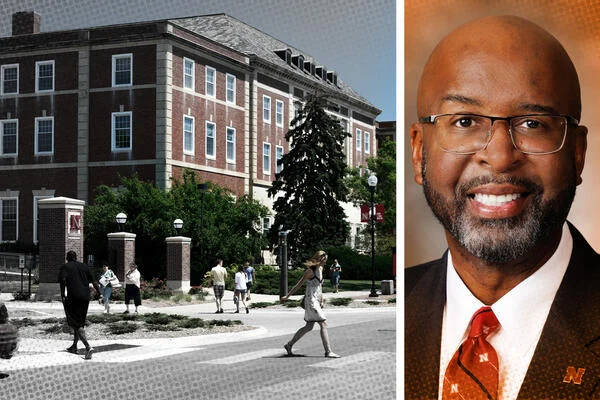
    Weeks after pushing through deeply unpopular program cuts, University of Nebraska–Lincoln chancellor Rodney Bennett has left his role six months early—with a $1 million golden parachute.

    His exit at Nebraska has prompted faculty concerns about executive spending as questions linger about whether program cuts driven by Bennett were avoidable. NU system officials, however, have defended the cuts as necessary due to a recurring budget deficit and argued that Bennett’s exit package is what was owed to him—a mix of unpaid leave, deferred income, health-care benefits and the remainder of his contract set to expire in June.

    For Bennett, this marks the second time since 2022 that he has left a job early, departing his role as president of the University of Southern Mississippi a year ahead of schedule after nearly a decade at the helm there.

    (A UNL spokesperson said Bennett was not available for an interview with Inside Higher Ed.)

    Now UNL will soon embark on a new chancellor search as tensions simmer over recent events, though NU system President Jeffrey Gold noted a “need for healing” before that process begins.

    Contentious Cuts

    Bennett’s budget-reduction plan was unveiled to much faculty dismay in November.

    While he initially proposed cutting six programs, that was later whittled down to four: statistics, earth and atmospheric sciences, educational administration, and textiles, merchandising and fashion design. Four more programs will be “realigned” into two new schools, under the plan.

    The program eliminations will cut 51 jobs at UNL, most from the faculty ranks.

    Other actions taken include faculty buyouts, which are expected to save $5.5 million; budget reductions at four of UNL’s colleges; and the elimination of some administrative and staff roles.

    Those cuts, already unpopular, sting more now after Bennett officially stepped down Monday with an exit package of $1.1 million—prompting faculty outrage over spending priorities.

    “The university cannot credibly claim that it lacks the resources to sustain academic programs and faculty positions while simultaneously paying over a million dollars to a failed chancellor,” Sarah Zuckerman, president of the UNL chapter of the American Association of University Professors, said in a statement sent to Inside Higher Ed and other media outlets. “This payout exposes the administration’s financial crisis narrative as a matter of priorities, not necessity.”

    But Gold, NU system president since July 2024, notes the exit package will not be funded by taxpayer dollars and said the decision to leave early was “mutually discussed” with Bennett, his family and senior leadership and was made with the “best interests” of the campus in mind.

    “The separation agreement—all components of it—will not be funded either from state appropriations or tuition funds, but rather entirely through other university discretionary resources, meaning privately raised dollars,” Gold told Inside Higher Ed. “It’s always a balance, but an attempt was made, and I think in this instance, successfully, to not use the same dollars that are used to support our faculty and our staff and, most importantly, our students.”

    Many faculty members are also seething about what they see as fuzzy math to justify the cuts.

    An outside analysis, conducted by the AAUP, argued that instructional spending across the system has declined in recent years while administrative pay rises and that the cuts fell disproportionately on the academic side. The analysis also suggested that by increasing its endowment draw by 1.3 percent, bringing it up to 6 percent, UNL would have been able to avoid cuts.

    Gold said that “perhaps the campus has seen that analysis,” but he has not. He largely dismissed the notion of increasing the endowment draw, noting such a move is “at the discretion of the Board of Directors and senior leadership of the [University of Nebraska] Foundation.” Gold also underscored that two of the four program closures were supported by the Academic Planning Committee, a group of faculty, staff, students and administrators—though that fact has done little to assuage the concerns of others who have protested the cuts as needless or flawed.

    Faculty Tensions

    Faculty have also accused Bennett of steamrolling them in the process to determine the cuts. In November, UNL’s Faculty Senate voted no confidence in Bennett and urged Gold to evaluate Bennett’s “continued fitness to serve” as chancellor.

    The no-confidence resolution blasted Bennett for “failures in strategic leadership, fiscal stewardship, governance integrity, external relations, and personnel management.” Those concerns are among many complaints from faculty during Bennett’s tenure.

    Regina Werum, a UNL sociology professor and member of UNL’s AAUP chapter, told Inside Higher Ed by email that Bennett had “no rapport with faculty” and was rarely seen on campus.

    “The Chancellor’s style is best described as disengaged from and more accurately as disdainful of faculty, staff, and students. He keeps himself insulated and largely invisible on campus, making sure to be present for photo ops with superiors and dignitaries,” Werum wrote.

    A former Southern Miss official who worked with Bennett at that campus offered a similar take. Speaking anonymously, the former official said Bennett was a rare sight on campus and tended to offer scripted remarks to faculty. That official also criticized Bennett’s inexperience with teaching and research, noting he stepped into the job with a student affairs background.

    “The problem was he didn’t want you to know that he didn’t know things, and because of that, he wouldn’t ask questions,” the anonymous official said. “It was a conundrum. You would try to help him understand what was going on, but he didn’t want to admit that he didn’t understand it all.”

    Bennett also enacted program cuts at Southern Miss, axing dozens of positions.

    The former official said Bennett’s cabinet encouraged him to consider other options at Southern Miss, but he wasn’t interested in having those conversations and saw cuts as the only route to plug budget holes. The anonymous administrator also said Bennett often ignored faculty advice.

    “When he reorganized the Gulf Coast campus, he put together two large committees, 30 people each, that worked for six months coming up with recommendations,” they said. “And then when he rolled out the plan for the Gulf Coast, there was a lot of stuff in there that none of the committees had ever discussed. People felt like they wasted a lot of time on these committees, and they were designed to give him cover for the changes he was going to make anyway.”

    The former USM official believes it was an enrollment collapse at that campus, known as Southern Miss Gulf Park, that hastened Bennett’s exit from a job he had held since 2013. Bennett initially announced in January 2021 that he planned to step down when his contract ended in June 2023. However, Bennett was officially out by June 2022, with no explanation.

    Months later, a member of the Institutions of Higher Learning Board of Trustees, which oversees Southern Miss and other universities, told local media he was “embarrassed” by the enrollment collapse at the satellite campus, which plunged by more than 50 percent from 2011 to 2022.

    Despite sharp faculty criticism, Gold praised Bennett for his time as chancellor.

    “For the 18 months that I had the privilege of working with Chancellor Bennett, I really enjoyed working with him. I found him to be very thoughtful, easy to work with, a very solid human being with a very strong love of higher education, and particularly public higher education,” Gold said.

    But if Gold felt differently, he wouldn’t be able to say so.

    A nondisparagement agreement in Bennett’s separation agreement prevents certain university and system officials, including Gold and members of the Board of Regents, from making “any negative or disparaging comments or statements” about the now-former Nebraska chancellor.
    Source link

  • Calif. College of Arts to Close, Sell Campus to Vanderbilt

    Calif. College of Arts to Close, Sell Campus to Vanderbilt

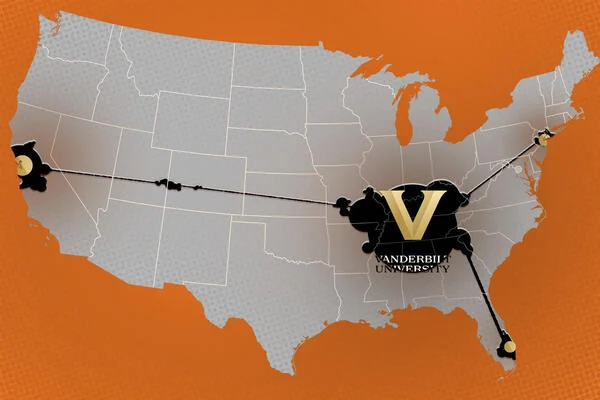
    Photo illustration by Justin Morrison/Inside Higher Ed

    California College of the Arts will close by the end of the 2026–27 academic year amid enrollment declines that have rendered its business model unsustainable, officials announced.

    But the Wednesday announcement at a press conference at San Francisco’s City Hall came with surprising fanfare. Though CCA is going away, Vanderbilt University is stepping in to purchase its campus, giving the private institution in Tennessee a foothold on the West Coast.

    Following the closure, Vanderbilt will assume ownership of the campus and “establish undergraduate and graduate programming, including art and design programs,” and maintain archival materials from the college, CCA president David C. Howse wrote in an announcement.

    The move comes after recent financial struggles for CCA, which laid off 23 employees in 2024 and closed other vacant positions to address a $20 million budget gap. While the private college raised nearly $45 million recently, those funds were evidently not enough to stave off closure. 

    CCA enrolled 1,308 students in fall 2024, according to recent federal data, down from a recent high of nearly 2,000 students in fall 2016.

    Officials have not made details of the transaction publicly available.

    Vanderbilt’s takeover of the San Francisco campus is the latest national push from the university, which has pursued an ambitious growth plan in recent years. Vanderbilt is currently leasing a campus in New York City and building another in West Palm Beach, Fla., as announced in 2024.

    Vanderbilt chancellor Daniel Diermeier told Inside Higher Ed last fall that the university was exploring a site in San Francisco and noted the booming artificial intelligence scene in the city was part of the appeal for a campus there.

    While at least 16 nonprofit institutions announced closure plans last year, California College of the Arts appears to be the first to do so in 2026, coming less than two weeks into the new year.

    Source link

  • UNC’s App Redesign Drives Student Engagement

    UNC’s App Redesign Drives Student Engagement

    What was once an underused mobile app at the University of North Carolina at Chapel Hill has been rebuilt to serve as a central hub for student information and services.

    The app, Hello Heels, was relaunched during first-year orientation last fall after undergoing a redesign following input from students through advisory boards, focus groups and surveys.

    Since the relaunch, the app now draws about 90,000 page views per week from roughly 37,000 users—up from 10,000 page views and 6,000 users before the redesign.

    Elizabeth Poindexter, executive director of communications and special projects in UNC’s Office of Student Affairs, said students rely on the app for “real-time” updates on everything from bus tracking to dining hall offerings.

    “Nothing thrills me more than running to the dining hall to grab my own lunch and seeing a student using the app or talking to their friends about it,” said Poindexter.

    She added that student feedback has allowed the app to become a multifaceted “dynamic space,” featuring modules on career services and health and wellness and an up-to-date events calendar.

    Poindexter also said the redesigned app has proven cost-effective, saving more than $40,000 in new student and family programs by eliminating the need for duplicative services. Instead of costly printed materials, the app provides real-time agenda updates and announcements.

    “The more people hear about that cost savings, the more interested in and engaged with the app they become,” said Poindexter.

    The approach: Poindexter said student input came from a diverse group, including undergraduates and graduate, transfer and international students.

    “We really had a good spread of students who are representative of the student body at large, and they had some incredible recommendations,” said Poindexter, including suggestions to “overhaul” and “refresh” the health and wellness and career services modules.

    She added that other features, such as real-time updates on recreation center occupancy, dining hall hours and integration with academic tools like Canvas, also arose directly from student feedback.

    The app includes an opt-in messaging feature that allows campus offices to send targeted updates to students who choose to receive them. Poindexter said the most popular channels come from the financial well-being center and the mental health and wellness center.

    The financial well-being center sends weekly money tips and appointment reminders, while the mental health and wellness center shares well-being messages during high-stress periods like finals, which she said students respond positively to.

    The app also gathers in-app survey responses. Of roughly 250 respondents, 98 percent said they plan to continue using Hello Heels.

    “That is why it’s been so successful,” Poindexter said. “We have student voices integrated every step of the way.”

    What’s next: Poindexter said part of the redesign involved partnering with UNC’s business school to ensure the app’s long-term sustainability and continued improvement.

    “It’s been really wonderful to see that we can have this universitywide impact and improve the student experience in how we communicate with them,” she said.

    Poindexter recommended that higher education leaders take a close look at their own media, from mobile apps to online newsletters, and use student feedback to make sure those tools are actually engaging and informing their target audience.

    “Our best advocates are our students, and they have really useful insights decision-makers should consider,” she said.

    Get more content like this directly to your inbox. Subscribe here.

    Source link

  • SHEEO Releases Annual State Priorities Survey

    SHEEO Releases Annual State Priorities Survey

    Affordability has always been a buzzword for lawmakers on Capitol Hill, but polling shows that it’s becoming increasingly popular among state higher education agencies as well.

    According to the latest annual State Priorities survey from the State Higher Education Executive Officers, college affordability jumped from the sixth-most-important policy issue among higher ed executives in 2025 to the second most this year.

    SHEEO researchers emphasized that affordability has “consistently [been] among the top priorities” for the roughly 45 state executives surveyed each year; the average score from respondents this year only increased 0.1 points on a 1-to-5 scale. Nonetheless, they agreed that the increase represents a significant and timely change—one that was likely influenced by the political climate in Washington.

    “Affordability is the key overarching issue for policymakers heading into the 2026 midterm election, and state higher education leaders are certainly not immune from pressure to lower costs,” said Tom Harnisch, SHEEO’s vice president for government relations. “So there’s going to be, I foresee, continued legislative efforts to hold the line on tuition, make increased investments in financial aid and address other areas that are related to college costs.”

    The increased focus on affordability has also been reflected in state legislation; 33 states indicated that they had instituted a tuition freeze and/or limit in at least one public higher education sector in the past five years. Another 20 have considered legislation to create or expand statewide promise programs, which provide free or significantly reduced college tuition for eligible students.

    But state systems still have work to do to address public concerns. Roughly 60 percent of all adults say cost is the biggest barrier preventing students from enrolling in or completing a postsecondary degree, according to a report from the left-leaning think tank New America.

    Other key policy issues include economic and workforce development (which held its place at No. 1), higher education’s value proposition (No. 3), and college completion/student success (No. 5), the SHEEO survey shows. A topic that had not previously been included in SHEEO surveys also gained prominence this year: state impacts from federal policy changes, which placed sixth on the list of 25 issues.

    Collectively, Harnisch said, this year’s results, and the relatively consistent results of recent years, reflect a slow but steady transition concerning who is responsible for bearing the cost of college.

    “It just shows the overarching cost shift from states to students, and associated with that cost shift is the need for students to get a job, to help pay for their education and associated student debt,” he explained. “These are all downstream effects of that.”

    SHEEO researchers also noted that while state budgets for higher ed range widely, funding has declined over all since the COVID-19 pandemic and its “record state budget surpluses.” The major funding cuts to Medicaid and the Supplemental Nutrition Assistance Program through the One Big Beautiful Bill Act will likely only make higher education budgets tighter, they added.

    “Many states with biannual budgets set them in 2025, so they will not be in budget sessions again until 2027. But those states that do have budgets in 2026 are more likely to face changes, and higher education is often most vulnerable to those changes,” Harnisch said. “So as more states have budget shortfalls, revenue growth is softening and there’s increased competition for limited state funding, states are going to be increasingly challenged on the affordability front.”

    Still, despite looming budget cuts, “unstable federal funding streams and intensifying state and federal political pressures,” SHEEO says there are reasons for optimism.

    Concerns about completion of the Free Application for Federal Student Aid dropped nine spots to the 18th-most-important issue for higher leaders this year. And despite the looming predictions of a major demographic cliff, which is slated to take effect in 2026, enrollment declines dropped from the seventh-most-important issue in 2025 to 16th most important this year.

    If anything, SHEEO hopes that enrollment will continue to climb as students pursuing eligible short-term education and training programs gain access to Pell Grants for the first time starting on July 1, under a new program called Workforce Pell.

    “[The year] 2026 holds a lot of unknowns as we look to see what state legislators will prioritize and how changes at the federal level will impact states,” Harnisch said in a news release about the report. But as “economic and workforce development continues to be top of mind, and with the implementation of Workforce Pell rolling out later this year, we’re optimistic that states will continue to make advances in addressing workforce needs.”

    Source link

  • The Hidden Tax Students Pay for Your AI Strategy (opinion)

    The Hidden Tax Students Pay for Your AI Strategy (opinion)

    University leaders are thinking a lot about AI. Some institutions are purchasing site licenses, others forming task forces and others are drafting policies focused on academic honesty. Meanwhile, students are quietly bearing a cost that few are tracking: between $1,200 and $1,800 over four years in AI tool subscriptions that fragmented and unenforceable institutional policies have made necessary.

    Here’s what a typical student experience looks like. Freshman fall semester: The composition professor bans ChatGPT even though the university has a site license. The biology lab recommends NotebookLM for research synthesis. The math professor encourages Wolfram|Alpha Pro Premium at $8.25 per month. Spring semester brings a different writing professor, who requires Grammarly Pro at $12 monthly, while the computer science intro professor suggests GitHub Copilot Pro for $10 monthly (though it’s worth noting here—props to GitHub Copilot—that verified students may be eligible for free access to the Pro plan). Meanwhile, the research methods professor advises students to “use AI responsibly” without defining what that means.

    As students progress, the costs compound. Statistics courses need IBM SPSS Statistics with AI features or Jupyter with premium compute, such as through a Google CoLab Pro subscription ($9.99 per month). Marketing classes require Canva Pro for design projects at $15 monthly. Capstone courses recommend Claude Pro at $20 monthly, or premium versions of research tools like Consensus or Elicit running anywhere from $10 to more than $40 per month. Different courses equal different tools, and the subscription stack grows. The money matters—$1,200 to $1,800 is significant for students already stretching every dollar. But the financial burden reveals something more troubling about how policy fragmentation or policy stall is undermining educational equity and mission. The problem runs deeper than institutional inaction.

    Without coordination, universities face two unsatisfying options. Option one: Buy nothing centrally. Students bear the full cost—potentially $4 million to $7 million in aggregate per year for a 15,000-student institution—creating massive equity gaps and graduates unprepared for AI-integrated careers. Option two: Attempt institutional licensing. But this means more than purchasing a single large language model. Writing disciplines might work with ChatGPT or Claude. But other disciplines might need GitHub Copilot, Canva Pro, AI-enhanced modeling platforms, Consensus, Elicit, AI features in SPSS or premium Jupyter compute. There are thousands of AI platforms out there.

    A truly comprehensive strategy for a large university could exceed $2 million annually—with no guarantee of faculty adoption or pedagogical integration. So even with an investment, without consensus or agreement, students might still experience this AI tax. Some institutions have the financial capacity to invest in both comprehensive licensing and faculty development. But most universities facing enrollment pressures and constrained budgets cannot afford coordinated AI strategy at this scale. The result is policy paralysis while students continue paying out of pocket. Some institutions have tried a middle path, purchasing site licenses for tools like ChatGPT Edu or Claude for Education. But without cross-functional coordination, these investments often miss their mark.

    The fundamental barrier is really a structural one. Procurement authority typically resides with the chief information officer, while pedagogical decisions belong to the provost and faculty. The information technology office selects tools based on security, scalability, cost and vendor relationships and reliability. Faculty need tools based on disciplinary fit, learning outcomes and individual professional preparation. These criteria rarely align. If an institution does purchase something, it may sit underutilized while students continue paying for what they actually need or what faculty require or prefer.

    This creates the unintentional equity crisis: Two students in the same capstone course may face dramatically different access. Student A, working 20 hours weekly and Pell Grant eligible, cannot afford premium subscriptions. She uses free versions with severe limitations and usage caps—and when those caps hit midassignment, her work stalls. Student B, with family financial support, maintains premium subscriptions for every required tool with unlimited usage and priority access. Student B’s AI-enhanced work earns higher grades not because of deeper learning, but because of subscription access. Academic advantages compound over time and may continue past college and into the career.

    Universities have created an unintentional AI tax here on students that exacerbates grade inflation, does not ensure learning of content and is costing students. Universities have always operated on a principle of equal access to essential learning resources. AI has become essential to academic work, yet access remains unequal.

    The academic commons is breaking down. The coordination gap is structural—and fixable. Technology teams focus on infrastructure and security. Academic affairs manages curriculum and pedagogy. Student success addresses traditional access barriers. Financial aid handles emergency requests for support case by case. In practice, the CIO and provost rarely will coordinate at the operational level, where these decisions actually get made.

    The employability implications compound the equity concerns. One survey found that 26 percent of hiring managers now consider AI fluency a baseline requirement, with 35 percent actively looking for AI experience on résumés. Students graduating without systematic AI literacy preparation face workforce disadvantages that mirror the educational inequities they experienced, disadvantages that may extend into career outcomes and lifetime earnings.

    The real question isn’t “What should we buy?” Instead, universities need to ask themselves, “What is AI fluency and how do we know if students are getting it?” Then, “How do we make strategic decisions about what gets institutional investment—not just licenses but also faculty buy-in and development—versus what students purchase?” That requires executive-level strategic coordination that bridges IT and academic affairs, something most universities lack.

    The conversations are happening in separate silos when they need to converge. Until they do, universities will continue creating hidden taxes for students while wondering why AI investments aren’t delivering promised educational transformation. Students caught in this gap might not even be aware it is happening and not have the language or platform to name it.

    Higher education’s democratic mission requires equal access to essential learning tools. AI has become essential. Access remains unequal. Costs are passed to the students. The longer institutions delay action, the wider these gaps grow.

    Kenneth Sumner is founder and principal of Beacon Higher Education, which provides AI governance consulting for colleges and universities. He previously served as provost at Manhattan University and has held associate provost and dean roles at Montclair State University. He holds advanced AI strategy and design and innovation certifications from the Wharton School at the University of Pennsylvania and Stanford University School of Business.

    Source link

  • Lessons to Prospective International Students About Policing of Black Men

    Lessons to Prospective International Students About Policing of Black Men

    Last week, I was talking with a young man, Pinot, during my time in another country. He told me that he really wants to visit America, but one thing seriously frightens him: the possibility of police officers stopping, harassing and potentially inflicting violence on him. He asked me if these situations really happen as often as it seems. Pinot is Black. That conversation made me wonder how many talented, Black prospective international students share the same fears and ultimately opt out of applying to U.S. universities.

    Yesterday, I was scrolling one of my social media timelines and saw this CBS News video of police officers in Jacksonville, Fla., terrorizing William McNeil Jr. I felt my blood pressure and anxiety rising as I watched. I had not previously seen it, but maybe Pinot had. It is plausible that others around the world have as well. Videos like these teach young people across the U.S. and abroad a set of heartbreaking, inexcusable truths about crimes committed against Black men in America.

    As was the case in last week’s conversation with Pinot, I would not be able to tell a talented young Black male prospective college applicant from Africa, Jamaica, London, Paris or anyplace else that what he has seen on television or social media are rare, isolated occurrences. I would be lying. Truth is, racial profiling and police brutality happen far too often. As I said to Pinot, “What you see and hear about this is not not true.” There is far too much evidence that it remains pervasive.

    I have often told a personal story to audiences comprised of hundreds (sometimes thousands) in the U.S. that I decided against sharing with Pinot because I did not want to deepen his fears about what could happen to him if he ever visited America. I am recapping the incident here.

    In July 2007, I became an Ivy League professor. I also purchased my first home. I was a 31-year-old Black man with a Ph.D. Three friends and I went out to a nightclub to celebrate my new job at the University of Pennsylvania and my home purchase. Bars and clubs close at 2:00 a.m. in Philadelphia. My friends and I were hanging on a corner saying our goodbyes after the nightclub closed. Several other nearby establishments also had just shut down. Hence, there were lots of people on the other three corners and along the streets.

    A cop drove past my friends and me and said something that we did not hear because it was very crowded and noisy around us. We were doing nothing wrong and therefore had no reason to believe he was talking directly to the four of us. Seconds later, he jumped out of his patrol car, put his hands on his baton and yelled to us, “I said get off the fucking corner!” We were shocked and scared. The situation also hurt and angered us, but we were collectively powerless in the moment. We put our hands up and peacefully walked away. I cried uncontrollably during my drive home.

    I mentioned that I was an Ivy League professor with a Ph.D. My three friends also worked in higher education at the time (and still do). They also are Black men. Each of them has a Ph.D. No one, regardless of educational attainment, socioeconomic status or professional accomplishments, deserves to be treated like we were that night. Nevertheless, it is noteworthy that our doctorates and university affiliations afforded us no immunity from police misconduct. To that cop, we were just four harassable Black men standing on a street corner.

    I wanted to tell Pinot that being stopped, undeservingly terrorized and potentially murdered by police officers in America for no reason would be unlikely to happen to him. But I could not. Upon reflection, I wonder how many other young Black men from other countries say “no, thanks” to visiting the U.S. or applying for admission to our universities because of the fears that Pinot articulated to me. If they saw the McNeil video and others like it on social media, YouTube or elsewhere, they would be right to doubt my or anyone else’s insistence that interactions with American law enforcement agents are generally safe for citizens, visitors or international students who are Black.

    By the way, perhaps it is good that Pinot did not ask me how the police officer who smashed McNeil’s car window, punched him in the face, threw him to the ground and attacked him was ultimately held accountable. According to an NPR article published this week, that cop was recently cleared of excessive force charges. Surely I would have lost all credibility with Pinot had I attempted to convince him that he would somehow be absolutely safe from similar acts of police brutality as a Black man in America.

    Shaun Harper is University Professor and Provost Professor of Education, Business and Public Policy at the University of Southern California, where he holds the Clifford and Betty Allen Chair in Urban Leadership. His most recent book is titled Let’s Talk About DEI: Productive Disagreements About America’s Most Polarizing Topics.

    Source link

  • Supreme Court Considers Laws Banning Trans Women in Sports

    Supreme Court Considers Laws Banning Trans Women in Sports

    For years, state laws prohibiting transgender girls and women from playing on sports teams matching their gender identity have proliferated, along with legal challenges to these bans.

    But now, the U.S. Supreme Court may settle what’s become a national controversy.

    On Tuesday, the high court considered the legality of the bans in Idaho and West Virginia.

    In more than three hours of oral arguments, the justices and attorneys debated when there should be exceptions allowed to broad legislation that discriminates against specific groups, how the presence or absence of medical testosterone regulation and biological performance advantages affect the legality of these prohibitions, whether sex should be defined as biological sex under Title IX, and what Title IX’s allowance for sex-segregated teams means if transgender women are allowed to play on women’s teams.  

    “You don’t think we should have an operating definition of sex in Title IX?” Chief Justice John Roberts said at one point to an attorney representing a trans child. 

    Lawyers representing the students who have challenged the bans said the cases were about access to athletics for a small number of transgender people, including those who are regulating their testosterone.  Kathleen R. Hartnett, an attorney challenging the Idaho ban, said her client “has suppressed her testosterone for over a year and taken estrogen,” saying the Idaho law “fails heightened scrutiny” as applied to such trans women “who have no sex-based biological advantage as compared to birth sex females.” 

    Twenty-seven states ban trans women from participating at some level of athletics, according to lawyers both defending and arguing against such prohibitions. Repeatedly Tuesday, Justice Brett Kavanaugh asked whether states that don’t have such bans are breaking the law or should be allowed discretion—suggesting he’s considering a ruling affecting more than the restrictions in Idaho and West Virginia.

    Kavanaugh asked whether states without prohibitions are violating Title IX and the Constitution’s Equal Protection Clause, and whether sex under Title IX could reasonably be interpreted to allow different states to define it differently. He said trans participation can harm girls who don’t make the cutoff for teams, but also expressed hesitancy to rule nationally, asking why the court should  “constitutionalize a rule for the whole country while there’s still … uncertainty and debate.” 

    Justice Samuel Alito didn’t ask many questions, but when he did, he homed in on how sex should be defined under Title IX. He asked how the court could determine discrimination based on sex without determining what sex means. He also asked whether female athletes who oppose transgender women on their teams should be considered “deluded” or “bigots.” 

    At one point, Justice Neil Gorsuch said that “I’ve been wondering what’s straightforward after all this discussion.” Regarding whether puberty blockers eliminate all competitive advantage, Gorsuch said there’s a “scientific dispute about the efficacy of some of these treatments.” 

    Almost a year ago, long after West Virginia and Idaho passed their laws, President Trump signed an executive order banning trans women from participating in women’s sports and threatening universities with loss of federal funding if they disobey. The next day, the NCAA announced a policy restricting “competition in women’s sports to student-athletes assigned female at birth only.” 

    The Trump administration has since pressured institutions to bar trans women. In April, for example, the Education Department’s Office for Civil Rights concluded that the University of Pennsylvania violated Title IX by allowing a trans woman to compete on a women’s sports team—presumably referring to Lia Thomas, who last competed on the swim team in 2022, in accord with NCAA policies at that time.

    Idaho and West Virginia

    The court took up two cases Tuesday, Little v. Hecox and West Virginia v. B.P.J. These suits, which center on whether anti–transgender participation laws violate Title IX and the Fourteenth Amendment’s Equal Protection Clause, have been ongoing for years. 

    In 2020, Idaho became the first state to pass a law outright banning trans girls and women from participating in school sports matching their gender identity. Lindsay Hecox is a trans woman who was nevertheless able to participate in women’s club running and club soccer at Boise State University because she sued that same year and a district court blocked enforcement of the law against her.

    In 2024, her lawyers wrote that she tried out for the university’s women’s cross-country and track teams but didn’t make it, “consistently running slower than her cisgender women competitors.” Her attorneys stress that her “circulating testosterone levels are typical of cisgender women.”

    Hecox’s attorneys had opposed the Supreme Court taking up the case, previously writing that it’s “about a four-year-old injunction against the application of [the Idaho law] with respect to one woman, which is allowing her to participate in club running and club soccer.” Then, in September 2025, her lawyers argued the case had become moot, saying Hecox dismissed her claims and “committed not to try out for or participate in any school-sponsored women’s sports covered by” the state law. 

    “In the five years since this case commenced, Ms. Hecox has faced significant challenges that have affected her both personally and academically,” including an illness and her father’s death, her lawyers wrote. They said she’s “come under negative public scrutiny from certain quarters because of this litigation, and she believes that such continued—and likely intensified—attention in the coming school year will distract her from her schoolwork and prevent her from meeting her academic and personal goals.”

    “While playing women’s sports is important to Ms. Hecox, her top priority is graduating from college and living a healthy and safe life,” they wrote. 

    But attorneys defending the Idaho law have argued not to dismiss the case—a position that may allow a national ruling from the high court. 

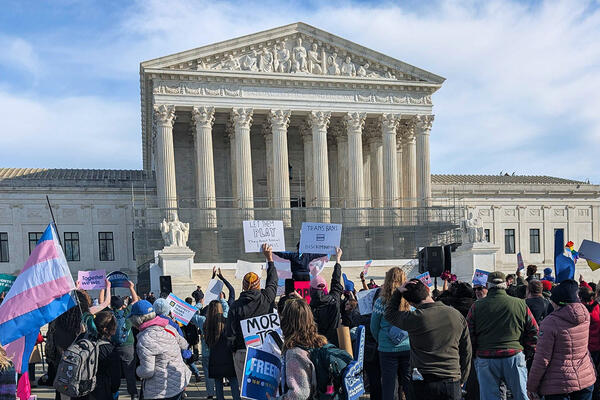
    Protesters gathered outside the Supreme Court on Tuesday as the justices heard arguments in two cases concerning trans athletes.

    Ryan Quinn | Inside Higher Ed

    On Tuesday, Alan M. Hurst, Idaho’s solicitor general, argued that the case wasn’t moot, saying Hecox’s plans about whether to play sports have changed before and may change again. Justice Sonia Sotomayor challenged this, saying Hurst was asking the court to “force an unwilling plaintiff … to continue prosecuting this case.”  Justice Ketanji Brown Jackson said “it’s a little odd that a defendant would not want a case dismissed.” 

    Hurst argued that Idaho’s law wasn’t about excluding transgender people, saying the Legislature there instead “wanted to keep women’s sports women-only.” He also said testosterone doesn’t reliably suppress performance. 

    “Sports are assigned by sex because sex is what matters in sports,” Hurst said. 

    Justice Amy Coney Barrett asked whether Hurst was arguing to allow separation by biological sex of even 6-year-olds in sports. Hurst replied that even at that age, boys have a small advantage, but co-ed sports could be an option. 

    The West Virginia case was filed by the mother of Becky Pepper-Jackson, then a transgender sixth grader, back in 2021. Judges blocked enforcement of the Mountain State’s law against the student.   

    “In West Virginia’s telling, it passed [its law] to ‘save women’s sports’ by staving off an impending tidal wave of ‘bigger, faster, and stronger males’ from stealing championships, scholarships, and opportunities from female athletes,” the student’s lawyers wrote. “In reality, West Virginia’s law banned exactly one sixth-grade transgender girl from participating on her school’s cross-country and track-and-field teams with her friends.” 

    Her attorneys wrote that the sports she’s participated in are non-contact, and that she “has received puberty-delaying medication and gender-affirming estrogen that allowed her to undergo a hormonal puberty typical of girls, with all the physiological musculoskeletal characteristics of cisgender girls and none of the testosterone-induced characteristics of cisgender boys.” 

    They wrote that she “wants to play sports for the same reasons most kids do: to have fun and make friends as part of a team.” She’s participated in post-season shot put and discus, “where her performance is well within the range of cisgender girls her age,” they wrote.

    Lawyers defending the West Virginia law, though, wrote that “male athletes identifying as female are increasingly competing in women’s sports, erasing the opportunities Title IX ensured.” They wrote that “women and girls have lost places on sports teams, surrendered spots on championship podiums, and suffered injuries competing against bigger, faster, and stronger males.” 

    Michael R. Williams, West Virginia’s solicitor general, said the state’s law “is indifferent to gender identity because sports are indifferent to gender identity,” and said “we don’t have an actual transgender exclusion.” He also argued that Title IX defines sex as biological sex because that was the understanding at the time Congress passed it.

    Barrett suggested West Virginia’s arguments could be used by a state to argue for separate math classrooms if it produced a study saying women’s presence in calculus was holding men back. Gorsuch made similar arguments. 

    Federal Intervention

    In both cases Tuesday, the federal government defended the state laws. Hashim M. Mooppan, the U.S. principal deputy solicitor general, said Title IX regulations “say you can separate based on sex … the circulating testosterone levels are just legally irrelevant under the regulations.” He also said transgender women aren’t “being excluded from participating on the boys team.”  

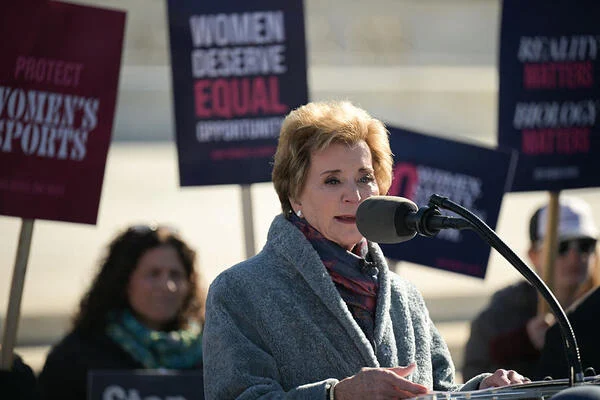
    During and after the oral arguments, hundreds of proponents for trans athletes and opponents held dueling rallies right next to each other outside the Supreme Court, each with their own sound systems and speakers. Education Secretary Linda McMahon was among those who spoke in favor of the state bans.

    US Secretary of Education Linda McMahon, wearing a coat, speaks into a microphone.

    Education Secretary Linda McMahon speaks outside the US Supreme Court as justices hear arguments in challenges to state bans on transgender athletes in women’s sports.

    Photo by Oliver Contreras / AFP via Getty Images

    In her remarks, McMahon praised a legal organization, Alliance Defending Freedom, that was defending the bans, and touted the Trump administration’s actions to “restore common sense by returning sanity to the sexes.” She also criticized the Biden administration’s regulations that declared that sex-based discrimination, which is barred under Title IX, includes discrimination based on sexual orientation or gender identity. A federal judge vacated those Title IX regulations in early 2025.

    “In just four years, the Biden Administration reversed decades of progress, twisting the law to argue that ‘sex’ is not defined by objective biological reality, but by the subjective notion of ‘gender identity,’’’ she said. (The Title IX regulations took effect in August 2024 but federal courts had already blocked them in dozens of states.) 

    McMahon added that while the Supreme Court deliberates, the administration will continue enforcing Title IX “as it was intended, rooted in biological reality to ensure fairness, safety, and equal access to education programs for women and girls across our nation.”

    “As President Trump has made clear, America is in its Golden Age, one where female students and athletes have equal access to fair and safe competitions and female-only intimate spaces, free from divisive and discriminatory ideologies,” she said.

    Source link

  • Using generative tools to deepen, not replace, human connection in schools

    Using generative tools to deepen, not replace, human connection in schools

    Key points:

    For the last two years, conversations about AI in education have tended to fall into two camps: excitement about efficiency or fear of replacement. Teachers worry they’ll lose authenticity. Leaders worry about academic integrity. And across the country, schools are trying to make sense of a technology that feels both promising and overwhelming.

    But there’s a quieter, more human-centered opportunity emerging–one that rarely makes the headlines: AI can actually strengthen empathy and improve the quality of our interactions with students and staff.

    Not by automating relationships, but by helping us become more reflective, intentional, and attuned to the people we serve.

    As a middle school assistant principal and a higher education instructor, I’ve found that AI is most valuable not as a productivity tool, but as a perspective-taking tool. When used thoughtfully, it supports the emotional labor of teaching and leadership–the part of our work that cannot be automated.

    From efficiency to empathy

    Schools do not thrive because we write faster emails or generate quicker lesson plans. They thrive because students feel known. Teachers feel supported. Families feel included.

    AI can assist with the operational tasks, but the real potential lies in the way it can help us:

    • Reflect on tone before hitting “send” on a difficult email
    • Understand how a message may land for someone under stress
    • Role-play sensitive conversations with students or staff
    • Anticipate barriers that multilingual families might face
    • Rehearse a restorative response rather than reacting in the moment

    These are human actions–ones that require situational awareness and empathy. AI can’t perform them for us, but it can help us practice and prepare for them.

    A middle school use case: Preparing for the hard conversations

    Middle school is an emotional ecosystem. Students are forming identity, navigating social pressures, and learning how to advocate for themselves. Staff are juggling instructional demands while building trust with young adolescents whose needs shift by the week.

    Some days, the work feels like equal parts counselor, coach, and crisis navigator.

    One of the ways I’ve leveraged AI is by simulating difficult conversations before they happen. For example:

    • A student is anxious about returning to class after an incident
    • A teacher feels unsupported and frustrated
    • A family is confused about a schedule change or intervention plan

    By giving the AI a brief description and asking it to take on the perspective of the other person, I can rehearse responses that center calm, clarity, and compassion.

    This has made me more intentional in real interactions–I’m less reactive, more prepared, and more attuned to the emotions beneath the surface.

    Empathy improves when we get to “practice” it.

    Supporting newcomers and multilingual learners

    Schools like mine welcome dozens of newcomers each year, many with interrupted formal education. They bring extraordinary resilience–and significant emotional and linguistic needs.

    AI tools can support staff in ways that deepen connection, not diminish it:

    • Drafting bilingual communication with a softer, more culturally responsive tone
    • Helping teachers anticipate trauma triggers based on student histories
    • Rewriting classroom expectations in family-friendly language
    • Generating gentle scripts for welcoming a student experiencing culture shock

    The technology is not a substitute for bilingual staff or cultural competence. But it can serve as a bridge–helping educators reach families and students with more warmth, clarity, and accuracy.

    When language becomes more accessible, relationships strengthen.

    AI as a mirror for leadership

    One unexpected benefit of AI is that it acts as a mirror. When I ask it to review the clarity of a communication, or identify potential ambiguities, it often highlights blind spots:

    • “This sentence may sound punitive.”
    • “This may be interpreted as dismissing the student’s perspective.”
    • “Consider acknowledging the parent’s concern earlier in the message.”

    These are the kinds of insights reflective leaders try to surface–but in the rush of a school day, they are easy to miss.

    AI doesn’t remove responsibility; it enhances accountability. It helps us lead with more emotional intelligence, not less.

    What this looks like in teacher practice

    For teachers, AI can support empathy in similarly grounded ways:

    1. Building more inclusive lessons

    Teachers can ask AI to scan a lesson for hidden barriers–assumptions about background knowledge, vocabulary loads, or unclear steps that could frustrate students.

    2. Rewriting directions for struggling learners

    A slight shift in wording can make all the difference for a student with anxiety or processing challenges.

    3. Anticipating misconceptions before they happen

    AI can run through multiple “student responses” so teachers can see where confusion might arise.

    4. Practicing restorative language

    Teachers can try out scripts for responding to behavioral issues in ways that preserve dignity and connection.

    These aren’t shortcuts. They’re tools that elevate the craft.

    Human connection is the point

    The heart of education is human. AI doesn’t change that–in fact, it makes it more obvious.

    When we reduce the cognitive load of planning, we free up space for attunement.
    When we rehearse hard conversations, we show up with more steadiness.
    When we write in more inclusive language, more families feel seen.
    When we reflect on our tone, we build trust.

    The goal isn’t to create AI-enhanced classrooms. It’s to create relationship-centered classrooms where AI quietly supports the skills that matter most: empathy, clarity, and connection.

    Schools don’t need more automation.

    They need more humanity–and AI, used wisely, can help us get there.

    Latest posts by eSchool Media Contributors (see all)

    Source link

  • Faculty Are Often Unprepared to Teach About Race (opinion)

    Faculty Are Often Unprepared to Teach About Race (opinion)

    Faculty teaching about race do so in a moment when public scrutiny of higher education is heightened, federal policies are shifting, and diversity, equity and inclusion (DEI) initiatives are being dismantled. Even as the stakes continue rising, the instructional support for teaching race remains thin. Classroom missteps become fodder for political commentary, investigations and legislative action, not because DEI is failing—but because higher education has not prepared faculty for the instructional demands of this work.

    In recent years, a series of classroom incidents has sparked social media outrage and press coverage questioning whether faculty can responsibly teach about race and racism. This past fall, a federal civil rights complaint filed against Colorado State University objected to how two social-work instructors were teaching about race: The instructors reportedly detailed in a journal article how they treated discomfort as a measure of instructional success, characterizing student dissent as “whitelash” or an attempt to maintain “white emotional comfort.” And, in November, Texas A&M University adopted sweeping new rules restricting professors from advocating for “race or gender ideology, or topics related to sexual orientation or gender identity” after an instructor’s lesson on gender identity drew political scrutiny.

    Similar conflicts, large and small, have surfaced at other institutions where comments, assignments or facilitation missteps around race have escalated into campuswide crises, legislative attention, or national media backlash. For critics of DEI work, the story is a familiar one, each conflict another example of what they believe is a misguided and coercive approach to discussing race in the academy.

    But these cases are not evidence that DEI is failing. They’re evidence that higher education continues to position instructors to teach about race without adequate preparation, support or instructional training. The result is predictable. Classroom conversations break down, students withdraw or react defensively, and faculty fall back on reductive frameworks that flatten complexity instead of deepening understanding. When the inevitable conflict arises, external critics seize on those moments as proof that DEI itself is the problem.

    As someone who has spent more than two decades teaching courses on race and racism, preparing PK-12 educators and school leaders, and facilitating difficult conversations across racial, political and socioeconomic contexts, I recognize many of the dynamics described in recent reports.

    I have seen classrooms fracture when conversations about race are mishandled. I have also seen classrooms strengthen and deepen when race is taught skillfully, developmentally and with transparency about the learning process—not with the goal of making certain students, based on their race, feel uncomfortable.

    Why Higher Ed Keeps Getting This Wrong

    Too often, instructors are left to navigate high-stakes, emotionally charged conversations with little guiding them beyond readings and good intentions. They confuse discomfort with learning or treat identity categories as complete explanations for how students respond. They assume that naming systemic racism is enough to foster insight. They treat emotional reactions as confessions rather than data. And they interpret dissent as avoidance rather than inquiry.

    Teaching about race is not the same thing as talking about race. It is not sufficient to have strong convictions, an antiracist syllabus or a set of readings that challenge dominant narratives. Teaching about race effectively, humanely and rigorously is adaptive work. It requires attention to the meaning-making capacities adults bring to the classroom, the emotional and cognitive demands of confronting unfamiliar histories, and the complex identity threats that discussions of racism can activate.

    Unfortunately, many college instructors are asked to lead these conversations without any formal preparation in adult learning theory, without much practice facilitating difficult dialogues, and without much exposure to exercising racial literacy skills. Graduate programs rarely include coursework on how adults learn, how to hold tension productively, or how to differentiate instruction for learners at different developmental stages. Faculty development programs typically focus on instructional tools, strategies or course design, not the psychological and relational capacities required to teach race well.

    The result is that many faculty default to one of two equally ineffective approaches: avoidance, in which the fear of mistakes or conflict leads instructors to sanitize discussions about race or eliminate them entirely; or overcorrection, in which instructors push students into discomfort prematurely, recast struggle as resistance or treat identity categories as proxies for understanding. Both approaches undermine learning. And both approaches, ironically, feed the narrative that DEI is coercive, dogmatic or intellectually fragile.

    Misinterpreting Discomfort

    A common misstep in teaching about race and racism is treating discomfort as the goal rather than the byproduct of learning. Discomfort emerges when students confront unfamiliar histories or grapple with the implications of structural racism. But causing discomfort without further reflection is not instructive. In fact, adult learning research shows that when learners do not understand why they feel discomfort, or when they interpret it as a personal indictment rather than information, they often shut down, deflect or retreat into defensiveness.

    Barbara Larrivee’s work on reflective teaching practice emphasizes that adults deepen their reflective capacity not when they are emotionally overwhelmed, but when they can connect feelings to meaning. Tyrone Howard is especially clear that reflective practice around race is emotionally demanding and must be scaffolded, particularly for students who have had limited or no prior engagement with racial analysis.

    Deborah Helsing, Annie Howell, Robert Kegan and Lisa Lahey’s research demonstrates that adults grow when they can safely examine their assumptions, not when they are forced into emotional exposure without a supportive structure. Ronald Heifetz, Alexander Grashow, and Martin Linsky’s concept of a “holding environment” underscores the importance of creating a space strong enough to contain tension and flexible enough to meet learners where they are developmentally.

    When instructors lack this grounding, discomfort can be misread as resistance, and resistance can be treated as evidence of fragility without further inquiry. The learning process collapses.

    Identity Is Context, Not Destiny

    Another pitfall revealed in some cases that escalate into public controversy is the assumption that a student’s response can be fully explained by racial or gender identity. While identity informs perspective, it does not predetermine it. H. Richard Milner IV consistently argues that classroom discussions of race must be deliberate, contextual and connected to students’ lived realities, structural inequities and institutional power.

    Treating students as illustrations of demographic categories rather than as complex thinkers with varied histories and meaning-making capacities undermines trust and flattens what should be a nuanced dialogue. It also discourages dissent and the kind of intellectual engagement that we are meant to cultivate. Students deserve classrooms where questions are welcomed, disagreements are examined rather than punished, and identity is treated as a lens, not a verdict.

    The Real Risk: We Are Handing Evidence to DEI’s Critics

    Faculty who teach about race are working in a political climate where the stakes are extraordinarily high. White House executive orders and state laws across the country have restricted what can be taught about race. Public trust in higher education is declining. DEI offices are being dismantled.

    In this landscape, when classrooms fall apart, the consequences extend far beyond a single course. They reinforce public misconceptions about DEI, embolden efforts to roll back equity-focused policies, and weaken institutional commitments to preparing students for democratic citizenship in a multiracial society.

    Conservative media has built a profitable outrage economy from these incidents, some real and some exaggerated. Every time a classroom implodes, the anti-DEI movement grows stronger with a new case affirming a preexisting narrative: DEI is dogma, DEI is coercion, DEI is emotional manipulation, DEI is identity reductionism.

    But these explanations are not the inevitable outcomes of teaching about race; they are the avoidable consequences of poorly designed learning environments and instructors’ unexamined assumptions. They describe the worst of DEI as if it were the whole of DEI. And colleges, by failing to teach race well, continue to hand DEI’s critics the evidence they need.

    Making the Pivot

    Adults do not grow when they are humiliated, cornered or shamed into silence. They grow when instructors make their reasoning visible, invite critique and create structured environments where difficult emotions can be examined rather than weaponized. Students learn when they are challenged in ways that help them make meaning of their experiences, not in ways that reinforce fear or defensiveness.

    Through trial, error and learning alongside colleagues committed to adaptive adult learning, I’ve found that effective teaching about race requires several related commitments:

    Instructional transparency: making our own assumptions, reasoning and uncertainties visible so that students understand the purpose and process of the learning.

    A shared framework for inquiry: establishing norms that distinguish exploration from accusation and help students make sense of emotional responses without weaponizing them.

    Developmentally aligned challenges: recognizing that students arrive with different capacities for complexity and designing learning opportunities that meet them where they are, while nudging them forward.

    Treating dissent as data: understanding pushback not as avoidance, but as information about what needs clarification, probing or more practical contextualization.

    When faculty practice these commitments, difficult conversations are not something to endure—they are opportunities for insight. Discomfort emerges organically rather than being imposed. Identity becomes context, not destiny. And students stay in the work long enough for significant learning to occur.

    If colleges and universities want students to think critically about history, identity, power and inequality, they must invest in preparing faculty for that work. That means faculty development centered on adult learning, racial literacy, adaptive teaching and facilitation of complex intergroup dialogue, not just compliance training or lists of “dos and don’ts.” It means recognizing that teaching about race is sophisticated instructional work, not a box to check.

    Without institutional support from university leaders, faculty will continue to be underprepared to teach subject matter deemed too politically controversial—despite its importance to preparing civic-minded, informed citizens capable of productive dialogue with people who have entirely different viewpoints and life experiences.

    A Call to Higher Education

    The recent controversies at Colorado State, Texas A&M or those yet to be reported should not discourage colleges and universities (or PK-12 schools) from teaching about race or lead them to abandon the faculty committed to doing so responsibly. If this moment helps us move toward a more rigorous, developmental and humane approach to teaching about race and racism, it will have done something important. It could challenge us to teach race far better than many of us do.

    John Pascarella is a professor of clinical education at the University of Southern California’s Rossier School of Education and chief academic officer of the USC Race and Equity Center.

    Source link

  • Censorship Arrives on Campus

    Censorship Arrives on Campus

    It took 50 years for the secret transcripts of the McCarthy hearings to be released. Within these relics of the Red Scares, you can read all manner of hostile interactions, with people doing their level best to protect their careers and their futures (with some also explicitly fighting for the principles of freedom of speech and expression).

    In one hearing, Langston Hughes testified that his political interests, such as they were, sprang from trying to understand how he “can adjust to this whole problem of helping to build America when sometimes [he] cannot even get into a school or a lecture or a concert or in the south go to the library and get a book out.” That answer, grounded in the betterment of the United States, didn’t matter to his interrogators. Roy Cohn, an attorney working for Senator Joseph McCarthy, continued berating the poet using out-of-context snippets of his work while appearing to advocate for federally funded libraries removing it. This mistreatment was, unfortunately, not a rarity.

    The Red Scares were one of the most repressive periods of the 20th century, and yet we are seeing similar efforts to stifle free speech and punish political dissent in higher education today. As a professor who studies higher education policy, I want to better understand policymakers’ focus on resegregating the country, student protests, and why many key figures in higher education stay silent when political attacks target marginalized groups, especially trans scholars and scholars of color.

    That journey motivates this column, “Echoes in the Quad.” Here, I’ll explore what tethers our current higher education policy realities to past moments in history, leading to potential lessons on crafting an American higher education system that thrives within a multiracial democracy.

    I’ll begin with a three-part series on the Red Scares when, throughout the decades surrounding the World Wars, federal and state governments investigated thousands of people, including more than 100 academics, over their supposed links to the Communist Party. These investigations, or the threats of them, led to thousands of people losing their jobs and their friends and, in some cases, even taking their own lives. Throughout this crucible, most of academia, and the country, went along with or actively encouraged the purges and ostracization of “undesirables.”

    In the 1950s, McCarthyism succeeded because of a two-part system of repression. In No Ivory Tower: McCarthyism and the Universities, Ellen W. Schrecker notes that the crackdown first required the federal government to identify “suspected Communists” and then higher education institutions to investigate and fire them. This targeting in tandem gives the game away. The attacks and firings were never about scholars’ fealty to Communism (which should have been protected under the U.S. Constitution, as later Supreme Courts ruled several times). Instead, they were about the expulsion of leftist ideals around worker rights, racial integration and more.

    As several characters in the classic 1990s movie Clue proclaim, when it came to the Red Scares, “Communism was simply a red herring.” Charisse Burden-Stelly, in her 2023 book Black Scare/Red Scare, skillfully outlines how Blackness, particularly Black radicalism and the fight for racial justice, became synonymous with Communism and the dreaded moniker of being “un-American.” This scapegoating strategy meant that faculty members could be fired for being a current or former member of the Communist Party or for such transgressions as advocating as a member of a labor union, fighting for racial integration, or being Black or homosexual.

    In No Ivory Tower, Schrecker demonstrates how elite members of higher education either actively worked to ensure that universities censored suspected political dissidents or neglected calls for help from targeted people. At the same time, a substantial share of rank-and-file members of academia allowed their colleagues to be harassed and ostracized, while helping to maintain a version of an academic blacklist—ensuring that people who had even the faintest taint of suspicion would not be hired at their institutions.

    These actions, whether driven by cowardice, complicity or some combination of the two, led to a world where professors and students targeted by the federal government began making plans for their eventual firing or, in some tragic instances, their own death.

    And so, the U.S. House of Representatives devoting precious time to passing bills “denouncing the horrors of socialism,” colleges firing or suspending faculty and staff because of their speech, and students getting grabbed off the street for writing opinion pieces seem like relics of the past. Yet these events are part of our current, dangerous escalation in repression. Auburn University, High Point University, and Texas A&M have all introduced tools or forms that assess whether courses violate vague policies meant to curtail discussions of concepts like racial integration. Just last week we learned that Texas A&M has flagged at least 200 courses& in its review for offenses as grave as assigning students to read Plato. In the wake of Charlie Kirk’s death, universities investigated, and often ultimately suspended or fired, at least 50 members of the faculty and staff—sometimes simply for the transgression of quoting his own past statements. State policymakers frequently played a role in targeting and threatening either these people directly or the funding for universities that employed them.

    This is not solely a “red state” or “southern” problem. At the same time that University of Texas at Austin was firing staff members to satisfy ideological aims, Muhlenberg College fired a faculty member in a manner that led the AAUP to declare that the institution had “severely impaired the climate for academic freedom.” Brooklyn College, part of the City University of New York (CUNY) system, fired four contingent faculty members, allegedly& due to their advocacy for Palestine. (Perhaps an homage to the 1940s Rapp-Coudert Committee, which led to the firing of dozens of faculty and staff at the City College of New York, also part of CUNY.) While some are quick to note Indiana University’s censorship of speech in the student newspaper, the same flavor of tactics has been used against student journalists at Columbia University, Dartmouth University, and Stanford University. And, who can forget the ignominious list of, at present count, six institutions that have signed agreements with the federal government containing different commitments—large fees, acceptance of recent Executive Orders aimed at reducing medical care and controlling teaching and hiring—all with the goal of curtailing speech and expression on their campuses.

    Most heartrending though, are the lives lost, sacrificed at the altar of authoritarian demagoguery. Middlebury College swimmer Lia Smith, who left the team due to attacks on trans athletes, died by suicide last fall. There is no direct evidence that this was caused by the ever-escalating vitriol hurled at trans people in the United States, but it strains credulity to believe that she was not impacted by this rise in hate, backed by the power of the government, and implemented by blue and red states alike.

    One of the loudest echoes of the Red Scares is perhaps the reality that libraries continue to remove books due to censorship. The federal government interrogated Langston Hughes because the State Department included his work in U.S. libraries abroad. McCarthy’s lieutenants traveled to Europe removing books that they determined to be “subversive” from these libraries. In another hearing, William Mandel, an expert on the Soviet Union forced out of his position at Stanford’s Hoover Institution during the Red Scares, stated, “This is a book-burning! You lack only the tinder to set fire to the books as Hitler did 20 years ago, and I am going to get that across to the American people!”

    The culture of fear created by Senator McCarthy and others served to silence ideas and beliefs that they disagreed with. The future is yet unwritten, but by understanding what political repression looked like then, we can recognize it and figure out how to fight it now. As Mandel noted, once we see censorship for what it is, it’s our responsibility to get that across to the American people.

    The next two columns in this series will focus on the organizations and people that made McCarthyism as effective as it was: the academic elite who worked hand in glove with the rank and file to ensure that, what the government started, higher education would finish.

    (Copies of No Ivory Tower are difficult to find, but several libraries stock it and, if you can’t get access there, here’s a lovely interview with the author.)

    Dominique J. Baker is an associate professor of education and public policy at the University of Delaware. You can follow her on Bluesky at @bakerdphd.bsky.social

    Source link