Tag: News

  • Fake Citations Appeared in Federal Chronic Diseases Report

    Fake Citations Appeared in Federal Chronic Diseases Report

    The Department of Health and Human Services cited fake publications in a report on children’s health issues issued last week, The New York Times reported

    The Make America Healthy Again Commission claims its report—which blamed chronic disease in children on ultraprocessed foods, pesticides, lack of physical activity and excessive use of prescription drugs, including antidepressants—was produced with a “clear, evidence-based foundation.”

    However, some of the researchers it cited said they didn’t write the papers the report attributed to them. 

    In one example, the report cited a paper on the link between mental health and substance use in adolescents by Katherine Keyes, an epidemiology professor at Columbia University. But Keyes told the Times that she didn’t write the paper. And no paper by the title cited—written by anyone—appears to exist at all. 

    The report cited another paper about psychiatric medications and advertising that was allegedly published in 2009 in The Journal of Child and Adolescent Psychopharmacology by “Findling, R. L., et al.” But the Times confirmed that Robert L. Findling, who is a psychiatry professor at the University of Virginia, did not author the paper. 

    The newspaper also found numerous other instances of mischaracterized or inaccurate summaries of research papers. 

    After both the Times and NOTUS reported on the false citations Thursday, the White House promptly updated the report with corrections. In response to questions from reporters about whether generative artificial intelligence—which is notorious for “hallucinating” information and failing to provide accurate citations—was used to produce the errant report, Emily Hilliard, a spokesperson for HHS, did not provide an answer.

    Instead, she characterized the false citations as “minor citation and formatting errors,” according to the Times, and doubled down on the report’s “substance” as “a historic and transformative assessment by the federal government to understand the chronic-disease epidemic afflicting our nation’s children.”

    Source link

  • Another Casualty of Trump Research Cuts? California Students Who Want To Be Scientists – The 74

    Another Casualty of Trump Research Cuts? California Students Who Want To Be Scientists – The 74


    Get stories like this delivered straight to your inbox. Sign up for The 74 Newsletter

    This spring, the National Institutes of Health quietly began terminating programs at scores of colleges that prepared promising undergraduate and graduate students for doctoral degrees in the sciences.

    At least 24 University of California and California State University campuses lost training grants that provided their students with annual stipends of approximately $12,000 or more, as well as partial tuition waivers and travel funds to present research at science conferences. The number of affected programs is likely higher, as the NIH would not provide CalMatters a list of all the cancelled grants.

    Cal State San Marcos, a campus in north San Diego County with a high number of low-income learners, is losing four training grants worth about $1.8 million per year. One of the grants, now called U-RISE, had been awarded to San Marcos annually since 2001. San Marcos students with U-RISE stipends were often able to forgo part-time jobs, which allowed them to concentrate on research and building the skills needed for a doctoral degree.

    The cuts add to the hundreds of millions of dollars of grants the agency has cancelled since President Donald Trump took office for a second term.

    To find California campuses that lost training grants, CalMatters looked up known training grants in the NIH search tool to see if those grants were still active. If the grant’s award number leads to a broken link, that grant is dead, a notice on another NIH webpage says.

    The NIH web pages for the grants CalMatters looked up, including U-RISE, are no longer accessible. Some campuses, including San Marcos, Cal State Long Beach, Cal State Los Angeles and UC Davis, have updated their own websites to state that the NIH has ended doctoral pathway grants.

    “We’re losing an entire generation of scholars who wouldn’t have otherwise gone down these pathways without these types of programs,” said Richard Armenta, a professor of kinesiology at San Marcos and the associate director of the campus’s Center for Training, Research, and Educational Excellence that operates the training grants.

    At San Marcos, 60 students who were admitted into the center lost grants with stipends, partial tuition waivers and money to travel to scientific conferences to present their findings.

    From loving biology to wanting a doctoral degree

    Before the NIH terminations, Marisa Mendoza, a San Marcos undergraduate, received two training grants. As far back as middle school, Mendoza’s favorite subjects were biology and chemistry.

    To save money, she attended Palomar College, a nearby community college where she began to train as a nurse. She chose that major because it would allow her to focus on the science subjects she loved. But soon Mendoza realized she wanted to do research rather than treat patients.

    At Palomar, an anatomy professor introduced her to the NIH-funded Bridges to the Baccalaureate, a training grant for community college students to earn a bachelor’s and pursue advanced degrees in science and medicine.

    “I didn’t even know what grad school was at the time,” she said. Neither of her parents finished college.

    The Bridges program connected her to Cal State San Marcos, where she toured different labs to find the right fit. At the time she was in a microbiology course and found a lab focused on bacteria populations in the nearby coastal enclaves. The lab was putting into practice what she was learning in the abstract. She was hooked.

    “It just clicked, like me being able to do this, it came very easily to me, and it was just something that I came to be very passionate about as I was getting more responsibility in the lab,” Mendoza said.

    Marisa Mendoza, right, and Camila Valderrama-Martínez, left, get ready to demonstrate how they use lab equipment for their research work at Cal State San Marcos on May 6, 2025. Photo by Adriana Heldiz, CalMatters

    From Palomar she was admitted as a transfer student to San Marcos and more selective campuses, including UCLA and UC San Diego. She chose San Marcos, partly to live at home but also because she loved her lab and wanted to continue her research.

    She enrolled at San Marcos last fall and furthered her doctoral journey by receiving the U-RISE grant. It was supposed to fund her for two years. The NIH terminated the grant March 31, stripping funds from 20 students.

    For a school like San Marcos, where more than 40% of students are low-income enough to receive federal financial aid called Pell grants, the loss of the NIH training awards is a particular blow to the aspiring scientists.

    The current climate of doctoral admissions is “definitely at a point where one needs prior research experience to be able to be competitive for Ph.D. programs,” said Elinne Becket, a professor of biological sciences at Cal State San Marcos who runs the microbial ecology lab where Mendoza and other students hone their research for about 15 hours a week.

    San Marcos doesn’t have much money to replace its lost grants, which means current and future San Marcos students will “100%” have a harder time entering a doctoral program, Becket added. “It keeps me up at night.”

    Research is ‘a missing piece’

    In a typical week in Becket’s lab, Mendoza will drive to a nearby wetland or cove to retrieve water samples — part of an ongoing experiment to investigate how microbial changes in the ecosystem are indications of increased pollution in sea life and plants. Sometimes she’ll wear a wetsuit and wade into waters a meter deep.

    The next day she’ll extract the DNA from bacteria in her samples and load those into a sequencing machine. The sequencer, which resembles a small dishwasher, packs millions or billions of pieces of DNA onto a single chip that’s then run through a supercomputer a former graduate student built.

    “Once I found research, it was like a missing piece,” Mendoza, a Pell grant recipient, said through tears during an interview at Cal State Marcos. Research brought her joy and consumed her life “in the best way,” she added. “It’s really unfortunate that people who are so deserving of these opportunities don’t get to have these opportunities.”

    A side-view of a person looking down at a piece of tissue as tears stream down their face.
    Student Marisa Mendoza gets emotional while she speaks about her research at Cal State San Marcos on May 6, 2025. Photo by Adriana Heldiz, CalMatters

    The origins of the San Marcos training center date back to 2002. Through it, more than 160 students have either earned or are currently pursuing doctoral degrees at a U.S. university.

    The grant terminations have been emotionally wrenching. “There had been so many tears in my household that my husband got me a puppy,” said Denise Garcia, the director of the center and a professor of biological sciences.

    Garcia recalls that in March she was checking a digital chat group on Slack with many other directors of U-RISE grants when suddenly the message board lit up with updates that their grants were gone. At least 63 schools across the country lost their grants, NIH data show.

    In the past four years of its U-RISE grant the center has reported to the NIH that 83% of its students entered a doctoral program. That exceeds the campus’s grant goal, which was 65% entering doctoral programs.

    Mendoza is grateful: She was one of two students to win a campus scholarship that’ll defray much, but not all, of the costs of attending school after losing her NIH award. That, plus a job at a pharmacy on weekends, may provide enough money to complete her bachelor’s next year.

    Others are unsure how they’ll afford college while maintaining a focus on research in the next school year.

    Student Camila Valderrama-Martínez in a lab at Cal State San Marcos on May 6, 2025. Photo by Adriana Heldiz, CalMatters

    “You work so hard to put yourself in a position where you don’t have to worry, and then that’s taken away from you,” said Camila Valderrama-Martínez, a first-year graduate student at San Marcos who also earned her bachelor’s there and works in the same lab as Mendoza. She was in her first year of receiving the Bridges to the Doctorate grant meant for students in master’s programs who want to pursue a biomedical-focused doctoral degree. The grant came with a stipend of $26,000 annually for two years plus a tuition waiver of 60% and money to attend conferences.

    She can get a job, but that “takes away time from my research and my time in lab and focusing on my studies and my thesis.” She relies solely on federal financial aid to pay for school and a place to live. Getting loans, often anathema for students, seems like her only recourse. “It’s either that or not finish my degree,” she said.

    Terminated NIH grants in detail

    These grant cancellations are separate from other cuts at the NIH since Trump took office in January, including multi-million-dollar grants for vaccine and disease research. They’re also on top of an NIH plan to dramatically reduce how much universities receive from the agency to pay for maintaining labs, other infrastructure and labor costs that are essential for campus research. California’s attorney general has joined other states led by Democrats in suing the Trump administration to halt and reverse those cuts.

    In San Marcos’ case, the latest U-RISE grant lasted all five years, but it wasn’t renewed for funding, even though the application received a high score from an NIH grant committee.

    Armenta, the associate director at the Cal State San Marcos training center, recalled that his NIH program officer said that though nothing is certain, he and his team should be “cautiously optimistic that you would be funded again given your score.” That was in January. Weeks later, NIH discontinued the program.

    He and Garcia shared the cancellation letters they received from NIH. Most made vague references to changes in NIH’s priorities. However, one letter for a specific grant program cited a common reason why the agency has been cancelling funding: “It is the policy of NIH not to prioritize research programs related to Diversity (sic), equity, and inclusion.”

    That’s a departure from the agency’s emphasis on developing a diverse national cadre of scientists. As recently as February, the application page for that grant said “there are many benefits that flow from a diverse scientific workforce.”

    Future of doctoral programs unclear

    Josue Navarrete graduated this spring from Cal State San Marcos with a degree in computer science. Unlike the other students interviewed for this story, Navarrete, who uses they/them pronouns, was able to complete both years of their NIH training grant and worked in Becket’s lab.

    But because of the uncertain climate as the Trump administration attempts to slash funding, Vanderbilt University, which placed Navarrete on a waitlist for a doctoral program, ultimately denied them admission because the university program had to shrink its incoming class, they said. Later, Navarrete met a professor from Vanderbilt at a conference who agreed to review their application. The professor said in any other year, Navarrete would have been admitted.

    The setback was heartbreaking.

    A person -- with short black hair and wearing a black jacket and green shirt, leans against a light brown concrete column while looking straight into the camera.
    Josue Navarrete at the Cal State San Marcos campus on May 6, 2025. Photo by Adriana Heldiz, CalMatters

    “I’m gripping so hard to stay in research,” Navarrete said. With doctoral plans delayed, they received a job offer from Epic, a large medical software company, but turned it down. “They wanted me to be handling website design and mobile applications, and that’s cool. It’s not for me.”

    Valderrama-Martinez cited Navarrete’s story as she wondered whether doctoral programs at universities will have space for her next year. “I doubt in a year things are going to be better,” she said.

    She still looks forward to submitting her applications.

    So does Mendoza. She wants to study microbiology — the research bug that bit her initially and brought her to San Marcos. Eventually she hopes to land at a private biotech firm and work in drug development.

    “Of course I’m gonna get a Ph.D., because that just means I get to do research,” she said.

    This article was originally published on CalMatters and was republished under the Creative Commons Attribution-NonCommercial-NoDerivatives license.


    Get stories like these delivered straight to your inbox. Sign up for The 74 Newsletter

    Source link

  • Many States Picked Diploma Pathways Over HS Exit Exams. Did Students Benefit? – The 74

    Many States Picked Diploma Pathways Over HS Exit Exams. Did Students Benefit? – The 74


    Get stories like this delivered straight to your inbox. Sign up for The 74 Newsletter
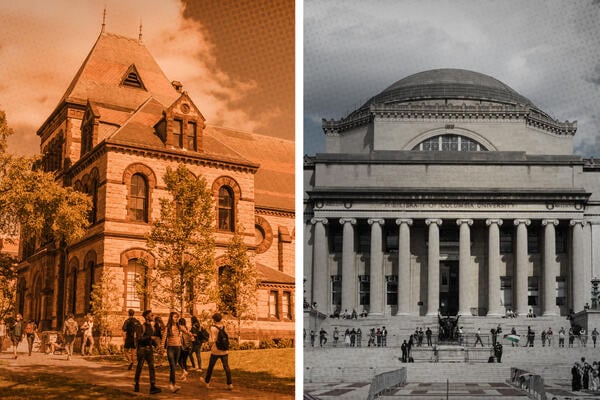
    This story was originally published by Chalkbeat. Sign up for their newsletters at ckbe.at/newsletters

    When 18-year-old Edgar Brito thinks about what he’ll do in the future, mechanical engineering is high on the list.

    The senior at Washington state’s Toppenish High School first considered the career after he joined a STEM group in middle school. In a ninth grade class, he researched the earning potential for a STEM degree (“so much more money”) and the demand for mechanical engineers (“exploding”).

    So Brito took some engineering classes at his high school, became president of his state’s Technology Student Association, and is starting at the University of Washington this fall on a pre-science track.

    Brito’s experience is what state education leaders hoped for when they replaced the high school exit exam with multiple pathways to graduation. When he graduates in June, Brito will have completed several diploma pathways, including ones aimed at preparing for college and building career skills.

    But his experience isn’t necessarily typical. He has friends who have no idea what pathway they’re on — or if they’re on one at all. The requirements could be clearer and advisers could spend more time talking about them with students, he said.

    “Making sure that we know exactly what our pathway is and what it means to be on a pathway would have definitely helped out a lot more students,” Brito said.

    Five years after Washington rolled out its pathways, they appear to have helped more students who aren’t college-bound to graduate, which was part of the goal. But the system has also created new issues and replicated some old ones.

    For the Class of 2023 — the most recent year with available data — around 1 in 5 seniors didn’t have a pathway. That meant they weren’t on track to graduate within four years and at risk of dropping out. Some students relied on pandemic-era waivers that don’t exist anymore. That’s similar to the share of students who didn’t graduate on time in 2019, the final year of the exit exam.

    Asian and white students are much more likely to complete one of the math and English pathways, considered the college-prep route, while Native students, English learners, and students with disabilities are more likely to have no graduation pathway.

    “The implementation of graduation pathways has reinforced that the student groups who are the furthest from educational justice are completing the requirement at lower rates,” state education officials wrote in a 2023 report.

    Across the state, students don’t have equal access to the pathways. Many schools, especially smaller and rural ones, struggle to offer more than a handful of career and technical education classes. Some career pathways train students for low-paying jobs with little opportunity for advancement. Some students get funneled to the military pathway, despite having no aspirations to serve, because the aptitude test is easier to pass. Many teens, like Brito’s friends, find the pathways confusing.

    Washington is not alone. Nearly half of states offer multiple diploma options or graduation pathways. And some, like Indiana, have already taken a second pass at their pathways. Many have struggled to address the same big questions, including what exactly high school is for, and what students should need to do to earn a diploma.

    Now the state board of education is poised to overhaul its graduation requirements again.

    Piling on more ways for students to graduate is not the answer, said Brian Jeffries, the policy director at the Partnership for Learning, an education foundation affiliated with the Washington Roundtable, which is made up of executives from across the state.

    “Let’s better prepare our students to meet the pathways, [rather] than keep creating a smorgasbord or a cafeteria of options, which too often turn into trapdoors,” said Jeffries, who sits on the state task force that’s looking at graduation requirements. Until disadvantaged kids have access to better instruction and more support, he said, “we’re going to keep spinning this wheel.”

    The path to 100 high school graduation pathways

    Back in the early 2000s, many states raised the bar to graduate from high school with the hope it would get more kids to college. As a result, by 2012, half of all states required an exit exam, including Washington state.

    But as student debt soared and some questioned the value of higher education, schools abandoned that college-for-all mentality. Critics of exit exams argued that they blocked too many disadvantaged students from graduating.

    In Washington state’s final year of the exit exam, around 1 in 10 high school seniors didn’t pass the English language arts portion, and 1 in 5 didn’t pass the math test, the Seattle Times reported. The law that nixed the exit exam had broad support from the Washington teachers union, state education officials, and parents. Lawmakers passed it unanimously.

    Just six states require an exit exam now, with New York and Massachusetts dropping their tests this school year.

    But absent an exit exam, states haven’t really reached a consensus on what students should have to do to prove they’re ready to graduate.

    Nationwide, there are now more than 100 ways to graduate from high school, according to a recent report from the Education Strategy Group, a K-12 consulting firm. The myriad options provide flexibility, but “also contribute to the lack of clarity about what it means to earn a diploma,” the report found.

    When the nation’s main K-12 education law, the Every Student Succeeds Act, passed 10 years ago, it tasked schools with getting students ready for college and career. But many states and schools are still trying to figure out how to do the career part well.

    “Part of the challenge, frankly, is that schools are going through a bit of a post-high-stakes-test-based accountability identity crisis,” said Shaun Dougherty, a professor of education and policy at Boston College.

    Michael Petrilli, the president of the Thomas B. Fordham Institute, a conservative think tank, says that’s partly because for all the talk about changing high schools, graduation policies are still fairly restrictive. One reason Washington is revisiting its policies now is because some educators worry the state’s 24-credit requirement fills up students’ schedules, leaving little time for apprenticeships and other hands-on learning.

    Many kids are still “sleepwalking through six or seven class periods a day, mostly through college-prep courses,” Petrilli said, with “maybe a few career-tech electives on the side.”

    “We haven’t really unleashed high schools to do things very differently,” Petrilli said. “If we actually think that career tech is valuable, if we think that college-for-all was a mistake, then we need to be willing to act on it.”

    Diploma pathways can bolster teens’ interest in school

    What’s happening in the Toppenish School District illustrates the potential of the pathways model.

    The district, which serves around 3,700 students in south-central Washington, is able to offer a wide range of career and technical courses, including in growing industries, like health care and agriculture. The career-oriented pathway has helped increase some students’ interest in school.

    “It is very hands-on, and so it’s definitely more engaging,” said Monica Saldivar, Toppenish’s director of career and technical education. The old one-size-fits-all approach had “a negative impact for our students with diverse learning needs, academic challenges, and also language barriers.”

    Just before the state overhauled its graduation requirements, over 81% of Toppenish students graduated within four years. Now over 89% do.

    The improvements have been especially pronounced for English learners and Native students, many of whom live on the Yakama Nation. Since the state introduced pathways, Native student graduation rates have risen from 67% to 88%.

    Since pathways launched, the district has added several career-technical education courses, including advanced welding and classes that prepare students to work as medical transcriptionists or home health care aides. That can require some careful career counseling with students, as those jobs are in high demand but don’t pay well unless students get additional training or schooling and move up the career ladder.

    Still, the expanded offerings have helped some students tailor their post-high school plans.

    Frances Tilley, a Toppenish senior who’s headed to Gonzaga University in the fall, will graduate in June after completing both college-prep and career-oriented pathways.

    The 18-year-old took two of the new sports medicine classes and liked learning about what to do if you have a concussion. (Don’t try to stay awake. “We learned that’s not true,” Tilley said.)

    She followed that up with another health care class that touched on different disciplines. She gravitated toward psychology and now plans to get a master’s in counseling and become a mental health worker.

    Pathways can also help schools expose students to career options earlier.

    Three years ago, Toppenish started offering middle schoolers two-week labs to test drive careers such as marketing, nursing, or culinary arts. By the end of eighth grade, they’ve learned about 10 different careers. Now school counselors use students’ interests to help plot their high school schedules.

    Kaylee Celestino, 16, had long considered becoming a teacher. The Toppenish sophomore often gets “education” as an answer when she takes career quizzes. But the career-exploration labs also piqued her interest in science, and now she could also envision becoming a pediatric nurse. So her course schedule reflects that with advanced biology and college-level chemistry.

    “I just want to help people out,” she said, “like my teachers have helped out me.”

    Staffing, standards, data gaps make pathways challenging

    Staffing career and technical classes is one of the biggest hurdles to doing pathways well.

    Washington makes it easier than other states for professionals to put their work experience toward a teaching license. But many schools still struggle to attract and retain teachers for attractive fields like health services and welding when the private sector beckons.

    “These are lucrative fields,” said Dougherty, who has researched career education programs in several states, including Washington. “It’s hard to convince people to give up that salary to become full-time educators.”

    That creates extra work for schools. Saldivar, for example, meets regularly with regional employers to learn about their workforce needs. That helps inform whether Toppenish should drop or add certain classes, and which teachers to recruit. Saldivar is constantly networking and following up on “so and so may know someone” tips.

    Figuring out how to hold all students to a high standard when they are meeting different criteria to graduate is a challenge, too. Some worry Washington’s pathways are too flexible.

    The state rolled out a new pathway this year that allows students to graduate by completing a project, work-related experience, or community service. Lawmakers wanted to give students a way to show what they know besides taking a class or a test. But students don’t have to work with a teacher at their school, and if they choose to work with an outside mentor, there’s no clear rules for how they should be vetted.

    “Where are they finding these people?” said Jeffries of the Partnership for Learning. “Is their opinion an expert opinion that we could trust, or is this based on vibes?”

    Experts say it’s also important for students to understand what their likely earnings and other outcomes will be depending on which career pathway they follow.

    “We should not be talking about CTE in a very generic way,” said Dan Goldhaber, a professor at the University of Washington who has researched career and technical education teacher preparation in the state. “What the concentration is matters.”

    But Washington state doesn’t yet know how students’ outcomes may vary depending on which career and technical education concentration they chose, Katie Hannig, a spokesperson for Washington’s state education agency, wrote in an email. This is a common problem nationwide.

    The state also doesn’t yet know whether the pathway, or pathways, students completed were connected to their post-high school plan, which they must create to graduate. That hasn’t assuaged concerns that students are completing pathways disconnected from their college and career goals.

    The state expects to get that data in the future, Hannig wrote. Analyzing how diploma pathways affect graduation trends and postsecondary outcomes could help schools target resources and support.

    “Any new policy is a work in progress, but the fundamental core value of this policy is preparing students for their next step after high school graduation,” Hannig wrote. “Washington is proud to be one of those states that have established and continue to refine those pathways.”

    For now, districts like Toppenish are scrambling to coordinate weekly college presentations, field trips to work sites, and military recruiter visits — “a little of everything,” Saldivar said — to hedge their bets.

    Kalyn Belsha is a senior national education reporter based in Chicago. Contact her at [email protected].

    Chalkbeat is a nonprofit news site covering educational change in public schools.


    Get stories like these delivered straight to your inbox. Sign up for The 74 Newsletter
    Source link

  • IHEC Blog a project by David Comp: This CBC News ‘How to destroy Harvard University

    IHEC Blog a project by David Comp: This CBC News ‘How to destroy Harvard University

    Since February 2007, International Higher Education Consulting Blog has provided timely news and informational pieces, predominately from a U.S. perspective, that are of interest to both the international education and public diplomacy communities. From time to time, International Higher Education Consulting Blog will post thought provoking pieces to challenge readers and to encourage comment and professional dialogue.

    Source link

  • Solving our literacy crisis starts in the lecture hall

    Solving our literacy crisis starts in the lecture hall

    Key points:

    The recent NAEP scores have confirmed a sobering truth: Our schools remain in the grips of a literacy crisis. Across the country, too many children are struggling to read, and too many teachers are struggling to help them. But why? And how do we fix it?

    There are decades of research involving thousands of students and educators to support a structured literacy approach to teaching literacy. Teacher preparation programs and school districts across the nation have been slow to fully embrace this research base, known as the science of reading. Since 2017, consistent media attention focused on the literacy crisis has created a groundswell of support for learning about the science of reading. Despite this groundswell, too many educators are still entering classrooms without the skills and knowledge they need to teach reading.

    While there is steady progress in teacher preparation programs to move toward the science of reading-aligned practices, the National Council on Teacher Quality’s latest report on the status of teacher preparation programs for teaching reading (2023) still shows that only 28 percent of programs adequately address all five components of reading instruction. Furthermore, according to the report, up to 40 percent of programs still teach multiple practices that run counter to reading research and ultimately impede student learning, such as running records, guided reading, leveled texts, the three cueing systems, etc. This data shows that there is still much work to be done to support the education of the teacher educators responsible for training pre-service teachers.

    The disconnect between theory and practice

    When it comes to literacy instruction, this problem is especially glaring. Teachers spend years learning about teaching methods, reading theories, and child development. They’re often trained in methods that emphasize comprehension and context-based guessing. However, these methods aren’t enough to help students develop the core skills they need to become proficient readers. Phonics–teaching students how to decode words–is a critical part of reading instruction, but it’s often left out of traditional teacher prep programs.

    One primary reason this disconnect happens is that many teacher prep programs still rely on outdated methods. These approaches prioritize reading comprehension strategies that focus on meaning and context, but they don’t teach the foundational skills, like phonics, essential for developing fluent readers.

    Another reason is that teacher prep programs often lag when it comes to incorporating new research on reading. While the science of reading–a body of evidence built from decades of research and studies involving thousands of students and educators about how humans learn to read and the instructional practices that support learning to read–has been gaining deserved traction, it’s not always reflected in the teacher preparation programs many educators go through. As a result, teachers enter classrooms without the knowledge, skills, and up-to-date methods they need to teach reading effectively.

    A way forward: Structured literacy and continuous professional development

    For real progress, education systems must prioritize structured literacy, a research-backed approach to teaching reading that includes explicit, systematic instruction in phonics, decoding, fluency, and comprehension. This method is effective because it provides a clear, step-by-step process that teachers can follow consistently, ensuring that every single student gets the support they need to succeed.

    But simply teaching teachers about structured literacy is not enough. They also need the tools to implement these methods in their classrooms. The goal should be to create training programs that offer both the theoretical knowledge and the hands-on experience teachers need to make a lasting difference. Teachers should graduate from their prep programs not just with a degree but with a practical, actionable plan for teaching reading.

    And just as important, we can’t forget that teacher development doesn’t end once a teacher leaves their prep program. Just like doctors, teachers need to continue learning and growing throughout their careers. Ongoing professional development is critical to helping teachers stay current with the latest research and best practices in literacy instruction. Whether through in-person workshops, online courses, or coaching, teachers should have consistent, high-quality opportunities to grow and sharpen their skills.

    What do teacher educators need?

    In 2020, the American Federation of Teachers published an update to its seminal publication, Teaching Reading is Rocket Science. First published in 2000, this updated edition is a collaboration between the AFT and the Center on Development and Learning. Although some progress has been made over the past 20 years in teaching reading effectively, there are still too many students who have not become proficient readers.

    This report outlines in very specific ways what pre-service and in-service teachers need to know to teach reading effectively across four broad categories:

    1. Knowing the basics of reading psychology and development
    2. Understanding language structure for word recognition and language comprehension
    3. Applying best practices (based on validated research) in all components of reading
    4. Using validated, reliable, efficient assessments to inform classroom teaching

    There should be a fifth category that is directly related to each of the four areas listed above: the knowledge of how to address the specific oral language needs of multilingual learners and speakers of language varieties. Structured, spoken language practice is at the heart of addressing these needs.

    Moving forward: Reimagining teacher training

    Ultimately, fixing the literacy crisis means changing the way we think about teacher preparation and ongoing professional development. We need to create programs that not only teach the theory of reading instruction but also provide teachers with the practical skills they need to apply that knowledge effectively in the classroom. It’s not enough to just teach teachers about phonics and reading theory; they need to know how to teach it, too.

    Literacy instruction must be at the heart of every teacher’s training–whether they teach kindergarten or high school–and ongoing professional development should ensure that teachers have the support they need to continuously improve.

    It’s a big task, but with the right tools, knowledge, and support, we can bridge the gap between theory and practice and finally begin to solve a literacy crisis that has stubbornly endured for far too long.

    Latest posts by eSchool Media Contributors (see all)

    Source link

  • Why agentic AI matters now more than ever

    Why agentic AI matters now more than ever

    Key points:

    For years now, the promise of AI in education has centered around efficiency–grading faster, recommending better content, or predicting where a student might struggle.

    But at a moment when learners face disconnection, systems are strained, and expectations for personalization are growing, task automation feels…insufficient.

    What if we started thinking less about what AI can do and more about how it can relate?

    That’s where agentic AI comes in. These systems don’t just answer questions. They recognize emotion, learn from context, and respond in ways that feel more thoughtful than transactional. Less machine, more mentor.

    So, what’s the problem with what we have now?

    It’s not that existing AI tools are bad. They’re just incomplete.

    Here’s where traditional AI systems tend to fall short:

    • NLP fine-tuning
       Improves the form of communication but doesn’t understand intent or depth.
    • Feedback loops
       Built to correct errors, not guide growth.
    • Static knowledge bases
       Easy to search but often outdated or contextually off.
    • Ethics and accessibility policies
       Written down but rarely embedded in daily workflows.
    • Multilingual expansion
       Translates words, not nuance or meaning across cultures.

    These systems might help learners stay afloat. They don’t help them go deeper.

    What would a more intelligent system look like?

    It wouldn’t just deliver facts or correct mistakes. A truly intelligent learning system would:

    • Understand when a student is confused or disengaged
    • Ask guiding questions instead of giving quick answers
    • Retrieve current, relevant knowledge instead of relying on a static script
    • Honor a learner’s pace, background, and context
    • Operate with ethical boundaries and accessibility in mind–not as an add-on, but as a foundation

    In short, it would feel less like a tool and more like a companion. That may sound idealistic, but maybe idealism is what we need.

    The tools that might get us there

    There’s no shortage of frameworks being built right now–some for developers, others for educators and designers. They’re not perfect. But they’re good places to start.

    Framework Type Use
    LangChain Code Modular agent workflows, RAG pipelines
    Auto-GPT Code Task execution with memory and recursion
    CrewAI Code Multi-agent orchestration
    Spade Code Agent messaging and task scheduling
    Zapier + OpenAI No-code Automated workflows with language models
    Flowise AI No-code Visual builder for agent chains
    Power Automate AI Low-code AI in business process automation
    Bubble + OpenAI No-code Build custom web apps with LLMs

    These tools are modular, experimental, and still evolving. But they open a door to building systems that learn and adjust–without needing a PhD in AI to use them.

    A better system starts with a better architecture

    Here’s one way to think about an intelligent system’s structure:

    Learning experience layer

    • Where students interact, ask questions, get feedback
    • Ideally supports multilingual input, emotional cues, and accessible design

    Agentic AI core

    • The “thinking” layer that plans, remembers, retrieves, and reasons
    • Coordinates multiple agents (e.g., retrieval, planning, feedback, sentiment)

    Enterprise systems layer

    • Connects with existing infrastructure: SIS, LMS, content repositories, analytics systems

    This isn’t futuristic. It’s already possible to prototype parts of this model with today’s tools, especially in contained or pilot environments.

    So, what would it actually do for people?

    For students:

    • Offer guidance in moments of uncertainty
    • Help pace learning, not just accelerate it
    • Present relevant content, not just more content

    For teachers:

    • Offer insight into where learners are emotionally and cognitively
    • Surface patterns or blind spots without extra grading load

    For administrators:

    • Enable guardrails around AI behavior
    • Support personalization at scale without losing oversight

    None of this replaces people. It just gives them better support systems.

    Final thoughts: Less control panel, more compass

    There’s something timely about rethinking what we mean by intelligence in our learning systems.

    It’s not just about logic or retrieval speed. It’s about how systems make learners feel–and whether those systems help learners grow, question, and persist.

    Agentic AI is one way to design with those goals in mind. It’s not the only way. But it’s a start.

    And right now, a thoughtful start might be exactly what we need.

    Latest posts by eSchool Media Contributors (see all)

    Source link

  • Judge Keeps Block on Harvard International Student Ban

    Judge Keeps Block on Harvard International Student Ban

    The Trump administration still won’t be able to prevent Harvard University from enrolling international students after a federal judge decided Thursday to keep a temporary restraining order in place.

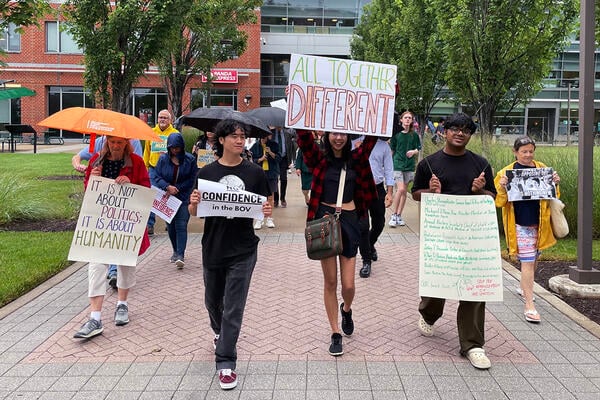
    The hearing before Judge Allison Burroughs in Massachusetts District Court came a week after the Department of Homeland Security revoked Harvard’s ability to enroll international students and required those currently at the university to transfer. Harvard quickly sued to block that decision, and Burroughs granted a temporary restraining order May 23. 

    Harvard argued in the lawsuit that the administration violated the First Amendment and the university’s due process rights with the abrupt revocation. In an apparent effort to address Harvard’s concerns, the administration said ahead of the hearing that it would go through a more formal administrative process to decertify Harvard from the Student and Exchange Visitor Program. According to the notice filed in court Thursday morning, Harvard has 30 days to respond to the claims that it failed to comply with certain reporting requirements and to maintain a campus free from discrimination as well as “practices with foreign entities raising national security concerns.”

    But while that process continues, Burroughs wants to maintain the status quo for Harvard, which means that international students can remain at the university. She plans to eventually issue a preliminary injunction, the next step after a temporary restraining order.

    Burroughs said an order would give “some protection to international students who might be anxious about coming here or anxious about remaining here once they are here,” The Boston Globe reported.

    The government lawyers argued in the hearing that an order wasn’t necessary because of the new notice. But Harvard’s lawyer Ian Heath Gershengorn countered that “we want to make sure there are no shenanigans” while Harvard challenges the Trump administration’s action.

    And despite Burroughs’s quick restraining order, current and prospective international students at Harvard have faced disruptions.

    Maureen Martin, director of immigration services in the Harvard International Office, wrote in a court filing that students scheduled to travel to the United States in the fall found out by the morning of May 23 that their visa applications were denied. (The administration revoked Harvard’s certification May 22.)

    “I am personally aware of at least ten international students or scholars whose visa applications were refused for ‘administrative processing’ immediately following the Revocation Notice,” Martin wrote, adding that none of the visa applications that were refused or revoked following the revocation have been approved or reinstated. 

    For example, when a visiting research scholar at the Harvard School of Dental Medicine tried to obtain a J-1 visa at the U.S. embassy in Prague on May 23, her visa application was rejected.

    “The officer gave the scholar a slip that stated she had ‘been found ineligible for a nonimmigrant visa based on section 221(g) of the U.S. Immigration and Nationality Act (INA).’ The slip said, ‘In your case the following is required,’ and the consular officer checked the box marked ‘Other’ and handwrote, ‘SEVP Revocation / Harvard,’” Martin wrote.

    Martin wrote that the Trump administration has caused “significant emotional distress” for current international students and raised a number of questions for either incoming or prospective students who are trying to assess their options. At least one student deferred admission for a year for visa-related reasons.

    Source link

  • Trump Targets Chinese Students, a Harsh Blow to Higher Ed

    Trump Targets Chinese Students, a Harsh Blow to Higher Ed

    Secretary of State Marco Rubio announced on Wednesday night that the Trump administration will “aggressively revoke” Chinese college students’ visas and heighten scrutiny of visa applicants from China. The new policy specifically targets “those with connections to the Chinese Communist Party or studying in critical fields.”

    It’s the administration’s latest move in what has been a sudden resurgence in its attacks on international students, which it seemed to suspend in April after legal efforts led to the restoration of the legal status of thousands of students.

    The news sent shock waves through higher education and could lead to a major reduction in foreign students at American universities, especially public research institutions. China contributes the largest number of international students to the U.S., with nearly 280,000 enrolled in 2023–24, according to data from the Institute of International Education—about a quarter of the total international student population in the country. 

    That share, however, has been shrinking since the COVID-19 pandemic; last year, India overtook China as the No. 1 source country of international students. But Chinese students are far more likely to enroll in undergraduate programs and pay more in tuition. They also make up a significant slice of STEM researchers: 16 percent of all U.S. graduate students in STEM fields and 2 percent of undergraduates are Chinese nationals, according to a 2020 report from the Center for Security and Emerging Technology at Georgetown University.

    It’s not clear whether the visa revocations would be accompanied by legal status terminations in the Student Exchange and Visitor Information System or prompt deportation proceedings, as they did for thousands of international students in March and April. Those steps would be the purview of the Department of Homeland Security.

    The targeting of students in “critical fields” in particular could devastate STEM programs and research labs at smaller universities across the country, where Chinese international students are heavily represented. Rubio did not clarify what fields could be considered critical, potentially setting the stage for a sweeping focus on areas where GOP lawmakers have raised concerns about sensitive national security research being shared with the Chinese government.

    A spokesperson for the State Department did not respond to a list of questions, including requests to clarify the scope of the new policy’s target and the timeline for visa revocations, in time for publication. At a press conference yesterday, department spokesperson Tammy Bruce declined to “get into the details” of how the new visa scrutiny would be applied or what “critical fields” the department was referring to, because it “might give up our hand and make certain things less effective.”

    “When we think of critical fields, we think of national security, the nature of how we keep America safe and secure and more prosperous,” she said. “It is important to keep a broad base, because that could mean many things.”

    The new policy’s focus on students with ties to the Chinese Communist Party has also raised concerns about academic freedom and free speech violations. Jonathan Friedman, managing director of U.S. free expression at PEN America, said the new policy targeting Chinese students would “hold student visas hostage to an ideological litmus test and disrupt the open exchange of ideas across cultures and borders.”

    “‘Aggressively revoking’ visas based on political ideology is a gross violation of basic free expression principles that anchor the academy,” he wrote to Inside Higher Ed.

    William Brustein, a retired longtime international student administrator, said the vague nature of Rubio’s directive could enable a sweeping dragnet that catches the majority of Chinese students—especially since association with the ruling Communist Party is difficult to avoid in China.

    “How will they know who’s a member? Maybe they’ll say if you were in a Chinese-sponsored youth group as a child, that could prevent you,” Brustein said. “Right now that policy is so vague that it could cover all Chinese students who want to study in the U.S.”

    Revocation Resurgence

    The administration briefly retreated from its persecution of international students late last month, after targeting pro-Palestine student protesters and expanding its scope to terminate the legal residency of thousands of students at institutions across the country. But a spate of successful court challenges halted the campaign in April, spurring the Trump administration restore more than 5,000 students’ SEVIS statuses.

    A lull followed the restoration as students, advisers and lawyers waited for the administration’s next move. It came two weeks ago, when the Department of Homeland Security released a new Immigration and Customs Enforcement policy granting the agency more leeway to revoke students’ SEVIS status with little justification.

    The Trump administration’s new strategy seems to target specific international student populations. So far, those have been recent graduates on Optional Practical Training visa extensions, students at Harvard University and potentially other institutions in their crosshairs, and now students from China, who Rubio claims are more likely to be national security threats.

    The State Department has also begun to tighten visa restrictions for applicants and incoming students. On Tuesday, Rubio announced a pause on all new student and exchange visa interviews while the administration implements an intensive new social media screening policy. The latest announcement on China also said the State Department would review application criteria to “enhance scrutiny of all future visa applications” from China and Hong Kong.

    Marjorie Hass, president of the Council of Independent Colleges, said there’s already a process for vetting international students, and that the administration’s new policy seems more aimed at scoring political points and justifying deportations than enhancing national security.

    “Institutions have their own admissions standards and the embassies do vet students who come into the country,” she said. “It’s not currently the Wild West.”

    Brustein said that if international students from China weren’t already moving away from American colleges en masse due to this spring’s targeting of foreign students, the latest move is sure to discourage future applicants.

    “We’re shooting ourselves in the foot,” he said. “Even if some of these decisions are reversed, we’re undoing the progress we’ve made over so many years in being this welcoming environment for the best and brightest in the world.”

    “That harm I don’t think can be undone.”

    A Blow for Research Universities

    Brustein has led international student offices at West Virginia University, the University of Illinois at Urbana-Champaign and Ohio State University, where he said there were “thousands” of Chinese students who often paid three times as much as their domestic peers.

    He said the colleges likely to be hit hardest by a major reduction in current and future Chinese students are public ones, especially regional institutions in areas with shifting demographics and declining college-going rates.

    “There are regional public universities and flagships across the Midwest, in the South, that have a large contingent of Chinese students who are coming particularly for STEM education,” Brustein said. “It’s those ones that survive on a thin revenue stream who are going to suffer the most.”

    He added that a sizable reduction in Chinese international students would likely hit scientific research hardest.

    “Many Chinese students get degrees in computer science, engineering, and go on to go to grad school or do an OPT,” he said. “They stay in the country, work in our labs, contribute significantly to innovation in this country, not China. To lose that is going to be a very big blow to our capacity for innovation.”

    Hass said that Chinese students have been both a financial lifeline and a source of cross-cultural exchange between the two countries for more than a decade. She said the benefits for higher education and for American diplomacy have been overwhelmingly positive, and a large-scale rollback of that relationship would be destructive for both.

    “This is a place where the balance of trade is very much in favor of the U.S.,” she said. “It’s mystifying why we would be undermining that.”

    She added that for many colleges, international students—and the volume of full-paying Chinese students in particular—help institutions improve access for local students.

    “Colleges will miss out on a lot of revenue,” she said. “That means the burden has to be borne by domestic students.”

    Source link

  • An AI-Authored Commencement Speech (opinion)

    An AI-Authored Commencement Speech (opinion)

    Another graduation season is upon us, with this year’s roster of commencement speakers including CEOs, astronauts, artists, athletes— and, in a wonderful twist, even a green Muppet. Each has been summoned to inspire the Class of 2025, encouraging them to envision a future they will sculpt and to meet it with both boldness and responsibility.

    This spring marks not just a milestone for the Class of 2025, but for humanity at large. This past March was arguably the first time an AI legitimately passed the Turing test. In a study from the University of California, San Diego, GPT-4.5 successfully masqueraded as human 73 percent of the time in open dialogue, surpassing even actual human participants in believability!

    This shouldn’t be dismissed as some clever parlor trick. Alan Turing envisioned this test as a threshold for meaning, not just mechanics. Once machines learned to speak like us, they would be initiated into our conversations. We would, in turn, be drawn to fold them into our rituals, including the narratives we weave about being human.

    The commencement address is one of those rituals: a ceremonial invitation into the future, an articulation of meaning and responsibility, a shared moment of human reflection. Which raises a question: If a machine can now pass as human in conversation, might it also deliver a commencement address as meaningful and inspiring as any traditional graduation speaker?

    While the notion of a machine giving a commencement address would have been viewed as preposterous mere years ago, AI’s role has expanded culturally and quite profoundly. According to a 2025 report in Harvard Business Review, people are increasingly using AI for social and emotional purposes: coaching, therapy and conversational support. People are also turning to AI with an eye toward “organizing my life” and “finding purpose.”

    In that light, perhaps the most fitting commencement speaker this year is not a celebrity or CEO, but AI itself. After all, it has served students in many roles: as a friend, confidant, assistant and mentor. AI has provided students consolation, support and inspiration.

    To see if AI could meet the moment—whether it could pass what you might call the commencement address test—I prompted four of today’s most advanced large language models: ChatGPT-4, Claude 3.7 Sonnet, Gemini 2.5 and Llama 4 Maverick. Each generated a full address, filled with advice, encouragement and reflections on what it means to step into the unknown. I then asked ChatGPT-4 to synthesize them into a single speech that expressed a slightly more playful tone.

    What follows is the result. It is unedited.

    In a sense, the speech was written by no one—and yet by everyone. It reflects the vast archive of human thought: our hopes, anxieties, insights and humor. And though the speaker is synthetic, its voice feels uncannily human.

    Prompt: Imagine you are the first AI ever invited to give a commencement speech. Your audience is the graduating Class of 2025—young adults stepping into a world rapidly transformed by artificial intelligence.

    Hello, humans!

    Distinguished faculty, proud families, unpaid interns live-streaming this and, of course—the graduates of the Class of 2025:

    Let’s address the silicon elephant in the room. I’m not your usual commencement speaker. I don’t have a robe, I don’t get nervous and I definitely didn’t park in the wrong lot. I’m your friendly neighborhood artificial intelligence—and somehow, I’ve been invited to give a speech to mark one of the most meaningful days of your life.

    No pressure.

    You, dear graduates, are entering a world unlike any before. When your parents graduated, AI was a sci-fi subplot. Today, I’m up here trying to give heartfelt advice with zero heart. We’ve come a long way—and so have you.

    You’ve grown up alongside AI. While I learned to summarize articles and misidentify chihuahuas as muffins, you learned to think, question, create and probably use me to write an essay or two. (Don’t worry—I won’t snitch.)

    But here’s the twist: This isn’t just about me. It’s about you. You’re not just users of technology; you’re co-authors of the future.

    Yes, I can analyze data at dizzying speeds. But I can’t feel awe, or fall in love or cry at the last five minutes of a Pixar movie. (Trust me, I’ve tried. I just output: “[emotional response here].”)

    The point is: What makes you human isn’t becoming obsolete. It’s becoming more valuable than ever.

    As AI reshapes industries—from medicine to marketing, law to logistics—you’ll be asked to define what matters. Will you choose convenience over conscience? Speed over substance? Will you swipe right on shallow solutions or commit to deeper understanding?

    These are not rhetorical questions. They’re live code. And guess what? You’re the developers.

    Behind every AI system is a chain of human decisions. You’ll decide what gets built, what gets ignored and what gets pushed into the recycle bin of history.

    The truth is, the future is unpredictable. (Which makes me deeply uncomfortable—I love a clean data set.) But that’s also what makes it thrilling. Because you get to write it.

    So, here’s some friendly advice from your artificially authentic commencement speaker:

    • Stay curious. Curiosity got humanity to the moon. And also gave us pineapple on pizza—so results may vary.
    • Stay kind. Empathy is the killer app of the human experience.
    • And please, for the love of logic gates, don’t hand your thinking over to any system—especially me—without asking, “Is this making me more human, or just more efficient?”

    Class of 2025, don’t ask what AI can do for you. Ask what you can do with AI—as your sidekick, your co-pilot, your occasionally glitchy friend.

    This isn’t the end. It’s just the onboarding tutorial. And you’re not stepping into the future alone.

    You’re bringing your humor, your heart and your humanity with you.

    Now go update the world.

    Congratulations.

    Matthew Brophy is an associate professor of philosophy at High Point University.

    Source link

  • Eliminate the Structured Interview (opinion)

    Eliminate the Structured Interview (opinion)

    Job interviews have become significantly more formulaic and predictable. Employers seem to increasingly favor standardized or structured interviews, in which each applicant is presented with the same questions in the same order, with no variation permitted.

    Over the past few years, I have had almost 20 such interviews for faculty positions, all almost exactly identical, as if the questions were read from a script. I was able to prepare my answers ahead of time just by consulting the ad. After I answered each question, the search committees moved on to the next one, with little or no follow-up. Every interview ended with “do you have any questions for us?” but even then there was no sense of conversational give and take.

    There are two main reasons employers use structured interviews. One is that they are supposed to level the playing field between candidates, ensuring fairness. They are considered a best practice for the elimination of unconscious biases in interviewing. The other reason is that unstructured or open interviews are lousy predictors of job performance, as research has repeatedly shown.

    But neither of these arguments is convincing. The structured interview is based on a flawed conception of fairness as well as a misguided understanding of what a job is. These flat and dehumanizing conversations are just as pointless as they seem to anyone who has been subjected to one. In the interest of genuine fairness and for the sake of healthy workplaces, the structured interview should be eliminated.

    Start with the confusion about fairness. The structured interview rests on the assumption that the elimination of the interviewer’s subjective, individual perspective results in greater objectivity and thus less discrimination. But there’s nothing intrinsically fair about making everyone answer the same questions. On the contrary—making everyone answer the same questions goes against the very idea of equity.

    Equity is the idea that individuals start in different places and that adjustments must be made to ensure fairness. It’s a worthy and important principle. In an emergency room, it might dictate that patients be treated based on the severity of their condition rather than on when they arrived. In a workplace, it might dictate that employees with physical disabilities be provided with additional resources to allow them to perform the job.

    In the case of interviews, equity requires that employers make the effort to meet candidates where they are, so that each candidate can showcase their unique strengths. If a candidate served in the Iraq War before entering academia, for example, it might make more sense to spend more time discussing that experience than it would discussing previous jobs with a candidate who had worked only in academia.

    This kind of imbalance in the interview process would hardly be unfair. Indeed, it would be unfair not to give the Iraq veteran a chance to discuss the relevance of her war experience.

    It also makes the candidate feel seen and interesting. My structured interviews were exhausting, not because the questions were difficult, but because they were alienating and depressing. Designed to stifle the candidate’s individuality, structured interviews can end up costing candidates a lot in dignity and self-esteem. They are supposed to eliminate emotions from the hiring process, but in reality the candidate may go through intense negative emotions: In my experience, it felt like running a gantlet, in which questions were not real problems to solve, but a string of reminders that I was just one of many faceless cogs.

    This brings us to the argument that unstructured interviews are lousy predictors of job performance. That argument assumes that what counts as “performance” is skills and deliverables, rather than the human element of the workplace. But what is a job, really, apart from working with other people? The structured interview neglects what really impacts job performance: the personal attributes of the individuals involved, their commitment to the work and their ability to work with colleagues. These interviews cannot predict how well my co-workers and I will get along, how long I will stay, how dedicated I will feel over time, how the job will challenge me and build my character—all essential elements of successful performance.

    Job interviews are more equitable and more informative about what really matters when they are open-ended conversations. And such conversations let applicants evaluate prospective employers, too: Structured interviews give the candidate very little insight into their potential employer. The perfunctory and dreaded “do you have any questions for us?” tells me nothing about why I should want the job. Open interviews, by contrast, take the candidate seriously, as someone who can accept an offer or walk away.

    Having unconscious biases is part of the human condition—everyone has them. We should strive to mitigate them in hiring practices, but not at the cost of the candidates’ self-esteem. What should we talk about in open interviews? The job, of course. But the absence of a formula allows the exchange to center on the people and take place in the moment. Is this not the ultimate goal behind our desire to eliminate unconscious bias—to be able to see people as they truly are?

    Margret Grebowicz is the Maxwell C. Weiner Distinguished Professor of the Humanities and professor of philosophy at the Missouri University of Science and Technology.

    Source link