Tag: News

  • Colby College Goes All In on AI

    Colby College Goes All In on AI

    Since 2022, there’s been a surge in the number and types of applications using generative AI, but not all tools are the same. So how can faculty, staff and students learn to identify the differences and determine when it’s appropriate to leverage these tools?

    Colby College developed a platform, called Mule Chat, that allows users to explore several large language models, including ChatGPT, Gemini, Claude and LLaMA. The platform provides a safe on-ramp into generative AI usage and relies on student tutors to disseminate information to peers.

    In the latest episode of Voices of Student Success, host Ashley Mowreader speaks with David Watts, the director of Colby College’s Davis Institute for Artificial Intelligence, and Michael Yankoski, Davis AI research and teaching scientist, to learn about the college’s AI institute and how Mule Chat works.

    An edited version of the podcast appears below.

    Inside Higher Ed: Can we start the conversation by talking a bit about what AI at Colby College looks like? What is the landscape you’re working with and how are you thinking about AI when it comes to teaching and learning?

    David Watts: I am new to Davis AI, as we call it at Colby, but the [Davis AI] Institute has actually been around since before ChatGPT, so Colby kind of had a pioneering approach.

    David Watts, director of the Davis Institute for AI at Colby College

    Colby is a small liberal arts college, and they had the vision that this was going to be around for a while. And rather than, as most institutions were doing, sort of keep it at bay or ban it from campus, Colby dove in and wanted to engage with it and understand how it is going to impact education.

    I spent most of my career in industry, mostly in research and development, and so I when I wanted to make the jump over to academia, I wasn’t expecting to find that small liberal arts colleges had done this, and when I saw what Colby had done, I was really drawn to it and came over. So I’ve really loved what has been going on and what continues to go on at Colby with the Davis Institute for Artificial Intelligence.

    Inside Higher Ed: Michael, your role puts you directly in connection with faculty when it comes to integrating AI into their classrooms or into their programs. Can you talk about what that looks like and how maybe that looks different at a liberal arts institution?

    Michael Yankoski smiles for a headshot wearing a black collared shirt

    Michael Yankoski, research and teaching scientist, Davis Institute for AI at Colby College

    Michael Yankoski: One of the most amazing aspects of the Davis Institute for Artificial Intelligence here at a place like Colby is the liberal arts approach that the institution as a whole is able to engage with.

    That means that we’re able to facilitate conversations from a multiplicity of different disciplines and bring faculty together from different approaches across the divisions in the college—from the STEM fields to the humanities to the social sciences. And have really productive, very generative conversations around ways to engage with artificial intelligence and the shared learning and shared knowledge of people who have been really pioneering in the area. To able to say, “How can I integrate generative artificial intelligence with my pedagogy? How can I help think with students about how to engage these technologies in a way that is beneficial for their education, help empower students in their education and then on the research side?”

    Many faculty with whom we work at the Davis Institute are exploring ways to integrate artificial intelligence in their research program, and to say, “Is there a way that artificial intelligence can help me accelerate my research or take my research in new directions?” The opportunity to bring people together to discuss that and to facilitate those conversations across the disciplines is one of the best aspects of the liberal arts approach to artificial intelligence.

    Inside Higher Ed: Does Colby have an institutional policy for AI use, or what appropriate AI use looks like?

    Watts: It’s a moving target. Anyone who tells you they have it all figured out is probably embellishing. It is a moving target, but one of the things we did was make sure we engage faculty, and in fact, we started with faculty, then we engaged administrators, we engaged students and we engaged general counsel, and evaluated what the challenges are, what the downsides are. And we made sure that we built what we call guidelines rather than policy.

    The guidelines talk through the dos and don’ts but also leave enough flexibility for our faculty to think through how they want to engage with AI, especially since AI is a moving target, too. As we grow and learn with our faculty, we adapt and adjust our guidelines and so they’re out there for everyone to see, and we will continue to evolve them as we move forward.

    Inside Higher Ed: Can you introduce our listeners to Mule Chat? What is it and how does it work on campus?

    Watts: Michael has been here and was one of the originators of creating Mule Chat on campus. And so he can tell you a lot of the details and how it’s been working.

    But what I loved about what Michael and the team did, and it was a collaborative effort, was to create, I’ll call it an on-ramp. We were working towards moving the needle from banning AI, as one extreme, to engaging with AI and creating a tool that allowed faculty, students and staff to all easily engage with multiple tools through Mule Chat.

    It lowered the activation barrier to entry to AI and allowed us to have an on-ramp for people to come in and start seeing what the possibilities are, and it has worked brilliantly.

    Yankoski: The idea behind Mule Chat originally was to provide a place for students, faculty and staff to begin to get experience with and understanding around generative AI. To provide a space where folks could come and understand a bit more about, what are these tools? How do they work? What are they capable of? What are some of the areas we need to be aware of, the risks and the best practices, and how can we provide this on-ramp, as David described, for people to be able to engage with generative artificial intelligence?

    This is about student success, empowering students to understand what these technologies are, what they’re good at, what they’re not good at. And then also, one of the key principles here was equity of access. We wanted to ensure that anybody on Colby’s campus, regardless of whether they could afford one of the premium subscription services, was able to get access to these frontier models and to understand how to then do the prompt engineering work, and to then compare the kinds of outputs and capabilities of some of the frontier models. And so really, the core sort of genesis and driving desire for the creation of Mule Chat was to provide this on-ramp that would empower student success, allow equity of access, and also would provide a safe and secure place for people to be able to engage these technologies and to learn.

    Inside Higher Ed: Can you describe the functionality of Mule Chat? For someone who has never experimented with LLMs, what does it look like or feel like to engage with Mule Chat?

    Watts: You touched on something really great there, because that was part of the idea. We introduced multiple models into Mule Chat so that people could compare and get an idea of what it’s capable of and what it’s not capable of.

    I’ll give an example of a faculty member who we are working with right now who started with Mule Chat, engaged with it in their preparation—this is a professor of East Asian studies—how they prepare their classes, realized what the capabilities were, started doing more with it, with their students. The students then brought interesting ideas about what else we can do and pushed beyond even the limits of Mule Chat. And then Davis AI can go help them bring in, for example, they were looking at—not only just looking at old archives and using that in their teaching of East Asian studies, but also bringing in video capability, for example, and in fact, even creating new videos or some of the research that they’re doing now, bringing in more capabilities above and beyond Mule Chat. So it is exactly what Michael was saying, an on-ramp that then opens up the possibilities of what we can do with AI in higher education.

    Yankoski: I think the real value of the Mule Chat interface is that it allows people to compare the different models.

    Folks can use prompt engineering to compare the outputs of one model and then put that alongside the outputs of another model and be able to observe the way that different models might reason or might do their inference in different kinds of ways.

    That side-by-side comparison is a really powerful opportunity for people to engage with the different models and to experience the different kinds of outputs that they create. To build on what David was saying, the ability to then put other tools [like videos] inside of the Mule Chat platform, that allows for deeper research into particular areas. For example, we have a tool that we built, which is called Echo Bot.

    The Colby student newspaper is called the Colby Echo, so we’ve been able to bring all the archives of the Echo into a tool that allows students and faculty researchers to engage with those archives and chat with the entire archive of the Colby Echo. We’ve been working closely—and this goes back to the liberal arts approach—with different faculty across campus, as well as the college libraries, to bring this tool online and make it available within the Mule Chat system.

    Inside Higher Ed: Let me know if you can build me an IHE bot, because I can never find anything in our archives. I could really benefit from something.

    Watts: We can brainstorm on that.

    Inside Higher Ed: Great, we’ll talk about licensing later.

    I wanted to ask, it seems there’s a new AI tool that pops every other day. So when you’re talking about comparing different tools and thinking about what might be most relevant for students, how often are you scouting out the landscape to understand what’s out there and relevant?

    Watts: That’s a great question, and actually extremely important that we do that.

    Not only are we reaching out and finding, reading, learning, attending conferences, helping to create conferences ourselves that bring in people and experts who are different perspectives, but we also then have lots of people on campus who have their own ideas. People come to us regularly with, “Oh, look at this cool tool. We should use it for this thing on campus.”

    And that’s when we use that for educating people about some of the potential pitfalls that we have to watch out for, talking about guardrails and when you’re bringing in new capability, just like you had to think about when you’re bringing in new software. But I think it’s even more imperative that we’re very careful about what AI tools we bring into campus. You’re absolutely right that there are tons of them that all have different capabilities. But one of the things we try to teach is that there’s a full spectrum: the great, the good, the bad and the ugly. You have to think about that entire spectrum. And that’s one of the beauties of what I loved about coming to a liberal arts college was that you have multiple perspectives, and coming from all forms of disciplines in the humanities, the arts, the natural sciences, the social sciences, and all are engaged and can be engaged across AI.

    Yankoski: I think that’s what’s so unique and really powerful about the Davis Institute for Artificial Intelligence approach. When we work with faculty and students and really, if some faculty member or student has an idea that they want to explore, we have structures that allow for technology grants, for faculty to be able to come and to propose the use of a new tool, or to advance their teaching or to advance their research.

    Then that’s a great opportunity to engage with that faculty member and perhaps their research assistants, and work with those students and that faculty member to explore the possibility of using that tool. Each faculty member knows their domain so much better than we do. As the core Davis AI team, we’re able to work with that faculty and those students to better understand the use case, better understand the tools that they want to engage, and then work with them to consult and to create a pathway forward. That’s an incredible opportunity as well for the students to understand, how do we think about the security of the data? How do we think about the processing pipeline? How do we think about the best practices with regards to utilizing artificial intelligence in this particular domain?

    Really that’s about student empowerment and student success as they get ready to transition out of college into an economy where increasingly expectations around knowledge and the ability to utilize and to vet artificial intelligence are only going to increase.

    Inside Higher Ed: How are students engaged in this work?

    Yankoski: One the most intriguing aspects of Mule Chat has been that students have been really leading in teaching and empowering other students to utilize the tool and to understand the quantum engineering aspects and to understand the different models.

    The student leaders have been working with Mule Chat and then actually teaching other students, teaching faculty and helping lead the sessions, as well as working on their own projects within Google Chat. So it’s been a really strong and quite incredible platform for student engagement and student empowerment as students learn from one another and then are able to learn how to teach about these tools to their peers.

    Watts: That’s absolutely a huge part of what we did, and I mentioned that, even though students come first, we started working to move the needle with faculty first on purpose, with students in mind. And then we branched out into, now we can engage the students. Once you have enough buy-in from faculty, start engaging the students, and we’ve been doing a lot of that.

    Then what’s beautiful, the magic happens when the students start coming up with thoughts and ideas that grow in ways that faculty haven’t thought of. Because remember that a lot of this is new to faculty as well.

    So we actually then will identify key students that we have been working with and actually hire them on board as Davis AI research associates that then help us continue to move the needle, because there’s nothing better for students than to hear from other students about what’s possible. And the same goes for faculty, by the way. So, you know, Michael was mentioning a little bit about our strategy with faculty and how we engage them. But a part of what we do is faculty sessions. We give them creative names like “Bagels and bots,” and we include food and then we have those sessions where faculty talk to faculty. We do the same with the students, so students can talk to students. And it’s just wonderful to see the magic that happens when that begins to grow organically.

    Inside Higher Ed: What has the reception been to Mule Chat?

    Watts: Most people were skeptical [of AI] early on; most were in the mode of “push it away.” I think that drove some interesting behaviors in faculty and students.

    So a big part of what we’ve been trying to do is essentially drive towards AI literacy for all. And when I say all, it’s an interdisciplinary approach. We’re looking across the entire campus, and so all students in all departments are what we’re driving towards. Now, you correctly point out that there will always be skeptics. I will strive for 100 percent, but if we asymptotically approach that into the future, I’ll live with that.

    The goal is to prepare students, and that’s who we need to make sure that we’re preparing for the life they’re going to go into that’s been transformed by AI, that touches everybody. One of the cool things is we’re giving out grants to faculty to engage with AI and come up with ideas, and we’re doing that on multiple levels, and those faculty are now coming from all. We have art professors. We have writing professors. We have East Asian studies. We have professors from government, we have all of them engaging and so we’ve been able to, therefore, move the needle quite a bit so that a lot more people are a lot more receptive and open to it on campus, which is great.

    Inside Higher Ed: You mentioned that Colby has a faculty-led approach, but sometimes that means that students from specific majors or disciplines might be less exposed to AI than others, depending on who their faculty are. It seems like you all are taking a balanced approach, not only encouraging enthusiastic AI entrepreneurs but also working with the skeptics.

    Watts: It’s absolutely critical that we work on both ends of that spectrum, if that makes sense. We’re driving great innovation, and there’s great examples of research right here on campus that are doing wonderful things in an interdisciplinary way.

    We just won an NSF grant for ARIA, an NSF institute looking at AI assistance in mental health, because that’s one of the most challenging spaces for how the models interact with people with mental and behavioral health challenges. It’s a perfect example of our interdisciplinary approach, with a professor from psychology working with a professor from computer science to go tackle these challenging areas. And I think that’s one of the things that Colby has done well, is to take that broader, interdisciplinary approach. Many people say that word now, but I think the liberal arts are primed for leading the charge on what that’s going to look like, because AI, by its nature, is interdisciplinary.

    Inside Higher Ed: What’s next on campus? Is there any area that you’re all exploring or looking to do some more research in, or new tools and initiatives that our listeners should know about for the future?

    Watts: We’re consistently evaluating that and bringing them in. What we’re trying to do is let it grow based on need as people explore and come up with ideas.

    I mentioned the video; we’re now enabling video capability so we can do some of that research. It also opens up more multimodal approaches.

    One of the approaches to the ARIA research, for example, is we want to be able to detect and therefore build context-aware assistance to have better results for everyone. So if we can solve the mental and behavioral health challenges, it’s probably one of the most difficult ones. It can also solve some of the other areas of underrepresented people who are left out or underrepresented groups who are left out of training, for example, which can lead to challenging behaviors.

    I’m really excited about all of those possibilities and the areas that allow us to enable. We talked about access, we can also talk about accessibility.

    We have on campus the Colby College Museum of Art; one of the faculty in computer science is exploring accessibility options using AI with a robotic seeing-eye dog. If someone wanted to visit the museum who was blind or visually impaired, they could interact with a seeing-eye dog that they’re used to, but this seeing-eye dog now might have more capability to communicate with people about what they’re seeing and in a museum setting, for example.

    So really excited about that type of research: how do we really benefit humanity with these types of tools.

    Inside Higher Ed: One thing I wanted to ask about is resources allocated from the university to be able to access all these tools. What investment is the college making to ensure that students are able to stay on the cutting edge of AI initiatives?

    Watts: That’s absolutely critical. We want to make it no cost to our students and accessible to our students, but it still costs. So [it’s vital to] make sure that we have funding.

    We were very lucky that we got a Davis endowment that enabled us to build the Davis Institute. That was huge because, and you can think about some of the challenges with federal funding and all of that stuff, but to have an endowment that allowed us to draw on that and really build strong capabilities at Colby College was critical. But you’re touching on the fact that we’re going to need to continue to do that. And that’s where, for example, the NSF grant and other grants that we will continue to explore will help us with how we continue to grow our impact and grow our value as we head into the future.

    Source link

  • What If We Ranked Colleges on Voting Rates?

    What If We Ranked Colleges on Voting Rates?

    Rating colleges against each other is a tricky enterprise on a good day. For community colleges it’s particularly vexed, given how intensely local they are and the simple fact that most of them don’t compete with each other. If, say, a community college in Illinois or Arizona does something terrific, I don’t feel threatened by it; our students in Pennsylvania aren’t going to move there in large numbers based on ratings.

    Still, the lure of lists is powerful. The new Carnegie classifications, as outlined by Inside Higher Ed, rate community colleges largely by the subsequent earnings of their students compared to local labor markets. The article outlines one key objection based on economic geography: In some parts of the country, the median wages and cost of living are so high that even students coming out of very successful vocational programs will struggle economically at first.

    It’s similar to the objection I noted a few years ago to the “social mobility” ratings that Washington Monthly offered, in which colleges were graded based on how many quartiles of income their students jumped. To score really well on that metric, you’d better have most of your students start in the bottom quartile. A college located in an area with more students in the second quartile simply couldn’t compete, no matter how well it did its job.

    The measurement error in this case is more well-meaning than in many others, but it’s still an error. And I’m still unconvinced that it adequately captures the value of students who transfer, whether with a degree or just with a bunch of classes.

    Presumably, those objections could be incorporated into a more refined effort. But even the objections implicitly concede that the only relevant scale on which to measure education is income. Postcollege income matters, of course, but it’s not the only thing that matters. If it were, we would stop training early-childhood teachers and social workers immediately.

    Part of the attraction of measuring income is that it’s quantifiable. Even I sometimes get twitchy when academics refer to the “ineffable” benefits of something; it can be hard to disentangle idealism from wishful thinking. But some noneconomic benefits of higher education are relatively easy to quantify in the short term.

    What if we measured colleges on the voting rates of new graduates?

    Voting is quantifiable, at least for now. It’s a basic form of adult civic engagement. It doesn’t rely on economic cycles that can wreak havoc with starting salaries. And we know from decades of political science that on average, people who vote are more knowledgeable about politics and social issues than people who don’t. (Contrary to popular myth, people who consistently vote a party line are more informed on average than ticket-splitters, but that’s another article.)

    Voting rates also wouldn’t be distorted by the low earnings of students who transferred and are in their junior or senior years of college when surveyed. Yes, voting rates are higher in presidential years, but presidential years happen at the same time for every college in the country, so they wouldn’t affect comparisons between institutions.

    If we took postgraduation voting rates seriously, colleges would be incentivized to improve the civic literacy and involvement of their students. That strikes me as an excellent outcome. That’s especially true for community colleges, given that their student bodies are much more representative of America than the elite selective universities.

    Community colleges train, yes, but they also educate. Why not educate for democracy? And why not support—with funding and publicity—the colleges that do a particularly good job of that?

    Source link

  • Courses Studying Trump Proliferate, Risking President’s Ire

    Courses Studying Trump Proliferate, Risking President’s Ire

    Donald Trump’s second term in office continues to confound onlookers. Yet a growing number of universities around the world are offering courses for students to try to make sense of the mercurial president.

    The University of Pennsylvania has launched Climate and Environment Journalism: Truth-Telling in the Trump Era through its English department and American Conservatism From Taft to Trump for political science students. The New School’s Donald Trump as History module will aim to explore the “Trump phenomenon” and how it alters views of U.S. history, while the University of Washington offers a special Trump in the World module.

    Universities outside the U.S. are also involved. First run in 2017, Trumpism: An American Biography is an optional module for second-year history students at the University of Sheffield, which explores how U.S. history can shed light on the present.

    Andrew Heath, lecturer in U.S. history at Sheffield, told Times Higher Education that part of the module’s purpose was to get students thinking about the history of terms such as populism that are “often thrown around in the media to make sense of Trump and Trumpism,” and to encourage them to think critically about the way that comparisons are invoked.

    But teaching about such a fast-moving political situation is not easy. “It’s a module that always poses challenges—readings can quickly feel dated; teaching it in an election year last time around was harder. Every iteration of the unit needs significant updating,” added Heath.

    Christopher Breem, managing director of the McCourtney Institute for Democracy at Pennsylvania State University, said it is always hard to teach about something going on in the present. But this is often what students are most interested in because they recognize that it is important to them and their future to understand it, he said.

    “I think if you are up front with students that there are unavoidable risks associated with teaching any subject in real time, they accept that.”

    Breem, who taught a course on Trump’s unorthodox campaign in 2016, said there are positive sides to it as well, allowing lecturers the opportunity to talk about populism in U.S. history, and about similar populist movements throughout the world.

    “If you use Trump as an opportunity to talk about where we are and how we got here, you can end up with a really good class.”

    The University of East Anglia is offering an optional module on MAGA: Donald Trump and Twenty-First Century America, University College Dublin has a Trump’s America option, and the University of Southern Denmark has one on U.S. society under Trump.

    During the first Trump presidency, some academics came under an intense national spotlight for their courses that explicitly referenced him. One professor who previously taught a course mentioning Trump said the whole experience was “unpleasant,” with staff and the university receiving numerous phone calls and emails.

    “The university took my information off the website, and we had a police officer outside of the classroom,” the professor said. “I turned on my house alarm during the day. Frightened, I turned down opportunities for press interviews.”

    The academic, who wished to remain anonymous, said it was hard to keep up with the constant change and disruption of the Trump administration but that students were very engaged.

    And they said academics have a professional and ethical responsibility to talk about Trump’s policies in classes, if it is related to course content, but should “tread carefully on how public you make it.”

    However, Richard Lazarus, professor of law at Harvard University and course director for a module on environmental law under Trump, said he had “zero” worries about drawing the ire of the administration.

    “We are not advocates who use our classes to tell students what action they should take. We are teachers and scholars who inform our students, give them the skills to think in a rigorous, disciplined way, and with integrity. They then decide how to use their skills.”

    Other new courses for this year include the People’s Guide to Trumpism at the University of San Francisco and Trump vs. Science at Hampshire College.

    Source link

  • Colby College Goes All In on AI

    Colby College Goes All In on AI

    Since 2022, there’s been a surge in the number and types of applications using generative AI, but not all tools are the same. So how can faculty, staff and students learn to identify the differences and determine when it’s appropriate to leverage these tools?

    Colby College developed a platform, called Mule Chat, that allows users to explore several large language models, including ChatGPT, Gemini, Claude and LLaMA. The platform provides a safe on-ramp into generative AI usage and relies on student tutors to disseminate information to peers.

    In the latest episode of Voices of Student Success, host Ashley Mowreader speaks with David Watts, the director of Colby College’s Davis Institute for Artificial Intelligence, and Michael Yankoski, Davis AI research and teaching scientist, to learn about the college’s AI institute and how Mule Chat works.

    An edited version of the podcast appears below.

    Inside Higher Ed: Can we start the conversation by talking a bit about what AI at Colby College looks like? What is the landscape you’re working with and how are you thinking about AI when it comes to teaching and learning?

    David Watts: I am new to Davis AI, as we call it at Colby, but the [Davis AI] Institute has actually been around since before ChatGPT, so Colby kind of had a pioneering approach.

    David Watts, director of the Davis Institute for AI at Colby College

    Colby is a small liberal arts college, and they had the vision that this was going to be around for a while. And rather than, as most institutions were doing, sort of keep it at bay or ban it from campus, Colby dove in and wanted to engage with it and understand how it is going to impact education.

    I spent most of my career in industry, mostly in research and development, and so I when I wanted to make the jump over to academia, I wasn’t expecting to find that small liberal arts colleges had done this, and when I saw what Colby had done, I was really drawn to it and came over. So I’ve really loved what has been going on and what continues to go on at Colby with the Davis Institute for Artificial Intelligence.

    Inside Higher Ed: Michael, your role puts you directly in connection with faculty when it comes to integrating AI into their classrooms or into their programs. Can you talk about what that looks like and how maybe that looks different at a liberal arts institution?

    Michael Yankoski smiles for a headshot wearing a black collared shirt

    Michael Yankoski, research and teaching scientist, Davis Institute for AI at Colby College

    Michael Yankoski: One of the most amazing aspects of the Davis Institute for Artificial Intelligence here at a place like Colby is the liberal arts approach that the institution as a whole is able to engage with.

    That means that we’re able to facilitate conversations from a multiplicity of different disciplines and bring faculty together from different approaches across the divisions in the college—from the STEM fields to the humanities to the social sciences. And have really productive, very generative conversations around ways to engage with artificial intelligence and the shared learning and shared knowledge of people who have been really pioneering in the area. To able to say, “How can I integrate generative artificial intelligence with my pedagogy? How can I help think with students about how to engage these technologies in a way that is beneficial for their education, help empower students in their education and then on the research side?”

    Many faculty with whom we work at the Davis Institute are exploring ways to integrate artificial intelligence in their research program, and to say, “Is there a way that artificial intelligence can help me accelerate my research or take my research in new directions?” The opportunity to bring people together to discuss that and to facilitate those conversations across the disciplines is one of the best aspects of the liberal arts approach to artificial intelligence.

    Inside Higher Ed: Does Colby have an institutional policy for AI use, or what appropriate AI use looks like?

    Watts: It’s a moving target. Anyone who tells you they have it all figured out is probably embellishing. It is a moving target, but one of the things we did was make sure we engage faculty, and in fact, we started with faculty, then we engaged administrators, we engaged students and we engaged general counsel, and evaluated what the challenges are, what the downsides are. And we made sure that we built what we call guidelines rather than policy.

    The guidelines talk through the dos and don’ts but also leave enough flexibility for our faculty to think through how they want to engage with AI, especially since AI is a moving target, too. As we grow and learn with our faculty, we adapt and adjust our guidelines and so they’re out there for everyone to see, and we will continue to evolve them as we move forward.

    Inside Higher Ed: Can you introduce our listeners to Mule Chat? What is it and how does it work on campus?

    Watts: Michael has been here and was one of the originators of creating Mule Chat on campus. And so he can tell you a lot of the details and how it’s been working.

    But what I loved about what Michael and the team did, and it was a collaborative effort, was to create, I’ll call it an on-ramp. We were working towards moving the needle from banning AI, as one extreme, to engaging with AI and creating a tool that allowed faculty, students and staff to all easily engage with multiple tools through Mule Chat.

    It lowered the activation barrier to entry to AI and allowed us to have an on-ramp for people to come in and start seeing what the possibilities are, and it has worked brilliantly.

    Yankoski: The idea behind Mule Chat originally was to provide a place for students, faculty and staff to begin to get experience with and understanding around generative AI. To provide a space where folks could come and understand a bit more about, what are these tools? How do they work? What are they capable of? What are some of the areas we need to be aware of, the risks and the best practices, and how can we provide this on-ramp, as David described, for people to be able to engage with generative artificial intelligence?

    This is about student success, empowering students to understand what these technologies are, what they’re good at, what they’re not good at. And then also, one of the key principles here was equity of access. We wanted to ensure that anybody on Colby’s campus, regardless of whether they could afford one of the premium subscription services, was able to get access to these frontier models and to understand how to then do the prompt engineering work, and to then compare the kinds of outputs and capabilities of some of the frontier models. And so really, the core sort of genesis and driving desire for the creation of Mule Chat was to provide this on-ramp that would empower student success, allow equity of access, and also would provide a safe and secure place for people to be able to engage these technologies and to learn.

    Inside Higher Ed: Can you describe the functionality of Mule Chat? For someone who has never experimented with LLMs, what does it look like or feel like to engage with Mule Chat?

    Watts: You touched on something really great there, because that was part of the idea. We introduced multiple models into Mule Chat so that people could compare and get an idea of what it’s capable of and what it’s not capable of.

    I’ll give an example of a faculty member who we are working with right now who started with Mule Chat, engaged with it in their preparation—this is a professor of East Asian studies—how they prepare their classes, realized what the capabilities were, started doing more with it, with their students. The students then brought interesting ideas about what else we can do and pushed beyond even the limits of Mule Chat. And then Davis AI can go help them bring in, for example, they were looking at—not only just looking at old archives and using that in their teaching of East Asian studies, but also bringing in video capability, for example, and in fact, even creating new videos or some of the research that they’re doing now, bringing in more capabilities above and beyond Mule Chat. So it is exactly what Michael was saying, an on-ramp that then opens up the possibilities of what we can do with AI in higher education.

    Yankoski: I think the real value of the Mule Chat interface is that it allows people to compare the different models.

    Folks can use prompt engineering to compare the outputs of one model and then put that alongside the outputs of another model and be able to observe the way that different models might reason or might do their inference in different kinds of ways.

    That side-by-side comparison is a really powerful opportunity for people to engage with the different models and to experience the different kinds of outputs that they create. To build on what David was saying, the ability to then put other tools [like videos] inside of the Mule Chat platform, that allows for deeper research into particular areas. For example, we have a tool that we built, which is called Echo Bot.

    The Colby student newspaper is called the Colby Echo, so we’ve been able to bring all the archives of the Echo into a tool that allows students and faculty researchers to engage with those archives and chat with the entire archive of the Colby Echo. We’ve been working closely—and this goes back to the liberal arts approach—with different faculty across campus, as well as the college libraries, to bring this tool online and make it available within the Mule Chat system.

    Inside Higher Ed: Let me know if you can build me an IHE bot, because I can never find anything in our archives. I could really benefit from something.

    Watts: We can brainstorm on that.

    Inside Higher Ed: Great, we’ll talk about licensing later.

    I wanted to ask, it seems there’s a new AI tool that pops every other day. So when you’re talking about comparing different tools and thinking about what might be most relevant for students, how often are you scouting out the landscape to understand what’s out there and relevant?

    Watts: That’s a great question, and actually extremely important that we do that.

    Not only are we reaching out and finding, reading, learning, attending conferences, helping to create conferences ourselves that bring in people and experts who are different perspectives, but we also then have lots of people on campus who have their own ideas. People come to us regularly with, “Oh, look at this cool tool. We should use it for this thing on campus.”

    And that’s when we use that for educating people about some of the potential pitfalls that we have to watch out for, talking about guardrails and when you’re bringing in new capability, just like you had to think about when you’re bringing in new software. But I think it’s even more imperative that we’re very careful about what AI tools we bring into campus. You’re absolutely right that there are tons of them that all have different capabilities. But one of the things we try to teach is that there’s a full spectrum: the great, the good, the bad and the ugly. You have to think about that entire spectrum. And that’s one of the beauties of what I loved about coming to a liberal arts college was that you have multiple perspectives, and coming from all forms of disciplines in the humanities, the arts, the natural sciences, the social sciences, and all are engaged and can be engaged across AI.

    Yankoski: I think that’s what’s so unique and really powerful about the Davis Institute for Artificial Intelligence approach. When we work with faculty and students and really, if some faculty member or student has an idea that they want to explore, we have structures that allow for technology grants, for faculty to be able to come and to propose the use of a new tool, or to advance their teaching or to advance their research.

    Then that’s a great opportunity to engage with that faculty member and perhaps their research assistants, and work with those students and that faculty member to explore the possibility of using that tool. Each faculty member knows their domain so much better than we do. As the core Davis AI team, we’re able to work with that faculty and those students to better understand the use case, better understand the tools that they want to engage, and then work with them to consult and to create a pathway forward. That’s an incredible opportunity as well for the students to understand, how do we think about the security of the data? How do we think about the processing pipeline? How do we think about the best practices with regards to utilizing artificial intelligence in this particular domain?

    Really that’s about student empowerment and student success as they get ready to transition out of college into an economy where increasingly expectations around knowledge and the ability to utilize and to vet artificial intelligence are only going to increase.

    Inside Higher Ed: How are students engaged in this work?

    Yankoski: One the most intriguing aspects of Mule Chat has been that students have been really leading in teaching and empowering other students to utilize the tool and to understand the quantum engineering aspects and to understand the different models.

    The student leaders have been working with Mule Chat and then actually teaching other students, teaching faculty and helping lead the sessions, as well as working on their own projects within Google Chat. So it’s been a really strong and quite incredible platform for student engagement and student empowerment as students learn from one another and then are able to learn how to teach about these tools to their peers.

    Watts: That’s absolutely a huge part of what we did, and I mentioned that, even though students come first, we started working to move the needle with faculty first on purpose, with students in mind. And then we branched out into, now we can engage the students. Once you have enough buy-in from faculty, start engaging the students, and we’ve been doing a lot of that.

    Then what’s beautiful, the magic happens when the students start coming up with thoughts and ideas that grow in ways that faculty haven’t thought of. Because remember that a lot of this is new to faculty as well.

    So we actually then will identify key students that we have been working with and actually hire them on board as Davis AI research associates that then help us continue to move the needle, because there’s nothing better for students than to hear from other students about what’s possible. And the same goes for faculty, by the way. So, you know, Michael was mentioning a little bit about our strategy with faculty and how we engage them. But a part of what we do is faculty sessions. We give them creative names like “Bagels and bots,” and we include food and then we have those sessions where faculty talk to faculty. We do the same with the students, so students can talk to students. And it’s just wonderful to see the magic that happens when that begins to grow organically.

    Inside Higher Ed: What has the reception been to Mule Chat?

    Watts: Most people were skeptical [of AI] early on; most were in the mode of “push it away.” I think that drove some interesting behaviors in faculty and students.

    So a big part of what we’ve been trying to do is essentially drive towards AI literacy for all. And when I say all, it’s an interdisciplinary approach. We’re looking across the entire campus, and so all students in all departments are what we’re driving towards. Now, you correctly point out that there will always be skeptics. I will strive for 100 percent, but if we asymptotically approach that into the future, I’ll live with that.

    The goal is to prepare students, and that’s who we need to make sure that we’re preparing for the life they’re going to go into that’s been transformed by AI, that touches everybody. One of the cool things is we’re giving out grants to faculty to engage with AI and come up with ideas, and we’re doing that on multiple levels, and those faculty are now coming from all. We have art professors. We have writing professors. We have East Asian studies. We have professors from government, we have all of them engaging and so we’ve been able to, therefore, move the needle quite a bit so that a lot more people are a lot more receptive and open to it on campus, which is great.

    Inside Higher Ed: You mentioned that Colby has a faculty-led approach, but sometimes that means that students from specific majors or disciplines might be less exposed to AI than others, depending on who their faculty are. It seems like you all are taking a balanced approach, not only encouraging enthusiastic AI entrepreneurs but also working with the skeptics.

    Watts: It’s absolutely critical that we work on both ends of that spectrum, if that makes sense. We’re driving great innovation, and there’s great examples of research right here on campus that are doing wonderful things in an interdisciplinary way.

    We just won an NSF grant for ARIA, an NSF institute looking at AI assistance in mental health, because that’s one of the most challenging spaces for how the models interact with people with mental and behavioral health challenges. It’s a perfect example of our interdisciplinary approach, with a professor from psychology working with a professor from computer science to go tackle these challenging areas. And I think that’s one of the things that Colby has done well, is to take that broader, interdisciplinary approach. Many people say that word now, but I think the liberal arts are primed for leading the charge on what that’s going to look like, because AI, by its nature, is interdisciplinary.

    Inside Higher Ed: What’s next on campus? Is there any area that you’re all exploring or looking to do some more research in, or new tools and initiatives that our listeners should know about for the future?

    Watts: We’re consistently evaluating that and bringing them in. What we’re trying to do is let it grow based on need as people explore and come up with ideas.

    I mentioned the video; we’re now enabling video capability so we can do some of that research. It also opens up more multimodal approaches.

    One of the approaches to the ARIA research, for example, is we want to be able to detect and therefore build context-aware assistance to have better results for everyone. So if we can solve the mental and behavioral health challenges, it’s probably one of the most difficult ones. It can also solve some of the other areas of underrepresented people who are left out or underrepresented groups who are left out of training, for example, which can lead to challenging behaviors.

    I’m really excited about all of those possibilities and the areas that allow us to enable. We talked about access, we can also talk about accessibility.

    We have on campus the Colby College Museum of Art; one of the faculty in computer science is exploring accessibility options using AI with a robotic seeing-eye dog. If someone wanted to visit the museum who was blind or visually impaired, they could interact with a seeing-eye dog that they’re used to, but this seeing-eye dog now might have more capability to communicate with people about what they’re seeing and in a museum setting, for example.

    So really excited about that type of research: how do we really benefit humanity with these types of tools.

    Inside Higher Ed: One thing I wanted to ask about is resources allocated from the university to be able to access all these tools. What investment is the college making to ensure that students are able to stay on the cutting edge of AI initiatives?

    Watts: That’s absolutely critical. We want to make it no cost to our students and accessible to our students, but it still costs. So [it’s vital to] make sure that we have funding.

    We were very lucky that we got a Davis endowment that enabled us to build the Davis Institute. That was huge because, and you can think about some of the challenges with federal funding and all of that stuff, but to have an endowment that allowed us to draw on that and really build strong capabilities at Colby College was critical. But you’re touching on the fact that we’re going to need to continue to do that. And that’s where, for example, the NSF grant and other grants that we will continue to explore will help us with how we continue to grow our impact and grow our value as we head into the future.

    Source link

  • Underrepresented Applicants Grow, Foreign Applicants Drop

    Underrepresented Applicants Grow, Foreign Applicants Drop

    New early-applicant data from the Common App found that applications from Black, low-income, first-generation and rural potential students are all up compared to this point last year. However, international applications dipped, and the most selective institutions are experiencing the smallest application growth compared to other types of institutions. Applicants are also increasingly choosing to submit standardized test scores.

    The Common App report, released Thursday, is the first in a series of monthly research briefs on college applicant trends typically released between November and March. The November brief showed that applicants, and applications, rose over all compared to this time last year, with notable growth among particular groups.

    For example, applications from those who identified as Black or African American increased 16 percent and multiracial applicants rose 11 percent compared to the same time last application season. The report also found that applicants who identified as first-generation grew by 12 percent, while low-income applicants, who qualified for a Common App fee waiver, increased at more than twice the rate of other applicants. Rural applicants grew by 15 percent compared to last year, while those from metropolitan areas grew only 6 percent.

    But the number of international students applying dropped 9 percent compared to this point last year, driven by a 14 percent drop in applicants from India, which has historically been the second-biggest source of international applicants on the Common App platform after China. Applicants from Asia broadly and from Africa also dropped significantly, 9 percent and 18 percent respectively, with a whopping 43 percent decline in applicants from Ghana. These trends suggest the Trump administration’s policies, including international student visa delays and denials, may be deterring students.

    At a time when highly selective institutions are under new political pressures, the report found that colleges and universities with admit rates of 25 percent or below had the slowest application growth, at 4 percent. Applications to other types of institutions grew at two or three times that rate.

    The return of standardized test requirements at some institutions is also driving more applicants to submit test scores. Notably, applications reporting scores rose 11 percent compared to this time last year. However, students who identify as underrepresented minorities or first-generation or who qualify for a Common App waiver were less likely to share their scores.

    Source link

  • No Cost for Undergrads With Family Income Below $100K

    No Cost for Undergrads With Family Income Below $100K

    Johns Hopkins University announced Thursday that it’s eliminating tuition, fees and living expenses for its Homewood campus undergraduates whose families make less than $100,000 a year; students whose families earn up to $200,000 will pay no tuition. It joins a wave of other institutions—especially private, selective ones—that have announced tuition guarantees.

    In a news release, the university said the change “means students from a majority of American families, including middle-class families earning above the national median household income of $87,730, can attend Hopkins at no expense.”

    Further, Hopkins said, “Most families with incomes up to $250,000 will continue to qualify for significant financial aid. Even those with annual incomes exceeding $250,000 may qualify, especially when there are multiple children in college at the same time.”

    Most of the university’s undergrads study on the Homewood campus, in North Baltimore. The release said the new aid levels “will go into effect for eligible current students in the spring 2026 semester and for new, incoming students next fall.”

    In a message to the university community, JHU president Ron Daniels said that since businessman and former New York mayor Michael Bloomberg donated $1.8 billion to the university in 2018, Hopkins’s share of Pell Grant–eligible students rose from 15.4 percent to 24.1 percent, the highest proportion in university history.

    “Our financial aid investment has continued to grow, inspired by Mayor Bloomberg’s transformative gift, with generous contributions by more than 1,200 donors who have given $240 million for financial aid at Hopkins over the last several years,” Daniels wrote. “We are in their collective debt.”

    Source link

  • Vermont’s Sterling College to Close

    Vermont’s Sterling College to Close

    Sterling College will close at the end of the spring semester, officials announced Wednesday.

    The small college in Craftsbury Common, Vt., will cease operations in May due to “persistent financial and enrollment challenges,” according to a statement posted on its website

    “We understand that this news is difficult and deeply personal for every member of our community. Sterling College has always been more than a place of learning; it has been a home where curiosity, creativity, and compassion thrived,” officials wrote in the closure announcement.

    Sterling, which offered “transdisciplinary, experiential, competency-assessed educational programs,” according to its website, historically capped enrollment at 125 students. Founded in 1958, Sterling is one of a few U.S. work colleges, a model that allows students to keep tuition down via campus labor. Residential students at Sterling work five hours per week in different roles.

    Federal data shows that Sterling only had a head count of 78 students in fall 2023. 

    While the college managed to eke out modest surpluses in recent years, it had a meager endowment of just over $1.1 million, much of that restricted, according to financial documents.

    Sterling is now the second institution to announce a closure this month, following Trinity Christian College in Illinois, which is shutting down next year due to similar challenges.

    Source link

  • Open-Admission Colleges Won’t Have to Report Disaggregated Data

    Open-Admission Colleges Won’t Have to Report Disaggregated Data

    In August, the Trump administration issued an executive action ordering colleges and universities to submit disaggregated data about their applicants and prove they are following the letter of the law when it comes to race in admissions. But a new notice, published to the Federal Register Wednesday, clarifies that the mandate only applies to four-year institutions.

    “We posed a directed question to the public to seek their feedback … [and] based both upon our initial thinking and public comment, we propose limit[ing] eligibility of [the new IPEDS Admissions and Consumer Transparency Supplement] to the four-year sector,” the notice stated.

    Colleges that are obligated to comply must still submit six years’ worth of application and admissions data, disaggregated by student race and sex, during the next survey cycle, it said. But any college that admits 100 percent of its applicants and does not award merit or identity-based aid will be exempt.

    Since the action was first published, institutions across the sector have warned the Trump administration that collecting and reporting such data would be a difficult task and place an undue burden on admissions offices. But with smaller staff sizes and limited resources, community colleges were particularly adamant about the challenge the requirement posed. 

    “It’s not just as easy as collecting data,” Paul Schroeder, the executive director of the Council of Professional Associations on Federal Statistics, told Inside Higher Ed in August. “It’s not just asking a couple questions about the race and ethnicity of those who were admitted versus those who applied. It’s a lot of work. It’s a lot of hours. It’s not going to be fast.”

    Source link

  • Texas A&M Requires Approval for Courses That “Advocate” Certain Ideologies

    Texas A&M Requires Approval for Courses That “Advocate” Certain Ideologies

    Courses that “advocate race or gender ideology, sexual orientation, or gender identity” now require presidential approval at Texas A&M system campuses, the system Board of Regents decided Thursday.

    Faculty members and external advocacy groups say the new rules violate academic freedom, and for many professors, questions remain about how the policies will be implemented and enforced. Approved in a unanimous vote after a lengthy public comment period, the policy changes fit a pattern of censorship at Texas A&M that escalated after a video of a student challenging an instructor about a lesson on gender identity went viral, leading to the instructor’s firing and the resignation of then-president Mark Welsh.

    Dan Braaten, an associate professor of political science at Texas A&M San Antonio and president of the campus American Association of University Professors chapter, said he was shocked “at the egregiousness” of the policies, but not surprised by them.

    “Faculty are extremely worried,” Braaten said. “They’re wondering, can they teach the classes they’re scheduled to teach in the spring? Who’s going to be looking at their syllabi? … Is the president of each A&M university going to have to approve every syllabus? Are there penalties for any of this? It’s just a complete … serious violation of academic freedom.”

    The board approved the new rules as revisions to existing system policies. A policy on “Civil Rights Protections and Compliance” will be amended to state that “no system academic course will advocate race or gender ideology, sexual orientation, or gender identity unless the course is approved by the member CEO.” It will also define “gender ideology” as “a concept of self-assessed gender identity replacing, and disconnected from, the biological category of sex.”

    Similarly, “race ideology” is defined as “a concept that attempts to shame a particular race or ethnicity, accuse them of being oppressors in a racial hierarchy or conspiracy, ascribe to them less value as contributors to society and public discourse because of their race or ethnicity, or assign them intrinsic guilt based on the actions of their presumed ancestors or relatives in other areas of the world. This also includes course content that promotes activism on issues related to race or ethnicity, rather than academic instruction.”

    Teaching Versus Advocacy

    A previous version of the revision proposed that no system academic course will “teach” race or gender ideology, but the verb was changed to “advocate” before the policies were presented formally to the full board. It’s unclear how the system will differentiate between advocacy and regular instruction on these topics. Representatives for the board on Wednesday declined to comment on the policies ahead of the board vote. They did not respond to Inside Higher Ed’s questions after the policies were approved.

    A second policy on “Academic Freedom, Responsibility and Tenure” previously stated that “each faculty member is entitled to full freedom in the classroom in discussing the subject that the faculty member teaches, but a faculty member should not introduce a controversial matter that has no relation to the classroom subject.” The approved amendment adds that faculty members may not “teach material that is inconsistent with the approved syllabus for the course.”

    In a partially redacted Nov. 10 email obtained by Inside Higher Ed, a Texas A&M faculty leader said that administrators at several universities were already discussing implementation plans ahead of the board vote. An administrator also told the faculty leader that the changes to the policy would not likely lead to a formal syllabus-approval process and instead are intended to keep course content aligned with learning outcomes.

    The board received 142 written comments ahead of Thursday’s vote, and eight faculty members spoke out against the policy changes during the meeting’s public comment period. Several of them also called for Melissa McCoul, the professor fired in September, to be reinstated.

    “This is not university-level education, it is cruelty and political indoctrination in wolf’s clothing,” said Leonard Bright, a professor of government and public service and president of the Texas A&M College Station AAUP chapter. “I would need to tell my students that ‘What you came here to learn, I’m unable to tell you, because I’m restricted to tell you that information, even though such knowledge is available at every major university in this world.’”

    Sonia Hernandez, a liberal arts professor who teaches about Latin American history, shared a past example that highlighted the pitfalls of the new policies.

    “I had a student once who took issue with my discussion of the importance of military history. He was against war and felt strongly about war’s damaging effects on society, yet it was full academic freedom—not cherry-picking of topics, not advocacy, not ideology—that allowed me to share research on the intersections of war and identity with my class,” Hernandez said.

    Two faculty members—finance professor Adam Kolasinski and biomedical engineering professor John Criscione—spoke in favor of the policy changes.

    “I don’t think somebody should be able to say that Germans born two generations after the Holocaust somehow bear guilt for the Holocaust, because that’s really what’s being prohibited here,” Kolasinski said. “My colleagues seem to think that the policy says something it doesn’t.” Kolasinski also suggested the board change the language back from “advocate” to “teach.”

    AAUP president Todd Wolfson urged the board to reject the proposed policy changes in a statement Tuesday. So did Brian Evans, president of the Texas Conference of the AAUP, which includes faculty at Texas A&M campuses.

    “By considering these policy changes, the Texas A&M University System Board of Regents is telling faculty, ‘Shut up and teach—and we’ll tell you what to teach,’” Evans said in the statement. “This language and the censorship it imposes will cause irreparable harm to the reputation of the university, and impede faculty and students from their main mission on campus: to teach, learn, think critically, and create and share new knowledge.”

    In a Monday statement, FIRE officials wrote, “Hiring professors with PhDs is meaningless if administrators are the ones deciding what gets taught … Faculty would need permission to teach students about not just modern controversies, but also civil rights, the Civil War, or even ancient Greek comedies. This is not just bad policy. It invites unlawful censorship, chills academic freedom, and undermines the core purpose of a university. Faculty will start asking not ‘Is this accurate?’ but ‘Will this get me in trouble?’ That’s not education, it’s risk management.”

    AI-Driven Course Review

    Also on Thursday, the board discussed a detailed, systemwide review of all courses using an artificial intelligence–driven process. The system has already piloted the review process at its Tarleton State University campus, where most of the courses that were flagged are housed in the College of Education, which includes the sociology and psychology departments, the Nov. 10 email from a faculty leader stated. Board members said they intend to complete the course review regularly, as often as once per semester.

    “The Texas A&M system is stepping up first, setting the model that others will follow,” Regent Sam Torn said about the course review at Thursday’s meeting.

    The system will also use EthicsPoint, an online system that will allow students to report inaccurate, misleading or inappropriate course content that diverges from the course descriptions. System staff will be alerted when a student submits an EthicsPoint complaint, and if the complaint is determined to be valid, it will be passed along to the relevant university.

    Source link

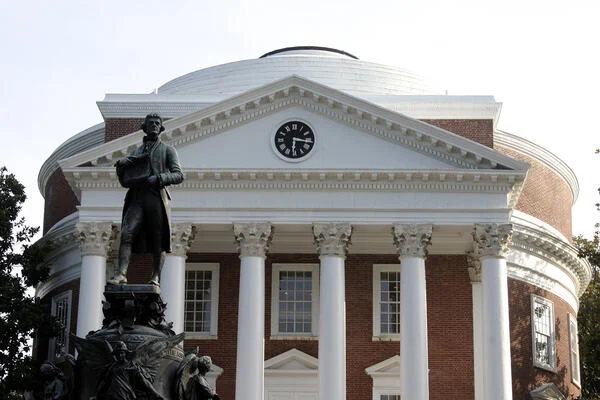
  • Spanberger Calls on UVA to Pause President Search

    Spanberger Calls on UVA to Pause President Search

    Virginia governor-elect Abigail Spanberger has called on the University of Virginia to pause its presidential search until she takes office in January and appoints new members to the Board of Visitors.

    In a Wednesday letter to board leaders, Spanberger wrote that she was “deeply concerned” about recent developments at the state flagship, citing “the departure of President Jim Ryan as a result of federal overreach.” Ryan stepped down amid federal investigations into diversity, equity and inclusion practices at UVA. The board later reached an agreement with the U.S. Department of Justice to pause those investigations.

    Spanberger argued that the government’s interference “went unchallenged by the Board” and has “severely undermined” public confidence in its ability to “govern productively, transparently, and in the best interests of the University.”

    Spanberger also pointed to recent votes of no confidence in the board by both the UVA Faculty Senate and the Student Council. Given those concerns and the hobbled state of the board, which is missing multiple members after state Democrats blocked Republican governor Glenn Youngkin’s appointments, Spanberger called for a pause until her own picks are confirmed by the General Assembly.

    “The benefits of selecting a new president with a full, duly-constituted Board are clear,” the governor-elect wrote in her letter to board leaders. They include making the search process and decision credible and “removing any concern that the Board’s actions are illegitimate due to a lack of authority,” she wrote.

    So far, UVA has been noncommittal in its public response.

    “University leaders and the Board of Visitors are reviewing the letter and are ready to engage with the Governor-elect and to work alongside her and her team to advance the best interests of UVA and the Commonwealth,” spokesperson Brian Coy wrote to Inside Higher Ed by email.

    Spanberger is the latest state Democrat to clash with the UVA Board of Visitors, which is stocked with GOP donors and political figures. While politics have long been at play on Virginia’s boards, Youngkin’s appointments have represented a dramatic rightward shift, prompting pushback as Democrats have blocked recent nominations.

    (A legal battle over the state of those appointments is currently playing out; the Virginia Supreme Court heard oral arguments in the case last month but has yet to issue a decision.)

    Democrats have turned up the temperature on UVA in recent months, demanding answers about the agreement with DOJ and Ryan’s resignation and accused the board of giving in to “extortionate tactics.” Now, following an election that saw Democrats take the governor’s office and broaden their majority in the General Assembly, Spanberger will likely have political capital to reshape higher education at the state level as she sees fit—barring intervention from the federal government.

    Spanberger, the first woman elected governor of Virginia, is a UVA alumna.

    The governor-elect’s call to pause UVA’s presidential search prompted immediate pushback from the Jefferson Council, a conservative alumni group that has won influence with Youngkin, who appointed the group’s co-founder Bert Ellis to the board before removing him for his combative behavior.

    The organization argued in a statement that in 2022 a Democratic-appointed board “quietly extended” Ryan’s contract through 2028—even though it did not expire until 2025—without “Governor Youngkin having an opportunity to appoint one Board member.” They wrote that “the Board’s action was clearly intended to ensure Ryan’s tenure” beyond Youngkin’s term. (Governors in Virginia may not serve consecutive terms.)

    The group also defended the search committee and process.

    “In contrast, the current UVA presidential search committee, the most extensive and diverse in University history, was lawfully formed by the Board and has been operating since July 2025, working diligently through meetings and interviews. To suddenly ask the BOV to wait to choose a president is a bold act of political legerdemain representing a total historical double-standard,” the Jefferson Council wrote.

    However, faculty members have a different view of the search committee.

    In an Aug. 10 letter, the UVA chapter of the American Association of University Professors accused the board of shortchanging faculty by limiting their seats on the presidential search committee. The group wrote that the committee “is dominated by current and former members of the [Board of Visitors] and administrators,” with faculty members composing less than a quarter of the committee. Additionally, they noted that none of those members “were selected by the faculty.”

    Spanberger’s insistence that UVA pause its presidential search bears similarities to ways other governors have sought to influence leadership decisions before they took office, such as Jeff Landry in Louisiana. Shortly after his election in late 2023, the Republican governor called on the University of Louisiana system to hold off on hiring Rick Gallot, a former Democratic state lawmaker, as its next president.

    Landry said he wanted to make sure their visions for the system aligned. Ultimately, despite the pause, Gallot was hired as system president after meeting with Landry before he took office.

    Source link