As a result, researchers have explored what practices can make a difference in student outcomes in such courses, including creating sections with diverse student populations and offering grade forgiveness for students who performed poorly.
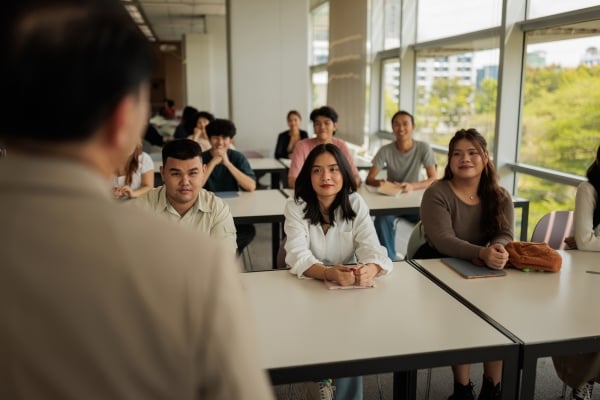
A recent research article from the University of Texas at Austin examined the role peer instructors play in helping students from a variety of backgrounds. Researchers discovered that students who were enrolled in an interactive peer-led physics course section had worse learning outcomes and grades than their peers in a lecture section taught by an instructor. Students with lower SAT scores were also less likely to achieve a high grade in the student-taught class.
The research: Historically, instructors teaching STEM courses have delivered content through lectures, with students taking a largely passive role, according to the paper. However, more active learning environments have been tied to higher student engagement and are largely preferred by learners. A May 2024 Student Voice survey by Inside Higher Ed found that 44 percent of respondents said an interactive lecture format helps them learn and retain information best, compared to 25 percent who selected traditional lectures.
Interactive lectures can include instructors asking students questions throughout the class period or creating opportunities for them to reflect on course material, according to the paper. Peer instruction is touted as an effective means of flipped classroom teaching, requiring students to finish readings prior to class and reserving class time for interactive activities.
While previous studies show the value of peer-led courses, much of that research focused on selective, private institutions, where students may have more similar backgrounds or levels of academic preparation, according to the authors of the new study.
So researchers designed a study that would compare apples to apples: They looked at the outcomes for students learning physics in one course section taught by a professor versus one taught by fellow students to see which had a greater impact.
The results: The paper analyzed the learning outcomes of two sections of students in an introductory mechanics course at a large public institution over three years. One section of the course was taught by a peer instructor, mostly in a small-group discussion format. The other section was taught by the professor using interactive lectures.
Students completed identical homework and midterm exams on the same days and had the opportunity to attend identical tutoring sessions supported by teaching assistants.
Though the course is designed for physics and astronomy majors, students from other majors participated as well. Each section had between 41 and 82 students, for a total of 367 students taking the course over three years.
Not only did students in the peer-instruction section have lower grades, but students who had lower SAT scores from high school were less likely to demonstrate learning in fundamental concepts, as well as less likely to earn an A, compared to their peers with similar test scores taught by a professor. However, students with higher SAT scores made smaller gains (less dramatic grade increases or learning demonstrated) in the lecture section compared to students taught by peers, which researchers believe could mean that students with less academic preparation may benefit more from an instructor-led course, while their peers who had a high achievement history in high school could thrive more in a peer-led section.
The analysis does not provide an explanation for why these differences exist, but researchers theorized that group work or peer dependency could result in some students being less knowledgeable about content matter because they trust others in the class to answer correctly. Creating postdiscussion follow-up questions can lessen this learning gap.
The Education Department said Thursday that federal money shouldn’t fund dual enrollment, adult education and certain career and technical education for “illegal alien” students, whether they’re adults or K–12 pupils who are accessing postsecondary education.
Department officials said in a news release that they are rescinding parts of a 1997 Dear Colleague letter that had allowed undocumented students to access those programs.
In the interpretative rule published on the Federal Register, the department declared that “non-qualified alien adults are not permitted to receive education benefits (postsecondary education benefits or otherwise) and non-qualified alien children are not eligible to receive postsecondary education benefits and certain other education benefits, so long as such benefits are not basic public education benefits. Postsecondary education benefits include dual enrollment and other similar early college programs.”
Education Secretary Linda McMahon said in the release that “under President Trump’s leadership, hardworking American taxpayers will no longer foot the bill for illegal aliens to participate in our career, technical, or adult education programs or activities. The department will ensure that taxpayer funds are reserved for citizens and individuals who have entered our country through legal means who meet federal eligibility criteria.”
Augustus Mays, vice president of partnerships and engagement at EdTrust, an education equity group, said in a statement that the change “derails individual aspirations and undercuts workforce development at a time when our nation is facing labor shortages in critical fields like healthcare, education, and skilled trades. This decision raises barriers even higher for undocumented students who are already barred from accessing federal financial aid like Pell Grants and student loans.
“Across the country, we’re seeing migrant communities targeted with sweeping raids, amplified surveillance, and fear-based rhetoric designed to divide and dehumanize,” Mays said. “Policies like this don’t exist in a vacuum. They are rooted in a political agenda that scapegoats immigrants and uses fear to strip rights and resources from the most vulnerable among us.”
During the height of the COVID-19 outbreak, teachers needed to become resourceful in how they delivered content to students. During this time, students experienced significant change and evolved into a more technologically-dependent group.
This sparked a period when online learning and digital resources gained substantial popularity, and one tool that helps students learn–while also feeling like a game instead of a lesson–is Gimkit.
I am an 8th-grade science teacher in a fairly large district, and I recognize the importance of these engaging and interactive resources to help students build knowledge and continue learning.
What is Gimkit?
To begin with, what is Gimkit? According to a tutorial, “Gimkit is an excellent game-based learning platform that combines fun and education, making it a highly engaging tool for both teachers and students. It works like a mashup of Kahoot and flash card platforms, but with several unique features that set it apart.
“Unlike other platforms, Gimkit allows students to earn virtual currency for every correct answer, which they can use to purchase power-ups, adding a competitive edge that keeps students motivated.”
Gimkit offers so much more than just a game-based learning experience for students–it can be used as an introduction to a lesson, as assigned homework, or as a tool for reviewing.
Building a Gimkit
From the teacher’s side of Gimkit, the platform makes it extremely easy to build lessons for the students to use. When you go to create a lesson, you are given many different options to help with the construction.
Jamie Keet explains: “After establishing your basic Kit information, you will then move onto the fun part–adding your questions! You will be given the option of adding a question, creating your Kit with Flashcards, continuing with KitCollab, adding from Gimkit’s Question Bank, or importing from Spreadsheet.”
Adding your questions is a great way to make sure your students are getting the exact information they have been provided in class, but some of the other options can help with a teacher’s time, which always seems to be scarce.
The option to add questions from the question bank allows teachers to view other created kits similar to their topic. With a few simple clicks, a teacher can add questions that meet the needs of their lesson.
Gimkit as data collection
Gimkit isn’t just a tool for students to gain knowledge and play games; it is also an excellent way for teachers to collect data on their students. As Amelia Bree observes:
“Gimkit reports explained show you both big pictures and small details. The look might change sometimes. But you will usually see:
Overall Class Performance: This shows the average right answers. It tells you the total questions answered. It also shows how long the game took. It’s a good first look at how everyone understood.
Individual Student Results: Click on each student’s name here. You see their personal game path. Their accuracy. Which questions did they get right or wrong? Sometimes, even how fast they answered.
Question Breakdown: This part is very powerful. It shows how everyone did on each question you asked. You see how many got it right. How many missed it? Sometimes, it shows common wrong answers for multiple-choice questions.”
Being able to see this data can help ensure that your students are not just completing the required steps to finish the task, but are also working towards mastering the materials within your class.
When examining the data, if you identify trends related to specific questions or concepts that students are struggling with, you have the opportunity to revisit and reteach these areas.
Conclusion
As you can see, Gimkit isn’t just a tool for students to play games and have fun in class; it is also an opportunity for students to gain knowledge in your lessons while potentially having some fun in the process. Teachers can make creating content for their classes much easier by utilizing some of the built-in features Gimkit provides.
They can collect the meaningful data needed to ensure students are making progress in the areas where they want them to.
Students need more support around education paths and career options, including hands-on experiences, according to a new nationwide survey from the nonprofit American Student Assistance.
The survey of more than of 3,000 students in grades 7-12 offers insights into teens’ plans after high school. The research, Next Steps: An Analysis of Teens’ Post-High School Plans, uncovers evolving trends in teenagers’ attitudes, perceptions, and decision-making about their post-high school plans.
“This analysis of teens’ post high school plans reveals shifts in students’ thinking and planning. We need to change the way we help young people navigate the complex and evolving landscape of education and career options,” said Julie Lammers, Executive Vice President of ASA. “Starting in middle school, our young people need early access to opportunities that empowers them to explore careers that match their interests and strengths; hands-on, skills-based experiences in high school; and information and resources to navigate their path to postsecondary education and career. All of this will enable them to graduate informed, confident, and empowered about what they want to do with their futures.”
The survey offers notable findings regarding parental influence on teens’ planning, perceptions of nondegree pathways like trade or technical school, apprenticeships, and certificate programs, and a continued drop-off in kids’ plans to go to college immediately after high school graduation.
Key findings include:
Teens’ interest in college is down while nondegree paths are on the rise. Nearly half of all students said they aren’t interested in going to college, with just 45 percent saying two- or four-year college was their most likely next step. Meanwhile 38 percent of teens said they were considering trade or technical schools, apprenticeships, and technical bootcamp programs, although only 14 percent say that such a path is their most likely next step.
Parents are one of teens’ biggest influencers—and they’re skeptical of nondegree options. A vast majority (82 percent) of teens said their parents agree with their plans to go to four-year college, while only 66 percent said parents supported plans to pursue a nondegree route. In fact, teens reported parents were actually more supportive (70 percent) of foregoing education altogether right after high school vs. pursuing a nondegree program.
A concerning number of young people don’t have plans for further education or training. Nearly one quarter (23 percent) said they have no immediate plans to continue formal education or training upon graduation. Teens not planning to continue education after high school indicated they were thinking of beginning full-time work, entering a family business, starting their own business, or joining the military.
Teens, and especially middle schoolers, are feeling better prepared to plan their futures. In recent years policymakers, educators, employers, and other stakeholders have pushed to make career-connected learning a more prominent feature of our education to workforce system. Survey results say it’s paying off. Agreement with the statement “my school provides me with the right resources to plan for my next steps after high school” grew from just 59 percent in 2018, to 63 percent in 2021, to 82 percent in 2024. Notably, the largest increase occurred at the middle school level, where confidence in in-school planning resources jumped from 60 percent in 2018 to 90 percent in 2024.
Girls are much more likely to plan to attend college than boys. Boys and girls are equally interested in college when they’re in middle school, but by high school, more than half (53 percent) of girls say they’re likely to attend college compared to just 39 percent of boys. The gender gap is smaller when it comes to nondegree pathways: 15 percent of high school boys say they will likely attend vocational/trade school, participate in an apprenticeship, or take a certificate program, compared to 10 percent of high school girls.
City kids aren’t as “into” college. Urban teens were least likely (39 percent) to say they plan to go to college. Suburban teens are much more likely to plan to attend a college program (64 percent) while 46 percent of rural students planned on college.
Students of color are college bound. More than half (54 percent) of Black teens and 51 percent of Hispanic youth are planning to go to college, compared to 42 percent of White teens.
eSchool Media staff cover education technology in all its aspects–from legislation and litigation, to best practices, to lessons learned and new products. First published in March of 1998 as a monthly print and digital newspaper, eSchool Media provides the news and information necessary to help K-20 decision-makers successfully use technology and innovation to transform schools and colleges and achieve their educational goals.
We’ve all been there: sitting on a search committee, sifting through credentials, interview notes and teaching demos, trying to decide whom to bring into our academic community. We talk about fit, collegiality and the balance between teaching and research. We refer to the rubric, the required qualifications and the preferred ones. We weigh experiences, diversity, alignment with the mission and potential.
And sometimes, quietly and without warning, we feel that small, subtle shift in our gut that says something doesn’t align.
For me, it happened during a campus interview years ago. The candidate had strong materials, solid experience and a warm, engaging manner. Throughout the formal interview, they said all the right things. Faculty were cautiously optimistic. But as I drove the candidate to the airport at the end of the visit, something changed. They relaxed, as anyone would, and for a brief second, I saw something in their eyes. A flash of disdain, maybe. Something sharper than the persona we had seen earlier. It was a shift in energy. A flicker of incongruence between how they had presented themselves and how they now carried themselves.
I put the feeling aside. After all, it was just a second. A moment. Something I couldn’t explain. Was I reading too much into it? Was I being unfair?
Later, I reflected on smaller details from their candidacy that had already made me pause. Their responses to scheduling emails had been brief and slow, lacking the warmth or curiosity I’d seen from other candidates. These weren’t red flags on their own, but together they created a subtle unease.
At the time, I was a relatively new assistant professor. I didn’t have the language or the authority to raise what I sensed in a meaningful way. And so, I said nothing.
Looking back, I now realize I could have simply asked a question like, “Did anyone else notice anything that felt a little different or off in our less formal moments with the candidate?” or “How did the candidate’s tone and energy feel during the downtimes between scheduled sessions?” These aren’t accusations—they’re openings for reflection. Questions like these can invite others to surface what they might have noticed but hadn’t yet verbalized.
Gut Feeling Meets Emotional Intelligence
Intuition doesn’t have to be the enemy of process. In fact, it can be part of an emotionally intelligent hiring culture—one that’s reflective, discerning and transparent. Emotional intelligence in this context is about being attuned to the human elements of a candidate’s fit. When we notice a gut reaction—whether it’s a spark of enthusiasm or a twinge of concern—it often stems from that attunement. What we call a “gut feeling” is frequently our mind’s quick synthesis of subtle cues, from body language to tone, guided by our own experiences and values.
Emotional intelligence in faculty hiring begins with self-awareness: tuning in to how a candidate’s presence affects you—whether through curiosity, ease or discomfort—and asking what your reactions might be signaling. It includes social awareness, noticing how others respond in informal moments and whether the candidate engages in ways that feel consistent with your department’s values.
Emotionally intelligent hiring also requires self-regulation—the discipline to slow down, hold back from snap judgments and lean into questions rather than assumptions. It thrives on relational transparency, where committee members can share subtle impressions without fear of being dismissed as merely “subjective.” And it rests on ethical discernment: the ability to examine whether those impressions are connected to job-relevant behaviors, not unconscious biases.
Testing What We Feel
Intuition shouldn’t be used to override policy or protocol. It should be used to sharpen it. When something feels off, ask yourself,
Am I noticing a misalignment between the candidate’s stated values and their interpersonal behavior?
Have others noted something similar?
Is there a way to probe deeper in follow-up interviews?
Can references offer insight into what I’m sensing?
Is what I’m noticing connected to the job’s required competencies, or is it something unrelated?
If the answer to that last question is unclear, slow down. Revisit the evaluation criteria. Look for patterns. Talk with colleagues. Our job isn’t to be mind readers—it’s to be community stewards.
When Intuition Becomes Wisdom
We often think of emotional intelligence as something soft and interpersonal. But it’s also rigorous. It requires noticing your own biases, resisting overconfidence and attending to the full emotional ecology of a hiring process.
The truth is, faculty hires change departments. They shape culture, morale, collaboration and stability. We owe it to our institutions and ourselves to trust what we notice and to reflect on it with care.
Sometimes the most important insights don’t shout—they whisper. When we honor our instincts enough to examine them, and then ground them in facts, we hire with both head and gut. That practice doesn’t just avoid heartbreaks, mismatches and regrets—it builds stronger hires and healthier departments.
When we talk openly about what we sense—not just what we score—we build departments rooted in both discernment and trust.
Treavor Bogard is a department chair and associate professor of teacher education at the University of Dayton. He writes about emotionally intelligent leadership in higher education and is the author of The Emotionally Intelligent Chair, a Substack newsletter exploring the inner work of leading academic departments with purpose, reflection and care.
Each summer I make a point of stopping by a first-year orientation session at the University of Virginia, where I have been a professor in the music department for 18 years. The sessions take place in the historic concert hall on the floor below my office. On June 30, members of the Class of 2029 danced their arrival wearing the university’s colors of blue and orange.
Usually, the raw enthusiasm and promise of the students reminds me why, on many days, I love my job. It didn’t work this time. I just couldn’t resolve the dissonance between the fantasy and the reality. The fantasy was of a college education these young people worked so hard to land. In real life, the Department of Justice had just pressured our president, Jim Ryan, into quitting, demanding his resignation to supposedly resolve an investigation into the university’s diversity, equity and inclusion programs.
This is almost old news by now. But it shouldn’t be. There is a direct line between the Jan. 6 insurrection and the 2017 Unite the Right march, when, just days before first-year students started school, a few hundred white nationalists emboldened by the first Trump presidency marched across campus with their torches, chanting, “Jews will not replace us.” The legal historian Farah Peterson, who used to teach here, writes that “an embrace of violence to assert constitutional claims” is baked into our history and that the founders understood violence as a way of making legal arguments.
The charge against UVA by the Department of Justice is being led by two UVA alums. One of them, Harmeet Dhillon, an assistant attorney general who overlapped with Jim Ryan at UVA law school, served as co-chair in 2020 of Lawyers for Trump, which challenged the presidential election results, and represented Trump in a defamation suit involving Stormy Daniels.
The ousting of Jim Ryan was not a surprise. But even after the Trump administration’s relentless siege on universities, it was a gut punch. Those of us who teach here have predicted for months that the Board of Visitors would try to fire Ryan this July, when all of its appointed members would be Gov. Glenn Youngkin’s appointees. We’ve been through that before. In 2012, when the Board of Visitors fired then-president Teresa Sullivan, faculty, students and alumni stood up to resist corporate America infringing on the educational mission of the university, and the board reinstated her.
Youngkin’s newest appointees to UVA’s board include the controversial Ken Cuccinelli, who, when he was the state attorney general, led an assault on academic freedom in the form of a civil investigation targeting five grants held by climate scientist Michael Mann. Youngkin, for his part, has long intended to purge the state’s education system of “divisive concepts”—things like acknowledging the fact that the buildings of Jefferson’s “Academical Village” were built by the enslaved. When the Board of Visitors banned DEI in March of this year, Youngkin gleefully stated, “DEI is done at the University of Virginia. We stand for the universal truth that everyone is created equal, and opportunity is at the heart of Virginians’ and Americans’ future.”
I think we know whom he means by “everyone.”
Beloved by many here, including me, Ryan is perhaps a once-in-a-generation leader. Still, he is so very far from “woke.” As the student satire magazine put it, “Fly high Jim, we’ll never forget the early mornings, late nights, and also the several hundred state troopers you sent to attack students for peacefully protesting.” In May 2024, Ryan did not hesitate to crack down on a very small pro-Palestine encampment. No one at the university cracked down on those tiki torch–bearing white nationalists.
Here is what we are guilty of: believing that our professional duty requires us to openly reflect on our individual and collective responsibilities in a democracy. We do think it’s our job to give our students tools to respond to the world they will inherit. If we were guilty of or capable of “left-wing indoctrination,” I suspect we would have a different governor and maybe different other things, too. Almost 70 percent of our students are from Virginia.
Because we are guilty of believing that history matters, we can’t ignore the wicked irony of a federal and state government killing diversity-related programs and forcing out a president in part by leveraging the equal protection clause of the 14th Amendment, ratified in1868. This amendment, which mandated equal protection for all humans, is now weaponized to protect only white people. The Civil Rights Act of 1964 outlawed discrimination based on race, religion, sex or national origin. It has been similarly weaponized.
Meanwhile, our history also includes these facts: The UVA biology department taught eugenics until 1953. Not only was the institution built by enslaved laborers, but by 1829 it had its very own slave patrol. Indeed, Thomas Jefferson wanted to establish a University of Virginia in part because too many young men went north and learned the evils of abolition. Such thinking amounted to a canker “eating on the vitals of our existence, and if not arrested at once will be beyond remedy.” More recently, the Office for Civil Rights did not approve the commonwealth of Virginia’s plan for desegregating higher education until 1982.
My current and former students have been texting from all over the world since Ryan’s June 27 resignation announcement. Mostly they want to know: Why UVA? Virginia is arguably ground zero for reckoning with the chattel slave system and its intertwining with a flailing fantasy of democracy. “The 1619 Project” made front-page news of it. But you don’t have to go back that far.
Thanks to the summer of 2017, for many Charlottesville now conjures images of burning torches and Nazi slogans. Over the weekend of Aug. 11 and 12, 2017, the sleeping dogs of America’s nasty history rose up from the evidently not dead. Richard Spencer (UVA, Class of 2001) helped orchestrate a torchlit nighttime march across our campus, the marchers barking, “Blood and soil” and “Jews will not replace us.” The university let this happen. In her book about the weekend of Unite the Right and the ideology that inspired it, Deborah Baker writes, “The nature of this awakening appeared to go to the core of who we are and the myths and folklore that have sustained us as a nation.”
Also that weekend of Unite the Right, a young woman was murdered and dozens were injured when a neo-Nazi drove a car into a group of counterprotesters. While the city was still reeling, Trump went on television and claimed there had been “very fine people on both sides.” There was an uproar and a backlash then. And in September 2017, the president had no choice but to sign a congressional joint resolution condemning the violence and domestic terrorist attack in Charlottesville. It is clear that no such condemnation would be forthcoming today.
This administration will not stop with Jim Ryan, and they will not stop with UVA. The miraculous dean who got those first-year students to dance on a hot June day in 2025 will get them dancing at their graduation in May of 2029. But I am very afraid of what this university, and other institutions of higher learning across the country, will look and feel like by then.
Bonnie Gordon is a professor of music at the University of Virginia and vice president of the American Musicological Society.
Research shows that adults often enter college with a goal in mind, such as a career pivot, additional education in their current industry or completion of a degree they previously started. But returning to the classroom can be challenging, particularly for first-generation students or those who haven’t been in school for a while.
In 2024, Wichita State University launched a college bridge program, the Adult Learner Community and Connections Program, to ease the transition for adult and online learners. The program, part of the university’s Shocker Preseason series, offers eight modules of self-paced online content designed to assist them in their first term at the university.
In the most recent episode of Voices of Student Success, host Ashley Mowreader speaks with Brett Bruner, assistant vice president for student success and persistence at Wichita State, about adult learner pedagogy and lessons learned in the first year.
An edited version of the podcast appears below.
Q: Can you introduce us to your adult learner population? Whom do you serve and how does their makeup change how you serve them?
Brett Bruner, assistant vice president for student success and persistence
A: At Wichita State University, our adult learners come from various backgrounds. We know that two-thirds of our adult learners are first-generation college students. And when we think about being the first age friendly [University Global Network]–designated university in the state of Kansas, I think we’re really focused on how do we support learners of all ages, including adult learners of all ages?
When we think about the more than 2,200 adult learners and more than 1,600 online learners at Wichita State, our adult learners are enrolled in on-campus programs and fully online programs. We always approach our adult learners with that mindset of, how do we center this through our first-generation lens, recognizing that two-thirds of them will be first in their families to graduate from college?
Q: I’m also thinking about your orientation program focused on adult learners. I wonder if you can give us some background on, what does a Shocker Preseason look like across the board? And how does this look different for your adult learner populations, given all the backgrounds that you mentioned—first generation, online learners, et cetera.
A: Our Shocker Preseason programs were created from a university standpoint to really focus on building academic resource awareness, providing all our students with the academic skills they need to be successful and helping students make connections with each other. Our Shocker Preseason programs were also created as part of our strategic enrollment management plan, as well as one of our student success priorities.
We’ve grown [the program]; this fall, we’ll now have 20 different Shocker Preseason programs.
Q: Wow.
A: I know, it’s amazing to see growth from even just when I started here two years ago, from six programs now to 20. I think the beauty of our Shocker Preseason programs is this differentiated care. We talk about differentiated care at WSU from a student success standpoint, but it means the program modality—on campus versus online—program length, content, is really driven by each of the individual units that are designing their programs.
In spring of 2024, as the Office of Online and Adult Learning that I get the privilege of working with sat down to really look at career congruence of our adult learners’ transitions, health and well-being emerged as a topic, but really that overall support of, how do we form connections? Because so many times adult learners in the research cite that they aren’t finding peers, they aren’t finding friends, because they feel that they are the one and only older student, returning student or student who didn’t come fresh out of high school to college.
I’m so proud of our team, who said, “Let’s design a Shocker Preseason program, but let’s make it look different to meet the needs of our students.” And so as they rolled out this online format for our Adult Learner Community and Connections program, they really rooted it in health and well-being, because they were able to do that in meaningful ways that may look different from how we talk about health and well-being for an 18- to 22-year-old, but then also building in community and connection opportunities in different ways. Maybe they’re more likely to lean into conversations about how the Ulrich Museum of Art on campus can provide a means for social connection, and maybe that will resonate with our adult learners.
Q: I love that you’re focusing on community and that sense of belonging and engagement on campus. Because I think when we consider online learners’ needs, or adult learners’ needs, oftentimes we think it’s providing services expeditiously. We want them to get through their degree program, we want to get them into a job, which are great priorities to have. But students also want a college experience, and they do want to engage with their peers. And so I wonder if you can speak to that dimension of this, that it’s not just getting them to timely degree completion, but everything else as well.
A: It’s all about finding their people, helping them realize that with 2,200 adult learners across campus, you’re not the only one. So how can we connect you with others who are experiencing similar transitional pieces?
We think about the 83 students who engaged in our optional program last year, but then also the eight peer ambassadors that we hired who had lived these experiences and can bring some insight when we talk about social wellness and why it’s an important part of thriving in college as an adult learner, or financial wellness, or whatever dimension of wellness.
I think that’s the important part, because we’re seeing then these connections continue beyond just this orientation and transition experience. We’re seeing friendships bloom. We’re seeing opportunities to make connections in the classroom. After year one of the program, specifically related to the social wellness connection, students were saying, “I appreciated what you shared about how to make connections, but I want more. I want more about how to build my network. How do I invite people to my network and grow my network?”
And I don’t think that was something that we were intentionally designing. So as we think about the 2.0 version of this program, we’re really deepening the content about networking. Because I think we’re all always striving to build and grow our networks as we move throughout life. That desire for connections, that community, that sense of belonging, was clearly, clearly articulated in our postprogram surveys from the first year of the program.
Q: Can we talk about how the program works logistically for people who might not be familiar and how it’s scaffolded?
A: Our program is designed around the eight dimensions of wellness, and it is an online program. We built it in our learning management system so that it mirrors a lot of the other classes that an adult student is taking, whether they’re taking an online class or an in-person class that has the learning management system component to it. So they’re also getting access to the technology upskilling that we so often see in research about what adult learners want as they transition into college.
They move through the eight modules, which are all rooted in the eight dimensions of wellness. The beauty of the program is it’s self-directed and self-paced, so it doesn’t necessarily build upon one another. We’ve had some adult learners who are like, “I really want to jump in and dive into module five and start talking about physical wellness, or module eight and talking about occupational wellness.” So they can do that, or they can sequentially go module by module.
As a student completes each module, there is an incentive that was provided through the Urban Adult Learner Institute, [Wichita State] being the inaugural winners of an Accelerate Pitch Competition that funded a lot of these incentives. But one of the things that we learned in year one is that incentives are not a motivating factor for our adult learners. We know that adult learners are intrinsically motivated, and so a lot of times we had the extra incentives that they didn’t strive to pick up, but they were completing the modules.
We’ve got campus partners who provide content for the modules. Our Shocker Career Accelerator office is providing content for the module about occupational wellness. And Shocker Financial Wellness staff are providing content for the module about financial wellness. So each module connects individuals to campus resources. It’s providing some actual content and then some reflective experience. The modules open Aug. 1 and they close in December.
So students can move throughout that time however quickly they want, or maybe they just want to complete one module, whatever it may be. And then if they complete all eight modules, we’re able to provide an overall incentive with some merchandise from our Shocker store.
Q: You mentioned it’s self-motivated, and students can really opt in to which sections speak to them. I think it’s interesting that you’ve all chosen to make this optional. It’s an orientation program, but it’s something that they can do throughout their first term. Can you talk a little bit about that decision? Because I think some people might say, “No, you have to make it mandatory and make this something that they must complete before they start classes, because we know that this will be good for them.” What’s that balance of ensuring students are getting this information but letting them do it at their own pace and timing?
A: This program doesn’t replace our in-person or online adult learner orientation, but I think, as someone who spent 10 years as a new student orientation director before moving up, sometimes people say, “We can solve all the world’s problems just by adding five minutes in orientation.” And I like to say, “Sometimes orientation is like drinking from a fire hose,” there’s so much information. And it also doesn’t relate to three words: time, place and manner.
When we think about orientation, we have to know, what do we share with individuals? When do we share it, and especially with our adult learners, as we dive into andragogy [adult learner pedagogy]? And what we know from Malcolm Knowles in 1985, when he developed the six tenets of andragogy, is adult learners need to know what they need to know when they need to know it.
If we’re sharing resources about knowing your values and what’s your why, and we’re sharing that on June 13, when they’re on campus for adult learning orientation, is it really going to sink in and resonate with them versus in August or September, when they’re knee-deep in the semester? Or when we’re talking about intellectual wellness and we’re sharing all of the resources from our 13 different tutoring centers across campus—that may go in one ear and out the other ear in July when they’re here, but maybe they’re going to need it in week five or six, when they’re struggling with a certain class and trying to figure out “where do I go to get connected?”
Our team wanted to keep it optional, much like that kind of aligns with all of our Shocker Preseason programs, because the Shocker Preseason programs never take the place of orientation. They’re an additional element in a student’s transition. But as we lean into some of those core elements of andragogy, we lean into the need to know, and we lean into the readiness to learn that students—adult learners, specifically—when they see a need, that’s when they’re going to be ready to learn. We wanted to provide that in an asynchronous format, but they can still come back to and access those resources throughout the duration of that critical first semester at WSU.
Q: You’ve obviously rooted this program in pedagogy and the best understanding we have of adult learners, but I wonder how you’ve incorporated the student voice from this first season of the Shocker Preseason program and how you’re incorporating it into version two?
A: As we dug into assessment feedback from version one, not only looking at completion rates by each module, we definitely know 86 percent of all students who registered [for the program] and did something completed social wellness. That’s great. Is that because of the concept, is that because it was the first module? We don’t necessarily know.
As we look at the qualitative feedback, I think that’s been the most interesting thing. From the social wellness piece and students saying they appreciate it, but they want to know more about how to network. We think about the intellectual wellness model, and some of the feedback that we receive from that is … “Give us more information, we want all the additional apps, all the additional resources beyond basic technology. What are those apps or things that I need to do to succeed academically?” So we’re diving deep into that.
One of the most interesting things that caught us off guard, in a good way, was that the most popular session by students [who provided qualitative feedback] was the spiritual wellness module, because it was really rooted in helping students articulate, “What is your why?” Whether you’re coming back to school because you’re a career changer, you’re switching career paths in life or you want to finish a degree because you want to climb higher into the occupation that you’re in, but then also, then connecting that why to their values and continuing to drive that forward as a motivation factor.
Then I think we’re also taking some of the other elements of the areas and growth of opportunity. For example, when we think about occupational wellness and adult learners, we learned that we’re serving two very different groups within the adult learner piece: the career changers and the career climbers. And so we need to know, how do we go about approaching occupational wellness from both an individual who’s saying, “I’m going from industry to being a teacher at the age of 50” or “I need a degree to move up in this career path that I’ve been doing for quite some time”? So we have to almost take the differentiated care approach, if that makes sense, especially in that.
Or financial wellness, that was probably one of the most, I wouldn’t say, polarizing, but one we need to think a little bit more about. We got great opportunity for growth feedback that said, “I’ve been doing finances for quite some time” and recognizing the experiences, but the piece of finances that many adult learners said is, “Can you help me figure out where can I find additional scholarships? Where can I find additional ways to pay for all of my educational expenses?” So we need to focus a little bit more on scholarship resources rather than just maybe the general how to budget, how to manage finances that we may think about … our 18- to 22-year-old population.
Q: I think it’s interesting that the feedback you received, it seems to fall into a few categories, like, one, help me navigate the institution better, but two, help me navigate myself as a student better.
It seems like they know how to be an adult, and they know how to manage their own budgets or engage with one another on a social level. But when it comes to that professional networking, or when it comes to understanding what tools they might need to be a learner, again, that’s the piece where they’re really asking for feedback. And I think that’s so unique to our adult learner population at large. It might be our 18-year-olds who need more help figuring themselves out as people, but our adult learners need help figuring themselves out as students.
A: In version 2.0 we’re also trying to be much more intentional about providing some extended podcasts with campus partners. So someone who really wants to embrace the concept of social wellness and wants to engage in a podcast with our Student Engagement and Belonging Team or our Ulrich Museum of Art and really dive deep into those, we’re connecting this to various podcast episodes from our Shockers Learning Out Loud podcast series. It’s been around for quite some time. So how are we just connecting the pieces of the puzzle for students who want to deep dive a little bit more, recognizing that, once again, what we know about adult learners is they’re very problem-focused. And how can we provide those additional asynchronous resources for them to dive much deeper into the concept?
Q: I mean, I think podcasts are the best format ever.
When you talk to your peers in this space, because I know you’ve presented on this topic at conferences and really shared this with others who are working in similar roles, what are you hearing from them? What other ideas are you getting? Or what are some opportunities that you see for others to engage in this work as well?
A: I think the biggest piece that I’ve heard from others is this whole notion of differentiated care, and how can campuses lean in and not just replicate a transition experience that they may have for an 18- to 22-year-old, but they’re recognizing the needs of our adult learners, and we’re centering some of those elements. Adult learners bring a lot of experiences, so how do we harness that? How do we name that? How do we give them the opportunity to own that space and bring that into whatever content we design, whether it’s from a well-being [or] from a career standpoint, bring that into that space and recognize that that looks different? You can’t just copy and paste. You can’t just lift what we’re doing from a first-year, first-time-in-college student and apply that, because that’s doing a major disservice.
I think the other piece that I’m hearing from colleagues as we’re doing this is leveraging and leaning into making this a virtual space, because the lives of an adult learner look very different. You may be an adult learner that’s also a caregiver, and you may only have evenings to hop on and learn, or dive deep because you’re working full-time, trying to go to school full-time, maybe giving care to parents, to children, to partners, to spouses, etc. Or we’ve had some students who are adult learners who are working third shift. You may be available during the workday, but you may have just got off work at 8 a.m., so how are we leveraging technology in new ways? Because going back to that research, one of the biggest pieces that adult learners want in their transition and want from colleges universities is to help them upskill with the technology that they’re going to need to be successful.
I think those two pieces of really leaning into the adult learner needs, leveraging technology and leaning into this notion of differentiated care is needed and is the easy way to start thinking about, how do I take something like this and apply it to the adult learners on my own campus?
Q: As we think about the new age of college students or today’s learners, and how we’re seeing a larger population of adult learners, or more high school students are considering taking a break before going to college, I think this is going to be even more applicable, maybe for a 20-year-old who took a break and was working for a few years, and not just our traditional 25-, 35-year-old who’s coming back to school.
A: Absolutely. I think there are elements of this that can be applied to many facets of today’s learner.
Q: So what’s next for you all as you’re considering launching for the fall?
A: We have been taking all the feedback in from version 1.0 [and] we’re redesigning some of our modules. We’re bringing in new campus partners, which I think has been super exciting.
We’re leaning into this well-being concept, and we know health and well-being is important for all of today’s college learners. You can’t read any article, have a conversation at a conference or go to a meeting on your own campus where the concept of health and well-being of today’s college students is not at the forefront. I think as I’ve continued to share this data, we’ve gained lots of support from various entities across campus, especially those who really are approaching it from a health and well-being lens.
But we’re just really excited as we launch version 2.0 and engage some of those completers of version 1.0 in various peer ambassador roles to support the next generation of ALCC participants.
Q: Can you talk about how this program transitions into larger support on campus and making sure that students aren’t just getting these modules online, but that they’re translating it to in-person experiences or online experiences as it’s relevant?
A: Our peer ambassadors, I think, are great representatives of the Office of Online and Adult Learning, and so they have been a great resource to connect individuals in their small groups to our associate director of student engagement in the Office of Online and Adult Learning or online and adult learning retention specialist who’s providing some additional follow-up pieces. So I think the peer ambassadors have been great representatives to connect the students who are going through this experience with the amazing support staff and the network of individuals through our Office of Online and Adult Learning and across campus who are here to help them be successful, because we want all of our adult learners to successfully complete their first year, that first milestone, and then ultimately graduate with their degree from WSU.
Get more content like this directly to your inbox. Subscribe here.
The Trump administration is holding up hundreds of millions of dollars slated for adult education programs as part of a review of education spending.
The roughly $716 million was supposed to be disbursed to states July 1 and then divvied up among their adult education providers, such as community colleges. But the funding for high school equivalency classes, English as a second language programs and other adult education services never arrived. The news comes as the Trump administration continues to withhold $7 billion from states for K–12 education, including ESL classes and after-school programs, which includes the adult education money.
The freeze is part of a broader “ongoing programmatic review of education funding,” an unnamed spokesperson for the Office of Management and Budget wrote in a statement to Inside Higher Ed.
“Initial findings show that many of these grant programs have been grossly misused to subsidize a radical leftwing agenda,” wrote the OMB spokesperson, citing examples of states and schools using the money to support students in the country without proper documentation as well as for a seminar on “queer resistance in the arts,” though the statement made no mention of adult ed programs.
The fate of the withheld funding remains unclear. “No decisions have been made yet,” the spokesperson said.
Now states and their community colleges, which offer a significant share of adult education programs, are scrambling to figure out how to continue providing adult education services despite staggering funding shortfalls.
“If funding is not provided, there are nothing but bad options for institutions,” said David Baime, senior vice president for government relations for the American Association of Community Colleges. He predicts community colleges would have to reduce adult education services, lay off personnel and vie for funds to fill in the gap from states and other sources. But even so, “the funding is so substantial in a number of places that there’s no immediate source of replacing that money.”
He emphasized that adult education programs have received “broad support from both parties for decades”—and they were already underfunded relative to student need.
Adult basic education is “a core function and a core part of the mission of community colleges across the country,” he said.
Adult education is one of several programs on the chopping back in the Education Department’s proposed budget for fiscal year 2026. Officials wrote in budget documents that states and localities are “best suited to determine whether to support the activities authorized under this program or similar activities within their own budgets and without unnecessary administrative burden imposed by the federal government.”
Higher ed advocates worry other programs like the Child Care Access Means Parents in School program that are on the chopping block could suffer a similar fate.
Concerns Across the Country
Community colleges in red and blue states alike are anxiously waiting for the adult education funds to come through.
Heather Morgan, executive director of the Kansas Association of Community Colleges, said if the pause persists beyond two months with no alternative funding, Kansas’s 19 community colleges will have to make “tough decisions” about laying off or furloughing staff.
She added that college leaders were given no notice, leaving them with no time to prepare.
“Situations where funding doesn’t come as expected are real hardships on small colleges and really leave staff in a position of wondering and not knowing what’s coming next,” she said.
Joe Schaffer, president of Laramie County Community College in Wyoming, said the withheld funds risk hurting high-demand, successful adult education programs in the state.
He noted that, historically, the coal and oil industries in the state offered well-paying jobs that didn’t necessarily require a high school diploma. But now, because of changes in technology and the state’s diversifying economy, many jobs do require at least a high school education. Wyoming workers hit with that realization are coming to adult education programs later in life to earn high school equivalency certificates, commonly referred to as the GED.
And the programs work. Roughly 80 percent of Wyoming adult basic education students get a job or enroll in college after their programs, and 84 percent earn a credential beyond a GED. These programs graduate more people with a high school equivalency than any one high school in the state, making the programs arguably Wyoming’s “largest high school,” he said.
Because the state funds half of these programs, he believes Laramie County Community College can make do without the federal funds and continue to offer these programs for another year, with some belt-tightening measures.
But still, the move to withhold federal funds risks “reducing the flow of high school graduates at a time when the workforce pipeline, the talent pipeline, is a concern of everybody across the nation,” Schaffer said.
Morgan agreed that state economies would suffer if adult education programs took a permanent funding hit.
For many Kansans, “this is their option to get out of poverty and to get into a higher-paying job,” she said. “The ability for them to get skilled up is important, and we have to have the resources to do that, and the uncertainty that’s been injected into the system is not helpful in trying to meet our mission, which is to prepare citizens for the Kansas economy.”
Speaking at the Metascience 2025 conference in London, Maria Leptin said such data is in a “very precarious” position. Since Donald Trump began his second term as U.S. president, researchers have raced to archive or preserve access to U.S.-hosted data sets and other resources at risk of being taken down as the administration targets research areas including public health, climate and fields considered to be related to diversity.
“We’ve heard the situation from the U.S. where some data are disappearing, where databases are being stopped, and this is really a wake-up call that we as a community need to do more about this and Europe needs to do more about it,” Leptin said.
The ERC president highlighted the Global Biodata Coalition, which aims to “safeguard the world’s open life science, biological and biomedical reference data in perpetuity,” noting that the European Commission recently published a call to support the initiative.
“Medical research critically depends on the maintenance and the availability of core data resources, and that is currently at risk. Some of these resources may disappear,” she said. “I really encourage all policymakers and funders to join the coalition.”
“Right now is the worst time to not have access to data in view of the power of AI and the advances in computing, large language models, et cetera,” Leptin told the conference, noting that the Trump administration is not the only threat to accessible data. “The value of the data that are held across Europe is unfortunately massively reduced because of fragmentation, siloing, and uneven access.”
A recent ERC workshop involving researchers, policymakers, industry representatives and start-ups raised some “shocking” concerns about health data, she added. “Even in the same town where researchers wanted to access the huge numbers of data that the hospitals in that town had, it was impossible because the hospitals couldn’t even share data with each other, because they used totally different data formats.”
Boosting access to data will require “a huge effort,” Leptin acknowledged. “We of course need technical, legal and financial frameworks that make this possible and practical, [as well as] interoperable formats and common standards.”
While not a data infrastructure in itself, the ERC “has a role to play” in improving accessibility, she said. “What we try to do is to set expectations around good data practices.”
“We do need European-level solutions,” Leptin stressed. “The scientific questions we face, whether in climate or health or technology or [other fields], don’t stop at national borders—in fact, they are global.”
A group of Texas law school deans is urging the state Supreme Court to uphold American Bar Association accreditation standards for public law schools. The state’s highest court announced in April that it was considering dropping the ABA requirement for licensure, opening a public comment period on the matter that closed July 1.
“We strongly support continued reliance on ABA accreditation for Texas law schools and licensure eligibility,” the deans of eight of the state’s 10 ABA-accredited law schools wrote in a letter to the Texas Supreme Court. “ABA accreditation provides a nationally recognized framework for quality assurance and transparency; portability of licensure through recognition of ABA accreditation by all 50 states, which is critical for graduates’ career flexibility; consumer protections and public accountability through disclosure standards; and a baseline of educational quality that correlates with higher bar passage rates and better employment outcomes.”
Though the Texas justices did not say why they were reviewing ABA accreditation, the law deans’ letter noted that the body has already suspended its DEI standards—a move it announced in February and then extended in May through Aug. 31, 2026. That means “the language of the Standard can be revised in accordance with federal constitutional law and Texas state law that bar certain diversity, equity and inclusion practices at state universities,” the deans wrote.
Of the state’s ABA-accredited law schools’ deans, only Robert Chesney of the University of Texas and Robert Ahdieh of Texas A&M didn’t sign the letter, Reuters reported.
In his own nine-page letter to the state Supreme Court, Chesney urged the justices to look at “alternative” pathways for ensuring law school standards “to help pave the way for innovative, lower-cost approaches to legal education.”
Ahdieh told Reuters that whatever the court decides about ABA accreditation, it’s “critical” that law degrees earned in Texas remain portable.