
Get stories like this delivered straight to your inbox. Sign up for The 74 Newsletter
Texas’ students saw some wins in reading but continued to struggle to bounce back from pandemic-related learning losses in math, state testing results released Tuesday showed.
Elementary students who took the State of Texas Assessments of Academic Readiness exam this year made the biggest gains in reading across grade levels. Third graders saw a three percentage point increase in reading, a milestone because early literacy is a strong indicator of future academic success. Progress among middle students in the subject, meanwhile, slowed.
“These results are encouraging and reflect the impact of the strategic supports we’ve implemented in recent years,” said Texas Education Agency Commissioner Mike Morath. “We are seeing meaningful signs of academic recovery and progress.”
This year’s third grade test takers have benefited from state investments in early literacy in recent years. Teachers in their classrooms have completed state-led training in early literacy instruction, known as reading academies. The state also expanded pre-K access and enrollment in 2019.
Morath did acknowledge students needed more help to make similar gains in math. Five years after pandemic-related school closures, students are still struggling to catch up in that subject, the results showed. About 43% of students met grade-level standards for math, a 2 percentage point increase from the previous year, but still shy of the 50% reached in 2019.
Low performance in math can effectively shut students out of high-paying, in-demand STEM careers. Economic leaders have been sounding the alarm about the implications that weak math skills can have on the state’s future workforce pipeline.
The STAAR exam tests all Texas public school students in third through eighth grade in math and reading. A science test is also administered for fifth and eighth graders, as well as a social studies test for eighth graders. Science performance improved among fifth and eighth grades by 3 and 4 percentage points respectively, but students in those grades are still below where they were before the pandemic.
Students in special education also made small gains. English learners, meanwhile, saw drops in all subjects but one — a 4% decrease in reading, a 2% decrease in math, and a 2% decrease in social studies.
The test scores give families a snapshot of how Texas students are learning. School accountability ratings — which the Texas Education Agency gives out to each district and campus on an A through F scale as a score for their performance — are also largely based on how students do on the standardized tests.
The test often casts a shadow over classrooms at the end of the year, with teachers across the state saying they lose weeks of valuable instructional time preparing children to take the test. Some parents also don’t like the test because of its high-stakes nature. They have said their kids don’t want to go school because of the enormous pressure the hours-long, end-of-year test puts on them.
A bill that would have scrapped the STAAR test died in the last days of the 2025 legislative session. Both Republican and Democratic legislators expressed a desire to overhaul STAAR, but in the end, the House and Senate could not align on what they wanted out of an alternative test.
Legislators this session did approve a sweeping school finance package that included academic intervention for students who are struggling before they first take their STAAR test in third grade. The package also requires teachers get training in math instruction, mirroring existing literacy training mandates.
Parents can look up their students’ test results here.
Graphics by Edison Wu
This article originally appeared in The Texas Tribune, a member-supported, nonpartisan newsroom informing and engaging Texans on state politics and policy. Learn more at texastribune.org.
Get stories like these delivered straight to your inbox. Sign up for The 74 Newsletter
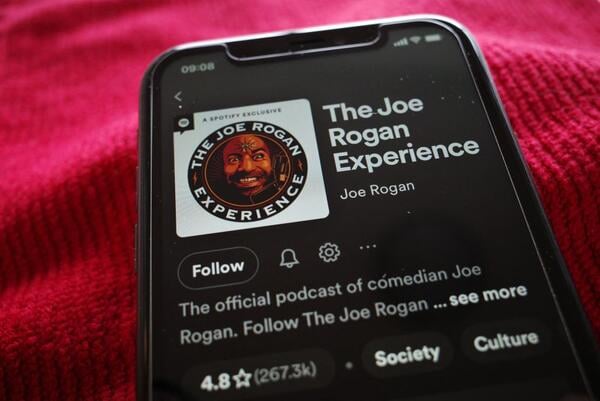
Joe Rogan is no fan of my work, obviously. The chart-topping conservative influencer famously insists that universities are “cult camps” where professors like me indoctrinate students with leftist ideas. Typically, I do not worry about my haters, but increasingly it seems that if I want to create a meaningful learning experience, I need to.
I teach first-year undergraduate humanities electives. Like most universities, ours offers large-format 200-student lectures for training in academic writing and critical theory. This would be the “indoctrination” in question, as I introduce students to canonical thinkers from Karl Marx to Sylvia Wynter. These electives are degree requirements, snaring students who might intentionally avoid liberal arts in an otherwise professional degree.
In the current political climate, many of my students come to the classroom with their minds made up based on authorities who directly undermine my scholarship and profession. Rogan is just one of many conservative anti-intellectuals who regularly attack liberal, feminist, social justice–oriented biases in university education. The result is a polarized atmosphere antithetical to learning: a tangibly mistrustful, sometimes even resentful classroom.
Although only a small handful of students typically adhere to anti-intellectual doctrine, their small group undermines my authority with risky jokes in the classroom and intense criticism in student back channels (as reported by concerned classmates). This causes undecided students to falter in their trust of my authority, while students who do not share their views nervously censor their contributions.
Ironically, my dissenting students often do not recognize that I am interested in their views. I am convinced that the way out of this explosive historic moment is through rigorous discussion in educational forums. Like any academic, this is why I teach: I love sincere inquiry, debate and critical engagement, and I was a rabble-rouser myself as a student. But the current classroom mood is less debate and more deadlock.
So, I spent this year brainstorming with my students to build creative assignments to spin resentment into passion, no matter how opposite my own, welcoming self-directed research and encouraging deeply engaged reading. I offer any one of these assignments, with the goal to bring disaffected, anxious students back to a love of learning and democratized engagement. This is a work in progress, and I welcome suggestions.
Turn Tensions Into Data: This introductory exercise eases students into an atmosphere of open collegial discussion. Surveys or anonymous polls quantify disagreements, and then we analyze the results as a class.
Example: Class Belief Inventory—anonymously poll students on hot-button questions (e.g., “Is systemic racism a major problem?”). The objective here would be to compare the class’s responses to national survey data. Potential discussion topics: Why might differences exist? What shapes our perceptions?
Hostile Influencers as Primary Sources: This in-class activity treats figures like Rogan or Jordan Peterson not as adversaries but as authors of texts to analyze, to disarm defensiveness and position students as critical investigators.
Example: “Compare/contrast an episode of [X podcast] with a peer-reviewed article on the same topic. How do their arguments differ in structure, evidence and rhetoric? Whom do you find more persuasive, and why?”
Gamifying Ideological Tensions: This class activity turns assigned readings into structured, rule-bound games where students must defend positions they don’t personally hold.
Example: Role-Play a Summit—Students are assigned roles (e.g., Jordan Peterson, bell hooks, climate scientist, TikTok influencer) and must collaborate to solve a fictional problem (e.g., redesigning a curriculum). They must cite course readings to justify their choices.
Therapy for Arguments: This fun early activity teaches students to diagnose weak arguments—whether from Rogan, a feminist theorist or you—using principles of logic.
Example: Argument Autopsy—Students dissect a viral social media post, podcast clip or course reading. Identify logical fallacies, cherry-picked evidence or unstated assumptions. Reward students for critiquing all sides.
Intellectual Sleuthing: This is a scaffolded midterm writing assignment building up to a final essay. Ask students to trace the origins of their favorite influencers’ ideas. Many anti-establishment figures borrow from (or distort) academic theories—show students how to connect the dots.
Example: Genealogy of an Idea—Pick a claim from a podcast (e.g., “universities indoctrinate students”). Research its history: When was this idea popular in mainstream news or on social media? Are there any institutes, think tanks, influencers or politicians associated with this idea? What are the stated missions and goals of those sources? Where do they get their funding? Which academics agree or disagree, and why?
Leverage “Forbidden Topics” as Case Studies: If students resent “liberal bias,” lean into it: make bias itself the subject of analysis. This might work as a discussion prompt for tutorials or think-pair-share group work.
Example: “Is This Reading Biased?”—Assign a short text students might call “woke” (e.g., feminist theory) and a countertext (e.g., Peterson’s critique of postmodernism). Have students evaluate both using a rubric: What counts as bias? Is objectivity possible? How do they define “truth”?
Choose-Your-Own-Adventure Assignments: The final essay assignment gives students agency to explore topics they care about, even if they critique my field. Clear guardrails are important here to ensure rigor.
Example: Passion Project: Students design a research question related to the course—even if it challenges the course’s assumptions. They must engage with three or more course texts and two or more outside sources, as in favorite influencers or authorities, even those who oppose course themes.
Red Team vs. Blue Team: For essays, students submit two versions: one arguing their personal view and one arguing the counterpoint. Grading is based on how well they engage evidence, not their stance.

A federal judge granted Harvard an injunction on Friday that temporarily blocks the Trump administration’s efforts to revoke its ability to enroll international students.
Photo illustration by Justin Morrison/Inside Higher Ed | greenleaf123/iStock/Getty Images | APCortizasJr/iStock/Getty Images
District Judge Allison Burroughs granted a preliminary injunction to Harvard University on Friday in its case challenging the Trump administration’s efforts to prevent the university from enrolling international students. It’s the latest development in a tit-for-tat legal battle over the ability of more than a quarter of Harvard’s students to remain enrolled.
The injunction prevents the Department of Homeland Security from stripping Harvard of its Student Exchange and Visitor Program certification until Burroughs issues a final ruling in the lawsuit. It does not address President Donald Trump’s executive proclamation from earlier this month banning the State Department from issuing visas to international students and researchers attending Harvard; a temporary restriction on that ban expired June 20.
Burroughs has not issued an injunction on the Trump administration’s second attempt to revoke Harvard’s SEVP certification, which could take effect Wednesday if she declines to take further action, as Harvard has requested.
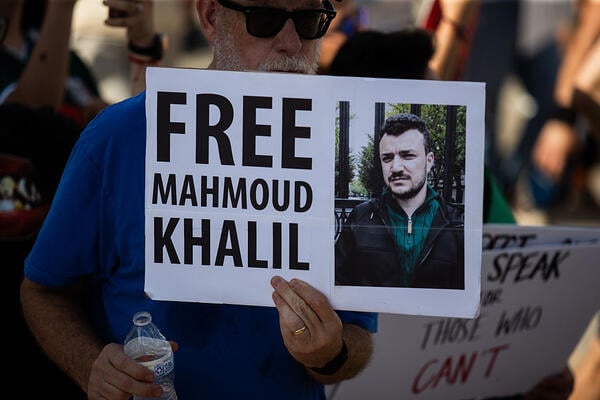
A federal judge ordered that Mahmoud Khalil, the Columbia University graduate and student protest leader who was detained by ICE agents in March, be released from a detention center in Louisiana. News outlets reported that he walked out of the detention center around 6:40 Central time Friday evening.
U.S. District Judge Michael Farbiarz ruled on Friday that Khalil, a legal permanent resident who has not been accused of any crime, should be released on bail and that continuing to hold him was highly unusual and could constitute “unconstitutional” punishment for his political beliefs. The Trump administration had sought to keep Khalil imprisoned based on a minor alleged immigration infraction after another judge ruled earlier this month that it could not continue to hold him purely based on the State Department’s claim that his continued presence in the U.S. posed a foreign policy threat.
Khalil’s arrest made national headlines and kicked off the Trump administration’s months-long campaign of detentions, visa revocations and threats of deportation against international students.

Key points:
As the final school bells ring and students head into summer vacation, educators and parents alike are turning their attention to the phenomenon known as the summer slide–the learning loss that can occur when children take a long break from structured academic activity.
NWEA research notes that students can lose up to two months of math skills over the summer, and reading abilities can also decline, particularly for students from underserved communities.
But the summer slide isn’t inevitable. With the growing availability of engaging, high-quality online learning tools, students have more opportunities than ever to keep their skills sharp. These tools offer interactive lessons, personalized learning paths, and fun activities that reinforce what students learned during the school year–without making summer feel like school.
Here are five standout online resources designed to help K-12 students stay on track over the summer months:
1. Khan Academy: Khan Academy’s free online platform offers comprehensive lessons in math, science, history, and more. Its summer learning programs provide structured plans for students in grades K-12, including daily activities tailored by grade level. Each lesson includes short instructional videos, interactive quizzes, and mastery challenges. For students who want to get ahead or reinforce tricky concepts from the previous school year, Khan Academy is an ideal, self-paced resource.
Khan Kids, a separate app for younger learners (ages 2-8), combines educational videos, stories, and games that focus on early literacy, math, and social-emotional development.
2. PBS LearningMedia: PBS LearningMedia curates thousands of free videos, lesson plans, and interactive activities aligned to state and national standards. The content is engaging and age-appropriate, drawing from trusted PBS programs like Wild Kratts, NOVA, and Peg + Cat. During the summer, PBS typically offers special themed weeks–like “Summer of Reading” or “Science Week”–featuring playlists and activity bundles to help children stay curious and engaged.
For younger children, PBS Kids also provides games and shows that reinforce foundational skills in reading, math, and critical thinking.
3. ReadWorks: Reading skills are among the most vulnerable to decline during the summer, especially for students who do not have regular access to books or structured reading activities. ReadWorks is a nonprofit platform offering free, research-based reading comprehension materials for grades K-12. Teachers and parents can assign grade-level texts, paired with vocabulary lessons and comprehension questions. The platform also features an Article-A-Day challenge that encourages students to build background knowledge and reading stamina with just 10 minutes a day. ReadWorks is especially helpful for English Language Learners, offering audio versions and question supports to aid comprehension.
4. Prodigy: For students who struggle to stay motivated during math practice, Prodigy turns learning into a role-playing adventure game. Students solve math problems to earn rewards and level up characters, making the experience both educational and fun. Aligned with state standards and suitable for grades 1-8, Prodigy adapts to each learner’s skill level, offering targeted practice without the pressure of grades or tests. Parents can access dashboards to track progress and set goals over the summer. Prodigy also offers a version for English Language Arts, expanding the platform’s reach beyond numbers.
5. Smithsonian Learning Lab: For families looking to incorporate cross-curricular learning, the Smithsonian Learning Lab provides a treasure trove of multimedia collections that blend history, science, art, and culture. Students can explore virtual exhibits, complete inquiry-based lessons, and create their own digital portfolios. The platform is well-suited for middle and high school students, especially those interested in project-based learning and critical thinking. Whether studying the Civil Rights Movement or learning about ecosystems, students can explore real artifacts, images, and primary sources from the Smithsonian’s vast collection.
Keeping minds active and curious
Experts emphasize that summer learning doesn’t need to mirror the structure of the traditional classroom–keeping students intellectually engaged as they explore their personal interests reinforces academic skills in an low-stress environment.
Families can also incorporate daily routines that promote learning–reading together before bed, practicing math while cooking, or exploring nature to spark scientific curiosity.
As the digital learning landscape expands, there are more tools than ever to support students year-round. With just 20-30 minutes of meaningful academic engagement each day, students can maintain their momentum and return to the classroom in the fall ready to learn.


The war in Gaza and the adverse reaction of U.S. colleges to the pro-Palestinian movement have completely changed students’ relationship to higher education, according to the maker of a new film about last year’s protests.
A new documentary, The Encampments, follows the movement from Columbia University, where the first tents were erected in April 2024, as protests spread to hundreds of campuses worldwide, including the University of Tokyo and Copenhagen University.
Not just isolated to Ivy League institutions in the U.S., the movement spread to many traditionally Republican-dominated states as well, Michael Workman, co-director of the film, told Times Higher Education.
“These are not just places where the coastal elite are,” he said. “This movement touched and reached into the middle of America. In places like [Idaho], there were protests every day in solidarity and support.”
He hopes that the film, which he sees as a “counternarrative” to the media’s negative portrayal of the encampments, will “haunt” higher education leaders for being on the wrong side of history.
Although the conflict in Gaza continues, the student movement has had a much smaller impact this year, with many students facing severe repercussions from both their universities and the White House.
“For some reason camping out on the lawn demanding an end to a genocide made all these administrators around the world, and especially in the U.S., lose their minds,” said Workman.
He said the encampments arrived at a time of “heightened” organization and engagement among the student body. These movements are not sustainable but always “ebb and flow,” he added.
Along with demanding that universities lend their voices to Gaza, students have called on institutions to divest from companies that they believe are funding a genocide.
Workman said the “twin demands” of many of the students were to support Palestinians and to take universities, which they were paying lots of money, back to being educational institutions.
“Students have seen their educations get turned into moneymaking machines, [instead of institutions] that are primarily there to teach students,” he said.
“This has completely changed this generation’s relationship to higher education, and I think their relationship to the U.S. and U.S. foreign policy.”
He said the war in Gaza has “woken up this generation,” which is why colleges reacted with such force.
“It’s why they responded in the way that they did, because they felt they couldn’t do anything else. The cat was out of the bag,” he said.
“These students are not going to go back to thinking what Israel is doing in Gaza was justified … and they’re going to continue to grow their movement to raise awareness around what’s happening and to fight against it.”
Workman, who also teaches documentary film production at the University of San Francisco, said the response by faculty in the U.S. is “not a monolith” but that it is becoming increasingly supportive of the students.
This has been particularly evident since the detention of activist and green card–holder Mahmoud Khalil, who features in the documentary, he said. Khalil, an international student who moved to the U.S. in 2022, was arrested in March following a crackdown on student protesters by President Donald Trump’s administration.
“The more they repress the movement, in a lot of ways, the stronger it gets, because people aren’t backing down,” Workman said.
“That doesn’t mean that we have this huge moment like the encampment moment, but we’re building a sustained foundation that is continuing to grow with really committed organizers.”
Johns Hopkins, Arizona State and Cornell Universities are among a coalition of 12 higher education institutions and three trade groups that filed a lawsuit against the Department of Defense on Monday over the agency’s plan to cap universities’ indirect research cost rates at 15 percent.
While DOD secretary Pete Hegseth said in a memo last month that the policy is aimed at “accountability” and rooting out “waste,” the lawsuit argues that slashing indirect costs rates “will stop critical research in its tracks, lead to layoffs and cutbacks at universities across the country, badly undermine scientific research at United States universities, and erode our nation’s enviable status as a global leader in scientific research and innovation.”
On Tuesday, a federal judge in Boston issued a temporary restraining order, prohibiting the DOD from enacting the cap. A hearing in the case is set for July 2.
The litigation filed this week is the latest legal challenge universities and their advocates have mounted against the federal government’s attempts to cap the amount of money it gives universities for the indirect costs of conducting federally funded research. The National Institutes of Health, the National Science Foundation and the Department of Energy have all attempted to unilaterally enact similar caps, and federal judges have blocked those efforts for now.
For decades, universities have periodically negotiated with the federal government to calculate bespoke indirect cost reimbursement rates to pay for research costs that support multiple grant-funded projects, such as facilities maintenance, specialized equipment and administrative personnel. Universities factor those rates into their institutional budgets.
For example, Johns Hopkins and the DOD currently have in place a negotiated indirect cost rate of 55 percent. In 2024 JHU received $32 million from the DOD to cover indirect costs, according to the lawsuit. If the DOD’s plan moves forward, however, the university would lose $22 million.
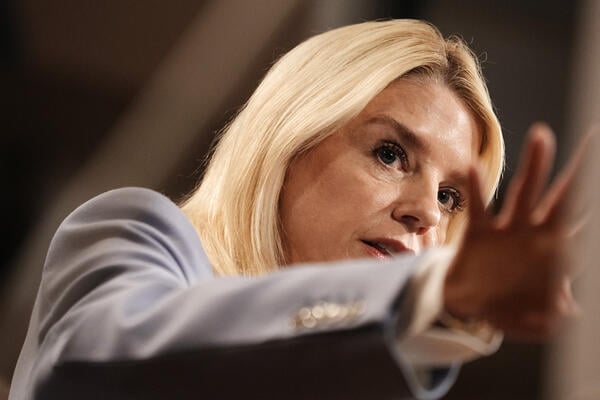
Undocumented students and immigrant advocacy organizations are still reeling after Texas, earlier this month, swiftly sided with a U.S. Department of Justice lawsuit against its policy of permitting in-state tuition for undocumented students. The two-decade-old law, which Republican state lawmakers had recently tried and failed to quash, was dismantled within a matter of hours in a move some critics called collusive.
Now the DOJ is employing the same strategy all over again—this time in Kentucky. The department filed a complaint in U.S. District Court for the Eastern District of Kentucky on Tuesday challenging the in-state tuition policy for undocumented students. The lawsuit, which names Democratic governor Andy Beshear, Commissioner of Education Robbie Fletcher and the Kentucky Council on Postsecondary Education, takes issue with a policy that allows graduates of Kentucky high schools who live in the state, regardless of citizenship, to access in-state tuition benefits.
“No state can be allowed to treat Americans like second-class citizens in their own country by offering financial benefits to illegal aliens,” U.S. attorney general Pamela Bondi said in a statement. “The Department of Justice just won on this exact issue in Texas, and we look forward to fighting in Kentucky to protect the rights of American citizens.”
Beshear is trying to distance himself from the legal battle. Crystal Staley, communications director for the governor’s office, said in a statement that the office hasn’t been served with a lawsuit, nor did it receive advance notice or hold prior conversations with the department about the regulation. She emphasized that the in-state tuition policy was established by the Kentucky Council on Postsecondary Education more than a decade ago.
“Under Kentucky law, CPE is independent, has sole authority to determine student residency requirements for the purposes of in-state tuition, and controls its own regulations,” Staley wrote. “The Governor has no authority to alter CPE’s regulations and should not be a party to the lawsuit.”
The Kentucky Council on Postsecondary Education also only became aware of the lawsuit Wednesday morning and reported that afternoon that it had not yet been served legal documents.
“Our staff General Counsel is reviewing pertinent federal laws and state regulations at this time to determine next steps,” Melissa Young, the council’s communications senior fellow, wrote in an email to Inside Higher Ed.
As of Wednesday evening, no new developments in the case had taken place, but Kentucky attorney general Russell Coleman, a Republican, indicated in a statement to Inside Higher Ed that his office planned to support the lawsuit.
“Preserving in-state tuition for our citizens at the commonwealth’s premier public universities is important to fostering Kentuckians’ potential and encouraging a vibrant state economy,” Coleman said in the statement. “Our Office will support the Trump Administration’s efforts to uphold federal law in Kentucky.”
As in Texas, a group of Republican lawmakers proposed legislation earlier this year to prevent noncitizens in Kentucky from qualifying as residents and accessing in-state tuition benefits. But the bill didn’t proceed further.
The new lawsuit heightens fears among undocumented students’ advocates that the Trump administration could target in-state tuition policies across the country, which help undocumented students in 23 states and D.C. pay for college when they can’t access federal financial aid. Advocates also worry the Trump administration could continue to sue red states to secure policy wins desired by both Republican state lawmakers and the federal government. (In Kentucky, Republicans control the attorney general’s office and the State Legislature.)
Monica Andrade, director of state policy and legal strategy at the Presidents’ Alliance on Higher Education, predicted after the Texas lawsuit, “This might only be the beginning, and there might be future actions that extend beyond Texas.”
Now she worries she’s been proven right.
The move in Kentucky comes as undocumented students and civil rights organizations are fighting back in Texas.
The Mexican American Legal Defense and Educational Fund, a Latino civil rights organization, filed a motion on behalf of undocumented students in Texas to intervene in the DOJ lawsuit. The motion argues that the speed at which Texas and the DOJ came to an agreement and the judge closed the case provided no opportunity for a hearing or for the public to weigh in.
“Our federal courts are public agencies,” said Thomas A. Saenz, president and general counsel at MALDEF. “They’re supposed to undertake their work in the public eye. The two parties and the court did all of this behind closed doors in one afternoon, without setting a public hearing … That is a complete abuse of the judicial system.”
“To come up with a consent judgment like that, they had to have been planning this for weeks,” he said. “Every Texan should be offended if something their legislators passed and then never repealed was so easily killed by the attorney general acting in collusion with the Department of Justice.”
MALDEF is representing unnamed affected students, including three DACA recipients: a third-year biomedical science student at the University of Texas Rio Grande Valley who is planning to pursue medical school, a student earning a master’s in higher education at University of Houston who was planning to apply to Ph.D. programs and a master’s student in clinical mental health counseling at the University of North Texas.
“She cannot afford to pay out-of-state tuition and will likely be forced to drop out of her program,” the motion says of one student.
The goal is for the student group to become a party in the lawsuit so that it can appeal the decision. Texas and the federal government have until early July to oppose MALDEF’s motion to intervene, but if the judge denies an intervention, MALDEF could appeal that decision as well.
Andrade said that what MALDEF is doing could possibly be replicated in other states if the DOJ challenges more in-state tuition laws, though some states might face different challenges that require different approaches. For example, Republican lawmakers in Arizona included a provision in their House budget, approved June 12 by the House Appropriations Committee, that colleges can’t use public money to reduce tuition for noncitizens, The Arizona Capitol Times reported. Some cited the Texas lawsuit.
The Presidents’ Alliance is in “close coordination with legal, with advocacy and institutional partners to explore—whether it’s immediate or longer-term—actions that we can take” to prepare for different kinds of attacks, Andrade said. “Folks in the states where we’re having conversations, their laws comport with federal law. But given everything that’s been going on, that doesn’t mean that folks should not be preparing for any type of challenge.”
The organization is also trying to advise Texas undocumented students who are “scrambling,” in the absence of any state guidance to higher ed institutions as to when the tuition rate change goes into effect and to whom the shift applies. It’s unclear, for example, whether students with DACA or Temporary Protected Status are included.
“We’re telling students to continue to take their classes and do not make any drastic changes based on this,” Andrade said.
TheDream.US, a scholarship provider for undocumented students, is also gearing up to help Texas students find more affordable programs if they can’t pay their colleges’ out-of-state tuition prices. MALDEF predicted some students’ costs would increase up to 800 percent—in some cases, from $50 to $450 per credit hour.
Gaby Pacheco, president and CEO of TheDream.US, said the organization is prioritizing helping students connect with online programs, because many live in Texas border towns, where commuting to a more distant college could require having to cross immigration control checkpoints.
In the meantime, Texas institutions and students are embroiled in “confusion and uncertainty and chaos” as they await more information, she said.
Daniel I. Morales, an associate professor of law and Dwight Olds Chair at University of Houston Law Center, said what happened in Texas is the latest example of a national trend: the “absolute erasure” of state and local issues in favor of the administration’s priorities.
Morales said two decades ago, Texas’s in-state tuition policy was born out of Republican governor Rick Perry’s recognition of “the reality locally in Texas, that we have an enormous undocumented population that is enormously productive if given the opportunity to go to college,” which benefits the state economy. But now, state lawmakers fear risking their career trajectories if they don’t prioritize partisan national interests, he said.
He doesn’t know what’s going to happen in Kentucky. But if it goes the way of Texas and the attorney general files a joint motion with the DOJ, civil rights organizations such as MALDEF would have to be the ones to fight it, with students as the plaintiffs, he said.
“Students, if they don’t have the resources to pay out-of-state tuition, they don’t have the resources to litigate, either,” at least not on their own, he said. “There’s very little recourse.”
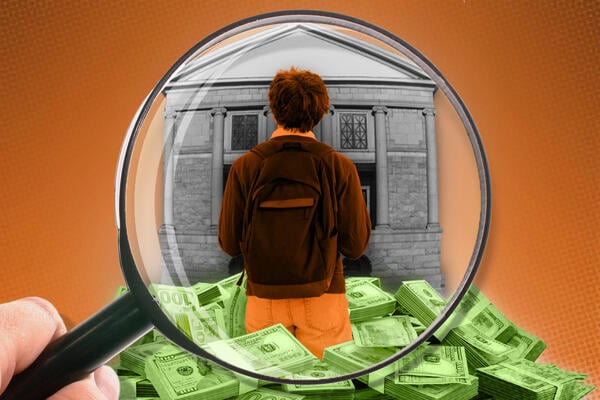
More than a week after the Senate education committee released its draft plan to overhaul the federal student aid system, higher education leaders across the sector are still breathing a sigh of relief over key provisions concerning how to hold colleges accountable for student outcomes.
The high chamber’s proposal, which ties a university’s access to federal loans to how much their students earn after graduation, is simpler and more productive than the House proposal, known as risk-sharing, which would require colleges to pay an annual penalty based on their students’ outstanding loan balances, they say.
“More than any other factor, a program having low earnings is the thing that is most connected with the prevalence of students defaulting or struggling to pay down their loans,” said Jordan Matsudaira, director of the Postsecondary Education and Economics Research Center at American University. “This is a serious and sensible proposal to establish what I think of as a very necessary accountability in the higher education space.”
The Senate plan seems to be based on an existing regulation known as gainful employment, which uses students’ earnings and debt to measure whether for-profit and non-degree programs adequately prepare their students for the workforce. But Republicans who sponsored the bill and expanded its reach to all degree programs have been wary of drawing attention to the overlap, as lawmakers have avoided calling it anything like “gainful employment 2.0” or “gainful for all.”
Republicans have historically opposed the Democratic policy, which was first put in place during the Obama administration, saying it unfairly targeted for-profit programs and that a free market would be the best way to regulate the quality of academic programs. (The first Trump administration rescinded the policy, and then the Biden administration enacted a stricter version that remains in place today.)
But now, as congressional Republicans grow increasingly concerned about student debt and skeptical of higher education, some have started to change their tune.
Some say the Senate’s proposed earnings test is likely to succeed and become law, as it’s the lesser of two evils and aligns more with a conservative federalist ideology when compared to the House’s plan. But others view this new accountability measure as just that—new.
“They’re not looking at the Biden gainful-employment rules and saying, ‘Oh, this was a good thing. Let’s do it like they did.’ They’re taking a different approach,” said Jason Altmire, president of Career Education Colleges and Universities, the national trade association representing for-profit institutions, which criticized the Biden regulations. He also noted that including all types of colleges is “a huge difference from the way the two last Democratic administrations approached gainful employment.”
Either way, the provision is now up for consideration as part of a broader legislative package—the One Big Beautiful Bill Act—that would cut spending in order to finance Trump’s tax cuts and immigration policies. The House bill passed by a one-vote margin last month; now, senators are aiming to pass their version by July 4.
Since lawmakers are using a process known as reconciliation, they only need 51 votes to pass the bill in the Senate, down from the typical 60 votes. But it also means the legislation has to adhere to a specific set of rules.
Some policy experts question whether the Senate’s accountability measure for colleges will pass the sniff test. If it does, they expect the proposal to be included in the final bill.
The crux of the Senate’s accountability measure is tracking the median earnings of students program by program and comparing them to the average earnings of adults ages 25 to 34 with only a high school diploma. If students don’t earn more than adults without a college degree for two out of three consecutive years, then the program would lose access to federal loans for at least two years.
Earnings for baccalaureate degree programs will be measured four years after a student leaves the program regardless of age—a time frame that some experts say is too short to truly gauge a program’s value. Meanwhile, the median income of high school graduates would not be evaluated until they hit at least 25 years old, or seven years after the typical high school graduation. Some higher ed lobbyists say that comparison isn’t fair.
“You’re comparing a 23-year-old, let’s say, cosmetology graduate just getting started with her book of business to a 34-year-old flight attendant who’s been on the job for 16 years who only has a high school diploma,” Altmire said.
A similar process would be used for graduate and professional programs, except the income level would be compared to adults with a bachelor’s degree and earnings will be evaluated further out from when the student left the program.
The Senate hasn’t released any data on its plan, but studies on the Biden gainful-employment rule offer some insights into which types of college programs could be affected most.
Data collected by the Department of Education in 2022 showed that about 1.3 percent of programs not currently subject to gainful employment would fail. About half of the programs failed because of the earnings test, according to an Inside Higher Ed analysis of department data.
Other studies show that of those programs, the ones most impacted will likely be graduate studies and for-profit bachelor’s degrees. For example, about 20 percent of students in each of these sectors failed the Biden earnings test, said Matsudaira, who worked for the Department of Education during the Biden administration and is very familiar with gainful employment. That’s compared to only about 4 percent of nonprofit bachelor programs.
Altmire, from CECU, however, disagreed. He pointed to a 2023 study conducted by Monroe College, a for-profit institution, which showed that nearly 90 percent of the undergraduate degree programs that would fail the earnings test are at public and private nonprofit colleges.
But just because more nonprofit colleges fail doesn’t mean they have a high rate of failure proportionally, Matsudaira responded.
“About 90 percent of enrollment is in the nonprofit sector, and only 10 percent of enrollment is in the for-profit sector, so of course, that should tilt in the direction of the nonprofit sector,” he said. “I would think about it a little bit more within each one of those sectors.”
The Senate plan does keep the current gainful-employment rules in place while House Republicans want to repeal them. The Trump administration is currently defending the regulations in federal court, but a judge could throw them out.
Still, policy experts cautioned against thinking of the Senate proposal as an add-on to Biden’s version of gainful employment.
“I think it would be inaccurate to say the Senate took the Biden gainful-employment rules and tinkered around the edges,” Altmire said. “They took one concept from the Biden rules but then did a lot of other things that greatly improved that concept and made it more fair across all schools.”
Beyond covering all degree programs, the Senate plan doesn’t specifically include credential programs, which currently fall under gainful employment. That’s a change that some experts say is a mistake, especially when the Senate is looking to expand the Pell Grant to cover some of these credentials. However, that plan comes with its own guardrails.
“Certificates, beyond any other type of program, are most typified by extremely low earnings, and having those low earnings leads to a lot of loan defaults over all. So the fact that the Senate proposal ignores the certificate space altogether is baffling,” Matsudaira said.
The Senate also changed the test itself. This version only measures a student’s earnings, while the Biden rule measures both income and whether students can pay off their loans. Furthermore, the Senate’s calculation includes all program enrollees, regardless of whether they completed their degree. The current gainful-employment regulations only count completers.
Of these changes, the most debated has been whether to include in the earnings calculation students who stopped out before completing their degrees.
Some policy experts argue that it’s fair to hold colleges accountable only for the earnings of students who complete their degree programs. If the goal is also to increase degree completion, that’s great, they say, but it should be handled through a separate provision than the one focused on return on investment.
“If the goal is to actually measure the ROI, we should be looking specifically at those who earned a degree,” said Craig Lindwarm, senior vice president for governmental affairs at the Association of Public and Land-grant Universities. “There are a lot of other ways of supporting efforts to boost college completion, like investment in the Postsecondary Student Success Grant program.”
But others say it is entirely fair.
“You shouldn’t be rewarded when a student chooses your school, takes a bunch of financial aid, doesn’t complete the program,” said Altmire from CECU. “That makes no sense.”
That said, higher education leaders from all sectors of the industry are generally pleased with the proposal and say it shows that the Senate has been listening to their concerns.
“We’re encouraged that the Senate is heading down a more productive path,” one collegiate lobbyist said. “This is a much fairer, simpler and [more] effective approach to accountability.”