Tag: News

  • After Texas, DOJ Targets Kentucky’s In-State Tuition Policy

    After Texas, DOJ Targets Kentucky’s In-State Tuition Policy

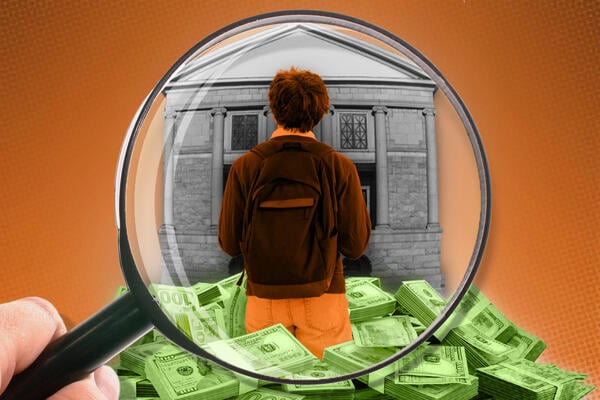
    Undocumented students and immigrant advocacy organizations are still reeling after Texas, earlier this month, swiftly sided with a U.S. Department of Justice lawsuit against its policy of permitting in-state tuition for undocumented students. The two-decade-old law, which Republican state lawmakers had recently tried and failed to quash, was dismantled within a matter of hours in a move some critics called collusive.

    Now the DOJ is employing the same strategy all over again—this time in Kentucky. The department filed a complaint in U.S. District Court for the Eastern District of Kentucky on Tuesday challenging the in-state tuition policy for undocumented students. The lawsuit, which names Democratic governor Andy Beshear, Commissioner of Education Robbie Fletcher and the Kentucky Council on Postsecondary Education, takes issue with a policy that allows graduates of Kentucky high schools who live in the state, regardless of citizenship, to access in-state tuition benefits.

    “No state can be allowed to treat Americans like second-class citizens in their own country by offering financial benefits to illegal aliens,” U.S. attorney general Pamela Bondi said in a statement. “The Department of Justice just won on this exact issue in Texas, and we look forward to fighting in Kentucky to protect the rights of American citizens.”

    Beshear is trying to distance himself from the legal battle. Crystal Staley, communications director for the governor’s office, said in a statement that the office hasn’t been served with a lawsuit, nor did it receive advance notice or hold prior conversations with the department about the regulation. She emphasized that the in-state tuition policy was established by the Kentucky Council on Postsecondary Education more than a decade ago.

    “Under Kentucky law, CPE is independent, has sole authority to determine student residency requirements for the purposes of in-state tuition, and controls its own regulations,” Staley wrote. “The Governor has no authority to alter CPE’s regulations and should not be a party to the lawsuit.”

    The Kentucky Council on Postsecondary Education also only became aware of the lawsuit Wednesday morning and reported that afternoon that it had not yet been served legal documents.

    “Our staff General Counsel is reviewing pertinent federal laws and state regulations at this time to determine next steps,” Melissa Young, the council’s communications senior fellow, wrote in an email to Inside Higher Ed.

    As of Wednesday evening, no new developments in the case had taken place, but Kentucky attorney general Russell Coleman, a Republican, indicated in a statement to Inside Higher Ed that his office planned to support the lawsuit.

    “Preserving in-state tuition for our citizens at the commonwealth’s premier public universities is important to fostering Kentuckians’ potential and encouraging a vibrant state economy,” Coleman said in the statement. “Our Office will support the Trump Administration’s efforts to uphold federal law in Kentucky.”

    As in Texas, a group of Republican lawmakers proposed legislation earlier this year to prevent noncitizens in Kentucky from qualifying as residents and accessing in-state tuition benefits. But the bill didn’t proceed further.

    The new lawsuit heightens fears among undocumented students’ advocates that the Trump administration could target in-state tuition policies across the country, which help undocumented students in 23 states and D.C. pay for college when they can’t access federal financial aid. Advocates also worry the Trump administration could continue to sue red states to secure policy wins desired by both Republican state lawmakers and the federal government. (In Kentucky, Republicans control the attorney general’s office and the State Legislature.)

    Monica Andrade, director of state policy and legal strategy at the Presidents’ Alliance on Higher Education, predicted after the Texas lawsuit, “This might only be the beginning, and there might be future actions that extend beyond Texas.”

    Now she worries she’s been proven right.

    Pushback in Texas

    The move in Kentucky comes as undocumented students and civil rights organizations are fighting back in Texas.

    The Mexican American Legal Defense and Educational Fund, a Latino civil rights organization, filed a motion on behalf of undocumented students in Texas to intervene in the DOJ lawsuit. The motion argues that the speed at which Texas and the DOJ came to an agreement and the judge closed the case provided no opportunity for a hearing or for the public to weigh in.

    “Our federal courts are public agencies,” said Thomas A. Saenz, president and general counsel at MALDEF. “They’re supposed to undertake their work in the public eye. The two parties and the court did all of this behind closed doors in one afternoon, without setting a public hearing … That is a complete abuse of the judicial system.”

    “To come up with a consent judgment like that, they had to have been planning this for weeks,” he said. “Every Texan should be offended if something their legislators passed and then never repealed was so easily killed by the attorney general acting in collusion with the Department of Justice.”

    MALDEF is representing unnamed affected students, including three DACA recipients: a third-year biomedical science student at the University of Texas Rio Grande Valley who is planning to pursue medical school, a student earning a master’s in higher education at University of Houston who was planning to apply to Ph.D. programs and a master’s student in clinical mental health counseling at the University of North Texas.

    “She cannot afford to pay out-of-state tuition and will likely be forced to drop out of her program,” the motion says of one student.

    The goal is for the student group to become a party in the lawsuit so that it can appeal the decision. Texas and the federal government have until early July to oppose MALDEF’s motion to intervene, but if the judge denies an intervention, MALDEF could appeal that decision as well.

    Andrade said that what MALDEF is doing could possibly be replicated in other states if the DOJ challenges more in-state tuition laws, though some states might face different challenges that require different approaches. For example, Republican lawmakers in Arizona included a provision in their House budget, approved June 12 by the House Appropriations Committee, that colleges can’t use public money to reduce tuition for noncitizens, The Arizona Capitol Times reported. Some cited the Texas lawsuit.

    The Presidents’ Alliance is in “close coordination with legal, with advocacy and institutional partners to explore—whether it’s immediate or longer-term—actions that we can take” to prepare for different kinds of attacks, Andrade said. “Folks in the states where we’re having conversations, their laws comport with federal law. But given everything that’s been going on, that doesn’t mean that folks should not be preparing for any type of challenge.”

    The organization is also trying to advise Texas undocumented students who are “scrambling,” in the absence of any state guidance to higher ed institutions as to when the tuition rate change goes into effect and to whom the shift applies. It’s unclear, for example, whether students with DACA or Temporary Protected Status are included.

    “We’re telling students to continue to take their classes and do not make any drastic changes based on this,” Andrade said.

    TheDream.US, a scholarship provider for undocumented students, is also gearing up to help Texas students find more affordable programs if they can’t pay their colleges’ out-of-state tuition prices. MALDEF predicted some students’ costs would increase up to 800 percent—in some cases, from $50 to $450 per credit hour.

    Gaby Pacheco, president and CEO of TheDream.US, said the organization is prioritizing helping students connect with online programs, because many live in Texas border towns, where commuting to a more distant college could require having to cross immigration control checkpoints.

    In the meantime, Texas institutions and students are embroiled in “confusion and uncertainty and chaos” as they await more information, she said.

    Daniel I. Morales, an associate professor of law and Dwight Olds Chair at University of Houston Law Center, said what happened in Texas is the latest example of a national trend: the “absolute erasure” of state and local issues in favor of the administration’s priorities.

    Morales said two decades ago, Texas’s in-state tuition policy was born out of Republican governor Rick Perry’s recognition of “the reality locally in Texas, that we have an enormous undocumented population that is enormously productive if given the opportunity to go to college,” which benefits the state economy. But now, state lawmakers fear risking their career trajectories if they don’t prioritize partisan national interests, he said.

    He doesn’t know what’s going to happen in Kentucky. But if it goes the way of Texas and the attorney general files a joint motion with the DOJ, civil rights organizations such as MALDEF would have to be the ones to fight it, with students as the plaintiffs, he said.

    “Students, if they don’t have the resources to pay out-of-state tuition, they don’t have the resources to litigate, either,” at least not on their own, he said. “There’s very little recourse.”

    Source link

  • How Senate Republicans Want to Hold Colleges Accountable

    How Senate Republicans Want to Hold Colleges Accountable

    More than a week after the Senate education committee released its draft plan to overhaul the federal student aid system, higher education leaders across the sector are still breathing a sigh of relief over key provisions concerning how to hold colleges accountable for student outcomes.

    The high chamber’s proposal, which ties a university’s access to federal loans to how much their students earn after graduation, is simpler and more productive than the House proposal, known as risk-sharing, which would require colleges to pay an annual penalty based on their students’ outstanding loan balances, they say.

    “More than any other factor, a program having low earnings is the thing that is most connected with the prevalence of students defaulting or struggling to pay down their loans,” said Jordan Matsudaira, director of the Postsecondary Education and Economics Research Center at American University. “This is a serious and sensible proposal to establish what I think of as a very necessary accountability in the higher education space.”

    The Senate plan seems to be based on an existing regulation known as gainful employment, which uses students’ earnings and debt to measure whether for-profit and non-degree programs adequately prepare their students for the workforce. But Republicans who sponsored the bill and expanded its reach to all degree programs have been wary of drawing attention to the overlap, as lawmakers have avoided calling it anything like “gainful employment 2.0” or “gainful for all.”

    Republicans have historically opposed the Democratic policy, which was first put in place during the Obama administration, saying it unfairly targeted for-profit programs and that a free market would be the best way to regulate the quality of academic programs. (The first Trump administration rescinded the policy, and then the Biden administration enacted a stricter version that remains in place today.)

    But now, as congressional Republicans grow increasingly concerned about student debt and skeptical of higher education, some have started to change their tune.

    Some say the Senate’s proposed earnings test is likely to succeed and become law, as it’s the lesser of two evils and aligns more with a conservative federalist ideology when compared to the House’s plan. But others view this new accountability measure as just that—new.

    “They’re not looking at the Biden gainful-employment rules and saying, ‘Oh, this was a good thing. Let’s do it like they did.’ They’re taking a different approach,” said Jason Altmire, president of Career Education Colleges and Universities, the national trade association representing for-profit institutions, which criticized the Biden regulations. He also noted that including all types of colleges is “a huge difference from the way the two last Democratic administrations approached gainful employment.”

    Either way, the provision is now up for consideration as part of a broader legislative package—the One Big Beautiful Bill Act—that would cut spending in order to finance Trump’s tax cuts and immigration policies. The House bill passed by a one-vote margin last month; now, senators are aiming to pass their version by July 4.

    Since lawmakers are using a process known as reconciliation, they only need 51 votes to pass the bill in the Senate, down from the typical 60 votes. But it also means the legislation has to adhere to a specific set of rules.

    Some policy experts question whether the Senate’s accountability measure for colleges will pass the sniff test. If it does, they expect the proposal to be included in the final bill.

    How Does It Work?

    The crux of the Senate’s accountability measure is tracking the median earnings of students program by program and comparing them to the average earnings of adults ages 25 to 34 with only a high school diploma. If students don’t earn more than adults without a college degree for two out of three consecutive years, then the program would lose access to federal loans for at least two years.

    Earnings for baccalaureate degree programs will be measured four years after a student leaves the program regardless of age—a time frame that some experts say is too short to truly gauge a program’s value. Meanwhile, the median income of high school graduates would not be evaluated until they hit at least 25 years old, or seven years after the typical high school graduation. Some higher ed lobbyists say that comparison isn’t fair.

    “You’re comparing a 23-year-old, let’s say, cosmetology graduate just getting started with her book of business to a 34-year-old flight attendant who’s been on the job for 16 years who only has a high school diploma,” Altmire said.

    A similar process would be used for graduate and professional programs, except the income level would be compared to adults with a bachelor’s degree and earnings will be evaluated further out from when the student left the program.

    The Senate hasn’t released any data on its plan, but studies on the Biden gainful-employment rule offer some insights into which types of college programs could be affected most.

    Data collected by the Department of Education in 2022 showed that about 1.3 percent of programs not currently subject to gainful employment would fail. About half of the programs failed because of the earnings test, according to an Inside Higher Ed analysis of department data.

    Other studies show that of those programs, the ones most impacted will likely be graduate studies and for-profit bachelor’s degrees. For example, about 20 percent of students in each of these sectors failed the Biden earnings test, said Matsudaira, who worked for the Department of Education during the Biden administration and is very familiar with gainful employment. That’s compared to only about 4 percent of nonprofit bachelor programs.

    Altmire, from CECU, however, disagreed. He pointed to a 2023 study conducted by Monroe College, a for-profit institution, which showed that nearly 90 percent of the undergraduate degree programs that would fail the earnings test are at public and private nonprofit colleges.

    But just because more nonprofit colleges fail doesn’t mean they have a high rate of failure proportionally, Matsudaira responded.

    “About 90 percent of enrollment is in the nonprofit sector, and only 10 percent of enrollment is in the for-profit sector, so of course, that should tilt in the direction of the nonprofit sector,” he said. “I would think about it a little bit more within each one of those sectors.”

    A Fairer Gainful?

    The Senate plan does keep the current gainful-employment rules in place while House Republicans want to repeal them. The Trump administration is currently defending the regulations in federal court, but a judge could throw them out.

    Still, policy experts cautioned against thinking of the Senate proposal as an add-on to Biden’s version of gainful employment.

    “I think it would be inaccurate to say the Senate took the Biden gainful-employment rules and tinkered around the edges,” Altmire said. “They took one concept from the Biden rules but then did a lot of other things that greatly improved that concept and made it more fair across all schools.”

    Beyond covering all degree programs, the Senate plan doesn’t specifically include credential programs, which currently fall under gainful employment. That’s a change that some experts say is a mistake, especially when the Senate is looking to expand the Pell Grant to cover some of these credentials. However, that plan comes with its own guardrails.

    “Certificates, beyond any other type of program, are most typified by extremely low earnings, and having those low earnings leads to a lot of loan defaults over all. So the fact that the Senate proposal ignores the certificate space altogether is baffling,” Matsudaira said.

    The Senate also changed the test itself. This version only measures a student’s earnings, while the Biden rule measures both income and whether students can pay off their loans. Furthermore, the Senate’s calculation includes all program enrollees, regardless of whether they completed their degree. The current gainful-employment regulations only count completers.

    Of these changes, the most debated has been whether to include in the earnings calculation students who stopped out before completing their degrees.

    Some policy experts argue that it’s fair to hold colleges accountable only for the earnings of students who complete their degree programs. If the goal is also to increase degree completion, that’s great, they say, but it should be handled through a separate provision than the one focused on return on investment.

    “If the goal is to actually measure the ROI, we should be looking specifically at those who earned a degree,” said Craig Lindwarm, senior vice president for governmental affairs at the Association of Public and Land-grant Universities. “There are a lot of other ways of supporting efforts to boost college completion, like investment in the Postsecondary Student Success Grant program.”

    But others say it is entirely fair.

    “You shouldn’t be rewarded when a student chooses your school, takes a bunch of financial aid, doesn’t complete the program,” said Altmire from CECU. “That makes no sense.”

    That said, higher education leaders from all sectors of the industry are generally pleased with the proposal and say it shows that the Senate has been listening to their concerns.

    “We’re encouraged that the Senate is heading down a more productive path,” one collegiate lobbyist said. “This is a much fairer, simpler and [more] effective approach to accountability.”

    Source link

  • Swiss University, CIC to Help International Students

    Swiss University, CIC to Help International Students

    Following the Trump administration’s crackdown on international students, Franklin University Switzerland is opening up its doors to some of those who won’t be able to re-enter the United States. 

    About 40 slots are open to the students who attend institutions that are part of the Council of Independent Colleges, according to an email from CIC president Marjorie Hass. Franklin University is one of the association’s international members and is accredited in the United States and Switzerland. Students can receive an $11,250 scholarship per semester.

    This partnership with Franklin University is just one way that colleges are working to support students amid the travel bans and visa restrictions. Experts have suggested that colleges could establish branch campuses in other countries as another option.

    Hass wrote that she hopes students will be able to return to their original U.S. institution when possible, but the Franklin option could help them continue their studies in the meantime.

    “I am proud to see an international member step up to offer this enriching academic opportunity to students at other CIC institutions,” she wrote. “I’d like to express my appreciation to Samuel Martín-Barbero, president of Franklin University Switzerland, for recognizing the plight of US CIC institutions and for stepping forward with a collegial offer of support.”

    Since CIC announced the Franklin University partnership, Al Akhawayn University in Morocco and American University of Nigeria have alaso agreed to offer a similar deal to CIC member institutions. 

    Source link

  • Helping Students Navigate Transitions, Addressing Teacher Shortages

    Helping Students Navigate Transitions, Addressing Teacher Shortages

    Across Texas, students entering dual-credit programs with the goal of becoming educators often face unclear pathways and unnecessary obstacles. But in the North Texas region, a multisector group is working to change that—starting as early as high school.

    Through programs like Pathways in Technology Early College High School (P-TECH) and early-college high schools, students can begin working toward their teaching credentials before they graduate. The Acceleration to Credential (A2C) Working Group—convened by Educate Texas—brings together local independent school districts, Dallas College and four-year university partners to create clearly defined pathways that connect high school, community college and bachelor’s-level educator preparation.

    While the intention behind many dual-credit programs is to offer students more opportunity, the reality is that inconsistent requirements across institutions often create confusion. A student may graduate high school having earned college credits, only to find those credits don’t transfer toward a four-year degree. Or they may complete an associate degree that doesn’t align with bachelor’s programs in education.

    To address this, A2C partners designed a coordinated model known as Target Pathways, which:

    • Aligns associate degree pathways to all bachelor’s education programs in the region.
    • Meets both high school graduation and Texas Core Curriculum requirements.
    • Creates space for local adaptation within a unified regional framework.
    • Provides students with clear maps of all degree and certification requirements.

    These streamlined pathways aim to improve student outcomes, reduce excess credit accumulation and increase the number of teacher candidates completing their degrees on time and with less debt.

    The associate of art in teaching (A.A.T.) degrees that students earn in these P-TECH programs have shown promising outcomes when it comes to entering education careers. Between 2010 and 2023, 49 percent of A.A.T. earners in Dallas–Fort Worth became paraprofessionals or teachers or advanced into education leadership positions, according to an analysis by Wesley Edwards at the University of North Texas (Wesley Edwards, AAT Analysis, University of North Texas, April 23, 2024, and Sept. 21, 2024). As these pathways expand across more high schools, partners across the state should continue investing in the supports students need to enter the education workforce.

    “Developing a robust pathway for high school students to not only earn credentials but also gain valuable exposure to industry is critically important as we look to meet workforce needs,” said Robert DeHaas, vice provost of the School of Education at Dallas College.

    This work is about more than academic alignment—it’s about building the relationships and trust needed to create meaningful change.

    “This work requires close coordination between large systems that haven’t always worked together,” DeHaas said. “The collaborative has helped foster the coalition-building needed to break down these historical silos and create a college road map that supports the upward economic mobility of our students.”

    Educate Texas will continue supporting A2C by helping school districts implement these pathways and facilitating collaboration with higher education partners. By investing in regional alignment and early access, the A2C model offers a promising solution for expanding the teacher pipeline in Texas and beyond.

    Joseph Reyes is deputy director of teaching and leading at Educate Texas, an initiative of Communities  Foundation of Texas. In this role, he manages programs that increase access to high-quality educator preparation and works with school districts and higher education partners to strengthen the teacher workforce across the state.

    Source link

  • What’s With the Em Dash/AI Anxieties? (opinion)

    What’s With the Em Dash/AI Anxieties? (opinion)

    In recent months, a curious fixation has emerged in corners of academia: the em dash. More specifically, the apparent moral panic around how it is spaced. A dash with no spaces on either side? That must be AI-generated writing. Case closed.

    What might seem like a minor point of style has, in some cases, become a litmus test for authenticity. But authenticity in what sense—and to whom? Because here is the thing: There is no definitive rule about how em dashes should be spaced. Merriam-Webster, for instance, notes that many newspapers and magazines insert a space before and after the em dash, while most books and academic journals don’t. Yet, a certain kind of scholar will see a tightly spaced dash and declare: “AI.”

    This tells us less about punctuation and more about the moment we are in. It reflects a deeper discomfort within academic knowledge production—about writing, authority and who gets to speak in the language of the academy.

    Academic writing has long been a space of exclusion. Mastering its conventions—its structures, tones and unwritten rules—is often as important as the content itself. Those conventions are not neutral. They privilege those fluent in a particular kind of English, in a particular kind of intellectual performance. And while these conventions have sometimes served a purpose—precision, nuance, care—they have also functioned to gatekeep, obscure and signal belonging to a small circle of insiders.

    In that context, generative AI represents a real shift. Not because it replaces thinking—clearly, it does not—but because it lowers the barriers to expressing ideas in the right register. It makes writing less labor-intensive for those who are brilliant thinkers but not naturally fluent in academic prose. It opens possibilities for scholars writing in their second or third languages, for early-career researchers who have not yet mastered the unwritten codes and for anyone who simply wants to get to the point more efficiently. This is not a minor intervention—it is a step toward democratizing academic expression.

    And in that lies both the opportunity and the anxiety.

    I have read academic work recently that likely used AI writing tools—either to help organize thoughts, smooth expression or clarify argument. Some of it has been genuinely excellent: clear, incisive and original. The ideas are coherent and well articulated. The writing does not perform difficulty; it performs clarity. And in doing so, it invites more people in.

    By contrast, a fair portion of traditionally polished academic writing still feels burdened by its own formality—long sentences, theoretical throat-clearing prose that loops and doubles back on itself. It is not that complexity should be avoided, but rather that complexity should not be confused with value. The best writing does not show off; it shows through. It makes ideas visible.

    Needless to say, I am not about to cite examples—whether of the work I suspect was AI-assisted or the work that could have done with a bit of help.

    So why, then, do so many in academic circles focus their attention on supposed telltale signs of AI use—like em dashes—rather than on the substance of the ideas themselves?

    Part of the answer lies in the ethics discourse that continues to swirl around AI. There are real concerns here: about transparency, authorship, citation and the role of human oversight. Guidance from organizations such as the Committee on Publication Ethics, and emerging policies from journals and universities, reflect the need for thoughtful governance. These debates matter. But they should not collapse into suspicion for suspicion’s sake. That’s because the academic world has never been a perfectly level field. Those with access to time, mentorship, editorial support and elite institutions have long benefited from invisible scaffolding.

    AI tools, in some ways, make that scaffolding more widely available.

    Of course, there are risks. Overreliance on AI can lead to formulaic writing or the flattening of style. But these are not new issues—they predate AI and are often baked into the structures of journal publishing itself. The greater risk now is a kind of reactionary gatekeeping: dismissing writing not because of its content, but because of how it looks, mistaking typography for intellectual integrity.

    What is needed, instead, is a mature, open conversation about how AI fits into the evolving ecosystem of scholarly work. We need clear, consistent guidelines that recognize both the benefits and limitations of these tools. Recent statements from major institutions have begun to address this, but more are needed. We need transparency around how AI is used—without attaching shame to its use. And we need to refocus on what matters most: the quality of the thinking, the strength of the contribution and the clarity with which ideas are communicated.

    The em dash is not the problem. Nor is AI. The problem is a scholarly culture still too often wedded to performance over substance—one where form is used to mask or elevate, rather than to express.

    If we are serious about making knowledge more inclusive, more global and more just, then we should embrace tools that help more people take part in its production. Not uncritically, but openly. Not secretly, but responsibly.

    What we should be asking is not “Was this written with AI?” but rather, “Is this work rigorous? Is it generous? Does it help us think differently?”

    That is the kind of scholarship worth paying attention to—em dash or not.

    Joseph Mellors is a research associate for FUTOURWORK at Westminster Business School at the University of Westminster, in the U.K.

    Source link

  • Data Shows Uptake of Statewide Digital Mental Health Support

    Data Shows Uptake of Statewide Digital Mental Health Support

    In 2023, New Jersey’s Office of the Secretary of Higher Education signed a first-of-its-kind agreement with a digital mental health provider, Uwill, to provide free access to virtual mental health services to college students across the state.

    Over the past two years, 18,000-plus students across 45 participating colleges and universities have registered with the service, representing about 6 percent of the eligible postsecondary population. The state considers the partnership a success and hopes to codify the offering to ensure its sustainability beyond the current governor’s term.

    The details: New Jersey’s partnership with Uwill was spurred by a 2021 survey of 15,500 undergraduate and graduate students from 60 institutions in the state, which found that 70 percent of respondents rated their stress and anxiety as higher in fall 2021 than in fall 2020. Forty percent indicated they were concerned about their mental health in light of the pandemic.

    Under the agreement, students can use Uwill’s teletherapy, crisis connection and wellness programming at any time. Like others in the teletherapy space, Uwill offers an array of diverse licensed mental health providers, giving students access to therapists who share their backgrounds or language, or who reside in their state. Over half (55 percent) of the counselors Uwill hires in New Jersey are Black, Indigenous or people of color; among them, they speak 11 languages.

    What makes Uwill distinct from its competitors is that therapy services are on-demand, meaning students are matched with a counselor within minutes of logging on to the platform. Students can request to see the same counselor in the future, but the nearly immediate access ensures they are not caught in long wait or intake times, especially compared to in-person counseling services.

    Under New Jersey’s agreement, colleges and students do not pay for Uwill services, but colleges must receive state aid to be eligible.

    The research: The need for additional counseling capacity on college campuses has grown over the past decade, as an increasing number of students enter higher education with pre-existing mental health conditions. The most recent survey of counseling center staff by the Association for University and College Counseling Center Directors (AUCCCD) found that while demand for services is on the decline compared to recent years, a larger number of students have more serious conditions.

    Over half of four-year institutions and about one-third of community colleges nationwide provide teletherapy to students via third-party vendors, according to AUCCCD data. The average number of students who engaged with services in 2024 was 453, across institution size.

    Online therapy providers tout the benefits of having a service that supplements on-campus, in-person therapists’ services to provide more comprehensive care, including racially and ethnically diverse staff, after-hours support and on-demand resources for students.

    Eric Wood, director of counseling and mental health at Texas Christian University, told Inside Higher Ed that an ideal teletherapy vendor is one that increases capacity for on-campus services, expanding availability for on-campus staff and ensuring that students do not fall through the cracks.

    A 2024 analysis of digital mental health tools from the Hope Center at Temple University—which did not include Uwill—found they can improve student mental health, but there is little direct evidence regarding marginalized student populations’ use of or benefits from them. Instead, the greatest benefit appears to be for students who would not otherwise engage in traditional counseling or who simply seek preventative resources.

    One study featured in the Hope Center’s report noted the average student only used their campus’s wellness app or teletherapy service once; the report calls for more transparency around usage data prior to institutional investment.

    The data: Uwill reported that from April 2023 to May 2025, 18,207 New Jersey students engaged in their services at the 45 participating institutions, which include Princeton, Rutgers, Montclair State and Seton Hall Universities, as well as the New Jersey Institute of Technology and Stevens Institute of Technology. Engaged students were defined as any students who logged in to the app and created an account.

    New Jersey’s total college enrollment in 2022 was 378,819, according to state data. An Inside Higher Ed analysis of publicly available data found total enrollment (including undergraduate and graduate students) among the 45 participating colleges to be 327,353. Uwill participants in New Jersey, therefore, totaled around 4 percent of the state’s postsecondary students or 6 percent of eligible students.

    The state paid $4 million for the first year of the Uwill contract, as reported by Higher Ed Dive, pulling dollars from a $10 million federal grant to support pandemic relief and a $16 million budget allocation for higher education partnerships. That totals about $89,000 per institution for the first year alone, or $12 per eligible student, according to an Inside Higher Ed estimate.

    In a 2020 interview with Inside Higher Ed, Uwill CEO Michael London said the minimum cost to a college for one year of services is about $25,000, or $10 to $20 per student per year.

    New Jersey students met with counselors in more than 78,000 therapy sessions, or about six sessions per student between 2023 and 2025, according to Uwill data. Students also engaged in 548 chat sessions with therapists, sent 6,593 messages and requested 1,216 crisis connections during the first two years of service.

    User engagement has slowly ticked up since the partnership launched. In January 2024, the state said more than 7,600 students registered on the platform, scheduling nearly 20,000 sessions. By September 2024, Uwill reported more than 13,000 registered students on the platform, scheduling more than 49,000 sessions. The most recent data, published June 6, identified 18,000 students engaging in 78,000 sessions.

    Over 1,200 of Montclair State’s 22,000 students have registered with Uwill since June 2023, Jaclyn Friedman-Lombardo, Montclair State’s director of counseling and psychological services, said at a press conference, or approximately 6 percent of the total campus population.

    The state does not require institutions to track student usage data to compare usage to campus counseling center services, but some institutions choose to, according to a spokesperson for both the office of the secretary and Uwill. The secretary’s office can view de-identified campus-level data and institutions can engage with more detailed data, as well.

    Creating access: One of the goals of implementing digital mental health interventions is to expand access beyond traditional counseling centers, such as after hours, on weekends or over academic breaks.

    Roughly 30 percent of participants in the Uwill partnership completed a session between 5 p.m. and 9 a.m. on a weeknight or on the weekends. Over the 2024–25 winter break, students engaged in 3,073 therapy sessions. More than 90 of those took place outside New Jersey. Students also used Uwill services over summer vacation this past year (9,235 sessions from May 20 to Aug. 26, of which 10 percent took place outside New Jersey).

    A majority of users were traditional-aged college students (17 to 24 years old), and 32 percent were white, 25 percent Hispanic and 17 percent Black. The report did not compare participating students’ race to those using on-campus services or general campus populations.

    About 85 percent of New Jersey users were looking for a BIPOC therapist, and 9 percent requested therapists who speak languages other than English, including Hindi and Mandarin.

    Postsession assessment completed by students who do schedule an appointment has returned positive responses, with a feedback score of 9.5 out of 10 in New Jersey, compared to Uwill’s 9.2 rating nationally.

    Unanswered questions: Wood indicated the data leaves some questions left unanswered, such as whether students were also clients at the on-campus counseling center, or if the service had improved students’ mental health over time from a clinical perspective.

    “Just because a student had four sessions with a telehealth provider, if they came right back to the counseling center, did it really make an impact on the center’s capacity to see students?” Wood said.

    The high cost of the service should also give counseling center directors pause, Wood said, because those dollars could be used for a variety of other interventions to create capacity.

    The data indicated some benefits to counseling center capacity, including diverse staff and after-hours support. But to create a true return on investment, counseling centers should calculate how much capacity the tele–mental health service created and its direct impact on student wellness, not just participation in services.

    “It would be ideal to compare the number of students receiving services (not just creating an account) through the platform to the number of students who would likely benefit from receiving treatment, as identified by clinically validated mental health screens on population surveys,” said Sara Abelson, assistant professor at the Hope Center and the report’s lead author.

    What’s next: New Jersey renewed its contract with Uwill first in January 2024 and then again in May, extending through spring 2026. State leaders said the ongoing services are still supported by pandemic relief funds.

    On May 2, New Jersey assemblywoman Andrea Katz from the Eighth District introduced a bill, the Mental Health Early Access on Campus Act, which would require colleges to implement mental health first aid training among campus stakeholders, peer support programs, mental health orientation education and teletherapy services to ensure counseling ratios are one to every 1,250 students per campus. The International Accreditation of Counseling Services recommends universities maintain a ratio of at least one full-time equivalency for every 1,000 to 1,500 students.

    “We know that mental health services that our kids need are not going to end when we change governors,” Katz said at a press conference. “We need to make sure that all of this is codified into law.”

    Source link

  • State Department Screening Visa Applicants’ Social Media

    State Department Screening Visa Applicants’ Social Media

    John McDonnell/Getty Images

    The U.S. State Department is rolling out sweeping new rules for vetting student visa applicants using their social media presence, according to Politico.

    The new process will include screening for “any indications of hostility towards the citizens, culture, government, institutions or founding principles of the United States,” according to an internal State Department cable. 

    Department officials will also look for posts that signal “advocacy for, aid or support for foreign terrorists and other threats to national security” and “support for antisemitic harassment or violence,” specifically citing support for Hamas—a charge commonly levied against student protesters advocating for Palestinian rights—as grounds for rejection. The cable also directs officials to cull applicants who “demonstrate a history of political activism.”

    The news comes a few weeks after Secretary of State Marco Rubio paused all student visa interviews in order to implement a new screening policy focusing on students’ online activity. The Associated Press reported that the department rescinded the pause, but applicants who don’t allow the government to review their social media accounts could be rejected.

    The cable is the Trump administration’s latest effort to curtail the flow of international students to the U.S., as tens of thousands of foreign students await approval of their visas after months of delays and with only weeks until the start of the fall semester. 

    State Department spokespeople did not respond to a list of questions from Inside Higher Ed in time for publication. 

    Source link

  • Embracing Credit Mobility for Student Success

    Embracing Credit Mobility for Student Success

    Let me tell you about Andrew, a motivated student who graduated high school early with impressive dual-enrollment credits. After attending a private college for a year and taking some time to work, he rekindled his educational ambitions at a community college. With approximately 30 credits remaining for his bachelor’s degree, he applied to an R-1 university, ready to complete his journey.

    What should have been a seamless transition became an unexpected challenge. Despite submitting his transfer work in October and regularly checking in with his adviser, Andrew discovered in January—after classes had already begun—that he faced “at least three years of coursework” rather than the anticipated single year to graduation.

    This isn’t a rare occurrence or some administrative anomaly. Rather, it is the norm for individuals who aren’t pursuing a four-year degree on the traditional timeline. Higher education talks endlessly about completion and student success while maintaining systems and policies that actively undermine these goals.

    Andrew’s story represents a critical opportunity for higher education. While his family successfully advocated for a refund and found another institution that better recognized his prior learning, his experience highlights a fundamental challenge we must address collectively.

    The Scale of the Challenge

    We have 42 million Americans with some college credit but no degree. We have 200,000 military personnel transitioning to civilian life annually. We have an economy desperately needing upskilled workers. Yet higher education’s response to credit mobility remains anchored in outdated policies and processes that fail to serve today’s students, institutions or workforce needs.

    Many institutions have made meaningful progress in supporting diverse student needs through childcare services, flexible scheduling and online options. These are important steps. Now we must extend this same commitment to the academic evaluation processes that directly impact students’ time to degree and financial investment.

    The Disconnect

    Transfer articulation agreements—where they have been struck—have created valuable pathways, but their implementation often lacks the consistency and transparency students deserve. When agreements include qualifying language without firm commitments, students can’t effectively plan their educational journeys or make informed financial decisions.

    The contradiction is striking: We express concern about student debt and extended time to degree, questioning why students take 150 credits when they only need 120 to graduate. Meanwhile, our credit evaluation processes remain opaque, slow and often costly.

    The current reality—where students frequently must apply, pay deposits or even enroll before understanding how their previous academic work will be valued—creates unnecessary barriers. We can do better—and, frankly, must. It’s like buying a car and finding out the price after you’ve signed the paperwork. In what other industry would this be acceptable?

    The Opportunity

    Consider the possibilities if we fully embraced credit mobility as a cornerstone of student success:

    • Students could make informed decisions about their educational pathways before committing financially.
    • Institutions could demonstrate their commitment to affordability by recognizing prior learning.
    • Graduation rates would improve as students avoid unnecessary course repetition.
    • The workforce would benefit from skilled professionals entering more quickly.

    Addressing the Objections

    The objections to credit mobility typically fall into three categories:

    1. Faculty workload: Faculty are being asked to do more, and evaluating credits for prospective students can feel like an unnecessary burden. But what if more students could see that their learning had value, that their degree was within reach, that they didn’t have to retake classes they’ve already mastered? This shift in perspective could transform the evaluation process from a burden to an opportunity.
    2. Lost revenue: The focus on enrollments often overshadows the reality that only 50 percent of students who start college actually finish within six years. What if our goal was to expand opportunities so more students could complete their degrees? What if students were taking classes that genuinely added to their experience and built their confidence rather than repeating content they’ve already learned?
    3. Quality concerns: Quality is often cited as justification for delayed evaluation. In reality, transparent evaluation supports faculty’s desire to maintain academic standards. Clear processes allow for informed decisions and data collection that ensures the focus remains on student outcomes.

    The AI Opportunity

    The emergence of artificial intelligence presents a tremendous opportunity to enhance our credit-evaluation processes—addressing issues of time and cost while creating transparency for data analysis. A new study just released by AACRAO on the role of AI in credit mobility makes a compelling case as to why the technology could help unlock new ways of working. We can harness technology as a powerful tool to support faculty decision-making and administrative resource allocations. AI could:

    • Identify potential course equivalencies based on learning outcomes.
    • Highlight relevant information in transfer documentation.
    • Streamline evaluation processes, allowing human experts to focus on complex cases.
    • Provide leadership with insights into where credit mobility is operating effectively.
    • Identify areas needing additional resources or training.

    With proper implementation and training, AI can become a tool to achieve our goals of access and completion at scale—reducing both the cost and timeline to graduation.

    The Path Forward

    If we truly believe in access and completion, then credit mobility must become a shared priority across higher education. This means:

    • Making course information, learning outcomes and sample syllabi readily accessible.
    • Expanding recognition of diverse learning experiences, including microcredentials, corporate training, internships and apprenticeships.
    • Establishing and honoring clear timelines for credit evaluation.
    • Eliminating financial barriers to credit assessment.
    • Providing updated articulation and equivalency tables in easy-to-find locations on admissions websites.

    Andrew’s experience should be the exception, not the rule. Colleges and universities that embrace this challenge will not only better serve their students but will also position themselves for long-term sustainability in an increasingly competitive landscape. Those that resist change risk becoming irrelevant to the very students they aim to serve and perpetuating the cost and time-to-completion conundrum.

    The Call to Action

    The question before us isn’t whether credit mobility matters—it’s whether we have the collective will to make it a reality at scale, not just at a handful of institutions, but across systems and all institutions. We must recognize that our students are learning in new ways, on new timelines, and bringing knowledge that evolves faster than our curriculum. Our students deserve nothing less than our full commitment to recognizing their learning, regardless of where it occurred.

    So I’ll ask: How committed are you to credit mobility at scale? Your answer says everything about how seriously you take college completion.

    Jesse Boeding is the co-founder of Education Assessment System, an AI-powered platform mapping transfer, microcredentials and prior learning to an institution’s curriculum to enable decision-making and resourcing.

    Source link

  • A Setback for Maine’s Free Community College Program

    A Setback for Maine’s Free Community College Program

    The Maine Legislature’s budget-writing committee voted last week in favor of ending the state’s free college program, to the great disappointment of community college leaders.

    The move by Democrats on the Appropriations and Financial Affairs Committee contradicts Governor Janet Mills’s proposal earlier this year to make the program a permanent fixture. The free college program, which Mills initially put forward, went into effect in 2022 to support students affected by the pandemic. It originally covered two years of community college tuition for anyone who graduated high school between 2020 and 2023, after other forms of aid were applied. Though created with one-time funding, the program enjoyed strong bipartisan support and was extended in 2023 to include the Classes of 2024 and 2025. Students have a certain amount of time to enroll; for example, 2025 graduates have to start college no later than the 2027–28 academic year to take advantage of the program.

    Since the program began, Maine’s community college enrollment has surged—enrollment of all degree-seeking students in the system jumped from 11,308 in 2022 to 14,278 in 2024. A total of 17,826 students have participated in the program since it started, according to data from the Maine Community College System. Many hoped, and expected, the program would continue.

    But the Appropriations and Financial Affairs Committee’s proposal would give the community college system $20 million over two years to help current participants finish their studies before winding down the program for good, Maine Public Radio reported. The recommendation comes as Maine faces a lean budget year, with federal funding for the state hard to predict. President Donald Trump threatened to cut Maine’s federal funds after a tense exchange with Mills in February over his executive order barring transgender athletes from competing on the teams that match their gender identity.

    Maine representative Michael Brennan said at the committee meeting last week, “We’ve had to make hard decisions about what we think we can afford and not afford,” though he called the free college program “tremendously successful.”

    Senator Peggy Rotundo, co-chair of the Appropriations and Financial Affairs Committee, emphasized in a statement to Inside Higher Ed that state lawmakers are honoring their commitment to fund students who graduated in 2025 and expected to receive the program’s support. She implied the program could still be made permanent in the future.

    “When considering what comes next, our focus is on ensuring this program’s long-term sustainability,” she wrote. “The Appropriations and Financial Affairs Committee is seeking additional data and evaluation from the community college system to inform a responsible, future-focused approach. In a tough budget year, we have a duty to balance expanding opportunity with fiscal responsibility—and that means looking ahead to build a durable model that can serve Maine students for years to come.”

    The decision to nix the program isn’t set in stone—the state budget still needs to make its way through the state House and Senate and finally to the governor’s desk. But state legislators indicated they plan to wrap up the budget by today.

    David Daigler, president of the Maine Community College System, wrote a letter to the system’s Board of Trustees on Saturday expressing “deep disappointment” over the committee’s vote. He told the board it’s “highly unlikely” there will be any major changes to funding for the free college program at this point.

    “Ultimately, the committee’s vote reflects the state’s challenging financial situation, which made it hard to get support even though Free College is a very popular, effective program that directly benefits Maine families, students, and employers,” Daigler said in the letter. “You can be certain that we will build on the momentum of this program to emerge stronger, wiser, and re-dedicated to providing an affordable, accessible education to Mainers looking to improve their lives.”

    In February, Daigler and community college staff members advocated for the program before the committee. Multiple students also spoke out in support, some arguing they wouldn’t have attended college without the program.

    Brianna Michaud, a health-science student at Southern Maine Community College, told the budget-writing committee she considered not going to college because, despite her working two jobs, her family couldn’t afford it. Then she heard about the free college program.

    “As a first-generation college student who’s entirely responsible for paying off their education, the Maine free college scholarship is the reason why I’m able to put my hard work and dedication toward fulfilling my purpose in life, which is to help others,” said Michaud, who plans on becoming a pediatric occupational therapist.

    Payson Avery, a student representative at Southern Maine, said he graduated high school in 2020, during the height of the pandemic, and didn’t know what to do. He felt like his grades senior year didn’t show his potential. After two years, while working at a restaurant, he decided to take the state up on its free college offer. Now he has plans to attend the University of Maine at Farmington to major in education, he told the committee.

    “Without this program, I’m not sure I would have been able to make it to this point,” he said.

    Source link

  • A Unified System for Student Athlete Supports

    A Unified System for Student Athlete Supports

    A growing number of programs in higher education focus on student athletes’ mental health, recognizing that the pressures of competing in collegiate athletics, combined with academic challenges, financial concerns and team relationships, can negatively impact student well-being.

    At the University of Richmond, the athletics department created a new program to emphasize holistic student well-being, taking into account the different dimensions of a student athlete’s identity and development.

    Spider Performance, named after the university mascot, unites various stakeholders on campus to provide a seamless experience for student athletes, ensuring they’re properly equipped to tackle challenges on the field, in the classroom and out in the world beyond college.

    “The athlete identity is a really special part of [students’ identities], but it’s not the only part, so making sure they are [considered] human beings first—even before they’re students, they’re humans first. Let’s examine and explore that identity,” said Lauren Wicklund, senior associate athletics director for leadership and student-athlete development.

    How it works: The university hosts 17 varsity sports in NCAA Division I, which include approximately 400 student athletes. Richmond has established four pillars of the student athlete experience: athletic, academic, personal and professional achievement.

    “The whole concept is to build champions for life,” said Wicklund, who oversees the program. “It’s not just about winning in sport; it’s about winning in the classroom, winning personally and then getting the skills and tools to win for the rest of your life.”

    These pillars have driven programming in the athletics department for years, but their messaging and implementation created confusion.

    Now, under Spider Performance, the contributions and collaborations of stakeholders who support student athletes are more visible and defined, clarifying the assistance given to the athletes and demonstrating the program’s value to recruits. The offices in Spider Performance include academic support, sports medicine, leadership, strength and conditioning, mental health, and well-being.

    “It’s building a team around them,” Wicklund explained. “Rather than our student athlete thinking, ‘I have to go eat here, I have to do my homework here, I have to do my workout here,’ it’s, ‘No, we want you to win at everything you do, and how you do one thing is how you do everything.’”

    Outside of the specific athletic teams, Wicklund and her staff collaborate with other campus entities including faculty members, career services and co-curricular supports.

    Preparing for launch: Richmond facilitates a four-year development model for student athletes, starting with an orientation experience for first-year students that helps them understand their strengths and temperament, up to more career-focused programming for seniors.

    Recognizing how busy students’ schedules get during their athletic season, the university has also created other high-impact learning experiences that are more flexible and adaptive. Students can engage in a career trek to meet alumni across the country, study abroad for a short period, participate in a service project or take a wellness course, all designed to fit into their already-packed schedules.

    Part of the goal is to help each student feel confident discussing their experience as an athlete and how it contributes to their long-term goals. For instance, students might feel ill-equipped for a full-time job because they never had a 12-week internship, but university staff help them translate their experiences on the field or the court into skills applicable to a workplace environment, Wicklund said.

    The university is also adapting financial literacy programming to include information on name, image and likeness rights for student athletes, covering not just budgeting, investing and financial literacy topics but also more specific information related to their teams.

    Encouraging athletes to attend extra sessions can be a challenge, but the Spider Performance team aims to help students understand the value of the program and how it applies to their daily lives. The program also requires buy-in from other role models in students’ lives, including trainers, coaches and professors.

    “We work really hard to customize fits to different programs so we’re speaking the same language as our coaches,” which helps create a unified message to students, Wicklund said.

    If your student success program has a unique feature or twist, we’d like to know about it. Click here to submit.

    Source link