In one of his all-too-frequent rants on Truth Social last month, President Trump posted, “I am considering taking Three Billion Dollars of Grant Money away from a very antisemitic Harvard, and giving it to TRADE SCHOOLS all across our land.” It’s a transparent and cynical ploy: pit one segment of the education community against another—rich Harvard versus poor “trade schools”—and watch the divisions take hold. But make no mistake: This strategy only works if institutions, elite or otherwise, fall for the bait.
We’re not sure what the president means by “trade schools” but suspect he’s referring to the nation’s 1,000-plus community and technical colleges— institutions that educate about a third of all U.S. undergraduates. We’ve both spent our careers making the case for greater investment in these colleges, including through the Project on Workforce, the cross-Harvard initiative we helped found six years ago to forge better pathways between education and good jobs.
(And for the record: Trump’s accusation that Harvard is “very antisemitic” rings hollow coming from the man who hosted a Holocaust-denying white nationalist at Mar-a-Lago. It’s certainly unrecognizable to us—two Jews who, between us, have spent more than 40 years as Harvard students, staff and faculty.)
If Trump actually cared about funding “trade schools,” he would start by telling congressional leaders to strip the provision in his so-called Big Beautiful Bill that raises the credit-hour threshold for Pell Grant eligibility. Community colleges serve the bulk of low-income students, and most of them have to work while in school. This proposed change proffered by the House, which was not included in the Senate version of the reconciliation bill, could cut off aid for 400,000 students a year and force many to drop out.
But the threat isn’t just in proposed legislation: Community colleges are already the targets of Trump’s politically motivated grant cancellations. For example, just last month, his administration revoked awards from six Tech Hubs, created by bipartisan legislation to boost innovation, job creation and national security. These included projects in Alabama, where a community college would expand biotech training; in Idaho, where a community college planned to train aerospace workers; and in Vermont, where a community college was preparing a new semiconductor workforce.
And the cuts don’t stop there. If the president was really serious about supporting the U.S. skilled technical workforce, he would expand, not gut, programs like the National Science Foundation’s Advanced Technological Education initiative, which has provided $1.5 billion to more than 500 community and technical colleges to develop cutting-edge training in fields like advanced manufacturing and robotics. Instead, his budget proposes cutting NSF by 55 percent, including deep reductions to education and workforce programs. The president’s budget also proposes eliminating all Perkins Act funding for community colleges (approximately $400 million), limiting the funding to middle and high schools and thereby cutting off a key source of federal support for technical training beyond secondary school.
If by “trade schools” Trump means education for trades jobs, his hostility toward immigrants undermines the very students he claims to support. Eight percent of community college students are not U.S. citizens, with much higher shares on some campuses. They are just as vital to America’s future as the researchers in Harvard’s labs. In 2024, immigrants made up more than 30 percent of construction trades workers and 20 percent of U.S. manufacturing workers. Closing America’s doors won’t just harm colleges: It will weaken our ability to build, make and compete.
Last week, we joined more than 12,000 Harvard alumni in signing an amicus brief to pledge our commitment to defend not only Harvard but the broader higher education enterprise from the Trump administration’s bullying attacks. Over the past month, we also spoke with community college leaders from around the country whose work we profiled in our 2023 book, America’s Hidden Economic Engines. Without exception, these leaders expressed deep concern, understanding that if Harvard, with all of its resources, could be forced to bend to the will of a tyrannical government, what chance would less resourced institutions have to defend academic freedom and maintain independence from governmental intrusion?
If elite universities and community and technical colleges stand together, we can defend not just education, but democracy itself. Challenging as it will be for Harvard to weather this unprecedented assault on its independence, and that of higher education, it has no choice but to stand firm. Unlike many more vulnerable victims of Trump’s bullying—immigrants, civil servants, USAID grantees, the trans community—Harvard has the resources to fight back. Ultimately its rights, along with the rights of others targeted, will likely be vindicated by the courts. But in the interim, a lot of needless damage will be done to the lives of affected people and institutions. Most Americans may not speak often of such abstractions as academic freedom, due process and the fate of democracy. But they know a bully when they see one.
Rachel Lipson, a co-founder of the Harvard Project on Workforce, was a senior adviser on workforce at the CHIPS Program Office at the U.S. Department of Commerce. She recently returned to Harvard Kennedy School as a research fellow.
Robert Schwartz is a professor of practice emeritus at Harvard Graduate School of Education.Before joining the Harvard faculty in 1996, he had a long career in education and government.
Earlier this year the University of North Carolina at Chapel Hill Board of Trustees approved the design of a $228 million research facility that would expand UNC’s work on virology, vaccine development and other areas. But now that project is suddenly on hold.
UNC Chapel Hill is one of several major research universities pausing construction plans due to financial uncertainty provoked by the Trump administration’s efforts to cap federal research funding reimbursement rates.
In recent months multiple federal agencies have announced plans to cap research reimbursement rates at 15 percent. (While such rates typically hover just under 30 percent, some institutions have negotiated reimbursement rates upward of 50 percent.) Though court challenges have halted the rate cuts for now, the uncertainty has prompted some institutions to pause certain construction projects—particularly research labs and related facilities.
Institutions pausing or slowing plans to build new projects include some of the nation’s wealthiest private universities: Yale, Johns Hopkins and Washington U in St. Louis, which posted endowments of $41.4 billion, $13 billion and $11.9 billion, respectively, in the last fiscal year, according to a recent study of endowments. (UNC Chapel Hill is among the nation’s wealthiest public institutions, with a $5.7 billion endowment.)
In some cases, construction on other facilities, like a new residence hall at UNC Chapel Hill, is moving forward while projects such as research labs have been halted.
“We’re riding out a bad period,” Alexandra Daum, Yale’s associate vice president for New Haven affairs and university properties, said at a local Chamber of Commerce event earlier this month.
One of those projects is the planned conversion of a street into a pedestrian and cyclist-only plaza, which officials decided in February to delay, Daum told The New Haven Independent, another local news outlet. Yale has not identified the other nine projects it plans to put off.
Daum pointed to uncertainty about federal funding as the reason for the pause.
“Like many, Yale is tracking federal funding closely and anticipating there will be impact to projects in the planning pipeline,” Daum wrote in an email to Inside Higher Ed. “We don’t know how much of an impact federal decisions will have on these projects, so we are being prudent.”
Construction on projects already underway will reportedly continue.
Johns Hopkins University announced a similar decision in early June. Administrators wrote in a message to campus that the university has experienced “a steady stream of research grant terminations, suspensions, and delays” that created uncertainty, particularly when coupled with the proposals for lower research reimbursement rates. The rate caps could deal the university a loss of more than $300 million a year in federal research funding, officials wrote.
JHU is taking a number of measures to handle budget concerns, including a staff hiring freeze, as well as pulling back on planned construction projects.
“Prudence dictates cutting back our ambitions in the near term, and we have decided to reduce our capital construction and renovation plans by approximately 10-20%,” officials wrote. “Final decisions on these reductions will be made over the summer in consultation with the divisions, with an emphasis on continuing mission-critical projects, essential deferred maintenance, and projects that are already far along in the permitting, demolition, and construction process.”
JHU did not identify what specific projects might be pushed back.
Washington University halted construction of a new arts and sciences building in April; work was expected to begin earlier this year, according to a news release from last fall.
WashU officials also cited federal funding concerns.
“We regret that it’s necessary to take these actions, but in our current climate, it is simply not prudent to continue with these projects as scheduled,” Chancellor Andrew D. Martin said in a news release. “We are always careful stewards of the university’s resources, but at this time, given the uncertainty around federal research funding and other potential government actions, we have to take a careful look at every aspect of our operations. We hope that once we have a clearer sense of the financial picture, we may be able to revisit some of these investments.”
“Due to ongoing uncertainty surrounding federal research funding, the University has paused plans for the Translational Research Building. We are currently evaluating our research infrastructure, including our research facilities, and will continue to monitor funding trends. Scenario planning is underway to help us remain prepared for future opportunities,” a UNC Chapel Hill spokesperson told Inside Higher Ed in an emailed statement.
In neighboring Virginia, Republican governor Glenn Youngkin rejected $600 million in funding requests for 10 planned renovation and expansion projects at public universities last month, The Virginia Mercury reported. In a letter to state legislators, Youngkin cited economic uncertainty.
“I am optimistic about Virginia’s longer-term prospects for Fiscal Year 2027 and Fiscal Year 2028, and beyond, but there are some short-term risks as President Trump resets both fiscal spending in Washington and trade policies that require us to be prudent and not spend all of the projected surplus before we bank it,” Youngkin wrote to state lawmakers in May.
Some of those planned projects were research-oriented, though many were not.
The Outlook
While a few universities have publicly walked back big projects, that doesn’t appear to be happening en masse, experts say. Planned construction is still happening at many colleges.
“Projects, generally, are moving ahead. There are some larger projects that have been paused. The ones that have been stopped tend to be research-focused projects,” said Chris Purdy, director of higher education at SmithGroup, a design and planning firm that works in the sector.
Other buildings, particularly those that are student-focused or in high-growth areas such as health sciences and STEM, are also moving ahead, he noted. Purdy pointed out that research labs and related facilities are often highly specialized and therefore the most expensive to build.
“They’re primed to be under the most scrutiny just because they’re very expensive buildings,” Purdy said.
He noted that SmithGroup continues to see requests for proposals for campus construction and is optimistic that colleges won’t back off of planned projects throughout the rest of the year. But looking ahead to next summer, or fiscal year 2027, Purdy is less sure about where things will stand, noting the looming economic uncertainty for many institutions.
“At that point they’re going to have a different outlook on funding for capital projects,” Purdy said.
Some colleges and universities use therapy dogs to help students destress or address homesickness. The University of South Carolina employs shelter dogs for students to engage with as a form of exercise.
The Canine Fitness and Connection course invites about 25 students each semester to volunteer at a local animal shelter, giving them exposure to working with dogs while encouraging them to live healthy and active lives.
What’s the need: A 2023 survey by Inside Higher Ed and College Pulse found that 57 percent of students named getting more exercise as a top health-related goal, while 43 percent cited spending more time outside. About half of respondents indicated their physical health and wellness impact their ability to focus, learn and do well in school at least somewhat.
At USC, the physical activities program strives to offer unique courses that match student interests, said director Gary Nave. In the past, courses have included Zumba and Quidditch, but as trends change, student interest wanes, requiring more creative programs.
In 2022, Nave was researching physical education offerings at other universities and came across Auburn University’s Puppy Play course, which was offered from about 2014 to 2017.
“We know that interacting with animals has benefits and it makes a difference in your stress and your anxiety, and I think a lot of our physical activity classes help do that,” Nave said, so pairing the two seemed natural.
Walking clubs have also grown in popularity among young people as Gen Z seeks to both make friends and stay active.
How it works: USC partners with Final Victory Animal Rescue in West Columbia (roughly four miles from campus) to offer the course, which has two sections with a total enrollment of about 25.
Students who enroll often have some level of experience with dogs and are looking to connect with animals while living in college housing, or to learn how to better care for their pets. For others less familiar with dogs, the course is an opportunity to step out of their comfort zone.
Prior to class time, students are assigned a reading or video to watch, and the instructor delivers a brief 15-minute lecture at the start of their meeting.
The remainder of the 90-minute class is devoted to animal care, including dog walking, grooming and feeding, plus kennel cleaning.
“They do a lot of other stuff, because there’s more to taking care of a dog than just walking it,” Nave said. “If that was the case, then there’s no responsibility, everybody would want a dog, right?”
Students submit their step count to the instructor as part of their participation grade, often tracked by a pedometer app or similar smartphone or smartwatch technology.
Throughout the term, students learn about canine behavior, how to use a slip lead, the benefits of walking with dogs and the importance of community service, among other topics.
At the end of the term, students complete a project in which they take the dogs out of the shelter for a day to practice handling them on their own. After the excursion, students provide feedback to shelter staff about the dog’s temperament and behavior so staff can create the best match for the dog’s permanent home.
Students also take pictures and videos, which are shared as promotional material for the shelter, helping increase the visibility of dogs up for adoption.
Video courtesy of Tom Kelly, the University of South Carolina
The impact: Since the program launched in spring 2022, student interest has been strong, with end-of-term feedback revealing how much participants enjoyed the opportunity to work with dogs.
More Pup Perspectives
Several colleges and universities have recognized the positive impact dogs can have on student well-being and engagement.
“This semester, I was able to do something I love, while at the same time learning skills that I could apply to my everyday life,” one student wrote. “I highly, highly recommend taking this class any chance you get.”
Former students have even elected to foster or adopt animals they cared for during the course, according to the USC website.
Assignment data shows an impact on students’ physical activity as well, with participants walking an average of 2.5 miles over 90 minutes, clocking 7,000 steps during the week.
The course also connects students with a philanthropic organization and professional instructors with extensive experience raising and handling dogs, exposing them to new perspectives, Nave said.
“It’s worth experimenting to see if this class could be beneficial for your students,” Nave said.
DIY: For institutions looking to model the course, Nave advises starting with a student survey to gauge interest. “If they don’t want it, there’s no sense in offering it.” Then identify a local animal shelter willing to serve as a host and partner for the course.
Another consideration is risk management. Working with animals can pose a safety risk for students, so identifying whether the course requires a waiver or other documentation to lessen liability is key, Nave said.
This story was originally published by CalMatters. Sign up for their newsletters.
California’s schools and colleges receive billions in federal funding each year — money that President Donald Trump is threatening to terminate over the actions of one student. AB Hernandez, a junior from Jurupa Valley High School, is transgender, and on May 31 she won first- and second-place medals at the state track and field championship.
“A Biological Male competed in California Girls State Finals, WINNING BIG, despite the fact that they were warned by me not to do so,” Trump said in a social media post last week. “As Governor Gavin Newscum (sic) fully understands, large scale fines will be imposed!!!”
Despite this post and a similar threat a few days earlier to withhold “large-scale” federal funding from California, Trump lacks the authority to change the state’s policy toward transgender athletes without an act of Congress or a decision by the U.S. Supreme Court. And recent court cases suggest that Trump also may have a hard time withholding money from California.
California state law explicitly allows transgender students in its K-12 school districts to compete on the team that matches their preferred gender, but the Trump administration has issued multiple directives that restrict access to girls’ sports, including a letter last week from the U.S. Department of Justice telling high schools to change their policies.
On Monday, California Attorney General Rob Bonta sued the Justice Department over its letter, saying it had “no right to make such a demand.”
“Let’s be clear: sending a letter does not change the law,” said State Superintendent of Public Instruction Tony Thurmond in a statement to school districts. “The DOJ’s letter to school districts does not announce any new federal law, and state law on this issue has remained unchanged since 2013.” On Monday, Thurmond sent his own letter to the Trump administration, refuting its legal argument.
California receives over $2 billion each year for its low-income Title I schools, as well as over $1 billion for special education. At the college level, students receive billions in federal financial aid and federal loans. Even if Trump lacks the legal authority to change state law, he could still try to withhold funding from California, just like he tried with Maine. In February, Trump asked Maine Gov. Janet Mills if her state was going to comply with a presidential executive order — which is not a law — that directed schools to bar transgender girls from certain sports. Mills said she’d comply with “state and federal laws,” effectively rebuking the president.
The Trump administration has since tried to withhold funding from Maine, but legal challenges have prevented it.
The NCAA vs. California state law
Trump made banning transgender youth athletes a centerpiece of his 2024 presidential campaign, and it’s remained a focal point for his administration this year. Nationally, Americans increasingly support restrictions on transgender athletes, according to surveys from the Pew Research Center. Gov. Gavin Newsom, who last year signed legislation supporting trans students, spoke out against transgender athletes in a podcast this March, saying it was “deeply unfair” to allow transgender girls to compete in girls’ sports.
Female athletes with higher levels of testosterone or with masculine characteristics have long faced scrutiny, biological testing and disqualification. Debates about who gets to participate in girls’ or women’s sports predate the Trump administration — and Newsom — and policies vary depending on the athletic institution.
In 2004, the International Olympic Committee officially allowed transgender athletes to compete in the sport that aligned with their gender identity, as long as the athlete had sex reassignment surgery, only to change that policy in 2015 and require hormone testing. In 2021, the committee changed the policy again, creating more inclusive guidelines but giving local athletic federations the power to create their own eligibility criteria.
Across California, youth leagues, private sports leagues and other independent athletic associations all have their own policies. Some allow transgender women and men to participate; some restrict who can compete. Some require “confirmation” of a participant’s gender, such as a government ID or statements from health care professionals, while other associations take the athletes at their word.
California’s colleges and universities are not allowed to discriminate against transgender students but state law doesn’t provide any guidance beyond that. After the presidential executive order in February, the National Collegiate Athletic Association (NCAA), which independently regulates college sports, changed its rules, prohibiting transgender women from competing and putting colleges in a bind. Roughly 60 California universities are part of the NCAA, including almost all of the UC and many Cal State campuses. Community colleges, which represent the bulk of the state’s undergraduates, are not part of the NCAA.
“There’s a strong argument (the NCAA rules) could violate state law and federal equal protection,” said Elana Redfield, the federal policy director at UCLA’s Williams Institute, which studies LGBTQ+ issues.
Amy Bentley-Smith, a spokesperson for the California State University system, declined to comment about how the NCAA policy conflicts with state and federal regulations. She said the Cal State campuses abide by the NCAA rules — preventing transgender athletes from competing — while still following state and federal non-discrimination laws regarding trans students.
Stett Holbrook, a spokesperson for the University of California system, said the UC does not have a system-wide policy for transgender athletes. He did not respond to questions about whether the campuses abide by NCAA rules.
Unlike the NCAA, the California Community College Athletic Association allows transgender athletes to compete. A spokesperson for the association, Mike Robles, said he’s aware of the NCAA rules and the Trump administration’s priorities but he did not say whether the association will modify its own policy.
The U.S. Constitution is silent on trans students
In February, just days after the president’s inauguration and the executive order regarding transgender athletes, the U.S. Department of Education launched an investigation into San Jose State after a women’s volleyball player outed her teammate as transgender. The education department has yet to provide an update on that investigation.
With the Trump administration’s focus now on CA K-12 school districts, the legal debate has intensified. In its letter to the state’s public schools last week, Assistant U.S. Attorney General Harmeet Dhillon said allowing transgender girls to compete in girls’ sports is “in violation” of the Equal Protection Clause of the U.S. Constitution and asked schools to change their policies.
But the U.S. Constitution doesn’t say anything about transgender athletes, at least not explicitly.
Instead, Dhillon is offering an interpretation of the Constitution, “which doesn’t carry the full force of law,” Redfield said. The laws that do govern transgender athletes, such Title IX, aren’t clear about what schools should do, and the U.S. Supreme Court — the entity with the power to interpret federal law and the Constitution — has yet to decide on the matter.
That said, many lower level judges have already weighed in on whether the Constitution or Title IX law protects transgender students or athletes.“The preponderance of cases are in favor of trans plaintiffs,” Redfield said. “The federal government is contradicting some pretty strong important precedent when they’re making these statements.”
After Trump’s comments about AB Hernandez, the nonprofit entity that regulates high school sports, the California Interscholastic Federation, changed its policy, slightly. For the state’s track and field championship, the federation said it would implement a new process, whereby AB Hernandez would share her award with any “biological female” that she beat. All “biological female” athletes below Hernandez would also move up in ranking.
On May 31, Hernandez shared the first-place podium twice and the second-place podium once, each time with her competitors smiling supportively, the San Francisco Chronicle reported.
A spokesperson for the governor, Izzy Gardon, said that approach is a “reasonable, respectful way to navigate a complex issue without compromising competitive fairness.”
State legislators from both parties want to expand family child care — the home-based sector of licensed child care, which has shrunk by more than a third since 2018. Both the House and Senate budget proposals include pilots to open new programs to meet the needs of families and employers.
For the past two years, a team from the nonprofit Southwestern Child Development Commission (SWCDC) has done just that, creating North Carolina’s first statewide system of support for family child care. In the past year, the organization has helped launch 27 new family child care programs, 20 of which are open, creating at least 160 new slots for children. Two are the first family child care programs in their counties.
Since September 2023, the team has awarded start-up grants to another 26 programs and business sustainability grants to 38 programs. It has created the first statewide family child care mentorship program, regional communities of practice, and a marketing campaign that has garnered interest from more than 200 prospective providers since April.
As state leaders ask how to improve child care access and affordability, the project’s lessons should carry forward, said Daniel Bates, the statewide project’s manager.
“I just really felt like we’ve done something here, and I hope that, no matter what, it still continues, because family child care is so incredibly important,” Bates said. “And they are part of early childhood education.”
‘People that will be around for a while’
Expanding family child care takes one-on-one support for new providers who often bring a passion for children but little knowledge of the complex regulations and business challenges that come with starting and operating a program, the project leaders said. It also requires funding.
In 2024, SWCDC, a nonprofit focused on early care and education based in western North Carolina, was awarded $525,000 from the Division of Child Development and Early Education (DCDEE) from legislative pilot funding to expand access to family child care. The project’s expected output was to help 18 programs get started. Instead, it has helped launch 27 programs by awarding grants to cover start-up costs.
The grants ranged from $5,000 to $20,000 depending on the providers’ needs and the strategic goals of the project. The average grant was about $13,000.
Providers also spent their own money to open their programs outside of the grants. A survey of some of the providers found that most had spent between $1,000 and $5,000 before receiving grants to prepare their homes and buy materials.
The new providers are in 19 counties. In Alleghany and Montgomery counties, grant recipients will be the only family child care providers in their counties. Two providers speak Spanish fluently, according to the project leaders. At least 18 have college degrees. Four of the new providers were under 30 years old. Six were in their 30s; 10 were in their 40s.
“These are people that will be around for a while,” said Vickie Ansley, SWCDC’s Child Care Resource & Referral (CCR&R) regional programs manager and family child care in-home program activity coordinator.
Danielle Dixon wakes up students from nap time at Helen Cole’s Day Care. (Liz Bell/EducationNC)
That grant funding was layered onto a larger statewide family child care project the organization has been leading since February 2023 through a separate $3 million contract with DCDEE from the CCDF, the federal funding stream that helps states raise the quality of child care and helps working families afford it.
The statewide project had many components, including start-up grants of up to $10,000 and business grants of up to $5,000 for access to business training, software, or devices to manage programs. It provided 64 professional development workshops to providers on a range of issues. It also created a framework for family child care substitute pools and a database of zoning contacts and information.
Hands-on support from regional consultants
The crux of the project, however, was all about hands-on support and community building, the project leaders said. The project funded 17 family child care consultants who reached 477 providers in 73 counties with coaching and consultation.
The consultants, trained in the specifics of owning and operating a family child care program, were embedded in the 14 regional CCR&R hubs covering all 100 counties.
“We’re talking about people located in those communities,” Ansley said. “They know the (providers), or they know somebody who knows them.”
Helen Cole, a family child care provider in Taylortown, says the grants she received from Southwestern Child Development Commission helped her buy high-quality materials. (Liz Bell/EducationNC)
The PDG contract is in process but will be awarded to Acelero Charitable Foundation “in collaboration with multiple agencies that support family child care.” It will focus on increasing quality and family engagement, the spokesperson said.
DCDEE employs licensing consultants who meet with all types of potential child care owners to begin the licensure process. The licensing consultants began recommending reaching out to the regional family child care consultants to new providers.
The family child care consultants then could provide knowledge specific to family child care, dedicate time and energy to decipher the complexities of starting and sustaining a business, and offer support that was independent from regulatory oversight and compliance. Some of the consultants were former family child care providers themselves.
“Prior to that, if an agency had capacity, then they provided support,” Bates said. “The services were somewhat limited, whereas this was full 100% dedication for family child care.”
The regional consultants received business training to advise providers on budget planning, financial reports, marketing, and recruiting and retaining staff.
Kathleen Hoffler, a regional consultant at the Partnership for Children of Cumberland County who once owned a family child care home, described the role as her “dream job.”
Hoffler said she has helped providers take better care of their businesses, their children, and themselves. She encouraged providers to take time off and to reach out for help.
“If you’re having issues with enrollment, if you’re having issues with collecting payments from parents, if you’re having behavior issues with kids or you’re worried that one of your kids might need some developmental screening, and you don’t have anybody to talk that out with, it’s real easy to get discouraged and possibly decide it’s not for you and you’re going to close your program,” Hoffler said.
The family child care consultants connected providers to the pilot grant opportunities and helped them budget what they needed and how they should spend the funding.
Since the consultants were embedded in CCR&R agencies, they could connect providers with a variety of professional development opportunities and resources.
And they connected providers to mentors — seasoned family child care providers who provided a listening ear and advice on overcoming obstacles — and to communities of practice, regional teams that met to share ideas and support one another.
Annette Anderson-Samuels, owner of Phenomenal Kids Child Care Services, a family child care home in Kings Mountain, was one of those mentors. She said her advice to two new providers on how to advertise their programs kept them from closing. She recently helped a provider navigate a tough conversation with parents who were not following her policies.
“It’s to help each other become better at what we do as child care providers,” Anderson-Samuels said.
There were 22 mentors and 44 mentees across the state. In his decades working in early childhood, Bates said the group has been a standout.
“They’ve crossed county lines to go help each other in person,” he said. “The interest and the willingness, wanting to improve themselves, is really out there if they have the opportunity to do that.”
‘The lost segment of early childhood education’
The number of family child care programs, child care businesses within a residence, has fallen by about 36% since 2018, compared with an overall 15% decline in all types of licensed child care.
As a generation of providers age out of the work, a lack of awareness, funding, and support — along with increased regulation — has kept new providers from entering the field, project leaders said.
The team was intentional about listening to providers’ experiences and needs before developing a system of support.
Helen Cole said her family child care home has better equipment and provides higher-quality care because of the support she received from the Southwestern Child Development Commission’s family child care projects. (Liz Bell/EducationNC)
Many brought up the low rates that family child care providers receive per child to participate in the state’s subsidy program. These rates, the state has found, do not cover the full cost of providing child care in any setting. Home-based programs receive lower amounts per child than centers. And providers in rural and low-income areas often receive lower rates than those in higher-income counties.
In rural areas where market rates are lower, “even though we need family child care in those communities desperately, market rates are a hindrance,” said Lori Jones-Ruff, SWCDC’s regional programs manager.
Jones-Ruff also sits on Gov. Josh Stein’s Task Force on Child Care and Early Education, where members have discussed the need for higher subsidy rates and a statewide floor rate that would level the playing field among counties. Research has shown the geographic disparities are wider than place-based differences in cost.
“That’s not just a center issue,” she said. “It’s for family child care as well.”
Low funding from public sources and private tuition leads to low compensation for family child care professionals. The median wage for home-based providers in 2023 was $10.20.
The team also heard about obstacles due to HOA rules and zoning regulations. They found that local ordinances were putting up barriers to new programs in some places. Septic tank requirements were among the most common and most expensive problems.
“(Providers) have recognized, ‘I don’t really need to run to Raleigh; some of the challenges I have are really just in my own backyard, and I just need to talk to my town or county,’” Bates said.
The team heard about the isolation many providers feel, being alone in their homes all day without a network to air ideas or lean on when challenges arise. Providers said they did not feel respected or supported by the state.
“Historically, there was a huge emphasis put on center-based care in North Carolina,” Jones-Ruff said. “Homes did not feel that they were as valued and as supported as center-based. And so there was a period of time where they really felt like they were kind of the lost segment of early childhood education in North Carolina.”
So the team built a strategy based on both funding and relationships.
‘Like a prayer answered’
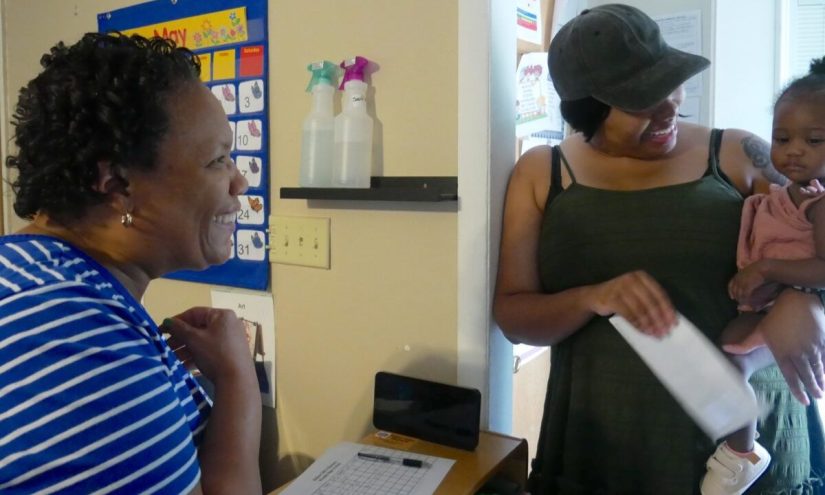
For Helen Cole, that assistance and funding was key to opening her family child care home in Taylortown in Moore County.
“I just feel like this wouldn’t have been possible without the support and the funds,” said Cole, who recently earned her four-star license to care for children from infancy to 12 years old at Helen Cole’s Day Care.
She received more than $17,000 to start her program from the legislative pilot funding. She bought new outside equipment, furniture, dramatic play sets, age-appropriate toys and books, a new kitchen faucet, a state-approved curriculum, and a new laptop.
Cole heard about the potential grant funding for start-up costs from the state licensing consultant. She was also connected with Hoffler.
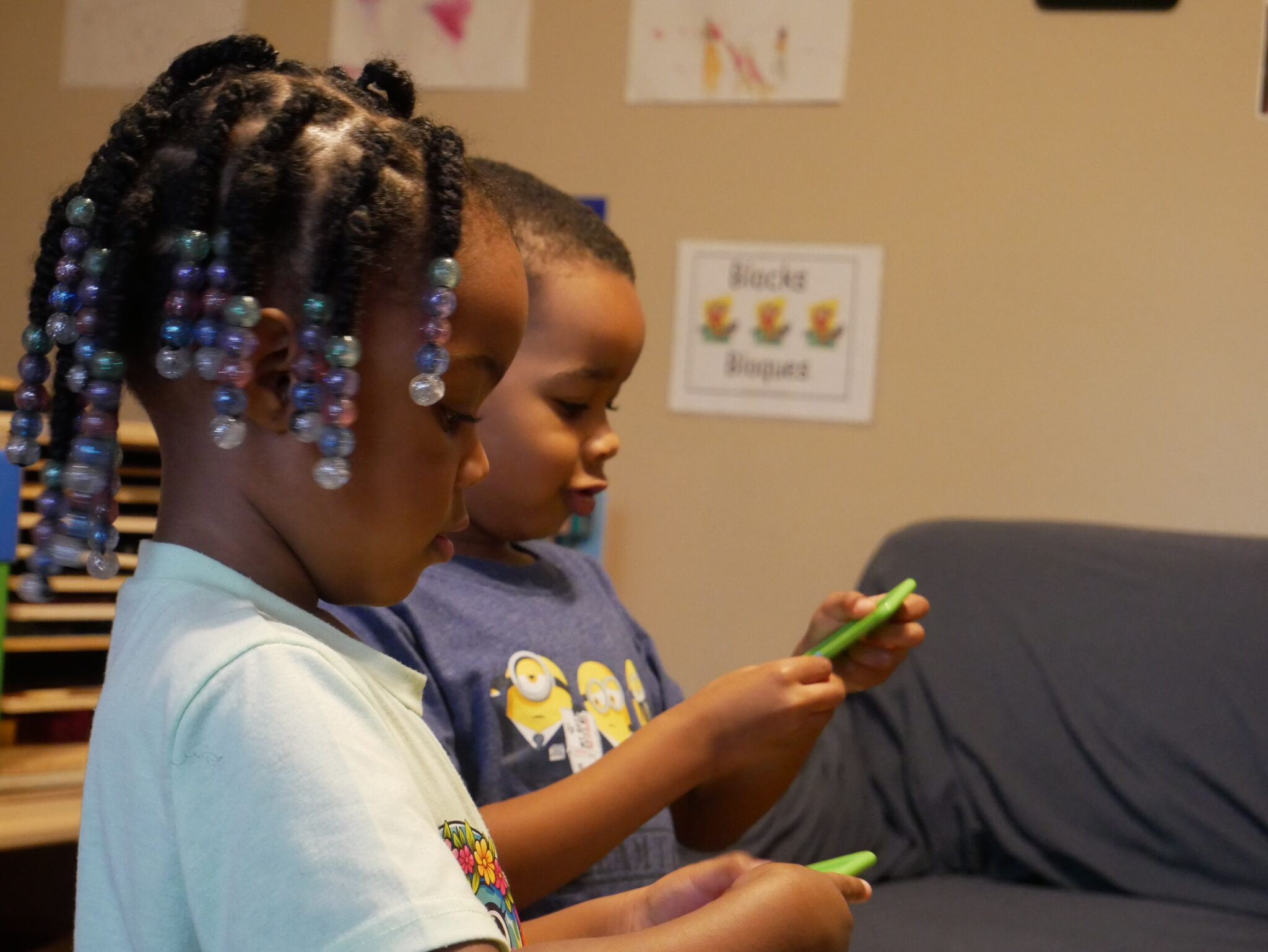
Students at Helen Cole’s program work on their counting skills. (Liz Bell/EducationNC)
Cole was excited to open after hearing about a local demand for second-shift care. After retiring as a substitute teacher in her local school district, she needed more income and was eager to fill a community need.
But after her initial meeting with a licensing consultant, she received a long checklist of everything she had to do. She said she felt overwhelmed.
“It was just so much information,” she said. “There are things on the website, but how do you adjust it for your day care?”
Plus, Cole had experience helping in her sister’s child care program, but she did not know the ins and outs of operating a small business. Even with a background in accounting, she knew the role would be challenging. So she reached out to Hoffler for an in-person meeting.
“It was like a prayer answered,” Cole said. “She broke it down for me.”
Hoffler helped Cole navigate the tough decisions that come with operating a business from your home, such as how much living space she was willing to sacrifice and what renovations were needed. And she helped Cole create a budget to apply for grant funding through the legislative pilot. She gave her ideas on high-quality and age-appropriate materials.
She also connected Cole with a mentor, helped her with business skills, and connected her with other resources through the Smart Start partnership.
Hoffler has helped her advertise her program and hold on through the ups and downs of enrollment, Cole said. Because she needed to hire another teacher, her niece Danielle Dixon, Cole said she is breaking even but has not started making a profit or been able to pay herself. She said she has been advised that it can take nine months to a year.
She said low subsidy rates and parents’ inability to afford her private rates have also been financially challenging. She serves one student whose parents are both working, making too much to qualify for a subsidy, but cannot afford her private rate of $200 per week. She only charges that family $85 per week.
Danielle Dixon, a teacher at Helen Cole’s Day Care, has worked in child care for 11 years. (Liz Bell/EducationNC)
Dixon, who has been working in child care professionally for 11 years but informally since she was 16 years old, has both of her children enrolled at the program. Dixon said her grandmother and mother, as well as three of her aunts, have worked in child care. She decided to partner with her aunt, Cole, to return to working with young children in a creative, exploratory environment after working in public schools.
Helen Cole’s Day Care opened in December in the home she was raised in, and where her mother used to take care of children whose parents were at risk of losing custody.
“All of our lives, we’ve had other children here,” Cole said.
Both Dixon and Hoffler have helped Cole strengthen her understanding and practice of early childhood care and education. Her program’s philosophy is based on relationships, exploration, and emotional and social development. Then academic foundations are added.
“It’s that give and take between you and this child,” Hoffler said. “They’re going to learn more from you if you are actively engaging with them and talking to them throughout the day, than they’ll ever learn if you give them a coloring sheet and try to teach them how to stay in the lines. There are no lines in early childhood.”
“That was a wow moment,” Cole said. “I understand that we have to have a curriculum, and we do, but the biggest thing is for them to develop on their own.”
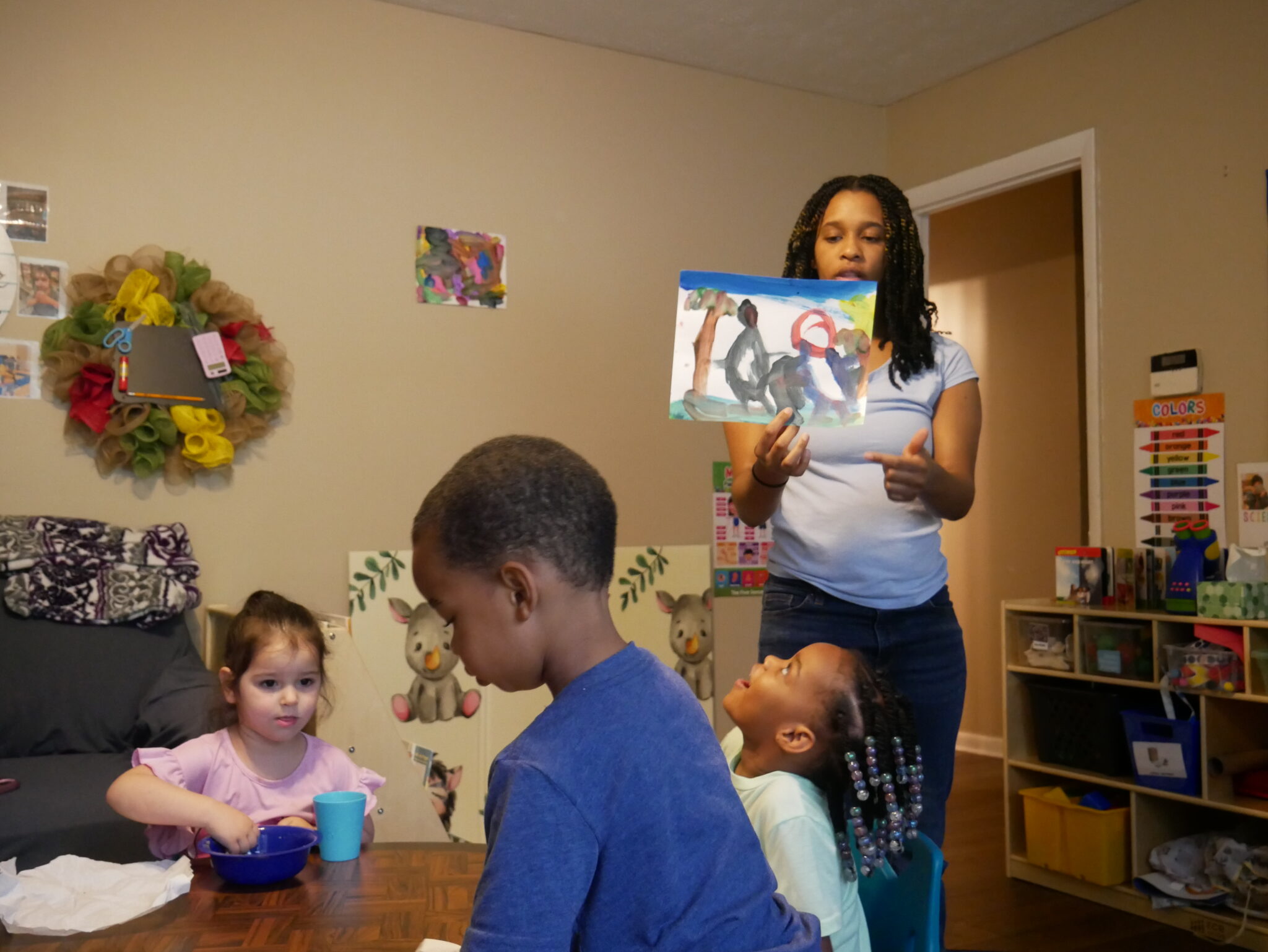
It is this one-on-one attention and intimate environment that make family child care appeal to so many parents. Rural children, low-income children, and children of color are more likely to access home-based care than center-based, according to national advocacy and research group Home Grown. It is often more affordable, more convenient and flexible for nontraditional working hours, and more culturally and linguistically relevant to diverse families.
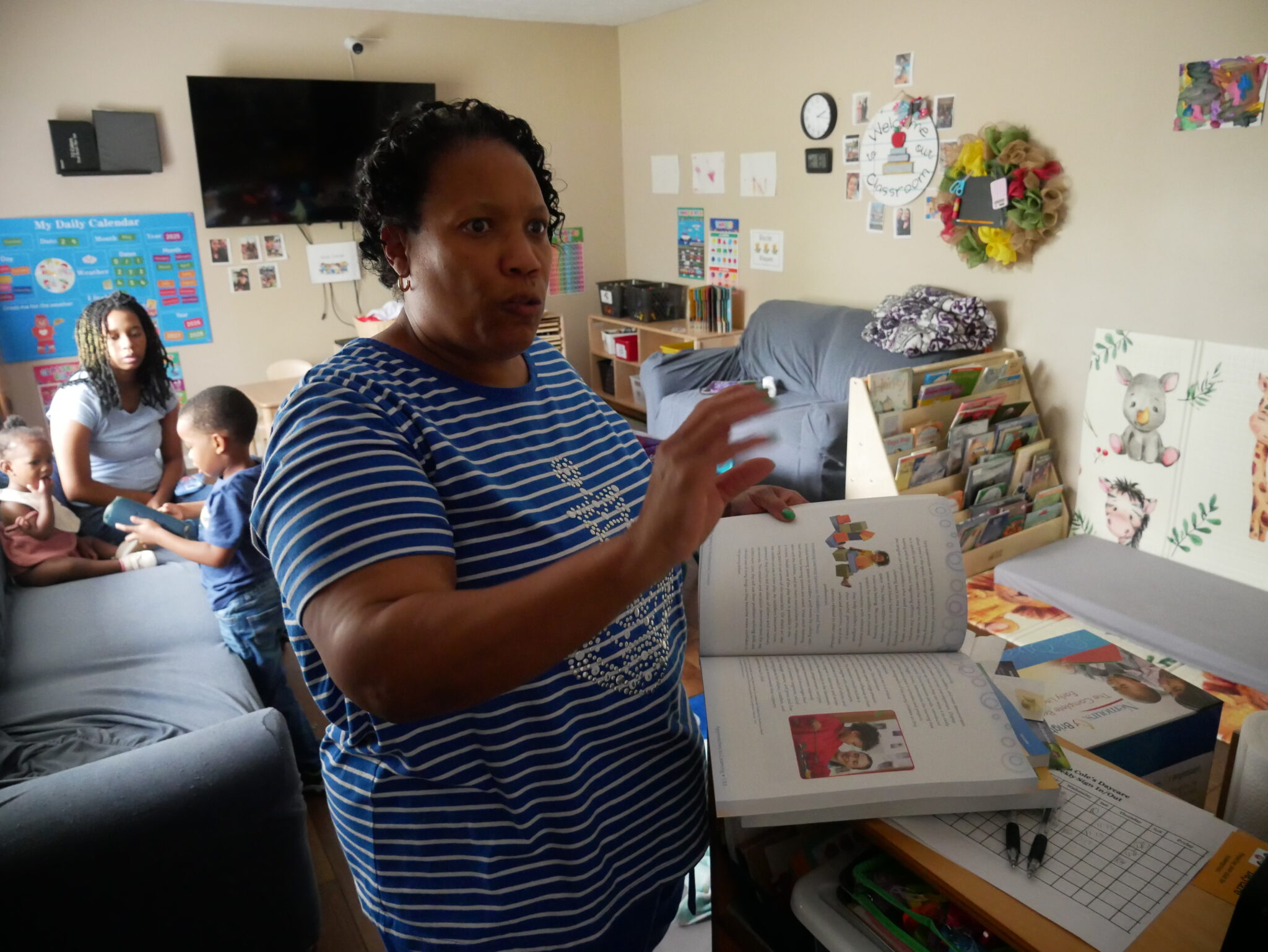
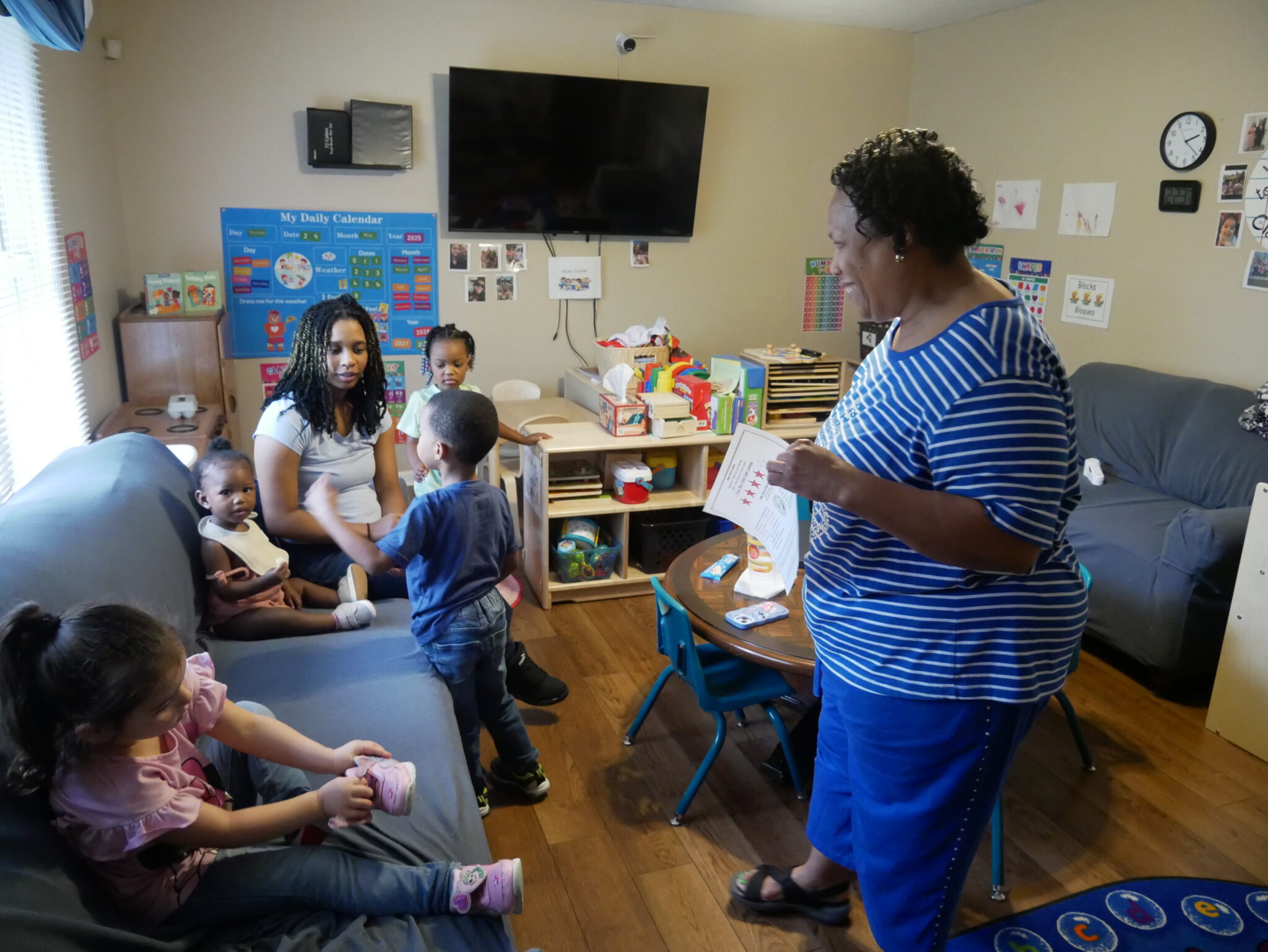
Inside Helen Cole’s child care program. (Liz Bell/EducationNC)
Kailyn Green, whose daughter has been at the program for a month, said she toured other programs with open spots but they “didn’t feel right.” Then she visited Cole’s program and did a walk-through.
“I was like, ‘I’m sold. I’m good,’” Green said.
A licensed clinical social worker, Green said she has been able to return to work without worrying. She receives texts and videos of her daughter’s days and has been impressed by how much she has progressed, especially with eating more consistently.
“I love that she truly gets the attention,” she said. “She’s been able to form a relationship with her. It’s been great.”
Hoffler said she was excited to hear about Cole’s recent accomplishment: earning four out of five stars on the state’s quality rating scale.
“I’m just so proud of her,” she said. “She handled it like a pro.”
What’s next?
There are multiple efforts to build different kinds of supports for family child care. DCDEE said the project with SWCDC taught them that “Family Child Care Homes (FCCHs) would benefit from additional funding, continued community engagement, and professional development to improve quality,” according to a DCDEE spokesperson.
“FCCHs are a vital part of our state’s early care and learning network, and DCDEE is committed to continuing our support for these small businesses,” the spokesperson said in an emailed statement.
Though the contract for the statewide project ends on June 30, the spokesperson said the division will continue using CCDF funds and federal funds from the Preschool Development Grant (PDG) Birth through Five to provide business technical assistance and other services to family child care programs.
The PDG contract is in process but will be awarded to Acelero Charitable Foundation “in collaboration with multiple agencies that support family child care.” It will focus on increasing quality and family engagement, the spokesperson said.
DCDEE is also contracting with Frank Porter Graham Child Development Institute at UNC-Chapel Hill to provide evaluation and coordination of the PDG Elevate FCCH project, which will provide extra subsidy funding to family child care programs to increase wages for providers.
The House and Senate budget proposals direct DCDEE to use CCDF funds to expand family child care capacity. The House would allocate $7 million over two years for a pilot in three localities, and the Senate would allocate $6 million for a pilot in Alamance, Harnett, and Johnston counties. The funding would go to councils of governments in each of those counties to select a third-party vendor. Both proposals have specific requirements for the chosen vendor, including experience in establishing family child care homes in at least three other states and rural areas, experience in operating a substitute pool in another state, and technology that connects families with providers and includes billing and coaching functions.
Meanwhile, Jones-Ruff said SWCDC will continue supporting family child care by retaining a statewide team with organizational funding — and will seek outside funding to continue other aspects of the project. Some of the family child care consultants will continue their work through local CCR&R or Smart Start funding.
“I can see just the monumental amount of work and the progress that has happened in such a short amount of time,” she said. “We’re not going away.”
This audio is auto-generated. Please let us know if you have feedback.
How well did you keep up with this week’s developments in K-12 education? To find out, take our five-question quiz below. Then, share your score by tagging us on social media with #K12DivePopQuiz.
Students will soon have to show a government-approved ID either in person or online in order to receive federal aid.
Photo illustration by Justin Morrison/Inside Higher Ed | michaeljung and robas/iStock/Getty Images
College financial aid offices and students’ advocates say that a Trump administration plan to crack down on fraud in the federal aid system could burden university staff and hinder access to college programs.
Although they support fighting fraud as a concept, they particularly worry that real, eligible Pell Grant recipients will get caught up in the detection system and won’t be able to jump through the extra hoops to verify their identity.
“In general, verification is a little bit of threading the needle between making sure that the right dollars are going to the right students, but also not putting up an inordinate number of barriers, particularly to low-income students, that are insurmountable,” said Karen McCarthy, vice president of public policy and federal relations at the National Association of Student Financial Aid Administrators. “You have to walk a fine line between those two things.”
Department of Education officials, however, say their plan, announced June 9, is necessary to protect American taxpayers from theft and won’t become a burden for colleges. They aren’t worried about students losing access, either.
Ultimately, the Trump administration plans to verify the identity of each financial aid applicant with the help of a new system that should be up and running “this fall,” according to the department’s announcement. Before then, the department is planning to screen more first-time applicants for verification—a process that could affect 125,000 students this summer and will be handled by financial aid offices. (About 40,000 students were checked last year, according to a department spokesperson.)
McCarthy, however, is concerned that if the new system isn’t ready by the fall, “institutions will be assuming this larger burden for a longer, indeterminate amount of time.” The department’s botched launch of the 2024–25 Free Application for Federal Student Aid showed the challenges of standing up new systems quickly, she noted.
A senior official at the Department of Education told Inside Higher Ed that the Office of Federal Student Aid and the department procurement team are in the process of purchasing an identity-validation product similar to the ones used by financial services companies like banks. The product would be incorporated into the online FAFSA portal.
If an individual is flagged for potential fraud at any point while filling out the form, a pop-up box would appear with a live staff member on the other side, the official explained. The applicant would then be asked to display a government-issued ID. If that ID is deemed valid, the person could then continue.
“Once that’s done, the process is over,” the official said. “That’s really as simple as that effort is. I believe rental car companies are using it, too.”
The official was optimistic that the department could have the system up and running by early September, though that won’t be soon enough to get aid disbursed in time for the fall semester. The official also acknowledged that the timeline means that colleges may have to do some verification in person even in the fall, but that process should not be too much of a burden for the college or the student. Similar to the online process, a student would just need to show a valid ID to a college financial aid administrator, either in person or over a video call. Previously, when identity verifications were conducted, students had to present a Statement of Educational Purpose and submit a notarized copy of their identification document.
But advocacy groups that work with low-income students worry that even requiring a government-issued ID could give some students a leg up over others when it comes to accessing financial aid and affording to enroll in college.
“We want to see fraud eliminated as much as anyone else … We just need to make sure that gets balanced with a reasonable process for students,” said MorraLee Keller, a senior consultant for the National College Attainment Network. “A lot of low-economic kids may not have secured, for example, a driver’s license. If they don’t drive, they may not have a driver’s license, and that is probably the primary form of a government-issued valid ID that most people would be able to present.”
Keller noted that some states may have alternate IDs available for those who do not drive, but even that may take time to obtain if a student doesn’t already possess it.
“We want to make sure that timing doesn’t interrupt the aid getting credited to their account to pay their bills on time so that they could start classes, get refunds to go get their books and all those kinds of things,” she said. “So one of the questions that we still need answered is, what else would be considered a valid ID?”
The California Community College system, which has grappled with increasing financial aid fraud, recently considered an application fee to help screen legitimate students from fraudsters. A spokesperson for the system said they are waiting on additional guidance from the department before they can know how big a deal this shift will be.
“We wouldn’t be able to speculate on the level of concern among students and institutions until the federal guidance is known,” she wrote. But “financial aid fraud is a nationwide trend and additional identification verification processes will help in the fight against it.”
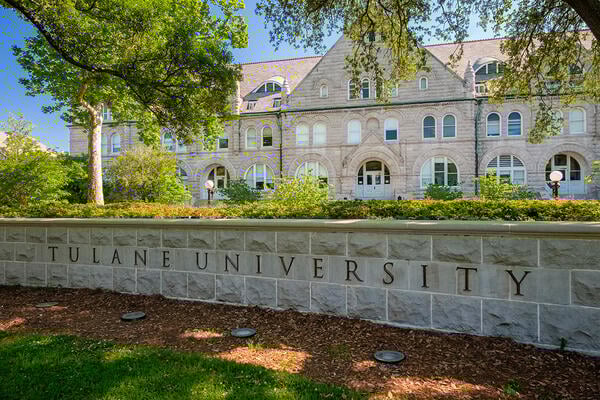
An environmental researcher at Tulane University resigned Wednesday after accusing campus officials, reportedly under pressure from Gov. Jeff Landry, of issuing a “gag order” that prevented her from publicly discussing her work, which focused on racial disparities in the petrochemical workforce.
“Scholarly publications, not gag orders, are the currency of academia,” Kimberly Terrell, the now-former director of community engagement at Tulane’s Environmental Law Clinic, wrote in her resignation letter. “There is always room for informed debate. But Tulane leaders have chosen to abandon the principles of knowledge, education, and the greater good in pursuit of their own narrow agenda.”
Terrell’s resignation comes amid wider efforts by the Trump administration and its allies to control the types of research—including projects related to environmental justice—academics are permitted to pursue and punish campus protesters for espousing messages the president and other public officials disagree with.
“It started with the pro-Palestinian activism on our campus and others across the country. It’s emboldened a lot of political leaders to feel they can make inroads by silencing faculty in other areas,” Michelle Lacey, a math professor and president of Tulane’s chapter of the American Association of University Professors, told Inside Higher Ed. “That was the catalyst for creating a climate where university administrators are very nervous, especially now as we see the government pulling funding for areas of research they don’t like.”
Last spring, Landry praised Tulane president Michael Fitts and university police for removing students who were protesting Israel’s attacks on Gaza. Soon after, the Legislature passed a provision creating harsher punishments for protesters who disrupt traffic, which Landry later signed into law.
Landry, a Republican aligned with Trump, has a history of trying to exert control over the state’s public higher education institutions.
Last summer, he enacted a law that allows him to directly appoint board chairs at the state’s public colleges and universities. And in November, following Trump’s election, Landry publicly called on officials at Louisiana State University to punish a law professor who allegedly made brief comments in class about students who voted for the president.
Landry’s office denied to the Associated Press (which first reported on Terrell’s resignation) that it pressured Tulane to silence research from the law clinic. Michael Strecker, a Tulane spokesperson, also told the outlet that the university “is fully committed to academic freedom and the strong pedagogical value of law clinics” and declined to comment on “personnel matters.”
Strecker added in a statement that Tulane administrators have been working with the law school’s leadership on how the law clinics could better support the university’s education mission.
“Debates about how best to operate law clinics’ teaching mission have occurred nationally and at Tulane for years—this is nothing new,” Strecker said. “This effort includes most recently input from an independent, third-party review.”
But Terrell’s account of the events that led to her resignation call the universities’ academic freedom commitments into question, while also implying that Landry—and powerful industry groups—wield some influence over private higher education institutions in the state.
And it’s not something Tulane, a private university in New Orleans, should tolerate, Lacey said.
Kimberly Terrell
“The academic freedom of all university researchers must be unequivocally defended at both public and private institutions,” Lacey wrote in a statement. “This includes the right to conduct and disseminate research that may be unfavorably viewed by government officials or corporate entities. Political demands to stifle controversial research are an affront to the advancement of knowledge and open exchange of ideas, as is the voluntary compliance with such requests by university leadership.”
The latest controversy at Tulane stems from a paper Terrell published April 9 in the peer-reviewed journal Ecological Economics. Her research found that while Black people in Louisiana are underrepresented in the state’s petrochemical workforce, they are overexposed to toxic pollutants the industry releases into an area of the state between New Orleans and Baton Rouge known as “Cancer Alley.”
But according to emails obtained by Inside Higher Ed and other outlets, Fitts worried that publicizing Terrell’s research and the clinic’s other work, which includes legal advocacy, could jeopardize funding for the university’s $600 million plan to redevelop New Orleans’ historic Charity Hospital into residential and commercial spaces as part of a broader downtown expansion plan.
As Terrell explained in her resignation letter, Fitts and other top Tulane executives were at Louisiana’s state capitol on April 16 lobbying for the project when “someone accused the university of being anti–chemical industry” and cited her study, which was receiving media attention after it was published the week prior. According to Terrell, “the story that came down to me through the chain of command was that Governor Landry threatened to veto any bill with funding for Tulane’s Charity project unless Fitts did something about the Environmental Law Clinic.”
‘Complete Gag Order’
After that, Terrell says, she was “placed under a complete gag order,” which the emails appear to confirm.
“Effective immediately all external communications that are not client-based—that is, directly related to representation—must be pre-approved by me,” Marcilynn Burke, dean of Tulane’s law school, wrote in an April 25 email to law clinic staff. “Such communications include press releases, interviews, videos, social media postings, etc. Please err on the side of over-inclusion as we work to define the boundaries through experience.”
A week later, on May 4, Burke wrote another email to clinic staff explaining that “elected officials and major donors have cited the clinic as an impediment to them lending their support to the university generally and this project specifically,” referring to Fitts’s plans to redevelop the old hospital. Terrell wrote that when she pleaded her case to Provost Robin Forman, “he refused to acknowledge my right to freely conduct and disseminate research” and also “let slip that my job description was likely going to be rewritten.”
Terrell described the entire law clinic as being “under siege” and said she would rather leave her position “than have my work used as an excuse for President Fitts to dismantle the Tulane Environmental Law Clinic.”
Other academics, free speech experts and environmental justice advocates also believe Tulane’s moves to silence Terrell’s work amounts to an attack on academic freedom with implications beyond the campus.
“The administration of Tulane University, far from standing up for academic freedom, is participating in the effort to suppress free inquiry and the pursuit of knowledge by scientific methods,” Michael Ash, an economics and public policy professor at the University of Massachusetts, said in a statement. “Any effort to reduce academic freedom for Dr. Terrell either by changing her job classification or by redefining whether the protection applies is a blatant and un-American attempt to suppress the type of free inquiry that has made this country great.”
Joy Banner, co-founder and co-director of the Descendants Project, a community organization that works in Cancer Alley, added that the Tulane Environmental Law Clinic is a vital public health resource.
Without the clinic, “it would be far more difficult to show the racially discriminatory practices of the industry, from preferential hiring practices to a pattern of concentrating pollution in majority Black neighborhoods,” she said in a statement. “President Fitts must commit to protecting it at all costs.”
Two years after its Supreme Court victory against Harvard and UNC Chapel Hill, Students for Fair Admissions has a new target in its sights: Hispanic-serving institutions. On Wednesday, the advocacy group joined the state of Tennessee in suing the U.S. Department of Education, arguing that the criteria to become an HSI are unconstitutional and discriminatory. The move is distressing HSI advocates, who hoped to see the institutions left out of the political fray.
To qualify as an HSI, a college or university needs to have a student body comprised of at least 25 percent Hispanic students and enroll at least 50 percent low-income students, or more than other comparable institutions, among other criteria. No Tennessee institutions operated by the state meet the threshold and are thus prohibited from applying for HSI-specific grants—even though they serve Hispanic and low-income students, according to the Tennessee attorney general and SFFA. As a result, the federal designation criteria amounts to discrimination, and Tennessee universities and students suffer as a result, the plaintiffs argue.
They also say Tennessee institutions find themselves in an “unconstitutional dilemma”: Even if they wanted to, they argue, they can’t use affirmative action to up their Hispanic student enrollments since the U.S. Supreme Court ruled against using race as a factor in college admissions. That 2023 decision resulted from lawsuits SFFA brought against Harvard and the University of North Carolina at Chapel Hill.
“The HSI program is particularly egregious in terms of how it treats students based on immutable characteristics,” Tennessee attorney general Jonathan Skrmetti, who’s representing the state in the suit, told Inside Higher Ed. “It is just manifestly unfair that a needy student in Tennessee does not have access to this pool of funds because they go to a school that doesn’t have the right ethnic makeup.”
The lawsuit calls for “a declaratory judgement that the HSI program’s ethnicity-based requirements are unconstitutional” and “a permanent injunction prohibiting the [Education] Secretary from enforcing or applying the HSI program’s ethnicity-based requirements when making decisions whether to award or maintain grants to Tennessee’s institutions of higher education.”
HSI proponents may be jarred by the legal challenge, but they aren’t entirely surprised. Conservative think tanks like the Manhattan Institute and the American Civil Rights Project have previously proposed abolishing enrollment-based minority-serving institutions (MSIs), including HSIs and Asian American and Native American Pacific Islander–serving institutions, which are defined as enrolling 10 percent of students from these groups.
“It was only a matter of time before the anti-DEI movement hit the enrollment-based MSIs,” said Gina Ann Garcia, a professor who studies MSIs in the school of education at the University of California, Berkeley. “It still was a punch to the gut.”
2 Sides At Odds
Congress established the HSI program in the 1990s to improve the quality of education at colleges and universities that disproportionately serve Latino students, who were concentrated at colleges with relatively fewer financial resources. They’ve historically enjoyed bipartisan support. Last year, the federal government appropriated about $229 million for the country’s roughly 600 Hispanic-serving institutions; $28 million of that funding went to 49 of the HSIs that applied for the competitive grants.
Deborah Santiago, co-founder and CEO of Excelencia in Education, an organization that promotes Latino student success, believes the lawsuit mischaracterizes the program and its role in the national higher education landscape. She said it’s in the country’s “self-interest” to invest in colleges and universities with limited resources that serve a growing student population with stubborn degree-attainment gaps.
“If a disproportionate number of students of any background are at an institution that has a high enrollment of needy students, low educational core expenditures and serves a high proportion of students that that could benefit from that [funding] to serve the country, I don’t think that’s discriminating,” she said.
She also stressed that the grant program “doesn’t explicitly require any resources to go to a specific population” but funds capacity-building efforts, like building new laboratories and facilities, that benefit all students at the institution.
The HSI program is a way “to target limited federal resources and meet the federal mandate of access for low-income students,” she said. “We know that it costs more to educate Hispanic students, because they’re more likely to be low income and first gen, so college knowledge, student support services—all of that takes institutional investment.”
But opponents of HSIs don’t buy it.
Wenyuan Wu, executive director of the Californians for Equal Rights Foundation, a think tank and watchdog organization focused on promoting “equal rights and merit,” firmly believes enrollment-based minority-serving institutions are discriminatory and applauded the lawsuit as a step in the right direction.
She argued that HSI funding has gone to efforts specifically to support Latino students, including some she sees as “ideological.” For example, the University of Connecticut at Stamford proposed using the funding to start a program called Sueño Scholars, to “recruit, support and mentor undergraduate Hispanic, other minority, low-income, and high-need students” to enter teaching graduate programs and included a goal of “developing and sustaining antiracist orientations towards teaching and learning,” according to the department’s list of project abstracts.
Wu asserted that putting federal money toward efforts like these is a problem. She’d rather see the funds designated for HSIs channeled into Pell Grants or other supports for low-income students.
“Taxpayer funds should not be used to engage in racial balancing, and that’s exactly the kind of behavior that has been incentivized by MSIs,” said Wu, who is also chair of the Georgia Advisory Committee to the U.S. Commission on Civil Rights.
Possible Outcomes
Robert Kelchen, head of the Educational Leadership and Policy Studies Department at the University of Tennessee at Knoxville, believes the lawsuit has “a possibility of success.” It was filed in a conservative-leaning federal district court in Knoxville, and Tennessee seems to have shown it has legal standing, he said.
Even “if the court here in Knoxville doesn’t agree, another state could choose to file a similar lawsuit in their district court as well,” he said. Ultimately, “the question is, can they find one court that agrees with the plaintiffs’ interpretation.”
The move by Tennessee comes just a week after the federal government successfully sued Texas to eliminate in-state tuition for undocumented students—a policy Republican state lawmakers had tried but failed to end. The Texas attorney general celebrated the challenge, siding with the U.S. Department of Justice in a matter of hours, and a judge promptly quashed the two-decade-old state law. (Stephen Vladeck, a professor of law at the Georgetown University Law Center, called the episode “transparently collusive.”)
Kelchen believes the Tennessee lawsuit is following a similar playbook. He expects to see more red states and conservative organizations sue the Education Department on issues where they align “to get rid of things that neither of [them] like,” he said—though in Tennessee’s case, it’s unclear how the department will respond.
Skrmetti told Inside Higher Ed that “from Tennessee’s perspective, this is not part of a broader strategy to influence education policy. This is about discrimination against Tennessee schools because of the ethnic makeup of their student bodies.”
If the plaintiffs win, it’s unclear whether that would mean changing the federal definition of an HSI to eliminate a Hispanic enrollment threshold or axing the HSI program altogether. The implications for other types of enrollment-based minority-serving institutions are also hazy.
Skrmetti is open to multiple options.
“At the end of the day, there’s [HSI] money out there to help needy students, and we want to make sure that needy students can access it regardless of the ethnic makeup of the schools they’re at,” he said. “There are a couple different avenues I think that could successfully achieve the goal operationally. We need to just get a declaration that the current situation does violate the Constitution.”
Santiago, of Excelencia in Education, said there’s room for “thoughtful discussion” about reforming or expanding requirements for HSI grant funding, but she believes “it needs to come from the community.”
She also pointed out that the lawsuit is against the Department of Education, which administers HSI funding but doesn’t control it—Congress does. So the department doesn’t have the power to end the funding.
Nonetheless, “it would be foolish to not take it seriously,” she said.
Garcia, the Berkeley education professor, said that while she’s not a lawyer, she believes there are legal questions worth raising about the lawsuit, particularly the way it leans on the Supreme Court’s ruling against affirmative action in admissions.
She pointed out that HSIs tend to be broad-access or open-access institutions that admit most applicants, rather than selective institutions explicitly recruiting Latino students; only about two dozen of the 600 HSIs are highly selective, she said. So, the assertion that HSIs have any connection to the affirmative action ruling is up for debate, she said.
Skrmetti believes it’s a cut-and-dried case.
“You can’t make determinations about the allocation of resources based on ancestry or skin color or anything like that without inherent discrimination,” he said. “We need to help all needy students. And the HSI designation is an obstacle to that.”
Garcia believes that regardless of whether the lawsuit is successful, it’s already done damage to HSIs by dragging them—and enrollment-based MSIs in general—into the country’s political skirmishes over diversity, equity and inclusion.
“I’ve been just watching HSIs fly a little bit under the radar,” she said. “They don’t come up a lot” in national conversations about DEI. But the lawsuit “brings HSIs into the light, and it brings them into the attack.”
She worries that students are the ones who will suffer if HSIs no longer receive dedicated funding.
HSIs “are often underresourced institutions,” she said. “They’re institutions that are struggling to serve a large population of minoritized students, of students of color, of low-income students, of first-gen students. We’re not talking about the Harvards and the Columbias.”
Prior research shows attendance is one of the best predictors of class grades and student outcomes, creating a strong argument for faculty to incentivize or require attendance.
Attaching grades to attendance, however, can create its own challenges, because many students generally want more flexibility in their schedules and think they should be assessed on what they learn—not how often they show up. A student columnist at the University of Washington expressed frustration at receiving a 20 percent weighted participation grade, which the professor graded based on exit tickets students submitted at the end of class.
“Our grades should be based on our understanding of the material, not whether or not we were in the room,” Sophie Sanjani wrote in The Daily, UW’s student paper.
Keenan Hartert, a biology professor at Minnesota State University, Mankato, set out to understand the factors affecting students’ performance in his own course and found that attendance was one of the strongest predictors of their success.
His finding wasn’t an aha moment, but reaffirmed his position that attendance is an early indicator of GPA and class community building. The challenge, he said, is how to apply such principles to an increasingly diverse student body, many of whom juggle work, caregiving responsibilities and their own personal struggles.
“We definitely have different students than the ones I went to school with,” Hartert said. “We do try to be the most flexible, because we have a lot of students that have a lot of other things going on that they can’t tell us. We want to be there for them.”
Who’s missing class? It’s not uncommon for a student to miss class for illness or an outside conflict, but higher rates of absence among college students in recent years are giving professors pause.
An analysis of 1.1 million students across 22 major research institutions found that the number of hours students have spent attending class, discussion sections and labs declined dramatically from the 2018–19 academic year to 2022–23, according to the Student Experience in the Research University (SERU) Consortium.
More than 30 percent of students who attended community college in person skipped class sometimes in the past year, a 2023 study found; 4 percent said they skipped class often or very often.
Students say they opt out of class for a variety of reasons, including lack of motivation, competing priorities and external challenges. A professor at Colorado State University surveyed 175 of his students in 2023 and found that 37 percent said they regularly did not attend class because of physical illness, mental health concerns, a lack of interest or engagement, or simply because it wasn’t a requirement.
A 2024 survey from Trellis Strategies found that 15 percent of students missed class sometimes due to a lack of reliable transportation. Among working students, one in four said they regularly missed class due to conflicts with their work schedule.
High rates of anxiety and depression among college students may also impact their attendance. More than half of 817 students surveyed by Harmony Healthcare IT in 2024 said they’d skipped class due to mental health struggles; one-third of respondents indicated they’d failed a test because of negative mental health.
A case study: MSU Mankato’s Hartert collected data on about 250 students who enrolled in his 200-level genetics course over several semesters.
Using an end-of-term survey, class activities and his own grade book information, Hartert collected data measuring student stress, hours slept, hours worked, number of office hours attended, class attendance and quiz grades, among other metrics.
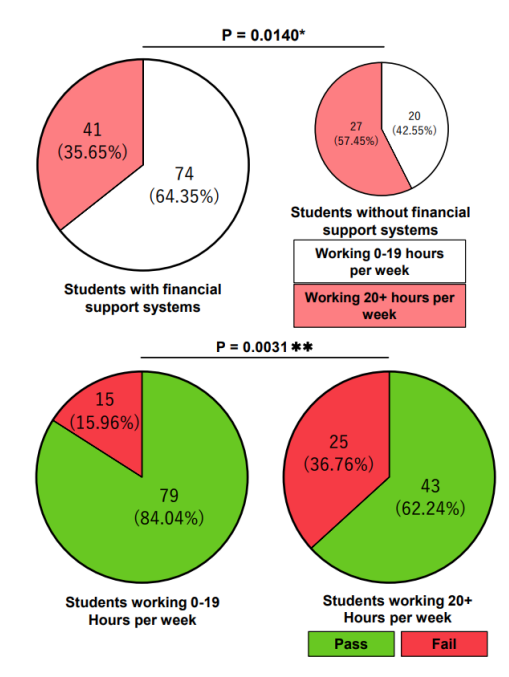
Mapping out the various factors, Hartert’s case study modeled other findings in student success literature: a high number of hours worked correlated negatively with the student’s course grade, while attendance in class and at review sessions correlated positively with academic outcomes.
Data analysis by Keenan Hartert, a biology professor at Minnesota State University, Mankato, found student employment negatively correlated with their overall class grade.
Keenan Hartert
The data also revealed to Hartert some of the challenges students face while enrolled. “It was brutal to see how many students [were working full-time]. Just seeing how many were [working] over 20 [hours] and how many were over 30 or 40, it was different.”
Nationally, two-thirds of college students work for pay while enrolled, and 43 percent of employed students work full-time, according to fall 2024 data from Trellis Strategies.
Hartert also asked students if they had any financial resources to support them in case of emergency; 28 percent said they had no fallback. Of those students, 90 percent were working more than 20 hours per week.
Data analysis of student surveys show students who are working are less likely to have financial resources to support them in an emergency.
The findings illustrated to him the challenges many students face in managing their job shifts while trying to meet attendance requirements.
A Faculty Aside
While some faculty may be less interested in using predictive analytics for their own classes, Hartert found tracking factors like how often a student attends office hours was beneficial to helping him achieve his own career goals, because he could include those measurements in his tenure review.
An interpersonal dynamic: A less measured factor in the attendance debate is not a student’s own learning, but the classroom environment they contribute to. Hartert framed it as students motivating their peers unknowingly. “The people that you may not know that sit around you and see you, if you’re gone, they may think, ‘Well, they gave up, why should I keep trying?’ Even if they’ve never spoken to you.”
One professor at the University of Oregon found that peer engagement positively correlated with academic outcomes. Raghuveer Parthasarathy restructured his general education physics course to promote engagement by creating an “active zone,” or a designated seating area in the classroom where students sat if they wanted to participate in class discussions and other active learning conversations.
Compared to other sections of the course, the class was more engaged across the board, even among those who didn’t opt to sit in the participation zone. Additionally, students who sat in the active zone were more likely to earn higher grades on exams and in the course over all.
Attending class can also create connections between students and professors, something students say they want and expect.
A May 2024 student survey by Inside Higher Ed and Generation Lab found that 35 percent of respondents think their academic success would be most improved by professors getting to know them better. In a separate question, 55 percent of respondents said they think professors are at least partly responsible for becoming a mentor.
The SERU Consortium found student respondents in 2023 were less likely to say a professor knew or had learned their name compared to their peers in 2013. Students were also less confident that they knew a professor well enough to ask for a letter of recommendation for a job or graduate school.
“You have to show up to class then, so I know who you are,” Hartert said.
Meeting in the middle: To encourage attendance, Hartert employs active learning methods such as creative writing or case studies, which help demonstrate the value of class participation. His favorite is a jury scenario, in which students put their medical expertise into practice with criminal cases. “I really try and get them in some gray-area stuff and remind them, just because it’s a big textbook doesn’t mean that you can’t have some creative, fun ideas,” Hartert said.
For those who can’t make it, all of Hartert’s lectures are recorded and available online to watch later. Recording lectures, he said, “was a really hard bridge to cross, post-COVID. I was like, ‘Nobody’s going to show up.’ But every time I looked at the data [for] who was looking at the recording, it’s all my top students.” That was reason enough for him to leave the recordings available as additional practice and resources.
Students who can’t make an in-person class session can receive attendance credit by sending Hartert their notes and answers to any questions asked live during the class, proving they watched the recording.
Hartert has also made adjustments to how he uses class time to create more avenues for working students to engage. His genetics course includes a three-hour lab section, which rarely lasts the full time, Hartert said. Now, the final hour of the lab is a dedicated review session facilitated by peer leaders, who use practice questions Hartert designed. Initial data shows working students who stayed for the review section of labs were more likely to perform better on their exams.
“The good news is when it works out, like when we can make some adjustments, then we can figure our way through,” Hartert said. “But the reality of life is that time marches on and things happen, and you gotta choose a couple priorities.”
Do you have an academic intervention that might help others improve student success? Tell us about it.