Seven-hundred Marines in California have been ordered to assist in Los Angeles and they’re expected to arrive over the next 24 hours, a U.S. official confirmed. The Marines are from the 2nd Battalion, 7th Marines at Twentynine Palms, California, whom U.S. Northern Command had said Sunday were on a “prepared to deploy status” if the Defense Department needed them.
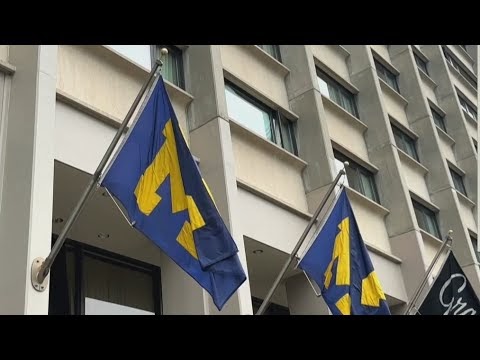
Attorney Amir Makled joins “NewsNation Now” to discuss a report from The Guardian that the University of Michigan paid $800,000 to a private security firm to have undercover investigators surveil pro-Palestinian campus groups. Makled called the alleged conduct “really disturbing.”
Back in 2001, when I first attended university, I didn’t join any student organizations, clubs or professional societies. I was busy with classes, after all, and didn’t know what benefit they could provide me anyway. What possible value would becoming a SACNAS member offer? Some clubs even required a membership fee!
Now I know better. Professional societies are a critical, often overlooked way of building your network, strengthening your résumé and finding professional development opportunities outside classes. As discussed in a 2020 Developmental Biology article titled “Professional societies can play a vital role in career development,” professional societies offer conferences, workshops, virtual seminars and free resources to members and, in many cases, nonmembers.
These resources provide learning opportunities across multiple categories, including professional development, career deep dives and leadership training. My own organization, the Genetics Society of America, offers the Leadership Dialogue Series organized by our early-career scientists, seminars in languages other than English and workshops on different types of careers and topics related to accessibility in STEM. Each of these events represents an opportunity not just for our community to learn about a new career, skill or research topic, but also provides CV and résumé boosts to our event organizers, whose volunteerism powers GSA’s ability to offer these resources.
Speaking for myself, when I returned to school in 2010, I joined groups that aligned with my career and professional goals: building a support community via a Society for Advancement of Chicanos/Hispanics and Native Americans in Science membership, building a professional community via a Graduate Student Association and Association for Women in Science membership, learning more about science writing opportunities via a National Association of Science Writers membership, and connecting with fellow mycologists via a Mycological Society of America membership.
As a transfer student with a previous degree, I was also inducted into the Tau Sigma National Honor Society. Now, as a career development professional, I am an active member and volunteer for the Graduate Career Consortium. All these memberships helped guide me to the career I have today and have opened numerous opportunities for collaborations, event organizing, volunteer work and personal career development. I can say without any hesitation that my membership with GSA, MSA and NASW led me directly to the position I have now, and collectively my society memberships keep me informed of current developments in higher education, professional development opportunities, and my own field of genetics.
As you scan each professional society’s page, note the many conferences, professional development programs and job postings each of these memberships gives you access to. You may not be in a position to invest in more than one professional society, and that’s perfectly fine! Choosing one specific society as your “home” and focusing your volunteer efforts and involvement in this specific society is a wonderful way to build your network; connect with other like-minded professionals; collaborate in organizing high-value, marketed events; and learn the inner workings of a professional society.
Choosing your society of interest might seem daunting. Here are some tips to help you navigate this choice and select the best society to fit your needs:
Cost: Determine how much you can budget each year for a membership. You may need to save up to afford this cost at a future date, so keep track of membership renewal times. Check with your adviser, lab or department to see if they would be able and willing to pay for one professional society membership as part of your graduate studies. Many societies offer lower rates for students. Also check for low-income waivers—many societies offer discounts or waivers due to economic hardship.
Field-specific societies: If you’re a physicist, the American Physical Society makes more sense to join than GSA. A social worker should join a society such as the National Association of Social Workers. Whatever your field, there’s a professional society that serves your community! If you’re not sure what your field’s societies are, ask your adviser and other faculty. You can also ask an AI tool to compile a list, with links to check sources, using this prompt: “Create a table for scientific societies based in the United States which serve [YOUR FIELD] academics. The columns should be society name, website, upcoming conferences and membership cost for a graduate student member.” For example, using this prompt with “history” as the field, I received the following results from OpenAI’s ChatGPT:
Here is a table of prominent U.S.-based scientific societies that serve history academics, including their websites, upcoming conferences and graduate student membership costs:
34th Annual Meeting, June 26–28, 2025, Louisville, Ky.
Not specified
Please note that membership costs and conference details are subject to change. For the most accurate and up-to-date information, it’s best to visit the respective society’s official website.
You can see that not every result includes a cost, but because I have the website, I can quickly check and find that the American Historical Association offers a one-year student membership for $42 and update my table accordingly. Since two of the conference dates listed on the table have already passed, I can also easily update the information for the Organization for American History and the American Catholic Historical Association to reflect the planned 2026 conference dates and locations.
Attend a conference: Talk to your adviser about attending a conference offered by the professional society you’re interested in. Many societies offer travel fund awards that you can apply for if your adviser is not able to support your attendance.
Check out the organization’s professional development opportunities: If the society has an early-career program or committee, apply to become a member! These programs are an excellent way to get your name out to a large number of colleagues and build your network, as the early-career students you work with will become your professional colleagues who step into academia, industry and beyond with you.
Be strategic in your involvement: Decide how much time you’re willing to invest each month in a volunteer opportunity and guard your time diligently. Burnout is a fast way to turn a positive experience into a negative drag on your time, so approach each opportunity as a large project and add more only if you have the time. You don’t want to become known for bailing out on multiple collaborative volunteer opportunities!
When thinking about which professional society you should join, make sure you’re choosing the society that aligns with both your career goals and personal needs, and that offers you the best opportunities for your investment. Talk with your adviser to see if there’s a society they recommend and begin your professional society journey early to maximize this resource as you move forward in your career.
Jessica M. Vélez is the senior manager of engagement, community building and professional development for the Genetics Society of America. She earned her Ph.D. in energy science and engineering from the University of Tennessee, Knoxville, in 2020, and was awarded the National GEM Fellowship during her graduate studies.
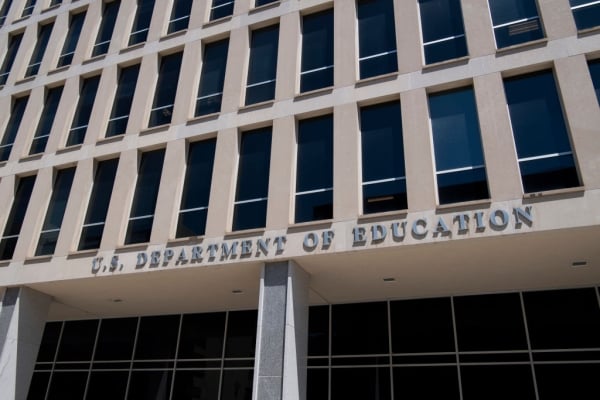
The Trump administration asked the Supreme Court on Friday to allow it to move forward with its plan to lay off nearly half of the Education Department’s employees and dismantle the agency, USA Today reported.
In late May,a federal district court ruled that the reduction in force made it impossible for the executive branch to carry out congressionally mandated programs and services. An appeals court affirmed that ruling June 4.
President Trump and his Department of Justice, however, disagree with both rulings, and they hope the 6-to-3 conservative majority on the Supreme Court will, too.
“The Constitution vests the Executive Branch, not district courts, with the authority to make judgments about how many employees are needed to carry out an agency’s statutory functions, and whom they should be,” Solicitor General John Sauer wrote in the emergency appeal to the Supreme Court.
States, school districts and teachers’ unions involved in the case have until June 13 to respond to Trump’s appeal, the Supreme Court stated.
More colleges and universities are investing in support service offerings to increase student retention and graduation outcomes, but these interventions and offices come at a cost—one that is often subsidized by students.
A recently published analysis from Studocu of data from the Integrated Postsecondary Education Data System finds that among four-year colleges and universities, most spent nearly $2,933 on academic supports and $4,828 on student services during the 2022–23 academic year. Across all institutions, the average expense per full-time equivalent student was $3,334 for student services and $4,198 for academic supports.
The group analyzed over 1,000 degree-granting institutions across the U.S. that enroll at least 101 undergraduates. Institutions ranged from large, primarily online institutions to small liberal arts colleges. Community colleges and technical colleges were not included in the study.
Academic support offerings were categorized as classroom-focused interventions, including tutoring centers, writing labs, academic advising and technology-enhanced learning tools. Student services included mental health counseling, career services, housing assistance and extracurricular programs, according to Studocu.
The biggest spenders on academic supports were, not surprisingly, wealthy Ivy League institutions. Yale University spent the most on academic supports ($1.8 billion) in the 2023 fiscal year, followed by the University of Pennsylvania ($1.1 billion) and Harvard University ($1 billion), each of which has an undergraduate population of less than 10,000.
Per student, Yale invested $225,000, Harvard spent $132,000 and Penn spent $105,707 on academic interventions.
Next in line were two public institutions: the University of Washington at Seattle, which spent $844 million for 30,000 undergraduates, or $28,133 per student, and the University of California, San Diego, which spent $844 million for 32,800 undergraduates, or roughly $25,732 per student.
Looking at student services, some of the institutions that spent the most were those with substantial online student bodies, including Grand Canyon University ($504 million), Southern New Hampshire University ($435 million), Liberty University ($289 million) and Arizona State University ($243 million).
But Yale spent the most per capita, investing $53,000 per student in nonacademic programs, followed by the California Institute of Technology and the U.S. Naval Academy, which spent $41,000 and $36,000 per student, respectively.
The analysis also revealed a positive correlation between dollars spent per student and graduation rates, which researchers said suggest well-funded support services provide meaningful benefits, particularly for students who might otherwise be at risk. However, the data does not capture the privileges of socioeconomic advantage that may supplement on-campus offerings, nor the likelihood of students to graduate regardless of support offerings due to selective admissions processes.
Students foot the bill: The high level of investment in student supports contrasts with the revenue the average student produces. The average public college received about $8,720 net revenue in tuition and fees per full-time-equivalent student in 2021, and the average private nonprofit received $23,900, according to the National Center for Education Statistics.
A growing number of colleges and universities are embedding student service fees into tuition costs to fund support offerings, particularly health and wellness resources.
James Madison University, which spends around $1,620 per student on support services and $3,220 on academic resources, charges $5,662 in student fees, among the highest in the nation, according to a Sportico analysis. Nearly half ($2,362) of that fee goes directly to athletics funding, Sportico reported.
Harvard charges $3,676 annually for student services as part of the cost of attendance, a fraction of its total spend per student ($163,000). The Massachusetts Institute of Technology bills students $420 annually for student clubs and organization funding, as well as fitness activities—about 2 percent of the total dollars invested in student supports. Caltech charges $2,586 in fees, while the Naval Academy does not charge tuition.
The University of Pennsylvania lists $8,032 in fees in its estimated costs of attendance, but it’s unclear which expenses students are paying for with those fees.
Yale does not differentiate student fees in tuition prices, grouping lab, library and gymnasium costs into a student’s tuition package. Similarly, UCSD and UW do not have additional fees associated with the cost of attendance.
This is the latest of a series of contract cuts for the Institute of Education Sciences.
Caroline Brehman/CQ-Roll Call Inc./Getty Images
The Trump administration terminated a key contract to train college officials on how to report data to the Integrated Postsecondary Education Data System, a move that could further hamper the Education Department’s data infrastructure.
Used to track trends in higher education enrollment, completion, financial aid usage and other institutional characteristics, IPEDS survey data has long been critical to higher education research. But in order to access and utilize the data, institutions need to know how to properly complete the survey and researchers need to know how to navigate the database.
That’s where the Association of Institutional Research and its IPEDS training programs came in—or at least they used to.
In a social media post Thursday, AIR’s executive director, Christine Keller, announced that the organization’s subcontract with IPEDS and the National Center for Education Statistics would not be renewed for the upcoming academic year. This means that updated self-paced courses and video tutorials on how to report and use data, as well as in-person workshops on topics like how to set data-informed benchmarks and improvement plans for an institution, will no longer be available.
“When you’ve done meaningful work with committed partners for more than two decades, it’s difficult to acknowledge that it’s coming to an end,” Keller wrote. “While this chapter is closing, AIR’s commitment to supporting data-informed decision-making remains strong. We are actively exploring ways to continue offering select IPEDS training under the AIR brand to meet the needs of our community.”
But while AIR intends to continue similar training models, Keller was sure to clarify that any future coaching will come at a cost. Past resources were subsidized by the contract and therefore available for free.
The end of this subcontract will not, however, terminate other components of the IPEDS contract managed through RTI International—such as aiding in data collection, maintaining the IPEDS website and managing the help desk. (This paragraph has been corrected to reflect that RTI International contract for IPEDS.)
An Education Department spokesperson wrote in an email that the decision reflected its commitment to supporting “useful and relevant research” while “respecting the American taxpayer’s wallet.”
“Multiple federal contractors were collecting 50 percent or more in overhead costs, which is neither sustainable nor reasonable,” the spokesperson said. “We believe in the value of training users to make best use of federally funded databases. Thus, we are in [the] process of reexamining how that training might be more efficiently and effectively delivered in the future.”
College staff members and policy experts who focus on using institutional data to improve student outcomes, however, say the discontinuation of free AIR training programs will be devastating.
Henry Zheng, vice provost for institutional effectiveness and planning at Carnegie Mellon University, wrote on LinkedIn that this abrupt ending was “sobering” and that he is “pray[ing] that this program will continue on another day.”
Wesley Whistle, a project director on student success and affordability at New America, a left-leaning think tank, also took to LinkedIn to comment on the news, saying, “These trainings are vital for institutional researchers as they fulfill their reporting obligations.”
And this is not the first blow for IPEDS and NCES under the Trump administration. In February, Elon Musk’s Department of Government Efficiency announced that it had canceled nearly $900 million in contracts across the statistics center and its larger parent agency, the Institute of Education Sciences.
At the time, a DOGE official said 89 IES contracts were canceled, while other organizations put the total at closer to 170. (Previous Inside Higher Ed reporting has shown that the data being published by DOGE regarding the scope and effect of its cuts is likely inaccurate.)
Additionally, the department fired more than 80 percent of IES’s 120 employees. The Education Department said in recent budget documents that it is planning to reimagine “a more efficient, effective, and useful IES to improve support for evidence-based accountability, data-driven decision making, and education research for use in the classroom.”
Collectively, IPEDS, NCES and IES serve as the Education Department’s research and development arm, funding research on how to improve equity in education access and outcomes in the future as well as providing data on how students in K–12 and college fare in programs. So to discontinue the services that bolstered college staff members’ professional development could hurt their ability to report congressionally mandated statistics accurately, higher ed experts say.
In the end, some fear that losing the training could lead to less data-informed decision-making.
“We need to collect data both at the national level and at the institutional level. Without measuring the problem, we risk pretending it doesn’t exist,” wrote James Orlick, director of grant writing and innovation for inclusive excellence at the University of Louisville. “The belief that ‘if you don’t measure it, it isn’t a problem’ reinforces inaction and won’t solve the systemic issues we face.”
The University of Michigan hired dozens of private investigators to go undercover on campus and surveil pro-Palestinian student protesters,The Guardian reported Friday.
Some of the investigators, who work for a Detroit-based security firm, were caught on camera trailing, recording and harassing students; one reportedly drove a car at one student, who had to jump out of the way.
“It’s so insane that they have spent millions of dollars to hire some goons to follow campus activists around,” one student who’d been followed by agents told The Guardian. “It’s just such a waste of money and time.”
A spokesperson for the university did not deny hiring the investigators in responses to The Guardian’s questions and defended “security measures” as essential to “maintaining a safe and secure campus environment.”
LARAMIE—The Lab School is a family affair for Corelle Lotzer.
Not only did Lotzer enroll her daughter and son in the school, but she taught math here for over a decade. Her daughter, who thrived years ago as a student in the K-8 atmosphere, returned as an adult to work as a paraprofessional — just down the hall from her mom.
Because Lotzer took a year off to take care of an aging aunt, she lost tenure. So when the closure of the 138-year-old school became official this winter, she did not receive a contract with the district to continue working at one of its other schools.
Lotzer, who was raised in Laramie, instead accepted a position at Cheyenne East High School. In early May, she was still trying to figure out the logistics involved with working in Cheyenne while her other, younger kids continue their education in Laramie.
“It’s been tough,” Lotzer said in a second-story room in the Lab School. The shrieks and laughter of children at recess drifted in from an open window. “I would have rather stayed in Albany County.”
Lotzer is one of 11 Lab School teachers without tenure, Principal Brooke Fergon said. “That’s probably been the most difficult challenge, that our tenured teachers have been placed in other schools throughout the district, and our teachers who do not have tenure … were not initially placed in positions.”
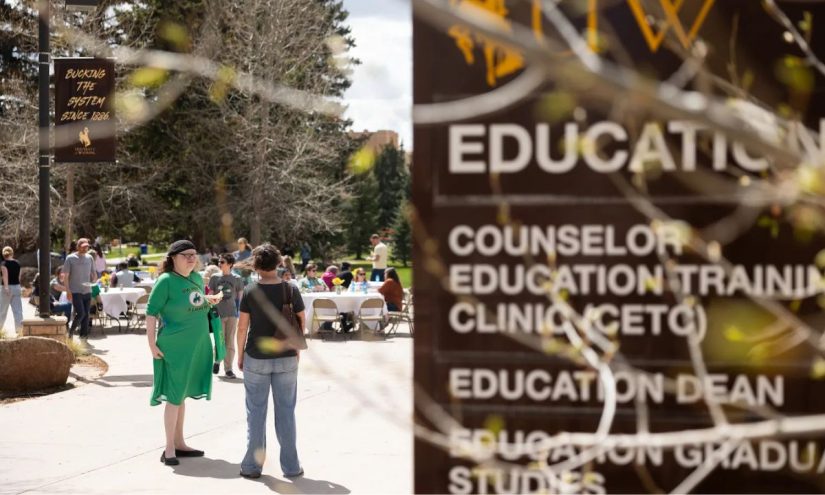
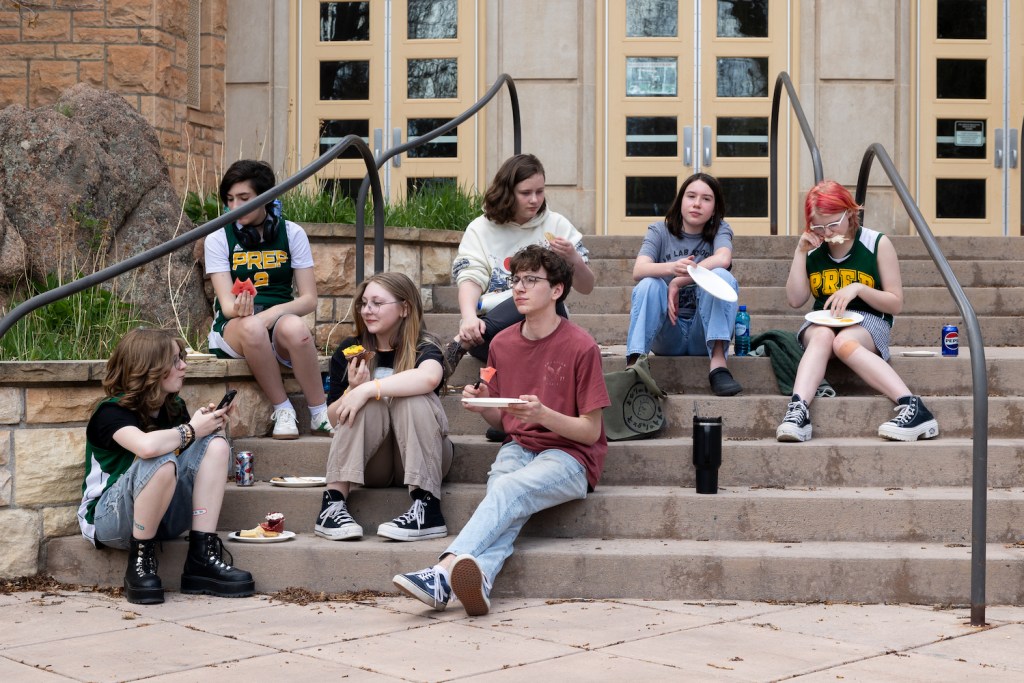
It’s not the only pain point involved in closing a school that predates the state of Wyoming itself. Many people fought to keep the Lab School open, and the past year has been a rollercoaster of emotions for school staff, students and their families as hopes have been raised and dashed, Fergon said. The school, which sits on the University of Wyoming campus, started as an educational learning site for college students studying to be teachers. It’s beloved for its experiential and outdoor-based approach to learning and emphasis on inclusivity.
Kindergarten students in Victoria Wiseman’s Lab School class raise their pencils to signify they have completed an exercise in May 2025. (Katie Klingsporn/WyoFile)
But the school’s future was thrown in doubt last summer as the university and Albany County School District 1 hit a stalemate over a lease agreement. School advocates pleaded to keep it open by some means and floated ideas that didn’t stick. The Lab School no longer served its former functions, university and district officials said, and issues from maintenance costs for the 75-year-old building to district-wide enrollment trends factored into closure talks.
The final Hail Mary came during the Wyoming Legislature. A bipartisan bill sponsored by Laramie Democrat Chris Rothfuss would have required UW and a coordinating district to operate a K-8 public lab school. The bill passed out of the Senate, but House lawmakers killed it in February, and that was pretty much that for the Lab School.
In the last year, Fergon said, “I think we’ve really been sitting in a place of uncertainty, just with all of the different avenues that could have kept the school going, and so that did feel kind of like a final door closing.”
And for her staff, she said, “even though we’re not happy to say goodbye to the school, and we didn’t want to see the school close, I think that having some certainty and a path forward … feels better than just sitting in limbo.”
With the school year ending Thursday, Lab School students will be saying goodbye to their classrooms and dispersing to other schools in the district. Some teachers will too, but others are starting new jobs or moving out of Laramie entirely. The school community spent the last couple of months bidding farewell, some with regret about how it ended.
Students enjoy warm weather during a May 2025 farewell celebration of the Lab School in Laramie. (Zach Agee/WyoFile)
“We love the school,” said Lindsey Rettler, a parent with two elementary students in Lab. Rettler was experiencing a mixture of emotions, she said in May. “Surprise, a little bit of shock, really, really sad, super disappointed and honestly, quite betrayed by those who are supposed to be leading people based on what’s best for the people.”
End of an era
The school was established in 1887 as the Preparatory School to serve secondary education students from counties without access to high school. In 1913, it transitioned to the Training Preparatory School, used as a learning laboratory by UW’s College of Education.
In 1999, the private school partnered with the Albany County School District to become a district public school. The Lab School then operated as a “school of choice,” meaning any district family could enter a lottery to enroll their kids.
College of Education students continued to train in its classrooms, but they also did so in classrooms across the district, state and beyond.
Historically, UW and the school district operated with a memorandum of understanding laying out terms of tenancy. Efforts to renew that MOU, however, failed to produce an updated agreement. Instead, the university announced last summer it was pursuing an extension only for the 2024-’25 school year, meaning the school would have to find a new home if it was to continue beyond that.
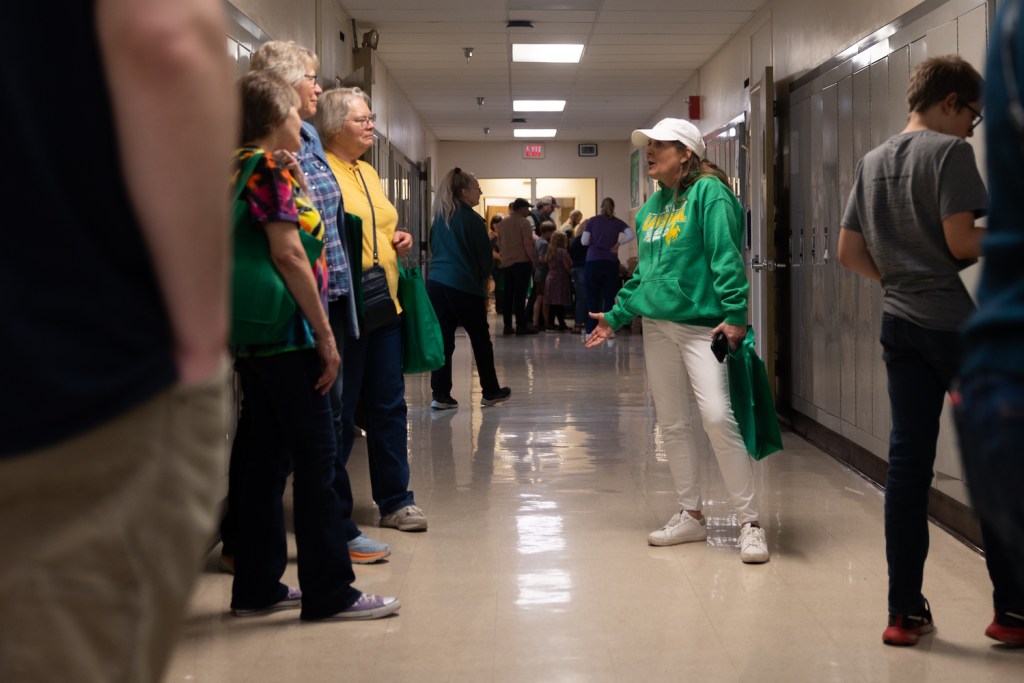
Margaret Hudson, a former principal at the Lab School, leads a school tour during a May 2025 farewell celebration of the school. (Zach Agee/WyoFile)
Among the major sticking points: whether the district or UW should pay for things like major maintenance in the aging building. UW also cited the fact that the school “no longer serves a significant role for teacher training in UW’s College of Education,” along with security challenges regarding having a school-district-operated facility located on university grounds; the Lab School’s incongruence with the state’s public funding model and the fact that the school district “has excess capacity in its existing facilities to accommodate current Lab School students.”
Concerned residents bemoaned the decision, and Albany County state lawmakers took notice. Sen. Rothfuss’ bill was the product of that concern. The bill brought together strange bedfellows, with co-sponsors ranging from Freedom Caucus-aligned lawmakers like Ocean Andrew to Laramie Democrat Karlee Provenza. Both serve in the Wyoming House of Representatives.
The issue raised questions about the state’s role in local education and what constitutes a situation so exceptional that lawmakers should meddle. Lab School supporters argued its unique role as a teaching laboratory and its century-plus of education history made it a place worth saving.
“This legislation is not about saving a school,” Rep. Andrew, R-Laramie, said on the House floor on Feb. 28. “It is about protecting a legacy and educating future generations of Wyoming teachers.”
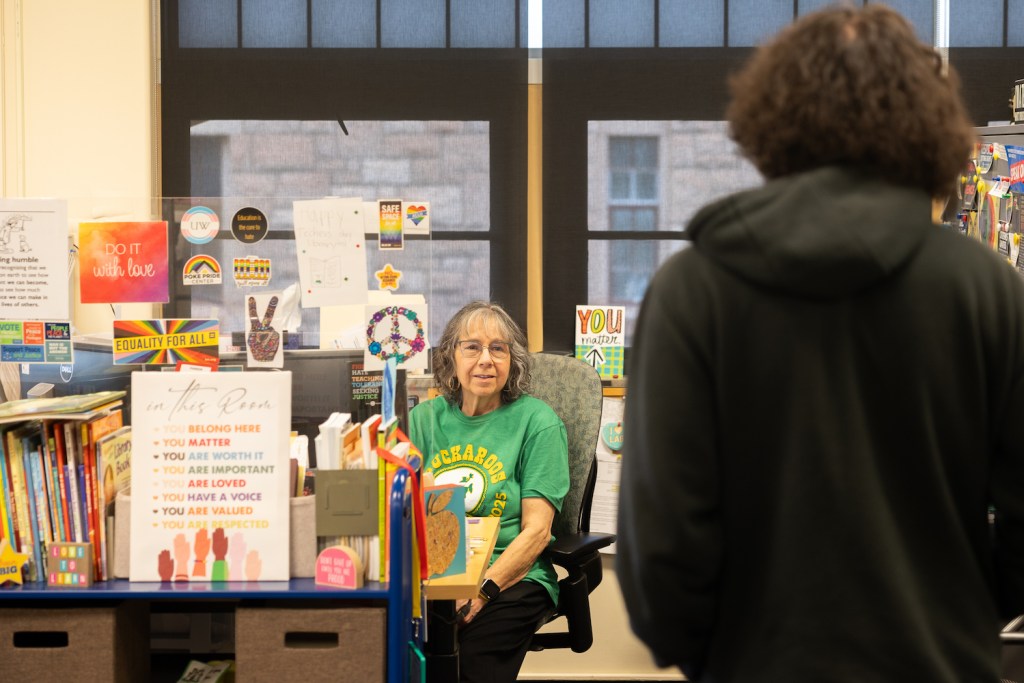
Librarian Cathy Dodgson greets a former student during a Lab School celebration in May 2025. The student remembered spending many hours reading in the library. (Zach Agee/WyoFile)
True local control reflects the wishes of the people in the community, he continued, “and in this case, the overwhelming support for keeping the Lab School open has been ignored. The people of Wyoming, the parents and the students have spoken, and they have been met with indifference by those in power.”
But others said the state should not interfere in a matter of local concern.
“This really feels like we’re being asked to micromanage a local school,” said Rep. Art Washut, R-Casper. “I don’t think this is the proper role of the state legislature.”
The body ultimately killed the measure on a 24-32 vote.
Moving on
With that, school staff began the work of transition, making plans with its 145 students to help them figure out transfer schools and options, Fergon said.. The school counselor even brought in a “transition curriculum” to help students navigate and cope with the stress of such significant change.
There was also a staff of roughly 20 teachers along with employees like janitors and paraprofessionals. Many say they are sad to leave a school community that felt like family.
Some, like Fergon, are continuing to work in the district. She will be an assistant principal at another high school.
Higher Education Inquirer : Federal judge approves $2.8B settlement, paving way for US colleges to pay NCAA athletes millions (12 News, Phoenix, Arizona)
Federal judge approves $2.8B settlement, paving way for US colleges to pay NCAA athletes millions (12 News, Phoenix, Arizona)
Grant House, the plaintiff in a now settled antitrust lawsuit against the NCAA, swam for Arizona State University.
Michael Reaves/Getty Images
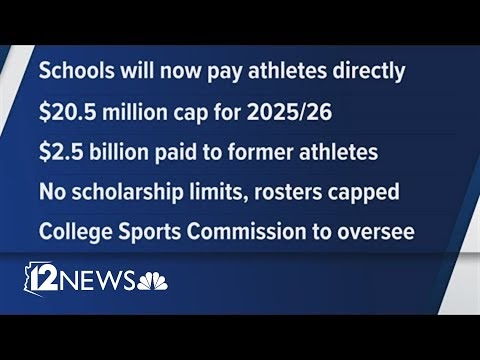
Federal district judge Claudia Wilken granted final approval to a multi-billion-dollar settlement in the yearslong House v. NCAA lawsuit late Friday evening, effectively transforming college sports: Starting July 1, institutions will be allowed to pay student athletes directly.
In accordance with the settlement, the National Collegiate Athletic Association and colleges in Division I conferences will distribute nearly $2.8 billion in back damages over the next 10 years to athletes who competed any time since 2016, as well as to their lawyers. The case also allows each college that opted in to pay their athletes collectively up to $20.5 million per year, in addition to scholarships. That figure will increase incrementally over time.
The ruling, which technically resolves three antitrust lawsuits against the NCAA, essentially turns student-athletes from amateurs into professionals. But experts say this isn’t likely to end court battles over athletics. The creation of the revenue-sharing model (where schools distribute money earned from areas such as media rights or merchandise), combined with existing turmoil over the regulation of name, image and likeness (NIL) deals, will only invite more lawsuits, they say.
“The judge said, in essence, this is not a perfect settlement that solves everyone’s concerns, but it makes progress towards ‘righting the wrongs’ of higher education’s desire to maintain amateurism status for the players but no one else,” Karen Weaver, adjunct assistant professor in the graduate school of education at the University of Pennsylvania, wrote in an email to Inside Higher Ed.
Although many colleges began making changes to their programs in anticipation of the settlement’s approval, the timing of the ruling could present logistical challenges as they move to start revenue-sharing with students from the July 1 deadline set out in the suit.
Current and former athletes have celebrated the ruling.
“It’s historic,” former college basketball star Sedona Prince, a co-lead plaintiff in one of the lawsuits, told ESPN. “It seemed like this crazy, outlandish idea at the time of what college athletics could and should be like. It was a difficult process at times … but it’s going to change millions of lives for the better.”
Wild West Yet to be Tamed
Judge Wilken’s ruling comes nearly two months after both parties presented arguments in early April for approving the settlement, and nearly five years after the suit was first filed in 2020. But contentious debates over how to manage paying student athletes really erupted in 2021, when NIL deals were first legalized.
Since then, collectives made up of alumni and boosters have paid athletes millions of dollars to play at schools through unregulated NIL partnerships. Top football and basketball players have earned the most.
College leaders have argued that the collectives could give wealthier institutions an unfair recruiting advantage. The House settlement, which not only allows colleges to pay athletes directly but also gives conferences the power to regulate booster influence, could help solve that problem.
“For several years, Division I members crafted well-intentioned rules and systems to govern financial benefits from schools and name, image and likeness opportunities, but the NCAA could not easily enforce these for several reasons,” NCAA president Charlie Baker wrote in a statement Friday. “The result was a sense of chaos: instability for schools, confusion for student-athletes and too often litigation.”
“The settlement opens a pathway to begin stabilizing college sports,” Baker said. “This new framework that enables schools to provide direct financial benefits to student-athletes and establishes clear and specific rules to regulate third-party NIL agreements marks a huge step forward for college sports.”
The settlement alsoestablishes a new clearinghouse, run by Deloitte, that will vet any endorsement deal between a booster and an athlete worth more than $600, with the goal of ensuring it is for a “valid business purpose.”
Still, doubts remain about how the watchdog will work; one commenter on X noted that all it takes for boosters to create an NIL regulatory loophole is to pay athletes in multiple $599 payments rather than one mass sum
Despite the efforts to regulate NIL payments through the clearinghouse, Weaver said the settlement will create “a feeding frenzy of agents and dealmakers capitalizing on a few athletes wealth while schools scramble to lock down players who could bolt for a better offer at any moment.”
“I expect to see the first Title IX lawsuits, and requests for an immediate stay, filed as soon as this week,” she said. “It’s important for higher education leaders to understand the far-reaching impact on our industry—it’s only just begun.”