Tag: News

  • Pasco-Hernando President Resigns Amid State DOGE Scrutiny

    Pasco-Hernando President Resigns Amid State DOGE Scrutiny

    Pasco-Hernando State College president Jesse Pisors has resigned after less than 18 months on the job, amid scrutiny from Florida’s version of the Department of Government Efficiency, The Tampa Bay Times reported.

    Pisors stepped down Thursday, the day before a special meeting called by board chair Marilyn Pearson-Adams to discuss concerns about student growth and retention, according to meeting documents. In a letter to other trustees, which included analysis from Florida’s DOGE on student growth and retention, Pearson-Adams noted the college was among the worst on those metrics.

    Specifically, she noted PHSC was second-to-last in retention numbers, which she called “alarming.” She added that trustees “had not been made aware of these numbers” despite “our continued requests over the past 12 months regarding this type of information and data.”

    The agenda shows only one action item for Friday’s special meeting of the Pasco-Hernando Board of Trustees: “Determination of Sustainability of College’s Future.” 

    Florida is one of several states that has sought to implement cost-cutting measures modeled on DOGE, the federal initiative led by billionaire bureaucrat Elon Musk to reduce government waste through layoffs and the elimination of various programs—an effort that has run into multiple legal challenges. DOGE-driven cuts have also fallen far short of their intended vision, with Musk often exaggerating savings for taxpayers in his work for the Trump administration. 

    Florida’s DOGE has also sought records of all faculty research at public institutions published in the last six years, leading to concerns about how the effort may be weaponized against faculty.

    Source link

  • The Trump Administration’s War on Children – The 74

    The Trump Administration’s War on Children – The 74

    ProPublica is a Pulitzer Prize-winning investigative newsroom. Sign up for The Big Story newsletter to receive stories like this one in your inbox.

    The clear-cutting across the federal government under President Donald Trump has been dramatic, with mass terminations, the suspension of decades-old programs and the neutering of entire agencies. But this spectacle has obscured a series of moves by the administration that could profoundly harm some of the most vulnerable people in the U.S.: children.

    Consider: The staff of a program that helps millions of poor families keep the electricity on, in part so that babies don’t die from extreme heat or cold, have all been fired. The federal office that oversees the enforcement of child support payments has been hollowed out. Head Start preschools, which teach toddlers their ABCs and feed them healthy meals, will likely be forced to shut down en masse, some as soon as May 1. And funding for investigating child sexual abuse and internet crimes against children; responding to reports of missing children; and preventing youth violence has been withdrawn indefinitely.

    The administration has laid off thousands of workers from coast to coast who had supervised education, child care, child support and child protective services systems, and it has blocked or delayed billions of dollars in funding for things like school meals and school safety.

    These stark reductions have been centered in little-known children’s services offices housed within behemoth agencies such as the Department of Health and Human Services and the Department of Justice, offices with names like the Children’s Bureau, the Office of Family Assistance and the Office of Juvenile Justice and Delinquency Prevention. In part because of their obscurity, the slashing has gone relatively overlooked.

    “Everyone’s been talking about what the Trump administration and DOGE have been doing, but no one seems to be talking about how, in a lot of ways, it’s been an assault on kids,” said Bruce Lesley, president of advocacy group First Focus on Children. He added that “the one cabinet agency that they’re fully decimating is the kid one,” referring to Trump’s goal of shuttering the Department of Education. Already, some 2,000 staffers there have lost or left their jobs.

    The impact of these cuts will be felt far beyond Washington, rippling out to thousands of state and local agencies serving children nationwide.

    The Department of Education, for instance, has rescinded as much as $3 billionin pandemic-recovery funding for schools, which would have been used for everything from tutoring services for Maryland students who’ve fallen behind to making the air safer to breathe and the water safer to drink for students in Flint, Michigan. The Department of Agriculture, meanwhile, has canceled $660 million in promised grants to farm-to-school programs, which had been providing fresh meat and produce to school cafeterias while supporting small farmers.

    At the Department of Health and Human Services, Robert F. Kennedy Jr., the agency’s secretary, has dismissed all of the staff that had distributed $1.7 billion annually in Social Services Block Grant money, which many states have long depended on to be able to run their child welfare, foster care and adoption systems, including birth family visitation, caseworker training and more. The grants also fund day care, counseling and disability services for kids. (It is unclear whether anyone remains at HHS who would know how to get all of that funding out the door or whether it will now be administered by White House appointees.)

    Head Start will be especially affected in the wake of Kennedy’s mass firings of Office of Head Start regional staff and news that the president’s draft budget proposes eliminating funding for the program altogether. That would leave one million working-class parents who rely on Head Start not only for pre-K education but also for child care, particularly in rural areas, with nowhere to send their kids during the day.

    Some local Head Start programs are already having to close their doors, and many program directors are encountering impediments to spending their current budgets. When they seek reimbursement after paying their teachers or purchasing school supplies, they’re being directed to a new “Defend the Spend” DOGE website asking them to “justify” each item, even though the spending has already been appropriated by Congress and audited by nonpartisan civil servants.

    Next on the chopping block, it appears, is Medicaid, which serves children in greater numbers than any other age group. If Republicans in Congress go through with the cuts they’ve been discussing, and Trump signs those cuts into law, kids from lower- and middle-class families across the U.S. will lose access to health care at their schools, in foster care, for their disabilities or for cancer treatment.

    The Trump administration has touted the president’s record of “protecting America’s children,” asserting in a recent post that Trump will “never stop fighting for their right to a healthy, productive upbringing.” The statement listed five examples of that commitment. Four were related to transgender issues (including making it U.S. government policy that there are only two sexes and keeping trans athletes out of women’s sports); the other was a ban on COVID-19 vaccine mandates at schools that receive federal funding.

    The White House, and multiple agencies, declined to respond to most of ProPublica’s questions. Madi Biedermann, a Department of Education spokesperson, addressed the elimination of pandemic recovery funding, saying that “COVID is over”; that the Biden administration established an “irresponsible precedent” by extending the deadline to spend these funds (and exceeding their original purpose); and that the department will consider extensions if individual projects show a clear connection between COVID and student learning.

    An HHS spokesperson, in response to ProPublica’s questions about cuts to children’s programs across that agency, sent a short statement saying that the department, guided by Trump, is restructuring with a focus on cutting wasteful bureaucracy. The offices serving children, the statement said, will be merged into a newly established “Administration for Healthy America.”

    Programs that serve kids havehistorically fared the worst when those in power are looking for ways to cut the budget. That’s in part because kids can’t vote, and they typically don’t belong to political organizations. International aid groups, another constituency devastated by Trump’s policy agenda, also can’t say that they represent many U.S. voters.

    This dynamic may be part of why cuts on the health side of the Department of Health and Human Services — layoffs of doctors, medical researchers and the like — have received more political and press attention than those on the human services side, where the Administration for Children and Families is located. That’s where you can find the Office of Child Support Services, the Office of Head Start, the Office of Child Care (which promotes minimum health and safety standards for child care programs nationally and helps states reduce the cost of child care for families), the Office of Family Assistance (which helps states administer direct aid to lower-income parents and kids), the Children’s Bureau (which oversees child protective services, foster care and adoption) and the Family and Youth Services Bureau (which aids runaway and homeless teens, among others).

    All told, these programs have seen their staffs cut from roughly 2,400 employees as of January to 1,500 now, according to a shared Google document that is being regularly updated by former HHS officials. (Neither the White House nor agency leadership have released the exact numbers of cuts.)

    Those losses have been most acutely felt in the agency’s regional offices, five out of 10 of which — covering over 20 states — have been closed by the Trump administration. They were dissolved this month without notice to their own employees or to the local providers they worked with. It was these outposts that had monitored Head Start programs to make sure that they had fences around their playgrounds, gates at the top of their stairs and enough staffing to keep an eye on even the most energetic little ones. It was also the regional staff who had helped state child support programs modernize their computer systems and navigate federal law. That allowed them, among other things, to be able to “pass through” more money to families instead of depositing it in state coffers to reimburse themselves for costs.

    And it was the regional staff who’d had the relationships with tribal officials that allowed them to routinely work together to address child support, child care and child welfare challenges faced by Native families. Together, they had worked to overcome sometimes deep distrust of the federal government among tribal leaders, who may now have no one to ask for help with their children’s programs other than political appointees in D.C.

    In the wake of the regional office cuts, local child services program directors have no idea who in the federal government to call when they have urgent concerns, many told ProPublica. “No one knows anything,” said one state child support director, asking not to be named in order to speak candidly about the administration’s actions. “We have no idea who will be auditing us.”

    “We’re trying to be reassuring to our families,” the official said, “but if the national system goes down, so does ours.”

    That national system includes the complex web of databases and technical support maintained and provided by the Office of Child Support Services at HHS, which helps states locate parents who owe child support in order to withhold part of their paychecks or otherwise obtain the money they owe, which is then sent to the parent who has custody of the child. Without this federal data and assistance, child support orders would have little way of being enforced across state lines.

    For that reason, the Trump administration is making a risky gamble by slashing staffing at the federal child support office, said Vicki Turetsky, who headed that office under the Obama administration. She worries that the layoffs create a danger of system outages that would cause child support payments to be missed or delayed. (“That’s a family’s rent,” she said.) The instability is compounded, she said, by DOGE’s recent unexplained move to access a highly confidential national child support database.

    But even if the worst doesn’t come to pass, there will still be concrete consequences for the delivery of child support to families, Turetsky said. The staff members who’ve been pushed out include those who’d helped manage complicated, outdated IT systems; without updates, these programs might over- or undershoot the amount of child support that a parent owes, misdirect the money or fail to give notice to the dad or mom about a change in the case.

    When Liz Ryan departed as administrator of the Department of Justice’s juvenile division in January, its website was flush with opportunities for state and local law enforcement as well as nonprofits to apply for federal funding for a myriad of initiatives that help children. There were funds for local police task forces that investigate child exploitation on the internet; for programs where abused children are interviewed by police and mental health professionals; and for court-appointed advocates for victimized kids. Grants were also available for mentoring programs like Big Brothers Big Sisters and the Boys & Girls Clubs of America.

    But the Trump administration removed those grant applications, which total over $400 million in a typical year. And Ryan said there still hasn’t been any communication, including in what used to be regular emails with grant recipients, many of whom she remains in touch with, about whether this congressionally approved money even still exists or whether some of it might eventually be made available again.

    A spokesperson for the Office of Justice Programs within the DOJ said the agency is reviewing programs, policies and materials and “taking action as appropriate” in accordance with Trump’s executive orders and guidance. When that review has been completed, local agencies and programs seeking grants will be notified.

    Multiple nonprofits serving exploited children declined to speak on the record to ProPublica, fearing that doing so might undermine what chance they still had of getting potential grants.

    “Look at what happened to the law firms,” one official said, adding that time is running out to fund his program’s services for victims of child abuse for the upcoming fiscal year.

    “I never anticipated that programs and services and opportunities for young people wouldn’t be funded at all by the federal government,” Ryan said, adding that local children’s organizations likely can’t go to states, whose budgets are already underwater, to make up the funding gap. “When you look at this alongside what they’re doing at HHS and the Department of Education and to Medicaid, it’s undercutting every single effort that we have to serve kids.”


    Source link

  • HHS Condemns Gender-Affirming Care in Report That Finds ‘Sparse’ Evidence of Harm – The 74

    HHS Condemns Gender-Affirming Care in Report That Finds ‘Sparse’ Evidence of Harm – The 74


    Get stories like this delivered straight to your inbox. Sign up for The 74 Newsletter

    This story was originally reported by Orion Rummler of The 19th. Meet Orion and read more of his reporting on gender, politics and policy.

    On Thursday, the Department of Health and Human Services (HHS) published a 400-page analysis of research on gender-affirming care for transgender youth, as directed by President Donald Trump. The agency used the release of the report to declare that available science does not support providing gender-affirming care to trans youth. LGBTQ+ advocacy groups worry the report will be used to further restrict gender-affirming care and to change medical guidelines in ways that harm trans youth.

    The president mandated the report in an executive order condemning the medical treatment — without evidence — as a form of mutilation, amid a broader push by the administration to exclude trans people from public life. Trump’s order asked the health agency to review the “best practices for promoting the health of children who assert gender dysphoria,” while pressuring youth clinics to halt treatment or lose federal funding.

    Now, the HHS has produced that report. The agency combed through research on the outcomes of puberty blockers, hormone replacement therapy, social transition, psychotherapy, and the rare cases of surgeries on adolescents and young adults diagnosed with gender dysphoria. 

    Gender dysphoria, the reason that most trans people undergo gender-affirming care, is a strong and persistent distress felt when one’s body is out of sync with their gender identity. Without treatment, gender dysphoria can lead to severe negative impacts in day-to-day life. 

    The agency states in its executive summary of the report that the document is not meant to provide clinical practice guidelines or issue legislative or policy recommendations. However, the report does imply that health care providers should refuse to offer gender-affirming care to adolescents and young adults on the basis that such care comes with the potential for risk — despite little evidence for that risk actually being found in the report. 

    “The evidence for benefit of pediatric medical transition is very uncertain, while the evidence for harm is less uncertain,” the executive summary states. “When medical interventions pose unnecessary, disproportionate risks of harm, healthcare providers should refuse to offer them even when they are preferred, requested, or demanded by patients.”

    In its research review, the HHS determined that evidence measuring the effects of gender-affirming care on psychological outcomes, quality of life, regret and long-term health is of “very low” quality. This conclusion ignores decades of research, as well as a recent survey of more than 90,000 transgender people in the United States that found an overwhelming majority report more life satisfaction after having transitioned. Access to gender-affirming care has been linked to lower odds of suicidality and depression in trans youth, while gender-affirming surgeries have been found to lower psychological distress for adults.

    Even when analyzing research that the administration deemed low-bias, the HHS found “sparse” to no evidence of harm from gender-affirming care. What’s more, the report frequently found evidence demonstrating the benefits of gender-affirming care — though it ultimately downplays those findings as not significant. 

    Available research on puberty blockers found high satisfaction ratings and low rates of regret. A systematic review of hormone replacement therapy described improved gender dysphoria and body satisfaction. Another found that hormone treatment leads to improved mental health. Two before-and-after studies reported reduced treatment needs or lower levels of suicidality and self-harm after hormone treatment. When measuring safety outcomes of hormone treatment, side effects did not have a major impact on treatment and complications were limited. 

    Despite these findings, the Department of Health and Human Services advertised the report in a Thursday news release as one that “highlights a growing body of evidence pointing to significant risks” of gender-affirming care. At the White House briefing room Thursday, deputy chief of staff for policy Stephen Miller touted the new report and attributed the idea of being transgender as part of a “cancerous communist woke culture” that is “destroying this country.” 

    There are side effects to many of the medications that transgender people — and cisgender people — take to receive gender-affirming care, as is the case with most medical treatments. These side effects, like the risk of decreased bone density when taking puberty blockers, are closely monitored and treated by doctors and communicated to patients.

    LGBTQ+ advocacy organizations denounced the report as a political attack on transgender youth. Multiple groups said that the report’s endorsement of psychotherapy as a “noninvasive alternative” to puberty blockers and hormone treatment amounts to an endorsement of conversion therapy — a practice wherein mental health professionals try to change a youth’s sexual orientation or gender identity.

    “It is already clear that this report is a willful distortion of the evidence intended to stoke fear about a field of safe and effective medicine that has existed for decades, in order to justify dangerous practices which amount to conversion therapy,” said Sinead Murano Kinney, health policy analyst at Advocates for Trans Equality. 

    The Human Rights Campaign, the country’s largest LGBTQ+ rights organization, accused the HHS of producing a report that is attempting to lay the groundwork to replace medical care for trans and nonbinary people with conversion therapy. 

    “Trans people are who we are. We’re born this way. And we deserve to live our best lives and have a fair shot and equal opportunity at living a good life,” said Jay Brown, chief of staff at the Human Rights Campaign. “This report … lays the groundwork to push parents and doctors aside and allow politicians to subject our kids to the debunked practice of conversion therapy.” 

    No authors or contributors are named in the report or in its executive summary. The agency says these names are being initially withheld to “maintain the integrity of this process,” and states that chapters of the document were subject to peer review.


    Get stories like these delivered straight to your inbox. Sign up for The 74 Newsletter

    Source link

  • Trump Proposes Deep Cuts to Education and Research

    Trump Proposes Deep Cuts to Education and Research

    President Donald Trump wants to end funding for TRIO, Federal Work-Study and other grant programs that support students on campus as part of a broader plan to cut $163 billion in nondefense programs.

    The funding cuts were outlined in a budget proposal released Friday. The document, considered a “skinny budget,” is essentially a wish list for the fiscal year 2026 budget for Congress to consider. The proposal kicks off what will likely be a yearlong effort to adopt a budget for the next fiscal year, which starts Oct. 1. Trump is unlikely to get all of his plan through Congress, though Republicans have seemed especially willing this year to support his agenda.

    If enacted, the plan would codify Trump’s efforts over the last three months to cut spending and reduce the size of the federal government—moves that some have argued were illegal. (Congress technically has final say over the budget, but Trump and his officials have raised questions about the legality of laws that require the president to spend federal funds as directed by the legislative branch.)

    The proposed budget plan slashes nearly $18 billion from the National Institutes of Health, $12 billion from the Education Department, and nearly $5 billion from the National Science Foundation. The skinny budget also eliminates funding for the Institute of Museum and Library Sciences, AmeriCorps, National Endowment for the Arts, and National Endowment for the Humanities. Trump has already made deep cuts at those agencies and put most—if not all—of their employees on leave.

    A fuller budget with more specifics is expected later this month.

    Democrats were quick to blast Trump’s plan, saying it would set the country “back decades by decimating investments to help families afford the basics.” But Republicans countered that the proposal would rein in “Washington’s runaway spending” and right-size “the bloated federal bureaucracy.”

    For higher ed groups and advocates, the proposed cuts could further jeopardize the country’s standing as a leader in global innovation and put college out of reach for some students.

    “Rather than ushering in a new Golden Age, the administration is proposing cuts to higher education and scientific research of an astonishing magnitude that would decimate U.S. innovation, productivity, and national security,” said Mark Becker, president of the Association of Public and Land-grant Universities, in a statement. “We call on Congress to reject these deeply misguided proposed cuts and instead invest in the nation’s future through education and pathbreaking research.”

    Zeroing Out ED Programs

    At the Education Department, the Trump administration is proposing to end a number of programs and reduce funding to others.

    The president wants to eliminate the department altogether; Education Secretary Linda McMahon said in a statement that the proposal reflects “an agency that is responsibly winding down, shifting some responsibilities to the states, and thoughtfully preparing a plan to delegate other critical functions to more appropriate entities.”

    McMahon laid off nearly half of the agency’s staff in March, so the budget also addresses those cuts.

    To compensate for the cuts to programs that directly support students or institutions, the administration argued colleges, states and local communities should on take that responsibility. Other justifications for the cuts reflect the administration’s crackdown on diversity, equity and inclusion programs and higher ed.

    For instance, officials from the Office of Management and Budget wrote that the SEOG program “contributes to rising college costs that [institutes of higher education] have used to fund radical leftist ideology instead of investing in students and their success.” (The SEOG program provides $100 to $4,000 to students “with exceptional financial need,” according to the department.)

    On TRIO and GEAR UP, which help low-income students get to college, the administration said those programs were a “relic of the past when financial incentives were needed to motivate Institutions of Higher Education to engage with low-income students and increase access … Today, the pendulum has swung and access to college is not the obstacle it was for students of limited means.”

    Additionally, the administration wants to cut the Office for Civil Rights’ budget by $49 million, or 35 percent. The budget document says this cut will refocus OCR “away from DEI and Title IX transgender cases.” In recent years, the Biden administration pleaded with Congress to boost OCR’s funding in order to address an increasing number of complaints. The office received 22,687 complaints in fiscal year 2024, and the Biden administration projected that number to grow to nearly 24,000 in 2025.

    But the OMB document claims that OCR will clear its “massive backlog” this year. “This rightsizing is consistent with the reduction across the Department and an overall smaller Federal role in K-12 and postsecondary education,” officials wrote.

    The administration also proposed cutting the Education Department’s overall budget for program administration by 30 percent. The $127 million cut reflects the staffing cuts and other efforts to wind down the department’s operations.

    “President Trump’s proposed budget puts students and parents above the bureaucracy,” McMahon said. “The federal government has invested trillions of taxpayer dollars into an education system that is not driving improved student outcomes—we must change course and reorient taxpayer dollars toward proven programs that generate results for American students.”

    Science and Research Cuts

    Agencies that fund research at colleges and universities are also facing deep cuts. The $4.9 billion proposed cut at the National Science Foundation is about half of what the agency received in fiscal year 2024—the last year Congress adopted a full budget.

    The cuts will end NSF programs aimed at broadening participation in the STEM fields, which totaled just over $1 billion, as well as $3.45 billion in general research and education.

    “The budget cuts funding for: climate; clean energy; woke social, behavioral, and economic sciences; and programs in low priority areas of science,” the officials wrote in budget documents. “NSF has fueled research with dubious public value, like speculative impacts from extreme climate scenarios and niche social studies.”

    As examples of “research with dubious public value,” officials specifically highlighted a $13.8 million NSF grant at Columbia University to “advance livable, safe, and inclusive communities” and a $15.2 million grant to the University of Delaware focused on achieving “sustainable equity, economic prosperity, and coastal resilience in the context of climate change.” The administration is maintaining the funding for research into artificial intelligence and quantum information sciences.

    The budget plan also aims to make significant reforms at the National Institutes of Health while slashing the agency’s budget by $17.9 billion. NIH received $47 billion in fiscal 2024.

    The plan would consolidate NIH programs into five areas: the National Institute on Body Systems Research; National Institute on Neuroscience and Brain Research; National Institute of General Medical Sciences; National Institute of Disability Related Research; and National Institute on Behavioral Health.

    The National Institute on Minority and Health Disparities, the Fogarty International Center, the National Center for Complementary and Integrative Health and the National Institute of Nursing Research would all be cut. The administration is planning to maintain $27 billion for NIH research.

    “The administration is committed to restoring accountability, public trust, and transparency at the NIH,” officials wrote. “NIH has broken the trust of the American people with wasteful spending, misleading information, risky research, and the promotion of dangerous ideologies that undermine public health.”

    Source link

  • Test yourself on this week’s K-12 news

    Test yourself on this week’s K-12 news

    This audio is auto-generated. Please let us know if you have feedback.

    How well did you keep up with this week’s developments in K-12 education? To find out, take our five-question quiz below. Then, share your score by tagging us on social media with #K12DivePopQuiz.

    Source link

  • Don’t Overlook Alumni as Asset for Advocacy (opinion)

    Don’t Overlook Alumni as Asset for Advocacy (opinion)

    With research contracts, cost recovery and student financial aid totaling billions of dollars on the line, many universities have called upon powerhouse external lobbying firms to defend against federal funding cuts and make the case for the public good that flows from higher education. Engaging external government relations experts can bring important perspective and leverage in this critical period, but this approach may not be scalable or sustainable across the nearly 550 research universities in large and small communities across the country.

    Fortunately, campuses have their own powerful asset for advocacy: alumni. Graduates know firsthand the benefits of higher education in their lives, professions and communities, and they can also give valuable feedback as campuses work to meet the challenges of this moment and become even better. The National Survey of College Graduates estimates that 72 million individuals hold at least a bachelor’s degree. Engaged well, alumni can be a force multiplier.

    Alumni often get attention in their role as donors. They will receive, on average, more than 90 email messages from their alma mater this year, many asking them to reflect on the value of their college experience and pay it forward. The most generous donors will be celebrated at events or visited personally by campus leaders. Millions and sometimes billions of dollars will be raised to advance campus missions.

    As generous as alumni donors may be, the effectiveness of their philanthropic support is linked to the even greater investments states and the federal government make in higher education. University leaders in fundraising and beyond have an obligation to provide alumni with candid information about the potential impacts of looming generational policy and funding shifts, along with opportunities to support their campus as advocates.

    In a crisis, information and attention necessarily flow first to on-campus constituents. Crisis communications and management plans may initially overlook alumni or underestimate the compelling role that they can play with both external and internal stakeholders. While most alumni are not on the campus, they are of the campus in deep and meaningful ways. And, unlike the handful of ultrawealthy alumni who have weighed in to the detriment of their Ivy League campuses, a broad group of alumni can bring practical wisdom and a voice of reason to challenging issues.

    Campus leaders now preparing for a long period of disruption should assess alumni engagement as part of this planning and gather their teams to consider:

    • How might alumni and development staff work with strategic communications, government relations staff and academic leaders to shape university messaging and advocacy?
    • What facts about policy and funding challenges do alumni need to understand in a media environment filled with misinformation?
    • How might alumni perspectives inform campus discourse about challenges to the institution’s values and academic freedom?
    • How might existing alumni programming provide opportunities for information-sharing between campus leaders, academic leaders and alumni?
    • How are campuses acknowledging and supporting alumni who are directly affected by changes in the federal workforce and economic disruption?

    This is a critical time for campus leaders to build bridges. Alumni can be a huge asset in this work. As degree holders, donors, professionals and citizens, engaged alumni know the specific value of their alma mater and of higher education broadly. They have stakes, authenticity and social capital, and they deserve the opportunity to add their voices.

    Lisa Akchin, senior counsel at RW Jones Agency and founder of On Purpose LLC, previously served as associate vice president for engagement and chief marketing officer at University of Maryland Baltimore County.

    Source link

  • Why Academics Need to Slow Down (opinion)

    Why Academics Need to Slow Down (opinion)

    A 2023 global survey of more than 900 faculty members found that 33 percent are “often or always” physically exhausted, 38 percent are emotionally exhausted and 40 percent are just worn-out. The constant pressure to conduct research, secure grants and fellowships, attend conferences, and publish or perish is only part of the story. There is, additionally, the immense responsibility to teach and mentor students who are facing their own mental health crises.

    In the inescapable race to beat the tenure clock and, once tenured, move to the next rung of the ladder while staying relevant and recognizable in our fields, faculty members need to take a pause. We must slow down to strengthen our mental health, ensure student success and produce meaningful scholarship.

    Some might ask how slowing down will help us keep up. How will we survive in academia if we are slow to publish in high-impact journals, or present our research in international forums, or participate in faculty development opportunities, or mentor multiple students, or be on several significant boards and committees? We will, if we do not equate slowness with being lazy or unproductive and, instead, understand it as the pace and the process that allows us to function and create deliberately, contemplatively, while resisting exhaustion and burnout.

    In my international conflict management classroom at Kennesaw State University, I encourage my students—future peacemakers—to think about slow peace. In my research on feminist agency in violent peripheral geographies, I deliberate on how, in zones of ongoing conflict, active resistance must (and does) surface in response to direct and immediate violence. But this only addresses the symptoms; in the urgency of the moment, what is not—and cannot—be addressed is the structural violence that results from a lack of cultivating peace as a way of life. Only by slowing down to reflect on, and gradually dismantle, the tools that perpetuate cultures and structures of violence can we enable enduring peace, ensure the well-being of the communities in conflict and reduce the recurrence of everyday violence.

    As I move deeper into decolonial feminist peace in my scholarship, teaching and practice, I recognize the university depends on some of the same tools of violence and patriarchal control that are used to perpetuate the colonial and postcolonial conflicts that we study in my classroom. For example, the “fast-paced, metric-oriented neoliberal university” makes constant demands on faculty members’ time and effort, ensuring we are exhausted and preoccupied with “keeping up.” To meet its numerical expectations, we often sacrifice our “intellectual growth and personal freedom”; we rarely pause to reflect on the quality and real-world impact of our output or the toll it takes on us. Exhausted people rarely have the time or energy for community and rest, which are essential not only for individual well-being but also for collective resistance to slow violence.

    Similarly, colonial capitalists initiated my ancestors in Assam, in the peripheral northeast region of India, into the plantation (tea) and extraction (coal, oil) economies by weaponizing productivity and exhaustion. They denigrated our traditional lahe lahe way of life that was based on living gently, slowly and in organic harmony with the planet and its people. The nontribal people of Assam embraced capitalism and the culture of “hard work” and exhaustion. They also aligned with the colonizers to designate the tribal peasants who stayed connected with their ancestral lands and refused to work in the plantations as “lazy natives.”

    This process of ethnic fragmentation started by the colonizers was subsequently exploited by the post-/neocolonial Indian state to diffuse and dissipate resistance against itself as it continued to extract the communal resources of the ethnic people of Assam and its neighboring northeastern states while ignoring their customary laws and political rights and governing this peripheralized region through securitization and militarization. The historical, horizontal conflicts between the many communities of the Northeast undermined their necessary, vertical resistance against the Indian state. Meanwhile, on the Indian mainland, Assam is still derogatorily referred to as “the lahe lahe land” and people from the entire Northeast region are subjected to discrimination and racist violence.

    Building solidarities across marginalized entities alone can successfully challenge larger structures of oppression—whether racism, colonial violence or academic capitalism—that continue to thrive while we remain divided. In the conflict zone I call home, I advocate for addressing the slow and sustained violence that historically eroded indigenous ways of peaceful coexistence between communities. I propose ways of building peace by reintroducing customary nonviolent structures and cultures into everyday practices of communities, allowing community members to reconnect with each other and with nature and the environment.

    For example, traditional slow crafts like weaving organic cotton and silk fabrics involved the entire community while benefiting individual members and protecting the planet. Reviving these practices would slowly, but radically, disrupt the cycle and progression of violence and societal fragmentation.

    Within the academy, too, we can practice slow peace. My individual resistance began when I started questioning my sense of guilt and self-doubt about being unproductive or “slow.” Just as my precolonial ancestors did, I too realized that my self-worth is not tied to my productivity; I slowed down. This deepened my scholarship and made it more deliberate as I connected it to my embodied, intergenerational history. My approach to scholarship also grew more intentional as I re-examined its real-world impact.

    At the same time, I recalled that my lahe lahe culture valued rest and resting in community through finding connections with people, engaging in communal joy and being in nature. I moved away from commodified self-care products and apps and took more mindful breaths during my morning yoga. Now I am more energized in the classroom, where I practice laughter and joy with my students while encouraging them to build an empathetic and mutually caring classroom culture. They bring genuine engagement and produce strong work that they take ownership of. I have also added nature walks with emotional support coworkers, aka new friends, to my routine. Our conversations have led to research collaborations and several creative engagements with the local community.

    If, as Audre Lorde says, self-care is “warfare,” it is no less a war to attempt to build a community of care involving colleagues and students in institutions and settings that are engineered to facilitate isolation by emphasizing increasingly demanding personal achievements tied to hierarchies of power and privilege. As I continue to deliberately and strategically work on decolonizing my academic praxis, I am convinced that within the academy and outside—where our knowledge-making has consequences—the quicker we begin slowing down, the sooner we will reap the benefits of the lahe lahe life.

    Uddipana Goswami is author of Conflict and Reconciliation: The Politics of Ethnicity in Assam (Routledge 2014) and Gendering Peace in Violent Peripheries: Marginality, Masculinity and Feminist Agency (Routledge 2023). Gendering Peace earned an honorable mention in the International Studies Association’s Peace Section’s 2025 Best Global South Scholar Book Award. She teaches at the School of Conflict Management, Peacebuilding and Development at Kennesaw State University.

    Source link

  • How Housing Support Programs Can Measure Student Development

    How Housing Support Programs Can Measure Student Development

    A large number of college students experience housing insecurity or homelessness, and finding suitable accommodations can be a challenge, particularly for those who attend colleges and universities that do not provide on-campus housing.

    The fall 2024 Student Financial Wellness Survey by Trellis Strategies found that 43 percent of all respondents experienced housing insecurity and 14 percent were homeless during the prior 12 months. Among two-year college respondents, 46 percent were housing insecure and 16 percent experienced homelessness in the previous year.

    Community colleges often lack the resources to directly address housing insecurity, so they rely on outside partnerships or housing assistance programs to accommodate students. For example, LaGuardia Community College partners with Airbnb to offer vouchers for short-term housing support for students. Tacoma Community College and the Tacoma Housing Authority co-created the College Housing Assistance Program, which subsidized housing costs for students experiencing homelessness until 2022.

    These programs often come with red tape that can make it difficult for a student to enroll in the program; for example, GPA or credit requirements can push vulnerable students out if the institution doesn’t think they’re making adequate progress.

    Alena A. Hairston, a professor at Fresno City College and doctoral student at Alliant International University, conducted a qualitative research project that evaluated student experience and engagement with housing assistance programs. Hairston found that while many students did not meet benchmarks for student success in the classroom, the experience contributed to their improved self-actualization, which can be a meaningful metric in student development.

    The background: To ensure students are persisting and making progress toward a degree, college-led assistance programs often require learners to meet baseline educational checkpoints, including being enrolled, achieving a certain GPA or meeting regularly with a staff member. Community partners may institute their own requirements, including drug- and alcohol-free living or payment of a deposit.

    If students don’t meet these requirements, they’re dropped, often without another option to continue their housing, which can be detrimental to their health and well-being. While failing to meet requirements can be a sign of student disinterest or lack of appreciation for the offerings, Hairston views stable housing as a foundational piece in student achievement and tied to the mission of community colleges.

    “If a student shows up to attend [and] to be a part of the collegiate process, that says desire, right?” Hairston said. “And the only requirement for admission [at community colleges] is a desire to learn, so we need to go with that as our mandate [to serve students].”

    Hairston wanted to understand how students accessed resources and the impact it had on their psychosocial development.

    The study: Hairston interviewed nine students who participated in housing assistance programs, led either by the college or an off-campus entity, in 2021. Students were between the ages of 18 and 47 and represented a variety of racial, ethnic and gender categories. All learners were enrolled at least part-time at a community college.

    Most respondents said they learned about housing programs through specific contacts, such as academic counselors for special programs including Extended Opportunity Programs, TRIO and the Puente Project, while others used the internet or other partners.

    While students appreciated the services, they faced logistical challenges that made the experience frustrating, such as a lack of notification or timely communication from staff members. One was in an unsafe area and roomed with an individual who used methamphetamine.

    Students said program requirements to maintain academic standing or health conditions (such as sobriety) were perceived as helpful, but in practice sometimes harmful and led to loss of housing. “As soon as you drop [below] a 2.0 or you drop nine units, they literally evict you,” one student shared. “Then you have an eviction on your record as well.”

    A few students said they gained personal life skills or were motivated to continue working toward academic and career goals. Others felt their citizenship status or racial and ethnic backgrounds impeded their housing placements or ability to access resources.

    In addition to finding secure housing, most participants utilized other campus, public and private services to pay for additional resources, including furniture, phone bills, laptops, bikes and mental health support.

    The COVID-19 pandemic created additional challenges for participants, such as job losses, the decline of support networks, moves, educational disruption and relapses into substance use.

    In conversations, students commented on how housing assistance motivated them to stay enrolled and allowed them to prioritize other elements of their lives, including mental health care and caregiving responsibilities.

    “The program [helped me with] a lot of psychological things like digging into yourself and figuring out the root problems that keep causing me to drink,” a study participant shared. “So I got to unburden a lot of my little demons.”

    Lessons learned: Based on her conversations with students, Hairston recommends policymakers tie self-actualization and personal growth to efficacy metrics to understand the value of these programs and improve students’ self-reflection on their progress and achievement.

    One possibility would be to measure student success on a yearlong basis, rather than term by term. Some learners returning to higher education may need counseling or struggle with the rigor of their coursework, resulting in poor academic performance in their first term back.

    Instead of weighing GPA or credits completed as the most important factors for student eligibility, Hairston advocates for a greater emphasis on self-efficacy and personal growth, perhaps delivered through a self-diagnostic at the start and end of the term or a regular self-study to track learning and the challenging circumstances they encountered. This also creates opportunities for checking in on students during the term to ensure that they’re not falling behind without support, Hairston said.

    Program participants should also be paired with counselors who are trained in trauma-informed care and academic counseling, Hairston said. Ensuring a welcoming atmosphere for services, program information and resources can reduce barriers to access and promote thriving.

    If your student success program has a unique feature or twist, we’d like to know about it. Click here to submit.

    Source link

  • Modest Thoughts From a Minor Donor to Harvard (opinion)

    Modest Thoughts From a Minor Donor to Harvard (opinion)

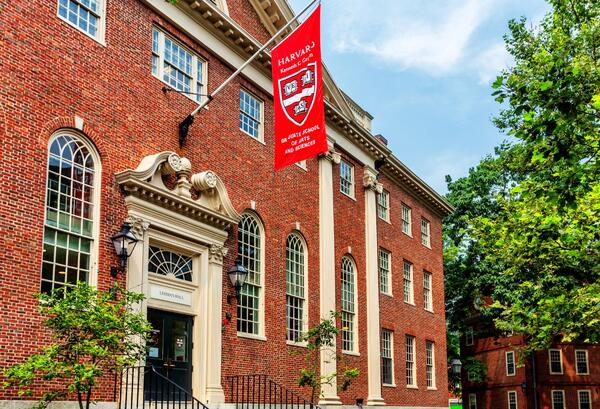
    Responding to Harvard University’s defiance of the coercive and illegal demands from the Trump administration, some major donors have recently urged the university to make accommodations rather than fight. A few have withheld large gifts over the last year and a half.

    Holding degrees from two of Harvard’s least wealthy schools (Divinity and Education), I have made small annual donations to my relatively impecunious alma maters for 45 years, and I offer these considerations to weigh against those of the big donors who have generally graduated from Harvard’s wealthiest, so-called major schools.

    Harvard’s resistance to authoritarian overreach bolsters the entire system of U.S. higher education, which came to be regarded as the best in the world only in the 1970s, after a century of slow development. Harvard’s defiance of unlawful authoritarianism inspires universities throughout the world.

    This controversy is therefore not just about Harvard, but all of higher education everywhere. If Harvard caves, then no university will dare to defy governmental overreach. If Harvard resists, then others will be inspired to do so and shamed if they do not.

    The urging by major donors to strike a deal with the Trump administration may result from feeling that Harvard’s small and secretive governing board, the Corporation, has, in recent months, not listened to them and ignored “the rightward shift of the country” that prompted Trump’s demands. (Although Harvard’s “major” and wealthiest professional schools—business, law and medicine—still graduate leading financiers on Wall Street and conservative justices of the Supreme Court, notwithstanding claims about the university’s “sins” of left-wing radicalism.)

    In any case, the implied threat of major donors to withhold donations is transactional, just like the demands of the Trump administration. Thus, Harvard is caught between two transactional parties. Is the defiance of coercive and illegal overreach worth the possible loss in large gifts?

    And the loss could be considerable. Over the last century, the rule in higher education fundraising is that 90 percent of gifts come from the top 10 percent of donors. Big donors count. Little ones scarcely, it seems.

    But there are financial counterpoints.

    By adjusting the spending rule for its endowment income and by floating bonds and loans, Harvard does have the resources to supplant lost federal income until its legal challenges are litigated, notwithstanding the prospect of further demands by the Trump administration.

    Indeed, the annual investment income of large endowments vastly exceeds annual fundraising. As a result, wealthy universities were already shifting their focus from “gifts to growth” of investment yield by the beginning of the 21st century. Fundraising became less important than investing endowment.

    Furthermore, major alumni donors, who might fear alienating the Trump administration by donating to Harvard, could easily make donations anonymously, which has long been a tradition in higher education.

    Finally, and most importantly, Harvard’s defiance has already inspired support from many alumni who may now do more, counterbalancing the support of transactional big donors who withdraw.

    I know that some little donors, like me, have not included Harvard in their estate plans precisely because Harvard has seemed so rich and invulnerable. As former president Drew Gilpin Faust once observed, Harvard’s commitment to its endowment could make the university “as close to immortal as any earthly institution might be.”

    Now we see that Harvard needs the support of all of its alumni in these perilous times, not only for the sake of alma mater, but all of higher education.

    Bruce A. Kimball, emeritus professor at the Ohio State University, is a former Guggenheim Fellow and co-author with Sarah M. Iler of Wealth, Price and Cost in American Higher Education: A Brief History (Johns Hopkins, 2023) and co-author with Daniel R. Coquillette of the two-volume history of Harvard Law School (Harvard 2015, 2020).

    Source link

  • NIH Speeds Up Implementation of New Public Access Policy

    NIH Speeds Up Implementation of New Public Access Policy

    The National Institutes of Health is accelerating a Biden-era plan to make its research findings freely and quickly available to the public, the agency announced Wednesday.

    The 2024 Public Access Policy was set to take effect Dec. 31, 2025, but will now take effect July 1 of this year. It updates the 2008 Public Access Policy, which allowed for a 12-month delay before research articles were required to be made publicly available. The 2024 policy removed the embargo period so that researchers, students and members of the public have rapid access to these findings, according to the announcement. 

    NIH director Jay Bhattacharya, who took over last month, said the move is aimed at continuing “to promote maximum transparency” and rebuilding public confidence in scientists, which has waned in recent years

    “Earlier implementation of the Public Access Policy will help increase public confidence in the research we fund while also ensuring that the investments made by taxpayers produce replicable, reproducible, and generalizable results that benefit all Americans,” Bhattacharya said in the memo. “Providing speedy public access to NIH-funded results is just one of the ways we are working to earn back the trust of the American people.”

    Although the scientific research community is supportive of the policy itself, some are calling on the NIH to reinstate the original implementation date to give researchers time to effectively comply with this and other new agency regulations. 

    “This new effective date will impose extra burdens on researchers and their institutions to meet the deadline,” Matt Owens, president of COGR, which represents research institutions, said in a statement Wednesday. “Ironically, at the same time NIH is accelerating implementation of this policy, the agency is adding new burdensome certification and financial reporting requirements for grant recipients. This runs counter to the administration’s efforts to reduce regulations.”

    Source link