Tag: News

  • How an Indiana Teacher Prepares Students for College Success – The 74

    How an Indiana Teacher Prepares Students for College Success – The 74


    Get stories like this delivered straight to your inbox. Sign up for The 74 Newsletter

    As new graduation requirements go into effect in Indiana, more students will likely take college and career courses to prepare for life after high school. But making sure students can access these classes — and succeed in them — takes some patience and creativity.

    When Sheridan High School teacher Jill Cali noticed her students struggling with the longer deadlines and open-ended questions typical of college assignments, she began to teach them how to break tasks into more manageable steps. Soon, her students were reaping the benefits.

    Other roadblocks to students’ success in college courses, especially in rural communities like Sheridan, a town of 3,000 people in northwest Hamilton County, include accessing these credits and paying for them.

    Cali said being part of the Rural Early College Network, sponsored by the Center of Excellence in Leadership of Learning at the University of Indianapolis, allows her students to earn college credits for free. The network also serves as a source of support, allowing her to exchange ideas with teachers at other schools.

    “The struggles that students typically have in early college courses are some of the same things that prevent many students from being confident that they will find success in college,” Cali told Chalkbeat. “When students believe they don’t have the ability to be successful in completing college-level work, their first instinct is to shy away from it.”

    Read on to learn more about how Cali approaches her early college classes.

    This interview has been lightly edited for length.

    How and when did you decide to become a teacher?

    I decided to become a teacher during my sophomore year of college when I realized that I was not meant to be an accountant! I had always loved working with kids and had a natural talent in Spanish, so becoming a [Spanish] teacher seemed like a good fit. The longer I teach, the more sure I am that this was the right path for me. I was made to be a teacher.

    What was the process like to become a dual-credit instructor?

    Our superintendent suggested I pursue a Master of Science in Curriculum and Instruction so I would be able to teach the dual-credit Education Professions courses. During our conversation, he convinced me that the degree program would be flexible enough to work with my busy single parenting and teaching schedule and that I would see the return on my investment very quickly. He was right.

    The following week, at the age of 42, I enrolled in a program to complete my master’s degree online, working at my own pace. I finished in six months, after working tirelessly to make sure that I only had to pay for one term.

    In order to be approved as a dual-credit instructor, I had to coordinate with my high school’s higher education partner, Ivy Tech Community College. This involved submitting my [college and grad school] transcripts, along with a proposed syllabus for each of the courses I planned to teach. The process was honestly pretty quick and painless.

    What’s your favorite lesson to teach and why?

    In my Principles of Teaching class, the introduction to teaching course, I teach about differentiation and making accommodations for students with special needs. My very favorite lesson to teach is the one in which I give students various tasks, but each has a different limitation. Their reactions, creative thinking, and “aha moments” are the reason it is my favorite lesson. During that lesson, my students realize that some of the most basic tasks can be entirely impossible with just one small limitation. Their internalization of how frustrating learning can be for some of our students really helps us to move forward with the unit of study in a productive manner.

    Tell us about your own experience with school and how it affects your work today.

    Throughout my childhood and into adulthood, I was a student who strived for excellence in every subject. Realizing that I finally understood a concept I had been trying to grasp or persevering through a tough problem to find an answer always gave me immense satisfaction. I loved the “light bulb moments” as a student, but I enjoy them even more now that I am the teacher. A natural lifelong learner myself, it has always been my goal to inspire my students to be inquisitive and curious investigators of anything that interests them.

    How is your early college classroom different from a standard high school classroom?

    At a glance, my classroom looks a bit more like a college classroom than many high school classrooms. I was fortunate enough to be able to use grant money to furnish the room with flexible seating options. What you can’t see is that my early college students work with elementary students, getting experience in the field. The flexible seating allows them to move seamlessly between working independently and cooperating and creating with their peers.

    How do you help students adjust to those expectations?

    Students in early college learn that when something feels overwhelming or difficult, they have the tools to tackle it on their own. This doesn’t mean that they can’t ask for help or guidance. It means that before asking for help, students should make sure they have exhausted all options for figuring it out on their own.

    I send a letter to each student and one home to their caregivers prior to the start of school in the fall, explaining what dual-credit means and what the expectations will look like in my early college class. This ensures that there is no confusion about what will be expected of early college students and also opens the lines of communication with students and families.

    Having taught these courses for a few years, I’ve found that students struggle with a course that has larger assignments and more time between deadlines. The first thing I do to support them in addressing this is to show them how they can break larger assignments and projects into smaller tasks on their own. Many students are used to having teachers do this for them. I show them how they can establish their own, smaller deadlines based on what they know about their personal schedule, how fast they tend to work, and the support they think they might need.

    Students also find it challenging to write nearly everything for their dual-credit courses using a formal tone with proper grammar and spelling. In addition, students tend to have trouble answering multi-part questions … particularly when they are higher-level thinking questions. I spend a full class period — more, if needed — showing them and having them practice how to appropriately respond to the types of writing prompts and questions they will typically see in their early college courses.

    Another area where students tend to struggle is with attendance and deadlines. During the COVID-19 pandemic, many schools insisted that students be shown grace in both of those areas. Unfortunately, this instilled in them the idea that as long as they completed all graded assignments, it didn’t matter whether they participated in class or how late assignments were submitted. Though their learning is always my primary focus, much of what my students learn builds on itself. In addition, much of the learning takes place through class discussions.

    What are some barriers your students face to postsecondary opportunities, and how does the Rural Early College Network help you help them overcome those?

    The greatest barrier to postsecondary opportunities for students in my school is the financial barrier. The dual-credit courses we offer are all free to our students, so when they successfully complete those courses, the number of semesters that will be required for them to complete their degree can be reduced. This translates to money saved for the student and makes their postsecondary options more affordable and attainable.

    Rural Early College Network schools meet throughout the school year to share ideas and support each other in building programs that provide our students with the tools they need to be successful in our classrooms, in college, and beyond.

    What’s the best advice you’ve ever received, and how have you put it into practice?

    The best advice I have ever received with regard to teaching is, “Student behavior and choices are almost never personal attacks against the teacher.” It was the great reminder that my teenage students’ brains are not fully developed. When they make poor choices or when they act out, it nearly never has anything to do with how they feel about me or anything even relating to me. Letting that go and remembering to see their behaviors as something completely separate from me has really made it much easier to create consequences when appropriate, support my students when needed, and establish a welcoming environment in which every student starts fresh every day.

    This story was originally published by Chalkbeat. Chalkbeat is a nonprofit news site covering educational change in public schools. Sign up for their newsletters at ckbe.at/newsletters.


    Get stories like these delivered straight to your inbox. Sign up for The 74 Newsletter

    Source link

  • Kansas City Parents Push for Dyslexia to be Taken Seriously – The 74

    Kansas City Parents Push for Dyslexia to be Taken Seriously – The 74


    Get stories like this delivered straight to your inbox. Sign up for The 74 Newsletter

    Tuesday Willaredt knew her older daughter, Vivienne, struggled to read.

    She tentatively accepted teachers’ reassurances and the obvious explanations: Remote learning during the COVID pandemic was disruptive. Returning to school was chaotic. All students were behind.

    Annie Watson was concerned about her son Henry’s performance in kindergarten and first grade.

    But his teachers weren’t. There was a pandemic, they said. He was a boy. Henry wasn’t really lagging behind his classmates.

    So Willaredt and Watson kept asking questions. So did Tricia McGhee, Abbey and Aaron Dunbar, Lisa Salazar Tingey, Kelly Reardon and T.C. — all parents who spoke to The Beacon about getting support for their kids’ reading struggles. (The Beacon is identifying T.C. by her initials because she works for a school district.)

    After schools gave reassurances or rationalizations or denied services, the parents kept raising concerns, seeking advice from teachers and fellow parents and pursuing formal evaluations.

    Eventually, they all reached the same conclusion. Their children had dyslexia, a disability that makes it more difficult to learn to read and write well.

    They also realized something else. Schools — whether private, public, charter or homeschool — aren’t always equipped to immediately catch the problem and provide enough support, even though some estimates suggest up to 20% of students have dyslexia symptoms.

    Instead, the parents took matters into their own hands, seeking diagnoses, advocating for extra help and accommodations, moving to another district or paying for tutoring or private school.

    “You get a diagnosis from a medical professional,” Salazar Tingey said. “Then you go to the school and you’re like, ‘This is what they say is best practice for this diagnosis.’ And they’re like, ‘That’s not our policy.’”

    Recognizing dyslexia

    It wasn’t until Vivienne, now 12, was in sixth grade and struggling to keep up at Lincoln College Preparatory Academy Middle School that a teacher said the word “dyslexic” to Willaredt.

    After the Kansas City Public Schools teacher mentioned dyslexia, Willaredt made an appointment at Children’s Mercy Hospital, waited months for an opening and ultimately confirmed that Vivienne had dyslexia. Her younger daughter Harlow, age 9, was diagnosed even more recently.

    Willaredt now wonders if any of Vivienne’s other teachers suspected the truth. A reading specialist at Vivienne’s former charter school had said her primary problem was focus.

    “There’s this whole bureaucracy within the school,” she said. “They don’t want to call it what it is, necessarily, because then the school’s on the hook” to provide services.

    Missouri law requires that students in grades K-3 be screened for possible dyslexia, said Shain Bergan, public relations coordinator for Kansas City Public Schools. If they’re flagged, the school notifies their parents and makes a reading success plan.

    Schools don’t formally diagnose students, though. That’s something families can pursue — and pay for — on their own by consulting a health professional.

    “Missouri teachers, by and large, aren’t specially trained to identify or address dyslexia in particular,” Bergan wrote in an email. “They identify and address specific reading issues students are having, whether it’s because the student has a specific condition or not.”

    Bergan later added that KCPS early elementary and reading-specific teachers complete state-mandated dyslexia training through LETRS (Language Essentials for Teachers of Reading and Spelling), an intensive teacher education program that emphasizes scientific research about how students learn to read.

    Missouri is pushing for more teachers to enroll in LETRS.

    In an emailed statement, the North Kansas City School District said staff members “receive training on dyslexia and classroom strategies,” and the district uses a screening “to help identify students who may need additional reading support.”

    Kansas has also worked to update teacher training. But the state recently lost federal funding for LETRS training and pulled back on adding funding to its Blueprint for Literacy.

    Public school students with dyslexia or another disability might be eligible for an individualized education program, or IEP, a formal plan for providing special education services which comes with federal civil rights protections.

    But a diagnosis isn’t enough to prove eligibility, and developing an IEP can be a lengthy process that requires strong advocacy from parents. Students who don’t qualify might be eligible for accommodations through a 504 plan.

    A spokesperson for Olathe Public Schools said in an email that the district’s teachers participate in state-mandated dyslexia training but don’t diagnose dyslexia.

    The district takes outside diagnoses into consideration, but “if a student is making progress in the general education curriculum and able to access it, then the diagnosis alone would not necessarily demonstrate the need for support and services.”

    Why dyslexia gets missed

    Some families find that teachers dismiss valid concerns, delaying diagnoses that parents see as key to getting proper support.

    Salazar Tingey alerted teachers that her son, Cal, was struggling with reading compared to his older siblings. Each year, starting in an Iowa preschool and continuing after the family moved to the North Kansas City School District, she heard his issues were common and unconcerning.

    She felt validated when a Sunday school teacher suggested dyslexia and recommended talking to a pediatrician.

    After Cal was diagnosed, Salazar Tingey asked his second grade teacher about the methods she used to teach dyslexic kids. She didn’t expect to hear, “That’s not really my specialty.”

    “I guess I thought that if you’re a K-3 teacher, that would be pretty standard,” she said. “I don’t think (dyslexia is) that uncommon.”

    Louise Spear-Swerling, a professor emerita in the Department of Special Education at Southern Connecticut State University, said estimates of the prevalence of dyslexia range from as high as 20% to as low as 3 to 5%. She thinks 5 to 10% is reasonable.

    “That means that the typical general education teacher, if you have a class of, say, 20 students, will see at least one child with dyslexia every year — year after year after year,” she said.

    Early intervention is key, Spear-Swerling said, but it doesn’t always happen.

    To receive services for dyslexia under federal special education guidelines, students must have difficulty reading that isn’t primarily caused by something like poor instruction, another disability, economic disadvantage or being an English language learner, she said. And schools sometimes misidentify the primary cause.

    Tricia McGhee, director of communications at Revolucion Educativa, a nonprofit that offers advocacy and support for Latinx families, has had that experience.

    She said her daughter’s charter school flagged her issues with reading but said it was “typical that all bilingual or bicultural children were behind,” McGhee said. That didn’t sound right because her older child was grade levels ahead in reading.

    “The first thing they told me is, ‘You just need to make sure to be reading to her every night,’” McGhee said. “I was like, ‘Thanks. I’ve done that every day since she was born.’”

    McGhee is now a member of the KCPS school board. But she spoke to The Beacon before being elected, in her capacity as a parent and RevEd staff member.

    Dyslexia also may not stand out among classmates who are struggling for various reasons.

    Annie Watson, whose professional expertise is in early childhood education planning, strategy and advocacy, said some of Henry’s peers lacked access to high-quality early education and weren’t prepared for kindergarten.

    “His handwriting is so poor,” she remembers telling his teacher.

    The teacher assured her that Henry’s handwriting was among the best in the class.

    “Let’s not compare against his peers,” Watson said. “Let’s compare against grade level standards.”

    Receiving services for dyslexia 

    Watson cried during a Park Hill parent teacher conference when a reading interventionist said she was certified in Orton-Gillingham, an instruction method designed for students with dyslexia.

    In an ideal world, Watson said, the mere mention of a teaching approach wouldn’t be so fraught.

    Annie Watson with her son Henry, 11, before track practice. Henry went through intensive tutoring to help him learn to read well after his original school didn’t provide the services he needed. (Vaughn Wheat/The Beacon)

    “I would love to know less about this,” she said. “My goal is to read books with my kids every night, right? I would love for that to just be my role, and that hasn’t been it.”

    By that point, Watson’s family had spent tens of thousands of dollars on Orton-Gillingham tutoring for Henry through Horizon Academy, a private school focused on students with dyslexia and similar disabilities.

    They had ultimately moved to the Park Hill district, not convinced that charter schools or KCPS had enough resources to provide support.

    “I felt so guilty in his charter school,” Watson said. “There were so many kids who needed so many things, and so it was hard to advocate for my kid who was writing better than a lot of the kids.”

    So the idea that Henry’s little sister — who doesn’t have dyslexia — could get a bit of expert attention seamlessly, during the school day and without any special advocacy, made Watson emotional.

    “Henry will never get that,” she said.

    While Watson wonders if public schools in Park Hill could have been enough for Henry had he started there earlier, some families sought help outside of the public school system entirely.

    The Reardon and Dunbar families, who eventually received some services from their respective schools, each enrolled a child full-time in Horizon Academy after deciding the services weren’t enough.

    Kelly Reardon said her daughter originally went to a private Catholic school.

    “With one teacher and 26 kids, there’s just no way that she would have gotten the individualized intervention that she needed,” she said.

    The Dunbars’ son, Henry, had been homeschooled and attended an Olathe public school part-time.

    Abbey Dunbar said Henry didn’t qualify for services from the Olathe district in kindergarten, but did when the family asked again in second grade. Henry has a diagnosed severe auditory processing disorder, and his family considers him to have dyslexia based on testing at school.

    She said the school accommodated the family’s part-time schedule and the special education services they gave to Henry genuinely helped.

    “​​I never want to undercut what they gave and what they did for him, because we did see progress,” Dunbar said. “But we need eight hours a day (of support), and I don’t think that’s something they could even begin to give in public school. There’s so many kids.”

    T.C., whose daughters attended KCPS when they were diagnosed, also decided she couldn’t rely on services provided by the school alone. One daughter didn’t qualify for an IEP because the school said she was already achieving as expected for her IQ level.

    In the end, T.C. said, her daughters did get the support they needed “because I paid for it.”

    She found a tutor who was relatively inexpensive because she was finishing her degree. But at $55 per child, per session once or twice a week, tutoring still ate into the family’s budget and her children’s free time.

    “If they were learning what they needed to learn at school… we wouldn’t have had that financial burden,” she said. Tutoring also meant “our kids couldn’t participate in other activities outside of school.”

    Support and accommodations

    Tuesday Willaredt is still figuring out exactly what support Vivienne needs.

    Options include a KCPS neighborhood school, a charter school that extends through eighth grade or moving to another district. Outside tutoring will likely be part of the picture regardless.

    Willaredt is worried that her kids aren’t being set up to love learning.

    Vivienne, 12 (left), and Harlow, 9, were both diagnosed with dyslexia earlier this year. (Vaughn Wheat/The Beacon)

    “That’s where I get frustrated,” she said. “If interventions were put in earlier — meaning the tutoring that I would have had to seek — these frustrations and sadness that is their experience around learning wouldn’t have happened.”

    When Lisa Salazar Tingey brought Cal’s dyslexia diagnosis to his school, he didn’t qualify for an IEP. But his classroom teacher offered extra support that seemed to catch him up.

    In following years, though, Salazar Tingey has worried about Cal’s performance stagnating and considered formalizing his accommodations through a 504 plan.

    She wants Cal, now 10, to be able to use things like voice to text or audiobooks if his dyslexia is limiting his intellectual exploration.

    Before his diagnosis, she and her husband noticed that every school writing assignment Cal brought home was about volcanoes, even though “it wasn’t like he was a kid who was always talking about volcanoes.”

    When he was diagnosed, they learned that sticking to familiar topics can be a side effect of dyslexia.

    “He knows how to spell magma and lava and volcano, and so that’s all he ever wrote about,” Salazar Tingey said. “That’s sad to me. I want him to feel that the world is wide open, that he can read about anything.”

    This article first appeared on Beacon: Kansas City and is republished here under a Creative Commons Attribution-NoDerivatives 4.0 International License.


    Get stories like these delivered straight to your inbox. Sign up for The 74 Newsletter
    Source link

  • Harvard Wins Injunction to Protect International Enrollment

    Harvard Wins Injunction to Protect International Enrollment

    APCortizasJr/iStock Unreleased/Getty Images

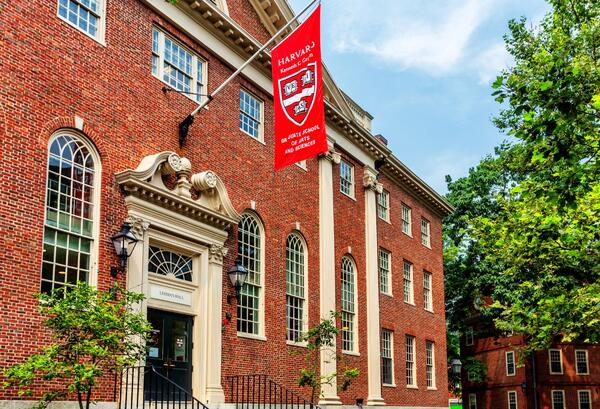
    Less than a day after having its ability to host international students revoked by the federal government, Harvard University successfully sued the Trump administration to block the move. A judge granted a temporary restraining order late Friday morning.

    Department of Homeland Security Secretary Kristi Noem announced Thursday afternoon that the Trump administration had stripped Harvard’s Student and Exchange Visitor Program certification in a letter that vaguely accused Harvard of a “failure to adhere to the law.” 

    However, the letter did not name any specific violations of the law by Harvard.

    On Friday morning, Harvard threw a legal counterpunch, filing a lawsuit challenging the revocation of SEVP certification and seeking a temporary restraining order to halt the action, which could cost Harvard to suddenly lose more than 6,000 students if they are unable to enroll. (International enrollment typically makes up about a quarter of Harvard’s head count.) Beyond blocking new enrollments, the revocation would require current international students to transfer. 

    Harvard president Alan Garber blasted the SEVP revocation as “unlawful and unwarranted” and said it was a punitive effort by the Trump administration in response to Harvard’s rejection of demands to reform governance, admissions, hiring processes and more following allegations of antisemitism and harassment that stemmed from pro-Palestinian protests last year. (Harvard filed a separate lawsuit pushing back on those demands last month, prompting the Trump administration to retaliate by freezing $2.7 billion in grants and contracts, or about a third of its federal research funding.)

    “It imperils the futures of thousands of students and scholars across Harvard and serves as a warning to countless others at colleges and universities throughout the country who have come to America to pursue their education and fulfill their dreams,” Garber wrote in a message to campus.

    He added, “We will do everything in our power to support our students and scholars.”

    Harvard’s lawsuit echoed Garber’s points in an even sharper tone, accusing the federal government of blatantly violating the First Amendment and Harvard’s due process rights.

    “With the stroke of a pen, the government has sought to erase a quarter of Harvard’s student body, international students who contribute significantly to the University and its mission,” lawyers representing Harvard argued in Friday’s early-morning legal filing.

    Harvard’s lawsuit named DHS, Noem and other officials within the department as defendants, as well as the U.S. Departments of Justice and State and agency leaders.

    Assistant DHS secretary Tricia McLaughlin fired back at Harvard in a response to Inside Higher Ed.

    “This lawsuit seeks to kneecap the President’s constitutionally vested powers under Article II. It is a privilege, not a right, for universities to enroll foreign students and benefit from their higher tuition payments to help pad their multibillion-dollar endowments. The Trump administration is committed to restoring common sense to our student visa system; no lawsuit, this or any other, is going to change that. We have the law, the facts, and common sense on our side,” she wrote.

    Another Legal Setback

    A judge swiftly agreed with Harvard’s argument, signing off on the temporary restraining order to prevent revocation of the university’s SEVP certification within hours of the lawsuit being filed.

    In a brief opinion, a district court judge in Massachusetts wrote in response to Harvard’s legal filing that the temporary restraining order was “justified to preserve the status quo.” The judge blocked DHS from stripping SEVP certification, at least temporarily, and granted a hearing. 

    A date for the hearing was not specified in court documents.

    The temporary restraining order is one of multiple legal setbacks the Trump administration has faced recently as it has sought to pull student visas over minor infractions (and for constitutionally protected speech), cap federal research funding reimbursement rates, and slash staff at the Department of Education and other agencies. Many of those efforts face ongoing challenges.

    On Thursday, for example, a federal judge barred the Trump administration from firing thousands of Department of Education employees as part of a sweeping reduction of force.

    The federal government has already appealed that decision.

    ‘Do This Everywhere’

    The Trump administration’s latest action against Harvard prompted broad condemnation from academics and free speech groups, who argued that the federal government did not follow legal processes for stripping SEVP certification and had ignored the university’s due process rights.

    “The administration has clearly targeted Harvard in recent months. In doing so, it has violated not only Harvard’s First Amendment rights, but also the rights of the university’s students and faculty,” the free speech group Foundation for Individual Rights and Expression wrote in a Friday social media post. “We commend Harvard for standing up for itself. Free speech and academic freedom are essential to higher education. They are values worth fighting for.”

    Despite widespread concerns from academics and lawyers that stripping Harvard’s SEVP certification is not legal, multiple Republican officials have endorsed Noem’s actions.

    Rep. Randy Fine, a Republican who represents Florida and a member of the House Education and the Workforce Committee, cheered on the move in a Friday appearance on FOX Business. Fine, a two-time Harvard graduate, said the Trump administration should “do this everywhere” amid concerns about antisemitic behavior and harassment on college campuses.

    Fine also took a dim view of international students exercising their First Amendment rights.

    “We should not be bringing people into America to get an education who hate us. They should be coming here to get an education, and frankly they should keep their mouths shut beyond that. I don’t go into someone else’s house and complain about it when I’m there,” Fine said.

    Source link

  • Harvard Sues to Protect International Enrollment

    Harvard Sues to Protect International Enrollment

    APCortizasJr/iStock Unreleased/Getty Images

    Less than a day after having its ability to host international students revoked by the federal government, Harvard University successfully sued the Trump administration to block the move. A judge granted a temporary restraining order late Friday morning.

    Department of Homeland Security Secretary Kristi Noem announced Thursday afternoon that the Trump administration had stripped Harvard’s Student and Exchange Visitor Program certification in a letter that vaguely accused Harvard of a “failure to adhere to the law.” 

    However, the letter did not name any specific violations of the law by Harvard.

    On Friday morning, Harvard threw a legal counterpunch, filing a lawsuit challenging the revocation of SEVP certification and seeking a temporary restraining order to halt the action, which could cost Harvard to suddenly lose more than 6,000 students if they are unable to enroll. (International enrollment typically makes up about a quarter of Harvard’s head count.) Beyond blocking new enrollments, the revocation would require current international students to transfer. 

    Harvard president Alan Garber blasted the SEVP revocation as “unlawful and unwarranted” and said it was a punitive effort by the Trump administration in response to Harvard’s rejection of demands to reform governance, admissions, hiring processes and more following allegations of antisemitism and harassment that stemmed from pro-Palestinian protests last year. (Harvard filed a separate lawsuit pushing back on those demands last month, prompting the Trump administration to retaliate by freezing $2.7 billion in grants and contracts, or about a third of its federal research funding.)

    “It imperils the futures of thousands of students and scholars across Harvard and serves as a warning to countless others at colleges and universities throughout the country who have come to America to pursue their education and fulfill their dreams,” Garber wrote in a message to campus.

    He added, “We will do everything in our power to support our students and scholars.”

    Harvard’s lawsuit echoed Garber’s points in an even sharper tone, accusing the federal government of blatantly violating the First Amendment and Harvard’s due process rights.

    “With the stroke of a pen, the government has sought to erase a quarter of Harvard’s student body, international students who contribute significantly to the University and its mission,” lawyers representing Harvard argued in Friday’s early-morning legal filing.

    Harvard’s lawsuit named DHS, Noem and other officials within the department as defendants, as well as the U.S. Departments of Justice and State and agency leaders.

    Assistant DHS secretary Tricia McLaughlin fired back at Harvard in a response to Inside Higher Ed.

    “This lawsuit seeks to kneecap the President’s constitutionally vested powers under Article II. It is a privilege, not a right, for universities to enroll foreign students and benefit from their higher tuition payments to help pad their multibillion-dollar endowments. The Trump administration is committed to restoring common sense to our student visa system; no lawsuit, this or any other, is going to change that. We have the law, the facts, and common sense on our side,” she wrote.

    Another Legal Setback

    A judge swiftly agreed with Harvard’s argument, signing off on the temporary restraining order to prevent revocation of the university’s SEVP certification within hours of the lawsuit being filed.

    In a brief opinion, a district court judge in Massachusetts wrote in response to Harvard’s legal filing that the temporary restraining order was “justified to preserve the status quo.” The judge blocked DHS from stripping SEVP certification, at least temporarily, and granted a hearing. 

    A date for the hearing was not specified in court documents.

    The temporary restraining order is one of multiple legal setbacks the Trump administration has faced recently as it has sought to pull student visas over minor infractions (and for constitutionally protected speech), cap federal research funding reimbursement rates, and slash staff at the Department of Education and other agencies. Many of those efforts face ongoing challenges.

    On Thursday, for example, a federal judge barred the Trump administration from firing thousands of Department of Education employees as part of a sweeping reduction of force.

    The federal government has already appealed that decision.

    ‘Do This Everywhere’

    The Trump administration’s latest action against Harvard prompted broad condemnation from academics and free speech groups, who argued that the federal government did not follow legal processes for stripping SEVP certification and had ignored the university’s due process rights.

    “The administration has clearly targeted Harvard in recent months. In doing so, it has violated not only Harvard’s First Amendment rights, but also the rights of the university’s students and faculty,” the free speech group Foundation for Individual Rights and Expression wrote in a Friday social media post. “We commend Harvard for standing up for itself. Free speech and academic freedom are essential to higher education. They are values worth fighting for.”

    Despite widespread concerns from academics and lawyers that stripping Harvard’s SEVP certification is not legal, multiple Republican officials have endorsed Noem’s actions.

    Rep. Randy Fine, a Republican who represents Florida and a member of the House Education and the Workforce Committee, cheered on the move in a Friday appearance on FOX Business. Fine, a two-time Harvard graduate, said the Trump administration should “do this everywhere” amid concerns about antisemitic behavior and harassment on college campuses.

    Fine also took a dim view of international students exercising their First Amendment rights.

    “We should not be bringing people into America to get an education who hate us. They should be coming here to get an education, and frankly they should keep their mouths shut beyond that. I don’t go into someone else’s house and complain about it when I’m there,” Fine said.

    Source link

  • Test yourself on this week’s K-12 news

    Test yourself on this week’s K-12 news

    This audio is auto-generated. Please let us know if you have feedback.

    How well did you keep up with this week’s developments in K-12 education? To find out, take our five-question quiz below. Then, share your score by tagging us on social media with #K12DivePopQuiz.

    Source link

  • Four Things to Know About the House Budget Plan

    Four Things to Know About the House Budget Plan

    After much back-and-forth and late-night dealing, House Republicans have passed a sweeping budget plan to cut spending and taxes that is moving on to the Senate—a significant milestone for legislation that seemed dead in the water a week ago amid concerns that the bill didn’t include deeper cuts.

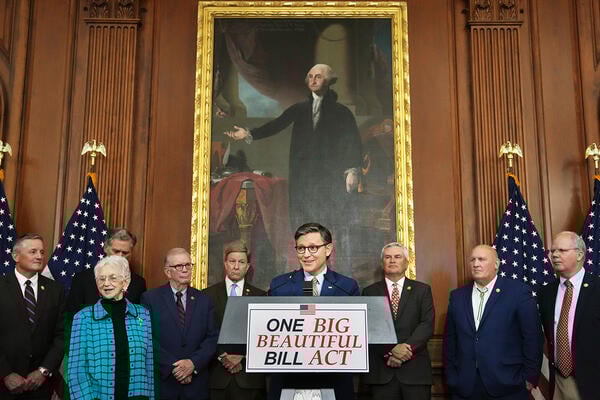
    The plan, called the One Big Beautiful Bill Act, narrowly advanced Thursday morning by a one-vote margin. All Democrats opposed the legislation, arguing that the spending cuts would hurt the working class and vulnerable populations while raising the deficit and giving tax breaks to wealthy individuals.

    Among other changes, the legislation would levy new taxes on colleges, require institutions to pay millions to the federal government, change how students pay for college and limit eligibility for the Pell Grant. In the lead-up to Thursday’s vote, higher education leaders warned that the proposal would make trying to attend and pay for college much more complicated and raise costs for those who do enroll. The bill does include some wins for colleges, institutional lobbyists say, but those don’t outweigh the negatives.

    Republicans, who say the cuts are necessary, are using a legislative procedure known as reconciliation to advance the bill. That process allows lawmakers to fast-track the legislation and pass it with a simple majority of votes in both chambers. (Typically, the Senate requires 60 votes to cut off debate for a bill.)

    “It’s time we stopped asking a factory worker in Michigan or a rancher in Texas to subsidize the student debt of a lawyer in Manhattan so colleges can continue to spike their tuition to whatever they want,” said Rep. Tim Walberg, a Michigan Republican and chair of the House Committee on Education and the Workforce, in a statement. “By capping loan amounts and giving some financial responsibility to schools, this legislation addresses the root cause of high college costs and provides schools an incentive to deliver real value for students and taxpayers.”

    With the measure now in the Senate’s hands and lawmakers eyeing a July 4 deadline, here’s what else you should know about the legislation that could reshape American higher education.

    1. Students Set to Lose Pell Money

    Many House committees had a hand in the legislation, but the proposals that will have the biggest impact on colleges are from the Committee on Education and the Workforce. The 103-page Student Success and Taxpayer Savings Plan, which is part of the broader reconciliation bill, would reduce spending by nearly $350 billion over the next 10 years.

    Most of those savings stem from rolling back a Biden-era student loan repayment plan that never fully took effect and from capping how much students can borrow. But lawmakers are also planning to increase spending on Pell Grants by $2.8 billion as they aim to address a looming shortfall and open up the program to short-term workforce-training classes.

    To make the math work, Republicans are changing who qualifies for a Pell Grant, proposing that students would have to take at least 15 credits a semester in order to receive the full award. They’ll also have to take at least 7.5 credits to get any money. Currently, the Pell Grant is prorated based on how many credits students take, and there’s no floor.

    Changing the full-time-award definition would save $7.1 billion, according to the Congressional Budget Office, which estimated that more than half of students currently enrolled would see their Pell Grant reduced.

    The CBO also estimated that cutting off Pell for part-time students would save about $687 million over the next 10 years. Currently, about 10 percent of Pell Grant recipients enroll less than half-time. Of those students, the CBO predicts that one-third of students who stand to lose their grant under this change would enroll in more classes. Presumably, the other two-thirds would either stop out or pay for their education with loans or their own money. (The CBO report was based on a minimum of six credits, but that threshold has since increased to 7.5, so the number of students affected could be higher.)

    Over all, about 700,000 students would no longer be eligible for the Pell Grant after all the changes take effect. The changes are currently set to take effect in summer 2026.

    2. Colleges on the Hook for Unpaid Student Loans

    In addition to the Pell Grant cuts, college leaders are particularly worried about a provision known as risk-sharing, which would require institutions to pay a financial penalty based on students’ unpaid loans. How much colleges would have to pay is unclear, but the CBO estimates that by 2034, payments would total $1.3 billion and then continue to increase each year. Risk-sharing is expected to save the government $5.3 billion over the next 10 years.

    Because of risk-sharing and other changes in the bill aimed at limiting student borrowing, the CBO predicts that the volume of student loans would drop by about 20 percent.

    College leaders and lobbyists argue that the formula that would determine institutions’ payments is untested, and without more information, they can’t accurately gauge the ramifications. One lobbyist said the proposal represented “an astonishing level of federal overreach.” Critics of the plan also worry that underresourced and minority-serving institutions would be hit the hardest.

    “The risk is not equal among colleges,” Tuskegee University president Mark Brown told senators this week.

    Risk-sharing is just one of several proposed changes that would upend the student loan system. House Republicans also want to end Grad PLUS loans along with subsidized loans, restrict Parent PLUS loans and tie how much students can borrow to the median cost of a program. Some consumer protection advocates argued that these changes would drive students to private lenders, which often charge higher interest rates.

    3. More Taxes and Medicaid Cuts Threaten Colleges’ Bottom Lines

    Other proposals in the bill from the Ways and Means Committee would levy a host of new or expanded taxes against universities.

    First, the committee created new brackets to tax wealthy universities’ endowments. Currently, private universities with endowments that are worth more than $500,000 per student pay a 1.4 percent tax. But under the plan, some could see their endowments taxed at 21 percent.

    Institutions with endowments valued at $750,000 to $1.25 million per student would be hit with a 7 percent tax. That rate would climb to 14 percent for colleges with endowments worth $1.25 million to $2 million per student, while colleges with endowments of $2 million or more per student would pay 21 percent. Colleges also can’t include international students in their tally of students, which could subject more institutions to the tax.

    In addition to the endowment tax, the proposal also taxes a college’s intellectual property by stating that the endowment tax should include all forms of investment income. This means that any royalties from a private university’s intellectual property, including patents and copyrights, would be taxable. Additionally, the legislation removes colleges’ exemption from the unrelated business income tax so that all institutions, public and private, would be taxed for royalties from licensing their name and logo.

    House Republicans in other committees also proposed cuts to the Medicaid and Supplemental Nutrition Assistance programs, which critics say would hurt students and states’ budgets. And if states do take a hit financially, public colleges might see their budgets cut.

    “If federal Medicaid funding is reduced in a new federal tax law, no public college or university will be immune from future state budget reductions and the austerity that will result. Public higher education must be prepared,” two professors wrote in an Inside Higher Ed op-ed earlier this year.

    4. Warnings From Higher Ed Pile Up

    Higher education groups warned before and after the vote of damaging consequences if the legislation becomes law.

    American Federation of Teachers president Randi Weingarten called it a “big, ugly betrayal,” while Kara D. Freeman, president and CEO of the National Association of College and University Business Officers, said in a statement that “the implications for student access, research, and innovation could be far-reaching.”

    Freeman said the endowment tax is especially concerning and cited NACUBO data that shows colleges and universities spent $30 billion from their endowments in fiscal year 2024—nearly half of which funded student financial aid.

    “This scholarship tax takes funds away from students and makes it less possible for colleges to support them,” she said.

    Meanwhile, the American Council on Education took issue with the use of the reconciliation process to advance sweeping changes, along with the provisions in the bill.

    “The totality of the funding cuts, policy changes, and tax increases included in this reconciliation package will have a historic and negative impact on the ability of current and future students to access postsecondary education, as well as on colleges and universities striving to carry out their vital educational and research missions,” ACE wrote in a letter to the House.

    So far, senators have said little about the higher ed provisions in the bill, so it’s not yet clear whether they’ll agree with the House plan. Generally, while the House prefers risk-sharing, the Senate is expected to back a measure that judges programs by their students’ employment rates and income levels after graduation.

    But, with President Donald Trump backing the legislation and a fragile majority in the House, senators have few options if they want to change the legislation.

    “This is arguably the most significant piece of Legislation that will ever be signed in the History of our Country!” Trump wrote on Truth Social. “Now, it’s time for our friends in the United States Senate to get to work, and send this Bill to my desk AS SOON AS POSSIBLE! There is no time to waste.”

    Source link

  • Senate Committee Approves Education Under Secretary Nominee

    Senate Committee Approves Education Under Secretary Nominee

    The U.S. Senate Committee on Health, Education, Labor and Pensions voted to approve Nicholas Kent as under secretary of education, the top job in the country for higher education policy and oversight, by a narrow 12-to-11 vote. The Senate will hold a final confirmation vote at a later date.

    Kent, a former Virginia deputy secretary of education, is a vocal critic of the Biden administration and a former lobbyist for for-profit colleges and trade schools. 

    His nomination earned a mix of support and concern from higher education associations and advocates, some of whom viewed it as a worrying harbinger of the Trump administration’s plans to reduce federal regulation and oversight of for-profit colleges and credential programs.

    Kent was advanced to a full vote with a tranche of six other cabinet nominees. A few organizations, including the American Federation of Teachers and the Institute for College Access and Success, expressed concern that there was no public hearing about Kent’s ties to for-profit institutions. In 2015 Kent’s then-employer, Education Affiliates, a company that operates dozens of for-profit colleges nationwide, settled a False Claims Act case brought by the Department of Justice for $2 million.

    Sen. Bernie Sanders, Independent of Vermont, voted no on Kent’s nomination Thursday morning, saying, “We should not be confirming a former lobbyist who represented for-profit colleges to oversee higher education.”

    Other organizations say Kent could shake up a regulatory framework they believe has stifled innovation. The American Association of Community Colleges wrote a letter supporting Kent, saying it believes he is committed to “ensuring statutory compliance and program integrity while decreasing administrative burdens and supporting innovation.”

    If confirmed, Kent will replace acting under secretary James Bergeron as the No. 2 education policy official in the country. 

    Source link

  • Longtime Professor Offers Administrators Advice (opinion)

    Longtime Professor Offers Administrators Advice (opinion)

    I read articles constantly in various journals, including this one, on how to be successful in various administrative roles—department chair, dean, provost, president, etc. Most of these are addressed to institutions not at all like mine, and many of the pieces are facile.

    I am a senior faculty member bordering 50 years at a small private university of fewer than 900 undergrads and fewer than 500 graduate enrollments. I have held most leadership roles, won just about all the available honors and have had offers from other institutions as dean and vice president, among other roles. I have declined them all because I am at heart a classroom teacher and my dedication to my institution is inviolate.

    In my long tenure, I have seen many senior administrators come and go, and I have kept notes on the bad ones. Some left significant damage not easily repaired. Reflecting on a recently departed senior administrator inspired me to articulate some advice and a few rules for success or failure at institutions such as mine.

    1. Know the institution that you come to serve. This requires far more than a general overview; it necessitates a deep dive into the culture and nature of the place. Do not invoke the platitude “from my experience at other places, I have concluded …” Very large universities may reflect somewhat similar characteristics, but even that is questionable. However, institutions such as mine differ distinctively in their culture, including history, experiences, individuals and makeup. Learn all that you can about this before arriving, and once on campus devote the necessary time to knowing the individuals who are key players, especially those who through long service have shaped the character of the place.
      New administrators often privilege new members of the community, who, like them, are novices, in hopes that they will be more amenable to reshaping the environment. However, it is those with long history who are embedded in the culture and who have deep connections with many important constituencies, including peers, the Board of Trustees and alumni. A new administrator may believe that they have a mandate to change the culture. But traditions are the lifeblood of small institutions, and they don’t die readily. Supposed mandates can dissipate quickly. First gain trust before venturing into this potential minefield.
    2. If the institution is in such despair that immediate drastic action is imperative, ask yourself honestly if you can handle the responsibility of the challenge. Success may be ephemeral, and even if you achieve short-term goals, you may burn bridges that can continue to haunt you. My institution has not experienced existential travail, but some leaders during my tenure have exploited unease and trepidation, taking advantage of fears about salary stagnation, job reductions, benefits suspensions or even, in extreme cases, mentioning other college closings to promote their agendas. Academia today is precarious, and honesty is necessary, but fear is a poor leadership strategy.
    1. Put the institution above yourself. When you lose the trust of the community, it is merely a matter of time. No action is more damning for an administrator than résumé-building for the next position. Every action must be in the interests of the institution rather than one’s own benefit. Over 50 years, I have witnessed several leaders whose actions were so patently self-serving that I wished only that they would move away—whether up or down, I didn’t care. This is a character flaw. What one may consider as career enhancement can come at the expense and livelihood of my peers and colleagues.
      In my early days as an ambitious potential climber, my president counseled me, to privilege my personal career as I pursued the next step might be successful or not. But to privilege my institution with all my energy, talent and commitment would lead to a more fulfilling life. I didn’t appreciate the admonishment at the time, but I came to internalize it. I won’t impose this mindset on others, and personally I would be a wealthier man if I had acted differently, but it has provided a personal career satisfaction that far exceeds any material or ego considerations. My mantra is to “devote heart and soul to the institution to the day of departure, and even beyond.”
    1. Be honest, transparent, ethical and kind. Administrators often have to make hard decisions that drastically affect individual lives. You must act, but do so with integrity, empathy and kindness. Take responsibility for the decisions that you make; do not blame others or the situation for actions that you administer. Eschew pronouncements (which I have heard more than once) that “these actions are for better positioning the institution for long-term success.” That may be true, but tone-deaf remarks do not offer solace to individuals losing their careers for the institution’s “future well-being,” nor do they generally resonate well for institutional morale.
    2. Faculty and staff morale is fragile, particularly at small institutions such as mine. Compromising it is hazardous. Keep steadfast: Sincerity and trust should be your guiding principles. If people trust you, they will bear considerable pain. If they do not trust you, then you will fail no matter what your motives.

    The responsibility of leadership in the contemporary environment is a daunting undertaking. It demands skill, fortitude, courage, principles and character. From my long years of observations, many who carry significant titles do not demonstrate the requisite capabilities. One hopes that the few best practices expressed above may point toward some standards.

    Joe P. Dunn is the Charles A. Dana Professor and chair of the Department of History and Philosophy at Converse University.

    Source link

  • What AI Can’t Read: Ambiguities and Silences (opinion)

    What AI Can’t Read: Ambiguities and Silences (opinion)

    A year ago, I saw artificial intelligence as a shortcut to avoid deep thinking. Now, I use it to teach thinking itself.

    Like many educators, I initially viewed artificial intelligence as a threat—an easy escape from rigorous analysis. But banning AI outright became a losing battle. This semester, I took a different approach: I brought it into my classroom, not as a crutch, but as an object of study. The results surprised me.

    For the first time this spring, my students are not just using AI—they are reflecting on it. AI is not simply a tool; it is a mirror, exposing biases, revealing gaps in knowledge and reshaping students’ interpretive instincts. In the same way a river carves its course through stone—not by force, but by persistence—this deliberate engagement with AI has begun to alter how students approach analysis, nuance and complexity.

    Rather than rendering students passive consumers of information, AI—when engaged critically—becomes a tool for sharpening analytical skills. Instead of simply producing answers, it provokes new questions. It exposes biases, forces students to reconsider assumptions and ultimately strengthens their ability to think deeply.

    Yet too often, universities are focused on controlling AI rather than understanding it. Policies around AI in higher education often default to detection and enforcement, treating the technology as a problem to be contained. But this framing misses the point. The question in 2025 is not whether to use AI, but how to use it in ways that deepen, rather than dilute, learning.

    AI as a Tool for Deep Engagement

    This semester I’ve asked students to use AI in my seminar on Holocaust survivor testimony. At first glance, using AI to analyze these deeply human narratives seems contradictory—almost irreverent. Survivor testimony resists coherence. It is shaped by silences, contradictions and emotional truths that defy categorization. How can an AI trained on probabilities and patterns engage with stories shaped by trauma, loss and the fragility of memory?

    And yet, that is precisely why I have made AI a central component of the course—not as a shortcut to comprehension, but as a challenge to it. Each week, my students use AI to transcribe, summarize and identify patterns in testimonies. But rather than treating AI’s responses as authoritative, they interrogate them. They see how AI stumbles over inconsistencies, how it misreads hesitation as omission, how it resists the fragmentation that defines survivor accounts. And in observing that resistance, something unexpected happens: students develop a deeper awareness of what it means to listen, to interpret, to bear witness.

    AI’s sleek outputs conceal a deeper problem: It is not neutral. Its responses are shaped by the biases embedded in its training data, and by its relentless pursuit of coherence—even at the expense of accuracy. An algorithm will iron out inconsistencies in testimony, not because they are unimportant, but because it is designed to prioritize seamlessness over contradiction, clarity over ambiguity. But testimony is ambiguity. Memory thrives on contradiction. If left unchecked, AI’s tendency to smooth out rough edges risks erasing precisely what makes survivor narratives so powerful: their rawness, their hesitations, their refusal to conform to a clean, digestible version of history.

    For educators, the question is not just how to use AI but how to resist its seductions. How do we ensure that students scrutinize AI rather than accept its outputs at face value? How do we teach them to use AI as a lens rather than a crutch? The answer lies in making AI itself an object of inquiry—pushing students to examine its failures, to challenge its confident misreadings. AI does not replace critical thinking; it demands it.

    AI as Productive Friction

    If AI distorts, misinterprets and overreaches, why use it at all? The easy answer would be to reject it—to bar it from the classroom, to treat it as a contaminant rather than a tool. But that would be a mistake. AI is here to stay, and higher education has a choice: either leave students to navigate its limitations on their own or make those limitations part of their education.

    Rather than treating AI’s flaws as a reason for exclusion, I see them as opportunities. In my classroom, AI-generated responses are not definitive answers but objects of critique—imperfect, provisional and open to challenge. By engaging with AI critically, students learn not just from it, but about it. They see how AI struggles with ambiguity, how its summaries can be reductive, how its confidence often exceeds its accuracy. In doing so, they sharpen the very skills AI cannot replicate: skepticism, interpretation and the ability to challenge received knowledge.

    This approach aligns with Marc Watkins’s observation that “learning requires friction.” AI can be a force of productive friction in the classroom. Education is not about seamlessness; it is about struggle, revision and resistance.

    Teaching history—and especially the history of genocide and mass violence—often feels like standing on a threshold: one foot planted in the past, the other stepping into an uncertain future. In this space, AI does not replace the act of interpretation; it compels us to ask what it means to carry memory forward.

    Used thoughtfully, AI does not erode intellectual inquiry—it deepens it. If engaged wisely, it sharpens—rather than replaces—the very skills that make us human.

    Jan Burzlaff is a postdoctoral associate in the Jewish Studies program at Cornell University.

    Source link

  • What Ruth Simmons Taught Me About Standing for Something

    What Ruth Simmons Taught Me About Standing for Something

    Those who know me are well aware that I have a professional crush on Ruth Simmons. I have talked about how much I admire her career and the bold stances she has taken publicly and taken opportunities to ask others about how she has encouraged and mentored them. When presented with a chance to meet her, I quickly bought an airline ticket and counted down the days.

    For those who are unfamiliar with her career, she was the first Black president of an Ivy League institution; holds the title of president emerita of Smith College, Brown University and Prairie View A&M University; and as of this past weekend, has been awarded 41 honorary degrees.

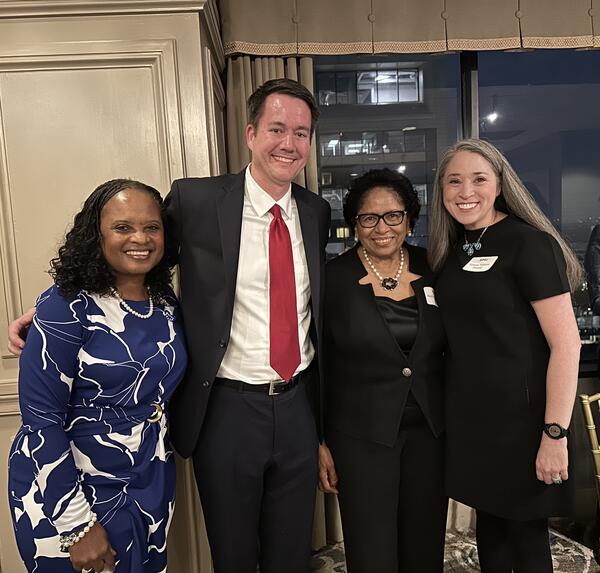
    The last of these degrees was conferred by Southern Methodist University, which is where I earned my doctoral degree. Michael Harris, a professor at SMU, was the Faculty Senate president who nominated Simmons to receive the award. As a result, he was invited to the dinner given in her honor, and it was my great fortune his wife was unable to attend. He jokes that only one person references Simmons as often as I do, and he felt obligated to ask if I was interested in attending.

    Prior to the dinner, Simmons was the speaker at a campuswide symposium, where signed copies of her book, Up Home, were distributed to attendees. She spoke about her childhood and career, offering advice to all in attendance.

    Her final statement felt like a follow on to my last “Call to Action” piece, which encouraged everyone to fight on behalf of higher education:

    “It’s in those moments, even when you’re wrong or when people think you’re wrong, that you’re elevated. It’s in those moments that you stand for something and know what is beyond the pale, in the things that you see before you. And so if, like my mother, you see somebody being unfairly treated, how dare you be silent? How dare you if you see someone doing something that trespasses. What should we be doing as human beings? How dare we not say something?

    “So the question I get when I do my book events, from students and everyone else, is ‘What should I be doing in this moment?’ Everybody’s question is ‘What should I be doing now?’ I don’t have an answer for everybody, but I do know that at 80 years old, I get up every day ready to do something, and that’s what I always answer. ‘You’ve got to do something.’ It is not a moment to sit on the sidelines and be comfortable and say, ‘Oh, let everybody else worry about that.’ Shame on you if you draw that conclusion right now.”

    I couldn’t agree more.

    Like Ruth Simmons, I’ve received many questions from people who are unsure how or if they can fight, having read my recent piece. Some colleagues feel they can’t fight because they are in red states, or they worry they could put themselves or their institutions at risk through their actions. Others feel they lack the credibility or the authority to lead a fight. Still others worry they need to take on the fight on behalf of the whole industry and are already exhausted.

    Fighting on behalf of higher education isn’t a one-size-fits-all endeavor. I would encourage, as Simmons notes, that this can include addressing mistruths, defending those who are being treated unfairly and speaking out when the moment demands it. I believe that fighting for higher education means that we each defend the academy within our spheres of influence in big and small ways.

    For example, arm yourself with facts and be prepared to address misinformation you may hear about the “Big Beautiful Bill,” which was just approved by the House GOP and has been sent to the Senate. As passed by the House, it includes limiting Pell eligibility and eliminating subsidized student loans.

    Know what the impact of the House’s proposed endowment tax will be on the institutions that will be impacted. Be versed in how institutions are reeling from the elimination of research grants and how the bill will now further impact them. It is clear to me that these are the first cuts for institutions, but they won’t be the last. The goal is to have fiscal death by a thousand cuts. I would argue it is our responsibility to speak out—to fight— when we hear people discussing the federal budget and grant cuts and explain the impacts these cuts are having on student persistence, on campuses, on research, and on everyday people.

    Despite my choice of language and the traditional connotation associated with it, I don’t think of fighting as only a negative concept. Or, at the very least, I was raised in a Hispanic household where the duality of challenge and support was viewed as a given, rather than a negative. A colleague of mine said that he felt my language was solely confrontational. I suggested in response that fighting to me means asserting an alternative, which includes sharing expertise, data and information, and serving as a sense maker. I believe it covers addressing falsehoods and defending the truth. It is up to each of us if we view and live this only as a negative.

    It’s possible that Simmons’s advice feels aligned with my thinking because I want so dearly to be aligned with her, but the reality is that there’s something about a fighter that is always aligned with another fighter, and for that reason I hope you’ll see yourself in her words and in mine. Once again, I invite you to fight.

    Source link