Tag: News

  • College Athletes Can Now Make Millions Off Sponsorship Deals – The 74

    College Athletes Can Now Make Millions Off Sponsorship Deals – The 74


    Get stories like this delivered straight to your inbox. Sign up for The 74 Newsletter

    $390,000 to Jaylon Tyson, a former basketball guard at UC Berkeley, from a group of private donors.

    $3,000 to Jordan Chiles, a UCLA gymnast and Olympic gold-medal winner, from Grammarly, an AI writing company. 

    $390 to Mekhi Mays, a former Cal State Long Beach sprinter, from a local barbecue joint. 

    These payments — derived from data that public universities provided to CalMatters — were part of “name, image and likeness deals” requiring students to create favorable posts on social media. 

    Such sponsorship deals were unheard of just four years ago. In 2021, California enacted a law allowing athletes to make these kinds of brand deals. It was the first state to pass such a law, prompting similar changes across the country. 

    This is the first-ever look at what many California athletes have actually made. University records show that money is flowing, but how much college athletes earn depends largely on the popularity of the sport, the gender and star power of its players and the fanbase of the university. While UCLA gymnasts earned over $2 million in the last three school years, university records show that players on the UCLA women’s water polo team earned just $152 during the same time frame, despite winning the national championship last year. 

    For companies, these name, image and likeness deals are akin to paying any other celebrity or professional athlete to promote a product. University alumni and sports fans can’t give money directly to a student athlete — at least not yet — but they are allowed to make name, image and likeness deals. Many universities have private donor groups, known as collectives or booster clubs, that offer athletes money, sometimes more than $400,000 in a single transaction, in exchange for an autograph or participation in a brief charity event. Often, those deals are a pretext to send money to top-tier players and discourage them from seeking better deals at other colleges.

    CalMatters reached out to every public and private university in the state with Division 1 teams, where the potential for profit is typically highest, and requested data that shows how much money each of its student athletes have made since 2021. State law requires all student athletes to report to their school any compensation they receive from their name, image and likeness, and public universities are required to disclose certain kinds of data upon request. Private universities, such as Stanford University and the University of Southern California, are not required to disclose any data about their students’ earnings. 

    All of the public Division 1 universities responded to CalMatters’ inquiry, though they did not all provide the same degree of transparency. San Jose State and Cal State Northridge said they had no records of any deals.

    There’s no consequence for students who fail to report what are known as NIL deals, so the data from public institutions may be incomplete. Still, certain trends emerge: 

    • College athletes at the state’s public universities received millions of dollars from collectives or booster clubs. At four University of California schools, around 70% or more of all compensation came from these collectives, according to university records. That’s just below national trends, according to a report by Opendorse, a tech company that tracks students’ deals. 
    • Male basketball players earned the most. While football is more popular and lucrative, nationally, many public Division 1 schools in California lack a football team. The football data may also be incomplete. For instance, all football players at UC Berkeley reported making a total of just over $113,000 since 2021 — less than what all San Diego State players made — even though Berkeley is in a more prominent conference. 
    • For high-profile football or basketball players in particular, it’s becoming more common for students to transfer multiple times, often in search of better name, image and likeness deals. Some California institutions, such as UC Davis and Cal Poly San Luis Obispo, have seen top athletes transfer colleges or threaten to transfer in order to attain better compensation elsewhere.
    • Except for a few star players, such as Chiles, most female college athletes made very little, according to the data provided to CalMatters. 
    • Collectively, athletes at UCLA and UC Berkeley earned more than double what those attending other UC and California State University campuses made. Some donors, such as those supporting Sacramento State and UC San Diego, have rapidly raised money to compete, while at other schools, athletic directors say they’ll never be able to guarantee such high-dollar deals. 

    Schools often removed any information that could identify an individual student. While UCLA generally did not provide the individual names of its athletes, the school was more transparent than most and shared the date of each transaction, the name of the brand or company, the amount of money it gave, and the sport. In February, a UCLA gymnast reported receiving $250,000 from the beverage company Bubbl’r. Since then, Chiles has promoted that brand, repeatedly. In May, a UCLA gymnast reported receiving $210,000 from the cosmetic brand Milani for “social media” — just a few months before Chiles posted a video on Instagram, promoting its makeup. One or more members of the UCLA gymnastics team have also reported deals with the food company Danone for $300,000 and with the health care company Sanofi for $285,000. 

    Fresno State shared less information. In the 2021-22 academic year, the Fresno State women’s basketball team raked in over $1.1 million from multiple name, image and likeness deals, but the university did not disclose which players were involved or how many were paid. After influencers and former basketball players Haley and Hanna Cavinder transferred to the University of Miami in April 2022, the number and dollar amount of deals for the Fresno team diminished. In the 2023-24 academic year, the team made just over $1,000 from 10 different deals.

    Money from boosters or collectives is the hardest to trace. In May, for example, a group of UCLA donors gave an undisclosed football player $450,000 for “social media.” 

    While private universities are not required to disclose students’ earnings, market estimates from On3, a media and technology company focused on college sports, say the highest-earning Stanford University athlete, basketball player Maxime Raynaud, could collect $1.5 million in the next 12 months. The top USC athlete, football player Jayden Maiava, could make $603,000 in the next year, according to the same estimates. These numbers are based on an algorithm that uses aggregate deals from college athletes across the country. Nationwide, the Opendorse report estimates that college athletes will earn $1.65 billion in the 2024-25 academic year. 

    Soon, college athletes may make even more. A high-profile class-action lawsuit will likely allow schools to pay athletes directly, while still classifying them as students, not employees. If the proposed settlement agreement goes into effect, students could see payouts as early as this fall. 

    If a school pays a student directly, the money should be divided roughly proportional to the number of male and female athletes, the Biden administration said in a U.S. Department of Education fact sheet issued in January. The page no longer exists

    In the last few months, attorneys have rescinded federal labor petitions asking that USC and Dartmouth College student athletes be reclassified as employees, but new cases are likely on the horizon, said Mit Winter, an attorney who specializes in name, image and likeness law: “I do think at some point — two years, five years, whatever it is — at least some college athletes will be employees.”

    A Times Square billboard reads: NIL has begun

    For decades, college sports have been a big business, though most of the money flowed to universities, not students. Nationally, Division 1 universities reported $17.5 billion in athletic revenue in 2022, according to the National Collegiate Athletic Association (NCAA). That’s more than the gross domestic product of 83 countries. For schools with top-performing football programs, such as UCLA and Berkeley, broadcast deals and other kinds of marketing represent over a third of total revenue. 

    Before California’s law went into effect, college athletes weren’t allowed to profit off their sport, though they frequently received scholarships equal to the cost of college tuition. On July 1, 2021 the new law took effect, and Haley and Hanna Cavinder were the first to benefit, signing deals with Boost Mobile, a cell phone company, and Sixstar, a nutrition company, just after the stroke of midnight. A Times Square billboard proclaimed they were the first such deals in the country. 

    Over the past four years, other California college athletes have signed advertising deals with clothing brands such as Crocs, Heelys and Aeropostale and food brands such as Liquid I.V. and Jack in the Box. FTX, the now-bankrupt cryptocurrency exchange, signed contracts with at least six players on the UCLA women’s basketball team in 2021. In 2022, the Biden campaign gave a UCLA gymnast $7,000, but public records did not disclose the purpose of the transaction. No other politicians appeared in any university’s data.

    Last year, Visit Fresno County, a nonprofit that promotes tourism, paid former Fresno State football players Dean Clark and Kosi Agina just under $10,000 to post Instagram videos about a local farmer’s market and a minor league baseball team, according to President and CEO Lisa Oliveira. She said the posts were so successful that she asked Agina to make another video, promoting a hiking trail in the Sierra National Forest

    But much of the money for students’ name, image and likeness doesn’t come from brands at all — it’s from private donors. Philanthropist and entertainment lawyer Mark Kalmansohn has given nearly $150,000 in 12 different transactions to athletes on UCLA’s volleyball, softball and women’s basketball teams since 2022, according to the data, which runs through May of last year. In an interview with CalMatters, Kalmansohn said he’s given more than $175,000 since May. “Women’s sports were almost always treated in a second-hand nature and given inferior resources,” he said, adding that his philanthropy is about “women’s rights.”

    In exchange for money, he asks each recipient to issue a free license of their name, image and likeness to a nonprofit organization that’s relevant to the athlete’s sport. But he said that’s not the norm. “In men’s football and men’s basketball, it’s pretty obvious that money is not for an ‘appearance’.” Instead, he explained that it’s a way to support the player and keep the team competitive. 

    Most donors give money to specific athletes through a collective, where the donors’ identities are largely hidden. At UCLA, public data through the 2023-24 academic year shows that a collective known as the Men of Westwood channeled nearly $2 million in private donations to the football, basketball and baseball teams. At Berkeley, collectives gave over $1.3 million to athletes since the 2022-23 academic year — the vast majority of which went to the men’s basketball team. 

    Supporting ‘elite talent’ at UC and Cal State

    For years, NCAA rules made it difficult for college athletes to transfer schools, but in 2021, right around the time that California started to allow name, image and likeness deals, the NCAA eased those rules. The number of students who transfer suddenly jumped in 2021 and has ticked up each year since, according to NCAA data. In practice, the new rules means that a well-endowed collective can lure athletes who want to make more money. 

    This year, over 11% of all Division 1 football players have tried to transfer colleges, an increase from the previous year, said Matt Kraemer, whose organization, The Portal Report, uses social media posts and tips from insiders to gauge college athletes’ transfer activity. Quarterbacks are even more likely to try to transfer, Kraemer said.

    For institutions like UC Davis, the threat of losing a top athlete can be costly. Late in the 2023-24 academic year, donors from other universities promised top athletes lucrative deals if they agreed to transfer, so UC Davis formed a collective, Aggie Edge, to make counter-offers, said Athletic Director Rocko DeLuca. “It’s a means to retain elite talent here at Davis.”

    DeLuca said the collective gave men’s basketball guard TY Johnson $50,000 and UC Davis running back Lan Larison $25,000. Those transactions were for “social media, appearances, autographs,” according to the university’s data. 

    So far, all other UC Davis athletes — more than 700 students over 25 sports — have reported just under $19,000 in deals since 2021. A few other athletes received products, such as a free cryotherapy session or a commission based on sales.

    In December, former UC Berkeley quarterback Fernando Mendoza transferred to Indiana University, where he later signed a name, image and likeness deal with a collective for an undisclosed amount. UC Berkeley then recruited former Ohio State quarterback Devin Brown the day after he won a national championship. It’s not clear if the Berkeley collective offered Brown a deal, since the university’s data doesn’t name Brown. 

    Justin DiTolla, Berkeley’s associate athletic director, said the university is “not affiliated with the collective” and that the university provides “equal support to all student athletes.” “We recognize that there is a difference in NIL support,” he said, “But it isn’t under our scope or umbrella.” The Berkeley collective, California Legends, declined to comment.

    At Cal Poly San Luis Obispo, some football players sought more money through a name, image and likeness deal by transferring to another school, but they didn’t all succeed, said Don Oberhelman, the university’s athletic director. “That’s the dirty little secret of all of this: the number of kids who blow an opportunity.”

    This fall, nine football players at Cal Poly San Luis Obispo announced their intention to transfer, he said. Six of them found a new university, he said, including University of Texas El Paso, San Diego State, Stanford, and Washington State — but three of them never received an offer from another school. 

    Oberhelman said that his football coach begins recruiting a replacement the moment a player announces his intention to transfer. If that student doesn’t end up transferring, he may lose his spot on the football team and the entirety of his athletic scholarship, which can be up to $30,000 a year. 

    “There’s raw emotion involved in these kinds of decisions,” he said. “I don’t think that’s how we would operate, but I can see a lot of people say, ‘You broke up with us.’” 

    Oberhelman said he doesn’t know what happened to the three players from the football team who failed to transfer. “For me, it would boil down to: Did we promise that money to someone else? Did we find another transfer or a high school person to replace you? If we did, that would put your future financial aid with us in jeopardy.”

    Small-town name, image and likeness deals 

    Outside of top football and men’s basketball programs, many of California’s college athletes vie for smaller name, image and likeness deals, often with local businesses, lesser-known clothing or athletic brands, or anything else they can find.

    Former Berkeley softball player Randi Roelling got $50 from one woman to give a pitching lesson to her daughter. In July 2023, chiropractor Lance Casazza started giving out free sessions to at least one Sacramento State football player in exchange for social media posts.

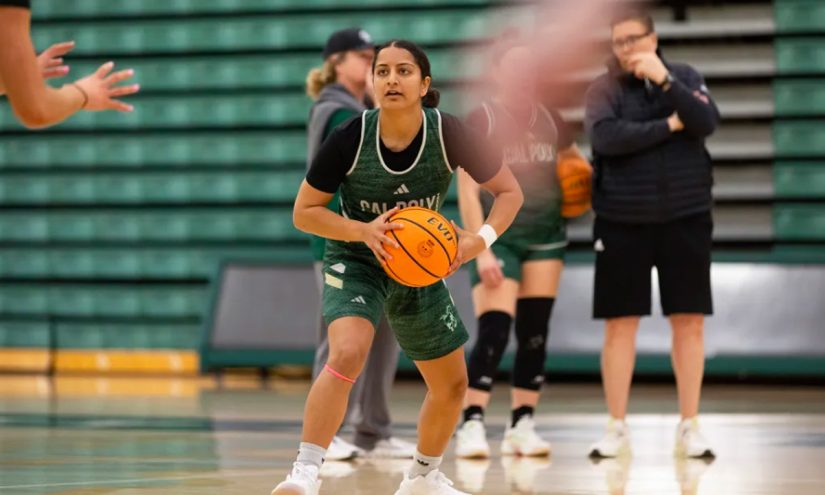
    Annika Shah, a basketball player at Cal Poly San Luis Obispo, got her first deal through a local restaurant, Jewel of India, which occasionally has a pop-up tent outside the college gym. “I just said, ‘Hey I can market you. Let’s think of a cool slogan to put out.’” Customers who ask to “swish with Shah” at the checkout counter get a discount on their meal, she said. Shah doesn’t get any money, she said, but she does get free food whenever she visits. 

    “It was just a cool relationship and connection that I made with this family and the owners of Jewel of India, where they just want to help me out and I want to help them.” 

    Walking around campus, friends jokingly refer to Shah as their own “Jewel of India” and she likes it. “It’s such a marketable slogan now, and it kind of identifies who I am.”

    Many Division 1 schools have their own websites where customers can buy gear with an athlete’s name on it, but last fall, no such platform existed at Cal Poly San Luis Obispo, said Shah, so she created her own. She partnered with a company, Cloud 9 Sports, and launched her own apparel brand. It’s brought in about $2,000 in sales so far, but after the university and Cloud 9 Sports take a cut, Shah said she’s left with about $800. 

    Shah said she was never told to report any of her monetary or in-kind contributions. After CalMatters asked, Oberhelman, the athletic director, said the school is now requiring it. “We haven’t done a great job following up because we’re just not going to have student athletes that are getting even five-figure deals,” he said. 

    Oberhelman said he only knew of eight deals, each for $2,000, all to the men’s football team from a group of private donors.

    Fresno State provided more data than Cal Poly San Luis Obispo, but it did not designate which deals came from its collective, known as Bulldog Bread. On its website the collective says it has raised more than $690,000 in corporate donations for Fresno State. At the top tier, that includes money from former Fresno State quarterbacks David and Derek Carr, property developer Lance Kashian, and construction company Tarlton and Son, Inc. The collective recently launched a vodka brand in partnership with a distillery, where a portion of all proceeds support students’ name, image and likeness deals.

    Athletes at UC Santa Barbara have reported $1,800 from their collective, Gold & Blue, but many other transactions reported by the school provide few details. According to the school’s data, an unnamed person or group made 15 deals with one or more members of the UC Santa Barbara men’s basketball team, totaling over $50,000 in “appearance fees” for an event last August associated with Heal the Ocean, a local environmental nonprofit. 

    The organization’s executive director, Hillary Hauser, said the nonprofit made no such contribution and had no events in August. University spokesperson Kiki Reyes said it’s “possible” that a collective made those payments, but she refused to respond to CalMatters’ questions regarding Hauser’s statement the event never occurred. 

    From August 2023 to August 2024, male basketball and baseball athletes at UC Santa Barbara reported roughly $500,000 in compensation for appearance fees related to various charities. Over the same time frame, all other athletes reported receiving free products, sales referrals, and cash payments totaling about $1,000.

    At UCLA, the CEO of the Men of Westwood collective, Ken Graiwer, is listed in university records as the “point of contact” for a $450,000 contribution, distributed over six transactions in the 2023-24 academic year, to the men’s basketball team for “public appearances.” For each of those transactions, the university’s data lists the Team First Foundation, a sports nonprofit, as the vendor. Neither UCLA nor the Team First Foundation responded to questions about who made the payment. 

    A few months before those transactions, the Men of Westwood posted a few photos on its Instagram account, showing UCLA men’s basketball players on the court with smiling children from the Team First Foundation programs. In the post, the Men of Westwood said it was “NIL outreach.” 

    California universities try to ‘stay competitive’

    Since becoming legal in 2021, the market for name, image and likeness compensation has exploded. Sports commentators, attorneys, and athletic directors say the landscape is a kind of “wild West” or “gold rush”: The money is pouring in, but the regulations are sparse or evolving.

    CalMatters has partial data from the 2024-25 academic year, but early indicators suggest that even more cash will soon flow to players. In September, a group of Sacramento State alumni, including some state lawmakers, said they raised over $35 million in one day for name, image and likeness deals. Cal State Bakersfield and UC San Diego recently formed their own collectives too.

    Last year, former Democratic Sen. Nancy Skinner of Berkeley — one of the co-authors of the watershed name, image and likeness law — proposed a new bill to gather more data about spending by collectives and its impact on women’s sports. Newsom vetoed the bill, saying “Further changes to this dynamic should be done nationally.” 

    Initially, the NCAA tried to prevent colleges from directly assisting athletes with deals, but the association has eased those regulations recently, blurring the lines between universities and the private collectives that support them. Many states have passed laws explicitly allowing universities to make deals directly with students. In October, Skinner and former Democratic Sen. Steven Bradford wrote a letter to California universities, encouraging them to do the same. 

    “I strongly urge California schools to make full use of (the watershed law) to stay competitive in college sports, especially now that other states are copying California and allowing their schools to make direct NIL deals with their student athletes,” said Skinner in a press release about the letter.

    This spring, California District Judge Claudia Wilken is expected to approve a settlement between athletes and the NCAA that would further expand the ways universities can pay their players. In the proposed settlement, a college could directly spend up to a combined $20.5 million per year on payments to all of its athletes. The spending limit would grow over time.

    Regardless of the settlement, athletic directors at many of California’s public institutions, such as Cal Poly San Luis Obispo and Cal State Bakersfield, said they don’t plan on giving any more money directly to students because their athletic programs lack the cash. “They’re already on full scholarship, so there aren’t any more existing dollars we can really offer that person,” said Oberhelman, with Cal Poly San Luis Obispo. Even if the university did have the money, he said he’s concerned about the legal implications of paying students directly. “Are they going to get a W-2 now? Are we paying workers comp? Nobody seems to have answered a lot of these questions.”

    DiTolla, at Berkeley, said the university will start paying its athletes once the settlement is finalized. UC San Diego joined Division 1 sports last year, and Athletic Director Earl Edwards said it is “seriously considering” paying its athletes too “if that’s what we need to do to be competitive.” UCLA refused to comment on the proposed settlement.

    USC Senior Associate Athletic Director Cody Worsham said the university will “invest the full permissible $20.5 million in 2025-26.” Stanford refused to answer any questions.

    While no Division 1 school in California has shared details about how it plans to pay its athletes, experts, such as attorney Mit Winter, say the proposed settlement is unlikely to change the current disparities in college sports, especially within the four most lucrative and dominant athletic conferences, known as the Power Four. Stanford, USC, UC Berkeley and UCLA are all in the Power Four. 

    For female rowers like Anaiya Singer, a freshman at UCLA, the disparities among men’s and women’s sports — and between football, basketball and everyone else — are no surprise. “Those big sports do bring in the most revenue, and they’re the most watched,” she said, while acknowledging that other athletes, such as fellow rowers, “deserve much more than we’re getting.” 

    Singer said she’s been working on building her social media brand and has nearly 3,000 followers on TikTok and just over 1,300 on Instagram. A few “very small companies” reached out to her through TikTok about promoting beauty products, but none of the brands felt like a good fit, she said. She has yet to agree to any deals or receive any funding from a collective.

    Neither have most of her peers. The UCLA women’s rowing team has reported less than $500 in name, image and likeness compensation since 2021.

    In the proposed settlement, each school will each be able to independently determine how to distribute their funds, but Winter said universities will likely follow their peers. “If you’re in UCLA, Berkeley….you’re in the Power Four and you’re going to have to stay competitive in recruiting,” he said. 

    “Most of the Power Four schools have all sort of landed on a similar way they’re going to pay that money out,” he added: 75% to the football team, 15% to the basketball team, around 5% to women’s basketball, and 5% to all other sports.

    This article was originally published on CalMatters and was republished under the Creative Commons Attribution-NonCommercial-NoDerivatives license.


    Get stories like these delivered straight to your inbox. Sign up for The 74 Newsletter



    Source link

  • Hundreds Waitlisted for Pre-K in South Carolina Despite Thousands of Open Seats – The 74

    Hundreds Waitlisted for Pre-K in South Carolina Despite Thousands of Open Seats – The 74


    Get stories like this delivered straight to your inbox. Sign up for The 74 Newsletter

    COLUMBIA — Hundreds of 4-year-olds across South Carolina are on waitlists to access state-funded preschool programs, even though there are thousands of open seats, according to a report presented Monday to the state Education Oversight Committee.

    The state funds a dual system of full-day kindergarten for 4-year-olds deemed “at risk.” Students are eligible under state law if they qualify for Medicaid or free or reduced-price meals, or if they are homeless, in foster care or show developmental delays. Many public school districts use local property tax dollars to expand that eligibility.

    The state Department of Education oversees programs in public schools, while First Steps, a separate state agency, oversees state-funded classes in approved private schools and child care centers.

    As of November, 400 4-year-olds were waiting for spots to open up to enroll at their local public school. At the same time, First Steps 4K reported more than 2,300 open seats, often in the same counties as the districts with the longest waitlists, according to the report.

    “It’s just a matter of finding an open seat for a child on a waitlist or finding an eligible child for the open seat,” said Jenny May, a committee researcher who presented the report.

    Because 4K is a one-year program, students who are on the waitlist are unlikely to end up in a preschool program before starting kindergarten. Children need at least 120 days of preschool to prepare, so even if a slot happens to open up toward the end of the school year, they will start kindergarten less ready than other 5-year-olds, according to the study.

    It’s not clear why some 4-year-olds are on a waiting list for a public school when vacancies exist in private programs, May said.

    In some cases, the issue could be that another preschool program isn’t available nearby. The four counties with the longest waitlists — Lexington, Anderson, Berkeley and Newberry — all have at least one First Steps 4K program with availability, according to the report. However, that doesn’t account for potential cross-county drives.

    Other parents may not know that other options are available, May said. Having a person designated to help direct parents to other preschool options, such as the nearest First Steps 4K program with open seats, could help reduce that waitlist, May said.

    “It’s likely that if we had a more efficient process, we could serve most of the 400 kids on a waitlist on one of the First Steps seats,” May said.

    The state already has several websites meant to help parents figure out what programs they’re eligible for and how to enroll. Palmetto Pre-K, launched in 2020, tells parents whether they’re eligible for state-funded preschool programs. First Five SC does the same but includes all early childhood programs with federal or state funding.

    But having a person parents can call, or who can reach out to families with children on waitlists, could help reach some parents who might not know about the websites or have other concerns, the study suggests. That person, who the committee dubbed a 4K navigator, could then talk parents through the differences in programs, find available seats and answer any other questions parents might have, researchers said.

    First Steps 4K has a similar program, in which applicants are directed to a central phone line or website that helps parents find the right fit for their child. That has helped prevent First Steps from having its own waitlist, May said. The 4K navigators, who the study suggested trying out in areas with the largest waitlists first, would have a broader knowledge of pre-K programs, the report said.

    If a school district has a persistent waitlist of more than 20 students, that suggests the population has risen in that area, and state officials should consider giving the district more funding to create enough slots for those students, the report suggested.

    The waitlisted students represent less than 1% of students who are eligible for the program but not enrolled. More than 18,000 4-year-olds, or about 55% of all eligible, are living in poverty but not enrolled in a 4K program, according to the report.

    That’s a decrease from the 2022-2024 school year, when 60% of eligible students were not enrolled in districts. Still, it’s not enough, May said.

    Even if every student on a waitlist enrolled in one of the available spots, programs would have space left over to take on at least 1,900 more students, according to the report. That suggests there are barriers other than program space keeping parents from enrolling their students in state-funded preschool, May said.

    In many cases, the problem might be that parents don’t know about 4K programs or their benefits, May said. The state should put more funding and effort into outreach to help those students, the report suggests.

    Data shows preschool programs are highly beneficial, helping students learn skills in reading, math and socialization, studies have found. According to the report, at-risk students who attended a state-funded pre-K program were more likely to be prepared for school than their counterparts who didn’t, according to the report.

    “So, we want those students who are eligible and not served to be able to access it, and we definitely want those students who are on a waitlist to be able to access the program,” said Dana Yow, executive director of the committee.

    SC Daily Gazette is part of States Newsroom, a nonprofit news network supported by grants and a coalition of donors as a 501c(3) public charity. SC Daily Gazette maintains editorial independence. Contact Editor Seanna Adcox for questions: [email protected].


    Get stories like these delivered straight to your inbox. Sign up for The 74 Newsletter

    Source link

  • Undocumented Immigrant Students Protected by Plyler v. Doe Ruling – The 74

    Undocumented Immigrant Students Protected by Plyler v. Doe Ruling – The 74


    Get stories like this delivered straight to your inbox. Sign up for The 74 Newsletter

    Students began asking questions soon after President Donald Trump took office.

    “How old do I have to be to adopt my siblings?” an area student asked a teacher, worried that their parents could be deported.

    “Can I attend school virtually?” asked another student, reasoning that they would be safer from being targeted by immigration agents if they studied online at home.

    A straight-A student from a South American country stunned and saddened her teacher by saying, “So when are they going to send me back?”

    “Can I borrow a laminator?”  asked another, who wanted to make a stack of “Know Your Rights” flyers sturdier. High schoolers have been passing the guides out, informing people what to do if stopped and questioned about immigration status.

    Trump campaigned on a vow to deport millions of undocumented immigrants, boasting of mass deportations.

    What that might mean for the children of targeted immigrants, or whether they would be rounded up, has been the subject of speculation, rumor and fear.

    In early March, the Trump administration began detaining families at a Texas center, with the intention of deporting the children and adults together.

    Kansas City area school districts are responding, training teachers and staff on protocols in case immigration agents try to enter a school and sending notices to parents.

    “Not every school district, not every charter school, not every private school, has addressed the issue,” said Christy J. Moreno with Revolución Educativa, a Kansas City nonprofit advocating for Latinos’ educational success.

    Parents in some local schools have had their fears calmed through district communication.

    “There have been some districts that have been a little bit more public about their stance on this, but in general terms, they’re not being very public,” said Moreno, an advocacy and impact officer. “It’s because of all the executive orders and the fear that federal funding will be taken away.”

    Indeed, when asked to comment, most area districts declined or pointed to district policy posted online.

    Immigrant children’s right to attend public school, K-12, is constitutionally protected.

    A 1982 U.S. Supreme Court decision, Plyler v. Doe, guarantees it regardless of immigration status.

    The Plyler ruling also ensures that schools do not ask the immigration status of children as they enroll, something that area districts have emphasized in communication to parents.

    The Shawnee Mission School District relies on policies that are the responsibility of building administrators if any external agency, such as law enforcement, requests access to or information about a student.

    “We strongly believe that every child deserves free and unfettered access to a quality public education, regardless of immigration status,” said David A. Smith, chief communications officer, in a statement. “While we cannot control the actions of others, we can control how we respond.”

    Schools were once understood to be off limits for U.S. Immigration and Customs Enforcement (ICE). Schools were considered to be “sensitive places,” along with hospitals and places of worship.

    Trump rescinded that nearly 14-year-old policy by executive order immediately upon taking office in January.

    In February, the Denver Public Schools sued the U.S. Department of Homeland Security, arguing that the schools’ duty to educate students was hindered by the change.

    Students were missing school out of fear, the Colorado educators said. And administrators and teachers were forced to redirect resources to train staff on how to react in case immigration agents entered school grounds.

    On March 7, a federal judge sided with Homeland Security in denying the injunction.

    The ruling gleaned some clarity for schools, with the government noting that the current policy requires “some level of approval on when to conduct an action” in a school.

    But that guardrail doesn’t negate anxieties, the judge acknowledged.

    In the Kansas City area, one mother, with two children in public school, indicated that her district’s support was too hesitant.

    “I know that the districts at this time have not come out in support of immigrant families in these difficult times,” she said. “They are just being very diplomatic, saying that education comes first.”

    Plyler v. Doe: Constitutionally protected, but still threatened

    Plyler v. Doe isn’t as universally understood as Brown v. Board of Education.

    The U.S. Supreme Court case guaranteeing immigrant children’s right to a public K-12 education is a landmark decision, said Rebeca Shackleford, director of federal government relations for All4Ed, a national nonprofit advocating for educational equity.

    “Kids are losing out already, even though they still have their right to this education,” Shackleford said. “There are kids who are not in school today because their parents are holding them back.”

    The class-action case originated in Texas.

    In 1975, the state legislature said school districts could deny enrollment to children who weren’t “legally admitted” into the U.S., withholding state funds for those children’s education.

    Two years later, the Tyler district decided to charge $1,000 tuition to Mexican students who couldn’t meet the legally admitted requirement. James Plyler was the superintendent of the Tyler Independent School District.

    The case was brought by the Mexican American Legal Defense and Educational Fund.

    Lower courts ruled for the children and their parents, noting that the societal costs of not educating the children outweighed the state’s harm. The lower courts also ruled the state could not preempt federal immigration law.

    Eventually the case was taken up by the U.S. Supreme Court, which in 1982 upheld the rights of the students to receive a K-12 education, 5-4, citing the 14th Amendment’s equal-protection clause.

    “By denying these children a basic education,” the court said, “we deny them the ability to live within the structure of our civic institutions, and foreclose any realistic possibility that they will contribute in even the smallest way to the progress of our Nation.”

    The court also said that holding children accountable for their parents’ actions “does not comport with fundamental conceptions of justice.”

    There have been efforts by state legislatures to challenge the ruling.

    In 2011, Alabama saw a dramatic drop in Latino student attendance, even among U.S.-born children, when the state ordered districts to determine the immigration status of students as they enrolled.

    The law was later permanently blocked by a federal court.

    Tennessee is currently debating passage of a law similar to the Texas law that led to the Plyler ruling.

    The proposed law would allow districts to charge undocumented students tuition, and would require districts to check the legal status of students as they enrolled.

    The bill recently passed out of an education committee.

    The chilling effect of such proposals, like current calls for mass deportations, can be widespread for children, advocates said.

    “How can you learn if you’re worried about whether or not your parents are going to be home when you get home from school?” Shackleford said.

    Teachers nationwide are seeing the impact as students worry for themselves, their parents and friends.

    “I think sometimes we forget that the words that we use as adults and the messages that we send are affecting our kids,” Shackleford, a former teacher, said. “And no one feels that more than teachers and classroom educators, because they’re right there in the rooms and hearing this and seeing the pain of their students.”

    Information vacuums contribute to rumors

    Voids in information leave room for misinformation, which is quickly spread by social media.

    Local advocates for immigrant rights have been tamping down rumors about raids, especially in regard to schools.

    There have not been any reported incidents involving ICE agents inside or on local K-12 school grounds.

    But in February, a man was detained near a Kansas City school, presumably as he was getting ready to drop a child off for the day’s lessons.

    Homeland Security officials arrested a man they said had previously been deported. Staff of the Guadalupe Centers Elementary & Pre-K School acted quickly, escorting the child into the building.

    For districts, managing communications can be a balance.

    North Kansas City Schools began getting questions from parents about ICE and Customs and Border Protection early this year.

    On Jan. 24, the district sent a notice to parents emphasizing policies that had been in place for several years.

    “In general, law enforcement has the same limited level of access to student records as members of the public with no special permissions,” according to the notice. “Law enforcement agents are not permitted to speak with nor interact with students without a valid subpoena, court order or explicit parent permission unless it’s an emergency situation.”

    Kansas City Public Schools Superintendent Jennifer Collier addressed immigration in a late January board meeting.

    Collier said that work had begun “behind the scenes” after Trump rescinded the sensitive-places policy.

    “What we didn’t want to do was to get out front and begin to alarm everybody, to create anxiety,” Collier said, noting the “feelings of heaviness and in some cases feelings of hopelessness.”

    All staff would be trained, including legal and security teams, in identifying valid court orders or warrants.

    She emphasized the emotional well-being of students. And the district has posted guidance online.

    “We’re going to make it to the other side of this,” Collier told her board. “So hold on. Don’t lose hope.”

    This article first appeared on Beacon: Kansas City and is republished here under a Creative Commons Attribution-NoDerivatives 4.0 International License.


    Get stories like these delivered straight to your inbox. Sign up for The 74 Newsletter

    Source link

  • Data shows growing GenAI adoption in K-12

    Data shows growing GenAI adoption in K-12

    Key points:

    • K-12 GenAI adoption rates have grown–but so have concerns 
    • A new era for teachers as AI disrupts instruction
    • With AI coaching, a math platform helps students tackle tough concepts
    • For more news on GenAI, visit eSN’s AI in Education hub

    Almost 3 in 5 K-12 educators (55 percent) have positive perceptions about GenAI, despite concerns and perceived risks in its adoption, according to updated data from Cengage Group’s “AI in Education” research series, which regularly evaluates AI’s impact on education.  

    More News from eSchool News

    HVAC projects to improve indoor air quality. Tutoring programs for struggling students. Tuition support for young people who want to become teachers in their home communities.

    Our school has built up its course offerings without having to add headcount. Along the way, we’ve also gained a reputation for having a wide selection of general and advanced courses for our growing student body.

    When it comes to visual creativity, AI tools let students design posters, presentations, and digital artwork effortlessly. Students can turn their ideas into professional-quality visuals, sparking creativity and innovation.

    Ensuring that girls feel supported and empowered in STEM from an early age can lead to more balanced workplaces, economic growth, and groundbreaking discoveries.

    In my work with middle school students, I’ve seen how critical that period of development is to students’ future success. One area of focus in a middle schooler’s development is vocabulary acquisition.

    For students, the mid-year stretch is a chance to assess their learning, refine their decision-making skills, and build momentum for the opportunities ahead.

    Middle school marks the transition from late childhood to early adolescence. Developmental psychologist Erik Erikson describes the transition as a shift from the Industry vs. Inferiority stage into the Identity vs. Role Confusion stage.

    Art has a unique power in the ESL classroom–a magic that bridges cultures, ignites imagination, and breathes life into language. For English Language Learners (ELLs), it’s more than an expressive outlet.

    In the year 2025, no one should have to be convinced that protecting data privacy matters. For education institutions, it’s really that simple of a priority–and that complicated.

    Teachers are superheroes. Every day, they rise to the challenge, pouring their hearts into shaping the future. They stay late to grade papers and show up early to tutor struggling students.

    Want to share a great resource? Let us know at [email protected].

    Source link

  • Test yourself on this week’s K-12 news

    Test yourself on this week’s K-12 news

    This audio is auto-generated. Please let us know if you have feedback.

    How well did you keep up with this week’s developments in K-12 education? To find out, take our five-question quiz below. Then, share your score by tagging us on social media with #K12DivePopQuiz.

    Source link

  • How Colleges Can Increase Transfer Student Success

    How Colleges Can Increase Transfer Student Success

    Upward transfer from a community college to a four-year bachelor’s degree–granting institution is a complicated process that leaves many students behind—particularly those from historically underrepresented backgrounds.

    Last month, the Community College Research Center at Columbia University’s Teachers College and the Aspen Institute College Excellence Program published the second edition of the Transfer Playbook, a guidebook for colleges and universities seeking to eliminate barriers to transfer and increase the number of students who start at a community college and complete a bachelor’s degree.

    The report details how colleges and universities can implement three evidence-based strategies that improve transfer and includes examples of institutions that are successful in this work.

    By the numbers: Previous surveys have shown that a majority (80 percent) of community college students aspire to a bachelor’s degree, but only 16 percent earn a bachelor’s degree within six years of starting college.

    Transfer rates are even lower for some student groups, including those from low-income backgrounds, adult learners and Black and Hispanic students, according to the report.

    With the cost of higher education climbing, many students consider community college an affordable route to a postsecondary credential. However, little progress has been made over the past decade in increasing transfer rates from two-year to four-year institutions, according to the report’s authors.

    “Transfer and bachelor’s attainment rates for students who start in community colleges have remained virtually unchanged since we started tracking transfer in 2015,” they write.

    The playbook identifies colleges and universities that have achieved better outcomes for various groups using some of the recommended practices. None of the institutions or partnerships exhibited all the practices. “However, we hypothesize that by combining the exemplars’ efforts into a comprehensive, idealized framework, higher education leaders and practitioners can adapt it to meet their students’ needs and achieve strong outcomes for all—and at scale,” the report says.

    Put into practice: Researchers identified a few consistent themes that set innovative institutions apart, which include:

    • Leveraging proximity. Research shows students are more likely to enroll in college based on proximity, so creating local pathways between community colleges and four-year universities can support students who want to stay in the region.
    • Providing empathy in high-stakes decisions. Missteps in course, major or transfer destination selection can have financial and opportunity costs for a student, which can impede their attainment or push them to stop out entirely. Effective colleges offer personalized support through staff or create tools that provide guidance in a timely manner.
    • Establishing universal systems and initiatives. Some programs provide strong outcomes for historically underrepresented groups but are not large enough to reach students at scale. Exemplars instead use these programs as pilots to test effective measures and then scale them.
    • Achieving support from leaders. Grassroots efforts can help move the needle, but recognition, elevation and investment by senior leadership allow work to scale in sustained ways, regardless of staffing turnover.

    According to the report, the most effective strategies for creating sustainable transfer student success at scale are:

    • Prioritizing transfer at the executive level. A key driver in systemwide change was community college and four-year presidents who understand the central role of transfer student success in their respective institutional missions and business goals. This top-down approach allows for allocation of resources, division mobilization and partnerships across colleges, which often benefit the local community and workforce. This also allows for end-to-end redesign of the transfer student experience, and establishment of systems and processes.
    • Aligning programs and pathways. Colleges that create and regularly update term-by-term, four-year maps for each degree program can promote learning and ensure students are making significant progress toward a bachelor’s degree, such as completing college-level math and English and major-related courses. These maps should also prioritize accessibility and flexibility, understanding that student needs and priorities may shift and the way they complete courses may change. Some students may need exploratory curricula to help them identify their educational and career goals, so embedding this instruction early is also paramount.
    • Tailoring advising and nonacademic supports. “Research indicates that about half of the community college students nationally who intend to transfer do not access transfer services,” the report says. Instead, institutions should put in place inevitable advising, engaging transfer students before, during and after their transition to a university. Advisers should receive professional development and training that centers the student experience and equips them to engage with individual students and their respective circumstances. Once students land at their four-year institution, creating systems and supports that uplift the transfer experience and inspire feelings of belonging is also critical.

    Researchers call out a variety of campuses for their work, including George Mason University and Northern Virginia Community College’s ADVANCE program, Tallahassee State College’s transfer pathway work, and Arizona Western College and North Arizona University’s strategy to increase bachelor’s attainment in their two-county region.

    Seeking stories from campus leaders, faculty members and staff for our Student Success focus. Share here.

    Source link

  • DHS Threatens Harvard With Loss of International Students

    DHS Threatens Harvard With Loss of International Students

    The Department of Homeland Security canceled $2.7 million in grants going to Harvard University Wednesday night and threatened to terminate its Student and Visitor Exchange Program certification, which would bar the private Massachusetts institution from enrolling international students.

    DHS’s threats came shortly after Harvard rebuffed the Trump’s administration’s demands to overhaul governance, admissions, hiring processes and more amid allegations of antisemitism and harassment tied to pro-Palestinian protests last spring. Although the Trump administration has opened a civil rights investigation into antisemitism at Harvard, that inquiry remains in process.

    Even so, the federal government has already moved to punish the university.

    The Trump administration froze $2.2 billion in research grants after Harvard rejected its initial demands, and the Internal Revenue Service is reportedly taking aim at its tax-exempt status. Now SEVP certification appears to be in the Trump administration’s crosshairs as well.

    “Harvard bending the knee to antisemitism—driven by its spineless leadership—fuels a cesspool of extremist riots and threatens our national security,” Department of Homeland Security Secretary Kristi Noem said in a Thursday statement. “With anti-American, pro-Hamas ideology poisoning its campus and classrooms, Harvard’s position as a top institution of higher learning is a distant memory. America demands more from universities entrusted with taxpayer dollars.”

    DHS demanded the university provide “detailed records on Harvard’s foreign student visa holders’ illegal and violent activities by April 30” or lose SEVP certification. The demand comes as the federal government has revoked visas for international students across the U.S., in some cases for political speech. (Inside Higher Ed has tracked more than 1,450 visa revocations.)

    Harvard spokesperson Jason Newton emphasized the need for due process in federal actions.

    “Harvard values the rule of law and expects all members of our community to comply with University policies and applicable legal standards,” Newton wrote. “If federal action is taken against a member of our community, we expect it will be based on clear evidence, follow established legal procedures, and respect the constitutional rights afforded to all individuals.”

    Source link

  • Judge Blocks Energy Dept. Plan to Cap Indirect Cost Rates

    Judge Blocks Energy Dept. Plan to Cap Indirect Cost Rates

    A federal judge temporarily blocked the U.S. Department of Energy’s plan to cap universities’ indirect research cost reimbursement rates, pending a hearing in the ongoing lawsuit filed by several higher education associations and universities.

    Judge Allison D. Burroughs of the U.S. District Court for Massachusetts wrote in the brief Wednesday order that the plaintiffs had shown that, without a temporary restraining order, “they will sustain immediate and irreparable injury before there is an opportunity to hear from all parties.”

    Plaintiffs include the Association of American Universities, the American Council on Education, the Association of Public and Land-grant Universities and nine individual universities, including Brown, Cornell and Princeton Universities and the Universities of Michigan, Illinois and Rochester. They sued the DOE and department secretary Chris Wright on Monday, three days after the DOE announced its plan.

    Department spokespeople didn’t return Inside Higher Ed’s requests for comment Thursday afternoon.

    DOE’s plan is to cap the reimbursement rates at 15 percent. Energy grant recipients at colleges and universities currently have an average 30 percent indirect cost rate. The Trump administration has alleged that indirect costs are wasteful spending, although they are extensively audited.

    The DOE sends more than $2.5 billion a year to over 300 colleges and universities. Part of that money covers costs indirectly related to research that may support multiple grant-funded projects, including specialized nuclear-rated facilities, computer systems and administrative support costs.

    The department’s plan is nearly identical to a plan the National Institutes of Health announced in February, which a judge also blocked.

    Source link

  • Southwest Wisconsin Tech Wins Aspen Prize

    Southwest Wisconsin Tech Wins Aspen Prize

    The Aspen Institute announced Thursday that Southwest Wisconsin Technical College has won this year’s Aspen Prize for Community College Excellence, an honor bestowed on high-achieving community colleges that have made strides in their academic outcomes.

    The Aspen Institute commended the college for its high completion rates and wage outcomes. Southwest Wisconsin Tech’s 54 percent graduation rate exceeds the national average for community colleges by nearly 20 percentage points. The college also set a goal to reach 70 percent through various strategies, including creating career-aligned success plans for every student. Additionally, five years after graduation, alumni of Southwest Wisconsin Tech earn almost $14,000 more than new hires in the region on average.

    “Southwest Wisconsin Technical College inspires the field with how they connect every program to a good-paying job that regional employers need to fill,” Aspen Prize co-chair Tim O’Shaughnessy, CEO of Graham Holdings Company, said in a news release. “Their emphasis on work-based learning and hands-on training in every program shows how an engaging, high-quality education can change lives while strengthening a regional economy.”

    The college won $700,000 as a part of the prize. Two other institutions were recognized as finalists with distinction—San Jacinto College in Texas and South Puget Sound Community College in Washington State—for their transfer and workforce practices. Wallace State Community College–Hanceville in Alabama also earned Aspen’s Rising Star award for meaningful improvements in its student outcomes. These institutions will each receive $100,000.

    Source link

  • How AI Challenges Notions of Authorship (opinion)

    How AI Challenges Notions of Authorship (opinion)

    Have you seen the Apple Intelligence writing tools commercial featuring a dim-witted office drone named Warren? Tapping away on his iPhone, he writes a goofy, slangy email to his boss and then has the app transform his prose by selecting “Professional.” The manager reads the resulting concise memo and, stunned at the source, asks himself, “Warren?”

    Warren has a ghostwriter. In fact, we all do.

    I’m hardly alone in thinking AI chat bots such as ChatGPT are a lot like ghostwriting. In an Inside Higher Ed blog post, “ChatGPT: A Different Kind of Ghostwriting,” Ali Lincoln, herself a ghost, finds nothing wrong with using AI to write an outline or even a first draft. After all, she argues, “in both writing and editing, we’ve used some element of AI for many years, such as software that evaluates the readability of a written piece, programs to check writing like Grammarly, and even spell-check and autocorrect.”

    An especially intriguing piece appeared in, of all places, Annals of Surgical Oncology: A Ghostwriter for the Masses: ChatGPT and the Future of Writing.” The author, a physician, writes mostly positively of the potential uses of ChatGPT to assist in medical and scientific writing.

    Throwing this discussion into sharper relief, there is even Ghostwriter OpenAI ChatGPT, an add-in that embeds ChatGPT directly into Microsoft Office. With Ghostwriter, you simply open Word and have the chat bot on the same screen as your document—a ghost in the machine.

    These arguments and recent AI developments have caught my attention, because throughout most of my academic career I moonlighted as a corporate ghostwriter. I wrote magazine articles on scientific topics for a large technical company, articles that were published under someone else’s name, typically a scientist or engineer whom I interviewed for the piece.

    My favorite moment in that role came when I sat down with a manager who was new to the company to discuss a writing project. She handed me an offprint of an op-ed by the division vice president, accompanied by his photo.

    “Study this,” she said, a bit officiously. “Everything you need to know is in his article.”

    Maybe you see where this is going. Notwithstanding the VP’s smiling face, I’d written every word.

    Ghostwriting can lead to this sort of haziness about authorial authenticity. But is it unethical?

    Certainly, I didn’t think so. I produced what was essentially the voice of the corporation placed in the mouths of its subject matter experts (SMEs) and executives, who were either too busy or incapable of writing the articles. The company hoped readers would contact the SMEs to learn more; they weren’t interested in anyone talking to me. And I was happy to remain in the shadows (yes, with my check).

    I explained as much to students in my professional writing classes, where I focused on the business of writing, pointing out that CEOs are no more likely to write their own op-ed pieces than are U.S. presidents to write their own speeches. But they were nevertheless uneasy with the practice. They couldn’t imagine writing anything without getting a byline, even when I explained the concept of work for hire.

    Ghostwriting is a kind of imposture, presenting to the world writing that is not one’s own. Nevertheless, like the spirits for which it is named, ghostwriting exists in a shadowy realm where things are not what they seem. It inhabits an ethical twilight zone.

    Kathleen Hall Jamieson stated as much in her groundbreaking work, Eloquence in an Electronic Age: The Transformation of Political Speechmaking:

    “When students fail to acknowledge the sources from which their essays are drawn or, worse, when they expropriate the language of another, we righteously cry plagiarism and penalize them; once the student attains the status of senator, congressperson, or president, the rules change. Feigning authorship of another’s thoughts and words is then not only expected but publicly funded.”

    When Jamieson wrote those words, in 1988, she could not have foreseen how ChatGPT would make ghostwriting available to everyone, not just politicians and celebrities, making questions about its ethicality even more pressing.

    I plugged into Ghostwriter OpenAI ChatGPT and asked it to expound briefly on the ethicality of ghosting:

    “Ghostwriting is a contentious practice within the realm of ethics. On one hand, proponents argue that it is a legitimate form of collaboration, where the writer’s expertise brings another individual’s ideas to life. It allows busy or less skilled individuals to share their knowledge and experiences through the written word. However, critics argue that ghostwriting undermines authenticity and intellectual integrity.”

    This isn’t exactly an incisive analysis of the topic, but it’s not a bad start. Yes, ghostwriting is ethically contentious. However, and this is a crucial point, it allows “less skilled individuals to share their knowledge and experiences through the written word.”

    Of course, the person who turns to AI for these answers may not do any deep thinking about the topic—or any thinking, at all. And this is what we ask of writing, especially in the academic setting, that it serve as a way to wrestle with ideas and arguments, to write our way toward conclusions. Further, this is why the answer to the question “May students use ChatGPT to write essays?” must be a hard no.

    Still, we have to face the question of ghostwriting’s ethicality in other instances. When is it allowable? I think for practical, workaday writing chores, AI technology has already won out.

    When I began teaching professional writing some 40 years ago, I included instruction on putting together an effective memo. I did something similar in numerous training sessions I conducted for corporations. Today, with AI ghosts haunting every classroom and office, this sort of coaching would be like teaching a driver how to read a road map.

    Universities have long privileged writing, introducing students to the academic enterprise in freshman composition classes and making writing central to innumerable courses. Now, the primacy of writing skills is being challenged by the ghosts of AI. And not just for students: I cannot point to any data; however, my experience with colleagues suggests that faculty are using ChatGPT and other AI applications to assist in their writing. A draft journal article I reviewed recently included text stating the authors used ChatGPT to edit their manuscript.

    Kathleen Jamieson argued that the rules for authorial authenticity change when people become elected officials. Now they change when we have access to the internet.

    Ghosts are everywhere.

    Patrick M. Scanlon is a professor emeritus in the School of Communication at Rochester Institute of Technology.

    Source link