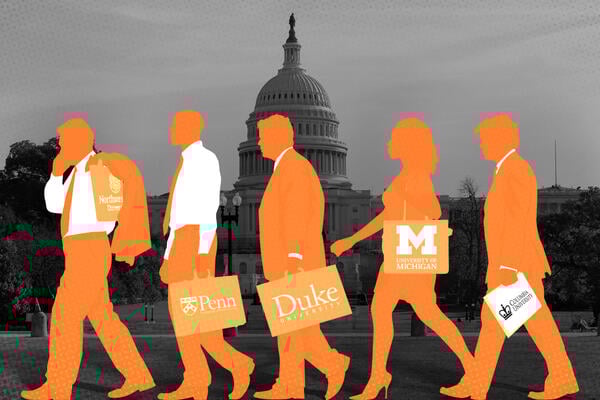
As President Trump’s broadside attacks on higher education continue, few institutions have shown a willingness to push back publicly. But behind closed doors, the sector has already pumped millions of dollars into federal lobbying efforts this year to plead their case in Washington.
An Inside Higher Ed analysis of federal lobbying data shows that some of the universities in Trump’s crosshairs have dramatically increased spending this year compared to the first quarter of last year, hiring advocates on the Hill to represent their interests to lawmakers. Northwestern University, for example, has already spent more than $600,000 on federal lobbying this year, compared to $110,000 in the first quarter of 2024. Among individual institutions, Northwestern has spent by far the most on lobbying this year.
Northwestern is one of multiple institutions that the Trump administration has taken aim at in recent months, abruptly freezing hundreds of millions of dollars in federal research funding over alleged incidents of antisemitism on campus connected to a pro-Palestinian encampment last spring, or the participation of transgender athletes in women’s sports.
(Northwestern did not respond to multiple requests for comment.)
Here’s a look at what institutions, namely research universities, have spent on lobbying in the first quarter of 2025, and what issues they have emphasized.
Lobbying Expenditures
Since the analysis is focused on research universities, many of which have come under attack by the Trump administration, Inside Higher Ed reviewed the lobbying expenditures primarily by members of the Association of American Universities. Together, they’ve spent almost $9 million this year.
Areas of focus, according to lobbying disclosures, include federal caps on indirect research cost reimbursements, endowment taxes, the upcoming appropriations bill, international student visa issues, athletics and various pieces of legislation, including the College Cost Reduction Act.
Several institutions targeted by the federal government are among the highest spenders, including Columbia University, which mostly yielded to a list of Trump administration demands in March. Now federal officials wants more from Columbia, including a possible consent decree. While Columbia has publicly conceded on many fronts, it has quietly worked through back channels in Congress, spending $270,000 on lobbying in the first quarter of 2025. Among the lobbying activities listed: “Outreach and monitoring related to … NSF Funding, and NIH funding, generally.”
Last year, the university spent $80,000 on lobbying in the first quarter and a total of $350,000 for 2024. Given Columbia’s spending so far this year, it is likely to surpass that in 2025.
“Columbia values its relationships with our delegation and other officials across all levels of government,” a spokesperson wrote in an emailed response to Inside Higher Ed. “We are eager to tell our story on the vast impact Columbia research and contributions have had on improving lives and generating solutions to society’s most pressing challenges.”
Other Trump targets, such as the University of Pennsylvania, Yale University, and Harvard University, have also increased lobbying expenditures. Both Penn and Yale spent $250,000 in the first quarter of 2025, followed closely by Harvard at $230,000. Those are noticeable increases from last year, when Yale spent $180,000 on lobbying in the first quarter, Penn spent $150,000, and Harvard spent $130,000.
Other Top Spenders
While the focus of Inside Higher Ed’s analysis was AAU members, a few universities outside that organization also cracked the top 10 in lobbying expenditures for the first quarter of 2025.
After Northwestern, the University of Phoenix has been the top spender on federal lobbying efforts this year, shelling out $480,000 in the first quarter. However, unlike at many other institutions, that number does not represent a significant increase of typical spending.
Last year, Phoenix, a for-profit institution, spent $1.8 million on federal lobbying.
Priorities for the university, according to a lobbying disclosure, include such issues as “change of control, and related regulatory requirements.” Phoenix has been lobbying on change of control since at least the spring of 2023 amid efforts to sell the university, which have yet to materialize.
Northeastern University, which is a research institution but not an AAU member, is also among the country’s top spenders; it laid out $270,000 for lobbying in the first quarter. But that number mirrors what the university spent in each quarter last year as it racked up more than $1 million on lobbying.
“Like all major research universities, Northeastern engages with the federal government at many levels,” Renata Nyul, Northeastern’s vice president for communications, wrote in an email to Inside Higher Ed. “We work to increase funding for our expanding research enterprise, shape federal policy that affects higher education, and maximize support for student financial aid.”
Experts find the increase in lobbying expenditures unsurprising for two reasons. First, there is typically an uptick in lobbying efforts in the early days of a new presidential administration. Second, sectors tend to lobby heavily when presented with new opportunities or major change.
“Many of the Trump administration’s actions pose existential threats, so universities should be working to address those threats in any way possible. That includes lawyers, appeals to public opinion, all of it, because there have been so many things that affect universities in the first 100 days,” said Beth Leech, a political science professor and lobbying expert at Rutgers University.
She noted that colleges hire lobbyists not only to better understand emerging threats but also to engage lawmakers in conversations about what legislative proposals would mean for higher education.
“A lot of lobbying is informational, and it’s informational on both sides. The lobbying organization needs to monitor potential threats—not just the Trump administration, but everything that affects an organization, a company, or whatever,” Leech said. “They need to be able to communicate about the impacts of potential threats, because sometimes things come up [in legislation] and lawmakers are just not aware of what some of the implications of some plan might be.”
Universities are spending heavily on lobbying at a time when the Trump administration appears to be at war with higher education, slashing federal research funding—often without informing institutions—and punishing universities before investigations are concluded. But is it working?
“They have to try,” Leech said. “They can’t just stand aside and let whatever happens happen.”
The need for higher education to be disrupted is felt everywhere. The demographic cliff, profound changes to financial models, emergence of artificial intelligence, the public’s loss of confidence and leadership challenges are all commonly cited reasons as to why business cannot continue as usual. Yet, there is usually little discussion of what disruption means and how it feels to actually do it.
Disruption is a fundamental change in the way an institution operates, ideally motivated by a desire to reposition in order to take advantage of future opportunities. It is inherently controversial because it changes the status and welfare of existing stakeholders in favor of others. If the politics were not so difficult, the reforms would likely have already been undertaken. Budget cuts, while sometimes necessary, are usually not disruption because they are often responsive to immediate shortfalls without reflecting a forward vision. The hiring freeze, one of the most common tactics when addressing fiscal challenges, is the very antithesis of the disruption ideal, because retaining those who happen to be employed at the moment and not bringing in new people only acts to preserve existing structures at the cost of change.
Higher education is not accustomed to disruption. Since World War II, colleges and universities in the United States have been in the enviable position of meeting most challenges by expansion—adding new faculty, departments, institutes and schools—because of enrollment growth, generous support from donors, government aid and the international standing of U.S. schools. Now, all that is under threat.
Like many administrators, I have been involved in many difficult decisions to deny tenure, institute layoffs and cut budgets. However, I have also had the opportunity to participate in two truly disruptive exercises from which I learned much.
In 2006–07, as provost of Miami University in Ohio, I helped lead the effort to abolish the School of Interdisciplinary Studies (SIS), have its faculty reassigned to other academic units, end its residential component and create a new academic unit in the College of Arts and Sciences. The SIS had been an excellent idea when established in the early 1970s, as interdisciplinary studies was relatively uncommon. However, by the mid-2000s, the need for research and teaching that breached traditional disciplinary barriers was widely understood, and there were ever-increasing examples at Miami and elsewhere. In addition, the age structure of the faculty meant that we would have needed to hire a significant number of new professors in a relatively underenrolled university division for it to remain viable.
The decision was certainly controversial, as we were bombarded by letters of outrage, faculty resolutions, seemingly endless hostile cartoons in the student newspaper and outbursts during ceremonies. During the years when the program was taught out, SIS students at graduation made sure they told me how little they thought of me as we shook hands on the platform.
As president of American Jewish University in Los Angeles—a position I just stepped down from after seven years—I helped lead the process in which we sold our Bel Air campus to a local school in 2024. The campus was situated in a beautiful neighborhood, but, especially after the pandemic, we were no longer hosting a residential undergraduate program, and our graduate programs had either gone online or could be better located in another part of Los Angeles. Rising property insurance, increased security costs and the prospect of having to expend significant funds on deferred maintenance propelled us to sell the campus so that we could use the university’s assets for better and more productive purposes.
This decision was also very controversial. The campus had been the site of the university for decades and many in the community had fond associations with it, even if they had not visited for many years. The original buyer was a private educational company, and there was dismay that we were not selling to another Jewish institution (although we eventually did when the first buyer pulled out). The local community was vociferous in its reaction to the initial sale, and many of our supporters, including major donors, were very critical of the decision.
It was hardly a surprise that I was the target of a significant amount of criticism given that I was the leading public proponent of both disruptions. University administrators may not like incessant public disparagement, but it comes with the job and the salary. Still, it was a considerable adjustment from my previous life as a professor. Many businesses prepare their leaders for conflict through very intentional professional development. Higher education does little to nothing to prepare leaders for the very real aggravations of public fights.
It is therefore important to have your own kitchen cabinet to not only get good advice and serve as a sounding board, but also to provide the necessary emotional support when things get difficult. Harry Truman said about Washington that if you want a friend, get a dog. However, on campuses and in communities, there will be wise people who are willing to be friendly advisers and will, in fact, appreciate being consulted.
I was surprised at the collateral damage. Faculty and board members who were proponents of the decisions also received threats and public criticism. I felt bad that allies who had stepped up because they also thought it was the right decision were hurt. I’m not sure that there was a way around it. Still, insulating, to the maximum extent possible, those helping to enable the disruption is not only the right thing to do, but critical to promoting further disruption in the future.
Others were afraid of becoming collateral damage. I remember asking one faculty member at Miami who expressed enthusiasm for our decision if he would support me in public. He replied that he, and many others, would not, even though they knew it was the right decision, because they did not want to antagonize their colleagues who were also their neighbors, fellow church members and parents on their kids’ Little League team. Administrators who are trained to believe that the most logical, best-supported argument will win the day have to recognize that the social bonds of the university community—one of an institution’s greatest strengths in most circumstances—will mean that they will have less support than they think they should have on the basis of who is right.
The communications challenges of disruptive change are also immense. In both instances, we thought that we had perfectly logical arguments about how to use scarce resources—faculty and money—in far better ways. We told ourselves and the world that this is exactly what universities should be doing. However, those who would be hurt, either directly or because their association with the school or campus would be cut, were enraged, and both easily identifiable and mobilizable.
In contrast, the “winners” were future students and faculty who did not even know what was being done on their behalf. A good communications strategy is critical, but you should be under no illusions: You may lose, or seemingly lose, the public battle, at least judged by the volume of complaints. It is critical to remember that the biggest process challenge in many disruptions is that the reforms are being done on behalf of those who at the moment have no voice. The public conversation should be evaluated accordingly.
In the end, governing boards make the final decision, and I was gratified that both my boards endorsed the disruptions I had helped engineer. Ensuring that the eventual deciders are fully informed of the logic of the proposal and are willing to face public opprobrium is absolutely critical. Trustees usually do not sign up for being central players in very public, fraught dramas where they are yelled at in public and insulted at parties and at their country club. A component of the attraction of being on a board is to be part of a bucolic academic community with which one has close personal ties. However, boards are demanding that colleges change, and trustees will have to understand that they will be in the fray during very public disputes.
Napoleon said, “If you start to take Vienna, take Vienna.” It is possible to win big fights even if you feel personally distraught at the abuse you have taken, if your friends and people you care about are battered, and if your very logical public arguments are dismissed. Higher education can overcome the challenges to disruption and we can engineer paths to much brighter futures. That is, in the end, what will save us.
Jeffrey Herbst is president emeritus at American Jewish University.
A recent report from the Campaign for College Opportunity notes strategies and programs that support graduation outcomes for students from historically underrepresented backgrounds.
Tashi-Delek/E+/Getty Images
Higher education can be an agent for positive change in students’ lives, providing personal, intellectual and socioeconomic growth opportunities. But not all of these outcomes are realized by every student.
An April report by the Campaign for College Opportunity outlines some of the challenges Black students face in pursuit of higher education, as well as measures that colleges can take to address disparities in completion and persistence rates.
What’s the need: Since fall 2019, Black enrollment in higher education has declined more rapidly than that of other races. Black students currently make up about 10 percent of all undergraduates enrolled in the U.S., but roughly 14 percent of the total U.S. population.
Among U.S. adults, about 32 percent of Black Americans have completed some college but have yet to earn a bachelor’s degree—four percentage points higher than the average American (28 percent) but roughly the same as people belonging to two or more races (32 percent), Native Hawaiians and Pacific Islanders (32 percent), and American Indian and Alaska Native populations (34 percent).
Despite the challenges students of color face while pursuing a degree, most learners say college is worth it in the long run for their careers. Still, balancing academics and other obligations, strains on mental health and feelings of isolation can be unexpected costs associated with college, according to a 2024 report from the Pell Institute.
DEI Under Attack
Since Trump retook office in January, his administration has sought to eliminate diversity, equity and inclusion practices. A Feb. 14 Dear Colleague letter from the Department of Education to colleges and universities sought to issue guidance on which race-based practices besides those used in admissions—which the Supreme Court struck down in 2023—would no longer be permitted. The letter cited scholarships and programs that were exclusively available to students based on their race. An FAQ page from the department notes that race or cultural heritage education or celebrations are not prohibited, so long as they are open to everyone on campus.
Recommendations: Based on existing research, the report authors outlined six strategies to improve Black student outcomes.
Demystify the college experience. High school partnerships and pathway programs, including summer programs and dual-enrollment opportunities, can positively impact Black students’ college trajectories.
Improve transfer. Invest in two-year colleges as access points and transfer launchpads for Black students who may want to earn a bachelor’s degree at four-year institutions. Additionally, strong partnerships between two- and four-year colleges can address culture gaps and ensure the four-year institution is equipped to help Black and other transfer students thrive.
Address college affordability. Institutions should invest in avenues and resources to ensure Black students, and others, can pay for tuition, fees, technology, supplies, living experiences and other costs associated with college. “Having a robust portfolio of grants, scholarships and other financial support for Black and low-income students is essential,” according to the report. Students of color are also more likely to report basic needs insecurity, so creating holistic financial resources that ensure students have suitable food, housing and transportation is critical.
Invest in representation. Establishing “Black-affirming” spaces, including resource centers, honors colleges, studies programs and media and art collections can improve students’ sense of belonging on campus, as well as counter negative stereotypes regarding Black students. Similarly, ensuring Black students have a seat at the table for decision-making processes allows them opportunities to advocate for their needs.
Prioritize faculty development. Centers for teaching and learning can provide educators with resources and guidance on how to best serve underrepresented minority groups, including Black students.
Create co-curricular learning opportunities. Faculty-led research, pre-apprenticeship programs and workforce development programs can engage Black students on campus and give them the necessary skills to launch their careers.
Examples of success: In addition to highlighting initiatives that can promote student success, the report also names five institutions that have developed effective programs to improve Black student outcomes.
Compton College provides no-cost food to students through a variety of ways, including an on-campus food pantry, a partnership with the Los Angeles Regional Food Bank and free meals at the Everytable Cafeteria on campus. The college also broke ground on its first student housing facility earlier this year, creating more opportunities to minimize the risk of housing insecurity or homelessness for vulnerable students.
Last year Sacramento State University established the Black Honors College, which provides wraparound support for students interested in learning about Black history and culture. The program, which is open to all students, celebrates Black excellence through mentorship by hand-selected faculty and staff, designated housing and personalized support for participants.
The City University of New York created the Black Male Initiative in 2005, an inclusive 15-project initiative focused on improving enrollment and graduation rates of students from underrepresented populations. Most recently, the program has evolved to include wellness and career development.
Spelman College invested millions of dollars in promoting holistic student wellness, in part by creating a new fitness center and introducing fitness classes, cooking demonstrations and mental health workshops. The initiative is designed to address health concerns that disproportionately impact Black women, including high blood pressure, Type 2 diabetes, heart disease, breast cancer and strokes.
The University of California, San Diego, is home to the Black Academic Excellence Initiative, which strives to improve the experiences of Black students, faculty and staff members on campus. The initiative provides scholarship funds for students and has established a hub for historically Black fraternities and sororities, called the Divine Nine.
“Denver Public Schools to close 7 schools, cut grades at 3 others despite heavy resistance.”
“The list is out: These are the SFUSD schools facing closure.”
Such reports can leave the impression that districts are rapidly closing schools in response to declining enrollment and families leaving for charters, private schools and homeschooling.
But the data tells a different story.
School closures have actually declined over the past decade, a period of financial instability that only increased in the aftermath of the pandemic, according to research from the Brookings Institution.
The analysis, shared exclusively with The 74, shows that in 2014-15, the closure rate — the share of schools nationwide that were open one year and closed the next — was 1.3%. In 2023-24, the rate was just .8%, up from .7% the year before.
“I think it’s important for people to realize how rare school closures are,” said Sofoklis Goulas, a Brookings fellow and the study’s author.
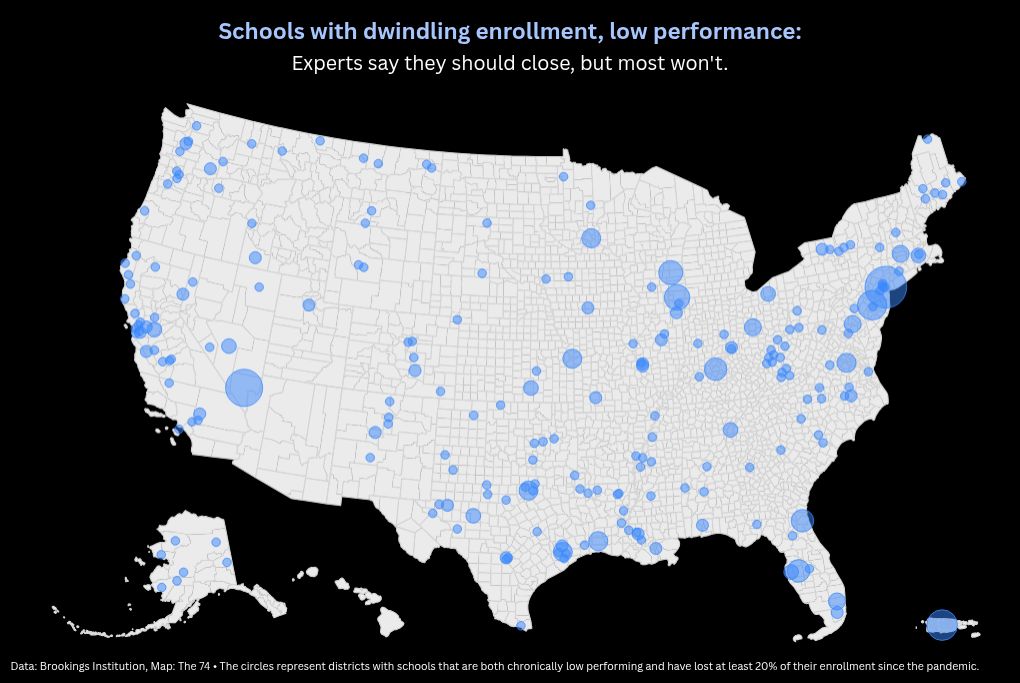
Last fall, his research showed how schools that have lost at least 20% of their enrollment since the pandemic are more likely to be low-performing. The Clark County Public Schools, which includes Las Vegas, had the most schools on the list — 19 — but isn’t currently considering closures. In Philadelphia, with 12 schools in that category, district leaders are just beginning to discuss closures.
When it released Goulas’s initial report, leaders of the conservative Thomas B. Fordham Institute argued that low-performing schools should be the first to close. But efforts to do so are often met with pushback from families, teachers and advocacy groups who argue that shutting down schools unfairly harms poor and minority students and contributes to neighborhood blight. Their pleas often push district leaders to retreat. Working in advocates’ favor, experts say, is the fact that many big district leaders are untested and have never had to navigate the emotionally charged waters of closing schools.
“Closing a neighborhood school is probably one of the most difficult decisions a district’s board makes,” said Michael Fine, CEO of the Fiscal Crisis and Management Assistance Team, a California state agency that provides financial oversight to districts. “They are going to avoid that decision as long as they can and at all costs.”
Such examples aren’t hard to find:
Just weeks after announcing closures, the San Francisco district halted plans to shutter any schools this fall.
In September, outgoing Chicago Public Schools CEO Pedro Martinez pledged to put off school closures for another two years, even though state law allows the city to take action sooner. The district is in the process of absorbing five charter schools to keep them from closing.
In October, Pittsburgh Public Schools recommended closing 14 schools; several others were set to be relocated and reconfigured. About a month later, Superintendent Wayne Walters hit pause, saying the district needed more “thoughtful planning” and community input.
Last May, the Seattle Public Schools announced it would shutter 20 elementary schools next school year in response to a $100 million-plus budget deficit. They later increased the number to 21. By October, the list had dwindled to four schools. Just before Thanksgiving, Superintendent Brent Jones withdrew the plan entirely.
“This decision allows us to clarify the process, deepen our understanding of the potential impacts, and thoughtfully determine our next steps,” Jones wrote to families. While the plan would have saved the district $5.5 million, he said, “These savings should not come at the cost of dividing our community.”
Graham Hill Elementary in Seattle, which fifth grader Wren Alexander has attended since kindergarten, was initially on the list. The Title I school sits on top of a hill in a desirable area overlooking Lake Washington. But it also draws students from the lower-income, highly diverse Brighton Park neighborhood.
Among Wren’s neighbors are students from Ethiopia, Vietnam and Guatemala. Wren, who moves on to middle school this fall, said she looks forward to visiting her former teachers and cried when she heard Graham Hill might close. She wanted her younger brother and sister to develop the same warm connection she had.
“I don’t think I would be who I am if I didn’t go to the school,” she said.
Wren Alexander and her little sister Nico, outside Graham Hill. (Courtesy of Tricia Alexander)
Tricia Alexander, her mother, was among those who opposed the closures, participating in rallies outside the district’s administration building and before board meetings.
“We were really loud,” said Alexander, who’s also part of Billion Dollar Bake Sale, an effort to advocate for more state education funding. She said there was “no real evidence” that closing schools would have solved the district’s budget woes. “In no way would kids win.”
It’s a view shared by many school finance experts, who note that the bulk of school funding is tied up in salaries, not facility costs. Districts may save some money from closing schools, but unless coupled with staff reductions, it’s often not enough to make up for large budget shortfalls.
‘So bad at this’
If enrollment doesn’t pick up, experts say, leaders who delay closures will have to confront the same issues a year later or — perhaps even more likely — pass the problems on to their successors.
“If there continues to be fewer and fewer children …then that doesn’t get better,” said Brian Eschbacher, an enrollment consultant.
One Chicago high school, for example, had just 33 students last year. In Los Angeles, the nation’s second-largest district, 34 elementary schools have fewer than 200 students and 29 of those are using less than half of the building, according to a recent report. The share of U.S. students being educated outside of traditional schools also continues to increase, according to a forthcoming analysis Goulas conducted with researchers at Yale University.
“We don’t see a trajectory of enrollment recovery,” he said. “Things actually got worse in the most recently released data batch.”
But such conditions haven’t stopped advocacy groups from campaigning against closures. One of them, the left-leaning Advancement Project, has joined with local groups in Denver and Pittsburgh to make a case against closures nationally.
“All children deserve to have a local, neighborhood public school in which they and their families have a say,” said Jessica Alcantara, senior attorney for the group’s Opportunity to Learn program. “It’s not just that school closures are hard on families. They harm the full education ecosystem that makes up a school — students, families, school staff and whole communities.”
Last May, Alcantara and other Advancement Project staff urged the U.S. Department of Education to treat school closures as a civil rights issue. Nine of the 10 schools the Denver district planned to close in 2022 had a majority Black or Hispanic student population.
The advocates argued that in cases of enrollment loss, run-down facilities and empty classrooms, there are alternatives to closing schools. They encourage communities to push for renovations and urge district leaders to use vacant spaces for STEM, arts or other programs that might attract families. Opponents of closures also say that districts sometimes underestimate how much of a building is used for non-classroom purposes like special education services, early-childhood programs and mental health.
Eschbacher’s assessment of why districts often back down from closing schools is more blunt.
“Districts are so bad at this,” he said. “If you just do a few things wrong, it could sink the whole effort.”
For one, leaders often target schools with under 300 students for closure, appealing to parents that they can’t afford to staff them with arts programs, a school nurse or a librarian.
But those explanations sometimes fall flat.
“Parents always say, ‘I wanted a small school. I know my teachers and they know my kid. And it’s right down the street,’” Eschbacher said. If they didn’t like their school, he added, they would have likely would have chosen a charter or some other option.
District officials also run into trouble if they try to spin the data. When Seattle officials talked about “right-sizing” the district, they pointed to the loss of 4,900 students since 2019-20.
But Albert Wong, a parent in the district and a lifelong Seattle resident, knew there was more to the story. Not only is the current enrollment higher than it was from 2000 to 2011, the pandemic-related decline seems to have leveled off. In a commentary, he argued that officials presented misleading data “to make current enrollment look exceptionally bad.”
Graham Hill Elementary, fifth-grader Wren’s school, actually saw a slight increase in enrollment this year, including a new class for preschoolers with disabilities. And while Pittsburgh schools are projected to lose another 5,000 students over the next six years, enrollment this year held steady at about 18,400.
To Eschbacher, the “burden of proof is always on the district” to make an airtight case for why students would be better off in larger schools. He has applauded the Denver-area Jeffco Public Schools, which has closed 21 schools since 2021, for having state demographers, not just district officials, explain population trends to families at community meetings.
‘It wasn’t realistic’
Walters, Pittsburgh’s superintendent, can easily rattle off reasons why the district should rethink how it uses its buildings. Early last year, local news reports showed that almost half of the district’s schools were less than 50% full.
“We’ve lost about a fourth of our population, but we have not changed anything to our footprint,” he said.
Meanwhile, the average age of the district’s buildings is 90 years old, and many lack air-conditioning, forcing some schools to send students home in sweltering weather.
But a consulting group’s proposal showed that Black and low-income students and those with disabilities would be disproportionately affected by the changes. Several advocacy groups drew attention to those disparities, calling the effort “rushed.”
412 Justice, an advocacy group, is among the community organizations pushing for alternatives to school closures in Pittsburgh. (412 Justice)
Walters agreed and put the plan on hold last fall, saying he lacked “robust” responses to parents’ tough questions about how schools would change for their kids.
“It doesn’t mean that we don’t see a path forward,” he said. “But it wasn’t realistic that we would have those questions answered within the timeline that we’ve been given.”
In March, parents pushed for another delay, causing the school board to postpone a vote on the next phase in the closure process.
As the Jeffco district demonstrates, some school systems are following through with closures. The school board in nearby Denver unanimously voted in November to close seven schools and downsize three more.
But that’s after community protests pushed the district to put the brakes on a plan to close 19 schools in 2021. Advocates argued that families in low-income areas, who had been heavily impacted by the pandemic, would be most affected. Then the district only closed three in 2023, and now board members are considering a pause on closures for three years.
School boards closing a dozen or more schools are often catching up with work their predecessors let pile up, said Goulas of Brookings.
“Closing a single school allows for easier placement of students and minimizes the political cost and community stress,” he said. “When a district releases a long list of schools to close, it likely indicates that they waited for conditions to improve, but this didn’t happen.”
Angel Gober, executive director of 412 Justice — one of 16 organizations that called on the Pittsburgh district to drop its plan — acknowledged that their fight isn’t over.
“I think we got a temporary blessing from God,” she said. But she wants the district to explore a host of alternatives, like community schools and corporate support, before it shutters and sells off buildings. “We do have very old infrastructure, and that is an equity issue. But can we try five things before we make a drastic decision to close schools for forever?”
Transfer enrollment rose by 4.4 percent this year, according to recent data from the National Student Clearinghouse Research Center. In total, transfers have grown by 8 percent since 2020, signaling a steady rebound from the sharp declines seen during the pandemic. That’s encouraging news for students seeking affordable, flexible pathways to a degree, as well as for institutions focused on expanding access and supporting completion.
Less noticed, however, is just how much progress rural students are making. In fall 2023, rural community colleges experienced a 12.1 percent increase in students transferring to four-year institutions. This progress is even more impressive given the historic underinvestment in rural institutions and the well-documented barriers their students face on their path to a four-year degree.
Many of the country’s small, rural institutions remain on the margins of transfer conversations, partnerships and policy priorities. Here in California, for instance 60 percent of the community colleges with the lowest transfer rates are rural. From low-income students in Appalachia to Latino learners in Texas’s Rio Grande Valley, rural colleges are lifelines for students facing barriers such as poverty, food and housing insecurity, and limited access to transportation and technology. Yet these institutions tend to lack the support, visibility and resources of larger community college systems. They often remain excluded from the design and implementation of transfer initiatives.
Rural students bring tremendous talent, drive and potential to higher education. Many are the first in their families to attend college. They are often deeply rooted in their communities and, in many cases, seek to use their education to give back and contribute to their local economies.
Transferring to a four-year institution can dramatically increase the lifetime earnings of these learners, expand their career paths and help meet the growing demand for a highly skilled workforce. Individuals with a bachelor’s degree earn, on average, nearly 35 percent more per year than those with only an associate degree. Four-year degrees open doors to career advancement, civic engagement and personal growth.
Yet the systemic challenges rural community college students face—from more limited course offerings and degree options to long travel times to campuses to unreliable internet connections—require tailored support and intentional partnership. A one-size-fits-all approach to transfer doesn’t work when rural students are starting from a fundamentally different place than many of their peers.
For example, rural colleges may not have the staff capacity to manage complex articulation agreements or advocate for their students in statewide transfer initiatives. Their advisers may juggle many roles, serving as counselors, career coaches and transfer liaisons all at once. Meanwhile, students themselves may be unaware of transfer opportunities or discouraged by long distances to four-year campuses, especially when those pathways demand sacrifices they can’t afford to make.
The health of both our higher education ecosystem and our economy depends on ensuring that all students, regardless of ZIP code, can move easily between two-year and four-year institutions. If efforts to improve transfer overlook rural colleges, they risk deepening existing educational inequities and missing out on a significant segment of our nation’s talent pool.
Organizations such as the Rural Community College Alliance shine a needed spotlight on how to best collaborate with rural institutions across the country to improve transfer outcomes and better support rural students’ success. Progress starts with listening and taking the time to understand the unique strengths and challenges of rural communities rather than imposing outside solutions.
The policy landscape will need to evolve to support these efforts. This means increasing investment in rural higher education infrastructure, expanding funding for rural-serving institutions, and creating more flexible transfer frameworks that reflect the realities of rural learners, many of whom are working adults, members of the military, parents, or all of the above. Federal, state and higher education leaders should recognize rurality as a key lens through which to view improving student outcomes, on par with class or race.
Transfer rates are rising, and more students are finding affordable on-ramps to bachelor’s degrees. But this progress is incomplete unless it reaches every corner of the country, including the small towns and rural communities that are home to millions of students. In a moment when more students are finally moving forward, we can’t afford to leave these learners behind. When rural students succeed, our entire nation benefits.
Gerardo de los Santos is vice president for community college relations at National University.
About three in five college students experienced some level of basic needs insecurity during the 2024 calendar year, according to survey data from Trellis Strategies. Over half (58 percent) of respondents said they experienced one or more forms of basic needs insecurity in the past 12 months.
Student financial challenges can negatively impact academic achievement and students’ ability to remain enrolled. About 57 percent of students said they’ve had to choose between college expenses and basic needs, according to a 2024 report from Ellucian.
While a growing number of colleges and universities are expanding support for basic needs resource centers—driven in part by state legislation that requires more accommodations for students in peril—not every campus dedicates funds to the centers. A 2024 survey by Swipe Out Hunger found that of 300-plus campus pantries, two in five were funded primarily through donations. Only 5 percent of food pantries had a dedicated budget from their institution as a primary source of funding.
Inside Higher Ed compiled four examples of institutions that are considering new or innovative ways to address students’ financial wellbeing and basic needs on campus.
Penn State University—School Supplies for Student Success
Previous research shows that when students have their relevant course materials provided on day one, they are more likely to pass their classes and succeed. Penn State’s Chaiken Center for Student Success launched a School Supplies for Student Success program that offers learners access to free supplies, including notebooks, writing utensils and headphones, to help them stay on track academically.
Students are able to visit the student success center on the University Park campus every two weeks to acquire items, which are also available at two other locations on campus. Learners attending Penn State Altoona and Penn State Hazleton can visit their respective student success center for supplies, as well.
The program is funded by a Barnes & Noble College Grant program and is sustained through physical and monetary donations from the university community.
Massachusetts College of Liberal Arts—Essential Needs Center
The Essential Needs Center was developed from a Service Leadership Capstone course, which required students to complete a community-based service project. One group of students explored rates of basic needs insecurity and established a food pantry to remedy hunger on campus.
“The program started as a drawer at my desk,” said Spencer Moser, assistant dean for Student Growth and Wellbeing, who taught the course. “Then it grew to fill a shelving unit, a closet and eventually its own space on campus.”
The center, now a one-stop shop for basic needs support on campus, provides students with small appliances, storage containers, personal care items and seasonal clothing, as well as resources to address housing and transportation needs, including emergency funding grants. Students can also apply for a “basic needs bundle” to select specific items they may require.
Paid student employees maintain the center but it’s also left “unstaffed” at some hours to address the stigma of seeking help for basic supplies. Between November 2023 and January 2025, over 1,300 students engaged with the center.
University of New Hampshire—Financial Wellness
A lack of financial stability can also have a negative impact on student thriving and success. To support students’ learning and financial wellbeing, the University of New Hampshire created an online digital hub that provides links to a budget worksheet, financial wellness self-evaluation, college cost calculator and loan simulator.
Students can also schedule an appointment to talk with an educator to discuss financial wellness or engage in a financial wellness workshop.
Roxbury Community College—the Rox Box
Most colleges operate on an academic calendar, with available hours and resources falling when class is in session. Roxbury Community College in Massachusetts launched a new initiative in winter 2023 to ensure students who were off campus for winter break didn’t experience food insecurity.
Before the break, staff at the college’s food pantry, the Rox Box, handed out Stop & Shop gift cards and grab-and-go meals, as well as a list of local places students could visit for meals over break.
Do you have a wellness intervention that might help others promote student success? Tell us about it.
LOS ANGELES — Scattered among the shrubs on the southern border lie belongings migrants left behind — toothbrushes, water bottles, baseball caps. Some of the owners forged north, crossing the boundary undetected. Others were apprehended or succumbed to dehydration, drowning or one of the unimaginable dangers in the harsh desert that straddles Mexico and the United States.
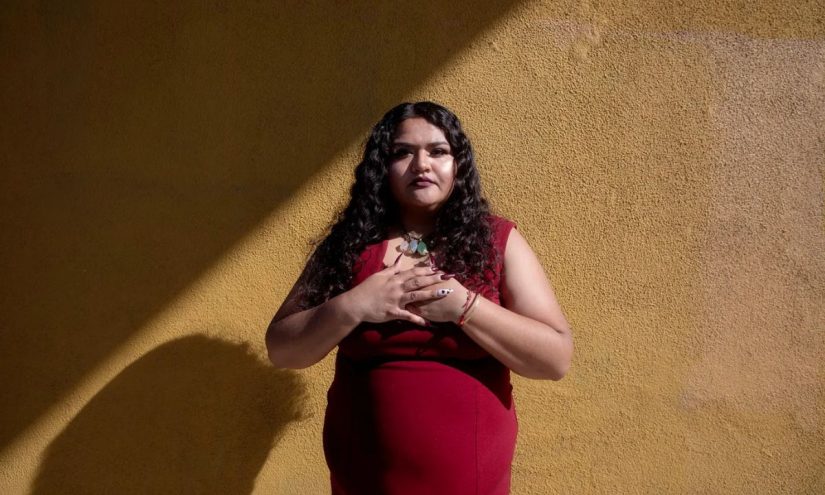
Angélica Reyes survived. At nine months old, she made the journey that could have claimed her life just as it started.
Since 1994, approximately 10,000 migrants have died in the borderlands. That year, the North American Free Trade Agreement (NAFTA) took effect. Designed to open trade between the United States, Canada and Mexico, the now-defunct policy has faced criticism for depressing Mexican wages. Their income flatlining, Reyes said, her parents left the city of Guadalajara, in the western part of Mexico, and headed with her to Los Angeles. They did not have authorization to live in the United States.
Reyes is now 32, though she remembers knowing she was undocumented as early as first grade.
“My mom was very cognizant of the discrimination and the obstacles that I would face throughout my life,” she said. “She made it clear, like, ‘You can’t mess up. You need to be twice as good to get half of the respect. You need to really prove that you earned your spot.’”
To do that, Reyes earned the good grades that set her up to become a history teacher for the Los Angeles Unified School District. She is one of about 15,000 teachers — and among the more than 835,000 undocumented people — who have received temporary permission to live, work and study in the United States through an Obama-era program known as Deferred Action for Childhood Arrivals (DACA). Women represent over half of DACA recipients, whose future in this country has been under threat by legal challenges to the program’s existence and the anti-immigration agenda of President Donald Trump.
https://datawrapper.dwcdn.net/nA5Cv/10/
If DACA ends, the goal of ongoing litigation, 700 education personnel, including teachers and teacher aides, would lose their jobs each month for two years as their work permits are revoked, according to FWD.us, an immigration reform organization. In California, the state with the most DACA recipients, 200 educators would lose their jobs monthly. In Texas, 100 would.
DACA-recipient teachers relate firsthand to the estimated 620,000 undocumented K-1 2 students, who confide in them about their experiences in immigrant families. They show youth that regardless of legal status, it’s possible to attain one’s professional goals. Many of these teachers are also activists, fighting for their students, themselves and other marginalized people. They see themselves as assets to schools.
“My immigration status inspires both my undocumented and documented students because they know all the obstacles that are faced by folks with my immigration status can be overcome,” Reyes said. “They know that if I could do it, that’s something that they could do as well.”
Without undocumented teachers, educator shortages across states could worsen. California has spent about $1.6 billion since the 2016-17 school year to tackle its teacher shortage. Still, the state issued 11 percent fewer teaching credentials between the 2021-22 and 2022-23 school years. Last year, it enacted legislation to eliminate barriers to entry, dropping a standardized test teaching candidates had to pass to demonstrate competence in math, reading and writing. But since undocumented immigrants aren’t widely perceived to be career professionals, the fact that schoolchildren nationwide depend on them has received scant attention in the broader immigration debate.
Maria Miranda, elementary vice president of the United Teachers Los Angeles (UTLA) labor union, said undocumented teachers “bring a different perspective to the table, a different skill set.”
Randi Weingarten, president of the American Federation of Teachers, the nation’s second largest teacher labor union, said DACA recipients in classrooms have strengthened the United States.
“They are role models, like all teachers, and should be treated as such, but instead, they are made to feel uncertain and fearful as their protections are challenged in court and as the Trump administration promotes mass deportations, even from sensitive locations like schools that were once considered off limits,” Weingarten said. “Immigration reform can’t be used as an excuse to rip teachers out of classrooms, where they are so desperately needed.”
Reyes at 1 year old with her father. (Angelica Reyes)
When Reyes was about to register for the SAT during her senior year in high school, one misinformed guidance counselor asked her why she planned to take the college entrance exam, insisting that higher education was off limits to undocumented students.
“I was devastated. It broke my heart,” Reyes said. “I remember crying and telling my mom, ‘I worked hard, for what?’”
Since 2001, however, California has extended access to in-state college tuition to undocumented students who have lived there long term. Unaware of this law and under the assumption that her counselor was correct, Reyes missed the deadline for the SAT and for the application to University of California schools, so she enrolled in a community college she could afford, a common path for many undocumented immigrants.
Then, in 2011, a state law was enacted that made her cry tears of gratitude: the California DREAM Act. The policy allows undocumented immigrants who entered the United States before they were 16 to obtain financial aid if they’ve earned qualifying credits at California schools. These young people have been nicknamed Dreamers after the Development, Relief, and Education for Alien Minors (DREAM) Act, a 2001 federal bill that would have given them legal status had it succeeded.
Reyes said that when she decided to apply to the University of California, Los Angeles (UCLA), a community college counselor took in her light brown skin and wavy black mane and without so much as seeing the 4.0 GPA in her transcript, told her to apply somewhere less competitive.
“I’m a competitive student!” Reyes recalled balking. “She opened my chart and she was, like, ‘Oh, you actually are.’ Her tune changed so quickly. It was really infuriating because if I had believed her, like many students believe counselors, I would have not gone to UCLA.”
In college, Reyes had to make a choice about her career path. Her research project on youth activism at Abraham Lincoln High School, where she graduated in 2010, had drawn her to education. “I realized that’s where I was needed,” she said.
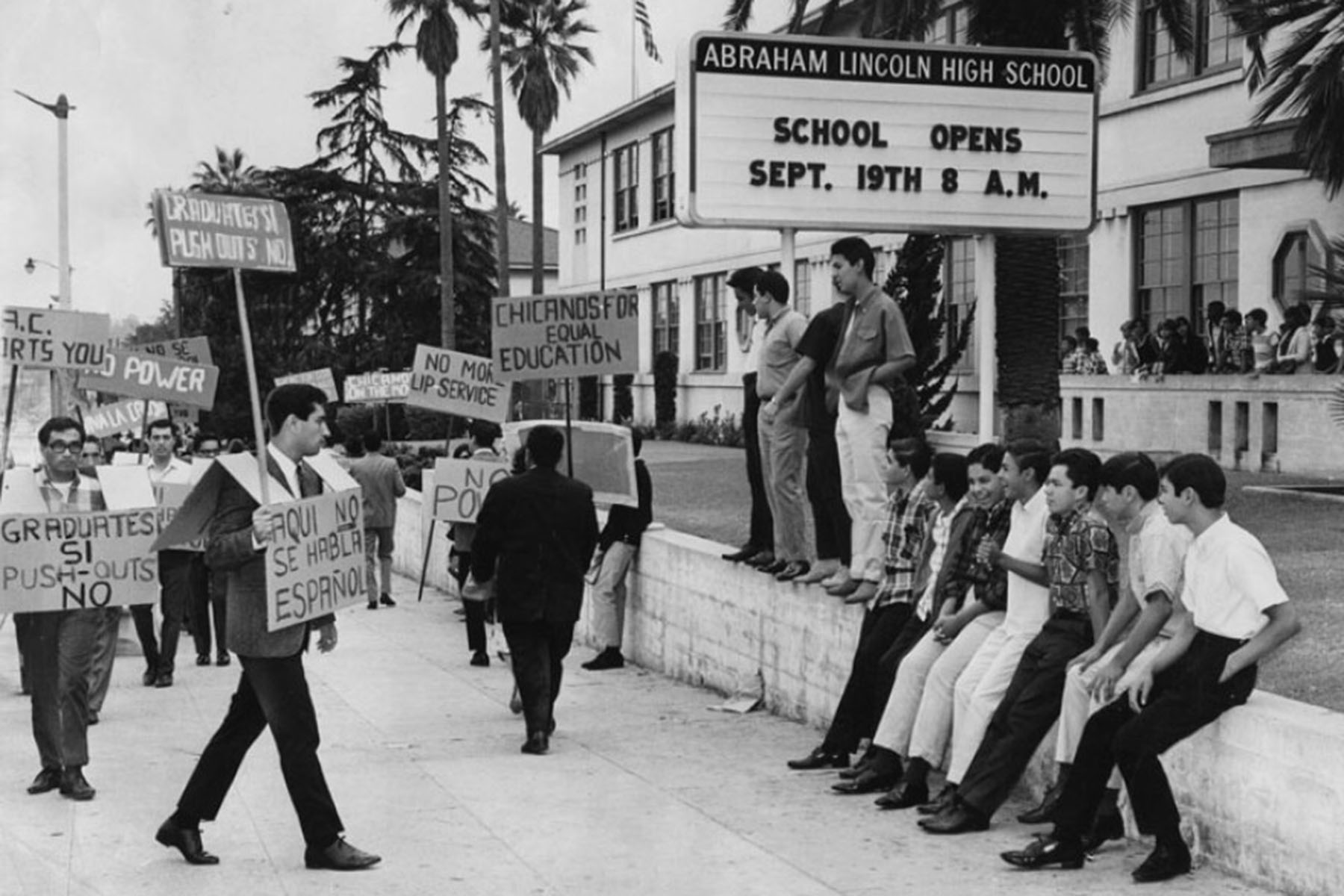
It was at Lincoln High in March 1968 that students spearheaded the protests known as the Chicano Blowouts or East Los Angeles Walkouts. With signs stating “School Not Prison” and “We Are Not Dirty Mexicans,” almost 15,000 youth from Lincoln and other schools in historically Mexican-American East L.A. walked out of classes for a week to protest their substandard education.
Chicano student walkouts in front of Abraham Lincoln High School in East Los Angeles during the 1968 blowouts. (LAPL)
Back then, students could be paddled for speaking Spanish, and with few advanced courses at Eastside schools, they were routinely steered to vocational classes like auto shop. These inequities contributed to a 60 percent dropout rate in the area. Jailed for their activism against these circumstances, the teenagers garnered community support that ushered in sweeping policy changes — bilingual instruction, ethnic studies and more Latino teachers.
Today, the carnicerías, bungalow homes and palm trees along North Broadway Avenue, leading to 93 acres of green hills, offer no hint of the past tumult, but a mural at Lincoln commemorates the walkouts of nearly six decades ago.
Through her research, which also explored youth activism of the 2010s, Reyes learned that contemporary Lincoln High students continued to have unmet needs, such as support applying for college financial aid or accessing legal services as members of immigrant households. So when Lincoln High teachers asked if she wanted to develop a space to serve students, Reyes threw herself into the effort. The Paula Crisostomo Dream Center — named after a lead activist of the Chicano Blowouts and the inspiration for the 2006 film “Walkout” — opened at Lincoln in 2015.
“We established programming for immigrant students, for immigrant parents. We did immigrant and educational history,” Reyes said. “It’s still a resource for students at Lincoln, and we’ve expanded it to several other schools.”
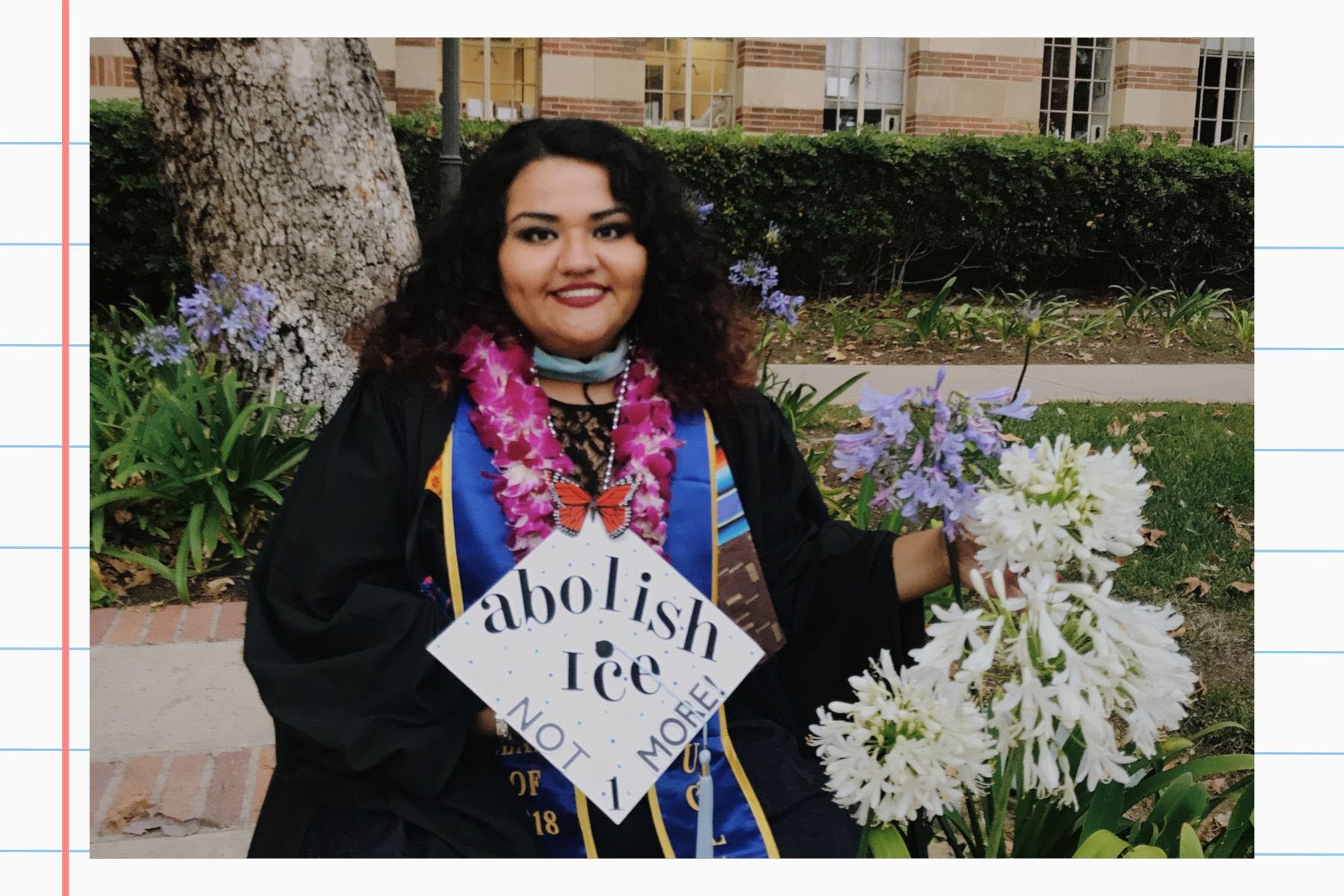
Working at the Dream Center for three years convinced her that teaching was the best way to reach undocumented and marginalized youth. Rather than dismiss them, as she had been dismissed by school counselors, she would inspire students to excel academically regardless of legal status. In 2012, four years before she graduated from UCLA with a bachelor’s degree in sociology and six years before she earned her master’s in education from the university, DACA enabled undocumented students like herself to become career professionals.
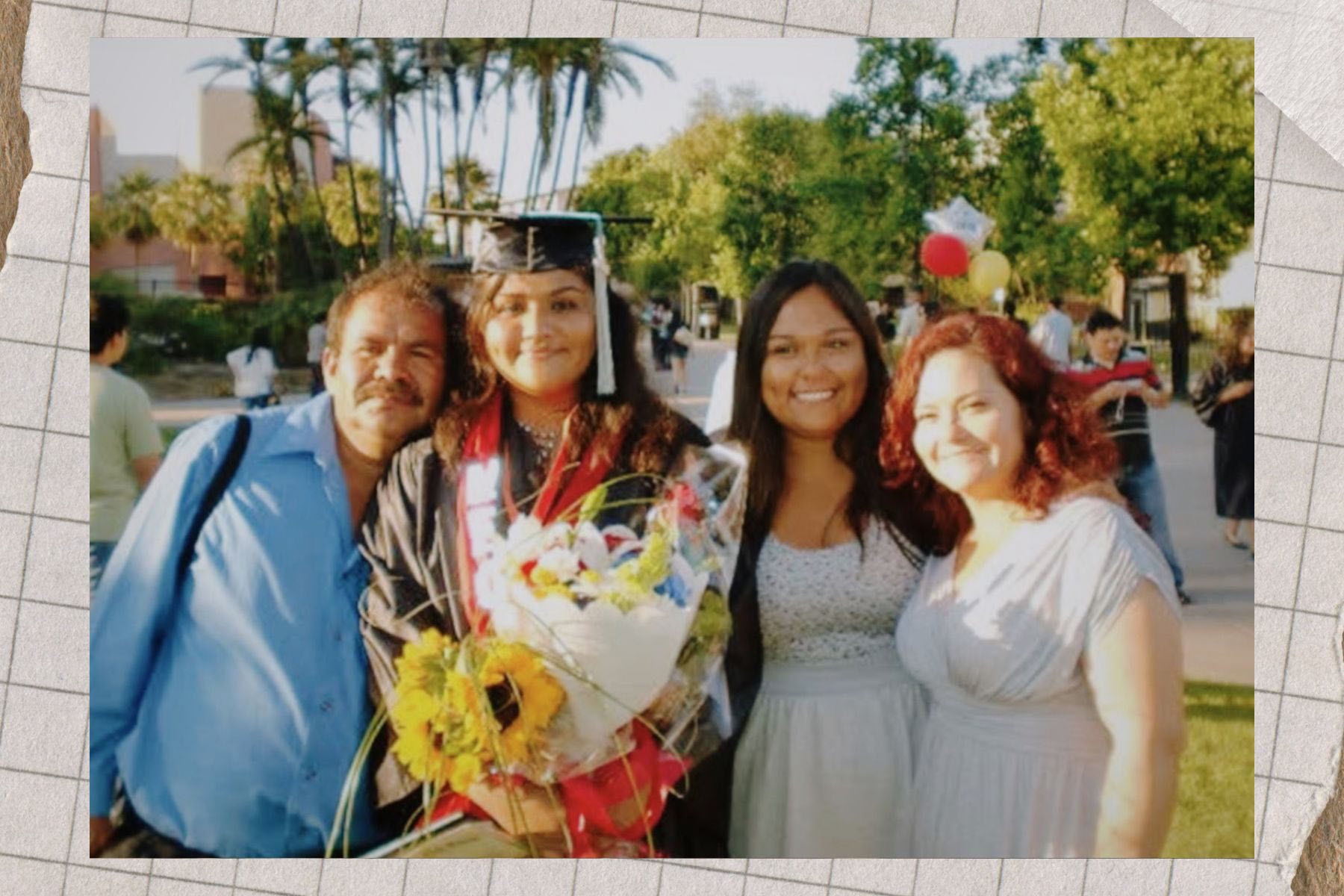
Reyes surrounded by family at her high school graduation. (Angelica Reyes)
It’s complicated: Those two words capture Reyes’ feelings about DACA. Although the program allowed her to teach, she has long viewed it as flawed, exploitative and a “constant reminder” she isn’t “fully accepted.”
DACA stems from the activism of undocumented college students frustrated that the DREAM Act failed and that their immigration status would limit their potential, said Jennifer R. Nájera, author of “Learning to Lead: Undocumented Students Mobilizing Education.” Fighting for immigrant rights, they found a purpose.
Like the DREAM Act, DACA was reserved for young people who came to the United States as children and didn’t have criminal histories. “They had to graduate from high school or college or go to the military, show ‘good moral character,’” said Nájera, an associate professor in the Department of Ethnic Studies at the University of California, Riverside. Instead of citizenship, Obama’s executive order “provided temporary relief from deportation, a two-year relief specifically, that could be renewed, and a work permit, which was a big deal.”
While DACA recipients cherished their professional opportunities, some contended that the policy cast them as second-class citizens, Nájera said.
That includes Reyes.
“I knew it was a Band-Aid,” she said. “In fact, when I first started teaching, my DACA expired because of an issue with the application. They had asked me if I was in a gang, and apparently I didn’t check off the X hard enough, so I wasn’t hired at the beginning of the year. I remember feeling this immense frustration.”
Los Angeles Unified employs about 300 DACA-recipient school personnel, according to Miranda of the UTLA labor union. As Reyes’ teaching career started, DACA weathered the first of multiple legal challenges. Trump rescinded the program during his first term, a move the Supreme Court later blocked; at the time, Reyes told her students about possibly losing her job. Since then, she has endured several other threats to DACA , though she’s now pained to tell her students that the program isn’t accepting new applicants.
DACA, she said, must be replaced with a sustainable alternative.
In a December interview, Trump said, “We’re going to have to do something with” DACA recipients. “They were brought into this country many years ago” and “in many cases, they’ve become successful.”
But that sympathy has been absent from his immigration policies since he resumed office. He has issued an executive order prohibiting undocumented college students from receiving in-state tuition. He has also lifted restrictions on immigration enforcement in “sensitive locations” such as churches, hospitals and schools, prompting parents nationwide to keep kids out of class.
A protester waves the Mexican flag during a demonstration for immigration rights outside Los Angeles City Hall on February 5, 2025. (Qian Weizhong/Getty Images)
“A lot of times, the children are U.S. citizens and the parents are concerned,” Reyes said. “But I’ve had students who shared that their parents are U.S. citizens, and they’re still scared because they know that U.S. citizens are also caught up in these raids. So, this isn’t about criminality. It’s about the targeting of Brown folks.”
Immigration and Customs Enforcement (ICE) agents and other federal authorities reportedly detained or deported at least 10 U.S. citizens, including children, in the first 100 days of Trump’s second term.
Last month, the California state superintendent presented Senate Bill 48 to limit ICE appearances at schools as absences have spiked — and schools could lose millions of dollars since their funding is tied to average daily student attendance. About half of California children belong to families that include at least one immigrant parent, while one in five live in mixed-status families with at least one undocumented parent.
“It’s very taxing emotionally for our members and our students,” Miranda said of ICE enforcement. “We have students at the elementary level who are terrified of seeing anyone in uniform. Some of them are so young that they don’t know the difference between the police and immigration. It’s a very scary moment.”
When Trump targeted DACA during his first term, Reyes warned in a Los Angeles Times opinion piece that disbanding the program could upend public education. But now she says her students deserve more than DACA’s “breadcrumbs.”
“We need to fight for something new because my kids want to be chefs and doctors and lawyers, but they’re being held back by their immigration status,” she said. “It’s excruciating in two ways: One, I want my students to have the opportunities that they deserve to serve the community. And, two, I don’t know when I’m going to be taken from them because of my own uncertainty.”
For now, she knows that her presence makes a difference at her high school. Los Angeles Unified has an immigrant student body of about 30,000 students, according to UTLA. Of those, one in four is undocumented. After Reyes shared her immigration status with students during a recent lunchtime conversation, she said a ninth grader confessed that she planned to quit school because she, too, is undocumented. Learning Reyes managed to become a teacher made the girl reconsider.
“It was really beautiful to see that, like it reignited her hope to have a bright future,” Reyes said.
Although the risks of revealing her status frighten her, her conscience compels her to, Reyes said. She quoted Mexican Revolution leader Emiliano Zapata: “It’s better to die on your feet than to live on your knees.”
Staying silent as the president attacks immigrants would make it hard for Reyes to face the youth in her life — her son, especially.
Reyes after receiving her master’s degree in education from UCLA. (Angelica Reyes)
Whenever a state turned red on Election Night, Nathan Reyes felt his anxiety shoot up. Still, he held out hope Kamala Harris would win. Then the Electoral College math made it plain: Donald Trump would be president again.
Although he’s a U.S. citizen, Nathan wondered what lay ahead for his undocumented relatives under a president promising mass deportations.
“I feel worried for them because if they get deported, what am I going to do?” he asked. “Where am I going to stay?”
So, he began to plan. He and his family would “have to pick our poison” — stay in a country hostile to their presence or self-deport together to Mexico regardless of citizenship status.
That her son, with a pile of ringlets and a round cherubic face, was even considering these options stunned Reyes. Nathan is in seventh grade.
“I was like, ‘Oh, my God, this kid is 12,’” Angélica Reyes said. “Why is he talking about this?’”
Rummaging through a bin of childhood possessions in her mother’s bedroom last year, Reyes found a poem she wrote in fourth grade about her fear of police. Her parents were street food vendors, an occupation California criminalized until 2018, so Reyes realized growing up that one brush with the law could have seen them deported.
Just as she did not have a childhood free of deportation fears, neither has her son.
Nathan, now 13, is hardly the only youth pondering the possibility of a relative’s departure, according to Lisette Sanchez, a psychologist in Long Beach, California. She said children are leaving school with “Know Your Rights” cards advising them of their civil liberties during ICE encounters, but they may not understand the information.
“They’re just feeling fear,” she said. “They’re being told something’s gonna happen. So mental health wise, you’re looking at chronic anxiety. You’re looking at hypervigilance.”
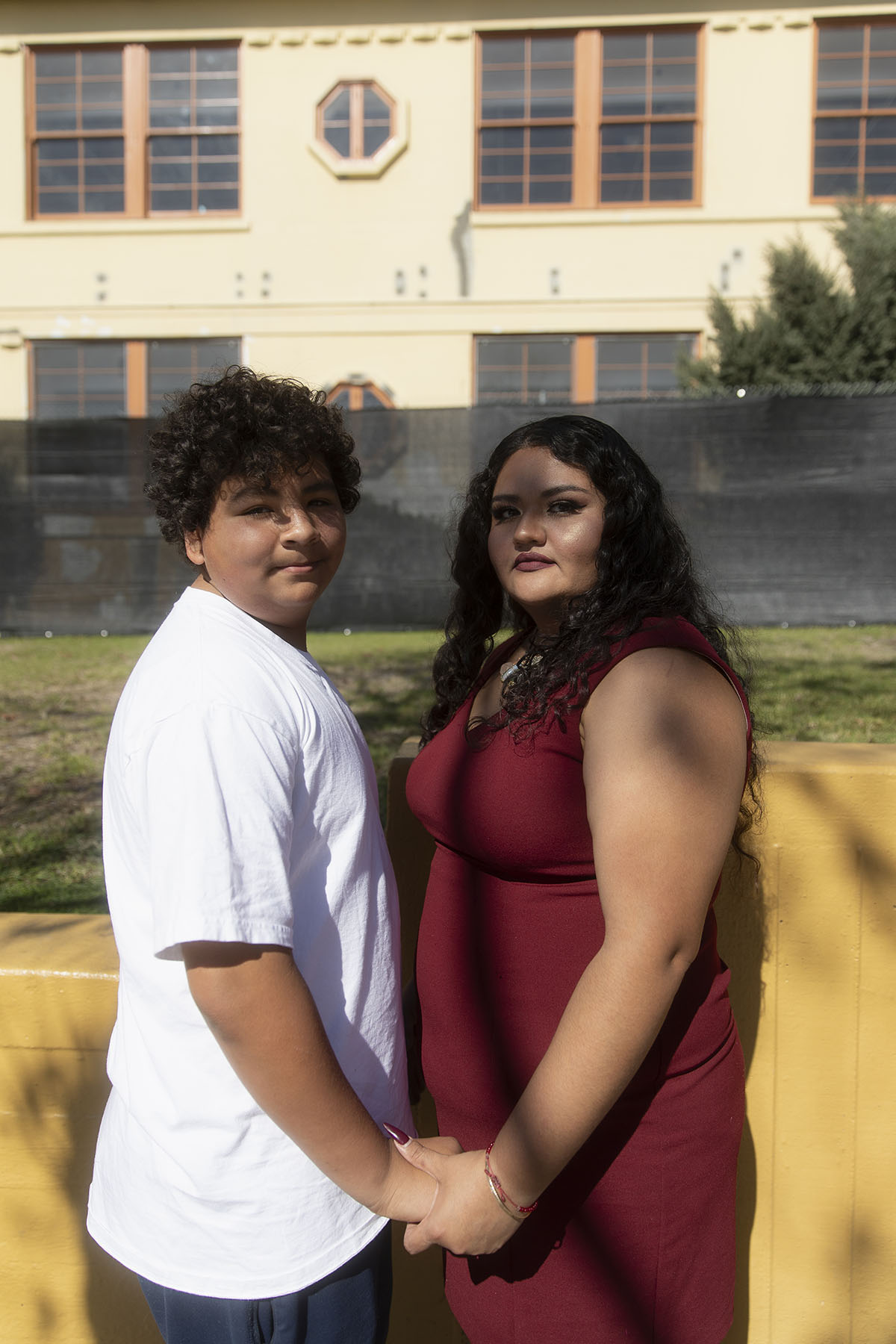
Angélica Reyes and her son Nathan Reyes in front of Abraham Lincoln High School in East Los Angeles, California, on February 9, 2025. (Zaydee Sanchez/The 19th)
To gain some sense of control, they may overconsume social media, leading to racing thoughts, rapid heart rate and sleeping difficulties.
“It’s this chronic nonstop anxiety because the state of uncertainty feels never-ending, and in many ways, it is not ending, right?” Sanchez said. “There’s different news every day.”
By speaking openly with children, parents can help them better manage stress, she said. Teachers, if they’re permitted, can broach the topic of immigration. Nathan appreciated how his Spanish teacher led a class discussion after the election.
“Sharing your feelings and emotions and finding that a lot of other people are feeling very similar can bring comfort to you,” he said.
Reyes gave birth to her son while she was in college and briefly wed to his father. She applied for legal status as an immediate family member of a U.S. citizen, her spouse. But years passed before the federal government responded to her request, she said. By then, her marriage had ended.
“I don’t think people understand how long the path to citizenship can be, what it looks like, how costly and time-intensive it is,” Sanchez said.
Reyes, who has not remarried, said being undocumented seeps into every aspect of her life, including romantic relationships. She feels obligated to tell prospective partners about her status.
“I remember to always be upfront, like, ‘Hey, I’m undocumented. I don’t want you to think I’m going to use you for papers,’” she said.
Reyes lives in one of the country’s 4.7 million mixed-status households, which include undocumented individuals and people with legal status or U.S. citizenship. If she gets deported, she has arranged for others to care for her son.
Her sister, two years younger, is a U.S. citizen. Asked if she resents that twist of fate, Reyes said, “I’m happy that she gets to be safe. I think that there’s a lot of pain and guilt for her.”
Her sister realizes, Reyes said, that her entire family could be taken away.
Reyes and her son Nathan doing a science experiment when he was little. (Angelica Reyes)
Should she be forced out of the only country she considers home, Reyes wants her son to know this: “I would never willingly leave you. I am dedicated to you. I love you, and I will always be working as hard as possible to get back to you.”
For Nathan, it is mind-boggling that anyone would want his mother out. He doesn’t understand why politicians demonize immigrants. Trump launched his first presidential campaign calling them criminals and continues to malign them.
“My mom has done a lot of good for her community,” Nathan said. “She has organized a finders keepers closet where people who don’t have some resources they need, like canned food or clothes, can take what they need.”
Just as Nathan defends her honor, Reyes vouches for her parents. Her mother is now a nail technician and her father is a food vendor. Growing up, she said, she watched them visit the sick, volunteer at churches and fundraise for the poor.
“Whenever they saw a need, they stepped up, and they didn’t wait for someone else to help,” she said.
She’s hurt when people sympathize with Dreamers while disparaging their parents, that the immigration system paints family members as saints or sinners. The DACA recipients she’s researched feel similarly, Nájera said.
“Many of the students that I interviewed were always talking about their parents,” Nájera said. “They did not want their stories to be divorced from their parents and their family stories. These families, they’re units.”
But the Dream Act caused a migrant generational divide, insinuating that those who arrived in this country as children deserve citizenship, while their parents and others who arrived as adults do not, Nájera said.
Angélica Reyes helped paint the red and yellow skulls on the mural across the street from Abraham Lincoln High School in East Los Angeles, where she graduated. (Zaydee Sanchez/The 19th)
Migration often occurs out of necessity. For example, after NAFTA took effect in 1994, U.S. agricultural exports flooded Mexico, displacing workers, according to Edward Alden, a distinguished visiting professor in the College of Business and Economics at Western Washington University. Four years earlier, over 4 million Mexican migrants were in the United States, a figure that ballooned to nearly 13 million — around 9 percent of Mexico’s population — by 2008.
Reyes said NAFTA crushed the bakery business her father’s side of the family owned because it could not compete with the U.S. companies that swooped in. Her parents migrated north to earn higher wages.
Today, economic instability is but one of the reasons that motivate migrants.
“A lot of the Venezuelans are leaving Venezuela because it’s a violent, dangerous place, and the government has destroyed the economy in different ways,” Alden said. “Same thing out of Central America. These are people who aren’t necessarily leaving for economic reasons. They’re doing it for personal safety reasons.”
Reyes said she has Central American students who fled horrors. She wants them to feel safe in the United States, and the fact Los Angeles Unified has pledged not to cooperate with immigration officials voluntarily provides some comfort. Run by a formerly undocumented superintendent, the sanctuary districtblocked Homeland Security agents from entering two schools in April.
The fear of raids on campuses has traumatized her students, Reyes said. “It’s so difficult to convince my students that they are worthy of love and that they’re worthy of respect and that they deserve civil rights.”
It is equally difficult to keep advocating for herself, she said. But as the threat of deportation looms, she has no choice but to keep fighting.
“It’s hard to know that I can’t earn citizenship and that I can’t give my kid stability or safety,” she said. “I feel like if I could earn it, I would have three citizenships. I would have put in the work.”
Efforts to raise endowment taxes are in motion as the House Ways and Means Committee reportedly plans to unveil changes next week that will increase rates and include more colleges.
Education leaders have worried about such a rate increase for months. Now the GOP-led committee is expected to propose raising endowment excise taxes from 1.4 percent to up to 21 percent, depending on endowment value per student, Punchbowl News, Politico and other outlets reported.
The proposed endowment tax would only apply to private institutions, as it does currently.
Under the proposed formula, institutions with endowments of $750,000 to $1.25 million per student would reportedly be hit with 7 percent excise tax. That number would climb to a 14 percent tax for colleges with endowments valued at $1.25 to $2 million per student. Colleges at the highest level with endowments of $2 million or more per student would pay 21 percent. (Currently, colleges with endowments worth $500,000 per student or more pay the 1.4 percent tax.)
The specifics of the tax increase aren’t final and could shift before the committee’s hearing Tuesday.
Republicans are preparing to move forward with endowment tax increases as part of a broader effort known as reconciliation to cut billions in federal spending and pay for President Donald Trump’s priorities. Other House committees have unveiled their proposed cuts for reconciliation, including a sweeping plan to upend the student loan system, but the Ways and Means bill is crucial to this process.
GOP motivations for the tax increase appear to be twofold in that it would help fund tax cuts and serve as a punitive measure for colleges they believe have gone “woke.” In 2023, a total of 56 universities paid roughly $380 million in endowment excise taxes.
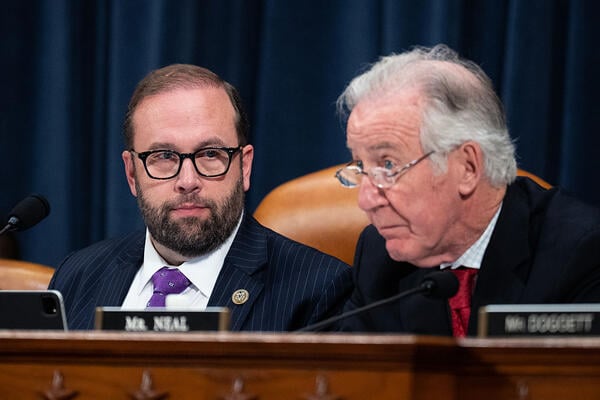
“Seven years ago, the Trump tax cuts sparked an economic boom and provided needed relief to working families,” committee chairman Rep. Jason Smith, a Missouri Republican, said in a Friday statement. “Pro-family, pro-worker tax provisions are the heart of President Trump’s economic agenda that puts working families ahead of Washington and will create jobs, grow wages and investment, and help usher in a new golden age of prosperity. Ways and Means Republicans have spent two years preparing for this moment, and we will deliver for the American people.”
The proposal comes amid the president’s full blown attack on higher education, which has seen the federal government clamp down on research funding, go after colleges for alleged antisemitism, take aim at diversity, equity, and inclusion programs, and attempt to deport international students.
Since the 1.4 percentendowment excise tax was passed in 2017 during the first Trump administration higher education leaders have long worried that the president would raise it in his second term.
As universities increased their lobbying efforts in the early days of Trump 2.0, the potential increase to the endowment tax has been a key concern. Recent lobbying reports show that Harvard University, which has the largest endowment, recently valued at more than $53 billion, Princeton University, Northwestern University, and multiple others, have pressed Congress on the issue. (Northwestern’s chief investment officer said last week that the potential increase would be “destructive.”)
According to an analysis from James Murphy, director of career pathways and post-secondary policy at Education Reform Now, only three universities would pay the highest rate at 21 percent – Princeton, Yale University and the Massachusetts Institute of Technology. Another 10 universities, including Harvard, would get hit with the 14 percent rate.
An analysis published last month by the investment firm Hirtle Callaghan noted that recently proposed changes to the endowment excise tax would “significantly broaden the universe of colleges and universities that pay the tax from large, wealthy institutions to smaller, regional ones.” That analysis warned that such increases “threaten to do irreparable damage to many schools which are significantly weaker financially than the schools paying the current tax.”
Multiple higher education associations have previously expressed opposition to the increase.
Last fall, American Council on Education president Ted Mitchell sent a letter to Congress, co-signed by 19 other associations, calling for the repeal of the existing endowment tax, arguing that “this tax undermines the teaching and research missions of the affected institutions without doing anything to lower the cost of college, enhance access, or address student indebtedness.”
School (in)Security is our biweekly briefing on the latest school safety news, vetted by Mark Keierleber. Subscribe here.
Tennessee state Sen. Bo Watson wants to eject undocumented students from public school classrooms. But first, he needs their data.
Watson seeks to require students statewide to submit a birth certificate or other sensitive documents to secure their seats — one of numerous efforts nationwide this year as Republican state lawmakers seek to challenge a decades-old Supreme Court precedent enshrining students’ right to a free public education regardless of their immigration status.
Some 300 demonstrators participate in a Waukegan, Illinois, rally on Feb. 1 to draw attention to an increase in Immigration and Customs Enforcement activity in the area. Privacy advocates warn student records could be used to assist deportations. (Scott Olson/Getty Images)
In my latest feature this week, I dive into why those efforts have alarmed student data privacy advocates, who warn that efforts to compile data on immigrant students could be used not just to deny them an education — it could also fall into the hands of Immigration and Customs Enforcement.
As the Trump administration ramps up deportations and tech billionaire Elon Musk’s Department of Government Efficiency reportedly works to create a “master database” of government records to zero in on migrants, data privacy experts warn that state and federal data about immigrant students could be weaponized.
In the news
Cybercriminals demanded ransom payments from school districts nationwide this week, using millions of K-12 students’ sensitive data as leverage after the files were stolen from education technology giant PowerSchool in a massive cyberattack late last year. The development undercuts PowerSchool’s decision to pay a ransom in December to keep the sensitive documents under wraps. | The 74
Gutted: Investigations at the Education Department’s civil rights office have trickled to a halt as the Trump administration installs a “shadow division” to advance cases that align with the president’s agenda. | ProPublica
Civil rights groups, students and parents have asked courts to block the Education Department’s civil rights enforcement changes under Trump, saying they fail to hold schools accountable for racial harassment and abuses against children with disabilities. | K-12 Dive
Among the thousands of cases put on the back burner is a complaint from a Texas teenager who was kneed in the face by a campus cop. | The 74
‘The hardest case for mercy’: Congratulations to Marshall Project contributor Joe Sexton, who was named a Pulitzer Prize finalist for his reporting on a legal team’s successful bid to spare the Parkland, Florida, school shooter from the death penalty. | The Marshall Project
The city council in Uvalde, Texas, approved a $2 million settlement with the families of the victims in the 2022 shooting at Robb Elementary School, the first lawsuit to end with monetary payouts since 19 children and two teachers were killed. | Insurance Journal
In Michigan, a state commission created in the wake of the 2021 school shooting at Oxford High School, which resulted in the deaths of four students, issued a final report calling for additional funding to strengthen school mental health supports. | Chalkbeat
Meanwhile, at the federal level, the Education Department axed $1 billion in federal grants designed to train mental health professionals and place them in schools in a bid to thwart mass shootings. | The 74
A high school substitute teacher in Ohio was arrested on accusations she offered a student $2,000 to murder her husband. | WRIC
Connecticut schools have been forced to evacuate from fires caused by a “dangerous TikTok trend” where students stab school-issued laptops with paper clips to cause electrical short circuits. | WFSB
Eleven high school lacrosse players in upstate New York face unlawful imprisonment charges on accusations they staged a kidnapping of younger teammates who thought they were being abducted by armed assailants. | CNN
Sign-up for the School (in)Security newsletter.
Get the most critical news and information about students’ rights, safety and well-being delivered straight to your inbox.
The Future of Privacy Forum has “retired” its Student Privacy Pledge after a decade. The pledge, which was designed to ensure education technology companies were ethical stewards of students’ sensitive data, was ended due to “the changing technological and policy landscape regarding education technology.” | Future of Privacy Forum
The pledge had previously faced scrutiny over its ability to hold tech vendors accountable for violating its terms. | The 74
New kid on the block: Almost simultaneously, Common Sense Privacy launched a “privacy seal certification” to recognize vendors that are “deeply committed to privacy.” | Business Wire
Google plans to roll out an artificial intelligence chatbot for children as the tech giant seeks to attract young eyeballs to its AI products. | The New York Times
Kansas schools plan to spend state money on AI tools to spot guns despite concerns over reports of false alarms. | Beacon Media
ICYMI @The74
A new report from the Department of Health and Human Services suggests gender-affirming health care puts transgender youth at risk but the report ignores years of research indicating otherwise. (Getty Images)
Stitt signed Senate Bill 139 on Monday to implement the “bell to bell” ban for the 2025-26 school year. The restriction becomes optional for districts in the 2026-27 school year and thereafter.
While the yearlong ban is in place, each district’s school board must adopt a policy restricting students from using cellphones, laptops, tablets, smart watches, smart headphones and smart glasses from the first bell ringing in the instructional day until final dismissal. The policy must outline disciplinary procedures for enforcing the rule.
School-issued or school-approved devices used for classroom instruction are still allowed under the law. Districts could permit cellphone use for emergencies and for students who need it to monitor a health issue.
Stitt previously urged public schools to find cost-neutral ways to make classrooms cellphone free to reverse a “worrying trend” of distraction, bullying and learning difficulties.
“We’re seeing classrooms across the country struggle with the influx of cellphone use by students,” Stitt said in a statement Tuesday. “That’s why I issued my cellphone free school challenge in the fall. We want kids to be focused and present while they’re with their teachers, and this legislation helps promote an environment conducive to learning.”
Before the 2025 legislative session began, state lawmakers met with mental health researchers who warned about the negative effect and addictive impact of digital media on youth. They also spoke with Oklahoma educators who said their schools saw better student behavior after banning cellphones.
Among the nation’s largest teachers union, 90% of members said they support cellphone restrictions during class time, and 83% favored prohibiting cellphone and personal device usage for the entire school day, according to a National Education Association survey.
U.S. adults reported broad support for classroom cellphone restrictions in middle and high schools, but only a third of American adults said they support extending these bans for the whole school day, the Pew Research Center found.
Support for SB 139 wasn’t overwhelming among Oklahoma lawmakers, either. The state Senate passed the bill with a 30-15 vote, and the House approved it 51-39.
The House also passed a similar school cellphone ban, House Bill 1276, that would allow districts to opt out of the policy. SB 139 allows no such option until after a year.
“This will allow teachers to focus entirely on educating our kids while students can concentrate on learning as much as possible,” an author of both bills, Sen. Ally Seifried, R-Claremore, said. “After two years of hard work on this issue, I’m thrilled to see this legislation become law, and I’m confident students, parents and teachers will see immediate benefits once the new school year begins.”
HB 1276 is unlikely to advance in the Senate now that SB 139 has the governor’s signature, Seifried said.
The bill’s House author, Rep. Chad Caldwell, R-Enid, called the measure a “try it before you buy it type of policy.”
“I appreciate Gov. Stitt signing SB 139 to remove the distractions of cellphones from our schools and give our kids their childhood back,” Caldwell said Tuesday.
The governor on Monday also signed into law a restriction on virtual school days. Senate Bill 758 will limit districts to using a maximum of two online instruction days per school year.
“Kids learn best in the classroom,” said Sen. Kristen Thompson, R-Edmond, who wrote the bill. “Virtual days have their place in emergencies, but we’ve seen them become a go-to solution in some districts — and that’s not fair to students or families. This bill strikes the right balance by preserving flexibility without compromising the quality of education.”
Oklahoma Voice is part of States Newsroom, a nonprofit news network supported by grants and a coalition of donors as a 501c(3) public charity. Oklahoma Voice maintains editorial independence. Contact Editor Janelle Stecklein for questions: [email protected].