Immigration and Customs Enforcement has detained a University of Alabama doctoral student and Iranian native. A spokesperson told Inside Higher Ed in an email that the student “posed significant national security concerns” but didn’t clarify what those concerns were.
The Crimson White student newspaper and other media previously identified the student as Alireza Doroudi. As of Thursday evening, the ICE website listed Doroudi as in ICE custody but didn’t note where he was.
“ICE HSI [Homeland Security Investigations] made this arrest in accordance with the State Department’s revocation of Doroudi’s student visa,” a Department of Homeland Security spokesperson said in an email to Inside Higher Ed Thursday. The department, which includes ICE, didn’t provide an interview.
It’s unclear whether the detention is part of the Trump administration’s targeting of international students for alleged participation in pro-Palestinian protests, with immigration officers raiding their dorm rooms and revoking their visas.
The Crimson White said Doroudi was “reportedly arrested by ICE officers” at his home around 5 a.m. Tuesday. A statement from the university said the student, whom the university didn’t name, was detained off campus. The Crimson White also reported that—according to a message in a group chat including Iranian students—Doroudi’s visa was revoked six months after he came to the U.S., but the university’s International Student and Scholar Services arm said he could stay in the country as long as he maintained his student status.
The university didn’t provide Inside Higher Ed an interview Thursday or answer multiple written questions. Its emailed statement said, “Federal privacy laws limit what can be shared about an individual student.”
“International students studying at the University are valued members of the campus community, and International Student and Scholar Services is available to assist international students who have questions,” the statement said. “UA has and will continue to follow all immigration laws and cooperate with federal authorities.”
Less than a week after Yeshiva University agreed to recognize an LGBTQ+ student club as part of a legal settlement, university president Ari Berman apologized for the way the university conveyed the announcement and stressed that “pride” clubs still run counter to the values of the Modern Orthodox Jewish university, Jewish Telegraphic Agency reported. He emphasized that the newly approved club would function “in accordance with halacha,” or Jewish law.
“I deeply apologize to the members of our community—our students and parents, alumni and friends, faculty and Rabbis—for the way the news was rolled out,” Berman, a rabbi, wrote in an email to students Tuesday. “Instead of clarity, it sowed confusion. Even more egregiously, misleading ‘news’ articles said that Yeshiva had reversed its position, which is absolutely untrue.”
The university has been mired in a legal battle with its LGBTQ+ student group, the YU Pride Alliance, since 2021, when the group sued for official university recognition. Yeshiva said it wasn’t legally required to recognize the club because of Orthodoxy’s stance against same-sex relations. The two parties announced a settlement last week in which students will run an LGBTQ+ club called Hareni that will “operate in accordance with the approved guidelines of Yeshiva University’s senior rabbis,” according to a joint statement issued last Thursday.
LGBTQ+ students celebrated the settlement as a new milestone. But Berman framed the settlement as doubling down on an old proposal from 2022, when the university sought to create its own LGBTQ+ student club called Kol Yisrael Areivim. Plaintiffs rejected the plan at the time, on the grounds that the club wouldn’t be student-run. But Berman said Hareni was similarly created “to support students who are striving to live authentic, uncompromising” lives within the bounds of Jewish law, “as previously described.”
“The Yeshiva has always conveyed that what a Pride club represents is antithetical to the undergraduate program in which the traditional view of marriage and genders being determined at birth are transmitted,” Berman wrote in his message to students. “The Yeshiva never could and never would sanction such an undergraduate club and it is due to this that we entered litigation.”
As he sees it, “last week, the plaintiffs in the lawsuit against YU accepted to run Hareni, instead of what they were originally suing us for, moved to end the case, and the case has been dismissed.”
Entering the workforce can be a daunting experience for recent college graduates. A May 2024 Student Voice survey by Inside Higher Ed and Generation Lab found 68.9 percent of current students are at least somewhat stressed when they think about and prepare for their life after graduation.
Working in a career that resonates with their interests is also a goal for students: Two-thirds of young people globally say they want their job to be meaningful and make them happier than they were last year. Of respondents’ top three work ambitions, young people in the U.S. identified financial stability (65 percent) and achieving work-life balance (52 percent) as priorities.
To help students engage in career wellness, a group of students from the University of Wisconsin at Madison and California State Polytechnic University, Pomona—supported by advisers from Cal Poly Pomona—created Tune In to Strive Out, which encourages students to channel their inner potential for future success and collective well-being.
The program, housed at the Center for Research on College-Workforce Transitions (CCWT) at Madison, includes student resources and facilitator training. The initiative launched in spring 2022 and has supported over 150 students to date.
Survey Says
A survey of young people in the workforce (ages 27 to 35) found about one in four respondents strongly agree their employer has policies or structures in place to support work-life balance.
How it works: The Tune in to Strive Out Career Wellness Program guides students through practices that build their self-efficacy and understanding of their wellness. The goal is to bridge theory and practice in ways that are applicable and flexible to various circumstances students may be in.
The intervention can be offered as a stand-alone program or integrated into existing courses.
Tune in to Strive Out includes five modules, rooted in the radical healing framework, which focus on students’ development of values, career goals, resiliency and senses of hope and community. The program includes a supplemental tool kit of resources for students to explore as well.
“The program addresses unique challenges individuals face by emphasizing the importance of community and cultural strengths in healing and strategies to foster radical hope to persist in the face of barriers,” said Mindi Thompson, executive director of CCWT.
To guide practitioners on delivering the intervention, the center provides a three-hour facilitator training, which costs $30 per person and fulfills continuing education hours for National Career Development Association credentials.
Once training is completed, a facilitator receives access to a portal containing the detailed facilitation manual, a student workbook and presentation slides.
The impact: Seventeen students from three different postsecondary institutions participated in a pilot study, which has since been scaled to involve more than 150 student participants and 90 professionals who completed the facilitator training to deliver the program.
In the future, CCWT hopes to further scale and reach practitioners with the resources so they can better support student success.
Do you have a career-focused intervention that might help others promote student success? Tell us about it.
The Community College of Philadelphia reached a tentative agreement with its faculty and staff union, staving off an impending strike, 6ABC Action News reported.
The union, AFT Local 2026, or the Faculty and Staff Federation of Community College of Philadelphia, threatened to strike Wednesday morning if a deal wasn’t reached. But union and college leaders say they worked through Tuesday night to arrive at an agreement after more than a year of bargaining over employee contracts.
“After a long night of bargaining, Community College of Philadelphia is glad to have reached a tentative agreement with our partners in the Faculty and Staff Federation,” Donald Guy Generals, president of Community College of Philadelphia, said in a press release. “We are grateful for the hard work and collaboration that brought us to this milestone. The agreement secures fair terms and wage increases while ensuring the financial sustainability of the College. The College is thankful the spring semester will proceed uninterrupted for our students, faculty and staff.”
The outstanding issues previously holding up an agreement were union proposals for wage and staffing increases and SEPTA passes for employees and students. The tentative agreement includes class size reductions and wage increases that were a compromise between the college and the union’s proposals. The union will also be invited to join ongoing discussions with SEPTA about securing public transportation benefits, according to the release from the college.
“We showed what can happen when faculty, staff and students stand in real solidarity with each other,” Rainah Chambliss, co-president of the federation, said in a union press release. “This campaign wasn’t just about us. It was about our students and our community.”
This is a call to my dear faculty friends and colleagues in higher education institutions.
In the first months of the new presidential administration, and indeed since the election, many have been searching for answers. I have been in more meetings, gatherings and brain dump sessions than I can count, all focused on the same existential question: What does this all mean?
I have heard a number of higher education faculty, in particular those who are committed to diversity, equity and inclusion work, who are wondering what this means in terms of their research and teaching. I do not want to minimize these fears, but I would also like to reframe these discussions.
The fears are real, and the threats that people face vary greatly from state to state. That is, the potential repercussions for someone in South Dakota or Idaho are substantially greater than for someone in California, for example. I also fully understand that pretenure or non-tenure-track faculty members risk more than those like me with the protections of tenure. I also am aware that issues around federal research funding for DEI-related topics remain highly unsettled as grant cancellations continue.
I am not calling for us to be lacking in strategy or unaware of our contexts. However, I am extremely concerned that a number of my fellow academics are engaging in pre-emptive self-censorship.
That is, my dear friends and colleagues continually make statements like these behind closed doors:
“Only sign on/speak up on issue X if you are comfortable.”
“We need to be sensitive to the potential harm that can befall our members.”
I do not disagree with these sentiments on their face, but I worry about this on two fronts.
First, there is one key issue I have not seen engaged in these discussions: While tenured faculty are currently under attack across the country, we also have privileges enjoyed by no one else on college campuses, such as academic freedom and tenure.
While this does not absolutely insulate us from potential harms stemming from regressive laws or executive actions, it does mean that relative to professors of practice, adjuncts and staff, we enjoy a number of privileges they do not. For example, in my home state of Arizona, staff are considered at-will employees and can be quickly dismissed for speaking out.
I do not deny that we are living in perilous times, but what good are academic freedom and tenure if we do not use them? Some think, I believe mistakenly, that speaking out will only embolden the attacks on higher education institutions and faculty. I, instead, am more compelled by Frederick Douglass’s proclamation,
Find out just what any people will quietly submit to and you have found out the exact measure of injustice and wrong which will be imposed upon them, and these will continue till they are resisted …”
Generation after generation, people have been convinced that being quiet will quell attacks, and generation after generation, this approach has only invited more of them. It also seems fairly clear that the attacks on higher education are not going to stop any time soon.
I am reminded of the first time I saw Noam Chomsky speak, when he offered, “We are so concerned with the cost of our actions that we forget to ask, what is the cost of inaction?” We are frequently so concerned with the potential consequences of speaking out, we forget what our silence will invite.
This leads to my second point: What good are academic freedom and tenure if we do not use them? We as academics so often talk about the rights afforded us through academic freedom. Much less frequently do we ask what the social responsibilities of said freedom are. Returning to Chomsky, the responsibility of intellectuals is to “speak the truth and expose lies.” There can be no greater calling for academics in a “post-truth” society than to do both publicly and boldly.
Finally, and I cannot stress this enough, we are not going to feel comfortable before speaking out. I am reminded of Archie Gates (George Clooney’s character in Three Kings), who said, “The way this works is, you do the thing you’re scared shitless of and you get the courage after you do it, not before you do it.” This is why I am frustrated by the continual asking if my dear faculty friends and colleagues feel comfortable about speaking up, being identified in actions and putting ourselves in harm’s way. We will not a priori feel comfortable, so this should not be a prerequisite for action.
So let us take comfort in the prophetic words of Audre Lorde in her poem “A Litany for Survival”:
and when we speak we are afraid our words will not be heard nor welcomed but when we are silent we are still afraid
So it is better to speak remembering we were never meant to survive.”
This is extremely misguided, because being quiet will not save us.
Bending the knee and precomplying will not stave off these attacks.
Acquiescing to censorship will not stop the threats.
Only engaging in collective, bold, public, strategic struggle and disruption has the potential to do so.
We did not pick this fight, but this is the fight that we are in.
Nolan L. Cabrera is a professor at the University of Arizona, but he writes this as a private citizen. Views expressed here are only his own. He is the author of Whiteness in the Ivory Tower (Teachers College Press, 2024), and this op-ed is adapted from Chapter 3 of the book. He is also the co-author of Banned: The Fight for Mexican American Studies in the Streets and in the Courts (Cambridge University Press, 2025).
The Senate confirmed President Donald Trump’s pick to lead the National Institutes of Health on Tuesday.
Jay Bhattacharya, a Stanford University health economist who gained notoriety for his criticism of the NIH’s handling of the COVID-19 pandemic, secured the confirmation with a 53-to-47 party-line vote, The New York Times reported.
His confirmation as NIH director comes as the agency, which sends billions in funding each year to researchers at more than 2,500 universities, faces dramatic funding cuts and a shake-up of its research priorities. In the two months since Trump took office, the NIH has eliminated some 1,200 staff, effectively paused grant reviews and sent termination letters to many researchers whose NIH-funded projects allegedly conflict with Trump’s orders to eliminate support for diversity, equity and inclusion initiatives and other topics.
The NIH also issued guidance in February that would cap the funding it gives to universities for the indirect costs of research, such as building maintenance, hazardous waste removal and adhering to patient safety protocols. A federal judge blocked that guidance after numerous universities, research and higher education advocacy organizations, and 22 Democratic state attorneys general sued the NIH, arguing that the plan will hurt university budgets, local economies and the pace of scientific discovery.
At a confirmation hearing before the Senate Committee on Health, Education, Labor and Pensions earlier this month, Bhattacharya said that if confirmed, he would “fully commit to making sure that all the scientists at the NIH and the scientists that the NIH supports have the resources they need to meet the mission of the NIH.” However, he offered few specifics on how he’d do that and wouldn’t commit to axing the agency’s plan to cut indirect costs by more than $4 billion.
Virginia’s Republican governor, Glenn Youngkin, abruptly removed Bert Ellis—one of his own appointees—from the University of Virginia Board of Visitors, The Washington Post reported Wednesday.
Youngkin confirmed the move in a letter to Ellis posted online.
“While I thank you for your hard work, your conduct on many occasions has violated the Commonwealth’s Code of Conduct for our Boards and Commissions and the Board of Visitors’ Statement of Visitor Responsibilities,” Youngkin wrote.
Youngkin, who appointed Ellis to UVA’s board in June 2022, reportedly disapproved of his combative style. The Post reported that the governor had asked him to step down, but Ellis balked at working with the administration to craft a statement about his resignation. Following that hesitation, Youngkin reportedly took the unusual step of removing Ellis from UVA’s board.
Ellis was serving a four-year term set to end next June.
As a member of UVA’s Board of Visitors, Ellis frequently caused controversy. Among other things, he insulted university staffers and sought to downplay the history of slavery at UVA, which was founded by Thomas Jefferson. Before he was appointed to the board, Ellis, who is a UVA graduate, sparked controversy for removing a poster that read “fuck UVA” from a student’s door on campus. Ellis has also been criticized for his connections to the Jefferson Council, a conservative alumni organization, which he led, that is frequently critical of UVA leadership.
Neither UVA nor Ellis responded to requests for comment from Inside Higher Ed.
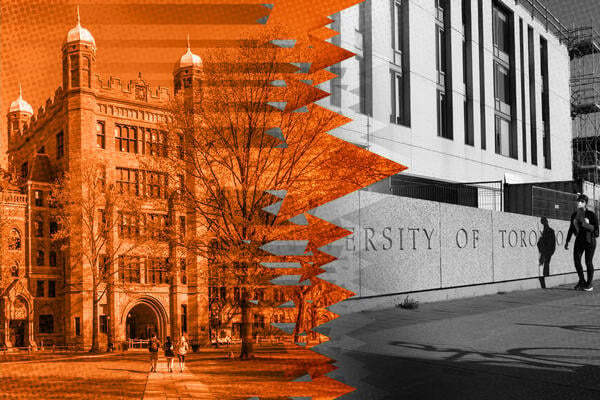
As the Trump administration escalates its attack on universities, three fascism scholars and vocal Trump critics are leaving Yale University for the University of Toronto. But their given reasons for crossing the border vary.
Jason Stanley, Jacob Urowsky Professor of Philosophy at Yale and author of multiple books—including How Fascism Works: The Politics of Us and Them—said he finally accepted Toronto’s long-standing offer for a position on Friday after seeing Columbia University “completely collapse and give in to an authoritarian regime.”
In a move that has unnerved faculty across the country, Columbia’s administration largely conceded to demands from the Trump administration, which had cut $400 million of the university’s federal grants and contracts for what it said was Columbia’s failure to address campus antisemitism. Among other moves, the Ivy League institution gave campus officers arrest authority and appointed a new senior vice provost to oversee academic programs focused on the Middle East.
“I was genuinely undecided before that,” Stanley said. Now he’s leaving Yale to be the named chair in American studies at Toronto’s Munk School of Global Affairs and Public Policy. According to the university, the intent is for Stanley also to be cross-appointed to the philosophy department. Two popular philosophyblogs previously reported the move.
“What I worry about is that Yale and other Ivy League institutions do not understand what they face,” Stanley said. He loves Yale and expected to spend the rest of his career there, he said; while he still hopes for the opportunity to return some day, he’s nervous Yale “will do what Columbia did.”
Stanley said Toronto’s Munk School “raided Yale” for some of its prominent professors of democracy and authoritarianism to establish a project on defending democracy internationally—an effort that began long before the election.
Also leaving Yale for the Munk School is Timothy Snyder, author of books including The Road to Unfreedom: Russia, Europe, America, and Marci Shore, author of The Ukrainian Night: An Intimate History of Revolution and other works. Snyder and Shore are married.
Stanley said Toronto reached out to him back in April 2023, during the Biden administration, and he restarted conversations after the election. He finally took the job Friday. The university told Inside Higher Ed it had been trying to recruit Snyder and Shore for years, saying, “We’re always looking for the best and brightest.”
Snyder, the Richard C. Levin Professor of History at Yale, will become the Munk School’s inaugural Chair in Modern European History, supported by the Temerty Endowment for Ukrainian Studies. A spokesperson for Snyder said he made his decision for personal reasons, and he made it before the election.
In an emailed statement Wednesday, Snyder said, “The opportunity came at a time when my spouse and I had to address some difficult family matters.” He said he had “no grievance with Yale, no desire to leave the U.S. I am very happy with the idea of a move personally but, aside from a strong appreciation of what U of T has to offer, the motivations are largely that—personal.”
But when asked for her reasoning, Shore told Inside Higher Ed in an email that “the personal and political were, as often is the case, intertwined. We might well have made the move in any case, but we didn’t make our final decision until after the November elections,” she wrote.
Shore, a Yale history professor, will become the Munk School Chair in European Intellectual History, supported by the same endowment as her husband.
“I sensed that this time, this second Trump election, would be still much worse than the first—the checks and balances have been dismantled,” she wrote. “I can feel that the country is going into free fall. I fear there’s going to be a civil war. And I don’t want to bring my kids back into that. I also don’t feel confident that Yale or other American universities will manage to protect either their students or their faculty.”
She also said it didn’t escape her that Yale failed to publicly defend Snyder when Vice President JD Vance criticized him on X in January. After Trump nominated Pete Hegseth as defense secretary, Snyder—who has repeatedly excoriated the Trump administration in the media—posted that “a Christian Reconstructionist war on Americans led from the Department of Defense is likely to break the United States.”
Vance reposted that with the caption “That this person is a professor at Yale is actually an embarrassment.” Elon Musk, X’s owner, responded in agreement.
‘They Need to Band Together’
Leaving for Canada might sound like a futile move, given that Trump has threatened to annex it.
“That’s why I’m definitely not thinking of it as fleeing fascism; I’m thinking of it as defending Canada,” Stanley said. “Freedom of inquiry does not seem to be under threat in Canada,” he said, and moving there will allow him to be engaged in “an international fight against fascism.”
Nonetheless, he said it’s heartbreaking to leave the Yale philosophy department. He would consider returning to Yale “if there’s evidence that universities are standing up more boldly to the threats,” he said. “They need to band together.”
Yale spokesperson Karen Peart told Inside Higher Ed in an email that Yale “continues to be home to world-class faculty members who are dedicated to excellence in scholarship and teaching.” She added, “Yale is proud of its global faculty community which includes faculty who may no longer work at the institution, or whose contributions to academia may continue at a different home institution. Faculty members make decisions about their careers for a variety of reasons and the university respects all such decisions.”
To be sure, the Yale professors are not the first or only U.S. faculty to accept academic appointments outside the country. European universities, at least, have been trying to recruit American researchers. But before Trump’s re-election, there was a dearth of data on the previously rumored academic exodus from red states to blue, supposedly spurred by conservative policy changes.
Isaac Kamola, director of the American Association of University Professors’ Center for the Defense of Academic Freedom, said he’s now had conversations with multiple faculty members who are naturalized citizens “and still think that the administration might be coming after them.”
And while star professors at Ivy League institutions are more likely than other faculty to have the opportunity to leave, Yale law professor Keith Whittington, founding chair of the Academic Freedom Alliance, said he thinks such professors are more likely to take those opportunities now.
“I’ve seen efforts by high-quality academic institutions in other countries to start making the pitch to American academics,” Whittington said. He noted that even faculty at prestigious and well-endowed universities have concerns that their institution and higher ed as a whole are “not as stable as one might once have thought.”
He said the Trump administration has targeted specific universities with “quite serious efforts to threaten those institutions with crippling financial consequences if they don’t adopt policies that the administration would prefer that they adopt.” And such a playbook could easily be repeated “at practically any institution in the country,” he said.
“Global law firms have for years played an outsized role in undermining the judicial process and in the destruction of bedrock American principles.” —Executive Order (3-14-25)
“Law firms refuse to represent Trump opponents in the wake of his attacks” — The Washington Post (3-25-25)
The wolf is at the door.
Those who do not yet realize this may be forgiven for perhaps two reasons: They do not know the wolf is ravenous, and they do not know the door is ajar.
To get but a whiff of this, just read Brad Karp’s March 23 memo to his colleagues at the Paul Weiss firm, from which the title of this edition of FAN gets its title.
Also this, from MSNBC legal correspondent Lisa Rubin:
[The attacks on law firms] began with Trump issuing executive actions punishing three firms — Covington & Burling, which did not react; Perkins Coie, which fought back and won a partial temporary restraining order; and Paul Weiss, which ultimately capitulated to a deal announced last Thursday, the terms of which are still a matter of some debate. But the president has now directed Attorney General Pam Bondi, in a memo issued Friday night, to seek sanctions “against attorneys and law firms who engage in frivolous, unreasonable, and vexatious litigation against the United States.”
Now back to the Paul, Weiss controversy.
A little background at the outset to help set the retributive stage: According to Wikipedia, Karp “is a bundler for Democratic Party presidential candidates . . . having raised sums for the presidential campaigns of Kamala Harris, Cory Booker, Joe Biden, Amy Klobuchar, and others.”
In other words, if Trump was out for political retribution, Karp was a perfect target. And then consider this: One of Karp’s former partners was Mark Pomerantz, author of “People vs. Donald Trump: An Inside Account,” which details the attempt to prosecute former president Donald Trump, written by one of the lawyers who worked on the case and who resigned in protest when Manhattan’s district attorney refused to act.
And now on to the Executive Order from March 14, “Addressing Risks from Paul Weiss.” Excerpts below:
In 2022, Paul Weiss hired unethical attorney Mark Pomerantz, who had previously left Paul Weiss to join the Manhattan District Attorney’s office solely to manufacture a prosecution against me and who, according to his co-workers, unethically led witnesses in ways designed to implicate me. After being unable to convince even Manhattan District Attorney Alvin Bragg that a fraud case was feasible, Pomerantz engaged in a media campaign to gin up support for this unwarranted prosecution.
Additionally, Paul Weiss discriminates against its own employees on the basis of race and other categories prohibited by civil rights laws. Paul Weiss, along with nearly every other large, influential, or industry leading law firm, makes decisions around ‘targets’ based on race and sex.
My Administration is committed to ending such unlawful discrimination perpetrated in the name of “diversity, equity, and inclusion” policies and ensuring that Federal benefits support the laws and policies of the United States, including those laws and policies promoting our national security and respecting the democratic process.
Now, the Weiss law firm’s memo in response, from Brad Karp:
Brad Karp
Only several days ago, our firm faced an existential crisis. The executive order could easily have destroyed our firm. It brought the full weight of the government down on our firm, our people, and our clients. In particular, it threatened our clients with the loss of their government contracts, and the loss of access to the government, if they continued to use the firm as their lawyers. And in an obvious effort to target all of you as well as the firm, it raised the specter that the government would not hire our employees.
We were hopeful that the legal industry would rally to our side, even though it had not done so in response to executive orders targeting other firms. We had tried to persuade other firms to come out in public support of Covington and Perkins Coie. And we waited for firms to support us in the wake of the President’s executive order targeting Paul, Weiss. Disappointingly, far from support, we learned that certain other firms were seeking to exploit our vulnerabilities by aggressively soliciting our clients and recruiting our attorneys.
We initially prepared to challenge the executive order in court, and a team of Paul, Weiss attorneys prepared a lawsuit in the finest traditions of the firm. But it became clear that, even if we were successful in initially enjoining the executive order in litigation, it would not solve the fundamental problem, which was that clients perceived our firm as being persona non grata with the Administration. We could prevent the executive order from taking effect, but we couldn’t erase it. Clients had told us that they were not going to be able to stay with us, even though they wanted to. It was very likely that our firm would not be able to survive a protracted dispute with the Administration.
Commentary:
President Donald Trump’s crackdown on lawyers is having a chilling effect on his opponents’ ability to defend themselves or challenge his actions in court, according to people who say they are struggling to find legal representation as a result of his challenges.
[Such executive orders and pressured settlements set] an ominous precedent for future presidents to exploit. . . . [H]ow can a lawyer who is considering representing a politically controversial client know that she will not be targeted the next time control of the White House changes hands? The safest course of action will be to avoid representing clients of any political salience, right or left, even if their cause is just.
Related
Constitutional scholars on the Trump Administration’s threats against Columbia University
We write as constitutional scholars — some liberal and some conservative — who seek to defend academic freedom and the First Amendment in the wake of the federal government’s recent treatment of Columbia University.
The First Amendment protects speech many of us find wrongheaded or deeply offensive, including anti-Israel advocacy and even antisemitic advocacy. The government may not threaten funding cuts as a tool to pressure recipients into suppressing such viewpoints. This is especially so for universities, which should be committed to respecting free speech.
At the same time, the First Amendment of course doesn’t protect antisemitic violence, true threats of violence, or certain kinds of speech that may properly be labeled ‘harassment.’ Title VI rightly requires universities to protect their students and other community members from such behavior. But the lines between legally unprotected harassment on the one hand and protected speech on the other are notoriously difficult to draw and are often fact-specific. In part because of that, any sanctions imposed on universities for Title VI violations must follow that statute’s well-established procedural rules, which help make clear what speech is sanctionable and what speech is constitutionally protected.
Yet the administration’s March 7 cancellation of $400 million in federal funding to Columbia University did not adhere to such procedural safeguards. Neither did its March 13 ultimatum stipulating that Columbia make numerous changes to its academic policies — including the demand that, within one week, it “provide a full plan” to place an entire “department under academic receivership for a minimum of five years” — as “a precondition for formal negotiations regarding Columbia University’s continued financial relationship with the United States government.”
Signatories
Steven G. Calabresi Clayton J. and Henry R. Barber Professor of Law, Northwestern Law School
Erwin Chemerinsky Dean and Jesse H. Choper Distinguished Professor of Law, Berkeley Law School
David Cole Hon. George J. Mitchell Professor in Law and Public Policy, Georgetown University Law Center
Michael C. Dorf Robert S. Stevens Professor of Law, Cornell Law School
Richard Epstein Laurence A. Tisch Professor of Law, NYU School of Law
Owen Fiss Sterling Professor Emeritus of Law, Yale Law School
Aziz Huq Frank and Bernice J. Greenberg Professor of Law, University of Chicago Law School
Pamela Karlan Kenneth and Harle Montgomery Professor of Public Interest Law, Stanford Law School
Randall Kennedy Michael R. Klein Professor of Law, Harvard Law School
Genevieve Lakier Professor of Law, Herbert and Marjorie Fried Teaching Scholar, University of Chicago Law School
Michael McConnell Richard and Frances Mallery Professor of Law, Stanford Law School
Michael Paulsen Distinguished University Chair and Professor, St. Thomas Law School
Robert Post Sterling Professor of Law, Yale Law School
David Rabban Dahr Jamail, Randall Hage Jamail, and Robert Lee Jamail Regents Chair in Law, University of Texas Law School
Geoffrey R. Stone Edward H. Levi Distinguished Service Professor of Law, University of Chicago Law School
Nadine Strossen John Marshall Harlan II Professor of Law Emerita, New York Law School
Eugene Volokh Thomas M. Siebel Senior Fellow, Hoover Institution, Stanford University
Keith Whittington David Boies Professor of Law, Yale Law School
SCOTUS denies review in case urging that Sullivan be overruled
Wynn v. Associated Press (issue: Whether this Court should overturn Sullivan’s actual-malice standard or, at a minimum, overrule Curtis Publishing Co.’s expansion of it to public figures)
On the Trump administration targeting campuses
The United States is home to the best collection of research universities in the world. Those universities have contributed tremendously to America’s prosperity, health, and security. They are magnets for outstanding talent from throughout the country and around the world. The Trump administration’s recent attack on Columbia University puts all of that at risk, presenting the greatest threat to American universities since the Red Scare of the 1950s. Every American should be concerned.
Until recently, it was a little-known program to help Black and Latino students pursue business degrees.
But in January, conservative strategist Christopher Rufo flagged the program known as The PhD Project in social media posts that caught the attention of Republican politicians. The program is now at the center of a Trump administration campaign to root out diversity, equity and inclusion programs in higher education.
The U.S. Education Department last week said it was investigating dozens of universities for alleged racial discrimination, citing ties to the nonprofit organization. That followed a warning a month earlier that schools could lose federal money over “race-based preferences” in admissions, scholarships or any aspect of student life.
The investigations left some school leaders startled and confused, wondering what prompted the inquiries. Many scrambled to distance themselves from The PhD Project, which has aimed to help diversify the business world and higher education faculty.
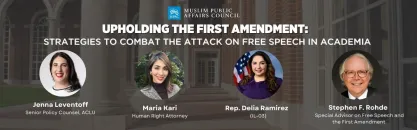
Zoom webinar on strategies to combat attacks on free speech in academia
Thursday, March 27, 2025, 1:00 – 2:00 PM ET
As efforts to silence dissent grow more aggressive, the immediate and long-term threats to our constitutional freedoms — especially in educational institutions — cannot be ignored.
This virtual panel will bring together top legal minds and policy experts to examine how these actions affect student activists, journalists, and marginalized communities. Together, we’ll explore the legal strategies needed to safeguard First Amendment rights and resist the erosion of civil liberties.
Featured Panelists: Maria Kari, Human Rights Attorney Rep. Delia Ramirez (IL-03) Jenna Leventoff, Senior Policy Counsel, ACLU Stephen F. Rohde, MPAC Special Advisor on Free Speech and the First Amendment Whether you’re a student, educator, advocate, or supporter of civil rights, this is a conversation you won’t want to miss.
➡️ Register today and join us in defending the values that define our democracy.
Whittington on diversity statements and college hiring
Keith Whittington
The University of California is the godfather of the use of so-called diversity statements in faculty hiring. I have a piece forthcoming at the Nebraska Law Review arguing that such diversity statement requirements for general faculty hiring at state universities violate the First Amendment and violate academic freedom principles everywhere. It seems quite likely that in practice such diversity statement requirements are also used to facilitate illegal racial discrimination in faculty hiring.
The University of California system’s board of regents has now put an end to the use of such diversity statements at those schools. This is a truly remarkable development. Not unreasonably, this decision is being put in the context of the Trump administration’s extraordinary attack on Columbia University, a move that I think is both lawless and itself a threat to academic freedom. But there’s no question that it got the attention of university leaders across the country, and if it encourages some of them to rededicate themselves to their core institutional mission and its central values then at least some good will come of it. So silver linings and all that.
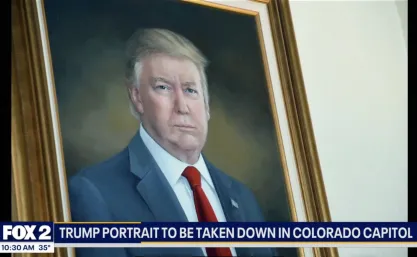
Trump rails against portrait at the Colorado Capitol
Institute for Free Speech files brief in campaign disclosure-fee case
The case is Sullivan v. Texas Ethics Commission. The issue in the case is whether — and if so, under what circumstances — the First Amendment permits the government to require ordinary citizens to register and pay a fee to communicate with their government representatives.
Amicus brief here. Counsel of record: Alan Gura. The Institute’s brief argues that the 1954 precedent of United States v. Harriss no longer reflects modern First Amendment jurisprudence and fails to protect the right to speak anonymously about matters of public policy.
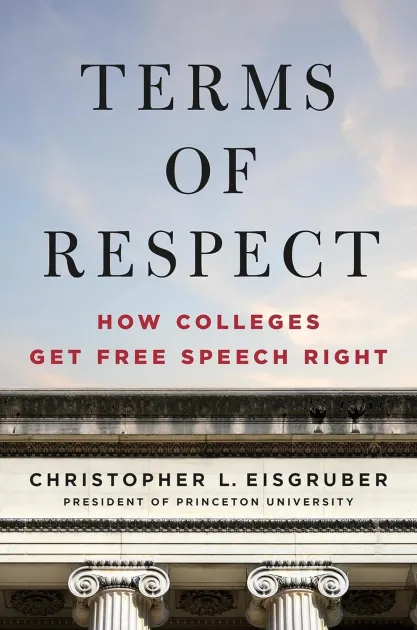
Forthcoming book by Princeton’s president on campus free speech
The president of Princeton, a constitutional scholar, reveals how colleges are getting free speech on campuses right and how they can do better to nurture civil discourse and foster mutual respect
Conversations about higher education teem with accusations that American colleges and universities are betraying free speech, indoctrinating students with left-wing dogma, and censoring civil discussions. But these complaints are badly misguided.
In Terms of Respect, constitutional scholar and Princeton University president Christopher L. Eisgruber argues that colleges and universities are largely getting free speech right. Today’s students engage in vigorous discussions on sensitive topics and embrace both the opportunity to learn and the right to protest. Like past generations, they value free speech, but, like all of us, they sometimes misunderstand what it requires. Ultimately, the polarization and turmoil visible on many campuses reflect an American civic crisis that affects universities along with the rest of society. But colleges, Eisgruber argues, can help to promote civil discussion in this raucous, angry world — and they can show us how to embrace free speech without sacrificing ideals of equality, diversity, and respect.
Urgent and original, Terms of Respect is an ardent defense of our universities, and a hopeful vision for navigating the challenges that free speech provokes for us all.
Forthcoming scholarly article on AI and the First Amendment
This paper challenges the assumption that courts should grant outputs from large generative AI models, such as GPT-4 and Gemini, First Amendment protections. We argue that because these models lack intentionality, their outputs do not constitute speech as understood in the context of established legal precedent, so there can be no speech to protect. Furthermore, if the model outputs are not speech, users cannot claim a First Amendment right to receive the outputs.
We also argue that extending First Amendment rights to AI models would not serve the fundamental purposes of free speech, such as promoting a marketplace of ideas, facilitating self-governance, or fostering self-expression. In fact, granting First Amendment protections to AI models would be detrimental to society because it would hinder the government’s ability to regulate these powerful technologies effectively, potentially leading to the unchecked spread of misinformation and other harms.
2024-2025 SCOTUS term: Free expression and related cases
Cases decided
Villarreal v. Alaniz(Petition granted. Judgment vacated and case remanded for further consideration in light of Gonzalez v. Trevino, 602 U. S. ___ (2024) (per curiam))
Murphy v. Schmitt (“The petition for a writ of certiorari is granted. The judgment is vacated, and the case is remanded to the United States Court of Appeals for the Eighth Circuit for further consideration in light of Gonzalez v. Trevino, 602 U. S. ___ (2024) (per curiam).”)
TikTok Inc. and ByteDance Ltd v. Garland (The challenged provisions of the Protecting Americans from Foreign Adversary Controlled Applications Act do not violate petitioners’ First Amendment rights.)
Review granted
Pending petitions
Petitions denied
Free speech related
Thompson v. United States (decided: 3-21-25/ 9-0 w special concurrences by Alito and Jackson) (interpretation of 18 U. S. C. §1014 re “false statements”)
This article is part of First Amendment News, an editorially independent publication edited by Ronald K. L. Collins and hosted by FIRE as part of our mission to educate the public about First Amendment issues. The opinions expressed are those of the article’s author(s) and may not reflect the opinions of FIRE or Mr. Collins.
Our scientific enterprise in the United States is the envy of the world. Top scientists from around the globe want to come to work here, specifically because of the environment that we have fostered over decades to support scientific innovation and intellectual freedom. Federal investment in research is one of the primary foundations upon which this extraordinarily successful system has been constructed.
It is not simply the dollar amount of federal funding that makes this system so successful. It is also about how we allocate and distribute the funds. Long before “DEI” was common parlance, we made robust efforts to distribute funds broadly. For example, instead of concentrating funding only in the top research institutions, as many other countries do, we created programs such as EPSCoR (1979) to direct funding to support research and development throughout the entire country, including rural areas. This was done in recognition that excellence in research can be found anywhere that and colleges and universities serving rural and impoverished communities deserve to benefit from and contribute to the economic and scientific engine that the federal government can provide.
The National Science Foundation also implemented Broader Impacts in its grant review process (originating in the 1960s and formalized in 1997). The goal of the NSF review criteria for broader impacts was to ensure that every federally funded project would have some benefit for society. These broader impacts could take a wide variety of forms, including but not limited to new tools and innovations, as well as efforts to grow the STEM workforce by supporting those historically and economically excluded from becoming scientists.
Diversity, equity and inclusion funding is one of the mechanisms that we use to continue this legacy of equity in federal funding of scientific research. This approach has also helped reduce public mistrust of science and scientists—a mistrust attributable to science’s historical abuses—by ensuring that the benefits of scientific progress are shared widely and equitably and by making the work of scientists more transparent and accessible.
Until fairly recently in history, science was primarily an activity for the wealthy. Training as a scientist requires many years of deferred salary, due to the extensive education and practical skill development needed to conduct independent research and start a laboratory. For those who make it through this training, research jobs can be scarce, and the salaries are not high, considering the highly specialized skills required and the high demands of the job. Many of the best and brightest minds have been excluded from the scientific process by this economic reality. Federal funding provides critical support for science workforce development, primarily through stipends and salaries for undergraduates, graduate students and postdoctoral fellows. These stipends ease (but do not erase) the economic burden of training as a scientist.
When you hear “DEI in science,” this is largely what we are talking about. A vast portion of federal DEI funds in the sciences goes directly to support highly talented and accomplished trainees who have deferred their personal economic progress for the opportunity to contribute to science in the U.S. This wise national investment helps to ensure that our science workforce can recruit the most meritorious trainees, regardless of their economic backgrounds. Without these initiatives, our science workforce would be much smaller with a narrower set of perspectives. Our national investment in science training is not altruistic—it is the very reason why the U.S. is a global leader in science and technology. This leadership contributes to our nation’s safety and capacity to deal with the existential problems we now face.
The framework of DEI recognizes that systemic economic and social injustices are present in our society, due to historical and contemporary realities such as slavery, Jim Crow, genocide of Native peoples, redlining, a broken immigration system, educational and health-care disparities, and discriminatory practices in housing and employment against nonwhite, disabled and LGBTQ+ communities. These disparities have resulted in a lack of intergenerational wealth and resources among many communities in the U.S., leading to unequal access to scientific training and careers.
The claim, now made by our federal government, that a meritocracy can be achieved by ignoring these injustices is simply false and illogical. DEI is not only about diversity training and hiring practices. In the sciences, it is essential and existential to the goal of developing the most robust, talented and highly skilled science workforce in the world.
With Executive Order 14151, issued by the Trump administration, this funding is under attack, undoing decades of progress that have fostered some of the most talented and brilliant minds of our time. Rigorous training programs are beingcanceled, graduate students are losing their funding and the training of an entire generation of scientists is being jeopardized. Science will lose an extraordinary amount of talent, necessary for our nation’s industrial and economic leadership, because of this executive order.
Furthermore, this removal of funding is being enacted on the basis of identity, effectively endorsing a form of government-imposed segregation of science. Advancements in science are often determined by the demography of those doing the science, and a diversity of perspectives and research questions is necessary for scientific innovation. For example, sickle cell disease is chronically underfunded and underresearched, despite the severity of the disease, likely because it affects descendants of people from regions with high instances of malaria, including many African Americans. Indeed, some scientific breakthroughs and technologies may never materialize or be greatly delayed due to the exclusion of talented individuals on the basis of their identity. This is a fundamental threat to scientific progress and academic freedom.
The federal banning of DEI programs is a slap in the face to every person who has struggled to become a scientist in the face of systemic injustices. These trainees, past and present, have missed out on economic opportunities, deferred building their families and made many personal sacrifices so that they can create innovative solutions to our nation’s most pressing scientific and technological challenges. The creation of these DEI programs came from the extraordinary efforts of thousands of people, many of whom have overcome injustices themselves, working tirelessly across many decades so that the most meritorious and talented individuals all have an opportunity to succeed as scientists.
Referring to these efforts as “shameful discrimination,” as the Trump administration has now done, is a cruel attempt to destabilize the emotional well-being of everyone who has created and been supported by these essential programs. It is an example of blaming the victims of past and ongoing injustice for their plight in society, rather than working to dismantle the systems that perpetuate inequality and limit access to a fair and just future, where a true meritocracy in science becomes possible.
We believe that the efforts to ban, diminish and misrepresent DEI and diversity, equity, inclusion and accessibility programs should be immediately stopped and reversed to avoid the most serious negative impacts of these new policies. Removal of DEI programs will demoralize and disincentivize an entire generation of scientists in training. It will greatly reduce the scientific workforce and remove top talent from our training programs as funding mechanisms are dismantled.
Our graduate students, undergraduates, postdoctoral fellows and other early-career scientists are those most greatly impacted by the removal of this support. This will severely jeopardize the status of the U.S. as a global leader in science, and the catastrophic impacts will be felt for decades. We stand by those most affected by the DEI ban, especially our trainees, and we demand an immediate reinstatement of DEI funding.
We are speaking out using the speech and intellectual freedoms afforded to us by the U.S. academic system and the U.S. Constitution. We are calling on our institutions to stand with us in defense of DEI in science. Institutions and professional societies must reaffirm their own commitments to DEI. Some institutions have already made strong statements of reaffirmation of these values, but others have begun to remove their internal and external DEI initiatives pre-emptively. We understand the need for institutions to protect their employees and students from adverse consequences, but we argue that the consequences of dismantling diversity programs are much greater for our communities, as these steps usher in a new era of segregation in science and academia.
We urge the public, our lawmakers and politicians to stand with us. We believe that DEI is foundational to science and an attack on DEI is an attack on the core of science itself in the United States.
Joseph L. Graves Jr. is the MacKenzie Scott Endowed Professor of Biology and the director of the Genomic Research and Data Science Center for Computation and Cloud Computing at North Carolina A&T State University.
Stacy C. Farina is an associate professor of biology at Howard University.
Parvin Shahrestani is an associate professor of biological science at California State University, Fullerton.
Vaughn S. Cooper is a professor of microbiology and molecular genetics at the University of Pittsburgh.
Gilda A. Barabino is president and professor of biomedical and chemical engineering at Olin College of Engineering.