Tag: News

  • Harvard Tuition-Free for Families With Incomes Up to $200K

    Harvard Tuition-Free for Families With Incomes Up to $200K

    Starting next academic year, Harvard will offer free tuition to students from households that earn $200,000 or less a year, according to a Monday announcement from university leaders.

    In addition, students with household incomes of $100,000 or less per year will attend Harvard for free, with the university covering not just tuition costs but food, housing, health insurance and travel expenses. Those students will also receive a $2,000 start-up grant in their first year and a $2,000 launch grant junior year to support their transitions to and from college.

    “Putting Harvard within financial reach for more individuals widens the array of backgrounds, experiences, and perspectives that all of our students encounter, fostering their intellectual and personal growth,” Harvard president Alan M. Garber said in the announcement. “By bringing people of outstanding promise together to learn with and from one another, we truly realize the tremendous potential of the University.”

    The changes make roughly 86 percent of American families eligible for Harvard financial aid, according to the announcement. The move comes at a time when the Ivy League institutions are under intense scrutiny from the Trump administration and lawmakers. Harvard joins a slew of other universities, including some highly selective institutions like the University of Pennsylvania and the Massachusetts Institute of Technology, that have unveiled expansive new financial aid plans.

    Source link

  • Why Every American Has a Stake in Columbia’s Fate (opinion)

    Why Every American Has a Stake in Columbia’s Fate (opinion)

    March 13 was a watershed day in the annals of American higher education and the history of America’s commitment to freedom and limited government. On that day, the Trump administration issued an edict telling Columbia University, a private institution, how to function.

    The people who founded the American republic must be turning over in their graves.

    Such a bold assertion of government power would be more familiar to people in many other nations. But in the United States, this is a shocking development and a warning of what is in store, not just for higher education, but for the entire country.

    What is happening at Columbia is an initial test of the Trump administration’s ambition to curb institutional autonomy, limit and punish dissent, and make life miserable for anyone who does not toe their line. That’s why each of us, whether or not we work in higher education, has a stake in Columbia University’s fate.

    Let’s face it: Universities are what people in the Departments of Defense or Homeland Security might call “soft targets.” Soft targets are easily accessible, relatively unprotected and therefore vulnerable to attack.

    A concerted, decades-long campaign against higher education by conservative critics, combined with excesses in universities’ quests to make themselves more inclusive and just, have eroded public support for and trust in America’s colleges and universities, which are now at historic lows.

    Public disdain for private, prestigious institutions like Columbia is high and growing. Critics call them snobbish, arrogant and out of touch.

    Some have even laid the blame for the rise of the MAGA movement on their doorstep.

    Like the successful, decades-long right-wing campaign to take over the courts in this country, which has wreaked havoc in the lives of ordinary Americans, the campaign against Columbia will, if similarly successful, prove costly well beyond that New York City campus.

    What is unfolding there is a testing ground for efforts in other sectors of American life.

    Acting in a high-handed and arbitrary manner in its dealings with Columbia paves the way for the government to carry out similar abuses of power elsewhere. Attacking academic freedom is a stalking horse for attacking freedom of speech and other freedoms.

    It is important to recall that Trump’s campaign against Columbia didn’t start on March 13. It began earlier with the cancellation of $400 million in federal grants and contracts and the move by Immigration and Customs Enforcement to arrest and detain Mahmoud Khalil, a green card holder and recent graduate who helped lead pro-Palestinian protests on campus.

    But the March 13 letter took it to new levels.

    The first thing to note about that letter was that it came from officials in the Departments of Education and Health and Human Services and the General Services Administration. They joined not only in asserting their right to intervene at Columbia under Titles VI and VII of the 1964 Civil Rights Act but to remind the university of the Trump administration’s power to cripple it financially.

    Title VI prohibits discrimination on the basis of race, color or national origin in programs and activities receiving federal financial assistance. Title VII makes it unlawful for employers to discriminate based on race, color, religion, sex or national origin.

    Since the act’s passage, it has been clear that alleged violators of Title VI must be afforded due process before federal funds can be withheld. That guarantees fairness and impartiality in investigations and ensures that enforcement actions will not be precipitous.

    The March 13 letter, with its demand for “immediate next steps that we regard as a precondition for formal negotiations regarding Columbia University’s continued financial relationship with the United States government,” is a chilling reminder of what happens when a government seeks to wield its formidable power without respecting the due process rights of those it targets.

    And if it gets away with practicing what one commentator calls “regulation by intimidation” at Columbia, the administration will be emboldened to do more of the same, and not just in higher education.

    The March 13 letter touches on matters colleges and universities routinely determine for themselves. For example, it demands that the university complete disciplinary proceedings against students who were involved in taking over a campus building last year and who participated in encampments in support of Palestinians. And it specifies that penalties of “expulsion or multi-year suspension” should be imposed.

    The same day it received the Trump administration’s letter, the university announced that it was expelling or suspending some students involved in the Hamilton Hall takeover and temporarily revoking the diplomas of other students who had since graduated.

    In addition, the March 13 letter directs Columbia to “Abolish the University Judicial Board (UJB) and … empower the Office of the President to suspend or expel students.”

    The intrusiveness of the letter extends to telling Columbia that it must ban the wearing of masks on campus and “formalize, adopt, and promulgate a definition of antisemitism” (it specifically cites the definition used in Trump’s Executive Order 13899). It even demands that Columbia’s Department of Middle East, South Asian and African Studies be put into “academic receivership” so that its faculty can no longer make hiring and curriculum decisions.

    That is the administration’s way of forcing the university to punish the department, some of whose faculty supported the encampment movement. Receivership means someone from outside the department would be appointed to make decisions for its faculty. It is a rarely used and nuclear response to departmental dysfunction.

    If Columbia were to do what the March 13 letter asks, it would be waving the white flag of surrender to any pretense that it will respect and protect academic freedom, the most prized and essential aspect of teaching and research in higher education. That would send a powerful and chilling signal about the administration’s ability to ensure freedom means the freedom to say and do what it prescribes.

    Taken together, the provisions in the March 13 letter amount to an effort to put the entire university into a kind of receivership. Beyond the world of higher education, receivership involves a court appointing “an independent ‘receiver’ or trustee to manage all aspects of a troubled company’s business. The company’s principals remain in place, but they have little authority over the company for the duration of the receivership.”

    The March 13 letter signals that intention when it calls for the development of a plan of “long-term structural reforms that will return Columbia to its original mission of innovative research and academic excellence.”

    “Innovation” and “excellence” are the watchwords for colleges and universities, businesses, artistic enterprises and individuals seeking to lead a free life. But since the founding of the republic, this country has been guided by the belief that the government would not be in the business of saying what could count as innovative and excellent in private life.

    If Americans stay on the sidelines as the current administration tries to bring Columbia to its knees, we will not only be damaging higher education, we will also be turning the founders’ vision of the relationship between the government and the people on its head.

    Austin Sarat is the William Nelson Cromwell Professor of Jurisprudence and Political Science at Amherst College.

    Source link

  • U of Delaware Business School Gifted a Historic $71.5M

    U of Delaware Business School Gifted a Historic $71.5M

    The University of Delaware has received a $71.5 million gift, the largest single donation in the university’s history, according to a news release Monday.

    The donation is from alumni Robert Siegfried Jr. and Kathleen (Horgan) Siegfried and will benefit the institution’s Alfred Lerner College of Business and Economics.

    As owners of the Siegfried Group LLP, an entrepreneurial leadership organization that advises financial executives, the couple have long been key donors to the university, but UD president Dennis Assanis said this gift in particular would be “transformative.”

    “The Siegfrieds’ generosity will significantly advance Lerner’s critical mission of preparing the next generation of leaders, change-makers and entrepreneurs to make an impact in the rapidly evolving world of business and economics,” Assanis said.

    UD plans to put the funding toward a state-of-the-art, student-centric learning space with modern classrooms, research and teaching labs, a student-run cafe, and an auditorium. The money will also be spent on developing a new Siegfried Institute for Leadership and Free Enterprise where students can develop as business leaders and study “the critical role [of] basic principles of limited government, rule of law, and free enterprise.”

    The university will commission the design process for Siegfried Hall this spring, with a goal of breaking ground within the next four years, the news release said.

    Source link

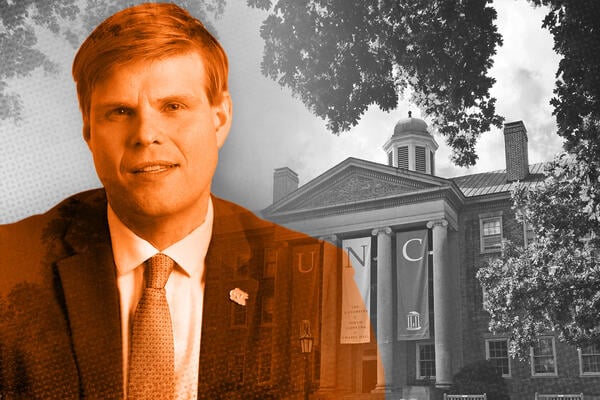
  • Resignations, Disagreements With Dean Roil UNC Civics School

    Resignations, Disagreements With Dean Roil UNC Civics School

    Multiple faculty members connected with the University of North Carolina at Chapel Hill’s controversial school that had been billed as promoting civil discourse have resigned from leadership roles, citing strong disagreements with the dean who appointed them.

    One such professor went so far as to call the School of Civic Life and Leadership an “unmitigated disaster.” The recent group of resignations adds to past departures by professors who said the school’s earlier focus had shifted and narrowed under Jed Atkins, its first permanent dean. Much of the current controversy centers on Atkins’s handling of searches for new faculty.

    Atkins, who ran Duke University’s Civil Discourse Project and chaired its classical studies department before moving to UNC a year ago, defended the hiring procedures in a statement to Inside Higher Ed. He didn’t provide an interview.

    The school’s birth was mired in controversy. It’s an example of the civil discourse centers—which critics have called conservative centers—that higher education leaders and Republican state lawmakers have been establishing at public universities. For more than two years, debate over the UNC school has been tinged by accusations that its supporters are motivated by conservative politics and its opponents by leftism.

    But the recent resignation letters from the school’s former supporters suggest disagreements that resist characterization as a simple left-right divide. The criticism of the faculty search procedures involves allegations that faculty input, including from the school’s search committee and advisory board members, was disregarded.

    The university’s media relations arm said that Chapel Hill policy requires four full professors to vote in faculty hirings. The advisory board contained such professors, who predated the school’s creation. But the Chapel Hill spokespeople said that in “all faculty appointment matters, the votes of faculty are advisory to the dean,” whose recommendation eventually goes to the universitywide appointments, promotion and tenure committee that advises the provost. The provost has hiring power, though the Chapel Hill Board of Trustees must approve awarding tenure.

    Inger S. B. Brodey, an English and comparative literature professor whom Atkins chose as one of two associate deans, kicked off the recent round of resignations. She wrote to Atkins on Feb. 28 that she still believes strongly in the school’s “original mission, which, as I understand it, includes an emphasis on civil discourse across difference, preparation for citizenship and fruitful lives through studying global great books, promoting scientific literacy and assembling a diverse faculty from many disciplines.”

    However, Brodey wrote, the school “has lost sight of its mission in all these areas and is unlikely to make the lasting positive impact that I and the other inaugural faculty had hoped for. For this and other reasons, I hereby resign as associate dean.”

    Inside Higher Ed obtained the email and other documents mentioned in this story from sources who were either anonymous or whose identities are known but who requested anonymity.

    In January, before that resignation email, Brodey sent Atkins a much longer message on why she was resigning from a faculty search committee. Brodey confirmed the authenticity of both emails to Inside Higher Ed.

    “While it may be within the dean’s power to intervene at every stage of the search and add/remove names, overruling the opinions of the committee, I have never seen this power executed outside of SCiLL,” wrote Brodey, using the school’s acronym. She serves in multiple departments of Chapel Hill.

    “I don’t have any confidence that the search committee will have any actual effect on the final roster of individuals hired,” she wrote. She also said, “I don’t think this list differs in any substantial way from the list of concerns David enumerated in our last meeting, when he resigned from the search.”

    That’s a reference to David Decosimo, SCiLL’s remaining associate dean. Asked for comment, Decosimo replied in an email, “I’m on parental leave this semester, so won’t comment at this time.”

    This faculty search, which began in the fall, wasn’t small. Atkins has said it resulted in eight offers to candidates. Brodey was even more critical of the process in an email to The Daily Tar Heel, which reported earlier on her resignation. She told the student newspaper that there were “improprieties, slander, vindictiveness and manipulation” surrounding the search.

    Dustin Sebell, a SCiLL professor who chaired the search committee (the three members were him, Brodey and Decosimo), disagreed with Brodey in an email. Sebell wrote that Atkins hadn’t overruled the committee.

    “You personally recorded the names of the 20 finalists on behalf of the search committee and emailed them to me,” Sebell wrote. He said, “The committee was fully aware that we had only 16 spots for on campus interviews … it was a mathematical certainty that the dean would exercise some discretion in the selection of finalists from our list.”

    On March 7, Jon Williams, a Chapel Hill economics professor, resigned from SCiLL’s advisory board in an email to Atkins, Chapel Hill chancellor Lee Roberts, provost Chris Clemens and vice provost for faculty affairs Giselle Corbie. Williams alleged that Atkins had ignored all advice and that he felt like he was “nothing more than one of four warm bodies to achieve the dean’s shadowed objectives.”

    “There is no need for an advisory board if the dean ignores any advice that isn’t simply confirmation,” Williams wrote. “More troubling, over the last six weeks, I’ve seen incivility and dysfunction, biased and unfair processes, a complete disregard for governance, and a willingness to deceive and misrepresent that is unlike anything I’ve witnessed in my 15 years in academia.”

    Williams ended with, “I cannot see how SCiLL will emerge from this troubled beginning without new leadership.” He declined an interview with Inside Higher Ed, writing in an email, “I will confirm that I resigned and that my concerns center around” Atkins.

    He wrote in his resignation email that he still appreciates “the need for a place on campus for students to learn how to critically evaluate and debate the most challenging and controversial topics. Simply put, I’m often in a tiny minority among faculty in my views and opinions, so I appreciate how difficult students may find it to engage in open discussion.”

    Three days after Williams’s resignation from the advisory board, Fabian Heitsch, a physics and astronomy professor, followed suit with his own email to Atkins, Roberts, Clemens and Corbie. Heitsch specifically mentioned issues with personnel decisions, but he didn’t provide many specifics or respond to Inside Higher Ed’s requests for comment.

    “In my year of service on the advisory board, I have witnessed its advice on personnel decisions being ignored on three separate occasions,” Heitsch wrote. He said, “It seems as if the advisory board is being used only as a formality instead of as a body of experience and strategy.”

    Heitsch said the advisory board “is to provide formal advice to the dean and director. As I understand it, formal advice is not limited to providing the votes to confirm leadership’s decisions.” He wrote that he still supports the school’s “original mission” and that he “will gladly continue to serve as a curricular fellow.”

    Not the First Resignations

    These weren’t the first Chapel Hill faculty who—having come to the university before the school’s creation—affiliated themselves with it only to then reduce their involvement or fully withdraw after Atkins’s appointment, citing a changed direction for the school. One who stepped back last year was Matthew Kotzen, Chapel Hill’s philosophy department chair.

    But the newer resignations have come alongside stronger denunciations—at least publicly. And Kotzen himself increased his past public criticism in a statement to Inside Higher Ed.

    “The original mission of SCiLL was to model and to teach essential skills related to productive engagement with democratic civic institutions, including respectful dialogue across ideological difference,” Kotzen wrote. “Unfortunately, it has become increasingly clear that Dean Atkins is committed to none of those values.”

    Kotzen said Atkins “has an extremely narrow conception of acceptable viewpoints and approaches and has demonstrated almost no openness to feedback from others on the faculty, including those that he himself selected for their role. Dean Atkins has fostered a dysfunctional anti-intellectual culture at SCiLL that rewards hostility, dishonesty and self-righteousness in the pursuit of his ideological and personal aims. That disqualifies him from holding any leadership position at UNC.”

    Atkins told Inside Higher Ed in an email that “the advisory committee’s function in faculty searches is to help assess the merits of our finalists and to cast an advisory vote on each finalist.” He wrote, “In SCiLL’s most recent national search, our faculty rigorously evaluated our applicants’ strengths and promise.”

    “Finalists traveled to campus from three continents, gave teaching demonstrations to students, presented on their research and engaged with our faculty in more informal settings,” Atkins said. “After these campus interviews, SCiLL’s tenure-line faculty met and voted on our finalists; they recommended a strong slate of candidates for appointment.”

    Danielle Charette James, a SCiLL assistant professor, told Inside Higher Ed in an email that “our process was highly collaborative, and the candidates who received offers earned overwhelming, and in some cases unanimous, support from SCiLL’s core faculty.”

    Chapel Hill’s media relations arm emailed a statement to Inside Higher Ed saying, “SCiLL’s faculty searches honored all university rules and procedures. Applicants were advanced on the basis of merit and fit with the advertised positions. We are looking forward to welcoming an outstanding group of new faculty to campus next fall.”

    ‘Dress Rehearsal’

    Back in January 2023, Chapel Hill’s Board of Trustees passed a resolution asking the campus administration to “accelerate its development of a School of Civic Life and Leadership.” Faculty said they were caught off guard because they didn’t know a whole school was in development. David Boliek, then chair of Chapel Hill’s board, called it an effort to “remedy” a shortage of “right-of-center views” on campus. Clemens, the provost and a self-described conservative, promoted the school.

    In the fall of 2023, the Republican-controlled State Legislature passed a law that required Chapel Hill to establish the school. The campus couldn’t back out even if it desired to. Clemens had the final say in hiring Atkins as dean, at least before the Chapel Hill board signed off.

    And despite the past faculty objections, current Chapel Hill professors, including Brodey, Kotzen and Williams, affiliated with the initiative.

    But faculty aren’t the only ones critiquing the recent faculty search. Clemens, who didn’t return requests for comment for this article, at one point ordered a stop to the faculty searches.

    In a January email to Atkins, Clemens said there were financial limitations. Instead of progressing toward hiring tenure-track faculty, Clemens said, “SCiLL should initially focus on hiring teaching track professors to support large enrollments in the general education curriculum.” So, he said, he was canceling the searches.

    The provost also seemingly referenced issues beyond budgets.

    “Your search committee and voting faculty for these searches is small; smaller even than the number of people you were authorized to hire,” Clemens wrote. “Moreover, some of them have just arrived in Chapel Hill. All new teams must learn to work together, and this ‘dress rehearsal’ has hopefully been a learning experience for all.”

    He then wrote, with original emphasis included, “I want to emphasize how important it is for a School of Civic Life and Leadership to serve as a model of civic life and civil discourse. Given the intense scrutiny and attention on this school, everything you do—including faculty searches—must be exemplary, both to give the candidates confidence in SCiLL and to give the rest of the university confidence in those you hire. I will address how we can fulfill those expectations for future searches in collaboration with SCiLL leadership and with HR.”

    Clemens sent that on a Friday. But by the following Monday, he said the searches were back on after Chancellor Roberts “committed sufficient funds.”

    The criticism of Atkins continues. On Monday, Atkins accepted Williams’s resignation and rebutted his critiques. Williams responded in an email by saying he resigned to protect his reputation, “because SCiLL is currently an unmitigated disaster.”

    He accused Atkins of “hiding behind accusations that wokeness has derailed your efforts,” something Williams called “absolutely ridiculous given that you completely lost the support of folks like myself that have spent a decade battling it on campus.”

    “It’s your failure alone,” Williams wrote. “Time to own it.”

    Source link

  • Publishers Adopt AI Tools to Bolster Research Integrity

    Publishers Adopt AI Tools to Bolster Research Integrity

    The perennial pressure to publish or perish is intense as ever for faculty trying to advance their careers in an exceedingly tight academic job market. On top of their teaching loads, faculty are expected to publish—and peer review—research findings, often receiving little to no compensation beyond the prestige and recognition of publishing in top journals.

    Some researchers have argued that such an environment incentivizes scholars to submit questionable work to journals—many have well-documented peer-review backlogs and inadequate resources to detect faulty information and academic misconduct. In 2024, more than 4,600 academic papers were retracted or otherwise flagged for review, according to the Retraction Watch database; during a six-week span last fall, one scientific journal published by Springer Nature retracted more than 200 articles.

    But the $19 billion academic publishing industry is increasingly turning to artificial intelligence to speed up production and, advocates say, enhance research quality. Since the start of the year, Wiley, Elsevier and Springer Nature have all announced the adoption of generative AI–powered tools or guidelines, including those designed to aid scientists in research, writing and peer review.

    “These AI tools can help us improve research integrity, quality, accurate citation, our ability to find new insights and connect the dots between new ideas, and ultimately push the human enterprise forward,” Josh Jarrett, senior vice president of AI growth at Wiley, told Inside Higher Ed earlier this month. “AI tools can also be used to generate content and potentially increase research integrity risk. That’s why we’ve invested so much in using these tools to stay ahead of that curve, looking for patterns and identifying things a single reviewer may not catch.”

    However, most scholars aren’t yet using AI for such a purpose. A recent survey by Wiley found that while the majority of researchers believe AI skills will be critical within two years, more than 60 percent said lack of guidelines and training keep them from using it in their work.

    In response, Wiley released new guidelines last week on “responsible and effective” uses of AI, aimed at deploying the technology to make the publishing process more efficient “while preserving the author’s authentic voice and expertise, maintaining reliable, trusted, and accurate content, safeguarding intellectual property and privacy, and meeting ethics and integrity best practices,” according to a news release.

    Last week, Elsevier also launched ScienceDirect AI, which extracts key findings from millions of peer-reviewed articles and books on ScienceDirect and generates “precise summaries” to alleviate researchers’ challenges of “information overload, a shortage of time and the need for more effective ways to enhance existing knowledge,” according to a news release.

    Both of those announcements followed Springer Nature’s January launch of an in-house AI-powered program designed to help editors and peer reviewers by automating editorial quality checks and alerting editors to potentially unsuitable manuscripts.

    “As the volume of research increases, we are excited to see how we can best use AI to support our authors, editors and peer reviewers, simplifying their ways of working whilst upholding quality,” Harsh Jegadeesan, Springer’s chief publishing officer, said in a news release. “By carefully introducing new ways of checking papers to enhance research integrity and support editorial decision-making we can help speed up everyday tasks for researchers, freeing them up to concentrate on what matters to them—conducting research.”

    ‘Obvious Financial Benefit’

    Academic publishing experts believe there are both advantages—and down sides—of involving AI in the notoriously slow peer-review process, which is plagued by a deficit of qualified reviewers willing and able to offer their unpaid labor to highly profitable publishers.

    If use of AI assistants becomes the norm for peer reviewers, “the volume problem would be immediately gone from the industry” while creating an “obvious financial benefit” for the publishing industry, said Sven Fund, managing director of the peer-review-expert network Reviewer Credits.

    But the implications AI has for research quality are more nuanced, especially as scientific research has become a target for conservative politicians and AI models could be—and may already be being—used to target terms or research lawmakers don’t like.

    “There are parts of peer review where a machine is definitely better than a human brain,” Fund said, pointing to low-intensity tasks such as translations, checking references and offering authors more thorough feedback as examples. “My concern would be that researchers writing and researching on whatever they want is getting limited by people reviewing material with the help of technical agents … That can become an element of censorship.”

    Aashi Chaturvedi, program officer for ethics and integrity at the American Society for Microbiology, said one of her biggest concerns about the introduction of AI into peer review and other aspects of the publishing process is maintaining human oversight.

    “Just as a machine might produce a perfectly uniform pie that lacks the soul of a handmade creation, AI reviews can appear wholesome but fail to capture the depth and novelty of the research,” she wrote in a recent article for ASM, which has developed its own generative AI guidelines for the numerous scientific journals it publishes. “In the end, while automation can enhance efficiency, it cannot replicate the artistry and intuition that come from years of dedicated practice.”

    But that doesn’t mean AI has no place in peer review, said Chaturvedi, who said in a recent interview that she “felt extra pressure to make sure that everything the author was reporting sounds doable” during her 17 years working as an academic peer reviewer in the pre-AI era. As the pace and complexity of scientific discovery keeps accelerating, she said AI can help alleviate some burden on both reviewers and the publishers “handling a large volume of submissions.”

    Chaturvedi cautioned, however, that introducing such technology across the academic publishing process should be transparent and come only after “rigorous” testing.

    “The large language models are only as good as the information you give them,” she said. “We are at a pivotal moment where AI can greatly enhance workflows, but you need careful and strategic planning … That’s the only way to get more successful and sustainable outcomes.”

    Not Equipped to Ensure Quality?

    Ivan Oransky, a medical researcher and co-founder of Retraction Watch, said, “Anything that can be done to filter out the junk that’s currently polluting the scientific literature is a good thing,” and “whether AI can do that effectively is a reasonable question.”

    But beyond that, the publishing industry’s embrace of AI in the name of improving research quality and clearing up peer-review backlogs belies a bigger problem predating the rise of powerful generative AI models.

    “The fact that publishers are now trumpeting the fact that they both are and need to be—according to them—using AI to fight paper mills and other bad actors is a bit of an admission they hadn’t been willing to make until recently: Their systems are not actually equipped to ensure quality,” Oransky said.

    “This is just more evidence that people are trying to shove far too much through the peer-review system,” he added. “That wouldn’t be a problem except for the fact that everybody’s either directly—or implicitly—encouraging terrible publish-or-perish incentives.”

    Source link

  • Donors Support Grad Students Lacking Federal Research Funds

    Donors Support Grad Students Lacking Federal Research Funds

    Recent federal executive orders from President Donald Trump have put a halt to some university operations, including hiring and large swaths of academic research. The National Institutes of Health and the National Science Foundation, among others, have paused grant-review panels to comply with the orders and cut funding, leaving researchers in limbo.

    Graduate students often receive educational stipends from federal agencies for their research, putting their work—and their own degree attainment—at risk.

    To alleviate some hardships, the University of Hawaiʻi’s UH Foundation launched a Graduate Student Success Fund, which will provide direct relief for learners who have lost funding.

    Fewer than a dozen graduate students in the system have been impacted to various degrees to date, but “like most institutions, the extent of the possible impact is unknown,” a UH spokesperson said.

    On the ground: Michael Fernandez, a first-year UH Mānoa doctoral student in the botany program, is a participant in the National Science Foundation’s Graduate Research Fellowship Program, which supports learners pursuing research-based master’s or doctoral degrees in STEM education fields. The five-year fellowship includes three years of financial aid for tuition and fees and an annual stipend.

    “I and other fellows in the program feel uncertain about future funding from the fellowship,” Fernandez said in a press release. “This is especially concerning for me, as the NSF-GRFP is currently my primary and sole source of funding for my graduate studies.”

    University of Hawaiʻi president Wendy Hensel spurred the creation of the Graduate Student Success Fund for grad students at UH Mānoa and UH Hilo. The fund, supported by private donations, mirrors an undergraduate student success fund available to bachelor’s degree seekers who need help paying for tuition, books and fees.

    The UH Foundation will also support undergraduate researchers who may have had their work interrupted due to federal freezes.

    The Graduate Student Success Fund is designed to aid student retention and financial wellness and also support career development and future talent in Hawaiʻi.

    “It is critical that we do all we can to ensure that our university graduates, the next generation of talent, desperately needed for Hawaiʻi’s workforce,” Hensel said. “These graduate students are our scientists, doctors, nurses, psychologists, social workers, engineers, educators and leaders of tomorrow.”

    Details as to how funds will be distributed, including amounts and number of recipients, are still being determined, the spokesperson said.

    The bigger picture: Federally funded research projects that address diversity, equity, inclusion, gender, green energy or other alleged “far-left ideologies” have come under fire in recent weeks.

    In January Trump signed an executive order halting federal grant spending, which was later rescinded, but some organizations have halted funding regardless.

    Trump Administration Weaponizes Funding Against Institutions

    On March 7, the Trump administration announced it had canceled $400 million in federal grants and contracts to Columbia University for “the school’s continued inaction in the face of persistent harassment of Jewish students.” The federal government has also threatened to pull funding from any educational institution that invests in diversity, equity and inclusion programs.

    In February, the National Institutes of Health announced it would cut funding for indirect costs of conducting medical research, including hazardous waste disposal, utilities and patient safety. In 2024, the agency sent around $26 billion to over 500 grant recipients connected to institutions.

    Hensel published a memo in February opposing the cuts for reimbursement of facilities and administrative costs.

    “For UH, the impact of this decision cannot be overstated,” Hensel wrote. “The university is supported by 175 awards and subawards from the NIH with a current value of $211 million. NIH’s reduction of UH’s current negotiated [indirect compensation] rate of 56.5 percent at the JABSOM [UH Mānoa John A. Burns School of Medicine] and the [UH] Cancer Center alone will eliminate approximately $15 million in funding that UH uses to support its research programs, including ongoing clinical trials and debt service payments.”

    How is your college or university supporting students affected by federal action? Tell us more.

    Source link

  • Three States Weigh Changes to Presidential Search Processes

    Three States Weigh Changes to Presidential Search Processes

    Three states are considering changes to how public universities hire presidents via legislation to provide more, and in the case of Utah, less transparency in executive searches.

    Florida, Utah and Washington are all weighing changes, driven by state legislators in response to recent presidential searches. In the case of Florida, the move comes after the state, known for broad open records laws, revised presidential search processes in recent years in ways that narrowed transparency, which was followed by an influx of hires connected to conservative politics.

    Evergreen State legislators have proposed the changes following closed-door presidential searches at both the University of Washington and Washington State University, which they argue lacked adequate transparency because finalists were not named during the process. (However, they’ve backed off an initial bill to require universities to name finalists.)

    In Utah, lawmakers have crafted legislation to limit information on presidential searches. Current state law requires public universities to release the name of three to five finalists for presidential positions, but that could change with only a single finalist unveiled at the end of the search.

    The legislative proposals reflect a broader debate over how much transparency should be built into presidential searches and the politics of hiring processes.

    Florida’s Proposed Reversal

    The Florida Legislature passed a bill in 2022 that allowed institutions to keep the identity of applicants secret until a university identified three finalists. The change marked an about-face from prior practices, in which lists of applicants were released as part of presidential searches.

    Although the law passed in 2022 charged universities with naming three finalists, in practice it has often meant that institutions only release the name of one applicant at the end of the process. And since the passage of that legislation, Florida has tapped numerous Republican lawmakers to lead public universities, including former Nebraska U.S. senator Ben Sasse at the University of Florida, who stepped down after less than 18 months amid questions about his spending.

    Since Sasse’s exit, critics have alleged UF’s board missed or ignored multiple red flags.

    Governing boards have hired numerous other Republican former lawmakers to lead institutions since 2022. Recent hires include Adam Hasner at Florida Atlantic University, Jeanette Nuñez at Florida International University (who stepped down as lieutenant governor to take the job), Richard Corcoran at New College of Florida, Fred Hawkins at South Florida State College, Mel Ponder at Northwest Florida State College and Torey Alston at Broward College.

    In a statement on why she filed the bill to open search processes, Florida representative Michelle Salzman, a Republican, wrote that the legislation would ensure “our higher education institutions are governed in a transparent and ethical manner, with the best interests of our students and taxpayers as the guiding principle.”

    To Judith Wilde, a research professor at George Mason University who studies presidential searches and contracts, the bill seems like backlash to Republican governor Ron DeSantis, who many critics allege has used a heavy hand in installing GOP officials as college presidents.

    “They are definitely moving away from the more secretive and controlled processes that they’ve been under for the last few years. I’d say that is because so many people now are tired and upset with DeSantis putting in place his personal choices and how badly that has worked out,” Wilde said.

    Last year, the Florida Board of Governors also gave itself more authority over presidential searches, adopting a policy that requires its chair to approve a list of finalists before candidates are submitted to individual governing boards. That would go away under proposed legislation.

    The Florida Board of Governors did not respond to an inquiry about its position on the bill.

    Washington Backtracks

    Washington lawmakers initially proposed changes to how presidential searches are conducted with a bill that would require public universities to name “up to four priority candidates” for the job. But lawmakers backed off that idea, submitting a substitute bill that would expand voting rights for students and faculty on presidential searches, but not require finalists to be named.

    University of Washington officials had expressed concern about the initial proposed legislation, arguing that UW could lose highly qualified candidates if they can’t keep names confidential.

    “It’s important to understand that sitting presidents or chancellors participate in these processes at considerable professional risk. There may be reputational damage up to termination, even if their candidacy is unsuccessful, should their present employers learn that they are pursuing other employment,” Blaine Tamaki, chair of UW’s Board of Regents, wrote in a statement.

    A UW spokesperson also pointed to fallout in 2020 in the University of Alaska system when then-president Jim Johnsen stepped down after he emerged as the sole finalist to lead the University of Wisconsin system. Johnsen withdrew from the Wisconsin search after criticism that the process lacked transparency. He then resigned from the Alaska presidency mere weeks later.

    (Johnsen’s tenure at Alaska was heavily scrutinized while he was there, however, and many students and faculty members expressed relief that he planned to leave for another job, which Wilde suggested was more of a factor in his abrupt exit than his candidacy for the Wisconsin position.)

    Washington State University had also expressed concerns about the initial bill.

    “Specifically, we were apprehensive about losing strong candidates who would be unwilling to make their names public before a selection was announced,” a Washington State spokesperson wrote to Inside Higher Ed by email. “There is a very real concern for some candidates that they would lose their effectiveness at their home institutions if it became public that they were exploring employment opportunities elsewhere. This is particularly true for sitting presidents.”

    Washington State has expressed support for the new bill.

    Opacity in Utah?

    State Senator Chris Wilson, the Utah Republican who sponsored the bill to overhaul presidential searches, has argued the law needs to be changed so public universities don’t lose quality candidates who are unwilling to go through a process that exposes their identity.

    The Utah legislation seems at least partly inspired by Elizabeth Cantwell exiting the presidency at Utah State University last month to take the top job at Washington State.

    Wilson has pointed to Cantwell departing for Washington State as an example of why the bill is needed. Last month, in a House Education Committee meeting, Wilson stressed the need for confidentiality in searches and argued, “There’s no way the president of Utah State University would have applied for the presidency of Washington State if it wasn’t a private process.”

    Utah commissioner of higher education Geoff Landward has cast doubt on the notion that public universities in the state have lost applicants due to current processes.

    “I can confidently say that we have not had a single search wherein we were talking to very high-quality candidates who essentially said that they would be interested and willing to apply, were it not for the fact that the final three candidates would have to be public because that would put their current employment in peril unnecessarily,” Landward told lawmakers in February.

    But, he added, “This is a question of who did we not get to consider?”

    Wilde is skeptical of Utah’s proposal. She points to an example at Montana State University in 2019 when President Waded Cruzado informed the board that she was being recruited for another job. In response, the board gave Cruzado a $150,000 pay raise to entice her to stay—and it worked.

    “Just because they’re in the job market doesn’t necessarily mean that they want to leave the university,” Wilde said. “And if they’re doing a good job, make the effort to keep them.”

    Source link

  • Starting Salaries for Comm, Social Science College Grads Drop

    Starting Salaries for Comm, Social Science College Grads Drop

    Graduating college is a stressful process for many, with a May 2024 Student Voice survey by Inside Higher Ed and Generation Lab finding seven in 10 current students feel at least somewhat stressed thinking and preparing for life postgraduation. The Class of 2025, on average, is pessimistic about starting their careers, due in part to competition for jobs and student loans, according to research from Handshake.

    Recent survey data from the National Association of College and Employers points to uneven starting salary projections for the Class of 2025, with year-over-year movement on the decline for some bachelor’s degree majors, but all starting salaries have increased somewhat since 2022.

    “These salary projections come on the heels of employers indicating plans to hire 7.3 percent more graduates from the college Class of 2025 than they did from the Class of 2024, which hints at the overall health of the current job market for college graduates,” Shawn VanDerziel, NACE’s president and chief executive officer, said in a press release.

    The report draws on survey data from 158 employers and finds STEM students continue to have the highest starting salaries, compared to their communications, business and agriculture, and natural resources peers.

    The results: NACE’s survey focuses on base salaries, not including bonuses, commissions or other benefits. Projected movement in salaries over all ranges, with agriculture and natural resources climbing 2.8 percent but social sciences declining 3.6 percent, compared to the year prior.

    An Inside Higher Ed analysis of NACE’s winter surveys since 2022 finds that, while all degree programs have seen starting salary projections grow over the years, the growth has not been uniform. Communications and social sciences, in particular, saw growth in 2024 projections, which then fell in 2025.

    The highest-paid individual majors were in the engineering field: computer ($82,565) and software engineering ($82,536). Math and sciences graduates remain the third-highest-paid majors but saw a 2 percent decrease in salary projections.

    Employer respondents indicated the most in-demand majors are finance and computer science, with two-thirds of respondents indicating they will hire students in these majors. Similarly, accounting (65 percent), business administration (55 percent) and information sciences and systems (53 percent) are majors employers indicated that they will hire.

    Students’ predictions: A November 2024 student survey by ScholarshipOwl found, on average, respondents expect to earn $60,000 to $80,000 per year for their first full-time job after they graduate. Around one-quarter of respondents indicated that they expect to earn $90,000 or more for their first job out of college, which is not reflected in employer responses.

    In addition to having a competitive salary, students are most interested in jobs that provide tuition reimbursement or support for student loan repayment (61 percent), retirement savings benefits (59 percent), medical and dental benefits (58 percent), and paid vacation and holidays (49 percent). The results reflect the economic pressures college students face paying for college and high costs of living that disproportionately affect students.

    Do you have a career-focused intervention that might help others promote student success? Tell us about it.

    Source link

  • The Old World Is Dying and the New One Is Struggling to Be Born

    The Old World Is Dying and the New One Is Struggling to Be Born

    Antonio Gramsci, the Italian Marxist philosopher and political theorist, famously wrote in his Prison Notebooks, “The old world is dying, and the new world struggles to be born: Now is the time of monsters.”

    This phrase speaks not only to Gramsci’s time, but to our own: when older sociopolitical and economic structures are collapsing, but no new stable order has yet emerged.

    In such transitional moments, Gramsci argued, uncertainty, instability and reactionary forces dominate, creating a breeding ground for extremism, authoritarianism and political “monsters”—figures or movements that thrive in times of disorder.

    For Gramsci, an interregnum refers to a period when the ruling class can no longer maintain its dominance, but the emerging class or system has not yet fully consolidated power. This results in a vacuum of authority, where competing forces—both progressive and regressive—struggle for control.

    In these moments the legitimacy of the old order erodes, but its institutions continue to function in a dysfunctional, decaying manner. New movements and ideologies arise, but they lack coherence, structure or the ability to fully replace the old system. Meanwhile, monstrous forces emerge—authoritarian leaders, reactionary movements and political opportunists who capitalize on the instability.

    Gramsci saw this dynamic playing out in early-20th-century Europe, where the decline of traditional aristocratic and capitalist structures, coupled with the failures of liberal democracy, gave rise to fascism and Stalinism. He viewed these as monsters—political mutations that emerged from the chaos of transition.

    Gramsci’s framework remains highly relevant today. The post–Cold War order—characterized by U.S. hegemony, economic globalization and liberal democracy—is unraveling, but a new, stable global system has not yet taken shape. In this vacuum, we are seeing:

    • The rise of authoritarian leaders (Putin, Xi, Erdoğan, Orbán, Trump) who exploit the failures of liberal democracy.
    • Resurgent nationalist and populist movements, fueled by economic stagnation, inequality and disillusionment with global institutions.
    • Economic disorder, as global supply chains, financial systems and labor markets undergo rapid disruption.
    • Technological and social transformations, including artificial intelligence–driven job displacement, misinformation and surveillance states.

    In short, we are in another Gramscian interregnum, where the old world is collapsing but the new one remains undefined. The critical question remains: What kind of order will emerge from this instability, and at what cost?

    The End of the Old Order and the Rise of an Interregnum of Monsters

    The post–World War II geopolitical order, defined by American-led capitalism and Soviet-led state socialism, effectively collapsed with the dissolution of the Soviet Union in 1991. Yet, nearly four decades later, a stable new order has failed to materialize. The world remains in a state of flux—an era of competing powers, ideological uncertainty, economic fragmentation and political instability.

    Slavoj Žižek’s characterization of our era as a time of “monsters” perfectly captures this interregnum, a period in which the old system has lost legitimacy but a new one has yet to take shape.

    The “monsters” in Žižek’s vision are not just metaphorical; they include:

    • The resurgence of authoritarianism manifest in Chinese assertiveness, Russian revisionism and democratic backsliding in many countries.
    • Economic disruptions evident in supply chain crises, inflation and the decline of global economic integration.
    • Technological transformations, including drones, AI, cyberwarfare and social media–driven political instability.
    • Unstable alliances and shifting power centers resulting from the U.S.-China rivalry, the decline of U.S. hegemony and the European Union’s internal struggles.

    This chaotic transition recalls other historical moments when an old international or regional order collapsed without an immediate replacement, creating instability, war and uncertainty.

    Historical Parallels: When an Old Order Dies, but No New Order Has Yet Emerged

    History is not a linear progression but a series of cycles, punctuated by moments of collapse and renewal. When dominant political, economic and ideological structures break down, they rarely give way immediately to a new, stable order.

    Instead, the period between the death of the old system and the emergence of the new is often chaotic, violent and unpredictable. When great empires, ruling ideologies or geopolitical structures collapse, they leave behind a vacuum. This vacuum is rarely filled by a single force but instead becomes a battleground of competing factions, ideologies and power struggles. Only through conflict, negotiation and time does a new order finally emerge. Let me briefly describe several historical examples of such moments of transition, each marked by political fragmentation, war and economic collapse before a more stable system eventually took hold.

    • The Fall of the Roman Empire and the Dark Ages (Fifth–Eighth centuries CE): The fall of the Western Roman Empire, traditionally dated to 476 CE, was one of the most profound civilizational collapses in history. For centuries, Rome had maintained political unity, trade networks, infrastructure and a legal system that stretched across Europe, North Africa and the Middle East. But as Rome’s central authority weakened, it became vulnerable to external invasions and internal decay. The final blow came when the Germanic chieftain Odoacer deposed the last Western Roman emperor, Romulus Augustulus, in 476 CE.

    However, the fall of Rome did not immediately give rise to a new political order. Instead, Europe entered a long period of fragmentation, instability and decline. The vast Roman infrastructure—roads, aqueducts, cities—began to deteriorate, trade networks collapsed and literacy declined. Warlords, petty kings and shifting barbarian kingdoms—Visigoths, Vandals, Ostrogoths and Franks—fought for dominance, carving up the former Roman provinces into competing territories.

    The Eastern Roman Empire (Byzantium) continued to exist, but it could not restore unity to the West. It took centuries before Europe stabilized under the feudal order, where landowning lords, bound by obligations of service and protection, became the dominant power structure. Meanwhile, the Catholic Church filled part of the power vacuum left by Rome, gradually emerging as a unifying institution across medieval Europe.

    The monsters of the era include warlords and barbarian kingdoms: Visigoths, Vandals and Ostrogoths carved up Roman territory through conquest and shifting alliances. And without a central government, Europe descended into a patchwork of feudal kingdoms, often engaged in constant warfare.

    • The Thirty Years’ War and the Birth of the Modern State (1618–1648): The Thirty Years’ War was one of the bloodiest and most devastating conflicts in European history, a war that erupted after the collapse of the Catholic-Protestant balance in the Holy Roman Empire. What began as a religious conflict between Catholic and Protestant states soon spiraled into a broader struggle for power involving nearly every major European state.

    For three decades, mercenary armies ravaged the continent, plundering cities and decimating populations. Entire regions of Germany were depopulated, with famine and disease killing millions. The political and economic devastation was so extreme that some regions took over a century to recover.

    Eventually, the Peace of Westphalia in 1648 ended the war and established a new political order based on sovereign states, setting the foundation for the modern nation-state system. The idea that rulers had the right to control their own territories without external interference—the principle of sovereignty—became the new international norm.

    The monsters of the era included:

    • Mercenary armies: Private military forces, loyal only to the highest bidder, wreaked havoc across Europe.
    • Militant religious factions: Fanatical Catholic and Protestant forces carried out massacres in the name of faith.
    • Warlords and opportunists: The war allowed ambitious nobles and military leaders to seize power in the chaos.
    • The French Revolution and the Napoleonic Wars (1789–1815): The French Revolution (1789–1799) shattered the old European order by overthrowing the monarchy, aristocracy and feudal privileges. However, rather than leading to a stable democratic government, France descended into a decade of internal purges, political terror and war.

    The Reign of Terror (1793–1794), led by Maximilien Robespierre and the Jacobins, saw thousands executed by the guillotine as the revolutionary government turned against itself. Meanwhile, the monarchies of Europe waged war to crush the revolution, fearing that its ideals would spread beyond France.

    Out of this chaos rose Napoleon Bonaparte, a military leader who transformed revolutionary France into a new empire that briefly dominated Europe. His conquests spread the principles of nationalism and legal reform but also brought bloody war. Only with the Congress of Vienna (1815) did Europe regain a measure of stability, restoring monarchies and attempting to balance power between nations.

    The monsters of the era included:

    • Revolutionary factions: Competing groups (Jacobins, Girondins) executed thousands in ideological purges.
    • Napoleon’s imperial vision: A charismatic leader who promised order, only to launch wars of conquest across Europe.
    • Mercenary armies: Warfare became a permanent state of existence, with shifting alliances.
    • The Aftermath of World War I and the Rise of Fascism (1919–1939): World War I (1914–1918) marked the beginning of the end of the age of empires, leading to the collapse of the Austro-Hungarian, Ottoman, German and Russian Empires. However, the war did not create a stable new order. Instead, the 1920s and 1930s saw economic depression, political instability and the rise of radical ideologies.

    The Treaty of Versailles (1919) imposed harsh economic reparations on Germany, fueling resentment, hyperinflation and nationalist extremism. Meanwhile, the Great Depression (1929) devastated economies worldwide, discrediting democratic governments and strengthening totalitarian movements. By the 1930s, fascist regimes had emerged in Italy, Germany, Spain and Japan, ultimately leading to World War II.

    The monsters of the era included:

    • Adolf Hitler and Benito Mussolini: Fascist leaders who exploited economic despair and nationalism to seize power.
    • Stalin’s purges: The Soviet Union’s totalitarian regime carried out mass executions and forced labor camps.
    • Militarist Japan: Japanese imperialists invaded China and Southeast Asia, committing atrocities on a massive scale.
    • The Post–Cold War Era and the War on Terror (1991–Present): The end of the Cold War in 1991 did not lead to universal peace. While the United States emerged as the dominant superpower, the global landscape became more unstable, with failed states, terrorism and regional wars filling the vacuum.

    Yugoslavia’s violent breakup led to genocide and ethnic cleansing. The Sept. 11 attacks triggered the U.S.-led War on Terror (2001–), which destabilized the Middle East. ISIS emerged from the ruins of Iraq and Syria, proving that power vacuums create new threats.

    The monsters of that era included extremist groups like Al-Qaeda, ISIS and other militant factions that thrived in collapsed states, and insurgencies and rogue states as failed governments allowed warlords and factions to seize power.

    Every historical interregnum has followed a pattern: collapse, chaos, monsters and eventually, stability. Today, we stand in another such moment—what emerges next remains uncertain.

    Our Present Moment: A New Interregnum, a New Time of Monsters

    History does not move in a straight line. It is instead marked by periods of stability, where dominant powers enforce a relatively predictable order and periods of transition, where old systems collapse but no new framework has yet taken hold. These interregnums—moments between the death of one order and the birth of another—are often the most dangerous and unpredictable in human history.

    Antonio Gramsci’s invocation of a “time of monsters” refers to the forces—political extremism, authoritarianism, war, economic collapse, technological upheaval—that emerge to fill the uncertainty and chaos left by the collapse of the old order.

    Like past historical interregnums, our world today is trapped in an unstable and dangerous limbo.

    The post–World War II order, which was largely defined by the Cold War’s bipolar structure, has now been gone for over three decades, but a stable replacement has yet to emerge. The unipolar world dominated by the United States after 1991 has weakened.

    We are witnessing the decline of U.S. hegemony, the rise of new powers like China and the fragmentation of global politics into multiple competing spheres of influence. In the midst of this transition, we are already seeing conflict, chaos and the resurgence of political forces that many had assumed had been relegated to the past.

    A new world order will eventually arise, but the crucial question remains: At what cost? If history is any guide, the period before the emergence of a new stable order is likely to be marked by war, social upheaval, economic instability and political extremism. The world we recognize today may be unrecognizable within a generation.

    A Fractured World: The Breakdown of Global Stability

    One of the defining features of interregnum periods is the dissolution of previous structures of power and authority. The last 30 years have seen:

    • The weakening of U.S. global leadership: After decades of post–Cold War dominance, the United States faces internal political instability, economic stagnation and diminishing global influence.
    • The rise of China as an alternative power: While not yet a global hegemon, China’s economic, military and technological rise directly challenges U.S. influence, particularly in Asia and Africa.
    • The return of revisionist states: Countries like Russia, Turkey and Iran seek to challenge, alter or overturn the international order and reshape their regional environments through military force and coercion, testing the limits of international norms.
    • The decline of global institutions: The United Nations, the World Trade Organization and other international bodies have been weakened, sidelined or ignored as major powers act unilaterally.

    Instead of one dominant global system, the world is now fragmenting into competing blocs, including:

    • A China-led economic and technological sphere, including much of Asia, parts of Africa and South America.
    • A U.S.-led bloc, still influential in Europe and parts of the Pacific but facing internal and external challenges.
    • A growing zone of instability, including much of the Middle East, sub-Saharan Africa and Central Asia, where states are collapsing and nonstate actors (militias, terrorist groups, warlords) are gaining power.

    These fractured realities mean that global cooperation—on everything from climate change to economic stability—has become harder than ever before.

    The Return of Nationalism, Populism and Authoritarianism

    When old orders collapse, people often turn to strongmen, radical ideologies and reactionary forces for answers. This is not new—the 1920s and 1930s saw the collapse of post–World War I democratic governments and the rise of fascism, communism and militarism. The same dynamic is unfolding today.

    • Right-wing nationalism is rising across the world, from Europe to India to the United States, driven by fears of economic decline, cultural change and political dysfunction.
    • Populist movements are destabilizing democracies, as leaders use rhetoric against elites, immigrants and globalization to build political power.
    • Authoritarian regimes are emboldened, seeing liberal democracies as weak and in decline. Russia’s invasion of Ukraine is the most striking example of this trend.
    • Polarization and political violence are increasing, as societies turn against themselves, fueled by disinformation and deep ideological divisions.

    Rather than a world moving toward greater democracy and cooperation, we are witnessing a reversal of the democratic gains of the 20th century, with more countries turning toward illiberalism, autocracy and repression.

    Economic Uncertainty and the Decline of Globalization

    Another feature of historical interregnums is economic instability, as old economic systems break down and new ones struggle to take shape. Today, we are seeing:

    • A shift away from globalization: Many nations are moving toward economic nationalism, erecting trade barriers and focusing on domestic production.
    • Massive debt crises and inflation: Governments across the world are struggling with unsustainable debt, leading to potential financial crises and the erosion of the middle class.
    • Technological displacement: Automation and technology-driven foreign competition are rapidly replacing traditional jobs, with millions of workers facing economic uncertainty.
    • The rise of alternative currencies and financial systems, including digital currencies that could further destabilize traditional financial institutions.

    The predictable economic order of the late 20th century—characterized by free trade, global markets and stable growth—is unraveling, creating opportunities for economic monsters like black-market economies, corporate monopolies and financial manipulation.

    The Role of Technology: AI, Misinformation and Surveillance States

    One of the most unprecedented factors of our modern interregnum is the power of technology to both stabilize and destabilize societies.

    AI-driven disinformation is undermining trust. Social media algorithms and AI-generated content make it easier than ever to spread propaganda, conspiracy theories and false information, eroding the shared reality necessary for democratic governance.

    Surveillance technology is empowering authoritarian states. Countries like China are perfecting digital authoritarianism, using facial recognition, AI and big data to monitor and control their populations.

    Cyberwarfare is replacing conventional warfare—Future conflicts may not be fought with tanks and missiles but with hacked infrastructure, financial system disruptions and AI-driven attacks.

    While technology has the potential to create solutions, it is currently being weaponized in ways that amplify chaos rather than order.

    A New Order Will Emerge—but at What Cost?

    Every historical interregnum has eventually given way to a new order, whether it was the birth of the nation-state system after the Thirty Years’ War, the formation of modern democracy after World War II or the collapse of communism leading to the globalized 1990s. But the transitions have rarely been peaceful.

    What will it take for a new world order to emerge? Three possibilities stand out:

    • A negotiated, stable transition: Major powers could collaborate to reshape international institutions, preventing catastrophic conflict. This is the most hopeful outcome.
    • A prolonged period of instability and fragmentation: The world could remain in political, economic and military chaos for decades before a new dominant system arises.
    • A major global conflict or crisis forces a new order: As in the aftermath of World Wars I and II, only after widespread destruction will nations work together to build something new.

    The ultimate question is: Will today’s leaders and institutions manage to shape a new order without the suffering and bloodshed that usually accompanies such transitions? Or are we doomed to repeat the violent cycles of history?

    Until that question is answered, we remain in a dangerous interregnum—a time of uncertainty, instability and monsters.

    Steven Mintz is professor of history at the University of Texas at Austin and recipient of the AAC&U’s 2025 President’s Award for Outstanding Contributions to Liberal Education.


    Source link

  • Colleges Flag Words Like “Women” to Comply With DEI Bans

    Colleges Flag Words Like “Women” to Comply With DEI Bans

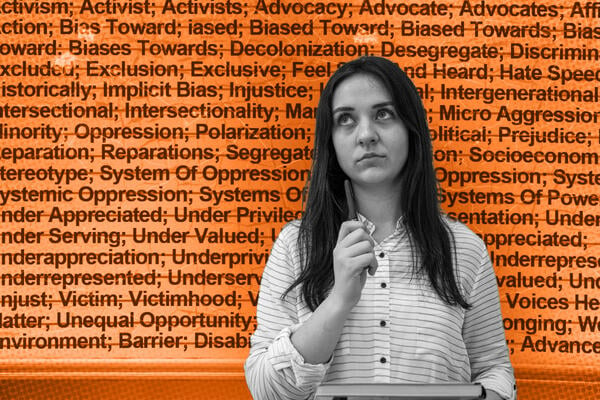
    “Biases.” “Racism.” “Gender.” “Women.”

    Those are just some of the terms colleges and universities are searching for in their databases to ensure compliance with federal DEI bans and similar directives from states and university systems.

    Robin Goodman, distinguished research professor of English at Florida State University and president of the university’s chapter of United Faculty of Florida, said her institution is using a list of keywords to review webpages for DEI language in response to federal and state directives. While not all those terms were scrubbed, the list, which has circulated among faculty, disturbed her.

    “From my point of view, those words are now dangerous words” that exacerbate a “culture of fear” on campus, she said.

    She’s also mystified by which terms did and didn’t make it onto her university’s list, noting that the word “woman” is flagged, but not “man” or “sex.”

    Campuses using keyword lists isn’t entirely new. Some state laws have pressured colleges to avoid using certain terms in the past, said Jon Fansmith, senior vice president of government relations and national engagement at the American Council on Education. But for most campuses, this is a “new space,” as some institutions scramble to comply with federal anti-DEI orders, like the Office for Civil Rights’ Dear Colleague letter, and try to mirror the ways grant-making federal agencies, like the National Science Foundation, have responded.

    Colleges and universities are using the same tactics as many federal agencies parsing their grant projects and webpages to comply with federal anti-DEI directives. The National Science Foundation, which temporarily shut down grant reviews, searched for terms like “female” and “male-dominated” in its research grants. The Centers for Disease Control used a list of roughly 20 terms to guide choices about removing DEI-related language from its website. And the Defense Department reportedly flagged tens of thousands of images and web posts for removal because of alleged connections to DEI, including references to service members with the last name Gay and an image of the Enola Gay aircraft, which dropped the atomic bomb on Hiroshima during World War II.

    Campus administrators taking this approach argue that, when tasked with reviewing massive numbers of webpages and programs, keywords make it easier to arrive at a smaller, more manageable pool to review. Faculty members, on the other hand, are baffled and outraged by the strategy. Some sympathize with campus leaders’ plight but argue it’s alarming to watch universities treat terms like “female” as red flags.

    Fansmith doesn’t believe such lists are an ideal strategy.

    Flagged word lists are “a very, very, very blunt tool” for “trying to understand academic content or the merits of research grants or projects,” he said.

    ‘Not a Perfect Approach’

    University leaders recognize that devising keyword lists puts campuses on edge, but some argue it’s the most efficient way to respond to an onslaught of anti-DEI directives.

    East Carolina University’s interim provost, Chris Buddo, explained at a recent Faculty Senate meeting that the Office of University Counsel crafted a list of terms over several months, initially used to review the university’s web presence to comply with the University of North Carolina system’s Equality Policy, which pared back DEI. (The North Carolina General Assembly also demanded an inventory of DEI trainings from the system in 2023, offering up a list of concepts and terms to guide the audit, including “accessibility,” “bias,” “racism” and “social justice.”)

    Then, in February, a UNC system attorney issued a memo prohibiting campuses from mandating courses focused on DEI, referencing Trump’s January anti-DEI executive order. University officials again used a keywords list to search through the course catalog and ensure no general education or major requirements were focused on DEI.

    Faculty at the meeting guffawed at some of the words flagged, including “cultural.”

    “I know it’s been controversial, and I understand it is not a perfect approach,” Buddo told faculty. “But given the significant amount of content we are being asked to review, we started by using this blunt tool—and I recognize it is a blunt tool.”

    He stressed that none of the words on the list are “inherently problematic.”

    But “the list was developed as a way to cast the widest possible net, to make sure we could be aware of all the places that we might be viewed as being noncompliant,” he said.

    Anne Ticknor, chair of the faculty and a professor in the College of Education at East Carolina University, said her institution has no choice but to comply with the system’s directives, though she tried to ensure that faculty had a say in any changes to course requirements.

    “People were fearful that their academic freedom was being infringed upon, since faculty traditionally oversee curriculum, and that includes course titles, syllabus information, course descriptions, content—all of that is typically a faculty’s domain,” she said.

    East Carolina officials told Inside Higher Ed in a statement that most courses flagged using the list were “false positives,” meaning that upon review, they weren’t required or didn’t relate to DEI.

    Florida State University also emphasized in a statement to Inside Higher Ed that just because the university is using a list of key terms to review webpages and communications doesn’t mean those words or pages are necessarily being removed.

    “For example, contrary to media reports, the words ‘woman’ and ‘women’ are easily found throughout the FSU website and have not been removed, nor are they being removed,” the statement read. “Florida State University, like all universities, routinely reviews its messaging to ensure information is up to date and compliant.”

    Florida State president Richard McCullough recognized in a March 4 message to faculty and staff that they may have “feelings of uncertainty and concern.”

    “While we are confident that our institution currently complies with the law, it is important that our messaging reflects new interpretations and priorities,” he told employees.

    Some campus leaders said they crafted flagged-terms lists out of panic.

    Officials at High Point University, a private institution in North Carolina, for example, told Inside Higher Ed in a statement that they created a keyword list in a moment of heightened worry last month after the U.S. Department of Education canceled three grants that supported graduate education programs, totaling $17.8 million. The Feb. 14 Dear Colleague letter, which gave institutions two weeks to rid themselves of race-conscious programming, exacerbated their concerns about losing federal funding for other programs.

    According to The News & Observer, the university circulated a list of 49 terms, including “equality” and “gender,” and called for an audit of course descriptions and syllabi, student handbooks and webpages.

    But officials quickly rescinded the move.

    “Facing a 14-day deadline, we acted quickly based on our care and concern for students and faculty,” the statement from High Point read, “but clearly we overcorrected.”

    Provost Daniel Erb sent an apology to academic leaders on March 2, saying he consulted with legal counsel and “there are no terms or words that you are required to change.”

    “While many institutions were working towards removing certain terms and words from websites … our legal counsel has helped clarify that our priority should be on ensuring all our program qualifications and requirements do not discriminate on the basis of race, ethnicity, gender, religious beliefs, etc.,” Erb wrote. “Therefore, the concern about the language that is used is no longer a focus.”

    ACE generally doesn’t recommend universities undertake such language reviews in response to the Office for Civil Rights’ anti-DEI directive, Fansmith said. He believes campuses’ usual processes for reviewing university communications and curricula should suffice.

    “The administration has a view of what compliance with civil rights laws means,” which “I don’t think we necessarily believe the law itself supports,” he said.

    The Ripple Effects

    While harried administrators say the flagged terms are just a guidance tool, faculty members find the reviews burdensome and say they have a chilling effect in the classroom.

    Margaret Bauer, professor of English, distinguished professor of arts and sciences and Rives Chair of Southern Literature at East Carolina University, said her department has a Multicultural and Transnational Literatures concentration. She hasn’t done a count, but she expects the word “cultural”—one of the words on the list—comes up in every course description in that concentration. She feels for her colleagues who’ve had to justify courses or explain why they’re false positives. (Bauer is also in the Faculty Senate but stressed that she’s speaking on her own behalf.)

    “We’re already all overtaxed with so much bureaucracy,” she said. “Just to add something that’s so ridiculous—it’s really frustrating … We should have been grading or planning class, things that are productive. This was not productive.”

    Bauer believes administrators are well intentioned and “want to protect us.”

    But “I want them instead to push back … and say, ‘Curriculum is under faculty. And we don’t teach discrimination. We teach the history of it. We’re not doing anything wrong … These words are things our university believes in,’” she said.

    Knowing the word list is out there makes concepts feel taboo in the classroom, she said.

    “When I’m teaching Southern literature, I’m going to end up talking about the history of oppression, the history of discrimination … I can’t not talk about it,” she said, but she finds herself feeling “more self-conscious” about it. She worries faculty members without tenure might fear for their jobs if they “teach honestly.”

    Goodman, of Florida State University, said she also can’t avoid the topics on her university’s flagged-term list.

    “I’m a feminist theorist. I’ve written a lot of books, and they all have ‘feminism’ in the title,” she said. “So, I can’t backtrack it now. It’s all out there in the public.”

    The flagged-words list—especially combined with recent Florida state laws allowing students to record professors in class and requiring professors to undergo post-tenure review—creates an environment where “faculty feel like they are being gagged in class, and they’re fearful,” she added.

    Fansmith isn’t surprised faculty are worried.

    Professors are used to “really complicated, detailed and multi-faceted levels of curriculum construction,” he said. “These are professionals who have spent their lives understanding those nuances, those details and why they matter,” so they’re concerned to see coursework in particular “reduced seemingly to a simplistic list of terms.”

    He believes word lists are an acceptable, albeit not ideal, tool to use if they’re part of an internal review process “done with the care and attention that universities generally do with matters of curricular review and with respect for academic freedom.”

    But “when it’s being mandated from the outside, by the federal government or a state and it’s getting into really perilous ideas of academic freedom and what can be taught, that’s when we start to really worry about what these lists mean and what they represent,” he said.

    Source link