Tag: News

  • U.S. can improve data collection on AI/AN college students

    U.S. can improve data collection on AI/AN college students

    Native American student enrollment has been on the decline for the past decade, dropping 40 percent between 2010 and 2021, a loss of tens of thousands of students. Of the 15.4 million undergraduate students enrolled in fall 2021, only 107,000 were American Indian or Alaska Native, according to the National Center for Education Statistics.

    Researchers argue that the small population is not as small as it seems, however, due in part to federal practices of collecting data on Native populations, according to a new report from the Brookings Institute, the Institute for Higher Education Policy and the Urban Institute.

    Federal measures of race and ethnicity in postsecondary education data undercount the total population of Native American students, in part due to insufficient sampling, lack of data on tribal affiliation and aggregation practices that erase Native identities, researchers wrote.

    “For too long, Native American students have been severely undercounted in federal higher education data, with estimates suggesting that up to 80 percent are classified as a different race or ethnicity,” Kim Dancy, director of research and policy at IHEP, told Inside Higher Ed. “This chronic data collection failure renders Native students invisible in federal data systems and prevents clear assessments of the resources necessary to support student success.”

    In May 2024, the federal government announced new standards for collecting data on American Indian and Alaska Native (AI/AN) populations, which would improve the inclusivity and accuracy of data for students from these groups.

    The Obama administration introduced similar changes in 2016, but they were never implemented under the first Trump administration in 2017. Researchers worry a similar pattern may follow under the second Trump administration.

    “The second Trump Administration has demonstrated reluctance to prioritize data transparency, which could further jeopardize these efforts and stall progress,” Dancy said. “Without strong implementation of these standards, Native students will continue to be overlooked in federal policy decisions.”

    “It is critical that the Trump administration allow the revised SPD 15 standards to remain in effect, and for officials at ED and elsewhere throughout government to implement the standards in a way that provides Native American students and communities with the same high-quality data that all Americans should be able to access,” report authors wrote.

    Data Analysis at Risk

    The Education Department has canceled dozens of contracts in recent weeks, tied to the Trump administration’s Department of Government Efficiency. Many of these contracts related to student data analysis in both K-12 and postsecondary education.

    State of play: Degree attainment for Native Americans is bleak, according to data presently available. Twenty-six percent of Native American adults in the U.S. hold an associate degree or higher, and only 16 percent hold a bachelor’s degree or higher, according to 2024 data from the U.S. Census Bureau. In comparison, bachelor’s degree attainment by all other races is higher: 20 percent for Latino, 25 percent for Black, 38 percent for multiracial, 40 percent for white and 61 percent for Asian American students.

    Of the 58 percent of American Indian/Alaska Native students who enrolled in higher education beginning in 2009, over half (55 percent) didn’t earn a credential. In 2023, the National Student Clearinghouse Research Center reported six-year completion rates had fallen two percentage points among Native Americans, to 47.5 percent—21 percentage points lower than their white peers and 27 percentage points lower than Asian students in the 2016 cohort.

    Data collection is not the only barrier to Native student representation and completion in higher education, researchers wrote, “but until data on Native American students are more accurate, accessible, and meaningful, it will prove difficult to address these issues,” which include affordability, disparities in access and retention, and a lack of culturally informed wraparound services.

    Digging into data: Data collection at the U.S. Department of Education has several problems that disadvantage Native students more than other groups, according to the report. Native student data is often “topcoded” as Hispanic or Latino, essentially erasing Native student identities, filed under “more than one race” without further detail, or coded without tribal affiliation or citizenship.

    While topcoding students as Latino or Hispanic or categorizing learners as more than one race applies to all racial categories, Native American individuals are categorized this way at a higher rate than any other major group, which diminishes their representation.

    Additionally, ED independently makes decisions to not disaggregate or provide detailed data on racial and ethnic subgroups, such as topcoding Latino or Hispanic students, that is not modeled at other federal agencies, such as the Census Bureau and the Bureau of Labor Statistics.

    The last time the Office of Management and Budget revised data-reporting processes for colleges and universities, which allowed individuals to identify as more than one racial group, final implementation took place in the 2010–11 academic year.

    In the decade and a half since, Native American student enrollment has declined, and researchers say, “The limitations of ED’s student data made it challenging to discern whether this decline represented an actual change in enrollment trends or was due to the new reporting practices’ undercounting of Native college students.”

    A lack of data impacts institutions, tribes and others tracking student outcomes, reducing opportunities to support learners, and the challenges may perpetuate continued misperceptions of Native students’ journeys through higher education.

    New policies: In 2024, OMB created new federal standards around collecting data on race and ethnicity that would enhance data collection when it comes to Native populations. Federal agencies are required to create plans for implementation by September 2025 and be in full compliance by March 2029, leaving the Trump administration responsible for implementation of the revised standards.

    OMB outlined three approaches for agencies on how they might consider presentation of aggregated data on multiracial populations:

    • Alone or in combination, which includes students who identify with more than one racial or ethnic group in all reporting categories.
    • Most frequent multiple responses, reporting on as many combinations of race and ethnicity as possible that meet population thresholds.
    • Combined multiracial or multiethnic respondents into a single category.

    This third option would be most harmful to Native students, because it would perpetuate undercounts, researchers caution, and therefore policymakers should avoid it.

    Moving forward, report authors recommend ED and Congress collect and publish disaggregated data on Native American students, partner with tribal governments to increase data transparency and provide guidance and resources to institutions to improve their quality of data.

    “We encourage the Education Department to continue seeking input from Native communities, including voices that have been historically excluded from policy-development efforts,” Dancy said. “Accurate data alone won’t eliminate the structural inequities Native students face. But without the data, we cannot begin to dismantle the inequities.”

    Get more content like this directly to your inbox every weekday morning. Subscribe here.

    Source link

  • Heterodox Academy report finds spike in neutrality statements

    Heterodox Academy report finds spike in neutrality statements

    Since Hamas attacked Israel on Oct. 7, 2023, triggering a brutal retaliatory war in Gaza, at least 140 colleges and universities have adopted statements of institutional neutrality—up from just eight prior to the attacks, according to a new report from Heterodox Academy, a nonprofit advocacy group seeking to promote viewpoint diversity on college campuses.

    The vast majority of institutions—97 percent—cited the values of “community and inclusion” to justify their embrace of statement neutrality. “Free speech and academic freedom” and “public trust” were each referenced as a rationale by 88 percent of institutions; 64 percent attributed the move to “balancing rights and responsibilities.”

    Of the institutions that have adopted neutrality statements since 2023, 78 percent are public and 22 percent private. Governing boards drove the change at 68 percent of the public institutions; at more than a quarter of those—including in Indiana, Utah and North Carolina—state legislatures mandated the shift. At private institutions, presidents and faculty were much more likely than governing boards to instigate the push for institutional neutrality.

    “The rapid adoption of institutional statement neutrality policies marks a major shift in how colleges and universities engage with broader societal debates,” the Heterodox report reads. “Statement neutrality not only empowers students, faculty, and staff to engage in robust debate, it also reinforces the critical values of seeking truth and generating knowledge rather than advocating for partisan political positions. In an era of declining public confidence in higher education, these policies represent a critical step toward restoring universities as trusted spaces for free inquiry and intellectual growth.”

    Source link

  • Lawyer for Columbia University student detained by ICE for pro-Palestine protests speaks out (ABC News)

    Lawyer for Columbia University student detained by ICE for pro-Palestine protests speaks out (ABC News)

    ABC News’ Linsey Davis speaks with Baher Azmy, the lawyer for Columbia University student Mahmoud Khalil, who was arrested by Immigration and Customs Enforcement (ICE) despite having a green card. Khalil is currently detained in a Department of Homeland Security (DHS) facility in Jena, Louisiana.  A judge has temporarily blocked Khalil’s deportation. President Trump says that this action is just the beginning of such actions by the government.  

    A petition to release Mahmoud Khalil from DHS detention is here

    Source link

  • Education Department to reduce staff by nearly half

    Education Department to reduce staff by nearly half

    J. David Ake/Getty Images

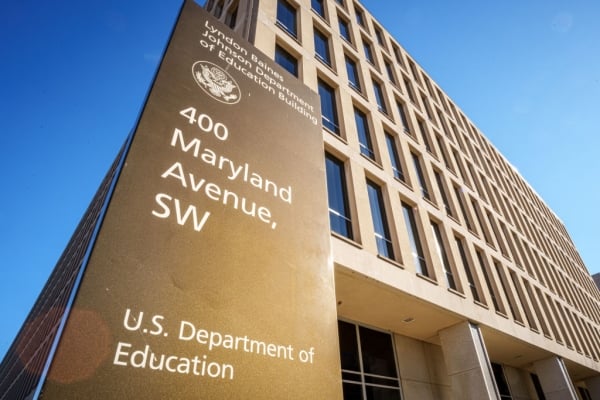
    The Education Department is moving to lay off nearly 50 percent of its more than 4,100 employees as of Tuesday evening, according to four sources inside the agency who were told about the plans.

    It’s not yet clear what specific departments or positions were affected, though officials planned to tell affected employees this evening, sources told Inside Higher Ed. The department previously offered employees buyouts to cut down the workforce. The goal to reduce staff by 50 percent includes prior reductions. Those affected will receive 90 days’ severance and will have 10 days to transfer their job duties to another staffer or political appointee, according to a longtime staffer with inside knowledge of the reduction-in-force details.

    The department said in its announcement that the employees will be placed on administrative leave, starting March 21, and that core programs such as distributing student loans and Pell Grants will continue.

    “Today’s reduction in force reflects the Department of Education’s commitment to efficiency, accountability, and ensuring that resources are directed where they matter most: to students, parents, and teachers,” Secretary of Education Linda McMahon said in a statement. “This is a significant step toward restoring the greatness of the United States education system.”

    The Washington Post reported that 1,315 employees would lose their jobs, in addition to the roughly 600 who took the buyouts. The reductions will bring the total workforce down to fewer than 2,200.

    Earlier on Tuesday, the department told staff that D.C. offices will be closed Wednesday and reopen Thursday for “security reasons,” according to an email obtained by Inside Higher Ed. One staffer said they were told by department officials that the closure was due to the reduction in force.

    The email instructed department staff to take their laptops home with them on Tuesday in order to telework Wednesday, and that they would “not be permitted in any ED facility on Wednesday, March 12th, for any reason.”

    Some department staff were notified of the impending layoffs during meetings with top department officials—including an acting deputy secretary—on Tuesday afternoon, according to sources inside the department who spoke with Inside Higher Ed on background.

    Sheria Smith, president of American Federation of Government Employees Local 252, which represents over 2,800 workers at the Department of Education, pledged to fight the cuts in a statement released Tuesday evening. Smith said that the Trump administration “has no respect for the thousands of workers who have dedicated their careers to serve their fellow Americans.”

    “We will not stand idly by while this regime pulls the wool over the eyes of the American people,” Smith added. “We will state the facts. Every employee at the U.S. Department of Education lives in your communities—we are your neighbors, your friends, your family. And we have spent our careers supporting services that you rely on.”

    The expected cuts are part of a governmentwide strategy to reduce the federal workforce. All federal agency officials were told last month to start preparing for a “large scale reduction in force” and to eliminate all “non-statutorily mandated functions.”

    While the government layoffs are far-reaching, President Trump has frequently targeted the Education Department for cuts, even vowing to shut down the agency. That would require congressional action, but Trump and McMahon can make deep cuts to the agency even if they don’t abolish it altogether.

    Trump is reportedly planning to sign an executive order directing McMahon to “take all necessary steps” to return authority over education to the states and facilitate closure of the Department of Education “to the maximum extent appropriate and permitted by law,” according to draft text reviewed by Inside Higher Ed.

    Higher education groups and advocates have warned that cutting staff and programs at the department would be catastrophic for institutions and students, though critics say the agency is in need of a serious overhaul. State higher education officials, university administrators, nonprofit advocacy groups and students depend on the Education Department to oversee federal student aid, manage the student loan portfolio, investigate civil rights complaints and allocate billions of dollars in institutional aid, among other operations. The department, which has an $80 billion discretionary budget, issues about $100 billion in student loans every year and more than $30 billion in Pell Grants.

    The massive personnel cuts—the largest in the department’s history—will likely impact most agencies and offices in the department, including the Office of Federal Student Aid, sources say. Within FSA, the cuts will be most severe among teams that work directly on policy and higher education oversight, including the Ombudsman Office, which investigates complaints into student loan practices and financial aid.

    Staffers at the Education Department have been anticipating the reduction in force for the past week. Last Tuesday, department leaders called a meeting to discuss the impending layoffs but canceled at the last minute. Meanwhile, staff have been awaiting the executive order from Trump to close down the department since last Wednesday.

    “Everyone’s ready,” one exhausted staffer told Inside Higher Ed.

    Other federal agencies have started to lay off thousands of employees via a planned reduction in force, a process that should give them 60 days’ notice. At the Environmental Protection Agency, Trump expects 65 percent of the workforce to go, according to Government Executive, a trade publication tracking the layoffs. Last week, the Veterans Affairs Department said it was laying off 80,000 people.

    Source link

  • College campus counseling center usage and staffing

    College campus counseling center usage and staffing

    Counseling services are a key element of student retention in higher education due to elevated numbers of students reporting mental health conditions, but creating a sustainable practice that addresses students and staff needs remains a challenge, according to survey data from the Association for University and College Counseling Center Directors (AUCCCD).

    The association’s annual report, published Feb. 25, highlights a tapering off of the increased demand for mental health services from students, but continued pressure to support clinician and nonclinical staff members through challenging work conditions.

    Methodology

    The survey includes responses from 367 counseling center directors from the U.S. and its territories and 14 from other countries. The majority of respondents work at four-year institutions and urban campuses. The reporting period ranges from July 1, 2023, to June 30, 2024.

    Student engagement: While students continue to report high levels of mental health concerns, some counseling centers are seeing a decline in student demand.

    The majority of respondents at four-year institutions reported a decline or no change in the number of unique clients seen (68 percent) and the number of appointments provided (58 percent). Among two-year colleges, 33 percent reported a decrease in the number of unique clients seen and 43 percent reported a decrease in overall appointments provided.

    One in four counseling center directors (24 percent) indicated their centers did not have trouble meeting demand for services.

    Around 11 percent of students at four-year institutions accessed counseling services, and just under 5 percent of students at community colleges received counseling center support. “Centers at smaller schools served, on average, much larger proportions (8 to 19 percent) of their enrolled populations than centers at larger schools (7 to 8 percent),” according to the report.

    Student data indicated a correlation between student success and counseling center usage: 73 percent of clients reported that counseling services positively impacted their academic performance, and 71 percent said it helped them stay in school.

    Staffing: The four-year college had 9.2 full-time-equivalent clinical employees, while the average for community colleges was 4.5 employees. Around 2 percent of centers were staffed by only one person, but this was a decline compared to the year prior, when 3.5 percent of directors indicated they were a one-person center.

    Diversity of directors who completed the survey continues to rise, with 30 percent of respondents identifying as a person of color, up from 16 percent in the 2012–13 survey.

    Staff turnover remains a concern for college counseling centers, with 12 percent of all nontrainee clinical positions and 10 percent of all nontrainee positions turning over in the past fiscal year. The top reasons staff left their roles were low salary (48 percent) and work conditions (32 percent), though fewer staff cited leaving the field as a reason for departure this year, compared to prior surveys.

    Embedded counseling services remain limited, with around 30 percent of institutions utilizing counselors assigned to work within other departments. Athletics was the most frequently reported area where embedded clinicians work, followed by a specific school, student affairs office and residence life.

    Services: Most clinical sessions were delivered in person (81 percent), followed by video (15 percent) and phone (3 percent). This mirrors the Center for Collegiate Mental Health’s data, published earlier this year, which found 64 percent of clients received exclusively in-person counseling and 13 percent received video-only care.

    While a slight majority of centers do not have formal session limits (55 percent), 43 percent of institutions limit the number sessions a student can access by year, with some flexibility in the model. Only 0.6 percent of respondents indicated their campus has a hard session limit with no exceptions.

    Teletherapy continues to be a popular offering among institutions, with 53 percent of four-year institutions and 35 percent of community colleges employing a third-party vendor to provide services. Use by students varies widely, even among similarly sized institutions, but the average number of participating students was 453.

    “Overall, regardless of the type of service provided by a third-party vendor, the majority of directors reported utilization was less than hoped for or met their expectations,” according to the report.

    The number of unique students who attended a crisis appointment averaged across centers was 125, and the average number of crisis appointments was 166. A majority (65 percent) offered psychiatric services within the counseling center, elsewhere on campus or in both locations.

    In addition, a majority of respondents indicated their center provides formal or informal consultation services to the community.

    Looking ahead: While the report focuses on the previous fiscal year, there remains a need to continue to provide accessible and high-quality counseling services, says Cindy M. Bruns, survey coordinator for AUCCCD. “By fostering a supportive campus culture and ensuring that mental health resources are available, colleges can help students navigate political and social environments while promoting resilience and well-being.”

    Some counseling directors have noticed students are experiencing “elevated levels of anxiety, uncertainty, threats to their sense of safety and belonging on campus” due to federal action under the second Trump administration, Bruns says, which could prompt an increase in the number of students seeking services.

    Get more content like this directly to your inbox every weekday morning. Subscribe here.
    Source link

  • How standardized tests became part of the DEI debate

    How standardized tests became part of the DEI debate

    In the Education Department’s sweeping Dear Colleague letter last month, acting assistant secretary for civil rights Craig Trainor wrote that colleges must eliminate all race-conscious programs and policies, from scholarships and admissions practices to campus cultural groups and DEI training.

    One surprising mention: standardized testing policies.

    Trainor wrote that test-optional policies could be “proxies for race” to help colleges “give preference” to certain groups.

    “That is true whether the proxies are used to grant preferences on an individual basis or a systematic one,” he wrote. “It would, for instance, be unlawful for an educational institution to eliminate standardized testing to achieve a desired racial balance or to increase racial diversity.”

    Higher education leaders and researchers have long debated the pros and cons of standardized testing in admissions: Some believe they’re a meritocratic predictor of academic success, while others say they’re more aligned with family wealth. In recent years, those debates have become entangled with discussions of systemic racism in the American education system.

    During the COVID-19 pandemic, the vast majority of colleges waived test requirements for applicants. Five years later, most have retained their test-optional policies—though a year ago some selective institutions began returning to score requirements, reigniting a charged debate about the role of standardized tests in admissions.

    After the Supreme Court banned affirmative action in 2023, experts said test-optional policies could serve as race-neutral measures to help colleges maintain diversity in their applicant pools. They cited research showing that colleges with test-optional policies enrolled 10 to 12 percent more students from underrepresented racial backgrounds; other studies found that doing away with test requirements simplified the application process and thus removed barriers for first-generation and other underserved students. The Biden administration even included test-optional policies in its guidance for colleges adjusting to the court ruling.

    If colleges cited such research in keeping their test-optional policies, Trainor’s letter implied it could be grounds for a civil rights investigation.

    In a Frequently Asked Questions document meant to clarify the broad scope of the Dear Colleague letter, OCR made no mention of testing policies. But in response to multiple questions from Inside Higher Ed about how the department views test-optional policies, Trainor left the door open to federal scrutiny.

    “This isn’t complicated,” he wrote. “When in doubt, every school should consult the [Students for Fair Admissions v. Harvard] legal test contained in the [Dear Colleague letter]: ‘If an educational institution treats a person of one race differently than it treats another person because of that person’s race, the educational institution violates the law.’”

    Harry Feder, executive director of FairTest and an outspoken critic of standardized testing, said assessments like the SAT have long been embroiled in debates about racial equity in education, but the discourse grew more prominent as attacks on DEI and affirmative action intensified.

    “The SAT has racial bias baked into it from its origins as an early IQ test to keep out the riffraff,” he said. “What Republicans are now saying is, that’s an objective measure of merit, and if white and Asian kids do better on them over all, then colleges not considering those scores is a form DEI run amok.”

    John Friedman, an economics professor at Brown University, has published numerous influential studies on the effects of standardized testing policies, including those cited by the majority of Ivy League institutions that decided to return to test requirements. He said he understands where the Education Department’s skepticism comes from.

    “Schools might be tempted to continue test-optional policies to make it easier to maintain diverse classes, even if that makes it harder to assess students’ academic preparation,’” Friedman said. “I think that’s where some of the angst comes from, as part of a larger concern about higher education moving away from the traditional sense of meritocracy.”

    At the same time, he said the department should consider how institutions use test scores in admissions, which can vary widely.

    “The point is not that you can’t go test-optional. It’s that you shouldn’t if your goal is an end run around the SFFA decision,” Friedman said. “It would be bad to force institutions that decided thoughtfully that test requirements are not best for them to adopt those policies anyway.”

    Dominique Baker, associate professor of education and public policy at the University of Delaware, said she doesn’t believe it should matter whether colleges are considering racial diversity in deciding on their testing policies. The truth, she said, is that research on how testing policies affect applicant diversity is murky, and many of the colleges where the policies could have a demonstrable impact have already returned to requiring scores.

    For her, the mention of testing policies alongside other DEI initiatives is “head-scratching.”

    “The places the administration cares about have largely already returned to testing, or are certainly poised to do so soon. So who is this for?” Baker said. “It’s bananas that testing is even in here.”

    Reversing the Test-Optional Tide?

    So far, the letter hasn’t had any effect on institutions’ testing policies. But colleges are starting to respond to the Dear Colleague letter’s guidance in other ways, changing the names of student service offices, scrubbing mentions of race and equity from their websites, eliminating race-conscious programs, and canceling affinity group events.

    “It would be naïve to believe that certain institutions wouldn’t, at the very least, strongly consider changing their testing policies in order to fly under the radar with the administration,” Baker said.

    Some colleges are pushing ahead with their test-optional policies regardless. Last Thursday the University of Vermont announced that its test-optional policy, put in place during the pandemic, would become permanent.

    Jay Jacobs, vice president for enrollment management at Vermont, told Inside Higher Ed the decision was based on years of research that found that removing test requirements not only had little effect on students’ academic performance and persistence, but also helped UVM achieve its goal of enrolling more local and first-generation students.

    He said the university did not take racial diversity into account when measuring the policy’s enrollment impact—“we didn’t want that to be construed as the reason,” he explained—but said that whatever the rationale, he doesn’t believe the Education Department’s guidance should have any influence.

    “No external party should have a say in dictating institutional policy,” Jacobs said.

    Meanwhile, leaders in the assessment industry have remained largely silent about the Trump administration’s promotion of their exams as part of the war on DEI.

    The College Board, which owns and administers the SAT, did not release a public statement about the letter, nor did ACT, Educational Testing Services or any other major assessment organization.

    College Board communications director Holly Stepp wrote in an email to Inside Higher Ed that the organization believes testing can promote college access, but it does not usually comment on policy matters.

    “College Board provides access and opportunity to millions of students from every background through programs that are mission-driven, evidence-based, and nonpartisan,” Stepp wrote. “We do not set policies around how our exam is used by higher education institutions and scholarship providers.”

    Juan Elizondo, ACT’s strategic communications director for government and public relations, told Inside Higher Ed that the company stands behind institutions’ freedom to set their own testing policies.

    “ACT respects the authority of our higher education partners to decide the admission standards that are right for their institutions,” he wrote.

    Failing the Logic Test

    As colleges like Yale, Harvard and MIT returned to test requirements last year, many cited the same new research: a study from Opportunity Insights that found that test-optional policies made it more difficult for selective institutions to admit students who could succeed academically—and to find qualified applicants from diverse racial and economic backgrounds. Statements from both Yale and Dartmouth said that test scores could “help expand access” for underrepresented groups, including students of color.

    So if both test-optional and test-mandatory policies can promote racial diversity depending on the institution, how will the Trump administration enforce its guidance?

    When asked this question, Trainor did not respond directly but implied that any institution using racial diversity as a justification for any policy, or even citing it as a potential benefit, could be in violation of the current Education Department’s views on civil rights law.

    Friedman, one of the researchers who produced the Opportunity Insights study, said his research showed that for some highly selective colleges, requiring test scores could help “a little bit” with diversity in the selection process. The argument is that by providing a standardized measure of academic preparedness, selective colleges can find a “diamond in the rough”—applicants from underresourced high schools who would struggle to stand out otherwise.

    “For some schools, going back to requiring testing may help improve diversity, but my sense is that improving diversity is not the primary motivation behind this policy change,” he said.

    Feder agreed but had a different prediction.

    “If I’m at the OCR and an Ivy League college is saying, ‘We went back to test requirements because it’s good for diversity,’ even if that’s not really the case, I’d go investigate them,” he said. “By their own logic, they’d have to.”

    Baker said there hasn’t been enough research to determine whether test-optional policies make a huge difference in promoting diversity. Many of the colleges that have kept them in place, she said, have also made more holistic changes to their admissions process that could account for diversity gains. But she believes ending the experiment early by government coercion would be a major step backward.

    “Researchers in the field are doing some real deep dives to better understand the effects of test-optional policies themselves. The people writing the [Dear Colleague] letter have no clue about any of that; they just read about how these policies are part of an anti-white war on meritocracy,” she said. “They’re just throwing spaghetti at the wall.”

    Source link

  • Higher ed must be proactive

    Higher ed must be proactive

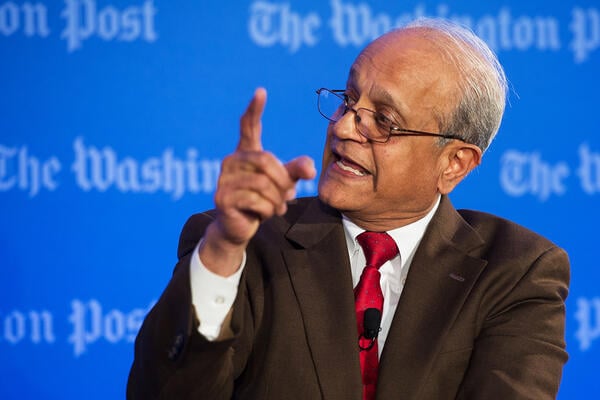
    Sonny Ramaswamy retired from his role as president of the Northwest Commission on Colleges and Universities in February, concluding an almost seven-year run at the accrediting body.

    His retirement comes after a lengthy career in higher education, which included stints at Cornell University, Mississippi State University, Kansas State University, Purdue University and Oregon State University before former president Barack Obama appointed him as director of the National Institute for Food and Agriculture in 2012. Ramaswamy also served for roughly 18 months during Donald Trump’s first presidential term before returning to higher education as the head of NWCCU, a post he held from July 2018 until earlier this year, when he stepped down.

    In his retirement, he plans to continue serving on nonprofit boards, particularly those in the world of food and agriculture, an area where much of his career was focused. Ramaswamy also plans to write, starting with an illustrated book of poetry to help children learn about the environment.

    Ramaswamy spoke with Inside Higher Ed about his retirement plans, his experience as an accreditor, the challenges facing the sector and the need for a robust defense of higher education.

    This interview has been edited for length and clarity.

    Q: First, tell me about your retirement. What prompted you to step down early?

    A: I came on board in 2018 and had a five-year agreement. June 2023 is when the agreement would have ended, and then our commissioners pleaded with me, saying, “You’ve got to stay on with all the uncertainties with the impending elections next year, etc., etc.” Plus we were going through our [National Advisory Committee on Institutional Quality and Integrity] recognition process. Well, another year comes and goes and they asked if I could stay for some more time, past the elections. We were all expecting the elections to go in a certain way, but who would have thought that the Democrats would self-destruct? But that’s another story.

    I reluctantly said OK. We had talked about staying on the whole year, but they left it to me to make the determination of when I would step out. Then the 2024 elections happened and we started seeing the handwriting on the wall, and it concerned me tremendously. I thought, “I can do a lot more being outside of the system as a spokesperson for education.”

    Q: What initially interested you in the NWCCU job?

    A: This was not something on my radar. My life has been about food and agriculture. I’m an entomologist. My passion is hunger, being that I was hungry growing up in India at a time when India could not feed itself. And my path was through academics, food and agricultural sciences.

    I was headhunted [while director of the National Institute of Food and Agriculture] and went through some interviews with a couple of land-grant universities for the presidency. I was all set to become president of a land-grant university, then I was headhunted by the Northwest Commission, and [their recruiter] said, “You’ve got to do this—you bring exquisite leadership skills, and that’s what they’re looking for. I said, “But I’ve not done anything related to accreditation,” and she said, “That’s not the point—what they want is somebody that can be a leader.” What they were looking for was somebody to set the ship in the right direction and create a compelling vision.

    Q: What was the hardest part about the job?

    A: The hard part was the complaints that we would receive about our colleges and universities. On some of those, there’s egregiousness on the part of the institutions, ignoring their own policies and things like that. We also got complaints that basically were frivolous. We created, I think, an excellent way to handle the complaints with the processes and procedures that we put together. But the hardest part was to see policies and procedures being ignored. I don’t know if those were ignored purposefully and wantonly, or it was just that some institutions are so huge, and that the bureaucracy is so huge that the left hand does not know what the right hand is doing.

    Q: What was the most rewarding aspect of the job?

    A: What surprised me the most was how archaic the system was [at NWCCU]. It was thousands of pages of documentation being printed. I thought, “We need to come up with a way to use data to inform decisions, to look at how institutions are making progress and hold them accountable based on evidence and data, and not just the fact that they write these hundreds of pages of narrative.” It’s like the old adage that if you can’t bedazzle them with brilliance, baffle them with bullshit. So I worked with our commissioners and our staff and went around America, listening to what needs to be done [to revise] our standards. My gosh, we had eight standards and 142 substandards, and the word “student” was invoked in the very last standard. It was pathetic.

    So I said, “We have to focus on the students.” We did listening sessions and people gave us an earful [including think tanks], so we brought that back and went through the listening sessions and surveys, and we went from eight standards and 142 substandards to two standards. No. 1: Students, that’s where they’re supposed to be. And No. 2 is all the other stuff about compliance and governance and other issues. We changed all of that to focus on students.

    The most rewarding piece was to see those changes take place.

    Q: There seems to be a changing of the guard at accrediting bodies, with turnover at the top. What advice do you have for anyone stepping into that job in the current political climate?

    A: Go into it thinking, “What is the value proposition we want to demonstrate?” I’m paraphrasing Pogo: I have seen the enemy and he is us. Accreditors are as much to blame as the institutions in that we have never been able to provide that compelling value proposition. To be accused by various individuals that there’s an accreditation cartel, that everything is done behind closed doors like the Wizard of Oz, that we impose diversity, equity and inclusion on these institutions—it’s all a false narrative. None of us have imposed critical race theory on our institutions. It’s a false narrative that has been grabbed by [anti-DEI activists] like Chris Rufo and Scott Yenor.

    We pat ourselves on the back, saying, “We’re holding universities accountable.” But when a bit more than one out of every two students graduate, there’s something wrong with that picture.

    Use your critical thinking and problem-solving skills and put the students at the core of your mission and demonstrate that value proposition, demonstrate why education is critically important for America, and the accountability piece of it that the accreditors bring to the effort.

    Q: What do you think the near future holds for accreditation? Do you expect any big changes?

    A: I’m reading the tea leaves, and it’s like our investment advisers tell us: Past results have no bearing on future returns. I worked in the Trump administration for a year and a half, and I saw a lot of things in there. But it means nothing, because now they’ve come in with a much better thought-out process, a blueprint. Hope springs eternal, but there’s going to be some changes.

    But before whatever it is that’s coming down the pike, let us as educators, let us as accreditors demonstrate that value proposition [and] tell the story. Don’t wait. Get college presidents, students and alumni to speak to the value of higher education. All these companies—the people that are hiring our graduates—should be extolling America’s higher education system, which is why people like me came to this country from overseas. There has to be a concerted effort by everybody. The accreditors have a secondary role, since the primary role is going to be institutional leadership and alumni and board members and others to speak to why the accountability system that we have is important. Be proactive, don’t be reactive, don’t wait for the winter or fall to go to work.

    And if we don’t do it, shame on us and we deserve what we get.

    Source link

  • What Republican voters want for higher ed

    What Republican voters want for higher ed

    Republican voters believe in the value of college degrees but harbor concerns about accountability and affordability, according to a new national survey conducted by Third Way, a center-left think tank, and GS Strategy Group, a Republican polling group.

    The survey of 500 Republican voters found that most respondents, 63 percent, view four-year degrees as valuable—including 60 percent of voters who have “very favorable” perceptions of President Trump. Trade schools and community colleges enjoy particularly robust support; 91 percent and 87 percent of respondents, respectively, view them favorably. By comparison, 69 percent hold favorable views of four-year colleges and universities, and 37 percent feel positively toward for-profit universities.

    At the same time, Republicans surveyed believe the most needed reforms in higher ed today are greater accountability and greater affordability.

    Most respondents, 87 percent, support increased accountability for higher education institutions. And many believe the government should play various roles to ensure that principle is upheld. Seventy-one percent agree that the federal government should require transparency from institutions and accredit them based on their value to students. The same share believe there should be federal guardrails to prevent “bad actors” from charging students for low-quality degrees. And nearly half agree taxpayer dollars should be withheld from colleges that don’t offer a sufficient return on students’ investment.

    Toward that end, 83 percent of Republicans support the financial value transparency rule, which requires colleges to report program-level information like the total cost of attendance and the amount of private education loans disbursed to students. To make college more affordable, 81 percent of Republicans are in favor of Pell Grants, federal financial aid for low-income students, and 79 percent support the Public Service Loan Forgiveness program and income-driven repayment for student loans. Almost 70 percent favor borrower defense to repayment, allowing students who attended fraudulent institutions to have their student loans discharged.

    The report notes that many of these same policies “are being considered for cuts as budget reconciliation heats up.”

    “As Congress considers where to trim the budget this year, it’s important to remember that Republican voters aren’t looking for higher education cuts but rather a renewed emphasis on making it more affordable and holding institutions to the line for delivering a return on investment,” the report concludes.

    Source link