Tag: News

  • Five strategies for improving campus career centers (opinion)

    Five strategies for improving campus career centers (opinion)

    For decades, work-life balance has been seen as the gold standard of career success. The idea suggests that professionals should allocate time and energy evenly between work and personal life, ensuring equilibrium between competing responsibilities. But in reality, balance is often an illusion—an unattainable tightrope walk that leaves individuals feeling guilty, unfulfilled and stretched too thin.

    The workforce of today—and especially the workforce of tomorrow—no longer aspires to a segmented life. Instead, workers seek career and life integration, a holistic approach where career, personal growth and well-being are deeply interconnected. Unlike the concept of work-life balance, which implies a constant trade-off, career and life integration builds synergy between personal and professional aspirations.

    Workday’s Global Workforce Report found that employees who perceive their work as meaningful feel 37 percent more accomplished than those who don’t, even when facing workloads they describe as “challenging.” An Inside Higher Ed Career Advice piece written by a University of Michigan administrator explored the importance of integrating values into the career exploration process. Additionally, research highlighted in the Journal of Personality indicates that young adults’ personal values significantly influence their career-related preferences, suggesting a strong desire for roles that reflect their core values. ​

    If higher ed institutions continue to treat career development as separate from personal well-being, they will fail to meet the evolving needs of students and professionals alike. Career centers must evolve into career and life design labs—hubs of lifelong guidance, personal development and future readiness. This piece outlines five strategic imperatives that institutions must embrace to lead this transformation.

    1. Moving from work-life balance to career and life integration.

    The traditional work-life balance model assumes a strict separation between career and personal life, often emphasizing boundaries rather than synergy. The statistics tell a compelling story:

    • A Deloitte study found that 66 percent of employees report feeling chronically overworked or burned out despite efforts to maintain work-life balance.
    • Research from Gallup indicates that 76 percent of millennials believe a successful career should seamlessly integrate with personal fulfillment rather than be kept separate.
    • A recent Moodle study indicates that job burnout has reached an all-time high of 66 percent in 2025. ​

    Campus career services leaders must reframe their approach. Students need tools to design careers that complement their life aspirations rather than forcing them to choose between professional success and personal fulfillment.

    Most students and alumni struggle with clarity—they pursue careers based on external pressures rather than intrinsic motivations. Career centers must facilitate career and life vision workshops to help individuals align their inner purpose with external opportunities. By integrating career and life design principles into career services, institutions empower students to prototype different pathways, develop adaptability and connect their academic and professional lives with personal meaning.

    By using a reflective, experiential approach, students learn that career development is not a rigid ladder but a fluid, evolving process.

    1. Integrating emotional agility into career coaching.

    One of the greatest barriers to success is not external—it’s internal. It is not a lack of skills. It is a lack of confidence, clarity and emotional agility. Many students enter the workforce grappling with impostor syndrome, career anxiety and fear of failure. A research study titled “The Impostor Phenomenon,” published in the International Journal of Behavioral Science, shows that over 70 percent of people experience impostor syndrome at some point in their lives.

    Institutions must integrate emotional intelligence training into their strategic plans. Students need to learn how to navigate career uncertainty with resilience rather than fear. Instead of merely offering job search strategies, career coaches should incorporate cognitive reframing techniques to help students shift from self-doubt to empowerment. This involves helping students recognize negative thought patterns and replace them with action-oriented mindsets.

    For instance, instead of viewing rejection as a failure, students should be encouraged to see it as an iteration in the career and life design process. Career setbacks, industry changes and professional pivots are inevitable.

    Practical steps for career centers:

    • Train career coaches in cognitive-behavioral coaching techniques to help students recognize and reframe self-limiting narratives.
    • Integrate self-awareness exercises that help students identify core fears (of failure, rejection or inadequacy) and develop action plans to overcome them with emotional strength.
    • Provide group coaching sessions focused on overcoming impostor syndrome, building confidence and developing a growth mindset.
    • Use AI-driven career reflection tools to help students track their confidence growth over time.
    • Incorporate mindfulness practices and journaling into safe spaces and welcoming career and life design studios to help students reframe failure as part of their evolving unique narrative.

    Emotional agility is a core component of career development. Success today isn’t about having the perfect career path—it’s about navigating uncertainty with emotional agility. Career services must equip students with resilience and adaptability to thrive in ever-changing industries.

    1. Merging personal, career and professional development.

    Career and life design should be deeply personal, shaped by self-awareness, curiosity and personal reflection. We mention “personal” first, because we begin with the person.

    Career services has historically focused on résumé reviews, job placement and networking strategies—important elements, but not enough for long-term success. A 2023 report by the National Association of Colleges and Employers found that students who integrate personal development with career planning—through leadership training, mentorship and values-based exploration—are significantly more career-ready upon graduation. Rather than pushing students toward the highest-paying or most prestigious jobs, career centers should help them define success on their own terms.

    Practical steps for career centers:

    • Develop integrated mentorship networks that connect students with professionals who exemplify career and life integration.
    • Help students build personalized business plans that help them take ownership of the story they are both writing and telling.
    • Leverage design thinking principles, encouraging students to experiment with career pathways that embrace uncertainty, adaptability and iterative learning rather than rigid, predetermined plans.

    AI can assist in career trajectory mapping, skills assessment and predictive job market insights, while human coaches focus on deep coaching, the power of stories and career and life integration strategies.

    1. Considering AI-powered hyperpersonalized career coaching.

    While traditional career advising has relied heavily on in-person interactions, the next evolution of career services will be AI-empowered, data-informed and hyperpersonalized. AI-driven career exploration tools can analyze a student’s experiences to offer real-time, customized career insights. AI agents such as the 24-7 virtual Career and Life Design Lab provide personalized career simulations, self-actualization exercises and self-realization insights to help individuals align their career paths with their purpose.

    This mindset shift in career services will blend AI and human coaching. AI can assist in career trajectory mapping, skills assessment and predictive job market insights, while human coaches focus on deep coaching, the power of stories and career and life integration strategies. This synergy allows for scalable yet deeply personalized career services.

    Practical steps for career centers:

    • Integrate AI-driven solutions and experiential learning methodologies.
    • Introduce future-self mapping, where students interview their future selves and map out short- and long-term goals.
    • Use reverse-engineering techniques, working backward from the desired impact to identify the necessary skills, experiences and trajectories.
    • Implement AI-powered career simulations, allowing students to test and refine career decisions in a risk-free environment that tackles limiting beliefs and impostor syndrome.
    1. Scaling lifelong learning beyond graduation.

    The future of work demands continuous upskilling, reskilling and career agility. Institutions must create a culture of lifelong learning, where students and alumni receive ongoing support throughout their careers. Career services must expand their scope to lifelong learning and helping students and alumni develop not résumés, but portfolios of experiences.

    Practical steps for career centers:

    • Create career and life integration circles, where alumni engage in peer coaching, mentorship and accountability partnerships.
    • Offer subscription-based career services, ensuring alumni have access to coaching, upskilling and career reinvention programs throughout their professional lives.
    • Establish annual career and life re-evaluation workshops, helping alumni recalibrate their career and life vision.

    Conclusion: The New Paradigm

    The future of work is not about balance. It is about integration. By embedding the career and life design theoretical framework into institutional frameworks, universities can better equip students for a rapidly changing world. Colleges and universities that fail to adapt will be left behind, while those that embrace career and life design—leveraging both AI and a holistic approach to personal, career and professional development—will supercharge their teams with scale and empower students to craft lives of purpose, adaptability and lasting impact.

    The question is no longer whether career centers should evolve—it is whether they can afford not to.

    Does your career center offer group coaching sessions focused on confidence building, growth mindset or related topics? Tell us about it.


    Source link

  • VMI board rejects extension for superintendent

    VMI board rejects extension for superintendent

    Virginia Military Institute’s Board of Visitors voted 10 to 6 on Friday against a contract extension for Major General Cedric Wins, a VMI graduate and the first Black leader in the college’s history.

    All 10 votes against the extension came from members appointed by Republican governor Glenn Youngkin, though four Youngkin appointees voted to renew the contract, joining two holdovers named to the board by Democratic governors, The Richmond-Times Dispatch reported.

    Wins’s contract expires June 30.

    The vote will end a contentious tenure for Wins, who joined VMI in 2021. He replaced General J. H. Binford Peay III, who led the college from 2003 to 2020, when he stepped down after an investigation determined systemic racism and sexism went unchecked under his watch.

    (Peay was awarded VMI’s highest honor in 2022 despite those findings.)

    Wins’s tenure at VMI, where he was tasked with righting the ship amid the fallout from the investigation, has been marked by controversy. He has faced off with alumni, whom he accused of spreading mistruths about VMI’s curricular offerings; clashed with student journalists over alumni involvement in the campus newspaper; and faced accusations that he went too far with diversity, equity and inclusion initiatives at VMI, which didn’t accept Black students until 1968 and women until 1997.

    Alumni have called for his firing and complained about his bonuses in recent years.

    Source link

  • Income-driven repayment applications on hold for three months

    Income-driven repayment applications on hold for three months

    Student loan borrowers won’t be able to apply for income-driven repayment plans for at least three months, The Washington Post reported.

    The Post obtained a memo sent last week from the Department of Education to student loan servicers directing them to stop processing all income-driven repayment and consolidation applications until at least May. The memo offers more clarity on how the department plans to proceed after a federal appeals court blocked the department from implementing a new income-driven repayment option for borrowers put in place by the Biden administration. That injunction also implicated parts of other income-driven repayment plans.

    Up until this point, all that student aid experts knew was that the department had disabled new online applications. Now, they know that all existing applications have also been included in the freeze.

    The application freeze is a problem for some borrowers who rely on income-driven repayment plans for more affordable payments and to avoid default. Under the plans, borrowers’ monthly payments are based on their disposable income and other factors, and after 20 to 25 years of payment, the remaining balance would be forgiven. But now, millions of borrowers no longer have access to IDR and are left with only the most expensive loan repayment options.   

    Scott Buchanan, executive director of the Student Loan Servicing Alliance, a trade group for loan servicers, told the Post that “there is a lot to clean up.”

    “We will be working for [the Office of Federal Student Aid] to implement that transition once courts clear things up and bring some finality so borrowers can have certainty and confidence in their options now and in the future,” Buchanan said.

    The Education Department has said the pause is necessary under the U.S. Court of Appeals for the Eighth Circuit ruling, but paper applications for loan consolidation will be allowed. 

    “A federal Circuit Court of Appeals issued an injunction preventing the U.S. Department of Education from implementing the SAVE Plan and parts of other income-driven repayment (IDR) plans,” a department spokesperson said. So “The department is reviewing repayment applications to conform with the Eighth Circuit’s ruling.” 

    But legal experts on federal loans have told Inside Higher Ed taking down the applications entirely is not necessary. As the department noted in its statement, the injunction only declares “parts” of the IDR plans—such as the end-of-program loan forgiveness—illegal. It does not ban the use of lessened monthly payments.

    Source link

  • Why California Still Doesn’t Mandate Dyslexia Screening – The 74

    Why California Still Doesn’t Mandate Dyslexia Screening – The 74


    Get stories like this delivered straight to your inbox. Sign up for The 74 Newsletter

    California sends mixed messages when it comes to serving dyslexic students.

    California Gov. Gavin Newsom is the most famous dyslexic political official in the country, even authoring a children’s book to raise awareness about the learning disability. And yet, California is one of 10 states that doesn’t require dyslexia screening for all children. 

    Education experts agree that early screening and intervention is critical for making sure students can read at grade level. But so far, state officials have done almost everything to combat dyslexia except mandate assessments for all students.

    “It needs to happen,” said Lillian Duran, an education professor at the University of Oregon who has helped develop screening tools for dyslexia. “It seems so basic to me.”

    Since 2015, legislators have funded dyslexia research, teacher training and the hiring of literacy coaches across California. But lawmakers failed to mandate universal dyslexia screening, running smack into opposition from the California Teachers Association.

    The union argued that since teachers would do the screening, a universal mandate would take time away from the classroom. It also said universal screening may overly identify English learners, mistakenly placing them in special education. 

    The California Teachers Association did not respond to requests for comment for this story. In a letter of opposition to a bill in 2021, the union wrote that the bill “is unnecessary, leads to over identifying dyslexia in young students, mandates more testing, and jeopardizes the limited instructional time for students.”

    In response, dyslexia experts double down on well-established research. Early detection actually prevents English learners — and really, all students — from ending up in special education when they don’t belong there.  

    While California lawmakers didn’t vote to buck the teachers union, they haven’t been afraid to spend taxpayer money on dyslexia screening. In the past two years, the state budget allocated $30 million to UC San Francisco’s Dyslexia Center, largely for the development of a new screening tool. Newsom began championing the center and served as its honorary chair in 2016 when he was still lieutenant governor. 

    “There’s an inadequate involvement of the health system in the way we support children with learning disabilities,” said Maria Luisa Gorno-Tempini, co-director of UCSF’s Dyslexia Center. “This is one of the first attempts at bridging science and education in a way that’s open sourced and open to all fields.”

    Parents and advocates say funding dyslexia research and developing a new screener can all be good things, but without mandated universal screening more students will fall through the cracks and need more help with reading as they get older.

    Omar Rodriguez, a spokesperson for the governor did not respond to questions about whether Newsom would support a mandate for universal screening. Instead, he listed more than $300 million in state investments made in the past two years to fund more reading coaches, new teacher credentialing requirements and teacher training.

    The screening struggle

    Rachel Levy, a Bay Area parent, fought for three years to get her son Dominic screened for dyslexia. He finally got the screening in third grade, which experts say could be too late to prevent long-term struggles with reading. 

    “We know how to screen students. We know how to get early intervention,” Levy said. “This to me is a solvable issue.”

    Levy’s son Dominic, 16, still remembers what it felt like trying to read in first grade.

    “It was like I was trying to memorize the shape of the word,” he said. “Even if I could read all the words, I just wouldn’t understand them.”

    Dyslexia is a neurological condition that can make it hard for students to read and process information. But teachers can mitigate and even prevent the illiteracy stemming from dyslexia if they catch the signs early.

    Levy, who also has dyslexia, said there’s much more research today on dyslexia than there was 30 years ago when she was first diagnosed. She said she was disappointed to find that California’s policies don’t align with the research around early screening.

    “Unfortunately, most kids who are dyslexic end up in the special education system,” Levy said. “It’s because of a lack of screening.”

    Soon after his screening in third grade, Dominic started receiving extra help for his dyslexia. He still works with an educational therapist on his reading, and he’s just about caught up to grade level in math. The biggest misconception about dyslexia, Dominic said, is that it makes you less intelligent or capable.

    “Dyslexics are just as smart as other people,” he said. “They just learn in different ways.”

    The first step to helping them learn is screening them in kindergarten or first grade.

    “The goal is to find risk factors early,” said Elsa Cárdenas-Hagan, a speech-language pathologist and a professor at the University of Houston. “When you find them, the data you collect can really inform instruction.”

    Cárdenas-Hagan’s home state of Texas passed a law in 1995 requiring universal screening. But she said it took several more years for teachers to be trained to use the tool. Her word of caution to California: Make sure teachers are not only comfortable with the tool but know how to use the results of the assessment to shape the way they teach individual students.

    A homegrown screener

    UC San Francisco’s screener, called Multitudes, will be available in English, Spanish and Mandarin. It’ll be free for all school districts. 

    Multitudes won’t be released to all districts at once. UCSF scientists launched a pilot at a dozen school districts last year, and they plan to expand to more districts this fall. 

    But experts and advocates say there’s no need to wait for it to mandate universal screenings. Educators can use a variety of already available screening tools in California, like they do in 40 other states. Texas and other states that have high percentages of English learners have Spanish screeners for dyslexia.

    For English learners, the need for screening is especially urgent. Maria Ortiz is a Los Angeles parent of a dyslexic teenager who was also an English learner. She said she had to sue the Los Angeles Unified School District twice: once in 2016 to get extra help for her dyslexic daughter when she was in fourth grade and again in 2018 when those services were taken away. Ortiz said the district stopped giving her daughter additional help because her reading started improving.

    “In the beginning they told me that my daughter was exaggerating,” Ortiz said.

     “They said everything would be normal later.”

    California currently serves about 1.1 million English learners, just under a fifth of all public school students. For English learners, dyslexia can be confused with a lack of English proficiency. Opponents of universal screening, including the teachers association, argue that English learners will be misidentified as dyslexic simply because they can’t understand the language. 

    “Even the specialists were afraid that the problem might be because of the language barrier,” Ortiz said about her daughter’s case.

    But experts say dyslexia presents a double threat to English learners: It stalls them from reading in their native language and impedes their ability to learn English. And while there are some Spanish-language screeners, experts from Texas and California say there’s room for improvement. Current Spanish screeners penalize students who mix Spanish and English, they say. 

    Duran, who helped develop the Spanish version of Multitudes, said the new screener will be a better fit for how young bilingual students actually talk. 

    “Spanglish becomes its own communication that’s just as legitimate as Spanish on its own or English on its own,” Duran said. “It’s about the totality of languages a child might bring.”

    Providing Multitudes free of cost is important to schools with large numbers of low-income students. Dyslexia screeners cost about $10 per student, so $30 million might actually be cost-effective considering California currently serves 1.3 million students in kindergarten through second grade. The tool could pay for itself in a few years. Although there are plenty of screeners already available, they can stretch the budgets of high-poverty schools and districts.

    “The least funded schools can’t access them because of the cost,” Duran said.

    In addition to the governor, another powerful state lawmaker, Glendale Democratic state Sen. Anthony Portantino, is dyslexic. While chair of the Senate Appropriations Committee, he has repeatedly, and unsuccessfully, authored legislation to require public schools to screen all students between kindergarten and second grade. 

    Portantino’s 2021 bill received unanimous support in the Senate Education and Appropriations committees, but the bill died in the Assembly Education Committee. Portantino authored the same bill in 2020, but it never made it out of the state Senate.

    “We should be leading the nation and not lagging behind,” Portantino said. 

    Portantino blamed the failure of his most recent bill on former Democratic Assemblymember Patrick O’Donnell, who chaired the Assembly Education Committee, for refusing to hear the bill. 

    “It’s no secret, Patrick O’Donnell was against teacher training,” Portantino said. “He thought our school districts and our educators didn’t have the capacity.”

    O’Donnell did not respond to requests for comment. Since O’Donnell didn’t schedule a hearing on the bill, there is no record of him commenting about it at the time.

    Portantino plans to author a nearly identical bill this year. He said he’s more hopeful because the Assembly Education Committee is now under the leadership of Assemblymember Al Muratsuchi, a Democrat from Torrance. Muratsuchi would not comment on the potential fate of a dyslexia screening bill this year.

    Levy now works as a professional advocate for parents of students with disabilities. She said without mandatory dyslexia screening, only parents who can afford to hire someone like her will be able to get the services they need for their children.

    “A lot of high school kids are reading below third-grade level,” she said. “To me, that’s just heartbreaking.”

    This was originally published on CalMatters.


    Get stories like these delivered straight to your inbox. Sign up for The 74 Newsletter

    Source link

  • Senate Advances Bill to Ban Corporal Punishment on Disabled Oklahoma Students – The 74

    Senate Advances Bill to Ban Corporal Punishment on Disabled Oklahoma Students – The 74


    Get stories like this delivered straight to your inbox. Sign up for The 74 Newsletter

    OKLAHOMA CITY – A bill that would ban schools from using corporal punishment on students with disabilities passed the Senate on Tuesday despite concerns it removes local control and could go against parental wishes.

    The state Department of Education has already prohibited the practice, but Senate Bill 364 seeks to codify into state law a ban against deliberately causing pain by using physical discipline on students with federally protected disabilities.

    “I have never, ever, ever met a parent of a disabled child call for the beating of their child to make them better,” said Sen. Dave Rader, R-Tulsa, the author.

    Rader said some of the protected disabilities include deafness, emotional disturbance, intellectual disability, visual impairment or an orthopedic injury.

    It defines corporal punishment as the deliberate infliction of pain by hitting, paddling, spanking, slapping, or any other physical force used as a means of discipline.

    Rader said corporal punishment could not be used by a school even if a parent agreed to it.

    “Perhaps the parent of the child, in most cases, knows best what that child is going to respond to and how the child is going to perform his or her duties in the classroom,” said Sen. Warren Hamilton, R-McCurtain, who voted against the bill.

    A U.S. Supreme Court ruling in 1977 allows corporal punishment usage in schools, but leaves it to states to set their own rules.

    Traditionally, Oklahoma lawmakers have left those decisions to local districts, but the state Department of Education quietly barred the practice on children with disabilities starting in the 2020-21 school year. A 2017 law also prohibits the practice on children with the most “significant cognitive disabilities.”

    During the 2017-18 school year, over 20% of  corporal punishments in Oklahoma schools were administered on disabled children, according to federal statistics.

    Other forms of discipline are available, Rader said. The bill does not prohibit parents from using corporal punishment, Rader said.

    Previous efforts to ban the practice have proven controversial. A similar effort last year cleared the state Senate, but died in the House.

    Sen. Shane Jett, R-Shawnee, said Tuesday that banning the practice in schools amounts to “a top down socialist aligned ideological, unilateral divorce between parents’ ability to collaborate with their local schools to establish a disciplined regimen.”

    He also said it “is a violation of scripture,” and cited Proverbs 22:15 which he said says “folly is bound up in the heart of a child, but the rod of discipline drives it far from him.”

    “There are going to be times when we walk through the valley of the shadow of death, we won’t have to fear evil because your rod and your staff comfort me,” Rader responded.

    Sen. Dusty Deevers, R-Elgin, said there could be negative consequences to removing a partnership between parents and local administrators and forcing the removal of a historically necessary and important disciplinary tool for order.

    “This is not a blanket ban,” Rader said.

    The vote was 31-16.

    The measure moves to the House for possible consideration.

    Oklahoma Voice is part of States Newsroom, a nonprofit news network supported by grants and a coalition of donors as a 501c(3) public charity. Oklahoma Voice maintains editorial independence. Contact Editor Janelle Stecklein for questions: [email protected].


    Get stories like these delivered straight to your inbox. Sign up for The 74 Newsletter

    Source link

  • Indiana First Lady to Raise Money for Dolly Parton’s Library Program – The 74

    Indiana First Lady to Raise Money for Dolly Parton’s Library Program – The 74


    Get stories like this delivered straight to your inbox. Sign up for The 74 Newsletter

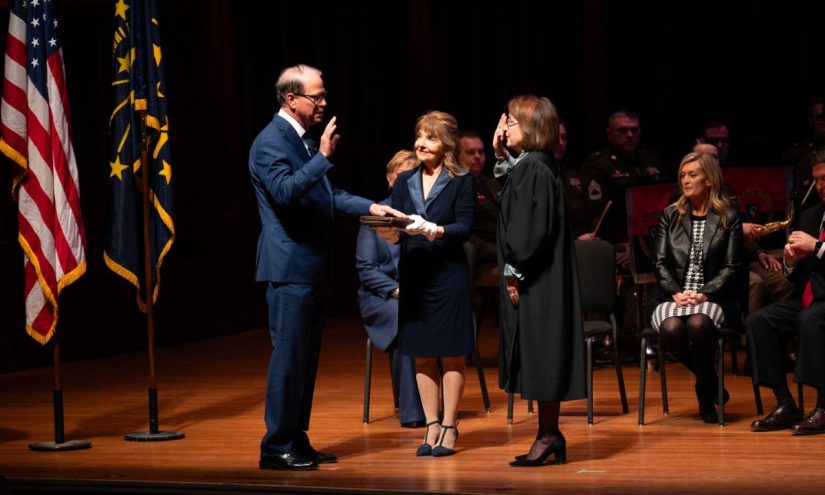
    After slashing a popular reading program from the budget, Gov. Mike Braun said Friday he asked First Lady Maureen Braun to spearhead an initiative to keep Dolly Parton’s Imagination Library in Indiana.

    “She has agreed and she will work with philanthropic partners and in consultation with state leadership to identify funding opportunities for the book distribution program,” the governor said in a news release.

    The program gifts free, high quality, age-appropriate books to children from birth to age five on a monthly basis, regardless of family income.

    Former Gov. Eric Holcomb included a statewide expansion of the program in his 2023 legislative agenda. The General Assembly earmarked $6 million for the program in the state’s last biennial budget — $2 million in the first year and $4 million in the second — to ensure that all Hoosier kids qualify to receive free books.

    But when Gov. Braun prepared his budget proposal in January he discontinued the funding as part of an overall effort to rein in state spending.

    “I am honored to lead this work to help ensure our youngest Hoosiers have as much exposure as possible to books and learning,” said First Lady Maureen Braun. “Indiana has many strong community partners and I am confident we will collaborate on a solution that grows children’s love of reading.”

    Jeff Conyers, president of The Dollywood Foundation, said he appreciates Braun’s commitment to early childhood literacy.

    “The Imagination Library brings the joy of reading to over 125,000 Hoosier children each month in all 92 counties across the state, and we are encouraged by Governor and First Lady Braun’s support to ensure its future in Indiana. We look forward to working with the Governor and First Lady, state leaders, and Local Program Partners to keep books in the hands of Indiana’s youngest learners and strengthen this foundation for a lifetime of success,” he said.

    Indiana Capital Chronicle is part of States Newsroom, a nonprofit news network supported by grants and a coalition of donors as a 501c(3) public charity. Indiana Capital Chronicle maintains editorial independence. Contact Editor Niki Kelly for questions: [email protected].


    Get stories like these delivered straight to your inbox. Sign up for The 74 Newsletter

    Source link

  • Test yourself on this week’s K-12 news

    Test yourself on this week’s K-12 news

    This audio is auto-generated. Please let us know if you have feedback.

    How well did you keep up with this week’s developments in K-12 education? To find out, take our five-question quiz below. Then, share your score by tagging us on social media with #K12DivePopQuiz.


    Source link

  • Top female district leaders share do’s and don’ts of climbing the professional ladder in 2025

    Top female district leaders share do’s and don’ts of climbing the professional ladder in 2025

    Key points:

    Professional growth is often at the top of New Year’s Resolution lists. As educators and education leaders plan for the year ahead, we asked some of the nation’s top female school district leaders to give fellow women educators the do’s and don’ts of climbing the professional ladder. Here’s what they said.

    Do: Believe in yourself.

    Though women make up 76 percent of teachers in K-12 school settings, just a small percentage of women hold the most senior role in a district. But the climb to leadership isn’t an easy one; women in educational leadership report a range of biases–from interpersonal slights to structural inequities–that make it difficult to attain and persist in top positions.

    Professional groups like Women Leading Ed are working to change that by highlighting long standing gender gaps and calling for policies and practices to improve conditions at all levels. Female education leaders are also working to rewrite the narrative around what’s possible for women educators and encouraging their peers.

    Among those education leaders is Shanie Keelean, deputy superintendent of Rush-Henrietta Central School District in New York. When asked to share advice to her peers, she said, “You just have to continually push yourself forward and believe in yourself. So very often women, if they don’t check all the boxes, they decide not to go for something. And you don’t have to check all the boxes. Nobody knows everything in every job. You learn things as you go. Passion and energy go a long way in being really committed.”

    Nerlande Anselme, superintendent of Rome City School District in New York, agreed: “We have directors in this field, we have coordinators in this field, we have psychologists who are doing amazing work, but they will dim themselves and figure that they cannot get to the top. Don’t dim your light.”

    Don’t: Keep your career goals a secret.

    When you decide to pursue a leadership position, don’t keep it a secret. While it may feel “taboo” to announce your intentions or desires, it’s actually an important first step to achieving a leadership role, said Kathleen Skeals, superintendent of North Colonie Central School District in New York.

    “Once people know you’re interested, then people start to mentor you and help you grow into the next step in your career,” Skeals said.

    Kyla Johnson-Trammell, superintendent of Oakland Unified School District in California, echoed: “Make your curiosity and your ambition known. You’ll be pleasantly surprised how that will be received by many of the folks that you work for.”

    Do: Find a strong mentor.

    A strong mentor can make all the difference in the climb to the top, leaders agreed.

    “Seek out a leader you respect and ask for a time where you could have a conversation about exploring some possibilities and what the future might bring to you,” said Mary-Anne Sheppard, executive director of leadership development for Norwalk Public Schools in Connecticut.

    It’s especially helpful to connect with someone in a position that you want to be in, said Melanie Kay-Wyatt, superintendent of Alexandria City Public Schools in Virginia. “Find someone who’s in the role you want to be in, who has a similar work ethic and a life that you have, so they can help you,” she said.

    Don’t: Be afraid to ask questions.

    “Start asking a lot of questions,” said Keelean. She suggested shadowing a mentor for a day or asking for their help in creating a career map or plan.

    And don’t be afraid to take risks, added Johnson-Trammell. “Could you get me 15 minutes with the superintendent or the chief academic officer?”

    Do: Build your skill set and network.

    “Increase your impact by developing relational skills and leadership skills,” said Rachel Alex, executive director of leadership development of Aldine Independent School District in Texas.

    And cultivate a network, said Heather Sanchez, chief of schools for Bellevue School District in Washington. “We can’t do it alone. Find that network, cultivate that network.”

    Don’t: Give up.

    “People are always going to tell you no, but that does not stop you,” said Kimberley James. “Continue to live beyond the noise and the distractions and stay focused on what it is that you want to accomplish for our students.”

    “I would say to any woman aspiring to any level of leadership that first of all, never sell yourself short,” said Sanchez. “You have it in you.”

    Interviews were conducted as part of the Visionary Voices video series. Responses have been edited for clarity and brevity.

    Latest posts by eSchool Media Contributors (see all)

    Source link

  • Colleges scramble to meet federal anti-DEI deadline

    Colleges scramble to meet federal anti-DEI deadline

    The clock is running out on colleges as they mull how to respond to a sweeping federal order to end all race-based policies and programs.

    In the face of an imminent Friday night deadline, college leaders are scrambling to determine how to navigate the Feb. 14 Dear Colleague letter issued by the Education Department’s Office for Civil Rights, which declares all race-based educational programs and policies discriminatory and illegal. When they sent the letter on Valentine’s Day, department officials gave institutions two weeks to comply or face investigations and, possibly, the loss of federal funding.

    For many colleges, the challenge is figuring out how to avoid drawing unwanted government attention without abandoning key services for underrepresented students and staff.

    Institutions aren’t going to lose federal funding overnight. The investigative process is notoriously lengthy, and the Education Department has never revoked a college’s federal funding over civil rights concerns. The OCR may also be rendered impotent, at least temporarily, if a judge decides to halt enforcement while considering a lawsuit filed Tuesday challenging the letter.

    But college leaders are anxious about the threat of federal funding cuts, which would be catastrophic for the majority of postsecondary institutions. Ray Li, who previously worked as an attorney at the Office for Civil Rights, said he expects the office to launch investigations shortly and that many colleges will buckle under the pressure, shedding practices that fostered campus diversity and belonging.

    For now, colleges seem to be taking a slow and cautious approach, removing language about race and DEI buzzwords from the names of programs and launching internal policy reviews.

    University of Nebraska president Jeffrey P. Gold said system campuses are in the midst of a comprehensive review of programs and policies, but no changes have been made yet. The Nebraska Board of Regents discussed possible tweaks to its bylaws at a recent board meeting, like removing references to “cultural diversity” and revising language on equal opportunity in employment, but no final decisions were made.

    Gold said that as the review process continues, he doesn’t expect to “turn up anything that looks or feels like discrimination,” as the letter describes.

    But it’s possible “we will turn up some things that require some language changes or possibly some changes in titles, changes in offices … that could be misinterpreted by the Department of Education just because of [the] use of specific terminology.”

    He added that Nebraska banned affirmative action in 2008 and the state’s second attempt at an anti-DEI bill is pending in the Legislature, so “we have been changing websites [and] titles for years—that’s why I believe that there’s nothing substantive that we really have to change at this time.”

    The University of Montana undertook a similar compliance review that tasked senior administrators with assessing whether their departments had any policies or practices at odds with the Dear Colleague letter.

    “We made the decision to be as thorough as possible,” said Dave Kuntz, the university’s director of strategic communications. The review, however, led to “very minimal changes and really no changes at a programmatic or operational level.”

    University leaders over all concluded that the institution was already in compliance, though some programs, like the Women’s Leadership Initiative, chose to tweak their webpages to clarify that they don’t bar anyone who wants to participate.

    A spokesperson for the Education Department did not respond to multiple questions from Inside Higher Ed in time for publication.

    A Thorough Scrubbing

    Many institutions are responding by scrubbing their websites of words like “diversity” and “inclusion.” The University of Cincinnati, Carnegie Mellon University, the University of Pittsburgh, the University of Alaska system and many more all did so after the Dear Colleague letter; some colleges had already begun revising their digital presence in response to Trump’s executive order on DEI in January.

    The University of Colorado removed all references to a former DEI office and replaced them with a website for a new “Office of Collaboration.” The University of Pennsylvania scrubbed the websites for all 16 undergraduate and graduate schools of DEI keywords and removed references to diversity and affirmative action from its nondiscrimination policies.

    Shaun Harper, a professor of education, business and public policy at the University of Southern California, said he’s been disappointed that higher ed leaders are heavily revising their institutions’ online presences in the hopes that it will appease the OCR—a project he believes will prove futile. In the Dear Colleague letter, acting assistant secretary for civil rights Craig Trainor specifically warned against using “proxies for race” and promised to investigate race-neutral programs that “discriminate in less direct, but equally insidious, ways.”

    “Scrubbing websites, launching reviews—these are the easy things to do while colleges are in ‘wait and see’ mode, to find out if that will take the target off their backs,” said Harper, an Inside Higher Ed contributor who authored a blog post last week recommending ways colleges can fight back against the Dear Colleague letter. “I think it’s both weak and reckless.”

    Some institutions have gone one step further. Colorado State University issued a statement in which leaders simultaneously maintained that its policies are already race-neutral and promised to do more to comply with the new federal directives.

    “The new administration’s interpretation of law marks a change,” the statement reads. “Given the university’s reliance on federal funding, it is necessary to take additional steps.”

    And one day before the deadline, Ohio State University president Ted Carter announced the institution would shutter two DEI offices and eliminate more than a dozen staff positions, some of the most dramatic measures a college has taken during the new Trump administration.

    In a particularly telling move, OSU’s Office of Institutional Equity will be renamed the Office of Civil Rights Compliance to “more accurately reflect its work,” according to an email sent to students Thursday.

    ‘We’ve Seen This Film Before’

    For a glimpse of how anti-DEI compliance battles might play out between institutions and policymakers, consider the red states that have passed laws mandating similar cuts to race-conscious programs.

    In Texas and Florida, public colleges reacted to impending or newly signed anti-DEI laws by changing the names of university offices and campus resources, moving personnel to student support services, and removing DEI mentions from university materials and websites. But in both cases, lawmakers came down hard to ensure the institutions took more strident action, leading to significant layoffs, spending cuts and policy changes.

    “We’ve seen the prequel to this film before in Texas,” Harper said. “When that Senate bill was looming, many institutions thought they were very smartly getting ahead of it by just renaming things. That proved to be a failed strategy, and I very comfortably predict that some version of that will also happen nationally.”

    In some states, the “review and revamp” strategy for avoiding DEI crackdowns appeared to work for a while. The University of Arkansas eliminated its DEI office in June 2023 in part to pre-empt a bill that state lawmakers were considering to force spending cuts. And last year, the University of North Carolina system Board of Trustees passed an anti-DEI resolution just as legislation was gaining steam to mandate enforcement from the state; that legislation was never brought to a full vote.

    But circumstances have changed as the Trump administration launches direct attacks on DEI. Arkansas governor Sarah Huckabee Sanders signed a law earlier this month that will “prohibit affirmative action and preferential treatment in state-supported institutions,” including public colleges like the University of Arkansas. Even in Texas, where public universities underwent broad layoffs and spending cuts in response to state legislation, lawmakers have threatened to cut $400 million in higher ed funding unless colleges do more to comply.

    “If they don’t kick DEI out of their schools, they’re going to get a lot less,” Texas lieutenant governor Dan Patrick said at a policy forum last week.

    What Happens Next?

    Legal experts say it’s unclear what will happen after the OCR’s deadline passes. The Dear Colleague letter promised more detailed guidance, but none has materialized.

    “We’re kind of all in agreement that [the letter] is really confusing and overbroad, and the timeline is really outrageous,” said Andrea Stagg, director of consulting services at Grand River Solutions, a company that works with colleges on legal compliance issues. She noted that many underresourced colleges don’t have in-house legal teams to assess their risk by the deadline.

    “What actually happens after tomorrow? How fast will it be?” she said Thursday. “I don’t know.”

    Typically, the Office for Civil Rights opens investigations based on complaints from students, families or legal advocates, but it can also launch its own direct investigations. Most cases end with a voluntary resolution, in which the institution agrees to make certain changes. But unresolved cases can be referred to the U.S. Department of Justice for litigation.

    Li believes the OCR will likely receive complaints from anti-DEI groups as well as open some direct investigations into higher ed institutions with race-based scholarships, affinity group graduation ceremonies or other practices called out by the letter, starting next week. (He pointed out that the current OCR has already launched some direct investigations into universities related to Title IX.)

    But that doesn’t mean the day after the Dear Colleague deadline “schools are just going to lose all their federal funding”—assuming normal procedures are followed, he said. Such investigations can take months, even years.

    An investigation reaching the point of litigation is also “an incredibly rare step that, under most administrations, pretty much never happens,” Li said. And the Department of Education taking away federal funding over an OCR investigation would be completely unprecedented.

    “But, also, rare things are happening right now,” Li conceded.

    Stagg said it’s hard to tell to what extent normal processes will be followed, or how much the Department of Government Efficiency’s reductions to the federal workforce could affect investigations.

    “There is a real question as to who will do these investigations” and how the OCR will choose institutions to focus on, she said. “Is there going to be an AI tool to search [college] websites for certain terms, the way we saw with the flagging of grants? It could be that the president has a bad interaction at a meeting with a leader and then they are targeted for investigation.”

    An Education Department spokesperson did not respond to questions about planned investigations, agency capacity and enforcement mechanisms in time for publication.

    It’s also unclear how much resistance colleges will put up. Li believes there’s a strong case to be made that some of the practices targeted in the Dear Colleague letter are perfectly legal. Higher ed institutions under investigation could refuse to make changes and go head to head with the Department of Justice. But they’d be signing up for an onerous, likely expensive process that puts their funding in jeopardy.

    “The question is, is anyone willing to litigate it?” Li said.

    Even if the Dear Colleague letter is rescinded, Li said the Office for Civil Rights has clearly signaled its plans for the next four years, and he believes higher ed institutions will continue working to rid themselves of anything that could attract scrutiny.

    “I think there’s going to be an overcorrection,” he said. “It is going to lead to some perfectly legal programs that support fostering racially inclusive communities on campus being taken away.”

    Source link

  • Cheating matters but redrawing assessment “matters most”

    Cheating matters but redrawing assessment “matters most”

    Conversations over students using artificial intelligence to cheat on their exams are masking wider discussions about how to improve assessment, a leading professor has argued.

    Phillip Dawson, co-director of the Centre for Research in Assessment and Digital Learning at Deakin University in Australia, argued that “validity matters more than cheating,” adding that “cheating and AI have really taken over the assessment debate.”

    Speaking at the conference of the U.K.’s Quality Assurance Agency, he said, “Cheating and all that matters. But assessing what we mean to assess is the thing that matters the most. That’s really what validity is … We need to address it, but cheating is not necessarily the most useful frame.”

    Dawson was speaking shortly after the publication of a survey conducted by the Higher Education Policy Institute, which found that 88 percent of U.K. undergraduates said they had used AI tools in some form when completing assessments.

    But the HEPI report argued that universities should “adopt a nuanced policy which reflects the fact that student use of AI is inevitable,” recognizing that chat bots and other tools “can genuinely aid learning and productivity.”

    Dawson agreed, arguing that “assessment needs to change … in a world where AI can do the things that we used to assess,” he said.

    Referencing—citing sources—may be a good example of something that can be offloaded to AI, he said. “I don’t know how to do referencing by hand, and I don’t care … We need to take that same sort of lens to what we do now and really be honest with ourselves: What’s busywork? Can we allow students to use AI for their busywork to do the cognitive offloading? Let’s not allow them to do it for what’s intrinsic, though.”

    It was a “fantasy land” to introduce what he called “discursive” measures to limit AI use, where lecturers give instructions on how AI use may or may not be permitted. Instead, he argued that “structural changes” were needed for assessments.

    “Discursive changes are not the way to go. You can’t address this problem of AI purely through talk. You need action. You need structural changes to assessment [and not just a] traffic light system that tells students, ‘This is an orange task, so you can use AI to edit but not to write.”

    “We have no way of stopping people from using AI if we aren’t in some way supervising them; we need to accept that. We can’t pretend some sort of guidance to students is going to be effective at securing assessments. Because if you aren’t supervising, you can’t be sure how AI was or wasn’t used.”

    He said there are three potential outcomes for the impact on grades as AI develops: grade inflation, where people are going to be able to do “so much more against our current standards, so things are just going to grow and grow”; and norm referencing, where students are graded on how they perform compared to other students.

    The final option, which he said was preferable, was “standards inflation,” “where we just have to keep raising the standards over time, because what AI plus a student can do gets better and better.”

    Over all, the impact of AI on assessments is fundamental, he said, adding, “The times of assessing what people know are gone.”

    Source link