Tag: News

  • Abolishing the Department of Education is unpopular

    Abolishing the Department of Education is unpopular

    The majority of likely voters oppose abolishing the U.S. Department of Education by executive order, according to a new poll conducted by the progressive think tank Data for Progress, on behalf of the Student Borrower Protection Center and Groundwork Collaborative, a left-wing advocacy group.

    The poll found 61 percent of all survey respondents “somewhat” or “strongly” opposed the idea of eliminating the department, compared to 64 percent of likely voters under the age of 45 and 59 percent above age 45. Among likely voters who attended college, 70 percent opposed the plan, compared to 57 percent who didn’t attend college.

    The results are based on a survey of 1,294 likely voters between Jan. 31 and Feb. 2.

    The poll, released Tuesday, comes amid news report that President Donald Trump is planning to sign an executive order to dismantle the Department of Education or direct “the agency to begin to diminish itself,” The Washington Post reported, citing three people briefed on the order.

    In a press release, Mike Pierce, executive director of the Student Borrower Protection Center, called “the rumored plan” to eliminate the department “wildly unpopular.”

    Source link

  • Interest in QuestBridge students on the rise

    Interest in QuestBridge students on the rise

    As colleges and universities look for new ways to diversify their student bodies and increase access to low-income students, one national program is emerging as an increasingly popular tool in those efforts.

    QuestBridge, a national match program that places high-achieving low-income students at selective partner colleges, saw early-admission rates for its applicants rise by 17 percent this year, according to data released in December. A total of 2,627 students from QuestBridge’s program were accepted early to the Class of 2029, and that number will likely grow as regular-decision acceptance letters roll in.

    And that growth will likely continue into the future after the 21-year-old organization recently added three new university partners to its roster: Bates College, the University of Richmond and, most notably, Harvard University—the last Ivy League institution to join forces with the organization.

    QuestBridge students go through a competitive application process to become finalists: Only 7,288 were selected this cycle out of more than 25,000 applicants. The finalists rank their top choices out of the organization’s 55 partner colleges, and QuestBridge matches them with a full scholarship at the highest-ranking institution on their list that accepts them.

    A spokesperson for QuestBridge chalked up this cycle’s record-breaking early acceptances to typical growth. But the numbers are hard to ignore: QuestBridge went from having 1,755 early admits in 2023 to 2,627 in 2025, during which time it only added two partner universities.

    Institutions say that QuestBridge helps deliver talented students from diverse backgrounds, filling in where their resources fall short. That’s become especially important since the Supreme Court’s decision in June 2023 banning affirmative action. In fact, universities’ interest in QuestBridge scholars surged last year, too, right after the ruling, when admit rates went up by a whopping 28 percent and the program added Cornell University and Skidmore College as partners.

    The vast majority of QuestBridge’s partner schools practiced affirmative action before the court decision. After a slew of selective colleges reported declines in Black and Hispanic enrollment this fall, they have been looking for race-neutral recruitment and admissions tools to enhance incoming classes’ diversity, including expanded financial aid programs and a commitment to first-generation students.

    Bryan Cook, director of higher education policy at the Urban Institute and the author of an ongoing study on the wide-reaching effects of the Supreme Court decision, said that whether colleges were looking to boost racial diversity or expand on efforts to admit more low-income students post–affirmative action, QuestBridge fits the bill.

    “My sense from talking to admissions professionals across the country is that they’re utilizing every tool available to them to identify diverse students,” Cook said. “Before [the Supreme Court decision], QuestBridge was a good resource but maybe not necessary,” so “it’s not surprising to see an uptick after the fact.”

    Some of the colleges with the steepest declines in underrepresented student enrollment are doubling down on QuestBridge during this early admissions cycle. Brown University, which saw a 10 percent decline in Black, Hispanic and Indigenous students, admitted 90 QuestBridge finalists early, up from 64 the prior year. Tufts University had a six-percentage-point drop in underrepresented students this fall and admitted 42 QuestBridge applicants early, up from 30 in 2023–24. The Massachusetts Institute of Technology, which reported a nine-point drop in minority students, admitted 100 QuestBridge students early, nearly double the 56 it accepted last year and comprising more than 10 percent of its early-action cohort this cycle. Black, Hispanic and Indigenous enrollment also fell by 10 percentage points this fall at Cornell, which is welcoming its first class of QuestBridge scholars this cycle.

    QuestBridge, crucially, is not a race-based program—if it were, it might earn the scrutiny being given other race-conscious scholarships and admission-adjacent initiatives. Instead, its criteria are income-based; this past year, 90 percent of applicants came from families who earn less than $65,000. While the organization’s website breaks down data on certain applicant characteristics—81 percent first-generation, 37 percent Southerners, 5 percent noncitizens—it offers no information on racial demographics. As recently as 2020, the organization did publish those breakdowns; that year, about 41 percent of finalists were white, 24 percent were Asian American, 14 percent Latino and 9 percent Black.

    “As an organization focused on socioeconomic status, we do not currently publish race data, although there have not been significant shifts in our demographics by race pre and post the [Supreme Court] decision,” a QuestBridge spokesperson wrote in an email.

    Chazz Robinson, education policy adviser at the left-of-center think tank Third Way, said the affirmative action ban isn’t the only important context for the rise in QuestBridge admits. Heightening scrutiny of wealthy colleges has increased pressure to boost financial aid programs and increase socioeconomic diversity—both problems that QuestBridge can be part of addressing.

    “There’s growing concern from students about costs. There’s growing questions for administrators about value, about the students they’re serving,” Robinson said. QuestBridge “can be part of building the case that they’re helping students from struggling backgrounds achieve socioeconomic mobility.”

    In a statement, Harvard admissions director William Fitzsimmons said the partnership reflected the university’s commitment to “bringing the most promising students to Harvard from all socioeconomic backgrounds.”

    Leigh Weisenburger, dean of admission and vice president for enrollment at Bates, said the new partnership isn’t specifically aimed at increasing racial diversity, but it is part of the university’s commitment to increasing “all kinds of diversity.”

    “Given the law, I don’t want to misconstrue [the QuestBridge partnership] as an attempt to racially diversify our class,” she said. “While we can’t consider race any longer, we obviously are continuing to do everything in our power to feed our prospect applicant pools in access-oriented ways.”

    Extending Recruiters’ Reach

    Stephanie Dupaul, vice president for enrollment management at the University of Richmond, wrote in an email to Inside Higher Ed that the university had been entertaining a partnership with QuestBridge for “many years.” She emphasized the program’s potential to amplify the university’s recruitment range geographically and reach high schools outside its normal recruitment zone.

    “We were particularly interested in their connections with rural students who might not have exposure to schools like Richmond,” she wrote.

    Weisenburger also stressed the benefits of QuestBridge’s broad geographic reach.

    “Bates is on the smaller scale of many of the institutions with whom QuestBridge partners and so for us to be present in Oklahoma as much as we’re present in California, as much as we’re present in rural Vermont, just isn’t feasible,” she said. “This allows us to be in those students’ conversations.”

    Geographic gaps aren’t the only recruitment concern for selective private colleges. Bates, like many small New England liberal arts colleges, has historically struggled to diversify its student body, which is currently about 72 percent white; its most diverse cohort yet, admitted last year, was made up of 32 percent domestic students of color. Bates’s student body is also disproportionately wealthy. Fewer than half of students receive any kind of need-based aid, and a 2023 New York Times report ranked Bates as tied for last in socioeconomic diversity out of a pool of 283 colleges. The Times report also found that only 8 percent of Bates students receive Pell Grants, and the share of Pell recipients in the student body fell by five percentage points from 2011 to 2023.

    Weisenburger said that while Bates has always striven to welcome a wide variety of students to its Lewiston, Me., campus, finding the resources to not only recruit those students but support them once they arrive on campus can be a challenge. And though she maintains Bates has a better history of diversity than many of its peers, Weisenburger acknowledged the college has a reputation for being “undiverse and privileged.”

    “We do have limited resources, looking at the college’s overall operating budget and our financial aid budget, and so we have to think really strategically and critically about how we’re going to best use those funds,” Weisenburger said. “That’s where QuestBridge for us just seems obvious.”

    Cook said that QuestBridge, with only a few thousand finalists a year, is not a cure for colleges’ diversity woes. But as admissions offices scramble to plug the hole left by the affirmative action ban, he said, partnering with outside organizations like QuestBridge can be a good short-term solution—and based on growing interest in the program, colleges may be thinking the same thing.

    “A lot of admissions professionals are still trying to figure out what are the best tools and options available to achieve the type of diverse student bodies they want. And most of them, to my knowledge, have not found a magic bullet,” he said. “I wouldn’t say that QuestBridge is a replacement for doing the hard work of figuring out other strategies. But understanding that’s not going to happen overnight, why not use it to help in the interim?”


    Source link

  • N.C. community colleges launch program modeled on CUNY ASAP

    N.C. community colleges launch program modeled on CUNY ASAP

    The North Carolina Community College System is launching NC Community Colleges Boost, a new program to move students into high-demand careers in the state. The program is modeled after the City University of New York’s Accelerated Study in Associate Programs, or CUNY ASAP, known for offering extensive wraparound supports for low-income students to increase their completion rates, including personalized academic advising and covering various college costs.

    The program will launch at eight community colleges across the state in 2025 and at seven more colleges the following year, with the help of the CUNY ASAP National Replication Collaborative, which has helped other institutions create their own versions of the heavily studied and rapidly spreading program. Participating North Carolina students will have to be in fields of study that lead to high-demand careers in the state, among other eligibility criteria.

    The CUNY ASAP model is “the gold standard for increasing completion in higher education,” North Carolina Community College System president Jeff Cox said in an announcement Wednesday. “In the NC Community Colleges Boost implementation, we have taken that model and aligned it with North Carolina’s workforce development goals as specified in the PropelNC initiative,” the system’s new funding model intended to better align funding with workforce needs.

    The effort is supported by a grant of about $35.6 million from the philanthropy Arnold Ventures, the largest private grant ever received by the North Carolina Community College System.

    “This program has increased graduation rates, reduced time to graduation, and lowered the cost per graduate across many individual colleges in several states,” Cox said of CUNY ASAP. “Here in North Carolina, we have every reason to expect similar results.”

    Source link

  • Trump signs order banning trans athletes in women’s sports

    Trump signs order banning trans athletes in women’s sports

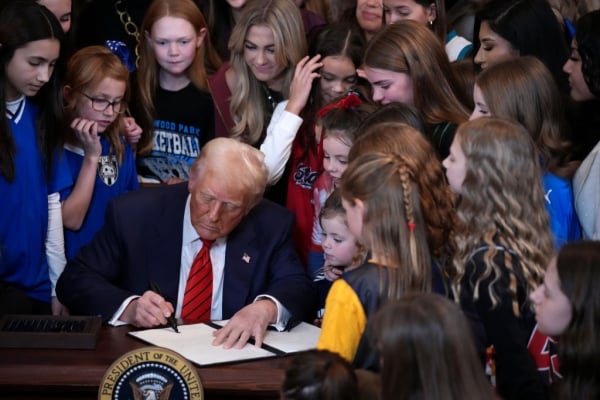
    President Donald Trump signed an executive order Wednesday banning transgender women from participating in women’s sports.

    “The war on women’s sports is over,” he said. “With my action this afternoon, we are putting every school receiving taxpayer dollars on notice that if you let men take over women’s sports teams or invade your locker rooms, you will be investigated for violations of Title IX and risk your federal funding.”

    The executive order, signed on National Girls and Women in Sports Day, declares that it’s “the policy of the United States to oppose male competitive participation in women’s sports more broadly, as a matter of safety, fairness, dignity, and truth.” Under the order, the assistant to the president for domestic policy will bring together representatives of “major athletic organizations and governing bodies, and female athletes harmed by such policies, to promote policies that are fair and safe, in the best interests of female athletes.”

    The president’s latest action builds on the GOP’s broader campaign to remove all recognition of transgender individuals from state and federal programs. On his first day in office, Trump signed a separate executive action declaring that there are only two sexes and banning federal funding for any program related to “gender ideology.” And House Republicans have passed a bill that would unilaterally ban trans women from competing in women’s sports. In nearly half of the country, trans women are banned from playing women’s sports at the K-12 or higher education level, but the order would take those bans nationwide.

    Additionally, the order calls on the education secretary to prioritize “Title IX enforcement actions against educational institutions (including athletic associations composed of or governed by such institutions) that deny female students an equal opportunity to participate in sports and athletic events by requiring them, in the women’s category, to compete with or against or to appear unclothed before males.” (Federally funded K-12 public schools and colleges are required to comply with Title IX, which bars discrimination based on sex in educational settings.)

    Charlie Baker, president of the National Collegiate Athletic Association, told Congress recently that out of the more than 500,000 college athletes, fewer than 10 were transgender. The NCAA released a statement Wednesday that said, “The NCAA Board of Governors is reviewing the executive order and will take necessary steps to align NCAA policy in the coming days, subject to further guidance from the administration.”

    As Trump spoke Wednesday, girls and women—including former University of Kentucky swimmer and anti-trans advocate Riley Gaines—stood behind him, often clapping in support.

    After thanking them, the president turned back to face the rest of the East Room audience. He acknowledged the federal lawmakers, state attorneys general and governors in attendance, describing them as “friends of women’s sports.”

    “My administration will not stand by and watch men beat and batter women,” he said. “It’s going to end and nobody’s gonna be able to do a damn thing about it because when I speak [I] speak with authority.” (Trump was referring to an Olympic gold medal–winning Algerian boxer whom some accused of being transgender; the boxer has publicly said she was born a woman.)

    Fatima Goss Graves, president of the National Women’s Law Center, said in a statement that trans students do not pose a threat in sports and deserve the same opportunities as their peers.

    “The far-right’s disturbing obsession with controlling the bodies, hearts, and minds of our country’s youth harms all students,” Graves said.

    Education secretary nominee Linda McMahon attended the ceremony, though her confirmation hearing for the office has yet to be scheduled. In the meantime, the department is being led by a collection of acting officials and appointees, including Deputy General Counsel Candice Jackson, who described the president’s order as “a demonstration of common sense.”

    “The President affirmed that this administration will protect female athletes from the danger of competing against and the indignity of sharing private spaces with someone of the opposite sex,” Jackson said in a news release. “The Department of Education stands proudly with President Trump’s action as we prioritize Title IX enforcement against educational institutions that refuse to give female athletes the Title IX protections they deserve.”

    Other Republican lawmakers praised the order Wednesday, arguing it would ensure women and girls won’t be pushed to the sidelines.

    But Representative Bobby Scott, a Democrat from Virginia and ranking member on the House education committee, was quick to oppose the order, calling it “yet another overreach by this administration” and saying its lack of clarity will further complicate what should be addressed by sports associations.

    “Rather than address the real, urgent issues that students and families are facing every day, this administration continues to target vulnerable students—specifically transgender girls and women—with a shameless attempt to bully them,” he said in a statement. “They are willing to use the most vulnerable Americans as pawns in a political game.”

    Source link

  • Career coaches fill critical gaps in Ph.D. training

    Career coaches fill critical gaps in Ph.D. training

    To the editor:

    In “The Doctoral Dilemma” (Feb. 3, 2025), Inside Higher Ed reporter Johanna Alonso describes career coaching as a “cottage industry” of “gurus” that emerged to fill critical gaps in graduate training. As a career coach cited in the article, I was disappointed to see such an inaccurate and biased portrayal of my work. 

    Coaching is a professional industry with proven methods, tools, and credentialing provided by the International Coaching Federation (ICF). Coaching is distinct from “consulting,” and it’s an intentional, strategic step for anyone seeking to change careers. This is why Johns Hopkins University employs coaches as part of its Doctoral Life Design Studio. Yet, the article portrays these university-led coaching initiatives as legitimate, structured and holistic, while describing coaching outside of the university as an opportunistic “cottage industry.” Why frame the same service in two very different ways?

    From our wide-ranging, 20-minute interview, Alonso only highlighted my hourly rate—$250/hour for a single one-to-one meeting—without any context. There is no mention of the benefits of career coaching, or whether universities like Johns Hopkins pay their coaches a similar rate. The monetary cost, presented in isolation, suggests exploitation. The reality? As a neurodivergent person, I find one-to-one meetings draining, so I’ve priced them to limit bookings. Instead, I direct Ph.D.s toward my free library of online content, my lower-cost group programs and my discounted coaching packages, all of which have helped Ph.D.s secure industry roles that double or triple their academic salaries. The article doesn’t include these details.

    The most telling sign of the article’s bias is the use of the word “guru.” Why use a loaded term like “guru” instead of “expert” to describe career coaches? As I frequently remind my clients, language shapes perception. Ph.D.s are more likely to be seen as industry-ready professionals if they use terms like “multi-year research project” instead of “dissertation” or “stakeholders” instead of “academic advisers.” The same logic applies here—calling career coaches “gurus” trivializes our work, implying we are self-appointed influencers rather than qualified professionals. I’ll never forget the professor who once tweeted, “If life outside of academia is so great, why do alt-ac gurus spend so much time talking about it? Don’t they have better things to do?”

    My response? “I wouldn’t have to do this if professors provided ANY professional development for non-academic careers.”

    Because contrary to what the article claims, I didn’t start my coaching business because I wished there were more resources available to me. I started it because, after I quit my postdoctoral fellowship for an industry career, I spent untold hours providing uncompensated career support to Ph.D.s. For nearly two years, I responded to thousands of messages, created online resources, reviewed résumés and met one-to-one with hundreds of Ph.D. students, postdocs and even tenured professors—all for free, in my leisure time. Eventually, I burned out from the incessant demand. I realized that, if I was going to continue pouring my time into helping Ph.D.s, I needed to be compensated. That’s when I started my business.

    Academia conditions us to see for-profit businesses as unethical, while “nonprofit” universities push students into a lifetime of high-interest debt. It convinces us that charging for expertise is predatory, while asking Ph.D.s to work for poverty wages is somehow noble. It forces us to internalize the idea that, if you truly care about something, you should sacrifice your well-being and life for it. But our time is valuable. Our skills are valuable. We deserve to be fairly compensated for our labor, inside and outside of academia.

    Career coaching isn’t the problem. The real problem is that academia still refuses to take a critical look in the mirror.

    Ashley Ruba is the founder of After Academia.

    Source link

  • Coming soon: ‘Executive Watch’ — Tracking the Trump Administration’s free speech record — First Amendment News 456

    Coming soon: ‘Executive Watch’ — Tracking the Trump Administration’s free speech record — First Amendment News 456

    To lift a line from the songwriter extraordinaire of our era, “the times they are a- changin’.” Indeed, they are — and this is certainly true in our own corner of the world, the world of free speech. 

    For better and worse, Donald Trump and his agents are rearranging the structure of free expression in America. Only a few weeks into his presidency, things are proceeding at a breakneck speed, with a flurry of executive orders flying out the windows of the White House. Even early on, there is a sense that what will follow may well mark one of those pinpoints in our history when that “experiment” of which Holmes spoke is tested. Whatever else happens, it is important that there is some record of these times and what happened in them. To that end, we will soon launch a new segment within FAN called “Executive Watch” to track it all: the President’s orders, the executive agencies’ actions, the activities of the President’s affiliates, and Mr. Trump’s personal undertakings.

    Enter Professor Timothy Zick, the William and Mary Law School Robert & Elizabeth Scott Research Professor and John Marshall Professor of Government and Citizenship. 

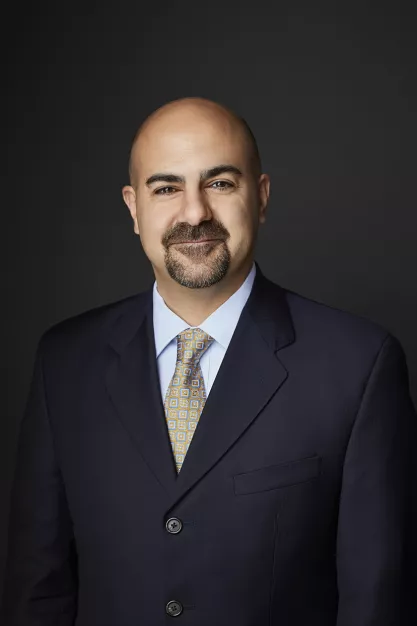
    Prof. Timothy Zick

    Zick is the author of five books on the subject: “Speech out of Doors: Preserving First Amendment Liberties in Public Places,” “The Cosmopolitan First Amendment: Protecting Transborder Expressive and Religious Liberties,” “The Dynamic Free Speech Clause: Free Speech and its Relation to Other Constitutional Rights,” “The First Amendment in the Trump Era,” and “Managed Dissent: The Law of Public Protest.” He is also the co-author of a First Amendment casebook, “The First Amendment: Cases and Theory.”

    For all of the above reasons and others, Professor Zick is well suited to undertake the “Executive Watch” bi-monthly feature of First Amendment News. 

    Even at this early stage, this project comes a time when news stories like the following 21 surface with increasing frequency:


    WATCH VIDEO: Trump Calls For Changes To First Amendment, Demands “Mandatory One-Year In Jail” For U.S. Flag Burning.

    By chronicling such information and then analyzing it, the hope is that our readers will have a more informed sense of the state of free speech at a time when so much is in flux. There is the hope that “Executive Watch” will prompt further discussion of that vital freedom that is at the core of constitutional government in America.

    FBI agents file First Amendment class action

    While FBI agents may be at-will employees who can, generally speaking, be fired for “any reason or no reason,” they can’t be fired for an unconstitutional reason, or as punishment for the exercise of their constitutional rights (e.g. he can’t fire all the African-American agents, or all the agents registered as Democrats).

    The Complaint, filed in DC District Court, is posted here. Plaintiffs are “employees of the FBI who worked on Jan. 6 and/or Mar-a-Lago cases, and who have been informed that they are likely to be terminated in the very near future for such activity.” They “intend to represent a class of at least 6,000 current and former FBI agents and employees who participated in some manner in the investigation and prosecution of crimes and abuses of power by Donald Trump, or by those acting at his behest.”

    Knight Institute on need for fact-checking platform

    [Recently] Meta announced changes . . . to its content moderation policies, including that it’s replacing third-party fact checking with a Community Notes model that allows users to publicly flag content they believe to be incorrect or misleading. 

    The following can be attributed to Katherine Glenn Bass, the Knight Institute’s research director:

    Katy Glenn Bass Research Director Knight Institute

    Katy Glenn Bass

    “Mark Zuckerberg’s announcement today is a stark reminder that many of the biggest platforms we use to communicate about issues of public importance are owned by billionaires who are not accountable to us. Apart from the obvious effort to signal political allegiance, the impact of the announced changes will not be clear for some time. But if we have any hope of measuring or understanding what is happening on these platforms, we need strong protections for the independent researchers and journalists who study them, and better mechanisms for ensuring they can access platform data.”

    In 2019, more than 200 researchers signed an open letter in support of the Knight Institute’s efforts to persuade Facebook to amend its terms of service to establish a “safe harbor” for public-interest journalism and research on the platform. Read more about that effort here.

    Shibley on Harvard’s anti-Semitism settlement

    Robert Shibley

    Robert Shibley

    Just one day after President Trump took office, Harvard agreed to settle two lawsuits brought against it by Jewish students that alleged the university ignored “severe and pervasive anti-Semitism on campus” and created “an unbearable educational environment” in the wake of the October 7, 2023, Hamas attack on Israel and the ongoing war in Gaza.

    While the settlement language itself does not appear to be public, a press release filed on the official docket of The Louis D. Brandeis Center for Human Rights Under Law v. President and Fellows of Harvard College included some details. Most notably, Harvard agreed to adopt the International Holocaust Remembrance Alliance’s (IHRA’s) definition of anti-Semitism. FIRE’s worry, shared by many others — including the definition’s primary author — is that, when added to policies used to punish discriminatory harassment on American campuses, the definition is too likely to be used to punish speech that is critical of Israel or its government but that is not motivated in animus against Jews or Israelis.

    FIRE has repeatedly proposed steps to address anti-Semitic discrimination on campus that would safeguard students from harassment while protecting freedom of speech, most recently in our inauguration-day letter to President Trump. Getting this right is important; any proposal that chills or censors protected speech on campus won’t pass constitutional muster at public universities, won’t square with free speech promises at private universities (like Harvard), and won’t effectively address anti-Semitism.

    Nevertheless, attempts to codify the IHRA definition of anti-Semitism into laws or regulations are nothing new. FIRE posted a roundup of the widespread civil libertarian opposition to its codification last year, when Congress considered adopting it as federal law. Among those opponents is the definition’s primary author, Kenneth Stern, who spoke at length with FIRE’s Nico Perrino on our So to Speak podcast about why it’s not the right tool for the job of regulating speech. As Stern wrote back in 2016 for The New York Times: “The definition was intended for data collectors writing reports about anti-Semitism in Europe. It was never supposed to curtail speech on campus. . . . And Jewish students are protected under the law as it now stands.” (Perhaps “as it is now written” would have been more precise; whether colleges follow the law is a different issue.)

    As Stern predicted in that piece:

    If this bill becomes law it is easy to imagine calls for university administrators to stop pro-Palestinian speech. Even if lawsuits alleging Title VI violations fail, students and faculty members will be scared into silence, and administrators will err on the side of suppressing or censuring speech.

    Stern’s prediction is about to receive ground testing at Harvard, and likely at other universities that may follow its lead.

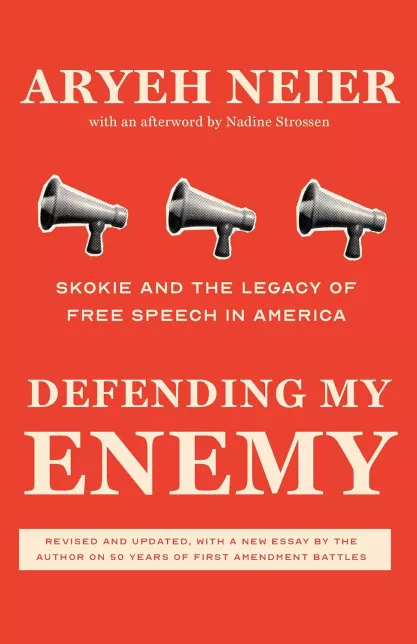
    Forthcoming book: New edition of Neier’s ‘Defending My Enemy’

    A new edition of the most important free speech book of the past half-century, with a new essay by the author on the ensuing fifty years of First Amendment controversies.

    Cover of the book "Defending My Enemy: Skokie and the Legacy of Free Speech in America" by Aryeh Neier

    When Nazis wanted to express their right to free speech in 1977 by marching through Skokie, Illinois — a town with a large population of Holocaust survivors — Aryeh Neier, then the national director of the ACLU and himself a Holocaust survivor — came to the Nazis’ defense. Explaining what many saw as a despicable bridge too far for the First Amendment, Neier spelled out his thoughts about free speech in his 1977 book Defending My Enemy.

    Now, nearly fifty years later, Neier revisits the topic of free speech in a volume that includes his original essay along with an extended new piece addressing some of the most controversial free speech issues of the past half-century. Touching on hot-button First Amendment topics currently in play, the second half of the book includes First Amendment analysis of the “Unite the Right” march in Charlotteville, campus protest over the Israel/Gaza war, book banning, trigger warnings, right-wing hate speech, the heckler’s veto, and the recent attempts by public figures including Donald Trump to overturn the long-standing Sullivan v. The New York Times precedent shielding the media from libel claims.

    Including an afterword by longtime free speech champion Nadine Strossen, Defending My Enemy offers razor-sharp analysis from the man Muck Rack describes as having “a glittering civil liberties résumé.”

    Praise for Defending My Enemy

    “Aryeh Neier’s Defending My Enemy is as relevant today as it was when it was first published. The book is a powerful reminder of why free speech matters—not just for the voices we agree with, but for the voices we abhor. Neier’s story of defending Nazis’ rights to speak in Skokie underscores a timeless truth: If we want to preserve freedom for ourselves, we must be willing to defend it for others, no matter how deeply we disagree. At a time when censorship is on the rise globally, Defending My Enemy stands as a bold and principled call to action. Every advocate of free expression needs to read this book—and more importantly, live its lessons.” — Greg Lukianoff

    Forthcoming scholarly article: ‘Output of machine learning algorithms isn’t entitled to First Amendment protection’

    Stanford Law Review logo

    Machine learning algorithms increasingly mediate our public discourse – from search engines to social media platforms to artificial intelligence companies. And as their influence on online speech swells, so do questions of whether and how the First Amendment may apply to their output. A growing chorus of scholars has expressed doubt over whether the output of machine learning algorithms is truly speech within the meaning of the First Amendment, but none have suggested a workable way to cleanly draw the line between speech and non-speech.

    This Article proposes a way to successfully draw that line based on a principle that we call “speech certainty” – the basic idea that speech is only speech if the speaker knows what he said when he said it. This idea is rooted in the text, history, and purpose of the First Amendment, and built into modern speech doctrines of editorial discretion and expressive conduct. If this bedrock principle has been overlooked, it is because, until now, all speech has been imbued with speech certainty. Articulating its existence was never necessary. But machine learning has changed that. Unlike traditional code, a close look at how machine learning algorithms work reveals that the programmers who create them can never be certain of their output. Because that output lacks speech certainty, it’s not the programmer’s speech.

    Accordingly, this Article contends that the output of machine learning algorithms isn’t entitled to First Amendment protection. With the Supreme Court signaling its intent to address unresolved questions of online speech, we are poised to enter a new era of First Amendment jurisprudence in the coming years. As we do, scholars, practicing attorneys, and judges can no longer ignore how the algorithms underlying online speech actually work – and how they have changed with the advent of machine learning. 

    Without recognizing this paradigm shift in algorithmic speech, we risk sleepwalking into a radical departure from centuries of First Amendment jurisprudence. By failing to distinguish between traditional and machine learning algorithms, current consensus about algorithmic speech suggests that the Constitution should, for the first time in its history, protect speech that a speaker does not know he has said. Speech certainty provides a novel and principled approach to conceptualizing machine learning algorithms under existing First Amendment jurisprudence. 

    Related

    More in the news

    2024-2025 SCOTUS term: Free expression and related cases

    Cases decided 

    • Villarreal v. Alaniz (Petition granted. Judgment vacated and case remanded for further consideration in light of Gonzalez v. Trevino, 602 U. S. ___ (2024) (per curiam))
    • Murphy v. Schmitt (“The petition for a writ of certiorari is granted. The judgment is vacated, and the case is remanded to the United States Court of Appeals for the Eighth Circuit for further consideration in light of Gonzalez v. Trevino, 602 U. S. ___ (2024) (per curiam).”)
    • TikTok Inc. and ByteDance Ltd v. Garland (The challenged provisions of the Protecting Americans from Foreign Adversary Controlled Applications Act do not violate petitioners’ First Amendment rights.)

    Review granted

    Pending petitions

    Petitions denied

    Last scheduled FAN

    FAN 455: “Eight free expression cases pending on SCOTUS docket

    This article is part of First Amendment News, an editorially independent publication edited by Ronald K. L. Collins and hosted by FIRE as part of our mission to educate the public about First Amendment issues. The opinions expressed are those of the article’s author(s) and may not reflect the opinions of FIRE or Mr. Collins.

    Source link

  • Encouraging first-gen students to study abroad

    Encouraging first-gen students to study abroad

    Study abroad is tied to personal and professional growth for college students, but crossing the border can be an enormous hurdle or feel unattainable for some learners.

    A new initiative at Bucknell University seeks to empower and support first-generation and low-income students who are interested in experiential learning and study away through workshops, financial aid and mentorship.

    In this episode of Voices of Student Success, host Ashley Mowreader speaks to Chris Brown, Bucknell’s Andrew Hartman ’71 and Joseph Fama ’71 Executive Director of the Center for Access and Success, to learn more about the center and how it reduces barriers to student participation in high-impact activities.

    Listen to the episode here and learn more about The Key here.

    Read a transcript of the podcast here.

    Source link

  • As DEI is scapegoated, silence is complicity (opinion)

    As DEI is scapegoated, silence is complicity (opinion)

    President Trump has used diversity, equity and inclusion to explain failures in education, the economy and national security, so you might think we’d be inured to his strategies by now. When he blamed the tragic plane crash in Washington, D.C., on DEI, he reached a new nadir of callousness. The victims of the crash had not even been recovered and he was blaming DEI policies for “lower” standards. When pressed by reporters, he couldn’t even articulate the object of his complaint or any specifics related to last week’s crash. His instinct, though, reveals a deeper, more troubling current.

    By tacking immediately to DEI in the wake of a tragedy, he seeks to create an association in the minds of Americans: People of color are underqualified and incompetent. As a woman of color who earned a Ph.D. and is also the president of a university, I know these narratives are baseless. I know how many talented, innovative people of color there are in our country. I know that their leadership, research and intelligence have produced countless benefits to our society. I also know that we have spent the last century undoing the psychological and practical damage of systemic racism in our nation. We have spent precious capital in our country recreating equality of opportunity, and programs of diversity, equity and inclusion have been essential to this transformation.

    When a president of the United States has the audacity to pose DEI as a corruption tool he is combating, I cannot be silent. It is an affront to those who sacrificed in the multiple civil rights struggles of the 20th century and helped position our nation as a place with more equality of opportunity than ever in our history. Education has been a central part of that architecture.

    As a student of language and culture, I also know that when a president and his narrow-minded minions repeat a paradigm ad nauseam, people start to believe it. The forerunner of exclusion and violence across history has been gradual dehumanization. Let us not be complicit with our silence.

    DeRionne P. Pollard is president of Nevada State University. The views expressed here are her own and do not represent the views of Nevada State University or the Nevada System of Higher Education.

    Source link

  • Hegseth orders military academies to end affirmative action

    Hegseth orders military academies to end affirmative action

    Newly confirmed U.S. secretary of defense Pete Hegseth issued a memo Jan. 29 ordering the Department of Defense to eliminate diversity, equity and inclusion initiatives and offices—including race-conscious admissions at military academies.

    The memo establishes a task force “charged with overseeing the department’s efforts to abolish DEI offices” and specifically prohibits “sex-based, race-based or ethnicity-based goals for academic admission” within the department, which oversees military academies. Hegseth wrote that he’s enforcing an executive order issued by President Trump instructing military academy leaders to eliminate DEI initiatives. 

    When the Supreme Court struck down affirmative action in 2023’s Students for Fair Admissions v. Harvard and UNC Chapel Hill, the justices explicitly made an exception for the military academies. In his majority opinion, Chief Justice John Roberts argued that the institutions, which train the military officer corps, may have “potentially distinct interests” when it comes to admissions and that diversity in the armed forces may be a national security prerogative.

    Three of those academies—the Military Academy at West Point, the Naval Academy and the Air Force Academy—have since been sued by anti–affirmative action groups seeking to eliminate the exemption. Last February the Supreme Court declined to hear the case against West Point, and in December a federal judge ruled that the Naval Academy can continue to consider race in admissions; the case against the Air Force Academy is ongoing. 

    It is unclear if Hegseth’s order to eliminate race-based “quotas” in admissions would prohibit military academies from considering race at all when reviewing applications. 

    Source link

  • Trump reiterates plan to abolish the Education Department

    Trump reiterates plan to abolish the Education Department

    Amid reports that the White House is finalizing an executive order to get rid of the Education Department, President Donald Trump said Tuesday that when he nominated Linda McMahon as secretary, he instructed her to “put herself out of a job.” 

    “Linda, I hope you do a great job and put yourself out of a job,” the president said to a group of reporters in the Oval Office.

    The comment was the first time Trump has publicly talked about his campaign promise to dissolve the department since taking office last month. Several media outlets reported Monday that the administration is preparing an executive order that would direct department officials to shut down some functions and develop a plan for the agency’s demise. The timing of such an order is still unclear.

    When asked Tuesday whether abolishing the department was something he could legally do, the president said, “I’d like to be able to do that.” He later added that “there are some people that think I could.” Many experts say that only Congress can kill off the federal agency.

    Trump said that the largest obstacle in the way of passing a bill to dissolve the department is teachers’ unions.

    “The teachers’ unions are the only ones that are opposed to it,” he said. “No one else would want to hold [us] back.”

    A recent Wall Street Journal poll found that 61 percent of registered voters oppose getting rid of the department. Numerous education lobbying groups, higher education experts and Democratic lawmakers have criticized the concept, saying that it would cause chaotic disruptions and make college hard to access for low-income students and those with disabilities.

    “Investment in our children is an investment in our future. Dismantling the Department of Education would do the opposite by making it harder for children to achieve and for parents, caregivers, and communities to thrive,” Senator Edward Markey, a Democrat from Massachusetts, said in a news release. “President Trump wants to lock the promise of public education—of equal opportunity and hope for all—behind an ivory tower accessible only to his billionaire donors … It is callous and cynical.” 

    Source link