
Post-Bankruptcy, 2U Appoints New CEO
Source link
Tag: News
-

Trump announces 10 new Education Department appointees
The Trump administration named 10 new Education Department appointees Thursday, four of whom have previously worked with the America First Policy Institute, a pro-Trump think tank formed in 2021 as the president ended his first term in office.
Education secretary nominee Linda McMahon was a co-founder of AFPI and served as the group’s president and CEO until she was selected to head the department.
Thursday’s announcement offers more insight into who will help carry out Trump’s education agenda. Until McMahon and Deputy Secretary–designate Penny Schwinn are confirmed by the Senate, a veteran agency official, Denise Carter, will serve as acting secretary.
The newest cohort of appointees includes:
- Rachel Oglesby, a former AFPI chief state action officer, as chief of staff.
- Jonathan Pidluzny, AFPI’s former director of higher education reform, as deputy chief of staff for policy and programs.
- Virginia “Chase” Forrester, former AFPI chief events officer, as deputy chief of staff for operations.
- Craig Trainor, a former congressional senior special counsel and AFPI senior litigation counsel, as deputy assistant secretary for policy in the Office for Civil Rights. (During his time at AFPI, Trainor worked under Pam Bondi, whom Trump has nominated as his attorney general.)
- Steve Warzoha as White House liaison.
- Tom Wheeler as principal deputy general counsel.
- Madi Biedermann as deputy assistant secretary for the Office of Communications and Outreach.
- Candice Jackson, who served in the first Trump administration, as deputy general counsel.
- Joshua Kleinfeld as deputy general counsel.
- Hannah Ruth Earl as director of the Center for Faith-Based and Neighborhood Partnerships.
-
AAUP opposes “anticipatory obedience” to Trump, GOP
The American Association of University Professors released a statement Thursday urging universities not to engage in “anticipatory obedience,” which it defined as “acting to comply in advance of any pressure to do so.”
“As Donald Trump assumes the presidency for a second time, the outlook for higher education is dire,” begins the statement, which the AAUP said its elected national council approved this month.
“The Trump administration and many Republican-led state governments appear poised to accelerate attacks on academic freedom, shared governance and higher education as a public good,” the statement says. “They will attack the curricular authority of the faculty on a number of fronts … It is the higher education community’s responsibility not to surrender to such attacks—and not to surrender in anticipation of them. Instead, we must vigorously and loudly oppose them.”
The White House did not respond to Inside Higher Ed’s request for comment. Before JD Vance was elected vice president, AAUP president Todd Wolfson called him a “fascist.”
In the fall, media reported that the University of North Texas removed words such as “race” from course titles, despite Texas’s anti–diversity, equity and inclusion law specifically exempting “course instruction.” The AAUP statement says that was part of a trend.
“Under no circumstances should an institution go further than the law demands,” the AAUP wrote. “Yet, the examples above depict an eagerness to obey on the part of administrative officers, portending a bleak future.”
The association recommended that faculty act by reviewing “handbooks and contracts to strengthen and reinforce faculty rights” in employment decisions and curricular changes. It also suggested reforming “policies to strengthen faculty oversight in areas currently being used to exercise excessive and undue discipline against faculty, staff and students,” including policies on Title IX, Title VI, acceptable use of institutional resources, outside speakers and campus protests.
-
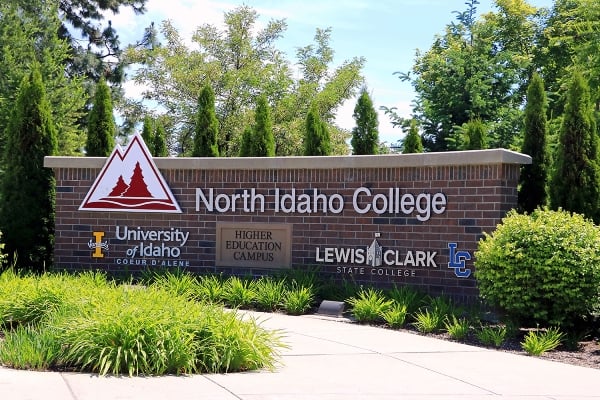
North Idaho College awaits its fate
After years of scrutiny over governance issues that included violations of open meetings laws and other infractions, North Idaho College will soon learn whether it will keep or lose accreditation.
The Northwest Commission on Colleges and Universities will convene Tuesday through Friday for its January meeting. Commissioners will determine whether NIC adequately resolved outstanding concerns driven by a former board majority that emphasized culture war issues at the rural Idaho college, tried to push out its president and hired personnel with political connections to board members.
A decision on the college’s accreditation status will be delivered within 30 days of the meeting.
College officials hope the commissioners see the progress they say NIC has made over the last year, resolving various governance issues raised by NWCCU as it sought to comply with accreditation standards after a flurry of warnings that culminated in a show-cause status in February 2023, meaning the college must “present evidence why its accreditation should not be withdrawn.” The sanction highlighted multiple governance issues driven by an exceptionally erratic board.
Years of Conflict
North Idaho’s clash with its accreditor came as a result of thorny governance issues marked by bitter clashes on its five-member elected Board of Trustees, with meetings that occasionally devolved into name-calling and appeared at times to be fueled by personal and ideological agendas.
The high drama began at the small college in Coeur d’Alene in 2021 with allegations of abuse and aggressive behavior toward employees and others by then-chair Todd Banducci. The firing of former president Rick MacLennan without cause that same year prompted a successful lawsuit against the college, and the resignation of three board members (one amid residency questions) in 2022 prompted the state to temporarily appoint three new trustees who served out the remainder of their predecessors’ terms.
While the reconstituted board managed to hire a new president in 2022, membership was reshuffled after elections that year. Two members who often voted together—Banducci and Greg McKenzie—were joined by Mike Waggoner, all of whom had ties to the Kootenai County Republican Central Committee, a group some considered far-right even for rural Idaho. With a new board majority in place, governance issues at NIC escalated rapidly in 2023.
The new majority seated after Election Day in 2022 began by hiring Art Macomber as the college’s attorney in a surprise move that the board would later admit violated open meetings laws. The college’s prior attorney, Marc Lyons, had resigned after the election, writing that his services were “no longer desired” by the board majority. Macomber, who has since resigned, had political connections to the board majority.
The board’s next act was to sideline President Nick Swayne, placing him on administrative leave in December after he cautioned trustees that they had violated open meetings and procurement law by abruptly picking Macomber without public notice or a bidding process. In Swayne’s place, the board hired an interim president while Macomber conducted a nebulous investigation into Swayne’s hiring by the prior board. (The interim president was given a contract that paid him more than $235,000 a year, $5,000 more than Swayne’s annual salary.) However, Swayne was reinstated in March 2023 after a successful legal challenge to the board’s attempted ouster.
Amid the volatility, NWCCU issued a series of escalating warnings.
The accreditor first contacted North Idaho leadership in April 2021 in response to complaints about alleged noncompliance with nondiscrimination, governing board and academic freedom standards. The accreditor then raised further concerns about governance standards in December 2021 related to MacLennan’s firing. (The Idaho State Board of Education also raised concerns about “the current trajectory” of NIC that same month.) In April 2022, NWCCU officially sanctioned NIC with a warning letter about noncompliance with governance and institutional integrity standards. In December of that year, after Swayne was temporarily sidelined, the accreditor threatened NIC with show-cause status. By February 2023, NWCCU followed through, slapping NIC with a show- cause sanction that was later extended in July of that year.
In a May 2023 report, accreditors wrote that “NIC’s governing board’s actions over the past two years have created risks to institutional quality and integrity.” Among their concerns were “multiple lawsuits resulting from Board actions” and violations of open meetings laws; high leadership turnover, including having two presidents under contract; the hiring process for Macomber; and multiple votes of no confidence in the board by faculty and staff that trustees had not responded to.
When NWCCU extended NIC’s show-cause status in July, it called on the board to address the no-confidence resolutions and “resolve current litigation, governance, and accreditation issues that have had a current and immediate impact” on college finances, among various other issues.
Swayne, in an interview with Inside Higher Ed, noted that the issues fell on the governance side, which is also reflected in NWCCU’s findings. Academics at the college, he said, are strong.
An Optimistic Outlook
As the concerns about the loss of accreditation continued—often becoming a heated focal point in public comments at board meetings—NIC hired outside consultants, such as the Association of Community College Trustees to help develop board policies and interpersonal relationships.
While that process seemed to help, Swayne doesn’t believe a lack of training was the issue.
“I don’t want to discount the value of the consulting, but two years of consulting to try to teach board members, adults—well-educated adults—how to behave properly in a board meeting doesn’t make a lot of sense,” Swayne said. “So there was something else going on. I can’t tell you what that was—I don’t know.”
The notion of something sinister underlying the actions of the former board majority has been a common theme at meetings in recent years, with speakers questioning the trustees’ motives. Local residents often demanded the board majority explain their motivations and offered theories of their own, sometimes tinged with conspiracy, including speculation that the three trustees aimed to shut the college down in order to free up prime real estate for development.
Swayne suggested there was a “hangover from COVID” at play given that opposition to masks and vaccines was a “main issue” for the majority bloc of trustees until the coronavirus pandemic waned. Emboldened trustees, he suspects, were in search of another cause after that fight ended. And some, like Banducci, had alleged the existence of a liberal “deep state” at the community college, particularly among faculty.
After some employees voiced support for the Black Lives Matter movement, Banducci claimed on a podcast that “those agendas are being woven into the curriculum. And, you know, who controls the kids, who controls their minds, who controls the college student, you know, controls the voter of the future and controls the populace.” Banducci also allegedly berated MacLennan’s wife for being a Hillary Clinton support, according to a former trustee who called for Banducci to step down in 2021.
But with increasing accreditor scrutiny, there appeared to be a softening of the board, starting with Waggoner, who often sided with Banducci and McKenzie but later emerged as a swing vote.
Swayne said he noticed the change around May 2024. And once Waggoner’s voting patterns shifted, Banducci and McKenzie fell in behind him. Meetings, which had often stretched on for hours due to heated public comment periods and legal wrangling, became shorter, more cordial and nonconfrontational.
Last fall, Banducci and Waggoner decided not to run for re-election and McKenzie lost his bid for another term, putting an end to the board majority that was behind many of the decisions that prompted scrutiny from accreditors as three new trustees were seated. (McKenzie and Banducci did not respond to requests for comment from Inside Higher Ed. Waggoner could not be reached.)
Swayne said there were “seven months of relatively normalized meetings with the old board.” And now, with a reconfigured board, he believes NIC’s governance issues have been resolved.
If NIC does lose accreditation over governance issues, it would be an anomaly. Typically, accreditation is stripped due to severe financial or academic issues, which NWCCU has not found. Governance concerns are typically met with warnings, which NWCCU issued in multiple cases before taking further action.
NWCCU president Sonny Ramaswamy wrote by email that it would be “inappropriate to speak about any decisions the Board of Commissioners will make [on] North Idaho College, before they have acted” and noted that the process will follow an established accreditation actions policy.
While Swayne declined to predict the outcome, he believes the college has made significant progress on accreditation concerns and “started meeting the standards back in May of 2024.” He’s hopeful that a room full of more than two dozen commissioners will see it the same way.
-
Carnegie Foundation launches sustainability classification pilot
The Carnegie Foundation for the Advancement of Teaching and the American Council on Education announced Thursday that they have launched a pilot of their new Sustainability Elective Classification, a designation that will recognize institutions of higher education that “embed sustainability and climate action into their core missions,” according to the announcement.
The pilot program will include 21 colleges and universities from across the 50 states and Puerto Rico and will aim to refine the criteria for the classification while working to guarantee that it is attainable to institutions of all sizes and types. The classification is expected to consider “institutional efforts across curriculum, research, operations, community engagement, and workforce development, with an emphasis on preparing students for careers in sustainability fields.”
“The Elective Classification for Sustainability recognizes how institutions of higher education are essential to the future of American innovation and progress, within and beyond their classrooms,” Timothy F. C. Knowles, president of the Carnegie Foundation, said in the announcement. “These pilot institutions are helping to forge the way.”
The Sustainability Elective Classification is scheduled to launch in early 2026. The Carnegie Foundation and ACE are also looking for a university or institution to serve as the classification’s administrative and operational host.
-
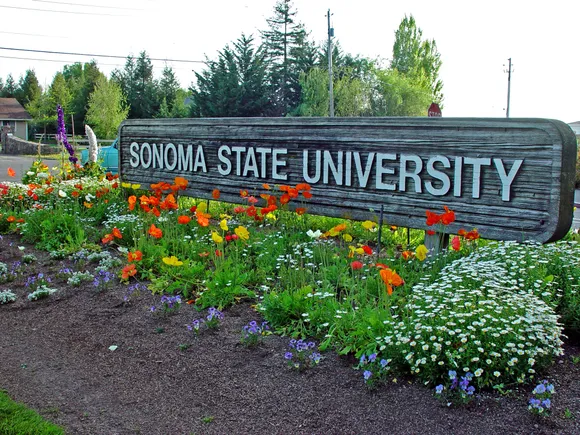
‘Sobering news’: Sonoma State University makes broad cuts to tackle $24M deficit
This audio is auto-generated. Please let us know if you have feedback.Dive Brief:
- Sonoma State University is moving to cut staff, faculty, programs, departments and its athletics programs as it faces a larger-than-expected deficit of nearly $24 million.
- Interim President Emily Cutrer described the depth of the university’s budget hole as “sobering news.” To manage it, the university is cutting four management positions and 12 staff positions, and it will not renew contracts of 46 tenured and adjunct faculty members for the 2025-26 academic year.
- It also plans to axe about two dozen undergraduate and graduate programs. Additionally, it will eliminate its departments of art history, economics, geology, philosophy, theater and dance, and women and gender studies, while consolidating other programs and schools.
Dive Insight:
In announcing the cuts at Sonoma State, Cutrer outlined several forces behind the university’s growing budget gap. She cited, in part, inflation — in personnel costs, as well as supplies and utilities. Recent cost escalations led the university to the “unfortunate realization” that its yearslong deficit was even larger than expected, the president said.
But the public institution’s chief challenge is enrollment, Cutrer said, noting a 38% decline since its peak in 2015. (Fall headcount stood at just under 6,000 in 2023, per federal data.) Those decreases hit the university’s revenue in tuition and fees as well as in enrollment-based funding from the California State University system.
To cope, Sonoma over the past two years has offered buyouts, made “strategic” job cuts and frozen hiring, among other operational moves, Cutrer said.
“Unfortunately, the actions taken so far, difficult though they have been, are not enough,” she added. “Further steps must be taken to fully close the budget gap and ensure Sonoma State’s financial capacity to best serve its current and future students and adapt to a changing higher education landscape.”
Those steps entail broad-based cuts. On the chopping block is a wide range of programs, including bachelor’s programs in art, economics, physics, philosophy and many others. Some master’s programs are also slated to be cut, among them Spanish, English and public administration.
Meanwhile, other programs will be consolidated. For example, Sonoma’s departments of American multicultural studies, Chicano and Latino studies, and Native American studies are set to merge into an ethnic studies department with a single major under it.
Also making headlines is Sonoma’s decision to end its Division II NCAA athletics programs after the current academic year, which was made after a “thorough review of the university’s financial necessities and long-term sustainability,” the institution said. Sonoma plans to honor the scholarships of current student athletes and to support those who decide to transfer to another school, such as by helping them obtain their transcripts.
Expected savings from the cuts include:
- $8 million in reduced instructional costs.
- $3.8 million from reorganization.
- $3.7 million from cutting athletics.
- $3.3 million from hiring freeze.
- $1.3 million from university-wide budget reductions.
Cutrer said the round of cuts likely represent the “large majority” Sonoma will have to make this year, but she warned more could be necessary as it discusses shared services with Cal State.
Sonoma is by no means the only public institution in California making cuts. The Cal State and University of California systems are both scrambling to manage potential reductions in state funding amounting to hundreds of millions of dollars after Gov. Gavin Newsom unveiled his latest budget proposal for the 2025-26 fiscal year.
After the proposal’s release earlier this month, Cal State — facing a state funding reduction of $375 million — said that a “shortfall of this magnitude will negatively impact academic programming, student services, course offerings and the CSU workforce.”
-
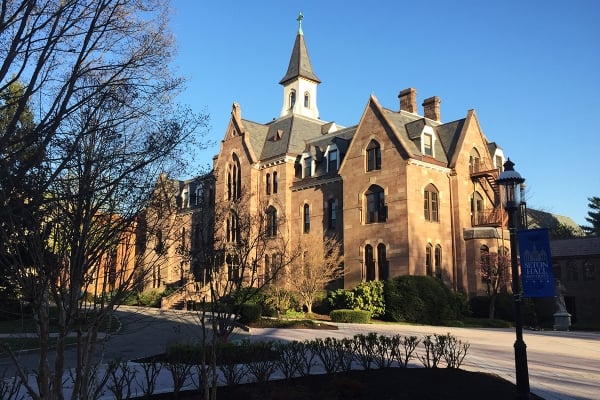
Dual leadership controversies plague Seton Hall
Seton Hall University president Monsignor Joseph Reilly is facing mounting pressure from public officials and demands for transparency following a report alleging that he looked the other way on sexual abuse cases.
At the same time, the university is contending with a lawsuit filed last year by former president Joseph Nyre, which alleges retaliation, breach of contract and various other misdeeds by the Board of Regents.
The regents have remained silent on the Reilly situation and said little about Nyre’s lawsuit, beyond a report issued in July. Now lawmakers are ratcheting up pressure on the private institution to take action, raising questions about how the board is navigating the dual controversies behind closed doors with little public oversight.
A Bombshell Report
Reilly, who was hired as president in April, has a long history with Seton Hall.
The new president earned a psychology degree from the university in 1987; in 2002, he became rector of the College Seminary at St. Andrew’s Hall, the undergraduate seminary of the Archdiocese of Newark, which is part of Seton Hall. A decade later Reilly became rector and dean of the university’s graduate seminary, a position he held until 2022. Then he took a yearlong sabbatical before returning as vice provost of academics and Catholic identity.
Reilly also served on Seton Hall’s Board of Trustees—one of two governing bodies—during his time as an administrator.
It was during his time at the graduate School of Theology that Reilly is accused of knowing about sexual abuse allegations that he did not report, according to documents reviewed by Politico. The case is linked to sprawling sexual abuse allegations involving disgraced cardinal Theodore McCarrick, the news outlet reported, who “created a culture of fear and intimidation” and “used his position of power as then–Archbishop of Newark”—which sponsors Seton Hall—“to sexually harass seminarians” for decades, according to a university report released in 2019.
McCarrick, who sat on both of Seton Hall’s boards, was defrocked by the Vatican after he was found guilty of sexual misconduct in a canonical trial. A criminal case against McCarrick was suspended last year due to his inability to stand trial because of a dementia diagnosis.
While Seton Hall never released to the public its full report on the abuse McCarrick allegedly committed, Politico’s review of the findings revealed that Reilly knew about the allegations against the cardinal and failed to report to university officials a student complaint about sexual assault by a seminarian. Politico also reported that Reilly dismissed another seminarian in 2012 who had allegedly been sexually abused and that he did not investigate the incident. In another instance, Reilly was allegedly made aware of a 2014 sexual harassment charge and did not report it.
Politico also reported that Reilly did not fully cooperate with a 2019 investigation into McCarrick’s alleged abuse. A task force set up in 2020 to mete out discipline after the McCarrick scandal reportedly recommended removing Reilly from board and leadership roles.
As the controversy has unfolded, Seton Hall has said little publicly.
“As part of the search for the university’s 22nd president, the Board of Regents reviewed several candidates and overwhelmingly selected Monsignor Joseph Reilly to lead Seton Hall in recognition of his decades of effective service and leadership,” a Seton Hall spokesperson wrote in an email to Inside Higher Ed. “The Board of Regents remains unequivocal in its support of Monsignor Reilly and firmly believes in his ability and vision to enhance Seton Hall’s standing as one of the nation’s foremost Catholic universities.”
The university did not provide a requested interview with regents, but the spokesperson added that following a 2019 review by a law firm, “the board determined that Monsignor Reilly should remain in his role and eligible for future roles at the University.” Seton Hall declined to provide a copy of the report.
Demanding Answers
Seton Hall’s silence has not gone unnoticed by Democratic state senator Andrew Zwecker, who chairs the Senate Oversight Committee and is vice chair of the higher education committee.
“I’m appalled at the fact that they’ve just doubled down at this point without any transparency, just generic statements about values and doing a good job, et cetera,” he told Inside Higher Ed.
Though Seton Hall is private, Zwecker noted that it receives about $2.5 million in state funding for certain programs. He added that the state could cut those funds—an option he might pursue if the university doesn’t respond transparently to concerns that Reilly ignored sexual abuse.
“That is a lever that we must absolutely consider to keep the pressure on,” Zwecker said.
He’s also weighing a public hearing. But Zwecker said he would rather see Seton Hall address the issue and answer questions about what Reilly knew about sexual abuse and whether the Board of Regents ignored those findings when it voted to hire him.
If regents knew and “voted to install this president anyway, they should resign immediately,” Zwecker said.
Democratic governor Phil Murphy also weighed in last week.
“The Governor is deeply concerned by the allegations and believes that Seton Hall University must release the full report,” press secretary Natalie Hamilton told Inside Higher Ed by email.
The Star-Ledger editorial board has challenged the university on its opacity, publishing an opinion piece on Monday under the headline “Why is Seton Hall hiding this sex abuse report?”
Faculty members at Seton Hall are also pressing for transparency.
Nathaniel Knight, chair of Seton Hall’s Faculty Senate, noted “considerable concern” among the professoriate and said he wants to see a “greater degree of transparency” from the university.
Knight said he supported Reilly’s hiring when he was named president, noting he “had the institutional memory” given his years of service and seemed to “embody the spirit of Seton Hall.” But now Knight wants the university to fully explain the concerns around the new president.
“I support Monsignor Reilly. I supported his hiring. I think he’s a good man, a man of integrity and religious faith, and is someone who brought a promise of bringing the university, the community, together around its core values as a Catholic institution of higher education. Whatever is out there, I’d like to be able to weigh that against the positives that I see with Monsignor Reilly,” Knight said.
An Explosive Lawsuit
For Seton Hall, the Reilly controversy comes on the heels of Nyre’s unexpected exit in 2023, which shocked many in the community.
“It was a surprise. I think we were bewildered. He had been brought in with great fanfare not long before,” Knight said. “He saw the university through the COVID years with a steady hand and was in the process of implementing this strategic plan that he had crafted. We saw no indication that there were any problems in the works. It was out of the blue and had us all scratching our heads.”
Nyre sued Seton Hall last February, alleging breach of contract and retaliation by the board.
In the lawsuit, Nyre alleges he was pushed out by the Board of Regents following a clash with then-chair Kevin Marino, whom he accused of micromanagement, improperly inserting himself into an embezzlement investigation at the law school and sexually harassing his wife, Kelli Nyre, among other charges. Marino, who is no longer on the board, was not named as a defendant in the lawsuit despite being at the center of many of the allegations.
“Our litigation centers on the alleged systemic failures of the Board of Regents and their unwillingness to comply with federal laws, including Title IX, Title VII, and Title IV, as well as university bylaws and policies,” Matthew Luber, an attorney representing Nyre, said in a statement. “As alleged in the Complaint, the Defendants prioritized self-preservation, suppressing dissent and retaliating against individuals like Dr. Nyre who reported misconduct and advocated for meaningful change. As further alleged in the Complaint, the Board of Regents not only neglected their fiduciary responsibilities, but exposed the University and its personnel to significant risk. No matter the outcome, change is urgently needed at Seton Hall.”
The university has pushed back in court. Officials filed a motion to dismiss last March, alleging that Nyre failed to state a claim and that the terms of his exit agreement barred him from filing a lawsuit against Seton Hall and/or its Board of Regents. Lawyers for Seton Hall wrote in a brief that Nyre’s lawsuit “can best be described as gamesmanship, and at worst sheer dishonesty.”
University officials did not address the Nyre lawsuit in a statement to Inside Higher Ed, but last July they released a report from an outside law firm rejecting the claims against Marino. Attorneys for the firm, Perry Law, wrote that they “found no evidence to substantiate Mrs. Nyre’s allegations regarding Mr. Marino, despite the purported harassment allegedly occurring in public places in close proximity to numerous other individuals.”
The Perry Law report was issued July 2, one day after Reilly assumed office. The report did not include interviews with the Nyres, who the authors noted did not participate in the investigation. Witnesses present for the alleged incidents told investigators that they did not see Marino engage in the behavior he is accused of, and the former board chair has denied the claims and blasted the lawsuit as “desperate and pathetic.” And, in a statement to Inside Higher Ed last year, Seton Hall said the claims were without merit.
As controversies around Seton Hall’s current and former leaders play out, more details are likely to emerge in the Nyre case, barring a dismissal or settlement. But the Reilly review may remain shrouded in mystery as Seton Hall hunkers down, ignoring widespread calls for transparency.
-
Probabilities of generative AI pale next to individual ideas
While I was working on the manuscript for More Than Words: How to Think About Writing in the Age of AI, I did a significant amount of experimenting with large language models, spending the most time with ChatGPT (and its various successors) and Claude (in its different flavors).
I anticipated that over time this experimenting would reveal some genuinely useful application of this technology to my work as a writer.
In truth, it’s been the opposite, and I think it’s interesting to explore why.
One factor is that I have become more concerned about what I see as a largely uncritical embrace of generative AI in educational contexts. I am not merely talking about egregiously wrongheaded moves like introducing an AI-powered Anne Frank emulator that has only gracious thoughts toward Nazis, but other examples of instructors and institutions assuming that because the technology is something of a wonder, it must have a positive effect on teaching and learning.
This has pushed me closer to a resistance mindset, if for no other reason than to provide a counterbalance to those who see AI as an inevitability without considering what’s on the other side. In truth, however, rather than being a full-on resister I’m more in line with Marc Watkins, who believes that we should be seeing AI as “unavoidable” but not “inevitable.” While I think throwing a bear hug around generative AI is beyond foolish, I also do not dismiss the technology’s potential utility in helping students learn.
(Though, a big open question is what and how we want them to learn these things.)
Another factor has been that the more I worked with the LLMs, the less I trusted them. Part of this was because I was trying to deploy their capabilities to support me on writing in areas where I have significant background knowledge and I found them consistently steering me wrong in subtle yet meaningful ways. This in turn made me fearful of using them in areas where I do not have the necessary knowledge to police their hallucinations.
Mostly, though, just about every time I tried to use them in the interests of giving myself a shortcut to a faster outcome, I realized by taking the shortcut I’d missed some important experience along the way.
As one example, in a section where I argue for the importance of cultivating one’s own taste and sense of aesthetic quality, I intended to use some material from New Yorker staff writer Kyle Chayka’s book Filterworld: How Algorithms Flattened Culture. I’d read and even reviewed the book several months before, so I thought I had a good handle on it, but still, I needed a refresher on what Chayka calls “algorithmic anxiety” and prompted ChatGPT to remind me what Chayka meant by this.
The summary delivered by ChatGPT was perfectly fine, accurate and nonhallucinatory, but I couldn’t manage to go from the notion I had in my head about Chayka’s idea to something useful on the page via that summary of Chayka’s idea. In the end, I had to go back and reread the material in the book surrounding the concept to kick my brain into gear in a way that allowed me to articulate a thought of my own.
Something similar happened several other times, and I began to wonder exactly what was up. It’s possible that my writing process is idiosyncratic, but I discovered that to continue to work the problem of saying (hopefully) interesting and insightful things in the book was not a summary of the ideas of others, but the original expression of others as fuel for my thoughts.
This phenomenon might be related to the nature of how I view writing, which is that writing is a continual process of discovery where I have initial thoughts that bring me to the page, but the act of bringing the idea to the page alters those initial thoughts.
I tend to think all writing, or all good writing, anyway, operates this way because it is how you will know that you are getting the output of a unique intelligence on the page. The goal is to uncover something I didn’t know for myself, operating under the theory that this will also deliver something fresh for the audience. If the writer hasn’t discovered something for themselves in the process, what’s the point of the whole exercise?
When I turned to an LLM for a summary and could find no use for it, I came to recognize that I was interacting not with an intelligence, but a probability. Without an interesting human feature to latch onto, I couldn’t find a way to engage my own humanity.
I accept that others are having different experiences in working alongside large language models, that they find them truly generative (pardon the pun). Still, I wonder what it means to find a spark in generalized probabilities, rather than the singular intelligence.
I believe I say a lot of interesting and insightful things in More Than Words. I’m also confident I may have some things wrong and, over time, my beliefs will be changed by exposing myself to the responses of others. This is the process of communication and conversation, processes that are not a capacity of large language models given they have no intention working underneath the hood of their algorithm.
Believing otherwise is to indulge in a delusion. Maybe it’s a helpful delusion, but a delusion nonetheless.
The capacities of this technology are amazing and increasing all the time, but to me, for my work, they don’t offer all that much of meaning.
-
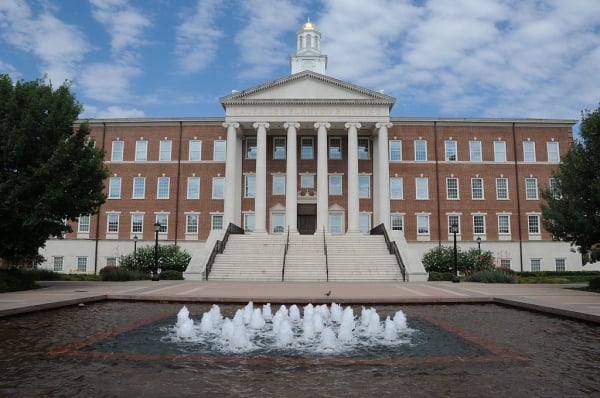
A troubling moment for public higher ed (opinion)
David Kozlowski/Moment Mobile/Getty Images
Earlier this month, my institution, Southern Methodist University, made headlines by hiring President Jay Hartzell away from the University of Texas at Austin, one of the country’s largest and most prestigious public universities. The move surprised many on both campuses and sent shock waves through higher education.
While I can’t presume to know all the motivations behind President Hartzell’s decision and I don’t speak for SMU, as a faculty member who studies higher education, I believe this moment demands our attention. Many public universities are under serious threat, and private universities need to realize that their future is closely tied to the success of their public counterparts.
For more than a decade, SMU has been my academic home. The campus boasts smart and curious students, dedicated faculty who care about teaching and research, and strong leadership from the administration and Board of Trustees. We’re in the middle of a successful capital campaign and enjoying both athletic success after our move to the Atlantic Coast Conference and a growing research profile.
Yet, even as I anticipate the leadership that President Hartzell will bring to SMU, I can’t ignore the broader context that has made such a move more common and deeply troubling.
Hartzell isn’t the only example of a major public university president leaving for the relative safety of private higher education. His predecessor at UT Austin Greg Fenves left for Emory University. Carol Folt resigned from the University of North Carolina at Chapel Hill before getting the University of Southern California presidency. Back in 2011, Biddy Martin famously left the University of Wisconsin at Madison for Amherst College in one of the early examples of this trend. So, what is going on and why are major public university presidencies less attractive than they once were?
The Struggles of Public Universities
Being a public university president in a red state is the toughest job in higher education today.
Public universities in these politically charged environments are under siege. They face relentless ideological attacks from state legislators and are constantly forced to navigate resource challenges from years of underfunding.
Politicians attacking public higher education are not simply questioning the budgets or management—they are attempting to dismantle these institutions. Efforts to reduce tenure protections, anti-DEI legislation and restrictions on what can be taught are all part of a broader effort to strip public universities of their autonomy.
The goal of these attacks is clear: to reduce the influence and authority of public universities and their leaders and undermine the critical role they play in shaping a well-informed and educated workforce and citizenry.
At the same time, some institutions are adopting policies of institutional neutrality, reducing the ability of presidents to speak out on these issues.
The cumulative effect of these efforts is to make public universities and their leaders less effective in advocating for their missions, students and faculty.
The Short-Term Advantages for Private Higher Ed
In the short term, these challenges facing public universities have opened opportunities for private institutions. With public universities bogged down in political and financial crises, private universities can poach top faculty and administrators, offering them better resources and less political interference.
I don’t fault private universities for capitalizing on these opportunities—they are acting in their own self-interest and in the interests of their own missions, students and faculty.
But I fear that this approach is shortsighted and ultimately damaging to the broader higher education community. At a time when trust in higher education is declining, when the value of a college degree is being questioned and when the public is increasingly disillusioned with the academy, it is vital that we don’t allow attacks on public institutions to further erode public faith in all of higher education.
Why Private Universities Must Stand Up for Public Higher Ed
Private universities are uniquely positioned to advocate for the broader value of higher education and the critical role public institutions play.
First, private universities can use their platforms to champion the ideals of higher education. With public universities under attack from state legislatures and special interest groups, private institutions can and should speak out against the politicization of higher education. Whether through research, advocacy or public statements, private universities can be powerful allies in the fight to protect the autonomy of public institutions.
Second, private universities can advocate for increased public investments in higher education. They can use their influence to urge policymakers to restore funding for public universities and reject anti–higher education policies. At a time of declining public support, private universities can push for policies that ensure all students, regardless of background, have access to high-quality postsecondary education to develop the skills to succeed in today’s economy.
Third, private universities can help bridge the divide between public and private higher education by forming partnerships with public two- and four-year institutions. These partnerships could include joint research initiatives, transfer and reciprocal enrollment programs, or shared resources to expand access and opportunity.
The Time for Action Is Now
In this critical moment for higher education, private universities need to demonstrate leadership—not just for their own interest, but for the interests of the entire industry. If we want to safeguard the unique contributions of both public and private higher education, we need to work together to ensure both sectors thrive.
Now is the time for all those who believe in the transformational power of higher education to stand up and take action. The future of higher education depends on it.
-
Trump administration allows immigration arrests at colleges
The acting secretary of the Department of Homeland Security on Tuesday rescinded guidance that prevented immigration arrests at schools, churches and colleges.
Since 1993, federal policy has barred immigration enforcement actions near or at these so-called sensitive areas. The decision to end the policy comes as the Trump administration is moving to crack down on illegal immigration and stoking fears of mass deportations.
“This action empowers the brave men and women in [Customs and Border Protection] and [Immigration and Customs Enforcement] to enforce our immigration laws and catch criminal aliens—including murders and rapists—who have illegally come into our country,” acting DHS secretary Benjamine Huffman said in a statement. “Criminals will no longer be able to hide in America’s schools and churches to avoid arrest. The Trump administration will not tie the hands of our brave law enforcement, and instead trusts them to use common sense.”
Advocates for undocumented people have warned that such a policy change was possible, and some college leaders have said they won’t voluntarily assist in any effort to deport students or faculty solely because of their citizenship status, although they said they would comply with the law. On Wednesday, the Justice Department said it would investigate state and local officials who don’t enforce Trump’s immigration policies.