Tag: News

  • Biden administration finalizes distance ed, TRIO rules

    Biden administration finalizes distance ed, TRIO rules

    The Biden administration’s regulations changing how colleges are held accountable and adding new requirements for institutions to access federal financial aid are now in place, though legal challenges loom. 

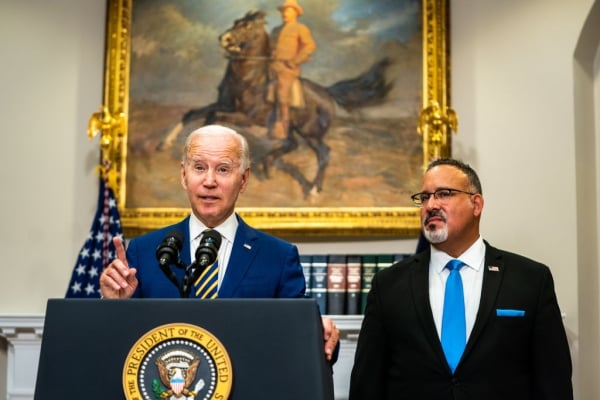
    Demetrius Freeman/The Washington Post/Getty Images

    Colleges will have to submit to the federal government new data on their distance education programs under a batch of new rules the Biden administration finalized Monday.

    The rules, which will take effect July 1, 2026, will likely be the president’s last package of new regulations for colleges and universities before Trump takes office Jan. 20.

    The new regulations carry out Biden’s plan to increase federal oversight of online programs, but the final version doesn’t go as far as the president initially intended After receiving significant pushback from online education lobbyists, the Education Department conceded, backing off a plan to  disallow asynchronous options for clock-hour courses or require colleges to take attendance in online classes.

    The package does, however, still include rules that require colleges to report more data on enrollment in distance education classes, which include those offered online or via correspondence. Higher ed institutions won’t have to begin submitting the data until July 1, 2027.

    “Online learning can reach more students and sometimes at a lower cost to students, but what we know about the outcomes of online education compared to traditional in-person instruction is woefully inadequate,” Under Secretary James Kvaal said in the release. “The new reporting in this final rule will help the department and the public better assess student outcomes at online programs and help students make informed choices.”

    The final rule also included technical changes to federal college prep programs known as TRIO. But the department decided not to move forward with a plan to open eligibility to some TRIO programs to undocumented students—a long-sought goal of some TRIO directors and advocates, as well as higher education associations. 

    Distance Education

    But one of the most controversial parts of the rule for colleges and universities was whether Biden would decide to end any asynchronous options for students in online clock-hour programs, which are typically short-term workforce training programs that lead to a certificate.

    A Trump-era rule allowed asynchronous learning activities—such as watching a prerecorded video—to count toward the required number of credits in short-term clock-hour programs. But the department said in its proposal that because of the hand-on nature of many clock-hour programs, the change often results in a “substandard education” that “puts students and taxpayers at risk.” 

    Hundreds of professors and higher education groups disagreed. Some, particularly those representing for-profit programs, argued in public comments that the proposal exceeded the department’s authority and would burden institutions. Others said the new rules reflected an antiquated mindset about college modality, arguing that disallowing asynchronous options could limit access for students who benefit from the flexibility that online education provides.

    While the department decided not to end asynchronous distance ed programs, the agency intends to keep a close eye on the courses. 

    “The department refined these final rules based upon extensive public comment on a notice of proposed rulemaking published over the summer,” department officials said in a news release. “However, we remind institutions that asynchronous clock hours cannot be used for homework and that there must be robust verification of regular and substantive interaction with an instructor.”  

    No Expanded TRIO

    Although the decision not to expand eligibility for TRIO has fewer implications for colleges, the move is a blow for the TRIO directors and immigration equity advocates who have been working for years to open up the program.

    Miriam Feldblum, executive director of the Presidents’ Alliance on Higher Education and Immigration, told Inside Higher Ed that nearly 100,000 undocumented students graduate from high school each year, many of whom could benefit from TRIO services. 

    But Republicans opposed the idea. Six GOP members of Congress, including Virginia Foxx, a North Carolinian and former chair of the House education committee, blasted the concept in a letter to Secretary Miguel Cardona in August.

    “The proposed expansion is a blatant attempt to provide additional taxpayer-funded services to those not seeking citizenship in the name of reducing ‘burden.’ The department’s proposed expansion will stretch funding thin and risk those currently eligible for TRIO,” they wrote.

    Some college administrators and TRIO directors in red states are worried about the potential political backlash Biden’s new regulation could cause for their programs.

    “The fighter in me thinks that this is a tough time to go to battle and have an unforced error or a target on our backs and [on] TRIO, given the contentious nature of immigration policy right now,” Geoffrey Garner, a TRIO program director from Oregon, said in at January 2024 advisory committee meeting. “We just think right now is not the best time for this proposal, as much as it breaks my heart to say that out loud.”

    That advisory committee ended up backing the changes to expand some TRIO programs to undocumented students.

    Education Department officials said its decision wasn’t due to political tensions. Rather, they said the proposal “was too narrow … in scope of additional populations to be served.”

    Under the department’s proposed rule, high school students who aren’t citizens or permanent residents could qualify for Upward Bound, Talent Search and Educational Opportunity Centers but not Student Support Services or the McNair Scholars Program.

    “An expansion of student eligibility under only certain TRIO programs would create confusion, as many grantees administer grants under more than one TRIO program,” officials wrote in the final rule. “Eligibility for only certain TRIO programs would increase administrative burden by requiring grantees to deny similarly situated noncitizens from participating under certain TRIO programs, but not others.”

    Source link

  • Univ. of Arizona Global Campus faculty respond to professor

    Univ. of Arizona Global Campus faculty respond to professor

    In a recent article, “Dear Prospective UAGC Students: Stay Away,” a professor from the University of Arizona discourages students from attending the University of Arizona Global Campus (UAGC). Unfortunately, this article was based on the author’s perspective rather than on facts and thus lacked the academic rigor of factual data from credible sources. This opinion piece was a collection of baseless assumptions, completely overlooking the true mission of UAGC, its faculty, and the diverse students we proudly serve. Frankly, the article has no merit.

    There is power in knowledge and truth. As such, the article could have accurately depicted the realities of UAGC instead of relying on inaccurate critiques about educational quality, enrollment numbers, adjunct faculty, and alleged student dissatisfaction. To set the record straight, UAGC is committed to providing online higher education for non-traditional students, including working adults, military personnel, parents, and underserved communities. Our students juggle countless responsibilities, and UAGC offers the flexibility and support they need. UAGC is vital in making higher education accessible to those who need it most, breaking barriers that traditional institutions often ignore.

    Furthermore, UAGC is unwavering in its commitment to supporting students, staff, and faculty, ensuring consistent educational quality and professional growth. As we continue to evolve, we focus on transparent evolution and collaboration, learning from past oversights to create an environment where our students can improve employment opportunities. Our pursuit of high-quality education is not a destination but an ongoing journey to which UAGC is deeply committed. Like any reputable university, we conduct regular course and program reviews, embrace continuous improvement, and acknowledge areas for development as a perpetual process. This commitment to educational quality is a cornerstone of our institution, ensuring our students receive the best education possible and can be confident in our dedication to their success. 

    The UAGC faculty, the backbone of our institution, is growing increasingly weary of misleading and disparaging remarks against the university and the faculty. It is time to move forward constructively and collegially. In the name of higher education, we implore you to stop defaming our university, staff, faculty, and students. To that end, we welcome meeting and educating any skeptical faculty or staff on our university’s mission and approach to serving non-traditional adult learners. Above all, we’re eager to clear any misconceptions by providing accurate data, helping to ensure that your words align more closely with the truth moving forward.

    As we look to the future (Dr. Cabrera), the late President Franklin D. Roosevelt, who signed the unprecedented G.I. Bill into legislation, stated, “A smooth sea never made a skilled sailor” (Roosevelt, n.d.).”


    Yvonne M Lozano, Ph.D. UAGC Faculty Council Co-Chair
    Teresa Handy, Ph.D. UAGC Faculty Council Representative
    Deanna Lauer, UAGC Associate Faculty Council Representative
    Carl Marquez, UAGC Faculty Council Representative
    Cara Metz, Ph.D. UAGC Faculty Council Co-Chair
    Darla Branda, Ph.D. UAGC Program Chair

    Source link

  • Biden scraps debt relief plans, other regs

    Biden scraps debt relief plans, other regs

    Andrew Caballero-Reynolds/AFP via Getty Images

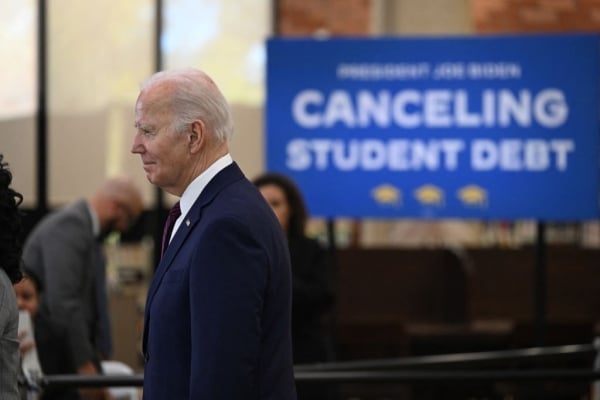
    The Biden administration’s ambitious plans to provide debt relief for millions of Americans is officially dead along with a number of other proposed regulatory changes.

    The administration said Friday it’s withdrawing two debt relief proposals from consideration. The Education Department had been reviewing thousands of comments on the plans and preparing to finalize at least one proposal before Friday’s announcement. The Associated Press first reported on the decision.

    The department is also scraping its proposal to amend Title IX to prohibit blanket bans barring transgender students from participating in the sport consistent with their gender identity. That proposal proved controversial, receiving more than 150,000 comments and prompting legal challenges to the department’s separate overhaul of Title IX. added

    “In light of the comments received and those various pending court cases, the department has determined not to regulate on this issue at this time,” officials wrote in a notice on the Federal Register. added

    The department also said Friday that it’s abandoning the effort to update the rules for accreditation, state authorization and cash management. Regulatory proposals were hashed out in the spring but have stalled since. Proposals to gather more data about distance education and open up college-prep programs to undocumented students appear to be moving forward. added

    The department said terminating the rule-making process or those three areas will “allow for additional evaluation of recent changes in other regulations and industry practices.” added

    The debt relief plans have been in the works since summer 2023 after the Supreme Court struck down President Biden’s first attempt at providing student loan forgiveness. Republicans and other critics said these latest debt relief plans, which would have benefited 36 million Americans, were unconstitutional and amounted to an unfair wealth transfer.

    Education Department officials maintain that they have the authority to forgive student loans for borrowers who meet certain criteria or are facing financial hardship, but they concluded that they don’t have the time to implement the proposals before Biden leaves office Jan. 20.

    “With the time remaining in this administration, the Department is focused on several priorities including court-ordered settlements and helping borrowers manage the final elements of the return to repayment,” officials wrote in a Federal Register notice. “At this time the Department intends to commit its limited operational resources to helping at-risk borrowers return to repayment successfully.”

    Withdrawing the rule “will assure agency flexibility in reexamining the issues,” officials added. The move means that the incoming administration would have to start from scratch on a rulemaking process rather than just rewrite the pending proposal.

    Some Republican attorneys general sued the administration over one of the plans, which would have provided targeted debt relief to borrowers who owe more than they initially borrowed or have been repaying their loans for more than 20 years, among other groups. That plan was blocked by a federal judge before the department could finalize it.

    The department’s decision came on the same day the Biden administration announced another round of loan forgiveness. The Education Department announced Friday morning that it would forgive loans for 55,000 borrowers who reached eligibility through Public Service Loan Forgiveness. A program created in 2007 and retooled under Biden, PSLF relieves an individual’s remaining debt if they properly complete 120 monthly payments while working full-time in a public interest career like law enforcement, health care or education. 

    Including Friday’s batch of relief, which totaled $4.28 billion, the Biden administration has now forgiven $180 billion in student loans for 4.9 million borrowers.

    Borrower advocacy groups like the Student Borrower Protection Center say that while they are deeply disappointed the Biden administration has to withdraw its regulations in response to legal pushback from right-wing attorneys, they appreciate Biden’s efforts and celebrate the regulations he was able to finalize. 

    “President Biden’s fixes to the Public Service Loan Forgiveness program and other student loan relief programs have once again delivered lasting change and will benefit millions of borrowers for years to come,” said Persis Yu, deputy executive director of the Student Borrower Protection Center, in a statement. But, at the same time, Yu added that “the actions of right-wing attorneys general have blocked tens of millions of borrowers from accessing critical student debt relief.” 

    Meanwhile, Republican lawmakers, including Senator Dr. Bill Cassidy of Louisiana, described Biden’s unfinalized attempts at student debt relief as a “scheme to transfer student debt onto American taxpayers.”

    “The Biden-Harris administration’s student loan schemes were always a lie,” the senator said in a statement. “With today’s latest withdrawal, they are admitting these schemes were nothing more than a dishonest attempt to buy votes by transferring debt onto taxpayers who never went to college or worked to pay off their loans.”

    Jessica Blake contributed to this report.

    Source link

  • College holiday videos feature mascots, movie references

    College holiday videos feature mascots, movie references

    It’s been another challenging year in higher ed, and colleges are unsure what 2025 could bring, especially with the Biden administration coming to an end and former president Trump returning to the White House. But that doesn’t mean there’s nothing for them to celebrate this holiday season, whether it’s increased enrollment, new awards and recognitions, a close-knit campus community—or just the fact that there are students on campus willing to star in a silly holiday video.

    Here are Inside Higher Ed’s favorite greetings of this holiday season, including five presidential cameos, four mascot stunts, three live music performances, two Die Hard references … and a partridge in a pear tree.

    University of Wisconsin–Superior

    Since when can yellowjackets ice-skate? Google tells me that wasps need to find somewhere warm to hide away when temperatures drop below 40 degrees—but Buzz the Yellowjacket, the University of Wisconsin at Superior’s mascot, appears to be the exception. In this holiday greeting video, Buzz not only makes an impressive ice hockey goal but also displays some figure skating prowess, pulling off a top-rate arabesque. Could Buzz become the nation’s first ever apian Olympian?

    Riverland Community College, Austin, Minn.

    In this video from Riverland Community College in southern Minnesota, different groups of students wish viewers a happy holiday in turn. Their greetings give glimpses into the unique programs, clubs and spaces on campus, from cosmetology students giving pedicures in a salon to handy welders- and electricians-in-training showing off their skills.

    Iowa State University, Ames, Iowa

    Iowa State’s Cyclone Marching Band comes together in perfect harmony in this artfully choreographed video, marching across campus to provide some brassy musical accompaniment for the campus’s tree lighting. From what I could find in my research, the group first plays the university’s alma mater, “The Bells of Iowa State,” which was written in 1931 by Iowa State English professor Jim Wilson, followed by a rousing rendition of ISU’s fight song.

    Georgia State University College of the Arts, Atlanta

    Coniferous trees spring from sidewalks and dance studios in this collage-like animation by a GSU alumnus, featuring background music by a current undergraduate student. The video concludes with punny well-wishes for the holidays: “May the arts spruce up your season with good cheer!”

    Eastern Washington University, Cheney, Wash.

    This sketch from Washington’s EWU opens with the university’s president, Shari McMahan, jokingly bemoaning the fact that she had run out of acorns on which to use her large collection of nutcrackers. But the campus community takes that joke seriously and shifts into high gear, with each department researching how to help her get her hands on more “nutcracker food.” I hope those math students were able to finally solve for the numeric value of acorn!

    Howard University, Washington, D.C.

    Howard president Ben Vinson III highlights the university’s 2024 achievements in this holiday message, including the D.C. university’s record-breaking freshman class and its 100th homecoming. “As we prepare for the holidays, I look forward to all that lies ahead. I wish everyone a joyful and restful break and a successful start to the new year,” Vinson said.

    Whitman College, Walla Walla, Wash.

    Rhythmic choral music rings out through Whitman College’s Memorial Building before the singers are eventually joined by an instrumental septet in this distinctive holiday video. What makes this video so unusual is the choice to use not a well-known holiday carol but a choral song by living composer Jeff Newberry with lyrics by Malcolm Guite, a poet and Anglican priest, that nevertheless speak to the gratitude and peace of the holiday season: “Become an open singing-bowl, whose chime / Is richness rising out of emptiness, / And timelessness resounding into time.”

    Massachusetts Institute of Technology, Cambridge, Mass.

    MIT’s video this year is a short animated sequence that shows what happens after it magically begins snowing inside one of the university’s academic buildings. A student walks through the snow-dusted hallway, eventually happening upon an atrium where her classmates are playing instruments crafted from ice, sledding and crafting a snow beaver in the image of the institution’s mascot.

    University of North Carolina at Charlotte

    What a beautiful message for this holiday season: the importance of friendship across differences. When Norm the Niner, the University of North Carolina at Charlotte’s gold-mining mascot, orders goose on a food delivery app, he’s expecting dinner to arrive. But instead, he finds a live goose at his door at ready to move onto UNC-Charlotte’s campus. At first, the goose only wants to cause chaos, but eventually he mellows out, learning to enjoy college basketball, fine art and taking selfies before eventually departing south for the winter.

    Tarrant County College, Tarrant County, Tex.

    In this heartfelt video from one of Texas’s largest counties, members of the Tarrant County College community join together at a beautifully set table for what looks to be a homemade holiday dinner, reminding TCC students that they will always “have a seat at the table.” Joining them is college chancellor Elva Concha LeBlanc and Toro the Trailblazer, the college’s blue bull mascot, which is dancing in the background.

    Oral Roberts University, Tulsa, Okla.

    Hot takes abound in this video of Oral Roberts students answering Christmas-related questions, like their favorite holiday songs and films. Is Home Alone 2 superior to the original? Does the Phineas and Ferb Christmas special really qualify as a Christmas movie? Does anyone actually know the words to “Grandma Got Run Over by a Reindeer”? If you and your family don’t have enough to argue about this holiday, these are some questions you could bring up to really cause a ruckus.

    Yale University, New Haven, Conn.

    Why does it seem like there’s a trend this year of rebuffing all the classic carols in favor of introducing new songs to represent the spirit of the season? I’m not complaining; apparently the song in this video is from Frozen 2, a movie I have never seen, but Yale’s student performers make it sound as loved and lived-in as a warm woolen sweater. This video also features Handsome Dale, Yale’s bulldog mascot, and Angus, the university’s First Puppy.

    Clackamas Community College, Oregon City, Ore.

    One of two institutions returning to this list from last year, Clackamas Community College in Oregon is back with another parodic holiday heist. This year, the college took inspiration from Die Hard. It stars Adam Hall, a math instructor at the college, in the role of John McClane, having to fight against a plot to “encrypt the digits of pi to ruin their holiday joy.” I’ve never seen Die Hard, but I have to assume that’s extremely accurate to what happens in the movie.

    Oakland Community College, Oakland County, Mich.

    Oakland Community College is the second to make another appearance on this list from last year. In this year’s self-aware video, chancellor Peter Provenzano decides to use ChatGPT—one its few, if only, appearances in any of these videos!—to gather ideas for a Christmas movie parody that Talon, OCC’s owl mascot, could star in. The AI spits out It’s a Wonderful Life, Die Hard, A Charlie Brown Christmas and more, but none satisfy Provenzano. The moral of the story? “There are a lot of stories Talon can tell to capture the season’s joy, but none better than the story we tell at OCC,” he says. (And stick around to the end for bloopers!)

    Source link

  • Brown faces $46 million budget deficit

    Brown faces $46 million budget deficit

    Brown University, one of the nation’s wealthiest institutions, is facing a $46 million structural deficit, prompting efforts to limit growth in hiring and doctoral programs.

    “Without changes to the way Brown operates, the structural deficit is expected to continue to deepen significantly, including a deficit next year that would grow to more than $90 million, with steady increases in subsequent years. Although the current deficit of $46 million is only 3% of Brown’s total operating budget, increases in the deficit over time are not sustainable,” Provost Francis J. Doyle III and Executive Vice President for Finance and Administration Sarah Latham announced in a letter to the community on Dec. 17.

    Officials noted a range of factors driving the deficit, including flat undergraduate tuition revenue growth, increased financial aid, inflation and rising salaries and benefits.

    Brown announced a four-pronged plan to “constrain the deficit.”

    First, the institution will “hold faculty headcount growth to 1%” and limit the growth of staff members “not fully funded externally by grants and gifts” at zero percent, according to the letter from administrators. In addition, Brown will reduce admissions targets for Ph.D. programs, which have grown rapidly in recent years. The university also plans to “hold growth in unrestricted operating expenses to 3%.” Finally, the letter noted the university will work to “continue to grow master’s [program] revenue, ultimately doubling the number of residential master’s students and increasing online learners to 2,000 in five years.”

    While officials did not announce job cuts as they grapple with the yawning budget deficit, the message noted Brown will review vacancies “to determine if they will be refilled.”

    Brown is among the richest universities in the U.S. with an endowment valued at $7.2 billion. Last year, a study of endowments put Brown just beyond the top 25 wealthiest institutions.

    Source link

  • Books reviewed in 2024

    Books reviewed in 2024

    Mostly, I’m interested in what books you read in 2024.

    Let me know if there is any overlap between the books I reviewed and what you read.

    Here are the books I wrote about in 2024:

    ‘Never Enough’ and the Roots of Our College Student Mental Health Crisis: Can universities be a counterweight to a toxic achievement culture?

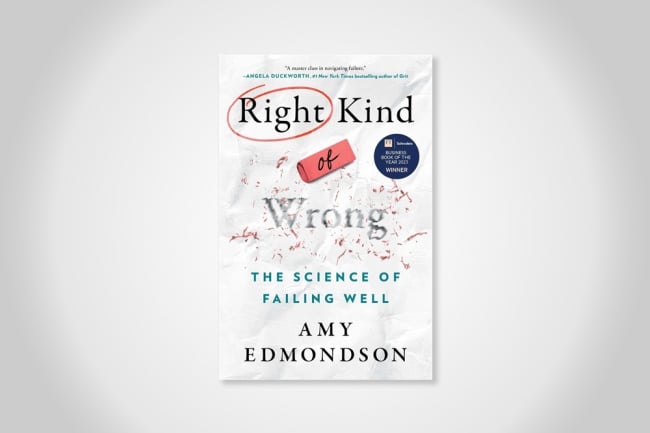
    Failure, Academic Careers and ‘Right Kind of Wrong’: Care to share your career failures with our Inside Higher Ed community?

    The cover of Right Kind of Wrong by Amy Edmondson

    The Ed-Tech ‘Blood in the Machine’: Can the 19th-century Luddite movement help us think about the corporate digitization of education?

    The cover of Blood in the Machine by Brian Merchant

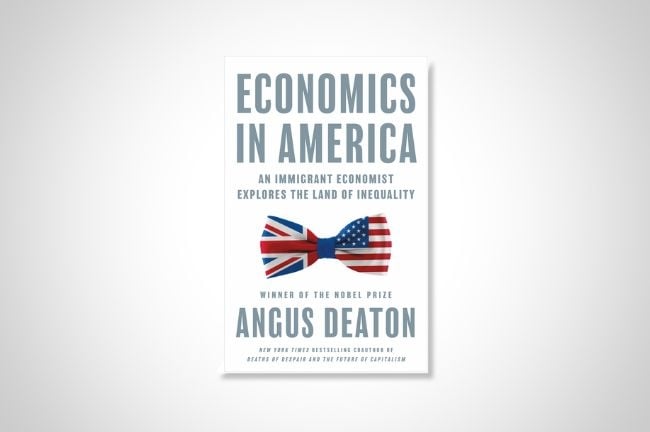
    An Imagined ‘Economics in America’ Dinner Conversation on Inequality in Higher Education: What I’d ask Sir Angus Deaton.

    The cover of Economics in America by Angus Deaton

    Universities and the ‘Material World’: What is higher education made of?

    The cover of Material World by Ed Conway

    Scaled Online Learning as Higher Ed’s ‘Pandora’s Box’: And other imperfect academic equivalencies inspired by a fantastic book on the history of prestige TV.

    The cover of the book Pandora’s Box by Peter Biskind.

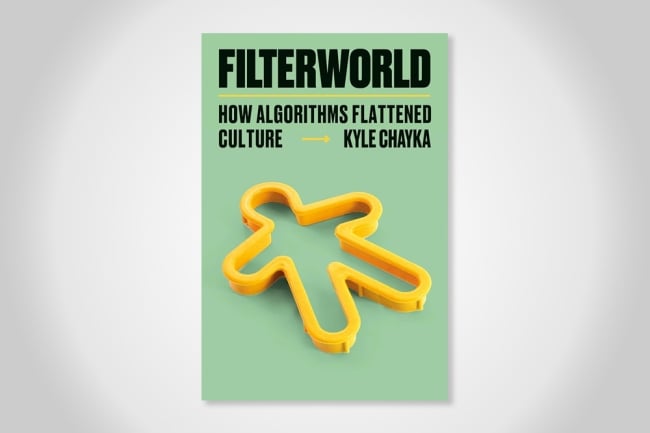
    Is ‘Filterworld’ Coming for Higher Ed? On algorithms and educators.

    The cover of Filterworld: How Algorithms Flattened Culture by Kyle Chayka

    Campuses, Climate Change and ‘How Infrastructure Works’:
    Understanding how the infrastructural systems that enable our campuses to run are dependent on stable climate.

    The cover of How Infrastructure Works: Inside the Systems That Shape Our World by Deb Chachra

    Reading ‘On the Move’ and Thinking Mostly About Climate Change:
    Another excellent book to place in conversation with Universities on Fire.

     Cover of “On the Move: The Overheating Earth and the Uprooting of America” by Abrahm Lustgarten

    ‘The Uninhabitable Earth’ and the Adaptable Campus: Climate change and higher education’s built environment.

    Cover of “The Uninhabitable Earth: Life After Warming” by David Wallace-Wells

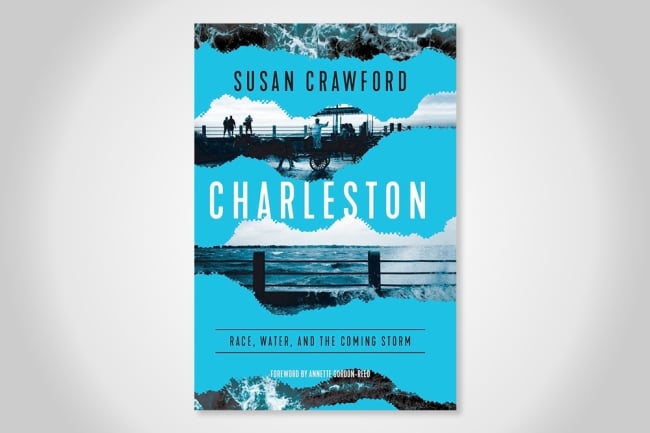
    Higher Ed and ‘Charleston: Race, Water, and the Coming Storm’: Climate change and the eight most interesting colleges and universities in the U.S.

    Charleston: Race, Water, and the Coming Storm by Susan Crawford book cover

    ‘The Displacements’ and the Need for a Climate Change Academic Novel: A call to combine climate and campus fiction.

    Cover of The Displacements, a novel by Bruce Holsinger

    ‘The English Experience’ Rounds Out the ‘Dear Committee’ Trilogy:
    Wondering how this novel, which is in part about teaching students to write, might have been different if written after the release of ChatGPT.

    Cover of The English Experience: A Novel by Julie Schumacher

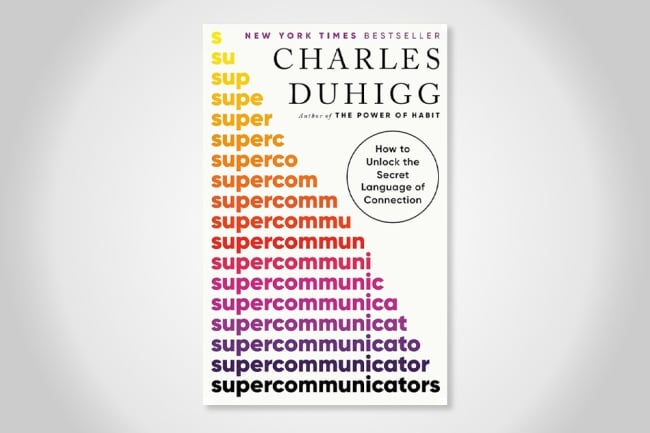
    ‘Supercommunicators’ and the Challenges of Hybrid Professional Academic Work: Why hybrid university work is better but feels worse, and where learning to be better digital communicators may help.

    Cover of "Supercommunicators" by Charles Duhigg

    Why Universities Need to Decarbonize ‘Five Times Faster’: Higher education and the economics of climate change.

    Cover of Five Times Faster by Simon Sharpe

    The Election, ‘Our Final Warning’ and Us: Where Universities on Fire meets Six Degrees of Climate Emergency.

    Cover of Our Final Warning by Mark Lynas

    ‘How the World Ran Out of Everything’ and ‘Recentering Learning’: Economic and higher education lessons from the pandemic.

    The cover of How the World Ran Out of Everything by Peter Goodman

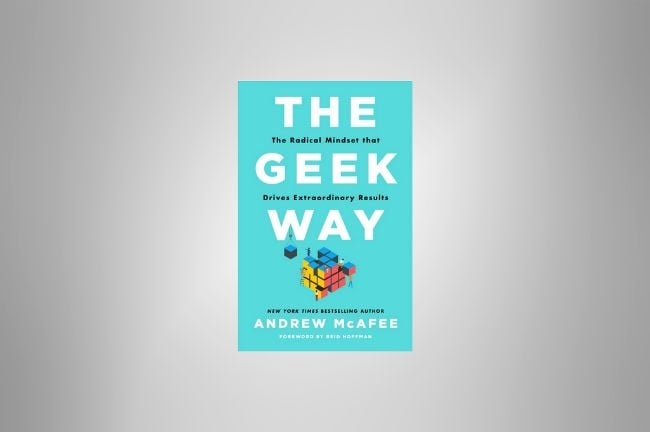
    University Culture and ‘The Geek Way’: What higher ed should absorb and reject from tech culture.

    Cover of The Geek Way by Andrew McAfee

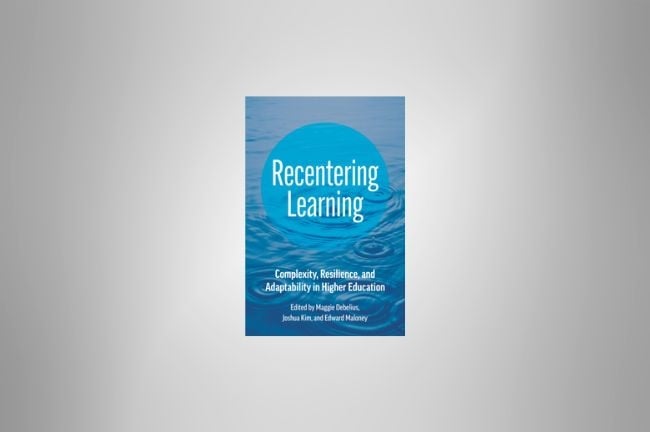
    Introducing ‘Recentering Learning’: The sections, chapter titles and authors from our new co-edited book.

    The cover of Recentering Learning

    Source link

  • AI-authored abstracts “more authentic” than human-written ones

    AI-authored abstracts “more authentic” than human-written ones

    Journal abstracts written with the help of artificial intelligence are perceived as more authentic, clear and compelling than those created solely by academics, a study suggests.

    While many academics may scorn the idea of outsourcing article summaries to generative AI, a new investigation by researchers at Ontario’s University of Waterloo found peer reviewers rated abstracts written by humans—but paraphrased using generative AI—far more highly than those authored without algorithmic assistance.

    Abstracts written entirely by AI—in which a large language model was asked to provide a summary of a paper—were rated slightly less favorably on qualities such as honesty, clarity, reliability and accuracy, although not significantly so, explains the study, published in the journal Computers in Human Behavior: Artificial Humans.

    For instance, the mean score for honesty for an entirely robot-written abstract was 3.32, based on a five-point Likert scale (where 5 is the highest rating), but just 3.38 for a human-written one.

    For an AI-paraphrased abstract, it was 3.82, according to the paper, which asked 17 experienced peer reviewers in the field of computer game design to assess a range of abstracts for readability and guess whether they were AI-written.

    On some measures, such as perceived clarity and compellingness, entirely AI-written abstracts did better than entirely human-written summaries, although were not seen as superior to AI-paraphrased work.

    One of the study’s co-authors, Lennart Nacke, from Waterloo’s Stratford School of Interaction Design and Business, told Times Higher Education that the study’s results showed “AI-paraphrased abstracts were well received” but added that the “researchers should view AI as an augmentation tool” rather than a “replacement for researcher expertise.”

    “Although peer reviewers were not able to reliably distinguish between AI and human writing, they were able to clearly assess the quality of underlying research described in the manuscript,” he said.

    “You could say that one key takeaway from our research is that researchers should use AI to enhance clarity and precision in their writing. They should not use it as an autonomous content producer. The human researcher should remain the intellectual driver of the work.”

    Emphasizing that “researchers should be the primary drivers of their manuscript writing,” Nacke continued, “AI [can] polish language and improve readability, but it cannot replace the deep understanding that comes with years of experience in a research field.”

    Stressing the importance of having distinctive academic writing—a desire expressed by several reviewers—he added that, “In our AI era, it’s perhaps more essential than ever to have some human touch or subjective expressions from human researchers in research writing.”

    “Because this is really what makes academia a creative, curious and collaborative community,” said Nacke, adding it would be a pity if scholars became “impersonal paper-producing machines.”

    “Leave that last part to the Daleks,” he said.

    Source link

  • The hypocrisy of community-engaged research (opinion)

    The hypocrisy of community-engaged research (opinion)

    Any critique about the neoliberal university ought to confront and acknowledge its colonial roots. Victoria Reyes, in her book Academic Outsider (Stanford University Press, 2022), highlights that higher education was never designed for the global majority, particularly people of color from low-income backgrounds. It was built by and for the elite—predominantly white, cisgender, male and affluent individuals—whose privilege shaped the norms that dominate higher education today. These norms actively harm oppressed communities. People of color in positions of power within higher education, such as tenured faculty or administrators, often perpetuate these systems of oppression when they conform to institutional norms instead of challenging them.

    The positivist research paradigm (a.k.a. positivism) sustains oppression in academia by prioritizing quantifiable data while dismissing subjective experiences and social contexts in pursuit of “objective” truths. This fragmented approach erases the complexity of lived experiences and ignores the interplay of privilege and oppression in shaping identities. Positivism fuels deficit-based research, white saviorism and helicopter science, invalidating diverse epistemologies and methodologies. Deficit-based research highlights negative conditions in oppressed communities, framing them as lacking while ignoring systemic causes of inequities, such as settler colonialism and structural racism. Legacies of positivism reinforce harmful stereotypes and stigmatization toward communities of color in higher education.

    In contrast, a transformative paradigm offers an alternative to positivism by centering the voices and experiences of oppressed communities. It prioritizes knowledge democracy and dismantling of power imbalances that have historically excluded marginalized communities from the research process. Over the past 25 years, community-engaged research (CEnR) and community-based participatory research (CBPR) have emerged as crucial approaches in health education, public health and the social sciences to address social inequities. Both approaches emphasize equitable, reciprocal community-academic partnerships, to foster genuine collaboration and systemic change.

    As a woman of color from the Global South and an immigrant scientist who studies health equity, I have witnessed firsthand both the transformative potential of CEnR in addressing social injustice and the discriminatory practices that neoliberal universities perpetuate in my own research with low-income and immigrant communities of color. While CEnR and CBPR are integral to addressing complex health and social inequities by empowering communities and fostering sustainable interventions, a question remains: Can these approaches thrive within the neoliberal university?

    White Saviorism and the Neoliberal University

    Unfortunately, the rise of CEnR within neoliberal universities, particularly during the COVID-19 pandemic, was driven not by a genuine shift toward equity, but by a desire for funding and institutional prestige. As Megan Snider Bailey notes, “Market forces … shape university-community partnerships,” reinforcing a colonial mindset rooted in the white savior complex. This complex positions universities as gatekeepers of resources and legitimacy, exploiting oppressed communities under the appearance of “helping” them to secure funding from entities like the National Institutes of Health, the National Science Foundation and the Patient-Centered Outcomes Research Institute.

    The white savior complex describes privileged individuals, often white, who see themselves as “saviors” or “benevolent rescuers” of oppressed communities. This paternalistic mindset creates exploitative dynamics and replicates patterns of subjugation. For instance, universities often profit significantly from research with oppressed communities, taking up to 50 percent of grant funds as indirect costs for expenses such as facility maintenance and administration. These funds rarely return to the communities that need them most. Instead, universities divert these resources to maintain their own operations, exposing the hypocrisy of institutions that claim to support equity and justice. These exploitative practices raise a critical question: Who benefits the most from the oppression and illness of communities of color?

    The answer often points back to the universities themselves. They profit from the appearance of equity while perpetuating social injustice. The harm caused by white saviorism extends beyond finances. Transactional and extractive research methods are normalized in the neoliberal university. These methods reinforce patterns of subjugation and undermine long-term partnerships that could foster social justice and radical healing. As scholars have shown, a human-centered, liberatory approach must replace the transactional and extractive methods often associated with white supremacy and settler colonialism.

    Precarity in the Academy

    Universities that claim to promote social justice and CEnR often perpetuate exploitative practices and precarious working conditions. They frequently hire community leaders, promotoras de salud (community health workers), students and scholars of color on short-term contracts with little job security and no benefits. These precarious positions create dependency on higher institutions that exploit labor while controlling access to resources.

    As Anne Cafer and Meagen Rosenthal explain, moral outrage often drives short-term involvement in community projects. CEnR that fails to address inequitable power dynamics becomes another tool of oppression disguised as allyship. Superficial, performative community-academic partnerships deepen mistrust of academic institutions in oppressed communities and reinforce power dynamics and social injustice.

    Raquel Wright-Mair and Samuel Museus highlight how academia’s power hierarchies instill a fear of retaliation, silencing junior scholars of color from challenging systemic inequities. Scholars of color are often forced to align their work with institutional goals while sickening their bodies and damaging their mental health. The market-driven model of the neoliberal university prioritizes profits and productivity, limiting justice-oriented research. To address these issues in higher education, we must ask urgent questions:

    • What can we do to dismantle white-led initiatives that perpetuate dependence and subjugation?
    • How can institutions eliminate the white savior complex embedded in their structures?
    • How can we ensure fair calculation of indirect costs in CEnR that prevent the exploitation of community needs for grant funding and institutional prestige?

    Recommendations for Conducting Respectful and Liberatory CEnR

    The neoliberal university perpetuates the white savior complex, commodifies community needs and exploits people of color through short-term appointments designed to maintain systemic inequities. Therefore, it is pivotal to embrace the liberatory nature of CEnR that prioritizes social justice and structural change.

    • Transformative practices. Researchers must critically reflect on how their own positionality and privilege influence the liberation or oppression of marginalized communities. Universities must recognize and amplify the expertise of community members in shaping research agendas and outcomes. Furthermore, institutions must actively embrace linguistic justice and culturally relevant methods, respecting the languages, traditions and cultural contexts of the communities they engage. By prioritizing these practices, institutions can foster decolonial, respectful and inclusive collaborations that effectively challenge and dismantle oppressive systems in higher education.
    • Accountability is essential. Funding agencies must prioritize equitable representation and tangible benefits for communities over superficial metrics when evaluating CEnR. Neoliberal universities must stop exploiting community researchers and scholars of color through precarious, short-term appointments that reinforce tokenization and systemic inequities. Universities often hire people of color temporarily to build trust for community-academic partnerships while maintaining the overrepresentation of white faculty. To disrupt this cycle, funding agencies must require universities to intentionally hire and retain leaders, scholars and students from oppressed communities, ensuring they have job security. Empowering these voices permits CEnR to address community-specific needs, build local infrastructure and foster authentic partnerships rooted in equity, respect and shared power, dismantling the traditional hierarchies of academic research.
    • Rejecting unpaid labor is nonnegotiable. Unpaid labor perpetuates inequities, exploiting oppressed communities. Ethical CEnR demands equitable compensation, collaboration and empowerment, ensuring all participants are treated with dignity and are compensated fairly. These principles are critical to advancing liberation and driving systemic change.

    Advancing CEnR that truly serves oppressed communities requires dismantling the colonial, patriarchal and exploitative structures underpinning higher education. Embracing a transformative paradigm prioritizes genuine representation, community needs and liberation over market-driven motives, creating a model for lasting social change and liberation in an increasingly inequitable world.

    Source link