Tag: News

  • Virginia Looks to Plug Brain Drain With More Internships

    Virginia Looks to Plug Brain Drain With More Internships

    Internships can be a meaningful step in a college student’s career development. That’s why the commonwealth of Virginia is working to guarantee that undergraduates have a fair shot at paid experiential learning.

    The Virginia Economic Development Partnership announced a new collaboration today with the job board Handshake as part of the state’s effort to train and retain local talent through internship opportunities.

    Virginia has committed to giving all undergraduate students at least one form of meaningful work-based learning before graduation, said Megan Healy, senior vice president of talent and workforce strategy at VEDP. Overseen by the Virginia Talent and Opportunity Partnership, this work-based learning could include experiential learning or a paid internship.

    The partnership with Handshake is one layer of a multifaceted approach to increasing opportunities for entry-level applicants to break into local job markets, helping to reduce brain drain and encourage economic development for evolving local markets.

    State of play: Internships provide students with skills and experience for future careers, but for many of them paid internships remain out of reach. A 2024 report from the Business–Higher Education Forum found that nearly half of students who wanted an internship didn’t participate in one, and of those who did, only 70 percent said it was a “high-quality experience.”

    A 2025 Student Voice survey by Inside Higher Ed and Generation Lab found that 38 percent of respondents believe their college should emphasize helping them find and access paid internships to enhance career services, and 30 percent want help making strong connections with potential employers.

    Virginia has recently seen a dramatic drop in available internship listings; when President Trump took office in January, he slashed the federal workforce, reducing available roles in the D.C., Maryland and Northern Virginia region. Internship postings dropped 36 percent in June 2025 compared to June 2024, according to Lightcast data—a 20-percentage-point-greater decline compared to similar metropolitan job markets.

    Brookings Institute

    VEDP’s partnership with Handshake includes data sharing within the platform and additional visibility into existing or future internship opportunities for students.

    Over 70 percent of colleges and universities in Virginia, representing 470,000 students, already connect to Handshake, said Christine Cruzvergara, the company’s chief education officer. In addition, 20,000 Virginia employers have posted more than 150,000 jobs and internships on the platform.

    Building better internships: One of Virginia’s goals is to develop opportunities for students outside of metropolitan hubs.

    “The state of Virginia is very diverse, and the majority of students that graduate from a lot of the Virginia schools end up going to Richmond or Northern Virginia—those are the two main hubs that most students go to,” said Cruzvergara, a former Virginia resident and college administrator herself. “But there are so many other regions of Virginia that also need amazing talent, and I think this particular initiative is going to help distribute more of that talent.”

    The state is partnering with local business in more rural areas—including near Virginia Tech in Blacksburg and in Charlottesville, where the University of Virginia is located—to establish more high-impact and paid internships to attract students from these universities.

    “We’re also looking at ways to connect students from those specific institutions,” Healy of VEDP said. “They also have the most out-of-state students because they’re very popular and very highly ranked.”

    To increase internship offerings across the state, VEDP hosts regular training sessions to help employers build meaningful internship experiences for students and assists them in listing jobs on Handshake. The state hopes that connecting students with employers on an already-trusted platform will help expand access to opportunities as well as meet talent demands in the commonwealth.

    Small businesses (employing 150 people or less) are also eligible for a grant program if they hire interns; the state will provide $7,500 in matched funds to compensate an intern for eight weeks and 120 hours making at least minimum wage.

    “I think this particular initiative is going to help distribute more of that talent, because they’re going to tap into the local economy and the local employers to create the internships and opportunities that will be needed to attract students and also help them see this could be a great place to live In Virginia,” said Cruzvergara.

    How is your college or university increasing opportunities for students to intern? Tell us more here.


    Source link

  • Secretive Big Ten Deal Riles Trustees

    Secretive Big Ten Deal Riles Trustees

    Trustees at member institutions across the Big Ten are pushing back on a proposed $2.4 billion private equity deal that some argue has been too rushed, lacking transparency and proper vetting.

    Now, with trustee criticism mounting, the conference appears to be prolonging talks amid a push to finalize a plan to establish a for-profit arm of the Big Ten, which would control its media and sponsorship rights and sell a 10 percent stake of that entity to the investor. The deal would give members an immediate cash infusion, with a minimum $100 million disbursement across the league, while more prominent athletic programs would receive an even higher revenue share. That money is needed, even at wealthy institutions, as universities adjust to a changing world of college athletics, which includes direct payments for players that began earlier this year.

    The proposal would also maintain the current 18 universities as Big Ten members through 2046.

    Dissent among the Big Ten ranks seems to have prompted the potential investor—the University of California pension fund, or UC Investments—to slow down the deal.

    While UC Investments indicated in a Monday statement that it “remains very excited” about the offer, officials wrote they will work with members in the “coming months” to solidify the deal. (Prior reports indicated the conference hoped to put the deal to a league vote by mid-November.)

    “As we have continued to evaluate this opportunity over the past five months, we remain convinced that the unity of the 18 Big Ten university members is key to the success of Big Ten Enterprises,” Chief Investment Officer Jagdeep Singh Bachher wrote in the statement. “We also recognize that some member universities need more time to assess the benefits of their participation. UC Investments likewise requires some additional time to complete our due diligence as recent developments unfold and we continue to engage with the conference.”

    The CIO also lauded Big Ten commissioner Tony Petitti and his team.

    “The process they have led has been rigorous, honest and fair—among the best we’ve seen. Recent misinformation has distorted some aspects of its effort,” Bachher wrote in the statement.

    But several trustees at Big Ten member institutions have raised concerns about a lack of transparency into the deal, saying they have received little information about the arrangement and yet been asked to rubber-stamp it on a compressed timeline.

    Trustee Dissent

    UC Investments announced a commitment to a unified process for making a deal just a few days after the American Council of Trustees and Alumni held an online meeting with individual board members representing five Big Ten institutions. The meeting, held Friday, included trustees from the University of Michigan, the University of Minnesota, the University System of Maryland, Pennsylvania State University and the University of Southern California, all of whom had concerns about the deal.

    Tom McMillen, a Maryland regent, said in the recorded meeting that “no trustee has been given a balanced view” of the pros and cons of the proposal, according to his conversations with other governing board members across the conference. He also called for third-party evaluations of the arrangement.

    “It’s shocking to me that a decision of this magnitude, there are no opposing views presented,” McMillen said.

    Michigan regent Sarah Hubbard echoed similar concerns on the ACTA call, arguing that there was a need for more oversight and for trustees to have a formal role in discussing the proposal. She also questioned the need to expedite the process with such limited information available.

    “This lack of transparency and information for the fiduciaries at our universities is unacceptable,” Hubbard said.

    Penn State trustee Jay Paterno questioned the need for secrecy around the potential investment. Given that the Big Ten is about to create “a for-profit company using what are essentially public dollars,” he argued, boards need to know more in order to be able to advise their institutions accordingly. Ultimately, Paterno said, he wanted to see the Big Ten put its cards on the table.

    “If it’s such a great deal, show us the deal and let’s go,” Paterno said.

    Outstanding Concerns

    UC Investments signaled it would work on the deal over the “coming months”—likely signaling a slowdown in the process—but it has offered no information about where things stand.

    A UC Investments spokesperson referred questions about trustee concerns to the Big Ten, which did not respond to a request for comment from Inside Higher Ed.

    But outside analysts echo many of the concerns raised by trustees. Armand Alacbay, chief of staff and senior vice president of strategy at ACTA, said the organization has no position on the proposal itself but got involved because of concerns about trustees being shut out of the deal.

    “Anyone we’ve heard from on this has said it’s not enough time, not enough information, not enough of anything to make this decision. Some have been told that it’s a nonvoting decision for them, that they don’t even have a right to make a decision because it’s the conference,” Alacbay said. “Well, I would say that the intellectual property and media rights of your athletic department are a significantly large asset of the institution and justify a level of board oversight.”

    Karen Weaver, an adjunct assistant professor at the University of Pennsylvania Graduate School of Education, told Inside Higher Ed that while private equity has seeped into numerous areas of college athletics in recent years, the investment in a conference is a new approach. And what happens with the Big Ten will likely set the stage for other conferences.

    She said if the Big Ten can successfully navigate a maze of thorny legal and political concerns, then other athletic conferences will be more likely to follow in their footsteps. “But if they constantly get land mines and roadblocks thrown in the way,” others will be more hesitant, she said.

    Weaver also pointed to concerns lawmakers raised that could upend or complicate the deal.

    Last week U.S. Senator Maria Cantwell, a Washington Democrat, issued warnings about the proposal in a statement and individual letters to both university and conference leadership. She argued that such a deal “may be counter to your university’s academic goals, may require the sale of university assets to a private investor, and may affect the tax-exempt purpose of those assets.”

    Cantwell also emphasized the different priorities of universities and private equity investors.

    “The primary goal of these companies is to make money for the firm, which is unlikely to align with the academic goals of your university or its obligations as a not-for-profit organization,” Cantwell wrote. “These investors will be focused on maximizing their investment, not on preserving and growing athletic and academic opportunities for student athletes.”

    Source link

  • We Must Build Structures That Make Collaboration the Default

    We Must Build Structures That Make Collaboration the Default

    During National Transfer Student Week, I had the opportunity to present my dissertation findings. I was eager to share insights and connect with others doing similar work. Yet my excitement quickly gave way to disappointment: Multiple organizations were hosting overlapping events. Would anyone attend my session if there were other opportunities?

    That moment clarified, for me, a larger truth about the transfer ecosystem. Despite our shared commitment to improving outcomes for transfer students, we often work in parallel rather than in partnership. True, sustained collaboration remains one of the missing links in creating a more coherent and equitable transfer experience.

    Some Context 

    Collaboration should be the connective tissue of the transfer ecosystem. No single institution, system or organization can solve the challenges of transfer alone. When institutions, state agencies, employers and organizations work together, they have a better chance of building workable and successful pathways. The literature has increasingly suggested this point. Aspen et al.’s Tackling Transfer initiative implies that isolated campus reforms will not be entirely successful. 

    It emphasizes strengthening partnerships and using shared data and goals to make improvements. Similarly, both versions of the Transfer Playbook advocate success via intentional, ongoing partnerships.

    Professional associations echo this message. For example, the American Association of Collegiate Registrars and Admissions Officers’ new conference, called The Assembly, is rooted in collaboration across sectors and institutions to solve transfer and mobility problems. This shift positions the association as a platform for collaboration, not just a publisher of best practices. Likewise, the National Association of Higher Education Systems is spearheading initiatives in the transfer and mobility space because it understands the need to have system-level collaboration.

    These references send a clear message: Collaboration is an important strategy to improve the learner’s experience. This is a fundamental shift in our focus. When we center collaboration on the learner experience, rather than on the institution, it shifts the focus and the opportunities. Rather than designing projects around the interests of a single campus, foundation, or consulting contract, collaboration gives us the opportunity to ask, “What happens to the student through the educational journey that prevents successful transfer, and how do we solve that together?”

    Challenges and Opportunities

    As essential as it is, collaboration seems to be a challenge. To truly accomplish a collaborative network, institutions and agencies will need to look beyond their own boundaries. They need to be willing to pause their own goals to complement, support or provide an opportunity to another group. This has influential and financial implications, but it may end up being a better use of limited and shrinking dollars.

    Changing the nature of how we collaborate could afford more opportunities and have a big impact. Collaboration can be complicated for organizations whose funding depends on producing value through exposure, engagement or consulting revenue. Partnerships may overshadow individual organizational accomplishments and lead to future financial growth.

    For institutions, grant dollars for improving transfer are so highly competitive that they are sometimes impossible to obtain. More likely than not, funders are looking for the largest impact for their dollar, and that often translates into large-scale system- or statewide initiatives that will affect the most students or provide a large enough data set. That goal immediately eliminates small colleges from opportunities, further reducing the chance for improvement at the institutions that often need it the most.

    On campuses, the need for collaboration is just as clear. Advocating for transfer is not the job of a single person with “transfer” in their title. It requires coordinated action across admissions, advising, faculty governance, financial aid, registrar, student life and employer partnerships. AACRAO’s task force on transfer and the award of credit, for instance, highlights the importance of cross-functional teams in redesigning policies and communication so students experience a coherent—not conflicting—set of messages about how their credits move.

    Interestingly, the very reports we rely on for guidance point toward a different path. The Tackling Transfer work, for example, is grounded in multistate, cross-sector collaboration and explicitly calls for understanding the incentives and disincentives that shape institutional behavior around transfer. Lumina’s guidance on building local talent ecosystems emphasizes that durable change comes from coalitions willing to redesign systems together, not from one-off pilot projects.

    What If We …

    So, what might it look like to take collaboration seriously across the transfer ecosystem? Consider these collaborations:

    • Build shared agendas and calendars. National, regional and virtual events could be coordinated through a master calendar or hub so that transfer professionals aren’t forced to choose between overlapping webinars and conferences hosted by organizations that share the same goals.
    • Co-create tools and publications. Instead of each group producing its own tool kits and reports, organizations might collaborate on cross-branded resources that show how their frameworks align. Treat multiple opportunities as complements, not competitors.
    • Align state and regional efforts with institutional partnerships. The literature on national transfer reform emphasizes that systems and regions are critical units of change. State agencies, coordinating boards and foundations can use this insight to convene partnerships that bring institutions, employers and community organizations to the same table.
    • Elevate practitioners as collaborators, not just implementers. The most effective transfer-focused reports and research draw heavily on the expertise of people doing the day-to-day work of advising, curriculum design and transcript evaluation. Our collaborations should be built with, not just for, these practitioners.
    • Expand professional development and knowledge. Ideas could be to offer membership deals across organizations that support transfer students to engage more people in professional development opportunities amid decreasing budgets. Or, create a centralized repository or organization that can serve as a single source of information, rather than the plethora of sites, agencies, organizations and companies offering current professional development and resources.

    These aren’t small shifts. They require seeing ourselves not as competitors in the transfer space, but as collaborators of its progress.

    And So …

    If we truly want to strengthen the ecosystem, we must build structures that make collaboration the default and not the exception. Many of the publications we rely on and reference already pointing us there. The question is whether we will follow their lead, not just in language but in practice. By working together, we can move beyond fragmented efforts toward a shared vision of mobility, equity and opportunity for every learner who dares to transfer.

    Source link

  • UC System Reverses Decision to End Incentives for Postdocs

    UC System Reverses Decision to End Incentives for Postdocs

    Justin Sullivan/Getty Images

    In a letter to system chancellors Tuesday, University of California system president James Milliken said he would not end financial support for hiring postdoctoral fellows out of the UC President’s Postdoctoral Fellowship Program. 

    A system spokesperson told Inside Higher Ed earlier this month that the UC office had decided to halt its $85,000 per fellow, per year, hiring incentives beginning with fellows hired as full-time faculty after summer 2025. 

    “Given the myriad challenges currently facing UC—including disruptions in billions of dollars in annual federal support, as well as uncertainty around the state budget—reasonable questions were raised in recent months about whether the University could maintain the commitment to current levels of incentive funding,” Milliken wrote in the Tuesday letter. 

    He said he considered a proposal to sunset the incentive program but ultimately decided against it. Still, he said, there may be some future changes to the program, including a potential cap on the number of incentives supported and changes to how they are distributed across system campuses. 

    “After learning more about the history and success of the program and weighing the thoughtful perspectives that have been shared, I have concluded that barring extraordinary financial setbacks, the PPFP faculty hiring incentive program will continue while the University continues to assess the program’s structure as well as its long-term financial sustainability.”

    Source link

  • McMahon Says ED Agreements Are Temporary

    McMahon Says ED Agreements Are Temporary

    Jim Watson/AFP/Getty Images

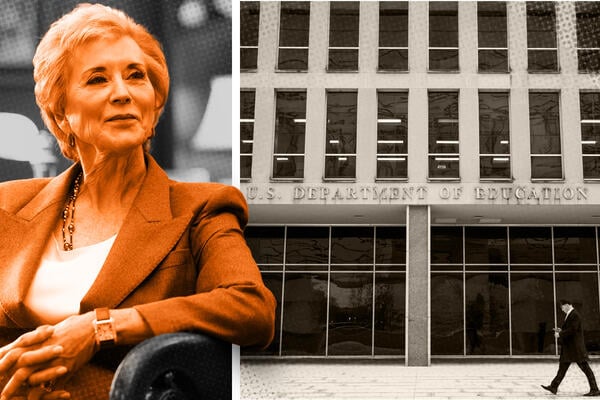
    To Education Secretary Linda McMahon, outsourcing education-related grant programs to other federal departments is just a “proof of concept” for her larger goal—closing the 45-year-old agency.

    “Let’s move programs out on a temporary basis. Let’s see how the work is done. What is the result? What is the outcome?” she said in an all-staff meeting at the department Tuesday, shortly after publicly announcing six interagency agreements. “And if it has worked and we have proven that this is the best way to do it, then we’ll ask Congress to codify this and make it a permanent move.” (The meeting was closed to the public. All quotes are pulled from a recording obtained by Inside Higher Ed.)

    In 20 minutes, the secretary explained her plan and the framework through which she hopes her employees and the nation will view it.

    “We are not talking about shutting down the Department of Education. We are talking about returning education to states where it belongs,” she said. “That is the right messaging.”

    McMahon cited polling that she said showed that while the public doesn’t support shutting down ED, respondents are more supportive when they hear the plan still preserves ED’s programs by sending them to other agencies.

    A restructuring like the one in Tuesday’s announcement has been rumored for months, and the changes mirror recommendations outlined in Project 2025—a conservative blueprint that called for closing ED. (The education section of Project 2025 was spearheaded by Lindsey Burke, who is now the department’s deputy chief of staff for policy and programs.)

    To advance President Trump’s goal of shuttering the agency, McMahon has previously shipped career and technical education programs to the Department of Labor and laid off nearly half of her staff.

    But while the secretary said she understands the “unrest” and “uncertainty” the reductions in force have caused and stressed that they were hard decisions made with the “greatest of thought and care,” she stood firm on her belief that they were necessary.

    “I applaud and appreciate everything that every one of you in this room is doing and has done over the years,” she said. “I’m not saying to any one of you that your efforts aren’t good enough—what I’m saying is the policies behind those efforts have not been good enough.”

    McMahon then argued that the first agreement reached earlier this year with Labor has paid off.

    By co-managing, “we can be more efficient and economical,” she said. “For instance, we’ve utilized Labor’s system now on grant drawdowns, and we’ve drawn down over 500 already, and they work very proficiently. It’s a better system than we had here.”

    Although some conservatives praised the administration’s actions, others cast doubt on their magnitude or argued they were distracting attention from what really matters. For Margaret Spellings, former education secretary under President George W. Bush, that’s the “economic emergency” of improving student outcomes.

    “Moving programs from one department to another does not actually eliminate the federal bureaucracy, and it may make the system harder for students, teachers and families to navigate and get the support they need,” she said. “We need to keep the main thing the main thing, and that is how to improve education and outcomes for all students.”

    McMahon, on the other hand, told employees that this move is key to doing just that.

    “We want to make sure that [students] understand there are many opportunities for them … that there are programs that will give them a great livelihood, whether they want to be electricians or doctors or Indian chiefs,” she said. “We are not closing education; we are lifting education up.”

    Source link

  • Why early STEAM education unlocks the future for all learners

    Why early STEAM education unlocks the future for all learners

    Key points:

    When we imagine the future of America’s workforce, we often picture engineers, coders, scientists, and innovators tackling the challenges of tomorrow. However, the truth is that a student’s future does not begin in a college classroom, or even in high school–it starts in the earliest years of a child’s education.

    Early exposure to science, technology, engineering, arts, and mathematics (STEAM) builds the foundation for critical thinking, collaboration, and creativity. Research indicates that children introduced to STEAM concepts before the age of eight are significantly more likely to pursue STEM-related fields later in life. Yet for too many children, especially neurodivergent learners and those in underserved communities, STEAM education comes too late or not at all. That gap represents a missed opportunity not only for those children, but also for the industries and communities that will rely on their talents in the future.

    The missed opportunity in early education

    In most school systems, STEAM instruction ramps up in middle school or high school, long after the formative years when children are naturally most curious and open to exploring. By waiting until later grades, we miss the chance to harness early curiosity, which is the spark that drives innovation.

    This late introduction disproportionately affects children with disabilities or learning differences. These learners often benefit from structured, hands-on exploration and thrive when provided with tools to connect abstract concepts to real-world applications. Without early access, they may struggle to build confidence or see themselves as capable contributors to fields like aerospace, technology, or engineering. If STEAM employers fail to cultivate neurodivergent learners, they miss out on theirunique problem-solving skills, specialized strengths, and diverse thinking that drives true innovation. Beyond shrinking the talent pipeline, this oversight risks stalling progress in fields like aerospace, energy, and technology while weakening their competitive edge.

    The result is a long-term underrepresentation of neurodivergent individuals in high-demand, high-paying fields. Without access to an early STEAM curriculum, both neurodivergent students and employers will miss opportunities for advancement.

    Why neurodivergent learners benefit most

    Neurodivergent learners, such as children with autism, ADHD, or dyslexia, often excel when lessons are tactile, visual, and inquiry-based. Early STEAM education naturally aligns with these learning styles. For example, building a simple bridge with blocks is more than play; it’s an exercise in engineering, problem-solving, and teamwork. Programming a toy robot introduces logic, sequencing, and cause-and-effect.

    These types of early STEAM experiences also support executive functioning, improve social-emotional development, and build persistence. These are crucial skills in STEM careers, where theories often fail, and continued experimentation is necessary. Additionally, building these skills helps children see themselves as creators and innovators rather than passive participants in their education.

    When neurodivergent children are given access to STEAM at an early age, they are not only better equipped academically but also more confident in their ability to belong in spaces that have traditionally excluded them.

    Houston as a case study

    Here in Houston, we recognize the importance of early STEAM education in shaping our collective future. As the world’s Energy Capital and a hub for aerospace innovation, Houston’s economy will continue to rely on the next generation of thinkers, builders and problem-solvers. That pipeline begins not in a university laboratory, but in preschool classrooms and afterschool programs.

    At Collaborative for Children, we’ve seen this firsthand through our Collab-Lab, a mobile classroom that brings hands-on STEAM experiences to underserved neighborhoods. In these spaces, children experiment with coding, explore engineering principles, and engage in collaborative problem-solving long before they reach middle school. For neurodivergent learners in particular, the Collab-Lab provides an environment where curiosity is encouraged, mistakes are celebrated as part of the learning process, and every child has the chance to succeed. Additionally, we are equipping the teachers in our 125 Centers of Excellence throughout the city in practical teaching modalities for neurodivergent learners. We are committed to creating equal opportunity for all students.

    Our approach demonstrates what is possible when early childhood education is viewed not just as childcare, but as workforce development. If we can prioritize early STEAM access in Houston, other cities across the country can also expand access for all students.

    A national priority

    To prepare America’s workforce for the challenges ahead, we must treat early STEAM education as a national priority. This requires policymakers, educators and industry leaders to collaborate in new and meaningful ways.

    Here are three critical steps we must take:

    1. Expand funding and resources for early STEAM curriculum. Every preschool and early elementary program should have access to inquiry-based materials that spark curiosity in young learners.
    2. Ensure inclusion of neurodivergent learners in program design. Curricula and classrooms must reflect diverse learning needs so that all children, regardless of ability, have the opportunity to engage fully.
    3. Forge stronger partnerships between early education and industry. Employers in aerospace, energy, and technology should see investment in early childhood STEAM as part of their long-term workforce strategy.

    The stakes are high. If we delay STEAM learning until later grades, we risk leaving behind countless children and narrowing the talent pipeline that will fuel our nation’s most critical industries. But if we act early, we unlock not just potential careers, but potential lives filled with confidence, creativity and contribution.

    Closing thoughts

    The innovators of tomorrow are sitting in preschool classrooms today. They are building with blocks, asking “why,” and imagining worlds we cannot yet see. Among them are children who are neurodivergent–who, with the proper support, may go on to design spacecrafts, engineer renewable energy solutions, or code the next groundbreaking technology.

    If we want a future that is diverse, inclusive, and innovative, the path is clear: We must start with STEAM education in the earliest years, for every child.

    Source link

  • Teaching as a Sacred Life (opinion)

    Teaching as a Sacred Life (opinion)

    Some people dream about retirement as heaven; I see it as hell. I do not wish to retire. I am only 80 and have been a college professor for a mere 56 years. I’m a workaholic and I have every reason to continue. My office is my Shangri-La. In a small space, it is a mini-museum of an entire career—2,000 books, plaques for well beyond a dozen teaching and scholarship awards, many photographs, travel mementos from around the world, and artifacts of every kind. All organized and I know where everything is. I look around and remember. And there is much to remember. Students from across the institution sometimes drop in just to marvel at what this office says about a career. I once wrote an article on one’s office as a teaching tool.

    I’m a fairly ordinary guy. My degrees would not raise any eyebrows—undergraduate from a directional-named tertiary regional university, Ph.D. from my home-state Midwestern university. A tour in Vietnam and church-related travels all over the globe add some zest. I have had some successes in the academic world—books, lots of articles, some wider recognition and campus leadership roles. I’ve been department chair for 35 years; “it is a small place.” I’ve had some offers all the way up to a presidency inquiry. I’ve spurned them all. 

    I am a teacher, the highest calling in this human existence and at a place best suited for my practice. A colleague called our role “a slice of heaven breaking into this earthly realm.” He was right. It isn’t what I do; it is who I am. Back when I began graduate school, jobs in my discipline were plentiful. My early predecessors scrambled for prestigious appointments and got them. I declared from day one that what I wanted was a small liberal arts college where I could affect students’ lives. Some accused me of low aspirations. My adviser proclaimed, “You can do better than that.” However, things changed for historians dramatically in the mid-1970s, and the opportunities, prestigious and other, dried up. But I was fortunate; my desires came about.

    Teaching is about mentoring students. And I have had my share. Of the majors, at least, I remember almost all of them, now in the upper hundreds. They have done well. I’m committed to that. I remember from my first year, my first high-profile student received a prestigious national Ph.D. award. I was ecstatic. She retired many years ago as a prominent scholar and provost. And I am just as enthusiastic about the several graduates from this past spring who went on to top graduate and professional schools and good career opportunities.

    I am proud to hope that I have played a role in their becoming. If it is my fortune, they will join the ranks who check in periodically, send cards and letters, get married (and divorced), have kids, and come by to see me occasionally. Maybe it is just to confirm if the old man is still alive. I have several second-generation majors and a couple of third-generation ones—again, “it is that kind of place.” I have stories about their parents and grandparents, a bit disconcerting to their elders. I’m a storyteller and I have an almost inexhaustive supply. I’ve lived a lot of life, and this is a tool to employ in speaking to new generations of students. We travel quite a bit, and every place we go, every book read, movie watched, indeed every experience, I approach didactically. How does this become part of my classroom and student learning?

    I’ve heard the cliché that we should teach learning to think, not what to think. Yes, but we also have a greater responsibility. I’m not tolerant enough to accept that genocide is OK, rape is just fine or that the world is flat and John F. Kennedy is alive in a hospital in Dallas. That is the antithesis of intellect. I have little patience for conspiracy theorists or patent immorality, even if there is a lot of both going around. Our goals must be higher, our expectations more worthy.

    But it isn’t just about the students. I’ve hired several department members, selected to perpetuate the purposes we want to achieve. My job is to model the norms and culture that have made us successful and for my colleagues to achieve their best selves. The greatest tribute that I have received in my career was from a now-deceased member of the department who proclaimed, “His greatest strength as a leader is that he is so deeply committed to our success that he is just as pleased to see our work succeed as he is to see his own work succeed.” I hope that I have lived up to that high accolade.

    I do not enjoy summer, because my colleagues and our students are not around much. No hanging out in the office talking about everything from books, politics, philosophy, culture, teaching and maybe a little gossip. I find it hard to come to grips with what a full year would be as an extended summer. I can only read and write so many hours a day, especially if I can’t see it manifest itself in the classroom. I’ve been at this long enough to know that no matter your stature, when you are gone, your shelf life is short. In four years, or three, in many cases today, you are just a name that the ever-cycling group of current students may or may not have heard about, but in any case, you aren’t impacting them directly.

    Everything about this academic life hasn’t been idyllic. Pay may have been less than ideal, frustrations exist, challenges are around every corner and today the very existence of my discipline, type of institution and indeed the liberal arts are under threat from forces internal and external.

    I know that someday my portion of the quest will come to an end. Health is precarious, the mind fragile, life full of the unsuspected. I’ve witnessed that from 50-plus years of colleagues. I know my vulnerabilities—back surgeries, hearing and creeping infirmities. Things can change in the blink of an eye. But as long as mind and body cooperate, I remain a teacher, the highest calling with which we mortals are graced. It is my slice of heaven, and, as for my students and my sacred department office space, I do not want to give up either prematurely.

    Joe P. Dunn is the Charles A. Dana Professor of History and Politics at Converse University.

    Source link

  • Volunteer EMTs Provide Medical Response Support on Campus

    Volunteer EMTs Provide Medical Response Support on Campus

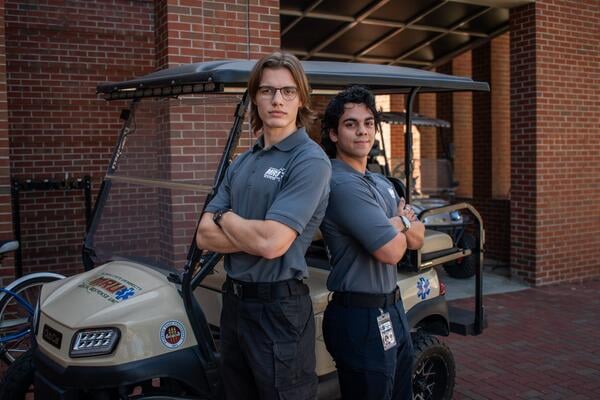
    On a normal day on the Florida State University campus, it’s not unusual to see a student drive by in a vehicle equipped with sirens and the name “Medical Response Unit” plastered to the side.

    “I saw everybody driving around in the golf carts and I really wanted to know what was happening,” said neuroscience major Anakha Vargheese.

    The vehicles are part of a student-led emergency medical response unit, connected to the student health center, that trains student volunteers to provide health care and assistance to their peers.

    For the university, the unit provides emergency response support and health education to all students. For volunteers, the experience gives them needed work-based learning and professional development for future careers as medical professionals.

    In action: FSU’s Medical Response Unit includes more than 150 trained student volunteers on staff, including Vargheese, who serves as director of administration for the unit. Volunteers are certified in various roles, including emergency medical technicians and paramedics.

    To be eligible, students must be empathetic and committed to improving campus health and welfare. All volunteers agree to participate for four semesters including training, so students are primarily admitted in their first or second year of college.

    The unit is well-known on campus, and the competition to earn a spot on the crew is fierce. In the most recent application cycle, MRU received 350 applications for 50 positions, said Bryce Couey, a senior biology major who serves as executive director for the MRU.

    At the start of the term, students accepted to the program are assigned to a crew of three or four people, including one trainee who shadows the crew for the semester. Crews serve two-hour-and-fifteen-minute shifts between 7:45 a.m. and 6 p.m. and may be called on to help bandage a sprained ankle, provide transport to the campus health center or address whatever other issues may arise.

    MRU volunteers provide care for campus community members at campus events, including football tailgates and an annual carnival.

    During the academic year, volunteers cover various campus events, including football tailgates, baseball games, student organization events, intramural sports, the homecoming parade and an annual circus event, which is Vargheese’s favorite.

    “One thing coming into the MRU that I really wanted to gain was clinical experience,” Vargheese said. “But another additional thing that I got out of it was the community and the people. So just being able to spend time with your friends and your crew at these really special events, it’s really fun.”

    The unit has an assortment of vehicles to perform emergency responses, including SUVs, electric carts and a mobile first aid trailer, each equipped with emergency lights, sirens and medical equipment.

    The unit also provides educational training sessions and certification for other students, including Stop the Bleed, which provides a national training certificate for bystanders to control a bleeding emergency before professionals arrive.

    In addition, the unit leads two trainings developed in house for FSU students to recognize and respond to emergency situations, said program director Michael Stewart-Meza; one is tailored for students in fraternity and sorority life and another for the general campus population.

    The impact: The unit is one way FSU hopes to destigmatize receiving help among the campus community.

    “Before and after their shifts, [volunteers] are roaming around campus and attending class in their MRU uniforms,” Stewart-Meza said. “It develops a comfortability that other students will have with them. They’re their classmates, they’re their friends and they’re in the sororities and fraternities with them.”

    Both Couey and Vargheese initially joined MRU to gain clinical experience for their premed education, but the experience has also taught them personal and professional skills, as well as helped them create a sense of connection on campus.

    “It has made me a better person,” Couey said. “I was very introverted when I joined the unit, and I feel as if the people in the unit and the unit itself have gotten me out of my shell and allowed me to grow into the best version of myself.”

    “Being out there in the field and treating patients, caring for them in whatever way that we can, it’s really affirming and rewarding,” said Vargheese. “Without MRU here at college, I don’t know what I’d be doing. I really found my place.”

    Source link

  • Is Higher Ed Broken?

    Is Higher Ed Broken?

    During the recent government shutdown, I bravely traveled to Philadelphia for the annual meeting of the Association of Public and Land-grant Universities’ annual meeting. Then I hung out at Bryn Mawr College, where Marjorie Hass, president of the Council of Independent Colleges, gave a fantastic talk about curriculum to a big group (that included not that many faculty). Finally, I Amtraked up to a conference at Drew University in New Jersey. In one week, I made the rounds of what most people think of as “college.”

    In my role as creator of Inside Higher Ed’s wacky weekly newsletter The Sandbox, I go to plenty of higher ed conferences. The Drew gathering was a horse of another color. It convened 150 people from various sectors of learning—tech gurus, mentorship experts, K–12 educators, innovators in experiential learning, those who have started new organizations and institutions—to talk about the future of higher ed.

    The Drew convening opened with a talk by Michael Horn of the Harvard Graduate School of Education. As a reminder, in 2013, he and Clayton Christensen predicted in a New York Times op-ed that online education was going to disrupt our sector and that 25 percent of struggling colleges and universities were going to close. He presented new research that shows dozens of brand-name schools in New England could now be in deep financial doo doo.

    One of the questions at Drew was “What is the purpose of higher education?” If you ask faculty, the answers are likely to loftily uphold ideals we all believe: to open minds, spark curiosity, even help build citizens who will maintain our (endangered) democracy. Most will rightly claim that colleges and universities are engines of economic opportunity.

    When I asked my students at a regional public what they wanted out of their education, they parroted these ideas. They came to be challenged, to meet people unlike themselves, to think differently. College, they complained noted, instills discipline and helps them ease into adulthood. Most believed in the value of a traditional liberal arts education.

    This is not surprising because, well, they’re college students and they’ve been chugging the Kool-Aid we serve them. We live these values when they come to our campuses. My old friend Stanley Hauerwas, the potty-mouthed esteemed theologian, used to say in typical fashion, “I don’t want my students to make up their goddamned minds; they don’t have minds worth making up until I’ve taught them.” Coming to college can feel for many the way Dorothy did when she went over the rainbow. Life goes from drab sepia tones to a Technicolor.

    Twenty years ago, when I won the lottery became faculty, things were still pretty Emerald City–esque. I had landed a tenure-track job after a couple different careers as a nine-to-fiver. What a luxurious and privileged position! How many other employees have this kind of flexibility, job security and, well, lack of accountability?

    But boy howdy, we’re back in dusty Kansas.

    Because here’s the thing: As enrollments drop, state and federal support withers, and philanthropic dollars are necessary to keep our citizens safe, fed and healthy, the number of faculty at most institutions has remained mostly unchanged while expenses continue to rise. This is a math problem a fifth grader could solve. We need to adapt if we want to continue to prepare the next generations to keep our country going.

    A handful of elite institutions have turned themselves into high-end brands, with people mistaking exclusivity for excellence and the national media mistaking them for the whole sector, fueling the rankings arms race and copycat syndrome.

    Meanwhile, most of us are stuck in the messy middle, trying to do everything everywhere all at once. Research, workforce training, student life, athletics, DEI, study abroad, mental health—missions layered like geological strata. The result? Silos, identity crisis, bloat and burnout.

    The sad truth is that few people outside academe are convinced we’re doing a good job. That includes not just the disaffected without degrees who were told they were losers if they didn’t go to college, but plenty of professionals who did and are still paying off debt and are not convinced their kids should follow that path. Plus, the children of privilege are dropping out of fancy-pants schools to work at start-ups. For many young people, the choice now is not which college to attend but whether to bother going at all.

    There are still plenty of folks who want access to more education, and we have to remember that most degree seekers aren’t of traditional college age. But that doesn’t mean even they want to buy what we’re currently selling. There are nearly 4,000 institutions of higher learning in this country. Some will survive, others will thrive, and for some, it may end up looking like the Hunger Games.

    At dinner with a dozen presidents this fall, one told a story that captured how resistance to current reality can end. That president had been warning his faculty about the financial cliff ahead. They either didn’t believe him or couldn’t be bothered to figure out how to change. Then he told them the school was closing and handed out pink slips. That’s what happens when you wait for someone else to solve the math problem.

    Those in the group that Michael Horn and Clay Christensen said were going to go belly up—small privates and regional publics—are going to have to do some hard rethinking and find a way to be something other than, in the formulation of Jeff Selingo, “Comprehensive U.”

    We’ve been able to muddle through with tiny ivory towers on each campus: disciplinary niches, departments, divisions, colleges. The world, however, does not follow the ways of our little chessboard pieces that each move in their quirky little ways.

    We are in the midst of some serious paradigm shifts, folks. Not just in the last two decades, but in the past two years, since AI began to change every aspect of life as we know it, whether you like it or not (and yes, I know that many do not like it and stick their fingers in their ears saying la la la I can’t hear you).

    This is why the Drew convening felt like going from sepia tones to Oz. If there was a man behind the curtain, it was the visionary president of Drew, Hilary Link, whose scholarship on the Renaissance shows that we already have within us what we need, if we’re only able to see from a different perspective. This perpetual learner has been on an 18-month journey asking questions of all different types of thinkers and trying to figure out where to go next. The convening was a first step in consolidating what she’s learned, backed by a university board that understands the survival challenges and prizes boldness.

    In the final session, President Link asked me to talk about innovations I’ve seen as I talk to presidents around the country. The sad truth is that while there are many creative leaders well aware of the need to change, they face resistance from the usual suspects.

    Boards are often filled with well-meaning and accomplished people who went to college in another era and may not understand much about our current environment.

    And faculty cling to traditions that define their own legitimacy. The Angry Eight (or Furious Five or Irate Individual) on a campus can stop brilliant ideas in two sessions of the Faculty Senate. And while these longtime faculty members try to burn it all down, they rarely come up with realistic and informed solutions to move forward.

    Because of resistance from above or below, institutions are cycling through presidents faster than drug-aided Lance Armstrong could pedal, leaving little time for anything but triage. Finding good examples of meaningful innovation is hard.

    So, I pointed to a quirky example that has caught my attention. The Community Solution Education System consists of six private, previously independent not-for-profit institutions that act as one entity. They share infrastructure and an overarching mission while maintaining their individuality. This approach takes aim at the real obstacles: redundancy, inefficiency, low morale, leadership churn and the isolation that keeps colleges from learning from one another. It smashes the silos.

    Shared services for essential stuff—HR, IT, procurement—free up resources for student services. Networks of presidents and provosts who actually talk to one another about practical, scalable solutions. Small, niche-y colleges get the efficiencies of large ones without losing their soul.

    Collaboration and radical cooperation, not competition, might be higher ed’s best survival strategy. The Community Solution proves that shared purpose doesn’t have to mean sameness. It’s one of the rare higher ed innovations not about shiny tech or brand reinvention but about rebuilding the scorched environment of the ecosystem itself.

    The ground beneath us is shifting faster than ChatGPT could rewrite this essay. One of the speakers at the meeting in New Jersey aptly quoted the boss. Bruce Springsteen sang, “I can’t tell my courage from my desperation.” Yep. As long as it motivates you to get shit done, does it really matter which one it is?

    Rachel Toor is a contributing editor at Inside Higher Ed and the co-founder of The Sandbox, a weekly newsletter that allows presidents and chancellors to write anonymously. She is also a professor of creative writing and the author of books on weirdly diverse subjects. Reach her here with questions, comments and complaints compliments.

    Source link

  • Dismantling of ED Prompts Flurry of Reactions

    Dismantling of ED Prompts Flurry of Reactions

    Dismantling of ED Prompts Flurry of Reactions

    jessica.blake@…

    Tue, 11/18/2025 – 09:00 PM

    Numerous higher ed leaders, advocates and politicians weighed in on McMahon’s plan to ship several ED programs to other agencies. Here’s a snapshot of what they said.

    Byline(s)

    Source link