Tag: News

  • New Report Finds Low Share of R&D Funds Goes to HBCUs

    New Report Finds Low Share of R&D Funds Goes to HBCUs

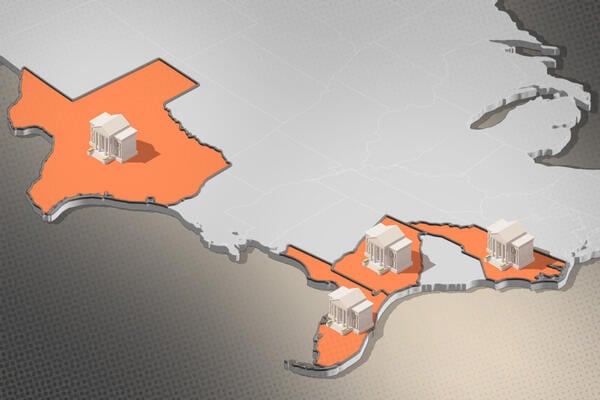
    A new report from the Center for American Progress and the Thurgood Marshall College Fund shows that historically Black colleges and universities receive a disproportionately low percentage of federal research and development funding.

    While HBCUs make up roughly 3 percent of all four-year higher ed institutions, they’ve received less than 3 percent of R&D funding since at least 2010, according to the report. In recent years, between 2018 and 2023, they were awarded less than 1 percent of R&D expenditures.

    Some agencies have given HBCUs a relatively high proportion of R&D funding, including the Department of Education, the Small Business Administration and the Department of Agriculture, which has required allotments for land-grant HBCUs. But the two federal agencies that award the most R&D funding annually, the Department of Health and Human Services and the Department of Defense, have doled out especially low shares of those funds to HBCUs; in 2023, they awarded 0.54 percent and 0.40 percent, respectively. Meanwhile, 17 of the 43 federal agencies that supply research funding didn’t give HBCUs any R&D funds at all that year.

    Sara Partridge, associate director of higher education policy at CAP and co-author of the report, said both Republicans and Democrats have sought to address inequities in R&D funding, but their efforts have been insufficient.

    “In order to support these key drivers of scientific achievement and upward mobility, we need federal policymakers to commit to measurable benchmarks for the share of funds awarded to these institutions,” she said in a press release.

    Source link

  • Court Order Reinstates S.D. Prof Fired for Kirk Comments

    Court Order Reinstates S.D. Prof Fired for Kirk Comments

    Photo illustration by Inside Higher Ed | LeoPatrizi/E+/Getty Images

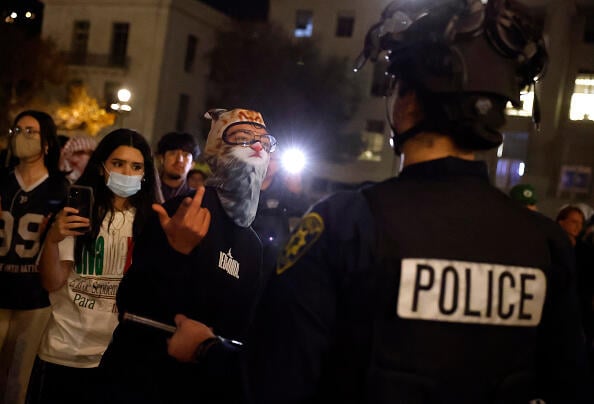
    A South Dakota district court judge ordered the University of South Dakota on Wednesday to reinstate Michael Hook, a tenured professor of art who was put on leave with an “intent to terminate” after he posted comments on his personal Facebook page about Charlie Kirk. 

    “The court concludes that Hook spoke as a citizen and his speech was on a matter of public concern,” district court judge Karen Schreier wrote. “Defendants note that Hook’s Facebook page identified himself as a professor at the University of South Dakota … but this alone does not show that a post made on his personal Facebook account is speech that arises from Hook’s duties as a professor.”

    Hook is one of dozens of faculty and staff members who have been punished for their comments about Kirk’s death. He was put on leave two days after posting, “Okay. I don’t give a flying fuck about this Kirk person,” on his Facebook page on Sept. 10, the day Kirk was shot and killed in Utah.

    “Apparently he was a hate spreading Nazi. I wasn’t paying close enough attention to the idiotic right fringe to even know who he was,” Hook continued. “I’m sorry for his family that he was a hate spreading Nazi and got killed. I’m sure they deserved better. Maybe good people could now enter their lives. But geez, where was all this concern when the politicians in Minnesota were shot? And the school shootings? And Capitol Police? I have no thoughts or prayers for this hate spreading Nazi. A shrug, maybe.”

    Hook later deleted the post and posted an apology. 

    Hook was informed in a letter from Bruce Kelley, dean of the University of South Dakota College of Fine Arts, that in posting the comment on Facebook he’d violated two university policies. The first dealt with “neglect of duty, misconduct, incompetence and abuse of power,” and the second detailed that when employees speak publicly “they should remember that the public may judge their profession and their institution by their utterances. Hence, they should at all times be accurate, show respect for the opinions of others and make every effort to indicate when they are not speaking for the institution.” 

    As part of the temporary restraining order, Schreier ordered that the university may not proceed with a disciplinary meeting between Hook and university officials scheduled for Sept. 29. The temporary restraining order will remain in effect until a preliminary injunction hearing on Oct. 8.

    Source link

  • Public Confidence in Higher Ed Growing

    Public Confidence in Higher Ed Growing

    Jumping Rocks/Universal Images Group/Getty Images

    Despite the Trump administration’s ongoing attacks on colleges and universities, American confidence in higher education is growing.

    According to a poll the Vanderbilt Project on Unity and American Democracy published Thursday, 47 percent of 1,030 Americans surveyed said they have “a great deal” or “quite a lot” of confidence in higher education institutions, with a net positive rating of 33—up 13 percentage points since 2023. Survey respondents reported more confidence in higher education than in the police (44 percent), the medical system (38 percent) and large tech companies (25 percent).

    Those findings echo the results of two recent polls—one by New America and another by Gallup and the Lumina Foundation. The latter showed that 42 percent of Americans said they have a “great deal” or “quite a lot” of confidence in higher education, compared to a low of 36 percent in 2024 and 2023.

    But like those polls, Vanderbilt’s showed partisan divides.

    While 69 percent of Democrats said they were confident in higher education, only 35 percent of Republicans said the same; just 24 percent of respondents who identify with Trump’s Make America Great Again movement expressed confidence. However, the vast majority (78 percent) of people surveyed said a college education is “very” or “somewhat” important for a young person to succeed, including 87 percent of Democrats and 68 percent of Republicans.

    “While the conventional wisdom may suggest that support for colleges and universities is low, it’s important to highlight that most Americans view higher education as a net positive for society, and its support has actually increased from the low levels we saw in 2023 and 2024,” Josh Clinton, co-director of the Vanderbilt poll, said in a news release. “Yes, there are real concerns—most people think affordability is a major problem, and many perceive colleges and universities as having a partisan slant—but that’s very different from widespread opposition to the idea of higher education itself.”

    Fifty-six percent of people surveyed believe that colleges and universities conduct scientific and medical research that saves lives, but only 14 percent said they remain as affordable as possible. The majority (67 percent) also cited political bias on campuses as a serious problem, though Democrats (54 percent) were less likely to agree than Republicans (79 percent), especially those who identified with the MAGA movement (91 percent).

    Nearly three-quarters (71 percent) of respondents said universities should refrain from taking official stances on political issues, including 83 percent of Republicans and 59 percent of Democrats.

    Source link

  • University of Arizona Shutters Chinese Microcampuses

    University of Arizona Shutters Chinese Microcampuses

    The University of Arizona is quietly shutting down its four microcampuses in China at the end of this semester, in response to a government report released earlier this month that criticizes branch campuses of U.S. institutions in China.

    The report, by the House Select Committee on the Chinese Communist Party and the Committee on Education and the Workforce, said American college and university branch campuses in China can “facilitate technology transfer and pose national security risks.” It follows a similar report from a year ago that the new report said led to the closure of eight U.S. branch campuses in China.

    The report, “Joint Institutes, Divided Loyalties,” highlights programs at 13 institutions deemed to be “high risk”—including one UA microcampus, the Arizona College of Technology at Hebei University of Technology, which awards students a B.S. in applied physics—and calls on the universities to sever those partnerships. (It also highlights a former partnership between UA and the Harbin Institute of Technology, a Chinese university affiliated with the country’s Ministry of Industry and Information Technology, but the university told Inside Higher Ed that partnership ended in 2023.) It’s unclear if any of the other 12 institutions have taken steps toward ending their programs at Chinese institutions.

    Though the report only referenced one current UA microcampus, the university said it will close all four of its campuses in China.

    “Acknowledging a congressional directive, the University of Arizona immediately terminated its China-based microcampus agreements. We have communicated directly with those affected and are working with enrolled students to help them continue their education,” a university spokesperson told Inside Higher Ed via email.

    In total, 2,200 students, 36 faculty and four staff will be impacted by the closures, the spokesperson said. UA will provide funds to help employees relocate back to the U.S.; the university is also working to help students figure out next steps.

    The university has a total of 18 microcampuses across the globe—programs that are housed at another university, in which students are taught by a mix of professors from UA and the partner institution and earn degrees from both institutions. The first such program was a bachelor’s program in law at Ocean University of China, in which students study both Chinese and U.S. law.

    University officials told Inside Higher Ed in 2017 that the main goals of the microcampuses were to increase the university’s internationalization, provide students with affordable international pathways and earn revenue. They also said they hoped to eventually launch 25 microcampuses worldwide and reach 25,000 students.

    In a post on X, the Committee on Education and the Workforce lauded UA’s move.

    “@uarizona is making the right decision to end its China-based campus agreements. The CCP uses these programs to steal cutting-edge research for its own military buildup and promote communist ideology,” the post reads. “These programs are a direct threat to U.S. national security. Every American school should follow suit and end agreements with the CCP.”

    ‘Boom, We Shut Down’

    Ken Smith, who leads the environmental science dual-degree program at UA’s microcampus at the Northwest Agriculture and Forestry University in China’s Shaanxi province, said he was informed the program would be shuttering just a week ago.

    Now in its fifth year, the program has been incredibly successful, Smith said. It had recently completed a yearlong federal and provincial review process and had received exceptional marks. Student outcomes were also strong, with many going on to top-tier graduate programs in the U.S. and Europe. Others were able to find careers in China, despite environmental science being a low-demand degree in the country, because they held degrees from a well-regarded U.S. university.

    “Things were really going super well, and, boom, we shut down,” he said.

    Rong Qian, who graduated in the program’s second class this past spring, told Inside Higher Ed he was “shocked” to hear the program was ending. He credited the UA professors for boosting his confidence and inspiring him to apply to graduate school in the U.K., where he is now studying at Imperial College London. He also noted that UA’s reputation has helped him and his classmates get into such good programs.

    “I want to express my gratitude for those professors, especially those from [UA] … not only for their patience and time [with] me and my studies, but also for their encouragement, their support and their easygoing characteristics,” he said.

    Smith said that current seniors in the program will still be able to graduate with their UA degrees, and he’s working with both UA and NWAFU to try to find a way for the third-year students to finish out their programs as well. However, he’s doubtful that newer students will be able to get a degree from UA; they could study online or come to the U.S. to finish, but he doesn’t think the former option will hold much appeal, while the latter is prohibitively expensive for most.

    In the university’s email to students at the affected campuses sent earlier this week, which the university shared with Inside Higher Ed, Jenny Lee, dean of international education, wrote, “The U of A is committed to supporting you in the completion of your degree. We welcome you to join us at our main campus, in Tucson, Arizona, under an extended Study Arizona Program for up to 4 semesters (usually during the junior and senior years). The U of A will follow up soon with further guidance regarding Study Arizona and other possible options for your degree completion pathway.”

    The closure of the program is not just a loss for UA, Smith said, but also for the nation as a whole.

    “Living in China for the past four years and watching the U.S. news, I think a lot of political figures don’t know much about China … It’s a major modern economic power, a major military power,” he said. “I think it’s in everyone’s best interest that people in the U.S. and people in China understand each other. The kind of program I was involved with was a major educational success, but it was also a diplomatic success. It got the University of Arizona’s name out there. People wanted us there. They enjoyed learning about the American education system, and, unfortunately, now, that’s all over.”

    Source link

  • Grad v. Professional Programs a Key Issue for ED Panel

    Grad v. Professional Programs a Key Issue for ED Panel

    Despite the possibility of a government shutdown next week, the Education Department is slated to begin the complicated endeavor of determining how to carry out the sweeping higher ed changes in Congress’s One Big Beautiful Bill Act.

    The agenda for the weeklong meeting, which kicks off Monday, includes hammering out details about loan repayment plans and how to help struggling borrowers return to good standing. The key issue on the table, though, will likely be determining how best to differentiate between graduate and professional degree programs for future borrowers.

    The terms “graduate” and “professional” were once nothing more than a trivial self-prescribed classification. But under the Republicans’ new law, they have become critical labels that could alter which college programs get more federal aid. For example, under the new plan, student borrowers in a graduate program will be limited to $20,500 per year or $100,000 total, whereas those enrolled in a professional program will be able to borrow more than double that.

    And while lawmakers on Capitol Hill gave the department a foundational definition of what qualifies as professional in the bill, it’s up to Education Under Secretary Nicholas Kent and the negotiated rule-making advisory committee to write rules that detail how that definition will work in practice. (The committee is scheduled to meet for another weeklong session in November, and only after that can the department finalize its proposal and open the floor for public comment.)

    Some university lobbyists and career associations want the department to include more programs in the professional bucket and make a comprehensive list of those that qualify. Others recommend using a broad definition and then letting institutions sort the programs. Consumer protection advocates, however, are urging the department to stick to the original, more narrow definition in an effort to prevent greater levels of student debt.

    The department’s initial proposal, released this week, stuck largely to the 10 programs cited in the existing definition but added a catch-all clause to add “any other degrees designated by the Secretary through rulemaking.”

    To Clare McCann, a former Education Department official and now managing director of policy for the Postsecondary Education and Economics Research Center at American University, the initial proposal shows that the department doesn’t quite know how it wants to define a professional program.

    “This is a really complicated issue,” she said. “So it seems clear to me that the department is planning to use this first session to gather ideas and feedback but is not planning to come to the table with a real proposal of its own.”

    Further complicating the issue, McCann and others say, it’s going to be difficult for the department to finalize its rule fast enough to give students and institutions enough time to prepare. (Currently, the new loan caps are slated to kick in as of July 1, 2026.)

    As McCann explained, the earliest colleges and universities could expect to see a proposed rule—let alone a finalized one—would be later this fall. And at that point, many prospective students have already started receiving acceptance letters.

    “There will be many people making decisions about whether and where they’re going to graduate school, and they’ll be doing that in a vacuum, without final rules about what they’ll be able to borrow and how they’re going to be able to repay it,” she said. “So this whole regulatory process is going to be an incredible time crunch.”

    Current Definitions

    The current definition of “professional,” which is laid out in the Higher Education Act of 1965, states that in order to qualify as professional a degree must signify that a student has the skills necessary beyond a bachelor’s degree in order to practice a specific profession.

    Later it adds that “professional licensure is also generally required,” and provides a short but nonexhaustive list of programs that could fit the bill, including: pharmacy, dentistry, medicine, osteopathy, law, optometry, podiatry, veterinary medicine, chiropractic medicine and theology. (That list served as the foundation for the department’s proposal.)

    Some groups, like the National Association of Independent Colleges and Universities, made clear in their public comments that they interpret this definition to be an intentionally “flexible” and “inclusive approach.” And based on that, they encouraged the department to maintain a broad definition and allow institutions to self-certify their programs with periodic review from the department.

    Jordan Wicker, the senior vice president of legislative and regulatory affairs at Career Education Colleges and Universities, a lobbying group for for-profit institutions, added that the economy and higher education landscape are constantly evolving—pointing to the need for a broader definition.

    “I don’t know that you want to re-regulate a comprehensive list any time curriculums or programs change,” he told Inside Higher Ed.

    Others, including the American Council on Education, agree that the interpretation should be broad but say the best way to ensure that is the case is by creating a more complete list of eligible programs. “At the very least,” ACE said in its comment letter, the list should include dozens of clinical and health science programs highlighted under an existing regulation known as financial value transparency. On top of that, it also urges the department to include about 15 additional programs, including architecture, accounting, social work, education and word languages.

    Halaevalu Vakalahi, president of the Council on Social Work Education, agreed, arguing that many programs like hers meet the current definition.

    “We’ve always identified ourselves as a profession,” she said. “There’s licensure, there’s accreditation—all of the things that we have as part of the social [work] profession are also in the list that currently exists on what is a profession.”

    But Third Way, a left-of-center think tank, drew the exact opposite conclusion, arguing that Congress intended for the definition to be stringent and address “unnecessary student debt.” (Graduate student debt accounts for nearly half of the student loan portfolio, raising concerns for lawmakers and advocates.)

    “While this list is not exclusive, Congress did not indicate that it intended to include any other fields in crafting the OBBBA loan limits,” senior policy adviser Ben Cecil wrote in a recent blog post about the distinction. “By codifying this list as written, the Department can best enforce the legislative intent of ensuring that students aren’t overborrowing for graduate school and have manageable debt compared to their program’s earnings.”

    High-Stakes Talks

    With the different proposals on the table, those interviewed agreed that it will be rather difficult for the committee to reach consensus. If the committee doesn’t reach an agreement, the department is free to interpret the definition cited in OBBBA however it wants.

    McCann from PEER, who worked at the department during the Obama and Biden administrations, said that until she starts to see the debate play out, it’s hard to know which approach will win. But no matter what, she added it will likely be an uphill climb.

    “It’s a challenging issue for negotiators, and there are a lot of competing interests with pretty high stakes attached,” she said. So “this is going to be a difficult committee on which to get that kind of agreement.”

    Todd Jones, president of the Association of Independent Colleges and Universities of Ohio and a former Republican staffer in the department, said that he expects the Trump administration will lean toward a more narrow definition if the committee doesn’t reach consensus. At that point, he added, it will be up to the individual types of programs to lobby for why they should be added to the list.

    “The question is, what has the administration already decided that they are going to give on?” Jones said. “And the things I’ve heard while I was in D.C. over the past few months indicate that there may not be support for some of these social science higher degrees being considered professions and instead simply being considered master’s.”

    Source link

  • Are we outsourcing our thinking to AI?

    Are we outsourcing our thinking to AI?

    Key points:

    I’ll admit that I use AI. I’ve asked it to help me figure out challenging Excel formulas that otherwise would have taken me 45 minutes and a few tutorials to troubleshoot. I’ve used it to help me analyze or organize massive amounts of information. I’ve even asked it to help me devise a running training program aligning with my goals and fitting within my schedule. AI is a fantastic tool–and that’s the point. It’s a tool, not a replacement for thinking.

    As AI tools become more capable, more intuitive, and more integrated into our daily lives, I’ve found myself wondering: Are we growing too dependent on AI to do our thinking for us?

    This question isn’t just philosophical. It has real consequences, especially for students and young learners. A recent study published in the journal Societies reports that people who used AI tools consistently showed a decline in critical thinking performance. In fact, “whether someone used AI tools was a bigger predictor of a person’s thinking skills than any other factor, including educational attainment.” That’s a staggering finding because it suggests that using AI might not just be a shortcut. It could be a cognitive detour.

    The atrophy of the mind

    The term “digital dementia” has been used to describe the deterioration of cognitive abilities as a result of over-reliance on digital devices. It’s a phrase originally associated with excessive screen time and memory decline, but it’s found new relevance in the era of generative AI. When we depend on a machine to generate our thoughts, answer our questions, or write our essays, what happens to the neural pathways that govern our own critical thinking? And will the upcoming era of agentic AI expedite this decline?

    Cognitive function, like physical fitness, follows the rule of “use it or lose it.” Just as muscles weaken without regular use, the brain’s ability to evaluate, synthesize, and critique information can atrophy when not exercised. This is especially concerning in the context of education, where young learners are still building those critical neural pathways.

    In short: Students need to learn how to think before they delegate that thinking to a machine.

    Can you still think critically with AI?

    Yes, but only if you’re intentional about it.

    AI doesn’t relieve you of the responsibility to think–in many cases, it demands even more critical thinking. AI produces hallucinations, falsifies claims, and can be misleading. If you blindly accept AI’s output, you’re not saving time, you’re surrendering clarity.

    Using AI effectively requires discernment. You need to know what you’re asking, evaluate what you’re given, and verify the accuracy of the result. In other words, you need to think before, during, and after using AI.

    The “source, please” problem

    One of the simplest ways to teach critical thinking is also the most annoying–just ask my teenage daughter. When she presents a fact or claim that she saw online, I respond with some version of: “What’s your source?” It drives her crazy, but it forces her to dig deeper, check assumptions, and distinguish between fact and fiction. It’s an essential habit of mind.

    But here’s the thing: AI doesn’t always give you the source. And when it does, sometimes it’s wrong, or the source isn’t reputable. Sometimes it requires a deeper dive (and a few more prompts) to find answers, especially to complicated topics. AI often provides quick, confident answers that fall apart under scrutiny.

    So why do we keep relying on it? Why are AI responses allowed to settle arguments, or serve as “truth” for students when the answers may be anything but?

    The lure of speed and simplicity

    It’s easier. It’s faster. And let’s face it: It feels like thinking. But there’s a difference between getting an answer and understanding it. AI gives us answers. It doesn’t teach us how to ask better questions or how to judge when an answer is incomplete or misleading.

    This process of cognitive offloading (where we shift mental effort to a device) can be incredibly efficient. But if we offload too much, too early, we risk weakening the mental muscles needed for sustained critical thinking.

    Implications for educators

    So, what does this mean for the classroom?

    First, educators must be discerning about how they use AI tools. These technologies aren’t going away, and banning them outright is neither realistic nor wise. But they must be introduced with guardrails. Students need explicit instruction on how to think alongside AI, not instead of it.

    Second, teachers should emphasize the importance of original thought, iterative questioning, and evidence-based reasoning. Instead of asking students to simply generate answers, ask them to critique AI-generated ones. Challenge them to fact-check, source, revise, and reflect. In doing so, we keep their cognitive skills active and growing.

    And finally, for young learners, we may need to draw a harder line. Students who haven’t yet formed the foundational skills of analysis, synthesis, and evaluation shouldn’t be skipping those steps. Just like you wouldn’t hand a calculator to a child who hasn’t yet learned to add, we shouldn’t hand over generative AI tools to students who haven’t learned how to write, question, or reason.

    A tool, not a crutch

    AI is here to stay. It’s powerful, transformative, and, when used well, can enhance our work and learning. But we must remember that it’s a tool, not a replacement for human thought. The moment we let it think for us is the moment we start to lose the capacity to think for ourselves.

    If we want the next generation to be capable, curious, and critically-minded, we must protect and nurture those skills. And that means using AI thoughtfully, sparingly, and always with a healthy dose of skepticism. AI is certainly proving it has staying power, so it’s in all our best interests to learn to adapt. However, let’s adapt with intentionality, and without sacrificing our critical thinking skills or succumbing to any form of digital dementia.

    Latest posts by eSchool Media Contributors (see all)

    Source link

  • Colleges Teach Students Healthy Eating, Cooking Habits

    Colleges Teach Students Healthy Eating, Cooking Habits

    A 2025 survey of 5,000 undergraduates by Inside Higher Ed, supported by Generation Lab, found that the greatest share of students rated their nutrition at college as average (44 percent), with an additional 30 percent describing their nutrition as below average or poor.

    A number of colleges and universities are working to teach students proper nutrition habits and equip them to lead healthy lives in and beyond college.

    The research: A 2023 literature review found that college students experience a variety of risk factors that make them uniquely positioned to experience food insecurity, including busy schedules and a lack of access to nutritious food.

    Several studies found that students who had cooking experience were less likely to face food insecurity, implying that those without cooking or food-preparation skills may be at higher risk for food insecurity, according to the report.

    The report suggests colleges can provide cooking and meal-preparation demonstrations to help students gain skills, as well as learn how to prepare low-budget, nutritious meals. One study cited in the literature review suggested adding nutrition education—including food budgeting and recipes—as a feature of first-year seminars.

    Inside Higher Ed compiled five examples of nutrition education designed to address student health, food insecurity and malnutrition.

    1. University of Memphis: Grilling Classes

    To help teach students how to cook using relevant tools and resources, the University of Memphis staff hosts a lunchtime nutrition class, teaching students how to prepare and grill a personal pizza.

    The university charges students $15 to participate in the class, which covers ingredients and lunch foods, providing a low-cost and casual introduction to basic cooking principles.

    1. University of North Dakota: Culinary Corner

    At UND, students get the chance to lead their peers in cooking classes. Events are open to all campus members, including faculty and staff, and the hourlong sessions in the wellness center teach students how to prepare simple meals.

    In addition, UND has a virtual demonstration library so students can teach themselves how to cook a range of healthful recipes from wherever they are, including honey-glazed salmon, chana masala or acai bowls. Each demonstration video features a student instructor and a recipe card for viewers to follow along.

    1. Lewis College, University of Georgia Cooperative Extension: Fulton Fresh University

    This fall Georgia State University students benefited from a free cooking demonstration and nutrition course pilot hosted by two local institutions.

    Fulton Fresh University, a partnership between Lewis College and the University of Georgia Cooperative Extension, typically educates seniors or those in low-income communities. But in 2024, the partners tested a new offering for college students who don’t necessarily know how to cook and are more inclined to eat quick meals or takeout, according to a university press release.

    The four-week, no-cost course provided students with 10 pounds of produce at each session, in addition to spices and a variety of kitchen tools to keep.

    1. Iowa State University: Culinary Boot Camp

    Iowa State University students can participate in a two-credit course, Culinary Boot Camp, which provides nutrition education and culinary skills to promote healthy living.

    The course, which has been offered since 2016, covers topics including storing food safely, reducing food waste, converting recipes and shopping efficiently for groceries, among others.

    1. Cornell University: Get Cooking With Cornell Dining

    Cornell offers students a chance to learn from the professionals: the campus dining team. Members host events in the Discovery Kitchen in a residence hall on campus, where students can practice preparing plant-based dishes, which they then enjoy.

    The goal is to help students learn to make healthy dishes that are both tasty and environmentally friendly.

    Do you have a wellness intervention that might help others promote student success? Tell us about it.

    Source link

  • Angelo State Allows Pride Flags, Keeps Anti-Trans Policies

    Angelo State Allows Pride Flags, Keeps Anti-Trans Policies

    Michael Barera/Wikimedia Commons

    Directives related to a slate of convoluted and sometimes contradictory new policies prohibiting discussion of transgender topics and identity have left employees at Angelo State University frightened and confused.

    As of Monday, conversations and content about transgender identities are still prohibited, but employees are allowed to use students’ preferred names, display rainbow flags in their offices and on their cars, and talk about lesbian, gay, bisexual and queer identities, according to emails from department heads to faculty obtained by Inside Higher Ed.

    The changes were clarified to employees after a meeting between the deans, provost and ASU legal counsel. Employees are still seeking other clarifications. For example, students who are already working on papers related to transgender identity are allowed to continue doing so, but it’s unclear whether they could give a final class presentation on the topic. 

    Only some faculty members at some the university’s colleges have been told about these changes. Others are still responding to the initial policies handed down to employees Friday following a meeting with Angelo State leadership. The policies are stringent and exhaustive: no pride flags, no calling students by the singular “they” or using their preferred names (unless it aligns with their sex assigned at birth), no pronouns in email signatures and no mention of the fact that there are more genders than the two assigned at birth.

    None of the policies are formalized in writing, and that is purposeful, said Brian Evans, president of the Texas Conference of the American Association of University Professors. The guidance only changed after faculty brought up questions about the policies, which deans took back to the provost and university counsel. Final details about what is and is not allowed and how the rules will be enforced are still under discussion.

    Source link

  • States Need to Pass Budgets

    States Need to Pass Budgets

    This isn’t unique to my state, but it’s my first time encountering it.

    Pennsylvania’s state government runs on a July-to-June fiscal year, which means that it was supposed to have passed a budget for this fiscal year by July 1.

    It hasn’t passed one yet, and passage doesn’t look imminent.

    This is becoming a problem.

    It’s already a problem for our county, which has announced cuts. And it’s increasingly a problem for the college.

    Based on previous years, we’ve expected the state allocation to cover a little over 40 percent of the operating budget. (The county’s figure is much lower.) So far this year, it has covered zero percent, for a difference of—let’s see, carry the three—millions.

    We have reserves, and they’ve come in handy. But they’re meant to even out cash flow over the course of a year, to cover emergencies and to help with large expenses. They were never intended to supplant the state’s role in the budget. Our CFO recently had to calculate the number of months we could go without the state allocation, which is a number you never want to matter.

    For those keeping score at home, reserves at a community college are very different from endowments at universities. Endowments are generated mostly from a combination of donations and investment returns, and they’re meant to “throw off” a certain amount per year to pay for other things. Those other things can be the operating budget, or scholarships, or facilities, as specified. (Endowment funds are a mix of restricted and unrestricted. Restricted funds can only be used for designated purposes; unrestricted funds are more flexible.)

    Reserves, by contrast, are generated from operational savings and are meant to provide a bit of buffer. They’re almost always invested very conservatively because they’re meant to be liquid. Endowments can take greater risks because they’re intended to have much longer time horizons. If endowments are like retirement accounts, reserves are closer to savings accounts.

    They’re crucial for cash flow because peak revenue times and peak spending times don’t always align. For a college on a traditional calendar, August shows high revenues and low spending, and October shows high spending and low revenues. That’s because students pay tuition in August to take classes in October.

    Reserves can create perverse incentives for legislators. A legislator looking to pay for some other line item closer to his heart may see a public college with relatively healthy reserves as a painless target for cutting. But once reserves are spent, they’re spent, and one of the dangers of public-sector math is that even a single year’s cut can become a new baseline. At that point, climbing out of the hole can become a Sisyphean nightmare.

    In practice, that means that public colleges have to perform a delicate balance with reserves. Save too much, and you become a tempting target. Save too little, and you may find yourself in a tight spot if something happens.

    Right now, something is happening—or not happening, to be exact—with a major impact. The frustrating part is that the something in question is unnecessary. This isn’t the aftermath of a natural disaster; it’s collateral damage from a political standoff. The fact that it leaves us much more vulnerable to, say, a natural disaster doesn’t seem to bother legislators.

    So, my request to the elected leaders of Pennsylvania, and to other states in similar spots: Pass a budget! Reserves weren’t meant for this.

    Source link

  • 2026–27 FAFSA Launched Ahead of Schedule

    2026–27 FAFSA Launched Ahead of Schedule

    The final version of this year’s Free Application for Federal Student Aid was made available to all students Wednesday—eight days ahead of schedule. This marks the application’s earliest launch date since it first transitioned to an online platform nearly two decades ago, according to the Department of Education.

    Education Secretary Linda McMahon used the announcement as an opportunity to criticize the Biden administration for its “infamously botched” rollout of an extensive FAFSA overhaul two years prior. 

    “I am extremely proud to announce the earliest launch of the FAFSA form in history, which ensures American students and families have access to critical resources as they begin or continue their postsecondary education journey,” she said in a news release. “Under President Trump’s leadership, our talented team has redesigned and streamlined the process so all American students can now successfully complete the form in minutes.” 

    There were limited changes to this year’s form, but to test the changes that were made, a beta version was first made available to a select number of students and families in early August. Then, last week, all students could access the test form. Over the course of those two months, more than 40,000 applications have been started, about 27,000 have been submitted and roughly 24,000 have been processed without rejection.

    Updates to this year’s form include a redesigned process for inviting parents to contribute to the form and a faster verification process for new accounts. And over all, the students who have tested the form so far have had a good experience, with 97 percent of respondents reporting satisfaction and 90 percent saying it took a reasonable amount of time to complete.

    Source link