Tag: News

  • ASU Police Reportedly Assisted DHS With Arrest

    ASU Police Reportedly Assisted DHS With Arrest

    Arizona State University police assisted in arranging the violent arrest of a staff member by Department of Homeland Security officials earlier this week, The Phoenix New Times reported.

    The ASU chapter of the National Lawyers Guild alleged in an Instagram post that ASU police officer James Quigley arranged a meeting with a staff member, who was not named, “under the pretense of discussing a ‘concern’ about a social media post.” After a brief meeting, the employee was then arrested by multiple plainclothes Immigration and Customs Enforcement agents, according to the group.

    A purported video of the encounter was later posted on X. The video shows several men with badges, one of whom identifies himself as “a special agent with Homeland Security” twisting an individual’s wrist before kneeing him in the back. In the video, the arrested individual, who is the employee in question, according to the post, asks, “What did I do?” as he is arrested.

    The employee was later released, according to the newspaper. 

    In the aftermath of the arrest, the ASU chapter of the National Lawyers Guild called on the university and President Michael Crow to publicly denounce the incident, end all cooperation with ICE and enact policies “to prevent future targeting and harm” to community members.

    “ASU must protest the safety and dignity of its staff and students—not partner with agencies that terrorize them,” the organization wrote online.

    ASU spokesperson Jerry Gonzalez told Inside Higher Ed that the U.S. Secret Service and Department of Homeland Security had questioned an employee after receiving an anonymous tip.

    “In order to remain informed about a matter involving an ASU employee, an ASU police officer accompanied a DHS investigator to a meeting with the employee at a coffee shop off campus,” Gonzalez wrote.

    He confirmed that the employee was later released.

    (This article has been updated with a comment from ASU.)


    Source link

  • McMahon Calls for Improving Efficiency, Civilizing Discourse

    McMahon Calls for Improving Efficiency, Civilizing Discourse

    Connor McLaren for the Ronald Reagan Institute

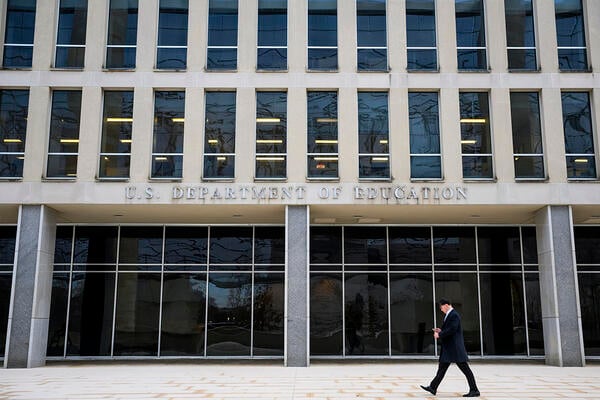
    Washington, D.C.—Education Secretary Linda McMahon made clear at a series of policy summits this week that while she remains committed to one day shuttering her department, there’s still much work left to be done.

    “You don’t just shut off the lights and walk out the door if you are trying to return education to the states,” McMahon said at one event Wednesday, adding that offices like Civil Rights and Federal Student Aid can’t simply be eliminated. “Really, what we’re trying to do is to show how we can move different parts of the Department of Education to show that they can be more efficient operating in other agencies.”

    Throughout her remarks at both events—the Education Law and Policy Conference hosted by the Federalist Society and the Defense of Freedom Institute on Wednesday and the Reagan Institute Summit on Education on Thursday—the secretary stressed that a key way to test this concept is by moving workforce development programs to the Department of Labor.

    “Let’s be sure that we are not moving hastily, but that we are taking the right steps at the right pace for success,” McMahon told the Federalist Society audience. “And if we show that this is an incredibly efficient and effective way to manage these programs, it is my hope that Congress will look at that and approve these moves.”

    However, some advocates for students, institutional lobbyists, Democrats in Congress and left-leaning policy analysts have taken issue with the plan to move adult, career and technical education programs to the Labor Department, arguing that it’s illegal and will create more headaches for the providers who rely on the money.

    Regardless, the Trump administration is moving forward with its plans. ED signed an interagency agreement with the Department of Labor earlier this spring and has more recently moved many of its staff members to the DOL office. (Funding for the salaries of these employees and the programs they lead, however, will still come from the Education Department budget.)

    On Thursday at the Reagan Institute, McMahon noted that the combined staff is working on a new learning and employment report as well as a “skills wallet” that will help show employers what students have learned and students what employers are looking for.

    “It’s an exciting time in labor development in that country, but it’s a challenge and a real responsibility for us to not get stuck,” she said.

    Aside from career and technical education and some of her other priorities, such as cracking down on alleged campus antisemitism and racial preferencing, much of the conversation both days was centered around the recent shooting of conservative figurehead Charlie Kirk at Utah Valley University and how to prevent political violence on campus.

    McMahon was quick to describe the Turning Point USA president’s death as a travesty and to charge colleges with the responsibility of promoting more healthy civic discourse. At both events, she cited Kirk himself as a prime example of what such debate looks like, saying that while his approach was at times “aggressive,” he was always “very polite” and “civil.”

    “He wasn’t antagonistic, but he was challenging. And there’s a clever art to being able to do that,” she said. “I don’t think that we show our students how to do that enough.”

    Thursday, she denounced the faculty, staff and students who appeared to have been apathetic toward or allegedly celebrated Kirk’s death, building upon comments she made in a social media video earlier this week. But just as she suggested condemning certain individuals for crossing an “ethical line,” she added that “if you shut down the speech of one side to allow the freedom of speech for another, you’d have actually compromised the entire principle, and that we cannot have.”

    She closed on Thursday by urging educators to foster their students’ compassion.

    “We’ve lost a little of our humanity,” she said. “Let’s make sure we grab that back in peace and show it through leadership.”

    Source link

  • Education Dept. Opens Up FAFSA Beta Test to All

    Education Dept. Opens Up FAFSA Beta Test to All

    Photo illustration by Justin Morrison/Inside Higher Ed | SimoneN/iStock/Getty Images

    All students can now access a beta version of the 2026–27 Free Application for Federal Student Aid, the Department of Education announced Wednesday.

    The grant application platform won’t officially launch until Oct. 1, the congressionally mandated FAFSA launch deadline, but for the 12 days between now and then, students and families can start their application by participating in the test model.

    “We’re using this time to monitor a limited number of FAFSA submissions to ensure our systems are performing as expected,” the department’s Federal Student Aid website explains. “This is a common practice in website and software development.”

    The first round of beta testing was opened to a limited number of students in early August. Students who submit their form during the test will only have to submit it once, the department website states.    

    Source link

  • Creighton Receives $100M Gift for Athletics Facilities

    Creighton Receives $100M Gift for Athletics Facilities

    Creighton University has received a $100 million gift from the Heider Family Foundation to launch a nearly $300 million campaign for a sprawling recreational and athletic development on the east side of the Omaha campus.

    Creighton’s Fly Together plan will establish or upgrade athletic facilities and outdoor spaces covering 12 blocks and roughly 700,000 square feet. It includes a new student fitness center, a pedestrian walkway connecting the private Jesuit campus to a downtown business district and a new sports performance center for Creighton’s student athletes.

    “Fly Together will serve students and student-athletes, but importantly, it will serve the Omaha community itself,” said Scott Heider, a university trustee as well as a trustee of the Heider Family Foundation, which was established by his parents, Charles and Mary.

    “We are incredibly grateful to the Heider family and the additional donors who are making this moment possible,” said Creighton president Daniel Hendrickson. “This gift … benefits everyone. It enhances student life, intramurals, premier club sports and intercollegiate athletics. It also strengthens Creighton’s connection to downtown and the broader Omaha community.”

    Source link

  • Censorship Is the Authoritarian’s Dream

    Censorship Is the Authoritarian’s Dream

    More professors in the United States have been fired for controversial views in the past week than any other week in all of American history. The violations of academic freedom, free speech and due process on campuses in the wake of Charlie Kirk’s assassination have been extraordinary and indefensible.

    The campus firings are too numerous to describe in full, but consider the case of Darren Michael, professor of theater at Austin Peay State University, who was fired because he reposted on social media a 2023 Newsweek headline: “Charlie Kirk Says Gun Deaths ‘Unfortunately’ Worth It to Keep 2nd Amendment.” Tennessee’s U.S. senator Marsha Blackburn reposted Michael’s view on X, asking the university to take action.

    Austin Peay administrators declared, “A faculty member of Austin Peay State University reshared a post on social media that was insensitive, disrespectful and interpreted by many as propagating justification for unlawful death. Such actions do not align with Austin Peay’s commitment to mutual respect and human dignity. The university deems these actions unacceptable and has terminated the faculty member.”

    This is an utterly appalling excuse to punish anyone, and certainly not an adequate reason for a university to terminate a professor without any due process. There is absolutely no rule at Austin Peay banning people from being insensitive or disrespectful, since any rule like that would clearly violate the First Amendment. And the idea that posting a headline quoting Kirk’s views would somehow justify his murder is insane. It’s perfectly legitimate to criticize anyone for favoring or opposing gun control. This critique of Kirk is anything but pro-murder.

    The violations of due process involved in these arbitrary firings, with no opportunity for a hearing or a defense, are terrible in themselves. But the justifications for the firings are so insubstantial that they cannot merit any kind of penalty, let alone an immediate dismissal.

    It is perfectly legitimate to criticize and even insult both the dead and the living. Any conservative who thinks Charlie Kirk hated free speech so much that he would want his critics purged from campuses is making a far worse insult against Kirk than what any offensive leftist has written or said.

    Of course, the suppression of free speech goes far beyond academia.

    The suspension of Jimmy Kimmel by ABC on Sept. 17 following FCC chair Brendan Carr’s demands for his removal and threats against broadcast licenses represent an alarming repression of free speech, with the combination of corporate censorship and government suppression.

    On his Sept. 15 show, Kimmel said, “We had some new lows over the weekend, with the MAGA gang desperately trying to characterize this kid who murdered Charlie Kirk as anything other than one of them and with everything they can to score political points from it.” What Kimmel said was, in fact, technically true: Conservatives were doing everything they could to claim that Kirk’s murderer was not one of them. And the murderer was, in fact, a white male college dropout from a Republican family in Utah that taught him to shoot and provided him with guns.

    Of course, conservatives are probably correct to call the murderer a leftist with political motives, and if Kimmel was trying to invoke theories that the killer was actually a right-winger, that seems unlikely now based on evidence released after Kimmel’s show aired. But even if Kimmel was trying to make a dubious claim that has now been discredited, that’s protected by the First Amendment and principles of free speech.

    The second part of Kimmel’s claim—that conservatives were using Kirk’s murder to “score political points”—was never in doubt and has been proven yet again by his removal from the airwaves.

    Kimmel didn’t celebrate any violence or say anything bad about Charlie Kirk. The glorification of Kirk is a cover for an authoritarian agenda to suppress political enemies. Donald Trump immediately celebrated Kimmel’s banishment and called for NBC hosts Jimmy Fallon and Seth Meyers to also be fired.

    This is the slippery slope of censorship: First they come for those who celebrate murder, then they come for anyone who questions the hagiography of the victim, then they go after anyone who quotes the victim’s own words, then they silence anyone who objects to the repression itself. This is why even offensive and stupid comments about Charlie Kirk must not be punished.

    But when Vice President JD Vance urges everyone to “call their employer” in response to offensive comments, that’s not critique or argument: That’s cancel culture, pure and simple. That’s government-mandated repression.

    The right to free expression must include the right to say horrible and evil things. It protects all of the conservatives (including Donald Trump, his son and Charlie Kirk) who joked about the attempted murder of Paul Pelosi. It protects the Fox News host Brian Kilmeade, who urged mass executions of homeless people.

    As David Letterman noted about Kimmel, “You can’t go around firing somebody because you’re fearful or trying to suck up to an authoritarian criminal administration in the Oval Office.”

    Less than two years ago, before he began issuing government commands to silence the media, Carr posted on X, “Free speech is the counterweight—it is the check on government control. That is why censorship is the authoritarian’s dream.”

    We are living in the authoritarian’s dream, and it’s a nightmare for free speech and democracy.

    Source link

  • 7 Tips to Keep You Safe From Online Doxing

    7 Tips to Keep You Safe From Online Doxing

    Over the past 10 days, dozens of faculty and staff members have had their personal contact information, photos and sometimes addresses broadcast online by anonymous right-wing social media accounts seeking to punish them for comments they allegedly made about the death of conservative firebrand Charlie Kirk. This public campaign of online harassment and intimidation, known as doxing, is “off the charts” right now, said Heather Steffen, an adjunct professor of humanities at Georgetown University.

    Steffen is also the director of Faculty First Responders, a group created by the American Association of University Professors in 2020 to track and help faculty members targeted by right-wing media. Doxing has been on the rise since protests over the Israel-Hamas war fractured campuses in 2023, but educators are increasingly coming under attack in “ideologically motivated efforts” to silence dissent, according to an August report from the National Association of Attorneys General. “This shift signals the evolution of doxxing from isolated conduct to a more coordinated form of digital persecution,” the report said.

    While the attacks are becoming more frequent and sophisticated, higher ed employees can take steps to minimize the risk of doxing, as well as the damage incurred if it does happen.

    1. Keep your personal and work accounts separate.

    Remove employers’ names from all of your personal social media accounts—if it’s in your bio, take it out, Steffen advised. “You can state in your bio on social media that your views do not represent your employer, and you don’t need to name the employer in order to do that,” she said.

    In many cases, work may demand that you list some contact information publicly, but don’t use that information for personal business, said Rob Shavell, CEO and co-founder of DeleteMe, a service that will find and try to wipe members’ personal information from the web. “The data brokers are getting very good at correlating [work and personal] data and putting them into one dossier,” he said. These days, when DeleteMe’s privacy advisers scan the web for members’ information, they return an average of 750 pieces of personally identifying information per person, up from 225 pieces four years ago.

    Also, be aware of what devices, accounts and Wi-Fi networks you’re using, and be sure not to use work-provided equipment or resources for anything other than work, Steffen added.

    2. Scrub your information from data-broker websites.

    Data brokers collect and sell personal information. Companies like DeleteMe and Incogni will remove your personal information from data-broker websites for a fee; DeleteMe charges $129 per member annually. But for anyone who wants to take a do-it-yourself approach, DeleteMe has published free opt-out guides that walk readers through removing their information from the sites, including Experian, TransUnion and CoreLogic. Steffen also suggests following the steps outlined in the Big Ass Data Broker Opt-Out List, a Github project that explains how to scrub your information from data brokers.

    3. Use an email mask or alias when possible.

    “Masked emails or phone numbers or even credit cards allow you to sign up for things or make calls or buy things without revealing to every counterparty your real personal information,” Shavell said. DeleteMe offers masking, as do companies like Apple and NordPass. These services create a faux address that will then forward emails to your real account. Google also offers free alias phone numbers through Google Voice that will forward calls to your personal phone. In addition to better security, masking also decreases spam and phishing risks.

    4. Breathe before you post (and remember the risk of screenshots).

    Even if you’re posting to a private account—say, a “close friends” story on your personal Instagram—anything you put online can still be screenshotted and shared widely, Steffen warned. “Anytime you’re posting or reposting something, a good tool can be to pause and think: Would I be comfortable with my employer, my students and my community knowing that I hold this view, and would I be comfortable with them seeing it expressed in this way?” she said.

    5. Protect your accounts with complex passwords and two-factor authentication.

    It’s boring, but it’s important, said Viktorya Vilk, director for digital safety and free expression at the nonprofit PEN America, which offers digital safety training to colleges and universities and has created a “what to do” resource for people who have been doxed. “If someone hacks into your Facebook or your email, it’s so hard to get that account back. And it’s also incredibly intrusive and unsettling,” she said. “Having a long, secure password and two-factor authentication makes it almost impossible for someone to be able to hack into your account.”

    6. In the event you are doxed: Center yourself, and then secure your physical safety.

    “People often have a fight, flight or freeze response. It can be incredibly traumatizing and so very difficult to take steps or use your judgment about what to do when you’re being doxed,” Vilk said. “And so, counterintuitively, the very first thing to do is to take a minute and try to center yourself. For some people that’s taking some deep breaths. For other people, it’s just, like, moving around, wiggling around.”

    After that, make sure you’re physically safe, she advised. If your address has been shared, consider staying at a hotel or with friends or family until the storm passes. Consider contacting law enforcement to report the threats, file a police report and let them know you’re at increased risk for swatting—a harassment tactic that involves making a false emergency call in order to dispatch law enforcement to a specific location.

    7. Once you are physically safe, document the harassment and lock down your accounts.

    Set your social accounts to private mode if they’re not already, and take any steps to limit visibility of your posts, Vilk said. “That’s very easy to switch back after the storm dies down,” she added. Be careful communicating with unfamiliar accounts, emails or phone numbers, and document any threats or harassment you receive. Don’t download attachments or click on links from unknown senders, and do a quick search online to find out more about them before responding.

    “Take screenshots when you receive them and then report them to the platform where they’re happening. That can be really stressful, so we really recommend that people recruit friends or family or trusted colleagues to help them do that so that they’re not doing it alone,” Vilk said.

    Your cellphone number can also be stolen. “If it starts to circulate online, people will call your cellphone company and pretend to be you and try to reroute traffic,” she said. Protect your number by calling the company and placing a PIN on your account.

    Source link

  • Right-Wing Doxing Campaign Endangers Faculty and Free Speech

    Right-Wing Doxing Campaign Endangers Faculty and Free Speech

    Photo illustration by Justin Morrison/Inside Higher Ed | Anna Moneymaker/Getty Images | Nordin Catic/Getty Images/The Cambridge Union | Andrew Harnik/Getty Images

    College faculty and staff members have become popular targets of the right-wing doxing firestorm that ignited in the hours after Charlie Kirk was shot and killed last week during an event at Utah Valley University. As of Thursday afternoon, Inside Higher Ed had identified 37 faculty and staff members who are being harassed online for allegedly critical or insensitive social media posts about Kirk. So far, at least 24 of those employees have been terminated, suspended or put on administrative leave, including employees at Auburn University, Eastern New Mexico University–Roswell and Coastal Carolina University.

    The force and scale of the doxing campaigns—and the speed with which institutions have moved to suspend or terminate their targets—paints a grim picture of free speech rights on public college campuses. Widespread doxing as a political tool to punish universities and academics is not a new phenomenon, but right now it’s particularly virulent, explained Keith Whittington, a professor at Yale Law School and an expert on free speech. “The size of the activity, the pressure campaign and the … short period of time is highly unusual,” he said. “Universities feel like they’re under intense pressure to mollify right-wing activists and try not to draw negative attention from the [Trump] administration.”

    Most of the higher education targets of doxing campaigns have been identified first by users on X, Facebook or other social media sites. Then anonymous accounts broadcast their name, employer, photo and contact information, along with calls for their firing. A group that calls itself the Charlie Kirk Data Foundation has also asked the public to submit via email or online the names, identifying information and screenshots of any person who has criticized Kirk or appeared to celebrate his death. On Sunday, the group claimed to have received more than 63,000 unique names.

    The first call-outs that gained traction were particularly inflammatory. For example, a University of Toronto professor—who has since been placed on leave—posted in a comment on X, “shooting is honestly too good for so many of you fascist cunts.” This type of speech is often “universally condemned,” but it should still be protected by universities committed to First Amendment values, Whittington said. (Or Section 2 of the Canadian Charter of Rights and Freedoms.) Now, doxers are attacking even those who engage in mild criticism of Kirk or his supporters, as well as those who merely quote Kirk’s own views on gun control and other topics in juxtaposition to the news of his death.

    “We do seem to see a pattern in which activists are very quickly moving beyond [more egregious] instances to much more marginal cases, where … we might not think that these particular examples of speech violated any widespread view that it is inappropriate or beyond the pale,” Whittington said.

    A staff member at Wake Forest University in North Carolina was doxed and later terminated after posting on social media the lyrics, “He had it coming, he had it coming” from the Chicago song “Cell Block Tango.” One University of South Carolina professor was targeted by doxers for a critical Facebook comment about a state representative who supported Kirk and was later relieved of teaching duties because of it. A faculty member at East Tennessee State University was put on administrative leave after posting, “You can’t be upset if one of those deaths in [sic] yours #charliekirk” in response to a news headline that quoted Kirk saying, “It’s worth [it] to have a cost of, unfortunately, some gun deaths every single year so that we can have the Second Amendment.” Inside Higher Ed has opted not to name employees that haven’t been confirmed by their university in order to prevent further harassment.

    The number of doxing campaigns targeting educators is on the rise. Experts say higher ed employees can stay safe by keeping work and personal accounts separate, using email masks, and removing personal information from data broker sites. For more tips, see our story here.

    So far no higher ed institution has faced as swift and fierce a condemnation from conservatives online as Clemson University, which, in response to the political pressure, has now terminated two faculty members and one staff member over their social media posts about Kirk. An assistant professor at Clemson was among the first to be named and shamed. On Sept. 10, the day Kirk was shot and killed, they posted, “Today was one of the most beautiful days ever. The weather was perfect, sunny with a light breeze. This was such a beautiful day.” Kirk’s supporters interpreted this comment as a celebration of his death. The Clemson professor also reposted jokes about the killing—including “no one mourns the Wicked” and “[N-word] worried about DEI and DIED instead.”

    From there, the doxing machine roared to life. The student group Clemson College Republicans was the first to identify the professor and share their posts, according to U.S. representative Russell Fry, whose Sept. 11 post on X about the professor garnered 1.2 million views. The post was amplified by hundreds of right-wing accounts and other politicians, including U.S. representative Nancy Mace, who has commented on and reposted dozens of similar call-outs. Clemson officials issued a statement on Sept. 12, writing that “the deeply inappropriate remarks made on social media in response to the tragic murder of Charlie Kirk are reprehensible and do not reflect the University values and principles that define our University community.” They made no mention of disciplining the employees involved and noted only that the university will “take appropriate action for speech that constitutes a genuine threat which is not protected by the Constitution.”

    The pressure campaign continued. Two other employees of the public university—a staff member and another professor—were also targeted for their posts about Kirk’s death, and Republican politicians called for their firing, too. Clemson officials issued another statement a day later, stating that an employee had been suspended and reiterating that officials would take action “in cases where speech is not protected under the U.S. Constitution and the First Amendment.”

    The university did not name any employees or say what the suspended employee posted. However, the posts circulating online from the three Clemson employees in question appear to be protected speech, according to the way most First Amendment scholars interpret it.

    Over the weekend, U.S. representative Ralph Norman, the X account for the U.S. House Committee on the Judiciary Republicans and Sen. Lindsey Graham of South Carolina joined in the calls for the employees’ firing, and some politicians called for the State Legislature to defund Clemson. So did President Donald Trump, who reposted a Truth Social post from South Carolina state representative Jordan Pace that said, “Now Clemson faculty is inciting violence against conservatives. It’s time for a special session to end this. Defund Clemson. End Tenure at State colleges.”

    Clemson officials did not respond to Inside Higher Ed’s request for comment. The university’s academic freedom policy for faculty states, “When they speak or write as private persons, faculty shall be free from institutional censorship or disciplinary action, but they shall avoid creating an impression that they are speaking or acting for the University.” The Faculty Handbook doesn’t outline any clear exceptions to this rule but does note that “as professional educators and academic officers, they are aware that the public may judge their profession and their institution by their utterances. Hence, faculty members should endeavor to be accurate, to exercise due restraint, to show respect for the utterances of others, and, when appropriate, to indicate that they are not officially representing Clemson University.”

    On Monday, Clemson announced it had terminated the staff member and removed both faculty members from their teaching duties. By Tuesday, all three employees had been terminated. South Carolina attorney general Alan Wilson told Clemson’s president he had the “full legal authority” to terminate the employees, writing in a statement, “The First Amendment protects freedom of speech, but it does not shield threats, glorification of violence, or behavior that undermines the mission of our state institutions.” This contradicts what experts at the Foundation for Individual Rights and Expression and other free speech experts have said in recent days: that speech, even if it’s poorly timed, tasteless, inappropriate, controversial or a nonspecific endorsement of violence, is protected by the U.S. Constitution.

    While these name-and-shame campaigns constitute a particularly harsh attack on campus speech, they are nothing new. In fact, they’ve increased in frequency since 2023, when many pro-Palestinian academics were targeted, said Heather Steffen, a humanities professor at Georgetown University and director of the American Association of University Professors’ Faculty First Responders group.

    “Faculty who speak about certain issues have been more vulnerable to doxing for a long time,” Steffen said. “So anyone who talks about issues of race or racism, gender and sexuality, or Palestine tends to be more likely to be doxed or somehow otherwise attacked in a politically motivated fashion, as do academics who are faculty of color, or queer faculty, or trans faculty or pro-Palestinian faculty.”

    Ultimately, it’s not about what the employees said, Whittington explained. It’s about the political outcomes.

    “This is primarily about exercising political power and trying to silence and suppress people who disagree with you politically,” he said. “It doesn’t matter that the offense is trivial … What matters is you’re identifying people that you politically disagree with and you have a moment in which you can exercise power over those people. And there are lots of people willing to take advantage of those opportunities.”

    Source link

  • Texas A&M President Steps Down Under Pressure

    Texas A&M President Steps Down Under Pressure

    Texas A&M University president Mark Welsh stepped down abruptly Thursday under mounting pressure from state lawmakers over how he handled a recent incident in which a student clashed with a professor over a lesson on gender identity, prompting him to dismiss the instructor.

    Earlier this month, Welsh fired Melissa McCoul, who taught English, after a student taking her children’s literature class objected to the professor’s statement that there are more than two genders. Welsh also removed two administrators from their duties because they “approved plans to continue teaching course content that was not consistent” with the course’s description, he said.

    The incident prompted fury from state lawmakers, some of whom called on the Texas A&M Board of Regents to terminate Welsh. But on Thursday, system officials announced he had resigned.

    The case also raised serious questions about academic freedom at Texas A&M and prompted pushback from faculty members who argued that McCoul’s termination was unnecessary and unjust. The American Association of University Professors also released a statement arguing that the “firings set a dangerous new precedent for partisan interference in Texas higher education.”

    Welsh’s resignation is effective Friday at 5 p.m., system officials noted in a statement.

    “President Welsh is a man of honor who has led Texas A&M with selfless dedication. We are grateful for his service and contributions,” Texas A&M system chancellor Glenn Hegar, a former GOP lawmaker, said in a statement Thursday. “At the same time, we agree that now is the right moment to make a change and to position Texas A&M for continued excellence in the years ahead.” 

    Others took a victory lap, including Brian Harrison, a Republican lawmaker and Texas A&M alum who has accused the university of funding “leftist [diversity, equity and inclusion] and transgender indoctrination.”

    Last week Harrison posted a video that the student had taken of her confrontation with McCoul, in which the student claims that teaching material related to gender identity and transgender people is illegal and violates one of President Trump’s executive orders, which are not laws. Harrison called for the board to fire Welsh and other senior officials. 

    “WE DID IT! TEXAS A&M PRESIDENT IS OUT!!” Harrison wrote on social media Thursday, adding that “as the first elected official to call for him to be fired, this news is welcome, although overdue.”

    Several other Republican lawmakers also publicly expressed support for firing Welsh.

    Welsh’s resignation comes despite the backing of notable faculty members, such as Texas A&M’s Executive Committee of the University Distinguished Professors, who wrote a letter of support for the president to the Board of Regents ahead of Thursday’s meeting.

    Welsh, a four-star general who served as chief of staff of the U.S. Air Force, was previously dean of the Bush School of Government and Public Service before he was initially tapped as interim president in July 2023 when his predecessor, Kathy Banks, resigned following a hiring scandal. Welsh was named to the job on a permanent basis in December 2023.

    Welsh’s exit now means the last two Texas A&M presidents have been felled by scandal and neither lasted more than two years in the job.

    Texas A&M did not immediately name an interim upon announcing Welsh’s resignation, but system officials noted in a statement that it will appoint someone to the position “in the coming days” and “initiate a national search for a permanent president” following Welsh’s resignation.

    Source link

  • New College Plans Kirk Statue on Campus

    New College Plans Kirk Statue on Campus

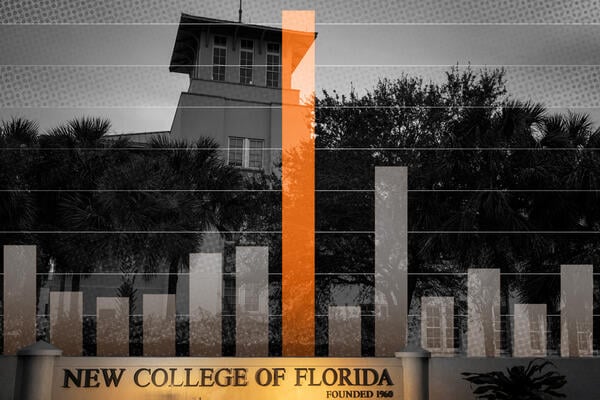
    New College of Florida plans to honor recently murdered conservative activist Charlie Kirk with a statue on campus, the public liberal arts institution announced on social media earlier this week.

    Kirk, who founded the organization Turning Point USA, which has chapters at hundreds of colleges, was shot and killed while speaking outdoors at Utah Valley University last week. Kirk has since been eulogized by multiple conservative figures, including President Donald Trump. 

    “Today, we announced that we will commission a statue of Charlie Kirk to honor his legacy and incredible work after his tragic assassination last week. The statue, privately funded by community leaders, will stand on campus as a commitment by New College to defend and fight for free speech and civil discourse in American life,” New College officials wrote Monday on X.

    Where on campus the statue would go has not yet been announced.

    NCF appears to be the first to announce such a move to honor Kirk, though more than a dozen congressional Republicans are seeking to place a statue of Kirk in the United States Capitol. Additionally, Iowa representative Mariannette Miller-Meeks has called on the University of Iowa to name its new Center for Intellectual Freedom after the activist as a tribute to his legacy.

    Although a public institution, NCF made national headlines in early 2023 when Republican governor Ron DeSantis appointed a swath of new members to its Board of Trustees and tasked them with shifting New College in a conservative direction akin to the private Hillsdale College.

    New College’s announcement generated millions of impressions on social media, including concerns about whether the statue would be vandalized, prompting DeSantis to respond, “If a student defaces the statue, then the student will be sent packing. Go ahead, make my day!”

    Source link

  • Charlie Kirk’s Death Is a Test for Campus Free Speech

    Charlie Kirk’s Death Is a Test for Campus Free Speech

    With national attention already focused on campus free speech, the assassination of Charlie Kirk at Utah Valley University has intensified a fractious moment for higher education. Voices on the right have blamed colleges for Kirk’s death, calling them “indoctrination camps” and comparing them to “madrassas that radicalize jihadis.”

    Though the suspect is not a student, Kirk’s killing has intersected with concerns that students are increasingly unable or unwilling to engage with dissenting views. Critics have cited the most recent FIRE College Free Speech Rankings survey, which shows that one in three students thinks it’s acceptable to use violence to stop a speaker.

    Colleges did not cause Kirk’s death, but leaders cannot ignore the finding that a third of students support using violence against a speaker. Though most students will never resort to violence, the possibility forces colleges to reassess campus security. UVU’s police chief admitted more than half his force of 15 officers wasn’t able to secure the crowd of 3,000 people at the Kirk event. Security experts noted that stopping a shooting from the top of a building hundreds of feet away requires Secret Service–style sweeps. The incident raises questions about bringing outside speakers to campuses. With so many budget problems in higher ed, who will cover the costs of keeping them safe?

    Yet on the ground at UVU, life on campus looked far different from critics’ portrayals. In the hours after the shooting, the student newspaper, The UVU Review, reported that professors reached out to students to offer resources and reprieves from coursework. Students called everyone in their phone to tell them they were safe. Strangers hugged each other and students offered a ride home to anyone who needed it. They put aside their differences to grieve together. “It feels like life stopped for us,” said one student. “But it kept going for everyone else. I’m ready for life to start again, no matter how changed it’ll be.”

    Given Kirk’s prominence, students across the country will feel like this incident has changed their lives, too. With more than 850 campus chapters, Turning Point USA is an organization where conservative students have found community. And even for students who disagreed with Kirk he inspired them to engage with political issues and debate their ideas.

    But the reactions to Kirk’s death reveal that the ideological fissures on campus have only deepened. At least 15 faculty and staff members have been fired for appearing to condone the shooting on social media, many after online campaigns called for their dismissal. Meanwhile, at a candlelit vigil at the University of North Carolina at Chapel Hill—a campus that has faced its own tragedy—student Walt Wilson told The Daily Tarheel he was mourning Kirk even though he disagreed with him. “Getting killed over debate and fostering free speech, especially in a place like a university where that is supposed to prosper, is a real tragedy and shows an issue of communication and reconciliation,” he said.

    Free speech survives only if protected in practice. This moment will test higher education’s resolve: Will political pressure drive colleges to retreat, or will they recommit to free expression as a path through turmoil?

    Source link