Right-wing social media accounts have embarked on a widespread name-and-shame campaign to out any college employees who have celebrated or spoken insensitively about Kirk’s death.
Photo illustration by Justin Morrison/Inside Higher Ed | skynesher/E+/Getty Images
Two administrators are now out of a job and a graduate student lost an internship after making comments online that downplayed or celebrated the death of Charlie Kirk, the influential conservative founder of the campus-focused Turning Point USA.
In the 36 hours since Kirk was shot and killed during an event at Utah Valley University, right-wing social media accounts have screenshotted and circulated several social media posts, likes and reposts from college faculty and staff members related to Kirk’s death. In addition to the firings, the campaign to name and shame these individuals has led to death threats, Wired reported.
Late Wednesday, a student affairs administrator at Middle Tennessee State University was fired after posting “insensitive” remarks on Facebook in response to Kirk’s death. “We take great pride in the professionalism of our staff; in my long tenure with this university I’ve never before had to dismiss someone for so carelessly undermining the work and mission of this fine institution,” Middle Tennessee State president Sidney McPhee wrote in a statement Thursday. A university spokesperson confirmed the employee was Laura Sosh-Lightsy, an associate dean of student care and conduct who had worked at the university since 2005.
“Looks like ol’ Charlie spoke his fate into existence. Hate begets hate. ZERO sympathy,” Sosh-Lightsy wrote in a Facebook post that has been circulated widely by right-wing accounts on social media. A university spokesperson did not confirm whether or not that specific post led to her firing but noted that “her termination was related to her insensitive social media posts related to the horrific death of Mr. Kirk.” Tennessee senator Marsha Blackburn, a Republican, called for Sosh-Lightsy’s firing on X, writing that she “should be ashamed of her post.” Sosh-Lightsy did not respond to Inside Higher Ed’s request for comment.
On Thursday afternoon, University of Mississippi chancellor Glenn Boyce confirmed the firing of an unnamed staff member who he said “re-shared hurtful, insensitive comments on social media regarding the tragic murder of Charlie Kirk.”
Boyce didn’t provide specifics but noted that “these comments run completely counter to our institutional values of civility, fairness and respecting the dignity of each person.”
At Baylor University, officials distanced the university from a graduate student who wrote “this made me giggle” in response to a social media post sharing the news of Kirk’s death.
“We are aware and greatly disappointed by a social media comment from a Baylor graduate student regarding the fatal shooting of Charlie Kirk. To make light of the death of a fellow human being is completely inappropriate and completely counter to Baylor’s Christian mission. Baylor strives to be a community in which every individual is treated with respect—in life and in death,” a university statement said.
The graduate student—whose online username includes “coach”—is not a member of the faculty nor a part of the athletics program, the statement clarified. Midway Middle School, where the graduate student was student teaching, also removed him from teaching there, KWTX reported.
The Foundation for Individual Rights and Expression is monitoring which universities are censoring employee speech, said Lindsie Rank, director of campus rights advocacy at FIRE. “It may not be moral to speak ill of the dead, but it is protected by the First Amendment so we’re going to be keeping our eyes open for those situations,” she said.
At least seven historically Black colleges and universities across the country went into lockdown on Thursday after institutions received threats, which they did not elaborate on.
Southern University and A&M College in Louisiana asked those on campus to shelter in place in response to a “potential threat to campus safety.”
The lockdown applied to the “entire Baton Rouge landmass,” including the Southern University Law Center, the Agricultural Research and Extension Center, and the university’s Laboratory School, according to a statement from the institution.
The lockdown lifted in the afternoon, but all classes and campus activities were canceled through the weekend.
Alabama State University also received a “terroristic threat,” university officials told local media outlets, and shut down campus as law enforcement officials checked buildings. The university sent an all-clear notice later in the day, noting that “the immediate threat has been resolved,” but told students to continue to shelter in place.
Two HBCUs in Virginia were also targeted.
Virginia State University went into lockdown while local, state and federal law enforcement agencies investigated the credibility of a threat received earlier that day, according to a message from the Virginia State University Office of Communications and University Relations. University officials assured students, “No injuries or incidents have been reported in connection with the threat” and said they would be provided with meals in university housing during the lockdown.
Hampton University canceled all activities and classes for both Thursday and Friday in response to a potential threat. Students were discouraged from moving across campus unless absolutely necessary, and all nonessential employees were told to “evacuate immediately” in a notice on the university’s website.
A threat at Bethune-Cookman University in Florida also forced the university to cancel classes and go into lockdown. A notice from the university told students to go to their dorms and faculty and staff members to leave campus.
Spelman College in Atlanta didn’t receive a threat but issued a shelter-in-place order because of its proximity to Clark-Atlanta University, which did. The order was lifted around 2 p.m.
Howard University, in Washington, D.C., assured students the institution hadn’t received any threats but would maintain “heightened security.”
“At Howard, we denounce all acts of hate designed to foster fear in our communities,” an update from the university read. “Howard stands in solidarity with our fellow HBCUs.”
A predominantly white institution, the University of Central Florida, also reported receiving a threat Thursday. The Orlando Sentinel, which obtained a copy via an anonymous tipster, reported that the expletive-laden message threatened Black students and referenced the killing of Iryna Zarutska, a Ukrainian refugee stabbed on a train in North Carolina.
A message from the UCF Police Department Thursday afternoon said, “Similar messages have been reported at other universities around the country.” The police department added it was working with the Federal Bureau of Investigation to assess the threat but does not consider it “to be credible.”
In what appears to be an unrelated incident, the U.S. Naval Academy in Annapolis, Md., went on lockdown Thursday evening after suspicious activity was reported on campus, The Baltimore Banner reported. One person was injured as Naval Security Forces cleared a building.
Florida A&M University, an HBCU, did not receive any threats but put out a statement of solidarity with institutions on lockdown.
Rep. Troy A. Carter, a Democrat from Louisiana, posted on X that he was “outraged and deeply disturbed” by the threats to HBCUs.
“These reprehensible acts are not only an attack on institutions of higher learning—they are an attack on our history, our culture, and the promise of opportunity that HBCUs represent for generations of students,” Carter wrote. In a statement, he called on the federal government “to utilize every available resource to identify, apprehend, and prosecute those responsible.”
The Congressional Black Caucus also put out a statement calling for action from the U.S. Department of Justice and FBI. Caucus members described the threats as a “chilling reminder of the relentless racism and extremism that continues to target and terrorize Black communities in this country.”
The rash of violent threats is reminiscent of a wave of bomb threats that targeted HBCUs in 2022 and prompted the FBI to get involved. The HBCU campus lockdowns also come on the heels of a series of false calls to colleges and universities about active shooters last month; an online extremist group claimed responsibility for the hoaxes.
Wednesday saw a moment without precedent in recent history: A college speaker shot to death on a campus during an event. That fact alone would’ve escalated growing concerns about the future of free speech and civil discourse at colleges and universities.
But this speaker was Charlie Kirk, a prominent ally of a U.S. president who was already crusading against higher ed. Kirk, a national political figure in his own right, was one of the foremost conservative critics of intolerance for right-wing views in higher ed and the founder and leader of Turning Point USA, a nationwide organization of conservative campus groups that aided the president’s re-election. Kirk even spoke at Trump’s January inauguration.
He was known for goading students on campuses to “prove me wrong,” posting the resulting clips online, appearing in conservative media to denounce higher ed, spreading his views further on his own podcast and using his organization’s online presence and on-the-ground staff to target left-leaning faculty.
“College is a scam,” Kirk, who dropped out of Harper College in Illinois, wrote in a 2022 Fox News op-ed, in which he urged most students not to go.
“Universities are indoctrination zones where free speech is crushed,” he wrote. “Radical students and faculty coerce and persecute their nonconforming peers through ‘cancel culture’ and threats … I firmly believe that most—if not all—the destructive ideas that are now eating away at the foundation of American society originated on college campuses.”
His death at Utah Valley University could put more pressure on higher ed at a time when colleges and universities have already been excoriated and targeted by the right. Faculty and those who criticize higher ed as being insufficiently open to civil debate between different viewpoints are worried that free expression will further erode.
“This is an epic moment for the future of higher ed,” said John Tomasi, president of Heterodox Academy. “For the issue of free speech, there’s been nothing quite like this ever before.”
Tomasi, whose organization promotes “viewpoint diversity” and “constructive disagreement” on campuses, noted both Kirk’s national stature and his association with campus free expression. He was the kind of person that conservatives had long argued wasn’t welcome on campuses.
“This is an attack on a magnitude that we have not previously seen,” he said. He said national attention on campus cultures intensified when Congress in late 2023 started calling university presidents into televised hearings regarding alleged campus antisemitism. Now, that “white-hot spotlight” is even hotter.
“This is a killing of a person who exemplifies the struggles of viewpoint diversity on college campuses … in the act of speaking on a college campus,” Tomasi said.
Multiple college presidents have issued statements condemning the shooting. Michael Roth of Wesleyan University, a vocal critic of Trump’s targeting of higher ed, wrote that “those who choose violence destroy the possibility of learning and meaning. Mr. Kirk’s murder on a college campus is an assault on all of us in education.” University of California system president James B. Milliken wrote, “This wasn’t just an attack on an individual; it was an attack on the very freedoms we as a nation hold dear.”
Some universities have also acted swiftly to punish employees who appeared to celebrate or make light of Kirk’s death in online comments.
I think it marks a breakdown of the culture of free speech.”
—Lindsie Rank, director of campus rights advocacy at FIRE
The killer has yet to be apprehended, their motive is unknown and the FBI is offering up to $100,000 for information. But in a video from the Oval Office Wednesday evening, President Trump called Kirk’s killing a “heinous assassination” of a “martyr for truth and freedom” and a “dark moment for America.” He said, “There’s never been anyone who was so respected by youth,” whom Kirk brought into the political process “better than anybody ever.”
“Charlie was a patriot, who devoted his life to the cause of open debate and the country that he loved so much,” Trump said, adding that Kirk “traveled the nation, joyfully engaging with everyone interested in good-faith debate.”
Kirk in the Oval Office
Andrew Harnik/Getty Images
But the president—who has demanded an undefined viewpoint diversity from universities while threatening them with sweeping federal funding cuts—didn’t go on to defend all free speech, which includes even hate speech. He denounced the “radical left,” saying that “violence and murder are the tragic consequence of demonizing those with whom you disagree day after day, year after year.”
“Those on the radical left have compared wonderful Americans like Charlie to Nazis and the world’s worst mass murderers and criminals,” Trump said. “This kind of rhetoric is directly responsible for the terrorism that we’re seeing in our country today, and it must stop right now.” (His speech didn’t mention the 2022 attack on former House speaker Nancy Pelosi’s husband, Paul, or the killings earlier this year of Democratic former Minnesota House speaker Melissa Hortman and her husband, Mark.)
Trump isn’t the only person calling it an assassination. Free speech advocates have called past shoutdowns of campus speakers the “heckler’s veto.” Lindsie Rank, director of campus rights advocacy at the Foundation for Individual Rights and Expression, called this an “assassin’s veto.”
“Regardless of how one feels about Charlie Kirk’s viewpoints, his tactics, his background, assassination cannot be a response to disagreement in a civilized society,” Rank said. “That’s the whole purpose of free speech: that we have a better way to engage in discourse across differences to settle disagreements.”
“I think there’s a lot of faculty thinking, ‘Is it going to be me, and maybe instead of a video, it’s a rifle?’”
—Isaac Kamola, director of the AAUP Center for the Defense of Academic Freedom
Rank said free speech allows people “to exchange words instead of bullets.” She said what happens on campus is never isolated to campus and raised concern about a feedback loop.
“Our society has started to accept violence as an appropriate response to viewpoints that folks disagree with,” Rank said. “I think it marks a breakdown of the culture of free speech.”
Isaac Kamola, director of the American Association of University Professors’ Center for the Defense of Academic Freedom and an associate political science professor at Trinity College in Connecticut, is among the fierce critics of Kirk’s tactics. While Trump called the “radical left’s” rhetoric dangerous, Kamola said Kirk’s was.
“He literally wrote the book titled Campus Battlefield,” Kamola noted. “He built a career out of treating higher education as a war zone … and treating professors and students that he disagreed with as enemies that posed an existential threat to America … That being said, when actual violence—physical violence and murder—come to college campuses, that ratchets things up to an even more dangerous degree.”
Kamola added that, “without knowing who the gunman is,” Trump is already saying “he’s going to use this as an opportunity to punish the left, and I think that’s really scary.” (Kirk’s final post on X to his over 5.4 million followers said it was “100% necessary to politicize the senseless murder” of a Ukrainian woman in Charlotte, N.C., last month.)
Kamola pointed to Turning Point USA’s own Professor Watchlist and Texas A&M University’s firing of a professor earlier this week after a student filmed herself challenging the legality of teaching about gender identity in a children’s literature class. He said the killing could now leave faculty to think, “Is there going to be retaliation for this assassination?”
“I think there’s a lot of faculty thinking, ‘Is it going to be me, and maybe instead of a video, it’s a rifle?’” he said.
Another Turning Point
Trump redefined conservatism, attracting new adherents. Kirk appeared to do the same for conservative students across the nation, adding them to the MAGA movement.
Amy Binder, SNF Agora Professor of Sociology at Johns Hopkins University, said she’s studied conservative campus activism for decades. She said Kirk “kind of burst on the scene right around the time” Trump won his first term in office.
Vigils to remember Kirk have popped up at college campuses and at the Turning Point USA headquarters in Arizona.
Rebecca Noble/Getty Images
Binder, co-author of Becoming Right: How Campuses Shape Young Conservatives and The Channels of Student Activism, said Kirk’s Turning Point group attracted students who initially weren’t sure they were Republicans and weren’t attracted to the College Republicans chapters that traditionally mobilized students.
“Their complaint about College Republicans was that it was too establishment, it was kind of fusty, stale, too focused on getting people elected,” Binder said of these students. She said Turning Point told them that “you are part of a liberal, left campus and you are mistreated here and you need to come out of the closet and declare that you’re conservative in a big, broad way—and we’ll help you do that with really splashy events and really splashy speakers.”
“All of the incentive structure there was to go big, go confrontational,” she said. Kirk exemplified that in his sparring matches with left-leaning students on campuses.
Binder said, “Kirk was really excellent at cross-branding,” frequently appearing on Fox News, recording videos for the conservative education video website PragerU and more.
“Over time, Kirk was really involved with the Trump family, and with MAGA under Trump,” Binder said. “And he really became an ambassador for that—not only to young people, but to others as well … He was really crossing over into other age brackets and he just kind of became a face—or the face—of energized, youthful conservatism.”
Turning Point sought to elect conservatives to student governments by providing funding. It broadcast online the names of faculty it considered too left-leaning or intolerant of conservative views and marshaled voters for Trump during his re-election campaigns.
“He became the face of young Republicans and probably helped Trump win Arizona, maybe Wisconsin, maybe Michigan, with his get-out-the-vote” in 2024, Binder said. She said he “might have been predicted to have a political career in the future. He’s charismatic, he’s good-looking, he has a perfect family, he’s obviously had success.”
Charlie Kirk was speaking at Utah Valley University on Sept. 10 to kick off his American Comeback Tour when he was shot and killed.
Trent Nelson/The Salt Lake Tribune/Getty Images
But now, Kirk is dead. While Binder said there will continue to be a “very robust right ecosystem of organizations that seek mobilized students on campus,” it’s unclear what Turning Point’s future will be.
“Is there a power vacuum, is there a succession plan, what does that look like? I certainly don’t know,” she said. Turning Point didn’t respond to Inside Higher Ed’s request for an interview Thursday.
As for how his death could impact campus free expression, Binder said, “It’s really, really horrible on just all of the fronts, and in the wrong hands, something like this could shut down speech.”
Rank, from FIRE, said that while the shooter’s motive is unknown, the effect that violence can have on free expression isn’t. She said it can not only create a chilling effect within people, but it also can cause higher ed institutions to clamp down on speech to prevent violence.
“If an administration comes in and prevents controversial speaking engagements, then you’re creating a situation where the violence wins and that just causes free speech to deteriorate even further,” Rank said. She said that would not only be wrong, but “it would be a strange way to honor his legacy.”
At least a quarter of students across a broad range of graduate and professional programs could need private loans, which tend to come with higher interest rates, in order to pay for their education once new caps on federal loans take effect next summer, multiple studies show. For some, the loans could become so costly as to make earning a master’s or doctoral degree unattainable.
Currently, this group can borrow federal loans up to the total cost of attendance thanks to a program known as Grad PLUS. But starting July 1, students will max out at either $20,500 or $50,000 per year depending on whether they enroll in a graduate or professional program, respectively. And those in graduate programs will only be able to take out $100,000 over all, while students in professional programs will be limited to $200,000. Congress made the changes as part of the One Big Beautiful Bill Act, which passed earlier this summer.
The caps mean that the median borrower in four of the nine largest professional programs likely will need to find other financing to pay tuition bills, according to a recent analysis from the Postsecondary Education and Economics Research Center at American University. Borrowers in the 75th percentile exceed the cap in six of the nine fields.
And it’s not just the most costly doctoral programs such as medicine and dentistry in which students will face such a challenge, PEER notes. Out of the 30 master’s degree programs with the highest loan volume, 50 percent of students exceed the cap in nearly half of them.
Many of these students could struggle to find a private lender to make up the difference, potentially forcing them to drop out or not enroll in the first place, policy experts at PEER and other research groups say. And even if a student finds a lender, taking out a private loan could lead to steep, sometimes predatory, interest rates that take decades to pay off. (Research shows that low-income individuals particularly struggle to secure private financing because of a range of factors such as low credit scores, a lack of assets or an inconsistent flow of income.)
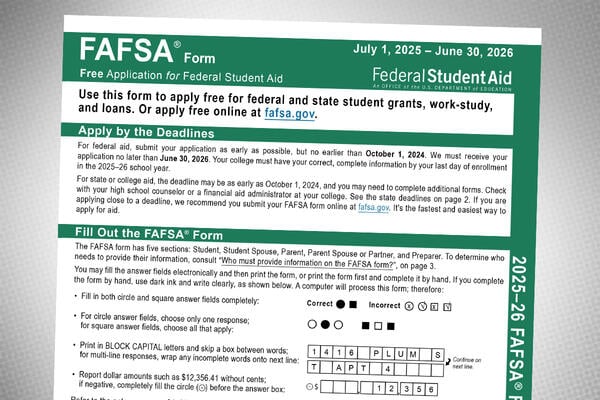
Before this new law, “students could have just filled out their FAFSA, applied for loans through the Department of Education and been able to borrow up to the full cost of attendance of their program,” said Jordan Matsudaira, director of the PEER Center and a former deputy under secretary at the Department of Education.
But now, for upward of a quarter of graduate students, it likely won’t be that simple.
“I think that will come as a surprise to a lot of people,” he said.
Can Private Lenders Fill the Gap?
Other researchers at Urban Institute and Jobs for the Future have also crunched the numbers on the loan caps and reached similar findings.
Jobs for the Future estimated in a report released last month that if this loan cap had been in place for the 2019–20 graduating class, roughly 38 percent of graduate borrowers would have needed to take out more loans beyond the cap. And thanks to the limit, the federal government would have issued $9.7 billion less in loans—a decrease of about 28 percent, according to the report.
Urban also used data from 2019–20 but broke it down by program, finding that dentistry would have the largest share of students exceeding the cap. About 56 percent would have exceeded the annual limit, and 58 percent blew through the aggregate cap. Other programs with a high share of students that could be pushed into the private market include medicine, at 41 percent, a master’s in public health, at 29 percent, and a master’s in fine arts, at 26 percent.
Policy experts on both sides of the political aisle tend to agree that the student debt crisis needs to be addressed. But unlike conservative lawmakers and analysts who believe these caps are necessary in order to lessen student debt and encourage colleges to lower costs, some researchers worry the limits are too aggressive and don’t account for nuances like a program’s return on investment.
“The kind of pain involved here is a little bit bigger than it needed to be to rein in the most egregious abuses in the system,” Matsudaira said. “The better approach over all would have been to adopt an approach where different fields of study had different limits that were scaled with borrowers’ ability to repay.”
Some questions about how the loan limits will work and which programs they’ll apply to will be answered later this month when the Education Department starts to work through the rule-making process to carry out the law’s provisions. Representatives from nursing, aviation and social work have already started to speak out about why their programs should be considered professional degrees and therefore be eligible for the higher cap.
“In today’s economy, the majority of graduate education is practical and workforce-aligned, preparing students for jobs in health care, education, counseling, technology and much more,” Stephanie Giesecke, a representative of the National Association of Independent Colleges and Universities, said at a public hearing in August. “The definition that is too narrow risks excluding programs that are vitally important to communities and employers nationwide.”
Like Matsudaira, Ethan Pollack, a senior director of policy at JFF, said that while he sympathizes with the Republican diagnosis that debt is too high, he probably would have gone about addressing it a different way. But rather than suggesting changes to the cap itself, JFF’s report looked at the financial impact on borrowers and suggested ways that institutions, the government and private lenders can adjust in response.
One key recommendation was the use of outcomes-based financing for private loans, which would base payments in part on borrowers’ earnings after graduating. Pollack said that this approach could help students who lack strong credit histories or cosigners still pursue well-paying degrees like a juris doctorate.
But current regulations, like requiring a bank to disclose a flat annual percentage rate, or APR, when offering a loan, make it difficult for some private vendors to explore new models like outcomes-based financing, he explained. If the government were to build on the recent legislation by amending current regulations and introducing new guardrails for private lenders, Pollack added, the OBF model could make nonfederal loans more affordable for borrowers of all backgrounds.
“The federal government, in some sense, is stepping on the gas and the brake at the same time,” he said. “They’re saying that they want the private market to be stepping up, but at the same time, the federal government is one of the obstacles to the private market being able to step up in the way that we would all like them to, which is to be offering financing with much more student-friendly terms.”
Matsudaira, on the other hand, was more skeptical.
“The big question is whether the private sector is really going to be able to come in and fill a hole that big,” he said. “And even if they do, how long does it take for them to spin up to be able to do those kinds of things?”
A university group warned that the proposal would stifle the U.S. innovation pipeline and hurt the American public.
Commerce Secretary Howard Lutnick told Axios he wants the federal government to get half the dollars generated from patents that universities and their researchers develop with federal funding, the outlet reported Wednesday.
“The scientists get the patents, the universities get the patents and the funder of $50 billion, the U.S. government, you know what we get? Zero,” Lutnick says in an interview clip from the forthcoming first episode of The Axios Show.
“I think if we fund it and they invent a patent, the United States of America taxpayer should get half the benefit,” Lutnick says, adding, “if we are paying for the research, if we’re paying for the lab, if it’s our money, the American taxpayer’s money.”
“How do we not get our money back?” he says. “That’s insane.”
As Axios noted in its article about the interview, the Bayh-Dole Act generally gives universities the right to own patents developed with federal funding. The Commerce Department didn’t return requests for comment Wednesday about how the Trump administration could legally get around that law.
Kate Hudson, the Association of American Universities’ deputy vice president and counsel for government relations and public policy, said in an email that Lutnick’s idea “would completely gut universities’ ability to partner with the private sector to turn research discoveries into real-world technologies, cures, and solutions that serve the American people.”
“The proposal would obliterate the progress that university tech transfer has enjoyed in the 45 years since the passage of the seminal Bayh-Dole Act, which facilitated new university-industry partnerships and led to an explosion of technological progress and substantial economic gains,” Hudson said. “If enacted, the proposal would stifle the U.S. innovation pipeline, with the American people, not universities, being the ultimate losers.”
A new report from the Center for Community College Student Engagement found that even though parenting students are especially dedicated to their studies, they face significant obstacles in college.
The report, based on a 2024 survey of students from 164 community colleges, found that parenting students were more engaged than nonparenting students across multiple benchmarks, including coming to class prepared and never skipping classes, despite their additional responsibilities. These students were also more likely than nonparents to have earned an associate degree or certificate or to mention changing careers as a goal.
But even with such strong drive, 71 percent of student parents reported caring for dependents could cause them to withdraw from college; 73 percent said financial circumstances might make them stop out. Student parents were also more likely than nonparents to face food and housing insecurity, but only small fractions of students reported receiving food or housing support from their college in the last month. In a similar vein, a third of students with children say that their colleges don’t adequately support them as parents. Meanwhile, these students say underutilized supports that could help them, including campus childcare services, financial advising and career counseling, the report found.
The report also offers examples of higher ed institutions that have put in place effective supports for student parents. For example, Lee College in Texas offers weekly financial assistance for childcare and family-friendly study areas. Monroe Community College in New York created a designated student success coach role to serve single mothers.
“Parenting students are among the most engaged learners on our campuses, but they face barriers that too often derail their progress,” Linda García, CCCSE’s executive director, said in a news release. “But when colleges take intentional steps to support them, the impact is not only on students, but on their children and communities.”
Charlie Kirk, the young founder of Turning Point USA, a campus-focused conservative organization that rose to general prominence on the right, died Wednesday after he was shot during one of his group’s events at Utah Valley University in Orem.
Kirk, 31, leaves behind a wife and two children. He first rose to prominence in 2012 after creating Turning Point and speaking out about the need to reform higher education. In recent years, he became a close ally of Donald Trump.
Kirk died doing what he had become known and drawn protests for: visiting college campuses and sharing his right-wing views. He was at Utah Valley kicking off Turning Point’s The American Comeback Tour, which planned at least 10 stops on college campuses across the country. Some had urged the university to cancel his appearance. More than 3,000 people attended the event, Utah officials said.
Kirk, wearing a white shirt that said “freedom,” handed out red Make America Great Again hats and then sat under his signature “Prove Me Wrong” tent in the courtyard in the middle of campus to take questions from the audience. According to The Deseret News, Kirk had said there were “too many” mass shooters who were transgender and then fielded another question on the issue when he was shot.
“I want to be very clear this is a political assassination,” said Utah governor Spencer Cox at a press conference Wednesday evening.
Matthew Boedy, author of a forthcoming book on Kirk and head of the Georgia state conference of the American Association of University Professors, said Kirk’s death “could be compared to the second assassination [attempt] on President Trump. Assassination attempts—you would think they would unite us, but as we’ve seen, they have divided us even more so.”
Kirk’s group galvanized conservative activism on campuses nationwide and fueled criticisms of higher ed that are now shared by the White House and the Republicans who control Congress. As higher ed itself became a national political issue, Kirk transcended from a campus presence to a national conservative figure, speaking at the Republican National Conventions in 2020 and 2024, the Conservative Political Action Conference, and on other big stages. He had more than 5.4 million followers on X, where right-leaning profiles are prominent.
Turning Point’s website claims to have “a presence on over 3,500 high school and college campuses nationwide, over 250,000 student members, and over 450 full- and part-time staff all across the country.” And the group’s own events drew national political figures: Donald Trump Jr., Tucker Carlson, Steve Bannon, Tulsi Gabbard, Kristi Noem and others attended the Student Action Summit in July, Times Higher Education reported. Among other things, Kirk said at the event in Tampa, Fla., that no foreigners should be allowed to own homes or get jobs before U.S. citizens.
“This is the greatest generational realignment since Woodstock,” Kirk said. “We have never seen a generation move so quickly and so fast, and you guys are making all the liberals confused.”
Kirk expanded on his views in several books, which include Campus Battlefield: How Conservatives Can WIN the Battle on Campus and Why It Matters and The College Scam: How America’s Universities Are Bankrupting and Brainwashing Away the Future of America’s Youth.
In a statement on X Wednesday, Turning Point confirmed his death and said, “May he be received into the merciful arms of our loving Savior, who suffered and died for Charlie.” Leading Republicans and Democrats issued statements mourning his passing, which President Trump announced himself on Truth Social.
“The Great, and even Legendary, Charlie Kirk, is dead,” Trump wrote. “No one understood or had the Heart of the Youth in the United States of America better than Charlie. He was loved and admired by ALL, especially me, and now, he is no longer with us.”
Trump ordered U.S. flags to be lowered to half-staff.
Former president Obama posted on X that “we don’t yet know what motivated the person who shot and killed Charlie Kirk, but this kind of despicable violence has no place in our democracy. Michelle and I will be praying for Charlie’s family tonight, especially his wife Erika and their two young children.”
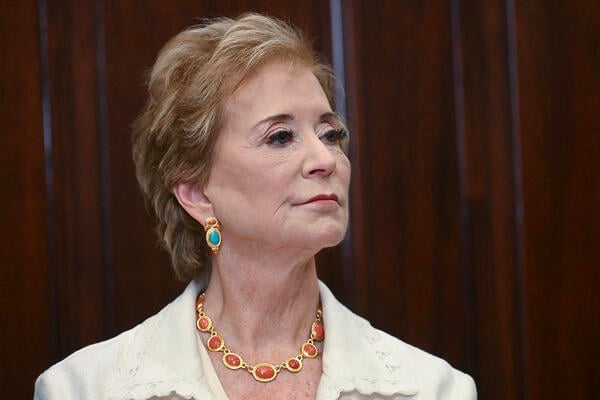
Education Secretary Linda McMahon called Kirk “a friend and an invaluable adviser” in a social media post.
“He loved America with every part of his being,” she added. “My heart is broken for his family and friends who loved him, and for the millions of young Americans whom he inspired.”
California governor Gavin Newsom, a potential Democratic presidential candidate who had Kirk on his podcast earlier this year, posted, “The attack on Charlie Kirk is disgusting, vile, and reprehensible. In the United States of America, we must reject political violence in EVERY form.”
Local, state and federal law enforcement are investigating the shooting.
Utah Valley closed campus and canceled classes until Sept. 14. Authorities searched the grounds for the shooter, and officials said in the evening that a person of interest was in custody.
Ellen Treanor, a university spokesperson, said Kirk was shot around 12:15 p.m. local time Wednesday, and that police believe the shot came from the Losee Center, about 200 yards away.
Treanor said Kirk’s private security took him immediately to a hospital, where he underwent surgery.
University police quickly arrested a person, who was later released when the officers determined he wasn’t the shooter, said Scott Trotter, another university spokesperson. The Utah governor’s office, the FBI and other agencies are coordinating with the university police department in investigating, Trotter said. (Utah law allows individuals to carry firearms on campuses.)
UVU officials said in a statement that they were “shocked and saddened” by Kirk’s death.
“We firmly believe that UVU is a place to share ideas and to debate openly and respectfully,” the statement said. “Any attempt to infringe on those rights has no place here.”
At the Wednesday press conference, Jeff Long, the UVU police chief, said that what happened was a “police chief’s nightmare.” Six officers were working the event alongside Kirk’s security team.
“You try to get your bases covered, and unfortunately, today, we didn’t,” he said. “Because of that, we have this tragic incident.”
Charlie Kirk was kicking off his “American Comeback Tour” at Utah Valley University.
Photo by Trent Nelson/The Salt Lake Tribune/Getty Images
Turning Point, headquartered in Phoenix, has been at the center of several controversies over the years. About a decade ago, it launched its Professor Watchlist, which has resulted in academics being the targets of vitriol and threats for their alleged views. Last year, two Turning Point workers admitted to charges from an October 2023 incident in which they followed and filmed a queer Arizona State University instructor on campus, with one of them eventually pushing the instructor face-first onto the concrete.
Boedy said Wednesday that Kirk was the most influential person who doesn’t work in the White House.
“He has made Turning Point into an indispensable organization for conservative causes,” he said. “He’s become the new face of Christian nationalism, which is a growing trend in America. And of course, he has, I would say, changed college campuses.”
He added that campus events like Wednesday’s were his “bread and butter.”
“He is very smart,” he said. “He was one of the pioneers of the ‘prove me wrong’ mantra.”
In classrooms across the country, students are mastering their ABCs, solving equations, and diving into science. But one essential life skill–behavior–is not in the lesson plan. For too long, educators have assumed that children arrive at school knowing how to regulate emotions, resolve conflict, and interact respectfully. The reality: Behavior–like math or reading–must be taught, practiced, and supported.
Today’s students face a mounting crisis. Many are still grappling with anxiety, disconnection, and emotional strain following the isolation and disruption of the COVID pandemic. And it’s growing more serious.
Further complicating matters is social media and device usage. Students and adults alike have become deeply reliant on screens. Social media and online socialization–where interactions are often anonymous and less accountable–have contributed to a breakdown in conflict resolution, empathy, and recognition of nonverbal cues. Widespread attachment to cell phones has significantly disrupted students’ ability to regulate emotions and engage in healthy, face-to-face interactions. Teachers, too, are frequently on their phones, modeling device-dependent behaviors that can shape classroom dynamics.
It’s clear: students can’t be expected to know what they haven’t been taught. And teachers can’t teach behavior without real tools and support. While districts have taken well-intentioned steps to help teachers address behavior, many initiatives rely on one-off training without cohesive, long-term strategies. Real progress demands more–a districtwide commitment to consistent, caring practices that unify educators, students, and families.
A holistic framework: School, student, family
Lasting change requires a whole-child, whole-school, whole-family approach. When everyone in the community is aligned, behavior shifts from a discipline issue to a core component of learning, transforming classrooms into safe, supportive environments where students thrive and teachers rediscover joy in their work. And when these practices are reinforced at home, the impact multiplies.
To help students learn appropriate behavior, teachers need practical tools rather than abstract theories. Professional development, tiered supports, targeted interventions, and strategies to build student confidence are critical. So is measuring impact to ensure efforts evolve and endure.
Some districts are leading the way, embracing data-driven practices, evidence-based strategies, and accessible digital resources. And the results speak for themselves. Here are two examples of successful implementations.
Evidence-based behavior training and mentorship yields 24 percent drop in infractions within weeks
With more than 19,000 racially diverse students across 24 schools east of Atlanta, Newton County Schools prioritized embedded practices and collaborative coaching over rigid compliance. Newly hired teachers received stipends to complete curated, interactive behavior training before the school year began. They then expanded on these lessons during orientation with district staff, deepening their understanding.
Once the school year started, each new teacher was partnered with a mentor who provided behavior and academic guidance, along with regular classroom feedback. District climate specialists also offered further support to all teachers to build robust professional learning communities.
The impact was almost immediate. Within the first two weeks of school, disciplinary infractions fell by 24 percent compared to the previous year–evidence that providing the right tools, complemented by layered support and practical coaching, can yield swift, sustainable results.
Pairing shoulder coaching with real-time data to strengthen teacher readiness
With more than 300,000 students in over 5,300 schools spanning urban to rural communities, Clark County School District in Las Vegas is one of the largest and most diverse in the nation.
Recognizing that many day-to-day challenges faced by new teachers aren’t fully addressed in college training, the district introduced “shoulder coaching.” This mentorship model pairs incoming teachers with seasoned colleagues for real-time guidance on implementing successful strategies from day one.
This hands-on approach incorporates videos, structured learning sessions, and continuous data collection, creating a dynamic feedback loop that helps teachers navigate classroom challenges proactively. Rather than relying solely on reactive discipline, educators are equipped with adaptable strategies that reflect lived classroom realities. The district also uses real-time data and teacher input to evolve its behavior support model, ensuring educators are not only trained, but truly prepared.
By aligning lessons with the school performance plan, Clark County School District was able to decrease suspensions by 11 percent and discretionary exclusions by 17 percent.
Starting a new chapter in the classroom
Behavior isn’t a side lesson–it’s foundational to learning. When we move beyond discipline and make behavior a part of daily instruction, the ripple effects are profound. Classrooms become more conducive to learning. Students and families develop life-long tools. And teachers are happier in their jobs, reducing the churn that has grown post-pandemic.
The evidence is clear. School districts that invest in proactive, strategic behavior supports are building the kind of environments where students flourish and educators choose to stay. The next chapter in education depends on making behavior essential. Let’s teach it with the same care and intentionality we bring to every other subject–and give every learner the chance to succeed.
Dr. Tami Dean, The Equity Hour Podcast & Kareeme Hawkins, RethinkEd and Pivot Path Strategic Solutions
Dr. Tami Dean is a veteran educator, coach, and leader with over 20 years of experience in classroom instruction, curriculum design, and educational leadership. She supports K-12 and higher education through strategic planning, professional development, and innovative program design and hosts The Equity Hour Podcast™, where she leads thought-provoking conversations on teaching, leadership and transformation in education.
Kareeme Hawkins is an education leader, executive coach, and SEL expert with over 15 years of experience in K–12 instruction, counseling, and edtech leadership. As national director of Client Success at RethinkEd and an executive coach with Pivot Path Strategic Solutions, she drives strategic initiatives, fosters partnerships, and empowers leaders to navigate change and advance equity-driven practices.
Latest posts by eSchool Media Contributors (see all)
I teach a first-year seminar. We call the course Education and the Good Life. The goal of the class is to engage students in a 15-week conversation. We talk about how they can make the most of their courses and our campus, with an eye toward the question of how the college experience can create an approach toward the world that lasts their whole life. In that spirit, last fall, I gave students an example of how I spend my time.
In class, I shared a set of drafts of a poem that appeared in my most recent collection. One by one, I projected versions of the poem onto a screen. I drew attention to the red ink slashing through unwanted words. I pointed out how I added, struck, added, struck and then re-added a comma. I boasted about my careful use of my favorite punctuation mark—the delightfully overlong em dash. In the end, I shared all 32 drafts of the poem, from conception to published work. When I stopped, a student in the front row quipped, “That doesn’t seem efficient.” In response, I quoted Annie Dillard—“How we spend our days is, of course, how we spend our lives”—and I talked about the concept of “craft.” I suggested that a committed craftsperson produces work, but that in important ways, and for the reason Dillard suggests, the work also produces them. In the end, the time we spend on our projects makes us who we are.
I asked the class to think about the time they give to writing assignments. I encouraged them to think about the minutes and the hours that they carve out of their schedules to read and then to write. I told them, “These are investments, not just in the creation of something to turn in on a deadline, but rather, investments in your humanity.” I explained, “When you give yourself time to use your faculties, you end up changing the dimensions of your mind.” I said, “You’re changing yourself.” Then I mused about how a college graduate is a certain kind of person, and how the process of earning a degree is largely a process of becoming.
My students are smart. They understand social conventions. They know how to act, so they humored me. They nodded their heads, even though I detected facial expressions formed with a noticeable twist of “maybe that is how it worked in your generation.” Without saying the words, they made a point. History matters.
In addition to my work on campus, I serve as a member of the Higher Learning Commission’s peer-review corps. Once or twice a year for the past 22 years, I have studied and visited colleges for the sake of ensuring the quality of their operations. When I joined the corps, in the early 2000s, the HLC held a leadership role in the nationwide assessment movement. The assessment of what students submit as their work, and by proxy what they know and what they can do, had become the benchmark by which we judge our institutions and accredit them. Because the question of whom students become during an education is harder to answer, and because the methods to answer such questions are out of necessity qualitative, we left those concerns aside while we moved, as a country, toward documenting the easily measurable, but narrowly defined, cognitive outcomes of the college experience.
In the early 2000s, the heightened focus on the assessment of learning outcomes dovetailed with what were then advances in technology. Web-based platforms, still described as “learning management systems,” made it possible to assess students’ abilities at a distance, anytime, anywhere and under nearly any circumstance. The new, single-minded focus on the cognitive outcomes of higher education burgeoned alongside efforts to legitimize the new online institutions that had removed time in place as a component of schooling. In effect, our message was that we take stock of our success by measuring the end product of education, as opposed to the process of becoming educated. Students are smart. They quietly noted our priorities.
Enter AI. Today we live in an era in which students can feed a prompt into an automated prose generator and, in seconds, have a viable draft of a writing assignment. What are they supposed to think? We’ve spent three decades acting like outcomes assessments are the only things we value. As for questions about how or where or with whom people engage in the process of becoming educated, our general approach has been, “These are not things that we like to know about.”
Consider our focus on outcomes in another sphere of human development: athletics. Assume for a moment that you are a cyclist. I am confident that technocrats will soon create a bot capable of riding a bicycle. On a day when life presents you with too much to do, and you can’t find time to ride, would it seem reasonable to send a bot out in your stead? I hope that sounds absurd. During most of the time that we give to athletics, the outcome is not the point. In cycling, on most days, the point is not that a bicycle was ridden. The point is that you rode a bicycle.
The craft of writing and the art of performing music share a set of similarities. Both demand engagement, practice and the exercise of creativity. The difference is that writing practices, outside of occasional public readings, tend to unfold in solitude, whereas a musical performance is, by nature, a social event. Imagine yourself as a student of the violin. At the end of the semester, during your final recital, would it seem reasonable to bring in a Bluetooth speaker, cue up a music streaming service to a song that you’ve been practicing and hit the play button? Of course not. The point is not that a song was played in the recital hall. The point is that you played the song.
In the era of AI, student disengagement looms like a fog on our campuses, from libraries to studios and laboratories. Our best data on undergraduate engagement suggests that members of Generation Z are reading less. When pressed with assignments that require deep thought, time on task and earnestness, students tend to see technology as a means to maximize efficiency. Should we blame them? We spent years building systems and assessments designed to sidestep questions about the nature of the process students move through on the way to earning degrees.
Through our actions, preferences and even accreditation, we built a set of values that suggest the finish line is what matters. We tend to see the route that we take to arrive there as irrelevant. Every campus I have ever visited staffs an office dedicated to the measurement of cognitive learning outcomes. I have yet to find a similar office aimed at understanding the quality, character or broad-ranging impact of the processes that students engage in during the course of an education.
I would say it’s past time that we started to give the process of becoming educated our attention. But in at least some quarters, we have long-standing and holistic studies of the college experience. In 1991, Ernest T. Pascarella and Patrick T. Terenzini wrote the first of what became a three-volume set, published at roughly 10-year intervals: How College Affects Students. Alongside a chapter on verbal, quantitative and subject matter competence, each edition of the book contains sections on psycho-social change, attitudes and values, and moral development. We should see the AI era as providing us with a reason, and an opportunity, to expand our interests to include an analysis of the broadly formative processes involved in education, as opposed to focusing solely on narrow sets of outcomes. Fortunately, if we find the will to turn our curiosity toward questions about the quality of the time that we ask students to invest in their education, or the kinds of people that college graduates become, there is a well-developed body of literature waiting to guide our efforts.
My first-year seminar includes an end-of-the-semester Saturday retreat. A local museum hosts the event. We take a tour in the morning, then students give presentations throughout the afternoon. The day represents more than just another class meeting. It’s a celebration. We make it a potluck, and the table we use features an impressive array of dishes: snacks, desserts, salads and crocks full of chili and soup.
This past year, at the end of the day, I stood at the table with three students as we were preparing to leave. I happened to point out that half of the contributions brought to the potluck were handmade. The others were store-bought. The handmade dishes were nearly gone, while the efficiently prepared, mass-produced cookies and salads still sat in their plastic containers.
One of the students said, “Hmm.” Then she added, “It’s not just ingredients on a table.” She went on, “How is something made? Who makes it? What kind of time do they spend?” She said, “That stuff matters.”
I smiled and told her I agreed.
Chad Hanson serves as a member of the faculty in sociology and religion at Casper College in Wyoming.
Florida State University is home to over 50 fraternity and sorority chapters, with total Greek membership over 6,800—about 23 percent of the undergraduate population. Fraternity and Sorority Life (FSL) students are generally representative of the student population’s demographics, but they’re more likely to persist, graduate and land a job after graduation compared to their peers.
A new center on campus seeks to ensure that Greek organizations promote holistic student development, in part by partnering with student leaders and providing for-credit leadership classes.
What’s the need: Past grievances with FSL organizations on campus prompted the development of the center to prevent hazing and other harmful practices often associated with Greek life. In 2017, FSU banned all fraternities and sororities following the death of a fraternity pledge. The ban was lifted in 2018 with provisions.
“The challenge we had was to solve [misconduct] as almost a student success issue, and [we] try to focus on how do we help our students be way more successful, focusing in on their leadership and their wellness and holistic student experience,” said Freddy Juarez, FSU’s director of strategic initiatives and fraternity and sorority life.
Now, to maintain good standing, Greek organizations must meet a variety of standards, including that members fulfill mandatory volunteer hours and sustain minimum GPAs. The university also maintains a publicly available scorecard on campus chapters to provide transparency into FSL activities, including philanthropic efforts and past disciplinary charges.
The Center for Fraternity and Sorority Organizational Wellness launched in fall 2024 as an extension of these efforts, with the goal of identifying best practices in the field.
“What are those markers that we can identify early on so that we can intervene with the right intervention that will stop them from going down that path of not being a ‘well’ organization?” Juarez said. “We’re trying to figure out what are all these components and pieces as we start to bring on national research agendas.”
FSL students are also embedded throughout campus as tour guides, student government members and orientation leaders, so providing them with leadership training has far-reaching effects on the campus culture, Juarez said.
How it works: The center engages FSL organizations in a variety of ways. Juarez and Brittany Devies, director of the Center for Fraternity and Sorority Wellness, meet with chapter leaders regularly to discuss governance, risk management, recruitment and new member education, among other topics.
“We’re doing training and helping them navigate these complex issues, because these students are managing multimillion-dollar budgets and facilities that cost multimillion dollars. Our largest chapter is 320 members; that is a lot to manage,” Juarez said.
The center also houses a 12-credit leadership studies certificate exclusively for FSL members in the Anne Spencer Daves College of Education, Health and Human Sciences, which is taught by FSL staff members.
The courses focus on leadership contexts broadly but also provide developmental opportunities for students interested in being leaders in their Greek organization. Some of the courses also fulfill general elective and graduation requirements, aiding in degree completion.
Approximately 50 students are currently enrolled in the certificate program; next semester they hope to increase that number to 200, Devies said. “Our students are seeing the direct impacts of that on career readiness,” Devies said, referencing another goal of the center.
Staff also consult other institutions on the lessons they learned from revamping FSL requirements over the past few years, including the importance of data collection and how to partner with chapter leaders.
What’s next: FSU doesn’t have one definition of organizational wellness, Juarez said, but the university is conducting research on positive outcomes from FSL organizations to understand how they can aid in students’ career outcomes, graduation and persistence rates.
“We believe that our organizations could be vehicles that are instrumental in student success,” Juarez said. “We’re seeing that with early numbers if you compare our fraternity and sorority students to our non–fraternity or sorority students.”
Positive career outcomes for members have become a top priority at FSU, so establishing stronger partnerships with the campus career center is a growing focus. FSL added a new staff member specifically to liaise with career services.
FSL is also creating a six-week study abroad experience for students in the leadership certificate program based in Florence, Italy, to help them apply leadership principles beyond the campus environment, Devies said.
If your student success program has a unique feature or twist, we’d like to know about it. Click here to submit.