Tag: News

  • On Climate Action, a View From Behind the Pack (opinion)

    On Climate Action, a View From Behind the Pack (opinion)

    The University of California system recently made waves by announcing a commitment “to fully decarbonize no later than 2045.” Unlike many “carbon neutrality” or “net zero” plans that rely heavily on carbon offsets, the UC system plans to cut emissions from campus electricity and fossil fuel use by at least 90 percent from 2019 levels and to balance residual emissions by investing in projects to remove carbon dioxide from the atmosphere.

    This win for the climate did not come easy: As activists from UC San Diego relate, they spent years building a coalition across campuses. Such success marks the UC system as a leader in American higher education, well ahead of other prestigious research universities with offset-heavy carbon neutrality plans—and well ahead of Purdue University, where we teach, which has no declared plans for decarbonization.

    Here, we wish to discuss our experiences advocating for a climate action plan at Purdue, where among our peer institutions we are decidedly a laggard, not a leader, in the climate space. We hope that detailing our frustrating lack of success provides a sober counternarrative to the success story of the UC system. Furthermore, we hope that knowing about our efforts may help others who are similarly involved in advocating for climate action at campuses in red states.

    Purdue’s Climate Story So Far

    A public, land-grant university in north-central Indiana, Purdue enrolls more than 44,000 undergraduates and almost 14,000 graduate and professional students. Purdue frequently touts itself as a world leader in innovation of all sorts, from artificial intelligence to biomedical research, even highlighting research on sustainability. Due to its size, the energy-intensive nature of its research activities and its location in a climate that sees both cold winters and hot, humid summers, Purdue’s campus emits as much climate pollution as a small city—439,000 metric tons per year of carbon dioxide equivalent as of 2023, the latest year for which official estimates are available.

    The Purdue community cares about sustainability: Classes in a wide range of majors feature considerable discussion of sustainability, and researchers across campus study the causes of and potential solutions for climate change. Purdue has won awards and recognition for low-hanging fruit, such as from Tree Campus USA and Bee Campus USA. Purdue also touts being named one of the most sustainable campuses by QS, although when one looks under the hood, such rankings give remarkably little weight to emissions reductions on campus. In the Association for the Advancement of Sustainability in Higher Education’s more rigorous reporting system, Purdue scored zero out of four on clean and renewable energy and 1.08 out of eight on greenhouse gas emissions.

    Purdue faces unique decarbonization challenges. Our university’s administration ultimately answers to the Indiana state government, which has recently canceled the state’s climate action planning and enables most counties to restrict renewable energy development. Electricity in Indiana has the highest carbon intensity of any state other than three major coal producers—Kentucky, West Virginia and Wyoming—and entails almost four times higher greenhouse gas emissions per unit of energy than electricity in California. Duke Energy, the utility that serves Purdue, is the fourth largest lobby in Indiana.

    While these challenges may seem daunting, progress on climate is possible even in Indiana. In 2023, our colleagues at Indiana University launched a plan promising carbon neutrality by 2040. They aim to get there by modest changes, such as improving energy efficiency in buildings and implementing renewable energy on campus. Purdue has also made progress—which we applaud—mainly by transitioning its combined heat and power plant from coal to natural gas. In 2023, Purdue estimated that its emissions were 27 percent lower than their coal-heavy 2011 level. But this only represents a small start to the actions needed for Purdue to live up to its obligations to students, staff, faculty, the community and, ultimately, the planet.

    Community Will and Administrative Inaction

    Many Purdue community members want substantial climate action. In 2020, more than 2,000 Purdue students signed a petition calling for Purdue to develop a climate action plan and create a universitywide, stand-alone sustainability office. The university’s president at the time, Mitch Daniels—Indiana’s former Republican governor and a noted climate change skeptic—dismissed the petition.

    In the fall of 2022, students and faculty formed the Purdue Climate Action Collective (PCAC), aimed at pressuring the university to develop a climate action plan and to be transparent in reporting emissions. In the spring of 2023, the Purdue Student Government, the Graduate Student Government and the University Senate each passed resolutions calling on the university to commit to a climate action plan. The Senate resolution also called upon Purdue to join the Greater Lafayette Climate Action Plan, developed by the surrounding county and cities. Once again, Purdue ignored these calls.

    Since then, PCAC has mounted numerous protests, spoken at student events, peppered campus with signs, reached out to the administration and attended Board of Trustees meetings to express our concerns. Our board is entirely appointed by the governor of Indiana. PCAC has also launched a new petition, now at 1,600 signatures.

    Despite the Purdue community’s advocacy for climate action, our new president, Mung Chiang, has authorized no comprehensive, campuswide climate action plan. The nearest thing is the Campus Planning, Architecture and Sustainability office’s Sustainability Master Plan for 2020–25, which aims to reduce Purdue’s emissions from electricity and fossil fuel use 50 percent below 2011 levels by 2025 and to pursue 500 kilowatts of renewable energy. While we applaud these near-term goals, and the incomplete but significant progress toward achieving them, decarbonizing Purdue will require making a long-term plan to outgrow natural gas and Duke Energy’s carbon-intensive electricity.

    On this topic, the Purdue administration told the University Senate in 2024 that “Purdue has a climate action plan consisting of two parts,” referring senators to the Sustainability Master Plan and to a joint study with Duke Energy on the feasibility of a small modular nuclear reactor (SMR) for the campus. While nuclear might play a role in Purdue’s energy future, SMRs are an unproven technology and should not be used as an excuse to delay the decarbonization of our campus.

    The SMR study’s 2023 report states, “whether SMRs will be an economic option for Duke Energy Indiana’s customers is unknown given current technology, timing and cost uncertainty.” The report cites a likely cost range of $1.1 to $2.25 billion (for context, Purdue’s endowment currently totals $4.1 billion) and discusses design technologies that may only become “commercially viable in 2035–2040.” A responsible climate action plan could certainly include nuclear energy down the road, if it proves successful, but the urgency of the climate crisis demands that institutions address their greenhouse gas emissions now.

    Possible Paths Forward

    Preliminary studies of decarbonization at Purdue suggest that climate action is feasible and affordable. Today, Purdue could take a number of proven, cost-effective actions, such as improving the efficiency of its building operations (for example, by using software to avoid heating or cooling unoccupied spaces), or increasing parking fees and investing the proceeds in infrastructure and incentives for buses and electric vehicle charging. In the next five to 10 years, Purdue could electrify its vehicle fleet and arrange power-purchase agreements with clean electricity generators in the area, as has been done successfully at places like the University of Michigan and the University of Minnesota.

    Long-term pathways to deep emission reductions remain uncertain, especially when considering Scope 3 emissions (emissions that are indirectly generated by university activities, such as employee commuting and flying), but Purdue has options and plenty of experts eager to investigate them. Inclusive and transparent processes for climate action planning would draw upon Purdue community expertise to identify, evaluate and select climate action pathways. But for any of this to happen, our administration must first acknowledge the need for climate action on campus.

    Our experience at Purdue has affirmed that fighting for climate action on public red-state campuses is an uphill battle. We know that change must come from both above and below. Students, faculty and staff concerned about the future of our planet must continue to raise their voices and add to the pressure the university feels. Administrators more inclined toward shared governance—or toward maintaining a livable climate for the future generations that Purdue aims to serve—must also add their voices to the mix. As Purdue begins to act on climate, its passionate community of activists and innovators will be there to support implementation and to celebrate accomplishments along the way.

    Although we have much to learn from the success of places like UC, places like Purdue need a different set of tools and approaches. For those at similarly recalcitrant universities, we hope this message reminds them that institutions won’t take these steps without great pressure. But given the dire warnings about the future of our planet, the importance of local climate action as congressional Republicans and the Trump administration have repealed most federal support for climate action, and the important role of universities as thought leaders, we remain convinced that this is a fight worth having.
    Michael Johnston, a professor of English at Purdue University, founded the Purdue Climate Action Collective and has been involved in the fight for climate justice at Purdue since 2022.

    Kevin Kircher, an assistant professor of mechanical engineering and, by courtesy, electrical and computer engineering at Purdue University, studies clean energy technologies and has worked on campus decarbonization projects at Cornell University and the Massachusetts Institute of Technology.

    Source link

  • The Next Phase of the Guided Pathways Movement

    The Next Phase of the Guided Pathways Movement

    In recent years, hundreds of community colleges have embraced the guided pathways model, a sweeping set of large-scale reforms to better steer students through academic programs and boost completion rates at community colleges.

    Researchers at the Community College Research Center at Columbia University’s Teachers College first introduced plans for the reform movement in 2015 in a book called Redesigning America’s Community Colleges: A Clearer Path to Student Success. They called on colleges to adopt a wide range of practices to help students devise and follow academic plans through graduation, including mandatory academic and career planning for all students; programs organized by “meta-majors,” or fields of interest; and extra supports for students in college-level math and English courses.

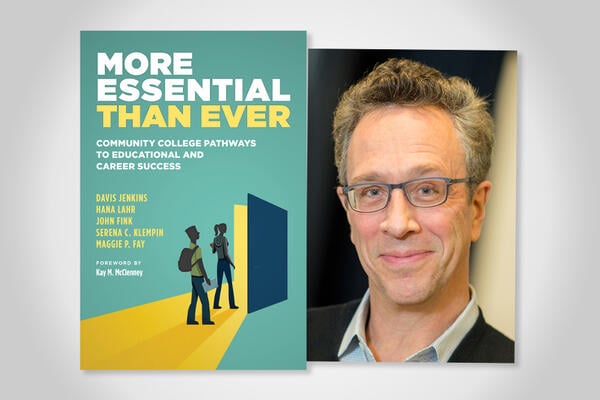
    A decade later, CCRC researchers have come out with a follow-up, More Essential Than Ever: Community College Pathways to Educational and Career Success (Harvard Education Press, 2025), which recounts their 10 years of research on the progress and outcomes of guided pathways. The book also explores areas where they believe the model could grow, including looking beyond graduation rates to focus on students’ job outcomes, adopting more engaging recruitment and onboarding practices, and ensuring students leave college with specialized knowledge in their fields but also versatile skills that apply to different industries.

    Davis Jenkins, senior research scholar at CCRC and a co-author of More Essential Than Ever, spoke with Inside Higher Ed about the book’s prescription to community colleges for taking guided pathways to the next level.

    The conversation has been edited for length and clarity.

    Q: This book is the culmination of 10 years of research on guided pathways. What have been the most important lessons learned in that decade?

    A: The 10 years were really a learning experience, because the model for whole-college reform that Tom Bailey, Shanna Jaggars and I presented in Redesigning America’s Community Colleges in 2015 was very much theoretical. A lot of the ideas came out of four-year institutions, and maybe with the exception of Guttman Community College and others, no community college really had implemented these ideas. So, we’ve been learning along with the field. And you know, we’re impressed and humbled by the efforts by colleges in a very tough time, fiscally and otherwise, to really work on these efforts.

    And what we saw in the initial phase was it takes a long time to not just implement discrete interventions but to redesign whole parts of the student experience, from the start all the way through. But we saw that colleges that did focus on redesigning, not just one piece of the student experience but across the student experience, were able to achieve improvements in student early momentum and then, over the longer term, in completion rates.

    On one hand, it was important that colleges not just focus on one aspect, that they sort of changed the student experience throughout. But when we looked at particular practices, especially important was organizing advising, at least for continuing students, by career or academic field and then case managing those students’ progress based on students’ plans. It’s very important to have a plan for students, and students really want that plan.

    During this time, the environment changed, and community college enrollments, especially post–high school enrollments, continued to decline. There was a rise in focus on the value of a college degree, and while this was focused very much on four-year institutions—especially elite institutions—people were [also] questioning community colleges. Enrollment by older students is at historic lows. And even though community colleges have seen a huge increase in high school dual-enrollment students, they have been losing market share to public four-years for students right out of high school. So, there was this big focus on value. And we were able to observe and work with colleges as they adapted these completion-focused reforms to focus more on value.

    And the main part of the book is five chapters devoted to what we see as the frontiers for further improving community college student outcomes, which are focused on values.

    Q: Tell me more about that. In the book, you looked at how far this movement has come. How do you hope the guided pathways model continues to evolve?

    A: There are five areas where we see colleges now working to improve. First of all, they’ve got to make sure that their programs lead to jobs that pay at least a living wage—otherwise, it’s not going to be worth students enrolling in them—or [allow] transfer with no excess credits in the student’s major field of interest. Related to that, though, it’s not enough just to work with universities and employers to ensure your programs have value for employment and further education after completion. You’ve got to make sure that students are learning the kinds of skills that they’ll need in the workplace and for their education. And frankly, that was probably the area of least progress in the earlier work in guided pathways.

    Particularly important is making sure that students have a rich learning experience in their program foundation courses, the hard 101 courses. In the book, we profile both very large and small colleges that have really built in experiential learning for all students. So that’s No. 2.

    No. 3 is focusing on onboarding. Community colleges lose many students early on because they don’t engage them. And so, in the later part of our work on guided pathways, the more recent part, we focus very much on this onboarding process to ensure students are engaged about what they want to do and help them connect to people and have this inspiring learning experience, and then very, very importantly, help them develop a plan that will at least give them direction.

    No. 4 is building on that plan. There have been efforts around compressed courses and scheduling, but in the book, we say that colleges need to look at this very systematically. The canonical completion [rate] for community college is two years. They’re called two-year colleges. But in fact, hardly any students complete in two years, and it’s not reasonable to expect all students, even the majority of students, to [take] 15 credits. In the book, we’re seeing colleges take three years as a template. And we know that if you include summer courses, if you include J terms, if you compress your terms, students even attending part-time can complete their programs. And community college students have very little margin for error. It’s very important that they be able to take the courses they need when they need them.

    Then, finally, as you know, dual enrollment has become huge. And colleges have taken, in the past, a very laissez-faire approach to it, such as the students who participate are students who are already likely going to college. And that’s a good thing because that makes dual enrollment very popular among middle-class families, and that gives it political power. But it’s also been sort of random courses, gen eds, without much advising. For students already going to college who have good advising from their families or from their better-resourced schools, that’s fine. But we have created this idea of applying the guided pathways practices to dual-enrollment students, to build an on-ramp, to motivate students to want to continue their postsecondary education.

    Q: It seems like, in the book, there’s a tension between, on one hand, striving to set students on a clear career path, a career ladder, while also trying not to box them into a track or a skill set that’s too narrow. How do you think colleges can balance both?

    A: This has always been the tension with guided pathways. Early on, there was a lot of emphasis on structured pathways, making things much more like a technical program, like an occupational certificate program. Not knocking it; those kinds of programs are important. But you’ll notice throughout, we’re focused on broad learning, skills, communication [and] problem-solving, and that can only be done through active, contextualized learning.

    The goal of guided pathways is not to set a student on a career. Careers are changing. The goal is to get a student engaged, to feel like the institution cares about their future, connect them with faculty and other students, employers, people they never would have met before that. It’s not just about learning skills or knowledge. It’s about connecting with people, building confidence in taking a really hard course that makes you really work and think. Students don’t like it. They’re not used to it in K–12 education. On the other hand, there’s just so much research showing that that’s really important.

    And then the plan is not a plan for life, but a plan is a direction to get you a credential and then to build into that enough experience. We make this case throughout, including at the end, there’s still a need, and it’s well documented, for a broader education—including technical skills, obviously, and content knowledge, but really in engaging students in problem-solving, communication—because those are the human skills that employers are going to pay a premium for and that are needed for further education at the bachelor’s level and in life.

    Q: As you’ve been thinking through where you want the guided pathways model to go, what do you think are going to be the biggest obstacles or challenges to colleges getting there?

    A: Well, one thing is the rise of online students. On one hand, we’re not against online. But the question is, especially for students in foundation courses and for students in high school, how to do it in a way that is engaging students. We’re very skeptical of asynchronous online instruction. Maybe for older students, career students, that’s OK, but not for students taking a foundation course that really is hard and needs interaction.

    The other [challenge] is funding. Community colleges are already always relatively low funded. It varies greatly by state, but nationally, about 40 percent [of their funding] comes from states. The second highest [funding source] is tuition. Asking community colleges to turn out high-value programs and to do all this advising is expensive. Thus far, community colleges have done this by redeploying their existing resources, which is actually a good thing, because they, like every institution, have tended to become too siloed. But there’s a limit to which community colleges can do more with less, and particularly in these high-cost, high-value workforce areas, those are very expensive, and our STEM programs and the like.

    So, the cuts in federal funding are concerning because community colleges throughout the country have used them to develop new programs and to focus advising and other supports on students from groups that haven’t done well in higher ed. Over the longer term, we’re concerned, since higher education is the biggest discretionary pot in about every state budget, the cuts to Medicaid and other fiscal pressures on states are likely to put big pressure on funding for higher education, of which community colleges, even compared to public regional four-years, are heavily dependent.

    One more thing is that guided pathways is basically asking colleges to take this very successful model that was the marvel of the world, that really helped broad-access education, and to change it—and to do so, by the way, with no money, or not enough money. We do a lot of work with colleges all over the country. We’ve done a lot of work with rural colleges. And in many ways, they have been facing the pressures that all higher ed is facing now for a long time: declining population, the challenge of helping students get living-wage jobs. [But] there’s something about community colleges. They just dig right in. Despite the challenges, I’m optimistic.

    It’s been humbling to go all around the country, working in so many different places. I don’t see them giving up on this. Despite all the challenges, I think, especially given their product, the fact that they’re local, the fact that they’re connected to local employers, and especially now, have this opportunity to build a better pipeline from schools, and are doing that. I think community colleges are going to rise to the challenge here.

    Source link

  • Reverse Transfer Policies Boost College Completion Rates

    Reverse Transfer Policies Boost College Completion Rates

    Photo illustration by Justin Morrison/Inside Higher Ed | Remigiusz Gora/iStock/Getty Images

    It was legit: She was a beneficiary of the Colorado Re-Engaged Initiative (CORE), which draws on reverse-transfer policies to allow the state’s four-year institutions to award degrees to stopped-out students who have fulfilled the requirements of an associate of general studies degree.

    Created by state legislation in 2021, CORE seeks to reduce the share of the 700,000 plus students in the state who have completed some college credits but don’t hold a degree.

    “It has always been problematic for me to think that people could have gone three years, three and a half years to college and the highest credential that they have is a high school diploma,” said Angie Paccione, executive director of Colorado’s Department of Higher Education.

    For Varkevisser, getting recognized for her years’ worth of credit accumulation was simple; she just had to say yes to the email. “It came out of nowhere, but I have my college degree now,” Varkevisser said.

    Colorado isn’t the only state aiming to reduce the millions of individuals who fall in the some college, no degree population in the U.S. And reverse transfer—awarding an associate degree to students who have met the credit threshold—is a relatively simple way to do it, thanks to new technologies and state initiatives to streamline policies.

    But one barrier has tripped up colleges for over a decade: working with students to make them aware so they participate in these programs. In Colorado, for example, fewer than 5 percent of eligible students have opted in to CORE.

    “I can’t imagine why” a student wouldn’t opt in, Paccione said. “You’ve already paid money; you don’t have to do anything, all you have to do is call [the institution] up and say, ‘Hey, I understand I might be eligible for an associate degree.’ It takes a phone call, essentially.”

    Credits but No Credential

    In the 2010s, reverse transfer was a popular student success intervention, allowing students who transferred from a two-year to a four-year institution to pass their credits back to their community college to earn a credential.

    Experts say awarding an associate degree for credits acquired before a student hits the four-year degree threshold can support their overall success in and after college, because it provides a benchmark of progress. A 2018 report found that most community colleges students who transferred to another institution left their two-year college without a degree, putting them in limbo between programs with credits but no credential.

    Now, reverse-transfer policies are being applied to students who have enrolled at a four-year college and left before earning a degree, who often abandon a significant number of credits.

    The National Student Clearinghouse Research Center’s latest report on the some college, no credential (SCNC) population found that 7.2 percent of stopped-out students had achieved at least two years’ worth of full-time-equivalent enrollment over the past decade. In other words, 2.6 million individuals in the U.S. have completed two years’ worth of college credits but don’t hold a credential to prove it.

    In addition to Colorado, Florida, Maryland, Michigan, Missouri, Oregon and Texas are introducing or modifying policies to award associate degrees to stopped-out students who have earned enough credits. The trend reflects a renewed focus on better serving stopped-out students instead of simply pushing them to re-enroll.

    “What’s happening at the national level is that folks are recognizing that we’re still not seeing the completion that we want,” said Wendy Sedlak, the Lumina Foundation’s strategy director for research and evaluation. “It’s taking a long time to make headway, so nationally, people are looking back, and looking into what are those initiatives, what are those policies, what are those practices that have really helped us push ahead?”

    A stack of mail with a large no fold envelope.

    Photo illustration by Justin Morrison/Inside Higher Ed | stphillips/iStock/Getty Images

    Obstacles to Implementation

    Reverse transfer, while simple on paper, faces a variety of hurdles at the state, institutional and individual levels.

    At the highest level, most universities cannot award associate degrees due to state legislation. Before CORE, Colorado universities were limited to being “dual mission” (awarding two- and four-year degrees) or awarding higher degrees, such as master’s or doctorates.

    There’s also a stigma around offering two-year degrees to students. Only eight universities are participating in CORE, because “some of the institutions don’t want to be associated with an associate degree,” Paccione said. “They pride themselves on the bachelor’s degree and they want to make sure students complete that.”

    Critics of reverse transfer claim that awarding students an associate degree if they fail to complete a bachelor’s gives them an incentive to stop out, but most of these programs require students to have left higher education for at least two years to be eligible for reverse transfer.

    Restrictions on student eligibility has further limited the number who can benefit from reverse-transfer programs.

    To earn an associate degree retroactively through traditional reverse-transfer processes, students have to begin their college journey at a two-year institution and earn at least one-quarter of their credits there. They are also required to take a certain number (typically 60 or more) and type of credits to fulfill requirements for the degree, whether that’s an associate of arts, science or general studies. So a student who completed 59 credits of primarily electives or upper-level credits in their major would not be able to earn the degree, for example.

    While 700,000 students in Colorado have earned some college credit but no degree, only about 30,000 residents have earned the minimum 70 credits at a four-year state university within the past 10 years that makes them eligible for CORE, according to the state.

    Most colleges require students to opt in to reverse transfer due to FERPA laws, meaning that students need to advocate for receiving their award and facilitate transcript data exchanges between institutions. This can further disadvantage those who are unfamiliar with their college’s bureaucratic processes or the hidden curriculum of higher education.

    In addition, getting up-to-date emails, addresses or phone numbers for students who were enrolled nearly a decade ago can be difficult for the institution.

    For some students, the opportunity may seem too good to be true.

    Peter Fritz, director of student transitions and degree completion initiatives at the Colorado Department of Higher Education, talked to CORE participants at their graduation ceremony in 2023 who—like Varkevisser’s partner—initially thought the program was a scam. Media attention and support from the governor have helped build trust in CORE. And the state’s Education Department continues to affirm messaging that this isn’t a giveaway or a money grab, but recognition of work already completed.

    Thousands of Colorado residents are eligible for CORE, but Varkevisser said she hasn’t heard of anyone in her community who’s taken advantage of it. “Actually, I am the one that’s telling everyone I know, and they go, ‘That’s crazy!’”

    A open envelope with several associate’s degrees sticking out.

    Photo illustration by Justin Morrison/Inside Higher Ed

    Giving Students Degrees

    Between CORE’s launch in 2022 and January 2025, 1,032 stopped-out students earned associates degrees, according to Colorado’s education department.

    At Metropolitan State University of Denver, one of the Colorado institutions that opted in to CORE, when administrators began combing through institutional data to see which students would be eligible for the associate of general studies degree, they found 4,256 that could earn an A.G.S.

    Another few thousand were eligible for a different degree entirely. If students had completed 15 or more credits at the community college system, “you wouldn’t be eligible for us to award you anything,” said Shaun Schafer, associate vice president of curriculum academic effectiveness and policy development. “Guess what? It’s reverse transfer.”

    MSU Denver identified nearly 2,000 students who could receive a two-year degree from their community college. “We sent that back to the different institutions saying, ‘Hey, this person is actually eligible to reverse transfer and get an associate’s from you,’” Schafer said. “We can’t really do anything for them.”

    In 2024, 336 students accepted an A.G.S. from MSU Denver, just under 9 percent of those eligible. An additional 130 or so students had reached 120 credit hours or more, so the university offered to help them re-enroll to finish their degree, and 300 had resumed coursework at other institutions.

    National data shows policies like reverse transfer are making a dent in the “some college no degree” population by eliminating the barrier of re-enrollment to attain a credential. In the past year, about one in four SCNC students who earned a credential in the U.S. (15,500 students in total) did so without re-enrolling, according to National Student Clearinghouse data.

    In Colorado, a total of 2,100 SCNC students completed a credential during the 2023–24 academic year alone, and 800 of those did not need to re-enroll, NSC data shows.

    Some states, including Colorado, Michigan, Missouri and Oregon, require institutions to contact upward transfer students to make them aware of their reverse-transfer eligibility. In Texas, students consent to participating in reverse transfer when they fill out their application; they have to uncheck the box to opt out, giving universities leeway to enroll them in the process when they become eligible.

    “Students often don’t do optional,” Sedlak said. “When you create additional barriers, you’re not going to see things get done.”

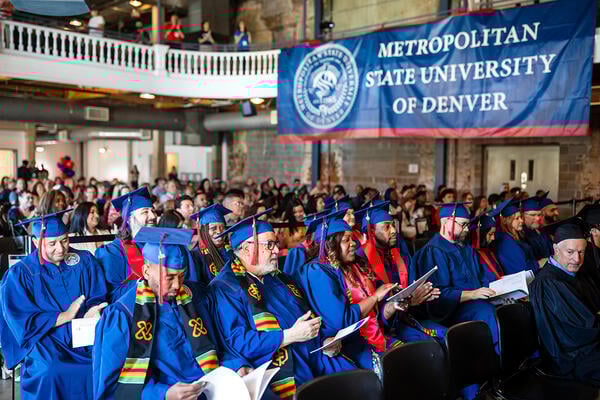
    The first Summer Ceremony for Associate’s degrees on June 22, 2024, in the Tivoli Turnhalle.

    Alyson McClaran/MSU Denver

    The first Summer Ceremony for Associate’s Degrees on June 22, 2024, in the Tivoli Turnhalle.

    Leveraging Tech

    Some universities have implemented new reverse transfer policies that capture students while they’re still enrolled, utilizing technology to expedite the process.

    The University of Nebraska system, which includes the Lincoln, Omaha and Kearney campuses, implemented an automatically triggered reverse-transfer initiative in 2023. All eligible students need to do is respond to an email.

    “Rather than putting the responsibility on the students to do that work—most of whom are not going to do that work—the system thought it would be better to create a mechanism that would automatically notify students when the courses that they’ve taken have gotten to that threshold,” said Amy Goodburn, senior associate vice chancellor at UNL.

    To be eligible, students must complete at least 15 credits at a community college and then transfer to the University of Nebraska. The registrar’s office monitors a dashboard and, after confirming a student completed the appropriate number and type of credits for an associate degree, notifies the student. If the student responds to the email, the university processes the reverse transfer with the prior institution to confirm the associate degree.

    “We’re trying to take the need for students to be proactive off their backs,” Goodburn said.

    The process is not a heavy lift, Goodburn said, and it boosts the community college’s completion rate, making it mutually beneficial.

    Still, the uptake remains stubbornly low.

    At UNL, February 2025 data showed that 2,500 students were eligible to participate in reverse transfer, but only 10 percent have opted in. A reverse-transfer initiative in Tennessee a decade ago saw similar numbers; 7,500 were eligible, but only 1,755 students chose to participate and 347 degrees were awarded.

    “I’m curious about the other 90 percent, like, are they not doing it because they don’t want it on their transcript?” Goodburn said. “Or they’re just not reading their emails, which is often the case? Or is there some other reason?”

    The University of Montana is in the early stages of building its own process for the reverse transfer of stopped-out students. The institution has offered an associate of arts degree for years as part of Missoula College, an embedded two-year institution within the university. Now, through the Big Sky Finish initiative, officials will be able to retroactively award degrees to former students.

    Brian Reed, the University of Montana’s associate vice president for student success, has been leading the project, convening with stakeholders—including the president, the provost, Missoula College leaders and the registrar’s office—to develop the process. The goal, Reed said, is to address the some college, no degree population while also investing in state goals for economic development.

    Big Sky Finish hinges on a partnership with the ed-tech provider EAB, which has created a dashboard connecting various institutional data sets to identify which students are eligible for reverse transfer. The system highlights former students who have 60 credits or more that fulfill a general studies associate degree, as well as stop-outs who are mere credits away from meeting the requirement.

    So far, Montana staff have identified just 11 students who are eligible to earn an A.A. degree and 150 more who are a class or two short of the needed credits.

    A degree put inside of a frame.

    Photo illustration by Justin Morrison/Inside Higher Ed | silverlining56/E+/Getty Images

    Putting Degrees to Work

    While CORE and similar initiatives are helping students earn a degree of value after leaving higher education, it’s less clear what impact associate degrees are having on students. Is it advancing their careers or getting them re-engaged in college?

    About 10 percent of Colorado’s stopped-out students have chosen to re-enroll in higher education to pursue their bachelor’s degree, Fritz said.

    For Varkevisser, receiving an A.G.S. degree provided the impetus to re-enroll and work toward a bachelor’s degree. The associate degree also gave her access to a variety of resources for alumni, including discounted tuition rates and career services.

    “We recognize that it may not be for everybody to do this as a bachelor’s completion model, but the advantage of having an associate over a high school diploma, I think, helps,” Paccione.

    But after students have their degrees, the career benefits and long-term implications for A.G.S. graduates are still murky. Median earnings of full-time, year-round workers with an associate degree are 18 percent higher than those with only a high school diploma, but still 35 percent lower than bachelor’s degree completers, according to the National Center for Education Statistics.

    In Colorado, the average high school graduate in their mid-20s will earn about $25,000 per year, whereas a graduate with an associate of general studies degree will earn closer to $34,000 per year, according to 2021 data.

    “There was an assumption that maybe an A.G.S. wasn’t really worth much, but the data we had on hand locally said there’s not really much difference financially and employment-wise between the different types of associate degrees,” Fritz said.

    “I still don’t really know what all [the A.G.S.] can do for me,” Varkevisser said. “I was never not going to go for it once I got the email and found out it was a real thing, but I don’t know what to do with it necessarily.” She’s considered other forms of employment that require an associate degree, such as a laboratory or X-ray technician, while she finishes her bachelor’s degree in mathematics.

    In Montana, there’s a slight wage premium for individuals who hold an associate degree compared to those with only a high school diploma, Reed said. An associate degree also opens doors in some career fields, such as bookkeeping.

    The University of Montana is hoping to partner with the city of Missoula to identify small businesses looking for credentialed talent so completers can have a career pathway to transition into .

    “I don’t think people are going into six-figure jobs after this,” Reed said. “But it’s creating a step toward something else for these folks. They get another job a little higher up, a little higher up, that prepares them for the next thing.”

    But an A.G.S. isn’t a great target for workers and it can’t guarantee further education, MSU Denver’s Schafer noted.

    “I hate to say it, but it’s a little bit of, it’s a lovely parting gift,” Schafer said. “Here, you have something that you can now show to the world. But how do I [as an administrator] build you on to the next thing when you’ve already stopped out? Maybe that’s the best hope. Even then, maybe it doesn’t work quite as magically as we want it to.”

    Source link

  • Science of Reading Training, Practice Vary, New Research Finds – The 74

    Science of Reading Training, Practice Vary, New Research Finds – The 74


    Get stories like this delivered straight to your inbox. Sign up for The 74 Newsletter

    North Carolina is one of several states that have passed legislation in recent years to align classroom reading instruction with the research on how children learn to read. But ensuring all students have access to research-backed instruction is a marathon, not a sprint, said education leaders and researchers from across the country on a webinar from the Hunt Institute last Wednesday.

    Though implementation of the state’s reading legislation has been ongoing since 2021, more resources and comprehensive support are needed to ensure teaching practice and reading proficiency are improved, webinar panelists said.

    “The goal should be to transition from the science of reading into the science of teaching reading,” said Paola Pilonieta, professor at the University of North Carolina at Charlotte who was part of a team that studied North Carolina’s implementation of its 2021 Excellent Public Schools Act.

    That legislation mandates instruction to be aligned with “the science of reading,” the research that says learning to read involves “the acquisition of language (phonology, syntax, semantics, morphology, and pragmatics), and skills of phonemic awareness, accurate and efficient work identification (fluency), spelling, vocabulary, and comprehension.”

    The legislature allocated more than $114 million to train pre-K to fifth grade teachers and other educators in the science of reading through a professional development tool called the Language Essentials for Teachers of Reading and Spelling (LETRS). More than 44,000 teachers had completed the training as of June 2024.

    Third graders saw a two-point drop, from 49% to 47%, in reading proficiency from the 2023-24 to 2024-25 school year on literacy assessments. It was the first decline in this measure since LETRS training began. First graders’ results on formative assessments held steady at 70% proficiency and second graders saw a small increase, from 65% to 66%.

    “LETRS was the first step in transforming teacher practice and improving student outcomes,” Pilonieta said. “To continue to make growth in reading, teachers need targeted ongoing support in the form of coaching, for example, to ensure effective implementation of evidence-based literacy instruction.”

    Teachers’ feelings on the training

    Pilonieta was part of a team at UNC-Charlotte and the Education Policy Initiative at Carolina (EPIC) at UNC-Chapel Hill that studied teachers’ perception of the LETRS training and districts’ implementation of that training. The team also studied teachers’ knowledge of research-backed literacy practices and how they implemented those practices in small-group settings after the training.

    They asked about these experiences through a survey completed by 4,035 teachers across the state from spring 2023 to winter 2024, and 51 hour-long focus groups with 113 participants.

    Requiring training on top of an already stressful job can be a heavy lift, Pilonieta said. LETRS training looked different across districts, the research team found. Some teachers received stipends to complete the training or were compensated with time off, and some were not. Some had opportunities to collaborate with fellow educators during the training; some did not.

    “These differences in support influenced whether teachers felt supported during the training, overwhelmed, or ignored,” Pilonieta said.

    Teachers did perceive the content of the LETRS training to be helpful in some ways and had concerns in others, according to survey respondents.

    Teachers holding various roles found the content valuable in learning about how the brain works, phonics, and comprehension.

    They cited issues, however, with the training’s applicability to varied roles, limited differentiation based on teachers’ background knowledge and experience, redundancy, and a general limited amount of time to engage with the training’s content.

    Varied support from administrators, coaches

    When asking teachers about how implementation worked at their schools, the researchers found that support from administrators and instructional coaches varied widely.

    Teachers reported that classroom visits from administrators with a focus on science of reading occurred infrequently. The main support administrators provided, according to the research, was planning time.

    “Many teachers felt that higher levels of support from coaches would be valuable to help them implement these reading practices,” Pilonieta said.

    Teachers did report shifts in their teaching practice after the training and felt those tweaks had positive outcomes on students.

    The team found other conditions impacted teachers’ implementation: schools’ use of curriculum that aligned to the concepts covered in the training, access to materials and resources, and having sufficient planning time.

    Some improvement in knowledge and practice

    Teachers performed well on assessments after completing the training, but had lower scores on a survey given later by the research team. Pilonieta said this suggests an issue with knowledge retention.

    Teachers scored between 95% to 98% across in the LETRS post-training assessment. But in the research team’s survey, scores ranged from 48% to 78%.

    Teachers with a reading license scored higher on all knowledge areas addressed in LETRS than teachers who did not.

    When the team analyzed teachers’ recorded small-group reading lessons, 73% were considered high-quality. They found consistent use of explicit instruction, which is a key component of the science of reading, as well as evidence-backed strategies related to phonemic awareness and phonics. They found limited implementation of practices on vocabulary and comprehension.

    Among the low-quality lessons, more than half were for students reading below grade level. Some “problematic practices” persisted in 17% of analyzed lessons.

    What’s next?

    The research team formed several recommendations on how to improve reading instruction and reading proficiency.

    They said ongoing professional development through education preparation programs and teacher leaders can help teachers translate knowledge to instructional change. Funding is also needed for instructional coaches to help teachers make that jump.

    Guides differentiated by grade levels would help different teachers with different needs when it comes to implementing evidence-backed strategies. And the state should incentivize teachers to pursue specialized credentials in reading instruction, the researchers said.

    Moving forward, the legislation might need more clarity on mechanisms for sustaining the implementation of the science of reading. The research team suggests a structured evaluation framework that tracks implementation, student impact, and resource distribution to inform the state’s future literacy initiatives.

    This article first appeared on EdNC and is republished here under a Creative Commons Attribution-NoDerivatives 4.0 International License.


    Get stories like these delivered straight to your inbox. Sign up for The 74 Newsletter

    Source link

  • Nearly All State Funding for Missouri School Vouchers Used for Religious Schools – The 74

    Nearly All State Funding for Missouri School Vouchers Used for Religious Schools – The 74


    Get stories like this delivered straight to your inbox. Sign up for The 74 Newsletter

    State funding of private-school vouchers is primarily being used for students attending religious institutions, with nearly 98% of funding going toward Catholic, Christian, Jewish and Islamic schools.

    This year, state lawmakers passed a budget that included a request from Gov. Mike Kehoe to supply the state-run K-12 scholarship program, MOScholars, with $50 million of general revenue. Previously, the impact to the state’s bottom line was indirect, with 100% tax-deductible donations fueling the program.

    Donations are still part of MOScholars’ funding, but the state appropriation has more than doubled the number of scholarships available.

    During the 2024-25 school year, MOScholars awarded $15.2 million in scholarships.

    In August alone, the State Treasurer’s Office received invoices for scholarships totaling $15.6 million, according to documents obtained by The Independent under Missouri’s open records laws.

    The invoice process is unique to the direct state funding of the program. The nonprofits that administer scholarships, called educational assistance organizations, were the sole keepers of scholarship funds. But now, the State Treasurer’s Office holds scholarship money derived from general revenue in an account previously only used for program marketing and administration.

    The invoices contained data on which schools MOScholars students are attending and the scholarship amount.

    Of the 2,329 scholarships awarded in August, only 59 went to students in nonreligious schools.

    This number did not surprise Democratic lawmakers, who for years have warned that state revenue was going to be siphoned into religious schools.

    “We are simply subsidizing, with tax dollars, parents who would already choose to send their kids to a private school,” state Sen. Maggie Nurrenbern, a Kansas City Democrat, told The Independent. “And now we are using public dollars to pay for schools that are not transparent whatsoever in choosing who to educate and who not.”

    Some schools have been criticized for admission requirements that push a moral standard.

    Christian Fellowship School in Columbia, which received scholarships for 63 MOScholars students in August, requires “at least one parent of enrolled students professes faith in Christ and agrees with the admission policies and the philosophy and doctrinal statements of the school,” according to its handbook

    These statements include disapproval of homosexuality.

    “The school reserves the right, within its sole discretion, to refuse admission of an applicant or to discontinue enrollment of a student,” the handbook continues.

    With around 430 K-12 students enrolled at Christian Fellowship School, according to National Center for Educational Statistics survey data, MOScholars makes up a sizable portion of its funding. But it is not the only school with a large number of scholarship recipients.

    Torah Prep School in St. Louis had 229 K-12 students during the 2023-24 school year. And in August, 197 MOScholars students received funding to attend the school. Torah Prep did not respond to a request for comment.

    The high number of students attending religious schools with MOScholars funding is somewhat incidental, somewhat by design.

    The MOScholars program allows its six educational assistance organizations to choose what scholarships they are willing to support. 

    Religious organizations stepped into the role to help connect congregants with affiliated schools. Only two of the six educational assistance organizations partner with schools unaffiliated with religion.

    The Catholic dioceses of Kansas City-St. Joseph and Springfield-Cape Girardeau run the educational assistance organization Bright Futures Fund, which administered nearly half of the scholarships awarded in August.

    The educational assistance organization Agudath Israel of Missouri focuses on Jewish education, partnering with four Jewish day schools.

    The organization’s director Hillel Anton told The Independent that students are attracted to the program for more than just religious reasons.

    “(Parents’) first and foremost concern is where their child is going to be able to be in the best learning environment,” Anton said. “And you may have a faith-based school that is fantastic and is able to provide that.”

    The demand for the program has long exceeded funding availability. Going into August, organizations had waitlists of students eligible for a scholarship but without funding secured.

    Agudath Israel of Missouri couldn’t guarantee scholarships for all of the returning students, Anton said, until the state funding was official.

    “Because a lot of the funding is done towards the end of the year… we had everyone on a wait list,” he said. “Because we didn’t know necessarily how much funding we were going to have, we weren’t awarding anyone (the funding).”

    Because the program was previously powered by 100% tax-deductible donations, the majority of funds poured in around December. But families need the money months sooner, with tuition due at the start of the school year.

    Some educational assistance organizations prefunded scholarships, dipping into their savings to front expenses in the fall. Others had schools that would accept students and wait for payment.

    The funding from the state, though, has resolved the backlog and allowed organizations to give scholarships to everyone on their wait list.

    “Everyone who qualified for a scholarship this year received one,” Ashlie Hand, Bright Futures Fund’s director of communications, told The Independent.

    Bright Futures Fund nearly doubled the number of students it serves, from 1,050 to 1,909.

    Agudath Israel of Missouri is growing, too. The new funding helped the organization expand from 175 scholarships last year to 277 this year.

    Some expect the state funding to continue next year to support this year’s windfall of scholarships. State Treasurer Vivek Malek told The Independent in May that if donations fall short, he will request state funds to support the new students through graduation.

    Missouri Independent is part of States Newsroom, a nonprofit news network supported by grants and a coalition of donors as a 501c(3) public charity. Missouri Independent maintains editorial independence. Contact Editor Jason Hancock for questions: [email protected].


    Get stories like these delivered straight to your inbox. Sign up for The 74 Newsletter

    Source link

  • How a San Diego Preschool Serves Kids After Trauma – The 74

    How a San Diego Preschool Serves Kids After Trauma – The 74


    Join our zero2eight Substack community for more discussion about the latest news in early care and education. Sign up now.

    Almost 20 years ago a San Diego nonprofit created a preschool to focus on the “little guys” — children who experience domestic violence and other serious traumatic events before kindergarten. 

    Today, Mi Escuelita is still going strong and it’s something of a model in showing other schools how to address childhood trauma.

    Mi Escuelita provides services for kids in a single location that for most other families would require intricate coordination among multiple health care providers, educators and social programs. 

    The children learn in a classroom that is always staffed with at least one therapist, they participate in one-on-one therapy, and join group therapy sessions. Their parents take part in special classes, too, where they learn ways to support their children.

    Researchers from UC San Diego have paid close attention to Mi Escuelita and followed how its graduates fared after leaving the preschool. The university also works with the school to evaluate outcomes from each cohort of students. Here are four takeaways from those reports.

    The kids leave ready for kindergarten

    Students who graduate from Mi Escuelia outperform or do at least well as their peers in kindergarten, according to a UC San Diego analysis of their scores in reading and math tests.

    It looked at kindergarten students in the Chula Vista Elementary School District from 2007 to 2013 and found a higher percentage of Mi Escuelita met math, reading and writing standards than the district’s general population.

    That’s not a given because research shows that children exposed to domestic violence have lower verbal ability than their peers, which can set them back in school. 

    And they do well for years

    The length of UC San Diego’s study allowed its team to follow Mi Escuelita graduates through fifth grade. The results suggested that their preschool experience helped the kids throughout their childhoods. 

    Their average scores on several standardized tests exceeded those of the general population at Chula Vista Elementary School District, especially in math.

    “Taken together, the Mi Escuelita program demonstrates clear benefits to children who may otherwise fall quickly and unsparingly behind with regard to school readiness,” the UC San Diego researchers wrote. 

    Better relationships at home

    Some families turn to Mi Escuelita in moments of distress, such as after experiencing domestic violence. The preschool provides counseling for parents and students alike, which may contribute to behavioral improvements at home.

    Over the past five years, 64% of the families in the program reported sensing fewer conflicts and 83% of them noticed an increase in closeness. 

    “Families reported that children’s communication, behavior, and listening skills improved both at home and at school,” a UC San Diego team wrote in an evaluation of student and parent surveys that spanned 2020 to 2024. 

    It takes a village

    Running Mi Escuelita costs about $1.3 million a year, a sum that nonprofit South Bay Community Services raises through a mix of donations and government funding. That cost — along with the challenge of hiring trained educators and therapists — makes the program difficult to replicate. 

    But, other schools and government agencies are watching Mi Escuelita to see what kind of services they can carry over to other venues. 

    “We can spend less later on intervention programs and alternative facilities,” said Hilaria Bauer, chief early learning services officer at Kidango, a Bay Area nonprofit childcare provider. “There will be less truancy, less big behaviors or expulsions or alternative programs, and all of those ‘fix’ initiatives if we really focus on the time in the life of a child that really makes a change.”


    Get stories like these delivered straight to your inbox. Sign up for The 74 Newsletter

    Source link

  • UVA, Dartmouth Reject Trump Compact

    UVA, Dartmouth Reject Trump Compact

    The University of Virginia and Dartmouth College have become the latest higher ed institutions to publicly reject the Trump administration’s “Compact for Academic Excellence in Higher Education.” Now just three of the nine institutions that the federal government originally presented with the document have yet to announce whether they will sign.

    UVA announced Friday that it opposes the offer of yet-unrevealed special funding benefits in exchange for signing the compact. The statement came the day of an on-campus demonstration urging university leaders not to sign. Dartmouth unveiled its response Saturday morning. Both rejections came despite the universities attending a meeting Friday with White House officials about the deal.

    “As I shared on the call, I do not believe that the involvement of the government through a compact—whether it is a Republican- or Democratic-led White House—is the right way to focus America’s leading colleges and universities on their teaching and research mission,” Dartmouth president Sian Leah Beilock wrote in a message to Education Secretary Linda McMahon, which the president also shared with her community.

    “Our universities have a responsibility to set our own academic and institutional policies, guided by our mission and values, our commitment to free expression, and our obligations under the law,” Beilock wrote. “Staying true to this responsibility is what will help American higher education build bipartisan public trust and continue to uphold its place as the envy of the world.”

    Beilock hasn’t been a publicly outspoken opponent of Trump; at a Heterodox Academy conference in June, she said, “It’s really a problem to say just because the administration, with many things that we all object to, is suggesting something inherently means it’s wrong.” But she also said back then that “we shouldn’t have the government telling us what to do.”

    In a message Friday to McMahon, also shared with the community, UVA interim president Paul Mahoney wrote that “the integrity of science and other academic work requires merit-based assessment of research and scholarship. A contractual arrangement predicating assessment on anything other than merit will undermine the integrity of vital, sometimes lifesaving, research and further erode confidence in American higher education.”

    The compact asks colleges to agree to overhaul or abolish departments “that purposefully punish, belittle, and even spark violence against conservative ideas,” without further defining what those terms mean. It also asks universities, among other things, to commit to not considering transgender women to be women; reject foreign applicants “who demonstrate hostility to the United States, its allies, or its values”; and freeze “effective tuition rates charged to American students for the next five years.”

    In exchange for these agreements, the White House has said signatories would “be given [funding] priority when possible as well as invitations to collaborate with the White House.” But the administration hasn’t revealed how much extra funding universities would be eligible for, and the nine-page compact doesn’t detail the potential benefits. The compact, as well as a Thursday statement from the White House, can also be read as threatening colleges’ current federal funding if they don’t sign.

    Mahoney told McMahon that his university agrees “with many of the principles outlined in the Compact, including a fair and unbiased admissions process, an affordable and academically rigorous education, a thriving marketplace of ideas, institutional neutrality, and equal treatment of students, faculty, and staff in all aspects of university operations.”

    “Indeed,” Mahoney wrote, “the University of Virginia leads in several of these areas and is committed to continuous improvement in all of them. We seek no special treatment in exchange for our pursuit of those foundational goals.”

    The decisions make UVA the fifth and Dartmouth the sixth of the nine initial institutions presented with the deal to publicly turn it down. UVA is also the first public university and first Southern institution to reject it. The Massachusetts Institute of Technology was the first of the nine to turn it down, on Oct. 10, followed by Brown University and the Universities of Pennsylvania and Southern California.

    UVA’s rejection of the compact comes after the Trump administration successfully pressured then–UVA president James Ryan to step down in June. The Justice Department had demanded he step down. The UVA Board of Visitors voted to dissolve the university’s diversity, equity and inclusion office in March, but multiple conservative alumni groups and legal entities complained that Ryan failed to eliminate DEI from all corners of campus.

    A coalition of groups opposed to the compact, including the UVA chapter of the American Association of University Professors, praised the rejection in a Friday news release.

    “Today’s events demonstrate the power of collective organizing and action to defeat tyranny,” the statement said. “We hope that we serve as an example to the other public universities that received the ‘Compact’—the University of Texas, Austin, and the University of Arizona—giving them the courage and clarity not to buckle.”

    UVA faculty groups had overwhelmingly urged university leaders to reject the compact. And hundreds of demonstrators showed up to the anticompact rally Friday on the UVA campus in Charlottesville, Cville Right Now reported.

    Alongside Arizona and UT Austin, Vanderbilt University also hasn’t revealed its decision. But after MIT announced its refusal of the compact, Trump offered it to all U.S. colleges and universities to sign.

    White House officials met Friday with some universities about the proposal. The Wall Street Journal reported that UVA, Dartmouth, Arizona, UT Austin and Vanderbilt were invited, along with universities that weren’t part of the original nine: Arizona State University, the University of Kansas and Washington University in St. Louis.

    White House spokesperson Liz Huston compared the compact in a statement to efforts from former presidents George Washington, Abraham Lincoln, Teddy Roosevelt and John F. Kennedy, who she said “called on our universities to be of greater service to the nation.”

    “President Trump has called on universities to do their part in returning America to its economic and diplomatic successes of the past: a nation of full employment, pioneering innovations that change the world, and committed to merit and hard work as the ingredients to success,” she said, adding the administration hosted “a productive call” with several universities. 

    A White House official said UVA and the other seven invited universities participated in the call.

    “They now have the baton to consider, discuss, and propose meaningful reforms, including their form and implementation, to ensure college campuses serve as laboratories of American greatness,” Huston said. 

    Source link

  • UVA the Fifth University to Reject Trump Higher Ed Compact

    UVA the Fifth University to Reject Trump Higher Ed Compact

    Daxia Rojas/AFP via Getty Images

    On a day of campus demonstrations urging officials to reject the Trump administration’s “Compact for Academic Excellence in Higher Education,” the University of Virginia announced Friday that it opposes the president’s offer of yet-unrevealed special funding benefits in exchange for signing.

    “The integrity of science and other academic work requires merit-based assessment of research and scholarship,” interim president Paul Mahoney wrote in a message Friday to Education Secretary Linda McMahon, which he shared with the university community. “A contractual arrangement predicating assessment on anything other than merit will undermine the integrity of vital, sometimes lifesaving, research and further erode confidence in American higher education.”

    The compact asks colleges to agree to overhaul or abolish departments “that purposefully punish, belittle, and even spark violence against conservative ideas,” without further defining what those terms mean. It also asks universities, among other things, to commit to not considering transgender women to be women; reject foreign applicants “who demonstrate hostility to the United States, its allies, or its values”; and freeze “effective tuition rates charged to American students for the next five years.”

    In exchange for these agreements, the White House has said signatories would “be given [funding] priority when possible as well as invitations to collaborate with the White House.” But the administration hasn’t revealed how much extra funding universities would be eligible for, and the nine-page compact doesn’t detail the potential benefits. The compact, as well as a Thursday statement from the White House, can also be read as threatening colleges’ current federal funding if they don’t sign.

    Mahoney told McMahon that his university agrees “with many of the principles outlined in the Compact, including a fair and unbiased admissions process, an affordable and academically rigorous education, a thriving marketplace of ideas, institutional neutrality, and equal treatment of students, faculty, and staff in all aspects of university operations.”

    “Indeed,” Mahoney wrote, “the University of Virginia leads in several of these areas and is committed to continuous improvement in all of them. We seek no special treatment in exchange for our pursuit of those foundational goals.”

    The decision makes UVA the fifth of the nine initial institutions presented with the deal to publicly turn it down. It’s also the first public university and first Southern institution to reject it. The Massachusetts Institute of Technology was the first of the nine to turn it down, on Oct. 10, followed by Brown University and the Universities of Pennsylvania and Southern California.

    UVA’s rejection of the compact comes after the Trump administration successfully pressured then–UVA president James Ryan to step down in June. The Justice Department had demanded he step down. The UVA Board of Visitors voted to dissolve the university’s diversity, equity and inclusion office in March, but multiple conservative alumni groups and legal entities complained that Ryan failed to eliminate DEI from all corners of campus.

    A coalition of groups opposed to the compact, including the UVA chapter of the American Association of University Professors, praised the rejection in a Friday news release.

    “Today’s events demonstrate the power of collective organizing and action to defeat tyranny,” the statement said. “We hope that we serve as an example to the other public universities that received the ‘Compact’—the University of Texas, Austin, and the University of Arizona—giving them the courage and clarity not to buckle.”

    UVA faculty groups had overwhelmingly urged university leaders to reject the compact. And hundreds of demonstrators showed up to the anti-compact rally Friday on the UVA campus in Charlottesville, Cville Right Now reported.

    Dartmouth College and Vanderbilt University also haven’t revealed their decisions. But after MIT announced its refusal of the compact, Trump offered it to all U.S. colleges and universities to sign.

    White House officials met Friday with some universities about the proposal. The Wall Street Journal reported that UVA, Arizona, Dartmouth, UT Austin and Vanderbilt were invited, along with universities that weren’t part of the original nine: Arizona State University, the University of Kansas and Washington University in St. Louis.

    White House spokesperson Liz Huston compared the compact in a statement to calls from former Presidents George Washington, Abraham Lincoln, Teddy Roosevelt and John F. Kennedy, who she said “called on our universities to be of greater service to the nation.”

    “President Trump has called on universities to do their part in returning America to its economic and diplomatic successes of the past: a nation of full employment, pioneering innovations that change the world, and committed to merit and hard work as the ingredients to success,” she said, adding the administration hosted “a productive call” with several universities. 

    A White House official said UVA and the other seven invited universities participated in the call.

    “They now have the baton to consider, discuss, and propose meaningful reforms, including their form and implementation, to ensure college campuses serve as laboratories of American greatness,” Huston said. 

    Source link

  • White House to Meet With Universities Regarding Compact

    White House to Meet With Universities Regarding Compact

    Brendan Smialowski/AFP/Getty Images

    After four universities rejected the Trump administration’s compact for higher education, the White House is planning to meet Friday afternoon with the remaining five that have yet to respond.

    A White House official confirmed plans of the meeting to Inside Higher Ed but didn’t say what the purpose of the gathering was or which universities would attend. Nine universities were asked to give feedback on the wide-ranging proposal by Oct. 20.

    The virtual meeting will likely include May Mailman, a White House adviser, and Vincent Haley, director of the White House’s Domestic Policy Council, according to a source with knowledge of the White House’s plans. Mailman, Haley and Education Secretary Linda McMahon signed the letter sent to the initial nine about the compact.

    So far, the Massachusetts Institute of Technology, Brown University, the University of Pennsylvania and the University of Southern California have publicly rejected the deal. Dartmouth College, the University of Arizona, the University of Texas at Austin, the University of Virginia and Vanderbilt University haven’t said whether they’ll agree to the compact. Trump officials have said that the signatories could get access to more grant funding and threatened the funding of those that don’t agree.

    After USC released its letter rejecting the proposal, Liz Huston, a White House spokesperson, told the Los Angeles Times that “as long as they are not begging for federal funding, universities are free to implement any lawful policies they would like.”

    Following the first rejection from MIT last Friday, President Trump posted on Truth Social that all colleges could now sign on. The White House has said that some institutions have already reached out to do so.

    The source with knowledge of the White House’s plans said that the meeting “appears to be an effort to regain momentum by threatening institutions to sign even though it’s obviously not in the schools’ interest to do so.”

    The Wall Street Journal reported that Arizona State University, the University of Kansas and Washington University in St. Louis were also invited. According to the Journal, the goal of the meeting was to answer questions about the proposal and to find common ground with the institutions.

    Former senator Lamar Alexander, a Tennessee Republican and trustee at Vanderbilt, wrote in a Wall Street Journal op-ed that the compact was an example of federal overreach akin to previous efforts to impose uniform national standards on K–12 schools.

    “Mr. Trump’s proposed higher education compact may provoke some useful dialogue around reform,” he wrote. “But the federal government shouldn’t try to manage the nation’s 6,000 colleges and universities.”

    Inside Higher Ed reached out to the remaining five institutions as well as the new invitees, but they haven’t responded to a request for comment or to confirm whether they’ll attend the meeting.

    Source link

  • White House Meets With Universities Regarding Compact

    White House Meets With Universities Regarding Compact

    After four universities rejected the Trump administration’s compact for higher education, the White House met Friday with some universities about the proposal. 

    A White House official confirmed plans of the meeting to Inside Higher Ed but didn’t say what the purpose of the gathering was or which universities would attend. Nine universities were asked to give feedback on the wide-ranging proposal by Oct. 20.

    The virtual meeting planned to include May Mailman, a White House adviser, and Vincent Haley, director of the White House’s Domestic Policy Council, according to a source with knowledge of the White House’s plans. Mailman, Haley and Education Secretary Linda McMahon signed the letter sent to the initial nine about the compact.

    So far, the Massachusetts Institute of Technology, Brown University, the University of Pennsylvania and the University of Southern California have publicly rejected the deal. Dartmouth College, the University of Arizona, the University of Texas at Austin, and Vanderbilt University haven’t said whether they’ll agree to the compact. UVA said late Friday afternoon that it wouldn’t agree to the proposal.

    The Wall Street Journal reported that Arizona State University, the University of Kansas and Washington University in St. Louis were also invited. According to the Journal, the goal of the meeting was to answer questions about the proposal and to find common ground with the institutions.

    Inside Higher Ed reached out to the universities, but none confirmed whether they attended the meeting.

    The nine-page document would require universities to make a number of far-reaching changes from abolishing academic departments or programs that “purposefully punish, belittle, and even spark violence against conservative ideas” to capping international undergraduate enrollment at 15 percent. Institutions also would have to agree to freeze their tuition and require standardized tests for admissions, among other provisions.

    Trump officials have said that the signatories could get access to more grant funding and threatened the funding of those that don’t agree. The Justice Department would enforce the terms of the agreement, which are vague and not all defined.

    After USC released its letter rejecting the proposal, Liz Huston, a White House spokesperson, told the Los Angeles Times that “as long as they are not begging for federal funding, universities are free to implement any lawful policies they would like.”

    Following the first rejection from MIT last Friday, President Trump posted on Truth Social that all colleges could now sign on. The White House has said that some institutions have already reached out to do so.

    The source with knowledge of the White House’s plans said that the meeting “appears to be an effort to regain momentum by threatening institutions to sign even though it’s obviously not in the schools’ interest to do so.”

    Former senator Lamar Alexander, a Tennessee Republican and trustee at Vanderbilt, wrote in a Journal op-ed that the compact was an example of federal overreach akin to previous efforts to impose uniform national standards on K–12 schools.

    “Mr. Trump’s proposed higher education compact may provoke some useful dialogue around reform,” he wrote. “But the federal government shouldn’t try to manage the nation’s 6,000 colleges and universities.”

    A Joint Warning

    The American Council on Education and 35 other organizations warned in a joint statement released Friday that “the compact’s prescriptions threaten to undermine the very qualities that make our system exceptional.”

    The organizations that signed requested the administration withdraw the compact and noted that “higher education has room for improvement.” 

    But “the compact is a step in the wrong direction,” the letter states. “The dictates set by it are harmful for higher education and our entire nation, no matter your politics.”

    The letter is just the latest sign of a growing resistance in higher ed to the compact. Faculty and students at the initial group of universities rallied Friday to urge their administrators to reject the compact. According to the American Association of University Professors, which organized the national day of action, more than 1,000 people attended the UVA event. 

    And earlier this month, the American Association of Colleges and Universities released a statement that sharply criticized the compact. The statement said in part that college and university presidents “cannot trade academic freedom for federal funding” and that institutions shouldn’t be subject “to the changing priorities of successive administrations.” Nearly 150 college presidents and associations have endorsed that statement.

    The joint statement from ACE and others, including AAC&U, was a way to show that the associations, which the letter says “span the breadth of the American higher education community and the full spectrum of colleges and universities nationwide,” are united in their opposition.

    “The compact offers nothing less than government control of a university’s basic and necessary freedoms—the freedoms to decide who we teach, what we teach, and who teaches,” the statement reads. “Now more than ever, we must unite to protect the values and principles that have made American higher education the global standard.” 

    But not everyone in the sector signed on. 

    Key groups that were absent from the list of signatories include the Association of Public and Land-grant Universities, the Association of American Universities, the American Association of State Colleges and Universities, the National Association of Independent Colleges and Universities, Career Education Colleges and Universities, and the American Association of Community Colleges.

    Inside Higher Ed reached out to each of those groups, asking whether they were invited to sign and, if so, why they chose not to do so. Responses varied.

    AAU noted that it had already issued its own statement Oct. 10. AASCU said it was also invited to sign on and had “significant concerns” about the compact but decided to choose other ways to speak out.  

    “We are communicating in multiple ways with our member institutions and policymakers about the administration’s request and any impact it might have on regional public universities,” Charles Welch, the association’s president, said in an email.

    Other organizations had not responded by the time this story was published.

    Jessica Blake contributed to this article.

    Source link