Pepperdine officials modified a sculpture to delete the text.
Henry Adams/Pepperdine Graphic
Last month Pepperdine University in Malibu, Calif., opened an art exhibit titled “Hold My Hand In Yours,” which was scheduled to run for six months in the on-campus Frederick R. Weisman Museum of Art. But On Oct. 6, the university closed the exhibit after artists learned their work had been removed or altered for being “overtly political.”
The exhibition, curated by Weisman Museum director Andrea Gyorody, centered on the imagery of hands in paintings, drawings, sculpture and videos, among other media, with a focus on hands as a means of labor and care, according to the museum’s website.
Last week, one of the artists in the show learned her video had been turned off at the university’s request, and a sculpture had been modified to hide text that said “Save the Children” and “Abolish ICE,” Hyperallergic reported. The creators requested their pieces be removed from the museum, and several other contributors followed suit in solidarity with the affected artists and in opposition to the university.
Pepperdine administrators alleged the pieces went against the museum’s policy to “avoid overtly political content consistent with the university’s nonprofit status,” Michael Friel, senior director of communication and public relations at Pepperdine, told Inside Higher Ed in an email.
In addition to removing pieces, the university inquired about posting signage that notifies visitors that “the artwork does not necessarily reflect the views of the university,” Friel noted. “That process has not been successful.” With the addition of the artists pulling their work, the museum decided to close the gallery. All compensation agreements are being honored and inconvenienced artists have received an apology, according to Friel.
“For the past week, the administration’s rationale for the initial censorship and removal has been murky and opaque, and honestly, still unclear to me. It didn’t have to be this way,” Stephanie Syjuco, an artist who was featured in the show, wrote on Instagram.
The Weisman Museum is housed under the university’s advancement office. “Our intent is to maintain the highest standards of excellence as we celebrate artistic expression through the visual arts,” Friel said.
In 2019, Pepperdine censored a senior art student’s gallery because the art featured nude bodies; officials placed the art in a mobile gallery instead of in the Weisman Museum, which featured work by the artist’s peers.
North Carolina’s Advanced Teaching Roles program, which allows highly effective teachers to receive salary supplements for teaching additional students or supporting other teachers, is having positive effects on math and science test scores, according to an evaluation presented by NC State University’s Friday Institute for Educational Innovation at the State Board of Education meeting last week.
Since 2016, the ATR initiative has allowed districts to create new career pathways and provide salary supplements for highly effective teachers — or Advanced Teachers — who mentor and support other educators while still teaching part of the day. Their roles include Adult Leadership teachers, who lead small teams and receive at least $10,000 supplements, and Classroom Excellence teachers, who take on larger student loads and receive a minimum of $3,000 supplements.
Those in adult leadership roles teach for at least 30% of the day, lead a team of 3-8 classroom teachers, and share responsibility for the performance of all those teachers’ students. Classroom excellence teachers are responsible for at least 20% more students than before they enter the role.
“Our ATR program was designed to allow highly effective classroom educators to reach more students and to support the professional growth of educators,” said Dr. Callie Edwards, the program’s lead evaluator, at the State Board of Education meeting last Wednesday. “ATR aims to improve the quality of classroom instruction, the recruitment and retention of teachers, as well as ultimately impact student academic achievement.”
In the 2024-25 school year, 26 districts operated ATR programs across 400 schools — 56% of which were elementary schools — employing 1,494 Advanced Teachers who supported nearly 4,000 classroom teachers statewide, according to the evaluation. Edwards said that 88% of Adult Leadership teachers received at least $10,000, and 85% of Classroom Excellence teachers received $3,000 or more.
Statistical analysis of the 2023-24 school year’s data found that students in ATR schools outperformed their peers in non-ATR schools in math and science, showing statistically significant learning gains.
“Across the various programs I’ve evaluated, these are positive results — especially in math and science — where the impact of ATR is equivalent to about a month of extra learning for students,” said Dr. Lam Pham, the leading quantitative evaluator. “The results in ELA are positive but not statistically significant, which has been consistent for the last three years,” Pham said, referring to English Language Arts.
These effects on math and science grow over time, according to the evaluation. Math scores improved throughout schools’ first six years of ATR implementation — though they are no longer significant by the seventh year of implementation, according to the presentation. For science scores, statistically significant gains began in the fifth year after schools began implementing ATR.
Additionally, math teachers in ATR schools reported higher EVAAS growth scores than their peers in comparable schools.
Teachers in ATR schools also reported feeling like they have more time to do their work compared to teachers in non-ATR schools.
This year’s report featured data on teachers supported by ATR teachers for the first time. The evaluation found no positive effects on test scores for students taught by supported teachers compared to students taught by teachers who are not in the program. The researchers also found no effect on turnover levels for teachers supported by Advanced Teachers. However, the report says additional years of data will be necessary to verify if those effects appear over time.
The evaluation recommended that principals in ATR schools should foster collaboration and communicate strategically about the program with staff, beginning during Advanced Teachers’ hiring and onboarding.
“It’s important to integrate ATR into those processes,” Edwards told the Board. “That means introducing Advanced Teachers to new staff and making collaboration, especially mentoring and coaching, a structured part of the day.”
Edwards said these practices have been adopted in some schools, but principals reported needing more time and support to build collaboration opportunities into the school schedule.
The report also urges district administrators to coordinate with Beginning Teacher (BT) programs, advertise ATR in recruitment materials, and improve their data collection practices. It also calls on state leaders to standardize the program to ensure consistency across participating districts.
“Districts need standardized messaging, professional learning opportunities, and technical assistance to support implementation,” Edwards said. “The state can also create more opportunities for districts to share what’s working with one another and expand the evaluation beyond test scores to capture things like classroom engagement, social, emotional development, and feedback from teachers and principals.”
The evaluators also said “there’s more to do” to expand the program in western North Carolina after Board members raised concerns about uneven participation across the state’s regions.
Tomberlin said DPI received 15 proposals representing 22 districts. These proposals have been evaluated by seven independent evaluators, Tomberlin said. The Board had to choose the program’s next participants by Oct. 15 to comply with a legislative requirement.
The state can only allocate $911,349 for new implementation grants in 2026-27 — less than one-sixth of the funding required to fund all applications. That level of funding is “very low” compared to previous years, Tomberlin said. In the 2023-25 state budget, the General Assembly appropriated $10.9 million in recurring funds for these supplements in each year of the biennium.
Tomberlin recommended that the Board approve the three highest-scoring proposals for the 2026-27 fiscal year, and fund these districts at 85% of their request. If the Board approves this recommendation, the state would still have $37,981 in planning funds left over for districts approved during the 2026 proposal cycle.
Tomberlin said districts are already struggling to pay for the program’s salary supplements. The Friday Institute’s report showed that, despite the high median supplements, some districts are offering supplements as little as $1,000.
“Some districts are not able to pay the full $10,000 because they have more ATR teachers than the funding that we can give them in terms of those allotments,” Tomberlin said. “And we had requested the General Assembly, I think, an additional $14 million to cover those supplements, and we didn’t get any.”
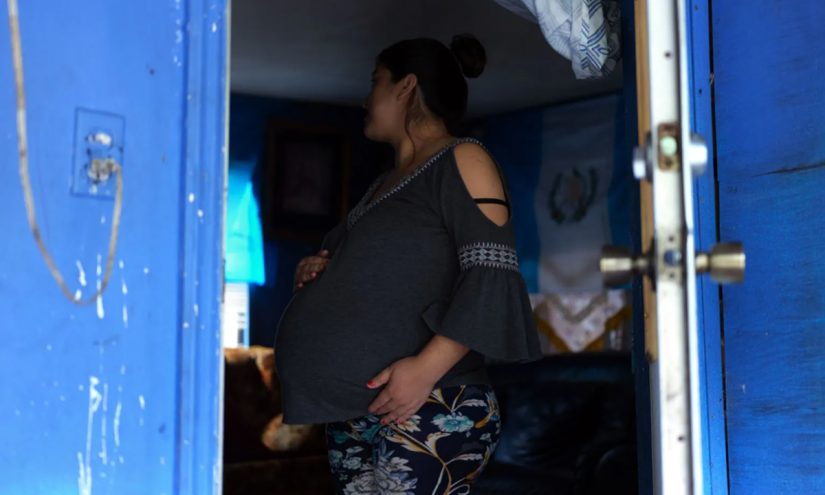
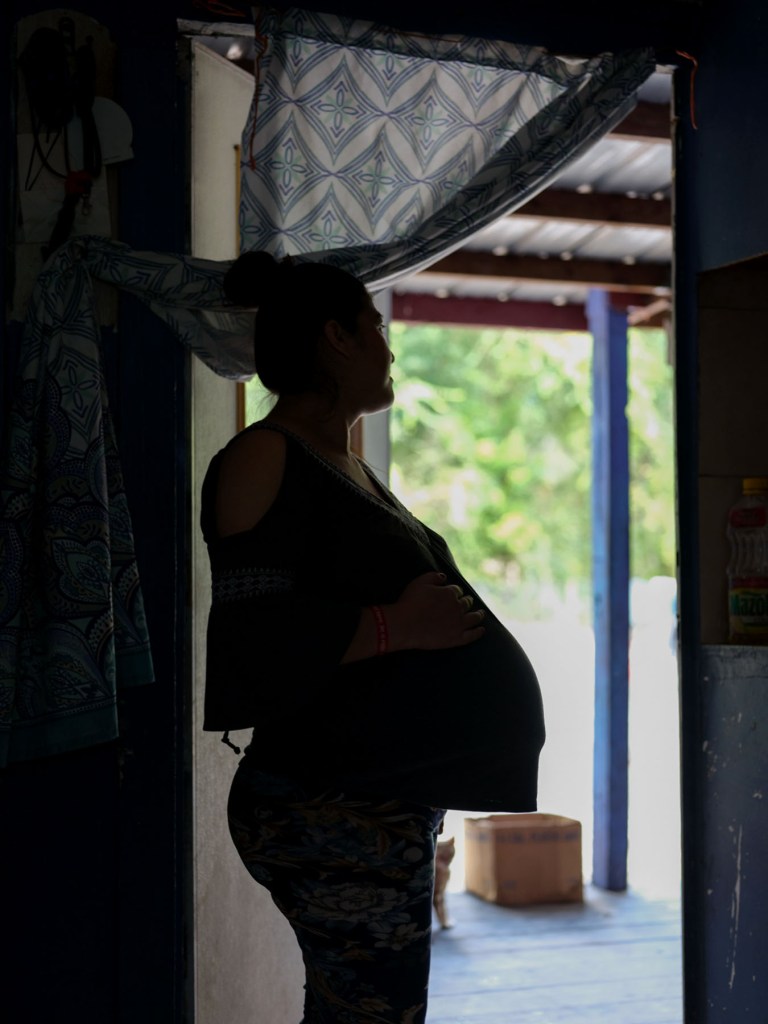
In the lead up to her son’s birth, Jacqueline made plans to call 911 for an ambulance to pick her up from her North Florida home and transport her to a hospital about an hour away.
The second-time mom and Guatemalan immigrant, who has lived in the country for a decade, would have relied on her husband to drive her to the hospital. But a few months ago he was deported, leaving Jacqueline and her daughter without the family’s primary source of income, transportation and support.
One morning in March, Jacqueline said, her partner was pulled over on his way to work when law enforcement officials discovered he didn’t have a valid driver’s license. Jacqueline’s pregnancy was in its early stages. Her husband fought his case from detention for three months before U.S. Immigration and Customs Enforcement (ICE) removed him to Guatemala.
“He was deported and I was left behind, thinking, ‘What am I going to do?’” said Jacqueline, who requested that her last name not be published because she lacks permanent legal status. The couple shares an 8-year-old daughter who was born in, and is a citizen of, the United States.
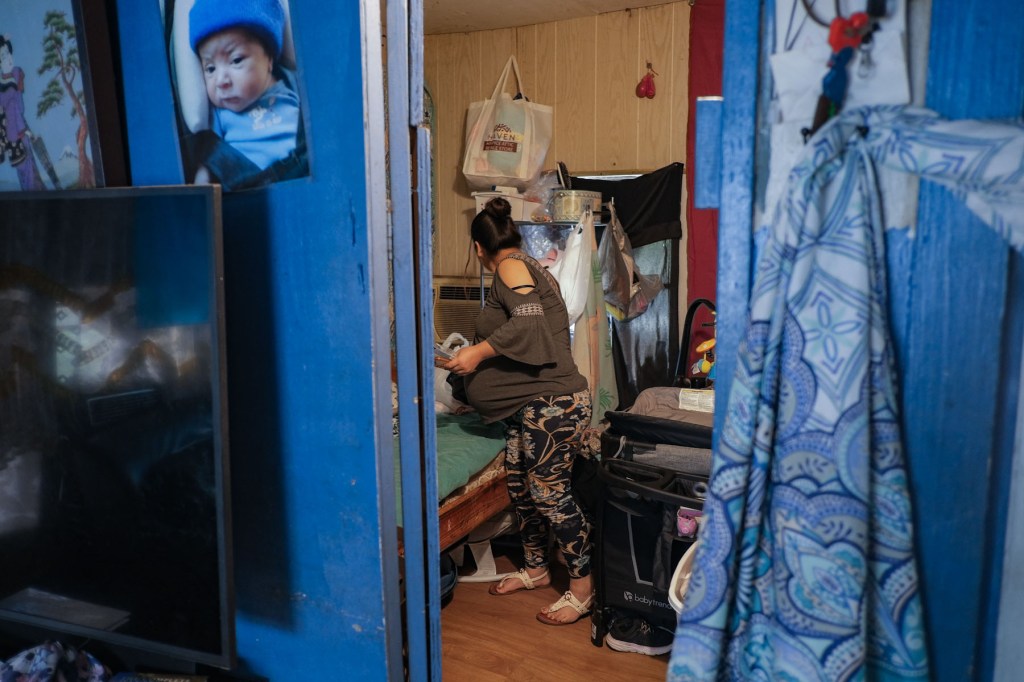
This summer, as she entered the later stages of this pregnancy amid the Trump administration’s turbocharged immigration enforcement, Jacqueline found herself so fearful of being detained that she avoided leaving her home. Her husband’s car sits in the driveway, but there are no signs of him in the small room Jacqueline shares with her daughter. His belongings — tools, clothes, even personal photos — are with him in Guatemala. The only family pictures Jacqueline has are on her phone.
Her partner was the family’s main provider, rotating between picking strawberries or watermelon and packing pine needles for mulch, depending on the season.
Jacqueline struggled to get the most basic items to welcome a baby: Someone gifted her a used carseat and crib, which sit in the packed room along with onesies and other clothing items she’s collected inside a large plastic bag. She’s hoping that a federal assistance program will cover the cost of formula. A baby tub is still on her list.
Medical care in her rural area has been possible only because a small nonprofit organization nearby that provides prenatal care services offered to pay for Ubers so she could continue regular check-ups. Even if she wasn’t behind the wheel, Jacqueline says that just the act of leaving her home feels risky since her husband’s deportation.
“Things got really complicated. He paid our rent — he paid for everything,” she said. “Now, I’m always worried.”
At her home in North Florida, Jacqueline looks at a photo of her husband and daughter on her phone. The only family pictures she has are on her phone; her husband’s belongings — tools, clothes, even personal photos — are with him in Guatemala. (Michelle Bruzzese for The 19th)
Medical care and support essential to a healthy pregnancy have become harder for people like Jacqueline to obtain following President Donald Trump’s inauguration. Many patients — nervous about encountering immigration officials if they leave their homes, drive on public roads or visit a medical clinic — are skipping virtually all of their pregnancy-related health care. Some are opting to give birth at home with the help of midwives because of the possible presence of ICE at hospitals.
Across the country, medical providers who serve immigrant communities said fewer patients are coming in for prenatal or other pregnancy-related care. As a result, patients are experiencing dangerous complications, advocates and health care providers told The 19th.
“Fear of ICE is pushing my patients and their families away from the very systems meant to protect their health and their pregnancies,” said Dr. Josie Urbina, an OB-GYN in San Francisco.
In January, Trump rescinded a federal policy that protected designated areas including hospitals, health clinics and doctors’ offices from immigration raids. ICE has recently targeted patients in hospital maternity wards and on their way home from prenatal visits.
A majority of Americans believe ICE should not be carrying out immigration enforcement at health centers. A new poll from The 19th and SurveyMonkey conducted in mid-September found that most Americans don’t think ICE should be allowed to detain immigrants at hospitals, their workplace, domestic violence shelters, schools or churches.
Women are more likely to oppose enforcement in these spaces than men. More than two-thirds of women said ICE shouldn’t be allowed to detain immigrants in hospital settings.
Enforcement is only expected to grow as the administration works to meet its ambitious deportation goals. The federal government is pouring more than $170 billion over the next four years into expanding immigration enforcement, the result of Trump’s signature tax-and-spending bill. About $45 billion has been directed to expanding detention facilities; $29.9 billion is to increase ICE activity.
That expansion could put even more births at risk. Approximately 250,000 babies are born every year to immigrants without permanent legal status. Already, research has shown these immigrants, who have higher uninsured rates, are less likely to seek prenatal care and are at risk of worse birth outcomes.
Major medical groups, including the American College of Obstetrics and Gynecologists, World Health Organization and the Centers for Disease Control and Prevention (CDC) recommend regular prenatal and postpartum care as a key tool to combat pregnancy-related death and infant mortality.
According to the federal Office of Women’s Health, infants born to parents who received no prenatal care are three times more likely to have a low birth weight and five times more likely to die than those born to parents who received regular care.
A CDC analysis published last year found infant mortality rates went up the later families began prenatal care: 4.54 deaths per 100,000 live births for families whose prenatal care began in the first trimester, compared with 10.75 in families whose prenatal care began in the third trimester or who did not receive any at all.
“A lot of patients aren’t going to get help,” said Yenny James, the founder and CEO of Paradigm Doulas in the Dallas-Fort Worth metro.
After her husband’s deportation, Jacqueline became so fearful of being detained that she avoided leaving her home. “He was deported and I was left behind, thinking, ‘What am I going to do?’” she said. (Michelle Bruzzese for The 19th)
James said she’s seeing an increasing number of emergency cesarean sections because of untreated gestational diabetes, or preeclampsia — a deadly pregnancy complication — that went unnoticed because of lacking prenatal care.
In Denver, OB-GYN Dr. Rebecca Cohen has delivered multiple babies this year for women who have told her that, because they fear endangering themselves or their families, they have received no prenatal care. Several have given birth to babies with fatal fetal anomalies that were never diagnosed because the women did not receive prenatal ultrasounds.
“They were willing to forgo care — their own health care — but to find out that something was devastatingly wrong with their child is when they feel like maybe they should have risked it,” Cohen said. “There’s a sound of a mother’s wail that anybody who has worked labor and delivery has known, and it will haunt you for the rest of your life. To hear that when it could have been prevented, it is just absolutely devastating.”
Early in her pregnancy, Jacqueline received free care at a local clinic. Shortly after her husband’s detention, she called the office to let them know she likely wouldn’t make her next appointment.
“I told them that I probably wouldn’t be able to make my appointments anymore, well, because I’m really afraid given what happened to my husband. And they offered to help,” she said.
Jacqueline and the nonprofit clinic worked out an arrangement: The day of her appointments, someone at the clinic called an Uber to her home, paid for by the clinic, and let her know when it would arrive so she could be ready.
Many people in her small town have come to rely on a single person who does have a valid driver’s license for transportation. That driver recently brought Jacqueline to an appointment with the local office that manages the Special Supplemental Nutrition Program for Women, Infants and Children (WIC), which she is relying on for baby formula and food. There were no guarantees that this driver would be available to take her in whenever she goes into labor.
The Biden administration directed ICE not to detain, arrest or take into custody pregnant, postpartum or breastfeeding people simply for breaking immigration laws, except under “exceptional circumstances.” The Trump administration has not formally reversed that policy. But despite the directive, reports from across the country confirm that ICE has detained numerous pregnant immigrants since Trump took office.
James said that until the Biden guidance is formally rescinded, she will continue to encourage pregnant immigrants to print it out and carry it with them.
“I told my doulas — have them print out this ICE directive, have them keep it with them, so that they know and these agents know that we know our rights, our clients know their rights,” James said.
Jacqueline prepares for the birth of her second child in the room she shares with her daughter. Someone gifted her a used car seat and crib, which sit among the few items she’s collected inside a plastic bag to welcome the baby. (Michelle Bruzzese for The 19th)
It’s unclear exactly how many pregnant immigrants are being detained by ICE, or have been arrested by the agency. A May report from the office of Democratic Sen. Dick Durbin found 14 pregnant women in a single Louisiana detention facility at the time of staff’s visit.
Another report out of the office of Democratic Sen. Jon Ossoff published in late July found 14 credible reports of mistreatment of pregnant women in immigrant detention. The report cited an anonymous agency official who said they saw pregnant women sleeping on floors in overcrowded intake cells. The partner of a pregnant woman in federal custody said that she bled for days before she was taken to a hospital, where she miscarried alone. A pregnant detainee who spoke to Ossoff’s office said she repeatedly asked for medical attention and was told to “just drink water.” The office received several reports of clients waiting weeks to see a doctor, and that sometimes scheduled appointments were canceled. ICE has disputed the report.
“Pregnant women receive regular prenatal visits, mental health services, nutritional support, and accommodations aligned with community standards of care. Detention of pregnant women is rare and has elevated oversight and review. No pregnant woman has been forced to sleep on the floor,” ICE said in a statement posted on their website.
ICE did not respond to a request for comment.
Fear of being detained is a major contributor of stress for pregnant immigrants. Research shows that even when pregnant patients do receive medical care, prenatal stress puts many at greater risk of complicated births and poor outcomes, including premature birth and low infant birth weight. Babies born after an immigration raid are at a 24 percent higher risk of low birth weight, according to one study.
Monica, 38, is expecting her fourth child in November. The Tucson resident, who requested that her last name not be published out of fear of being detained, has lived in the United States for two decades but has no legal immigration status.
This pregnancy has been unlike the others, she said: While Monica has continued with her prenatal care appointments, her anxiety levels about her immigration situation have colored her experience. Her other children, who are in their teens, are U.S. citizens but grappling with the stress of their parents’ situation. Her husband also doesn’t have authorization to live in the country.
“We try to be out and about much less, and to take precautions,” she said. “Whenever we do leave the house, we have it in the back of our minds.”
Monica said she has seen reports of ICE being allowed inside hospitals, and she is worried about facing immigration officers while or following her birth. Her plan is to have her partner and a group of friends at the hospital to make sure she’s never alone.
“My biggest fear is going to the hospital,” she said.
Stress like Monica’s makes pregnancy more dangerous.
Jacqueline holds a bottle of prenatal vitamins at her home in North Florida. A small nonprofit clinic nearby has been paying for Ubers so she can continue her prenatal check-ups. (Michelle Bruzzese for The 19th)
“In our hospital, every doctor I’ve talked to — and these are doctors that have been there 20 years — all are saying these past six months they’ve seen worse obstetrics outcomes than ever in their career,” Dr. Parker Duncan Diaz, a family physician in Santa Rosa, California, whose clinic mostly cares for Latinx patients. That’s included more preterm labor and more pregnant patients with severe hypertension.
“I don’t know what’s causing it, but my bias is that it is the impact of this horribly toxic stress environment,” he added, specifically noting the stress caused by the threat of immigration enforcement.
In recent months, Dr. Caitlin Bernard, an Indiana-based OB-GYN, has seen a number of pregnant patients seeking emergency attention who have not received any prenatal health care. One was 31 weeks, approaching the end of her pregnancy. Another was more than 20 weeks pregnant when she came to Bernard’s office, having developed complications from a molar pregnancy — a rare condition that means a healthy birth is impossible and that without early treatment can result in vaginal bleeding, thyroid problems and even cancer.
“Anytime you’re not able to access that early prenatal care, we do see complications with that,” she said. “And many of these things can absolutely be life-threatening for both the moms and the babies.”
Dr. Daisy Leon-Martinez, a maternal-fetal medicine specialist in San Francisco, said she now regularly cares for patients in her labor and delivery ward who have been transferred to her hospital because of newly developed pregnancy complications. These are often their first doctors’ visits since becoming pregnant. Many of those patients have told her that they did not want to seek prenatal care for fear of encountering immigration officials.
During regular visits, she added, she has advised people with pregnancy complications that they would be best served by a hospital stay — only to be told that her patients no longer feel safe going to the hospital.
The current enforcement environment is challenging immigrant advocates, who are continuing to encourage immigrants to seek appropriate medical care while acknowledging that doing so is increasingly risky.
Lupe Rodríguez, the executive director of the National Latina Institute for Reproductive Justice, said her organization is urging pregnant immigrants to seek the health care that they need, and to be proactive about making plans for themselves and their families in the event that they are detained.
“We can’t know for certain about any given [health care center] whether or not it’s going to be safe. One of the things that we’ve been seeing is leadership at some of these health centers — big hospitals and clinics — have said that they will provide the kind of protection that folks need, that they don’t want folks to be afraid of care,” Rodriguez said.
While those statements signal the intentions of a hospital’s leadership, Rodriguez said, “we still know that there are individuals within some of those care centers that are part of the reporting mechanism or are intimidating people.”
Outside her home in North Florida, Jacqueline sits in a red chair as a chicken wanders nearby. (Michelle Bruzzese for The 19th)
Jacqueline approached the last days of her pregnancy hopeful that the place she had chosen — a large university hospital that workers at her local clinic recommended — would be a safe place for her to give birth.
One night at the end of September, when labor pains grew too intense, she called for an ambulance and made it to the hospital. When she got there, she asked her providers if there were any ICE agents near the building. She had heard of a man at a local hospital being detained after having surgery. They told her there were none they were aware of.
She went on to deliver her baby under general anesthesia after a long, difficult labor. “I didn’t even hear him cry when they pulled him out,” she said. Her only relative left in the area was taking care of her daughter, so she recovered alone at the hospital for five days before heading home in an Uber that a social worker procured for her and her son.
“If my husband was here, he would have been there with me at the hospital,” Jacqueline said while recovering at home. “He would be here taking care of me, of us. I wouldn’t be worried about the things I still want to get for the baby.”
This story was originally reported by Mel Leonor Barclay and Shefali Luthra of The 19th. Meet Mel and Shefali and read more of their reporting on gender, politics and policy.
As of Friday afternoon, it remained unclear how many staff members would be affected.
Photo illustration by Justin Morrison/Inside Higher Ed | Tierney L. Cross/Getty Images | BraunS and Prostock-Studio/iStock/Getty Images
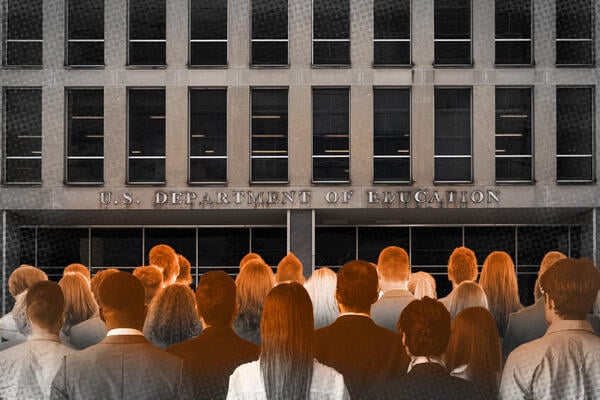
Staff members at the Department of Education will be affected by the mass layoffs taking place across the federal government, a spokesperson said Friday.
Russell Vought, director of the Office of Management and Budget, has threatened the layoffs for weeks, citing the government shutdown. Vought wrote on social media Friday that his promised reduction in force had begun.
A department spokesperson then confirmed in an email to Inside Higher Ed that “ED employees will be impacted by the RIF.” The spokesperson did not clarify how many employees will be affected or in which offices. Other sources say no one who works in the Office of Federal Student Aid will be laid off.
Trump administration officials said in a court filing that an estimated 466 employees were given reduction-in-force notices. About 1,100 to 1,200 employees at the Department of Health and Human Services also got laid off. Overall, more than 4,200 workers across eight agencies were fired.
At the Education Department, the estimated layoffs will leave the department with just over 2,001 employees. The agency, which President Trump wants to close, already lost nearly half its career staff members during a first round of mass layoffs in March. In the wake of those layoffs, former staffers warned that the cuts would lead to technical mishaps, gaps in oversight and a loss of institutional knowledge. College administrators have also reported delays and issues in getting communications and updates from the department, though agency officials say critical services have continued.
The federal workers’ union and multiple outside education advocacy groups challenged the first round of layoffs in court. Lower courts blocked the RIF, but the Supreme Court overturned those rulings in July. Affected staff members officially left the department in August.
Another lawsuit challenged this latest round when Vought threatened the layoffs – before the pink slips had even been distributed today. It was filed at the end of September.
The union representing Education Department employees as well as sources with connections to staffers who were still working at the department as of Friday morning said that the latest round of cuts will at least affect staff members from the offices of elementary and secondary education and communications and outreach. A union representative added that all of the employees in the communications office’s state and local engagement division were laid off.
A senior department leader, who spoke on condition of anonymity, told Inside Higher Ed that the layoffs were directed by OMB and came as a surprise.
“Last week the [education] secretary’s office had said no RIFs at all,” the senior leader explained. “We heard on Tuesday that OMB sent over a list of people for ED to RIF … ED apparently edited it and sent it back.”
In neither case were cuts planned for the Office of Federal Student Aid, which manages the Pell Grant and student loans, the senior leader added.
Rachel Gittleman, president of the union that represents Education Department employees, promised in a statement to fight the layoffs.
“This administration continues to use every opportunity to illegally dismantle the Department of Education against congressional intent,” Gittleman said. “They are using the same playbook to cut staff without regard for the impacts to students and families in communities across the country … Dismantling the government through mass firings, especially at the ED, is not the solution to our problems as a country.”
Through late September and into the first 10 days of the shutdown, both Vought and President Trump used the threat of further RIFs to try to convince Democrats in the Senate to acquiesce and sign the Republicans’ budget stopgap bill. But Democrats have stood firm, refusing to sign the bill unless the GOP meets their demands and extends an expiring tax credit for health insurance.
Health and Human Services Department spokesperson Andrew G. Nixon wrote in an email to Inside Higher Ed earlier on Friday that “HHS employees across multiple divisions” received layoff notices. But he didn’t provide an interview or answer written questions about whether the layoffs include employees at the National Institutes of Health, a major funder of university research.
Nixon wrote that “HHS under the Biden administration became a bloated bureaucracy” and “all HHS employees receiving reduction-in-force notices were designated non-essential by their respective divisions. HHS continues to close wasteful and duplicative entities, including those that are at odds with the Trump administration’s Make America Healthy Again agenda.”
Democrats and some Republicans have warned against the layoffs. Sen. Susan Collins, a Maine Republican who chairs the powerful appropriations committee, opposed the layoffs in a statement while also blaming Democrats in the shutdown.
“Arbitrary layoffs result in a lack of sufficient personnel needed to conduct the mission of the agency and to deliver essential programs, and cause harm to families in Maine and throughout our country,” she said.
But Democrats in particular have argued that firing federal workers during a shutdown is unconstitutional.
“No one is making Trump and Vought hurt American workers—they just want to,” Sen. Patty Murray, a Washington State Democrat and vice chair of the appropriations committee, said in a statement Friday afternoon. “A shutdown does not give Trump or Vought new, special powers to cause more chaos or permanently weaken more basic services for the American people … This is nothing new, and no one should be intimidated by these crooks.”
Rep. Bobby Scott, a Virginia democrat and ranking member of the House Education and Workforce Committee, pointed out in a statement that the administration has had to rehire employees who were fired earlier this year.
“In addition to wasting millions of taxpayer dollars to fire and rehire government employees, arbitrarily firing government employees means there are fewer people to help administer essential programs,” he said. “Moreover, I fear the lasting impact of mass firings will be an incredible loss of invaluable institutional knowledge. Furthermore, random and chaotic layoffs will make it difficult to recruit qualified employees in the future.”
Massachusetts Institute of Technology has rejected the Trump administration’s proposal to sign on to the “Compact for Academic Excellence in Higher Education,” which would mandate sweeping changes across campus in exchange for preferential treatment on federal funding.
MIT is the first of the nine universities invited to join the compact to publicly reject the proposal that has ignitedfierce pushback from other higher ed leaders, faculty and experts who see the document as a way to strip institutions of their autonomy. The Trump administration also asked Brown University, Dartmouth College, the University of Arizona, the University of Pennsylvania, the University of Southern California, University of Texas at Austin, the University of Virginia and Vanderbilt University to sign. Most have provided vague statements saying that they are reviewing the compact, though Texas officials have expressed some enthusiasm about the offer.
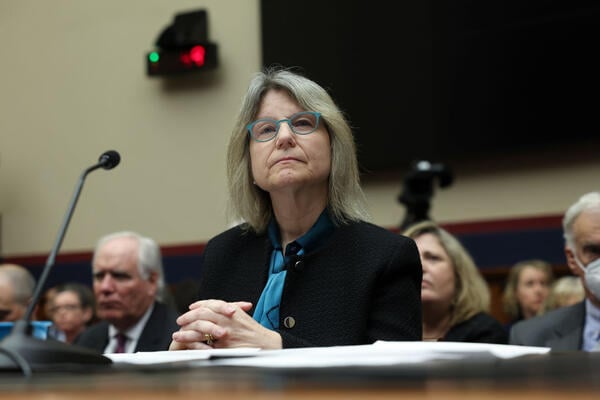
MIT President Sally Kornbluth announced the move in a Friday morning letter to the campus community, which included a copy of her response to Education Secretary Linda McMahon.
Kornbluth highlighted in the response to McMahon a number of areas emphasized by the White House in the compact, such as focusing on merit, keeping costs low for students and protecting free expression.
“These values and other MIT practices meet or exceed many standards outlined in the document you sent. We freely choose these values because they’re right, and we live by them because they support our mission—work of immense value to the prosperity, competitiveness, health and security of the United States. And of course, MIT abides by the law,” Kornbluth wrote.
She also noted that MIT disagreed with a number of the demands in the letter, arguing that it “would restrict freedom of expression and our independence as an institution” and that “the premise of the document is inconsistent” with MIT’s belief that funding should be based on merit.
“In our view, America’s leadership in science and innovation depends on independent thinking and open competition for excellence,” Kornbluth wrote. “In that free marketplace of ideas, the people of MIT gladly compete with the very best, without preferences. Therefore, with respect, we cannot support the proposed approach to addressing the issues facing higher education.”
This is a breaking news article and will be updated.
As the Supreme Court begins its new term this week, legal experts predict that higher education will be a frequent subject for the justices. Yet only two college-related cases—both of which center on transgender rights—are currently listed on the main docket.
That’s in large part because of a less formal but increasingly popular second list of cases known as the shadow docket.
Historically, the shadow docket, also called the emergency docket, was used on rare occasions for just that—emergencies. In situations when the lack of a ruling from the highest court could lead to immediate, irreversible consequences, this alternate route allowed the justices to move quickly and issue an interim decision without going through traditional processes such as briefings, oral arguments or written opinions. But over the course of the past threeadministrations, use of this secondary docket has skyrocketed, creating a lack of predictability and an immense sense of uncertainty for the public.
Normally, it can take months for a case’s petition to be processed, and then once a case is on the docket it can take even longer for it to be heard and ruled upon. This leaves the parties directly involved—and all who may be affected by the decision—time to prepare and create contingency plans for the potential outcomes. But when the shadow docket is used, cases can be introduced and receive a ruling in a matter of weeks, if not days, often without any explanation.
“Some of these are existential issues about whether universities can continue to function in the way in which they functioned for the past half century,” said former Brandeis University president Fred Lawrence, a higher education legal expert and distinguished lecturer at Georgetown Law. “If erring on the side of caution means shutting down your research operation, then you are unrecognizable to yourself. So it creates a very, very difficult situation for higher education to function.”
While it remains unclear how and when various cases will reach the Supreme Court, Lawrence and others say they have a fairly good idea of what those cases will likely concern. Issues including visa policies for international students and scholars, First Amendment rights, academic freedom, and federal funding are likely to be on the line.
Here’s a quick summary of the cases—on and off the main docket—that experts say colleges and universities should keep a close eye on.
Transgender Athletes
On the first day of his second term in office, President Donald Trump signed an executive order banning “gender ideology” and declaring that the government would only recognize two sexes, male and female. Less than a month later, he signed a second order banning transgender women from participating in women’s sports.
For now, both declarations—and their implications for collegiate sports—are up for consideration by the highest court through two cases, West Virginia v. B.P.J and Little v. Hecox.
Though the former concerns a transgender girl in high school and the latter a transgender woman at Boise State University, the cases are otherwise largely the same. Both involve runners who attempted to participate in track and cross-country but were barred from doing so by state law. And up until a little over a month ago, both were set to be heard before the court at some point this term.
But on Sept. 2 Hecox filed a motion urging the Supreme Court to dismiss her case. In the six-page filing, Hecox’s lawyers explained that due to illness, her father’s recent passing and the “negative public scrutiny” stemming from the litigation, she no longer wished to participate in women’s sports, rendering the case moot.
Still, given the court’s conservative supermajority and their penchant for siding with the Trump administration, some wonder if Hecox’s plea to the court is an attempt to avoid an unfavorable final decision. (Hecox won her case at both the district and circuit court levels.)
Jill Siegelbaum, a former assistant general counsel at the Department of Education and now a partner at Sligo Law Group, said that she understands both the theoretical idea that Hecox could be fearing a loss and the more personal rationale for dismissing the case.
“Every single attorney involved in that case is well aware of who is sitting on the court and the decisions that the court has recently made in the area of transgender rights,” she said. “But I can also say that on its own, simply the fear for her emotional, physical and mental health that would come from further publicity about this case … would certainly be, in my opinion, a reasonable basis for withdrawing.”
So far, it’s unclear whether the court will respect Hecox’s request. But even if the case were dismissed, Siegelbaum and others said, West Virginia v. B.P.J., will almost certainly remain, eventually leading to a ruling on the same overarching issue—interpreting Title IX’s equal protection clause.
Sarah Hartley, a partner and co-chair of the higher education team at BCLP, a law firm headquartered in St. Louis, stressed that regardless of the outcome, the ruling’s implications for colleges and universities could be influenced by what questions the justices ask and how they write their opinions.
“Depending on how the decision is worded, it could have broader impacts than just sport. It could address bathrooms, locker rooms—any number of different things that Title IX and other antidiscrimination laws historically have protected,” she said.
Hartley added that in her view, lack of access to even recreational activities could be a major blow to the mental health of an already “highly marginalized community.”
“Imagine it affecting your club sports at universities or in high schools, or in gym class when there’s any sex segregation,” she said. “As someone who’s particularly concerned with the access to sport because of all the positive impacts it can have, I think the trickle-down effect … will be a big deal.”
Shadow Docket
Higher education legal experts are also keeping a close eye on the shadow docket, as well as on cases that were already addressed on the emergency docket, were sent back to the lower court and now are steadily working their way back up to the Supreme Court for a final merit ruling.
Jessica Ellsworth, a partner at Hogan Lovells and adviser for the American Council on Education, said she thinks the shadow docket cases are the ones that have a “real impact” on higher education.
She added that multiple stays have already been granted on issues like Trump’s ability to terminate congressionally appropriated funds, slash government agencies’ staffs and tighten immigration policies that affect college enrollment. In doing so, the Supreme Court blocked injunctions from the lower courts, allowing the Trump administration to carry out policies before the justices have fully analyzed the facts of the case, considered friend-of-the-court briefs or heard the arguments of each party.
Moving forward, “I suspect that we will see First Amendment challenges make their way to the court related to ongoing efforts by the administration to force changes across universities and use threats of cutting off funding to compel those changes,” Ellsworth said. “As a result, it’s important for higher education to keep an eye on both the merits and emergency docket for the foreseeable future.”
Hartley from BCLP noted that transgender rights issues are also on the shadow docket through the case Trump v. Orr, which weighs a transgender or nonbinary individual’s ability to obtain a passport that matches their gender identity. If this ruling is interpreted to extend to IDs beyond passports, it could lead to all kinds of inconsistency between gender presentation and government identification, creating significant hurdles for many university operations, she said.
“You could see complaints that a student who’s male presenting is living in a female dorm, which could then give rise to invasive investigations and force a student to disclose things that they might want to make otherwise private,” she explained.
And while any number of these cases could eventually make it back to the Supreme Court for a final ruling, Lawrence from Georgetown said it’s too soon to predict what will make the cut; just a week into the new term, “the Supreme Court has barely put together its docket for the year,” he said.
But even if these issues do make it back for a full merit review, he added, it may be too late. So far, the Supreme Court has struck down the injunctions blocking Trump from carrying out his policies on every higher ed case that has reached the shadow docket. And in many cases, he said, doing that is like allowing a development company to tear down a historic home before a court has ruled on whether it sits on protected land. Even if the court eventually rules that the property should have been shielded, once the house is gone, it will be impossible to restore.
“If you don’t provide that temporary remedy, then there may be no point to a remedy at all,” Lawrence explained.
In a year already defined by polarization and violence, the assassination of Charlie Kirk at Utah Valley University plunged higher education into crisis. The killing of one of the nation’s most prominent conservative activists on a college campus has been weaponized by political factions, prompting administrative crackdowns and faculty firings. What were once familiar battles in the campus culture wars have escalated into something more dangerous: a struggle over the very conditions of inquiry, where violence, scandal and political pressure converge to erode academic freedom. And now, a proposed “compact” with higher education institutions would seek to condition federal funding on requirements that colleges ensure a “broad spectrum of viewpoints” in each academic department and that they abolish “institutional units that purposefully punish, belittle, and even spark violence against conservative ideas.”
At the center of this struggle lies a persistent illusion: that the university should provide a platform for “every perspective.” Critics claim campuses suppress conservative voices or silence dissenting students, arguing institutions should resemble open marketplaces where all viewpoints compete for attention. Enticing as this rhetoric may be, the expectation is both unworkable and misguided. No university can present every possible outlook in equal measure, nor should it. The mission of higher education is more demanding: to cultivate, critique and transmit knowledge while attending to perspectives that have shaped history and public life. The contrast between an endless marketplace of opinion and the rigorous pursuit of knowledge is crucial to understanding what universities are for.
Karl Mannheim once distinguished between ideology and knowledge, cautioning against their uncritical conflation. That warning remains essential. Universities are not platforms for unchecked ideology but institutions dedicated to showing how knowledge emerges through observation, interpretation, critique and debate. Perspectives matter, but exposure alone is insufficient; they must be contextualized and weighed against evidence. Free speech and academic freedom overlap but are not the same. Free speech protects individuals from state repression in public life. Academic freedom protects scholars in their pursuit of inquiry and ensures students gain the tools to test claims critically. The distinction is central: The university has an obligation not to amplify all voices equally, but to cultivate discernment.
This does not mean shielding students from offensive or discredited ideas. On the contrary, a serious education requires grappling with perspectives that once commanded influence, however abhorrent they may now appear. Students of American history must study the intellectual justifications once advanced for slavery—not because they deserve validation, but because they shaped institutions and legacies that continue to structure society. Students of religious history should encounter theological controversies that once divided communities, whether or not they resonate today, because they explain enduring traditions and conflicts. To include such perspectives is not to offer them equal standing with contemporary knowledge, but to illuminate their historical weight and consequences.
Confusing exposure with endorsement—or opinion with knowledge—risks leaving students adrift in noise. Universities are not megaphones for any thesis but arenas where students learn how to evaluate sources, test claims and trace the consequences of ideas over time. Academic freedom does not mean a free-for-all. Instead, it allows scholars to curate, critique and contextualize knowledge—including ideas that are controversial, even offensive or (as in the study of slavery or fascism) historically consequential. Education that multiplies opinions without cultivating methods of judgment undermines critical capacity; education that fosters discernment equips students to enter public debates wisely and responsibly.
Recent events in higher education reveal how fragile these principles have become. Violence itself intimidates expression, but administrative and political overreaction magnifies the threat. Faculty have been disciplined for social media posts. In Texas, a lecturer was dismissed for teaching about gender identity. In California, University of California, Berkeley administrators released to federal authorities the identities of more than a hundred students and faculty whose names appeared (as accused, accuser or affected party) in complaints about antisemitism. Faculty watch colleagues punished unjustly, while students—especially international and marginalized ones—face surveillance and potential charges. Across the country, dissent is mistaken for hate, controversial speech treated as threat and scandal avoidance prioritized over defending expressive rights.
Academic freedom has long enjoyed special constitutional protection, granting professors wide latitude in teaching and research. But this protection depends on public trust: the sense that higher education fosters critical inquiry rather than partisan indoctrination. When professors behave as ideologues or exercise poor judgment in public, that trust erodes. Yet the greater danger comes not from individual missteps but from capitulating to the demand that every perspective deserves equal standing—or from letting violence and political pressure set the boundaries of what may be said. Higher education should not resemble a bazaar of endless opinion but a community dedicated to the disciplined creation, transmission and critique of knowledge. By training students not to hear every voice equally but to weigh evidence and evaluate claims, universities preserve both their scholarly mission and their democratic role. Institutions that cave to intimidation, or that mistake neutrality for abdication, abandon their responsibility to defend inquiry.
Equally important, universities serve as legitimating institutions. To place a perspective within their walls signals that it merits serious study, that it has crossed the threshold from private belief to public knowledge. This conferral of legitimacy makes curatorial responsibility critical. Treating perspectives as interchangeable voices distorts the university’s purpose, but so does admitting or excluding them solely under political pressure. Both compromises undermine credibility. External actors understand this and exploit universities’ legitimating authority, pressing institutions to provide platforms that elevate discredited or dangerous views into claims of scholarly validation. The responsibility of the university is not to magnify every claim in equal volume but to steward the line between ideas worth engaging and those demanding correction or refusal. Only in this way can institutions preserve their academic mission and their democratic contribution.
The way forward is neither unbounded opinion nor fearful silence. It is the principled defense of creating, critiquing and reimagining knowledge through inquiry guided by evidence and protected from violence and censorship. To retreat from this responsibility is to weaken not only higher education but democracy itself.
Gerardo Martí is the William R. Kenan Jr. Professor of Sociology at Davidson College.
Kim Richey recently served as a senior chancellor in the Florida Department of Education.
Senate Health, Education, Labor and Pensions Committee
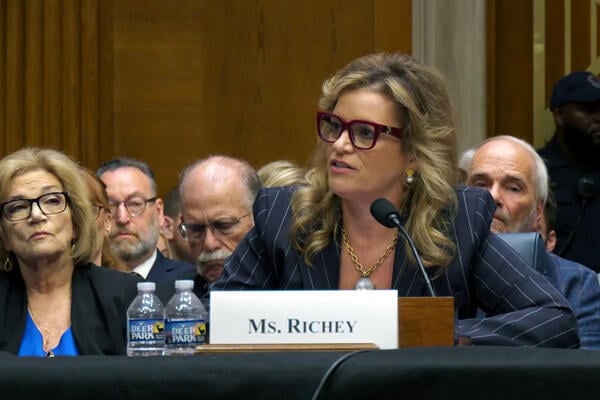
The Senate voted this week to confirm Kimberly Richey as the Education Department’s assistant secretary for civil rights—returning her to a role she held in an acting capacity from August 2020 until November 2021, spanning the end of President Trump’s first term and the start of President Biden’s. Richey also worked in the department during the George W. Bush administration.
The vote was 51 to 47 along party lines, with Democrats and Independents all voting nay.
Over the past few years, Richey worked in state positions as a senior chancellor in the Florida Department of Education and a deputy superintendent in the Virginia Department of Education. She now returns to the federal government to lead a greatly diminished Office for Civil Rights—the Trump administration laid off nearly half the OCR staff in March—with a significant case backlog.
The administration is using what’s left of the office as an arm of its campaign against transgender rights, programs aimed at helping minorities and allegations of antisemitism. The OCR has been investigating both K–12 school districts and universities over these issues. Richey told senators during her June confirmation hearing that she’s committed to pursuing cases related to antisemitism and trans women playing on women’s sports teams.
According to a résumé published by government watchdog American Oversight, Richey has also worked with conservative organizations to draft education legislation and policies. Those policy proposals mostly centered on K–12 and included promoting school choice and banning critical race theory (although the topic is not taught in K–12 schools). A 2022 receipt American Oversight uncovered indicated that Richey’s consultancy, RealignEd LLC, was paid $10,000 to “provide subject matter expertise, review and evaluation, and policy advice related to inherently divisive topics and other provisions” shortly after Virginia governor Glenn Youngkin signed an executive order prohibiting “the use of inherently divisive concepts, including critical race theory,” in schools.
Craig Trainor, the principal deputy assistant secretary for civil rights, has led the office as acting secretary since Trump took office earlier this year. In that post, he sent out controversial guidance banning race-based programming and activities, which was later blocked by the courts. He’s now moving to Department of Housing and Urban Development, where he’ll be the assistant secretary for fair housing and equal opportunity.
Months after Jim Ryan stepped down as University of Virginia president, state Sen. Creigh Deeds is still waiting for answers on whether political interference and external pressure played a role.
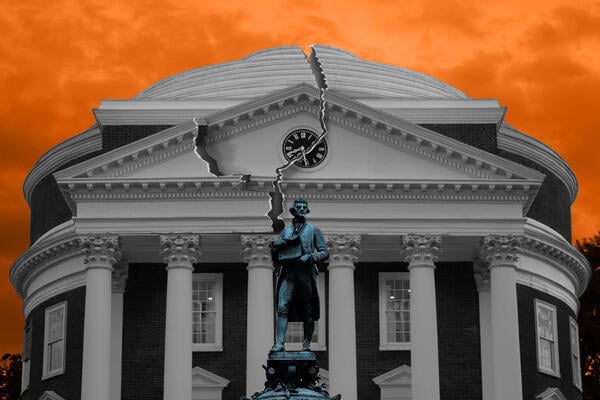
Ryan resigned in late June, citing pressure from the federal government amid Department of Justice investigations into diversity, equity and inclusion initiatives at the public university. Although the Board of Visitors voted to shutter its DEI office in March, conservative critics accused UVA of failing to dismantle such efforts. The DOJ subsequently launched seven investigations, two of which have been closed. The status of the other five remains unclear.
Deeds, a Democrat who represents Charlottesville and the surrounding area, has been seeking answers since Aug. 1 through a series of letters sent to the Board of Visitors and a far-reaching Freedom of Information Act request. But so far, university lawyers have largely refused to answer the state lawmaker’s questions, citing ongoing investigations. Faculty members have also said they can’t get straight answers from the university or face time with the board.
And complaints over an alleged lack of transparency at UVA are piling up as state lawmakers are applying additional pressure over how the university will respond to an invitation to sign on to the proposed “Compact for Academic Excellence in Higher Education” that the Trump administration sent to UVA and eight other universities last week.
Trading Letters
In office since 2001, Deeds has a long relationship with the university. But for the first time in 20-plus years, the senator said, he’s being shut out by a Board of Visitors that refuses to talk to him.
“We’re just trying to get to the bottom of what role the federal government, the Justice Department, the president’s office, the governor, the [state] attorney general played in the decision that Jim Ryan made to resign,” Deeds told Inside Higher Ed in an interview.
Deeds has sent several inquiries to UVA since Ryan resigned. The first letter included 46 questions related to Ryan’s resignation, the DOJ investigations and whether the UVA Board of Visitors “operated within the bounds of its legal and ethical responsibilities.”
But so far, Deeds says, he’s been given “partial answers” and “gobbledygook.”
In a series of letters to Deeds from two law firms (Debevoise & Plimpton and McGuireWoods), the outside legal counsel offered little insights into Ryan’s resignation, arguing in an Aug. 15 response that UVA is “is currently focused on navigating an unprecedented set of challenges,” which includes the ongoing DOJ investigations.
Some information included in the responses is already in the public sphere, such as how the board voted to shutter DEI initiatives, and details on the presidential search committee, which Deeds had also asked about. UVA also included letters sent by the DOJ to the university when it closed two investigations; while the DOJ referenced “appropriate remedial action” by the university, it did not offer specifics. But the focus across several letters sent to Deeds by university lawyers was mostly on why UVA can’t respond.
“Counsel handling the discussions with the Department of Justice has indicated that providing a substantive response to the August 1 letter while negotiations are ongoing would be inconsistent with the need for confidentiality. Counsel has therefore requested that the Board refrain from doing so until a resolution with the Department of Justice is finalized,” wrote David A. O’Neil, an attorney with Debevoise & Plimpton.
UVA lawyers also repeatedly took issue with Deeds’s characterization of the events surrounding Ryan’s resignation.
In an Aug. 29 response, O’Neil wrote that the board “would like to correct a number of inaccurate premises and assumptions in your letter” but was “duty-bound to place the University’s interests above all else” and honor its “fiduciary obligation to the University.” However, UVA legal counsel did not specify what, if anything, was inaccurate.
O’Neil also asked the senator not to “draw conclusions or promote unfounded speculation.”
Deeds responded in a Sept. 4 letter that he was “surprised and concerned” that the Board of Visitors “felt the need to secure outside counsel to respond to a legislative request.” He added that he was equally troubled by the failure to fully answer any questions.
Frustrated by UVA’s response, Deeds filed a FOIA request Sept. 18, seeking a trove of documents related to Ryan’s resignation and the DOJ investigations. UVA has not yet fulfilled the FOIA request but did send Deeds a $4,500 bill to process the information, which he plans to pay.
Deeds then followed up in a Sept. 29 letter, pressing the university on what it agreed to in exchange for the DOJ closing two investigations and for more details on where the other five currently stand.
To date, Deeds is still seeking answers.
UVA spokesperson Brian Coy told Inside Higher Ed by email that the university has offered “as much information as possible at the time” in its multiple responses to Deeds. However, he said, the university is constrained by “active discussions with the Department of Justice regarding several investigations, and publicly disclosing information that relates to those investigations could hamper our ability to resolve them in a way that protects the institution from legal or financial harm.” He added that UVA is processing Deeds’s FOIA request in accordance with state law.
Coy did not address several specific questions sent by Inside Higher Ed asking about potential political interference, remedial action for closed investigations or the status of the active DOJ investigations.
Mounting Pressure
Deeds isn’t the only one struggling to get answers from UVA’s Board of Visitors.
Jeri Seidman, UVA Faculty Senate chair, said the board has declined to answer faculty questions about Ryan’s resignation and DOJ investigations. She added that the board has been less responsive since the Faculty Senate voted no confidence in the Board of Visitors in July.
“We have not had interactions with the rector or the vice rector since July 11,” Seidman said, adding that the board had declined an invitation to address the Faculty Senate last month.
Seidman credited UVA interim president Paul Mahoney with being accessible, though, she noted, he and other leaders have also declined to answer faculty questions due to DOJ investigations.
“We appreciate his willingness to come and answer questions. Those questions are never gentle. But it’s disappointing that the rector has not acknowledged any [faculty] resolutions or requests for information, even if the response were simply to say that now is not the right time,” Seidman said.
Recent Faculty Senate resolutions include demands for an explanation on Ryan’s resignation, the no-confidence vote and calls for UVA leadership and the board to reject the proposed “Compact for Academic Excellence in Higher Education.” The compact would require changes in admissions and hiring and a commitment to institutional neutrality, while simultaneously suppressing criticism of conservatives, among other demands. In exchange, the administration says signatories would receive preferential treatment from the federal government on research funding, though the document also threatens the institution’s funding if it doesn’t sign or comply.
Virginia Democrats have also opposed the compact and threatened to restrict funding to the university if it signs on. That threat comes as lawmakers are ratcheting up pressure on UVA and waging a legal battle to block Republican governor Glenn Youngkin’s board appointments.
The letter, sent Tuesday by Senate majority leader Scott Surovell, expressed “grave concern” over the compact and referenced Ryan’s resignation, which, he wrote, was “forced” by the DOJ via alleged “extortionate tactics—threatening hundreds of millions of dollars in federal funding and the livelihoods of employees, researchers, and students unless he stepped down.”
Surovell warned that “the General Assembly will not stand by while the University surrenders its independence through this compact” and that there would be “significant consequences in future Virginia budget cycles” for UVA should the Board of Visitors agree to the arrangement.
Board leadership and Mahoney replied to Surovell’s letter Wednesday with a noncommittal reply shared with Inside Higher Ed that did not indicate whether the university intended to sign on to the proposed compact or not. They wrote in part that UVA’s “response will be guided by the same principles of academic freedom and free inquiry that Thomas Jefferson placed at the center of the University’s mission more than 200 years ago, and to which the University has remained faithful ever since.”
At all institution types, students living off campus reported a 16 percent higher sense of belonging than those living on campus.
Daniel de la Hoz/iStock/Getty Images Plus
A new study from the American Indian College Fund and National Native Scholarship Providers found that Indigenous students report a stronger sense of belonging on campus when their college provides “perceptions of a sense of acceptance, inclusion and identity.”
They call this “institutional support,” and it’s the primary predictor of belonging, trailed by peer support, campus climate and tribal support, the study showed.
The “Power in Culture Report,” released Wednesday, examined Indigenous students’ sense of belonging at the institutional and state level. NNSP surveyed more than 560 students enrolled at 184 institutions across multiple sectors, including tribal colleges and universities, predominantly white institutions, Hispanic-serving institutions, and other minority-serving institutions. The survey was conducted between March and April of 2024.
Unsurprisingly, tribal colleges foster a greater sense of institutional belonging among Indigenous students than other institution types. At nontribal institutions, Indigenous students must create belonging via “informal networks and cultural resilience amid institutional neglect or performative inclusion.” Indigenous students at nontribal campuses also report experiencing more microaggressions and cultural isolation. Students at institutions with larger populations of Indigenous students report a 14 percent higher sense of belonging than those at schools with fewer Native peers.
When looking at Indigenous student belonging at the state level, students attending college in states with larger tribal populations actually report a lower sense of belonging and say they feel less supported than students in states with smaller tribal populations, “suggesting that population size alone does not equate to meaningful support,” the study noted. Students in states with a tribal college or university reported an 18 percent lower sense of belonging than students in states without a tribal institution.
At all institution types, students living off-campus reported a 16 percent higher sense of belonging than those living on-campus.
The report includes several policy recommendations to bolster Indigenous student belonging, including recruiting Indigenous faculty and staff, funding Native language revitalization courses, and establishing meaningful relationships with local tribal nations.