Tag: News

  • ‘The Sirens’ Call’ and Online Program Marketing

    ‘The Sirens’ Call’ and Online Program Marketing

    The Sirens’ Call: How Attention Became the World’s Most Endangered Resource

    by Chris Hayes

    Published in January, 2025.

    Imagine that you lead a team whose job is to generate qualified applicants for your institution’s online degree programs. Challenges abound. Post-pandemic, the supply of new online degree programs has grown faster than student demand. Inflation and job insecurity have stressed and immobilized the potential online master’s applicant population of working adults. Prospective applicants have low-cost master’s and alternative online credential options. The job of online program recruitment has never been more challenging.

    Being the wayward academic you are, you believe that the answer to any question and the solution to any problem can be found in a book. You need the right book for you and your team to read and discuss, out of which a strategy will emerge to engage and inspire online program applicants. What book do you choose? (Any nominations?).

    I recommend Chris Hayes’s The Sirens’ Call: How Attention Became the World’s Most Endangered Resource. 

    As a fan of lateral thinking, the working hypothesis that I’ve been testing over my career is that the best way to understand how to make a positive impact from within colleges and universities on our institutions is to read books that have nothing to do with colleges and universities. (Of course, I also read college- and university-focused books, which is a both/and sort of hypothesis). The effort required to apply books not about universities to universities often yields productive ideas that can be used for non-incremental organizational and institutional change efforts. Of course, it is possible to go horribly wrong with this approach, as with almost every attempted application of Christensen’s The Innovator’s Dilemma to university innovation efforts, but that is another story. 

    I’m recommending The Sirens’ Call, which has nothing to do with higher education or online program marketing, because this book is about attention. The reality that we live in an attention economy will come as no surprise to anyone even remotely involved in the business of persuasion. What is excellent about Hayes’s book is how he expertly unpacks how we arrived at this place of universal distraction, the impact that divided and fragmented attention has on individuals and society, and how we might extricate ourselves from this (largely self-imposed) mess. 

    For teams looking to find ways to move prospective students through the admissions funnel (as we say in the biz), The Sirens’ Call provides an attention-centric framework to which to structure our campaigns. As Hayes writes about his world as a cable TV news host, his competition for viewers’ attention is not only the competing news programs but every video, article, post and scrolling feed available on the screen in the smartphone slot machine that never leaves our hands.

    Suppose the battle to generate prospective student interest in online programs is part of a larger war for attention. In that case, there are some steps that university marketing teams can take. First, it is essential to understand that deciding to apply to an online program—and even learning about which programs to potentially apply—is part of a much broader set of choices. Working adults thinking about upgrading their credentials and skills are thinking first about their careers. Their focus is not on universities, degrees or programs but on career progression. Getting and keeping the attention of these working adults may be easier if universities focus first on providing practical and actionable information and resources that directly address the career-related challenges and aspirations of workers. 

    How many online degree program university websites also contain articles, videos and data related to the careers that the master’s program is designed to prepare graduates to enter? We collect much of that data, including employment trends and projections, in the market research that underpins the decisions about which online programs to roll out. But how often do we make all that data available to prospective applicants? 

    As Hayes describes in The Sirens’ Call, a divided attention landscape changes the metabolism in which we all engage with information. Today, we might take weeks or months to finish a book, as we read in small chunks whenever we can find the time. Movies that once were watched in a single sitting in a theater (or on a Netflix DVD) are now viewed over days or weeks in small chunks across multiple screens. 

    We must keep the new pace of abundance-driven information consumption and absorption in mind as we communicate our online programs. Today’s full-time working adults thinking about applying to an online master’s degree (the population we are all competing to gain attention from) will likely research schools and programs over many months. They will secretly shop these programs first, not wanting to commit their attention to filling out expression of interest (EOI) online forms embedded on our sites, as they are not ready to receive the outbound admissions counseling calls, emails, and texts they know will be coming. 

    Understanding that the drawn-out decision-making process of potential online program applicants has everything to do with attention might change how we practice the art of digital marketing. A long game requires providing value at each step of the discovery, research, action and decision process. Anything that feels transactional will be a turn-off when everyone feels so much pressure to transact. Prospective students will not be persuaded to become applicants unless they believe that the online program on offer was designed to meet their needs. This new understanding may require rethinking how much information about our online programs we share pre-EOI, as working adults become ever-more reluctant to give those forms their scarce attention.

    How are you thinking about online program marketing in the context of our attention economy?

    What are you reading?

    Source link

  • Minnesota Alters Financial Aid Program Formula

    Minnesota Alters Financial Aid Program Formula

    Minnesota lawmakers managed last month not only to close a $239 million deficit in the state’s largest financial aid grant program, but also to increase its funding by $44.5 million over the next two years. But they did so by changing the funding formula, meaning some students may still find themselves with less aid for college, The Minnesota Star Tribune reported Tuesday.

    The Minnesota State Grant program helps middle- and low-income students enrolled at in-state technical schools, colleges or universities pay for educational expenses, such as housing and tuition. While not every student’s financial aid award will decrease this year, many are still waiting to find out how the changes to the formula will change their award.

    The amount each student receives is tied to their family size and income, and during the 2025–26 academic year grant values are expected to range from $100 to $17,717. Last year, average grants awards were cut by anywhere from $175 to $730 to offset the program’s then-$40 million deficit.

    According to The Star Tribune, changes to the formula include:

    • Students can receive the grant for four years of full-time attendance, down from the previous six-year cap.
    • Students who are dependents are responsible for paying an increased total cost of college.
    • There is an earlier application deadline.
    • Students will receive less money for living and miscellaneous expenses, such as room, board and transportation.
    • There is a reduced maximum amount awarded for tuition and fees to match the University of Minnesota’s Twin Cities’s rates, plus a 2 percent reduction for each of the next two years, regardless of how much tuition increases there. If a student attends a school that costs less, they are awarded the average cost of tuition and fees at that institution.

    Republican state senator Zach Duckworth said some of the changes are temporary. “I don’t think anybody was entirely happy with the end results, but the fact that we were able to increase some funding [to the State Grant overall] for students and families was a good thing,” he told The Star Tribune.

    The changes come as Congress is also weighing President Donald Trump’s proposal to cut TRIO, federal work-study and other federal programs that support college students.

    Source link

  • Columbia Settles With Trump Administration

    Columbia Settles With Trump Administration

    Columbia University has agreed to a $200 million settlement with the federal government after months of scrutiny over how it handled pro-Palestinian student protests and campus antisemitism.

    The long-rumored deal was announced by acting president Claire Shipman Wednesday night.

    “This agreement marks an important step forward after a period of sustained federal scrutiny and institutional uncertainty,” Shipman said. “The settlement was carefully crafted to protect the values that define us and allow our essential research partnership with the federal government to get back on track. Importantly, it safeguards our independence, a critical condition for academic excellence and scholarly exploration, work that is vital to the public interest.”

    Columbia will also pay another $21 million to settle investigations by the U.S. Equal Employment Opportunity Commission. The university also agreed to codify reforms it announced in March that include overhauling disciplinary processes and appointing a new senior vice provost to oversee academic programs focused on the Middle East, among other changes.

    The university will pay out the settlement over three years.

    The settlement is intended to bring an end to months of scrutiny by the Trump administration and restore hundreds of millions of dollars in frozen federal research funding. Access to “billions of dollars in current and future grants” will also be restored, according to the university statement.

    Board members emphasized the university’s commitment to academic freedom in a statement.

    “Today’s agreement with the federal government affirms Columbia’s unyielding commitment to academic freedom, freedom of expression, and open inquiry. It confirms the changes already underway at Columbia to meaningfully address antisemitism on our campus and allows the University to continue to undertake its transformative research and scholarship,” Columbia Board of Trustees co-chairs David Greenwald and Jeh Johnson said Wednesday night.

    News of the deal came one day after Columbia announced that it had disciplined numerous pro-Palestinian protesters for disruptive activities in spring 2024 and in May of this year. Though the university did not specify how many students were disciplined, the student activist group CU Apartheid Divest alleged that as many as 80 were suspended or expelled.

    Columbia’s settlement prompted strong reactions from academics on social media.

    “It is heartbreaking to see Columbia capitulating to the Trump Administration’s attacks on higher education and democracy,” Columbia professor Alex Hertel-Fernandez wrote in a post on Bluesky. “Not only does this legitimize the offensive against civil society and pressure other universities to fold, but it feels like madness to trust the Administration to keep a deal.”

    Columbia lecturer Scott Horton called the move “a total betrayal” by administrators in a social media post calling for the removal of Shipman and Greenwald over the settlement.

    The AAUP took aim at the Trump administration.

    “You can never bend the knee enough to appease an authoritarian bully,” the organization posted on Bluesky. “This is a devastating blow to academic freedom & freedom of speech at Columbia. Never in the history of this nation has there been an administration so intent on the utter destruction of higher education as we know it.”

    Trump administration officials, however, celebrated the news.

    “Columbia’s reforms are a roadmap for elite universities that wish to regain the confidence of the American public by renewing their commitment to truth-seeking, merit, and civil debate. I believe they will ripple across the higher education sector and change the course of campus culture for years to come,” Education Secretary Linda McMahon said in a statement about the settlement.

    Source link

  • Fox News Taps Charlie Kirk Amid Epstein Fallout and Murdoch Tensions

    Fox News Taps Charlie Kirk Amid Epstein Fallout and Murdoch Tensions

    Fox News has selected Charlie Kirk, founder of Turning Point USA (TPUSA), to guest host Fox & Friends Weekend for the first time. A Fox spokesperson confirmed the decision, originally reported by Axios, noting that Kirk will appear alongside co-hosts Rachel Campos-Duffy and Charlie Hurt on July 27–28, 2025.

    The move comes as the network faces growing pressure from Trump-aligned media personalities over its coverage of the Jeffrey Epstein files and its relationship with the Wall Street Journal, another Rupert Murdoch-owned outlet. Kirk, who has hosted The Charlie Kirk Show, a podcast and syndicated radio program, is also a close ally of former President Donald Trump and a vocal critic of legacy media organizations, including the Journal.

    A Decade of Coverage: TPUSA’s Rise

    Kirk founded Turning Point USA in 2012 at age 18 with financial backing from donors such as the late Foster Friess and Home Depot co-founder Bernie Marcus. The group is registered as a 501(c)(3) nonprofit and reported over $55 million in revenue in 2022, according to public IRS filings.

    TPUSA’s stated mission is to “identify, educate, train, and organize students to promote freedom.” However, its campus organizing efforts have drawn criticism from academics and student groups for compiling watchlists of left-leaning faculty and amplifying misinformation. The Higher Education Inquirer has documented TPUSA’s partnerships with conservative student chapters, appearances by controversial figures, and consistent alignment with Trump administration policies.

    In recent years, TPUSA has expanded its media and political operations through spinoffs like TPUSA Faith, TPUSA Live, and the AmericaFest conference series. These initiatives have featured speakers including Donald Trump Jr., Candace Owens, Tucker Carlson, and Marjorie Taylor Greene.

    Epstein Files and the Trump Lawsuit

    In early July 2025, The Wall Street Journal published an investigative piece detailing Donald Trump’s past relationship with Jeffrey Epstein. The story cited sources claiming Trump once sent Epstein a birthday card with a hand-drawn image of a naked woman. Trump denied the report and sued the Journal and Rupert Murdoch for $10 billion, calling the article defamatory.

    The report was based on internal communications, FBI notes, and interviews with individuals familiar with Epstein’s social network. While the Journal stands by its reporting, coverage of the lawsuit has been limited on Fox News, which has mentioned it only a few times on air, according to media monitoring data from Media Matters.

    Kirk responded aggressively to the story, calling it “fake” and “a hit job” on his podcast and social media. He praised Trump’s lawsuit and claimed the article was an attempt to connect the Epstein investigation to the former president without evidence. “Now I quickly, and we quickly, came to the president’s defense,” he said on The Charlie Kirk Show.

    Strategic Silence and MAGA Realignment

    Fox News, typically quick to echo Trump’s media attacks, has not publicly defended the Journal. The network also reduced its coverage of the Epstein documents released this summer, in contrast to CNN, MSNBC, and other right-leaning outlets like Newsmax and Real America’s Voice, which have continued to highlight the Epstein files.

    Trump has reportedly instructed close allies and supporters to downplay the Epstein revelations. According to Rolling Stone and Puck News, Trump personally called Kirk and other surrogates, asking them to redirect attention away from Attorney General Pam Bondi, who had faced MAGA criticism for a DOJ memo stating there was no actionable Epstein “client list.”

    Kirk initially supported criticism of Bondi but later reversed course, stating on his podcast that he would “trust [his] friends in the government.” After announcing he would stop discussing Epstein, he backtracked the following day, claiming his comments were taken out of context.

    TPUSA’s Institutional Influence

    Turning Point USA has expanded into high schools (via Turning Point Academy), churches (TPUSA Faith), and electoral politics (Turning Point Action). According to the group’s 2023 annual report, it has reached over 2,500 schools and trained more than 12,000 student activists. TPUSA Action spent at least $7 million on political activities in the 2022 midterms, per FEC data.

    Kirk’s access to Fox News’s audience, especially during a prime weekend slot, signals further normalization of TPUSA within conservative media infrastructure. It also reflects the ongoing merger between youth-oriented political branding and legacy cable television, especially at a time when Fox News is balancing its MAGA base against legal and reputational risks tied to its parent company.

    Sources

    • Axios (July 2025): “Charlie Kirk to co-host Fox & Friends Weekend”

    • Wall Street Journal (July 2025): “Trump’s Epstein Birthday Card”

    • IRS Form 990 filings (TPUSA 2021–2023)

    • Media Matters: “Fox News Epstein Coverage Analysis”

    • FEC.gov: Turning Point Action Political Expenditures

    • Rolling Stone, Puck News (July 2025): Trump’s calls to allies over Epstein story

    • TPUSA 2023 Annual Report

    • Higher Education Inquirer Archive (2016–2025): Reports on TPUSA campus activity


    This article is part of the Higher Education Inquirer’s long-term investigation into political influence in the credential economy, campus organizing, and the intersection of media, youth movements, and power.

    Source link

  • College Employees in Kansas Can’t List Pronouns in Emails

    College Employees in Kansas Can’t List Pronouns in Emails

    College Employees in Kansas Can’t List Pronouns in Emails

    Ryan Quinn

    Wed, 07/23/2025 – 05:25 PM

    Lawmakers in Topeka, like those in some other state capitals, used a budget bill to order nonfinancial changes to public higher ed. DEI was the target this time.

    Byline(s)

    Source link

  • How Medicaid Cuts Undermine Belonging (opinion)

    How Medicaid Cuts Undermine Belonging (opinion)

    In a recent opinion piece entitled “This Law Made Me Ashamed of My Country,” former Harvard University president and U.S. Secretary of the Treasury Lawrence Summers details the human brutality that will result from the recent unprecedented cuts to Medicaid. One glaring omission in his compelling narrative is concern for the estimated 3.4 million college students who are Medicaid recipients.

    Especially vulnerable are those students with disabilities and chronic conditions, including mental health issues, which recently surpassed financial considerations as the primary reason students are either dropping out of college or not attending in the first place. In addition, when states face budget shortfalls, as they will with the federal Medicaid cuts, higher education is often one of the first areas targeted, leading to higher tuition, fewer resources for students and cuts to academic support services. It is certain that reductions in state-funded appropriations will have a direct negative impact on college access and quality for the approximately 13.5 million students enrolled in America’s community colleges and public universities. The catastrophic repercussions, including the exacerbation of existing healthcare disparities, will be disproportionately felt in rural and underserved communities.

    Moreover, both poor health and financial insecurity are known to significantly reduce cognitive bandwidth, impeding the ability of students to learn and resulting in lower completion rates. While racism, sexism, homophobia, ableism and other forms of discrimination each contribute to diminished cognitive bandwidth. studies show that belonging uncertainty is one of the biggest bandwidth stealers. Since the passage of the One Big Beautiful Bill Act, I haven’t been able to stop thinking about the long-term consequences for those who already have doubts about whether they belong in college.

    My understanding of the subtle but powerful ways in which policies and practices communicate exclusion is not a mere exercise in moral imagination—it is at the core of my lived experience. When I began college as a first-generation student at the age of 17, I was able to escape the factory work I had done alongside my mother the previous summer only because of funding I received under the Comprehensive Employment and Training Act. At the time, CETA funds were reserved for those at the lowest socioeconomic rungs who were considered at risk of being permanently unemployable. That fall, with the additional help of Pell grants and Perkins loans, I attended a local community college that had just opened in the small, rural town in which I lived. Throughout my first two years in college, I worked 35 hours a week under the CETA contract, took a full course load of five classes a semester, and served as a caregiver to my mother, who was chronically ill. Like my mother, I suffered from severe asthma, during the days before biologics and inhaled corticosteroids were available to manage the disease, and Medicaid was a lifeline for both of us.

    One late afternoon, I rushed across town to the pharmacy from my American literature class that was held in the basement of the Congregational church, trying to make it before going to my Bio 101 lab, taught in the public high school after hours. My exchange with the pharmacist was straight out of a Monty Python skit. There were people milling around, browsing the makeup aisle and buying toiletries, but there was no one other than me picking up prescriptions. Yet, when I handed over my Medicaid card, the person controlling access to the medicine yelled, loud enough for everyone to hear, “Title XIX patients line up over there.” Regardless of his intention, the pharmacist’s insistence that I was in the wrong line and that I move to a different, nonexistent line, when in fact I was the only one in any line and he was the only person behind the counter, was more than an exercise in blind adherence to pointless bureaucratic protocol—it was a reinscription of the notion that there are spaces across all sectors of society reserved for those who are wealthier, healthier and more “deserving.” Students who are already uncertain about whether they belong in college begin to internalize the idea that their presence on campus is conditional and tolerated.

    When national leaders frame Medicaid as an “entitlement” and abuse of taxpayer money, their rhetoric conveys a sense of stigmatization and the appropriateness of shame felt by those relying on it. And I am especially concerned about the effect of stricter Medicaid work requirements on those in communities like mine, with limited job opportunities and little to no public transportation. The recent cuts to Medicaid send a message to them that their struggles are either invisible or unimportant.

    The new Medicaid policies aren’t accidental missteps. They are the result of a social policy ecosystem built to privilege some while sidelining others. Thus, when we see Medicaid cuts and rollbacks in programs such as SNAP (supplemental nutrition assistance program), we need to understand them not just as budgetary decisions, but as deliberate reinforcements of exclusion. Indeed, Medicaid cuts don’t just remove healthcare—they erode the social contract that says everyone is deserving of access to education and well-being. Rather than reaffirming higher education as a cornerstone of the American Dream for students at the lowest socio-economic rungs, the message from cuts to Medicaid is loud and clear: If you are poor, you don’t belong in college. Higher education is reserved for those who don’t need help to get or stay there.

    As Jessica Riddell, an American Association of Colleges and Universities board member, reminds us, “The systems in higher education are broken and the systems are working the way they are designed.” For this reason, higher education advocates at all levels must organize, teach and lead in ways that dismantle that design.

    Lynn Pasquerella is president of the American Association of Colleges and Universities.

    Source link

  • How to Create an ADHD Academic Community (opinion)

    How to Create an ADHD Academic Community (opinion)

    “Have you ever considered you might have ADHD?” My therapist asked me that during my second year of Ph.D. studies at Cornell University. I had just mentioned my 8-year-old nephew’s diagnosis, adding that both my brother and father had it too. She explained how attention deficit hyperactivity disorder manifests differently in women—less hyperactivity, more internal struggle—and why men and children with more recognizable symptoms are diagnosed earlier.

    The diagnosis, when it finally came, illuminated a lifetime of confusion: why simple tasks felt insurmountable, why my brilliance arrived in unpredictable bursts, why I could hyperfocus for 12 hours on coding but couldn’t remember to pay rent. Then the pandemic hit. Isolated in my apartment, stripped of external structure, I watched my symptoms spiral out of control. My dissertation research stalled. My carefully constructed coping mechanisms crumbled. I wasn’t just struggling with ADHD—I was drowning in it.

    I had been thinking about creating a space specifically for academics with ADHD. In a therapy group, I met another graduate student silently battling the same demons. When I shared my idea, she immediately understood its value. Together, we organized our first meeting, gathering a few friends via Zoom. Our numbers grew after I took a calculated risk during a department seminar—openly discussing my diagnosis and the unique challenges it created in academic life. Private messages trickled in from students across departments, each one a confession of silent, similar struggles.

    My courage to speak openly came from an unexpected source. Months earlier, a successful visiting professor had casually mentioned getting diagnosed with ADHD after their first year on the faculty. Seeing someone in a position I aspired to reach discuss their diagnosis so matter-of-factly gave me hope. This cascade effect—from the professor to me, from me to others—became how our community grew.

    Four years later, our weekly meetings continue, even as many of us have graduated and moved to new institutions. What began as a survival mechanism during isolation has evolved into a sustainable community that transcends institutional boundaries.

    The Challenges of Being an Academic With ADHD

    Academia presents unique challenges for individuals with ADHD that differ from those found in other professional environments. Research requires sustained focus over months or years with minimal external structure—a particularly difficult task for the ADHD brain that thrives on novelty and immediate feedback. Grant deadlines, publication timelines and research planning demand executive functioning skills that many of us struggle with, despite high intelligence and creativity.

    But ADHD’s effects on academic life extend far beyond issues of executive function. Rejection sensitive dysphoria—the intense emotional response to perceived criticism—can make grant rejections and peer review feedback devastating rather than constructive. What neurotypical colleagues might process as routine academic critique can trigger profound emotional responses that interrupt work for days or weeks.

    Time blindness affects how we manage projects and deadlines in significant ways. The inability to accurately perceive how much time has passed or how long tasks will take creates a pattern of either last-minute panic work or paralysis when deadlines feel abstractly distant. Poor working memory impacts our ability to hold multiple concepts in mind during writing and research, often leading to fragmented work processes that others misinterpret as lack of focus or commitment.

    Many of us also struggle with auditory processing issues that make departmental meetings, lectures and conferences particularly taxing. The cognitive effort required simply to process spoken information in these settings depletes mental energy.

    Traditional academic support resources rarely address these specific challenges. Time management workshops typically assume neurotypical brain functioning and don’t account for the variable attention and motivation that characterizes ADHD. Productivity advice often focuses on willpower and discipline rather than taking into account neurodivergent traits. Even when disability services are available on campus, they tend to focus on classroom accommodations rather than the holistic challenges of academic life with ADHD, particularly the unstructured aspects of research and writing that often cause the greatest difficulty.

    Building Our Community

    Our initial meetings were simply virtual gatherings to validate frustrations and share strategies. The pandemic actually provided an unexpected advantage—virtual meetings allowed us to participate from our most comfortable environments, pacing or fidgeting as needed.

    While we first attempted a highly structured approach with designated facilitators, we quickly discovered this created more pressure than relief. What worked better was a simple pattern: rounds of updates in which each person shares recent struggles and wins, plus spontaneous advice sharing and time spent setting intentions for what we’ll accomplish next.

    Creating psychological safety was paramount. We established clear confidentiality guidelines—what’s shared in the group stays in the group. Group norms evolved organically: no shame for forgetfulness, no competitiveness with one another, and a focus on solutions rather than just venting. We emphasized how ADHD traits such as hyperfocus and creative thinking can become significant strengths when properly channeled.

    Starting Your Own Group

    Based on our experience, here’s how to create an effective ADHD academic community:

    1. Start small with trusted connections. Begin with three to five people you already know to establish psychological safety before expanding.
    2. Consider independence from institutional structures. Our unofficial status meant less administrative hassle and allowed continuity as members graduated.
    3. Implement minimal structure. Our simple meeting format provided enough structure to be productive while allowing flexibility. A rotating notetaker helped members with memory challenges revisit past discussions.
    4. Embrace accessible, virtual options. We created a shared calendar and Slack channel for regular meetings, but also allowed members to add impromptu co-working sessions.
    5. Share resources collaboratively. Regularly exchange tools and strategies—from productivity apps to therapist recommendations to successful accommodation requests.
    6. Prioritize confidentiality. Some members may not have disclosed their diagnosis in their departments, making the group their only space for open discussion.

    Impact Beyond Expectations

    Members of our group have reported significant improvements in completing dissertations, meeting deadlines and navigating the job market with ADHD. The psychological benefits have been equally profound. Academia’s competitive nature breeds imposter syndrome, amplified for those with ADHD. When peers appear to effortlessly juggle multiple responsibilities while you struggle with basic tasks, the comparison can be crushing.

    In our group, however, we found role models who shared our challenges. Watching fellow ADHD academics successfully defend dissertations or secure positions created a powerful ripple effect of inspiration. These visible successes provided concrete evidence that academic milestones were achievable with ADHD, motivating others to persevere through their own struggles.

    While consistent attendance can be challenging (unsurprisingly, given our shared attention difficulties), we’ve found that maintaining a no-pressure atmosphere works better than strict accountability—members drift in and out as needed, returning without shame.

    Finding Connection Through Shared Neurodiversity

    What I’ve learned through this journey is that sometimes the most powerful communities form around shared neurological experiences rather than departmental affiliations. The regular connection with others who understand your specific challenges can be transformative for wellbeing, productivity and career development.

    By creating these supportive micro-communities, we not only help ourselves navigate existing structures but gradually transform academic culture to better accommodate diverse cognitive styles—ultimately enriching scholarship for everyone.

    If you’re an academic with ADHD, consider initiating a similar group. The effort to create connection amid the isolation of both academia and neurodivergence yields returns far beyond what we initially imagined.

    Maria Akopyan is a National Science Foundation postdoctoral research fellow in the Department of Evolution, Ecology and Organismal Biology at the University of California, Riverside. She uses genomic tools to study how species diverge, adapt and persist across environments through time.

    Source link

  • Illinois Budget Lists Funds for Defunct College

    Illinois Budget Lists Funds for Defunct College

    Illinois lawmakers budgeted $500,000 for Lincoln College in a state budget that went into effect July 1—even though the small private institution closed in 2022, WICS News Channel 20 reported.

    The earmark added in a capital bill in 2018 continues to resurface in the budget each year because it’s included in a state law, even though it hasn’t been funded.

    “That money’s still in there. However, it wouldn’t have any place to go to now,” state senator Sally Turner told WICS.

    But it could be redirected in the future.

    “Later on, down the road, we could probably change that title to the city of Lincoln or to the furtherment of the development of Lincoln Developmental Center or something of that nature, if it ever gets funded,” Turner said.

    Critics say it raises broader concerns about the budgeting process.

    State Representative Bill Hauter, whose district includes Lincoln, told The Center Square that state lawmakers have hours to review thousands of budget pages.

    “This line item for Lincoln College? It’s basically a banner that says ‘incompetent,’” he said.

    Source link

  • Columbia Expels, Suspends Student Protesters

    Columbia Expels, Suspends Student Protesters

    Columbia University expelled and suspended multiple students for participating in allegedly disruptive protest activity in spring 2024 and earlier this year it announced on Tuesday.

    Officials made the decision on Monday, according to the university statement, saying the action is the “final set of findings” by the University Judicial Board (UJB) related to protests “from that period.”

    Sanctions passed down from Columbia relate to a pro-Palestinian protest encampment last spring and a May takeover of a room in the Butler Library, according to the university statement. Columbia responded to that incident by placing 71 students on interim suspension in May.

    “The sanctions issued on July 21 by the University Judicial Board were determined by a UJB panel of professors and administrators who worked diligently over the summer to offer an outcome for each individual based on the findings of their case and prior disciplinary outcomes,” Columbia officials wrote in an unsigned statement. “While the University does not release individual disciplinary results of any student, the sanctions from Butler Library include probation, suspensions (ranging from one year to three years), degree revocations, and expulsions.”

    Officials added that “disruptions to academic activities” are a violation of university policies.

    Though Columbia did not specify how many students were disciplined, the pro-Palestinian student group CU Apartheid Divest alleged that as many as 80 were expelled or suspended. According to CU Apartheid Divest, disciplinary letters sent to suspended students require them to submit apologies in order to return to campus in one to three years.

    Student protesters accused officials of punishing students as a concession to the Trump administration, which froze hundreds of millions of dollars in federal research funding due to alleged antisemitism at Columbia tied to pro-Palestinian protests.

    “The sanctions are believed to be part of a federal deal Columbia is about to announce,” the group wrote in a social media post.

    Earlier this year Columbia agreed to broad demands by the federal government, including overhauling disciplinary processes. However the $400 million in frozen federal funds have not yet been restored despite those concessions.

    Multiple media outlets have reported that Columbia is nearing a deal with the Trump administration to resolve complaints of antisemitism on campus. The Wall Street Journal reported that while a potential deal would likely restore federal research funds, it would also cost the university $200 million in a settlement fee.

    Columbia did not respond to a request for comment from Inside Higher Ed.

    University disciplinary efforts drew a tepid response from the House Education and Workforce Committee which issued a statement from Chairman Tim Walberg, a Michigan Republican.

    “Columbia has more progress to make before Jewish students can truly feel safe on its campus,” he said. “The Committee’s work has underscored the depth and breadth of antisemitism at Columbia that can’t be ignored. We will continue to investigate antisemitism at Columbia and other universities and develop legislative solutions to address this persistent problem.”

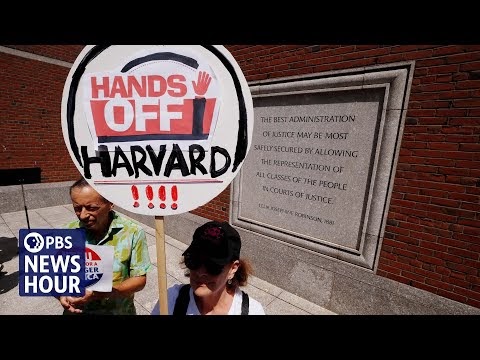
    While Columbia reportedly considers a deal with the Trump administration, Ivy League peer Harvard University has started a court battle to regain billions in federal research funding.

    It also sued the government for attempting to block it from enrolling international students. A federal court temporarily blocked the Trump administration from choking off Harvard’s international enrollment, and the same federal judge has not yet ruled on the legality of the government’s freezing of Harvard’s grants and contracts.

    However, the judge appeared skeptical of the government’s position at Monday’s hearing.

    Source link

  • Why stories still matter in a fast-moving world

    Why stories still matter in a fast-moving world

    Key points:

    Seventeen years after Suzanne Collins first introduced us to The Hunger Games, the world is still captivated by Panem. The latest installment, Sunrise on the Reaping, dives into Haymitch’s backstory and has been called a “propulsive and heart-wrenching addition” to the series by The New York Times. For many of us, books like these aren’t just stories–they’re cultural moments.

    I remember reading the original trilogy on my iPad while training for a half-marathon. Katniss’ fight against the Capitol powered me through some of my longest runs. That’s the magic of books: They meet us where we are and carry us somewhere else entirely. They become part of our personal history, woven into our memories and milestones.

    But the power of books goes far beyond personal nostalgia. When a major title drops, it’s not just a release date–it’s a shared experience. Readers rush to get their hands on it. Social media lights up with reactions. Libraries field waitlists. These moments remind us why books matter. They connect us, challenge us, and inspire us.

    This fall, we’re about to experience two more of these moments. On October 21, Diary of a Wimpy Kid: Partypooper hits shelves. Jeff Kinney’s beloved series has become a rite of passage for young readers, and this latest installment–centered around Greg Heffley’s attempt to throw himself the ultimate birthday bash–is already generating buzz. It’s funny, relatable, and perfectly timed for a generation that’s grown up with Greg’s awkward, hilarious adventures.

    Just a few weeks later, on November 11, Dog Man: Big Jim Believes arrives. Dav Pilkey’s Dog Man series has redefined what it means to be a children’s book phenomenon. With its blend of humor, heart, and comic-style storytelling, Dog Man has helped countless kids fall in love with reading. This new title promises to be no different, offering a story about belief, friendship, and finding strength within.

    These books aren’t just for kids–they’re cultural touchstones. They bring generations together. Parents read them with their children. Teachers use them to spark classroom discussions. Librarians build displays around them. And kids? They devour them and talk about them with the kind of passion usually reserved for blockbuster movies or viral games.

    And yes, there’s a business side to books. Pricing, distribution, marketing strategies–they all matter. Behind every book on a shelf is a network of people working to make that moment possible. Publishers, authors, illustrators, binders, warehouse teams, sales reps, marketers, and more. It’s easy to forget that when you’re holding a finished book, but every title is the result of countless decisions, collaborations, and passions.

    In a world dominated by screens, short-form content, and constant notifications, books offer something different. They ask us to slow down. To focus. To imagine. To empathize. And that’s more important than ever.

    Literacy isn’t just about reading words on a page–it’s about understanding the world. It’s about critical thinking, emotional intelligence, and the ability to engage with complex ideas. Books help build those skills. They give kids the tools to navigate life, not just school.

    Because in a world that’s constantly changing, books remain one of our most powerful tools for understanding it–and each other. The world needs stories. And stories need us.

    Britten Follett
    Latest posts by Britten Follett (see all)

    Source link