Tag: Nominees

  • Top takeaways from OCR nominee’s Senate confirmation hearing

    Top takeaways from OCR nominee’s Senate confirmation hearing

    This audio is auto-generated. Please let us know if you have feedback.

    The U.S. Department of Education’s Office for Civil Rights is undergoing a slew of changes, including a significantly increased caseload after the Trump administration let go of hundreds of its employees. With the nomination of Kimberly Richey to fill the role of assistant secretary for civil rights, it’s likely the office tasked with enforcing equal educational access will shift even more.

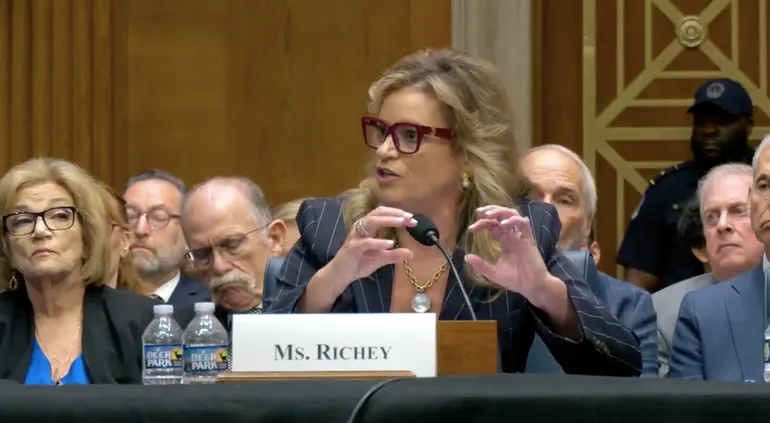
    Right now, attorneys are juggling on average 115 cases, according to Sen. Patty Murray, D-Wash., who shared the number with witnesses at a Thursday nomination hearing held by the Senate’s Health, Education Labor and Pensions Committee. 

    Prior to the March layoffs that resulted in the shuttering of seven out of 12 OCR offices nationwide, attorneys tasked with protecting the civil rights of students and educators had about 42 cases on their plate. That caseload was characterized as “untenable” by the former assistant secretary for civil rights, Catherine Lhamon, and had prompted former U.S. Education Secretary Miguel Cardona to advocate for an increase in the office’s funding under the Biden administration.

    Murray said the newer caseload was now “making it difficult for those investigators to meaningfully investigate discrimination and to protect students’ rights.” 

    Thursday’s hearing was held to discuss the nomination of Richey to lead OCR, among nominations of other officials such as Penny Schwinn to be deputy secretary of education. Richey served under the first Trump administration as acting assistant secretary for the Office of Special Education and Rehabilitative Services and then as acting assistant secretary for civil rights.

    Being ‘strategic’ with resources

    When asked by multiple Democratic senators about how she would navigate a backlog of OCR complaints — which exceeds 25,000, said Murray — with half of the office’s former headcount and a budget that would be significantly slashed under President Donald Trump’s FY 26 proposal, Richey said she would have to be “strategic.” 

    “One of the reasons why this role is so important to me is because I will always advocate for OCR to have the resources to do its job,” said Richey. However, she dodged questions about whether OCR had enough resources to do its job under Trump’s first administration.  

    “I think that what that means is that I’m going to have to be really strategic if I’m confirmed, stepping into this role, helping come up with a plan where we can address these challenges,” she said.

    That would include evaluating the current caseload and determining where complaints stand in their investigative timeline. It would also include looking at the current staff distribution and organizational structure of OCR, and helping Secretary of Education Linda McMahon come up with a plan to “ensure that OCR is able to meet its mission and its statutory purpose to prioritize all complaints.”

    Richey said that rather than put certain investigations on pause, as has been the case under the second Trump administration, she would prioritize all complaints that fall at OCR’s footsteps.

    Changes in Title IX enforcement

    Richey raised the eyebrows of some Republican leaders when she said that she would enforce Title IX, the anti-sex discrimination statute, to protect LGTBQ+ students from discrimination based on gender identity and sexual orientation. The Trump administration and Republican leaders have prioritized enforcing the statute to exclude transgender students from women’s and girls’ athletics teams, locker rooms and other facilities. 

    When pressed, however, Richey clarified that she would enforce Title IX to protect LGTBQ+ students in a narrow number of cases, related to different treatment, bullying and harassment. 

    “We would also look at the relevance of sex in our cases,” Richey said. “Sex is relevant in regards to restrooms, and sex is relevant in regards to locker rooms and sex is relevant in regards to athletics.” 

    The Biden administration’s interpretation of Title IX following the Supreme Court’s decision in Bostock v. Clayton County protected LGTBQ+ students, including transgender students, on athletic teams in some cases. It prohibited blanket bans of transgender students from athletics.

    “That is not what we did under President Trump’s first term, and that is not what we will do under President Trump’s second term,” she said. 

    Source link

  • 3 takeaways from OCR nominee’s Senate confirmation hearing

    3 takeaways from OCR nominee’s Senate confirmation hearing

    This audio is auto-generated. Please let us know if you have feedback.

    The U.S. Department of Education’s Office for Civil Rights is undergoing a slew of changes, including a significantly increased caseload after the Trump administration let go of hundreds of its employees. With the nomination of Kimberly Richey to fill the role of assistant secretary for civil rights, it’s likely the office tasked with enforcing equal educational access will shift even more.

    Right now, attorneys are juggling on average 115 cases, according to Sen. Patty Murray, D-Wash., who shared the number with witnesses at a Thursday nomination hearing held by the Senate’s Health, Education Labor and Pensions Committee. 

    Prior to the March layoffs that resulted in the shuttering of seven out of 12 OCR offices nationwide, attorneys tasked with protecting the civil rights of students and educators had about 42 cases on their plate. That caseload was characterized as “untenable” by the former assistant secretary for civil rights, Catherine Lhamon, and had prompted former U.S. Education Secretary Miguel Cardona to advocate for an increase in the office’s funding under the Biden administration.

    Murray said the newer caseload was now “making it difficult for those investigators to meaningfully investigate discrimination and to protect students’ rights.” 

    Thursday’s hearing was held to discuss the nomination of Richey to lead OCR, among nominations of other officials such as Penny Schwinn to be deputy secretary of education. Richey served under the first Trump administration as acting assistant secretary for the Office of Special Education and Rehabilitative Services and then as acting assistant secretary for civil rights.

    Being ‘strategic’ with resources

    When asked by multiple Democratic senators about how she would navigate a backlog of OCR complaints — which exceeds 25,000, said Murray — with half of the office’s former headcount and a budget that would be significantly slashed under President Donald Trump’s FY 26 proposal, Richey said she would have to be “strategic.” 

    “One of the reasons why this role is so important to me is because I will always advocate for OCR to have the resources to do its job,” said Richey. However, she dodged questions about whether OCR, under Trump’s first administration, had enough resources to do its job.  

    “I think that what that means is that I’m going to have to be really strategic if I’m confirmed, stepping into this role, helping come up with a plan where we can address these challenges,” she said.

    That would include evaluating the current caseload and determining where complaints stand in their investigative timeline. It would also include looking at the current staff distribution and organizational structure of OCR, and helping Secretary of Education Linda McMahon come up with a plan to “ensure that OCR is able to meet its mission and its statutory purpose to prioritize all complaints.”

    Richey said that rather than put certain investigations on pause, as has been the case under the second Trump administration, she would prioritize all complaints that fall at OCR’s footsteps.

    Changes in Title IX enforcement

    Richey raised the eyebrows of some Republican leaders when she said that she would enforce Title IX, the anti-sex discrimination statute, to protect LGTBQ+ students from discrimination based on gender identity and sexual orientation. The Trump administration and Republican leaders have prioritized enforcing the statute to exclude transgender students from women’s and girls’ athletics teams, locker rooms and other facilities. 

    When pressed, however, Richey clarified that she would enforce Title IX to protect LGTBQ+ students in a narrow number of cases, related to different treatment, bullying and harassment. 

    “We would also look at the relevance of sex in our cases,” Richey said. “Sex is relevant in regards to restrooms, and sex is relevant in regards to locker rooms and sex is relevant in regards to athletics.” 

    The Biden administration’s interpretation of Title IX following the Supreme Court’s decision in Bostock v. Clayton County protected LGTBQ+ students, including transgender students, on athletic teams in some cases. It prohibited blanket bans of transgender students from athletics.

    “That is not what we did under President Trump’s first term, and that is not what we will do under President Trump’s second term,” she said. 

    Source link

  • Julie Su’s Confirmation for DOL Secretary Uncertain as Senator Manchin Seeks Alternative Nominees

    Julie Su’s Confirmation for DOL Secretary Uncertain as Senator Manchin Seeks Alternative Nominees

    In the latest development on Julie Su’s contentious nomination for secretary of the Department of Labor (DOL), Sen. Joe Manchin (D-WV) appears unlikely to vote in favor of Su when her nomination reaches a floor vote in the Senate. Recent news reported that Manchin may be seeking alternative candidates for the position, though no names have been publicly revealed at this time. Given the current 51-49 Democratic majority in the Senate, however, Manchin’s potential opposition means Democrats cannot afford to lose any additional support for the nomination.

    The odds may be further stacked against Su as Sens. Krysten Sinema (I-AZ) and Jon Tester (D-MT) have yet to reveal whether they will support Su’s nomination. Although Manchin, Sinema and Tester all caucus with Democrats, they face reelection in 2024 in Republican-leaning states, leaving them in a precarious position as Republicans are seemingly united in opposing Su.

    Nomination Hearing and Committee Vote 

    On April 19, the Senate Health, Education, Labor, and Pensions (HELP) Committee held a hearing on Su’s nomination to serve as secretary of labor. During the hearing, Republicans and Democrats discussed Su’s performance as the secretary of California’s Labor and Workforce Development Agency (LWDA), including her involvement in the agency’s handling of COVID-19-related unemployment insurance payments. Republicans on the committee pointed to the widespread COVID-19 unemployment insurance (UI) fraud paid out by the state. On the other side of the aisle, Democrats defended Su’s record. With regard to the UI fraud, Democrats held that California’s statistics were low in comparison to other states.

    The hearing also focused on several key labor and employment issues that Su will work on as secretary of labor. On the topic of independent contractor classification, Republicans again focused on Su’s work at the LWDA, calling attention to her role in California’s Assembly Bill 5 law. The law establishes an ABC test, which is a three-pronged test used to classify workers as either employees or independent contractors. Republicans expressed concerns over whether Su would try to implement an ABC test through DOL regulations. In response, Democrats clarified that the ABC test is not included in the DOL’s new proposed rulemaking and that the DOL has previously stated that it lacks the legal authority to implement this test for classifying independent contractors.

    Another issue area raised by Republicans was that of joint employment. Although her support for the joint employment standard was questioned, Ranking Member Bill Cassidy (R-LA) testified that Su has committed to not pursue changes to the joint employer standard if she is confirmed. Su said she understands the importance of the franchising model, stating that there is no plan currently on DOL’s fall or upcoming spring regulatory agenda to change the standard. Notably, she did not say whether there would be a rulemaking on the joint employer issue after the upcoming spring regulatory agenda.

    A week after the hearing, the Senate HELP Committee voted to move Julie Su’s nomination to serve as secretary of labor out of committee and to a full Senate floor vote. The committee vote was divided along party lines, with 11 Democrats voting in favor and 10 Republicans voting against her nomination, foreshadowing the trouble she may face to be confirmed by the full Senate.

    Next Steps 

    Given Manchin’s likely opposition and the narrowly divided Senate, Su’s confirmation as secretary of labor by the full Senate is still uncertain. If Sinema or Tester also commits to opposing Su, Su will likely not have the votes to be confirmed. As a result, Senate Majority Leader Chuck Schumer (D-NY) has yet to announce when the vote on Su’s nomination will hit the Senate floor.

    In the meantime, Su will continue to serve as the acting secretary of labor in the absence of a person confirmed into that position. As a reminder, there are no limitations on the functions of an acting secretary, leaving Su with full authority over the DOL while her nomination is pending. That being said, anticipated rulemakings from DOL, such as the FLSA overtime rule and the independent contractor classification rule, may be held back from publication as a result of Su’s drawn-out nomination process.

    CUPA-HR will keep members apprised of any major personnel or regulatory updates from DOL.

    The post Julie Su’s Confirmation for DOL Secretary Uncertain as Senator Manchin Seeks Alternative Nominees appeared first on CUPA-HR.

    Source link