Jason E. Lane is one of the founders of the Cross-Border Education Research Team, which has been monitoring the transnational education (TNE) sector since 2010. According to its data, the United States is the top player – it has 97 overseas campuses. In comparison, Canada fields just eight.
Opening a satellite location is not for the faint of heart. TNE often requires significant financial investments, which can evaporate if the school fails to attract students or runs into political trouble in the host country.
“There are a range of challenges,” Lane said. “These include maintaining the quality of teaching and offering the types of educational experiences that are available on the main campus.”
Some top American schools, including Harvard and Princeton, have declined to pursue the TNE model, instead relying on partnerships to build their international profiles.
While America remains the leader, Australia, with a population of just 27 million people, punches far above its weight, with 24 satellite campuses.
“Australia has a long history of being internationally engaged,” Lane said. “They looked at their own slowly growing population base and decided to expand overseas. It’s part of a longer term strategy of internationalisation.”
There are a range of challenges… These include maintaining the quality of teaching and offering the types of educational experiences that are available on the main campus Jason E. Lane, Cross-Border Research Team
Recently, some universities have backtracked on their commitment to foreign campuses. Last year, Texas A&M University announced that it was closing its 20-year-old campus in Qatar to focus on its core work in the United States. Board chair Bill Mahomes said the school “did not necessarily need a campus infrastructure 8,000 miles away to support education and research collaboration”.
In August, the University of Calgary shuttered its Qatar site after providing training to local learners there for many years. It provided no reason for the decision and did not respond to a request for more information.
For David Robinson, the executive director of the Canadian Association of University Teachers, the answer is clear: “In the end, as Calgary’s experience shows, I think branch campuses have largely turned out to be a failed business model.”
Robinson said the association had “for many years” raised concerns about institutions setting up campuses in parts of the world where academic freedom might not be upheld or respected in the same way as it would in Canada.
Academic freedom worries are also prevalent in the US, Lane told The PIE News. “A lot of US campuses have gotten into establishing foreign campuses while wanting guarantees of academic freedom. But those countries may have different definitions of academic freedom.”
Overseas campuses serve a wide range of students. In some cases, especially in the Middle East, satellites enrol only local or regional learners.
Queen’s University in Kingston, Ontario, has had a site at a castle in England for 30 years; many of the students attending are on a semester or year abroad from the Canadian campus.
Others leverage their overseas satellites to attract attendees from across the globe. Webster University, based in St. Louis, Missouri, has operations in several locations, including Geneva.
It offers a seamless transition between taking courses there and at the US campus. The Swiss school draws students from many countries; diverse classes prepare students to work with people from a wide variety of backgrounds.
New campuses are now reflecting shifts in the global geopolitical alignment, Lane says. After Hungary tilted to the right and fell into the Russia-China orbit, Fudan University of Shanghai opened a satellite in that country.
With its growing population and improving economic development, Africa is increasingly viewed as a potential market. Currently, universities from the United States, United Kingdom, France and Netherlands have satellites on the African continent.
For the first five years of children’s lives, many families are experiencing child care challenges — which have been at the center of discussions among the NC Task Force on Child Care and Early Education since Gov. Josh Stein established the group in March.
But gaps in child care do not disappear once children start kindergarten. Finding affordable, high-quality child care solutions for school-age children should be part of the state’s continuum of care, advocates and providers told the task force Monday.
“The parents I work with don’t experience child care as a 0 to 5 situation,” said Beth Messersmith, task force member and campaign director of MomsRising’s North Carolina chapter. “They experience it as a 0 to 12 situation, or older.”
Many families need care before and after the school day and during the summer months in order to work and keep students safe and engaged. However, four in five students in North Carolina do not have access to the out-of-school care they need, according to a report from the national Afterschool Alliance.
Students, including young children, are instead spending time unsupervised. About 3% of K-5 students, 11% of middle school students, and 34% of high school students spend an average of 5.7 hours without adult supervision per week, according to the same report.
Providers shared their struggles to serve children despite high demand and the benefits children, families, and businesses see when out-of-school care is accessible. After-school programs face many of the same challenges as child care programs. And some child care programs serving children before kindergarten also serve school-age children when school is out of session.
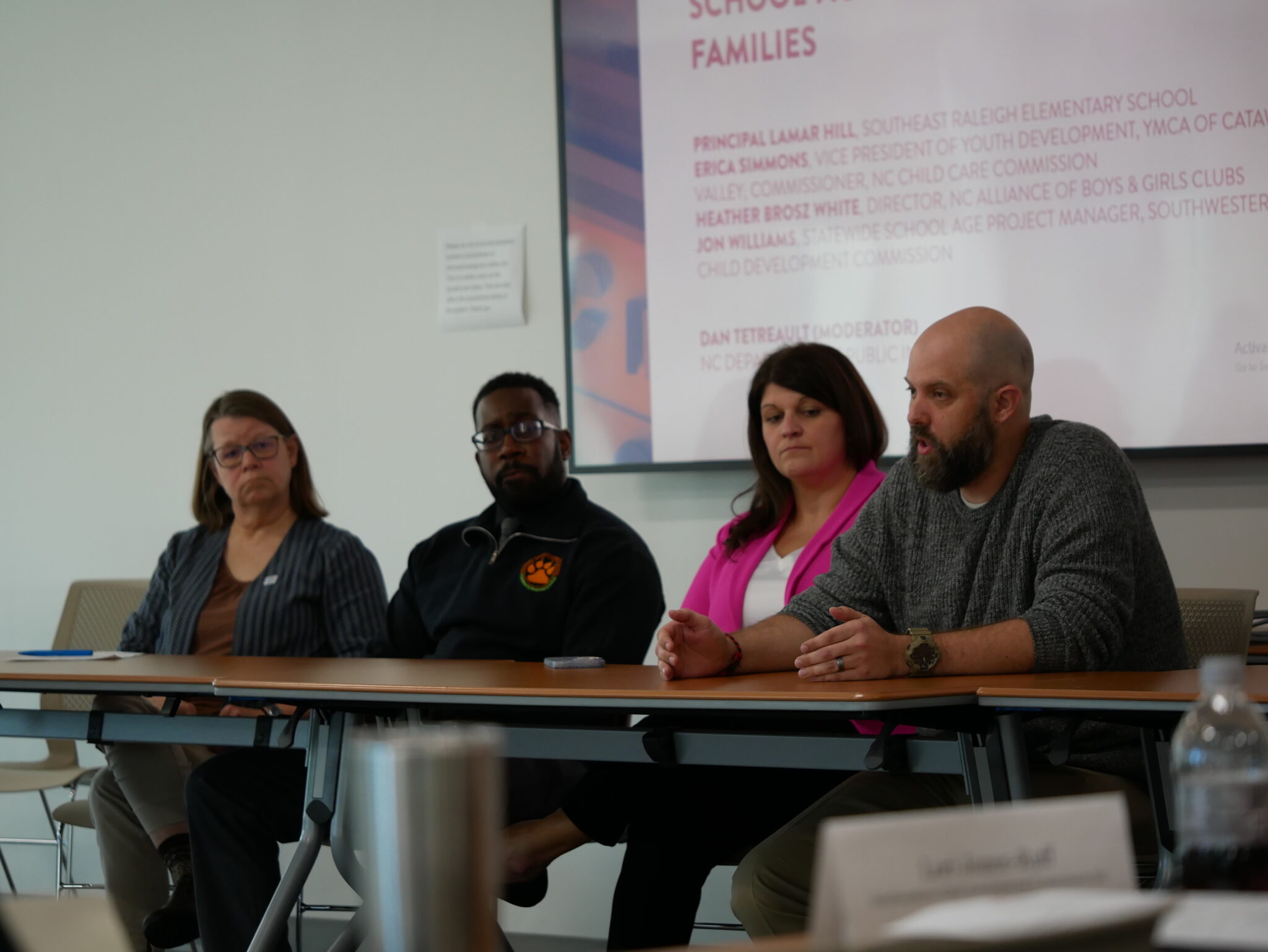
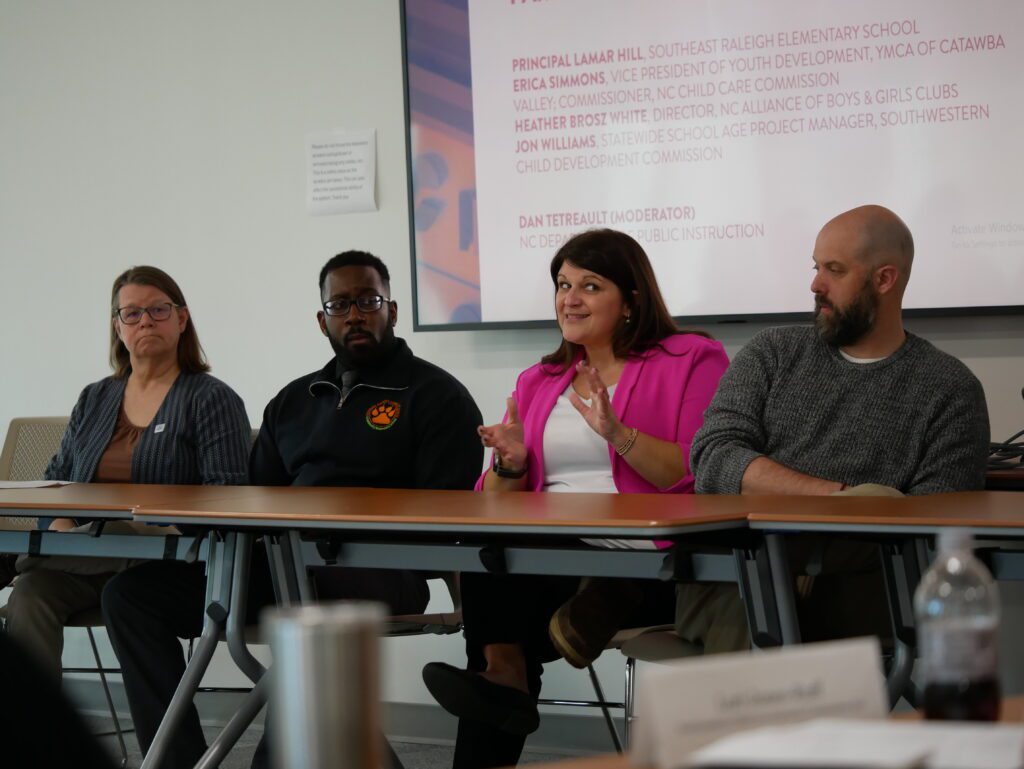
Erica Simmons, vice president of youth development at YMCA of Catawba Valley, shares her programs’ reach and barriers to that reach. (Liz Bell/EdNC)
Families need care that works with their schedules and engages students in activities that support them academically and socially, said Elizabeth Anderson, executive director of the North Carolina Center for Afterschool Programs, a nonprofit under the Public School Forum of North Carolina. That requires funding, workforce supports, transportation, and creative partnerships, Anderson and a panel of providers said.
“The more we can create a spectrum of opportunities for birth through grade 12, the more that children and families in our state are going to recognize the positive economic impacts of those investments,” Anderson said.
Report due in December on child care solutions ahead of short session
The governor’s task force will release a report by the end of December with recommendations on how the state should expand access to high-quality, affordable child care. Stein formed the group earlier this year as pandemic-era child care funding ran out and advocates across the state and country called for consistent public investment to meet families’ needs.
The state legislature did not allocate new funding for child care this year and did not pass a new comprehensive budget. Some new funding, though lower than advocates’ and state officials’ requests, was included in budget proposals from Stein’s office and the House and Senate, but those proposals were not ultimately passed.
The main child care legislation that was passed made regulatory changes to loosen staffing requirements and allow providers to serve more children in classrooms with appropriate space and teacher-to-child ratios.
The task force will meet again in February, though a date is not yet set. Ahead of next year’s short session, members on Monday discussed what role the group should play in moving policy solutions forward, including six recommendations in the group’s interim report released in June:
Set a statewide child care subsidy reimbursement rate floor.
Develop approaches to offer non-salary benefits to child care professionals.
Explore partnerships with the University of North Carolina System, N.C. Community Colleges System, and K-12 public school systems to increase access to child care for public employees and students.
Explore subsidized or free child care for child care teachers.
Link existing workforce compensation and support programs for early childhood professionals into a cohesive set of supports.
Explore the creation of a child care endowment to fund child care needs.
As the state faces many funding requests, federal funding uncertainty, and slim tax revenue, members said more legislators need to be aware of the state’s child care crisis and why it’s relevant to the state’s economy and future.
“Maybe we have some more work to do around actually educating and engaging members of the General Assembly to get this on their radar and build more champions,” said Susan Gale Perry, CEO of Child Care Aware of America and task force member.
Funding to address issues of access, quality, and affordability is needed, members said, and considering existing funding streams rather than new ones might be more politically feasible in the short term.
“Certain proposals about, ‘Let’s just go raise taxes,’ are probably not going to be something that is going to get across the aisle agreement, but it does create the opportunity to looking at areas where tax rates are already set, or certain revenue streams are already existing,” said Mary Elizabeth Wilson, task force member and the Department of Commerce’s chief of staff and general counsel.
Mary Elizabeth Wilson, task force member and the Department of Commerce’s chief of staff and general counsel, shares considerations for 2026. (Liz Bell/EdNC)
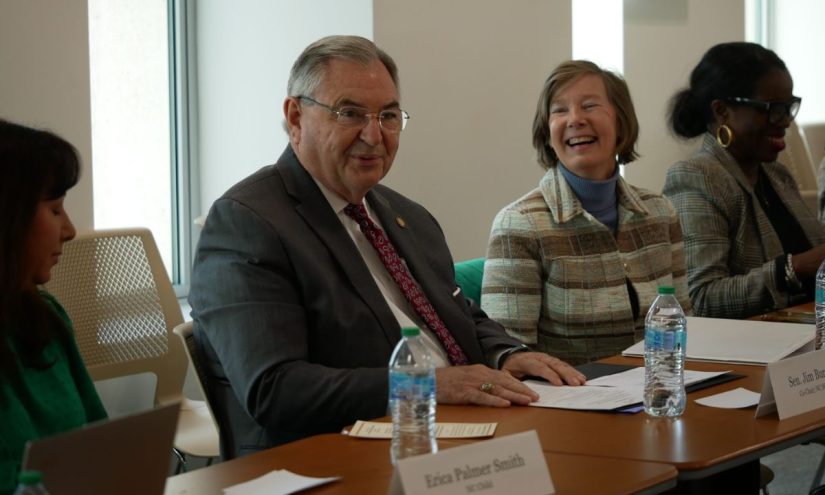
Sen. Jim Burgin, R-Harnett, who chairs the task force along with Lt. Gov. Rachel Hunt, said he and other legislators will be introducing legislation that would double the tax rates on sports gambling.
“If it’s for the children, everybody needs to support it,” Burgin said. “And I don’t believe in gambling … I’m doing it because we need the money.”
Child care fixes would also increase tax revenue, said Erica Palmer-Smith, executive director of nonprofit NC Child and task force member.
“(The generated revenue) would more than cover the overall cost that we would need to put in in the long run to fix the child care system,” Smith said.
‘The gap between 3 and 6 and between May and August’
Many families either do not have an after-school program nearby, do not have transportation to programs, or cannot afford programs, Anderson said in a presentation to the group Monday.
In 2025, 188,295 children participated in after-school programs, but 664,362 additional children would have if they had access, according to the presentation.
Programs are funded through a mix of private grant funding, public funding, and parent tuition. The two biggest funding sources are from the federal government: the Child Care Development Fund, which funds child care subsidies for young children and school-age children up through 12 years old, and 21st Century Community Learning Centers through the Department of Public Instruction.
After-school programs exist in all different types of facilities — community-based organizations, schools, faith-based organizations, and child care centers and home-based programs. Anderson described these programs as “folks stepping in to fill the gap between 3 and 6 and between May and August.”
Students benefit when they access out-of-school programs, she said. In the case of the 21st Century Community Learning Centers, 72% improved their attendance in the 2023-24 school year, 75% of students had decreased suspensions, and 90% improved their overall engagement in school.
Elizabeth Anderson, executive director of the North Carolina Center for Afterschool Programs, provides an overview of the demand for school-age care across the state. (Liz Bell/EdNC)
Anderson said the skills employers are seeking align with those that children are gaining from after-school programs, like problem-solving, teamwork and collaboration, communication, and leadership.
“We know that our after-school programs are an important place where children get to interact with one another and interact with mentors and positive adult figures that help them build these skills, which ultimately help them to become more successful, independent earners in the future,” she said.
Like child care programs in the early years, after-school programs not only help children, but allow parents to work. In a survey from the national report, 91% of parents said these programs help them be able to keep their job.
Families face particular challenges in the summer months. A national survey from LendingTree of more than 600 parents found this year that 66% of parents who seek summer care struggle to afford it, and 62% had taken on debt to pay for summer care.
Anderson said more conversations on child care should extend beyond the early childhood period. She pointed to research from the University of California that found educational and occupational attainment improvements were higher when children had access to both early care and education and out-of-school care once they entered school.
“It is something that parents need and want,” she said. “I think that we talk a lot about what happens for children birth to 5, but a child does not turn 5 years old and suddenly not need opportunity.”
Subsidy funding and reform would help, experts say
North Carolina is one of 23 states that does not have state level funding for after-school care, Anderson said. Anderson and panelists said funding is needed to retain teachers, increase access, provide transportation, and help families afford care.
Jon Williams, manager of the statewide School-Age Initiative at the Southwestern Child Development Commission, is focused on increasing the quality of out-of-school care across the state. He said the transient nature of school-age professionals disrupts consistency for children, families, and programs. A burdensome orientation process creates challenges for owners and directors constantly onboarding new people.
Williams said business training for after-school program directors would be helpful. Many have educational backgrounds and lack the business expertise to be successful in a challenging environment.
“They don’t have that financial background that is needed to run a business, and that creates a lot of financial instability,” Williams said. “If they don’t know how to orient or get new staffing in, that creates a huge problem.”
Jon Williams, manager of the NC School Age Initiative at the Southwestern Child Development Commission, says providers need funding and business training to improve the stability and quality of school-age care. (Liz Bell/EdNC)
A policy change that several panelists and task force members raised as a need is to align the eligibility requirements for child care subsidies across age groups. Right now, families who earn less than 200% of the federal poverty line are eligible for child care subsidies when their children are 5 years old or younger. But for school-age children, the threshold lowers: families must make less than 133% of the poverty line.
That disrupts care for families whose children need after-school care going to kindergarten or for families with multiple children of different ages who would prefer to send all of their children to one program.
A statewide subsidy floor, which is one of the policy priorities of the task force, would also help school-age care providers, said Erica Simmons, vice president of youth development at YMCA of Catawba Valley.
The floor would raise the per-child rate that child care programs receive to the state’s average rate. In cases where programs receive more than the average rate, they would continue receiving the same amount.
“(The floor) would make it a little more equitable,” Simmons said.
She said it costs similar amounts to provide care at her licensed programs in rural and urban communities. But the subsidy rates are much lower in rural areas.
“We have the same requirements for staff, we have the same programming requirements,” she said. “There’s no difference in the amount that we spend per program as an organization. However, there is a very big difference in what we are able to capture for subsidy. So there’s a big funding gap.”
Williams said there was a gap of $8,000 for one program just last month between the cost of services and the subsidy reimbursement. Annually, some programs in her network accrue around $100,000 in funding gaps for caring for children through subsidy.
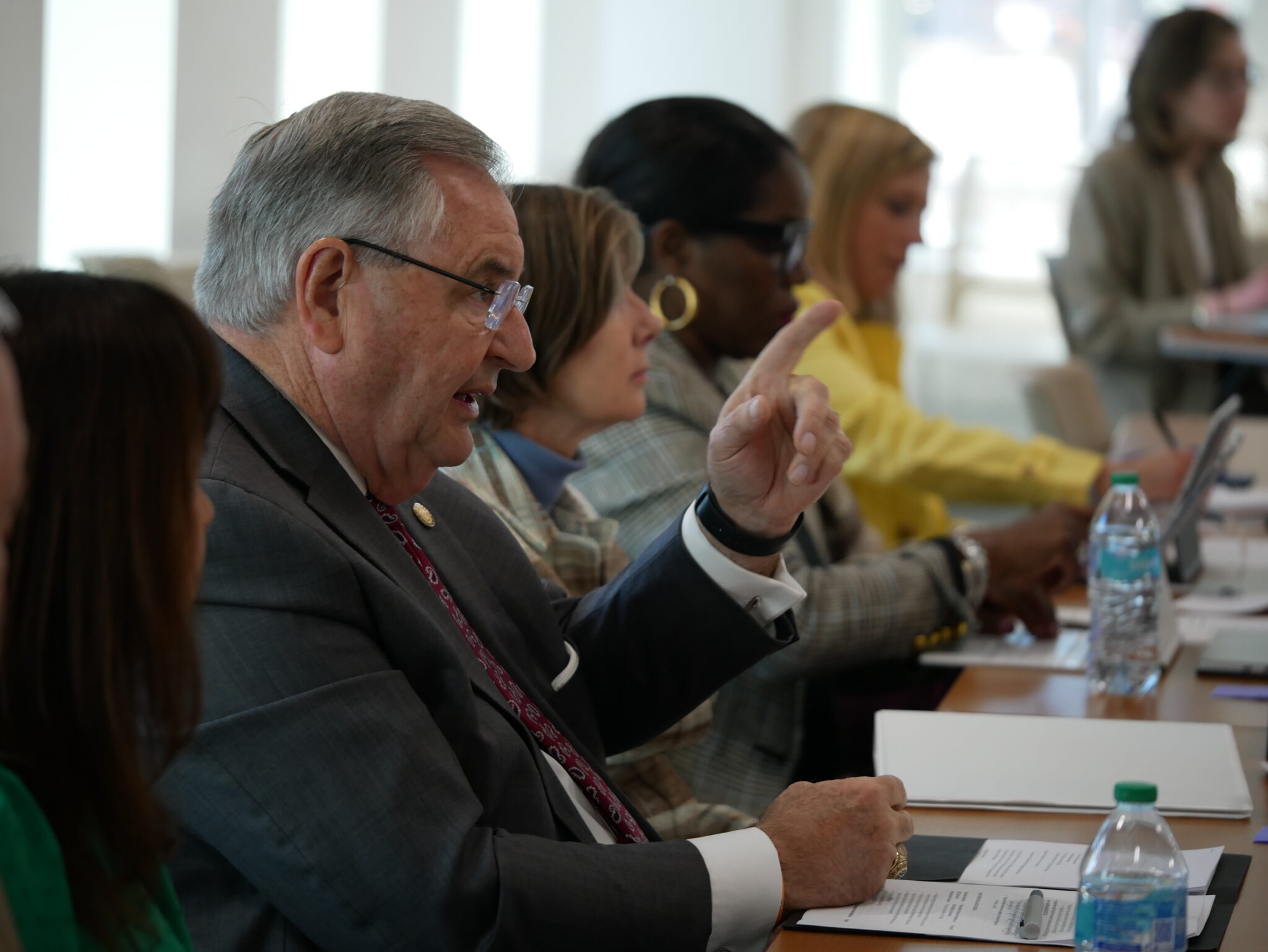
Burgin asks a question of after-school program experts. (Liz Bell/EdNC)
Programs also receive subsidy payments retroactively. Changing the timing of funding could relieve some of the financial burden from programs, Williams said.
“I get paid via subsidy after I provide the services, and that’s a huge problem if I’m already in the red,” he said.
“… When we think about the mental health of our administration and our directors, that just adds fuel to the flame,” Williams said. “And it creates another gap, a 30-day gap, where I can say, ‘I can’t do this anymore,’ and then that care drops off. So we have to rethink how we get that money out in the state. We have to rethink the rates at which they are given.”
Panelists also shared that liability insurance rates have risen drastically. Williams said her program’s rates have increased by 44% over the last year, a trend among child care providers overall. A 2024 survey from the National Association for the Education of Young Children (NAEYC) found 80% of respondents saw their liability insurance costs increase in the last year and 62% reported difficulty finding or affording it.
Updates on care for public employees, workforce supports, and funding models
The task force has been split up into three subgroups which have been studying how to move toward the group’s six recommendations.
Samantha Cole, child care business liaison at the Department of Commerce, said a subgroup focusing on expanding child care access for public employees has looked at models across K-12, community college, and UNC-system schools to create child care solutions.
“We really see that there have been a lot of successes that have come about in these three examples and others, but they’re hyperlocalized,” Cole said. More external communication is needed for other campuses to understand how and why peer institutions are offering child care.
Madhu Vulimiri, senior advisor for health and families policy for Stein’s office, said the subgroup focused on workforce compensation and supports has been studying strategies to ensure early childhood teachers have access to non-salary benefits like health insurance.
They have studied the possibility of adding early childhood teachers as an eligible population for the State Health Plan, subsidizing ACA marketplace premiums through state dollars, and educating early childhood providers about the recently launched Carolina Health Works, which offers options for groups of small businesses.
The group is also studying how existing workforce supports like TEACH scholarships, child care academies, and apprenticeships could be more seamlessly tied together to strengthen the early childhood profession. They have requested that the Hunt Institute create a map to demonstrate what supports are available in what counties.
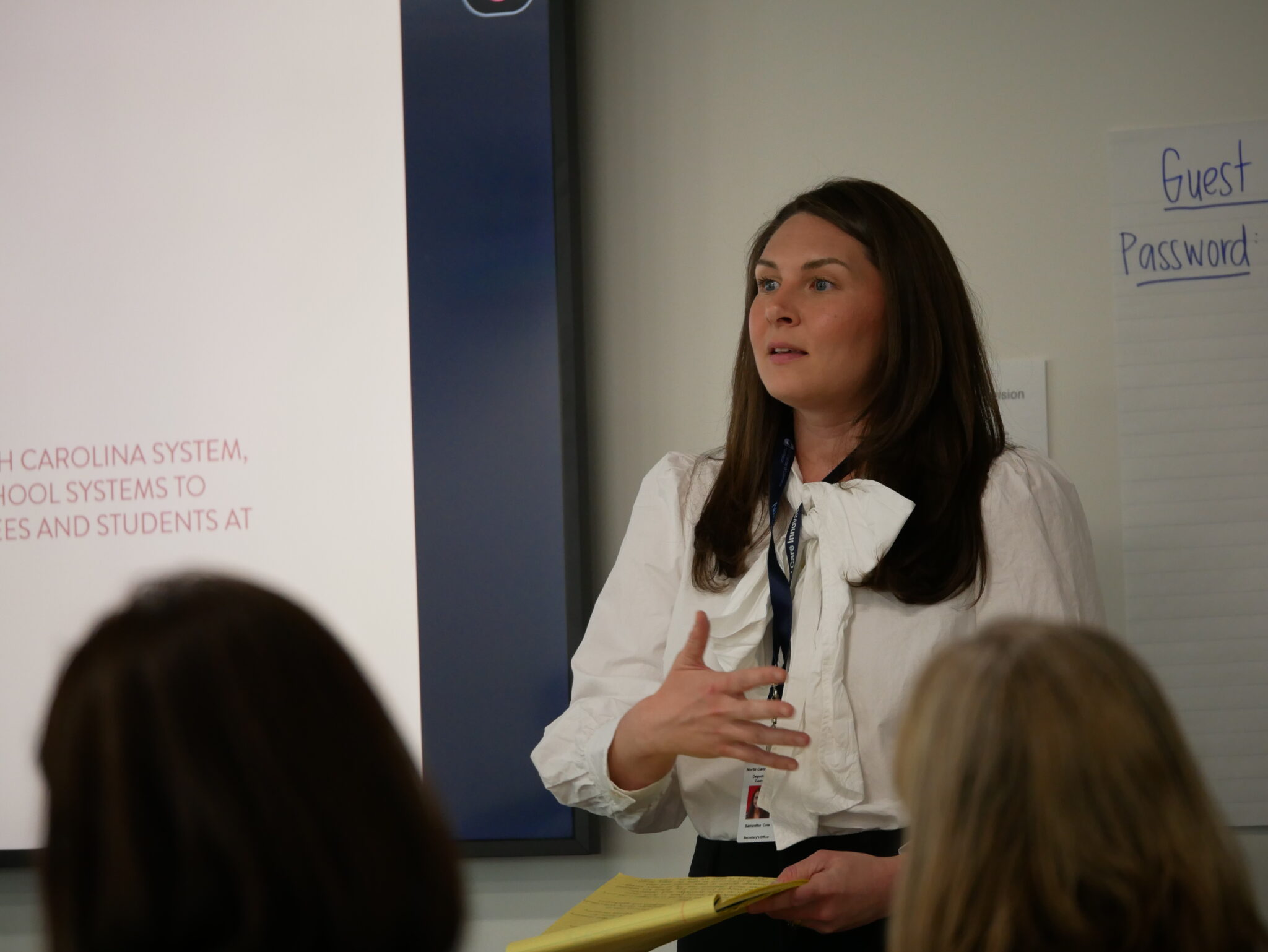
Samantha Cole, child care business liaison at the Department of Commerce, says some schools and colleges across the educational continuum have built models to provide child care specific to their local needs and resources. (Liz Bell/EdNC)
“That will help us see more holistically, where do we have resources and where are there gaps, and help us hopefully target future resources that we might have to expand those statewide,” Vulimiri said.
The third group, which is focused on financing, has been studying several states’ approaches to endowments and other funding mechanisms for child care, including Nebraska, Connecticut, Arizona, Montana, and Washington, D.C. They aim to develop a paper that weighs the options for North Carolina and analyses costs and benefits of each.
Nick began his career with Nottingham Trent University in the UK working in international student recruitment, before going on to a wide range of leadership and consultancy roles in the private sector. He joined The PIE in 2021 and is a key commentator on the current trends in the global higher education industry. He curates content for our PIE Live conferences and is the co-host of the Tales from the Departure Lounge podcast. Get in touch with Nick at [email protected]
North Carolina campus leaders are urging international students and staff to take precautions and promising to protect student privacy amid a surge of Immigration and Customs Enforcement raids in the Raleigh, Durham and Charlotte areas. But some students and employees fear campuses aren’t doing enough to protect them after the U.S. Department of Homeland Security boasted upwards of 250 arrests in and around Charlotte on Wednesday.
North Carolina State University’s executive vice chancellor and provost, Warwick Arden, sent a memo to deans and department heads on Tuesday, offering guidance on how to handle any brushes with federal and state agents in Raleigh.
He stressed that the university follows all federal laws—including the Family Educational Rights and Privacy Act, so administrators shouldn’t release information about students or staff without consulting the Office of General Counsel. He also advised all international students, faculty and staff to “carry evidence of their immigration status with them at all times,” including their passports if they leave the Raleigh area.
“I want to assure you that we are closely monitoring developments that may impact our community,” Arden wrote in the memo.
Duke University administrators sent a similar message to students and staff on Wednesday, recommending that international students and employees carry travel documents “at all times” and promising to safeguard student privacy in accordance with federal law. They also told employees to call Duke police if federal agents requested information or sought to enter nonpublic areas.
Sharon L. Gaber, chancellor of the University of North Carolina at Charlotte, released a memo on Monday, which was updated Thursday, reminding students and employees of the university’s protocols if they encounter anyone who identifies themselves as federal law enforcement. She urged them to call campus police, who “will work with the Office of Legal Affairs to review and verify any subpoenas or warrants that may be presented.”
The University of North Carolina at Chapel Hill’s interim executive vice chancellor and provost, James W. Dean Jr., also put out a message to students and staff on Tuesday, acknowledging “anxiety” caused by the presence of ICE officials and encouraging students and employees “to learn more about their rights and available resources.”
Dean emphasized that the university “complies with all federal and state laws and guidance”; ICE has the right to approach individuals in public spaces, he said, but they need a warrant to access classrooms, offices or dorms.
He also said that while FERPA prevents the university from sharing a student’s class schedule and immigration status, their name, address and phone number are public information unless a student previously told the registrar not to share such details. He directed concerned students to the dean of students for “individual supports and services.”
Fears and Concerns
Nearby raids have heightened fear and anxiety among students.
Rumors have been swirling on social media about U.S. Customs and Border Protection agents and vehicles sighted near North Carolina State and UNC Charlotte, with students and nearby residents alerting each other about unrecognized cars near campus. Ojo Obrero, an ICE activity tracker created by the Latino and immigrant advocacy organization Siembra NC, showed several sightings of CBP agents and vehicles reported within two miles of UNC Charlotte.
“The University has been monitoring available information since Customs and Border Protection arrived in Charlotte and had no confirmed reports of CBP on campus; however, they have been in the area,” Christy Jackson, deputy chief communications officer at UNC Charlotte, said in a statement to Inside Higher Ed.
North Carolina State Police have likewise found “no credible sightings of federal agents on campus” at North Carolina State, Mick Kulikowski, the university’s director of strategic communications and media relations, wrote to Inside Higher Ed.
Despite memos and reassurances, students and staff expressed frustration that campus leaders’ statements didn’t make a stronger commitment to resisting federal immigration enforcement efforts.
A joint statement from the American Association of University Professors chapter at UNC Chapel Hill, UE Local 150 and the student organization transparUNCy slammed their administration’s response as “tepid” and “inadequate to meet the moment of fear and uncertainty.” The groups called on university leaders to “do all in their power to deny CBP access to our community,” because “example after example has shown that CBP is acting above the law.”
Administrators have “instead taken the cowardly approach of saying they’re just going to follow the law,” said Michael Palm, president of the UNC Chapel Hill AAUP chapter. “Everyone that I know who works or studies at UNC understands that we have to protect ourselves, because no one in the administration will help with that.”
Palm said he and other faculty members are allowing fearful students to attend class remotely after some of his colleagues found them “afraid to come to class, afraid to leave home, if they’re on campus, afraid to leave their dorms.”
“There has been a real network effort of mutual care to make sure that those students are not just not punished for missing class or excluded from class but also to make sure that they’re getting food, medicine and other supplies,” he said, “and human contact and support so they don’t feel even more isolated and afraid than they already, understandably, do.”
Members of Gov. Josh Stein’s bipartisan Task Force on Child Care and Early Education got an update on licensed child care closures during their most recent meeting.
“Just in the month of August, we had more than twice as many programs close as open,” said Candace Witherspoon, director of the Division of Child Development and Early Education (DCDEE).
Based on data provided by the N.C. Child Care Resource and Referral (CCR&R) Council in partnership with DCDEE, EdNC previously found that North Carolina lost 5.8% of licensed child care programs during the five years when stabilization grants were used to supplement teacher wages.
That net loss has increased to 6.1% since the end of stabilization grants. Family child care homes (FCCHs) make up 97% of that net loss.
Trends among licensed centers and homes
Since February 2020, the last month of data before the COVID-19 pandemic, the number of licensed FCCHs has decreased by 23%. The number of licensed child care centers has decreased by 0.3%.
The trend for licensed FCCHs since EdNC began tracking the data in June 2023 has been one of consistent net loss, decreasing each quarter.
Graphic by Katie Dukes/EdNC
There were 1,363 FCCHs in February 2020. That number was down to 1,096 in March 2025, the last data before the end of stabilization grants. Now there are 1,052 FCCHs across the state.
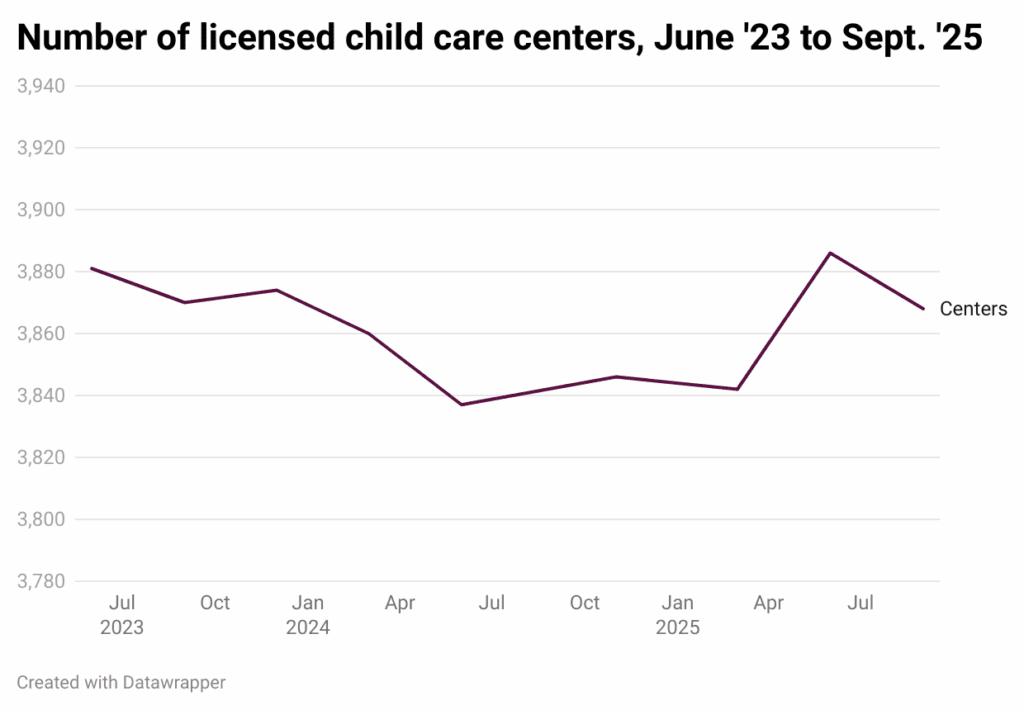
While licensed child care centers have also experienced a net loss since February 2020, the trend has been less linear.
Graphic by Katie Dukes/EdNC
There were 3,879 licensed centers in February 2020. When EdNC began tracking in June 2023, the number was slightly higher at 3,881. From then on it fluctuated, with net gains in some quarters and net losses in others. There are now 3,868 licensed centers statewide.
While the net loss of centers remains small, the effect of a single center closing is huge — especially in rural communities.
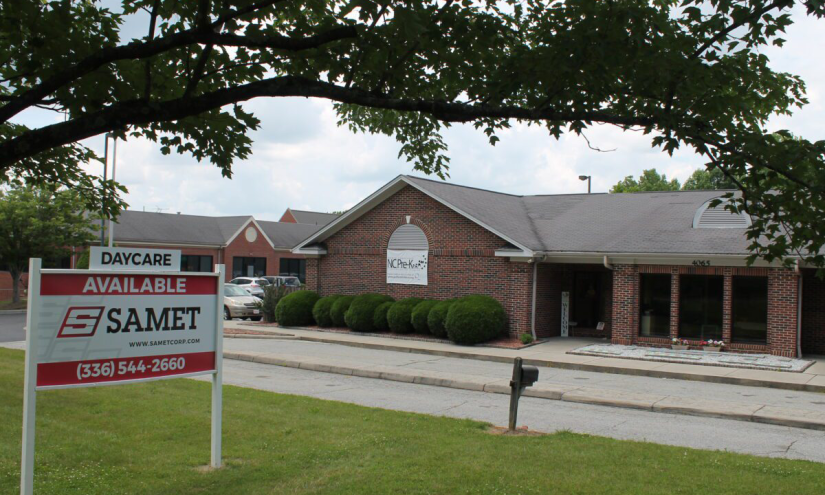
Families on Hatteras Island are learning this firsthand. The only licensed child care program on the island is scheduled to close at the end of the year. With no licensed FCCHs and no clear way to save the sole licensed center, families are trying to figure out how to keep their businesses open and remain in their communities without access to child care.
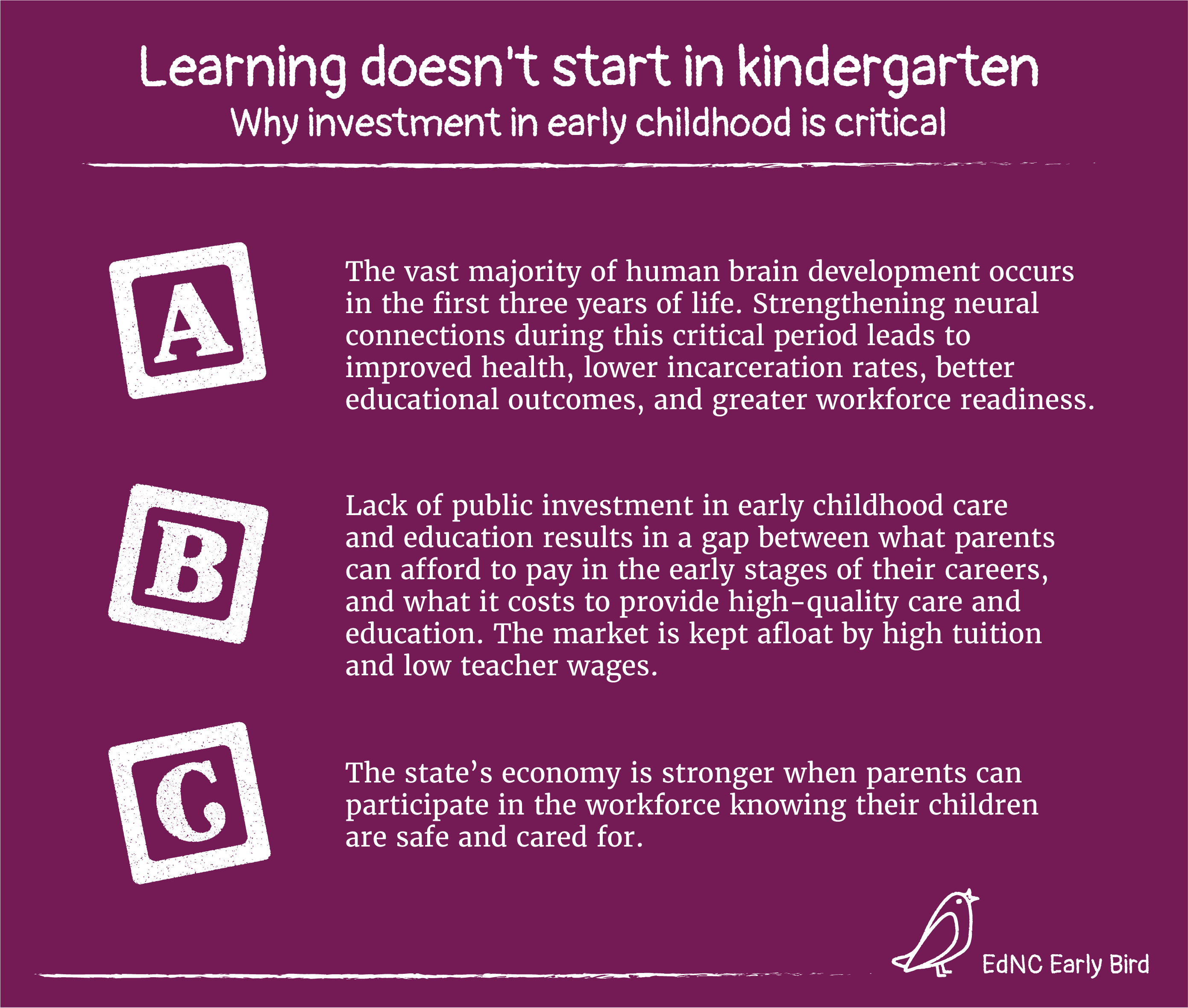
Access to high-quality, affordable early care and learning is crucial to child and family freedom and well-being. It enables parents to participate in the workforce or continue their education without concern for the safety of their children. It also puts North Carolina’s youngest residents on a path to future success.
Graphic by Lanie Sorrow
Trends among subgroups
In addition to monitoring overall licensed child care trends, EdNC zooms in on trends among three subgroups of counties each quarter.
In the counties that make up the area covered by the Dogwood Health Trust (Avery, Buncombe, Burke, Cherokee, Clay, Graham, Haywood, Henderson, Jackson, Macon, Madison, McDowell, Mitchell, Polk, Rutherford, Swain, Transylvania, and Yancey), the number of licensed child care sites is 5% lower than before the pandemic. These counties had a net loss of eight programs from July through September 2025, the largest single-quarter decrease since EdNC began tracking.
In the majority-Black counties (Bertie, Edgecombe, Halifax, Hertford, Northampton, Vance, Warren, and Washington), the number of licensed child care sites remained relatively stable during and after the pandemic. But in the most recent quarter, these counties had a net loss of nine programs, putting them 4% lower than before the pandemic, a sudden and dramatic shift in circumstance. As with the Dogwood counties, this represents the largest single-quarter decrease since EdNC began tracking.
In Robeson and Swain, which both have large Indigenous populations, the number of licensed child care sites had also remained relatively stable during and after the pandemic. In the most recent quarter, for the first time since EdNC began tracking, the number of licensed child care programs in these counties has dipped just below pre-pandemic levels.
Editor’s note: The Dogwood Health Trust supports the work of EdNC.
This audio is auto-generated. Please let us know if you have feedback.
This fall, North Carolina is one of the latest states rolling out a direct admission program that offers high school seniors acceptance to a range of public and private colleges.
Through direct admissions, colleges proactively admit students based on high school academic performance metrics such as GPA, SAT scores, or the amount of credits they received.
Around the start of the school year, more than 62,000 public high school seniors in North Carolina were offered direct admission to select colleges through the NC College Connect Program. Eleven of the University of North Carolina System’s 16 colleges, 29 private colleges and all 58 of the state’s community colleges are participating.
The UNC System first piloted NC College Connect last year in partnership with state agencies, the governor’s office and North Carolina’s community college system. The system launched the program to increase access to higher education in the state, Shun Robertson, UNC’s senior vice president for strategy and policy, said in an email.
For many high school seniors, “the process of applying to college, transferring between institutions, and navigating the maze of financial aid feels like an insurmountable series of hurdles,” said Robertson. “Eliminating these barriers has been a high priority.”
Over the past decade, direct admissions policies have increased the likelihood that in-state students both apply to college and apply to more colleges, said John Lane, vice president for academic affairs at the State Higher Education Executive Officers Association, in an email. In turn, that shift has effectively increased college enrollment, he said.
“Direct admissions policies and programs are impactful because they eliminate the complications and uncertainties of longstanding college application processes,” said Lane. “Instead, students are proactively admitted.”
UNC’s program
The UNC System piloted its direct admissions initiative last fall and notified over 70,000 high school seniors with GPAs of 2.8 or higher of their eligibility for the program, Robertson said.
Those seniors could apply to six UNC institutions and all 58 state community colleges for the 2025-26 academic year by sharing on an online portal their email address, their potential major, and when they’d like to start college, he said.
UNC System officials haven’t been able to review outcome data yet for the pilot program, a spokesperson said. But over 5,000 students responded to the letter during the pilot, the spokesperson said.
The system simplified the program this fall. Students won’t have to formally apply to get into one of the colleges on their list, rather they are provided direct admission to institutions based on their GPA and whether they meet the program’s requirements, Robertson said. Then they just need to submit a program form to accept their admission, he said.
Students accepting admission to community colleges must still fill out applications, but they will already be admitted, according to the initiative’s website.
The program also expanded to include private colleges in the state and added more UNC institutions, said Robertson. The University of North Carolina Chapel Hill, the system’s highly selective flagship, remains excluded from the program.
Some of the private institutions in the program have additional direct admission qualification requirements, such as foreign language course requirements.
UNC System officials hope direct admissions will help the state’s institutions enrollment numbers long term by tapping into a growing college-aged student population.
Like most of the country, North Carolina is expected to see a decline in high school graduates between 2025 and 2030, according to a report last year from the Western Interstate Commission for Higher Education. However, that pool of students is expected to grow again in North Carolina after that year.
WICHE predicts that North Carolina will be one of 12 states, along with the District of Columbia, to have growing numbers of high school students between 2023 and 2041. Overall, North Carolina should see a 6% increase in high school graduates over that period, per WICHE projections.
“As more students and families choose to live in North Carolina, the UNC System is making sure that we serve as a gateway to opportunity for postsecondary education for them and building an educated workforce for our state,” said Robertson.
Research from 2022 on Idaho’s direct admissions program found a 4% to 8% increase in first-time undergraduate enrollment per campus. Those enrollments were driven by an increase in attendance at two-year institutions, the research found.
Direct admissions programs have also been attributed to increases in applications among Black, Latinx, multiracial, first-generation and low-income students, according to a 2023 study by researchers at the University of Illinois Urbana-Champaign and the University of Wisconsin-Madison.
That study also found that students offered direct admissions were more likely to apply to a college or university and twice as likely to apply to an institution that offered them guaranteed acceptance.
This audio is auto-generated. Please let us know if you have feedback.
This fall, North Carolina is one of the latest states rolling out a direct admission program that offers high school seniors acceptance to a range of public and private colleges.
Through direct admissions, colleges proactively admit students based on high school academic performance metrics such as GPA, SAT scores, or the amount of credits they received.
Around the start of the school year, more than 62,000 public high school seniors in North Carolina were offered direct admission to select colleges through the NC College Connect Program. Eleven of the University of North Carolina System’s 16 colleges, 29 private colleges and all 58 of the state’s community colleges are participating.
The UNC System first piloted NC College Connect last year in partnership with state agencies, the governor’s office and North Carolina’s community college system. The system launched the program to increase access to higher education in the state, Shun Robertson, UNC’s senior vice president for strategy and policy, said in an email.
For many high school seniors, “the process of applying to college, transferring between institutions, and navigating the maze of financial aid feels like an insurmountable series of hurdles,” said Robertson. “Eliminating these barriers has been a high priority.”
Over the past decade, direct admissions policies have increased the likelihood that in-state students both apply to college and apply to more colleges, said John Lane, vice president for academic affairs at the State Higher Education Executive Officers Association, in an email. In turn, that shift has effectively increased college enrollment, he said.
“Direct admissions policies and programs are impactful because they eliminate the complications and uncertainties of longstanding college application processes,” said Lane. “Instead, students are proactively admitted.”
UNC’s program
The UNC System piloted its direct admissions initiative last fall and notified over 70,000 high school seniors with GPAs of 2.8 or higher of their eligibility for the program, Robertson said.
Those seniors could apply to six UNC institutions and all 58 state community colleges for the 2025-26 academic year by sharing on an online portal their email address, their potential major, and when they’d like to start college, he said.
UNC System officials haven’t been able to review outcome data yet for the pilot program, a spokesperson said. But over 5,000 students responded to the letter during the pilot, the spokesperson said.
The system simplified the program this fall. Students won’t have to formally apply to get into one of the colleges on their list, rather they are provided direct admission to institutions based on their GPA and whether they meet the program’s requirements, Robertson said. Then they just need to submit a program form to accept their admission, he said.
Students accepting admission to community colleges must still fill out applications, but they will already be admitted, according to the initiative’s website.
The program also expanded to include private colleges in the state and added more UNC institutions, said Robertson. The University of North Carolina Chapel Hill, the system’s highly selective flagship, remains excluded from the program.
Some of the private institutions in the program have additional direct admission qualification requirements, such as foreign language course requirements.
UNC System officials hope direct admissions will help the state’s institutions enrollment numbers long term by tapping into a growing college-aged student population.
Like most of the country, North Carolina is expected to see a decline in high school graduates between 2025 and 2030, according to a report last year from the Western Interstate Commission for Higher Education. However, that pool of students is expected to grow again in North Carolina after that year.
WICHE predicts that North Carolina will be one of 12 states, along with the District of Columbia, to have growing numbers of high school students between 2023 and 2041. Overall, North Carolina should see a 6% increase in high school graduates over that period, per WICHE projections.
“As more students and families choose to live in North Carolina, the UNC System is making sure that we serve as a gateway to opportunity for postsecondary education for them and building an educated workforce for our state,” said Robertson.
Research from 2022 on Idaho’s direct admissions program found a 4% to 8% increase in first-time undergraduate enrollment per campus. Those enrollments were driven by an increase in attendance at two-year institutions, the research found.
Direct admissions programs have also been attributed to increases in applications among Black, Latinx, multiracial, first-generation and low-income students, according to a 2023 study by researchers at the University of Illinois Urbana-Champaign and the University of Wisconsin-Madison.
That study also found that students offered direct admissions were more likely to apply to a college or university and twice as likely to apply to an institution that offered them guaranteed acceptance.
DENTON, Texas, Aug. 28, 2025 — The University of North Texas system confirmed that it has lifted its “pause” on drag performances across its campuses, in response to a demand letter from civil liberties organizations informing the school that it was violating its students’ First Amendment rights.
On March 28, UNT System Chancellor Michael Williams issued a system-wide directive announcing an immediate “pause” on drag performances on campus. Williams’ directive came days after a similar drag ban from the Texas A&M University System was blocked by a federal judge following a lawsuit from the Foundation for Individual Rights and Expression.
On Aug. 14, FIRE and the American Civil Liberties Union (ACLU) of Texas sent a letter informing Williams that his “pause” violated the Constitution for the same reasons.
“UNT cannot justify banning an entire class of protected expression from campus performance venues on the basis that such expression might cause offense,” the letter read. “In the same way that some people may not appreciate UNT allowing students, staff, or visitors to engage in prayer on campus or wear t-shirts supporting rival universities, the fear that such speech may be ‘offensive’ to some is not a constitutionally permissible reason to ban it.”
Yesterday, the UNT Office of General Counsel responded to the FIRE/ACLU-TX letter and announced that in light of a recent decision from the U.S. Court of Appeals for the Fifth Circuit blocking yet another drag ban in Texas — this time at West Texas A&M University — “the UNT System’s temporary pause on drag performances has ended.”
“If campus officials can silence expression simply because some find it ‘offensive,’ no one’s speech will be safe,” said FIRE Strategic Campaigns Counsel Amanda Nordstrom “Today it’s drag shows, but tomorrow it could be political rallies, art exhibits, or even bake sales. From West Texas to North Texas and any direction you look, the message is clear: drag is protected expression, and the show must go on.”
“UNT repealed its drag ban following public backlash and legal pressure,” said ACLU of Texas Attorney Chloe Kempf. “As we and the courts have repeatedly made clear, banning drag is plainly unconstitutional. Drag is a cherished source of joy and liberation for the LGBTQIA+ community — and this reversal ensures students can once again freely express and celebrate their identities on campus.”
The Foundation for Individual Rights and Expression (FIRE) is a nonpartisan, nonprofit organization dedicated to defending and sustaining the individual rights of all Americans to free speech and free thought—the most essential qualities of liberty. FIRE recognizes that colleges and universities play a vital role in preserving free thought within a free society. To this end, we place a special emphasis on defending the individual rights of students and faculty members on our nation’s campuses, including freedom of speech, freedom of association, due process, legal equality, religious liberty, and sanctity of conscience.
CONTACT:
Alex Griswold, Communications Campaign Manager, FIRE: 215-717-3473; [email protected]
Join our zero2eight Substack community for more discussion about the latest news in early care and education. Sign up now.
The U.S. military faced a new threat to national security toward the end of the 20th century. This threat affected the recruitment and retention of our nation’s armed forces, reducing their capacity to defend the denizens of the United States and our interests overseas.
The threat wasn’t the Cold War; it wasn’t tension in the Middle East; and it wasn’t international or domestic terrorism.
The threat was a lack of affordable, accessible, high-quality child care.
The makeup of the armed forces changed following the shift from a national draft to an all-volunteer military after the war in Vietnam. More service members had families in the late 1970s and 1980s — many of them with young children. And many more of those families included two working parents than in previous decades.
The child care crisis faced by the military 40 to 50 years ago was similar to the one civilians face today. More families with working parents increased the demand for child care. Thousands of children languished on waitlists, forcing families to consider forms of supervision that lacked consistent standards for safety, teacher training, student/teacher ratios, and curricula. Teachers were poorly compensated, and turnover was high.
Back then, as now, parents couldn’t afford the fees necessary to cover the costs of addressing these challenges, and limited public investment wasn’t enough to fill the gap.
Graphic by Lanie Sorrow
Because the child care crisis was seen as a threat to the collective future of Americans, elected officials took action. Congress passed the Military Child Care Act of 1989, which put a priority on affordability, accessibility, and quality in child care for service members.
With the end of child care stabilization efforts that were undertaken during the pandemic, North Carolinians now face a similar threat to our own collective future. The military’s approach offers lessons for where we can go from here, in our communities and across our state.
An experiment in universal child care
The Military Child Care Act wasn’t the first time the military had taken the lead on child care. During World War II, women entered the workforce in massive numbers, filling the roles of men who were drafted to serve in the military. This raised the question of who would care for children when both parents were working outside the home to defend American interests.
Congress responded with the Lanham Act of 1940, creating a nationwide, universal child care system to support working families with children through age 12. Federal grants were issued to communities that demonstrated their need for child care related to parents working in the defense industry.
The program distributed $1.4 billion (in 2025 dollars) between 1943 and 1946 to more than 600 communities in 47 states. The grants could be used to build and maintain child care facilities, train and compensate teachers, and provide meals to students.
In his 2017 analysis of the Lanham Act’s outcomes for mothers and children, Chris M. Herbst, of Arizona State University’s School of Public Affairs, found that “the Lanham Act increased maternal employment several years after the program was dismantled.”
An image of Rosie the Riveter from a 1943 issue of the magazine Hygeia (published by the American Medical Association) demonstrating the need for child care.
Herbst also found that “children exposed to the program were more likely to be employed, to have higher earnings, and to be less likely to receive cash assistance as adults.”
One lesson Herbst took from his research was that the Lanham Act was successful because of the broad support it received from parents, advocates for education and women, and employers. He noted: “Each group was committed to its success because something larger was at stake.”
Today’s military-operated child care model
While the Lanham Act was a short-lived national experiment that hasn’t received much study, the military’s child care program since adoption of the Military Child Care Act of 1989 has become a widely acclaimed model for publicly subsidized early care and learning, serving about 200,000 children each year.
Four categories of child care are available through military-operated child care programs: Child Development Centers (CDCs), Family Child Care (FCC), 24/7 Centers, and School Aged Care (SAC). The official military child care website describes each program type:
Child Development Centers (CDCs) — CDCs provide child care services for infants, pretoddlers, toddlers, and preschoolers. They operate Monday through Friday during standard work hours, and depending on the location offer full-day, part-day, and hourly care.
Family Child Care (FCC) — Family child care is provided by qualified child care professionals in their homes. Designed for infants through school agers, each FCC provider determines what care they offer, which may include full-day, part-day, school year, summer camp, 24/7, and extended care.
24/7 Centers — 24/7 Centers provide child care for infants through school age children in a home-like setting during both traditional and non-traditional hours on a regular basis. The program is designed to support watch standers or shift workers who work rotating or non-traditional schedules (i.e., evenings, overnights, and weekends).
School Aged Care (SAC) — School age care is facility-based care for children from the start of kindergarten through the end of the summer after seventh grade. This program type operates Monday through Friday during standard work hours. SAC programs provide both School Year Care and Summer Camp.
Requirements for military-operated child care programs are typically more stringent than state requirements. For one thing, they must be accredited by one of the following: National Association for the Education of Young Children (NAEYC), National Early Childhood Program Accreditation (NECPA), the Council on Accreditation (COA), or the National Accreditation Commission (NAC).
For context, the requirements for licensed child care in North Carolina are relatively stringent compared with other states, but still fall below the requirements for NAEYC accreditation, which is widely recognized as the national standard. Only 110 programs in our state are NAEYC-accredited — many of which are Head Start or military-operated programs — out of about 5,300 total state-licensed programs.
Military-operated child care programs offer families hourly, part-day, full-day, extended, or overnight care, plus afterschool and summer programs.
The maximum rate is on par with the national average for civilian child care in 2023, meaning that almost every family using military-operated child care programs is paying less than the national average for typically higher-quality early care and learning.
The Department of Defense budgeted about $1.8 billion for child care in 2024 — about 0.2% of its $841.4 billion total budget.
Military child care in North Carolina
In addition to military-operated child care programs, service members may be eligible for Military Child Care in Your Neighborhood (MCCYN), a fee assistance program for families who can’t access military-operated child care. MCCYN pays a portion of the cost of enrolling children in early care and learning programs that meet the military’s high-quality standards in their community.
North Carolina is one of 19 locations where military families may be eligible for MCCYN-PLUS, which expands the MCCYN program to child care programs that participate in state or local Quality Rating and Improvement Systems (QRIS) in places where nationally accredited care is not available.
Both programs rely on the availability of high-quality child care in civilian communities. That’s a challenge in North Carolina, which was already facing a child care shortage before the pandemic. Our state has lost almost 6% of licensed child care programs since February 2020, with more expected to close because stabilization grants have ended.
According to the NC Military Affairs Commission, there are 12 military bases and more than 130,000 active-duty military members in North Carolina, giving us the fourth-largest active-duty military population in the nation.
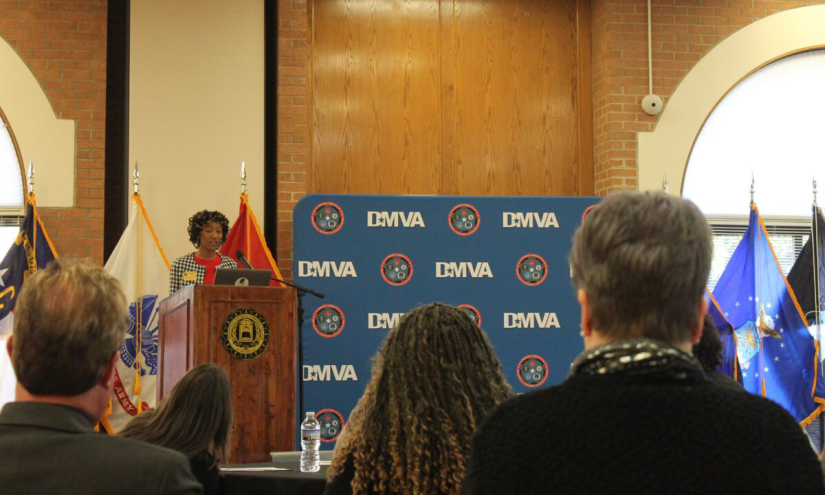
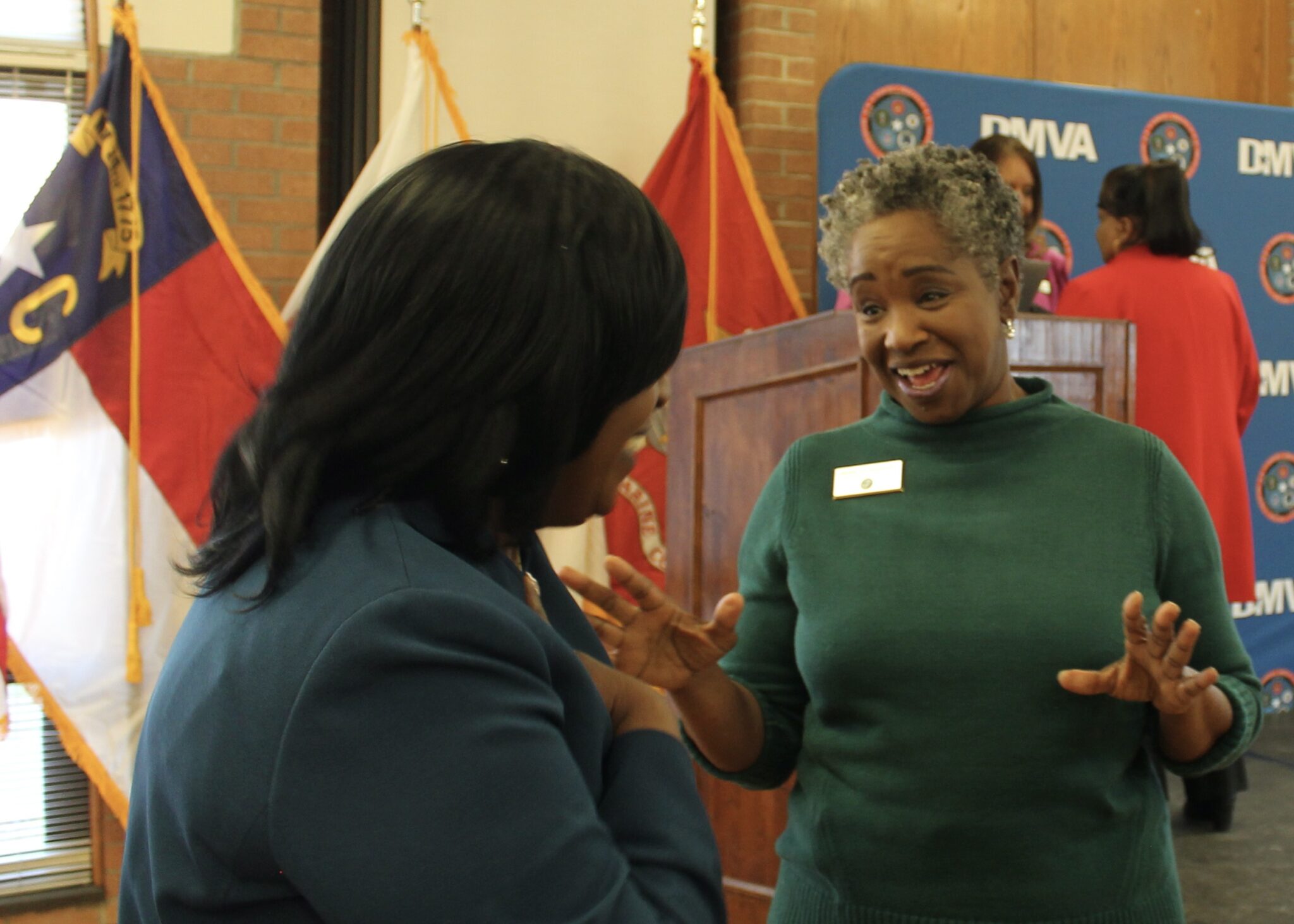
In January 2025, Fayetteville Technical Community College hosted the state’s first N.C. Military Community Childcare Summit, organized by the North Carolina Department of Military and Veteran Affairs (NCDMVA) to discuss the problem that military communities are having with access to community-based child care.
The first N.C. Military Community Childcare Summit in January 2025.( Katie Dukes/EdNC)
The summit culminated in a screening of Take Care, a documentary about North Carolina’s child care crisis produced by the state Department of Health and Human Services and featuring EdNC’s early childhood reporter, Liz Bell.
The issues of spouse resilience and child care are inextricably linked for Angie Mullennix, who works for The Honor Foundation at Fort Bragg, helping members of the U.S. Special Operations Forces (SOF) transition to careers in the private sector after their military service.
Mullennix served in the U.S. Army for four years after high school and has previously worked for the Department of Public Instruction as the state military liaison. Her husband recently retired from the SOF himself. They have two teenage children.
“If you look at the number of military spouses in North Carolina who have degrees and credentials and could be in the workforce, from nurses to lawyers, lots of them are staying at home,” Mullennix said.
“A big reason why about 40% of (military) spouses do not work is because of child care not being available to them,” Mullennix said, noting that lack of child care is also a barrier to workforce participation among the civilian population.
When Mullennix’s children were under the age of 5, she used hourly child care on base, which was available at no cost when her husband was away on assignment.
“You ask any parent in the world, I don’t care who they are, there’s nothing more important than their child’s safety — then their education,” Mullennix said. “And yet, the two things we think are the most important, we put (their providers) at the lowest pay and ask them to do quality care.”
That’s what sets military child care apart from civilian early care and learning for Mullennix: high quality standards and higher pay for early childhood educators, including benefits. She sees lessons in this for North Carolina.
“You gotta pay them to keep them, there’s no secret behind that,” Mullennix said. “If you pay them high, you can also set the standards really high.”
And because workforce participation — and military readiness — is directly tied to the accessibility and affordability of high-quality child care, not investing in it threatens our collective future.
“North Carolina, or any state that doesn’t offer child care, is shooting itself in the foot,” Mullennix said.
Lessons from military child care
Policymakers at every level who are seeking to end the child care crisis can learn much from the military child care model. One report on the topic offers these lessons:
Do not be daunted by the task. It is possible to take a woefully inadequate child care system and dramatically improve it.
Recognize and acknowledge the seriousness of the child care problem and the consequences of inaction.
Improve quality by establishing and enforcing comprehensive standards, assisting providers in becoming accredited, and enhancing provider compensation and training.
Keep parent fees affordable through subsidies.
Expand the availability of all kinds of care by continually assessing unmet need and taking concrete action steps to address it.
Commit the resources necessary to get the job done.
Both agreed these are the right takeaways for policymakers across North Carolina to consider.
Lesson 1: Do not be daunted by the task
Gale Perry said the top lesson for her is: “Start where you are, know that change is possible, and have a goal post in mind.”
She pointed out that the military’s goal wasn’t a fully publicly funded child care system. It was a system that acknowledged Americans’ values around the role of parents in raising young children — and paying for their care and education. But also that their employers and the government “have a role in offsetting that cost, so that we can ensure that child care is quality, and it is stable, and that the families can actually afford it.”
Smith said there was no “silver bullet” when she and her colleagues were tasked with solving the military’s child care crisis in the 1990s — and there isn’t one for the civilian child care crisis today.
We had to redo the standards, we had to look at the workforce, we had to look at the health and safety issues, we had to look at the fees and how we could bring those fees down. We had to look at the infrastructure of all of it. We’ve got to start thinking about the interconnectedness of all of these things if we’re going to be successful in this country.
Smith said people think that because she worked for the secretary of defense, “I could just tell all the bases what to do, and that would magically happen, which is so not true. It wasn’t just like we could give an order and everybody jumped.”
She said you just have to start where you are, and move up.
Lesson 2: Acknowledge the seriousness of the problem and the consequences of inaction
“The military understood very early the link between people getting to work and child care,” Smith said.
As the military shifted away from relying on conscription and became a more welcoming workplace for women, the need for child care became evident. Smith described working on a base where children were routinely left in cars when their parents were unexpectedly called into work.
“So (military leaders) really got the connection to their guys going to work very quickly, and I think that we still haven’t all understood that in this country,” Smith said, though she notes businesses have started making that connection since the pandemic.
“The other thing the military understood was that a pilot is every bit as important as the mechanic who works on the plane, and so they invest in all of their people,” Smith said.
She and her team had to design a program that worked for everyone, or it wouldn’t work for anyone.
Lesson 3: Improve quality
Smith said quality was of critical importance when she was designing the military’s child care system in the 1990s, especially after child abuse and neglect scandals that came to light in the 1980s.
She and her team studied the child care standards of all 50 states and created a set of military standards that fell squarely in the middle. Then they set about training the 22,000 early childhood educators they already had — most of whom were military spouses — to meet those standards.
That was a six-month training program. Then there was an 18-month training to get them to move beyond those standards toward national accreditation. They hired highly qualified trainers to work with educators at each site.
“And if you didn’t do it, guess what? You’re fired!” Smith said.
There was an incentive to participate in the training, beyond keeping their jobs — higher compensation.
“Maybe some were grumpy about it, but we didn’t have to fire people,” Smith said.
North Carolina already has some tools in place to help educators advance their education and improve their compensation, specifically through the WAGE$ and TEACH programs — both of which were highlighted in the report that identified these lessons.
“(The military) realized they had to get serious about quality and quality standards. And I would say that’s a lesson for us now, particularly in a climate that is deregulatory,” Gale Perry said. “And while I’m for sensible regulatory reform, I think we have to be really thoughtful about not wanting stacks of child deaths in child care sitting on a desk waiting to be investigated.”
Lesson 4: Keep parent fees affordable through subsidies
Smith said that while designing the military’s child care program, she and her team figured out that there was no way parents could afford the actual cost of high-quality child care. So they set up a subsidized system that would provide a 50% match — on average — to parents’ fees, paid directly to child care programs.
“We had to, on average, match parent fees dollar-for-dollar, with the higher-income people paying more and the lower-income paying less,” Smith said. “So a major, for example, would pay two-thirds of the cost, and a private would pay one-third, but the average was 50/50.”
Smith pointed out that we’re already subsidizing child care in ways that are hidden — through the public benefits and social programs that early childhood educators often rely on because of low compensation, and through lack of workforce participation.
Lesson 5: Expand the availability of all kinds of care
Gale Perry said the military’s model really stands out to her for its ability to assess unmet needs and take action to improve.
“In the early 2000s when there were the wars in Iraq and Afghanistan, there were a lot of deployments of National Guard and Reserve who did not live on post and did not have access to on-post child care,” Gale Perry said. “That is really when the military got in the business of thinking about, how do we help build capacity and make child care accessible for military families off post?”
That’s when the MCCYN came about, subsidizing high-quality early care and learning in a broader array of settings in the communities where service members live.
Smith said that the Military Child Care Act was originally targeted toward child care centers, but she recalls briefing the assistant secretary of defense on the potential effects of that strategy when they were designing the system:
I remember saying we need to apply all of this to family child care, to school-aged care, to part-day preschools, because if we don’t, all the parents are going to have a demand on these centers that we can’t meet, right? Because if you lower the cost in the centers and you improve the quality, why would somebody go to another place when they get it cheaper and better over here?
She made the case for educators in every setting getting the same access to training and the same level of compensation, because that’s what would work best for everyone.
“Everything applies to everybody,” Smith said. “And I think that was one of the smartest policy decisions we made.”
Lesson 6: Commit the resources necessary to get the job done
“There was this perception that we just had a lot of money and we threw it at” child care, Smith said. But that wasn’t the case.
“When they passed the Military Child Care Act, it didn’t come with an appropriation,” Gale Perry said. “So they had to fight equally hard for the funding, and a lot of the funding actually ended up coming from local base commanders making the decision to invest in child care.”
Now the military submits a budget request to Congress each year, and depends on those appropriations.
For state and local policymakers seeking to solve the civilian child care crisis without public investment, the woman credited with solving the military’s own child care crisis 35 years ago has a message.
“It’s gonna cost. There’s no way it doesn’t cost,” Smith said.
North Carolina is taking bold steps to democratize college access with the expansion of its NC College Connect program, which will offer direct admission to more than 62,000 public high school seniors this fall. The initiative represents a significant shift toward equity-focused admissions practices that prioritize accessibility over traditional application barriers.
The program targets students who complete their junior year with a weighted GPA of 2.8 or higher. By eliminating the often overwhelming application process, NC College Connect removes financial and procedural obstacles that disproportionately affect first-generation college students and those from underrepresented communities.
“NC College Connect represents a fundamental shift in how we approach college admissions in North Carolina,” said Peter Hans, President of the University of North Carolina System. The initiative reflects growing national recognition that traditional admissions processes can perpetuate educational inequities.
Maurice “Mo” Green, State Superintendent of Public Instruction, praised the collaborative nature of the effort.
“When our entire education community works together like this, students win. NC College Connect removes barriers and creates clear pathways to college for thousands of our students,” he said.
The program’s inclusive design addresses systemic challenges that have historically limited college access for students from diverse backgrounds. By providing direct admission letters and eliminating complex application requirements, the initiative particularly benefits students who might otherwise be deterred by navigating multiple institutional processes.
Participating institutions span the full spectrum of North Carolina’s higher education landscape, including UNC System universities, independent colleges and universities, and community colleges. This comprehensive approach ensures students have pathways to various types of post-secondary education that align with their academic goals and financial circumstances.
Dr. Jeff Cox, President of the North Carolina Community College System, highlighted the program’s potential to transform access to affordable education.
“By removing barriers and simplifying the process, we’re helping more students access the life-changing opportunities our community colleges provide—close to home and at a price they can afford,” he said.
Community colleges have long served as crucial entry points for students from diverse socioeconomic backgrounds, offering both career preparation and transfer pathways to four-year institutions. The inclusion of community colleges in NC College Connect recognizes their vital role in democratizing higher education access.
The program’s commitment to equity extends beyond admissions to address affordability concerns through targeted financial aid initiatives. The Next NC Scholarship and NC Need-Based Scholarship specifically support students from households earning $80,000 or less, covering tuition and fees at participating institutions.
Additionally, students attending Elizabeth City State University, Fayetteville State University, University of North Carolina at Pembroke, and Western Carolina University benefit from the NC Promise plan’s $500 per semester tuition rate. These historically Black institutions and regional universities serve particularly diverse student populations, making the affordable tuition structure especially impactful for underrepresented students.
Hope Williams, President of North Carolina Independent Colleges and Universities, noted the unique value proposition of smaller institutions: the personalized attention and specialized programs that can be particularly beneficial for students who might struggle in larger university environments.
The program builds on a successful pilot year that served more than 70,000 students, demonstrating the demand for streamlined college access. The expansion indicates that initial outcomes validated the approach’s effectiveness in connecting students with higher education opportunities.
Students can verify their eligibility through the NCCollegeConnect.com portal or by consulting with high school counselors, ensuring multiple touchpoints for information and support. Eligible seniors will receive official admission letters this fall for the 2026-27 academic year, providing ample time for planning and preparation.
NC College Connect positions North Carolina as a leader in reimagining college admissions to prioritize access and equity. As higher education institutions nationwide grapple with declining enrollment and questions about traditional admissions practices, North Carolina’s comprehensive approach offers a replicable model for other states.
The initiative’s success will likely be measured not just in enrollment numbers, but in its ability to diversify the state’s college-going population and create pathways for students who might otherwise forego higher education. By removing procedural barriers and addressing financial constraints, NC College Connect represents a holistic approach to educational equity that extends well beyond the admissions office.