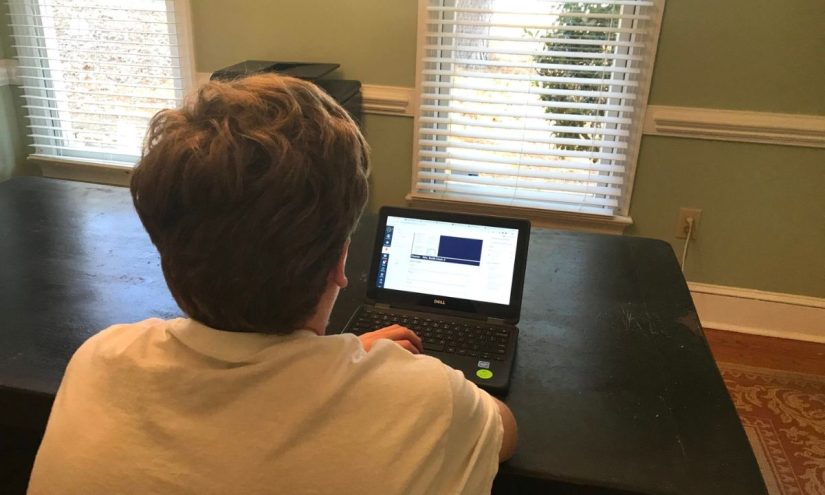
A new Department of Public Instruction (DPI) report says that 100% of traditional public school districts currently have a 1-to-1 digital device-to-student ratio, though many districts are struggling to replace old or damaged devices due to a lack of funding.
Dr. Ashley McBride, a digital learning initiative consultant at DPI, presented the Statewide Trends in Student Digital Learning Access report at the State Board of Education meeting on Wednesday.
The report compiles data on students’ access to digital devices in and out of school, as well as their out-of-school internet access, from 115 school districts and 239 charter, lab, and regional schools. Among those 239 nontraditional schools, 84% had a 1-to-1 digital device-to-student ratio.
The report says that in total, these public school units had 1,190,045 digital devices available for students in 2024-25. Chrome devices make up 90.3% of this fleet; 8.7% were Windows devices, and Apple devices made up 1%.
Students can take less than half of these devices home, as 56% of them must stay on school campuses.
“Together, these findings demonstrate that North Carolina continues to rely heavily on school-issued, portable devices to support both in-school instruction and extended learning opportunities beyond the school day,” the report says.
The report also included findings from a survey on out-of-school devices with responses from families representing 55,082 students.
In this sample, 42% of families said their student uses a school-provided device at home, while a third said their student uses a device owned by the family. Around one in five families reported that their student has access to both family-owned and school-provided devices at home. However, 4% of families reported their student does not have access to a digital device at home.
Families who did not have devices at home said they were too expensive, they chose not to purchase one, or the devices they owned were broken, damaged, or outdated, according to the report.
A survey with 36,365 respondent families found that 93% had consistent and adequate internet access for their students at home. Families with limited or no access to the internet at home said that was due to high costs or the internet connection not being dependable.
Still, those families described several alternatives they use to ensure their students can access the internet, including using the internet at public libraries, hot spots, other people’s homes, school parking lots, among other options.
“My rural county, still one third of it, does not have internet capability. And after Helene, many parts of our community do not have Wi-Fi coverage, nor do they have cell coverage. That’s typical in the western part of the state,” said Board member John Blackburn, who represents the state’s Northwest region. “I just want to remind everybody that there are still points of darkness in the state of North Carolina.”
Beckie Spears, the 2024 Wells Fargo Principal of the Year, said that her rural elementary school had one Chromebook cart per grade level prior to 2020. Now, there’s one in every classroom, she said, but the devices are aging and the district doesn’t “have any ways to replace them.”
“The reality is we have stretched every resource as far as we can, and in Tier 1 counties and Tier 2 counties where local funds are not accessible, this is a real and urgent problem that needs attention from our legislators,” Spears said.
The report says that these findings highlight the importance of school-provided digital devices for students. But since pandemic-era funding from the federal Elementary and Secondary School Emergency Relief Fund (ESSER) and the Emergency Connectivity Funds (ECF) has ended, many schools are struggling to sustain student device programs.
McBride’s presentation said 88 out of the state’s traditional school districts — nearly 77% — as well as 97 charter, lab, and regional schools, don’t have dedicated funds to refresh students’ school-provided digital devices.
“Large portions of the current device fleet have aged beyond expected lifespans, resulting in higher failure rates, declining performance, and reduced reliability for both classroom and at home use,” the report says.
The report says some schools have limited or stopped take-home access for their device fleets because they don’t have inventory to replace them.
According to McBride, prior to ESSER funding, only 16 school districts had a 1-to-1 digital device-to-student ratio.
DPI recommends that the state allocate recurring funding to support student device programs to reduce reliance on short-term federal funding, according to the report. This legislative session, DPI requested $152.6 million in recurring funds for a 1-to-1 device refresh over a four-year period.
The report also recommends providing statewide guidance on devices’ life cycle management, including cost considerations and multiyear budgeting strategies. The department also recommends using data systems to track devices’ age, availability, and take-home capacity, and “exploring how to improve parental participation in reporting on home connectivity and device access.”
For the first five years of children’s lives, many families are experiencing child care challenges — which have been at the center of discussions among the NC Task Force on Child Care and Early Education since Gov. Josh Stein established the group in March.
But gaps in child care do not disappear once children start kindergarten. Finding affordable, high-quality child care solutions for school-age children should be part of the state’s continuum of care, advocates and providers told the task force Monday.
“The parents I work with don’t experience child care as a 0 to 5 situation,” said Beth Messersmith, task force member and campaign director of MomsRising’s North Carolina chapter. “They experience it as a 0 to 12 situation, or older.”
Many families need care before and after the school day and during the summer months in order to work and keep students safe and engaged. However, four in five students in North Carolina do not have access to the out-of-school care they need, according to a report from the national Afterschool Alliance.
Students, including young children, are instead spending time unsupervised. About 3% of K-5 students, 11% of middle school students, and 34% of high school students spend an average of 5.7 hours without adult supervision per week, according to the same report.
Providers shared their struggles to serve children despite high demand and the benefits children, families, and businesses see when out-of-school care is accessible. After-school programs face many of the same challenges as child care programs. And some child care programs serving children before kindergarten also serve school-age children when school is out of session.
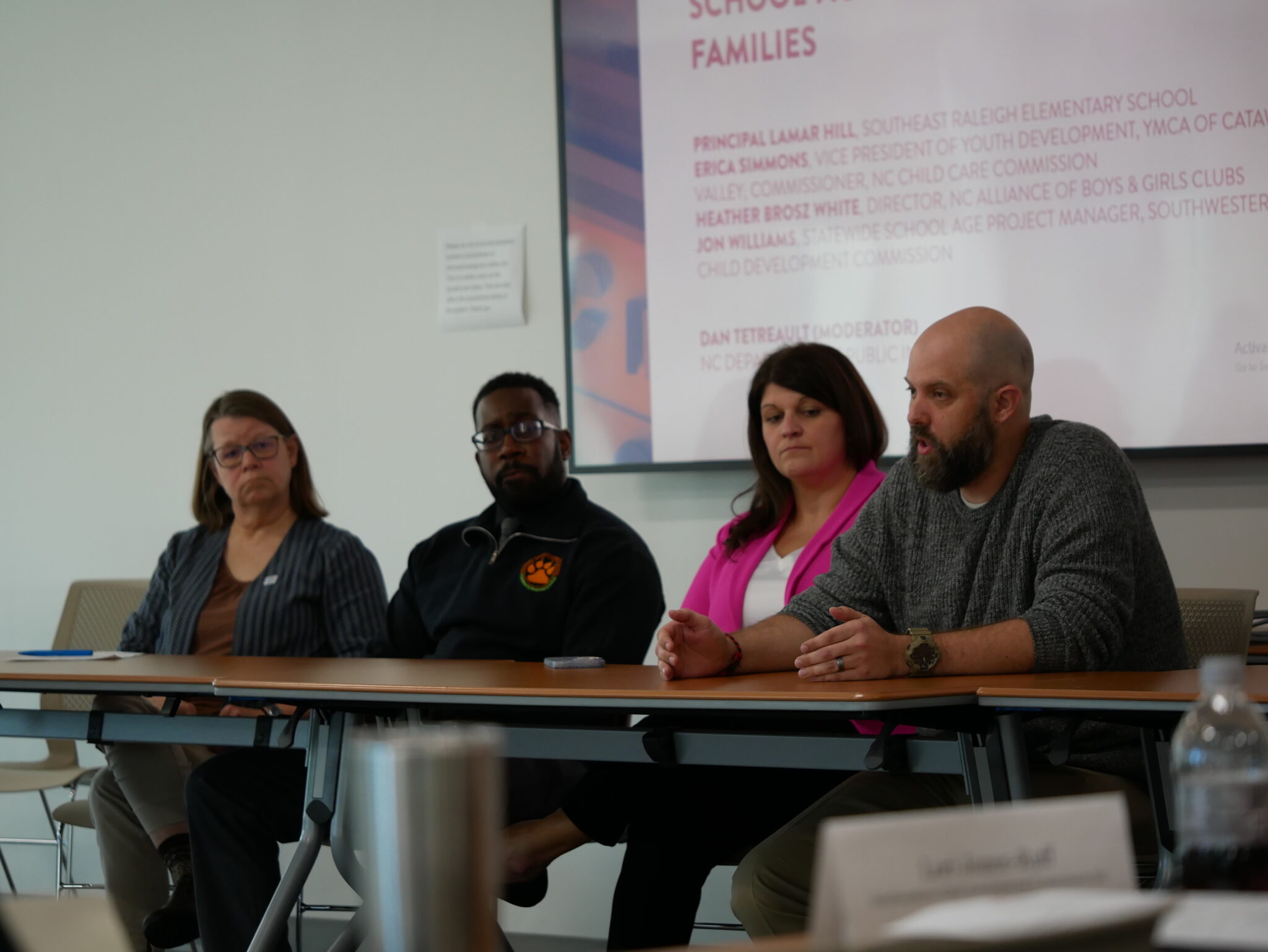
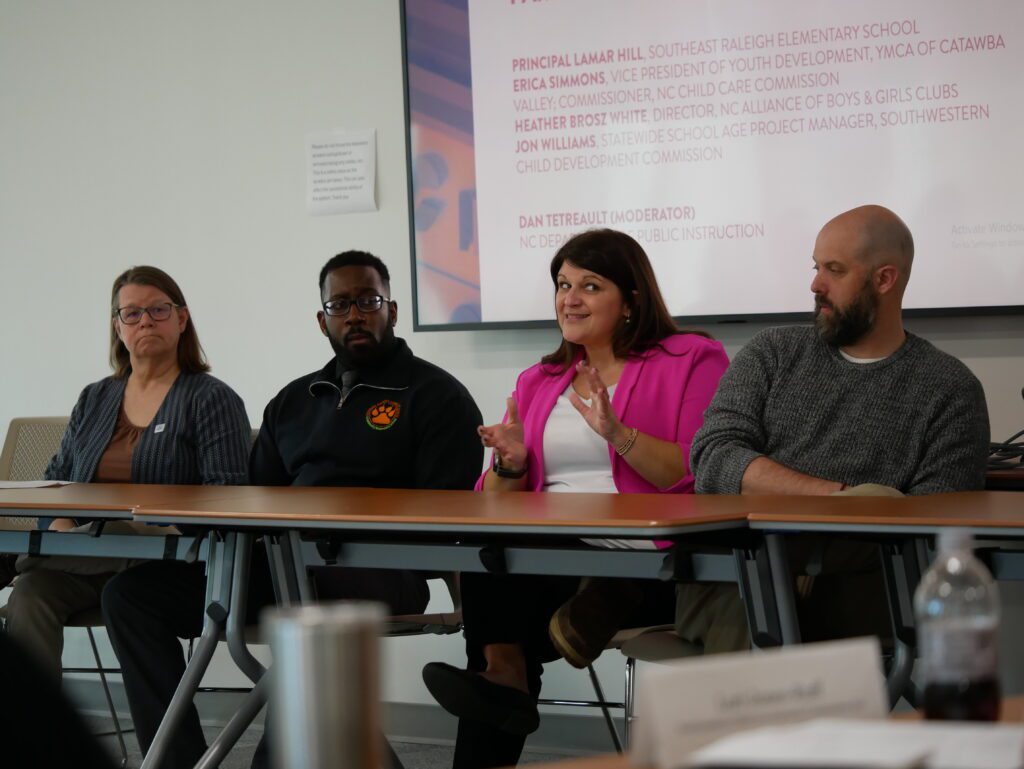
Erica Simmons, vice president of youth development at YMCA of Catawba Valley, shares her programs’ reach and barriers to that reach. (Liz Bell/EdNC)
Families need care that works with their schedules and engages students in activities that support them academically and socially, said Elizabeth Anderson, executive director of the North Carolina Center for Afterschool Programs, a nonprofit under the Public School Forum of North Carolina. That requires funding, workforce supports, transportation, and creative partnerships, Anderson and a panel of providers said.
“The more we can create a spectrum of opportunities for birth through grade 12, the more that children and families in our state are going to recognize the positive economic impacts of those investments,” Anderson said.
Report due in December on child care solutions ahead of short session
The governor’s task force will release a report by the end of December with recommendations on how the state should expand access to high-quality, affordable child care. Stein formed the group earlier this year as pandemic-era child care funding ran out and advocates across the state and country called for consistent public investment to meet families’ needs.
The state legislature did not allocate new funding for child care this year and did not pass a new comprehensive budget. Some new funding, though lower than advocates’ and state officials’ requests, was included in budget proposals from Stein’s office and the House and Senate, but those proposals were not ultimately passed.
The main child care legislation that was passed made regulatory changes to loosen staffing requirements and allow providers to serve more children in classrooms with appropriate space and teacher-to-child ratios.
The task force will meet again in February, though a date is not yet set. Ahead of next year’s short session, members on Monday discussed what role the group should play in moving policy solutions forward, including six recommendations in the group’s interim report released in June:
Set a statewide child care subsidy reimbursement rate floor.
Develop approaches to offer non-salary benefits to child care professionals.
Explore partnerships with the University of North Carolina System, N.C. Community Colleges System, and K-12 public school systems to increase access to child care for public employees and students.
Explore subsidized or free child care for child care teachers.
Link existing workforce compensation and support programs for early childhood professionals into a cohesive set of supports.
Explore the creation of a child care endowment to fund child care needs.
As the state faces many funding requests, federal funding uncertainty, and slim tax revenue, members said more legislators need to be aware of the state’s child care crisis and why it’s relevant to the state’s economy and future.
“Maybe we have some more work to do around actually educating and engaging members of the General Assembly to get this on their radar and build more champions,” said Susan Gale Perry, CEO of Child Care Aware of America and task force member.
Funding to address issues of access, quality, and affordability is needed, members said, and considering existing funding streams rather than new ones might be more politically feasible in the short term.
“Certain proposals about, ‘Let’s just go raise taxes,’ are probably not going to be something that is going to get across the aisle agreement, but it does create the opportunity to looking at areas where tax rates are already set, or certain revenue streams are already existing,” said Mary Elizabeth Wilson, task force member and the Department of Commerce’s chief of staff and general counsel.
Mary Elizabeth Wilson, task force member and the Department of Commerce’s chief of staff and general counsel, shares considerations for 2026. (Liz Bell/EdNC)
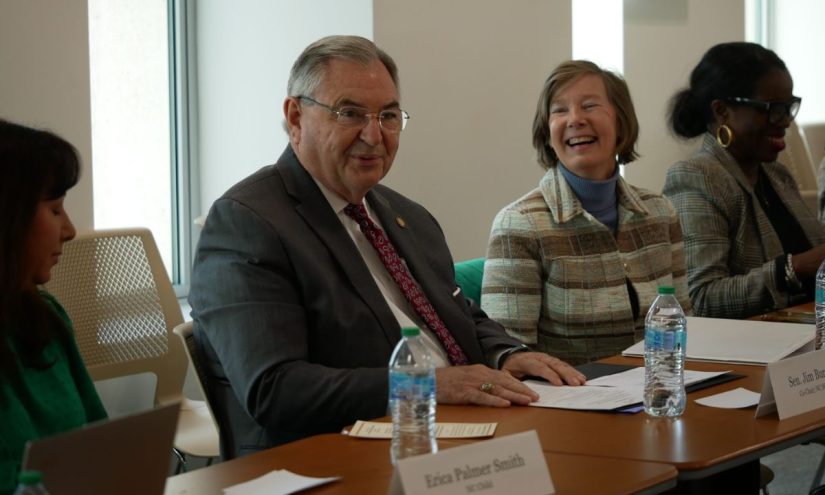
Sen. Jim Burgin, R-Harnett, who chairs the task force along with Lt. Gov. Rachel Hunt, said he and other legislators will be introducing legislation that would double the tax rates on sports gambling.
“If it’s for the children, everybody needs to support it,” Burgin said. “And I don’t believe in gambling … I’m doing it because we need the money.”
Child care fixes would also increase tax revenue, said Erica Palmer-Smith, executive director of nonprofit NC Child and task force member.
“(The generated revenue) would more than cover the overall cost that we would need to put in in the long run to fix the child care system,” Smith said.
‘The gap between 3 and 6 and between May and August’
Many families either do not have an after-school program nearby, do not have transportation to programs, or cannot afford programs, Anderson said in a presentation to the group Monday.
In 2025, 188,295 children participated in after-school programs, but 664,362 additional children would have if they had access, according to the presentation.
Programs are funded through a mix of private grant funding, public funding, and parent tuition. The two biggest funding sources are from the federal government: the Child Care Development Fund, which funds child care subsidies for young children and school-age children up through 12 years old, and 21st Century Community Learning Centers through the Department of Public Instruction.
After-school programs exist in all different types of facilities — community-based organizations, schools, faith-based organizations, and child care centers and home-based programs. Anderson described these programs as “folks stepping in to fill the gap between 3 and 6 and between May and August.”
Students benefit when they access out-of-school programs, she said. In the case of the 21st Century Community Learning Centers, 72% improved their attendance in the 2023-24 school year, 75% of students had decreased suspensions, and 90% improved their overall engagement in school.
Elizabeth Anderson, executive director of the North Carolina Center for Afterschool Programs, provides an overview of the demand for school-age care across the state. (Liz Bell/EdNC)
Anderson said the skills employers are seeking align with those that children are gaining from after-school programs, like problem-solving, teamwork and collaboration, communication, and leadership.
“We know that our after-school programs are an important place where children get to interact with one another and interact with mentors and positive adult figures that help them build these skills, which ultimately help them to become more successful, independent earners in the future,” she said.
Like child care programs in the early years, after-school programs not only help children, but allow parents to work. In a survey from the national report, 91% of parents said these programs help them be able to keep their job.
Families face particular challenges in the summer months. A national survey from LendingTree of more than 600 parents found this year that 66% of parents who seek summer care struggle to afford it, and 62% had taken on debt to pay for summer care.
Anderson said more conversations on child care should extend beyond the early childhood period. She pointed to research from the University of California that found educational and occupational attainment improvements were higher when children had access to both early care and education and out-of-school care once they entered school.
“It is something that parents need and want,” she said. “I think that we talk a lot about what happens for children birth to 5, but a child does not turn 5 years old and suddenly not need opportunity.”
Subsidy funding and reform would help, experts say
North Carolina is one of 23 states that does not have state level funding for after-school care, Anderson said. Anderson and panelists said funding is needed to retain teachers, increase access, provide transportation, and help families afford care.
Jon Williams, manager of the statewide School-Age Initiative at the Southwestern Child Development Commission, is focused on increasing the quality of out-of-school care across the state. He said the transient nature of school-age professionals disrupts consistency for children, families, and programs. A burdensome orientation process creates challenges for owners and directors constantly onboarding new people.
Williams said business training for after-school program directors would be helpful. Many have educational backgrounds and lack the business expertise to be successful in a challenging environment.
“They don’t have that financial background that is needed to run a business, and that creates a lot of financial instability,” Williams said. “If they don’t know how to orient or get new staffing in, that creates a huge problem.”
Jon Williams, manager of the NC School Age Initiative at the Southwestern Child Development Commission, says providers need funding and business training to improve the stability and quality of school-age care. (Liz Bell/EdNC)
A policy change that several panelists and task force members raised as a need is to align the eligibility requirements for child care subsidies across age groups. Right now, families who earn less than 200% of the federal poverty line are eligible for child care subsidies when their children are 5 years old or younger. But for school-age children, the threshold lowers: families must make less than 133% of the poverty line.
That disrupts care for families whose children need after-school care going to kindergarten or for families with multiple children of different ages who would prefer to send all of their children to one program.
A statewide subsidy floor, which is one of the policy priorities of the task force, would also help school-age care providers, said Erica Simmons, vice president of youth development at YMCA of Catawba Valley.
The floor would raise the per-child rate that child care programs receive to the state’s average rate. In cases where programs receive more than the average rate, they would continue receiving the same amount.
“(The floor) would make it a little more equitable,” Simmons said.
She said it costs similar amounts to provide care at her licensed programs in rural and urban communities. But the subsidy rates are much lower in rural areas.
“We have the same requirements for staff, we have the same programming requirements,” she said. “There’s no difference in the amount that we spend per program as an organization. However, there is a very big difference in what we are able to capture for subsidy. So there’s a big funding gap.”
Williams said there was a gap of $8,000 for one program just last month between the cost of services and the subsidy reimbursement. Annually, some programs in her network accrue around $100,000 in funding gaps for caring for children through subsidy.
Burgin asks a question of after-school program experts. (Liz Bell/EdNC)
Programs also receive subsidy payments retroactively. Changing the timing of funding could relieve some of the financial burden from programs, Williams said.
“I get paid via subsidy after I provide the services, and that’s a huge problem if I’m already in the red,” he said.
“… When we think about the mental health of our administration and our directors, that just adds fuel to the flame,” Williams said. “And it creates another gap, a 30-day gap, where I can say, ‘I can’t do this anymore,’ and then that care drops off. So we have to rethink how we get that money out in the state. We have to rethink the rates at which they are given.”
Panelists also shared that liability insurance rates have risen drastically. Williams said her program’s rates have increased by 44% over the last year, a trend among child care providers overall. A 2024 survey from the National Association for the Education of Young Children (NAEYC) found 80% of respondents saw their liability insurance costs increase in the last year and 62% reported difficulty finding or affording it.
Updates on care for public employees, workforce supports, and funding models
The task force has been split up into three subgroups which have been studying how to move toward the group’s six recommendations.
Samantha Cole, child care business liaison at the Department of Commerce, said a subgroup focusing on expanding child care access for public employees has looked at models across K-12, community college, and UNC-system schools to create child care solutions.
“We really see that there have been a lot of successes that have come about in these three examples and others, but they’re hyperlocalized,” Cole said. More external communication is needed for other campuses to understand how and why peer institutions are offering child care.
Madhu Vulimiri, senior advisor for health and families policy for Stein’s office, said the subgroup focused on workforce compensation and supports has been studying strategies to ensure early childhood teachers have access to non-salary benefits like health insurance.
They have studied the possibility of adding early childhood teachers as an eligible population for the State Health Plan, subsidizing ACA marketplace premiums through state dollars, and educating early childhood providers about the recently launched Carolina Health Works, which offers options for groups of small businesses.
The group is also studying how existing workforce supports like TEACH scholarships, child care academies, and apprenticeships could be more seamlessly tied together to strengthen the early childhood profession. They have requested that the Hunt Institute create a map to demonstrate what supports are available in what counties.
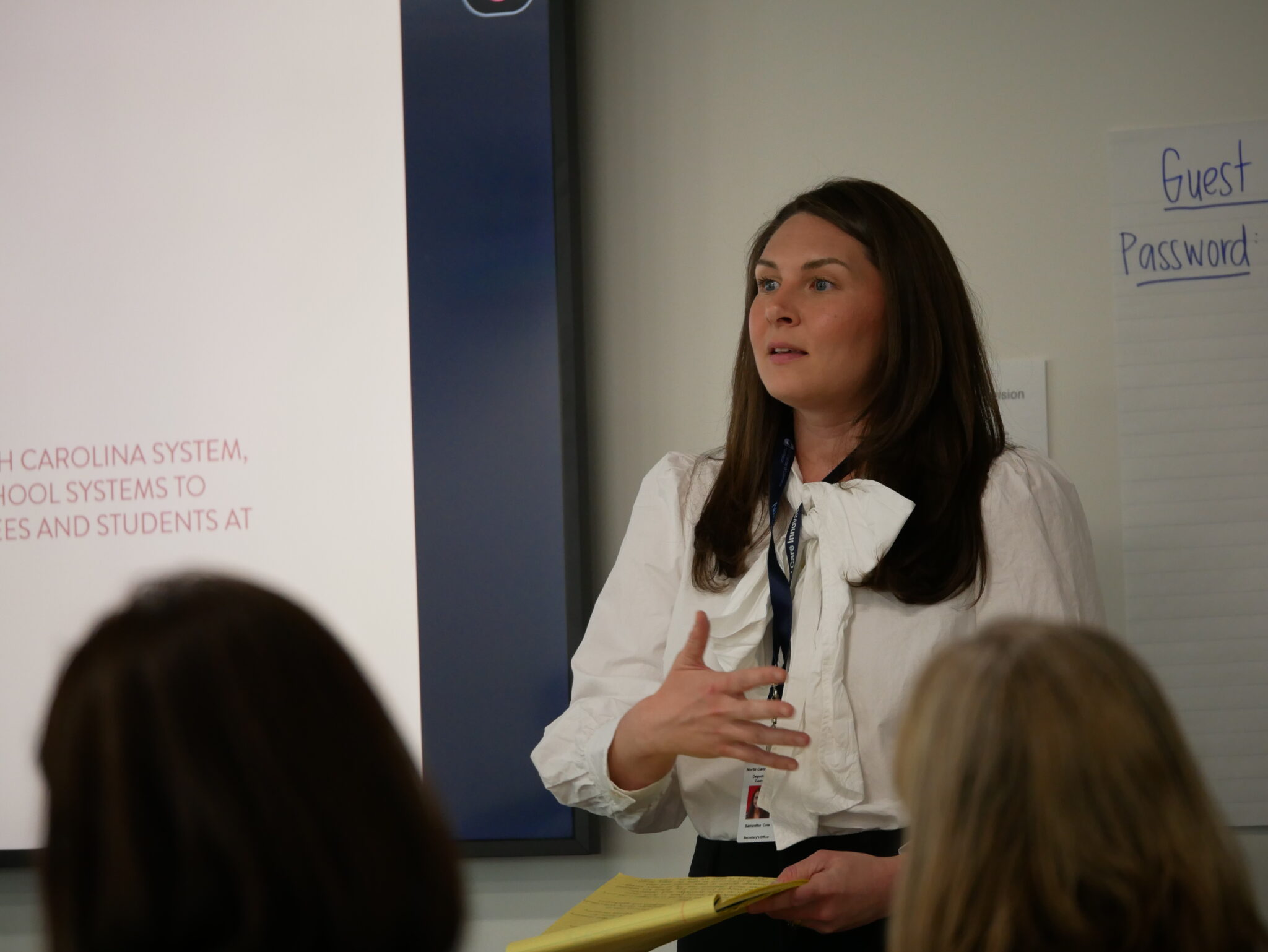
Samantha Cole, child care business liaison at the Department of Commerce, says some schools and colleges across the educational continuum have built models to provide child care specific to their local needs and resources. (Liz Bell/EdNC)
“That will help us see more holistically, where do we have resources and where are there gaps, and help us hopefully target future resources that we might have to expand those statewide,” Vulimiri said.
The third group, which is focused on financing, has been studying several states’ approaches to endowments and other funding mechanisms for child care, including Nebraska, Connecticut, Arizona, Montana, and Washington, D.C. They aim to develop a paper that weighs the options for North Carolina and analyses costs and benefits of each.
Members of Gov. Josh Stein’s bipartisan Task Force on Child Care and Early Education got an update on licensed child care closures during their most recent meeting.
“Just in the month of August, we had more than twice as many programs close as open,” said Candace Witherspoon, director of the Division of Child Development and Early Education (DCDEE).
Based on data provided by the N.C. Child Care Resource and Referral (CCR&R) Council in partnership with DCDEE, EdNC previously found that North Carolina lost 5.8% of licensed child care programs during the five years when stabilization grants were used to supplement teacher wages.
That net loss has increased to 6.1% since the end of stabilization grants. Family child care homes (FCCHs) make up 97% of that net loss.
Trends among licensed centers and homes
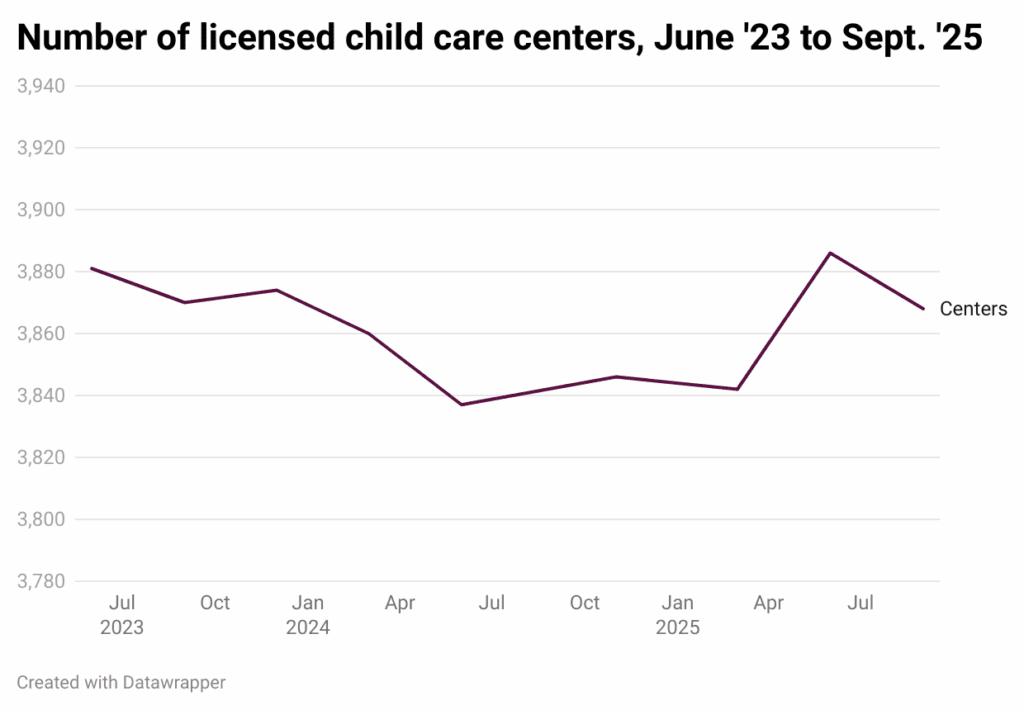
Since February 2020, the last month of data before the COVID-19 pandemic, the number of licensed FCCHs has decreased by 23%. The number of licensed child care centers has decreased by 0.3%.
The trend for licensed FCCHs since EdNC began tracking the data in June 2023 has been one of consistent net loss, decreasing each quarter.
Graphic by Katie Dukes/EdNC
There were 1,363 FCCHs in February 2020. That number was down to 1,096 in March 2025, the last data before the end of stabilization grants. Now there are 1,052 FCCHs across the state.
While licensed child care centers have also experienced a net loss since February 2020, the trend has been less linear.
Graphic by Katie Dukes/EdNC
There were 3,879 licensed centers in February 2020. When EdNC began tracking in June 2023, the number was slightly higher at 3,881. From then on it fluctuated, with net gains in some quarters and net losses in others. There are now 3,868 licensed centers statewide.
While the net loss of centers remains small, the effect of a single center closing is huge — especially in rural communities.
Families on Hatteras Island are learning this firsthand. The only licensed child care program on the island is scheduled to close at the end of the year. With no licensed FCCHs and no clear way to save the sole licensed center, families are trying to figure out how to keep their businesses open and remain in their communities without access to child care.
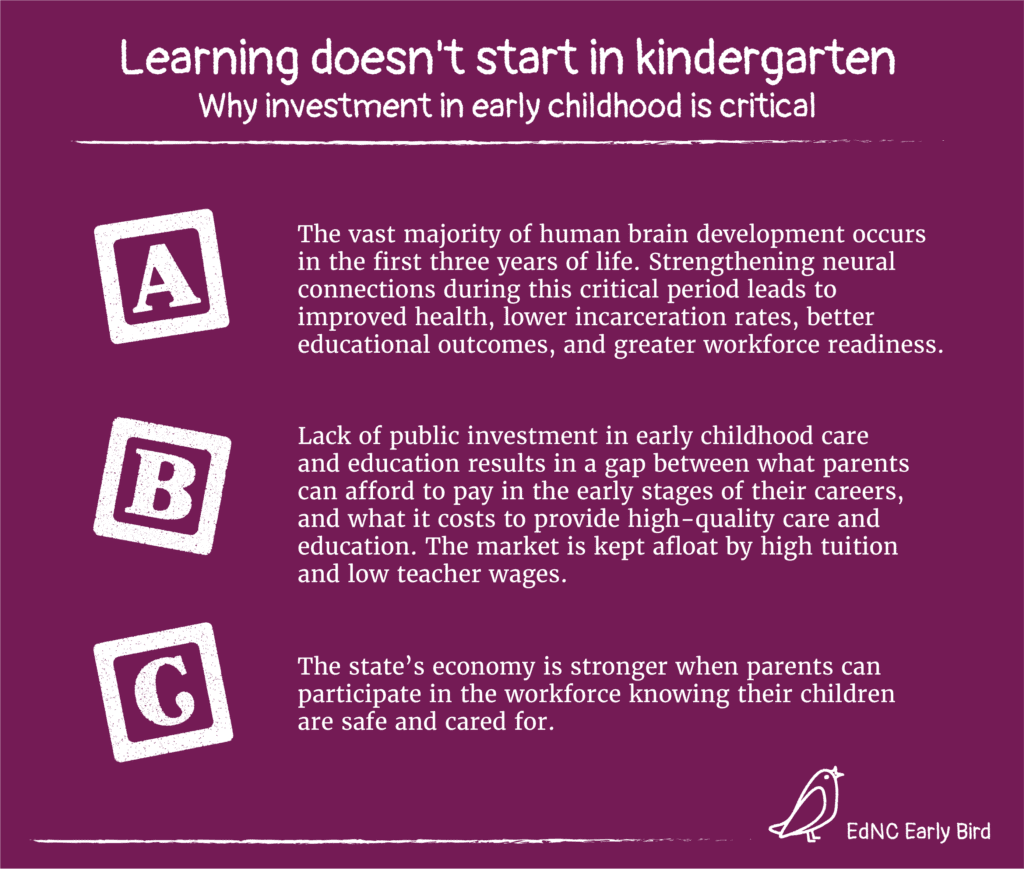
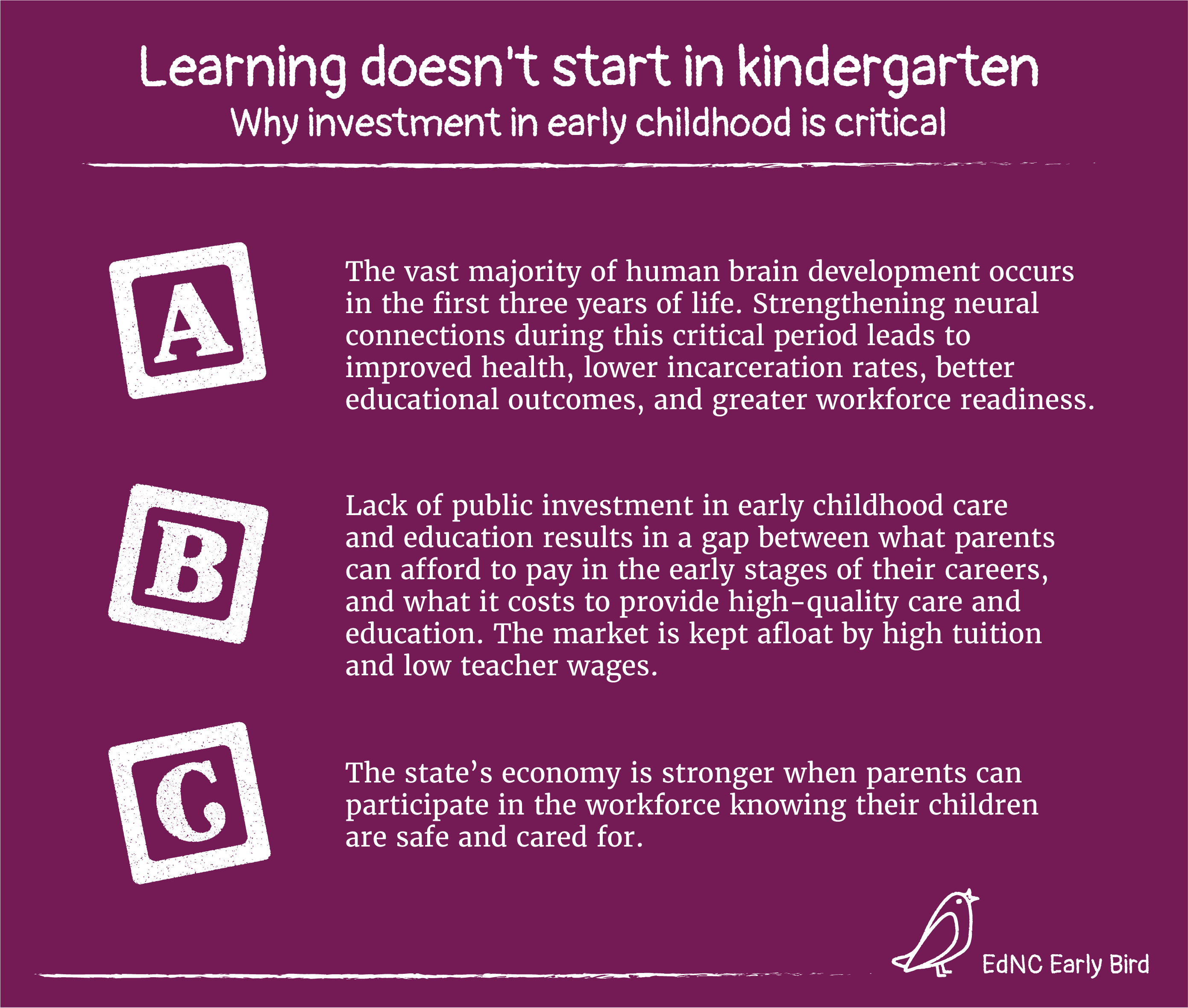
Access to high-quality, affordable early care and learning is crucial to child and family freedom and well-being. It enables parents to participate in the workforce or continue their education without concern for the safety of their children. It also puts North Carolina’s youngest residents on a path to future success.
Graphic by Lanie Sorrow
Trends among subgroups
In addition to monitoring overall licensed child care trends, EdNC zooms in on trends among three subgroups of counties each quarter.
In the counties that make up the area covered by the Dogwood Health Trust (Avery, Buncombe, Burke, Cherokee, Clay, Graham, Haywood, Henderson, Jackson, Macon, Madison, McDowell, Mitchell, Polk, Rutherford, Swain, Transylvania, and Yancey), the number of licensed child care sites is 5% lower than before the pandemic. These counties had a net loss of eight programs from July through September 2025, the largest single-quarter decrease since EdNC began tracking.
In the majority-Black counties (Bertie, Edgecombe, Halifax, Hertford, Northampton, Vance, Warren, and Washington), the number of licensed child care sites remained relatively stable during and after the pandemic. But in the most recent quarter, these counties had a net loss of nine programs, putting them 4% lower than before the pandemic, a sudden and dramatic shift in circumstance. As with the Dogwood counties, this represents the largest single-quarter decrease since EdNC began tracking.
In Robeson and Swain, which both have large Indigenous populations, the number of licensed child care sites had also remained relatively stable during and after the pandemic. In the most recent quarter, for the first time since EdNC began tracking, the number of licensed child care programs in these counties has dipped just below pre-pandemic levels.
Editor’s note: The Dogwood Health Trust supports the work of EdNC.
North Carolina is one of several states that have passed legislation in recent years to align classroom reading instruction with the research on how children learn to read. But ensuring all students have access to research-backed instruction is a marathon, not a sprint, said education leaders and researchers from across the country on a webinar from the Hunt Institute last Wednesday.
Though implementation of the state’s reading legislation has been ongoing since 2021, more resources and comprehensive support are needed to ensure teaching practice and reading proficiency are improved, webinar panelists said.
“The goal should be to transition from the science of reading into the science of teaching reading,” said Paola Pilonieta, professor at the University of North Carolina at Charlotte who was part of a team that studied North Carolina’s implementation of its 2021 Excellent Public Schools Act.
That legislation mandates instruction to be aligned with “the science of reading,” the research that says learning to read involves “the acquisition of language (phonology, syntax, semantics, morphology, and pragmatics), and skills of phonemic awareness, accurate and efficient work identification (fluency), spelling, vocabulary, and comprehension.”
The legislature allocated more than $114 million to train pre-K to fifth grade teachers and other educators in the science of reading through a professional development tool called the Language Essentials for Teachers of Reading and Spelling (LETRS). More than 44,000 teachers had completed the training as of June 2024.
Third graders saw a two-point drop, from 49% to 47%, in reading proficiency from the 2023-24 to 2024-25 school year on literacy assessments. It was the first decline in this measure since LETRS training began. First graders’ results on formative assessments held steady at 70% proficiency and second graders saw a small increase, from 65% to 66%.
“LETRS was the first step in transforming teacher practice and improving student outcomes,” Pilonieta said. “To continue to make growth in reading, teachers need targeted ongoing support in the form of coaching, for example, to ensure effective implementation of evidence-based literacy instruction.”
Teachers’ feelings on the training
Pilonieta was part of a team at UNC-Charlotte and the Education Policy Initiative at Carolina (EPIC) at UNC-Chapel Hill that studied teachers’ perception of the LETRS training and districts’ implementation of that training. The team also studied teachers’ knowledge of research-backed literacy practices and how they implemented those practices in small-group settings after the training.
They asked about these experiences through a survey completed by 4,035 teachers across the state from spring 2023 to winter 2024, and 51 hour-long focus groups with 113 participants.
Requiring training on top of an already stressful job can be a heavy lift, Pilonieta said. LETRS training looked different across districts, the research team found. Some teachers received stipends to complete the training or were compensated with time off, and some were not. Some had opportunities to collaborate with fellow educators during the training; some did not.
“These differences in support influenced whether teachers felt supported during the training, overwhelmed, or ignored,” Pilonieta said.
Teachers did perceive the content of the LETRS training to be helpful in some ways and had concerns in others, according to survey respondents.
Teachers holding various roles found the content valuable in learning about how the brain works, phonics, and comprehension.
They cited issues, however, with the training’s applicability to varied roles, limited differentiation based on teachers’ background knowledge and experience, redundancy, and a general limited amount of time to engage with the training’s content.
Varied support from administrators, coaches
When asking teachers about how implementation worked at their schools, the researchers found that support from administrators and instructional coaches varied widely.
Teachers reported that classroom visits from administrators with a focus on science of reading occurred infrequently. The main support administrators provided, according to the research, was planning time.
“Many teachers felt that higher levels of support from coaches would be valuable to help them implement these reading practices,” Pilonieta said.
Teachers did report shifts in their teaching practice after the training and felt those tweaks had positive outcomes on students.
The team found other conditions impacted teachers’ implementation: schools’ use of curriculum that aligned to the concepts covered in the training, access to materials and resources, and having sufficient planning time.
Some improvement in knowledge and practice
Teachers performed well on assessments after completing the training, but had lower scores on a survey given later by the research team. Pilonieta said this suggests an issue with knowledge retention.
Teachers scored between 95% to 98% across in the LETRS post-training assessment. But in the research team’s survey, scores ranged from 48% to 78%.
Teachers with a reading license scored higher on all knowledge areas addressed in LETRS than teachers who did not.
When the team analyzed teachers’ recorded small-group reading lessons, 73% were considered high-quality. They found consistent use of explicit instruction, which is a key component of the science of reading, as well as evidence-backed strategies related to phonemic awareness and phonics. They found limited implementation of practices on vocabulary and comprehension.
Among the low-quality lessons, more than half were for students reading below grade level. Some “problematic practices” persisted in 17% of analyzed lessons.
What’s next?
The research team formed several recommendations on how to improve reading instruction and reading proficiency.
They said ongoing professional development through education preparation programs and teacher leaders can help teachers translate knowledge to instructional change. Funding is also needed for instructional coaches to help teachers make that jump.
Guides differentiated by grade levels would help different teachers with different needs when it comes to implementing evidence-backed strategies. And the state should incentivize teachers to pursue specialized credentials in reading instruction, the researchers said.
Moving forward, the legislation might need more clarity on mechanisms for sustaining the implementation of the science of reading. The research team suggests a structured evaluation framework that tracks implementation, student impact, and resource distribution to inform the state’s future literacy initiatives.
North Carolina’s Advanced Teaching Roles program, which allows highly effective teachers to receive salary supplements for teaching additional students or supporting other teachers, is having positive effects on math and science test scores, according to an evaluation presented by NC State University’s Friday Institute for Educational Innovation at the State Board of Education meeting last week.
Since 2016, the ATR initiative has allowed districts to create new career pathways and provide salary supplements for highly effective teachers — or Advanced Teachers — who mentor and support other educators while still teaching part of the day. Their roles include Adult Leadership teachers, who lead small teams and receive at least $10,000 supplements, and Classroom Excellence teachers, who take on larger student loads and receive a minimum of $3,000 supplements.
Those in adult leadership roles teach for at least 30% of the day, lead a team of 3-8 classroom teachers, and share responsibility for the performance of all those teachers’ students. Classroom excellence teachers are responsible for at least 20% more students than before they enter the role.
“Our ATR program was designed to allow highly effective classroom educators to reach more students and to support the professional growth of educators,” said Dr. Callie Edwards, the program’s lead evaluator, at the State Board of Education meeting last Wednesday. “ATR aims to improve the quality of classroom instruction, the recruitment and retention of teachers, as well as ultimately impact student academic achievement.”
In the 2024-25 school year, 26 districts operated ATR programs across 400 schools — 56% of which were elementary schools — employing 1,494 Advanced Teachers who supported nearly 4,000 classroom teachers statewide, according to the evaluation. Edwards said that 88% of Adult Leadership teachers received at least $10,000, and 85% of Classroom Excellence teachers received $3,000 or more.
Statistical analysis of the 2023-24 school year’s data found that students in ATR schools outperformed their peers in non-ATR schools in math and science, showing statistically significant learning gains.
“Across the various programs I’ve evaluated, these are positive results — especially in math and science — where the impact of ATR is equivalent to about a month of extra learning for students,” said Dr. Lam Pham, the leading quantitative evaluator. “The results in ELA are positive but not statistically significant, which has been consistent for the last three years,” Pham said, referring to English Language Arts.
These effects on math and science grow over time, according to the evaluation. Math scores improved throughout schools’ first six years of ATR implementation — though they are no longer significant by the seventh year of implementation, according to the presentation. For science scores, statistically significant gains began in the fifth year after schools began implementing ATR.
Additionally, math teachers in ATR schools reported higher EVAAS growth scores than their peers in comparable schools.
Teachers in ATR schools also reported feeling like they have more time to do their work compared to teachers in non-ATR schools.
This year’s report featured data on teachers supported by ATR teachers for the first time. The evaluation found no positive effects on test scores for students taught by supported teachers compared to students taught by teachers who are not in the program. The researchers also found no effect on turnover levels for teachers supported by Advanced Teachers. However, the report says additional years of data will be necessary to verify if those effects appear over time.
The evaluation recommended that principals in ATR schools should foster collaboration and communicate strategically about the program with staff, beginning during Advanced Teachers’ hiring and onboarding.
“It’s important to integrate ATR into those processes,” Edwards told the Board. “That means introducing Advanced Teachers to new staff and making collaboration, especially mentoring and coaching, a structured part of the day.”
Edwards said these practices have been adopted in some schools, but principals reported needing more time and support to build collaboration opportunities into the school schedule.
The report also urges district administrators to coordinate with Beginning Teacher (BT) programs, advertise ATR in recruitment materials, and improve their data collection practices. It also calls on state leaders to standardize the program to ensure consistency across participating districts.
“Districts need standardized messaging, professional learning opportunities, and technical assistance to support implementation,” Edwards said. “The state can also create more opportunities for districts to share what’s working with one another and expand the evaluation beyond test scores to capture things like classroom engagement, social, emotional development, and feedback from teachers and principals.”
The evaluators also said “there’s more to do” to expand the program in western North Carolina after Board members raised concerns about uneven participation across the state’s regions.
Tomberlin said DPI received 15 proposals representing 22 districts. These proposals have been evaluated by seven independent evaluators, Tomberlin said. The Board had to choose the program’s next participants by Oct. 15 to comply with a legislative requirement.
The state can only allocate $911,349 for new implementation grants in 2026-27 — less than one-sixth of the funding required to fund all applications. That level of funding is “very low” compared to previous years, Tomberlin said. In the 2023-25 state budget, the General Assembly appropriated $10.9 million in recurring funds for these supplements in each year of the biennium.
Tomberlin recommended that the Board approve the three highest-scoring proposals for the 2026-27 fiscal year, and fund these districts at 85% of their request. If the Board approves this recommendation, the state would still have $37,981 in planning funds left over for districts approved during the 2026 proposal cycle.
Tomberlin said districts are already struggling to pay for the program’s salary supplements. The Friday Institute’s report showed that, despite the high median supplements, some districts are offering supplements as little as $1,000.
“Some districts are not able to pay the full $10,000 because they have more ATR teachers than the funding that we can give them in terms of those allotments,” Tomberlin said. “And we had requested the General Assembly, I think, an additional $14 million to cover those supplements, and we didn’t get any.”
Join our zero2eight Substack community for more discussion about the latest news in early care and education. Sign up now.
The U.S. military faced a new threat to national security toward the end of the 20th century. This threat affected the recruitment and retention of our nation’s armed forces, reducing their capacity to defend the denizens of the United States and our interests overseas.
The threat wasn’t the Cold War; it wasn’t tension in the Middle East; and it wasn’t international or domestic terrorism.
The threat was a lack of affordable, accessible, high-quality child care.
The makeup of the armed forces changed following the shift from a national draft to an all-volunteer military after the war in Vietnam. More service members had families in the late 1970s and 1980s — many of them with young children. And many more of those families included two working parents than in previous decades.
The child care crisis faced by the military 40 to 50 years ago was similar to the one civilians face today. More families with working parents increased the demand for child care. Thousands of children languished on waitlists, forcing families to consider forms of supervision that lacked consistent standards for safety, teacher training, student/teacher ratios, and curricula. Teachers were poorly compensated, and turnover was high.
Back then, as now, parents couldn’t afford the fees necessary to cover the costs of addressing these challenges, and limited public investment wasn’t enough to fill the gap.
Graphic by Lanie Sorrow
Because the child care crisis was seen as a threat to the collective future of Americans, elected officials took action. Congress passed the Military Child Care Act of 1989, which put a priority on affordability, accessibility, and quality in child care for service members.
With the end of child care stabilization efforts that were undertaken during the pandemic, North Carolinians now face a similar threat to our own collective future. The military’s approach offers lessons for where we can go from here, in our communities and across our state.
An experiment in universal child care
The Military Child Care Act wasn’t the first time the military had taken the lead on child care. During World War II, women entered the workforce in massive numbers, filling the roles of men who were drafted to serve in the military. This raised the question of who would care for children when both parents were working outside the home to defend American interests.
Congress responded with the Lanham Act of 1940, creating a nationwide, universal child care system to support working families with children through age 12. Federal grants were issued to communities that demonstrated their need for child care related to parents working in the defense industry.
The program distributed $1.4 billion (in 2025 dollars) between 1943 and 1946 to more than 600 communities in 47 states. The grants could be used to build and maintain child care facilities, train and compensate teachers, and provide meals to students.
In his 2017 analysis of the Lanham Act’s outcomes for mothers and children, Chris M. Herbst, of Arizona State University’s School of Public Affairs, found that “the Lanham Act increased maternal employment several years after the program was dismantled.”
An image of Rosie the Riveter from a 1943 issue of the magazine Hygeia (published by the American Medical Association) demonstrating the need for child care.
Herbst also found that “children exposed to the program were more likely to be employed, to have higher earnings, and to be less likely to receive cash assistance as adults.”
One lesson Herbst took from his research was that the Lanham Act was successful because of the broad support it received from parents, advocates for education and women, and employers. He noted: “Each group was committed to its success because something larger was at stake.”
Today’s military-operated child care model
While the Lanham Act was a short-lived national experiment that hasn’t received much study, the military’s child care program since adoption of the Military Child Care Act of 1989 has become a widely acclaimed model for publicly subsidized early care and learning, serving about 200,000 children each year.
Four categories of child care are available through military-operated child care programs: Child Development Centers (CDCs), Family Child Care (FCC), 24/7 Centers, and School Aged Care (SAC). The official military child care website describes each program type:
Child Development Centers (CDCs) — CDCs provide child care services for infants, pretoddlers, toddlers, and preschoolers. They operate Monday through Friday during standard work hours, and depending on the location offer full-day, part-day, and hourly care.
Family Child Care (FCC) — Family child care is provided by qualified child care professionals in their homes. Designed for infants through school agers, each FCC provider determines what care they offer, which may include full-day, part-day, school year, summer camp, 24/7, and extended care.
24/7 Centers — 24/7 Centers provide child care for infants through school age children in a home-like setting during both traditional and non-traditional hours on a regular basis. The program is designed to support watch standers or shift workers who work rotating or non-traditional schedules (i.e., evenings, overnights, and weekends).
School Aged Care (SAC) — School age care is facility-based care for children from the start of kindergarten through the end of the summer after seventh grade. This program type operates Monday through Friday during standard work hours. SAC programs provide both School Year Care and Summer Camp.
Requirements for military-operated child care programs are typically more stringent than state requirements. For one thing, they must be accredited by one of the following: National Association for the Education of Young Children (NAEYC), National Early Childhood Program Accreditation (NECPA), the Council on Accreditation (COA), or the National Accreditation Commission (NAC).
For context, the requirements for licensed child care in North Carolina are relatively stringent compared with other states, but still fall below the requirements for NAEYC accreditation, which is widely recognized as the national standard. Only 110 programs in our state are NAEYC-accredited — many of which are Head Start or military-operated programs — out of about 5,300 total state-licensed programs.
Military-operated child care programs offer families hourly, part-day, full-day, extended, or overnight care, plus afterschool and summer programs.
The maximum rate is on par with the national average for civilian child care in 2023, meaning that almost every family using military-operated child care programs is paying less than the national average for typically higher-quality early care and learning.
The Department of Defense budgeted about $1.8 billion for child care in 2024 — about 0.2% of its $841.4 billion total budget.
Military child care in North Carolina
In addition to military-operated child care programs, service members may be eligible for Military Child Care in Your Neighborhood (MCCYN), a fee assistance program for families who can’t access military-operated child care. MCCYN pays a portion of the cost of enrolling children in early care and learning programs that meet the military’s high-quality standards in their community.
North Carolina is one of 19 locations where military families may be eligible for MCCYN-PLUS, which expands the MCCYN program to child care programs that participate in state or local Quality Rating and Improvement Systems (QRIS) in places where nationally accredited care is not available.
Both programs rely on the availability of high-quality child care in civilian communities. That’s a challenge in North Carolina, which was already facing a child care shortage before the pandemic. Our state has lost almost 6% of licensed child care programs since February 2020, with more expected to close because stabilization grants have ended.
According to the NC Military Affairs Commission, there are 12 military bases and more than 130,000 active-duty military members in North Carolina, giving us the fourth-largest active-duty military population in the nation.
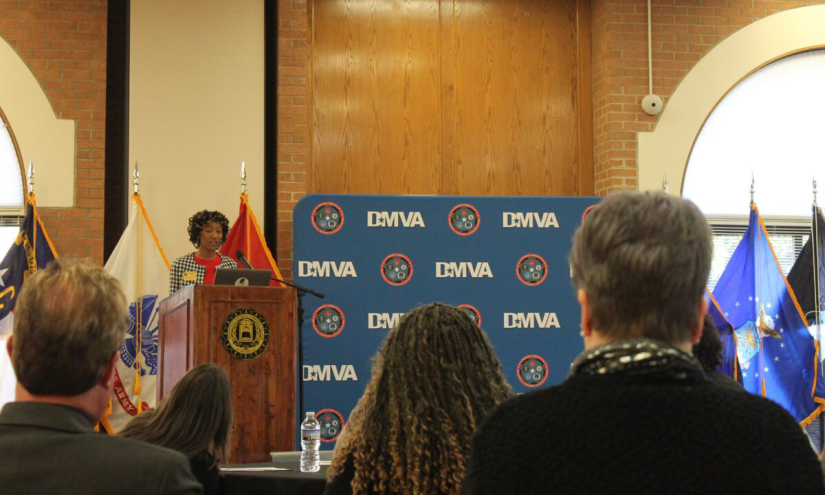
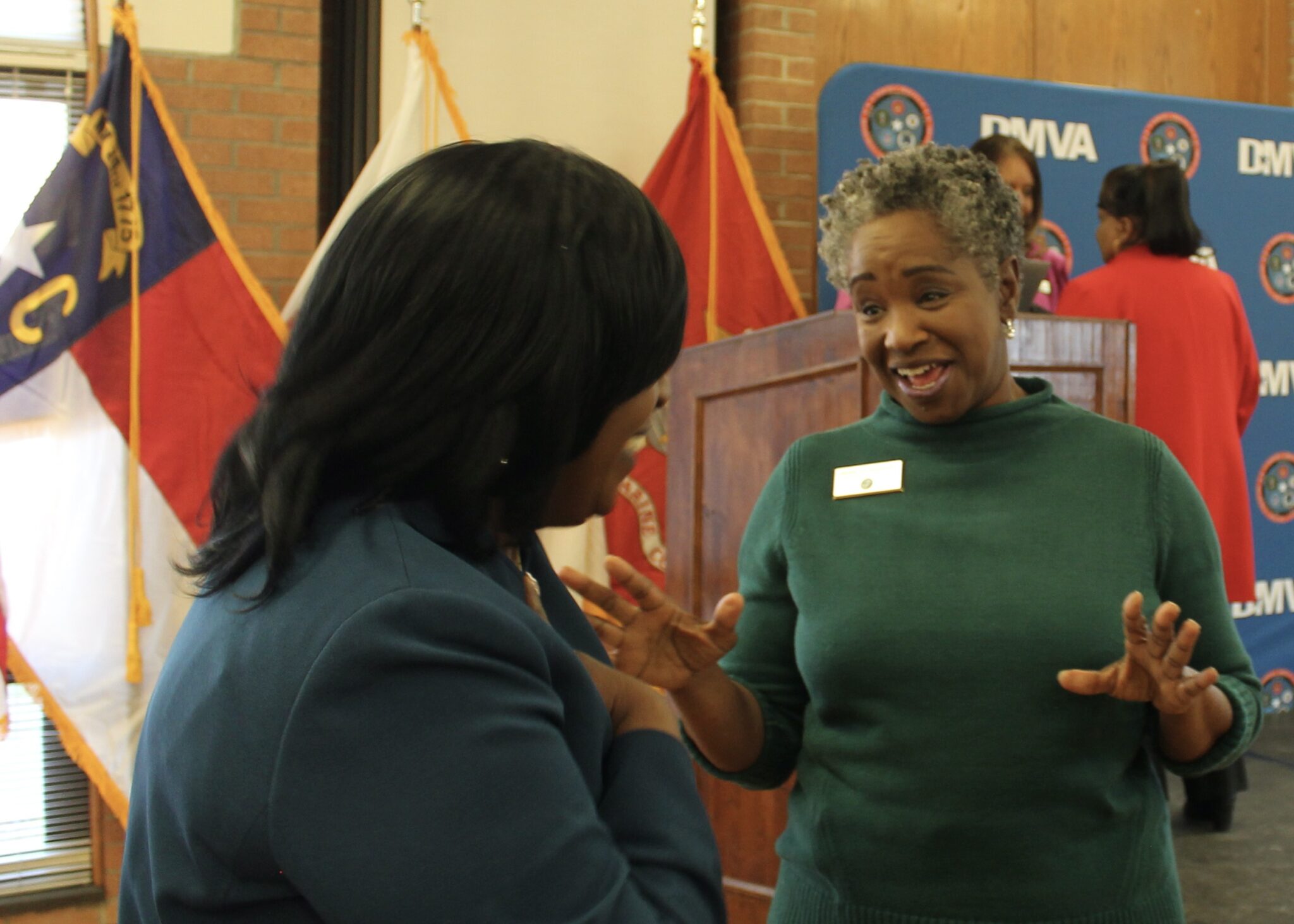
In January 2025, Fayetteville Technical Community College hosted the state’s first N.C. Military Community Childcare Summit, organized by the North Carolina Department of Military and Veteran Affairs (NCDMVA) to discuss the problem that military communities are having with access to community-based child care.
The first N.C. Military Community Childcare Summit in January 2025.( Katie Dukes/EdNC)
The summit culminated in a screening of Take Care, a documentary about North Carolina’s child care crisis produced by the state Department of Health and Human Services and featuring EdNC’s early childhood reporter, Liz Bell.
The issues of spouse resilience and child care are inextricably linked for Angie Mullennix, who works for The Honor Foundation at Fort Bragg, helping members of the U.S. Special Operations Forces (SOF) transition to careers in the private sector after their military service.
Mullennix served in the U.S. Army for four years after high school and has previously worked for the Department of Public Instruction as the state military liaison. Her husband recently retired from the SOF himself. They have two teenage children.
“If you look at the number of military spouses in North Carolina who have degrees and credentials and could be in the workforce, from nurses to lawyers, lots of them are staying at home,” Mullennix said.
“A big reason why about 40% of (military) spouses do not work is because of child care not being available to them,” Mullennix said, noting that lack of child care is also a barrier to workforce participation among the civilian population.
When Mullennix’s children were under the age of 5, she used hourly child care on base, which was available at no cost when her husband was away on assignment.
“You ask any parent in the world, I don’t care who they are, there’s nothing more important than their child’s safety — then their education,” Mullennix said. “And yet, the two things we think are the most important, we put (their providers) at the lowest pay and ask them to do quality care.”
That’s what sets military child care apart from civilian early care and learning for Mullennix: high quality standards and higher pay for early childhood educators, including benefits. She sees lessons in this for North Carolina.
“You gotta pay them to keep them, there’s no secret behind that,” Mullennix said. “If you pay them high, you can also set the standards really high.”
And because workforce participation — and military readiness — is directly tied to the accessibility and affordability of high-quality child care, not investing in it threatens our collective future.
“North Carolina, or any state that doesn’t offer child care, is shooting itself in the foot,” Mullennix said.
Lessons from military child care
Policymakers at every level who are seeking to end the child care crisis can learn much from the military child care model. One report on the topic offers these lessons:
Do not be daunted by the task. It is possible to take a woefully inadequate child care system and dramatically improve it.
Recognize and acknowledge the seriousness of the child care problem and the consequences of inaction.
Improve quality by establishing and enforcing comprehensive standards, assisting providers in becoming accredited, and enhancing provider compensation and training.
Keep parent fees affordable through subsidies.
Expand the availability of all kinds of care by continually assessing unmet need and taking concrete action steps to address it.
Commit the resources necessary to get the job done.
Both agreed these are the right takeaways for policymakers across North Carolina to consider.
Lesson 1: Do not be daunted by the task
Gale Perry said the top lesson for her is: “Start where you are, know that change is possible, and have a goal post in mind.”
She pointed out that the military’s goal wasn’t a fully publicly funded child care system. It was a system that acknowledged Americans’ values around the role of parents in raising young children — and paying for their care and education. But also that their employers and the government “have a role in offsetting that cost, so that we can ensure that child care is quality, and it is stable, and that the families can actually afford it.”
Smith said there was no “silver bullet” when she and her colleagues were tasked with solving the military’s child care crisis in the 1990s — and there isn’t one for the civilian child care crisis today.
We had to redo the standards, we had to look at the workforce, we had to look at the health and safety issues, we had to look at the fees and how we could bring those fees down. We had to look at the infrastructure of all of it. We’ve got to start thinking about the interconnectedness of all of these things if we’re going to be successful in this country.
Smith said people think that because she worked for the secretary of defense, “I could just tell all the bases what to do, and that would magically happen, which is so not true. It wasn’t just like we could give an order and everybody jumped.”
She said you just have to start where you are, and move up.
Lesson 2: Acknowledge the seriousness of the problem and the consequences of inaction
“The military understood very early the link between people getting to work and child care,” Smith said.
As the military shifted away from relying on conscription and became a more welcoming workplace for women, the need for child care became evident. Smith described working on a base where children were routinely left in cars when their parents were unexpectedly called into work.
“So (military leaders) really got the connection to their guys going to work very quickly, and I think that we still haven’t all understood that in this country,” Smith said, though she notes businesses have started making that connection since the pandemic.
“The other thing the military understood was that a pilot is every bit as important as the mechanic who works on the plane, and so they invest in all of their people,” Smith said.
She and her team had to design a program that worked for everyone, or it wouldn’t work for anyone.
Lesson 3: Improve quality
Smith said quality was of critical importance when she was designing the military’s child care system in the 1990s, especially after child abuse and neglect scandals that came to light in the 1980s.
She and her team studied the child care standards of all 50 states and created a set of military standards that fell squarely in the middle. Then they set about training the 22,000 early childhood educators they already had — most of whom were military spouses — to meet those standards.
That was a six-month training program. Then there was an 18-month training to get them to move beyond those standards toward national accreditation. They hired highly qualified trainers to work with educators at each site.
“And if you didn’t do it, guess what? You’re fired!” Smith said.
There was an incentive to participate in the training, beyond keeping their jobs — higher compensation.
“Maybe some were grumpy about it, but we didn’t have to fire people,” Smith said.
North Carolina already has some tools in place to help educators advance their education and improve their compensation, specifically through the WAGE$ and TEACH programs — both of which were highlighted in the report that identified these lessons.
“(The military) realized they had to get serious about quality and quality standards. And I would say that’s a lesson for us now, particularly in a climate that is deregulatory,” Gale Perry said. “And while I’m for sensible regulatory reform, I think we have to be really thoughtful about not wanting stacks of child deaths in child care sitting on a desk waiting to be investigated.”
Lesson 4: Keep parent fees affordable through subsidies
Smith said that while designing the military’s child care program, she and her team figured out that there was no way parents could afford the actual cost of high-quality child care. So they set up a subsidized system that would provide a 50% match — on average — to parents’ fees, paid directly to child care programs.
“We had to, on average, match parent fees dollar-for-dollar, with the higher-income people paying more and the lower-income paying less,” Smith said. “So a major, for example, would pay two-thirds of the cost, and a private would pay one-third, but the average was 50/50.”
Smith pointed out that we’re already subsidizing child care in ways that are hidden — through the public benefits and social programs that early childhood educators often rely on because of low compensation, and through lack of workforce participation.
Lesson 5: Expand the availability of all kinds of care
Gale Perry said the military’s model really stands out to her for its ability to assess unmet needs and take action to improve.
“In the early 2000s when there were the wars in Iraq and Afghanistan, there were a lot of deployments of National Guard and Reserve who did not live on post and did not have access to on-post child care,” Gale Perry said. “That is really when the military got in the business of thinking about, how do we help build capacity and make child care accessible for military families off post?”
That’s when the MCCYN came about, subsidizing high-quality early care and learning in a broader array of settings in the communities where service members live.
Smith said that the Military Child Care Act was originally targeted toward child care centers, but she recalls briefing the assistant secretary of defense on the potential effects of that strategy when they were designing the system:
I remember saying we need to apply all of this to family child care, to school-aged care, to part-day preschools, because if we don’t, all the parents are going to have a demand on these centers that we can’t meet, right? Because if you lower the cost in the centers and you improve the quality, why would somebody go to another place when they get it cheaper and better over here?
She made the case for educators in every setting getting the same access to training and the same level of compensation, because that’s what would work best for everyone.
“Everything applies to everybody,” Smith said. “And I think that was one of the smartest policy decisions we made.”
Lesson 6: Commit the resources necessary to get the job done
“There was this perception that we just had a lot of money and we threw it at” child care, Smith said. But that wasn’t the case.
“When they passed the Military Child Care Act, it didn’t come with an appropriation,” Gale Perry said. “So they had to fight equally hard for the funding, and a lot of the funding actually ended up coming from local base commanders making the decision to invest in child care.”
Now the military submits a budget request to Congress each year, and depends on those appropriations.
For state and local policymakers seeking to solve the civilian child care crisis without public investment, the woman credited with solving the military’s own child care crisis 35 years ago has a message.
“It’s gonna cost. There’s no way it doesn’t cost,” Smith said.
State legislators from both parties want to expand family child care — the home-based sector of licensed child care, which has shrunk by more than a third since 2018. Both the House and Senate budget proposals include pilots to open new programs to meet the needs of families and employers.
For the past two years, a team from the nonprofit Southwestern Child Development Commission (SWCDC) has done just that, creating North Carolina’s first statewide system of support for family child care. In the past year, the organization has helped launch 27 new family child care programs, 20 of which are open, creating at least 160 new slots for children. Two are the first family child care programs in their counties.
Since September 2023, the team has awarded start-up grants to another 26 programs and business sustainability grants to 38 programs. It has created the first statewide family child care mentorship program, regional communities of practice, and a marketing campaign that has garnered interest from more than 200 prospective providers since April.
As state leaders ask how to improve child care access and affordability, the project’s lessons should carry forward, said Daniel Bates, the statewide project’s manager.
“I just really felt like we’ve done something here, and I hope that, no matter what, it still continues, because family child care is so incredibly important,” Bates said. “And they are part of early childhood education.”
‘People that will be around for a while’
Expanding family child care takes one-on-one support for new providers who often bring a passion for children but little knowledge of the complex regulations and business challenges that come with starting and operating a program, the project leaders said. It also requires funding.
In 2024, SWCDC, a nonprofit focused on early care and education based in western North Carolina, was awarded $525,000 from the Division of Child Development and Early Education (DCDEE) from legislative pilot funding to expand access to family child care. The project’s expected output was to help 18 programs get started. Instead, it has helped launch 27 programs by awarding grants to cover start-up costs.
The grants ranged from $5,000 to $20,000 depending on the providers’ needs and the strategic goals of the project. The average grant was about $13,000.
Providers also spent their own money to open their programs outside of the grants. A survey of some of the providers found that most had spent between $1,000 and $5,000 before receiving grants to prepare their homes and buy materials.
The new providers are in 19 counties. In Alleghany and Montgomery counties, grant recipients will be the only family child care providers in their counties. Two providers speak Spanish fluently, according to the project leaders. At least 18 have college degrees. Four of the new providers were under 30 years old. Six were in their 30s; 10 were in their 40s.
“These are people that will be around for a while,” said Vickie Ansley, SWCDC’s Child Care Resource & Referral (CCR&R) regional programs manager and family child care in-home program activity coordinator.
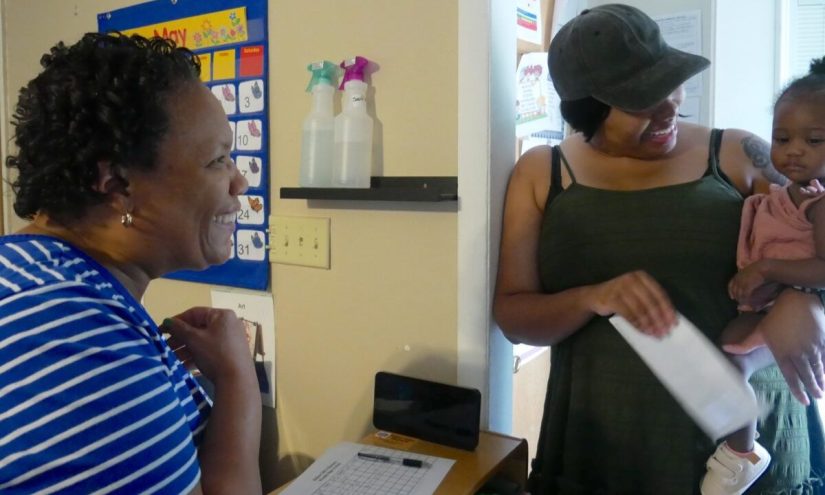
Danielle Dixon wakes up students from nap time at Helen Cole’s Day Care. (Liz Bell/EducationNC)
That grant funding was layered onto a larger statewide family child care project the organization has been leading since February 2023 through a separate $3 million contract with DCDEE from the CCDF, the federal funding stream that helps states raise the quality of child care and helps working families afford it.
The statewide project had many components, including start-up grants of up to $10,000 and business grants of up to $5,000 for access to business training, software, or devices to manage programs. It provided 64 professional development workshops to providers on a range of issues. It also created a framework for family child care substitute pools and a database of zoning contacts and information.
Hands-on support from regional consultants
The crux of the project, however, was all about hands-on support and community building, the project leaders said. The project funded 17 family child care consultants who reached 477 providers in 73 counties with coaching and consultation.
The consultants, trained in the specifics of owning and operating a family child care program, were embedded in the 14 regional CCR&R hubs covering all 100 counties.
“We’re talking about people located in those communities,” Ansley said. “They know the (providers), or they know somebody who knows them.”
Helen Cole, a family child care provider in Taylortown, says the grants she received from Southwestern Child Development Commission helped her buy high-quality materials. (Liz Bell/EducationNC)
The PDG contract is in process but will be awarded to Acelero Charitable Foundation “in collaboration with multiple agencies that support family child care.” It will focus on increasing quality and family engagement, the spokesperson said.
DCDEE employs licensing consultants who meet with all types of potential child care owners to begin the licensure process. The licensing consultants began recommending reaching out to the regional family child care consultants to new providers.
The family child care consultants then could provide knowledge specific to family child care, dedicate time and energy to decipher the complexities of starting and sustaining a business, and offer support that was independent from regulatory oversight and compliance. Some of the consultants were former family child care providers themselves.
“Prior to that, if an agency had capacity, then they provided support,” Bates said. “The services were somewhat limited, whereas this was full 100% dedication for family child care.”
The regional consultants received business training to advise providers on budget planning, financial reports, marketing, and recruiting and retaining staff.
Kathleen Hoffler, a regional consultant at the Partnership for Children of Cumberland County who once owned a family child care home, described the role as her “dream job.”
Hoffler said she has helped providers take better care of their businesses, their children, and themselves. She encouraged providers to take time off and to reach out for help.
“If you’re having issues with enrollment, if you’re having issues with collecting payments from parents, if you’re having behavior issues with kids or you’re worried that one of your kids might need some developmental screening, and you don’t have anybody to talk that out with, it’s real easy to get discouraged and possibly decide it’s not for you and you’re going to close your program,” Hoffler said.
The family child care consultants connected providers to the pilot grant opportunities and helped them budget what they needed and how they should spend the funding.
Since the consultants were embedded in CCR&R agencies, they could connect providers with a variety of professional development opportunities and resources.
And they connected providers to mentors — seasoned family child care providers who provided a listening ear and advice on overcoming obstacles — and to communities of practice, regional teams that met to share ideas and support one another.
Annette Anderson-Samuels, owner of Phenomenal Kids Child Care Services, a family child care home in Kings Mountain, was one of those mentors. She said her advice to two new providers on how to advertise their programs kept them from closing. She recently helped a provider navigate a tough conversation with parents who were not following her policies.
“It’s to help each other become better at what we do as child care providers,” Anderson-Samuels said.
There were 22 mentors and 44 mentees across the state. In his decades working in early childhood, Bates said the group has been a standout.
“They’ve crossed county lines to go help each other in person,” he said. “The interest and the willingness, wanting to improve themselves, is really out there if they have the opportunity to do that.”
‘The lost segment of early childhood education’
The number of family child care programs, child care businesses within a residence, has fallen by about 36% since 2018, compared with an overall 15% decline in all types of licensed child care.
As a generation of providers age out of the work, a lack of awareness, funding, and support — along with increased regulation — has kept new providers from entering the field, project leaders said.
The team was intentional about listening to providers’ experiences and needs before developing a system of support.
Helen Cole said her family child care home has better equipment and provides higher-quality care because of the support she received from the Southwestern Child Development Commission’s family child care projects. (Liz Bell/EducationNC)
Many brought up the low rates that family child care providers receive per child to participate in the state’s subsidy program. These rates, the state has found, do not cover the full cost of providing child care in any setting. Home-based programs receive lower amounts per child than centers. And providers in rural and low-income areas often receive lower rates than those in higher-income counties.
In rural areas where market rates are lower, “even though we need family child care in those communities desperately, market rates are a hindrance,” said Lori Jones-Ruff, SWCDC’s regional programs manager.
Jones-Ruff also sits on Gov. Josh Stein’s Task Force on Child Care and Early Education, where members have discussed the need for higher subsidy rates and a statewide floor rate that would level the playing field among counties. Research has shown the geographic disparities are wider than place-based differences in cost.
“That’s not just a center issue,” she said. “It’s for family child care as well.”
Low funding from public sources and private tuition leads to low compensation for family child care professionals. The median wage for home-based providers in 2023 was $10.20.
The team also heard about obstacles due to HOA rules and zoning regulations. They found that local ordinances were putting up barriers to new programs in some places. Septic tank requirements were among the most common and most expensive problems.
“(Providers) have recognized, ‘I don’t really need to run to Raleigh; some of the challenges I have are really just in my own backyard, and I just need to talk to my town or county,’” Bates said.
The team heard about the isolation many providers feel, being alone in their homes all day without a network to air ideas or lean on when challenges arise. Providers said they did not feel respected or supported by the state.
“Historically, there was a huge emphasis put on center-based care in North Carolina,” Jones-Ruff said. “Homes did not feel that they were as valued and as supported as center-based. And so there was a period of time where they really felt like they were kind of the lost segment of early childhood education in North Carolina.”
So the team built a strategy based on both funding and relationships.
‘Like a prayer answered’
For Helen Cole, that assistance and funding was key to opening her family child care home in Taylortown in Moore County.
“I just feel like this wouldn’t have been possible without the support and the funds,” said Cole, who recently earned her four-star license to care for children from infancy to 12 years old at Helen Cole’s Day Care.
She received more than $17,000 to start her program from the legislative pilot funding. She bought new outside equipment, furniture, dramatic play sets, age-appropriate toys and books, a new kitchen faucet, a state-approved curriculum, and a new laptop.
Cole heard about the potential grant funding for start-up costs from the state licensing consultant. She was also connected with Hoffler.
Students at Helen Cole’s program work on their counting skills. (Liz Bell/EducationNC)
Cole was excited to open after hearing about a local demand for second-shift care. After retiring as a substitute teacher in her local school district, she needed more income and was eager to fill a community need.
But after her initial meeting with a licensing consultant, she received a long checklist of everything she had to do. She said she felt overwhelmed.
“It was just so much information,” she said. “There are things on the website, but how do you adjust it for your day care?”
Plus, Cole had experience helping in her sister’s child care program, but she did not know the ins and outs of operating a small business. Even with a background in accounting, she knew the role would be challenging. So she reached out to Hoffler for an in-person meeting.
“It was like a prayer answered,” Cole said. “She broke it down for me.”
Hoffler helped Cole navigate the tough decisions that come with operating a business from your home, such as how much living space she was willing to sacrifice and what renovations were needed. And she helped Cole create a budget to apply for grant funding through the legislative pilot. She gave her ideas on high-quality and age-appropriate materials.
She also connected Cole with a mentor, helped her with business skills, and connected her with other resources through the Smart Start partnership.
Hoffler has helped her advertise her program and hold on through the ups and downs of enrollment, Cole said. Because she needed to hire another teacher, her niece Danielle Dixon, Cole said she is breaking even but has not started making a profit or been able to pay herself. She said she has been advised that it can take nine months to a year.
She said low subsidy rates and parents’ inability to afford her private rates have also been financially challenging. She serves one student whose parents are both working, making too much to qualify for a subsidy, but cannot afford her private rate of $200 per week. She only charges that family $85 per week.
Danielle Dixon, a teacher at Helen Cole’s Day Care, has worked in child care for 11 years. (Liz Bell/EducationNC)
Dixon, who has been working in child care professionally for 11 years but informally since she was 16 years old, has both of her children enrolled at the program. Dixon said her grandmother and mother, as well as three of her aunts, have worked in child care. She decided to partner with her aunt, Cole, to return to working with young children in a creative, exploratory environment after working in public schools.
Helen Cole’s Day Care opened in December in the home she was raised in, and where her mother used to take care of children whose parents were at risk of losing custody.
“All of our lives, we’ve had other children here,” Cole said.
Both Dixon and Hoffler have helped Cole strengthen her understanding and practice of early childhood care and education. Her program’s philosophy is based on relationships, exploration, and emotional and social development. Then academic foundations are added.
“It’s that give and take between you and this child,” Hoffler said. “They’re going to learn more from you if you are actively engaging with them and talking to them throughout the day, than they’ll ever learn if you give them a coloring sheet and try to teach them how to stay in the lines. There are no lines in early childhood.”
“That was a wow moment,” Cole said. “I understand that we have to have a curriculum, and we do, but the biggest thing is for them to develop on their own.”
It is this one-on-one attention and intimate environment that make family child care appeal to so many parents. Rural children, low-income children, and children of color are more likely to access home-based care than center-based, according to national advocacy and research group Home Grown. It is often more affordable, more convenient and flexible for nontraditional working hours, and more culturally and linguistically relevant to diverse families.
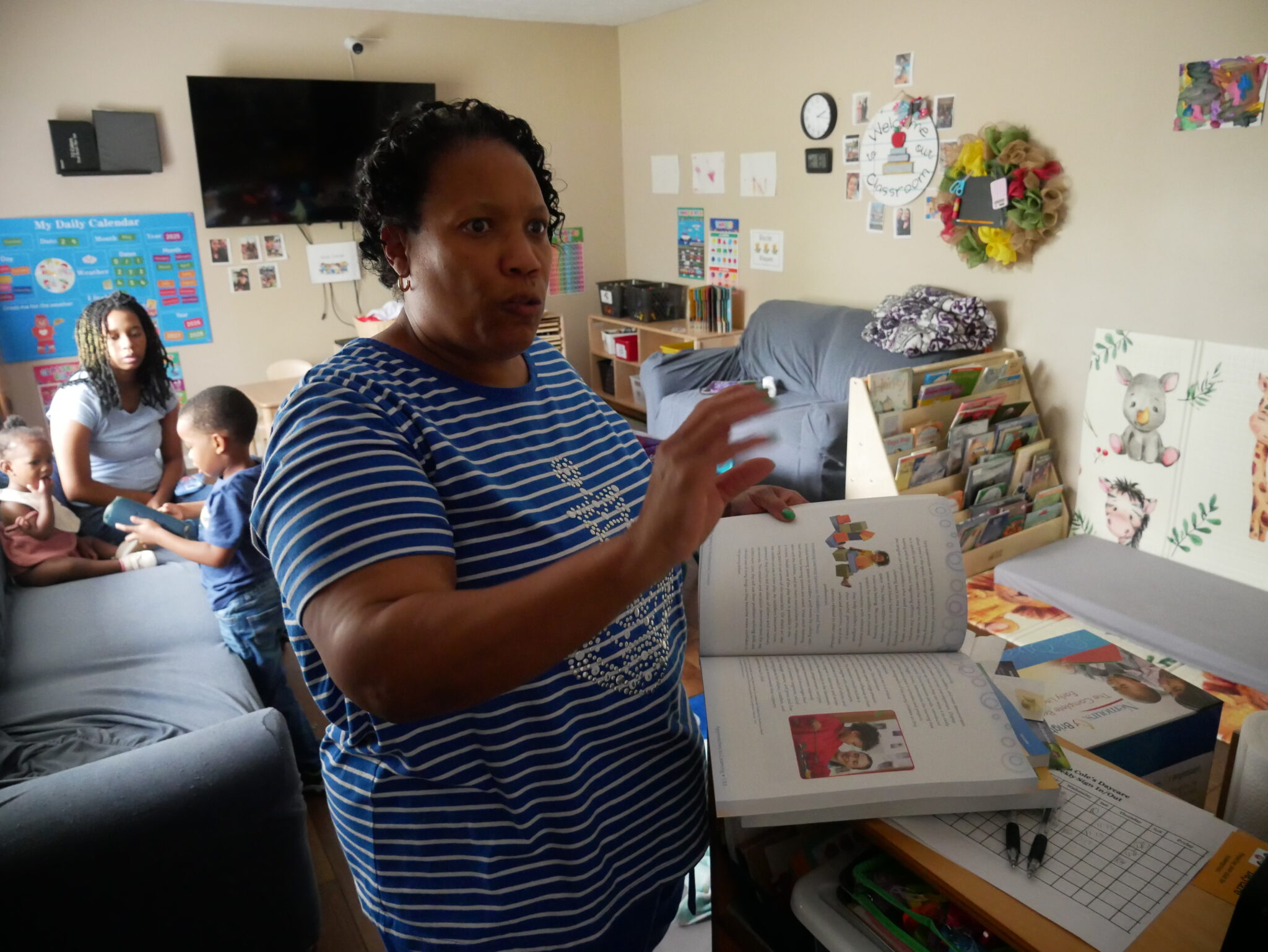
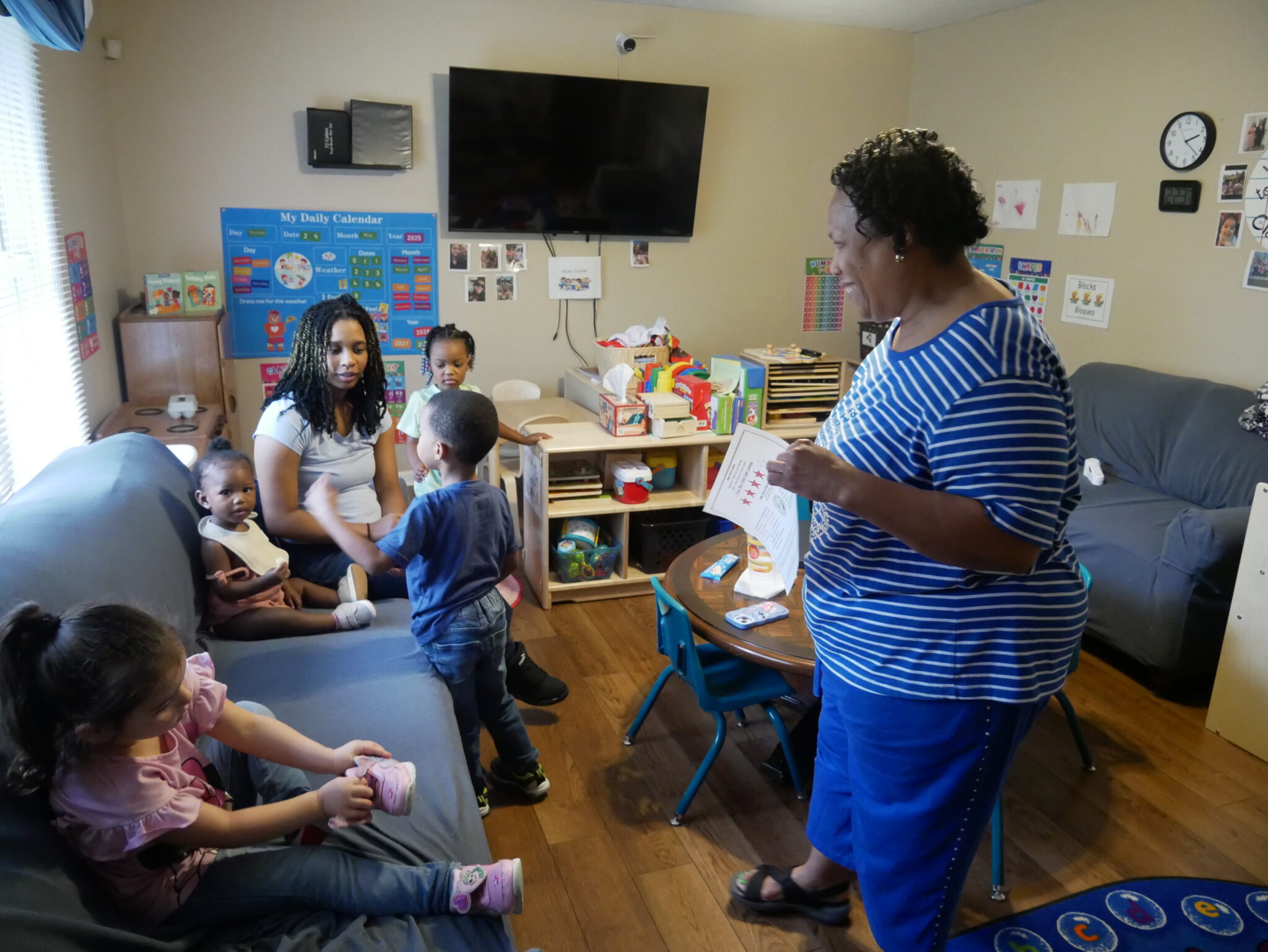
Inside Helen Cole’s child care program. (Liz Bell/EducationNC)
Kailyn Green, whose daughter has been at the program for a month, said she toured other programs with open spots but they “didn’t feel right.” Then she visited Cole’s program and did a walk-through.
“I was like, ‘I’m sold. I’m good,’” Green said.
A licensed clinical social worker, Green said she has been able to return to work without worrying. She receives texts and videos of her daughter’s days and has been impressed by how much she has progressed, especially with eating more consistently.
“I love that she truly gets the attention,” she said. “She’s been able to form a relationship with her. It’s been great.”
Hoffler said she was excited to hear about Cole’s recent accomplishment: earning four out of five stars on the state’s quality rating scale.
“I’m just so proud of her,” she said. “She handled it like a pro.”
What’s next?
There are multiple efforts to build different kinds of supports for family child care. DCDEE said the project with SWCDC taught them that “Family Child Care Homes (FCCHs) would benefit from additional funding, continued community engagement, and professional development to improve quality,” according to a DCDEE spokesperson.
“FCCHs are a vital part of our state’s early care and learning network, and DCDEE is committed to continuing our support for these small businesses,” the spokesperson said in an emailed statement.
Though the contract for the statewide project ends on June 30, the spokesperson said the division will continue using CCDF funds and federal funds from the Preschool Development Grant (PDG) Birth through Five to provide business technical assistance and other services to family child care programs.
The PDG contract is in process but will be awarded to Acelero Charitable Foundation “in collaboration with multiple agencies that support family child care.” It will focus on increasing quality and family engagement, the spokesperson said.
DCDEE is also contracting with Frank Porter Graham Child Development Institute at UNC-Chapel Hill to provide evaluation and coordination of the PDG Elevate FCCH project, which will provide extra subsidy funding to family child care programs to increase wages for providers.
The House and Senate budget proposals direct DCDEE to use CCDF funds to expand family child care capacity. The House would allocate $7 million over two years for a pilot in three localities, and the Senate would allocate $6 million for a pilot in Alamance, Harnett, and Johnston counties. The funding would go to councils of governments in each of those counties to select a third-party vendor. Both proposals have specific requirements for the chosen vendor, including experience in establishing family child care homes in at least three other states and rural areas, experience in operating a substitute pool in another state, and technology that connects families with providers and includes billing and coaching functions.
Meanwhile, Jones-Ruff said SWCDC will continue supporting family child care by retaining a statewide team with organizational funding — and will seek outside funding to continue other aspects of the project. Some of the family child care consultants will continue their work through local CCR&R or Smart Start funding.
“I can see just the monumental amount of work and the progress that has happened in such a short amount of time,” she said. “We’re not going away.”
Historic Foust Elementary School has had a game changing start to the year. School and district leaders, parents, and community members were eager to get inside one of Greensboro’s newest elementary schools for their ribbon cutting ceremony on Feb. 3, 2025 to witness an innovative progression in the school’s history. They were greeted by students and the school’s robotic dog, Astro.
Foust Elementary School, part of Guilford County Schools (GCS), is the country’s first public gaming and robotics elementary school, according to the district. The school still sits on its original land, but the building has been rebuilt from the ground up. They began welcoming students into the new building at the start of 2025.
Foust Elementary School’s history goes all the way back to the 1960s. Foust student Nyla Parker read the following account at the ribbon cutting ceremony:
“Since its construction in 1965, Julius I Foust Elementary School has prided itself in serving the students and families of its community, with the goal of creating citizens who will leave this place with high character and academic excellence. … Now, almost 60 years later, we welcome you to the new chapter of Foust Gaming and Robotics Elementary School. As a student here at Foust, I am excited about various opportunities that will be offered to me as I learn more about exciting industries such as gaming, robotics, coding, and 2D plus 3D animation. Thank you to the voters of our community for saying yes to the 2020 bond that allowed this place to become a reality for me and my fellow classmates. Game on!”
Foust is a Title I school in a historically underinvested part of Guilford County. Several years ago, the district conducted a master facility study, which resulted in Foust getting on the list to receive an entirely new building.
“Foust was one of the oldest buildings in the district and it was literally falling apart, so we were on the list to have a total new construction,” said Kendrick Alston, principal of Foust.
“During that time, we also talked with the district and really thought about, well, building a new school. What can we also do differently in terms of teaching and learning, instead of just building a new building?”
The mission of Foust is to “envision a future where students are equipped with the skills, knowledge, and tools to lead the new global economy,” according to their website. The new global economy, featuring high projected growth in fields that include technology, was a driving factor for planners as they decided to focus the school on gaming and robotics.
There are many jobs that can come from learning the skills necessary to build video games and robots. Looking at recent labor market trends, many of those jobs are growing. Web developers and digital designers have an 8% projected growth rate from 2023-2033 with a median pay of $92,750 per year, according to the U.S. Bureau of Labor Statistics.
“We looked at a lot of studies, we looked at research, and one of the things that we looked at was something from the World Economic Forum that looked at the annual jobs report. We saw that STEM, engineering, those kinds of jobs, were some of the top fastest growing jobs across the world,” said Alston. “When we think about school looking different for our students and being engaging, well, let’s make it something that’s relevant to them but is also giving them a skill set that they can be marketable in the global workforce as well.”
The team at Foust, including teachers and staff, have spent several months in specialized training on a new and unique curriculum designed to help prepare students for the ever evolving world of work. The building, designed to bring 21st century learning to life, is part of the first phase of schools constructed from a combined $2 billion bond.
“I am excited for what this new space is going to produce,” said Hope Purcell, a teacher at Foust. “With the continued support from our robotics curriculum, students will have the opportunity to tap into a new world of discovery that will prepare them for the future.”
Many community and education leaders were present at the ribbon cutting, including several county commissioners and Guilford superintendent Whitney Oakley. Oakley shared excitement about the new school and reminded everyone that the leaders who came before her who advocated for the passing of the bond and were open to the vision of a school like Foust were a huge part of making this new school a reality.
“Today is not just about celebrating a building,” Oakley said. “It’s about celebrating what this building really represents, and that’s opportunity and access to the tools of modern K-12 education. It represents the culmination of years of planning and conversation and design to make sure that we can build a space that serves families and students for decades to come. The joy on the faces of the staff and the families and the students is just a reminder that teaching and learning is more effective when everybody has the resources that they need to thrive, and that should not be the exception, that should be the rule.”
Students sometimes need different levels of support and resources in order to thrive. Foust hopes to be a place where all students can succeed. Another school district in New Jersey, the Morris-Union Jointure Commission, is using gaming and technology to engage students with cognitive and behavioral differences. They have created an esports arenadesigned specifically for students with cognitive challenges, like Autism Spectrum Disorder. This is just one example of how gaming can create an inclusive learning environment.
As Foust settles into its brand new building, they are already planning for new opportunities ahead, including partnerships with the University of North Carolina at Greensboro and North Carolina Agricultural and Technical State University for innovative programming for students and parents.
This article first appeared on EducationNC and is republished here under a Creative Commons license.