Tag: Northwestern

  • Northwestern Settles With Trump Administration

    Northwestern Settles With Trump Administration

    pabradyphoto/Getty Images

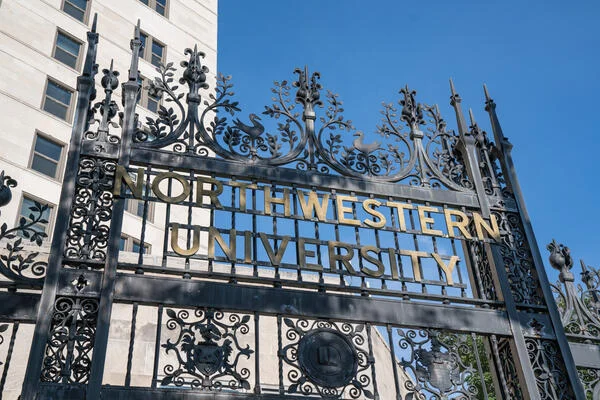
    Northwestern University has reached an agreement with the Trump administration to restore federal research funding. The university will pay the federal government $75 million and enact various changes. In return, the federal government will lift a freeze on millions in research funding.

    As part of the settlement, Northwestern agreed to adhere to federal antidiscrimination laws and to not give preferences in admissions, scholarships, hiring or promotion that are based on race, color or national origin; to maintain clear free speech policies; and to mandate antisemitism training for all students, faculty and staff. University officials will also reverse a 2024 deal made with pro-Palestinian student protesters in which Northwestern agreed to provide more support for Muslim, Middle Eastern and North African students and greater financial transparency.

    The settlement also bars Northwestern’s Feinberg School of Medicine from performing “hormonal interventions and transgender surgeries” on minor patients, according to language in the agreement. However, university officials have said that does not reflect a change in practice. Instead the agreement merely codifies that Northwestern will not provide such services.

    Northwestern is now the sixth university to strike a deal with the Trump administration, following settlements with the University of Pennsylvania, Columbia University, Brown University, the University of Virginia and Cornell University. Of those settlements, Northwestern has the second-highest financial payout at $75 million, trailing only Columbia, which agreed to pay $221 million. Unlike the Brown and Cornell settlements, all of the money will go directly to U.S. government.

    A Path Forward

    Northwestern leadership cast the settlement as a win, despite the $75 million payout.

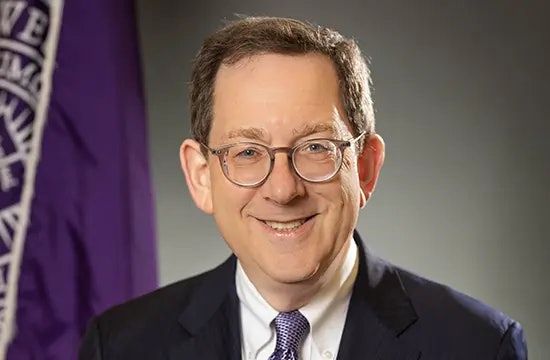
    “It was the best and most certain method to restore our federal funding both now and in the future,” interim president Henry Bienen said in a video message following the settlement.

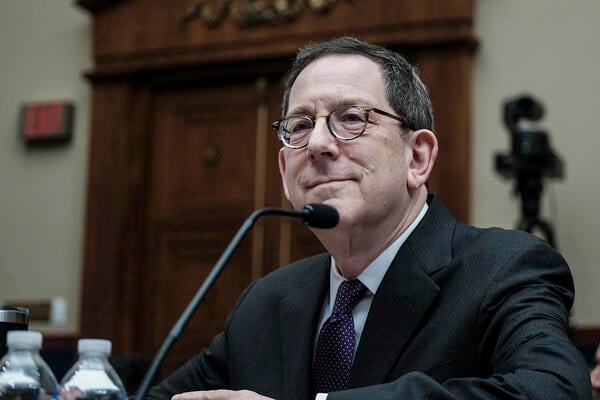
    The Trump administration froze $790 million in federal research funding earlier this year amid concerns about alleged antisemitism on campus following pro-Palestinian demonstrations in 2024. Last year, at the height of the protests, then-president Michael Schill struck a deal with pro-Palestinian students, known as the Dearing Meadow agreement, which has now been scuttled. That deal was heavily scrutinized by Congress when Schill testified in May 2024. (Schill would later resign, stepping down this fall amid the standoff over frozen federal research funding.)

    Though Harvard University brought a successful lawsuit against the federal government, prompting a judge to rule in July that a similar funding freeze there was illegal, Northwestern aimed to avoid a costly and protracted legal battle in an effort to quickly restore research dollars.

    Bienen argued in the video that “suing would have cost time and money that we believe the university could not risk” and the settlement was “the best path forward for us to be able to turn the page.” Despite an endowment valued at more than $14 billion, Bienen said, the university could not afford to sustain its research mission on its own. Had that freeze continued, Bienen said it would “gut our labs, drive away faculty, and set back entire fields of discovery.”

    Northwestern, like other wealthy institutions hit with federal funding freezes, has made a number of cost-cutting moves as it navigated sudden financial challenges related to the research enterprise. Earlier this year Northwestern eliminated 425 jobs as part of overall budget reductions.

    Now the federal funding spigot is set to be turned back on, though officials noted on the university website that “some terminated grants will not be reinstated, specifically those the federal government has cut” and that “these decisions were not specific to Northwestern.”

    The university did not admit to any wrongdoing in the settlement.

    Northwestern also answered a question that has been hanging over numerous other universities in its settlement communications, stating that it will not sign the Trump administration’s proposed “Compact for Academic Excellence in Higher Education.” Originally floated to only a few universities before it was opened to all, the compact would provide preferential treatment in federal funding in return for various changes, many of which experts warn would undermine academic freedom. So far, few institutions have expressed interest in the proposal.

    A Landmark Deal

    Federal officials also hailed the settlement with Northwestern as a win.

    “Universities that receive federal funding have a responsibility to comply with the law, including protecting against racial discrimination and antisemitism,” Assistant Attorney General Harmeet K. Dhillon of the Justice Department’s Civil Rights Division said in a news release. “We appreciate the significant improvements Northwestern has made and are gratified to reach an agreement that safeguards of rights [sic] of all the university’s applicants, students, and employees.”

    Education Secretary Linda McMahon called the settlement a landmark deal.

    “The deal cements policy changes that ‘will protect students and other members of the campus from harassment and discrimination,’ and it recommits the school to merit-based hiring and admissions. The reforms reflect bold leadership at Northwestern, and they are a roadmap for institutional leaders around the country that will help rebuild public trust in our colleges and universities,” McMahon said in the DOJ news release that announced the settlement.

    Source link

  • Northwestern, Cornell Still Working to Unfreeze Federal Funds

    Northwestern, Cornell Still Working to Unfreeze Federal Funds

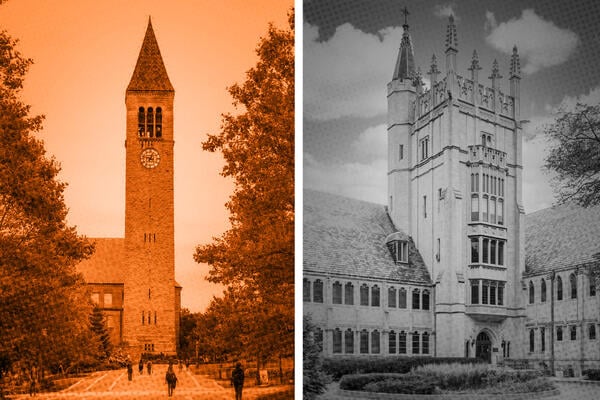
    Photo illustration by Justin Morrison/Inside Higher Ed | arlutz73 and Wolterk/iStock/Getty Images

    Thanks to a series of settlements and court orders, some universities that had their grants frozen by the Trump administration earlier this year have seen that funding restored.

    But others are still trying to unfreeze the grants and learn more about why they were suspended in the first place.

    Since March, the Trump administration has said that it put nearly $6 billion on hold at nine universities. Three universities—Columbia, Penn and Brown—cut deals with the administration to restore the funding, while the University of California, Los Angeles, and Harvard got the money back via court orders. The fate of the remaining four freezes—at Duke, Cornell, Northwestern and Princeton Universities—remains uncertain.

    Princeton has seen about half of its frozen grants restored, President Christopher Eisgruber told the alumni magazine in late August. Roughly $200 million was put on hold initially.

    Eisgruber said Princeton never learned why the funds were frozen, beyond media reports that connected it to concerns over antisemitism on campus. A Princeton spokesperson confirmed the magazine’s report but declined to share more details about the status of the remaining grants.

    At Northwestern, the Trump administration reportedly froze about $790 million in early April, though officials said at the time they never received formal notification about why the funds were put on hold. Since then, Northwestern officials have said they are working to restore the grants—a process that apparently hasn’t gone smoothly.

    Northwestern University interim president Henry Bienen told The Daily Northwestern in an Oct. 17 interview that “a negotiation really requires two parties, at least, and at the present time, there’s not been anybody on the other end of the line.”

    As the freeze persists, Northwestern has said it will continue to support researchers’ “essential funding needs” at least through the end of the calendar year. Bienen told the student newspaper that supporting the research costs $30 million to $40 million a month.

    The university has laid off more than 400 employees and instituted other measures to cut costs, though officials said those moves were driven by more than just the funding freeze.

    Cornell University is also in talks with the administration to find a solution to the freeze. However, President Michael Kotlikoff recently shared new information about the impact of the freeze that calls into question the Trump administration’s figures.

    Trump officials told media outlets in April that they froze more than $1 billion at Cornell. But Kotlikoff said last week in his State of the University address that Cornell is actually facing about $250 million in canceled or unpaid research funds. (The university’s research expenditures totaled $1.6 billion in the 2023–24 academic year.)

    Like Northwestern and Princeton, Cornell hasn’t received a formal letter about the freeze, though media reports suggested that the administration froze the grants “because of concerns around antisemitism following pro-Palestinian activities on campus beginning in fall of 2023,” Kotlikoff said.

    Following news stories about the freeze, Kotlikoff said the university “started receiving stop-work orders ‘by direction of the White House’: halting research on everything from better tests for tick-borne diseases, to pediatric heart assist pumps, to ultrafast lasers for national defense, to AI optimization for blood transfusion delivery. At the same time, many other research grants, while not officially canceled, stopped being paid.” (About $74 million of the $250 million is in unpaid bills, he said.)

    Kotlikoff added that Cornell has been talking with the federal government for six months “to identify their concerns, provide evidence to address them, and return to a productive partnership.” In August, Bloomberg reported that the White House wanted to reach a $100 million settlement with Cornell.

    But Kotlikoff also criticized the administration for not using established legal processes to investigate potential civil rights violations, echoing a point experts have made for months.

    “I want to be clear that there are established procedures in place for the government to handle such concerns,” he said in his State of the University address. “Accusations of discrimination should be supported by, and adjudicated on the basis of, facts. This has not happened.”

    Kotlikoff, who was appointed president in March, made clear in his address to the Board of Trustees and university alumni that Cornell won’t agree to give up control of admissions or curricular decisions, among other things.

    “We will not agree to allow the government to dictate our institution’s policies, or how to enforce them,” he said. “And we will never abandon our commitment to be an institution where any person can find instruction in any study.”

    The administration has also said it froze about $108 million at Duke University, but neither Duke nor the National Institutes of Health responded to Inside Higher Ed’s request for an update.

    Source link

  • Northwestern President to Step Down

    Northwestern President to Step Down

    Michael A. McCoy/Getty Images

    Following more than a year of scrutiny from Republicans over how Northwestern University handled pro-Palestinian campus protests last year as well as a months-long federal funding freeze, President Michael Schill plans to step down.

    Schill, who has been president since 2022, announced his departure Thursday.

    “Over the past three years, it has been my profound honor to serve as president of Northwestern University,” Schill wrote in a message to the campus community. “In that time, our community has made significant progress while simultaneously facing extraordinary challenges. Together, we have made decisions that strengthened the institution and helped safeguard its future.”

    Schill’s exit marks an end to a tumultuous tenure at Northwestern.

    The wealthy private institution in Illinois has weathered attacks from congressional Republicans over a deal Schill struck with pro-Palestinian campus protesters who set up an encampment on university grounds. Congress hauled Schill in for a hearing on antisemitism in May 2024 over his agreement with the protesters. Schill agreed to provide more insight and input into university investment decisions, amid demands to divest from companies attached to the Israeli war effort. He also promised more support for Palestinian students and faculty, among other concessions.

    (However, Northwestern has not provided the level of endowment transparency it promised.)

    The president defended the deal before Congress. Schill, who appeared alongside the leaders of Rutgers University and the University of California, Los Angeles, was the main target for congressional Republicans, but he stood his ground—batting away hypothetical questions and refusing to discuss the conduct of individual faculty members.

    Still, accusations that Northwestern mishandled antisemitism have continued to dog Schill since, and the Trump administration launched an investigation into alleged civil rights violations and later froze $790 million in federal research funding at the university, which led to deep job cuts this summer.

    Schill and other Northwestern leaders said in July that they were working to restore the research funding and were “hopeful it will happen soon.”

    Faculty members and other critics also raised concerns about actions taken by Northwestern under his leadership. Steven Thrasher, a journalism professor involved in pro-Palestinian protests on campus, alleged in March that Northwestern denied him tenure for his activism.

    Schill also navigated turmoil in athletics when a whistleblower alleged in late 2002 that hazing was allowed to run unchecked in the football program. Schill briefly suspended and later fired Northwestern football coach Pat Fitzgerald and a subordinate. The coach sued Northwestern for wrongful termination in 2023; the two parties reached an undisclosed settlement last month.

    “As I reflect on the progress we have made and what lies ahead, I believe now is the right time for new leadership to guide Northwestern into its next chapter,” Schill said Wednesday.

    Schill will remain in his role until an interim president steps into the job.

    Schill’s pending exit now means only one of seven campus leaders who were called to testify in congressional hearings on campus antisemitism in late 2023 and 2024 still has her job. Leaders at Harvard University, the University of Pennsylvania, Columbia University, UCLA, Rutgers and now Northwestern stepped down within a year of the hearings. (Then–UCLA chancellor Gene Block was already set to retire.) Only Sally Kornbluth at Massachusetts Institute of Technology remains in her job.

    Rep. Elise Stefanik, a New York Republican, who emerged as one of the more aggressive inquisitors in prior campus antisemitism hearings, celebrated the news on social media.

    “LONG overdue!” she wrote on X. “@NorthwesternUni President Michael Schill finally resigned today after he failed protect Jewish students, caved to the demands of the antisemitic, pro-Hamas mob on Northwestern’s campus, and failed to hold students who perpetuate antisemitic attacks accountable at an Education and the Workforce Committee hearing.”

    The White House also welcomed Schill’s resignation in an emailed statement.

    “The Trump Administration looks forward to working with the new leadership, and we hope they seize this opportunity to Make Northwestern Great Again,” spokesperson Liz Huston wrote.

    Source link

  • Northwestern President Michael Schill Resigns Amid Federal Funding Freeze

    Northwestern President Michael Schill Resigns Amid Federal Funding Freeze

    Northwestern University President Michael Schill announced his resignation Thursday, concluding a three-year tenure that brought record achievements alongside unprecedented federal challenges, including an ongoing $790 million funding freeze imposed by the Trump administration.

    Schill, who became Northwestern’s 17th president in September 2022, cited the need for “new leadership to guide Northwestern into its next chapter” in his message to the campus community. His departure adds to a growing list of university presidents who have stepped down amid tensions with the federal government and campus controversies.

    The resignation comes as Northwestern grapples with a federal funding freeze that began approximately four months ago, when the Trump administration halted $790 million in federal support. The action was reportedly connected to Title VI investigations, which examine discrimination in federally funded programs.

    The frozen funds support what Northwestern describes as “innovative and life-saving research,” including development of the world’s smallest pacemaker and Alzheimer’s disease research. University officials warned that “this type of research is now at jeopardy” due to the funding suspension.

    Northwestern joins other elite institutions facing similar federal actions, with universities like Cornell, Harvard, Columbia, and the University of Virginia experiencing funding freezes or leadership changes amid disputes over diversity programs and responses to Gaza-related campus protests.

    During Schill’s tenure, Northwestern reached notable milestones while navigating significant challenges. Schill oversaw major academic initiatives, including the establishment of research centers like the Chan Zuckerberg Biohub Chicago and the NSF-Simons AI Institute for the Sky. He also championed free expression initiatives, launching the Litowitz Center for Enlightened Disagreement and establishing the President’s Advisory Committee on Free Expression and Institutional Speech.

    However, his presidency was marked by significant controversies. Shortly after arriving on campus, Schill inherited a hazing scandal involving student-athletes, leading to new protective policies. More recently, he navigated campus tensions following the October 7, 2023, Hamas attack on Israel and subsequent protests.

    Republican lawmakers, including House Education and Workforce Committee Chairwoman Elise Stefanik, had criticized Schill’s handling of campus antisemitism. Stefanik called his resignation “long overdue,” claiming he “failed to protect Jewish students” and “caved to the demands of the antisemitic, pro-Hamas mob.”

    Northwestern officials counter that they have “fully cooperated with investigations by both the Department of Education and Congress” and implemented policy updates that resulted in a “dramatic decrease” in reported antisemitic incidents.

    White House spokesperson Liz Huston said the Trump administration “looks forward to working with the new leadership, and we hope they seize this opportunity to Make Northwestern Great Again.”

    The Northwestern Board of Trustees will name an interim president soon, with Schill continuing in his role until the transition is complete. Board Chair Peter Barris praised Schill’s leadership through “unparalleled challenges” and credited him with “lasting achievements that contribute robustly to Northwestern’s continued advancement.”

    After stepping down, Schill plans to take a sabbatical before returning to teach and conduct research as a faculty member at Northwestern Pritzker School of Law. 

    Source link

  • Censorship at Northwestern Worse After Dreger’s Resignation

    Censorship at Northwestern Worse After Dreger’s Resignation

    Ten years ago, on Aug. 24, 2015, Alice Dreger submitted her resignation as a tenured professor at Northwestern University’s Feinberg School of Medicine. Dreger was protesting the censorship of an academic journal at Northwestern called Atrium, for which she had served as guest editor of the 2014 issue with the theme “Bad Girls.” That edition included a controversial essay by disability rights advocate William Peace, who wrote about receiving oral sex from a nurse in the 1970s. Northwestern officials removed Atrium’s online issues for 14 months, restoring access to it only after Dreger announced she was going public about the censorship.

    Dreger wasn’t even the first professor to quit in protest over the censorship of Atrium. Kristi Kirschner, a clinical professor of medical humanities and bioethics, resigned in December 2014 because of the repression.

    But Northwestern demanded a new editorial board (including a public relations official) to oversee the journal in the future, which Dreger called a “censorship committee.” The faculty editors of Atrium refused to accept administrative control over its content, and it has never published another issue.

    Dreger recently wrote about her “disappointment (and that tablespoon of regret) at having accidentally caused the end of Atrium. For the magazine was such a gem.” But, of course, she didn’t cause the end of the journal—Northwestern administrators did by making unacceptable demands for control. The blame for censorship always must belong to the censor for suppressing controversy, and not the censored for causing controversy.

    Dreger’s resignation, and the censorship that prompted it, received much less attention than it deserved. This year is also the 10th anniversary of another case at Northwestern that was far more publicized: The Title IX investigation of Laura Kipnis over her essay “Sexual Paranoia Strikes Academe” that examined the case of a Northwestern professor accused of sexually assaulting a graduate student. Two students filed a complaint of retaliation against Kipnis over her writing, and the university cleared her after a lengthy investigation. While Kipnis obviously should never have been investigated for expressing her opinions on a case of campus sexual misconduct, she never suffered any official penalty or censorship.

    By contrast, the censorship of Atrium actually did lead to the demise of a respected academic journal (and the loss of the two professors who protested it). But while the Kipnis case fit a very popular narrative of politically correct leftists demanding suppression, the Atrium case exposed the reality on campus: Conservative censorship was more repressive but much less publicized than the trendy complaints about the PC police.

    Another example of this at Northwestern occurred in 2016, when political science professor Jackie Stevens was suspended and banned from campus after she complained that an administrator had yelled at her and slammed a door. Without any evidence and in violation of its due process policies, Northwestern officials contended that Stevens posed an immediate violent threat to the campus and forced her to undergo a psychological evaluation (which found no danger) before lifting the suspension and banishment. Stevens had been a harsh critic of the administration and was a leader of the successful faculty effort to prevent a retired general without a Ph.D. from being appointed head of an international studies program.

    Looking back at the Dreger resignation a decade ago, it’s hard to feel optimistic, because censorship on campus is even worse today. In the past year, Northwestern University’s actions have been some of the most repressive in the entire history of the institution. In February, Northwestern’s administration adopted the International Holocaust Remembrance Alliance definition of antisemitism, which the Foundation for Individual Rights and Expression has condemned because it “will chill campus speech.”

    One little-known example of Northwestern’s censorship is shockingly reminiscent of what happened to Atrium, except that it’s much worse. In February, Northwestern officials took down the entire website of the Gender and Sexuality Resource Center in response to President Donald Trump’s executive order “Ending Illegal Discrimination and Restoring Merit-Based Opportunity.” GSRC director Matt Abtahi didn’t go public about the censorship, but wrote an April 14 email to his staff to explain the removal of the website: “This last month working with the lawyers and senior leadership at NU has been particularly gutting.”

    He added, “The use of civil rights law and discrimination policy to advance these kinds of changes is alarming.” When Northwestern officials learned about the email, they immediately suspended Abtahi on April 18 and then fired him on April 29 and banned him from campus. Northwestern finally restored the GSRC website in May but censored all of the LGBTQ+ content. The censorship today is far worse than what happened to Atrium, which was finally restored online without censorship and no one was fired for questioning the repression.

    But even more appalling has been Northwestern’s violation of the rights of journalism professor Steven Thrasher. After Thrasher defended a student encampment in spring 2024 to prevent police from arresting protesters, Northwestern’s administration retaliated several months later in the wake of Northwestern president Michael Schill’s testimony before members of Congress who called Thrasher a “goon” and demanded his firing.

    Northwestern used its police powers to order Thrasher’s arrest, although the charges were immediately dismissed. In the fall of 2024, Northwestern suspended Thrasher from teaching for two quarters in violation of campus rules and claimed that he had violated professional norms by questioning the concept of “objectivity” in journalism. After a faculty committee cleared Thrasher of any wrongdoing, Northwestern was forced to reinstate him.

    However, Thrasher was up for tenure in 2025, and Northwestern denied him tenure. When Thrasher publicly criticized that decision and blamed it on retaliation for his criticism of Israel, Northwestern’s administration promptly banned Thrasher from teaching in the spring quarter and the entire 2025–26 academic year, declaring, “Your public lobbying, mischaracterizations and efforts to encourage pressure from groups complicate and compromise the process of tenure review, decision making, and appeal. Therefore, we are concerned about your presence with students in our community.”

    Obviously, criticizing the administration can never be grounds for banning a professor from the classroom for years without due process. Because tenure decisions are secretive, we don’t know if illegitimate, nonacademic judgments affected Thrasher’s case. But we do know that Northwestern’s excuses for twice suspending Thrasher are entirely illegitimate and violate basic norms of academic freedom.

    (Full disclosure: I’m a member of the Illinois AAUP’s Committee A on Academic Freedom and Tenure, and we wrote two letters to Northwestern, condemning its initial suspension of Thrasher and its second suspension of Thrasher that denied him the right to teach during his terminal year after being denied tenure.)

    Despite the extraordinary repression at Northwestern, where merely speaking out against the administration’s censorship can get you immediately banished, faculty and students are resisting efforts to silence dissent. On April 21, 2025, the entire faculty assembly at Northwestern voted 338 to 83 to support a resolution sponsored by the Northwestern AAUP (led by Jackie Stevens) that called upon the university to defend academic freedom, protect free speech and follow due process. But so far Northwestern refuses to back down from its embrace of censorship.

    As Dreger wrote 10 years ago, “An institution in which the faculty are afraid to offend the dean is not an institution where I can in good conscience do my work. Such an institution is not a ‘university,’ in the truest sense of that word.”

    Sadly, Dreger’s warning is going unheeded by Northwestern (and many other “universities”) that are part of a growing wave of repression on campus.

    John K. Wilson was a 2019–20 fellow with the University of California National Center for Free Speech and Civic Engagement and is the author of eight books, including Patriotic Correctness: Academic Freedom and Its Enemies (Routledge, 2008), and his forthcoming book The Attack on Academia. He can be reached at [email protected], or letters to the editor can be sent to [email protected].

    Source link

  • Northwestern University Announces Major Staff Cuts Amid Federal Funding Crisis

    Northwestern University Announces Major Staff Cuts Amid Federal Funding Crisis

    Northwestern University is moving forward with plans to eliminate more than 400 staff positions as it confronts significant financial challenges stemming from a $790 million federal funding freeze implemented by the Trump administration, according to multiple sources familiar with internal discussions.

    The cuts will affect staff across multiple schools within the university system, including the Weinberg College of Arts and Sciences and the McCormick School of Engineering. Administrators have begun notifying affected departments of the impending workforce reductions.

    In a university-wide communication released earlier this week, Northwestern leadership confirmed the elimination of approximately 425 positions throughout the institution. Half of these positions are currently vacant, while the remainder will result in actual job losses. The reductions are expected to decrease the university’s staff-related budget by roughly 5 percent.

    The administration characterized the decision as necessary to address what they termed a “significant budget gap” that cannot be resolved without reducing personnel expenses, which represent 56 percent of Northwestern’s total annual operating costs.

    Prior to implementing the staff reductions, university leadership directed schools and administrative units to approach the cuts strategically, with instructions to “think strategically about how to minimize the impacts to their units, our workforce, students, and the University.”


    Source link

  • Northwestern University cuts 425 jobs in face of federal funding pressure

    Northwestern University cuts 425 jobs in face of federal funding pressure

    Dive Brief:

    • Northwestern University plans to cut about 425 staff jobs— amounting to roughly 5% of the private nonprofit’s staffing budget — senior leaders said Tuesday in a community message. 
    • Nearly half of the jobs are vacant, while others will be cut through layoffs, which administrators are working to complete within 48 hours of the announcement. 
    • The Illinois university is navigating a host of financial challenges, including federal research funding cuts and a potentially higher endowment tax under the Republicans’ new spending law.

    Dive Insight:

    In their message Tuesday, Northwestern President Michael Schill, Provost Kathleen Hagerty and Chief Financial Officer Amanda Distel described recent months as “among the most difficult in our institution’s 174-year history.”

    About a month and a half ago, the same group of officials said the university faced “an increasing strain” on its finances from both looming federal policy changes and increasing expenses.

    At the time, they rolled out a series of austerity measures, including a pause on employee raises, a hiring freeze for faculty and staff, health insurance changes, reduced capital spending, and lowered budgets for academic and administrative units. 

    While the university has cut nonpersonnel budgets by 10%, employee costs make up 56% of Northwestern’s total annual spending. “We still are left with a budgetary gap that cannot be bridged without cutting personnel costs,” the officials said. 

    The layoffs announced this week represent “a drastic step that causes pain and anxiety both for the individuals whose lives are affected, but also for our entire community, and we do not take it lightly,” they said. They also noted that schools and units were given discretion in making cuts and asked to “think strategically”  to minimize the impact to units, workers, students and the university.

    Northwestern is among the prominent universities targeted by the Trump administration through probes into their responses to antisemitism on campus by the U.S. departments of Education and Health and Human Services

    The university, however, has reported an 88% year-over-year decline in complaints of antisemitic discrimination or harassment as of November 2024.

    Nonetheless, the Trump administration in April reportedly froze $790 million funds to Northwestern. Although the university at the time hadn’t received official notification of a targeted freeze from the government, it saw around 150 stop-work orders and grant terminations from federal agencies by May 1.

    Last week, The Wall Street Journal reported via an anonymous source that the Trump administration was in talks with Northwestern and other universities about possible deals that would involve a hefty fine to resolve the investigations. The news followed Columbia University’s controversial settlement with the government requiring a $221 million payment in return for the government restoring most of its research funding.

    In an op-ed published in The Daily Northwestern on Tuesday, a group of Northwestern faculty described such fines as a “ransom” and called on university leadership to “resist the administration’s attack on fundamental democratic principles by refusing to ‘make a deal’ with the administration.” 

    Source link

  • Northwestern to Fund Research After Federal Freeze

    Northwestern to Fund Research After Federal Freeze

    Northwestern University is stepping in to fund ongoing research projects after the private institution received stop-work orders on nearly 100 federal grants, CBS News Chicago reported.

    The move comes after the Trump administration froze $790 million in federal research funding at Northwestern, which is one of multiple institutions across the U.S. hit by similar setbacks. Others include Harvard University, which had $2.2 billion frozen after it rejected changes demanded by the Trump administration in response to alleged antisemitism and harassment; Cornell University (more than $1 billion); Columbia University ($650 million); Brown University ($510 million); Princeton University ($210 million); and the University of Pennsylvania ($175 million).

    Northwestern, like others on the list, had a pro-Palestinian encampment protest on campus last spring, which prompted Congress to bring its president in for a hearing on antisemitism in May.

    Northwestern president Michael Schill and Board of Trustees chair Peter Barris told the university community in an email obtained by CBS News Chicago that the university still had not received formal notice that federal research funding had been pulled, but the university has received stop-work orders. They noted the university will continue funding on projects that received stop-work orders as well as other research threatened by the Trump administration.

    “The work we do is essential to our community, to the nation and to the world. Enabling this vital research to continue is among our most important priorities, and supporting our researchers in this moment is a responsibility we take seriously,” Schill and Barris wrote in the Thursday email.

    Northwestern is among the nation’s wealthiest universities, with an endowment recently valued at $14.2 billion. However, financial experts have cautioned against leveraging endowments to plug budget holes, prompting some wealthy institutions targeted by the administration to issue bonds or take out private loans.

    Source link

  • Northwestern to self-fund federally threatened research

    Northwestern to self-fund federally threatened research

    This audio is auto-generated. Please let us know if you have feedback.

    Northwestern University will pull from its coffers to continue funding “vital research” that has been threatened by the Trump administration, the private institution announced Thursday.

    Conflicting reports first surfaced last week that the administration had paused — or planned to pause — $790 million in federal research funding to Northwestern. The White House confirmed the freeze to multiple news outlets and claimed it stemmed from allegations of continued antisemitism on Northwestern’s campus. Prior to the reported funding cuts, the university touted a steep decline in complaints of antisemitic discrimination.

    Federal officials offered few other details at the time or since. 

    As of Thursday, the university had not yet been notified of that freeze, according to a joint statement from Northwestern President Michael Schill and Board Chair Peter Barris. But the institution had received stop-work orders on some 100 federal grants“money that fuels important scientific breakthroughs,” they said in the April 17 statement.

    With approval from Northwestern’s board, the university has committed to using its own resources to fund any research that is subjected to a stop-work order or impacted by a federal funding freeze.

    “This support is intended to keep these projects going until we have a better understanding of the funding landscape,” Schill and Barris said.

    The pair did not say how long Northwestern could afford to sustain its current slate of projects if the federal government did indeed pull all funding. The university on Friday did not immediately respond to questions on that or on how it plans to fund the research.

    “We continue to urge fiscal responsibility, including the conservative use of funds to help minimize University risk and extend the time that Northwestern can support our research community,” Schill and Barris said.

    Their statement linked to a newly published website sharing the impact of Northwestern’s scientific research. The research ranges from studies of neonatal care to treatment for Alzheimer’s and supports about 14,500 jobs nationwide, according to the university. 

    Source link

  • Committee Withdraws Request for Northwestern Docs

    Committee Withdraws Request for Northwestern Docs

    The House Education and the Workforce Committee is no longer seeking records related to legal clinics at Northwestern University after a group of law professors sued over the request.

    The committee took issue with the university’s Community Justice and Civil Rights Clinic representing pro-Palestinian activists and sought information about the budget and funding sources for the Bluhm Legal Clinic and its more than 20 clinics and 12 centers. Two professors—one of them is Sheila Bedi, the director of the offending clinic—argued that the congressional probe violated their rights and the rights of their clients.

    “The Committee’s demands exceed its authority and have no valid legislative purpose; they are an attempt to investigate, intimidate, and punish institutions and individuals that the Committee has deemed ‘left-wing;’ and they violate the federal Constitution,” the complaint reads. “Immediate relief is necessary to prevent irreparable harm.”

    The committee withdrew the request during an emergency hearing in federal court in Chicago in response to the lawsuit, according to a news release Thursday from the plaintiffs.

    “I filed this suit to defend my clients’ rights to representation, my students’ rights to learn, and my right to teach,” Bedi said in the release. “But today’s decision won’t stop the federal government’s attacks on universities and the legal profession. Educators and institutions must stand united to protect our students, our communities, and each other.”

    Rep. Tim Walberg, a Michigan Republican and chair of the committee, said in a statement that the decision to withdraw the request doesn’t mean “our foot [is] off the gas.”

    “The failures of schools across the country to follow their own rules and federal law to ensure a safe environment for Jewish students and faculty is unacceptable,” Walberg said. “Discussions with Northwestern about our concerns will continue. We seek answers that are critical to informing legislation that will address this national problem, and all tools are on the table, including compulsory measures.”

    Source link