New York’s Working Class Elects a Movement Mayor, by Luis Feliz Leon Zohran Kwame Mamdani, a Democratic Socialist and the Democratic nominee, will be New York City’s next mayor, after trouncing former Governor Andrew Cuomo in a primary and general election double whammy. Volunteers were galvanized by Mamdani’s relentless focus on the affordability crisis and principled stand against Israel’s unfolding genocide in Gaza.
Canadian Postal Workers Strike Again, by Danielle Smith Canadian postal workers are back on strike—again—as they fight to save a vital public service. “By staying on the job and continuing to wait for demoralizing offers, we show that we accept this, we’re not going to fight. So we decided we’re going out,” said Nova Scotia letter carrier Basia Sokal.
Indiana Casino Dealers Are Bringing Back the Recognition Strike, by Alexandra Bradbury There are no clocks in a casino, so the dealers all set their phone alarms for noon. Everyone was a bundle of nerves. Before work, a couple of people threw up.
But when the cacophony of alarms sounded, everyone lifted their hands in the air, slammed down the lids on their games of baccarat, blackjack, craps, and roulette, and announced they were on strike. “It was more powerful than anything I’ve ever felt in my life,” said dealer Tera Arnold. “I had goosebumps head to toe.”
PLUS: Articles published so far in our Roundtable Series: How Can Unions Defend Worker Power Under Trump 2.0?, a Stewards’ Corner on welcoming immigrant members into the union, and more!
Having returned to the community college world after a two-year sojourn, I wasn’t sure what to expect at my first large-scale higher ed–themed conference. That was especially true given that the conference in question, Complete College America’s Next, was new to me and included both two-year and four-year schools. It was in Baltimore, so it wasn’t a rough drive.
It was gratifying to see that I hadn’t been entirely forgotten. Thanks to everyone who took a moment to yell “Matt!” from behind as I wandered the hallways. I needed that.
I attended as part of a delegation from Westmoreland, which is in its second year with CCA. In that role, I tried to glean whatever insights I could to bring back to campus. Some highlights:
At a panel on using course scheduling as a retention tool, I came away with one insight, one statistic and one phrase. The insight was that schedule optimization works best at scale; the smaller the scale, the less room to move. That’s especially true at multicampus or multilocation institutions. As the rep from Ad Astra put it, “It’s not helpful to offer things partway.”
That’s a real challenge when you’re trying to be within driving distance of a lot of people in a sparsely populated area. The statistic was that the major jump in retention occurs among students who take at least 18 credits per year. Lower than that and retention drops precipitously; higher than that and the gains are incremental. Eighteen seems to be the magic number. Finally, someone (my notes fail me) termed some students whose courses were at inaccessible times or locations “unintentionally part-time.” I think the same could be said of many workers; there’s something there.
A panel on the impact of academic policies on student retention brought home to me how much context matters. The presenters, Daphne Holland and Debbie Connor, were both from Coastal Carolina University. As they tell it, CCU is a four-year public institution that’s mostly residential, rapidly growing and chock-full of full-time, out-of-state students. I stayed anyway, on the theory that students are students and the struggles are largely the same everywhere.
And that seemed true at first; they mentioned that the most common reason for students leaving is finances. From there, they outlined changes to their academic probation policy, including an intermediate status called “academic advisory” for students who are passing, but not by much. (Students on advisory are required to check in with success coaches a few times per semester.) When I asked how changes to an academic policy would affect finances, they responded that the finances in question were HOPE scholarships that would be lost below a certain GPA. Alas, though interesting, it wasn’t as relevant to my world as I had hoped.
Naturally, I attended the panel on higher ed reporters. That one was more of a personal interest. It was great to finally meet Scott Carlson from The Chronicle and Johanna Alonso from IHE. I hadn’t known of Kirk Carapezza, who hosts the College Uncovered podcast, but immediately added it to my podcast feed.
Chike Aguh gave the afternoon keynote, focusing on higher ed and the future of work. The talk was largely about AI and the need to prepare students for the world as it’s taking shape. (The theme of “AI is changing everything, get over it” pervaded the conference—AI skepticism was regarded as passé, if not self-indulgent.)
He noted that in America, “we treat college like marriage,” acting as if the initial choice is irrevocable and life-determining. That’s not true in the community college world, but I have seen 17-year-olds look at a college decision that way. Instead, he proposed a “war college of technology,” in which professionals would take an education break every five years or so to get up to speed on the latest technology. Politically, I suspect that’s dead on arrival, but a version of that could be a useful way to package continuing ed.
I was much more engaged by the panel on Scalable Student Success Strategies in a Shifting Political Landscape. Carrie Hodge, from CCA, and Julia Raufman, from the Community College Research Center, led a delicate but necessary discussion on ways to improve student success when certain words, resources and tactics have been ruled out of bounds by the current political climate. I’ll respect the sensitivity of the discussion by leaving it at that, other than to thank Hodge and Raufman for a badly needed conversation.
Finally, the panel on workforce pathways in Texas had a similar alternate-universe feel to the earlier CCU panel. In the case of Texas, Daniel Perez and Shawnda Floyd reported that the performance funding system to which community colleges are subjected is not zero-sum. In other words, if everybody does better, everybody gets more funding. The colleges aren’t competing with each other, so they don’t have to divert resources to competing with each other.
You could hear gasps in the room, including my own. Floyd, from Dallas College, reported that they use philanthropic funding to cover the cost of tests for industry certifications for both students and instructors, which struck me as an excellent idea. In response to a question about reducing the benefits of higher education to income, Perez agreed that they go far beyond that but cautioned against “going down the rabbit hole of positive externalities” with legislators. In the short term, he’s obviously right about that, but it’s still disheartening.
Of course, as with many conferences, many of the highlights came from hallway conversations. Reconnecting with old friends and former colleagues is good for the soul.
Even when my immediate reaction to hearing about programs in some places was a variation on “must be nice …” it’s still useful to be reminded that some of the dilemmas we face aren’t inevitable. If 2025 has taught us anything, it’s that the old adage about change happening first slowly and then all at once is true. The key is to push the change in the right direction. Kudos to CCA for doing exactly that.
Hi all. I thought I would take some time to have a chat about how research policy is evolving in other countries, because I think there are some lessons we need to learn here in Canada.
One piece of news that struck me this week came from Switzerland, where the federal government is slashing the budget of the Swiss National Science Foundation (SNSF) by 20%. If the Swiss, a technological powerhouse of a nation, with a broad left-right coalition in power and a more or less balanced budget, are cutting back on science like this, then we might all have to re-think the idea that being anti-Science is just a manifestation of right-wing populism. Higher education as a whole has some thinking to do.
Over to Australia, where a few months ago the government set up a Strategic Examination of Research and Development, which released a discussion paper, held consultations and got feedback (which it published) and has now released six more “issue” papers for consultation which detail government thinking in many different and more detailed ways. If this sounds magical to you, it is because you are from Canada, where the standard practice for policymaking is to do everything behind closed doors and treat stakeholders like mushrooms (in the dark with only fecal matter for company) instead of a place where policy-making is treated as a serious endeavour in which public input and expert advice is welcomed.
For today’s purposes however, what matters is not process but policy. The review is seriously considering a number of fairly radical ideas, such as creating a few national “focus areas” for research funding, which would attract higher rates of overhead and requiring institutions to focus their efforts in one of these priority areas via mission-based compacts (which are sort of like Ontario’s Multi-Year Agreements, only they are meaningful) so as to build scale and specialization.
Whew.
One thing that strikes me as odd about both the UK and Australian line of thinking is the idea that institutional specialization matters all that much. While lots of research is done at the level of the individual lab, most “big science” – the stuff people who dream about specialization have in mind when the talk about science – happens in teams which span many institutions, and more often than not across national borders as well. I get the sense that the phenomenon of institutional rankings have fried policy makers’ brains somewhat: they seem to think that the correct way to think about science is at the level of the institution, rather than labs or networks of laboratories. It’s kind of bananas. We can be glad that this kind of thinking has not infected Canadian policy too much because the network concept is more ingrained here.
Which brings me to news here at home.
The rumour out of Ottawa is that in the next few months (still not clear if this is going to be fall 2025 or Spring 2026) there will be an announcement of a new envelope of money for research. But very definitely not inquiry-driven research. No, this is money which the feds intend to spend as part of the increase in “defence” spending which is supposed to rise to 2% of GDP by 2025-2026 and 5% by 2035. So, the kinds of things it will need to go to will be “security”, likely defined relatively generously. It will be for projects in space, protection of critical infrastructure, resiliency, maybe energy production, etc. I don’t think this is going to be all about STEM and making widgets – there will be at least some room for social science in these areas and maybe humanities, too, though this seems to me a harder pitch to make. It is not clear from what I have heard if this is going to be one big pie or a series of smaller pies, divided up wither by mission or by existing granting council. But the money does seem to be on its way.
Now before I go any further, I should point out that I have not heard anyone say that these new research envelopes are actually going to contain new money beyond what was spent in 2024-25. As I pointed out a couple of weeks ago, that would be hard to square with the government’s deficit-fighting commitments.
In fact, if I had to guess right now, the best-case scenario would be that the Liberals will do this by taking some or all of the 88% of the Budget 2024 research commitment to the tri-councils and push it into these new envelopes (worst-case scenario: they nuke the 88% of the 2024 Budget commitment they haven’t yet spent and claw back money from existing commitments to make these new envelopes).
So, obviously no push here for institutional specialization, but where our debate echoes those of the UK and Australia is that all three governments seem to want to shift away from broad-based calls for inquiry driven research and toward more mission-based research in some vaguely defined areas of national priority. I know this is going to irritate and anger many people, but genuinely I don’t see many politically practical alternatives right now. As I said back here: if defending existing inquiry-driven tri-council budgets is the hill the sector chooses to die on, we’re all going to be in big trouble.
No one will forcing individual researchers or institutions to be part of this shift to mission-driven research, but clearly that’s where the money is going to be. So, my advice to VPs Research is: get your ducks in a row on this now. Figure out who in your institution does anything that can even tangentially be referred to as “security-enhancing”. Figure out what kinds of pitches you might want to make. Start testing your elevator pitches. There will be rewards to first movers in this area.
The key to a great news story is a great interview. But all your work getting that interview will be wasted if you don’t have great notes.
When I first started out as a journalist, people didn’t always record their interviews. I rarely used a recorder. I found that it did something to my brain. Part of my brain would be worried that the recording wasn’t working.
When I became an editor, I found that I could tell when a reporter had used a recorder. The quotes in the story were often too long or too flat — they lacked something, maybe emotion or emphasis.
When you interview someone without taping it, you have to listen carefully. There isn’t any backup. And because it is difficult to take down everything someone says word for word, your brain works with your ears and your hand to take down what is most important – the essential facts and details, the emotion, the surprising things someone says.
If you have recorded that same interview, you won’t be doing that. You know you have a backup. And when you go back and listen to the recording, something is different. The statements all flatten out and you end up putting in the story what sounds most explanatory or most impressive. In other words, you can’t tell what was most interesting when you were sitting there or on the phone.
A recording is not enough.
These days it is standard practice to record interviews, if for no other reason than we need the audio for podcasts or audio clips.
But for a great story and to be a great storyteller you should master the art of notetaking. When doing an interview forget that the recorder is on. Imagine it isn’t working (and it might not be working!) So here are some tips for taking notes:
First, don’t try to take down every word. Instead, listen for what is important.
“Quotes can be short,” said News Decoder Educational News Director Marcy Burstiner.
Don’t try to write everything down word for word. It’s OK to paraphrase. Put quote marks only around actual quotes. If you didn’t put quote marks around something in your notes DON’Tput the quote marks in your story.
Master shorthand.
Second, create your own system of shorthand.
Shorthand is a system of writing in a code that allows you to take down words fast and accurately. There are some standard ways of doing that and courses to teach you how. It was developed for stenographers. Before recorders came along, offices employed people to take down dictation. The boss would dictate letters and reports to their secretaries who would then type them up. But you can create your own system of shorthand.
For example, instead of writing down the person’s name every time they start talking (when you are talking to multiple people at the same time) use their initials. You can also lv out the vwls of common wrds.
U can write in text message 4mat b/c that also wrks. I am not a fast writer so I came up with my own system early on in my career. I put ?? when I’m not sure what the person said but I don’t want to interrupt them. I put ** when I want to go back to it to follow up. I circle words or underline themwhen I sense it is important.
For something outrageous I write !!
Take lots and lots of notes.
Writing down words and ideas cements them in your mind.
Finally, use a pen and paper. There are a number of reasons to do this. If you are interviewing someone in person and you try to take your notes on a laptop or tablet, your head will be down half the time and you can’t circle stuff easily.
Second, there is some science behind the notion that we retain information better when we write things down hand to paper.
As a journalist, I was a messy note taker. That piece of paper in the photo image at the top of the story is an actual page of notes I once took. If I had time before I had to submit my article I would take the effort to type my notes onto a Word or Google Doc. Later I fell in love with spreadsheeting and would type my notes into a Google Spreadsheet, which would allow me to match up information with information from other interviews and sort them. This became handy when I was doing a story that involved a lot of interviews and complicated information.
When going to interviews I sometimes forgot a notepad and would have to grab paper anyway I could. I’ve taken notes in the margins of flyers and brochures and on the backside of stuff I got in the mail.
But the best practice is to always keep a notepad on you, just as photographers always keep a camera on them.
Finally, when you are ready to start writing, write from your notes first before going to the recording. Use the recording to make sure you got your quotes right and that you paraphrased what the person said correctly. Trust that your brain and your ears and your hand will have taken down the best information and the most engaging quotes.
Questions to consider:
1. Why take notes if you are recording an interview?
2. What is the difference between quoting someone and paraphrasing something they said?
Announcing the news on July 29, Immigration, Refugees and Citizenship Canada (IRCC) said the move supported its “commitment to… transparency” and, in theory, has been hailed as welcome news for prospective students, institutions and representatives.
“This is a welcome step that many of us in the sector have long advocated, however how it is actually implemented remains to be seen,” director of global engagement at the University of British Columbia, Philipp Reichert, told The PIE News.
The move is intended to provide greater transparency and clarity in IRCC’s decision-making, giving applicants a better understanding of the reasons for their visa refusal, and reducing the need to submit Access to Information Requests (ATIR) or file Judicial Reviews challenging visa decisions.
And yet, “the real test will be whether these officer decision notes provide meaningful detail, rather than generic statement, to support informed reapplications”, said Reichert.
Given the frustration of applicants and representatives who previously received template refusal letters, Canadian immigration lawyer Will Tao said it was “largely justifiable” that colleagues had generally reacted positively to the news.
However, heeding caution, Tao raised concerns “that having letters which provide only the summary of the final decision, the ‘last entry notes’ so to speak, may not move us forward very much”.
Just two days into the new policy, early examples of IRCC decision notes are already circulating among educators and immigration lawyers, with Reichert calling them “disappointingly brief and surface-level”.
Stakeholders have stressed that the policy will only be effective if decision notes meaningfully explain how an officer reached their conclusion. “Transparency without clarity risks being a missed opportunity,” warned Reichert.
In the policy’s early phase, decision notes are being provided with visa refusal letters for study permits, work permits, visitor visas and extensions, with more application types to be added over time.
The change comes amid rising sector concerns over the falling study permit approval rate which dropped from 60% in 2023 to 48% in 2024, meaning half of all prospective international students were denied entry to Canadian institutions last year.
What’s more, the declining approval rate comes as the pool of applicants is shrinking due to the federal cap on international students – a trend that has surprised some stakeholders who had expected the applicant pool to have become stronger.
As approval rates have fallen, a growing number of international students are relying on information requests to obtain basic information about the reasons for refusal, as well as appealing the decision through judicial reviews.
If implemented correctly, clear officer decision notes could reduce the number of ATIP requests and judicial reviews by addressing some of the uncertainty that drives these decisions.
Superficial or templated notes are unlikely to make a significant difference to JR volumes
Philipp Reichert, University of British Columbia
Not only would this make for a fairer process, but it would also lower the administrative burden and costs on the IRCC system and “create a smoother experience for everyone involved”, noted Reichert.
“However, this will depend heavily on the quality of the information provided. Superficial or templated notes are unlikely to make a significant difference to Judicial Review volumes,” said Reichert.
Based on initial examples, Tao said the notes so far had provided “merely the same boilerplate language” except without the disclosure of the use of Chinook (the IRCC’s software system), triage and timestamp information, which, he warned, would make it difficult to uncover bulk decision-making.
At the same time, commentators have highlighted that it is still “early days”, with Tao suggesting that the use of tools including IRCC GPT could drive more case-specific refusal reasons over time.
Notably, the change comes as the IRCC is planning to de-platform its case management system (GCMS) altogether, meaning that the officer notes could be all that applicants can access in the new Digital Platform Modernisation, ‘DPM 3’, due to be rolled out across IRCC’s temporary resident visa program next year.
Though until that happens: “my clients will likely still need to file ATIPs and also judicial review decisions telling the court full reasons were not received,” said Tao.
What’s the secret of winning a strong contract? Hint: You won’t find it at the negotiations table!
In our “Winning a Strong Contract” workshop series, we talk about how we can build power away from the table to win our demands in bargaining.
Labor Notes Organizer Lisa Xu joins pod co-hosts Danielle Smith and Natascha Elena Ulhmann for an overview of the workshop, including concepts like the campaign mountain and campaign power spiral.
“Winning a Strong Contract Parts I & II” will be running the next two Mondays (July 7 and July 14th), and you can sign up at labornotes.org/events.
by Natascha Elena Uhlmann
Friends and family of legendary folk musician and “hellraiser” Anne Feeney have come together to announce a new round of grants for artists “on the frontlines of the fight against fascism.”
The Anne Feeney Hellraiser Memorial Fund will provide three grants of up to $1,000 for emerging artists of any discipline who create art in support of social movements for justice.
Economic Policy Institute president Heidi Shierholz denounces passage of GOP budget bill:
The Republican budget will gut Medicaid, slash food aid for families, and shutter rural hospitals—just to give tax breaks that will go overwhelmingly to the wealthy. It is a staggering upward redistribution of income.
The bill also turbocharges an authoritarian-style immigration regime—funding internment camps, mass surveillance, and waves of deportations that will kill millions of jobs.
North America’s Building Trades Unions (NABTU) President Sean McGarvey issued the following statement on the Senate Republican Proposed Budget Bill:
If enacted, this stands to be the biggest job-killing bill in the history of this country. Simply put, it is the equivalent of terminating more than 1,000 Keystone XL pipeline projects.
In some cases, it worsens the already harmful trajectory of the House-passed language, threatening an estimated 1.75 million construction jobs and over 3 billion work hours, which translates to $148 billion in lost annual wages and benefits.
Visit labornotes.org/events for updates. Nobody will be turned away from a Labor Notes event, virtual or in-person, for lack of funds—if the registration fee is a barrier, email us.
We will cover the basics of building a Contract Action Team (CAT), putting together an escalating campaign (potentially culminating in a strike), and dynamics between the bargaining committee, CAT, and the membership.
When: Mondays, July 7 & 14 Time: 7 p.m. – 8:30 p.m. ET / 4 p.m. – 5:30 p.m. PT Where: This is an online workshop and will be held via Zoom.
Prerequisites for this workshop: We strongly encourage workshop participants to also first attend our upcoming “Secrets of a Successful Organizer” workshop series in June.
This workshop will teach skills to analyze power in the present moment to strategically build the workers movement we need. We’ll be joined by labor educator Stephanie Luce.
This is an advanced workshop for those organizers who are already part of a union or other worker organizations.
When: Wednesday, July 16 Time: 7:30 p.m. to 9:00 p.m. Eastern (4:30 p.m. to 6:00 p.m. Pacific) Where: This is an online workshop and will be held via Zoom.
Stewards are the backbone of the union! Learn how to build a strong stewards structure that helps workers use their power in the workplace to effectively fight the boss.
When: Wednesday, July 23 Time: 7:30 p.m. to 9:00 p.m. Eastern (4:30 p.m. to 6:00 p.m. Pacific) Where: This is an online workshop and will be held via Zoom.
Secrets of a Successful Organizer is Labor Notes’ core organizing training, in three sessions full of lively participatory exercises. We welcome first-timers and repeat attendees looking to sharpen their skills.
When: Mondays, September 8, 15 and 22 Time: 7:30 p.m. to 9:30 p.m. Eastern / 4:30 p.m. to 6:30 p.m. Pacific Cost: $15 for the whole series. Includes access to all three sessions.
Join labor activists from around North Carolina—and the whole region—to strategize, share skills, and learn how to organize to win.
Whether you’re new to unions or are an experienced union activist, there’s something there for you. We encourage local unions to send a group of members.
Date: September 20 Time: 10 am – 5 pm Location: Jordan High School, 6806 Garrett Rd., Durham, NC
Bringing together union members, labor activists, and local officers, a Labor Notes Troublemakers School is a space for building solidarity, and sharing successes, strategy, and inspiration.
It’s a real shot in the arm for newbies and seasoned activists alike.
When: 9:30 a.m. – 4 p.m. on Saturday, October 4, 2025 Where: Steamfitters Local 601 3300 S 103rd Street Milwaukee, WI 53227
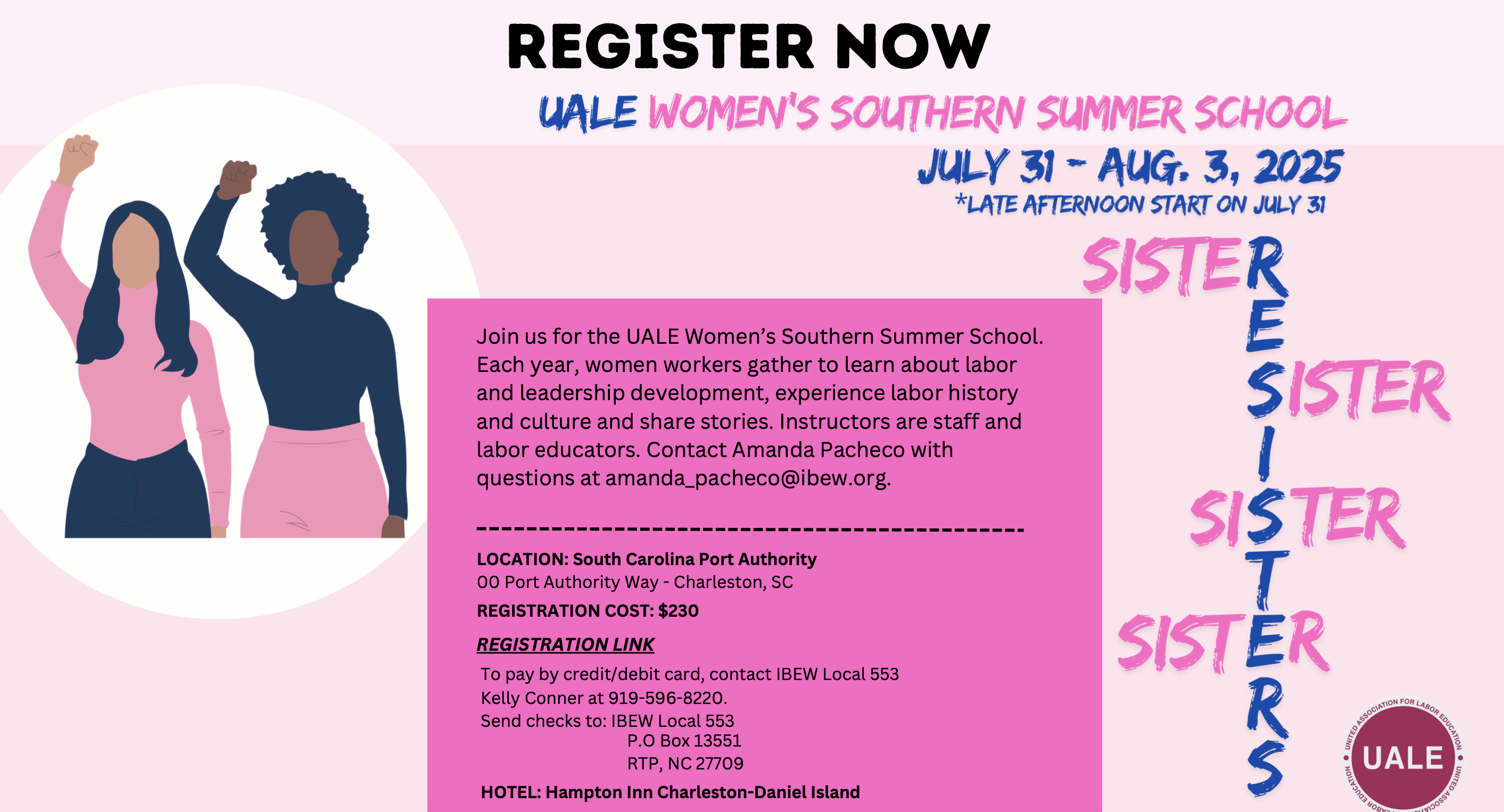
At the Southern Summer School, women workers come together to learn about labor and leadership development, experience labor history and culture, and share stories.
Write for Labor Notes. When you discover a good tactic, share the news! Thousands of readers in other workplaces can put the information to use. Email [email protected].
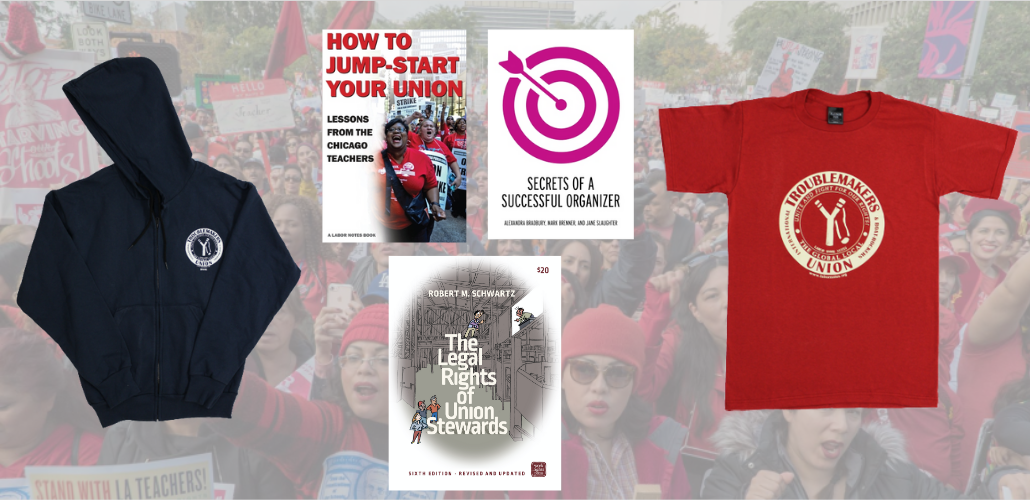
Visit the Labor Notes Store for books, knit caps, hoodies, T-shirts and more! Check it out atlabornotes.org/store.
Michael Burry, the legendary investor who predicted the 2008 crash, just made his biggest bearish bet ever – a staggering $1.6 billion against the U.S. stock market. He’s not just talking about a crash anymore; he’s putting his money where his mouth is. Even more shocking? He’s completely exited his U.S. positions and is betting big on China.
It has been two years since I last wrote a blog post for the Edu Alliance Journal. During that time, I took on the role of President/CEO of the American Association of University Administrators (AAUA) and dedicated myself fully to the organization. I set ambitious goals, including:
Launching a marketing and branding campaign to elevate AAUA’s visibility,
Increasing institutional and individual membership,
Establishing a high-profile multi-day conference, and
Stabilizing the organization’s finances to allow the hiring of a paid executive director.
While I initially anticipated achieving these milestones within three years, the board and I managed to accomplish them in just 18 months.
Reaching these goals was a significant achievement, and it signaled to me that it was time to focus on other priorities. As such, I submitted my resignation, effective January 1st, and “retired” from my leadership role at AAUA. However, I’ve always felt that retirement, in the traditional sense, isn’t for me. At 74, I still have ideas to share and contributions to make in the field of higher education.
I aim to address several projects and issues moving forward, such as returning to my work as an international higher education consultant and re-launching two podcast series. However, one other area is especially close to my heart: the plight of small colleges.
The Plight of Small Colleges
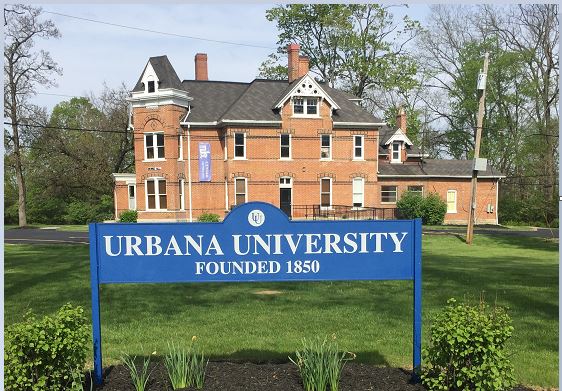
If you’ve followed my journey, you know that I earned my undergraduate degree from Urbana University, a small private college in Urbana, Ohio—a city with a current population of 11,161. In 1975, I designed my own major in College Administration, combining courses in business, history/political science, and psychology. During my senior year, I also completed a year-long internship in admissions.
As a nontraditional student (having started at the University of Dayton in 1968), it took me 6 ½ years and over 30 part-time jobs to complete my degree. Urbana gave me the opportunity to figure out what I wanted to do and how I could contribute to the world. It taught me adaptability and the goodness in people, which led me to the field I love—higher education.
Unfortunately, Urbana University didn’t survive. After being acquired by Franklin College in 2014, it closed its doors in May 2020 due to challenges brought on by the coronavirus pandemic and years of low enrollment.
Urbana had been an integral part of the community since 1850, serving as a significant economic engine. A 2017 study by the Southwestern Ohio Council for Higher Education estimated that Urbana contributed over $60 million annually to the economies of Champaign and Logan counties and employed 111 full-time staff during the 2015-2016 academic year. Its closure was devastating—not only for the university but also for the local businesses that depended on the foot traffic of students, visitors, and sports spectators.
Rural colleges like Urbana serve as vital economic and social hubs for their communities. However, the increasing trend of college closures poses significant risks, including economic downturns, reduced social engagement, and the loss of cultural identity.
Moving Forward
To address this issue, I’m developing a funding proposal to analyze the multifaceted impacts of struggling colleges in rural areas. My goal is to propose actionable solutions and share findings that empower policymakers and community leaders. By combining innovative research, advocacy, and problem-solving, this initiative seeks to provide practical tools for fostering resilient rural communities.
The research will focus on rural communities in Indiana, Ohio, and Pennsylvania. I’ve already received encouragement from regional leaders and am optimistic about finding partners to support this initiative. I’m seeking foundations, corporations, and government agencies to help fund this project, which aims to mitigate the ripple effects of college closures in rural America.
If you have thoughts or suggestions on this topic—or know of potential funders—please feel free to contact me at [email protected].
Stay tuned for updates on this and other projects I’m passionate about.
Dean Hoke is Co-Founder and Managing Partner ofEdu Alliance, an international higher education consultancy and podcast co-host of Higher Ed Without Borders and Small College America. He recently served as President/CEO of the American Association of University Administrators.
Dean began his professional career in 1975 with Bellarmine University, working in a variety of roles, including Admissions and External Relations. In 1983, he entered the broadcasting field, serving as a senior executive for Public Broadcasting System stations and a cable network. In 1998, he co-founded The Connected Learning Network, a full-service online learning company. In 2009, he accepted an invitation to move to the United Arab Emirates, serving in senior positions at Higher Colleges of Technology and Khalifa University before co-founding Edu Alliance in Abu Dhabi in 2014.
Hoke is passionate about advancing academic excellence and innovation worldwide. He participates in numerous advisory and consulting projects on international branch campuses, marketing/branding, and business intelligence. Dean has consulted, presented, and written on leadership, higher education, and distance learning in the United States, Bahrain, Kazakhstan, Lebanon, Oman, Nigeria, Spain, and the United Arab Emirates.
Hoke has a B.A. from Urbana University, an M.S. from the University of Louisville, and a Certificate in Executive Management from the University of Pennsylvania Wharton School. Dean currently resides in Bloomington, Indiana.
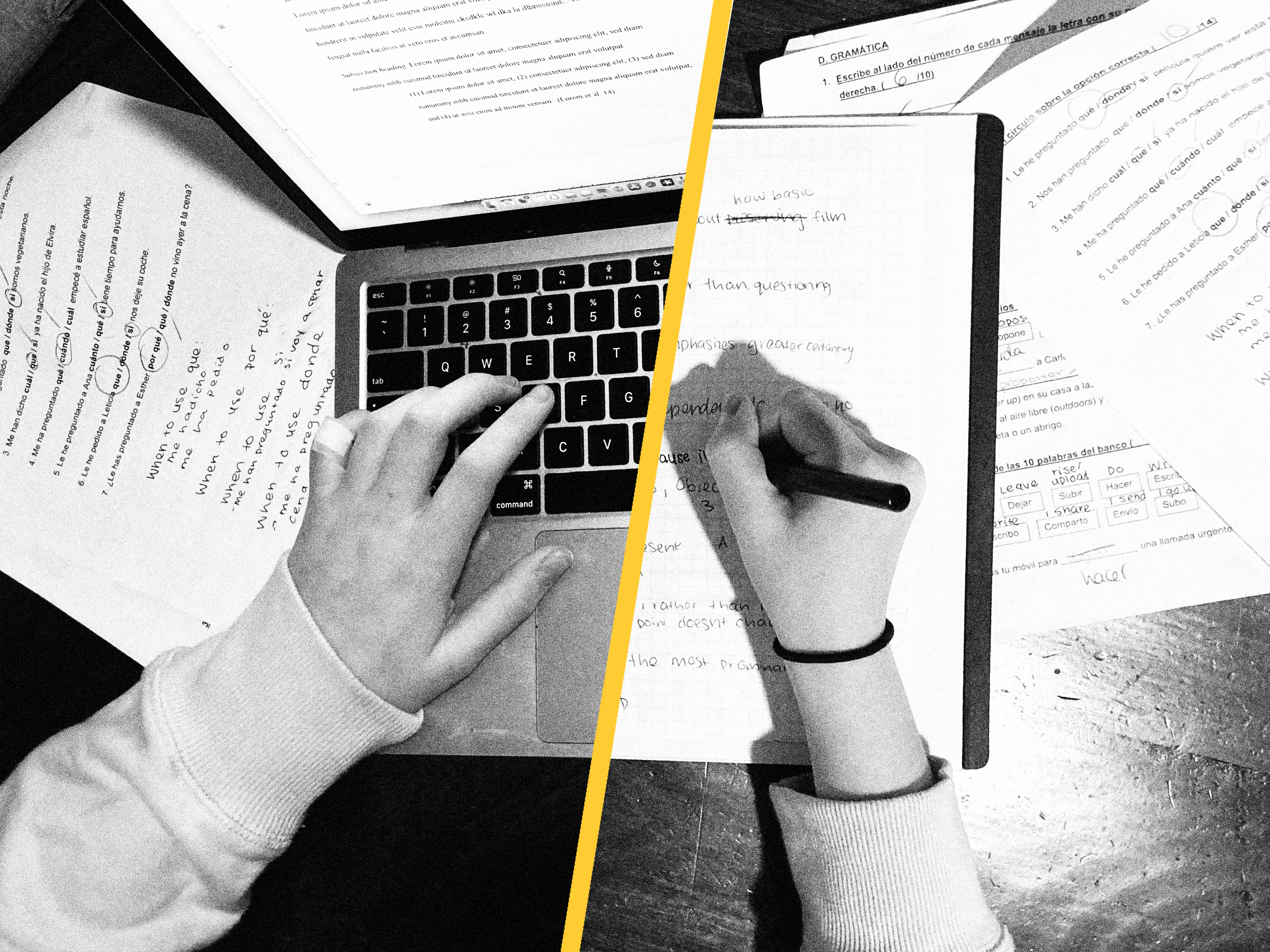
Imagine you’re a student in high school or college. Class is about to start. You are faced with a notable dilemma: Should you whip out a notebook or a laptop to take notes?
The answer is not so simple. A year ago, paper and pen seemed to be the winner when the journal Frontiers in Psychology published a Norwegian study that documented how different areas of the brain were communicating more frequently when students were writing by hand. When students were typing, the brain was not nearly so active. This extra brain activity, the neuroscientists wrote, is “beneficial for learning.”
The study ricocheted around the world. Almost 200 news stories promoted the idea that we remember things better when we write them down by hand instead of typing. It confirmed what many of us instinctively feel. That’s why I still take notes in a notebook even though I can hardly read my chicken scratch.
Yet earlier this month, the same academic journal published a scathing rebuttal to the handwriting study. A pair of scientists in Spain and France pointed out that none of the Norwegian college students was asked to learn anything in the laboratory experiment. “Drawing conclusions on learning processes in children in a classroom from a lab study carried out on a group of university students that did not include any type of learning seems slippery at best,” the critics wrote.
The Norwegian study asked 36 college students in their early 20s to write words from the game Pictionary using either a digital pen on a touchscreen or typing on a keyboard. The participants wore stretchy hair nets studded with electrodes to capture their brain activity. The scientists documented the differences between the two modes of writing.
Neither mode approximated real life conditions. The students were instructed to write in cursive without lifting the stylus from the screen. And they were only allowed to type with their right index finger.
The critics also questioned whether elevated brain activity is proof of better learning. Increased brain activity could equally be interpreted as a sign that handwriting is slower and more taxing than typing. We don’t know.
I contacted Audrey van der Meer, one of the co-authors of the Norwegian study who runs a neuroscience lab at the Norwegian University of Science and Technology in Trondheim. She pointed out that her critics promote the use of keyboards in education, and so they may not be unbiased. But she admitted that her study didn’t test whether students learned anything.
Van der Meer is conducting a fresh experiment that involves actual learning with 140 teenagers. She had the high school students watch a recorded lecture. Half of them were randomly assigned to take notes by hand, using a digital pen and touchscreen, and the other half typed their notes. Afterward, they all took the same exam graded by teachers at the school.
So far, she’s noticed clear differences in note-taking styles. Those who typed their notes wrote significantly more words, often transcribing parts of the lecture verbatim. They didn’t make any drawings. Those who used a digital pen mainly wrote key words and short sentences and produced two drawings, on average.
According to van der Meer, students who use the keyboard are writing down everything the teacher says “because they can.” But, she said in an email, “the information appears to be coming in through the ears and, without any form of processing, going out through the fingertips.” She added that when taking notes by hand, “it is impossible to write down everything, so students have to process the incoming information, summarize it, and link it to knowledge they already have.” That helps the “new information to stick better, resulting in better retention.”
Van der Meer said she could not yet share the exam results with me as she is still analyzing them. She explained that there are “many confounding variables” that make it difficult to tell if those who used handwritten notes performed better on the exam.
Even the pro-typing scientists admit that handwriting is important. Previous research has shown that writing letters by hand, compared to typing them, helps young children learn their letters much better. A 2015 study found that adults were better able to recall words in a memory game when they wrote them down by hand first instead of typing them. And a 2010 book chapter documented positive associations between writing words and being able to read them.
While there’s fairly compelling evidence that handwriting can help children learn their letters and new words, there’s less proof that handwriting helps us absorb new information and ideas. That’s not to say the Norwegian neuroscientists are wrong. But we still need the proof.
I’d also add that not all learning is the same. Learning to write is different from learning Spanish vocabulary. There may be times when typing is the ideal way to learn something and other times when handwriting is. Also, learning something involves far more than either typing or handwriting, and the methodwe use to take notes might ultimately be of small importance compared to how we study our notes afterwards.
The Hechinger Report provides in-depth, fact-based, unbiased reporting on education that is free to all readers. But that doesn’t mean it’s free to produce. Our work keeps educators and the public informed about pressing issues at schools and on campuses throughout the country. We tell the whole story, even when the details are inconvenient. Help us keep doing that.