Tag: OCR

  • 3 takeaways from OCR nominee’s Senate confirmation hearing

    3 takeaways from OCR nominee’s Senate confirmation hearing

    This audio is auto-generated. Please let us know if you have feedback.

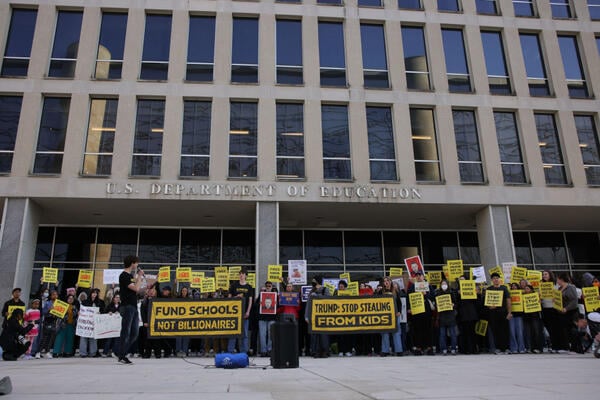
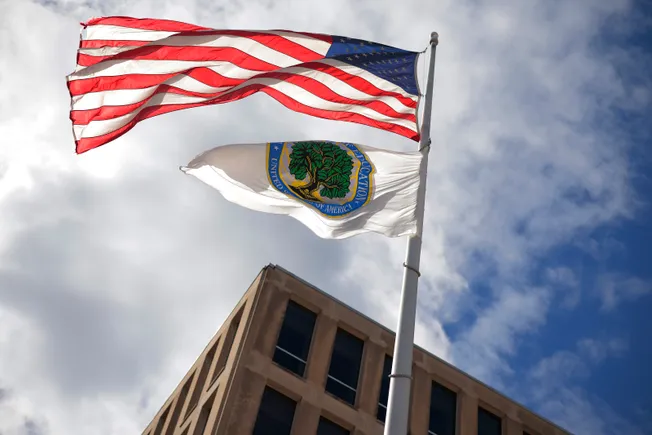
    The U.S. Department of Education’s Office for Civil Rights is undergoing a slew of changes, including a significantly increased caseload after the Trump administration let go of hundreds of its employees. With the nomination of Kimberly Richey to fill the role of assistant secretary for civil rights, it’s likely the office tasked with enforcing equal educational access will shift even more.

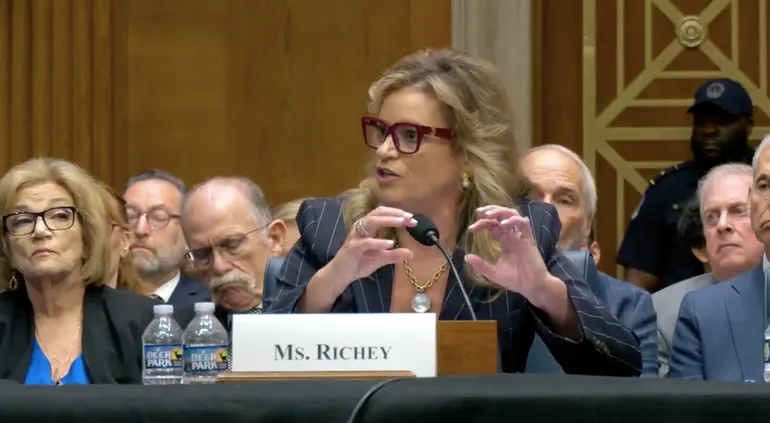
    Right now, attorneys are juggling on average 115 cases, according to Sen. Patty Murray, D-Wash., who shared the number with witnesses at a Thursday nomination hearing held by the Senate’s Health, Education Labor and Pensions Committee. 

    Prior to the March layoffs that resulted in the shuttering of seven out of 12 OCR offices nationwide, attorneys tasked with protecting the civil rights of students and educators had about 42 cases on their plate. That caseload was characterized as “untenable” by the former assistant secretary for civil rights, Catherine Lhamon, and had prompted former U.S. Education Secretary Miguel Cardona to advocate for an increase in the office’s funding under the Biden administration.

    Murray said the newer caseload was now “making it difficult for those investigators to meaningfully investigate discrimination and to protect students’ rights.” 

    Thursday’s hearing was held to discuss the nomination of Richey to lead OCR, among nominations of other officials such as Penny Schwinn to be deputy secretary of education. Richey served under the first Trump administration as acting assistant secretary for the Office of Special Education and Rehabilitative Services and then as acting assistant secretary for civil rights.

    Being ‘strategic’ with resources

    When asked by multiple Democratic senators about how she would navigate a backlog of OCR complaints — which exceeds 25,000, said Murray — with half of the office’s former headcount and a budget that would be significantly slashed under President Donald Trump’s FY 26 proposal, Richey said she would have to be “strategic.” 

    “One of the reasons why this role is so important to me is because I will always advocate for OCR to have the resources to do its job,” said Richey. However, she dodged questions about whether OCR, under Trump’s first administration, had enough resources to do its job.  

    “I think that what that means is that I’m going to have to be really strategic if I’m confirmed, stepping into this role, helping come up with a plan where we can address these challenges,” she said.

    That would include evaluating the current caseload and determining where complaints stand in their investigative timeline. It would also include looking at the current staff distribution and organizational structure of OCR, and helping Secretary of Education Linda McMahon come up with a plan to “ensure that OCR is able to meet its mission and its statutory purpose to prioritize all complaints.”

    Richey said that rather than put certain investigations on pause, as has been the case under the second Trump administration, she would prioritize all complaints that fall at OCR’s footsteps.

    Changes in Title IX enforcement

    Richey raised the eyebrows of some Republican leaders when she said that she would enforce Title IX, the anti-sex discrimination statute, to protect LGTBQ+ students from discrimination based on gender identity and sexual orientation. The Trump administration and Republican leaders have prioritized enforcing the statute to exclude transgender students from women’s and girls’ athletics teams, locker rooms and other facilities. 

    When pressed, however, Richey clarified that she would enforce Title IX to protect LGTBQ+ students in a narrow number of cases, related to different treatment, bullying and harassment. 

    “We would also look at the relevance of sex in our cases,” Richey said. “Sex is relevant in regards to restrooms, and sex is relevant in regards to locker rooms and sex is relevant in regards to athletics.” 

    The Biden administration’s interpretation of Title IX following the Supreme Court’s decision in Bostock v. Clayton County protected LGTBQ+ students, including transgender students, on athletic teams in some cases. It prohibited blanket bans of transgender students from athletics.

    “That is not what we did under President Trump’s first term, and that is not what we will do under President Trump’s second term,” she said. 

    Source link

  • Legal defense fund will seek to fill gap left by OCR reduction

    Legal defense fund will seek to fill gap left by OCR reduction

    This audio is auto-generated. Please let us know if you have feedback.

    Education attorneys are set to launch a new organization by fall 2025 that would defend students’ civil rights in court and also track and report civil rights data. The effort, according to its founding nonprofit, aims to fill the gap left by the Trump administration’s dismantling of the U.S. Department of Education and its civil rights enforcement arm. 

    The Public Education Defense Fund will be launched by the National Center for Youth Law, which advocates for educational equity among other youth-related issues. It will contract with former Office for Civil Rights attorneys. 

    “At a time when civil rights protections for students are under unprecedented attack, preserving those rights is not negotiable — it’s vital,” said Johnathan Smith, chief of staff and general counsel at NCYL. “We can’t stand by while the federal government abandons its responsibility to uphold the basic rights of children and young people in this country.”

    As part of the administration’s efforts to “end bureaucratic bloat” and send educational control to the states, U.S. Secretary of Education Linda McMahon laid off half of the Education Department’s staff as part of what she called the agency’s “final mission.” The move was followed by an executive order from President Donald Trump calling for the department to be shut down to “the maximum extent appropriate and permitted by law.”

    The Education Department’s Office for Civil Rights took a major blow, with the department shuttering seven of the 12 regional offices that were in charge of more than half of the nation’s open civil rights cases. Over 200 OCR employees were laid off as part of the reduction in force.

    Under the Biden administration, those employees carried a load of more than 40 cases per person. Attorneys fired as part of the reduction in force were in charge of investigating civil rights complaints related to discrimination and harassment in schools, as well as overseeing resolution agreements with school districts. These agreements guide the school systems involved in making policy changes to improve educational access, especially for historically marginalized students.

    Prior to the announcement of the Public Education Defense Fund, NCYL filed a lawsuit against the Education Department in March to challenge the changes at the OCR. The lawsuit said the civil rights enforcement arm “stopped investigating complaints from the public based on race or sex discrimination, it cherry-picked and, on its own initiative, began targeted investigations into purported discrimination against white and cisgender students.”

    Source link

  • Students and Institutions in Limbo After Mass Layoffs at OCR

    Students and Institutions in Limbo After Mass Layoffs at OCR

    A month after the Department of Education closed seven of its 12 regional civil rights offices and laid off nearly half the staff in the Office for Civil Rights, there’s still uncertainty about how the agency will perform its functions with such reduced numbers.

    OCR was founded to ensure equal access to education for all students and is responsible for investigating claims that schools and institutions of higher education failed to protect their students from discrimination. But under the current administration, the office has shifted gears to focus on President Donald Trump’s top priorities: removing trans women from women’s sports teams, protecting against alleged discrimination against white students, and protecting students against alleged antisemitism.

    Back in February, the office’s acting head, Craig Trainor, told employees to pause all investigations except for a handful that aligned with those priorities, according to ProPublica. Trainor quickly told investigators they could once again begin investigating disability-related complaints, which made up the largest share of the pending complaints, but not those related to race- or sex-based discrimination.

    Tracey Vitchers, the executive director of It’s On Us, a nonprofit advocacy organization focused on combating campus sexual violence, says this harks back to the first Trump administration: At the time, a large number of complaints were “quietly ignored” by OCR, leading to a massive backlog for former president Joe Biden’s administration to handle when he came into office in 2021.

    “That was the playbook during the first administration, and it was just that they just sat on shelves, essentially—digital shelves. Those cases were put on the digital shelf, ignored, not opened, not investigated,” she said.

    When Trump took office, more than 12,000 cases were open with OCR, including over 3,000 at institutions of higher education, according to a database of open OCR cases.

    Over half of all OCR cases were being handled by a regional office that is now closed, according to a report from Sen. Bernie Sanders, a Vermont Independent who is the ranking member on the Senate Health, Education, Labor and Pensions Committee. Following the layoffs, each investigator’s caseload—which was already at an all-time high of 42 cases—is expected to skyrocket to 86 cases as a result of the cuts, significantly reducing investigators’ ability to resolve each complaint, per the report.

    The data in the report reflects concerns from former OCR staffers who warned that the layoffs would make protecting students’ civil rights more difficult.

    Experts say that OCR complaints going unresolved can be a serious impediment to a student’s ability to learn.

    “At the postsecondary level, common complaints are refusals to accommodate,” said Paul Grossman, an attorney who worked at OCR for 41 years and is now executive counsel for the Association for Higher Education and Disability. “A student wants a particular kind of accommodation, and the school says, ‘No, that’s a fundamental alteration or an undue burden,’ and the student, as a result, may get dismissed because they don’t meet the academic standards, may get dismissed because they don’t meet conduct standards, whatever the case may be. Or the student may just be unhealthy—they may not be well enough to continue, because they don’t get the accommodation.”

    The public repository of open OCR cases, which used to be updated weekly, has not been updated since Jan. 14, just before Inauguration Day. But ProPublica reported in late February that only about 20 new cases have been opened since Trump took office, whereas about 250 cases were opened in the same period last year.

    That most likely comes down to OCR’s decisions about what to investigate. But Vitchers also noted that, since even before Trump’s second term began, she hasn’t been as eager to advise students to open a case with OCR in response to their institutions mishandling Title IX complaints. After the Biden administration finalized its Title IX regulations, which offered protections to transgender students and which organizations like It’s On Us said were much more sympathetic to victims of sexual violence than Trump’s previous regulations, in the summer of 2024, numerous states sued to block the regulations. The legal tussle made for a complicated environment for students seeking justice for sexual harassment or assault through Title IX, and the Biden rule was eventually vacated just over a week before Inauguration Day.

    “Very honestly, with the back-and-forth on Title IX, and particularly once we saw the Biden rule get challenged, we sort of, somewhat quietly, encouraged students to really pause and take a hard look at, what was the outcome that they were looking for? And help them assess, is the OCR complaint going to get you the outcome that you’re actually looking for here?” she said. “If it is, then we will support you in finding an attorney and filing a case. But with so many of the students that we work with, many of them made the decision to, essentially, protect their own peace.”

    ED did not respond to a request for comment.

    Mediation, Digital Accessibility and More

    On top of concerns about the backlog of complaints going unanswered, experts are also worried about other, lesser-known functions of OCR that likely are not currently happening.

    In some cases, complainants can opt for early mediation, a type of resolution that is more informal and generally quicker than an investigation. But it is unclear if such mediations are happening currently; Grossman said he has heard one example of a planned mediation being canceled, and ED did not respond to a question from Inside Higher Ed about the issue. Grossman also noted that OCR is responsible for continuing to monitor the aftermath of investigations that have already been resolved.

    Jamie Axelrod, director of disability resources at Northern Arizona University and a past president of AHEAD, pointed out that OCR is responsible for conducting digital compliance reviews, in-depth surveys of whether a school or university’s digital resources, such as its website and learning management systems, are accessible to students with disabilities. During the previous Trump administration, Axelrod said, ED stood up a specialized team to complete these reviews and provide technical assistance to institutions to help them make their digital resources more accessible. Now, that team has been reduced significantly, according to Axelrod.

    He also noted that OCR is supposed to be a tool schools and universities can turn to in order to answer any questions about how to appropriately accommodate their students.

    “The point of that is to avoid circumstances that wind up causing discrimination against students with disabilities, and so that’s a key role,” he said. “And it’s hard to really calculate how many instances of discrimination [that prevented from] happening in the first place. It’s hard to count what you prevented, but that is an important role, and I’m sure it leads to resolution of lots of complicated circumstances.”

    The impacts of the cuts are likely to go even deeper than the individual cases that have been displaced to new investigators and the specific programs that will likely fall by the wayside.

    “Like any postsecondary educational institution, there’s a lot of institutional memory that’s developed,” Grossman said. “You have to develop connections, relationships, understandings, insights, experience, and all these people who are going out the door, you’re just lighting a match to all that expertise and experience. And to me, that’s a really sad thing.”

    Source link

  • Half of OCR eliminated after Trump Education Department layoffs

    Half of OCR eliminated after Trump Education Department layoffs

    This audio is auto-generated. Please let us know if you have feedback.

    The U.S. Department of Education has let go of hundreds of its employees charged with protecting the civil rights of students and educators. The agency also shuttered seven of its 12 civil rights enforcement offices, according to former department employees.

    Offices in Chicago, Philadelphia, New York City, Dallas, San Francisco, Boston and Cleveland have been closed. Those in Atlanta, Denver, Kansas City and Seattle remain open, as well as the OCR headquarters in Washington, D.C. 

    In total, the seven closed offices of the Education Department’s Office for Civil Rights oversaw half of the nation’s states, impacting nearly 60,000 public schools and over 30 million K-12 students.

    Those fired include scores of civil rights attorneys, according to an internal memo from the American Federation of Government Employees Local 252. The union represents nearly 1,000 of the roughly 1,300 Education Department employees laid off Tuesday evening as part of the Trump administration’s sweeping effort to gut the department, including at least 240 OCR staff.

    More than 6,000 investigations impacted

    “The Department of Education has turned its back on civil rights in schools,” said Catherine Lhamon, who led OCR under the Biden administration. “It’s not possible to resolve cases… effectively with fewer than half the investigative staff that the office had had two days ago” 

    The agency’s civil rights enforcement arm is responsible for implementing protections for all students, including underserved students. It is tasked with ensuring that, among others, students with disabilities, students from all racial backgrounds, and sexual assault survivors have equal access to education. 

    Doing so requires investigations of alleged civil rights violations and compliance reviews of school systems that sometimes take years — even with all 12 offices operating and fully staffed. The offices that were closed were in charge of many of those cases. 

    “You’re talking about cases being in the middle of mediation right now,” said Victoria DeLano, who worked for the Atlanta office as an equal opportunity specialist prior to her termination. 

    The cases OCR settles with schools and universities often set the tone for civil rights policies and practices in schools nationwide. The seven offices shuttered had over 6,000 open investigations as of Jan. 14, according to OCR’s website that was last updated under the Biden administration.

    With the abrupt closures and layoffs, however, much of that is up in the air.

    “I can’t even comprehend it — the fallout that this is going to have,” said DeLano.

    Offices close as complaints climb

    In the past few years, the office’s caseload had been steadily climbing. In fiscal year 2023, the office received 19,201 complaints, representing a 2% increase from 2022 and nearly triple the number of complaints in 2009.

    Prior to the new administration and its sweeping layoffs, each OCR investigative staff was juggling a caseload of about 50 complaints, which Lhamon already considered “untenable.” In fact, the high number of cases and slim number of investigators at the time had prompted former Education Secretary Miguel Cardona to request more funding from Congress, which would have helped hire additional OCR staff. 

    In contrast, the Trump administration has cited a desire to reduce the Education Department’s budget as part of the reason driving the sweeping layoffs.

    Some of those cut as part of President Donald Trump and Education Secretary Linda McMahon’s effort to “end bureaucratic bloat” were onboarded just months before being fired without notice, according to DeLano, who was hired in December under the former administration and then terminated in February. 

    DeLano realized she was out of a job after being locked out of her government laptop, and she only received a formal notice of termination after six days of being denied access.

    “It was done just completely heartless,” DeLano said. “I cannot believe that 50% of OCR is gone.”

    The massive cuts come after the administration told OCR staff to hit pause on its open investigations, and — instead of addressing public complaints — directed its resources to addressing the president’s priorities, like scaling back Title IX to exclude LGBTQ+ rights. Following a Feb. 5 executive order barring transgender women from playing on sports teams aligning with their gender identities, the Education Department launched multiple investigations into athletic associations, colleges and schools over their sports policies.

    Source link

  • OCR halts investigations, switches focus to Trump priorities

    OCR halts investigations, switches focus to Trump priorities

    The U.S. Department of Education’s Office for Civil Rights has paused the majority of its investigations, according to a new report from ProPublica, and shifted focus to new cases related to gender-neutral bathrooms, trans women athletes and alleged antisemitism and discrimination against white students.

    Those cases, in contrast with most historically taken on by OCR, were not launched in response to student complaints, but rather as a result of direct orders from President Donald Trump’s administration. OCR employees told ProPublica that they have been instructed to cancel meetings related to cases opened prior to Trump taking office and to avoid communicating with students, families and institutions involved in those cases.

    One OCR employee who spoke to ProPublica under the condition of anonymity said many of the cases they have been asked to stop investigating are urgent.

    “Many of these students are in crisis,” the employee said. “They are counting on some kind of intervention to get that student back in school and graduate or get accommodations.”

    About 12,000 complaints were under investigation at the end of former president Joe Biden’s term, including 6,000 related to discrimination against students with disabilities, 3,200 related to racial discrimination and 1,000 related to sexual assault or harassment, ProPublica’s analysis of OCR data found.

    Source link

  • Department of Education’s OCR Issues Resource Documents on Title IX Compliance for Athletic Programs – CUPA-HR

    Department of Education’s OCR Issues Resource Documents on Title IX Compliance for Athletic Programs – CUPA-HR

    by CUPA-HR | March 1, 2023

    On February 17, the Department of Education’s Office for Civil Rights (OCR) issued three resource documents on Title IX compliance for school athletic programs. The first resource document covers support for equal opportunity in school athletic programs generally, while the other two cover Title IX and athletic opportunities at K-12 schools and colleges and universities separately.

    According to the OCR, these documents were designed “to help students, parents, coaches, athletic directors and school officials evaluate whether a school is meeting its legal duty to provide equal athletic opportunity regardless of sex,” and they provide examples of situations that may mean a school is not complying with Title IX requirements. The guidance does not make any changes to existing enforcement procedures for the OCR, rather, it is intended to be used by institutions to ensure that their existing protocols and programs are compliant with Title IX.

    Supporting Equal Opportunity in School Athletic Programs

    The first resource document reiterates Title IX’s prohibition of discrimination on the basis of sex in education programs and activities, including athletic programs, that receive federal funds. It states that Title IX requires schools to effectively accommodate the athletic interests and abilities of their students regardless of sex, and provide equal opportunity in the benefits, opportunities and treatment provided for their athletic teams. It also clarifies that Title IX requires colleges and universities to not discriminate on the basis of sex in the provision of any athletic scholarships or financial assistance to students.

    The resource document included four examples of situations that may surface Title IX concerns at colleges and universities, which are listed below:

    • The men’s teams at a college receives new athletic apparel and gear each year, while the women’s teams must use old apparel and purchase some of their own equipment.
    • Across its entire athletic program, a college awards disproportionately more athletic financial assistance to men than women.
    • A university provides funds for its coaches to recruit athletes for its men’s football and basketball teams because it considers those teams to be “flagship sports.” It provides no funds for coaches to recruit women athletes. As a result, the school has difficulty attracting women to participate in its athletic program.
    • Women are underrepresented in a university’s athletic program compared to their representation in the student body. The university would have to offer 54 additional spots for its women students on existing or new teams for women to have substantially proportionate athletic participation opportunities. Women have expressed an interest in having more teams, and there are women students participating in club sports for which there are no varsity teams. Those club sports include lacrosse, water polo, ice hockey and bowling — all of which have intercollegiate competitions available and are sanctioned by the athletic governing body the university belongs to. Yet, the university has not added a women’s team for many years.

    Title IX and Athletic Opportunities in Colleges and Universities

    The resource document designed specifically for institutions of higher education dives deeper into background information on Title IX, as well as ways that students, coaches, athletic directors and school officials can evaluate a school’s athletic program and whether it’s meeting its legal requirements to provide equal athletic opportunity. With respect to the evaluation, the document guides readers with questions and examples of Title IX compliance with respect to the benefits, opportunities and treatment for men’s and women’s teams; athletic scholarships and financial assistance, and meeting students’ athletics interests and abilities.

    Benefits, Opportunities and Treatment for Men’s and Women’s Teams

    With respect to equivalent benefits, opportunities and treatment for men’s and women’s teams, the resource document lists several questions about an institution’s attempts to provide equal opportunities to both men and women student-athletes. These questions surround the following topics:

    • Equipment and supplies
    • Scheduling games and practice time
    • Travel and daily allowances
    • Coaching
    • Academic tutors
    • Locker rooms, fields, courts and other facilities for practice and competition
    • Medical and training facilities and services
    • Housing and dining services
    • Publicity
    • Recruitment

    The resource document explicitly states that if any of the questions listed under these topics is answered as a “no,” it may indicate a possible Title IX violation.

    Athletic Scholarships and Financial Assistance

    The document also creates questions that may be used to assess a school’s provision of scholarships and athletic financial assistance. The questions help guide users to measure the percentage of women and men participants at their institution and the percentage of scholarship awards provided to women and men, and it lists questions and examples to help compare these percentages. These questions may again point to disparities among programs that could be potential violations of Title IX, but the OCR states that it “will take into account all legitimate, non-discriminatory reasons for disparities provided by the school” if there are disparities present between percentages awarded to men’s and women’s programs.

    Meeting Students’ Athletic Interests and Capabilities

    The resource document refers to the “three-part test” that institutions may use to demonstrate that all Title IX legal requirements are being fulfilled. Schools are only required to use one of three options to show compliance with Title IX, which are detailed in the document and briefly listed below:

    • Option 1: Substantial Proportionality — This option looks to whether the percentage of women and men participants on athletic teams are about the same as, or “substantially proportionate” to, the percentage of women and men enrolled as full-time undergraduates at your school.
    • Option 2: History and Continuing Practice — This option looks to whether your school can show it has a history and continuing (i.e. present) practice of expanding its athletic program to respond to the interests and abilities of women, if women have been underrepresented, or if men have been underrepresented.
    • Option 3: Interests and Abilities of Students — This option asks whether your school can show that — despite the disproportionality — it is otherwise meeting the interests and abilities of the underrepresented sex.

    The resource document states that following longstanding practice for showing Title IX compliance — if an institution is unable to use any of the three options to show compliance with Title IX — may not be meeting legal requirements to provide equal opportunity to participate in athletics based on sex under Title IX.

    Options for Filing Complaints for Title IX Violations

    Both the general support and higher education-specific documents end their guidance with ways in which students, parents, employees and others in the school community may file Title IX complaints through their school’s grievance procedures if they believe their institution is not providing equal athletic opportunity based on sex. The documents first turn readers to their institution’s Title IX coordinator, but also provides the option to file a complaint online with the OCR. It also clarifies that anyone is able to file complaints with the OCR, which may include individuals outside of the school community.

    CUPA-HR will continue to monitor for any updates to Title IX compliance and will keep members apprised of any updates with respect to Title IX law and regulations.


    Source link