Tag: offers

  • Duke University offers buyouts and signals future layoffs as federal cuts hit

    Duke University offers buyouts and signals future layoffs as federal cuts hit

    Dive Brief:

    • Duke University is offering voluntary buyouts for employees and has frozen hiring as it braces for federal funding cuts, the institution said Wednesday. 
    • The North Carolina institution signaled that layoffs were likely in the coming months, but said it is “pursuing several employment actions now in hopes of reducing the scale of involuntary separations later this summer.”
    • The moves are in response to federal cuts and policy shifts, which could translate into funding losses for Duke between $500 million and $750 million, university officials said during an internal webinar Wednesday, according to media reports.

    Dive Insight:

    Historically, much of Duke’s research enterprise has been devoted to work on behalf of the government. Federal grant support made up nearly three-quarters of the $1.5 billion in sponsored research funds that Duke received in fiscal 2024, much of it going toward health science.

    The university, in its latest financial statement, described its medical school as “one of the largest biomedical research enterprises in the country.” And funding just from the U.S. Department of Health and Human Services — which houses the National Institutes of Health — accounted for 58% of all of Duke’s sponsored research funding. 

    The National Science Foundation and U.S. Department of Energy also accounted for tens of millions of dollars in the university’s funding. 

    Since President Donald Trump retook office, those agencies and others have been cutting and delaying grant awards at a frantic pace, including moves to cap reimbursement for indirect research costs at NIH and the Energy Department. Both funding caps have been blocked in courts — at least for now — but the Trump administration is continuing to fight the legal cases against the policies. 

    Uncertainty over the funding will likely loom for some time to come. 

    For Duke, the NIH indirect cost cap would mean $194 million in lost funding each year, President Vincent Price and other leaders said in February. 

    “Much is at stake,” the officials said then. “Our nation’s world-leading research enterprise has been enabled by — and will only be sustained by — partnership and co-investment from both the government and higher education.” 

    They also signaled at the time that “careful planning and difficult decisions” could lie ahead. 

    Today, Duke is trying to cut $350 million from its budget, according to reports of the university’s presentation, as it grapples with funding gaps under the Trump administration. 

    As it trims down, Duke has paused capital spending on buildings, renovations and other projects that are “not fully funded or deemed essential,” the university said Wednesday. 

    It’s also reviewing universitywide programs — such as technology adoption, off-campus real estate and on-campus space consolidation — for potential cost-savings.  

    Employee benefits could also be on the chopping block. 

    “A study is also under way to assess how certain changes to the university’s benefits may generate savings while protecting the program’s strong competitive position,” Duke said.

    However, Executive Vice President Daniel Ennis told employees Wednesday that the university still plans to give out merit raises and will not change its tuition grant program for children of employees. 

    Universities around the country have been scrambling in recent months to open breathing room in their budgets to cope with the uncertainty and disruption created by cuts and delays at federal agencies. Many have frozen hiring and budgets to maintain financial flexibility while others have laid off employees to cope with cuts.

    Source link

  • College Offers Free Housing, Meals for Dependents of Students

    College Offers Free Housing, Meals for Dependents of Students

    College students who live on campus are more likely to feel a sense of belonging to their institution and have better educational outcomes, but on-campus housing facilities frequently neglect parenting students, thus limiting their opportunity to be more engaged at their institution.

    Additionally, students with dependents are more likely than their nonparenting peers to experience financial hardships and lack access to basic needs, according to a 2021 survey by Trellis Strategies. Three in five student parents had experienced housing insecurity in the previous 12 months, and one in five had very low food security.

    A January brief by Generation Hope identified housing as a key area for colleges to expand support for parenting students, since a lack of secure housing can impede students’ degree progress as well as negatively impact the socioemotional development of their dependents.

    For decades, Wilson College in Pennsylvania has offered special housing to single parents enrolled at the institution, alleviating financial barriers to on-campus living and providing greater access to educational resources. The Single Parent Scholar Program has helped dozens of single parents persist and opened doors for their children to be exposed to postsecondary education in a unique way.

    “It breaks my heart to think people would ever have to choose between your child and your education, so we’re trying to take that awful choice away,” said Katie Kough, dean of students at Wilson College. “You don’t have to make that choice.”

    Paving new ground: Wilson College was founded as a women’s college in 1869 and in 1996 first started the Single Parent Scholar Program—then called the Women With Children program—as a way to serve single mothers in the area.

    Historical data shows single parents are less likely to enroll and complete a degree, which negatively affects their earning potential over time and can create generational impact on their socioeconomic situation.

    A brief by the Institute for Women’s Policy Research found that only 28 percent of single mothers who entered college between 2003 and 2009 earned a degree or certificate within six years, compared to 40 percent of married mothers and 57 percent of women without children. Single mothers are also more likely to have higher levels of debt and financial insecurity while enrolled, according to the brief.

    “I’ve always said [supporting single mothers] was the right thing to do, but it was a brave thing to do,” Kough said, noting that Wilson was one of the first colleges to do so. “There’s obviously been growing pains throughout the years, but since that time, the college has made a commitment to this population in helping them earn their degree.”

    How it works: As the name suggest, the Single Parent Scholar Program is open to unmarried students who have a dependent between the ages of 20 months and 10 years old. Wilson College has been coed since 2014, so single fathers are also eligible to participate.

    Program participants and their dependents reside in a modified student housing complex; each unit includes two bedrooms and a bathroom, and residents share a common lounge and kitchen space with their peers. The Single Parent Scholars Program can accommodate up to 12 students per year.

    The college subsidizes childcare in the local community, though the parent is responsible for providing transportation and shuttling their dependents on and off campus.

    Single parent scholars must purchase a meal plan, but their dependents eat for free at on-campus dining facilities. Many opt for the lowest-priced plan to maintain their SNAP eligibility, Kough said.

    Parents are also allowed to stay on campus during academic breaks and summer term, which helps provide some stability.

    The impact: Program eligibility is dependent on the age of the child, not the parent, so the students range in age from teens straight out of high school to those in their 20s or 30s. To date, all participants have been single mothers, which could be due in part to the type of student who seeks out Wilson, Kough said, or the small number of single fathers who enroll in higher education.

    The campus is welcoming to the parents and their dependents, offering various events and activities geared toward families, such as kid-friendly movie screenings and visits to the college farm. Many parents engage in athletics, clubs and other on-campus activities, allowing them to have the full college experience.

    “The kids are a blast—they’re a lot of fun and they bring a lot of joy to this campus,” Kough said. Dependents of program participants are given their own cap and gown to walk at graduation, and some children have returned to Wilson as legacies.

    Wilson College Single Parent Scholars alumnae say the program helped them achieve their dreams through providing housing and community.

    Program alumnae also note the value of living in community with other single parents who are working toward the same goal of earning a bachelor’s degree.

    “I’m proud of the women who have come in, perhaps giving up a lot. In some cases, they gave up houses and apartments and jobs with some immediate gratification of a paycheck, just putting all that aside for a dream that was down the road,” Kough said. “It’s hard to put into words but it certainly makes a lot of the struggle and the work absolutely worth it.”

    If your student success program has a unique feature or twist, we’d like to know about it. Click here to submit.

    Source link

  • ShareWell Offers Free Mental Health Support to University Students Nationwide

    ShareWell Offers Free Mental Health Support to University Students Nationwide

    ShareWell—the first peer-to-peer mental health support platform—is now offering free, unlimited memberships to all university students across the U.S.

    With 70% of college students reporting mental health challenges, ShareWell aims to fill critical gaps in care by providing live, virtual peer-led support groups on topics like anxiety, depression, academic pressure, and life transitions. Students can join as many sessions as they want—completely free—by signing up with their university email at www.sharewellnow.com.

    It’s a simple way to access community support during what can be some of the most overwhelming years of life.

    Source link

  • This week in 5 numbers: Why the UT System offers microcredentials for free

    This week in 5 numbers: Why the UT System offers microcredentials for free

    How many higher education institutions are overseen by Florida’s university and college systems. This week, Florida Gov. Ron DeSantis launched the state’s own version of the Elon Musk-led Department of Government Efficiency and directed it to work with education officials to cut “unnecessary spending, programs, courses, staff, and any other inefficiencies.”

    Source link

  • Kansas State University’s Braggin’ Wagon Offers a Unique Way to Recognize Campus Employees – CUPA-HR

    Kansas State University’s Braggin’ Wagon Offers a Unique Way to Recognize Campus Employees – CUPA-HR

    by CUPA-HR | October 19, 2022

    Think about a time you were recognized by a colleague for a job well done. Whether it was a grand gesture or a small act of recognition, chances are the personal shoutout put some pep in your step. Positive recognition in any form is a sure mood booster and helps move campus well-being in the right direction.

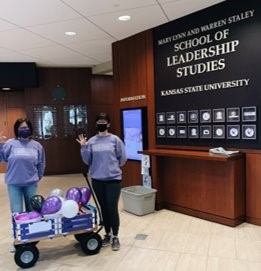
    In a recent CUPA-HR webinar, Refuel, Invest and Inspire Campus Well-Being, presenters from Kansas State University (K-State) shared a unique way of recognizing teams and departments on campus: the Braggin’ Wagon.

    The Braggin’ Wagon was developed by K-State’s Staley School of Leadership, which has a strong partnership with HR. The decorative travelling wagon is filled with treats, candy, small toys and other fun items for the receiving team to enjoy. Once the wagon is delivered to a department, it is up to that department to restock the wagon and deliver it to another department in order to keep the recognition going.
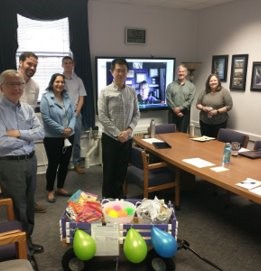
    This simple yet powerful way of recognizing campus employees serves a double purpose — it adds an element of fun to the work day for the team being recognized (who doesn’t love getting a surprise treat in the middle of a work day?), and it also gives the team passing on the wagon an opportunity to get out of the office for some exercise and take a mental break in the work day.

    When K-State resumed in-person work, it was important to put the emphasis on our employees and the solid work they were doing to make a difference. The Braggin’ Wagon was a way for departments to recognize other university partners who contributed to their work in a positive way,” says Shanna Legleiter, associate vice president of human capital services at K-State.

    With the Braggin’ Wagon as inspiration, what are some other creative ways HR can shine a spotlight on employees who work hard to keep campus operations running smoothly? Are there campus partnerships that can be formed to bring ideas for recognition to life? Don’t be afraid to think outside of the box when it comes to recognition opportunities!


    Source link