Tag: office

  • Senate OKs Richey to Lead ED Civil Rights Office

    Senate OKs Richey to Lead ED Civil Rights Office

    Senate Health, Education, Labor and Pensions Committee

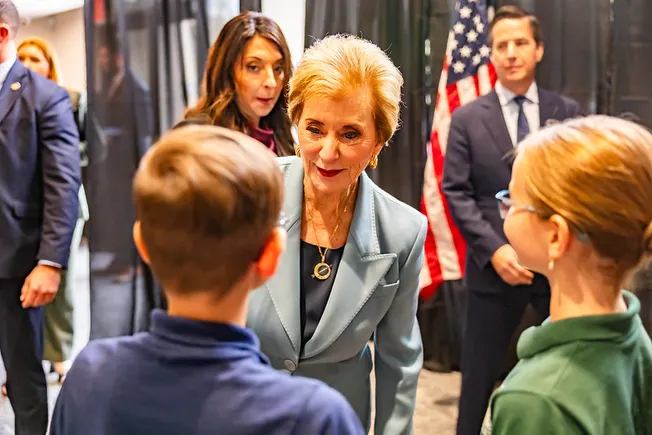
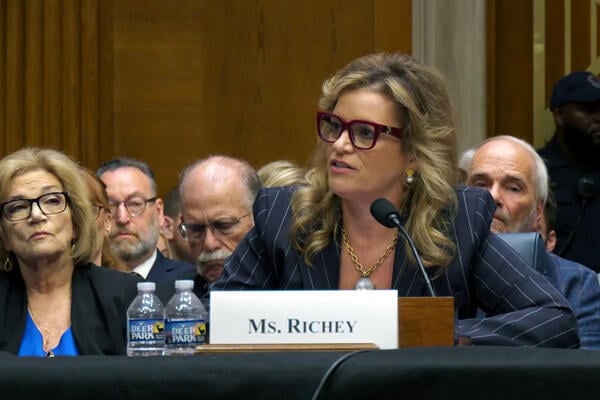
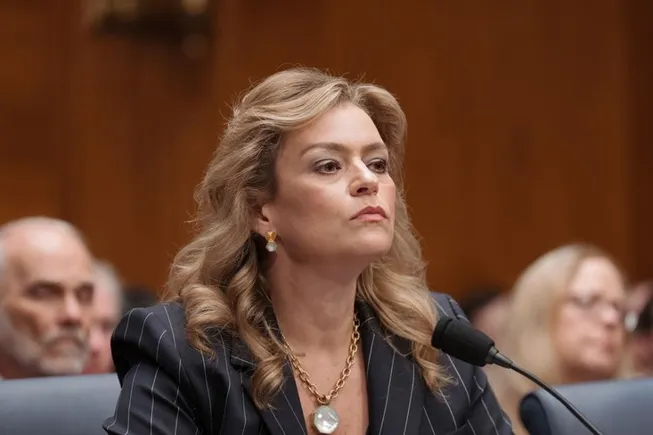
    The Senate voted this week to confirm Kimberly Richey as the Education Department’s assistant secretary for civil rights—returning her to a role she held in an acting capacity from August 2020 until November 2021, spanning the end of President Trump’s first term and the start of President Biden’s. Richey also worked in the department during the George W. Bush administration.

    The vote was 51 to 47 along party lines, with Democrats and Independents all voting nay.

    Over the past few years, Richey worked in state positions as a senior chancellor in the Florida Department of Education and a deputy superintendent in the Virginia Department of Education. She now returns to the federal government to lead a greatly diminished Office for Civil Rights—the Trump administration laid off nearly half the OCR staff in March—with a significant case backlog.

    The administration is using what’s left of the office as an arm of its campaign against transgender rights, programs aimed at helping minorities and allegations of antisemitism. The OCR has been investigating both K–12 school districts and universities over these issues. Richey told senators during her June confirmation hearing that she’s committed to pursuing cases related to antisemitism and trans women playing on women’s sports teams.

    According to a résumé published by government watchdog American Oversight, Richey has also worked with conservative organizations to draft education legislation and policies. Those policy proposals mostly centered on K–12 and included promoting school choice and banning critical race theory (although the topic is not taught in K–12 schools). A 2022 receipt American Oversight uncovered indicated that Richey’s consultancy, RealignEd LLC, was paid $10,000 to “provide subject matter expertise, review and evaluation, and policy advice related to inherently divisive topics and other provisions” shortly after Virginia governor Glenn Youngkin signed an executive order prohibiting “the use of inherently divisive concepts, including critical race theory,” in schools.

    Craig Trainor, the principal deputy assistant secretary for civil rights, has led the office as acting secretary since Trump took office earlier this year. In that post, he sent out controversial guidance banning race-based programming and activities, which was later blocked by the courts. He’s now moving to Department of Housing and Urban Development, where he’ll be the assistant secretary for fair housing and equal opportunity.

    Source link

  • Richey confirmed to lead Education Department’s Office for Civil Rights

    Richey confirmed to lead Education Department’s Office for Civil Rights

    This audio is auto-generated. Please let us know if you have feedback.

    The Senate confirmed Kimberly Richey as the next assistant secretary for civil rights at the U.S. Department of Education in a 51-47 vote along party lines late Tuesday afternoon. The approval came as part of a resolution allowing senators to consider for confirmation Richey and over 100 other federal nominees at once. 

    Richey served as acting assistant secretary at the Education Department under the first Trump administration — first for the Office of Special Education and Rehabilitative Services and then for the Office for Civil Rights — and also worked at OCR under the George W. Bush administration. 

    Her approval had been nothing short of expected, considering the slight Republican majority in the Senate and President Donald Trump’s nomination in February to head the Education Department’s civil rights arm.

    As assistant secretary of OCR, Richey will be responsible for overseeing investigations into alleged civil rights complaints, protecting all students’ civil rights, and drafting and implementing civil rights regulations, including but not limited to Title IX, Title VI and Section 504. 

    She was confirmed to steer a ship that is functioning at half of its previous capacity, with OCR down to five out of 12 of its offices. She faces a backlog of over 12,000 open investigations and more than 25,000 complaints, and a pared down staff as a result of Trump and U.S. Education Secretary Linda McMahon’s efforts to wind down the department. 

    She’s also entering the office as the Education Department is embroiled in a lawsuit that, until recently, required OCR be restored to its previous capacity by returning laid off workers to their jobs. Just as the Education Department began returning OCR staffers back to the job in waves, the federal district court order requiring its restoration was overturned in September by the 1st U.S. Circuit Court of Appeals.

    The Education Department, most of whose staff is furloughed as part of the government shutdown, has not responded to K-12 Dive’s requests about what that means for the over 80 staffers who had already returned to their old posts.

    Before the Senate’s Health, Education Labor and Pensions Committee confirmed Richey’s nomination in June, Sen. Patty Murray, D-Wash., shared that attorneys at OCR are juggling on average 115 cases, more than double the previously reported caseload of 42 cases per person. 

    Richey said she would “always advocate for OCR to have the resources to do its job.” However, she dodged questions about whether OCR, under Trump’s first administration, had enough resources to do its job.  

    “I’m going to have to be really strategic if I’m confirmed, stepping into this role, helping come up with a plan where we can address these challenges,” she said about OCR’s reduced resources under the current administration. 

    Among her first steps, Richey said, would be to evaluate the current caseload and determine where complaints stand in their investigative timelines. She would also examine the staff distribution and organizational structure of OCR, she said. 

    Richey said that rather than put certain investigations on pause, as has been the case under the second Trump administration, she would prioritize all complaints that fall at OCR’s footsteps.

    After the mass layoffs at the agency that left OCR gutted along with other department offices, the Education Department told K-12 Dive in March that OCR was undergoing organizational changes and said it would deliver on its statutory responsibilities. 

    Source link

  • An assessor’s perspective on the Office for Students’ TEF shake-up

    An assessor’s perspective on the Office for Students’ TEF shake-up

    Across the higher education sector in England some have been waiting with bated breath for details of the proposed new Teaching Excellence Framework. Even amidst the multilayered preparations for a new academic year – the planning to induct new students, to teach well and assess effectively, to create a welcoming environment for all – those responsible for education quality have had one eye firmly on the new TEF.

    The OfS has now published its proposals along with an invitation to the whole sector to provide feedback on them by 11 December 2025. As an external adviser for some very different types of provider, I’m already hearing a kaleidoscope of changing questions from colleagues. When will our institution or organisation next be assessed if the new TEF is to run on a rolling programme rather than in the same year for everyone? How will the approach to assessing us change now that basic quality requirements are included alongside the assessment of educational ‘excellence’? What should we be doing right now to prepare?

    Smaller providers, including further education colleges that offer some higher education programmes, have not previously been required to participate in the TEF assessment. They will now all need to take part, so have a still wider range of questions about the whole process. How onerous will it be? How will data about our educational provision, both quantitative and qualitative, be gathered and assessed? What form will our written submission to the OfS need to take? How will judgements be made?

    As a member of TEF assessment panels through TEF’s entire lifecycle to date, I’ve read the proposals with great interest. From an assessor’s point of view, I’ve pondered on how the assessment process will change. Will the new shape of TEF complicate or help streamline the assessment process so that ratings can be fairly awarded for providers of every mission, shape and size?

    Panel focus

    TEF panels have always comprised experts from the whole sector, including academics, professional staff and student representatives. We have looked at the evidence of “teaching excellence” (I think of it as good education) from each provider very carefully. It makes sense that the two main areas of assessment, or “aspects” – student experience and student outcomes – will continue to be discrete areas of focus, leading to two separate ratings of either Gold, Silver, Bronze or Requires Improvement. That’s because the data for each of these can differ quite markedly within a single provider, so it can mislead students to conflate the two judgements.

    Diagram from page 18 of the consultation document

    Another positive continuity is the retention of both quantitative and qualitative evidence. Quantitative data include the detailed datasets provided by OfS, benchmarked against the sector. These are extremely helpful to assessors who can compare the experiences and outcomes of students from different demographics across the full range of providers.

    Qualitative data have previously come from 25-page written submissions from each provider, and from written student submissions. There are planned changes afoot for both of these forms of evidence, but they will still remain crucial.

    The written provider submissions may be shorter next time. Arguably there is a risk here, as submissions have always enabled assessors to contextualise the larger datasets. Each provider has its own story of setting out to make strategic improvements to their educational provision, and the submissions include both qualitative narrative and internally produced quantitative datasets related to the assessment criteria, or indicators.

    However, it’s reasonable for future submissions to be shorter as the student outcomes aspect will rely upon a more nuanced range of data relating to study outcomes as well as progression post-study (proposal 7). While it’s not yet clear what the full range of data will be, this approach is potentially helpful to assessors and to the sector, as students’ backgrounds, subject fields, locations and career plans vary greatly and these data take account of those differences.

    The greater focus on improved datasets suggests that there will be less reliance on additional information, previously provided at some length, on how students’ outcomes are being supported. The proof of the pudding for how well students continue with, complete and progress from their studies is in the eating, or rather in the outcomes themselves, rather than the recipes. Outcomes criteria should be clearer in the next TEF in this sense, and more easily applied with consistency.

    Another proposed change focuses on how evidence might be more helpfully elicited from students and their representatives (proposal 10). In the last TEF students were invited to submit written evidence, and some student submissions were extremely useful to assessors, focusing on the key criteria and giving a rounded picture of local improvements and areas for development. For understandable reasons, though, students of some providers did not, or could not, make a submission; the huge variations in provider size means that in some contexts students do not have the capacity or opportunity to write up their collective experiences. This variation was challenging for assessors, and anything that can be done to level the playing field for students’ voices next time will be welcomed.

    Towards the data limits

    Perhaps the greatest challenge for TEF assessors in previous rounds arose when we were faced with a provider with very limited data. OfS’s proposal 9 sets out to address this by varying the assessment approach accordingly. Where these is no statistical confidence in a provider’s NSS data (or no NSS data at all), direct evidence of students’ experiences with that provider will be sought, and where there is insufficient statistical confidence in a provider’s student outcomes, no rating will be awarded for that aspect.

    The proposed new approach to the outcomes rating makes great sense – it is so important to avoid reaching for a rating which is not supported by clear evidence. The plan to fill any NSS gap with more direct evidence from students is also logical, although it could run into practical challenges. It will be useful to see suggestions from the sector about how this might be achieved within differing local contexts.

    Finally, how might assessment panels be affected by changes to what we are assessing, and the criteria for awarding ratings? First, both aspects will incorporate the requirements of OfS’s B conditions – general ongoing, fundamental conditions of registration. The student experience aspect will now be aligned with B1 (course content and delivery), B2 (resources, academic support and student engagement) and part of B4 (effective assessment). Similarly, the student outcomes B condition will be embedded into the outcomes aspect of the new TEF. This should make even clearer to assessors what is being assessed, where the baseline is and what sits above that line as excellent or outstanding.

    And this in turn should make agreeing upon ratings more straightforward. It was not always clear in the previous TEF round where the lines between Requires Improvement and even meeting basic requirements for the sector should be drawn. This applied only to the very small number of providers whose provision did not appear, to put it plainly, to be good enough.

    But more clarity in the next round about the connection between baseline requirements should aid assessment processes. Clarification that in the future a Bronze award signifies “meeting the minimum quality requirements” is also welcome. Although the sector will need time to adjust to this change, it is in line with the risk-based approach OfS wants to take to the quality system overall.

    The £25,000 question

    Underlying all of the questions being asked by providers now is a fundamental one: How we will do next time?

    Looking at the proposals with my assessor’s hat on, I can’t predict what will happen for individual providers, but it does seem that the evolved approach to awarding ratings should be more transparent and more consistent. Providers need to continue to understand their education-related own data, both quantitative and qualitative, and commit to a whole institutional approach to embedding improvements, working in close partnership with students.

    Assessment panels will continue to take their roles very seriously, to engage fully with agreed criteria, and do everything we can to make a positive contribution to encouraging, recognising and rewarding teaching excellence in higher education.

    Source link

  • Complaints About Federal Student Aid Office Rise Sharply

    Complaints About Federal Student Aid Office Rise Sharply

    Photo illustration by Justin Morrison/Inside Higher Ed | Marvin Joseph/The Washington Post/Getty Images | MauMyHaT/iStock/Getty Images | subtik/E+/Getty Images

    Complaints about the Office of Federal Student Aid’s operations have increased significantly over the past few months, according to the latest edition of a survey from the National Association of Student Financial Aid Administrators. Challenges that were once just kinks behind the scenes are evolving to become student-facing issues on the front line, the association says.

    The share of institutions reporting disruptions to communication, responsiveness or processing timelines rose from 59 percent in May to 72 percent in July. Meanwhile, the share of aid offices reporting student confusion about the process increased from 32 percent to 51 percent.

    The report, which is based on responses from financial aid officers at more than 500 NASFAA member institutions across the country, builds upon a similar survey conducted in May. It shows rising frustration with the FSA, despite the agency’s attempt to rehire about 50 of the more than 300 employees laid off earlier this year.

    “I wasn’t overly surprised” by the data, said NASFAA president Melanie Storey. “But it was largely a disappointment that the trajectory is moving in the wrong direction.”

    She added that the new loan caps and repayment plan changes detailed in President Trump’s One Big Beautiful Bill Act could compound the damage, creating long-term consequences for college attainment rates.

    Given the “fissures and cracks around trust in higher education, we need to eliminate barriers and support students clearly and consistently—and that includes helping them figure out how they’re going to finance their higher education,” Storey said. “If this trajectory continues, I’m really concerned about the decisions that students and families are going to be able to make to enroll in postsecondary education.”

    An Education Department official called the NASFAA report inaccurate and accused the organization of “peddling a false narrative to preserve the status quo.”

    “It is an embarrassment for NASFAA to release a ‘survey’ that blatantly parrots falsehoods and is not representative of the higher education community nor the American people’s overwhelming charge for change,” deputy press secretary Ellen Keast said in an email to Inside Higher Ed. “While NASFAA stands idly by ready to see us fail, the Trump Administration has just launched the earliest FAFSA form ever, which they are well aware of and decided to ignore.”

    Storey responded that NASFAA has tried repeatedly to partner with the administration in their “shared goal of serving students,” applauding efforts such as FAFSA beta testing.

    But to dismiss the survey results as “fabricated or political undermines the expertise of those working directly with students every day, eager to deliver on the promise of postsecondary education, and shows that the administration is not interested in working with experts in the field to achieve the best results for students; instead, it is focused on advancing its own agenda,” she said.

    Worsening Outcomes

    It’s been an eventful few months for the FSA. Mass layoffs throughout the department, first announced in March, quickly faced legal challenges; in May, a district court temporarily blocked the executive action. But any hopes that the staffing shortage would be resolved were squashed when the Supreme Court overturned the lower court’s ruling in July. And while the justices have yet to hear the full case or issue a final ruling, the order allows Education Secretary Linda McMahon to proceed with the pink slips.

    Storey said that some of the increased frustration and concern higher ed officials expressed in the survey may be related to timing; the district court ruling spurred cautious optimism in May, which had largely tanked by July. Similarly, the repercussions of staffing shortages were not necessarily evident in May but are now becoming clear. She also noted that the mounting discontent could simply be a reflection of the cyclical nature of student aid and the imminent start of the new academic year.

    Either way, the survey suggests that FSA operations are flagging, and many NASFAA members say it’s preventing them from properly processing aid. For example, 63 percent of institutions that have submitted their E-App—a form that must be completed and approved in order to receive federal aid—said their submission had yet to be processed in July.

    Department officials argue that this data is biased due to NASFAA’s survey method. They point specifically to the sample size, saying that the 500 institutions represented are predominantly nonprofit or public institutions, reflecting only a sliver of the more than 5,000 that FSA works with—and are the ones most likely to harbor anti-Trump sentiments.

    The department also described the survey’s questions as biased toward the negative and said it was conducted just as the department finished updating its Partner Connect Portal to address various complaints, meaning the results don’t accurately reflect the new changes.

    But Storey stood by her view that most of the challenges financial aid offices face today are the same as those they reported in May, only worse, and with longer delays in response time.

    For example, previous Inside Higher Ed reporting shows that when students hit a wall and cannot log in to the FAFSA application portal, college advisers struggle to reach the central processing system that manages user IDs. While a department spokesperson said all help lines remain fully open, multiple college and NASFAA representatives say they have been unable to get through at certain times.

    The latest survey shows this is still a major problem. More than half of institutions reported issues with federal call centers, and more than 40 percent cited problems with the National Student Loan Data System. In addition, over a third flagged disruptions with student loan servicing. Collectively, the NASFAA report said, these failures affect colleges’ ability to resolve aid issues for students in real time.

    Once the delays start to hit students—which is happening more and more often, according to NASFAA’s report—it could leave them without access to loans and therefore unable to pay their bills and stay enrolled. Although colleges can grant students extensions for tuition payments or on-campus housing fees, they can’t change when off-campus rent or childcare payments are due. Situations like these often force students to take a job and attempt to pay off their debt with some college but no degree.

    So unless FSA addresses its shortcomings, Storey said, the impact could be far-reaching.

    “It’s a compounding of issues and uncertainties that I think could have a long-lasting and significant impact on postsecondary enrollment and financing,” she said.

    Source link

  • Harvard Medical School Faces Backlash Over Latest DEI Office Renaming

    Harvard Medical School Faces Backlash Over Latest DEI Office Renaming

    Harvard Medical School’s decision to rename its Diversity, Inclusion and Community Partnership office has sparked significant reaction from students and observers, marking Harvard’s latest move to reshape its diversity infrastructure amid shifting political pressures.

    The medical school will now call the unit the Office for Culture and Community Engagement, according to a letter from Dr. George Daley, dean of Harvard Medical School. The announcement comes as Harvard continues to navigate criticism over its earlier decision to rename its main “Office for Equity, Diversity, Inclusion & Belonging” to “Community and Campus Life” — a move that drew considerable backlash when the university also eliminated funding and support for affinity graduations.

    “I hope it is abundantly clear that while we continue to adapt to the ever-evolving national landscape, Harvard Medical School’s longstanding commitment to culture and community will never waver,” Daley wrote in his letter to the medical school community.

    The renamed office will emphasize “opportunity and access” along with “collaboration and community-building,” according to Daley’s announcement. Additionally, the Office of Recruitment and Multicultural Affairs will be absorbed into the Office of Student Affairs as part of the restructuring.

    Harvard’s moves come as the Trump administration has intensified pressure on higher education institutions over diversity, equity and inclusion programming. An executive order signed by President Trump characterizes many DEI programs as “unlawfully discriminatory practices” and threatens to revoke accreditation from colleges and universities that maintain such initiatives.

    The timing has also created tension for Harvard, which became the first major institution to legally challenge the Trump administration when it filed a lawsuit in response to federal threats to withdraw billions in funding. However, the DEI office renaming has been viewed by some as contradictory to that stance of resistance.

    “It’s signaling that if they’re willing to capitulate on some demands, then they’re likely to capitulate in the future. This kind of sends confused, mixed signals to students,” Harvard junior and LGBTQ student Eli Johnson said about the university’s broader DEI changes.

    Harvard Medical School’s decision follows similar moves by other prominent institutions. Dr. Sally Kornbluth, MIT’s president, announced plans in late May to “sunset” the university’s Institute Community and Equity Office and eliminate its vice president for equity and inclusion position, though core programs will continue under other offices. Northeastern University has also renamed its diversity office.

    As part of the medical school’s transition, Daley announced the creation of a committee to “review and recommend updates” to the “principles and statements that guide our community and our values.”

    A Harvard spokesperson declined to provide additional comment on the medical school’s decision or the broader reaction it has generated.

    The developments highlight the challenging position many higher education institutions find themselves in as they attempt to balance longstanding commitments to diversity and inclusion with mounting political and potential financial pressures from the federal government.

    Source link

  • Senate Dems Grill Trump’s Pick to Lead Civil Rights Office

    Senate Dems Grill Trump’s Pick to Lead Civil Rights Office

    Kimberly Richey, a Florida education official, made her case Thursday about why she should lead the Education Department’s Office for Civil Rights, pledging “unwavering” support of the administration’s priorities such as protecting Jewish students.

    “Should I be confirmed as assistant secretary for civil rights, I will proudly be joining an administration that will not allow students to be intimidated, harassed, assaulted or excluded from their institutions,” she said in her opening remarks.

    But repeatedly throughout the hearing, Democratic senators interrogated her on how she plans to address a massive backlog in complaints—which one senator said has more than doubled since Trump took office, to 25,000—with a reduced staff.

    “This administration has fired more than half of the staff at OCR, and President Trump is now asking, in his budget, to slash that by $49 million next year, so explain to me how those firings and that funding cut will help reduce that backlog? I want to understand how you’re going to square that circle,” Sen. Patty Murray, a Democrat from Washington, asked early on in the hearing.

    Richey mostly avoided answering the questions, arguing that she had not yet assumed the role of assistant secretary and, therefore, had no say in the recent changes to OCR.

    “As a nominee, I do not have access to information with regard to the decisions that are being made at the department,” Richey responded. “I’m not in communication with OCR leadership or the secretary. One of the reasons why this role is so important to me is because I am always going to advocate for OCR to have the resources it needs to do its job. I think that what it means is I’m going to have to be really strategic, if I’m confirmed, stepping into this role, helping come up with a plan where we can address these challenges.”

    Several others doubled down on Murray’s line of questioning, including Sen. Andy Kim, a New Jersey Democrat, who asked Richey if antisemitism was getting worse in America. When she said it was, he questioned how cutting OCR staff is conducive to fighting antisemitism on college campuses. She reiterated her answer to Murray’s question, saying, “I can’t explain or provide information on decisions I wasn’t involved in.”

    Richey was one of four people who testified Thursday before the Senate Health, Education, Labor and Pensions Committee. She and the nominee for deputy secretary of education, Penny Schwinn, fielded the bulk of the committee’s questions as lawmakers pressed for answers about the OCR’s operations and priorities, proposed budget cuts, and the president’s plans to dismantle the Education Department. The senators didn’t vote on whether to advance the nominations to the Senate floor; that step will likely occur at a later meeting.

    Richey is currently senior chancellor for the Florida Department of Education and has twice served in OCR before, including a brief stint as acting secretary of civil rights at the end of Trump’s first term and the beginning of Biden’s presidency. Her confirmation hearing comes months after the Trump administration slashed more than half of OCR’s staff, including shuttering seven of the 12 regional offices dedicated to investigating complaints. The office has also reportedly begun prioritizing opening cases regarding trans women athletes and antisemitism since Trump’s second term began, letting other cases pile up and go unaddressed, according to multiple news reports.

    In the confirmation hearing, Richey expressed strong support for those causes, stressing that she led OCR when it investigated one of the federal government’s earliest cases against a school for allowing a trans woman to play on a women’s sports team.

    “I’m certainly committed to vigorously enforcing it and continuing to pursue these cases,” she said.

    In response to a different question, though, she did say that OCR would investigate certain complaints of discrimination related to gender identity and sexual orientation—an answer that appeared to incense Republican senator Josh Hawley of Missouri.

    “I want to be crystal clear on this—I think it’s a very dangerous thing to start allowing this into Title IX, which, as you know, it is a landmark statute, it is vitally important, and it has been under attack for four long years,” he said, asking her to confirm that OCR will “go after” colleges and universities that allow trans women to play women’s sports.

    He also warned Richey that she should “rethink” her position that OCR can investigate discrimination based on gender identity.

    Sen. Angela Alsobrooks, a Democrat from Maryland, pressed Richey on whether she would continue OCR’s new system of prioritizing cases regarding antisemitism and trans athletes, asking if all forms of discrimination should be treated with equal importance.

    Richey told Alsobrooks she does believe “it’s important to vigorously enforce all of the federal laws that OCR is responsible for enforcing.” Later in the hearing, she noted that Education Secretary Linda McMahon is “prioritizing” removing trans women from women’s athletics, and she plans to do the same if confirmed.

    Schwinn, who was formerly Tennessee’s commissioner of education, received most of the panel’s questions about the Trump administration’s efforts to dismantle the education department. In response a question from Sen. Jim Banks, an Indiana Republican, about what steps would be required to dismantle the department, she stated that she “would certainly work, if confirmed, with the secretary and with Congress on any actions related to the role of the department” and that she believes in equipping states with legislation and funding that will help them improve their own educational systems.

    “A department or an agency in the federal government is not going to change the outcomes of students—the teacher in the classroom is going to teach the standards that are approved by that state. The parent is the parent of that child. What we need to do is ensure we’ve created a system that is going to drive outcomes,” she said. “That is not going to happen from the federal government, whether there is a Department of Education or not.”

    Source link

  • VA Office of Inspector General no longer accepting emails and VA chatbot has no answers.

    VA Office of Inspector General no longer accepting emails and VA chatbot has no answers.

    The Department of Veterans Affairs, Office of Inspector General (VA OIG), is no longer accepting tips from veterans who have been ripped off by predatory subprime colleges–at least not via email. The Higher Education Inquirer, at one time, was an important source for information for the VA OIG, but the VA’s watchdogs stopped corresponding with us a few years ago for no apparent reason. This failure to communicate is part of a longstanding pattern of indifference by the US Government (VA, DOD, ED, and DOL) and veterans’ organizations towards military servicemembers, veterans, and their families who are working to improve their job skills and job prospects.   

    VA’s chatbot also has much to be desired.

    Source link

  • It’s the Home Office that’s misselling UK higher education

    It’s the Home Office that’s misselling UK higher education

    On 23 May 2023, then home secretary Suella Braverman announced a package of measures to damp down the higher education sector’s contribution to net migration. The removal of the right for taught postgraduates to bring dependants dominated the headlines, and has loomed large over arguments about international recruitment ever since.

    One of the other changes that attracted less publicity – indeed, it was welcomed by the sector – was the elimination of international students’ ability to switch out of the student route onto a work visa before their studies have been completed (with the exception of PhD students, who would still be allowed to after 24 months, in recognition of the fact they may be employed by their university).

    This new policy was brought into effect by a statement of changes to the immigration rules on 17 July 2023. As set out by paragraphs 6.5 and 6.6 of the explanatory memorandum, the ban on “switching” came into effect at 3pm that same day, counter to usual practice of leaving at least 21 days before immigration rule changes apply. “The Government considers this departure from that convention to be necessary and proportionate,” it is noted, in order to “reduce the possibility of a large number of applications for […] switching being made in the 21 days usually available between Immigration Rules changes being laid and coming into force.”

    A petition opposing the change was launched, eventually gaining 15,579 signatures:

    We want Government to postpone the rule implemented on 17 July 2023 which prevents existing students from moving to a Skilled Worker without completing studies. We believe this rule should only be implemented on new students starting in January 2024.

    We believe this change is unfair and unjustified as when students came the rules allowed them to switch onto the Skilled Worker visa route without completing studies and existing students should not be prevented from switching in this way. The rule should be implemented to new students starting from January 2024.

    There should be no retrospective effect on law, it should be implemented on new students coming from January 2024 onwards.

    The Home Office was unmoved, saying in its response that “the student visa is for study” and that “we needed to crack down on broader abuse of the system and prevent people using the Student route as a backdoor to looking for work.”

    On the charge that this was a “retrospective” application of the law, the response said:

    When someone is switching immigration routes, the rules that apply are those in place at the time they switch, not the rules in place when they first entered the UK under a different route entirely.

    One student affected by the change was Ashraful Islam, from Bangladesh, who had come to the UK on a student visa in January 2023. On 20 July of that year – three days after the statement of changes – he applied to switch to a five-year skilled worker visa, with a plan to work in the care sector. He had a certificate of sponsorship from an employer dated 16 June.

    His application was rejected by the Home Office – and he applied for a judicial review. This was refused in both January and April 2024, so he went to the Court of Appeal. The case was rejected for a final time in April of this year.

    His case rested on a line in the new rules which said:

    An application which does not meet all the validity requirements for a Skilled Worker may be rejected as invalid and not considered.

    The argument was that the presence of may within the rules (“may be rejected”) left discretion to the Secretary of State to make a decision. He also pointed out that his certificate of sponsorship had been issued before the rule change, the rapid implementation of the new rule departed from convention, the application was made very shortly after the change came into force, he had not been aware of the change’s effect, and that he met all other criteria. Given these facts, were the Home Office empowered to exercise discretion there were a variety of reasons why it should choose to do so.

    The judges agreed that this was not a correct interpretation of what the word may was doing in this context – rather, the “natural and ordinary meaning” was that the Home Office is entitled to reject a non-compliant application “without any consideration whatever of the underlying merits of the application.”

    The court did however rule that the Home Office was not able to claim its legal costs from the appellant, as it had failed to submit an argument to the court until 17 March, two weeks before the hearing, despite permission to appeal having been granted in July 2024.

    Nobody cares

    The final tossing out of Ashraful Islam’s persistent attempts to get redress through the courts is probably the last glimmer of attention to a piece of immigration policy that nobody really cared about.

    You would get long odds on switching from student to work visas ever being allowed again in any future migration rules. In the run-up, Universities UK International spoke for most of the higher education sector when it said:

    We would welcome the proposals to end switching from student and work visas where students have not completed their course. This would close an unhelpful loophole and ensure that international students that choose the UK finish their programmes before they are able to move into full-time employment.

    Universities’ work was greatly complicated by international students who had seemingly applied solely in order to get to the UK and then immediately look for employment. There are a whole host of incentives to seek to prevent this from happening, from tuition fees being paid in instalments to UKVI compliance metrics penalising institutions with lower completion rates. And it somehow goes further than this, striking at a sense of what university study is for.

    It’s hardly good for students either, who are paying enormous amounts of upfront tuition fees, visa charges, and in many cases commission to recruitment agents, relative to the worth of the education they receive during a shortened time as a student in the UK.

    But you couldn’t quite imagine a world in which home students were legally prevented from dropping out of university and going into employment (though admittedly a regulatory focus on continuation along with a completely inflexible student finance system put plenty of pressure in the system to prevent this from happening). The government’s whole framing of international students in recent years has become dominated by a tension over whether or not they are supposed to be finding employment. Like this, not like that. And equally in the higher education sector, the change in tenor around an institution’s relationship with its international students that the reintroduction of post-study work permissions engendered has still not really played out in full.

    The corresponding rise in importance of international recruitment agents and sub-agents is a big part of this. The Financial Times’ splash last weekend on how students are being “lured” to the UK was a welcome bit of attention to the issue. One student had been told that they would be eligible for indefinite leave to remain after five years on the student and graduate route – neither qualifies. Another felt she had been misled over the availability and remuneration of part-time work. We’ve covered stories of much worse practice on Wonkhe in the past.

    Recruitment agents (and a wider ecosystem of peers, advisors and influencers) are undoubtedly encouraging and facilitating young people in other countries who would like to work in the UK to find ways to take advantage of student visas. One commentator is quoted over on University World News this week in pretty stark terms:

    One agent once told me that the student visa route, despite upfront tuition payments, was ‘cheaper and less risky than paying a people smuggler’.

    The Home Office’s approach to policymaking has become a whack-a-mole for these instances of unintended consequences – with the result that the majority who would actually like a fulfilling university experience followed by a successful professional life, whether in the UK or elsewhere, are constantly having their experiences made more tawdry and more unfair. And this is to say nothing of the fact that constantly changing how the visa system works creates a perfect state of flux, confusion and misinformation for unscrupulous actors to take advantage of.

    If it was just about switching, that would be one thing. But the changes to the post-study work landscape have proliferated in the last three years – and despite what the government may protest, it is one retrospective change after another if you are an international student.

    Now wait for last year

    From 6 February 2024 the Immigration Health Surcharge (IHS) main rate rose from £624 to £1,035 a year, a 66 per cent increase. This had at least been announced in July 2023 – with the rationale of funding an NHS pay rise – along with an increase to visa fees. The cost of a graduate visa, for example, rose by 15 per cent to £822.

    In neither case did we see quite the level of haste from the Home Office that had been the case with banning switching. But there is still a clear “retrospective” element to it, given that many students moving onto post-study work would have already signed up for their student visa before the changes had been made – in some cases, long before. It doesn’t really make any odds whether those on student visas are given a handful of hours, or 21 days, or several months – they are a captive audience.

    The increase in visa fees and health surcharge also applied to the skilled worker route (with the exception of certain healthcare occupations for the IHS) – again, those moving from study or graduate visas into work visas were charged far in excess of what they could have expected would be the case. For those with dependants, yet more. The IHS is an annual charge, but all years are payable in advance.

    If we consider an international student’s time at university and subsequent entry into the labour market as one “product”, then this would be a clear example of drip-pricing – showing the purchaser an initial price and then including additional, unavoidable charges later in the purchase process. Elsewhere on Wonkhe, Jim has written regularly about how universities themselves are required to avoid this in their marketing and contractual arrangements with students, especially under more stringent CMA guidance which is in effect as of this year.

    The counter-argument would then be that study and work are two separate things – going back to the Home Office response to the switching petition, it’s a “different route entirely” – as well as the fact that the government is not selling a product, it’s operating the country’s border system. But as the international education strategy and many other policy papers spell out, post-study work arrangements are designed to attract students to study in the UK, despite all the subsequent handwringing. They are part of the package. The Home Office might be safe from judicial review here, but that doesn’t mean it’s right.

    The changes last year went far beyond price-gouging. From April the baseline minimum salary for skilled worker visas was increased from £26,200 to £38,700, and the minimum salary specific to particular jobs (the “going rate”) was also substantially increased. Student and graduate visa holders benefit from a discount rate here, but this was still a massive inflation-busting restriction on the jobs that students would be able to get sponsorship for. For many, this was a large part of the reason to come to the UK to study – to progress from university into a career, in the same way that it is for domestic students. For plenty, this was essentially the only reason they had chosen the UK higher education system over international rivals – let’s be honest.

    Again, for international students already at university in the UK, and a large swathe of graduate visa holders, the changes were implemented far too quickly for there to be any possibility of them getting onto skilled work routes before the cut-off (let’s remember, “switching” is banned, and morally suspect). James Cleverly’s statement to Parliament in December was clear this was not retrospectively unfair on those already here:

    Those already in the Skilled work route, and applications made before the rules change, will not be subject to the new £38,700 salary threshold when they change employment, extend, or settle.

    So that’s alright then. Unless you are a student, or a graduate route visa holder not yet in a position to find permanent long-term employment.

    The raised salary threshold was well in excess of the average salary for typical graduate roles in many parts of the UK. It’s unsurprising that both the Scottish and Welsh governments have been hammering the point that two years of graduate route (unsponsored) work is unlikely to allow young people to progress to a point in their careers where they are being paid enough to qualify for the skilled worker visa, given average wages in both nations. The same is true in many parts of England. If you wanted to design a policy to encourage graduates to head to London (and, longer-term, to start their educational journeys at random newly-opened branch campuses in the capital), it would probably look a lot like this.

    So now international students will be paying much more in immigration charges than they could have realistically expected upon coming to the UK to study. And the kinds of work available to them for longer-term settlement have completely changed, as has its geography. Could it get any worse?

    There’s no way this white paper’s CMA compliant

    The latest round of proposed changes to migration policy, as heralded in last Monday’s white paper, represent a new low in terms of changing the rules of the game while it’s already in motion.

    We don’t yet know when the reduction in length of the graduate route will come into effect (for UG and PGT) – next January feels most likely if you had to guess. The detail remains to be seen, but it feels wholly plausible that many students currently studying on courses which finish after this date will see themselves with a smaller post-study work entitlement than they expected when they signed up.

    But as much as this change and the prospect of a fee levy may have caught the sector’s attention – for their as-yet-unknown impact on recruitment and institutional finances – there are much more flagrant examples of rug-pulling in what the government’s proposing.

    Really it’s a cumulative effect. Labour’s overall plan to link up skills and migration is premised on a lot of additional charges and eligibility changes for work visas. For example, the Immigration Skills Charge which employers must pay when sponsoring a skilled worker visa is being hiked by 32 per cent to more than £1,300 a year (for medium and large employers). This (further) discourages companies from sponsoring anyone on the graduate route – ironically, students going directly to the skilled worker visa on completion of their course are exempt, further calling into question how the graduate route is being conceptualised.

    Visa thresholds for skilled work, already massively hiked in 2024, are likely to rise further in many professions that international graduates might have been planning to go into. The planned abolition of the immigration salary list, which provides salary discounts for certain occupations, will see to this – though we don’t know the detail yet. Many occupations will be removed from eligibility altogether. The Migration Advisory Committee has also just said that it would like to further review the “new entrant” discount rate for students (and presumably graduate visa holders):

    The impacts of arrangements for new entrants since the 2024 salary threshold increase are uncertain and would be worth reviewing in more detail.

    All these policy measures and the question marks hanging over them greatly complicate the ability of current students to plan where they are going – and represent a fundamental break with how the system was working when they signed up to study in the UK.

    Worst of all is the change to routes to citizenship and indefinite leave to remain – again, ill-defined and uncertain in its exact implementation for the moment. But the white paper promises that in the future it will take 10 years to qualify for settlement, rather than the current five. For one thing, indefinite leave to remain brings with it eligibility for home tuition fees – groups like Hong Kong Watch are already highlighting how this may mean young people on BN(O) visas needing to wait an extra five years to qualify. In England, at least – the Scottish government has already changed the rules to allow them to qualify after three years’ residency.

    And for all the young people from around the world who at some point in the last few years made the decision to plan for a long-term career in the UK? One graduate route visa holder greeted last Monday’s white paper announcements with the following post on social media:

    It’s official: UK graduate visas are a £3000 worth scam. To anyone who’s reading this and pondering about where to study out of the European countries: do not repeat my mistakes and waste your time, energy, and money on boosting the UK economy for nothing in return.

    £3000 is roughly the graduate visa fee plus two years of the immigration health surcharge. The particular policy change that had spurred the post was the change to long-term residency:

    I’m so mad at myself right now! I spent a huge amount of money and time on looking for a sponsored position in this country only to find out that I won’t be able to do it and that if I do land a sponsored role, it won’t mean my whole life isn’t in a precarious situation for 10 YEARS.

    They go onto say that they now regret having studied in the UK, and that they will now do their best to warn off other prospective students and graduates (as well as hoping to “magically land an incredibly high-paying job” in the window before further changes come into effect).

    And in the middle

    Plenty of international students will be confused right now – or furious. Most if not all international applicants will not be sure about exactly what they would be getting into if they came to the UK to study in the next year.

    Into the information void inevitably swoops networks of recruiters and advisors, many acting on slices of commission from higher education institutions, to over-promise and distort what post-study work in the UK is like – or at least to act as if they have the answers.

    Universities are stuck in the middle. Agents will still be keen to “lure” students to the UK, and in the worst parts of the industry this will continue to involve outright deception. And the government is once again making changes to post-study work that retrospectively affect students, in ways that would have affected their decision-making if they had known. There will be a generation of graduates going back to their home countries with cautionary tales of how international education is not how it was promised to them.

    This isn’t to say that the higher education sector is entirely divorced from both these acts of misselling. The behaviour of agents should be within the sector’s gift to improve, and some steps appear to be being taken, though without more transparency it’s hard to know to what extent it’s just talk. As for the Home Office, it would be nice if the impact of changes on current students would feature much more prominently in the sector’s lobbying efforts, as compared to hypothetical applicant numbers.

    But practically, the next few years look set to have continued moral challenges for universities around international students, not just financial ones. UKVI might be cracking the whip, but increased scrutiny of international students’ attendance and progress cannot be allowed to become an intrusive refrain echoing through their lives on campus. The graduate route has changed and could change further, and realistically will not be a route into permanent work in the UK for many – so universities need to think how their graduates can actually get something fulfilling out of it, and evaluate whether this is working.

    International students and applicants alike will need clear, honest advice about how the visa system works – from the university itself, rather than those with a financial stake in the ensuing decisions – as well as honesty when things are shit and honesty when what’s coming down the line is not clear.


    Source link

  • Agency Information Collection Activities; Submission to the Office of Management and Budget for Review and Approval; Comment Request; Borrower Defense to Loan Repayment Universal Forms

    Agency Information Collection Activities; Submission to the Office of Management and Budget for Review and Approval; Comment Request; Borrower Defense to Loan Repayment Universal Forms

    A Notice by the Education Department on 05/19/2025

    Department of Education[Docket No.: ED-2025-SCC-0002]

    AGENCY:

    Federal Student Aid (FSA), Department of Education (ED).

    ACTION:

    Notice.

    SUMMARY:

    In accordance with the Paperwork Reduction Act (PRA) of 1995, the Department is proposing a revision of a currently approved information collection request (ICR).

    DATES:

    Interested persons are invited to submit comments on or before June 18, 2025.

    ADDRESSES:

    Written comments and recommendations for proposed information collection requests should be submitted within 30 days of publication of this notice. Click on this link www.reginfo.gov/​public/​do/​PRAMain to access the site. Find this information collection request (ICR) by selecting “Department of Education” under “Currently Under Review,” then check the “Only Show ICR for Public Comment” checkbox. Reginfo.gov provides two links to view documents related to this information collection request. Information collection forms and instructions may be found by clicking on the “View Information Collection (IC) List” link. Supporting statements and other supporting documentation may be found by clicking on the “View Supporting Statement and Other Documents” link.

    FOR FURTHER INFORMATION CONTACT:

    For specific questions related to collection activities, please contact Carolyn Rose, 202-453-5967.

    SUPPLEMENTARY INFORMATION:

    The Department is especially interested in public comment addressing the following issues: (1) is this collection necessary to the proper functions of the Department; (2) will this information be processed and used in a timely manner; (3) is the estimate of burden accurate; (4) how might the Department enhance the quality, utility, and clarity of the information to be collected; and (5) how might the Department minimize the burden of this collection on the respondents, including through the use of information technology. Please note that written comments received in response to this notice will be considered public records.

    Title of Collection: Borrower Defense to Loan Repayment Universal Forms.

    OMB Control Number: 1845-0163.

    Type of Review: A revision of a currently approved ICR.

    Respondents/Affected Public: Individuals and Households.

    Total Estimated Number of Annual Responses: 83,750.

    Total Estimated Number of Annual Burden Hours: 217,750.

    Abstract: On April 4, 2024 the U.S. Court of Appeals of the Fifth Circuit granted a preliminary injunction against 34 CFR 685.400 et seq. (“2023 Regulation”) enjoining the rule and postponing the effective date of the regular pending final judgment in the case. The current Borrower Defense to Repayment application and related Request for Reconsideration are drafted to conform to the enjoined provisions of the 2023 Regulation. This request is to revise the currently approved information collection 1845-0163 to comply with the regulatory requirements of the borrower defense regulations that are still in effect, 34 CFR 685.206(e) (“2020 Regulation”), 34 CFR 685.222 (“2016 Regulation”), and 34 CFR 685.206(c) (“1995 Regulation”) (together, the “current regulations”). These regulatory requirements are distinct from the 2023 Regulation’s provisions. The revision is part of contingency planning in case the 2023 Regulation is permanently struck down. The Department of Education (“the Department”) is attaching an updated Borrower Defense Application and application for Request for Reconsideration. The forms will be available in paper and electronic forms on studentaid.gov and will provide borrowers with an easily accessible and clear method to provide the information necessary for the Department to review and process claim applications. Also, under the current regulations, the Department will no longer require a group application nor group reconsideration application.

    Dated: May 13, 2025.

    Brian Fu,

    Program and Management Analyst, Office of Planning, Evaluation and Policy Development.

    [FR Doc. 2025-08857 Filed 5-16-25; 8:45 am]

    BILLING CODE 4000-01-P
    Published Document: 2025-08857 (90 FR 21296)

    Source link

  • US Department of Education’s Failure to Address Food Insecurity Among College Students (Government Accountability Office)

    US Department of Education’s Failure to Address Food Insecurity Among College Students (Government Accountability Office)

    Nearly 25% of college students in 2020 reported
    limited or uncertain access to food. Despite being potentially eligible,
    most didn’t receive Supplemental Nutritional Assistance Program (SNAP)
    benefits—formerly known as “food stamps”—which could help them pay for
    food.

    A recent law gave the Department of Education
    authority to share students’ Free Application for Federal Student Aid
    data with federal and state SNAP agencies to identify and help students
    who may be eligible for benefits.

    But Education hasn’t made a plan to start sharing this data—nor have states received guidance about this opportunity.

    We recommended ways to address these issues.

    What GAO Found

    The U.S. Department of Agriculture (USDA) and the Department of
    Education have taken some steps to connect college students with
    Supplemental Nutrition Assistance Program (SNAP) benefits to help them
    pay for food, but gaps in planning and execution remain. Effective July
    2024, a new law gave Education authority to share students’ Free
    Application for Federal Student Aid (FAFSA) data with USDA and state
    SNAP agencies to conduct student outreach and streamline benefit
    administration. However, according to officials, Education had not yet
    developed a plan to implement these complex data-sharing arrangements.
    This risks delays in students getting important information that could
    help them access benefits they are eligible for. Following the passage
    of this new law, Education began providing a notification about federal
    benefit programs for students who may be eligible for them. However, it
    has not evaluated its method for identifying potentially eligible
    students. According to GAO analysis of 2020 Education data, Education’s
    method could miss an estimated 40 percent of potentially SNAP-eligible
    students.

    USDA encouraged state SNAP agencies to enhance student outreach and
    enrollment assistance. However, USDA has not included important
    information about the use of SNAP data and other student data in its
    guidance to state SNAP agencies. These gaps in guidance have left states
    with questions about how to permissibly use and share students’ data to
    help connect them with benefits.

    Student Food Assistance at a College Basic Needs Center

    Officials from the three selected states and seven colleges GAO
    contacted described key strategies for communicating with students about
    their potential SNAP eligibility. These include using destigmatizing
    language, linking students directly to an application or support staff,
    and coordinating outreach efforts with SNAP agencies. Officials from the
    states and colleges GAO contacted said it is helpful to have staff
    available on campus to assist students with the SNAP application. Some
    colleges have found it helpful to partner with their respective SNAP
    agencies to obtain information on the status of students’ applications.

    Why GAO Did This Study

    According to a national survey, almost one-quarter of college
    students were food insecure in 2020, yet GAO found many who were
    potentially eligible for SNAP had not received benefits. The substantial
    federal investment in higher education is at risk of not serving its
    intended purpose if students drop out because of limited or uncertain
    access to food. Studies have found using data to direct outreach to
    those potentially eligible can increase benefit uptake.

    GAO was asked to review college student food insecurity. This report
    addresses (1) the extent to which Education and USDA have supported data
    use to help college students access SNAP benefits, and (2) how selected
    states and colleges have used student data to help connect students
    with SNAP benefits.

    GAO reviewed relevant federal laws and agency documents. GAO also
    interviewed officials from Education, USDA, and national higher
    education and SNAP associations. GAO selected three states and
    interviewed officials from state SNAP and higher education agencies and
    seven colleges in these states. GAO visited one selected state in person
    and interviewed two virtually. States were selected based on actions to
    support food insecure students and stakeholder recommendations.

    Recommendations

    GAO is making five recommendations, including that Education develop a
    plan to implement FAFSA data-sharing and assess its benefit
    notification approach; and that USDA improve its SNAP agency guidance.
    The agencies neither agreed nor disagreed with these recommendations.

    Recommendations for Executive Action

    Agency Affected Recommendation Status
    Department of Education The
    Secretary of Education should develop a written plan for implementing
    provisions in the FAFSA Simplification Act related to sharing FAFSA data
    with SNAP administrators, to aid in benefit outreach and enrollment
    assistance. (Recommendation 1)
    Department of Education The
    Secretary of Education should, in consultation with USDA, evaluate its
    approach to identifying and notifying FAFSA applicants who are
    potentially eligible for SNAP benefits and adjust its approach as
    needed. (Recommendation 2)
    Department of Education The
    Secretary of Education should inform colleges and state higher
    education agencies that FAFSA notifications are being sent to applicants
    who are potentially eligible for SNAP benefits. (Recommendation 3)
    Department of Agriculture The
    Administrator of USDA’s Food and Nutrition Service should, in
    consultation with Education, issue guidance to state SNAP agencies—such
    as in its SNAP outreach priority memo—to clarify permissible uses of
    student data, including FAFSA data, for SNAP outreach and enrollment
    assistance. (Recommendation 4)
    Department of Agriculture The
    Administrator of USDA’s Food and Nutrition Service should issue
    guidance to state SNAP agencies—such as in its SNAP outreach priority
    memo—to clarify the permissible uses and disclosure of SNAP data to
    support SNAP student outreach and enrollment assistance. (Recommendation
    5)

    Source link