Punishing journalists for not adopting state-mandated terminology is an alarming attack on press freedom.
Source link



Punishing journalists for not adopting state-mandated terminology is an alarming attack on press freedom.
Source link

by Stacey Mottershaw and Anna Viragos

As we approach the five-year anniversary of the closure of UK university campuses for the Covid-19 pandemic, we thought it might be interesting and timely to reflect on the way that the sector adapted to educational delivery, and which innovations remain as part of our new normal.
One key aspect of educational delivery which has remained to varying extents across the sector is the move to online student meetings. This includes meetings for academic personal tutorials, dissertation supervisions and other one-to-one meetings between students and staff. The Covid-19 lockdowns necessitated the use of online meetings as the only available option during this time. However, even post-lockdown, students and staff have continued to request online meetings, for reasons such as flexibility, privacy and sustainability.
To explore this further, we conducted a small mixed-methods study with students from Leeds University Business School to consider their preferences for online or in-person meetings, utilising a faculty-wide survey for breadth and short semi-structured interviews for depth.
We designed a questionnaire including questions on demographic (eg gender, home/international, whether they have caring responsibilities) and situational questions regarding their preference for face-to-face only, hybrid, or online meetings. We also included some questions around the ‘Big Five’ personality traits, to better understand factors that influence preferences. We then distributed this online questionnaire, using the Qualtrics questionnaire software.
Based on our findings, 15% of respondents preferred face-to-face only, 31% online only, with the remaining 54% preferring to have the option of either face-to-face or online.
We also found that international students had a stronger preference for online meetings compared to non-international students. Whilst we had a relatively small sample of students on the Plus Programme (our institutional programme targeted to under-represented students); they had a stronger preference for in-person meetings. In terms of the Big Five traits, this student sample was highest on agreeableness and conscientiousness, and lowest on extroversion.
In addition to the questionnaire, we ran seven one-to-one interviews with students from a mix of second year, the year in industry and final year, who had all experienced a mix of both online and face-to-face meetings throughout their studies.
In reviewing the data, we identified five core themes of student preferences around meeting modes:
Through cross-examination of the core themes, we also identified something akin to a meta-theme, that is a ‘theme which acquire[s] meaning through the systematic co-occurrence of two or more other themes’ (Armborst, 2017 p1). We termed this meta-theme ‘The Disconnect’, as across each of the core themes there seemed to be a disconnect between student expectations of APT and what is typically provided, which ties in with existing literature (Calabrese et al, 2022).
For example, one participant suggested that:
It’s different when they’re in their office like popping there and asking a question for the lecture or even like the tutorials rather than having to e-mail or like go on a call [which] feels more formal.
Whilst this comment seems to lean more towards other types of academic teaching (eg module leadership, lecture delivery or seminar facilitation), it can also translate to availability of staff more broadly. The comment suggests that students might expect staff to be available to them, on site, as and when they are needed. Yet in reality, it is unlikely that outside of set office hours academic staff will be available to answer ad hoc questions given their other commitments and particularly given the increased proportion of staff regularly working from home since the pandemic. This perspective also seems to contradict the perception that staff are much more available now than ever before, due to the prevalence of communications administered via email and online chat and meeting tools such as MS Teams. Staff may feel that they are more available as online communication methods increase in availability and use, but if students do not want ‘formal’ online options or prefer ad hoc on-site provision, then there may be a disconnect between student expectations and delivery, with all stakeholders feeling short-changed by the reality.
Another disconnect between expectations and reality became apparent when another participant commented:
[…] online it was more rushed because you have the 30 minutes and you see the time going down and in the Zoom you will see like you have 4 minutes left to talk and then you’re rushing it over to finish it.
Whilst this clearly relates to the core theme of time, it also seemed to be correlated with participant understanding of staff roles. It is difficult to understand how the time limitation for online and in-person meetings is different when the meetings are of the same duration, except that in the case of in-person meetings the student may be less aware of timings, due to not having the time physically visible on the screen in front of them. This might be reflected in the student-staff dynamic, where managing online meetings might be seen to be a joint and equal endeavour, with the responsibility for managing in-person meetings being skewed towards the staff member. Whilst it can be argued that staff should take responsibility for managing the meeting, in a time of increased narratives around student-led tutoring, it may be worth exploring the possible knock-on effects of students passively allowing the meeting to happen, rather than actively owning the meeting.
Final thoughts
A limitation of this study was the low response rate. At the point of dissemination, there were approximately 2,000 students in our faculty. However, we received just 198 survey responses (9.9%), and only seven people took part in the interviews, despite repeated calls for participants and generous incentives. Although this was a smaller sample than we had hoped for, we are confident that our study makes a timely and relevant contribution to discussions around delivery of APT, both within our faculty and beyond.
As a starting point, future research could seek to generate responses from a broader pool of participants, through both a quantitative survey and qualitative methods. Based on our findings, there may also be scope for further research exploring student expectations of staff roles, and how these match to institutional offerings across the sector. Ultimately, universities need to do more to investigate and understand student preferences for educational delivery, balancing this alongside pedagogical justifications and staff circumstances.
Stacey Mottershaw is an Associate Professor (Teaching and Scholarship) at Leeds University Business School and an EdD candidate at the University of Sheffield. Her research predominantly seeks to understand the needs of marginalised groups in higher education, with a particular focus on equitable and socially just career development.
Dr Anna Viragos is an Associate Professor in Organizational Psychology at Leeds University Business School, and a Chartered Psychologist of the BPS. Her research focuses on a variety of topics such as stress and wellbeing, creativity, and job design.


The Regulation of Franchise Provision
The Government have opened a consultation on the regulation of franchise provision, proposing that all franchisees (delivery partners) with more than 300 students should be regulated by the Office for Students (OfS). Smaller providers will not need to be regulated; larger providers that the OfS does not register in time will not be able to access student finance.
Regulating delivery partners is a positive step forward and the sector should welcome the Government’s proposals. Indeed, my colleagues and I called for just such a move in a recent HEPI report. But whether these proposals will work in practice depends on at least three different aspects of implementation: registration; quality; and duplication of regulation.
Registration
The Government propose delivery partners will need to have successfully registered with the OfS by September 2027 for their 2028/29 courses to be designated for student finance. In theory, given the Government’s final approach will be confirmed in the summer of 2025, delivery partners ought to have two years in which to meet the OfS’s conditions of registration.
However, the practice is likely to be very different. The OfS advise its timescale for registering a new provider is in the range of 41-to-50 weeks, implying delivery partners would need to apply no later than September 2026. But controversially the OfS have temporarily closed applications for registration and changes to the category of registration, including acquiring Degree-Awarding Powers and University Title. Applications are expected to reopen in August 2025, but the OfS is keeping this under review. When applications do reopen, the OfS will stagger recommencing existing cases. It is likely to face an influx of new applications too. Moreover, the sector’s financial pressures, which forced the temporary closure in the first place, will not have gone away. So, there is a very real concern that the OfS will be unable to admit franchisees to the Register quickly enough.
The consequences of not registering a larger delivery partner in time are potentially catastrophic. Even though existing students would retain access to student finance, some delivery providers would simply be unable to continue operating. This kind of failure would be catastrophic for students and for some franchisors (lead partners). If implemented in the wrong way, the Government’s proposals would simply introduce new and equally serious concerns for the financial sustainability of institutions.
There is an alternative, and one which would give stability to students and institutions. The OfS could open a new section of the Register for delivery partners – a probationary register – with more limited initial conditions of registration. This would enable the OfS to meet the Government’s intended timeframe and, critically, start engaging with delivery partners early, setting and agreeing action plans, for example. Delivery partners would then need to move from the probationary register to the full Register within a defined period – two years, for instance.
Quality
Many delivery partners operate in geographic and demographic cold spots. As the Minister for Skills, Baroness (Jacqui) Smith, puts it in the consultation:
good quality franchising has the potential to help more students access higher education, reaching areas under-served by other providers and tailoring delivery models to meet diverse needs.
At my University, delivery partners typically recruit an under-served population segment: 95% are mature entrants; two-thirds are from IMD quintiles 1 or 2. These partners therefore serve a striking demographic intersection. We know that continuation rates across the whole sector are affected by these factors: the OfS data dashboard indicates they suppress continuation rates by 8 percentage points and 5 percentage points respectively. Assuming these factors are independent, the probability of a mature entrant from quintiles 1 or 2 continuing is around 71%, much lower than the OfS threshold.
Registering with the OfS rightly involves an assessment of quality and standards, but the OfS’s current model of quality is too rigid for those operating within such niche demographics. To assess delivery partners, the OfS will need to reconsider carefully how it approaches quality.
Duplication of Registration
The Government’s proposals also include another element which is welcome, that which seeks to remove duplicate regulation. Where a delivery partner is already regulated, state-funded schools or further education colleges, for example, the Government proposes they would not also need to register with the OfS.
There are questions here too about the detail of implementation. Is it right, for example, that those Police and Crime Commissioners who are also delivery partners, need no further regulation in respect of quality and standards? But mostly what is worrying about this aspect of the proposals is the suggestion that delivery and lead partners should both be accountable for delivery. This seems straightforwardly an area of duplicated regulation and it is not clear how it would work in practice. Instead, the OfS should consult with delivery and lead partners to identify those aspects of delivery appropriate for dual accountability and those to which either the lead or the delivery partner will be held accountable.
Summary
In sum, the sector should welcome these proposals. The Government has clearly listened to the argument that franchise provision, when done well, brings many benefits, and has endorsed that position. There is still a need for a robust, sector code of practice; and the implementation of the Government’s ideas will be critical. But if it continues to listen during the consultation phase we should have every expectation that good quality franchise provision will continue to be supported and the concerns of stakeholders properly addressed.

During his first 10 days in office, President Trump signed a plethora of executive orders to combat so-called woke ideology, reversed a long-standing immigration policy that barred ICE officers from raiding college campuses and sought to freeze federal grants that don’t align with his agenda—a move blocked by a federal court.
So far, his actions have had few immediate consequences for higher ed, and policy experts say more guidance is necessary to understand their implications. But the president has certainly created chaos and confusion, raising concern among university administrators across the country and inciting pre-emptive responses from some.
Throughout the past two weeks, higher ed experts have told Inside Higher Ed they are trying to walk the thin line between necessary caution and undue alarm.
Many of Trump’s initial actions will take time to enforce and may face intervention from the courts. And while the president has nominated former wrestling mogul Linda McMahon as secretary of education and former University of Florida vice president Penny Schwinn as deputy, neither has a confirmation hearing scheduled. Trump has yet to nominate an under secretary—the highest-ranking official overseeing colleges and universities. So it will likely be at least a few weeks, if not more, until the department reaches full capacity.
Until then, it will be run by acting secretary Denise Carter, who was already working in the department as head of the Office of Federal Student Aid, and a collection of 10 appointees who do not require confirmation. Of the 10, four have previously worked with the America First Policy Institute, a pro-Trump think tank that McMahon formed in 2021.
Though the department is not yet fully staffed, the small landing team has leaped into action. In a Jan. 23 new release, department officials said they had removed or archived hundreds of documents, dissolved councils and canceled service contracts that go against the president’s “ongoing commitment to end illegal discrimination and wasteful spending.”
✔ Empower Parents and Students Through School Choice
✔ Put an End to Radical Indoctrination in K-12 Schools
✔ Combat Antisemitism on College Campuses
✔ Make Education Great AgainWe understand the assignment, @POTUS!
— U.S. Department of Education (@usedgov) January 29, 2025
The president signed a record number of executive orders on his first day in office and has added to the tally nearly every day since. But the three that hold the most weight for colleges and universities concern DEI, “gender ideology” and antisemitism. Higher ed, free speech and civil rights advocates predict all three will create a significant chilling effects on campuses.
Signed on Inauguration Day, the first order declares that there are only two sexes, which the White House defines as “male” and “female.” The order also mandates that federal agencies use those definitions when “interpreting or applying statutes, regulations, or guidance and in all other official agency business, documents, and communications” and bans the federal funding of any program that goes against those definitions or defends transgender and nonbinary students.
The executive order Trump signed the following day, Jan. 21, tackled all things DEI, though unlike the first order, it never defined the term. Instead, it broadly ordered agencies—including the Education Department—to “enforce our longstanding civil-rights laws and to combat illegal private-sector DEI preferences, mandates, policies, programs, and activities.”
The document instructs the department to provide guidance for colleges and universities on how to comply with the 2023 Supreme Court ruling against affirmative action. It also designates all institutions that receive federal financial aid as subcontractors and says that as such, they “shall not consider race, color, sex, sexual preference, religion, or national origin” in their programs or hiring decisions. Finally, it commissions the department to conduct an investigation of up to nine colleges with endowments worth more than $1 billion to scrutinize compliance.
The most recent order, signed Wednesday, piggybacks on the tensions over recent campus protests and vows “forceful” measures to combat antisemitism. Its four main components define antisemitism, direct the Office for Civil Rights to reconsider closed investigations on ethnic and religious discrimination, encourage the Department of Justice to take action, and allow immigration officers to deport international student “sympathizers” who support antisemitic groups.
“Sympathizers” — so, in practice, anyone even perceived to be pro-Palestine. I cannot overstate how chilling this is for students and faculty: sweeping orders to report and suss these speakers out, opaque investigatory reviews, tethered to overbroad definitions of anti-Semitism. https://t.co/tBSWdj0ueb
— Alex Morey (@1AMorey) January 29, 2025
DEI, LGBTQ+ and pro-Palestinian advocates, along with free speech and academic freedom groups, are pushing back against the order, and some are even encouraging colleges and universities not to comply unless pressured to do so.
But several colleges have already taken pre-emptive actions in an attempt to avoid financial penalties. For example a conference at Rutgers University about registered apprenticeships and historically Black colleges and universities was canceled last week, and Michigan State University canceled a Lunar New Year event this week. Rutgers officials, however, say calling off the conference wasn’t a university decision. Rather, it was canceled because the organizers, a group outside the university, received a stop work order from the Department of Labor.
Although less directly targeted at institutions of higher ed, the president has also taken executive actions related to immigration. He attempted (and failed) to strip the children of undocumented immigrants of birthright citizenship; rescinded guidance that prevented immigration arrests at schools, churches and colleges; and signed the Laken Riley Act into law, potentially putting the approval of some U.S. visas into the hands of state attorneys general.
The first executive action might have impacted some students’ access to in-state tuition or financial aid but would have had no direct implication on the colleges themselves. But the latter two could force university administrators to decide whether they will assist in deportation efforts and may impact the enrollment and hiring of international students and scholars.
Perhaps the most direct cause of chaos and concern among colleges, however, was the product of an internal Office of Management and Budget memo leaked Monday, which directed all federal agencies to pause thousands of grants and loans in order to conduct a “comprehensive analysis” and ensure they align with the president’s priorities.
The unprecedented guidance specifically exempted Social Security, Medicare and other programs that provide direct financial assistance to individuals. But initially many institutions feared the mandate would strip students of access to the Pell Grant and federal loans. The White House clarified that was not the case in a press conference and in follow-up memos, but colleges, universities and higher education nonprofit groups were still concerned.
ACE President Ted Mitchell: This is bad public policy, and it will have a direct impact on the funds that support students and research. The longer this goes on, the greater the damage will be.
Full statement: https://t.co/Eee0IChlJo— ACE (@ACEducation) January 28, 2025
Policy experts warned that even if temporary, lack of access to grants could impact minority-serving institutions, college preparation programs, childcare for student parents, food banks, student retention and graduation initiatives, campus hospital systems, and more. Multiple legal challenges quickly followed, and on Tuesday afternoon a federal judge in Washington blocked the freeze, just hours before it was scheduled to take effect.
Since then, the Trump administration has rescinded the original memo, although it has criticized news organizations for saying the freeze was reversed entirely. Instead, officials argued in a news release—titled “Another Day, More Lies”—that the analysis of all programs is ongoing and Trump’s order remains “in full force and effect, and will be rigorously implemented as the administration works to root out waste, fraud, and abuse.”
This is NOT a rescission of the federal funding freeze.
It is simply a rescission of the OMB memo.
Why? To end any confusion created by the court’s injunction.
The President’s EO’s on federal funding remain in full force and effect, and will be rigorously implemented.
— Karoline Leavitt (@PressSec) January 29, 2025
Pauses on research grant applications through the National Institutes of Health and the National Science Foundation that started prior to the OMB memo remain in place. The agencies are responsible for billions of dollars in research funding at universities across the country, and faculty members are still largely concerned that the stoppage will interfere with critical STEM research projects, including those that have advanced treatments for common diseases such as cancer and Alzheimer’s.

This blog is by Jo Johnson, Executive Chairman of FutureLearn, a Member of the Council of the Dyson Institute of Engineering and Technology and a Visiting Professor of King’s College London. He served as Universities and Science Minister under David Cameron, Theresa May and Boris Johnson.
There’s plenty to like about the Office for Students’ proposed new five year strategy, now out for consultation and being debated in Parliament on the 30 January.
Best of all, to my mind, is that the Teaching Excellence Framework is at the heart of the regulator’s new integrated approach to quality. Given the interests ranged against it, few would have put money on the TEF making it to the tenth anniversary of the Green Paper that made the case for it.
We’re a long way from 2017 when ‘abolish TEF’ was Labour policy – the new Government and the OfS deserve credit for recognising that if it didn’t exist, they would surely be designing something very much like it.
There is, however, one major problem with the regulator and that’s the OfS’s failure to support the innovation vital to our success as a knowledge economy.
Competition and choice were enshrined in the General Duties of the new regulator, in the very first lines of the Higher Education and Research Act (2017), with an importance second only to the need to have regard to institutional autonomy.
Which is why the recent decision to ‘pause’ applications to the Register and for Degree Awarding Powers (DAPs) from new entrants, so the OfS can focus on the financial sustainability of some woebegone incumbents, is a shockingly poor one.
It pains me to see the OfS give up on supporting start-ups and with such an embarrassingly weak justification for doing so.
A few trailblazers – including the Dyson Institute of Engineering and Technology, the New Model Institute for Technology and Engineering, the London Interdisciplinary School and The Engineering & Design Institute: London – have in recent years managed to acquire their own DAPs, highlighting in their different ways the value that new providers can bring.
But they are the exception and, as Mary Curnock Cook and Professor Sir Malcolm Grant noted in a brilliant Hepi piece a few years ago, all new entrants tell of the burden of regulatory oversight and of a stifling of their desire to innovate.
Such are the procedural barriers to entry the OfS has erected that new entrants invariably have to take on expensive consultants who advise them to shape themselves as much as possible in the cookie-cutter mould of existing institutions.
I said that this pause was a shocking decision. In fact, it is sadly all too predictable.
As Independent Higher Education has been saying to anyone who will listen, OfS service standards for those seeking registration or DAPs have long been lamentable, promises of better performance have not been kept (despite a hike in OfS fees) and this pause and warning of a ‘staggered’ (ie even worse service) approach to re-opening in the future represents a new low.
There seems always a ready excuse for the OfS not focusing on innovation and deprioritising this part of its statutory duties – first it was the task of getting existing providers on the Register, then the COVID maelstrom and now the need to deal with the financial troubles of some providers paying the price for weak financial management and poor governance.
This is a worrying pattern – and, given that new providers recruit more than most from disadvantaged and underrepresented groups, it will also, if it persists, make it harder for the new Government to achieve its ambitions for widening participation and access to higher education.
I cannot imagine the pause would withstand legal challenge if tested.
That might well become necessary.
For there is reason to fear the pause will become semi-permanent.
That’s because there is no sign that financial pressures on institutions will have abated by August, when the OfS says it will start to gradually re-open the window for applications for registration and DAPs. Indeed, there is every chance, unless the government commits to annual inflationary increases in tuition fees, that a number of providers will be much further up the creek by then than they are now.
As I say, the OfS is under a statutory obligation, set out in the Higher Education and Research Act, to support choice and innovation in provision.
It’s not a perfect analogy, but imagine Ofgem, which has similar duties to enable competition and innovation, refusing to allow in new suppliers of renewable energy. Or Ofcom turning away broadband start-ups. Surely, that would be unthinkable. For that matter, how is this pause consistent with Sir Keir Starmer, Rachel Reeves and the business secretary urging watchdogs to tear down the regulatory barriers that hold back economic growth, the ‘absolute top priority for the Government’?
It’s surely the opposite.
And, of course, the real irony is that freezing the OfS Register and DAPs in aspic will probably worsen financial sustainability rather than promote it.
Telling the world that the regulator is so snowed under with handling institutional failure that it can’t do the rest of its job sends a dismal message to international students, to the institutions bringing diversity to the sector and to investors interested in supporting English higher education.
The OfS should hit the unpause button.
If it won’t do that, then it must at the very least during this period of pause make clear that it will be open for business for m&a (ie entities needing to transfer DAPs and UT from ailing institutions) that prevents financial risks from crystalising.
The risk otherwise is that institutions at risk of failure cannot seek timely OfS approval for the transfer of their DAPs / UT to white knights that want to come to their rescue.
How would that be in the student interest?
The OfS should be able to walk and chew gum, especially as it sets its own resource envelope, in agreement with DfE, through the level of fees that it charges those it regulates.
If it can’t work out how to multi-task and really has to redeploy staff to financial sustainability, it should first deprioritise some of the newer headline-grabbing conditions of registration it has imposed in response to ministerial whims du jour, before it walks away from the actual statutory duties given to it by Parliament.
Finally, failure to discharge the responsibilities Parliament has given it should be a source of considerable embarrassment to the OfS given the turf war that it has waged over the quality function.
The long pause raises real questions about the sustainability of the OfS’s refusal to appoint a new quality body to take on the role played by the Quality Assurance Agency after it was de-designated in March 2023.
If the OfS can’t promptly resume one of the most important duties given to it in HERA, it should run a quick process to find a new Designated Quality Body, so that some other organisation can get on with it.
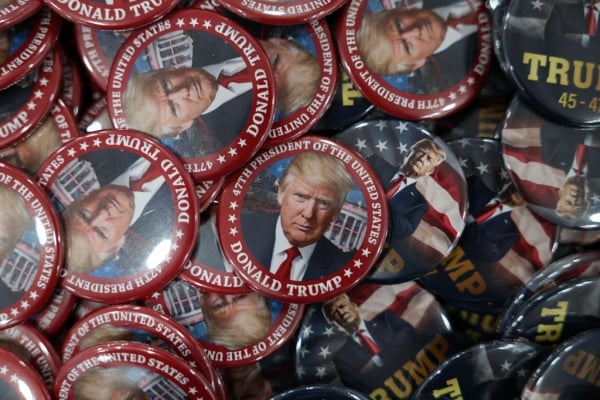
President Trump’s second inauguration took place in the Capitol rotunda Monday.
Kayla Bartkowski/Getty Images
President Donald Trump’s inauguration today kicks off what is likely to be a disruptive four years for higher education.
He enters office at a time when college and university enrollment numbers are floundering, public disillusionment with the cost of a degree is growing and culture wars are raging on. Combined, these circumstances give the president—and his Republican counterparts on Capitol Hill—an opportunity to ramp up scrutiny and accountability measures for the nation’s top institutions while also decreasing the federal footprint in education.
During the campaign, Trump said he plans to abolish the Education Department, ban the participation of trans athletes in women’s sports, “fire” accreditors and cut funding for scientific research. He has also discussed expanding short-term financial aid offerings, making student unionization more difficult, protecting conservatives’ speech on campuses, disallowing college vaccine mandates and creating a free online national college funded by new taxes on wealthy private universities.
Since winning the election, Trump has yet to offer more details on how he will fulfill the policy promises he’s made.
Colleges, meanwhile, have mostly adopted a wait-and-see approach to the incoming Trump administration. Over all, reactions to Trump’s election on college campuses were more muted this time around compared to the protests and outcry in 2016.
But Trump’s anti-immigration rhetoric and calls for mass deportations worry some college leaders. Several institutions advised international students to get back to campus before Monday, warning them that executive orders from the new president could complicate their return. Others pledged not to participate in mass deportations and said they would defend DEI programs and policies.
Trump’s impact on higher education will likely vary according to the type of institution. For instance, for-profits and other colleges are expecting less red tape and oversight from the administration, while historically Black colleges and universities are preparing to educate the administration and Congress about their institutions and their value.
He tapped Linda McMahon—former CEO of World Wrestling Entertainment, co-chair of his transition team and founder of a pro-Trump think tank—to carry out his anti–diversity, equity and inclusion education agenda and shrink the department.
McMahon has yet to receive a confirmation hearing in the Senate, but she’s expected to get the green light. Who else will serve with McMahon in key roles related to higher ed such as the under secretary, assistant secretary of civil rights and chief operating officer for Federal Student Aid is not yet clear.
Trump did nominate former Tennessee commissioner of education Penny Schwinn as deputy secretary Friday. Schwinn, who will likely focus primarily on K-12 policy, was part of former University of Florida president Ben Sasse’s cabinet as vice president for PK-12 and pre-bachelor’s programs.
McMahon’s appointment surprised some education policy observers given her lack of education experience. But others see her as a loyal lieutenant with a strong track record in business who can get things done at the department.
Trump doesn’t need McMahon and her team in place to get started. While day one of the administration will be filled with much of the traditional pomp and circumstance, the president’s transition team has also said it will include the signing of 200 executive orders, Fox News reported Sunday, which would be a record.
It’s not clear how many of those orders will affect colleges and universities, but higher education, which received little attention from Trump in his first term, is expected to rank higher on the administration’s priority list this time around. Actions related to diversity, equity and inclusion programs; transgender students; campus antisemitism; and immigration could be among the first on the docket.
During his first administration, Trump toned down oversight of for-profit colleges, issued new Title IX rules that bolstered due process protections for those accused of assault and appointed a conservative majority to the U.S. Supreme Court, paving the way for justices to later strike down affirmative action in June 2023, among other changes.
Now, just as he did in the first term with Obama’s policies, Trump will likely roll back many of the regulations President Biden put in place. Those include added steps to the process of merging or acquiring colleges, protections for borrowers who were misled by their higher ed institution and an income-driven repayment program that lowered monthly payments for millions of borrowers. Others, however, including gainful employment, might remain in place, as the GOP considers increasing federal oversight of colleges and universities.
Trump’s list of potential repeals grew shorter when a federal judge vacated the Biden administration’s Title IX rules. Other lawsuits challenging rules made by the Biden administration are still pending.
The outgoing president and his team have been scrambling to wrap up loose ends. In just a few weeks, they finalized new rules for online education and college prep programs, announced settlements in multiple civil rights and antisemitism investigations, and issued several rounds of debt relief. That’s along with new guidance related to online program managers and the Title IX requirements for financial payments to college athletes.
Before the holidays, Biden withdrew two debt-relief proposals, half-baked rules on accreditation and state authorization, and a controversial rule regarding the participation of transgender student athletes in women’s sports. The decision forces Trump to start at square one rather than leaving the existing policies open to amendment.
But the president may not even need to act himself on some of these issues as Republicans take the lead in Congress. House Republicans have passed legislation to ban trans women from women’s sports teams nationwide and to crack down on the detention of undocumented immigrants. The immigration bill could also potentially make it more difficult for international students from China and India to study in the U.S. The Senate voted Friday to advance that bill for a final vote, which could come as soon as Monday.