Tag: Oklahoma

  • Facing Tighter Budget, Oklahoma Lawmakers Cast Doubt on Walters’ Budget Requests – The 74

    Facing Tighter Budget, Oklahoma Lawmakers Cast Doubt on Walters’ Budget Requests – The 74


    Get stories like this delivered straight to your inbox. Sign up for The 74 Newsletter

    OKLAHOMA CITY — As state officials anticipate a smaller budget in the next fiscal year, lawmakers on Tuesday appeared doubtful of requests to spend millions on Bibles for public schools and salary increases at the Oklahoma State Department of Education.

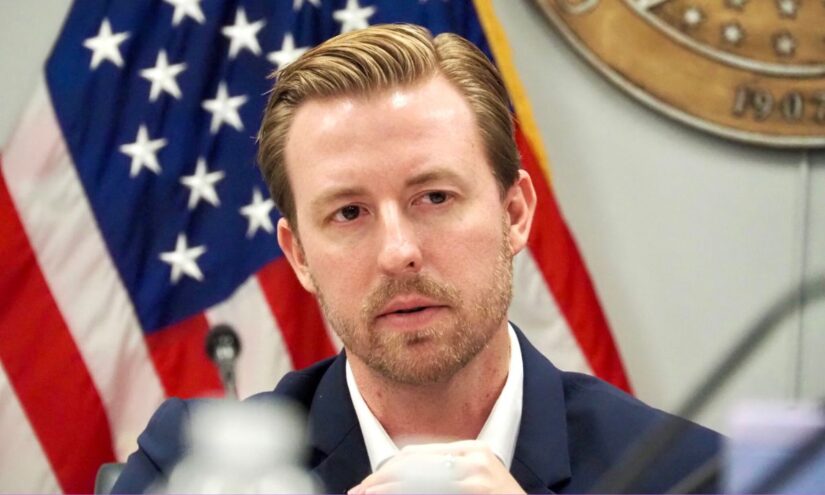
    The agency’s leader, state Superintendent Ryan Walters, again asked for $3 million to purchase copies of the Bible, the Declaration of Independence and the U.S. Constitution to place in every public school classroom. He also requested $2.3 million for a 6% cost-of-living salary bump for Education Department employees, who last saw a pay raise in 2019.

    Although his total budget request would increase the agency’s funding by $113 million, Walters hinted at “potential staff cuts” to limit the Education Department’s operational expenses during a meeting Tuesday with the Senate Appropriations Committee.

    “I​​ do believe we can save $1.3 million in some of the costs that we’ve been able to absorb through rolling positions together, cutting positions that are duplicated in their services,” Walters said during the meeting.

    Members of the influential appropriations committee heard Walters’ budget requests for the 2026 fiscal year. The state is required to pay some of the projected expenses, such as an extra $88.6 million for the rising cost of health insurance for public school employees.

    Another $4 million would increase the teacher maternity leave fund, which Walters said is growing in popularity. He also asked for $500,000 to offer firearms training to teachers.

    Senators of both parties questioned Walters’ request for $3 million to buy 55,000 copies of the King James Version Bible, which they suggested could be donated to schools or found for free online.

    House lawmakers had similar questions during a hearing with Walters last week.

    The state superintendent has advocated for more instruction on the Bible to help contextualize American history and the beliefs of the country’s founding fathers. He said he doesn’t intend for schools to preach Christianity to students.

    Last year, he ordered all school districts in the state to incorporate the Bible into their lesson plans and proposed new academic standards for social studies that would mandate instruction on biblical stories. His agency already spent under $25,000 on 532 copies of Lee Greenwood’s God Bless the USA Bible, which is informally known as the Trump Bible because it has the president’s endorsement.

    Walters’ Bible instruction mandate already faces a legal challenge on church-state separation grounds.

    Sen. Brenda Stanley, R-Midwest City, said she never encountered a classroom that didn’t have a Bible available to students during her 43-year career in education.

    Sen. Dave Rader, R-Tulsa, encouraged Walters to exhaust all resources for Bible donations before having the Legislature consider spending $3 million.

    “We could take the $3 million elsewhere, if somebody is willing to make those available to us at no cost,” Rader said during the hearing.

    The Senate committee also appeared dubious of funding a COLA increase for an agency that has lost dozens of employees over the past two years. Walters told the committee the Education Department employed 520 people when he took office in January 2023 and that it now counts 460 employees.

    “If you have decreased your (full-time employees), it would appear to me that there are already dollars inside your operating budget to offer salary increases,” Sen. Kristen Thompson, R-Edmond, told Walters during the hearing.

    Walters disagreed that staff departures would be enough to fund the increase. A complicating factor is the large number of federally funded salaries at the agency, he said.

    The department has considered reducing its staff even further after the state Board of Equalization projected the Legislature will have $119 million less to spend in the 2026 fiscal year, Walters said.

    The projection is preliminary, and the Board of Equalization will meet again this month for updated numbers.

    “After the last Board of Equalization meeting, we really went in and tried to do a deep dive into can we continue to see cuts, and we believe that we do need to be able to do that,” Walters said.

    Legislative leaders are preparing to limit expenses in light of the budget projections, especially as Gov. Kevin Stitt pushes for further tax cuts, flat agency budgets and “eliminating wasteful government spending.”

    The governor suggested no funding increases to public schools nor to the state Education Department in a budget proposal he released Monday.

    House Speaker Kyle Hilbert, R-Bristow, said Monday that he shares many of the governor’s priorities “as we seek to tighten our belt fiscally this year.” Senate President Pro Tem Lonnie Paxton, R-Tuttle, echoed Stitt’s tax-cut message when he endorsed “improving the lives of Oklahomans by allowing them to keep more of their hard-earned money.”

    Oklahoma Voice is part of States Newsroom, a nonprofit news network supported by grants and a coalition of donors as a 501c(3) public charity. Oklahoma Voice maintains editorial independence. Contact Editor Janelle Stecklein for questions: [email protected].


    Get stories like these delivered straight to your inbox. Sign up for The 74 Newsletter

    Source link

  • Abrupt presidential exits at Oklahoma State, CSU Pueblo

    Abrupt presidential exits at Oklahoma State, CSU Pueblo

    Two presidents resigned abruptly with few details in recent days: Kayse Shrum stepped down at Oklahoma State University, and Armando Valdez resigned the presidency of Colorado State University, Pueblo.

    For Shrum, the move comes less than four years into her job and with no public explanation.

    Local news outlet NonDoc reported that her resignation—which blindsided many at the university—coincides with an opaque review of improper transfers of “legislatively appropriated funds.” NonDoc also noted recent tensions over the contract of football coach Mike Gundy, who signed a restructured deal that gave him an extension but also a $1 million–a–year pay cut. 

    One anonymous source told the news outlet that the situation escalated quickly as Shrum “went from being on solid footing last Thursday to essentially not being president on Monday night.”

    Though the resignation was official Monday, the Board of Regents did not announce the move until Wednesday.

    Valdez resigned as president of CSU Pueblo one day shy of hitting a year on the job. The move follows an independent investigation that found he had violated university policy, according to a Colorado State University System news release. System officials did not indicate what policy Valdez allegedly violated, noting in the news release that Valdez disagreed with the findings but recognized he had lost “the confidence of the Board of Governors and CSU System leadership. As a result, to allow the university to move forward, he resigned his role.”

    System officials told The Pueblo Chieftain that his resignation and the alleged policy violation were a personnel matter and therefore “not something the CSU system will be commenting on.”

    Source link

  • Oklahoma Bills Would Restrict Student Cellphone Use, Social Media, Sex Ed – The 74

    Oklahoma Bills Would Restrict Student Cellphone Use, Social Media, Sex Ed – The 74


    Get stories like this delivered straight to your inbox. Sign up for The 74 Newsletter

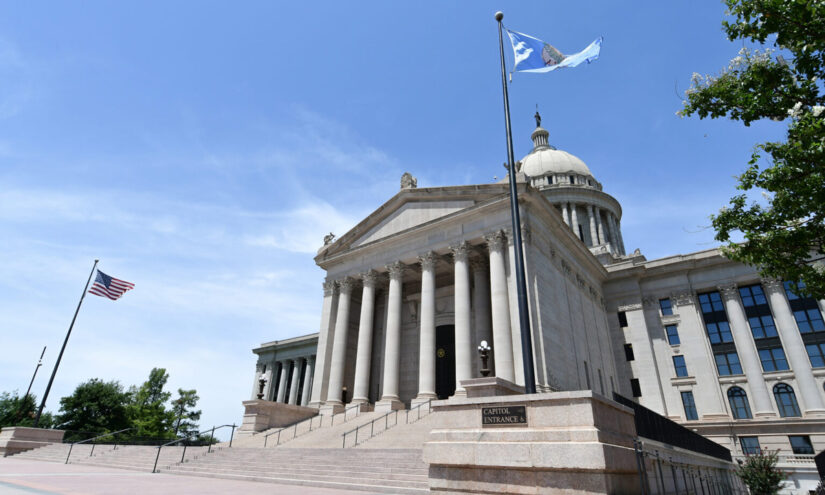
    OKLAHOMA CITY — Oklahoma lawmakers filed hundreds of bills affecting education for the next legislative session.

    Oklahoma Voice collected some of the top trends and topics that emerged in legislation related to students, teachers and schools. The state Legislature will begin considering bills once its 2025 session begins Feb. 3.

    Bills would restrict minors’ use of cellphones and social media

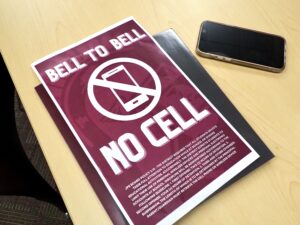
    A poster reads, “bell to bell, no cell” at the Jenks Public Schools Math and Science Center on Nov. 13. The school district prohibits student cellphone use during class periods. (Nuria Martinez-Keel/Oklahoam Voice)

    As expected, lawmakers filed multiple bills to limit student cellphone use in public schools, an issue that leaders in both chambers of the Legislature have said is a top priority this year.

    The House and Senate each have a bill that would prohibit students from using cellphones during the entire school day. Some Oklahoma schools already made this a requirement while others allow cellphone access in between classes.

    After encouraging all districts to establish cellphone restrictions, Gov. Kevin Stitt visited multiple schools in November that have done so.

    Senate Bill 139 from Education Committee vice chair Sen. Ally Seifried, R-Claremore, would require all districts to ban students from accessing their cellphones from the morning bell until dismissal, and it would create a $2 million grant program to help schools enact phone-free policies.

    Legislation from a House leader on education funding, Rep. Chad Caldwell, R-Enid, would prohibit student cellphone use while on school premises.

    Multiple bills target children’s social media use. Sen. Kristen Thompson, R-Edmond, aims to ban social media accounts for anyone under 16 with SB 838 and, with SB 839, to deem social media addictive and dangerous for youth mental health. 

    A bill from Seifried would outlaw social media companies from collecting data from and personalizing content for a minor’s account, which a child wouldn’t be allowed to have without parent consent

    SB 371 from Sen. Micheal Bergstron, R-Adair, would require districts to prohibit the use of social media on school computers or on school-issued devices while on campus. SB 932 from Sen. Darcy Jech, R-Kingfisher, would allow minors or their parents to sue a social media company over an “adverse mental health outcome arising, in whole or in part, from the minor’s excessive use of the social media platform’s algorithmically curated service.”

    School chaplain bill reemerges

    Multiple lawmakers have refiled a bill seeking to enable religious chaplains to counsel students in public schools. A version of the controversial bill passed the House last year but failed in the Senate.

    Its original author, Rep. Kevin West, R-Moore, refiled it as House Bill 1232. Sen. Shane Jett, R-Shawnee, and Sen. Dana Prieto, R-Tulsa, filed similar school chaplain bills with SB 486 and SB 590.

    More restrictions suggested for sex education, gender expression

    Another unsuccessful bill returning this year is legislation that would have families opt into sex education for their children instead of opting out, which is the state’s current policy.

    Students wouldn’t be allowed to take any sex education course or hear a related presentation without written permission from their parents under SB 759 from Prieto, HB 1964 from Danny Williams, R-Seminole, and HB 1998 from Rep. Tim Turner, R-Kinta.

    Sen. Dusty Deevers, R-Elgin, would have any reference to sex education and mental health removed from health education in schools with SB 702.

    Prieto’s bill also would exclude any instruction about sexual orientation or gender identity from sex education courses. It would require school employees to notify a child’s parents before referring to the student by a different name or pronouns.

    Other bills similarly would limit students’ ability to be called by a different name or set of pronouns at school if it doesn’t correspond to their biological sex.

    Deevers’ Free to Speak Act would bar teachers from calling students by pronouns other than what aligns with their biological sex or by any name other than their legal name without parent consent. Educators and fellow students could not be punished for calling a child by their legal name and biological pronouns.

    Rep. Gabe Woolley, R-Broken Arrow, filed a similar bill.

    No public school could compel an employee or volunteer to refer to a student by a name or pronoun other than what corresponds with their sex at birth under SB 847 from Sen. David Bullard, R-Durant, nor could any printed or multimedia materials in a school refer to a student by another gender.

    Corporal punishment in schools

    Once again, Oklahoma lawmakers will consider whether to outlaw corporal punishment of students with disabilities. State law currently prohibits using physical pain as discipline on children with only the most significant cognitive disabilities.

    In 2020, the state Department of Education used its administrative rules to ban corporal punishment on any student with a disability, but similar bills have failed to pass the state Legislature, drawing frustration from child advocates.

    Sen. Dave Rader, R-Tulsa, was an author of last year’s bill to prohibit corporal punishment of students with any type of disability. He filed the bill again for consideration this session.

    HB 2244 from Rep. John Waldron, D-Tulsa, would require schools to report to the Oklahoma State Department of Education the number of times they administer corporal punishment along with the age, race, gender and disability status of the students receiving it. The state Department of Education would then have to compile the information in a report to the Oklahoma Commission on Children and Youth.

    Oklahoma Voice is part of States Newsroom, a nonprofit news network supported by grants and a coalition of donors as a 501c(3) public charity. Oklahoma Voice maintains editorial independence. Contact Editor Janelle Stecklein for questions: [email protected].


    Get stories like these delivered straight to your inbox. Sign up for The 74 Newsletter
    Source link

  • SCOTUS to hear Oklahoma religious charter school case

    SCOTUS to hear Oklahoma religious charter school case

    This audio is auto-generated. Please let us know if you have feedback.

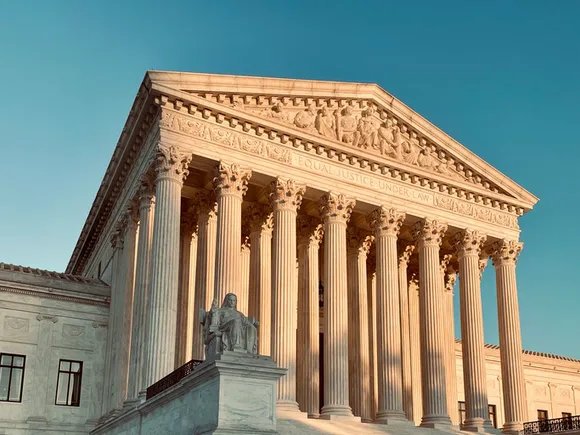
    The U.S. Supreme Court on Friday agreed to hear St. Isidore of Seville Catholic Virtual School v. Drummond, a case that could set precedent for religious schools’ access to public funds. 

    The case will determine whether a state violates the First Amendment’s Free Exercise Clause by excluding privately run religious schools from the state’s publicly funded charter school program. It will also decide whether a private religious school’s curriculum and practices are considered “state action” because the state funds the school’s free education.

    St. Isidore — which is to be run by the Archdiocese of Oklahoma City and the Diocese of Tulsa — was set to open for the 2024-25 school year as a virtual school, but did not do so due to the ongoing litigation around its constitutionality. Had it opened, it would have been the nation’s first religious charter school.

    The Oklahoma Statewide Virtual Charter School Board approved the school’s contract in 2023 in a 3-2 vote. At the time, board members acknowledged the decision to be controversial and said they expected litigation whichever way their vote went. 

    That contract was ultimately severed in August 2024 following an Oklahoma Supreme Court ruling that found the school would violate the state’s constitution and the First Amendment’s Establishment Clause. The contract could, however, be reinstated depending on the U.S. Supreme Court’s decision. 

    Justice Amy Coney Barrett plans to recuse herself from the case. No date has been set for oral arguments.

    Source link