Tag: opens

  • Games for Change Opens 2026 Student Challenge to Game Creators and Innovators Ages 10–25

    Games for Change Opens 2026 Student Challenge to Game Creators and Innovators Ages 10–25

    The annual global game design awards $20,000 in grand prizes for creative and impactful games that advance the UN Sustainable Development Goals

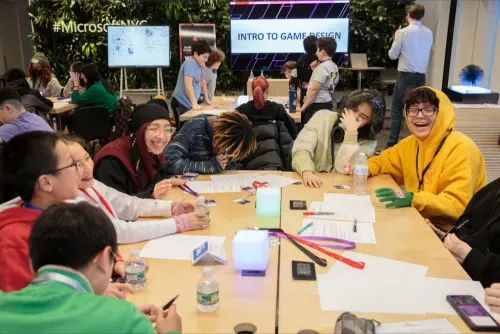
    NEW YORK, NY — [NOV 10, 2025] — Games for Change (G4C), the leading nonprofit that empowers game creators and innovators to drive real-world change, today announced the kick off of the 2025- 2026 Games for Change Student Challenge, a global game design program inviting learners ages 10–25 years old to tackle pressing world issues that address the United Nations Sustainable Development Goals, through creativity, play, and purposeful design.

    Now in its eleventh year, the Student Challenge has reached more than 70,000 students and almost 2,000 educators and faculty across 600cities in 91 countries, inspiring the creation of over 6,600 original student-designed games that connect learning to action. From November to April 2026, participants will design and submit games for consideration in regional and global competitions, with Game Jams taking place worldwide throughout the season.

    “The G4C Student Challenge continues to show that when young people design games about real-world issues, they see themselves not just as players, but as problem solvers and changemakers,” said Arana Shapiro, Chief Operations and Programs Officer at Games for Change. “Through game design, students learn to think critically, collaborate, and build solutions with purpose. In a world shaped by AI and constant change, durable skills like problem solving, critical thinking, and game design will allow all learners to thrive in their communities and worldwide.”

    This year, students will explore three new themes developed with world-class partners to inspire civic imagination and problem-solving:

    Two grand-prize winners will receive a total of $20,000 in scholarships, generously provided by Take-Two Interactive and Endless. Winners and finalists will be celebrated at the Student Challenge Awards on May 28, 2026, in recognition of exceptional creativity, social impact, and innovation in student game design.

    “With 3.4 billion players worldwide, the video games industry has an unprecedented ability to reach and inspire audiences across cultures and our next generation of leaders,” said Lisa Pak, Head of Operations at Playing for the Planet. “We’re excited about our collaboration with Games for Change, empowering students to use their creativity to spotlight the threats to reefs, rainforests, and our climate. Together, we’re transforming play into a powerful tool for awareness, education, and action.”

    More than 319 million people face severe hunger around the world today,” said Jessamyn Sarmiento, Chief Marketing Officer at World Food Program USA. “Through the ‘Outgrow Hunger’ theme, we’re giving the next generation a way to explore the root causes of food insecurity and imagine solutions through research, game design, and play. This collaboration helps students connect their creativity to one of the most urgent challenges of our time—ending hunger for good.”

    Additionally, G4C is expanding its educator support with the launch of the G4C Learn website, the world’s largest online resource library featuring lesson plans, tutorials, and toolkits to guide students, teachers, and faculty on topics like game design, game-based learning, esports, career pathways, and more. In partnership with Global Game Jam, educators worldwide can receive funding, training, and support to host Student Challenge Game Jams in their classrooms and communities.

    “Games turn learning into challenges students actually want to take on,” said Luna Ramirez, CTE teacher at Thomas A. Edison CTE High School based in New York City. “When students design games to tackle pressing global problems affecting their communities, they become curious about the world around them, experimenting, and bringing ideas to life. The best learning happens when students take risks, fail forward, and collaborate, and that’s exactly what the Games for Change Student Challenge empowers.”

    Educators, parents, and learners ages 10–25 can now registerfor the 2026 Games for Change Student Challenge and access free tools and resources at learn.gamesforchange.org.

    This year’s Student Challenge is made possible through the generous support of key partners, including Endless, General Motors, Verizon, Motorola Solutions Foundation, Take-Two Interactive, World Food Program USA, Playing for the Planet, Unity, and Global Game Jam.

    About Games for Change

    Since 2004, Games for Change (G4C) has empowered game creators and innovators to drive real-world change through games and immersive media, helping people learn, improve their communities, and make the world a better place. G4C partners with technology and gaming companies, nonprofits, foundations, and government agencies to run world-class events, public arcades, design challenges, and youth programs. G4C supports a global community of developers using games to tackle real-world challenges, from humanitarian conflicts to climate change and education. For more information, visit: https://www.gamesforchange.org/.

    Media contact(s):

    Alyssa Miller

    Games for Change

    [email protected]

    973-615-1292

    Susanna Pollack
    [email protected]

    Latest posts by eSchool News Contributor (see all)

    Source link

  • HACU Conference Opens with Call to Action Amid Challenges Facing Hispanic Students

    HACU Conference Opens with Call to Action Amid Challenges Facing Hispanic Students

    Dr. Christopher Reber, President of Hudson County Community College, with staff, faculty and students from his college.HACUThe Hispanic Association of Colleges and Universities (HACU) launched its 39th Annual Conference on Saturday, bringing together more than 1,600 education leaders, advocates, and students under the theme “Championing Hispanic Higher Education Success: Forging Transformational Leaders to Uplift Democracy and Prosperity.”

    The three-day gathering in Aurora, Colorado, opened with a sense of urgency as attendees acknowledged both the progress made in Hispanic higher education and the mounting challenges facing students and institutions.

    “The attacks on immigrants and higher education by the Trump administration is reason for why we need organizations like HACU to stand up for students like me,” said Maria Valasquez, 21, a college junior who attended the conference for the first time. “The threats are real and these are scary times for many first-generation college students.”

    The conference began with four specialized pre-conference events on October 31 and November 1, drawing approximately 200 participants total. These included the 14th Annual Deans’ Forum, focused on “Shaping Visionary Leaders for a Thriving and Democratic Future”; the Third Women’s Leadership Symposium; the 24th Annual Latino Higher Education Leadership Institute, themed “Building Transformational Leaders at All Levels to Strengthen Democracy and Prosperity”; and the 11th Annual PreK-12/Higher Education Collaboration Symposium, addressing “Bridging Education for Lifelong Success: Innovation, Collaboration, and Life Readiness.”

    The main conference kicked off with an Opening Plenary convened by Dr. Juan Sanchez Muñoz, HACU’s Governing Board chair and chancellor of the University of California, Merced. HACU Interim CEO Dr. John Moder delivered the Annual Address, followed by the induction of Dr. Félix V. Matos Rodriguez, chancellor of The City University of New York, into HACU’s Hall of Champions 2025.

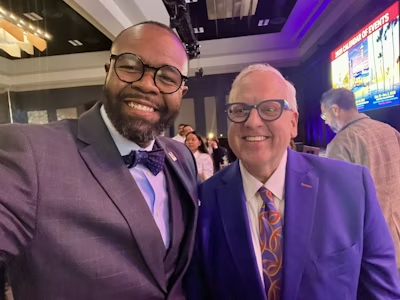
    Dr. Mordecai Brownlee, President of The Community College of Aurora, and Dr. Christopher Reber, President of Hudson County Community College at the HACU conference.Dr. Mordecai Brownlee, President of The Community College of Aurora, and Dr. Christopher Reber, President of Hudson County Community College at the HACU conference.Corporate and nonprofit partners reaffirmed their commitment to Hispanic student success. Maria Pia Tamburri, Dominion Energy’s vice president of intergovernmental affairs and economic development; Audrey Stewart, Google’s global head of impact and reporting; and Francesca Martinez, the American Heart Association’s national director of the Bernard J. Tyson Office of Health, delivered remarks on behalf of their organizations. Capital One was also recognized for its support.

    A regional focus emerged through the Illinois Hispanic-Serving Institution Summit, also held November 1. After welcoming remarks from Moder and virtual comments from Illinois State Representative La Shawn Ford, a panel discussion addressed the midwestern region’s legislative agenda. The panel featured Dr. Susana Rivera-Mills, president of Aurora University; Dr. Lisa Freeman, president of Northern Illinois University; and Juan Salgado, chancellor of City Colleges of Chicago.

    The summit provided a platform for discussing HACU’s policy and legislative priorities in Illinois, including the critical role college and university presidents play in advancing and sustaining Hispanic-Serving Institutions across the state. Participants shared promising practices and explored collaborative approaches to strengthen institutional capacity.

    Seven honorees are being recognized throughout the conference for their contributions to improving opportunities for college students, with awards presented during various events over the three days.

    “As a president of a Hispanic-Serving Institution and member of HACU’s Board of Directors, I witness firsthand how these colleges and universities transform lives, strengthen families, and fortify our economy,” said Dr. Mordecai I. Brownlee, President of The Community College of Aurora. “The mission of HACU is not a moment — it’s a movement. Despite the challenges of our times, our collective commitment to equity, opportunity, and excellence is just getting started.”
     

    In an interview, Brownlee said that Hispanic-Serving Institutions are not just essential to higher education — they are essential to America’s economic growth and democratic future. 


    “By investing in HSIs, our nation invests in innovation, workforce readiness, and prosperity for all,” he said. “The mission of HACU is not simply about serving Hispanic students; it’s about strengthening the very foundation of America’s competitiveness and civic vitality.”  


    The conference continues through November 3, as higher education leaders work to chart a path forward for Hispanic student success amid an increasingly complex political landscape.

    Source link

  • The white paper opens the door, but we need to ensure everyone gets in

    The white paper opens the door, but we need to ensure everyone gets in

    After months of anticipation, the post-16 education and skills white paper has finally landed.

    For many across the sector, the wait has been worth it. There are bold commitments on funding, skills pathways and structural reform. But for those of us focused on widening participation there are the green shoots of ideas but very little detail and the group of students who are at most risk to lack of equality of access – care experienced and estranged students – are barely even mentioned. The paper feels more like a promising prologue than a full chapter.

    There are areas of positive progress. The previously trailed increase in maintenance support, which will help students better manage rising living costs – a critical issue for those without family safety nets.

    Plus the report commits to “provide extra support for care leavers, some of the most vulnerable in our society, who will automatically become eligible to receive the maximum rate of loan.” We would want to see these extended to estranged students as well as care experienced young people as we know many report financial hardship without the support of parents to top up income. Data from the Student Academic Experience Survey showed us that both care experienced and estranged students work a statistically significantly higher number of hours per week – 11.3 and 11.1 hours respectively – than 8.8 hours non-care experienced students at 8.8 hours.

    But we must await further detail to see whether this makes any material difference for care leavers (and hopefully estranged students) – given that they’re currently already eligible for the maximum maintenance loan, and this maximum doesn’t cover anywhere near enough to support their living expenses, as recent work on minimum income standards has shown.

    A richer picture

    The promise of better information for applicants, combining UCAS data with graduate outcomes and completion rates, is an important move toward transparency and fairer choice. The work that UUK, Sutton Trust and UCAS have already started in this space is welcome but ensuring consistency will be key. This is especially important to consider when we know from UCAS research that 60 per cent of surveyed applicants said “they did not receive guidance at school around applying to higher education, specific to their status as a care-experienced student.”

    We’re also encouraged by the focus on regional disparities and disadvantage cold-spots, especially in coastal and low-participation areas. These are often the places where care experienced and estranged students are most at risk of being left behind.

    But while these commitments signal progress, there’s still much to be drawn out around widening participation. Care experienced and estranged students remain largely invisible in mainstream policy design. They’re not always captured in data. They’re rarely the headline. But they matter (which is why we welcomed HESA’s planned exploration of the issues involved in publishing data on this group of students more regularly). These students face some of the steepest barriers to access, retention and success.

    There are pockets of excellent practice and growing awareness of this group of students that is driving change in some areas. The commitment by Russell Group universities to develop a consistent offer of support is welcomed as is seeing more FE and HE institutions achieving the NNECL Quality Mark. These examples demonstrate that progress is achievable when there is institutional will and leadership – but there is still such little evidence about what works.

    At the Unite Foundation, we were pleased to see recognition that accommodation is a key issue. For care experienced and estranged students, having somewhere safe and stable to live is not just a nice-to-have – it’s a fundamental prerequisite for participation in education. If we’re serious about widening participation, then addressing the barrier of housing insecurity must be central to the conversation. And yet, the white paper is light on detail about how government will support access to accommodation. This is a missed opportunity.

    The Unite Foundation’s own scholarship programme remains the only intervention to meet OfS Level 2 standards for impact on retention, progression, and completion for this group. It’s a powerful testament to what targeted, sustained support can achieve – but it also highlights how little evidence we have about what works.

    The journey continues

    So while the white paper offers a welcome direction of travel, it’s not the final destination. I’m pleased to be joining the national access and participation task and finish group, chaired by access and participation champion Kathryn Mitchell, to work within government to ensure that we’re embedding care experienced and estranged students at the heart of this work as the detail starts to emerge.

    If we’re serious about change we need more than just warm words. We need system-wide commitments that embed equity in funding, housing, student support and success metrics. We need to listen to students and design policy that reflects their lived realities.

    The wrapping paper is off. Now it’s time to see what’s inside – and to make sure care experienced and estranged students aren’t left out of the picture.

    Source link

  • Education Dept. Opens Up FAFSA Beta Test to All

    Education Dept. Opens Up FAFSA Beta Test to All

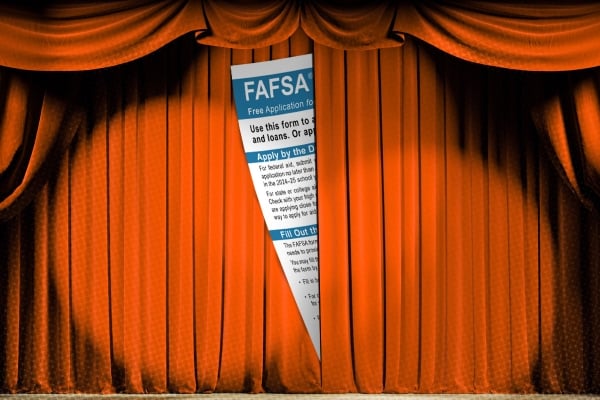
    Photo illustration by Justin Morrison/Inside Higher Ed | SimoneN/iStock/Getty Images

    All students can now access a beta version of the 2026–27 Free Application for Federal Student Aid, the Department of Education announced Wednesday.

    The grant application platform won’t officially launch until Oct. 1, the congressionally mandated FAFSA launch deadline, but for the 12 days between now and then, students and families can start their application by participating in the test model.

    “We’re using this time to monitor a limited number of FAFSA submissions to ensure our systems are performing as expected,” the department’s Federal Student Aid website explains. “This is a common practice in website and software development.”

    The first round of beta testing was opened to a limited number of students in early August. Students who submit their form during the test will only have to submit it once, the department website states.    

    Source link

  • Advanced manufacturing expansion opens CTE opportunities for rural schools

    Advanced manufacturing expansion opens CTE opportunities for rural schools

    This audio is auto-generated. Please let us know if you have feedback.

    Dive Brief:

    • Through strong industry partnerships and career and technical education, rural schools can equip their students for growing workforce needs in advanced manufacturing.
    • Advanced manufacturing in the U.S. is undergoing a period of rapid expansion, with an anticipated $1 trillion investment in projects, 63% of which is expected to be allocated to facilities near rural communities, according to an analysis from the McKinsey Institute for Economic Mobility.
    • The McKinsey Institute also surveyed nearly 1,500 rural high school students and recent graduates, finding that 8 in 10 would like career-connected learning and apprenticeship opportunities. However, only 5 in 10 reported having access to career-connected learning in high school, and only 3 in 10 had access to apprenticeships.

    Dive Insight:

    The report highlights that as advanced manufacturers expand into rural America, they play a crucial role in fostering strong relationships with local school systems.

    Advanced manufacturing industry experts and companies are seeking workers with foundational, technical and durable skills, the report found. However, there seems to be a short supply of these skill sets across the manufacturing labor pool.

    One cause of this shortage, the report argues, is a lack of strong, established collaborations between the industry and K-12 schools. The industry’s need for well-equipped future workers could also meet the needs of K-12 schools to expand students’ career opportunities.

    Research has found that taking CTE courses can lead to higher graduation rates and greater employment opportunities, which is why industry and rural schools can work together to provide K-12 students with the necessary education and technical skills to enter the incoming workforce, the report noted.

    To ensure that students are learning these high-demand skills, employers and industry associations should provide apprenticeships and other workplace learning opportunities for rural schools, as well as help create industry-relevant curricula, the report explained. A strong collaboration benefits not just schools and students, but companies that are also securing a pipeline of prepared workers.

    The report recommends that school systems work with local governments and organizations to build connections with employers. Through strong partnerships with industry professionals, schools can develop more effective, career-connected and evidence-based models, the report said.

    CTE courses provide students with hands-on, real-world skills for a defined set of careers, and an effective course focuses on skills in demand in the local market. As manufacturing investments grow in rural communities, the report said, schools could offer CTE courses that prepare students with technical and other STEM-based skills necessary in the advanced manufacturing field.

    The report also emphasized that industry partners should have regular interaction with students and touch base with them at regularly scheduled intervals. This ensures students are consistently aware of the different career pathways available to them. These interactions can evolve as students advance through different grades, shifting from informational to more tangible resources like apprenticeships, summer jobs and postsecondary scholarships later in high school.

    Beyond industry partnerships, state legislatures can also offer incentives for CTE programming through policies and funding, the report recommends. States are already providing these types of incentives, with 40 states collectively approving more than 150 policies focused on boosting CTE programming in 2024.

    Source link

  • Trump administration opens a fourth probe into George Mason University

    Trump administration opens a fourth probe into George Mason University

    This audio is auto-generated. Please let us know if you have feedback.

    Dive Brief:

    • The U.S. Department of Justice has opened a probe into George Mason University over its admissions and scholarship practices as well as its response to antisemitism, the agency announced Monday. It follows a probe into the university’s employment practices announced last week.
    • In a letter to the head of George Mason’s board, Harmeet Dhillon, assistant attorney general for the Justice Department’s civil rights division, said the agency would consider whether George Mason’s student practices violate Title VI, which prohibits discrimination based on race, color or national origin at federally funded institutions. 
    • Dhillon’s letter made no specific allegations against the university, and an agency spokesperson declined to comment Tuesday on what prompted the probe. In a statement Monday, the university’s board of visitors said it would “respond fully and promptly to the requests from the U.S. Government.”

    Dive Insight:

    The Trump administration has set its sights on George Mason as it widens its attacks on universities based on their diversity programs, approach to pro-Palestinian protests and other practices that run counter to the president’s political agenda.

    The latest investigation is at least the fourth probe the Trump administration has launched into the university. Dhillon gave George Mason until Aug. 1 to provide “a series of certifications, responses, and productions of information, data, and materials” to the agency. 

    In its statement, the university’s board of visitors said that it has a fiduciary obligation “to ensure that the University continues to thrive as the largest public university in Virginia,” adding, “This includes making sure that GMU fully complies with federal anti-discrimination laws as it excels in its mission.”

    Rep. Bobby Scott, a Virginia Democrat and the ranking member on the House’s education committee, blasted the Trump administration’s investigations into George Mason in a statement Tuesday.

    “Under this Administration, the government’s Offices of Civil Rights have adopted a radical reinterpretation of our civil rights laws to attack diversity, equity, inclusion and accessibility,” Scott said. “The Trump Administration’s selective actions undermine the pursuit of justice, and the independence and academic freedom of America’s institutions of higher education.” 

    Late last week, Dhillon informed the university of a similar probe under Title VII, which bars employment discrimination based on race, color, religion, sex or national origin.  

    In a July 17 letter, she alleged that George Mason “may be engaged in employment practices that discriminate against employees, job applicants, and training program participants based on race and sex.” 

    Dhillon cited internal emails and comments from George Mason President Gregory Washington seeking to promote diversity and equity in the hiring and tenure processes, as well as antiracism throughout the university’s operations. 

    Prior to that, the Trump administration opened two separate investigations over claims that the university hasn’t done enough to respond to antisemitism and illegally uses race in employment decisions.

    In a July 18 post, Washington rejected the government’s allegations of discrimination and explained that the comments cited by Dhillon came in the wake of the murder of George Floyd, who was Black, by a White police officer in 2020. 

    “As part of addressing this national reckoning, we were examining ourselves, looking for ways to become better,” Washington said, adding that diversity efforts were part of a state-mandated initiative, and the public expected George Mason to “play a meaningful part in creating structures and programming to address old biases and persistent inequalities in business operations.”  

    He also said, “It is inaccurate to conclude that we created new university policies or procedures that discriminated against or excluded anyone,” and added that “our systems were enhanced to improve on our ability to consistently include everyone for consideration of every employment opportunity.”

    The Trump administration’s targeting of George Mason comes shortly after the Justice Department pushed former University of Virginia President Jim Ryan to announce his abrupt resignation in June. The university was, like George Mason, under investigation by the administration over its diversity initiatives.

    Source link

  • Cornish College of the Arts opens under Seattle University banner

    Cornish College of the Arts opens under Seattle University banner

    This audio is auto-generated. Please let us know if you have feedback.

    Dive Brief:

    • Seattle University officially absorbed the Cornish College of the Arts, it announced Tuesday, realizing the deal the two signed earlier this year to transfer nearly all of the arts college’s assets to the university. 
    • The university expects the campus — now known as Cornish College of the Arts at Seattle University — to enroll between 430 and 450 students in the upcoming fall semester, according to a Tuesday announcement.
    • Seattle University offered jobs to the “vast majority” of Cornish’s original full-time employees, who were all let go last month. Most accepted the offer. The announcement this week did not give specific numbers, and the university did not immediately respond to questions Wednesday.

    Dive Insight:

    Seattle University and Cornish’s campuses are just 1 ½ miles apart, but the two institutions are dramatically different in scope.

    The private Jesuit university enrolled 7,182 students in fall 2023, according to federal data. The same semester, Cornish had 502.

    Cornish’s academic offerings focused on visual and interdisciplinary arts, while Seattle University offered a wider range of programs, from engineering to accounting to film and media. But the large institution did not have a fine arts school before acquiring Cornish’s name and assets.

    “This is a historic day for two legendary Seattle institutions,” Seattle University President Eduardo Peñalver said in a statement. “The combination of Cornish with Seattle University preserves the Cornish legacy for future generations and will transform arts education in Seattle, opening up exciting interdisciplinary opportunities for students and faculty on both campuses.”

    Cornish will operate as the university’s arts school at its original campus. Most Cornish students are opting to continue their education under Seattle University’s banner, according to Tuesday’s announcement. In spring 2025, Cornish enrolled 437 students who were not graduating that semester. Of that cohort, about 91% decided to stay and earn their degrees from Seattle University.

    Cornish’s provost and vice president of academic affairs, Brian Harlan, will become dean of the arts school under Seattle University.

    Beginning this fall, the university and Cornish will begin a “faculty-led process” of integrating both campuses’ arts programming, Harlan said in a Tuesday statement.

    Of 125 Cornish’s original employees, 92 have been rehired, including Harlan, a Seattle University official told The Seattle Times. The university made job offers to 36 of Cornish’s 40 full-time faculty members, and 33 accepted.

    The university also intends to hire adjunct faculty and part-time and seasonal staff over the summer, it said Tuesday.

    Source link

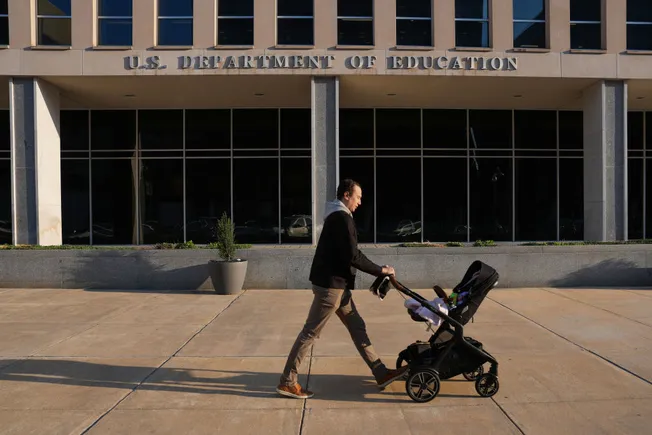
  • This week in 5 numbers: Education Department opens probes into over 50 colleges

    This week in 5 numbers: Education Department opens probes into over 50 colleges

    The number of colleges being investigated by the Education Department’s Office for Civil Rights over allegations their programs and scholarships have race-based restrictions. The agency opened the probes after issuing guidance last month that said colleges are barred from considering race in any of their policies.

    Source link