Tag: opinion

  • Teaching Critiques in an Unsettled Political Time (opinion)

    Teaching Critiques in an Unsettled Political Time (opinion)

    As a university professor, I recently found myself in an awkward spot. I teach a large survey course called Introduction to Cultural Anthropology that enrolls some 350 students. As part of the course, I usually spend one class period every semester lecturing on the anthropology of development. This is a field in which the dominant strains have involved critiquing development projects, most frequently for two sorts of reasons: either for ignoring local cultural practices and priorities, or for exacerbating the very things that development projects are meant to ameliorate.

    In the spring semester of 2025, after I had already finalized and posted the course syllabus, something unprecedented happened in the United States: the United States Agency for International Development (USAID) was dismantled by the Trump administration and Elon Musk’s Department of Government Efficiency (DOGE). From the standpoint of the standard critiques of development, some of the rationales the Trump administration provided for this unprecedented move were eerily familiar. “Musk and the Right Co-Opt the Left’s Critique of U.S. Power,” The New York Times proclaimed.

    Development isn’t the only topic on which such a critique of power has suddenly shifted politically. Science, another topic on which I spend some class sessions, is similarly fraught. For a long time, many researchers in the anthropology of science argued that the values and beliefs of scientists shape the sciences. The attacks on scientific authority that began during President Trump’s first term and have intensified since amplify these very same sorts of arguments. So how do we broach these topics today, as university professors?

    In pondering this question in the context of my own class, I came to view the common refrain that the right is “coopting” or “appropriating” the critiques made by the left with some curiosity and a bit of suspicion. Both of these terms carry some connotations of misuse and bad faith. Don’t get me wrong: There certainly is truth to the view that some Republican politicians in the United States have recently lifted and re-deployed arguments simply because they justify a desired end (and achieve a little trolling as an added benefit). But, educationally, “appropriation” in this context is not always a useful refrain. It sidesteps the arguments themselves by drawing pre-determined boundaries around their fair use.

    Further, the view that these migrating arguments are cases of “cooptation” does not always stand up to historical scrutiny. Take, for example, questions concerning the power vested in experts. Today, the right is waging more of a battle against experts and the institutions that house them than the left. This battle is undergirded by several arguments, including claims of insufficient “viewpoint diversity” and elite capture, themselves logics that have migrated.

    This battle against experts is most vociferously waged in the name of a populist view: that the people know what’s best for them. A couple of decades ago, the left was more invested in critiquing the ways that expertise was used to exert control over people who understood their own circumstances and their own needs better than many experts.

    But before that, a similar argument sat at the core of the neoliberal right. The famed neoliberal theorist Friedrich von Hayek made this sort of argument against expertise as part of his case for unfettered markets, which, he argued, aggregated and responded to the locally informed decisions of large numbers of individuals better than any expert ever could. It’s also a mistake to think about the migration of these ideas in terms of a stable divide between left and right: MAGA has instilled in the “right” in the guise of the current Republican party a new hostility toward the free market while the “left” of today’s Democratic party has embraced elements of neoliberalism.

    Instead of simple “appropriation,” the migration of arguments across an array of worldviews should be interpreted as zones of agreement where the depth of that agreement—superficial or comprehensive?—has to be scrutinized. Why and how are different implications drawn from these zones? This entails continuing to think about and teach these critical perspectives rather than shying away from them for fear of exacerbating the attacks they now authorize.

    Ultimately, recognizing that similar critiques cross-pollinate with disparate ideological positions is an invitation to engage even more deeply with the substance of these arguments, both in the classroom and beyond.

    Talia Dan-Cohen is an associate professor of sociocultural anthropology and associate director of the Center for the Humanities at Washington University in St. Louis.

    Source link

  • The Case for Miscarriage Leave Policies (opinion)

    The Case for Miscarriage Leave Policies (opinion)

    Miscarriage leave policies are a blind spot on many college campuses, one that urgently needs to be addressed.

    For me, losing my unborn child to miscarriage exposed an uncomfortable truth about the academy. While we are encouraged to, and should be expected to, show compassion and care for our students who endure unimaginable life circumstances, there is little to no formal infrastructure in place to support the inevitable suffering of faculty.

    In the wake of my unexpected miscarriage and subsequent related surgery, I was profoundly struggling. I found out at nine weeks of gestation that I’d experienced what’s called a missed miscarriage, and what followed were weeks of mental and physical pain. Despite the traumatic nature of these events, I returned to work and continued with lesson preparation, grading and responding to emails as quickly as humanly possible, given the circumstances.

    It is not surprising I felt compelled to quickly return to work. A persistent problem in higher education is that many faculty members, staff and administrators are spread impossibly thin, leading to compassion fatigue and burnout in the face of heavy teaching loads, mentoring and service expectations, and publishing quotas. This problem is exacerbated for women, minorities, contingent faculty and marginalized groups in the academy.

    Contrast this to how we seek, rightly, to treat our students. A pedagogy of care centers on human connection and empathy to guide and support students who are struggling. It creates a culture and climate of care for students that extends beyond the classroom. For instance, students who experience miscarriage during the academic semester are protected under Title IX. This means we provide our students who have miscarriages with the proper support and grieving time so as not to derail their semesters. On my campus, if a student is going through a mental health crisis or a loss like a miscarriage, we are advised to send them to the counseling center, where they can be provided with one-on-one counseling sessions and proper resources to help with their care.

    This same structure of care that has been put in place for our students isn’t in place for faculty. As professor and scholar Maha Bali notes, an authentic pedagogy of care should recognize that faculty also need care, asking institutions to support instructors with policies and structures that allow them to do their jobs well without burning out. Though employees are protected under the Family and Medical Leave Act and the Pregnancy Discrimination Act, we don’t always have the same resources on campus for faculty and staff who are struggling with mental health issues as a result of a miscarriage. More campuses should follow the model of the University of Massachusetts Amherst, where faculty members can access counseling on campus through the Employee Counseling and Consultation Office.

    For women in academia who have endured a miscarriage, the historical silence surrounding the experience lends itself to even greater feelings of isolation and loneliness. It adds to barriers to success and tenure. Between 15 and 20 percent of pregnancies end in miscarriage, but the stigma surrounding it keeps women quiet. I work in a supportive department, where my chair and many of my colleagues never hesitated to provide me with what I needed. However, that is not the case for everyone. Even in my case, there was still a significant amount of logistical work to consider.

    When I miscarried, I knew that I’d have to cancel classes because of the physical toll it took on my body and the subsequent recovery from surgery. However, that also meant reorganizing my semester to accommodate my students’ needs. The nature of the academic year leaves little room for flexibility in canceling classes and reorganizing lessons and as such, requires considerable time and effort to do so. This detracted from my ability to grieve and heal, physically and emotionally. During times of loss, faculty shouldn’t have to think twice about mundane details; they should have a clearly outlined miscarriage policy they can turn to so there is no question they are entitled to the leave they need.

    Too often on college campuses, there is a lack of visibility and clarity on how faculty can access help. Fair and caring policies, such as a standalone miscarriage policy, provide time and space for faculty members to grieve, while also clearly defining the rights of faculty, staff, and administrators and ensuring consistent treatment when an employee experiences a loss. As Grace Ellen Brannon and Catherine L. Riley suggest in their book chapter, “Missed Realities About Miscarriage in Academia,” such policy or guidance documents typically include “(1) information on how managers can offer practical and emotional support during and after a loss, and (2) managers’ responsibilities when it comes to practical support. They also include (3) other relevant policies, including medical absence and maternity or family leave policies, alongside any relevant mental health or well-being policies.”

    In the United Kingdom, the University of Essex has a policy in which a pregnant employee who experiences a miscarriage is eligible for “pregnancy-related” sick leave, with no time limit on sick days one can take for miscarriage leave (partners or others affected are also eligible for “compassionate or special leave”). In addition, the policy outlines resources for department chairs (called line managers in the U.K.) to help them implement these policies for their faculty in the most humane way possible, as well as ideas for how to facilitate a return to work for employees who find it understandably difficult in the aftermath of pregnancy loss.

    One promising example in the United States comes from the University of Santa Clara, which has a Reproductive Loss Leave policy, which clearly outlines the time an employee can take off with pay in the event of a reproductive loss, defined as a “failed adoption, failed surrogacy, miscarriage, stillbirth, or an unsuccessful assisted reproduction.” At the University of Arizona, the paid parental leave program allocates two weeks of paid leave in the event of a miscarriage. Outside academe, a growing number of private-sector employees are adding miscarriage leave policies. But these examples still seem to be the exception, not the norm.

    Although our institutions may not be fully equipped yet, we can start showing support for our colleagues who have experienced miscarriage in small ways, whether through acts of care on an individual level or the development of formal peer support groups.

    Sometimes all we need is to be heard. The sheer act of listening can go a long way, but doesn’t replace the need for structural change. In the aftermath of my loss, one colleague reached out with a simple email, which read in part, “If you ever need to talk, I’m here.” And so, in the depths of my loss, I knocked on his door, walked into his office, and with tears in my eyes, asked, “Can I talk?” We sat, crying with one another about our respective losses and the stress of it all, and I left feeling lighter. I felt lighter because I felt love and care from my colleague.

    As bell hooks argues, love is not merely an emotion, but a practice and choice that can transform teaching and learning. I encourage us all to take a step back and listen to each other. I’m certain if you listen closely enough, you’ll hear what your colleagues need, and it’s probably love. Love in the form of small acts of care and open dialogue about miscarriage is a start. Love in the form of miscarriage-specific policies that demonstrate our institutions’ care for us is the end goal. Ultimately, we need policies that acknowledge the material reality of loss, help to reduce the invisible emotional labor of miscarriage by providing short-term teaching relief for affected faculty, and allow us to grieve and heal with dignity.

    Alyse Keller Johnson is a writer and associate professor of communication studies at Kingsborough Community College, part of the City University of New York. Her research and writing tackle themes of health, illness, motherhood and grief and can be found at alysekellerjohnson.com.

    Source link

  • Antisemitism scorecard will harm unis: Opinion – Campus Review

    Antisemitism scorecard will harm unis: Opinion – Campus Review

    Last week the Australian Government’s special antisemitism envoy Jillian Segal delivered her report to Prime Minister Anthony Albanese.

    Please login below to view content or subscribe now.

    Membership Login

    Source link

  • Many Kids Aren’t Ready for School Before Age 5. So Why Do They Have to Go Anyway? – The 74

    Many Kids Aren’t Ready for School Before Age 5. So Why Do They Have to Go Anyway? – The 74


    Get stories like this delivered straight to your inbox. Sign up for The 74 Newsletter

    This summer, Washington, D.C., parents were notified that they’d no longer be able to hold their child back from starting kindergarten if the student turned 5 years old before Sept. 30. Previously, the decision on so-called redshirting had been left up to families, with advice from pediatricians and child psychologists.

    In New York City, America’s largest school district, the birthday cut-off is even later: Dec. 31. One-third of children are required to begin kindergarten prior to turning 5. This is a cause of concern for many families.

    The city Department of Education doesn’t see it as a problem. In an email, a spokesperson told me its official stance is, “We work to provide all families access to a world-class education, and we work closely with families to ensure students’ placements are academically and developmentally appropriate, in alignment with state guidelines. Our policies allow for flexibility, our kindergarten curriculum is responsive to the needs of our younger learners, and our dedicated educators are prepared to support every student.”

    Not all are appeased.

    “I have a 4-year-old who will start kindergarten this fall but doesn’t turn 5 until after Thanksgiving,” worried mom CK told me. “I think it’s a big disservice to these kids. The amount of sitting isn’t developmentally appropriate, and the lack of free play is concerning.”

    Parents are justified in their concerns. As the Child Mind Institute summarized in June:

    Several studies have concluded that kids who are youngest in their class are disproportionately diagnosed with ADHD. A Michigan study found that kindergartners who are the youngest in their grade are 60% more likely to be diagnosed with ADHD than the oldest in their grade. And it doesn’t affect just kindergarteners: A North Carolina study found that in fifth and eighth grade, the youngest children were almost twice as likely as the oldest to be prescribed medication for ADHD.

    The research didn’t sit well with some teachers. One blasted my social media inquiry seeking views on redshirting by writing, “ADHD is a very serious IEP (Individualized Education Plan) and we don’t hand them out like candy.”

    Others, however, agreed.

    “My daughter was one of the youngest in her class,” wrote an anonymous mother. “The teacher and school counselor mislabeled her with psychological disorders that both NY special education testing and private neurological tests did not support.”

    “More of my students with an IEP have a birthday in the second half of the calendar year,” confirmed Mary C., who has been a special ed teacher for 12 years. “I understand where an incoming K parent would be concerned that their December baby is much younger than a June baby.”

    That was the case with Upper West Side parent KE’s son. “He is the youngest and smallest boy in the grade,” she wrote. “He started kindergarten at 4 years old, still sucking his thumb. The physical, emotional, social, psychological and other developmental differences between a 5-year-old born in January and a 4-year-old born in December impacts everything from holding a pencil to kicking a ball, to the length of time one can sit and concentrate. It was too early, too soon and too young, but we literally had no choice in the matter in order to enroll him.”

    The problems that pop up with younger students can reverberate beyond elementary school.

    Pree Kaur lamented that her daughter “is always the younger one and is not as mentally developed as her peers, so she always feels as if something is wrong with her.”

    The Riverdale dad of a son born in November wrote, “He had some difficulty following his teacher’s instructions in first grade, and his teacher repeatedly pointed out that he has difficulty sitting still, staying focused, etc. We had him evaluated by a pediatric developmental specialist and he was diagnosed with ADHD. I really struggle with the whole situation, as I believe if we were able to get him to go to school a year later, matters may have been different.”

    “My daughter attended a citywide gifted program. She was doing great, but it came with a price,” confessed Annie Tate. “She was high-functioning until high school, where she was overwhelmed and was diagnosed with ADHD, a diagnosis I believe she wouldn’t have received if I didn’t send her to school at 4 years, 8 months. She would have matured emotionally and physically to be a healthier, happier child.”

    Pediatric occupational therapist KJL sees this situation frequently: “Children with ADHD have a 30% delay in executive function compared to their peers. Combine that with young ages, and these children are set up to fail.”

    When I posed the question of allowing parents to hold back their children on my mailing list, the most frequent response I received was, “SOMEONE has to be the youngest.”

    That’s true. But the situation can still be ameliorated.

    Grades with multiple classes can be broken up into three- or four-month bands, so students are learning with a narrower-aged peer group.

    Repeating a year should be a more acceptable option, unlike the situation faced by mom Heather Hooks: “My son was very behind academically in first grade. The school refused to hold him back and cited studies on ‘retention’ being not good for kids in the long run. I found these didn’t take into consideration that this was not straight retention, but redshirting an ADHD kid. Other studies were significantly different, and suggested these kids have better outcomes and are less likely to be medicated.”

    Another mom was told her daughter “wasn’t behind enough,” despite the child’s pleas that “it’s too much for my head.”

    Any steps taken to help New York City’s youngest learners would provide the largest experimental sample size in the country, making those results potentially beneficial for students across America.

    Based on what happens in NYC, the educational system can stop treating children as developmentally identical and schools as one-size-fits-all, giving families more options.

    As Maureen Yusuf-Morales, who has worked at public, charter and independent schools, suggests, “Parents with children born after September should be allowed choice with guidance based on developmental milestones, as opposed to birthdays being the only hard-and-fast rule.”


    Get stories like these delivered straight to your inbox. Sign up for The 74 Newsletter

    Source link

  • Why I Teach in Prison (opinion)

    Why I Teach in Prison (opinion)

    When people hear that I teach sociology in a maximum-security prison, they often ask if I’m afraid. Then they assume I enter the prison, share knowledge and transform incarcerated students. That’s not the story I’m telling. The real transformation isn’t theirs. It’s mine.

    For more than a decade, I have facilitated prison programs and worked with individuals who have been impacted by the justice system. For the past three years, I have made the hour-long drive, passed barbed-wire fences, walked through metal detectors and taken the escorted journey to the education wing of a Connecticut state prison to teach college-level sociology.

    My desire to work with people in prison honors those who protected me, allowing me to survive, thrive and give something back. I grew up in Harlem during the height of the crack cocaine epidemic. Public housing was my home. The stench of urine in the elevators, the hunger-inducing aroma of fried food wafting through the hallways, the ever-present sound of sirens and the fear of dying young all shaped my early years. Yet, amid these challenges, I also experienced love and protection.

    Many of the older guys on my block were deeply involved in street life. However, they saw something in me. They never attempted to pull me into their activities. Instead, they ensured I stayed away. They often said, “Nah, you’re smart. You’re gonna do something with your life.” That kind of protection and love doesn’t appear in statistics or stories about the hood, but it saved me.

    I didn’t make it out because I was exceptional. I made it because people believed in me. They helped me imagine a different life. I carry their love with me when I step into that prison classroom. I teach because I owe a debt—not in a way that burdens me, but in a way that allows me to walk in my purpose and see people through the same lens of possibility that allowed me to live my dreams.

    Entering the prison each week requires mental preparation. Before the lesson begins, I go through multiple security checks. Doors buzz open and lock behind me. I never get comfortable with the experience, even though I know I will leave at the end of class. I often describe teaching in prison as a beautiful-sad experience. It’s beautiful because of the energy and connection in the classroom. It’s sad because many of my students may never see life beyond the gates.

    These men, some of whom have already served decades, come ready to engage. We break down theories of race, class, power, socialization, patriarchy and other related concepts. We analyze films, question systems and interrogate assumptions. But what stays with me most are the unscripted moments, like when someone connects a sociological theory to their own story and says, “This sounds like what happened to me.”

    One of the most unforgettable moments came during a group debate assignment. I divided the class into small groups and asked them to analyze a text using different sociological theories. I stepped back and simply observed. I saw a group of 15 men serving long sentences, passionately debating whether structural strain theory, social learning theory or a Marxist conflict perspective was the best lens for analysis. These weren’t surface-level conversations. They were sharp, layered and theoretically rigorous. At that moment, I told them, “This is what the world doesn’t get to see.”

    People carry assumptions about incarcerated individuals and what they are capable of. But they don’t see these men breaking down theories, challenging one another and demonstrating intellectual brilliance. We cannot record inside the prison, so moments like this remain confined to the room. But they are real. And they matter.

    Another day, I asked students to reflect on the last time they cried or heard someone say, “I love you.” One student responded, “I don’t cry. Crying doesn’t change anything.” A week later, after completing an assignment to write a letter to his younger self, that same student began reading aloud to his 8-year-old self and broke down in tears. No one laughed. No one turned away. The other men gave him their attention, encouragement and support. In that room, we created a space where his vulnerability was met with care, even inside the walls of a prison.

    These experiences forced me to confront my purpose. I stopped seeing myself solely as a professor or administrator. I reflected on what it means to serve and show up for people who’ve been pushed to the edges of society. I began to question the boundaries we draw between campus and community. Universities, especially those with the most resources, need to be more than institutions of learning for those lucky enough to be admitted. We are called to be and do more.

    Throughout my career, I’ve worked to ensure my spheres of influence extend beyond the edge of campus. I’ve leveraged my position to build bridges by connecting faculty and students to re-entry programs, supporting formerly incarcerated scholars and creating opportunities for others to teach inside. Teaching in prison has made me more grounded. As a sociologist, I am keenly aware of how little separates my students’ lives from mine and how my path could have easily been theirs.

    The United States leads the world in incarceration, holding more than 20 percent of the world’s prisoners despite representing less than 5 percent of the world’s population. According to the Prison Policy Initiative and the American Civil Liberties Union, many incarcerated people come from overpoliced, underresourced communities like the one I grew up in.

    Yet even with this reality, some argue that people in prison don’t deserve education—that offering college courses to incarcerated individuals is a misuse of resources. I’ve heard those arguments, and I reject them. Education in prison isn’t special treatment. It’s human dignity. It’s recognizing that people can and do change when given the tools to reflect, grow and imagine a life beyond a perpetual existence in survival mode.

    If higher education is serious about equity and access, we cannot limit our classrooms to students with perfect transcripts and traditional résumés. The men I teach do not need saving. They need space to grow, question and contribute. And our institutions need them, because any university that claims to care about justice, resilience or humanity cannot ignore the people our country has locked away.

    Every day, I am reminded that none of my accomplishments happened in isolation. I think about what it means to repay a debt on which you cannot put a dollar amount. I think about honoring those who believed in me before I believed in myself. I’ve stood on the shoulders of people who never had the opportunities I did. I carry their investment into every space I enter, especially those where others have been forgotten.

    One of the lessons I’ve held onto is this: The gifts we have are not for us to keep. They’re meant to be shared. Teaching in prison is my way of honoring that truth.

    Don C. Sawyer III is an associate professor of sociology and vice president of diversity, inclusion and belonging at Fairfield University.

    Source link

  • An Ultrarunner’s View on Higher Ed Leadership (opinion)

    An Ultrarunner’s View on Higher Ed Leadership (opinion)

    Last weekend, I completed my third 12-hour ultramarathon, finally achieving my goal of logging 50 miles (51.3 miles, to be exact!). For the past two years, I’ve finished the same course with exactly 47.5 miles each time. This year’s personal best felt both within reach and incredibly distant during my training. Reaching it required not just physical preparation, but strategic thinking and flexibility.

    Leading up to the race, as I fine-tuned my training plan, adjusted my fueling strategy and mapped out rest intervals, I was struck by how much this preparation mirrors the leadership challenges in higher education today. Just as I could not control the weather on race day or predict which mile would test my resolve, today’s college and university leaders cannot anticipate every funding cut, technological disruption or student crisis that will demand our immediate attention and creative response.

    The parallels run deep. Both ultrarunning and higher education leadership require what I’ve come to recognize as “adaptive preparation”—the ability to plan meticulously while remaining nimble enough to pivot when circumstances change.

    Scenario Planning on the Trail and in the Boardroom

    During my ultramarathon training, I spend considerable time visualizing different race-day scenarios. What if temperatures soar beyond those forecasted? What if my nutrition strategy fails at mile 30? What if an injury forces me to completely restructure my pacing? These aren’t pessimistic exercises—they’re strategic preparations that allow me to respond rather than react when challenges arise.

    Higher education leaders must engage in similar scenario planning, particularly as we navigate an increasingly volatile landscape. Will federal funding for essential student support programs face cuts? How will evolving AI capabilities reshape our academic programs, student support services and the ways we engage with donors?

    Just as I map out multiple fueling stations and gear adjustments, we must develop multiple contingency plans for our institutions. The leader who only prepares for the best-case scenario—whether on a 50-mile trail or in a strategic planning meeting—will find themselves unprepared when reality delivers its inevitable surprises.

    The Creativity of Endurance

    People often assume ultrarunning is about grinding through pain with sheer determination. While mental toughness matters, the most successful ultrarunners are creative problem-solvers. When your planned nutrition strategy isn’t working at mile 25, you don’t quit—you improvise. When equipment fails, you find workarounds.

    This creative problem-solving has become essential for higher education leaders. Traditional approaches to student retention and institutional sustainability aren’t sufficient in our current environment. We need leaders who can think like ultrarunners: methodical in preparation, creative in execution and resilient in the face of setbacks.

    Consider how institutions have had to reinvent student support services in response to changing needs. At Holyoke Community College, our foundation exemplifies this adaptive creativity. Rather than limiting support to traditional scholarships, the HCC Foundation distributed more than $5.5 million this past year across an innovative spectrum of student and institutional needs: a six-week faculty training program on trauma-informed practices, a menstrual equity initiative ensuring feminine products are available in high-traffic restrooms, funding for student travel to leadership development conferences and essential equipment for theater, science labs and our radio station. Like that runner who creatively problem-solves when their original strategy isn’t working, our foundation recognized that supporting today’s students requires addressing the full ecosystem of their educational experience, not just the financial barriers.

    The Collaborative Nature of Solitary Pursuits

    Ultrarunning appears to be the ultimate individual challenge, but successful runners know better. Every long training run depends on a network of support: the running group that motivates you through dark winter mornings, the crew that will meet you at aid stations, the community that shares advice and encouragement. Even in the loneliest miles of a race, you’re drawing on collective wisdom and support.

    Higher education leadership, despite its often-isolating responsibilities, must embrace this same collaborative spirit. The challenges facing our institutions—from enrollment pressures to mental health crises to technological disruption—are too complex for any single leader to solve alone. We need cross-functional teams that can respond as dynamically as an ultrarunner adjusting strategy midrace.

    The most effective higher education leaders I know have built networks that extend far beyond their campus boundaries. They’re learning from peers at other institutions, collaborating with community partners and drawing insights from sectors beyond academia. Like ultrarunners who study the strategies of athletes in other endurance sports, these leaders understand that innovation often comes from unexpected sources.

    Training for the Unknown

    As I prepared for my 50-mile goal, I knew that no amount of training can eliminate uncertainty. Weather patterns can shift, my body might respond differently than expected and race-day dynamics will present challenges I hadn’t anticipated. The certainty of uncertainty is precisely why my training needed to be comprehensive and adaptable.

    The same principle applies to higher education leadership. We cannot predict every challenge our institutions will face, but we can develop the skills and mindsets necessary to respond effectively. This means building diverse teams, fostering cultures of innovation and maintaining the kind of institutional fitness that allows for quick pivots when circumstances demand them.

    The leaders who will guide higher education through its current transformation are those who understand that preparation and flexibility aren’t opposing forces—they’re complementary strengths. Like ultrarunners who train obsessively while remaining ready to throw out their race plan if conditions change, effective leaders combine rigorous planning with adaptive execution.

    The question, on race day or in our day-to-day work, isn’t whether we’ll face unexpected obstacles. The question is whether we’ve developed the endurance, creativity and collaborative spirit necessary to navigate them successfully. In both arenas, the longest distances are covered not by those who avoid challenges, but by those who have learned to run through them.

    Amanda E. Sbriscia, Ed.D., is vice president for institutional advancement and executive director of the HCC Foundation at Holyoke Community College.

    Source link

  • Ideological Agendas Undermine Effective Governance (opinion)

    Ideological Agendas Undermine Effective Governance (opinion)

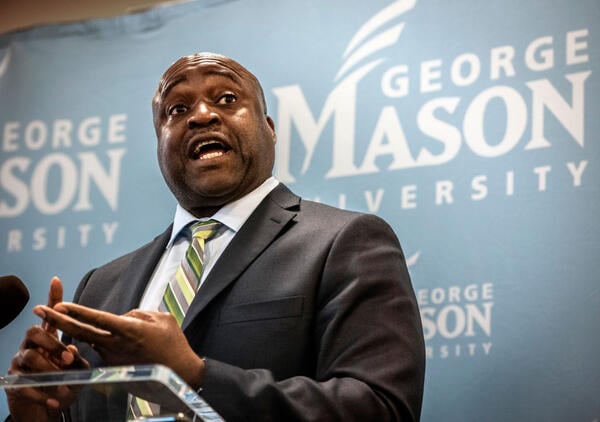
    Higher education has reached its canary-in-a-coal-mine moment: The recent resignation of the University of Virginia president under intense political pressure isn’t just another leadership transition but an indicator of hazards ahead, with similar pressures mounting George Mason University. Higher education governing boards cannot ignore these urgent warning signs that signal peril for the governance structures that have supported our universities and colleges for centuries.

    U.S. higher education is built on a unique model of governance in which independent citizen trustees exercise fiduciary oversight, set policy, safeguard institutional autonomy, support fulfillment of the mission and act in the best interests of the university or college as stewards of the public trust. This model of self-governance has preserved the academic freedom and driven the innovation that are hallmarks of U.S. higher education and that form the foundation of the profound societal impact and global prominence of the sector.

    Today, this governance model faces significant disruption. At both public and private institutions, trustees are being encouraged by policy-driven think tanks to serve as ideological agents and interfere with management rather than act as true fiduciaries. This violation of institutional autonomy is destabilizing and harmful to governance, yielding fractured boards, diminished presidential authority, politicized decision-making, academic censorship and loss of public trust.

    Boards must take this warning very seriously and take a hard look at whether their decisions reflect independent judgment aligned with the institution’s mission or, instead, the influence of external agendas. If governance fails, academic freedom is compromised, academic quality is weakened, public trust is eroded and the promise of U.S. higher education and its role in a democracy will disappear.

    To guide boards in upholding institutional autonomy and mission stewardship, the Association of Governing Boards of Universities and Colleges recently launched the Govern NOW initiative with support from a Mellon Foundation grant. As part of this initiative, AGB developed a models of governance comparison and checklist for governance integrity. These tools help board members distinguish between effective governance and ideologically driven overreach and provide a framework to assess their practices and recommit to their fiduciary responsibilities.

    This is especially critical due to growing misinformation about the role of trustees. Without a true understanding of their responsibilities, they might act independently of board consensus, undermine governance norms, overstep management boundaries and pursue ideological agendas. These actions not only weaken governance by harming board cohesion and culture but also threaten the institutional stability and mission that trustees are charged to uphold.

    This moment is not about partisan politics. It is about leadership and whether we will allow institutional governance to be hijacked by ideological conflict. At stake is the integrity of the governance system that has been the foundation on which the strength and distinction of U.S. higher education has been built.

    To every trustee, I implore you to look inward. Ask whether your board is governing with independence and as stewards of mission and public trust. Use the tools AGB developed to evaluate your culture and boundaries. Engage in real dialogue with your president. Lead together with courage and clarity to secure higher education’s promise.

    Ross Mugler is board chair and acting president and CEO of the Association of Governing Boards of Universities and Colleges.

    Source link

  • We Can’t Ban Generative AI but We Can Friction Fix It (opinion)

    We Can’t Ban Generative AI but We Can Friction Fix It (opinion)

    As the writing across the curriculum and writing center coordinator on my campus, faculty ask me how to detect their students’ use of generative AI and how to prevent it. My response to both questions is that we can’t.

    In fact, it’s becoming increasingly hard to not use generative AI. Back in 2023, according to a student survey conducted on my campus, some students were nervous to even create ChatGPT accounts for fear of being lured into cheating.  It used to be that a student had to seek it out, create an account and feed it a prompt. Now that generative AI is integrated into programs we already use—Word (Copilot), Google Docs (Gemini) and Grammarly—it’s there beckoning us like the chocolate stashed in my cupboard does around 9 p.m. every night.

    A recent GrammarlyGO advertisement emphasizes the seamless integration of generative AI. In the first 25 seconds of this GrammarlyGO ad, a woman’s confident voice tells us that GrammarlyGO is “easy to use” and that it’s “easy to write better and faster” with just “one download” and the “click of a button.” The ad also seeks to remove any concerns about generative AI’s nonhumanness and detectability: it’s “personalized to you”; “understands your style, voice and intent so your writing doesn’t sound like a robot”; and is “custom-made.” “You’re in control,” and “GrammarlyGO helps you be the best version of yourself.”  The message: Using GrammarlyGO’s generative AI to write is not cheating, it’s self-improvement. 

    This ad calls to my mind the articles we see every January targeting those of us who want to develop healthy habits. The ones that urge us to sleep in our gym clothes if we want to start a morning workout routine. If we sleep in our clothes, we’ll reduce obstacles to going to the gym. Some of the most popular self-help advice focuses on the role of reducing friction to enable us to build habits that we want to build. Like the self-help gurus, GrammarlyGO—and all generative AI companies—are strategically seeking to reduce friction by reducing time (“faster), distance (it’s “where you write”) and effort (it’s “easy”!). 

    Where does this leave us? Do we stop assigning writing? Do we assign in-class writing tests? Do we start grading AI-produced assignments by providing AI-produced feedback? 

    Nope. 

    If we recognize the value of writing as a mode of thinking and believe that effective writing requires revision, we will continue to assign writing. While there is a temptation to shift to off-line, in-class timed writing tests, this removes the opportunity for practicing revision strategies and disproportionately harms students with learning disabilities, as well as English language learners.  

    Instead, like Grammarly, we can tap into what the self-help people champion and engage in what organizational behavior researchers Hayagreeva Rao and Robert I. Sutton call “friction fixing.” In The Friction Project (St. Martin’s Press, 2024), they explain how to “think and live like a friction fixer who makes the right things easier and the wrong things harder.” We can’t ban AI, but we can friction fix by making generative AI harder to use and by making it easier to engage in our writing assignments. This does not mean making our writing assignments easier! The good news is that this approach draws on practices already central to effective writing instruction. 

    After 25 years of working in writing centers at three institutions, I’ve witnessed what stalls students, and it is rarely a lack of motivation. The students who use the writing center are invested in their work, but many can’t start or get stuck. Here are two ways we can decrease friction for writing assignments: 

    1. Break research projects into steps and include interim deadlines, conferences and feedback from you or peers. Note that the feedback doesn’t have to be on full drafts but can be on short pieces, such as paragraph-long project proposals (identify a problem, research question and what is gained if we answer this research question). 
    1. Provide students with time to start on writing projects in class. Have you ever distributed a writing assignment, asked, “any questions?” and been met with crickets? If we give students time to start writing in class, we or peers can answer questions that arise, leaving students to feel more confident that they are going in the right direction and hopefully less likely to turn to AI.

    There are so many ways we faculty (unintentionally) make our assignments uninviting: the barrage of words on a page, the lack of white space, our practice of leading with requirements (citation style, grammatical correctness), the use of SAT words or discipline-specific vocabulary for nonmajors: All this can signal to students that they don’t belong even before they’ve gotten started. Sometimes, our assignment prompts can even sound annoyed, as our frustration with past students is misdirected toward current students and manifests as a long list of don’ts. The vibe is that of an angry Post-it note left for a roommate or partner who left their dishes in the sink … again!

    What if we were to reconceive our assignments as invitations to a party instead?  When we design a party invitation, we have particular goals: We want people to show up, to leave their comfort zones and to be open to engaging with other people. Isn’t that what we want from our students when we assign a writing project? 

    If we designed writing assignments as invitations rather than assessments, we would make them visually appealing and use welcoming language.  Instead of barraging students with all the requirements, we would foreground the enticing facets of the assignment. De-emphasize APA and MLA formatting and grammatical correctness and emphasize the purpose of the assignment. The Transparency in Learning and Teaching in Higher Education framework is useful for improving assignment layout. 

    Further, we can invite students to write for real-world audiences and wrestle with what John C. Bean calls “beautiful problems.” As Bean and Dan Melzer’s Engaging Ideas: The Professor’s Guide to Integrating Writing, Critical Thinking, and Active Learning in the Classroom (Wiley, 2021) emphasizes, problems are naturally motivating. From my 25 years of experience teaching writing, students are motivated to write when they:

    • write about issues they care about;
    • write in authentic genres and for real-world audiences;
    • share their writing in and beyond the classroom;
    • receive feedback on drafts from their professors and peers that builds on their strengths and provides specific tasks for how to improve their pieces; and
    • understand the usefulness of a writing project in relation to their future goals. 

    Much of this is confirmed by a three-year study conducted at three institutions that asked seniors to describe a meaningful writing project. If assignments are inviting and meaningful, students are more likely to do the hard work of learning and writing. In short, we can decrease friction preventing engagement with our assignments by making them sound inviting, by using language and layouts that take our audience into consideration, and by designing assignments that are not just assessments but opportunities to explore or communicate. 

    How then do we create friction when it comes to using generative AI? As a writing instructor, I truly believe in the power of writing to figure out what I think and to push myself toward new insights. Of course, this is not a new idea. Toni Morrison explains, “Writing is really a way of thinking—not just feeling but thinking about things that are disparate, unresolved, mysterious, problematic or just sweet.” If we can get students to truly believe this by assigning regular low-stakes writing and reinforcing this practice, we can help students see the limits of outsourcing their thinking to generative AI. 

    As generative AI emerged, I realized that even though my writing courses are designed to promote writing to think, I don’t explicitly emphasize the value of writing as mode of discovery, so I have rewritten all my freewrite prompts so that I drive this point home: “This is low-stakes writing, so don’t worry about sentence structure or grammar. Feel free to write in your native language, use bullet points, or speech to text. The purpose of this freewriting is to give you an opportunity to pause and reflect, make new connections, uncover a new layer of the issue, or learn something you didn’t know about yourself.” And one of my favorite comments to give on a good piece of writing is “I enjoy seeing your mind at work on the page here.” 

    Additionally, we can create friction by getting to know our students and their writing. We can get to know their writing by collecting ungraded, in-class writing at the beginning of the semester. We can get to know our students by canceling class to hold short one-on-one or small group conferences. If we have strong relationships with students, they are less likely to cheat intentionally. We can build these bonds by sharing a video about ourselves, writing introductory letters, sharing our relevant experiences and failures, writing conversational feedback on student writing, and using alternative grading approaches that enable us to prioritize process above product. 

    There are no “AI-proof” assignments, but we can also create friction by assigning writing projects that don’t enable students to rely solely on generative AI, such as zines, class discussions about an article or book chapter, or presentations: Generative AI can design the slides and write the script, but it can’t present the material in class. Require students to include interactive components to their presentations so that they engage with their audiences. For example, a group of my first-year students gave a presentation on a selection from Jonathan Haidt’s The Anxious Generation, and they asked their peers to check their phones for their daily usage  report and to respond to an anonymous survey.

    Another group created a game, asking the class to guess which books from a display had been banned at one point or another. We can assign group projects and give students time to work on these projects in class; presumably, students will be less likely to misuse generative AI if they feel accountable in some way to their group. We can do a demonstration for students by putting our own prompts through generative AI and asking students to critique the outputs. This has the two-pronged benefit of demonstrating to students that we are savvy while helping them see the limitations of generative AI. 

    Showing students generative AI’s limitations and the harm it causes will also help create friction. Generative AI’s tendency to hallucinate makes it a poor tool for research; its confident tone paired with its inaccuracy has earned it the nickname “bullshit machine.” Worse still are the environmental costs, the exploitation of workers, the copyright infringement, the privacy concerns, the explicit and implicit biases, the proliferation of mis/disinformation, and more. Students should be given the opportunity to research these issues for themselves so that they can make informed decisions about how they will use generative AI. Recently, I dedicated one hour of class time for students to work in groups researching these issues and then present what they found to the class. The students were especially galled by the privacy violations, the environmental impact and the use of writers’ and artists’ work without permission or compensation. 

    When we focus on catching students who use generative AI or banning it, we miss an opportunity to teach students to think critically, we signal to students that we don’t trust them and we diminish our own trustworthiness.  If we do some friction fixing instead, we can support students as they work to become nimble communicators and critical users of new technologies.

    Catherine Savini is the Writing Across the Curriculum coordinator, Reading and Writing Center coordinator, and a professor of English at Westfield State University. She enjoys designing and leading workshops for high school and university educators on writing pedagogy.

    Source link

  • Tax Policy Belongs in Liberal Arts Curriculum (opinion)

    Tax Policy Belongs in Liberal Arts Curriculum (opinion)

    As congressional Republicans scratched and clawed to pass President Trump’s signature policy effort, the One Big Beautiful Bill Act—a sprawling, tax-heavy package celebrated as much for its branding as for its contents—it is notable how few people could explain what exactly was in it. Tax cuts for some, probably. A Social Security bonus, maybe. A gutting of public benefits, almost certainly. What is clear, though, is that the bill’s complexity was always in service of its politics: When no one understands tax policy, it’s much easier to sell whatever story you want.

    That confusion is exactly why we should be teaching tax policy more broadly—not just in sparsely attended law school classes and accounting departments, but in general education curricula and first-year seminars. Tax isn’t just a technical rule-following subject; it’s a civic one. Tax policy shapes everything from fairness and inequality to the functional shape of the state itself. Yet, most students will graduate college without ever being asked to consider what tax is for—much less whom it helps, whom it harms and why it remains so easy to obscure.

    That is precisely the starting point for the course I designed at Drexel University, Introduction to Tax Theory and Policy, which I teach in our innovative undergraduate law major, housed at the Thomas R. Kline School of Law. It’s not a course for aspiring tax attorneys, prospective C.P.A.s or Excel mavens—few of my students intend to practice tax law. They’re interested in criminal or family law, or they’re business majors, future social workers, engineers or undecided second-years. But they’re all taxpayers—and that’s the relevant bit.

    Courses like mine aim to democratize access to legal and policy tools so that all students, irrespective of their major, can become more informed and empowered participants in civic life. In class, we don’t parse tax rates or calculate deductions. No calculators are required, and at no point is anyone expected to consider the straight-line depreciation of an apartment complex. We ask why the system is built the way it is, and we talk about the power that it reflects and protects. We talk about values: what kinds of behavior the tax code encourages or punishes. We talk about trust and legitimacy: What happens when people believe the system is rigged, and what if they’re right? In short, we treat tax not as a set of arcane rules and rates to memorize, but as a lens through which we can better understand the power structures we live under.

    The surprising part (at least to me, when I first taught it and admittedly just hoped I wouldn’t be lecturing to an empty room) is how much students connect with this approach. More than connect with it—they often enjoy it. I’ve received feedback from students that describes the class as life-changing and course reviews that have noted how it changed assumptions regarding what tax even is. High praise from 19- and 20-year-olds.

    The course itself draws on philosophy, political theory, economics and law—but what it really cultivates is a kind of civic literacy. It asks students to think about who they are in relation to the state and how much of their future may be shaped by the tax policy they’ve never been taught to see. For many, it is the first time they’ve encountered taxation not as something to dodge, but as something to question, debate and reimagine in furtherance of their own values.

    In one session, we explore how the tax code is employed as a kind of soft steering wheel in the economy—how it at turns encourages homeownership, subsidizes sports stadiums, directs corporate research and development, and shapes (or even outright creates) the market for electric vehicles. Another week, we explore estate taxes and inheritance: not just who pays, but what it means to redistribute wealth across generations and what happens when we don’t. We read Garrett Hardin’s “The Tragedy of the Commons,” engage in spirited debates about the potential for tax to solve the artificial intelligence copyright debate, and unpack why TurboTax spent two decades fighting free filing.

    Over the course of the class, the question shifts away from what is a tax and toward whose values does this system reflect? That shift—from mere definitional awareness to focused critical engagement—is when I know the class is working. Students cease to see tax as someone else’s problem and begin seeing it as a potent tool of and for democracy.

    In their final papers, students have proposed remarkably forward-looking and sophisticated tax policy reforms—reflecting both creativity and civic seriousness. One student argued that companies receiving public subsidies through tax credits, like chemical and drug manufacturers, should be barred from claiming additional credits to remediate harms their products create. Another proposed a data-collection “sin tax” aimed at discouraging exploitative surveillance practices by tech companies. These aren’t rote academic exercises. They’re thoughtful intervention proposals that treat tax as a lever for shaping society.

    If tax policy determines who gets what, who pays for it and how the government keeps a hand in the marketplace, then it belongs squarely at the heart of a liberal arts education. We don’t cabin discussions of justice in law schools, and we don’t isolate questions of the public good in policy programs—why do we treat taxation, which intersects with both and innumerable other facets of modern life, as off-limits or too technical for undergraduates?

    This isn’t a plea to teach undergraduates to file their own taxes—though there is probably a case to be made for that, too. It’s about ensuring curricula help them understand how the world works and how it’s been designed to work for some more than others. That means tackling the politics of Internal Revenue Service funding, exploring how “tax relief” often functions as an upstream transfer of wealth and how a positively sprawling bill like the one recently passed through Congress can obscure much more than it reveals.

    If no one understands how tax policy works, how can anyone meaningfully weigh in on whether they support one revenue bill or another? On issues like immigration, abortion or education funding, many people bring at least some passing knowledge or lived experience to the conversation. Tax remains, for most, a black box. The more opaque it becomes, the more tempting it is for lawmakers to retreat into it—tucking major redistributive choices into the shadows of the tax code, where they can be shielded from public scrutiny.

    On the other hand, when students come to see tax as a form of the civic superstructure—something they live within and not just under—they are empowered to not only understand tax policy but to shape it. That should be one of the goals of any serious undergraduate education.

    We don’t have to, and should not, keep treating tax as one professional niche within other professional niches. If we want students to understand how tax relates to power, fairness and democratic participation, we should give them the tools to talk about it. This needn’t focus on the rates and rules but should illustrate the values taxes reflect and trade-offs they embed.

    Courses like mine don’t require a background in economics, accounting or law. They require a willingness to take seriously the idea that how we tax equates to how we govern. If we can help students see tax not as a source of dread or line item on their paycheck, but as the site of collective economic decision-making, we don’t just produce better-informed graduates—we’ll also produce more engaged citizens.

    Andrew Leahey is a practice professor of law at Drexel University’s Thomas R. Kline School of Law.

    Source link

  • U.S. Universities Can’t Innovate in Isolation (opinion)

    U.S. Universities Can’t Innovate in Isolation (opinion)

    In a paradoxical bid to “make America great again,” President Trump and congressional Republicans are pushing to restrict international research collaboration in U.S. higher education. The Department of Education is investigating Harvard University; the University of California, Berkeley; and the University of Pennsylvania for potential violations of the Higher Education Act, which requires universities to report foreign gifts and contracts valued at $250,000 or more.

    Policymakers are further proposing to lower that threshold to $50,000 and require universities to obtain federal waivers before entering into contracts with “foreign countries of concern.” The administration is also seeking to prohibit Harvard from enrolling international students and placing full or partial travel bans on people from 19 countries. And after pausing student visa interviews for about a month starting in May, the administration is now scrutinizing applicants’ social media accounts to approve or deny their visas.

    At a time when the global race to develop cutting-edge technologies is accelerating, the U.S. should be expanding—not constraining—its international research partnerships.

    Federal demands for foreign gift reporting kicked off in 1986, after Georgetown University received donations from Arab governments to establish its Center for Contemporary Arab Studies. Policymakers worried about potential strings attached, such as influence over curricula and threats to free speech, resulting in legislation requiring universities to disclose foreign funding. Over time, however, compliance waned, and successive administrations allowed the law to fall into disuse.

    That changed in 2019, when the Trump administration revived enforcement and began investigating universities for noncompliance, uncovering billions of dollars in unreported funding. The concern then, as now, was that a lack of transparency threatened academic independence and posed national security risks.

    It is understandable to want to know if foreign governments are influencing American institutions. But is there good reason to think current rules are effective, or that stricter ones would be?

    There is little evidence that decades of lax enforcement have led to significant harm. The Trump administration’s China Initiative, for example, sought to root out espionage in academia but instead cast a wide, indiscriminate net, leading to criminal charges against professors like Feng Tao, Anming Hu and Gang Chen based on questionable allegations. In each case, charges were ultimately dropped or the scientists were acquitted, but not before reputations were damaged and careers derailed. Of the 162 cases prosecuted by the Department of Justice under the China Initiative, only about 20 involved university researchers, and at least nine of these cases ended in dismissed charges or acquittals. The initiative illustrates how geopolitical anxiety can erode academic freedom and damage innocent collaborations for little gain.

    Both the previous and current Trump administrations have scrutinized universities’ research, including on dual-use technologies such as artificial intelligence, robotics systems and laser technology, arguing that they can be used to advance foreign governments’ (particularly China’s) military objectives. But politicians too often fail to acknowledge that most applications in these fields are nonmilitary, including autonomous vacuum cleaners, industrial robots and self-driving cars. Autonomous systems have been a long-standing area of global research, much of it geared toward civilian innovation. Moreover, federal agencies, including the Department of Defense, have implicitly supported this research through funding.

    While reporting can be onerous, requiring universities to obtain federal waivers to collaborate with researchers from “foreign countries of concern” is more intrusive. So too are possibly biased social media screening of foreign students and travel bans that prevent entire populations from engaging with U.S. institutions. These policies move beyond transparency into gatekeeping, forcing universities to seek permission before working with researchers from countries like China, home to more than 1.4 billion people and a global leader in scientific research. Past historical lessons on how political tensions have been allowed to erode academic freedom do not need to be relearned.

    Although the U.S. Department of Education claimed to improve the process for foreign gift reporting with a new portal in the first Trump administration, it increased the amount of information for colleges to report. The reporting process, while intended to enhance transparency, imposes bureaucratic costs on institutions.

    Preserving open academic environments, where innovation can thrive, is not a liability, but a strategic advantage. Still, precautions should be taken. Sensitive research should be classified by the federal government. Companies partnering with universities should set clear terms about who can access proprietary projects. People who violate classification rules or contract terms should face consequences. But the default should be freedom, not prohibition.

    To keep America great, it is essential to preserve the openness and intellectual freedom that define U.S. higher education and make it the best postsecondary system in the world, at least as indicated by its dominance of international rankings, share of Nobel laureates and attractiveness to international students. Open academic environments encourage innovation, foster critical thinking and enable researchers to explore cutting-edge fields—including those vital to national competitiveness.

    If the U.S. is to maintain its position as a global leader in research, it must champion academic freedom, not restrict it.

    Neal McCluskey is the director of the Center for Educational Freedom at the Cato Institute, where Kayla Susalla is a research associate.

    Source link