Tag: opinion

  • Assignments for Politically Disaffected Students (opinion)

    Assignments for Politically Disaffected Students (opinion)

    Joe Rogan is no fan of my work, obviously. The chart-topping conservative influencer famously insists that universities are “cult camps” where professors like me indoctrinate students with leftist ideas. Typically, I do not worry about my haters, but increasingly it seems that if I want to create a meaningful learning experience, I need to.

    I teach first-year undergraduate humanities electives. Like most universities, ours offers large-format 200-student lectures for training in academic writing and critical theory. This would be the “indoctrination” in question, as I introduce students to canonical thinkers from Karl Marx to Sylvia Wynter. These electives are degree requirements, snaring students who might intentionally avoid liberal arts in an otherwise professional degree.

    In the current political climate, many of my students come to the classroom with their minds made up based on authorities who directly undermine my scholarship and profession. Rogan is just one of many conservative anti-intellectuals who regularly attack liberal, feminist, social justice–oriented biases in university education. The result is a polarized atmosphere antithetical to learning: a tangibly mistrustful, sometimes even resentful classroom.

    Although only a small handful of students typically adhere to anti-intellectual doctrine, their small group undermines my authority with risky jokes in the classroom and intense criticism in student back channels (as reported by concerned classmates). This causes undecided students to falter in their trust of my authority, while students who do not share their views nervously censor their contributions.

    Ironically, my dissenting students often do not recognize that I am interested in their views. I am convinced that the way out of this explosive historic moment is through rigorous discussion in educational forums. Like any academic, this is why I teach: I love sincere inquiry, debate and critical engagement, and I was a rabble-rouser myself as a student. But the current classroom mood is less debate and more deadlock.

    So, I spent this year brainstorming with my students to build creative assignments to spin resentment into passion, no matter how opposite my own, welcoming self-directed research and encouraging deeply engaged reading. I offer any one of these assignments, with the goal to bring disaffected, anxious students back to a love of learning and democratized engagement. This is a work in progress, and I welcome suggestions.

    Turn Tensions Into Data: This introductory exercise eases students into an atmosphere of open collegial discussion. Surveys or anonymous polls quantify disagreements, and then we analyze the results as a class.

    Example: Class Belief Inventory—anonymously poll students on hot-button questions (e.g., “Is systemic racism a major problem?”). The objective here would be to compare the class’s responses to national survey data. Potential discussion topics: Why might differences exist? What shapes our perceptions?

    Hostile Influencers as Primary Sources: This in-class activity treats figures like Rogan or Jordan Peterson not as adversaries but as authors of texts to analyze, to disarm defensiveness and position students as critical investigators.

    Example: “Compare/contrast an episode of [X podcast] with a peer-reviewed article on the same topic. How do their arguments differ in structure, evidence and rhetoric? Whom do you find more persuasive, and why?”

    Gamifying Ideological Tensions: This class activity turns assigned readings into structured, rule-bound games where students must defend positions they don’t personally hold.

    Example: Role-Play a Summit—Students are assigned roles (e.g., Jordan Peterson, bell hooks, climate scientist, TikTok influencer) and must collaborate to solve a fictional problem (e.g., redesigning a curriculum). They must cite course readings to justify their choices.

    Therapy for Arguments: This fun early activity teaches students to diagnose weak arguments—whether from Rogan, a feminist theorist or you—using principles of logic.

    Example: Argument Autopsy—Students dissect a viral social media post, podcast clip or course reading. Identify logical fallacies, cherry-picked evidence or unstated assumptions. Reward students for critiquing all sides.

    Intellectual Sleuthing: This is a scaffolded midterm writing assignment building up to a final essay. Ask students to trace the origins of their favorite influencers’ ideas. Many anti-establishment figures borrow from (or distort) academic theories—show students how to connect the dots.

    Example: Genealogy of an Idea—Pick a claim from a podcast (e.g., “universities indoctrinate students”). Research its history: When was this idea popular in mainstream news or on social media? Are there any institutes, think tanks, influencers or politicians associated with this idea? What are the stated missions and goals of those sources? Where do they get their funding? Which academics agree or disagree, and why?

    Leverage “Forbidden Topics” as Case Studies: If students resent “liberal bias,” lean into it: make bias itself the subject of analysis. This might work as a discussion prompt for tutorials or think-pair-share group work.

    Example: “Is This Reading Biased?”—Assign a short text students might call “woke” (e.g., feminist theory) and a countertext (e.g., Peterson’s critique of postmodernism). Have students evaluate both using a rubric: What counts as bias? Is objectivity possible? How do they define “truth”?

    Choose-Your-Own-Adventure Assignments: The final essay assignment gives students agency to explore topics they care about, even if they critique my field. Clear guardrails are important here to ensure rigor.

    Example: Passion Project: Students design a research question related to the course—even if it challenges the course’s assumptions. They must engage with three or more course texts and two or more outside sources, as in favorite influencers or authorities, even those who oppose course themes.

    Red Team vs. Blue Team: For essays, students submit two versions: one arguing their personal view and one arguing the counterpoint. Grading is based on how well they engage evidence, not their stance.

    Elisha Lim is an assistant professor of the technological humanities at York University in Toronto. They used generative AI tools to assist with the editing of this piece.

    Source link

  • What’s With the Em Dash/AI Anxieties? (opinion)

    What’s With the Em Dash/AI Anxieties? (opinion)

    In recent months, a curious fixation has emerged in corners of academia: the em dash. More specifically, the apparent moral panic around how it is spaced. A dash with no spaces on either side? That must be AI-generated writing. Case closed.

    What might seem like a minor point of style has, in some cases, become a litmus test for authenticity. But authenticity in what sense—and to whom? Because here is the thing: There is no definitive rule about how em dashes should be spaced. Merriam-Webster, for instance, notes that many newspapers and magazines insert a space before and after the em dash, while most books and academic journals don’t. Yet, a certain kind of scholar will see a tightly spaced dash and declare: “AI.”

    This tells us less about punctuation and more about the moment we are in. It reflects a deeper discomfort within academic knowledge production—about writing, authority and who gets to speak in the language of the academy.

    Academic writing has long been a space of exclusion. Mastering its conventions—its structures, tones and unwritten rules—is often as important as the content itself. Those conventions are not neutral. They privilege those fluent in a particular kind of English, in a particular kind of intellectual performance. And while these conventions have sometimes served a purpose—precision, nuance, care—they have also functioned to gatekeep, obscure and signal belonging to a small circle of insiders.

    In that context, generative AI represents a real shift. Not because it replaces thinking—clearly, it does not—but because it lowers the barriers to expressing ideas in the right register. It makes writing less labor-intensive for those who are brilliant thinkers but not naturally fluent in academic prose. It opens possibilities for scholars writing in their second or third languages, for early-career researchers who have not yet mastered the unwritten codes and for anyone who simply wants to get to the point more efficiently. This is not a minor intervention—it is a step toward democratizing academic expression.

    And in that lies both the opportunity and the anxiety.

    I have read academic work recently that likely used AI writing tools—either to help organize thoughts, smooth expression or clarify argument. Some of it has been genuinely excellent: clear, incisive and original. The ideas are coherent and well articulated. The writing does not perform difficulty; it performs clarity. And in doing so, it invites more people in.

    By contrast, a fair portion of traditionally polished academic writing still feels burdened by its own formality—long sentences, theoretical throat-clearing prose that loops and doubles back on itself. It is not that complexity should be avoided, but rather that complexity should not be confused with value. The best writing does not show off; it shows through. It makes ideas visible.

    Needless to say, I am not about to cite examples—whether of the work I suspect was AI-assisted or the work that could have done with a bit of help.

    So why, then, do so many in academic circles focus their attention on supposed telltale signs of AI use—like em dashes—rather than on the substance of the ideas themselves?

    Part of the answer lies in the ethics discourse that continues to swirl around AI. There are real concerns here: about transparency, authorship, citation and the role of human oversight. Guidance from organizations such as the Committee on Publication Ethics, and emerging policies from journals and universities, reflect the need for thoughtful governance. These debates matter. But they should not collapse into suspicion for suspicion’s sake. That’s because the academic world has never been a perfectly level field. Those with access to time, mentorship, editorial support and elite institutions have long benefited from invisible scaffolding.

    AI tools, in some ways, make that scaffolding more widely available.

    Of course, there are risks. Overreliance on AI can lead to formulaic writing or the flattening of style. But these are not new issues—they predate AI and are often baked into the structures of journal publishing itself. The greater risk now is a kind of reactionary gatekeeping: dismissing writing not because of its content, but because of how it looks, mistaking typography for intellectual integrity.

    What is needed, instead, is a mature, open conversation about how AI fits into the evolving ecosystem of scholarly work. We need clear, consistent guidelines that recognize both the benefits and limitations of these tools. Recent statements from major institutions have begun to address this, but more are needed. We need transparency around how AI is used—without attaching shame to its use. And we need to refocus on what matters most: the quality of the thinking, the strength of the contribution and the clarity with which ideas are communicated.

    The em dash is not the problem. Nor is AI. The problem is a scholarly culture still too often wedded to performance over substance—one where form is used to mask or elevate, rather than to express.

    If we are serious about making knowledge more inclusive, more global and more just, then we should embrace tools that help more people take part in its production. Not uncritically, but openly. Not secretly, but responsibly.

    What we should be asking is not “Was this written with AI?” but rather, “Is this work rigorous? Is it generous? Does it help us think differently?”

    That is the kind of scholarship worth paying attention to—em dash or not.

    Joseph Mellors is a research associate for FUTOURWORK at Westminster Business School at the University of Westminster, in the U.K.

    Source link

  • Higher Ed Must Recommit to Its Enlightenment Roots (opinion)

    Higher Ed Must Recommit to Its Enlightenment Roots (opinion)

    American higher education is on its back foot. As part of the Trump administration’s broader project of regime consolidation, universities are facing new and shockingly direct threats to their independence and academic freedom. And in the past few months, we’ve seen that reality start to sink in. Sometimes there is no more compromise to be had and the only way to stand on principle is to forthrightly say no. In the process, the academic community can reclaim fundamental values that had been eroding well before the present crisis.

    This campaign to assert government control is bad for the academy, but it’s even worse for liberal democracy. Despite the political challenges facing higher ed, or rather, in light of those challenges, it’s critical that scholars, academic leaders and students reclaim what seems to have been forgotten —that the modern university is a living legacy of Enlightenment-era liberalism, the tradition that champions political liberty, constitutional constraints on power, freedom of thought and evidence-based reasoning.

    Founding-era academic leaders understood, in concrete terms, that universities were cornerstone institutions of the fledgling American experiment. They took it as their duty to educate not royal subjects but politically free, self-governing citizens capable of managing complex matters of private, commercial and public life. They believed that liberty and intellectual agency were inextricably linked.

    As Benjamin Rush, a prominent signer of the Declaration of Independence and founder of Dickinson College, observed, “Freedom can exist only in the society of knowledge. Without learning, men are incapable of knowing their rights, and where learning is confined to a few people, liberty can be neither equal nor universal.” In other words, right from the start, the ethos of American universities was bound up with the American ideal of liberal democracy.

    To be clear, I am not suggesting that only liberal perspectives should be taught in institutions of higher learning. Far from it. Among liberalism’s most distinctive strengths is that it creates space for its own critics. But while individual scholars may explore and promote alternatives to constitutionally constrained liberal democracy, the institution itself must assertively defend the liberal rules of the game that make those critiques possible in the first place.

    In other words, if universities are to have a future as cornerstone institutions of a free society, they must assert their role as caretakers of the liberal democratic project. My point is not that it would be nice if universities were to play this role. As my co-author Bradley Jackson and I have argued, “The future of higher education and the future of the liberal order are inextricably bound to one another. As goes one, so goes the other.”

    As I take stock of the past decade, a few moments stick in my mind as emblematic of the current state in which higher education now finds itself. The first was in 2015, when a professor of mass media at the University of Missouri famously called for “some muscle” to prevent a student photojournalist from exercising his First Amendment rights to cover a public demonstration on the campus quad. At least one other Mizzou staff member assisted in the effort to intimidate the journalist.

    The 2017 episode at Middlebury College, when students organized to shout down invited speaker Charles Murray, was another. Like so many others, I was shocked and angry that outsiders saw it as an opportunity to engage in political violence. But what broke my heart was the fact that students carefully prepared for the event not by marshaling their best arguments to counter Murray, but by crafting prescripted chants designed to shut down the open exchange of ideas. As a professor and provost, I cringed as I considered what these incidents said about the profession to which I was so passionately dedicated. And wasn’t it obvious that attacks on intellectual freedom would always, one way or another, end up harming the marginalized and those fighting for social justice? Somehow, we had lost the plot.

    Perhaps the most cringe-inducing episode before this year’s events was in December 2023, when the presidents of Harvard University, the Massachusetts Institute of Technology and the University of Pennsylvania were summoned before a congressional committee to face allegations of antisemitism for not shutting down protests opposing Israel’s response to the Oct. 7 Hamas attack. I winced not just at the Inquisition-style interrogation and the lawyerly responses the witnesses offered. I cringed because, in their attempts to invoke First Amendment freedoms as their rationale, the presidents of three of our most prestigious institutions had zero credibility. Their allegiance to First Amendment principles read like an unconvincing foxhole conversion.

    My point is not to relitigate these incidents. Rather, it is to suggest a pattern —and to provide context for why universities are so vulnerable to the Trump administration and state legislatures seeking to compel ideological compliance. When academic leaders, professors and students disregard the academy’s liberal foundations, we no longer have ground to stand upon when illiberal forces come to tear it all down. The weaponization of federal funding, deportation of students and scholars engaged in protected political speech, bans on “divisive concepts,” and threats of consent decrees— legal settlements that would place universities under long-term federal control—effectively strip universities of governance autonomy and set dangerous precedents for political interference in academic institutions.

    Now faced with a truly existential crisis, many institutions are starting to fight back. Harvard has dug in its heels in the face of previously unthinkable threats, turning to the courts to protect its rights—fighting not just its blacklisting from federal research grants, but a flagrantly lawless attack on its tax-exempt status and an equally illegal attempt to revoke its certification to enroll international students on visas. In a response to the government through its lawyers, Harvard made clear its refusal to cave in no uncertain terms: “The university will not surrender its independence or relinquish its constitutional rights. Neither Harvard nor any other private university can allow itself to be taken over by the federal government.”

    Harvard isn’t the only institution finding its courage. Georgetown University, when menaced by the interim federal prosecutor for Washington, D.C., correctly asserted, as a matter of both speech and religious freedom (as a Jesuit university), its right to determine its own faculty and curriculum. It’s not a matter of abstract principle. A member of Georgetown’s own faculty has been targeted for abduction and meritless deportation. Princeton University, as well, has aggressively pushed back.

    Nor is the resistance limited to elite universities. As students are disappeared for speech displeasing the government, and as Trump’s overt censorship demands mount, smaller private colleges and state institutions have been sounding the alarm. In the process, they aren’t just defending their own self-interest, they are rallying civil society to resist incipient authoritarianism. Charles Murray’s work provides a compelling example of how the tit-for-tat cycle of illiberal escalation unfolds. At the U.S. Naval Academy in Annapolis, the office of Secretary of Defense Pete Hegseth ordered the removal of supposed “DEI” works. While The Bell Curve survived the purge, a pointed critique of Murray’s most controversial book did not.

    The irony is hard to ignore. Upon entry into the Naval Academy, midshipmen swear an oath to defend the Constitution “against all enemies, foreign and domestic.” Shouldn’t we trust America’s future military leaders to exercise the very freedoms we’re asking them to defend with their lives? (Most of the books that were initially removed have since been returned to the Naval Academy’s shelves.)

    Fortunately for civilian institutions, the courts are proving up to the task in pushing back. Tufts University student Rümeysa Öztürk was freed after several weeks in Immigration and Customs Enforcement custody, having been targeted for co-authoring an op-ed critical of the war in Gaza. That such a thing would happen in the United States is an unthinkable attack on free speech at its very core. Öztürk was incarcerated and threatened with expulsion not for protests, which can devolve into physical conflict and rule breaking, but simply for writing an opinion the government decided it disliked.

    No liberal education—no liberal society—can endure under such a menacing shadow of state retaliation and suppression. We shouldn’t lose sight of the longer term, and the need to recommit ourselves to first principles. We must reinforce the principle of academic freedom as the constitutional order that governs a functioning university. Further, as we welcome new students and colleagues into the academy, we can’t leave it to chance that liberal values that privilege openness, curiosity, ingenuity and intellectual humility will take hold. We must be deliberate in our efforts to cultivate those values.

    But an important, though less obvious, recommendation is one that won’t be easy to follow in a moment when our impulse is to defend the academy at all cost. Simply put, we must own our mistakes. If we are to refortify the liberal foundations of American higher education, we must proactively name the failures that have contributed to a permission structure that now accommodates illiberal and authoritarian reactionary forces. In some cases, that will mean replacing leaders who have tarnished their credibility with those who can better meet the moment.

    To be clear, in owning our mistakes, we will not be currying favor with political elites on either side of the aisle. We will be speaking to and rebuilding trust with the public who support institutions of higher learning through their taxes and tuition payments. And we will be speaking to our own campus communities who seek principled leadership.

    Taking full responsibility for the course correction will be good for the academy, as it will reset the path by which colleges and universities become sites of intellectual openness, challenge and discovery. But it will also be good for the future of our country. It will offer an example of how, after shifting away from its liberal foundations, a cornerstone institution of the American experiment can once again find its bearings, re-establish its independence and assertively take the lead in fortifying, in its most urgent hour, our system of constitutionally constrained liberal democracy.

    Emily Chamlee-Wright is president of the Institute for Humane Studies at George Mason University and was previously provost and dean at Washington College.

    Source link

  • Don’t Fall for Trump’s Trade School Trojan Horse (opinion)

    Don’t Fall for Trump’s Trade School Trojan Horse (opinion)

    In one of his all-too-frequent rants on Truth Social last month, President Trump posted, “I am considering taking Three Billion Dollars of Grant Money away from a very antisemitic Harvard, and giving it to TRADE SCHOOLS all across our land.” It’s a transparent and cynical ploy: pit one segment of the education community against another—rich Harvard versus poor “trade schools”—and watch the divisions take hold. But make no mistake: This strategy only works if institutions, elite or otherwise, fall for the bait.

    We’re not sure what the president means by “trade schools” but suspect he’s referring to the nation’s 1,000-plus community and technical colleges— institutions that educate about a third of all U.S. undergraduates. We’ve both spent our careers making the case for greater investment in these colleges, including through the Project on Workforce, the cross-Harvard initiative we helped found six years ago to forge better pathways between education and good jobs.

    (And for the record: Trump’s accusation that Harvard is “very antisemitic” rings hollow coming from the man who hosted a Holocaust-denying white nationalist at Mar-a-Lago. It’s certainly unrecognizable to us—two Jews who, between us, have spent more than 40 years as Harvard students, staff and faculty.)

    If Trump actually cared about funding “trade schools,” he would start by telling congressional leaders to strip the provision in his so-called Big Beautiful Bill that raises the credit-hour threshold for Pell Grant eligibility. Community colleges serve the bulk of low-income students, and most of them have to work while in school. This proposed change proffered by the House, which was not included in the Senate version of the reconciliation bill, could cut off aid for 400,000 students a year and force many to drop out.

    But the threat isn’t just in proposed legislation: Community colleges are already the targets of Trump’s politically motivated grant cancellations. For example, just last month, his administration revoked awards from six Tech Hubs, created by bipartisan legislation to boost innovation, job creation and national security. These included projects in Alabama, where a community college would expand biotech training; in Idaho, where a community college planned to train aerospace workers; and in Vermont, where a community college was preparing a new semiconductor workforce.

    And the cuts don’t stop there. If the president was really serious about supporting the U.S. skilled technical workforce, he would expand, not gut, programs like the National Science Foundation’s Advanced Technological Education initiative, which has provided $1.5 billion to more than 500 community and technical colleges to develop cutting-edge training in fields like advanced manufacturing and robotics. Instead, his budget proposes cutting NSF by 55 percent, including deep reductions to education and workforce programs. The president’s budget also proposes eliminating all Perkins Act funding for community colleges (approximately $400 million), limiting the funding to middle and high schools and thereby cutting off a key source of federal support for technical training beyond secondary school.

    If by “trade schools” Trump means education for trades jobs, his hostility toward immigrants undermines the very students he claims to support. Eight percent of community college students are not U.S. citizens, with much higher shares on some campuses. They are just as vital to America’s future as the researchers in Harvard’s labs. In 2024, immigrants made up more than 30 percent of construction trades workers and 20 percent of U.S. manufacturing workers. Closing America’s doors won’t just harm colleges: It will weaken our ability to build, make and compete.

    Last week, we joined more than 12,000 Harvard alumni in signing an amicus brief to pledge our commitment to defend not only Harvard but the broader higher education enterprise from the Trump administration’s bullying attacks. Over the past month, we also spoke with community college leaders from around the country whose work we profiled in our 2023 book, America’s Hidden Economic Engines. Without exception, these leaders expressed deep concern, understanding that if Harvard, with all of its resources, could be forced to bend to the will of a tyrannical government, what chance would less resourced institutions have to defend academic freedom and maintain independence from governmental intrusion?

    If elite universities and community and technical colleges stand together, we can defend not just education, but democracy itself. Challenging as it will be for Harvard to weather this unprecedented assault on its independence, and that of higher education, it has no choice but to stand firm. Unlike many more vulnerable victims of Trump’s bullying—immigrants, civil servants, USAID grantees, the trans community—Harvard has the resources to fight back. Ultimately its rights, along with the rights of others targeted, will likely be vindicated by the courts. But in the interim, a lot of needless damage will be done to the lives of affected people and institutions. Most Americans may not speak often of such abstractions as academic freedom, due process and the fate of democracy. But they know a bully when they see one.

    Rachel Lipson, a co-founder of the Harvard Project on Workforce, was a senior adviser on workforce at the CHIPS Program Office at the U.S. Department of Commerce. She recently returned to Harvard Kennedy School as a research fellow.

    Robert Schwartz is a professor of practice emeritus at Harvard Graduate School of Education. Before joining the Harvard faculty in 1996, he had a long career in education and government.

    Source link

  • 4 Creative Ways to Engage Kids in STEM Over the Summer – The 74

    4 Creative Ways to Engage Kids in STEM Over the Summer – The 74


    Get stories like this delivered straight to your inbox. Sign up for The 74 Newsletter

    The Trump administration is reshaping the pursuit of science through federal cuts to research grants and the Department of Education. This will have real consequences for students interested in science, technology, engineering and mathematics, or STEM learning.

    One of those consequences is the elimination of learning opportunities such as robotics camps and access to advanced math courses for K-12 students.

    As a result, families and caregivers are more essential than ever in supporting children’s learning.

    Based on my research, I offer four ways to support children’s summer learning in ways that feel playful and engaging but still foster their interest, confidence and skills in STEM.

    1. Find a problem

    Look for “problems” in or around your home to engineer a solution for. Engineering a solution could include brainstorming ideas, drawing a sketch, creating a prototype or a first draft, testing and improving the prototype and communicating about the invention.

    For example, one family in our research created an upside-down soap dispenser for the following problem: “the way it’s designed” − specifically, the straw − “it doesn’t even reach the bottom of the container. So there’s a lot of soap sitting at the bottom.”

    To identify a problem and engage in the engineering design process, families are encouraged to use common materials. The materials may include cardboard boxes, cotton balls, construction paper, pine cones and rocks.

    Our research found that when children engage in engineering in the home environment with caregivers, parents and siblings, they communicate about and apply science and math concepts that are often “hidden” in their actions.

    For instance, when building a paper roller coaster for a marble, children think about how the height will affect the speed of the marble. In math, this relates to the relationship between two variables, or the idea that one thing, such as height, impacts another, the speed. In science, they are applying concepts of kinetic energy and potential energy. The higher the starting point, the more potential energy is converted into kinetic energy, which makes the marble move faster.

    In addition, children are learning what it means to be an engineer through their actions and experience. Families and caregivers play a role in supporting their creative thinking and willingness to work through challenging problems.

    2. Spark curiosity

    Open up a space for exploration around STEM concepts driven by their interests.

    Currently, my research with STEM professionals who were homeschooled talk about the power of learning sparked by curiosity.

    One participant stated, “At one time, I got really into ladybugs, well Asian Beatles I guess. It was when we had like hundreds in our house. I was like, what is happening? So, I wanted to figure out like why they were there, and then the difference between ladybugs and Asian beetles because people kept saying, these aren’t actually ladybugs.”

    Researchers label this serendipitous science engagement, or even spontaneous math moments. The moments lead to deep engagement and learning of STEM concepts. This may also be a chance to learn things with your child.

    3. Facilitate thinking

    In my research, being uncertain about STEM concepts may lead to children exploring and considering different ideas. One concept in particular − playful uncertainties − is when parents and caregivers know the answer to a child’s uncertainties but act as if they do not know.

    For example, suppose your child asks, “How can we measure the distance between St. Louis, Missouri, and Nashville, Tennessee, on this map?” You might respond, “I don’t know. What do you think?” This gives children the chance to share their ideas before a parent or caregiver guides them toward a response.

    4. Bring STEM to life

    Turn ordinary moments into curious conversations.

    “This recipe is for four people, but we have 11 people coming to dinner. What should we do?”

    In a recent interview, one participant described how much they learned from listening in on financial conversations, seeing how decisions got made about money, and watching how bills were handled. They were developing financial literacy and math skills.

    As they noted, “By the time I got to high school, I had a very good basis on what I’m doing and how to do it and function as a person in society.”

    Globally, individuals lack financial literacy, which can lead to negative outcomes in the future when it comes to topics such as retirement planning and debt.

    Why is this important?

    Research shows that talking with friends and family about STEM concepts supports how children see themselves as learners and their later success in STEM fields, even if they do not pursue a career in STEM.

    My research also shows how family STEM participation gives children opportunities to explore STEM ideas in ways that go beyond what they typically experience in school.

    In my view, these kinds of STEM experiences don’t compete with what children learn in school − they strengthen and support it.

    This article is republished from The Conversation under a Creative Commons license. Read the original article.


    Get stories like these delivered straight to your inbox. Sign up for The 74 Newsletter

    Source link

  • A Few Words About Trustees (opinion)

    A Few Words About Trustees (opinion)

    University governing boards are the black boxes of higher ed. As with marriages, the only people who know what they’re really like are the ones in the relationship. Sometimes not even them.

    Like most faculty members, I knew almost nothing about the Board of Trustees at my regional public university, other than hearing my colleagues rail against their hiring decisions. In my nearly two decades on the faculty, we’ve had six presidents. That should tell you something.

    After a no-confidence vote in a previous president, the board held a public Zoom session where faculty, students and community members gave them hell. I watched, embarrassed. At the board’s request for further comment, I wrote a letter explaining from my limited perspective how things had gotten so bad.

    The next day, a trustee emailed to thank me and asked if I’d be willing to talk. I was. I knew some of my colleagues had go-out-drinking relationships with board members. I have never been cool, so I was, of course, flattered. (Frailty, thy name is Rachel.)

    The trustee asked if there were other faculty members they could contact. I gave names. We kept in touch. Eventually, the board fired the president and hired someone new. The trustee would occasionally reach out. We’d talk about campus issues—but also books and dogs. Our conversations made me feel seen and valued—a rarity for me.

    Only when I began writing a weekly newsletter for Inside Higher Ed, having confidential and off-the-record conversations with sitting presidents, did I realize that my friendly back channel might not have been entirely kosher. Recently, I finally looked at our board’s bylaws. They said, essentially, that trustees aren’t supposed to go around the president to make requests of university employees.

    Oops.

    That rule is there for a good reason. While it is theoretically great for trustees to be more knowledgeable about the institutions on whose boards they serve, their main functions are fiduciary and to hire and (increasingly often) fire the president, who is responsible in turn for educating them. Most faculty and staff will have plenty to say if asked (I sure did) but will have only a limited perspective on the administrative realities (which never stops us from opining). And some board members, like some of us faculty, just like to stir up shit.

    That was not the case with the trustee at my university, who loved the institution, was smart and caring, and wanted only to understand and help make things better. But the reason for bylaws is because not everyone acts honorably. Or is even informed. One thing I’ve learned: Many board members (and some presidents) don’t pay much attention to those pesky board documents. And they’re rarely updated. I just heard from a current president that when he came into the job, the bylaws stated that documents were to be sent electronically. By telegram!

    In the last two years, I’ve heard plenty of stories about good relationships between presidents and helpful boards working together to lead all sorts of different types of institutions. Those tales are happily dull.

    Frequently, though, I’ve heard horror stories about board behavior. Trustees reliving their frat years, getting hammered and passing out on the president’s couch. Grabbing butts and commenting on legs. Weighing in on clothing and jewelry choices. But not all offenses are so blatant. More often, presidents tell me about covert alliances between trustees and executive team members who want to undermine the president—and get away with it because of personal relationships. Or the board members who go around the president to talk to faculty (um, right).

    I have come to believe that many of the problems in higher ed are a result of the fact that there’s no real oversight of trustees, and often not even a shared understanding of what they’re supposed to be doing. There are associations and consultants, but the institutions that seek them out are the ones who already know they need help, and only because things are seriously messed up. Most “training” happens after everything goes pear-shaped and someone with a title and willingness to spend some coin brings in the consultants.

    You’d think leaders would recognize a dysfunctional board. But as one of those consultants likes to say, when you’ve seen one board, you’ve seen one board. Many presidents don’t realize they are in an abusive relationship until they move on (by their own choice, or not) and realize that the next board isn’t like the last. That’s when it hits: Oh. That wasn’t normal.

    Boards sometimes bring in a president to shake things up or solve a big problem (there’s no money in the budget). But when a place is used to doing things a certain way—especially if there’s been a long-serving president—the new person often ends up being blamed for making everyone feel uncomfortable. When trustees start hearing complaints from their golf buddies about how their alma mater is “changing too much” or faculty vote no confidence, guess who takes the hit?

    Some say big boards are better—fewer people means fewer checks on the loudest voices. Most trustees are used to being in charge and seeing quick results. Higher ed doesn’t work that way. And we haven’t even started talking about shared governance. (That’s a whole other can of night crawlers.)

    Presidents have to walk a fine line: Give the board enough information to fulfill their duties without overwhelming them. Some create board books of many hundreds of pages and hope no one reads too closely. Others spoon-feed just what’s needed so they can take advantage of the real expertise and wisdom of the board members. Good trustees are curious and thoughtful. But not all of them got the memo that this is a governing role, not a management one. (Same is true for shared governance.)

    As with faculty development, those who are eager to get better at their jobs attend learning sessions and those who most need training rarely show up. The bullies call themselves “critical thinkers.” A former president–turned–consultant told me that in the old days, other board members would call out bad behavior. Now, she says, when the flamethrowers show up, everyone else suddenly finds their phones fascinating.

    Good trustees know their role. One I’ve spoken to told his president, “If I ever feel like I’m running the place, I know it’s time to find a new president.” That’s what a good marriage sounds like—mutual trust, healthy boundaries, a sense of being on the same team without Monday-morning quarterbacking.

    But like all relationships, presidencies can sour. Many presidents have had great relationships with strong, supportive board chairs. But then the chair rotates. Or a new crop of trustees arrives. Suddenly, everything changes. And there’s no way to explain what happened—only that it did.

    That’s when we see the press release that says the president “resigned abruptly.” The board thanks them for their service, announces an interim and closes the door behind them. In a few recent cases, the interim is the board chair, who then takes over as president.

    Which is why seasoned presidents negotiate their contracts like they’re signing a prenup. Because as with any marriage, you want to believe it’s forever—but you’d be wise to plan for the day one of you decides to walk away.

    Rachel Toor is a contributing editor at Inside Higher Ed, where she writes and edits the Insider membership newsletter The Sandbox.

    Source link

  • A Call for Moderate Voices on DEI (opinion)

    A Call for Moderate Voices on DEI (opinion)

    In 2020, I was asked to sign a pledge that felt more like an empty confession of guilt than a productive call to action—an admission that my university, and I, were complicit in white supremacy. Signing the pledge, backed by our Faculty Senate, meant acknowledging “the University of Cincinnati is an institution founded on white supremacist values in a country founded on the same … that we have benefitted and continue to benefit from white supremacy through the opportunities, advancements, inclusion, sense of self-worth, and freedom it has allowed us … that in our complicity [with white supremacy] we have likely contributed to emotional suffering in Black people, including UC faculty, staff, and students.” The roster of university employees who signed the pledge would be posted publicly.

    I was told that my discontent was just a symptom of my white privilege and spent ample time exploring whether this was true. I put in the work, a popular phrase at the time, by reading How to Be an Antiracist and White Fragility. Maybe I had missed something and Ibram X. Kendi and Robin DiAngelo would provide clarity.

    The ideas I found were poorly constructed and dehumanizing. Ideology aside, signing a public loyalty pledge felt dystopian and counterproductive. I imagined myself as a first-year student of color who saw that my white faculty had signed a pledge admitting that the education system was designed for me to fail and that they had actively supported my failure. Why bother trying to succeed when university employees were willfully admitting to violating my civil rights?

    Over the next couple of years, I chose to remain silent whenever these ideas resurfaced out of fear that speaking out could jeopardize my career. I was told that my silence was complicity, and indeed I had been complicit in letting these toxic ideas echo without so much as a whimper. As the 2020s stretched onward, though, I noticed the loudest and most extreme voices that sometimes dominated the conversation were largely ignored, and their demands were not met. Despite calls by a vocal few, there wasn’t much appetite on campus for the “antiracist discrimination” that Kendi called for or the white saviorism promoted by DiAngelo.

    The university held firm in its moderate approach to diversity, equity and inclusion and mostly expanded resources for all students without restricting access by identity group. It is worth noting that most DEI initiatives and offices on campus offer noncontroversial services like tutoring, mental health counseling and accessibility services like sign language interpreters. But the public and politicians were forming their opinions of DEI based on the voices of those with the megaphones and lucrative book contracts.

    Last year, I enrolled in a graduate program in urban educational leadership and dived into the very discussions I had avoided for so long. I read the foundational critical race theory literature, one of the predominant theories in the DEI realm. Although I found many ideas with which I disagreed, I also found a robust field that has much to offer in terms of the ways we think about educating our students, understanding the needs of diverse communities and working together to create better opportunities for everyone. Most importantly, when I actively pushed back on concepts that I found disagreeable, it resulted in great discussions with instructors and in developing more robust ideas. I discovered there is room for debate in the DEI space and my own silence had been self-imposed.

    Many of my classmates are running the very DEI programs under threat by legislation and funding cuts. These programs provide educational resources to the underemployed and mentorship and financial resources to students who desperately need it, and they encourage student civic engagement—the very thing lauded by the Ohio Senate bill banning DEI offices and the use of DEI considerations in hiring, scholarships and trainings. (The bill, signed by the governor in March, goes into effect at the end of this month.)

    Since 2020, I have been slowly forced to confront my own fundamental assumptions that might have once led me to support legislation like Ohio’s Senate Bill 1. Blockbuster voices like Kendi’s and DiAngelo’s are not reflective of the everyday practices within my institution, and the few moments that deterred me from speaking were just moments, likely caused by the same flavor of polarization that impacts the entire country. Polarization is not just a higher ed problem, but a national problem that has been simmering for more than a decade.

    Current legislation targeting DEI upholds the most radical media-amplified voices as representative of the whole, even though these voices have been largely unsuccessful on many public campuses. Our university is not Columbia or Harvard, yet it seems as if legislators are attempting to punish our institution for the sins of its private counterparts. But when there are no loud moderate voices, how can we expect the public to see anything other than the extremes?

    I find myself at a crossroads again. I could stay silent, as I did in 2020, but the silence of moderate voices has gotten us here, and silence will only result in negative outcomes for our students, faculty and staff. The time for silence is over—was over—long ago. The caricature of higher ed that you see in political rhetoric is not reflective of my university. We must be more vocal in challenging the narrative that our institutions are ideologically captured.

    We still have much work to do in higher ed, and it’s not good enough to simply resist legislation without acknowledging the need for a renewed call for moderation. This moderation only comes when those with diverse viewpoints work together to ensure the success of all our students. This means reaffirming our commitment to understanding and addressing the unique needs of our student populations.

    We must also come to terms with emerging research that shows some practices designed to challenge oppression on campus may promote its proliferation and thoroughly analyze the impact of our actions on student success. To quote U.S. Supreme Court Justice Louis Brandeis, “If there be time to expose through discussion the falsehood and fallacies, to avert the evil by the processes of education, the remedy to be applied is more speech, not enforced silence.”

    We need brave, diverse voices and productive disagreement, not legislation, to bolster higher education’s mission to pursue the truth for the sake of human flourishing.

    Chris Cooper is unit head and professor in the Engineering and Applied Science Co-op Program at the University of Cincinnati.

    Source link

  • The Benefits of Professional Society Involvement (opinion)

    The Benefits of Professional Society Involvement (opinion)

    Back in 2001, when I first attended university, I didn’t join any student organizations, clubs or professional societies. I was busy with classes, after all, and didn’t know what benefit they could provide me anyway. What possible value would becoming a SACNAS member offer? Some clubs even required a membership fee!

    Now I know better. Professional societies are a critical, often overlooked way of building your network, strengthening your résumé and finding professional development opportunities outside classes. As discussed in a 2020 Developmental Biology article titled “Professional societies can play a vital role in career development,” professional societies offer conferences, workshops, virtual seminars and free resources to members and, in many cases, nonmembers.

    These resources provide learning opportunities across multiple categories, including professional development, career deep dives and leadership training. My own organization, the Genetics Society of America, offers the Leadership Dialogue Series organized by our early-career scientists, seminars in languages other than English and workshops on different types of careers and topics related to accessibility in STEM. Each of these events represents an opportunity not just for our community to learn about a new career, skill or research topic, but also provides CV and résumé boosts to our event organizers, whose volunteerism powers GSA’s ability to offer these resources.

    Speaking for myself, when I returned to school in 2010, I joined groups that aligned with my career and professional goals: building a support community via a Society for Advancement of Chicanos/Hispanics and Native Americans in Science membership, building a professional community via a Graduate Student Association and Association for Women in Science membership, learning more about science writing opportunities via a National Association of Science Writers membership, and connecting with fellow mycologists via a Mycological Society of America membership.

    As a transfer student with a previous degree, I was also inducted into the Tau Sigma National Honor Society. Now, as a career development professional, I am an active member and volunteer for the Graduate Career Consortium. All these memberships helped guide me to the career I have today and have opened numerous opportunities for collaborations, event organizing, volunteer work and personal career development. I can say without any hesitation that my membership with GSA, MSA and NASW led me directly to the position I have now, and collectively my society memberships keep me informed of current developments in higher education, professional development opportunities, and my own field of genetics.

    As you scan each professional society’s page, note the many conferences, professional development programs and job postings each of these memberships gives you access to. You may not be in a position to invest in more than one professional society, and that’s perfectly fine! Choosing one specific society as your “home” and focusing your volunteer efforts and involvement in this specific society is a wonderful way to build your network; connect with other like-minded professionals; collaborate in organizing high-value, marketed events; and learn the inner workings of a professional society.

    Choosing your society of interest might seem daunting. Here are some tips to help you navigate this choice and select the best society to fit your needs:

    • Cost: Determine how much you can budget each year for a membership. You may need to save up to afford this cost at a future date, so keep track of membership renewal times. Check with your adviser, lab or department to see if they would be able and willing to pay for one professional society membership as part of your graduate studies. Many societies offer lower rates for students. Also check for low-income waivers—many societies offer discounts or waivers due to economic hardship.
    • Field-specific societies: If you’re a physicist, the American Physical Society makes more sense to join than GSA. A social worker should join a society such as the National Association of Social Workers. Whatever your field, there’s a professional society that serves your community! If you’re not sure what your field’s societies are, ask your adviser and other faculty. You can also ask an AI tool to compile a list, with links to check sources, using this prompt: “Create a table for scientific societies based in the United States which serve [YOUR FIELD] academics. The columns should be society name, website, upcoming conferences and membership cost for a graduate student member.” For example, using this prompt with “history” as the field, I received the following results from OpenAI’s ChatGPT:

    Here is a table of prominent U.S.-based scientific societies that serve history academics, including their websites, upcoming conferences and graduate student membership costs:

    Society Website Upcoming Conference(s) Graduate Student Membership Cost
    American Historical Association (AHA) historians.org AHA 2026 Annual Meeting, Jan. 8–11, 2026, Chicago Not specified
    Organization of American Historians (OAH) oah.org 2025 OAH Conference on American History, April 3–6, 2025, Chicago $51/year
    American Catholic Historical Association (ACHA) achahistory.org 105th Annual Meeting, Jan. 3–5, 2025, New York, N.Y. $20/year
    Social Science History Association (SSHA) ssha.org 2025 Annual Conference, Nov. 20–23, 2025, Chicago $30/year
    Society for the History of Technology (SHOT) historyoftechnology.org 2025 Annual Meeting, Oct. 9–11, 2025, Esch-sur-Alzette, Luxembourg Not specified
    World History Association (WHA) thewha.org 34th Annual Meeting, June 26–28, 2025, Louisville, Ky. Not specified

    Please note that membership costs and conference details are subject to change. For the most accurate and up-to-date information, it’s best to visit the respective society’s official website.

    You can see that not every result includes a cost, but because I have the website, I can quickly check and find that the American Historical Association offers a one-year student membership for $42 and update my table accordingly. Since two of the conference dates listed on the table have already passed, I can also easily update the information for the Organization for American History and the American Catholic Historical Association to reflect the planned 2026 conference dates and locations.

    • Attend a conference: Talk to your adviser about attending a conference offered by the professional society you’re interested in. Many societies offer travel fund awards that you can apply for if your adviser is not able to support your attendance.
    • Check out the organization’s professional development opportunities: If the society has an early-career program or committee, apply to become a member! These programs are an excellent way to get your name out to a large number of colleagues and build your network, as the early-career students you work with will become your professional colleagues who step into academia, industry and beyond with you.
    • Be strategic in your involvement: Decide how much time you’re willing to invest each month in a volunteer opportunity and guard your time diligently. Burnout is a fast way to turn a positive experience into a negative drag on your time, so approach each opportunity as a large project and add more only if you have the time. You don’t want to become known for bailing out on multiple collaborative volunteer opportunities!

    When thinking about which professional society you should join, make sure you’re choosing the society that aligns with both your career goals and personal needs, and that offers you the best opportunities for your investment. Talk with your adviser to see if there’s a society they recommend and begin your professional society journey early to maximize this resource as you move forward in your career.

    Jessica M. Vélez is the senior manager of engagement, community building and professional development for the Genetics Society of America. She earned her Ph.D. in energy science and engineering from the University of Tennessee, Knoxville, in 2020, and was awarded the National GEM Fellowship during her graduate studies.

    Source link

  • How do Kids Learn to Read? There Are as Many Ways as There Are Students – The 74

    How do Kids Learn to Read? There Are as Many Ways as There Are Students – The 74


    Get stories like this delivered straight to your inbox. Sign up for The 74 Newsletter

    Five years after the pandemic forced children into remote instruction, two-thirds of U.S. fourth graders still cannot read at grade level. Reading scores lag 2 percentage points below 2022 levels and 4 percentage points below 2019 levels.

    This data from the 2024 report of National Assessment of Educational Progress, a state-based ranking sometimes called “America’s report card,” has concerned educators scrambling to boost reading skills.

    Many school districts have adopted an evidence-based literacy curriculum called the “science of reading” that features phonics as a critical component.

    Phonics strategies begin by teaching children to recognize letters and make their corresponding sounds. Then they advance to manipulating and blending first-letter sounds to read and write simple, consonant-vowel-consonant words – such as combining “b” or “c” with “-at” to make “bat” and “cat.” Eventually, students learn to merge more complex word families and to read them in short stories to improve fluency and comprehension.

    Proponents of the curriculum celebrate its grounding in brain science, and the science of reading has been credited with helping Louisiana students outperform their pre-pandemic reading scores last year.

    In practice, Louisiana used a variety of science of reading approaches beyond phonics. That’s because different students have different learning needs, for a variety of reasons.

    Yet as a scholar of reading and language who has studied literacy in diverse student populations, I see many schools across the U.S. placing a heavy emphasis on the phonics components of the science of reading.

    If schools want across-the-board gains in reading achievement, using one reading curriculum to teach every child isn’t the best way. Teachers need the flexibility and autonomy to use various, developmentally appropriate literacy strategies as needed.

    Phonics fails some students

    Phonics programs often require memorizing word families in word lists. This works well for some children: Research shows that “decoding” strategies such as phonics can support low-achieving readers and learners with dyslexia.

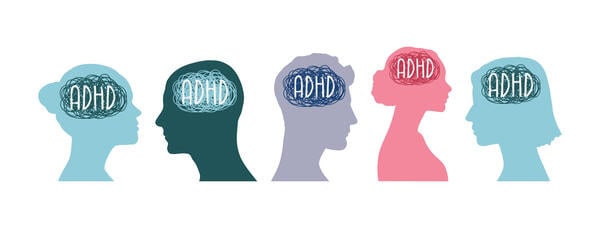
    However, some students may struggle with explicit phonics instruction, particularly the growing population of neurodivergent learners with autism spectrum disorder or attention deficit hyperactivity disorder. These students learn and interact differently than their mainstream peers in school and in society. And they tend to have different strengths and challenges when it comes to word recognition, reading fluency and comprehension.

    This was the case with my own child. He had been a proficient reader from an early age, but struggles emerged when his school adopted a phonics program to balance out its regular curriculum, a flexible literature-based curriculum called Daily 5 that prioritizes reading fluency and comprehension.

    I worked with his first grade teacher to mitigate these challenges. But I realized that his real reading proficiency would likely not have been detected if the school had taught almost exclusively phonics-based reading lessons.

    Another weakness of phonics, in my experience, is that it teaches reading in a way that is disconnected from authentic reading experiences. Phonics often directs children to identify short vowel sounds in word lists, rather than encounter them in colorful stories. Evidence shows that exposing children to fun, interesting literature promotes deep comprehension.

    Balanced literacy

    To support different learning styles, educators can teach reading in multiple ways. This is called balanced literacy, and for decades it was a mainstay in teacher preparation and in classrooms.

    Balanced literacy prompts children to learn words encountered in authentic literature during guided, teacher-led read-alouds – versus learning how to decode words in word lists. Teachers use multiple strategies to promote reading acquisition, such as blending the letter sounds in words to support “decoding” while reading.

    Another balanced literacy strategy that teachers can apply in phonics-based strategies while reading aloud is called “rhyming word recognition.” The rhyming word strategy is especially effective with stories whose rhymes contribute to the deeper meaning of the story, such as Marc Brown’s “Arthur in a Pickle.”

    The rhyming structure of ‘Arthur in a Pickle’ helps children learn to read entire words, versus word parts.

    After reading, teachers may have learners arrange letter cards to form words, then tap the letter cards while saying and blending each sound to form the word. Similar phonics strategies include tracing and writing letters to form words that were encountered during reading.

    There is no one right way to teach literacy in a developmentally appropriate, balanced literacy framework. There are as many ways as there are students.

    What a truly balanced curriculum looks like

    The push for the phonics-based component of the science of reading is a response to the discrediting of the Lucy Calkins Reading Project, a balanced literacy approach that uses what’s called “cueing” to teach young readers. Teachers “cue” students to recognize words with corresponding pictures and promote guessing unfamiliar words while reading based on context clues.

    A 2024 class action lawsuit filed by Massachusetts families claimed that this faulty curriculum and another cueing-based approach called Fountas & Pinnell had failed readers for four decades, in part because they neglect scientifically backed phonics instruction.

    But this allegation overlooks evidence that the Calkins curriculum worked for children who were taught basic reading skills at home. And a 2021 study in Georgia found modest student achievement gains of 2% in English Language Arts test scores among fourth graders taught with the Lucy Calkins method.

    Nor is the method unscientific. Using picture cues with corresponding words is supported by the predictable language theory of literacy.

    This approach is evident in Eric Carle’s popular children’s books. Stories such as the “Very Hungry Caterpillar” and “Brown Bear, Brown Bear What do you See?” have vibrant illustrations of animals and colors that correspond with the text. The pictures support children in learning whole words and repetitive phrases, suchg as, “But he was still hungry.”

    The intention here is for learners to acquire words in the context of engaging literature. But critics of Calkins contend that “cueing” during reading is a guessing game. They say readers are not learning the fundamentals necessary to identify sounds and word families on their way to decoding entire words and sentences.

    As a result, schools across the country are replacing traditional learn-to-read activities tied to balanced literacy approaches with the science of reading. Since its inception in 2013, the phonics-based curriculum has been adopted by 40 states and the Disctrict of Columbia.

    Recommendations for parents, educators and policymakers

    The most scientific way to teach reading, in my opinion, is by not applying the same rigid rules to every child. The best instruction meets students where they are, not where they should be.

    Here are five evidence-based tips to promote reading for all readers that combine phonics, balanced literacy and other methods.

    1. Maintain the home-school connection. When schools send kids home with developmentally appropriate books and strategies, it encourages parents to practice reading at home with their kids and develop their oral reading fluency. Ideally, reading materials include features that support a diversity of learning strategies, including text, pictures with corresponding words and predictable language.

    2. Embrace all reading. Academic texts aren’t the only kind of reading parents and teachers should encourage. Children who see menus, magazines and other print materials at home also acquire new literacy skills.

    3. Make phonics fun. Phonics instruction can teach kids to decode words, but the content is not particularly memorable. I encourage teachers to teach phonics on words that are embedded in stories and texts that children absolutely love.

    4. Pick a series. High-quality children’s literature promotes early literacy achievement. Texts that become increasingly more complex as readers advance, such as the “Arthur” step-into-reading series, are especially helpful in developing reading comprehension. As readers progress through more complex picture books, caregivers and teachers should read aloud the “Arthur” novels until children can read them independently. Additional popular series that grow with readers include “Otis,” “Olivia,” “Fancy Nancy” and “Berenstain Bears.”

    5. Tutoring works. Some readers will struggle despite teachers’ and parents’ best efforts. In these cases, intensive, high-impact tutoring can help. Sending students to one session a week of at least 30 minutes is well documented to help readers who’ve fallen behind catch up to their peers. Many nonprofit organizations, community centers and colleges offer high-impact tutoring.

    This article is republished from The Conversation under a Creative Commons license. Read the original article.


    Get stories like these delivered straight to your inbox. Sign up for The 74 Newsletter

    Source link

  • A Chance for Constructive Engagement (opinion)

    A Chance for Constructive Engagement (opinion)

    Earlier this spring, I was one of hundreds of college, university and scholarly society leaders to sign “A Call for Constructive Engagement” published by the American Association of Colleges and Universities. The statement speaks out against “the unprecedented government overreach and political interference now endangering American higher education.” It calls for the freedom to determine, on academic grounds, whom to admit and what is taught, how and by whom, while engaging in constructive reform and openness to legitimate government oversight.

    Deciding whether to make such a public statement merits careful consideration. This is because by making the statement, a higher education leader will likely not be reflecting the viewpoints of all of their institution’s constituents.

    An email from an alum from the 1970s reminded me of this. The alum chastised me for signing the statement, for overreaching and speaking for some members of our university community such as him, and for banding together with other higher learning institutions that have become “liberal cesspools of propaganda and misinformation … [that] openly permit anti-Israeli protests led by anti-Semitic educators … [and] become another left-wing terrorist organization supporting the likes of Hamas.”

    The alum asked me to remove my signature from the AAC&U statement on account of the concerns that he had raised. One higher education leader has so far done so, likely because of receiving input such as that provided by our alum.

    I opted to reply to our alum, thereby putting to practice the constructive engagement preached by the AAC&U statement. My reply asked the alum how long it had been since he had last visited campus and whether he knew that, thanks to the philanthropic generosity of some fellow graduates, we renovated our campus’s Hillel House last summer.

    I asked the alum whether he had heard of the Common Ground program Alfred instituted in 2018 through the philanthropic support of our trustees. It is a required course for all of our new undergraduate students and consists of small-group dialogue facilitated by a faculty or staff member with two key objectives: 1) to better appreciate the different backgrounds (including geographies, ethnicities and religions), aspirations and interests that our new students bring to Alfred (artists think differently than engineers, liberal arts students think differently than business students), and 2) to arrive at some shared values that our new students will commit to living by as citizens of the Alfred community—such as commitment to constructive dialogue.

    By fostering constructive engagement, our Common Ground program likely helped prevent the strife that occurred on many other college campuses in the wake of the Oct. 7 Hamas terrorist attack on Israel and the ensuing war in the Middle East. When members of campus communities have built meaningful relationships with one another, they are less likely to retreat to their ideological corners when a potential conflict arises. Instead, they talk as friends.

    I closed my email by asking the alum whether he had any impactful mentors as a student.

    To my pleasant surprise, the alum replied by recounting a particularly impactful faculty mentor in the field of astronomy who had given him many applied learning opportunities and inspired a lifelong interest in stargazing, which he continues to do to this day from his home. He also noted how well his college education had positioned him for the professional success that he has enjoyed.

    We have since spoken by phone. While there are certain matters upon which we still disagree, we have found some common ground.

    We agree that institutions of higher learning are potent engines for promoting the success of graduates as well as the prosperity of our nation and the health and well-being of our broader population. There are nearly 4,000 institutions of higher learning across our nation—spanning public and private and including community colleges, technical training institutions, arts schools, religious institutions and HBCUs. This constellation, in which anyone can find a place, provides powerful opportunities for professional and personal advancement, social mobility, entrepreneurial innovation, access to health care, national defense, social services and cultural offerings.

    We agree that the core focus of institutions of higher learning should be on providing an education of enduring value through fostering knowledge and curiosity.

    We also agree that universities, like individuals and nations, do not always uniformly arc toward wisdom. They can stumble and thus benefit from constructive reform. Our field of higher education can and should be better listeners to our public, more concerned about the cost of college and more focused on student success and less on prestige.

    Notwithstanding the stumbles, however, institutions of higher learning, as noted by Israeli historian Yuval Hariri in his recent book Nexus, have some powerful self-correcting mechanisms such as peer review. Authoritarian regimes, by contrast, lack such self-correcting mechanisms when they suppress inquiry and criticism.

    Consider Katalin Karikó, who emigrated from her native Hungary to the United States with $1,200 cash sewn into her daughter’s teddy bear to do research on mRNA. While at the University of Pennsylvania, her hypothesis regarding the potency of mRNA research was derided by most fellow researchers around the globe. She was denied a tenure-track position and demoted. Yet, the research that she kept pursuing was pivotal to the development of COVID vaccines and earned her a Nobel Prize in 2023.

    And while our alum and I still disagree on whether my signature should be affixed to the AAC&U statement, we have ended up agreeing both on the value of constructive engagement and the criticality of promoting it as a central value in higher education.

    Mark Zupan is president of Alfred University.

    Source link