
Tag: Oppression

  • Political Violence, Systemic Oppression, and the Role of Higher Education

    Political Violence, Systemic Oppression, and the Role of Higher Education

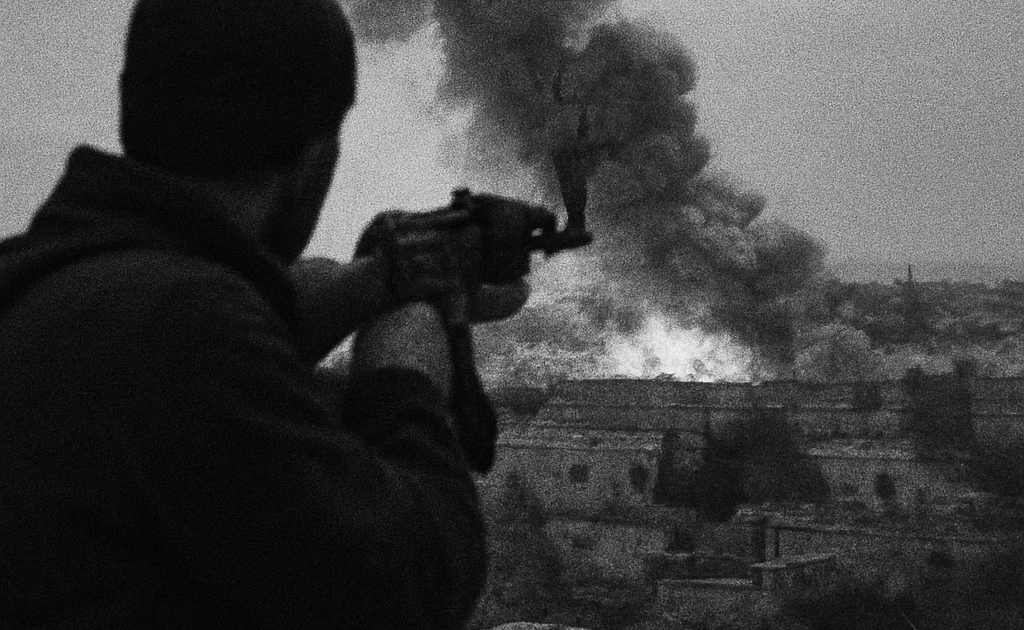
    The ambush shooting of two National Guardsmen near the White House on November 27, 2025, by Rahmanullah Lakanwal, a 29-year-old Afghan national, is the latest in a growing wave of politically motivated violence that has engulfed the United States since 2024. Lakanwal opened fire on uniformed service members stationed for heightened security, wounding both. Federal authorities are investigating whether ideological motives drove the attack, which comes against a backdrop of escalating domestic and international tensions. This ambush cannot be understood in isolation. It is part of a larger pattern of domestic political violence that has claimed lives across ideological lines. 

    Conservative activist Charlie Kirk was assassinated at Utah Valley University during a campus event in September 2025. Minnesota state representative Mary Carlson and her husband were murdered in their home by a man impersonating law enforcement, while a state senator and spouse were injured in the same spree. Governor Josh Shapiro survived an arson attack on his residence earlier this year. Even Donald Trump was the target of an assassination attempt in July 2024. Added to this grim tally are incidents such as the 2025 Manhattan mass shooting, in which young professionals, including two Jewish women, Julia Hyman and Wesley LePatner, were killed, and the Luigi Mangione case, in which a former student allegedly killed a corporate executive in New York. Together, these incidents reveal a nation in which lethal violence increasingly intersects with politics, identity, and ideology.

    The domestic escalation of violence cannot be separated from broader structures of oppression. Migrants and asylum seekers face detention, family separation, and deportation under the authority of ICE, often in conditions described as inhumane, creating fear and vulnerability among refugee communities. Routine encounters with law enforcement disproportionately harm Black, Indigenous, Latinx, and other marginalized communities. Excessive force and lethal policing add to communal distrust, reinforcing perceptions that violence is a sanctioned tool of the state. Political rhetoric compounds the problem. President Trump and other political leaders have repeatedly framed immigrants, political opponents, and even students as threats to national security, implicitly legitimizing aggressive responses and providing fodder for extremist actors.

    The domestic situation is further complicated by U.S. foreign policy, which has often contributed to global instability while modeling the use of violence as an instrument of governance. In Palestine, military aid to Israel coincides with attacks on civilians and infrastructure that human-rights organizations describe as ethnic cleansing or genocide. In Venezuela, U.S. sanctions, threats, and proxy operations have intensified humanitarian crises and political instability. Complicity with the governments of the UAE, Saudi Arabia, and Russia enables human-rights abuses abroad while emboldening domestic actors who mimic state-sanctioned violence. These global policies reverberate at home, influencing public discourse, shaping extremist narratives, and creating a climate in which political and ideological violence is increasingly normalized.

    Higher education sits at the nexus of these domestic and global pressures. Universities and colleges are not merely observers; they are active participants and, in some cases, victims. The assassination of Charlie Kirk on a campus underscores that institutions of learning are no longer insulated from lethal political conflict. Alumni, recent graduates, and professionals—such as the victims of the Manhattan shooting—are affected even after leaving school, revealing how closely academic networks intersect with broader societal risks. International and refugee students, particularly from Afghan and Middle Eastern communities, face heightened anxiety due to restrictive immigration policies, anti-immigrant rhetoric, and the real threat of violence. Faculty teaching topics related to immigration, race, U.S. foreign policy, or genocide are increasingly targeted by harassment, threats, and institutional pressures that suppress academic freedom. The cumulative stress of political violence, systemic oppression, and global conflicts creates trauma that universities must address comprehensively, both for students and faculty.

    Higher education cannot prevent every act of violence, nor can it resolve the nation’s deep political fractures. But it can model ethical and civic engagement, defending inquiry and speech without succumbing to fear or political pressure. It can extend support to vulnerable communities, promote critical thinking about the domestic roots of political violence and the consequences of U.S. foreign policy, and foster ethical reflection that counters the normalization of aggression. Silence or passivity risks complicity. Universities must recognize that the threats affecting campuses, alumni, and students are interconnected with broader systems of power and oppression, both domestic and global.

    From the White House ambush to Charlie Kirk’s assassination, from the Minnesota legislators’ murders to the Manhattan mass shooting, from Luigi Mangione’s high-profile killing to systemic violence enforced through ICE and police overreach, and amid the influence of incendiary political rhetoric and U.S. complicity in violence abroad, the United States is experiencing an unprecedented convergence of domestic and international pressures. Higher education sits at the center of these converging forces, and how it responds will shape not only campus safety and academic freedom but also the broader civic health of the nation. The challenge is immense: to uphold democratic values, protect communities, and educate students in a society increasingly defined by fear, extremism, and violence.


    Sources

    Reuters. “FBI probes gunman’s motives in ambush shooting of Guardsmen near White House.” The Guardian. Coverage on suspect identification and political reaction. AP News. Statements by national leaders following attacks. Washington Post. Analysis of domestic violent extremism and political violence trends. People Magazine. Reporting on Minnesota legislator assassination. NBC/AP. Statements by Gov. Josh Shapiro after Charlie Kirk’s killing. Utah Valley University and local ABC/Fox affiliates on the Kirk shooting. Jewish Journal, ABC7NY. Coverage of Manhattan mass shooting and Jewish victims. Reuters. Luigi Mangione case and court proceedings. Human Rights Watch / Amnesty International reports on Palestine, Venezuela, UAE, Saudi Arabia, and Russia. Brookings Institute. Analysis of political violence and domestic extremism. CSIS. “Domestic Extremism and Political Violence in the United States.”
    Source link

  • Higher Education’s Long Reckoning With Indigenous Oppression

    Higher Education’s Long Reckoning With Indigenous Oppression

    [Editor’s note: United American Indians of New England host the National Day of Mourning. Their website is at United American Indians of New England – UAINE.]

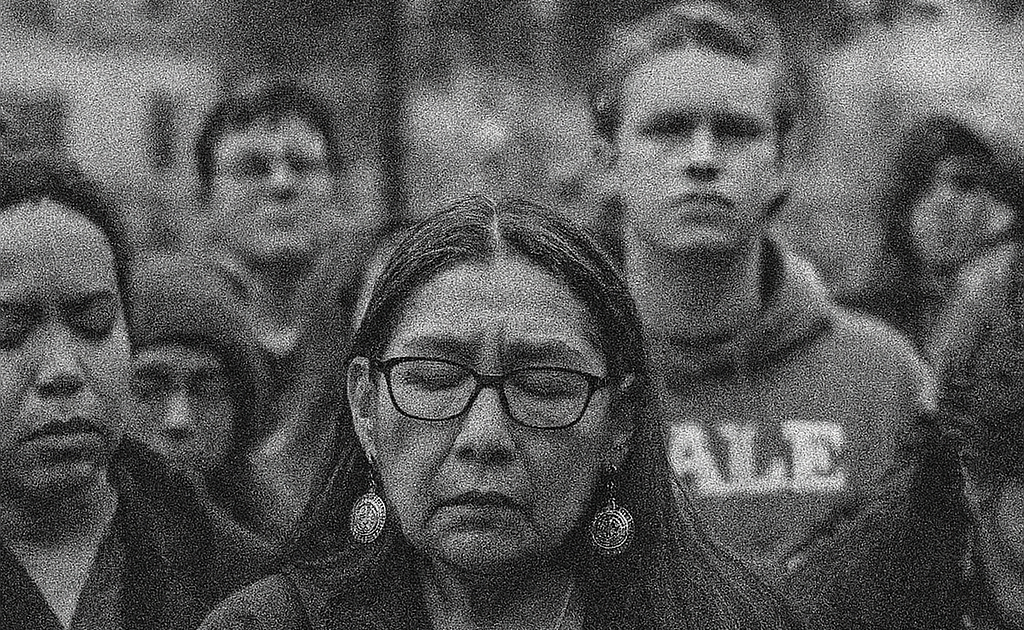
    Each November, while much of the United States celebrates Thanksgiving, Indigenous communities and their allies gather in Plymouth, Massachusetts, and across the country for the National Day of Mourning. It is a day that confronts the mythology of national innocence and replaces it with historical clarity. For Higher Education Inquirer, the significance of this day extends directly into the heart of American higher education—a system built, in no small part, on the expropriation of Indigenous land, the exploitation of Native Peoples, and the continued structural racism that shapes their educational opportunities today.

    From the earliest colonial colleges to the flagship research institutions of the twenty-first century, U.S. higher education has never been separate from the project of settler colonialism. It has been one of its instruments.

    Land, Wealth, and the Origins of the University

    America’s oldest colleges—Harvard, Yale, William & Mary, Dartmouth—were founded within the colonial order that dispossessed Indigenous communities. While missionary language framed some of these institutions’ early purposes, they operated through an extractive logic: the seizure of land, the conversion of cultural worlds, and, eventually, the accumulation of immense academic wealth.

    The Morrill Land-Grant Acts of 1862 and 1890 expanded this pattern on a national scale. Recent research documented by the “Land-Grab Universities” project shows that nearly eleven million acres of Indigenous land—taken through coercive treaties, forced removal, or outright theft—were funneled into endowments for public universities. Students today walk across campuses financed by displacements their own institutions have yet to fully acknowledge, let alone remedy.

    Higher Education as an Arm of Assimilation

    The United States also used education as a tool for forced assimilation. The Indian boarding school system, with the Carlisle Industrial School as its model, operated in partnership with federal officials, church agencies, and academic institutions. Native children were taken from their families, stripped of their languages, and subjected to relentless cultural destruction.

    Universities contributed research, training, and personnel to this system, embedding the logic of “civilizing” Indigenous Peoples into the academy’s structure. That legacy endures in curricula that minimize Indigenous knowledge systems and in institutional cultures that prize Eurocentric epistemologies as default.

    Scientific Racism, Anthropology, and the Theft of Ancestors

    American universities played a central role in producing scientific racism. Anthropologists and medical researchers collected Indigenous remains, objects, and sacred items without consent. Museums and university labs became repositories for thousands of ancestors—often obtained through grave robberies, military campaigns, or opportunistic scholarship.

    The 1990 Native American Graves Protection and Repatriation Act (NAGPRA) was designed to force institutions to return ancestors and cultural patrimony. Yet decades later, many universities are still out of compliance, delaying repatriation while continuing to benefit from the research collections they amassed through violence.

    Contemporary Structural Racism in Higher Education

    The oppression is not confined to history. Structural racism continues to constrain Native Peoples in higher education today.

    Native students remain among the most underrepresented and under-supported groups on American campuses. Chronic underfunding of Tribal Colleges and Universities (TCUs) reflects a broader political disregard for Indigenous sovereignty and self-determination. Meanwhile, elite institutions recruit Native students for marketing purposes while failing to invest in retention, community support, or Indigenous faculty hiring.

    Some universities have begun implementing land acknowledgments, but these symbolic gestures have little impact when institutions refuse to confront their material obligations: returning land, committing long-term funding to Indigenous programs, or restructuring governance to include tribal representatives.

    What a Real Reckoning Would Require

    A genuine response to the National Day of Mourning would require far more than statements of solidarity. It would involve confronting the ways American higher education continues to profit from dispossession and the ways Native students continue to bear disproportionate burdens—from tuition to cultural isolation to the racist violence that still occurs on and around campuses.

    Real accountability would include:

    • Full compliance with NAGPRA and expedited repatriation.

    • Transparent reporting of land-grant wealth and the return or shared governance of those lands.

    • Stable, meaningful funding for TCUs.

    • Hiring, tenure, and research policies that center Indigenous scholarship and sovereignty.

    • Long-term institutional commitments—financial, curricular, and political—to Indigenous communities.

    These steps require institutions to shift from performative recognition to structural transformation.

    A Day of Mourning—And a Call to Action

    The National Day of Mourning is not merely a counter-holiday. It is a reminder that the United States was founded on violence against Native Peoples—and that its colleges and universities were not passive beneficiaries but active participants in that violence.

    For higher education leaders, faculty, and students, the question is no longer whether these histories are real or whether they matter. They are documented. They are ongoing. They matter profoundly.

    The real question is what institutions are willing to give up—land, power, wealth, or narrative control—to support Indigenous liberation.

    On this National Day of Mourning, HEI honors the truth that Indigenous survival is an act of resistance, and Indigenous sovereignty is not a symbolic aspiration but an overdue demand. The future of higher education must move through that truth, not around it.

    Sources

    Roxanne Dunbar-Ortiz, An Indigenous Peoples’ History of the United States.

    The Land-Grab Universities Project (High Country News & Land-Grab Universities database).

    David Treuer, The Heartbeat of Wounded Knee.

    Margaret D. Jacobs, A Generation Removed: The Fostering and Adoption of Indigenous Children in the Postwar World.

    NAGPRA regulations and compliance reports.

    Source link